
diff options
Diffstat (limited to 'www/lib/ionic/js/ionic.bundle.js')
| -rw-r--r-- | www/lib/ionic/js/ionic.bundle.js | 67582 |
1 files changed, 67582 insertions, 0 deletions
diff --git a/www/lib/ionic/js/ionic.bundle.js b/www/lib/ionic/js/ionic.bundle.js new file mode 100644 index 00000000..2ee2a0e3 --- /dev/null +++ b/www/lib/ionic/js/ionic.bundle.js @@ -0,0 +1,67582 @@ +/*! + * ionic.bundle.js is a concatenation of: + * ionic.js, angular.js, angular-animate.js, + * angular-sanitize.js, angular-ui-router.js, + * and ionic-angular.js + */ + +/*! + * Copyright 2015 Drifty Co. + * http://drifty.com/ + * + * Ionic, v1.3.5 + * A powerful HTML5 mobile app framework. + * http://ionicframework.com/ + * + * By @maxlynch, @benjsperry, @adamdbradley <3 + * + * Licensed under the MIT license. Please see LICENSE for more information. + * + */ + +(function() { + +// Create global ionic obj and its namespaces +// build processes may have already created an ionic obj +window.ionic = window.ionic || {}; +window.ionic.views = {}; +window.ionic.version = '1.3.5'; + +(function (ionic) { + + ionic.DelegateService = function(methodNames) { + + if (methodNames.indexOf('$getByHandle') > -1) { + throw new Error("Method '$getByHandle' is implicitly added to each delegate service. Do not list it as a method."); + } + + function trueFn() { return true; } + + return ['$log', function($log) { + + /* + * Creates a new object that will have all the methodNames given, + * and call them on the given the controller instance matching given + * handle. + * The reason we don't just let $getByHandle return the controller instance + * itself is that the controller instance might not exist yet. + * + * We want people to be able to do + * `var instance = $ionicScrollDelegate.$getByHandle('foo')` on controller + * instantiation, but on controller instantiation a child directive + * may not have been compiled yet! + * + * So this is our way of solving this problem: we create an object + * that will only try to fetch the controller with given handle + * once the methods are actually called. + */ + function DelegateInstance(instances, handle) { + this._instances = instances; + this.handle = handle; + } + methodNames.forEach(function(methodName) { + DelegateInstance.prototype[methodName] = instanceMethodCaller(methodName); + }); + + + /** + * The delegate service (eg $ionicNavBarDelegate) is just an instance + * with a non-defined handle, a couple extra methods for registering + * and narrowing down to a specific handle. + */ + function DelegateService() { + this._instances = []; + } + DelegateService.prototype = DelegateInstance.prototype; + DelegateService.prototype._registerInstance = function(instance, handle, filterFn) { + var instances = this._instances; + instance.$$delegateHandle = handle; + instance.$$filterFn = filterFn || trueFn; + instances.push(instance); + + return function deregister() { + var index = instances.indexOf(instance); + if (index !== -1) { + instances.splice(index, 1); + } + }; + }; + DelegateService.prototype.$getByHandle = function(handle) { + return new DelegateInstance(this._instances, handle); + }; + + return new DelegateService(); + + function instanceMethodCaller(methodName) { + return function caller() { + var handle = this.handle; + var args = arguments; + var foundInstancesCount = 0; + var returnValue; + + this._instances.forEach(function(instance) { + if ((!handle || handle == instance.$$delegateHandle) && instance.$$filterFn(instance)) { + foundInstancesCount++; + var ret = instance[methodName].apply(instance, args); + //Only return the value from the first call + if (foundInstancesCount === 1) { + returnValue = ret; + } + } + }); + + if (!foundInstancesCount && handle) { + return $log.warn( + 'Delegate for handle "' + handle + '" could not find a ' + + 'corresponding element with delegate-handle="' + handle + '"! ' + + methodName + '() was not called!\n' + + 'Possible cause: If you are calling ' + methodName + '() immediately, and ' + + 'your element with delegate-handle="' + handle + '" is a child of your ' + + 'controller, then your element may not be compiled yet. Put a $timeout ' + + 'around your call to ' + methodName + '() and try again.' + ); + } + return returnValue; + }; + } + + }]; + }; + +})(window.ionic); + +(function(window, document, ionic) { + + var readyCallbacks = []; + var isDomReady = document.readyState === 'complete' || document.readyState === 'interactive'; + + function domReady() { + isDomReady = true; + for (var x = 0; x < readyCallbacks.length; x++) { + ionic.requestAnimationFrame(readyCallbacks[x]); + } + readyCallbacks = []; + document.removeEventListener('DOMContentLoaded', domReady); + } + if (!isDomReady) { + document.addEventListener('DOMContentLoaded', domReady); + } + + + // From the man himself, Mr. Paul Irish. + // The requestAnimationFrame polyfill + // Put it on window just to preserve its context + // without having to use .call + window._rAF = (function() { + return window.requestAnimationFrame || + window.webkitRequestAnimationFrame || + window.mozRequestAnimationFrame || + function(callback) { + window.setTimeout(callback, 16); + }; + })(); + + var cancelAnimationFrame = window.cancelAnimationFrame || + window.webkitCancelAnimationFrame || + window.mozCancelAnimationFrame || + window.webkitCancelRequestAnimationFrame; + + /** + * @ngdoc utility + * @name ionic.DomUtil + * @module ionic + */ + ionic.DomUtil = { + //Call with proper context + /** + * @ngdoc method + * @name ionic.DomUtil#requestAnimationFrame + * @alias ionic.requestAnimationFrame + * @description Calls [requestAnimationFrame](https://developer.mozilla.org/en-US/docs/Web/API/window.requestAnimationFrame), or a polyfill if not available. + * @param {function} callback The function to call when the next frame + * happens. + */ + requestAnimationFrame: function(cb) { + return window._rAF(cb); + }, + + cancelAnimationFrame: function(requestId) { + cancelAnimationFrame(requestId); + }, + + /** + * @ngdoc method + * @name ionic.DomUtil#animationFrameThrottle + * @alias ionic.animationFrameThrottle + * @description + * When given a callback, if that callback is called 100 times between + * animation frames, adding Throttle will make it only run the last of + * the 100 calls. + * + * @param {function} callback a function which will be throttled to + * requestAnimationFrame + * @returns {function} A function which will then call the passed in callback. + * The passed in callback will receive the context the returned function is + * called with. + */ + animationFrameThrottle: function(cb) { + var args, isQueued, context; + return function() { + args = arguments; + context = this; + if (!isQueued) { + isQueued = true; + ionic.requestAnimationFrame(function() { + cb.apply(context, args); + isQueued = false; + }); + } + }; + }, + + contains: function(parentNode, otherNode) { + var current = otherNode; + while (current) { + if (current === parentNode) return true; + current = current.parentNode; + } + }, + + /** + * @ngdoc method + * @name ionic.DomUtil#getPositionInParent + * @description + * Find an element's scroll offset within its container. + * @param {DOMElement} element The element to find the offset of. + * @returns {object} A position object with the following properties: + * - `{number}` `left` The left offset of the element. + * - `{number}` `top` The top offset of the element. + */ + getPositionInParent: function(el) { + return { + left: el.offsetLeft, + top: el.offsetTop + }; + }, + + getOffsetTop: function(el) { + var curtop = 0; + if (el.offsetParent) { + do { + curtop += el.offsetTop; + el = el.offsetParent; + } while (el) + return curtop; + } + }, + + /** + * @ngdoc method + * @name ionic.DomUtil#ready + * @description + * Call a function when the DOM is ready, or if it is already ready + * call the function immediately. + * @param {function} callback The function to be called. + */ + ready: function(cb) { + if (isDomReady) { + ionic.requestAnimationFrame(cb); + } else { + readyCallbacks.push(cb); + } + }, + + /** + * @ngdoc method + * @name ionic.DomUtil#getTextBounds + * @description + * Get a rect representing the bounds of the given textNode. + * @param {DOMElement} textNode The textNode to find the bounds of. + * @returns {object} An object representing the bounds of the node. Properties: + * - `{number}` `left` The left position of the textNode. + * - `{number}` `right` The right position of the textNode. + * - `{number}` `top` The top position of the textNode. + * - `{number}` `bottom` The bottom position of the textNode. + * - `{number}` `width` The width of the textNode. + * - `{number}` `height` The height of the textNode. + */ + getTextBounds: function(textNode) { + if (document.createRange) { + var range = document.createRange(); + range.selectNodeContents(textNode); + if (range.getBoundingClientRect) { + var rect = range.getBoundingClientRect(); + if (rect) { + var sx = window.scrollX; + var sy = window.scrollY; + + return { + top: rect.top + sy, + left: rect.left + sx, + right: rect.left + sx + rect.width, + bottom: rect.top + sy + rect.height, + width: rect.width, + height: rect.height + }; + } + } + } + return null; + }, + + /** + * @ngdoc method + * @name ionic.DomUtil#getChildIndex + * @description + * Get the first index of a child node within the given element of the + * specified type. + * @param {DOMElement} element The element to find the index of. + * @param {string} type The nodeName to match children of element against. + * @returns {number} The index, or -1, of a child with nodeName matching type. + */ + getChildIndex: function(element, type) { + if (type) { + var ch = element.parentNode.children; + var c; + for (var i = 0, k = 0, j = ch.length; i < j; i++) { + c = ch[i]; + if (c.nodeName && c.nodeName.toLowerCase() == type) { + if (c == element) { + return k; + } + k++; + } + } + } + return Array.prototype.slice.call(element.parentNode.children).indexOf(element); + }, + + /** + * @private + */ + swapNodes: function(src, dest) { + dest.parentNode.insertBefore(src, dest); + }, + + elementIsDescendant: function(el, parent, stopAt) { + var current = el; + do { + if (current === parent) return true; + current = current.parentNode; + } while (current && current !== stopAt); + return false; + }, + + /** + * @ngdoc method + * @name ionic.DomUtil#getParentWithClass + * @param {DOMElement} element + * @param {string} className + * @returns {DOMElement} The closest parent of element matching the + * className, or null. + */ + getParentWithClass: function(e, className, depth) { + depth = depth || 10; + while (e.parentNode && depth--) { + if (e.parentNode.classList && e.parentNode.classList.contains(className)) { + return e.parentNode; + } + e = e.parentNode; + } + return null; + }, + /** + * @ngdoc method + * @name ionic.DomUtil#getParentOrSelfWithClass + * @param {DOMElement} element + * @param {string} className + * @returns {DOMElement} The closest parent or self matching the + * className, or null. + */ + getParentOrSelfWithClass: function(e, className, depth) { + depth = depth || 10; + while (e && depth--) { + if (e.classList && e.classList.contains(className)) { + return e; + } + e = e.parentNode; + } + return null; + }, + + /** + * @ngdoc method + * @name ionic.DomUtil#rectContains + * @param {number} x + * @param {number} y + * @param {number} x1 + * @param {number} y1 + * @param {number} x2 + * @param {number} y2 + * @returns {boolean} Whether {x,y} fits within the rectangle defined by + * {x1,y1,x2,y2}. + */ + rectContains: function(x, y, x1, y1, x2, y2) { + if (x < x1 || x > x2) return false; + if (y < y1 || y > y2) return false; + return true; + }, + + /** + * @ngdoc method + * @name ionic.DomUtil#blurAll + * @description + * Blurs any currently focused input element + * @returns {DOMElement} The element blurred or null + */ + blurAll: function() { + if (document.activeElement && document.activeElement != document.body) { + document.activeElement.blur(); + return document.activeElement; + } + return null; + }, + + cachedAttr: function(ele, key, value) { + ele = ele && ele.length && ele[0] || ele; + if (ele && ele.setAttribute) { + var dataKey = '$attr-' + key; + if (arguments.length > 2) { + if (ele[dataKey] !== value) { + ele.setAttribute(key, value); + ele[dataKey] = value; + } + } else if (typeof ele[dataKey] == 'undefined') { + ele[dataKey] = ele.getAttribute(key); + } + return ele[dataKey]; + } + }, + + cachedStyles: function(ele, styles) { + ele = ele && ele.length && ele[0] || ele; + if (ele && ele.style) { + for (var prop in styles) { + if (ele['$style-' + prop] !== styles[prop]) { + ele.style[prop] = ele['$style-' + prop] = styles[prop]; + } + } + } + } + + }; + + //Shortcuts + ionic.requestAnimationFrame = ionic.DomUtil.requestAnimationFrame; + ionic.cancelAnimationFrame = ionic.DomUtil.cancelAnimationFrame; + ionic.animationFrameThrottle = ionic.DomUtil.animationFrameThrottle; + +})(window, document, ionic); + +/** + * ion-events.js + * + * Author: Max Lynch <max@drifty.com> + * + * Framework events handles various mobile browser events, and + * detects special events like tap/swipe/etc. and emits them + * as custom events that can be used in an app. + * + * Portions lovingly adapted from github.com/maker/ratchet and github.com/alexgibson/tap.js - thanks guys! + */ + +(function(ionic) { + + // Custom event polyfill + ionic.CustomEvent = (function() { + if( typeof window.CustomEvent === 'function' ) return CustomEvent; + + var customEvent = function(event, params) { + var evt; + params = params || { + bubbles: false, + cancelable: false, + detail: undefined + }; + try { + evt = document.createEvent("CustomEvent"); + evt.initCustomEvent(event, params.bubbles, params.cancelable, params.detail); + } catch (error) { + // fallback for browsers that don't support createEvent('CustomEvent') + evt = document.createEvent("Event"); + for (var param in params) { + evt[param] = params[param]; + } + evt.initEvent(event, params.bubbles, params.cancelable); + } + return evt; + }; + customEvent.prototype = window.Event.prototype; + return customEvent; + })(); + + + /** + * @ngdoc utility + * @name ionic.EventController + * @module ionic + */ + ionic.EventController = { + VIRTUALIZED_EVENTS: ['tap', 'swipe', 'swiperight', 'swipeleft', 'drag', 'hold', 'release'], + + /** + * @ngdoc method + * @name ionic.EventController#trigger + * @alias ionic.trigger + * @param {string} eventType The event to trigger. + * @param {object} data The data for the event. Hint: pass in + * `{target: targetElement}` + * @param {boolean=} bubbles Whether the event should bubble up the DOM. + * @param {boolean=} cancelable Whether the event should be cancelable. + */ + // Trigger a new event + trigger: function(eventType, data, bubbles, cancelable) { + var event = new ionic.CustomEvent(eventType, { + detail: data, + bubbles: !!bubbles, + cancelable: !!cancelable + }); + + // Make sure to trigger the event on the given target, or dispatch it from + // the window if we don't have an event target + data && data.target && data.target.dispatchEvent && data.target.dispatchEvent(event) || window.dispatchEvent(event); + }, + + /** + * @ngdoc method + * @name ionic.EventController#on + * @alias ionic.on + * @description Listen to an event on an element. + * @param {string} type The event to listen for. + * @param {function} callback The listener to be called. + * @param {DOMElement} element The element to listen for the event on. + */ + on: function(type, callback, element) { + var e = element || window; + + // Bind a gesture if it's a virtual event + for(var i = 0, j = this.VIRTUALIZED_EVENTS.length; i < j; i++) { + if(type == this.VIRTUALIZED_EVENTS[i]) { + var gesture = new ionic.Gesture(element); + gesture.on(type, callback); + return gesture; + } + } + + // Otherwise bind a normal event + e.addEventListener(type, callback); + }, + + /** + * @ngdoc method + * @name ionic.EventController#off + * @alias ionic.off + * @description Remove an event listener. + * @param {string} type + * @param {function} callback + * @param {DOMElement} element + */ + off: function(type, callback, element) { + element.removeEventListener(type, callback); + }, + + /** + * @ngdoc method + * @name ionic.EventController#onGesture + * @alias ionic.onGesture + * @description Add an event listener for a gesture on an element. + * + * Available eventTypes (from [hammer.js](http://eightmedia.github.io/hammer.js/)): + * + * `hold`, `tap`, `doubletap`, `drag`, `dragstart`, `dragend`, `dragup`, `dragdown`, <br/> + * `dragleft`, `dragright`, `swipe`, `swipeup`, `swipedown`, `swipeleft`, `swiperight`, <br/> + * `transform`, `transformstart`, `transformend`, `rotate`, `pinch`, `pinchin`, `pinchout`, <br/> + * `touch`, `release` + * + * @param {string} eventType The gesture event to listen for. + * @param {function(e)} callback The function to call when the gesture + * happens. + * @param {DOMElement} element The angular element to listen for the event on. + * @param {object} options object. + * @returns {ionic.Gesture} The gesture object (use this to remove the gesture later on). + */ + onGesture: function(type, callback, element, options) { + var gesture = new ionic.Gesture(element, options); + gesture.on(type, callback); + return gesture; + }, + + /** + * @ngdoc method + * @name ionic.EventController#offGesture + * @alias ionic.offGesture + * @description Remove an event listener for a gesture created on an element. + * @param {ionic.Gesture} gesture The gesture that should be removed. + * @param {string} eventType The gesture event to remove the listener for. + * @param {function(e)} callback The listener to remove. + + */ + offGesture: function(gesture, type, callback) { + gesture && gesture.off(type, callback); + }, + + handlePopState: function() {} + }; + + + // Map some convenient top-level functions for event handling + ionic.on = function() { ionic.EventController.on.apply(ionic.EventController, arguments); }; + ionic.off = function() { ionic.EventController.off.apply(ionic.EventController, arguments); }; + ionic.trigger = ionic.EventController.trigger;//function() { ionic.EventController.trigger.apply(ionic.EventController.trigger, arguments); }; + ionic.onGesture = function() { return ionic.EventController.onGesture.apply(ionic.EventController.onGesture, arguments); }; + ionic.offGesture = function() { return ionic.EventController.offGesture.apply(ionic.EventController.offGesture, arguments); }; + +})(window.ionic); + +/* eslint camelcase:0 */ +/** + * Simple gesture controllers with some common gestures that emit + * gesture events. + * + * Ported from github.com/EightMedia/hammer.js Gestures - thanks! + */ +(function(ionic) { + + /** + * ionic.Gestures + * use this to create instances + * @param {HTMLElement} element + * @param {Object} options + * @returns {ionic.Gestures.Instance} + * @constructor + */ + ionic.Gesture = function(element, options) { + return new ionic.Gestures.Instance(element, options || {}); + }; + + ionic.Gestures = {}; + + // default settings + ionic.Gestures.defaults = { + // add css to the element to prevent the browser from doing + // its native behavior. this doesnt prevent the scrolling, + // but cancels the contextmenu, tap highlighting etc + // set to false to disable this + stop_browser_behavior: 'disable-user-behavior' + }; + + // detect touchevents + ionic.Gestures.HAS_POINTEREVENTS = window.navigator.pointerEnabled || window.navigator.msPointerEnabled; + ionic.Gestures.HAS_TOUCHEVENTS = ('ontouchstart' in window); + + // dont use mouseevents on mobile devices + ionic.Gestures.MOBILE_REGEX = /mobile|tablet|ip(ad|hone|od)|android|silk/i; + ionic.Gestures.NO_MOUSEEVENTS = ionic.Gestures.HAS_TOUCHEVENTS && window.navigator.userAgent.match(ionic.Gestures.MOBILE_REGEX); + + // eventtypes per touchevent (start, move, end) + // are filled by ionic.Gestures.event.determineEventTypes on setup + ionic.Gestures.EVENT_TYPES = {}; + + // direction defines + ionic.Gestures.DIRECTION_DOWN = 'down'; + ionic.Gestures.DIRECTION_LEFT = 'left'; + ionic.Gestures.DIRECTION_UP = 'up'; + ionic.Gestures.DIRECTION_RIGHT = 'right'; + + // pointer type + ionic.Gestures.POINTER_MOUSE = 'mouse'; + ionic.Gestures.POINTER_TOUCH = 'touch'; + ionic.Gestures.POINTER_PEN = 'pen'; + + // touch event defines + ionic.Gestures.EVENT_START = 'start'; + ionic.Gestures.EVENT_MOVE = 'move'; + ionic.Gestures.EVENT_END = 'end'; + + // hammer document where the base events are added at + ionic.Gestures.DOCUMENT = window.document; + + // plugins namespace + ionic.Gestures.plugins = {}; + + // if the window events are set... + ionic.Gestures.READY = false; + + /** + * setup events to detect gestures on the document + */ + function setup() { + if(ionic.Gestures.READY) { + return; + } + + // find what eventtypes we add listeners to + ionic.Gestures.event.determineEventTypes(); + + // Register all gestures inside ionic.Gestures.gestures + for(var name in ionic.Gestures.gestures) { + if(ionic.Gestures.gestures.hasOwnProperty(name)) { + ionic.Gestures.detection.register(ionic.Gestures.gestures[name]); + } + } + + // Add touch events on the document + ionic.Gestures.event.onTouch(ionic.Gestures.DOCUMENT, ionic.Gestures.EVENT_MOVE, ionic.Gestures.detection.detect); + ionic.Gestures.event.onTouch(ionic.Gestures.DOCUMENT, ionic.Gestures.EVENT_END, ionic.Gestures.detection.detect); + + // ionic.Gestures is ready...! + ionic.Gestures.READY = true; + } + + /** + * create new hammer instance + * all methods should return the instance itself, so it is chainable. + * @param {HTMLElement} element + * @param {Object} [options={}] + * @returns {ionic.Gestures.Instance} + * @name Gesture.Instance + * @constructor + */ + ionic.Gestures.Instance = function(element, options) { + var self = this; + + // A null element was passed into the instance, which means + // whatever lookup was done to find this element failed to find it + // so we can't listen for events on it. + if(element === null) { + void 0; + return this; + } + + // setup ionic.GesturesJS window events and register all gestures + // this also sets up the default options + setup(); + + this.element = element; + + // start/stop detection option + this.enabled = true; + + // merge options + this.options = ionic.Gestures.utils.extend( + ionic.Gestures.utils.extend({}, ionic.Gestures.defaults), + options || {}); + + // add some css to the element to prevent the browser from doing its native behavoir + if(this.options.stop_browser_behavior) { + ionic.Gestures.utils.stopDefaultBrowserBehavior(this.element, this.options.stop_browser_behavior); + } + + // start detection on touchstart + ionic.Gestures.event.onTouch(element, ionic.Gestures.EVENT_START, function(ev) { + if(self.enabled) { + ionic.Gestures.detection.startDetect(self, ev); + } + }); + + // return instance + return this; + }; + + + ionic.Gestures.Instance.prototype = { + /** + * bind events to the instance + * @param {String} gesture + * @param {Function} handler + * @returns {ionic.Gestures.Instance} + */ + on: function onEvent(gesture, handler){ + var gestures = gesture.split(' '); + for(var t = 0; t < gestures.length; t++) { + this.element.addEventListener(gestures[t], handler, false); + } + return this; + }, + + + /** + * unbind events to the instance + * @param {String} gesture + * @param {Function} handler + * @returns {ionic.Gestures.Instance} + */ + off: function offEvent(gesture, handler){ + var gestures = gesture.split(' '); + for(var t = 0; t < gestures.length; t++) { + this.element.removeEventListener(gestures[t], handler, false); + } + return this; + }, + + + /** + * trigger gesture event + * @param {String} gesture + * @param {Object} eventData + * @returns {ionic.Gestures.Instance} + */ + trigger: function triggerEvent(gesture, eventData){ + // create DOM event + var event = ionic.Gestures.DOCUMENT.createEvent('Event'); + event.initEvent(gesture, true, true); + event.gesture = eventData; + + // trigger on the target if it is in the instance element, + // this is for event delegation tricks + var element = this.element; + if(ionic.Gestures.utils.hasParent(eventData.target, element)) { + element = eventData.target; + } + + element.dispatchEvent(event); + return this; + }, + + + /** + * enable of disable hammer.js detection + * @param {Boolean} state + * @returns {ionic.Gestures.Instance} + */ + enable: function enable(state) { + this.enabled = state; + return this; + } + }; + + /** + * this holds the last move event, + * used to fix empty touchend issue + * see the onTouch event for an explanation + * type {Object} + */ + var last_move_event = null; + + + /** + * when the mouse is hold down, this is true + * type {Boolean} + */ + var enable_detect = false; + + + /** + * when touch events have been fired, this is true + * type {Boolean} + */ + var touch_triggered = false; + + + ionic.Gestures.event = { + /** + * simple addEventListener + * @param {HTMLElement} element + * @param {String} type + * @param {Function} handler + */ + bindDom: function(element, type, handler) { + var types = type.split(' '); + for(var t = 0; t < types.length; t++) { + element.addEventListener(types[t], handler, false); + } + }, + + + /** + * touch events with mouse fallback + * @param {HTMLElement} element + * @param {String} eventType like ionic.Gestures.EVENT_MOVE + * @param {Function} handler + */ + onTouch: function onTouch(element, eventType, handler) { + var self = this; + + this.bindDom(element, ionic.Gestures.EVENT_TYPES[eventType], function bindDomOnTouch(ev) { + var sourceEventType = ev.type.toLowerCase(); + + // onmouseup, but when touchend has been fired we do nothing. + // this is for touchdevices which also fire a mouseup on touchend + if(sourceEventType.match(/mouse/) && touch_triggered) { + return; + } + + // mousebutton must be down or a touch event + else if( sourceEventType.match(/touch/) || // touch events are always on screen + sourceEventType.match(/pointerdown/) || // pointerevents touch + (sourceEventType.match(/mouse/) && ev.which === 1) // mouse is pressed + ){ + enable_detect = true; + } + + // mouse isn't pressed + else if(sourceEventType.match(/mouse/) && ev.which !== 1) { + enable_detect = false; + } + + + // we are in a touch event, set the touch triggered bool to true, + // this for the conflicts that may occur on ios and android + if(sourceEventType.match(/touch|pointer/)) { + touch_triggered = true; + } + + // count the total touches on the screen + var count_touches = 0; + + // when touch has been triggered in this detection session + // and we are now handling a mouse event, we stop that to prevent conflicts + if(enable_detect) { + // update pointerevent + if(ionic.Gestures.HAS_POINTEREVENTS && eventType != ionic.Gestures.EVENT_END) { + count_touches = ionic.Gestures.PointerEvent.updatePointer(eventType, ev); + } + // touch + else if(sourceEventType.match(/touch/)) { + count_touches = ev.touches.length; + } + // mouse + else if(!touch_triggered) { + count_touches = sourceEventType.match(/up/) ? 0 : 1; + } + + // if we are in a end event, but when we remove one touch and + // we still have enough, set eventType to move + if(count_touches > 0 && eventType == ionic.Gestures.EVENT_END) { + eventType = ionic.Gestures.EVENT_MOVE; + } + // no touches, force the end event + else if(!count_touches) { + eventType = ionic.Gestures.EVENT_END; + } + + // store the last move event + if(count_touches || last_move_event === null) { + last_move_event = ev; + } + + // trigger the handler + handler.call(ionic.Gestures.detection, self.collectEventData(element, eventType, self.getTouchList(last_move_event, eventType), ev)); + + // remove pointerevent from list + if(ionic.Gestures.HAS_POINTEREVENTS && eventType == ionic.Gestures.EVENT_END) { + count_touches = ionic.Gestures.PointerEvent.updatePointer(eventType, ev); + } + } + + //debug(sourceEventType +" "+ eventType); + + // on the end we reset everything + if(!count_touches) { + last_move_event = null; + enable_detect = false; + touch_triggered = false; + ionic.Gestures.PointerEvent.reset(); + } + }); + }, + + + /** + * we have different events for each device/browser + * determine what we need and set them in the ionic.Gestures.EVENT_TYPES constant + */ + determineEventTypes: function determineEventTypes() { + // determine the eventtype we want to set + var types; + + // pointerEvents magic + if(ionic.Gestures.HAS_POINTEREVENTS) { + types = ionic.Gestures.PointerEvent.getEvents(); + } + // on Android, iOS, blackberry, windows mobile we dont want any mouseevents + else if(ionic.Gestures.NO_MOUSEEVENTS) { + types = [ + 'touchstart', + 'touchmove', + 'touchend touchcancel']; + } + // for non pointer events browsers and mixed browsers, + // like chrome on windows8 touch laptop + else { + types = [ + 'touchstart mousedown', + 'touchmove mousemove', + 'touchend touchcancel mouseup']; + } + + ionic.Gestures.EVENT_TYPES[ionic.Gestures.EVENT_START] = types[0]; + ionic.Gestures.EVENT_TYPES[ionic.Gestures.EVENT_MOVE] = types[1]; + ionic.Gestures.EVENT_TYPES[ionic.Gestures.EVENT_END] = types[2]; + }, + + + /** + * create touchlist depending on the event + * @param {Object} ev + * @param {String} eventType used by the fakemultitouch plugin + */ + getTouchList: function getTouchList(ev/*, eventType*/) { + // get the fake pointerEvent touchlist + if(ionic.Gestures.HAS_POINTEREVENTS) { + return ionic.Gestures.PointerEvent.getTouchList(); + } + // get the touchlist + else if(ev.touches) { + return ev.touches; + } + // make fake touchlist from mouse position + else { + ev.identifier = 1; + return [ev]; + } + }, + + + /** + * collect event data for ionic.Gestures js + * @param {HTMLElement} element + * @param {String} eventType like ionic.Gestures.EVENT_MOVE + * @param {Object} eventData + */ + collectEventData: function collectEventData(element, eventType, touches, ev) { + + // find out pointerType + var pointerType = ionic.Gestures.POINTER_TOUCH; + if(ev.type.match(/mouse/) || ionic.Gestures.PointerEvent.matchType(ionic.Gestures.POINTER_MOUSE, ev)) { + pointerType = ionic.Gestures.POINTER_MOUSE; + } + + return { + center: ionic.Gestures.utils.getCenter(touches), + timeStamp: new Date().getTime(), + target: ev.target, + touches: touches, + eventType: eventType, + pointerType: pointerType, + srcEvent: ev, + + /** + * prevent the browser default actions + * mostly used to disable scrolling of the browser + */ + preventDefault: function() { + if(this.srcEvent.preventManipulation) { + this.srcEvent.preventManipulation(); + } + + if(this.srcEvent.preventDefault) { + // this.srcEvent.preventDefault(); + } + }, + + /** + * stop bubbling the event up to its parents + */ + stopPropagation: function() { + this.srcEvent.stopPropagation(); + }, + + /** + * immediately stop gesture detection + * might be useful after a swipe was detected + * @return {*} + */ + stopDetect: function() { + return ionic.Gestures.detection.stopDetect(); + } + }; + } + }; + + ionic.Gestures.PointerEvent = { + /** + * holds all pointers + * type {Object} + */ + pointers: {}, + + /** + * get a list of pointers + * @returns {Array} touchlist + */ + getTouchList: function() { + var self = this; + var touchlist = []; + + // we can use forEach since pointerEvents only is in IE10 + Object.keys(self.pointers).sort().forEach(function(id) { + touchlist.push(self.pointers[id]); + }); + return touchlist; + }, + + /** + * update the position of a pointer + * @param {String} type ionic.Gestures.EVENT_END + * @param {Object} pointerEvent + */ + updatePointer: function(type, pointerEvent) { + if(type == ionic.Gestures.EVENT_END) { + this.pointers = {}; + } + else { + pointerEvent.identifier = pointerEvent.pointerId; + this.pointers[pointerEvent.pointerId] = pointerEvent; + } + + return Object.keys(this.pointers).length; + }, + + /** + * check if ev matches pointertype + * @param {String} pointerType ionic.Gestures.POINTER_MOUSE + * @param {PointerEvent} ev + */ + matchType: function(pointerType, ev) { + if(!ev.pointerType) { + return false; + } + + var types = {}; + types[ionic.Gestures.POINTER_MOUSE] = (ev.pointerType == ev.MSPOINTER_TYPE_MOUSE || ev.pointerType == ionic.Gestures.POINTER_MOUSE); + types[ionic.Gestures.POINTER_TOUCH] = (ev.pointerType == ev.MSPOINTER_TYPE_TOUCH || ev.pointerType == ionic.Gestures.POINTER_TOUCH); + types[ionic.Gestures.POINTER_PEN] = (ev.pointerType == ev.MSPOINTER_TYPE_PEN || ev.pointerType == ionic.Gestures.POINTER_PEN); + return types[pointerType]; + }, + + + /** + * get events + */ + getEvents: function() { + return [ + 'pointerdown MSPointerDown', + 'pointermove MSPointerMove', + 'pointerup pointercancel MSPointerUp MSPointerCancel' + ]; + }, + + /** + * reset the list + */ + reset: function() { + this.pointers = {}; + } + }; + + + ionic.Gestures.utils = { + /** + * extend method, + * also used for cloning when dest is an empty object + * @param {Object} dest + * @param {Object} src + * @param {Boolean} merge do a merge + * @returns {Object} dest + */ + extend: function extend(dest, src, merge) { + for (var key in src) { + if(dest[key] !== undefined && merge) { + continue; + } + dest[key] = src[key]; + } + return dest; + }, + + + /** + * find if a node is in the given parent + * used for event delegation tricks + * @param {HTMLElement} node + * @param {HTMLElement} parent + * @returns {boolean} has_parent + */ + hasParent: function(node, parent) { + while(node){ + if(node == parent) { + return true; + } + node = node.parentNode; + } + return false; + }, + + + /** + * get the center of all the touches + * @param {Array} touches + * @returns {Object} center + */ + getCenter: function getCenter(touches) { + var valuesX = [], valuesY = []; + + for(var t = 0, len = touches.length; t < len; t++) { + valuesX.push(touches[t].pageX); + valuesY.push(touches[t].pageY); + } + + return { + pageX: ((Math.min.apply(Math, valuesX) + Math.max.apply(Math, valuesX)) / 2), + pageY: ((Math.min.apply(Math, valuesY) + Math.max.apply(Math, valuesY)) / 2) + }; + }, + + + /** + * calculate the velocity between two points + * @param {Number} delta_time + * @param {Number} delta_x + * @param {Number} delta_y + * @returns {Object} velocity + */ + getVelocity: function getVelocity(delta_time, delta_x, delta_y) { + return { + x: Math.abs(delta_x / delta_time) || 0, + y: Math.abs(delta_y / delta_time) || 0 + }; + }, + + + /** + * calculate the angle between two coordinates + * @param {Touch} touch1 + * @param {Touch} touch2 + * @returns {Number} angle + */ + getAngle: function getAngle(touch1, touch2) { + var y = touch2.pageY - touch1.pageY, + x = touch2.pageX - touch1.pageX; + return Math.atan2(y, x) * 180 / Math.PI; + }, + + + /** + * angle to direction define + * @param {Touch} touch1 + * @param {Touch} touch2 + * @returns {String} direction constant, like ionic.Gestures.DIRECTION_LEFT + */ + getDirection: function getDirection(touch1, touch2) { + var x = Math.abs(touch1.pageX - touch2.pageX), + y = Math.abs(touch1.pageY - touch2.pageY); + + if(x >= y) { + return touch1.pageX - touch2.pageX > 0 ? ionic.Gestures.DIRECTION_LEFT : ionic.Gestures.DIRECTION_RIGHT; + } + else { + return touch1.pageY - touch2.pageY > 0 ? ionic.Gestures.DIRECTION_UP : ionic.Gestures.DIRECTION_DOWN; + } + }, + + + /** + * calculate the distance between two touches + * @param {Touch} touch1 + * @param {Touch} touch2 + * @returns {Number} distance + */ + getDistance: function getDistance(touch1, touch2) { + var x = touch2.pageX - touch1.pageX, + y = touch2.pageY - touch1.pageY; + return Math.sqrt((x * x) + (y * y)); + }, + + + /** + * calculate the scale factor between two touchLists (fingers) + * no scale is 1, and goes down to 0 when pinched together, and bigger when pinched out + * @param {Array} start + * @param {Array} end + * @returns {Number} scale + */ + getScale: function getScale(start, end) { + // need two fingers... + if(start.length >= 2 && end.length >= 2) { + return this.getDistance(end[0], end[1]) / + this.getDistance(start[0], start[1]); + } + return 1; + }, + + + /** + * calculate the rotation degrees between two touchLists (fingers) + * @param {Array} start + * @param {Array} end + * @returns {Number} rotation + */ + getRotation: function getRotation(start, end) { + // need two fingers + if(start.length >= 2 && end.length >= 2) { + return this.getAngle(end[1], end[0]) - + this.getAngle(start[1], start[0]); + } + return 0; + }, + + + /** + * boolean if the direction is vertical + * @param {String} direction + * @returns {Boolean} is_vertical + */ + isVertical: function isVertical(direction) { + return (direction == ionic.Gestures.DIRECTION_UP || direction == ionic.Gestures.DIRECTION_DOWN); + }, + + + /** + * stop browser default behavior with css class + * @param {HtmlElement} element + * @param {Object} css_class + */ + stopDefaultBrowserBehavior: function stopDefaultBrowserBehavior(element, css_class) { + // changed from making many style changes to just adding a preset classname + // less DOM manipulations, less code, and easier to control in the CSS side of things + // hammer.js doesn't come with CSS, but ionic does, which is why we prefer this method + if(element && element.classList) { + element.classList.add(css_class); + element.onselectstart = function() { + return false; + }; + } + } + }; + + + ionic.Gestures.detection = { + // contains all registred ionic.Gestures.gestures in the correct order + gestures: [], + + // data of the current ionic.Gestures.gesture detection session + current: null, + + // the previous ionic.Gestures.gesture session data + // is a full clone of the previous gesture.current object + previous: null, + + // when this becomes true, no gestures are fired + stopped: false, + + + /** + * start ionic.Gestures.gesture detection + * @param {ionic.Gestures.Instance} inst + * @param {Object} eventData + */ + startDetect: function startDetect(inst, eventData) { + // already busy with a ionic.Gestures.gesture detection on an element + if(this.current) { + return; + } + + this.stopped = false; + + this.current = { + inst: inst, // reference to ionic.GesturesInstance we're working for + startEvent: ionic.Gestures.utils.extend({}, eventData), // start eventData for distances, timing etc + lastEvent: false, // last eventData + name: '' // current gesture we're in/detected, can be 'tap', 'hold' etc + }; + + this.detect(eventData); + }, + + + /** + * ionic.Gestures.gesture detection + * @param {Object} eventData + */ + detect: function detect(eventData) { + if(!this.current || this.stopped) { + return null; + } + + // extend event data with calculations about scale, distance etc + eventData = this.extendEventData(eventData); + + // instance options + var inst_options = this.current.inst.options; + + // call ionic.Gestures.gesture handlers + for(var g = 0, len = this.gestures.length; g < len; g++) { + var gesture = this.gestures[g]; + + // only when the instance options have enabled this gesture + if(!this.stopped && inst_options[gesture.name] !== false) { + // if a handler returns false, we stop with the detection + if(gesture.handler.call(gesture, eventData, this.current.inst) === false) { + this.stopDetect(); + break; + } + } + } + + // store as previous event event + if(this.current) { + this.current.lastEvent = eventData; + } + + // endevent, but not the last touch, so dont stop + if(eventData.eventType == ionic.Gestures.EVENT_END && !eventData.touches.length - 1) { + this.stopDetect(); + } + + return eventData; + }, + + + /** + * clear the ionic.Gestures.gesture vars + * this is called on endDetect, but can also be used when a final ionic.Gestures.gesture has been detected + * to stop other ionic.Gestures.gestures from being fired + */ + stopDetect: function stopDetect() { + // clone current data to the store as the previous gesture + // used for the double tap gesture, since this is an other gesture detect session + this.previous = ionic.Gestures.utils.extend({}, this.current); + + // reset the current + this.current = null; + + // stopped! + this.stopped = true; + }, + + + /** + * extend eventData for ionic.Gestures.gestures + * @param {Object} ev + * @returns {Object} ev + */ + extendEventData: function extendEventData(ev) { + var startEv = this.current.startEvent; + + // if the touches change, set the new touches over the startEvent touches + // this because touchevents don't have all the touches on touchstart, or the + // user must place his fingers at the EXACT same time on the screen, which is not realistic + // but, sometimes it happens that both fingers are touching at the EXACT same time + if(startEv && (ev.touches.length != startEv.touches.length || ev.touches === startEv.touches)) { + // extend 1 level deep to get the touchlist with the touch objects + startEv.touches = []; + for(var i = 0, len = ev.touches.length; i < len; i++) { + startEv.touches.push(ionic.Gestures.utils.extend({}, ev.touches[i])); + } + } + + var delta_time = ev.timeStamp - startEv.timeStamp, + delta_x = ev.center.pageX - startEv.center.pageX, + delta_y = ev.center.pageY - startEv.center.pageY, + velocity = ionic.Gestures.utils.getVelocity(delta_time, delta_x, delta_y); + + ionic.Gestures.utils.extend(ev, { + deltaTime: delta_time, + deltaX: delta_x, + deltaY: delta_y, + + velocityX: velocity.x, + velocityY: velocity.y, + + distance: ionic.Gestures.utils.getDistance(startEv.center, ev.center), + angle: ionic.Gestures.utils.getAngle(startEv.center, ev.center), + direction: ionic.Gestures.utils.getDirection(startEv.center, ev.center), + + scale: ionic.Gestures.utils.getScale(startEv.touches, ev.touches), + rotation: ionic.Gestures.utils.getRotation(startEv.touches, ev.touches), + + startEvent: startEv + }); + + return ev; + }, + + + /** + * register new gesture + * @param {Object} gesture object, see gestures.js for documentation + * @returns {Array} gestures + */ + register: function register(gesture) { + // add an enable gesture options if there is no given + var options = gesture.defaults || {}; + if(options[gesture.name] === undefined) { + options[gesture.name] = true; + } + + // extend ionic.Gestures default options with the ionic.Gestures.gesture options + ionic.Gestures.utils.extend(ionic.Gestures.defaults, options, true); + + // set its index + gesture.index = gesture.index || 1000; + + // add ionic.Gestures.gesture to the list + this.gestures.push(gesture); + + // sort the list by index + this.gestures.sort(function(a, b) { + if (a.index < b.index) { + return -1; + } + if (a.index > b.index) { + return 1; + } + return 0; + }); + + return this.gestures; + } + }; + + + ionic.Gestures.gestures = ionic.Gestures.gestures || {}; + + /** + * Custom gestures + * ============================== + * + * Gesture object + * -------------------- + * The object structure of a gesture: + * + * { name: 'mygesture', + * index: 1337, + * defaults: { + * mygesture_option: true + * } + * handler: function(type, ev, inst) { + * // trigger gesture event + * inst.trigger(this.name, ev); + * } + * } + + * @param {String} name + * this should be the name of the gesture, lowercase + * it is also being used to disable/enable the gesture per instance config. + * + * @param {Number} [index=1000] + * the index of the gesture, where it is going to be in the stack of gestures detection + * like when you build an gesture that depends on the drag gesture, it is a good + * idea to place it after the index of the drag gesture. + * + * @param {Object} [defaults={}] + * the default settings of the gesture. these are added to the instance settings, + * and can be overruled per instance. you can also add the name of the gesture, + * but this is also added by default (and set to true). + * + * @param {Function} handler + * this handles the gesture detection of your custom gesture and receives the + * following arguments: + * + * @param {Object} eventData + * event data containing the following properties: + * timeStamp {Number} time the event occurred + * target {HTMLElement} target element + * touches {Array} touches (fingers, pointers, mouse) on the screen + * pointerType {String} kind of pointer that was used. matches ionic.Gestures.POINTER_MOUSE|TOUCH + * center {Object} center position of the touches. contains pageX and pageY + * deltaTime {Number} the total time of the touches in the screen + * deltaX {Number} the delta on x axis we haved moved + * deltaY {Number} the delta on y axis we haved moved + * velocityX {Number} the velocity on the x + * velocityY {Number} the velocity on y + * angle {Number} the angle we are moving + * direction {String} the direction we are moving. matches ionic.Gestures.DIRECTION_UP|DOWN|LEFT|RIGHT + * distance {Number} the distance we haved moved + * scale {Number} scaling of the touches, needs 2 touches + * rotation {Number} rotation of the touches, needs 2 touches * + * eventType {String} matches ionic.Gestures.EVENT_START|MOVE|END + * srcEvent {Object} the source event, like TouchStart or MouseDown * + * startEvent {Object} contains the same properties as above, + * but from the first touch. this is used to calculate + * distances, deltaTime, scaling etc + * + * @param {ionic.Gestures.Instance} inst + * the instance we are doing the detection for. you can get the options from + * the inst.options object and trigger the gesture event by calling inst.trigger + * + * + * Handle gestures + * -------------------- + * inside the handler you can get/set ionic.Gestures.detectionic.current. This is the current + * detection sessionic. It has the following properties + * @param {String} name + * contains the name of the gesture we have detected. it has not a real function, + * only to check in other gestures if something is detected. + * like in the drag gesture we set it to 'drag' and in the swipe gesture we can + * check if the current gesture is 'drag' by accessing ionic.Gestures.detectionic.current.name + * + * readonly + * @param {ionic.Gestures.Instance} inst + * the instance we do the detection for + * + * readonly + * @param {Object} startEvent + * contains the properties of the first gesture detection in this sessionic. + * Used for calculations about timing, distance, etc. + * + * readonly + * @param {Object} lastEvent + * contains all the properties of the last gesture detect in this sessionic. + * + * after the gesture detection session has been completed (user has released the screen) + * the ionic.Gestures.detectionic.current object is copied into ionic.Gestures.detectionic.previous, + * this is usefull for gestures like doubletap, where you need to know if the + * previous gesture was a tap + * + * options that have been set by the instance can be received by calling inst.options + * + * You can trigger a gesture event by calling inst.trigger("mygesture", event). + * The first param is the name of your gesture, the second the event argument + * + * + * Register gestures + * -------------------- + * When an gesture is added to the ionic.Gestures.gestures object, it is auto registered + * at the setup of the first ionic.Gestures instance. You can also call ionic.Gestures.detectionic.register + * manually and pass your gesture object as a param + * + */ + + /** + * Hold + * Touch stays at the same place for x time + * events hold + */ + ionic.Gestures.gestures.Hold = { + name: 'hold', + index: 10, + defaults: { + hold_timeout: 500, + hold_threshold: 9 + }, + timer: null, + handler: function holdGesture(ev, inst) { + switch(ev.eventType) { + case ionic.Gestures.EVENT_START: + // clear any running timers + clearTimeout(this.timer); + + // set the gesture so we can check in the timeout if it still is + ionic.Gestures.detection.current.name = this.name; + + // set timer and if after the timeout it still is hold, + // we trigger the hold event + this.timer = setTimeout(function() { + if(ionic.Gestures.detection.current.name == 'hold') { + ionic.tap.cancelClick(); + inst.trigger('hold', ev); + } + }, inst.options.hold_timeout); + break; + + // when you move or end we clear the timer + case ionic.Gestures.EVENT_MOVE: + if(ev.distance > inst.options.hold_threshold) { + clearTimeout(this.timer); + } + break; + + case ionic.Gestures.EVENT_END: + clearTimeout(this.timer); + break; + } + } + }; + + + /** + * Tap/DoubleTap + * Quick touch at a place or double at the same place + * events tap, doubletap + */ + ionic.Gestures.gestures.Tap = { + name: 'tap', + index: 100, + defaults: { + tap_max_touchtime: 250, + tap_max_distance: 10, + tap_always: true, + doubletap_distance: 20, + doubletap_interval: 300 + }, + handler: function tapGesture(ev, inst) { + if(ev.eventType == ionic.Gestures.EVENT_END && ev.srcEvent.type != 'touchcancel') { + // previous gesture, for the double tap since these are two different gesture detections + var prev = ionic.Gestures.detection.previous, + did_doubletap = false; + + // when the touchtime is higher then the max touch time + // or when the moving distance is too much + if(ev.deltaTime > inst.options.tap_max_touchtime || + ev.distance > inst.options.tap_max_distance) { + return; + } + + // check if double tap + if(prev && prev.name == 'tap' && + (ev.timeStamp - prev.lastEvent.timeStamp) < inst.options.doubletap_interval && + ev.distance < inst.options.doubletap_distance) { + inst.trigger('doubletap', ev); + did_doubletap = true; + } + + // do a single tap + if(!did_doubletap || inst.options.tap_always) { + ionic.Gestures.detection.current.name = 'tap'; + inst.trigger('tap', ev); + } + } + } + }; + + + /** + * Swipe + * triggers swipe events when the end velocity is above the threshold + * events swipe, swipeleft, swiperight, swipeup, swipedown + */ + ionic.Gestures.gestures.Swipe = { + name: 'swipe', + index: 40, + defaults: { + // set 0 for unlimited, but this can conflict with transform + swipe_max_touches: 1, + swipe_velocity: 0.4 + }, + handler: function swipeGesture(ev, inst) { + if(ev.eventType == ionic.Gestures.EVENT_END) { + // max touches + if(inst.options.swipe_max_touches > 0 && + ev.touches.length > inst.options.swipe_max_touches) { + return; + } + + // when the distance we moved is too small we skip this gesture + // or we can be already in dragging + if(ev.velocityX > inst.options.swipe_velocity || + ev.velocityY > inst.options.swipe_velocity) { + // trigger swipe events + inst.trigger(this.name, ev); + inst.trigger(this.name + ev.direction, ev); + } + } + } + }; + + + /** + * Drag + * Move with x fingers (default 1) around on the page. Blocking the scrolling when + * moving left and right is a good practice. When all the drag events are blocking + * you disable scrolling on that area. + * events drag, drapleft, dragright, dragup, dragdown + */ + ionic.Gestures.gestures.Drag = { + name: 'drag', + index: 50, + defaults: { + drag_min_distance: 10, + // Set correct_for_drag_min_distance to true to make the starting point of the drag + // be calculated from where the drag was triggered, not from where the touch started. + // Useful to avoid a jerk-starting drag, which can make fine-adjustments + // through dragging difficult, and be visually unappealing. + correct_for_drag_min_distance: true, + // set 0 for unlimited, but this can conflict with transform + drag_max_touches: 1, + // prevent default browser behavior when dragging occurs + // be careful with it, it makes the element a blocking element + // when you are using the drag gesture, it is a good practice to set this true + drag_block_horizontal: true, + drag_block_vertical: true, + // drag_lock_to_axis keeps the drag gesture on the axis that it started on, + // It disallows vertical directions if the initial direction was horizontal, and vice versa. + drag_lock_to_axis: false, + // drag lock only kicks in when distance > drag_lock_min_distance + // This way, locking occurs only when the distance has become large enough to reliably determine the direction + drag_lock_min_distance: 25, + // prevent default if the gesture is going the given direction + prevent_default_directions: [] + }, + triggered: false, + handler: function dragGesture(ev, inst) { + if (ev.srcEvent.type == 'touchstart' || ev.srcEvent.type == 'touchend') { + this.preventedFirstMove = false; + + } else if (!this.preventedFirstMove && ev.srcEvent.type == 'touchmove') { + // Prevent gestures that are not intended for this event handler from firing subsequent times + if (inst.options.prevent_default_directions.length > 0 + && inst.options.prevent_default_directions.indexOf(ev.direction) != -1) { + ev.srcEvent.preventDefault(); + } + this.preventedFirstMove = true; + } + + // current gesture isnt drag, but dragged is true + // this means an other gesture is busy. now call dragend + if(ionic.Gestures.detection.current.name != this.name && this.triggered) { + inst.trigger(this.name + 'end', ev); + this.triggered = false; + return; + } + + // max touches + if(inst.options.drag_max_touches > 0 && + ev.touches.length > inst.options.drag_max_touches) { + return; + } + + switch(ev.eventType) { + case ionic.Gestures.EVENT_START: + this.triggered = false; + break; + + case ionic.Gestures.EVENT_MOVE: + // when the distance we moved is too small we skip this gesture + // or we can be already in dragging + if(ev.distance < inst.options.drag_min_distance && + ionic.Gestures.detection.current.name != this.name) { + return; + } + + // we are dragging! + if(ionic.Gestures.detection.current.name != this.name) { + ionic.Gestures.detection.current.name = this.name; + if (inst.options.correct_for_drag_min_distance) { + // When a drag is triggered, set the event center to drag_min_distance pixels from the original event center. + // Without this correction, the dragged distance would jumpstart at drag_min_distance pixels instead of at 0. + // It might be useful to save the original start point somewhere + var factor = Math.abs(inst.options.drag_min_distance / ev.distance); + ionic.Gestures.detection.current.startEvent.center.pageX += ev.deltaX * factor; + ionic.Gestures.detection.current.startEvent.center.pageY += ev.deltaY * factor; + + // recalculate event data using new start point + ev = ionic.Gestures.detection.extendEventData(ev); + } + } + + // lock drag to axis? + if(ionic.Gestures.detection.current.lastEvent.drag_locked_to_axis || (inst.options.drag_lock_to_axis && inst.options.drag_lock_min_distance <= ev.distance)) { + ev.drag_locked_to_axis = true; + } + var last_direction = ionic.Gestures.detection.current.lastEvent.direction; + if(ev.drag_locked_to_axis && last_direction !== ev.direction) { + // keep direction on the axis that the drag gesture started on + if(ionic.Gestures.utils.isVertical(last_direction)) { + ev.direction = (ev.deltaY < 0) ? ionic.Gestures.DIRECTION_UP : ionic.Gestures.DIRECTION_DOWN; + } + else { + ev.direction = (ev.deltaX < 0) ? ionic.Gestures.DIRECTION_LEFT : ionic.Gestures.DIRECTION_RIGHT; + } + } + + // first time, trigger dragstart event + if(!this.triggered) { + inst.trigger(this.name + 'start', ev); + this.triggered = true; + } + + // trigger normal event + inst.trigger(this.name, ev); + + // direction event, like dragdown + inst.trigger(this.name + ev.direction, ev); + + // block the browser events + if( (inst.options.drag_block_vertical && ionic.Gestures.utils.isVertical(ev.direction)) || + (inst.options.drag_block_horizontal && !ionic.Gestures.utils.isVertical(ev.direction))) { + ev.preventDefault(); + } + break; + + case ionic.Gestures.EVENT_END: + // trigger dragend + if(this.triggered) { + inst.trigger(this.name + 'end', ev); + } + + this.triggered = false; + break; + } + } + }; + + + /** + * Transform + * User want to scale or rotate with 2 fingers + * events transform, pinch, pinchin, pinchout, rotate + */ + ionic.Gestures.gestures.Transform = { + name: 'transform', + index: 45, + defaults: { + // factor, no scale is 1, zoomin is to 0 and zoomout until higher then 1 + transform_min_scale: 0.01, + // rotation in degrees + transform_min_rotation: 1, + // prevent default browser behavior when two touches are on the screen + // but it makes the element a blocking element + // when you are using the transform gesture, it is a good practice to set this true + transform_always_block: false + }, + triggered: false, + handler: function transformGesture(ev, inst) { + // current gesture isnt drag, but dragged is true + // this means an other gesture is busy. now call dragend + if(ionic.Gestures.detection.current.name != this.name && this.triggered) { + inst.trigger(this.name + 'end', ev); + this.triggered = false; + return; + } + + // atleast multitouch + if(ev.touches.length < 2) { + return; + } + + // prevent default when two fingers are on the screen + if(inst.options.transform_always_block) { + ev.preventDefault(); + } + + switch(ev.eventType) { + case ionic.Gestures.EVENT_START: + this.triggered = false; + break; + + case ionic.Gestures.EVENT_MOVE: + var scale_threshold = Math.abs(1 - ev.scale); + var rotation_threshold = Math.abs(ev.rotation); + + // when the distance we moved is too small we skip this gesture + // or we can be already in dragging + if(scale_threshold < inst.options.transform_min_scale && + rotation_threshold < inst.options.transform_min_rotation) { + return; + } + + // we are transforming! + ionic.Gestures.detection.current.name = this.name; + + // first time, trigger dragstart event + if(!this.triggered) { + inst.trigger(this.name + 'start', ev); + this.triggered = true; + } + + inst.trigger(this.name, ev); // basic transform event + + // trigger rotate event + if(rotation_threshold > inst.options.transform_min_rotation) { + inst.trigger('rotate', ev); + } + + // trigger pinch event + if(scale_threshold > inst.options.transform_min_scale) { + inst.trigger('pinch', ev); + inst.trigger('pinch' + ((ev.scale < 1) ? 'in' : 'out'), ev); + } + break; + + case ionic.Gestures.EVENT_END: + // trigger dragend + if(this.triggered) { + inst.trigger(this.name + 'end', ev); + } + + this.triggered = false; + break; + } + } + }; + + + /** + * Touch + * Called as first, tells the user has touched the screen + * events touch + */ + ionic.Gestures.gestures.Touch = { + name: 'touch', + index: -Infinity, + defaults: { + // call preventDefault at touchstart, and makes the element blocking by + // disabling the scrolling of the page, but it improves gestures like + // transforming and dragging. + // be careful with using this, it can be very annoying for users to be stuck + // on the page + prevent_default: false, + + // disable mouse events, so only touch (or pen!) input triggers events + prevent_mouseevents: false + }, + handler: function touchGesture(ev, inst) { + if(inst.options.prevent_mouseevents && ev.pointerType == ionic.Gestures.POINTER_MOUSE) { + ev.stopDetect(); + return; + } + + if(inst.options.prevent_default) { + ev.preventDefault(); + } + + if(ev.eventType == ionic.Gestures.EVENT_START) { + inst.trigger(this.name, ev); + } + } + }; + + + /** + * Release + * Called as last, tells the user has released the screen + * events release + */ + ionic.Gestures.gestures.Release = { + name: 'release', + index: Infinity, + handler: function releaseGesture(ev, inst) { + if(ev.eventType == ionic.Gestures.EVENT_END) { + inst.trigger(this.name, ev); + } + } + }; +})(window.ionic); + +(function(window, document, ionic) { + + function getParameterByName(name) { + name = name.replace(/[\[]/, "\\[").replace(/[\]]/, "\\]"); + var regex = new RegExp("[\\?&]" + name + "=([^&#]*)"), + results = regex.exec(location.search); + return results === null ? "" : decodeURIComponent(results[1].replace(/\+/g, " ")); + } + + var IOS = 'ios'; + var ANDROID = 'android'; + var WINDOWS_PHONE = 'windowsphone'; + var EDGE = 'edge'; + var CROSSWALK = 'crosswalk'; + var requestAnimationFrame = ionic.requestAnimationFrame; + + /** + * @ngdoc utility + * @name ionic.Platform + * @module ionic + * @description + * A set of utility methods that can be used to retrieve the device ready state and + * various other information such as what kind of platform the app is currently installed on. + * + * @usage + * ```js + * angular.module('PlatformApp', ['ionic']) + * .controller('PlatformCtrl', function($scope) { + * + * ionic.Platform.ready(function(){ + * // will execute when device is ready, or immediately if the device is already ready. + * }); + * + * var deviceInformation = ionic.Platform.device(); + * + * var isWebView = ionic.Platform.isWebView(); + * var isIPad = ionic.Platform.isIPad(); + * var isIOS = ionic.Platform.isIOS(); + * var isAndroid = ionic.Platform.isAndroid(); + * var isWindowsPhone = ionic.Platform.isWindowsPhone(); + * + * var currentPlatform = ionic.Platform.platform(); + * var currentPlatformVersion = ionic.Platform.version(); + * + * ionic.Platform.exitApp(); // stops the app + * }); + * ``` + */ + var self = ionic.Platform = { + + // Put navigator on platform so it can be mocked and set + // the browser does not allow window.navigator to be set + navigator: window.navigator, + + /** + * @ngdoc property + * @name ionic.Platform#isReady + * @returns {boolean} Whether the device is ready. + */ + isReady: false, + /** + * @ngdoc property + * @name ionic.Platform#isFullScreen + * @returns {boolean} Whether the device is fullscreen. + */ + isFullScreen: false, + /** + * @ngdoc property + * @name ionic.Platform#platforms + * @returns {Array(string)} An array of all platforms found. + */ + platforms: null, + /** + * @ngdoc property + * @name ionic.Platform#grade + * @returns {string} What grade the current platform is. + */ + grade: null, + /** + * @ngdoc property + * @name ionic.Platform#ua + * @returns {string} What User Agent is. + */ + ua: navigator.userAgent, + + /** + * @ngdoc method + * @name ionic.Platform#ready + * @description + * Trigger a callback once the device is ready, or immediately + * if the device is already ready. This method can be run from + * anywhere and does not need to be wrapped by any additonal methods. + * When the app is within a WebView (Cordova), it'll fire + * the callback once the device is ready. If the app is within + * a web browser, it'll fire the callback after `window.load`. + * Please remember that Cordova features (Camera, FileSystem, etc) still + * will not work in a web browser. + * @param {function} callback The function to call. + */ + ready: function(cb) { + // run through tasks to complete now that the device is ready + if (self.isReady) { + cb(); + } else { + // the platform isn't ready yet, add it to this array + // which will be called once the platform is ready + readyCallbacks.push(cb); + } + }, + + /** + * @private + */ + detect: function() { + self._checkPlatforms(); + + requestAnimationFrame(function() { + // only add to the body class if we got platform info + for (var i = 0; i < self.platforms.length; i++) { + document.body.classList.add('platform-' + self.platforms[i]); + } + }); + }, + + /** + * @ngdoc method + * @name ionic.Platform#setGrade + * @description Set the grade of the device: 'a', 'b', or 'c'. 'a' is the best + * (most css features enabled), 'c' is the worst. By default, sets the grade + * depending on the current device. + * @param {string} grade The new grade to set. + */ + setGrade: function(grade) { + var oldGrade = self.grade; + self.grade = grade; + requestAnimationFrame(function() { + if (oldGrade) { + document.body.classList.remove('grade-' + oldGrade); + } + document.body.classList.add('grade-' + grade); + }); + }, + + /** + * @ngdoc method + * @name ionic.Platform#device + * @description Return the current device (given by cordova). + * @returns {object} The device object. + */ + device: function() { + return window.device || {}; + }, + + _checkPlatforms: function() { + self.platforms = []; + var grade = 'a'; + + if (self.isWebView()) { + self.platforms.push('webview'); + if (!(!window.cordova && !window.PhoneGap && !window.phonegap)) { + self.platforms.push('cordova'); + } else if (typeof window.forge === 'object') { + self.platforms.push('trigger'); + } + } else { + self.platforms.push('browser'); + } + if (self.isIPad()) self.platforms.push('ipad'); + + var platform = self.platform(); + if (platform) { + self.platforms.push(platform); + + var version = self.version(); + if (version) { + var v = version.toString(); + if (v.indexOf('.') > 0) { + v = v.replace('.', '_'); + } else { + v += '_0'; + } + self.platforms.push(platform + v.split('_')[0]); + self.platforms.push(platform + v); + + if (self.isAndroid() && version < 4.4) { + grade = (version < 4 ? 'c' : 'b'); + } else if (self.isWindowsPhone()) { + grade = 'b'; + } + } + } + + self.setGrade(grade); + }, + + /** + * @ngdoc method + * @name ionic.Platform#isWebView + * @returns {boolean} Check if we are running within a WebView (such as Cordova). + */ + isWebView: function() { + return !(!window.cordova && !window.PhoneGap && !window.phonegap && window.forge !== 'object'); + }, + /** + * @ngdoc method + * @name ionic.Platform#isIPad + * @returns {boolean} Whether we are running on iPad. + */ + isIPad: function() { + if (/iPad/i.test(self.navigator.platform)) { + return true; + } + return /iPad/i.test(self.ua); + }, + /** + * @ngdoc method + * @name ionic.Platform#isIOS + * @returns {boolean} Whether we are running on iOS. + */ + isIOS: function() { + return self.is(IOS); + }, + /** + * @ngdoc method + * @name ionic.Platform#isAndroid + * @returns {boolean} Whether we are running on Android. + */ + isAndroid: function() { + return self.is(ANDROID); + }, + /** + * @ngdoc method + * @name ionic.Platform#isWindowsPhone + * @returns {boolean} Whether we are running on Windows Phone. + */ + isWindowsPhone: function() { + return self.is(WINDOWS_PHONE); + }, + /** + * @ngdoc method + * @name ionic.Platform#isEdge + * @returns {boolean} Whether we are running on MS Edge/Windows 10 (inc. Phone) + */ + isEdge: function() { + return self.is(EDGE); + }, + + isCrosswalk: function() { + return self.is(CROSSWALK); + }, + + /** + * @ngdoc method + * @name ionic.Platform#platform + * @returns {string} The name of the current platform. + */ + platform: function() { + // singleton to get the platform name + if (platformName === null) self.setPlatform(self.device().platform); + return platformName; + }, + + /** + * @private + */ + setPlatform: function(n) { + if (typeof n != 'undefined' && n !== null && n.length) { + platformName = n.toLowerCase(); + } else if (getParameterByName('ionicplatform')) { + platformName = getParameterByName('ionicplatform'); + } else if (self.ua.indexOf('Edge') > -1) { + platformName = EDGE; + } else if (self.ua.indexOf('Windows Phone') > -1) { + platformName = WINDOWS_PHONE; + } else if (self.ua.indexOf('Android') > 0) { + platformName = ANDROID; + } else if (/iPhone|iPad|iPod/.test(self.ua)) { + platformName = IOS; + } else { + platformName = self.navigator.platform && navigator.platform.toLowerCase().split(' ')[0] || ''; + } + }, + + /** + * @ngdoc method + * @name ionic.Platform#version + * @returns {number} The version of the current device platform. + */ + version: function() { + // singleton to get the platform version + if (platformVersion === null) self.setVersion(self.device().version); + return platformVersion; + }, + + /** + * @private + */ + setVersion: function(v) { + if (typeof v != 'undefined' && v !== null) { + v = v.split('.'); + v = parseFloat(v[0] + '.' + (v.length > 1 ? v[1] : 0)); + if (!isNaN(v)) { + platformVersion = v; + return; + } + } + + platformVersion = 0; + + // fallback to user-agent checking + var pName = self.platform(); + var versionMatch = { + 'android': /Android (\d+).(\d+)?/, + 'ios': /OS (\d+)_(\d+)?/, + 'windowsphone': /Windows Phone (\d+).(\d+)?/ + }; + if (versionMatch[pName]) { + v = self.ua.match(versionMatch[pName]); + if (v && v.length > 2) { + platformVersion = parseFloat(v[1] + '.' + v[2]); + } + } + }, + + /** + * @ngdoc method + * @name ionic.Platform#is + * @param {string} Platform name. + * @returns {boolean} Whether the platform name provided is detected. + */ + is: function(type) { + type = type.toLowerCase(); + // check if it has an array of platforms + if (self.platforms) { + for (var x = 0; x < self.platforms.length; x++) { + if (self.platforms[x] === type) return true; + } + } + // exact match + var pName = self.platform(); + if (pName) { + return pName === type.toLowerCase(); + } + + // A quick hack for to check userAgent + return self.ua.toLowerCase().indexOf(type) >= 0; + }, + + /** + * @ngdoc method + * @name ionic.Platform#exitApp + * @description Exit the app. + */ + exitApp: function() { + self.ready(function() { + navigator.app && navigator.app.exitApp && navigator.app.exitApp(); + }); + }, + + /** + * @ngdoc method + * @name ionic.Platform#showStatusBar + * @description Shows or hides the device status bar (in Cordova). Requires `ionic plugin add cordova-plugin-statusbar` + * @param {boolean} shouldShow Whether or not to show the status bar. + */ + showStatusBar: function(val) { + // Only useful when run within cordova + self._showStatusBar = val; + self.ready(function() { + // run this only when or if the platform (cordova) is ready + requestAnimationFrame(function() { + if (self._showStatusBar) { + // they do not want it to be full screen + window.StatusBar && window.StatusBar.show(); + document.body.classList.remove('status-bar-hide'); + } else { + // it should be full screen + window.StatusBar && window.StatusBar.hide(); + document.body.classList.add('status-bar-hide'); + } + }); + }); + }, + + /** + * @ngdoc method + * @name ionic.Platform#fullScreen + * @description + * Sets whether the app is fullscreen or not (in Cordova). + * @param {boolean=} showFullScreen Whether or not to set the app to fullscreen. Defaults to true. Requires `ionic plugin add cordova-plugin-statusbar` + * @param {boolean=} showStatusBar Whether or not to show the device's status bar. Defaults to false. + */ + fullScreen: function(showFullScreen, showStatusBar) { + // showFullScreen: default is true if no param provided + self.isFullScreen = (showFullScreen !== false); + + // add/remove the fullscreen classname to the body + ionic.DomUtil.ready(function() { + // run this only when or if the DOM is ready + requestAnimationFrame(function() { + if (self.isFullScreen) { + document.body.classList.add('fullscreen'); + } else { + document.body.classList.remove('fullscreen'); + } + }); + // showStatusBar: default is false if no param provided + self.showStatusBar((showStatusBar === true)); + }); + } + + }; + + var platformName = null, // just the name, like iOS or Android + platformVersion = null, // a float of the major and minor, like 7.1 + readyCallbacks = [], + windowLoadListenderAttached, + platformReadyTimer = 2000; // How long to wait for platform ready before emitting a warning + + verifyPlatformReady(); + + // Warn the user if deviceready did not fire in a reasonable amount of time, and how to fix it. + function verifyPlatformReady() { + setTimeout(function() { + if(!self.isReady && self.isWebView()) { + void 0; + } + }, platformReadyTimer); + } + + // setup listeners to know when the device is ready to go + function onWindowLoad() { + if (self.isWebView()) { + // the window and scripts are fully loaded, and a cordova/phonegap + // object exists then let's listen for the deviceready + document.addEventListener("deviceready", onPlatformReady, false); + } else { + // the window and scripts are fully loaded, but the window object doesn't have the + // cordova/phonegap object, so its just a browser, not a webview wrapped w/ cordova + onPlatformReady(); + } + if (windowLoadListenderAttached) { + window.removeEventListener("load", onWindowLoad, false); + } + } + if (document.readyState === 'complete') { + onWindowLoad(); + } else { + windowLoadListenderAttached = true; + window.addEventListener("load", onWindowLoad, false); + } + + function onPlatformReady() { + // the device is all set to go, init our own stuff then fire off our event + self.isReady = true; + self.detect(); + for (var x = 0; x < readyCallbacks.length; x++) { + // fire off all the callbacks that were added before the platform was ready + readyCallbacks[x](); + } + readyCallbacks = []; + ionic.trigger('platformready', { target: document }); + + requestAnimationFrame(function() { + document.body.classList.add('platform-ready'); + }); + } + +})(window, document, ionic); + +(function(document, ionic) { + 'use strict'; + + // Ionic CSS polyfills + ionic.CSS = {}; + ionic.CSS.TRANSITION = []; + ionic.CSS.TRANSFORM = []; + + ionic.EVENTS = {}; + + (function() { + + // transform + var i, keys = ['webkitTransform', 'transform', '-webkit-transform', 'webkit-transform', + '-moz-transform', 'moz-transform', 'MozTransform', 'mozTransform', 'msTransform']; + + for (i = 0; i < keys.length; i++) { + if (document.documentElement.style[keys[i]] !== undefined) { + ionic.CSS.TRANSFORM = keys[i]; + break; + } + } + + // transition + keys = ['webkitTransition', 'mozTransition', 'msTransition', 'transition']; + for (i = 0; i < keys.length; i++) { + if (document.documentElement.style[keys[i]] !== undefined) { + ionic.CSS.TRANSITION = keys[i]; + break; + } + } + + // Fallback in case the keys don't exist at all + ionic.CSS.TRANSITION = ionic.CSS.TRANSITION || 'transition'; + + // The only prefix we care about is webkit for transitions. + var isWebkit = ionic.CSS.TRANSITION.indexOf('webkit') > -1; + + // transition duration + ionic.CSS.TRANSITION_DURATION = (isWebkit ? '-webkit-' : '') + 'transition-duration'; + + // To be sure transitionend works everywhere, include *both* the webkit and non-webkit events + ionic.CSS.TRANSITIONEND = (isWebkit ? 'webkitTransitionEnd ' : '') + 'transitionend'; + })(); + + (function() { + var touchStartEvent = 'touchstart'; + var touchMoveEvent = 'touchmove'; + var touchEndEvent = 'touchend'; + var touchCancelEvent = 'touchcancel'; + + if (window.navigator.pointerEnabled) { + touchStartEvent = 'pointerdown'; + touchMoveEvent = 'pointermove'; + touchEndEvent = 'pointerup'; + touchCancelEvent = 'pointercancel'; + } else if (window.navigator.msPointerEnabled) { + touchStartEvent = 'MSPointerDown'; + touchMoveEvent = 'MSPointerMove'; + touchEndEvent = 'MSPointerUp'; + touchCancelEvent = 'MSPointerCancel'; + } + + ionic.EVENTS.touchstart = touchStartEvent; + ionic.EVENTS.touchmove = touchMoveEvent; + ionic.EVENTS.touchend = touchEndEvent; + ionic.EVENTS.touchcancel = touchCancelEvent; + })(); + + // classList polyfill for them older Androids + // https://gist.github.com/devongovett/1381839 + if (!("classList" in document.documentElement) && Object.defineProperty && typeof HTMLElement !== 'undefined') { + Object.defineProperty(HTMLElement.prototype, 'classList', { + get: function() { + var self = this; + function update(fn) { + return function() { + var x, classes = self.className.split(/\s+/); + + for (x = 0; x < arguments.length; x++) { + fn(classes, classes.indexOf(arguments[x]), arguments[x]); + } + + self.className = classes.join(" "); + }; + } + + return { + add: update(function(classes, index, value) { + ~index || classes.push(value); + }), + + remove: update(function(classes, index) { + ~index && classes.splice(index, 1); + }), + + toggle: update(function(classes, index, value) { + ~index ? classes.splice(index, 1) : classes.push(value); + }), + + contains: function(value) { + return !!~self.className.split(/\s+/).indexOf(value); + }, + + item: function(i) { + return self.className.split(/\s+/)[i] || null; + } + }; + + } + }); + } + +})(document, ionic); + + +/** + * @ngdoc page + * @name tap + * @module ionic + * @description + * On touch devices such as a phone or tablet, some browsers implement a 300ms delay between + * the time the user stops touching the display and the moment the browser executes the + * click. This delay was initially introduced so the browser can know whether the user wants to + * double-tap to zoom in on the webpage. Basically, the browser waits roughly 300ms to see if + * the user is double-tapping, or just tapping on the display once. + * + * Out of the box, Ionic automatically removes the 300ms delay in order to make Ionic apps + * feel more "native" like. Resultingly, other solutions such as + * [fastclick](https://github.com/ftlabs/fastclick) and Angular's + * [ngTouch](https://docs.angularjs.org/api/ngTouch) should not be included, to avoid conflicts. + * + * Some browsers already remove the delay with certain settings, such as the CSS property + * `touch-events: none` or with specific meta tag viewport values. However, each of these + * browsers still handle clicks differently, such as when to fire off or cancel the event + * (like scrolling when the target is a button, or holding a button down). + * For browsers that already remove the 300ms delay, consider Ionic's tap system as a way to + * normalize how clicks are handled across the various devices so there's an expected response + * no matter what the device, platform or version. Additionally, Ionic will prevent + * ghostclicks which even browsers that remove the delay still experience. + * + * In some cases, third-party libraries may also be working with touch events which can interfere + * with the tap system. For example, mapping libraries like Google or Leaflet Maps often implement + * a touch detection system which conflicts with Ionic's tap system. + * + * ### Disabling the tap system + * + * To disable the tap for an element and all of its children elements, + * add the attribute `data-tap-disabled="true"`. + * + * ```html + * <div data-tap-disabled="true"> + * <div id="google-map"></div> + * </div> + * ``` + * + * ### Additional Notes: + * + * - Ionic tap works with Ionic's JavaScript scrolling + * - Elements can come and go from the DOM and Ionic tap doesn't keep adding and removing + * listeners + * - No "tap delay" after the first "tap" (you can tap as fast as you want, they all click) + * - Minimal events listeners, only being added to document + * - Correct focus in/out on each input type (select, textearea, range) on each platform/device + * - Shows and hides virtual keyboard correctly for each platform/device + * - Works with labels surrounding inputs + * - Does not fire off a click if the user moves the pointer too far + * - Adds and removes an 'activated' css class + * - Multiple [unit tests](https://github.com/ionic-team/ionic/blob/1.x/test/unit/utils/tap.unit.js) for each scenario + * + */ +/* + + IONIC TAP + --------------- + - Both touch and mouse events are added to the document.body on DOM ready + - If a touch event happens, it does not use mouse event listeners + - On touchend, if the distance between start and end was small, trigger a click + - In the triggered click event, add a 'isIonicTap' property + - The triggered click receives the same x,y coordinates as as the end event + - On document.body click listener (with useCapture=true), only allow clicks with 'isIonicTap' + - Triggering clicks with mouse events work the same as touch, except with mousedown/mouseup + - Tapping inputs is disabled during scrolling +*/ + +var tapDoc; // the element which the listeners are on (document.body) +var tapActiveEle; // the element which is active (probably has focus) +var tapEnabledTouchEvents; +var tapMouseResetTimer; +var tapPointerMoved; +var tapPointerStart; +var tapTouchFocusedInput; +var tapLastTouchTarget; +var tapTouchMoveListener = 'touchmove'; + +// how much the coordinates can be off between start/end, but still a click +var TAP_RELEASE_TOLERANCE = 12; // default tolerance +var TAP_RELEASE_BUTTON_TOLERANCE = 50; // button elements should have a larger tolerance + +var tapEventListeners = { + 'click': tapClickGateKeeper, + + 'mousedown': tapMouseDown, + 'mouseup': tapMouseUp, + 'mousemove': tapMouseMove, + + 'touchstart': tapTouchStart, + 'touchend': tapTouchEnd, + 'touchcancel': tapTouchCancel, + 'touchmove': tapTouchMove, + + 'pointerdown': tapTouchStart, + 'pointerup': tapTouchEnd, + 'pointercancel': tapTouchCancel, + 'pointermove': tapTouchMove, + + 'MSPointerDown': tapTouchStart, + 'MSPointerUp': tapTouchEnd, + 'MSPointerCancel': tapTouchCancel, + 'MSPointerMove': tapTouchMove, + + 'focusin': tapFocusIn, + 'focusout': tapFocusOut +}; + +ionic.tap = { + + register: function(ele) { + tapDoc = ele; + + tapEventListener('click', true, true); + tapEventListener('mouseup'); + tapEventListener('mousedown'); + + if (window.navigator.pointerEnabled) { + tapEventListener('pointerdown'); + tapEventListener('pointerup'); + tapEventListener('pointercancel'); + tapTouchMoveListener = 'pointermove'; + + } else if (window.navigator.msPointerEnabled) { + tapEventListener('MSPointerDown'); + tapEventListener('MSPointerUp'); + tapEventListener('MSPointerCancel'); + tapTouchMoveListener = 'MSPointerMove'; + + } else { + tapEventListener('touchstart'); + tapEventListener('touchend'); + tapEventListener('touchcancel'); + } + + tapEventListener('focusin'); + tapEventListener('focusout'); + + return function() { + for (var type in tapEventListeners) { + tapEventListener(type, false); + } + tapDoc = null; + tapActiveEle = null; + tapEnabledTouchEvents = false; + tapPointerMoved = false; + tapPointerStart = null; + }; + }, + + ignoreScrollStart: function(e) { + return (e.defaultPrevented) || // defaultPrevented has been assigned by another component handling the event + (/^(file|range)$/i).test(e.target.type) || + (e.target.dataset ? e.target.dataset.preventScroll : e.target.getAttribute('data-prevent-scroll')) == 'true' || // manually set within an elements attributes + (!!(/^(object|embed)$/i).test(e.target.tagName)) || // flash/movie/object touches should not try to scroll + ionic.tap.isElementTapDisabled(e.target); // check if this element, or an ancestor, has `data-tap-disabled` attribute + }, + + isTextInput: function(ele) { + return !!ele && + (ele.tagName == 'TEXTAREA' || + ele.contentEditable === 'true' || + (ele.tagName == 'INPUT' && !(/^(radio|checkbox|range|file|submit|reset|color|image|button)$/i).test(ele.type))); + }, + + isDateInput: function(ele) { + return !!ele && + (ele.tagName == 'INPUT' && (/^(date|time|datetime-local|month|week)$/i).test(ele.type)); + }, + + isVideo: function(ele) { + return !!ele && + (ele.tagName == 'VIDEO'); + }, + + isKeyboardElement: function(ele) { + if ( !ionic.Platform.isIOS() || ionic.Platform.isIPad() ) { + return ionic.tap.isTextInput(ele) && !ionic.tap.isDateInput(ele); + } else { + return ionic.tap.isTextInput(ele) || ( !!ele && ele.tagName == "SELECT"); + } + }, + + isLabelWithTextInput: function(ele) { + var container = tapContainingElement(ele, false); + + return !!container && + ionic.tap.isTextInput(tapTargetElement(container)); + }, + + containsOrIsTextInput: function(ele) { + return ionic.tap.isTextInput(ele) || ionic.tap.isLabelWithTextInput(ele); + }, + + cloneFocusedInput: function(container) { + if (ionic.tap.hasCheckedClone) return; + ionic.tap.hasCheckedClone = true; + + ionic.requestAnimationFrame(function() { + var focusInput = container.querySelector(':focus'); + if (ionic.tap.isTextInput(focusInput) && !ionic.tap.isDateInput(focusInput)) { + var clonedInput = focusInput.cloneNode(true); + + clonedInput.value = focusInput.value; + clonedInput.classList.add('cloned-text-input'); + clonedInput.readOnly = true; + if (focusInput.isContentEditable) { + clonedInput.contentEditable = focusInput.contentEditable; + clonedInput.innerHTML = focusInput.innerHTML; + } + focusInput.parentElement.insertBefore(clonedInput, focusInput); + focusInput.classList.add('previous-input-focus'); + + clonedInput.scrollTop = focusInput.scrollTop; + } + }); + }, + + hasCheckedClone: false, + + removeClonedInputs: function(container) { + ionic.tap.hasCheckedClone = false; + + ionic.requestAnimationFrame(function() { + var clonedInputs = container.querySelectorAll('.cloned-text-input'); + var previousInputFocus = container.querySelectorAll('.previous-input-focus'); + var x; + + for (x = 0; x < clonedInputs.length; x++) { + clonedInputs[x].parentElement.removeChild(clonedInputs[x]); + } + + for (x = 0; x < previousInputFocus.length; x++) { + previousInputFocus[x].classList.remove('previous-input-focus'); + previousInputFocus[x].style.top = ''; + if ( ionic.keyboard.isOpen && !ionic.keyboard.isClosing ) previousInputFocus[x].focus(); + } + }); + }, + + requiresNativeClick: function(ele) { + if (ionic.Platform.isWindowsPhone() && (ele.tagName == 'A' || ele.tagName == 'BUTTON' || ele.hasAttribute('ng-click') || (ele.tagName == 'INPUT' && (ele.type == 'button' || ele.type == 'submit')))) { + return true; //Windows Phone edge case, prevent ng-click (and similar) events from firing twice on this platform + } + if (!ele || ele.disabled || (/^(file|range)$/i).test(ele.type) || (/^(object|video)$/i).test(ele.tagName) || ionic.tap.isLabelContainingFileInput(ele)) { + return true; + } + return ionic.tap.isElementTapDisabled(ele); + }, + + isLabelContainingFileInput: function(ele) { + var lbl = tapContainingElement(ele); + if (lbl.tagName !== 'LABEL') return false; + var fileInput = lbl.querySelector('input[type=file]'); + if (fileInput && fileInput.disabled === false) return true; + return false; + }, + + isElementTapDisabled: function(ele) { + if (ele && ele.nodeType === 1) { + var element = ele; + while (element) { + if (element.getAttribute && element.getAttribute('data-tap-disabled') == 'true') { + return true; + } + element = element.parentElement; + } + } + return false; + }, + + setTolerance: function(releaseTolerance, releaseButtonTolerance) { + TAP_RELEASE_TOLERANCE = releaseTolerance; + TAP_RELEASE_BUTTON_TOLERANCE = releaseButtonTolerance; + }, + + cancelClick: function() { + // used to cancel any simulated clicks which may happen on a touchend/mouseup + // gestures uses this method within its tap and hold events + tapPointerMoved = true; + }, + + pointerCoord: function(event) { + // This method can get coordinates for both a mouse click + // or a touch depending on the given event + var c = { x: 0, y: 0 }; + if (event) { + var touches = event.touches && event.touches.length ? event.touches : [event]; + var e = (event.changedTouches && event.changedTouches[0]) || touches[0]; + if (e) { + c.x = e.clientX || e.pageX || 0; + c.y = e.clientY || e.pageY || 0; + } + } + return c; + } + +}; + +function tapEventListener(type, enable, useCapture) { + if (enable !== false) { + tapDoc.addEventListener(type, tapEventListeners[type], useCapture); + } else { + tapDoc.removeEventListener(type, tapEventListeners[type]); + } +} + +function tapClick(e) { + // simulate a normal click by running the element's click method then focus on it + var container = tapContainingElement(e.target); + var ele = tapTargetElement(container); + + if (ionic.tap.requiresNativeClick(ele) || tapPointerMoved) return false; + + var c = ionic.tap.pointerCoord(e); + + //console.log('tapClick', e.type, ele.tagName, '('+c.x+','+c.y+')'); + triggerMouseEvent('click', ele, c.x, c.y); + + // if it's an input, focus in on the target, otherwise blur + tapHandleFocus(ele); +} + +function triggerMouseEvent(type, ele, x, y) { + // using initMouseEvent instead of MouseEvent for our Android friends + var clickEvent = document.createEvent("MouseEvents"); + clickEvent.initMouseEvent(type, true, true, window, 1, 0, 0, x, y, false, false, false, false, 0, null); + clickEvent.isIonicTap = true; + ele.dispatchEvent(clickEvent); +} + +function tapClickGateKeeper(e) { + //console.log('click ' + Date.now() + ' isIonicTap: ' + (e.isIonicTap ? true : false)); + if (e.target.type == 'submit' && e.detail === 0) { + // do not prevent click if it came from an "Enter" or "Go" keypress submit + return null; + } + + // do not allow through any click events that were not created by ionic.tap + if ((ionic.scroll.isScrolling && ionic.tap.containsOrIsTextInput(e.target)) || + (!e.isIonicTap && !ionic.tap.requiresNativeClick(e.target))) { + //console.log('clickPrevent', e.target.tagName); + e.stopPropagation(); + + if (!ionic.tap.isLabelWithTextInput(e.target)) { + // labels clicks from native should not preventDefault othersize keyboard will not show on input focus + e.preventDefault(); + } + return false; + } +} + +// MOUSE +function tapMouseDown(e) { + //console.log('mousedown ' + Date.now()); + if (e.isIonicTap || tapIgnoreEvent(e)) return null; + + if (tapEnabledTouchEvents) { + //console.log('mousedown', 'stop event'); + e.stopPropagation(); + + if (!ionic.Platform.isEdge() && (!ionic.tap.isTextInput(e.target) || tapLastTouchTarget !== e.target) && + !isSelectOrOption(e.target.tagName) && !e.target.isContentEditable && !ionic.tap.isVideo(e.target)) { + // If you preventDefault on a text input then you cannot move its text caret/cursor. + // Allow through only the text input default. However, without preventDefault on an + // input the 300ms delay can change focus on inputs after the keyboard shows up. + // The focusin event handles the chance of focus changing after the keyboard shows. + // Windows Phone - if you preventDefault on a video element then you cannot operate + // its native controls. + e.preventDefault(); + } + + return false; + } + + tapPointerMoved = false; + tapPointerStart = ionic.tap.pointerCoord(e); + + tapEventListener('mousemove'); + ionic.activator.start(e); +} + +function tapMouseUp(e) { + //console.log("mouseup " + Date.now()); + if (tapEnabledTouchEvents) { + e.stopPropagation(); + e.preventDefault(); + return false; + } + + if (tapIgnoreEvent(e) || isSelectOrOption(e.target.tagName)) return false; + + if (!tapHasPointerMoved(e)) { + tapClick(e); + } + tapEventListener('mousemove', false); + ionic.activator.end(); + tapPointerMoved = false; +} + +function tapMouseMove(e) { + if (tapHasPointerMoved(e)) { + tapEventListener('mousemove', false); + ionic.activator.end(); + tapPointerMoved = true; + return false; + } +} + + +// TOUCH +function tapTouchStart(e) { + //console.log("touchstart " + Date.now()); + if (tapIgnoreEvent(e)) return; + + tapPointerMoved = false; + + tapEnableTouchEvents(); + tapPointerStart = ionic.tap.pointerCoord(e); + + tapEventListener(tapTouchMoveListener); + ionic.activator.start(e); + + if (ionic.Platform.isIOS() && ionic.tap.isLabelWithTextInput(e.target)) { + // if the tapped element is a label, which has a child input + // then preventDefault so iOS doesn't ugly auto scroll to the input + // but do not prevent default on Android or else you cannot move the text caret + // and do not prevent default on Android or else no virtual keyboard shows up + + var textInput = tapTargetElement(tapContainingElement(e.target)); + if (textInput !== tapActiveEle) { + // don't preventDefault on an already focused input or else iOS's text caret isn't usable + //console.log('Would prevent default here'); + e.preventDefault(); + } + } +} + +function tapTouchEnd(e) { + //console.log('touchend ' + Date.now()); + if (tapIgnoreEvent(e)) return; + + tapEnableTouchEvents(); + if (!tapHasPointerMoved(e)) { + tapClick(e); + + if (isSelectOrOption(e.target.tagName)) { + e.preventDefault(); + } + } + + tapLastTouchTarget = e.target; + tapTouchCancel(); +} + +function tapTouchMove(e) { + if (tapHasPointerMoved(e)) { + tapPointerMoved = true; + tapEventListener(tapTouchMoveListener, false); + ionic.activator.end(); + return false; + } +} + +function tapTouchCancel() { + tapEventListener(tapTouchMoveListener, false); + ionic.activator.end(); + tapPointerMoved = false; +} + +function tapEnableTouchEvents() { + tapEnabledTouchEvents = true; + clearTimeout(tapMouseResetTimer); + tapMouseResetTimer = setTimeout(function() { + tapEnabledTouchEvents = false; + }, 600); +} + +function tapIgnoreEvent(e) { + if (e.isTapHandled) return true; + e.isTapHandled = true; + + if(ionic.tap.isElementTapDisabled(e.target)) { + return true; + } + + if(e.target.tagName == 'SELECT') { + return true; + } + + if (ionic.scroll.isScrolling && ionic.tap.containsOrIsTextInput(e.target)) { + e.preventDefault(); + return true; + } +} + +function tapHandleFocus(ele) { + tapTouchFocusedInput = null; + + var triggerFocusIn = false; + + if (ele.tagName == 'SELECT') { + // trick to force Android options to show up + triggerMouseEvent('mousedown', ele, 0, 0); + ele.focus && ele.focus(); + triggerFocusIn = true; + + } else if (tapActiveElement() === ele) { + // already is the active element and has focus + triggerFocusIn = true; + + } else if ((/^(input|textarea|ion-label)$/i).test(ele.tagName) || ele.isContentEditable) { + triggerFocusIn = true; + ele.focus && ele.focus(); + ele.value = ele.value; + if (tapEnabledTouchEvents) { + tapTouchFocusedInput = ele; + } + + } else { + tapFocusOutActive(); + } + + if (triggerFocusIn) { + tapActiveElement(ele); + ionic.trigger('ionic.focusin', { + target: ele + }, true); + } +} + +function tapFocusOutActive() { + var ele = tapActiveElement(); + if (ele && ((/^(input|textarea|select)$/i).test(ele.tagName) || ele.isContentEditable)) { + //console.log('tapFocusOutActive', ele.tagName); + ele.blur(); + } + tapActiveElement(null); +} + +function tapFocusIn(e) { + //console.log('focusin ' + Date.now()); + // Because a text input doesn't preventDefault (so the caret still works) there's a chance + // that its mousedown event 300ms later will change the focus to another element after + // the keyboard shows up. + + if (tapEnabledTouchEvents && + ionic.tap.isTextInput(tapActiveElement()) && + ionic.tap.isTextInput(tapTouchFocusedInput) && + tapTouchFocusedInput !== e.target) { + + // 1) The pointer is from touch events + // 2) There is an active element which is a text input + // 3) A text input was just set to be focused on by a touch event + // 4) A new focus has been set, however the target isn't the one the touch event wanted + //console.log('focusin', 'tapTouchFocusedInput'); + tapTouchFocusedInput.focus(); + tapTouchFocusedInput = null; + } + ionic.scroll.isScrolling = false; +} + +function tapFocusOut() { + //console.log("focusout"); + tapActiveElement(null); +} + +function tapActiveElement(ele) { + if (arguments.length) { + tapActiveEle = ele; + } + return tapActiveEle || document.activeElement; +} + +function tapHasPointerMoved(endEvent) { + if (!endEvent || endEvent.target.nodeType !== 1 || !tapPointerStart || (tapPointerStart.x === 0 && tapPointerStart.y === 0)) { + return false; + } + var endCoordinates = ionic.tap.pointerCoord(endEvent); + + var hasClassList = !!(endEvent.target.classList && endEvent.target.classList.contains && + typeof endEvent.target.classList.contains === 'function'); + var releaseTolerance = hasClassList && endEvent.target.classList.contains('button') ? + TAP_RELEASE_BUTTON_TOLERANCE : + TAP_RELEASE_TOLERANCE; + + return Math.abs(tapPointerStart.x - endCoordinates.x) > releaseTolerance || + Math.abs(tapPointerStart.y - endCoordinates.y) > releaseTolerance; +} + +function tapContainingElement(ele, allowSelf) { + var climbEle = ele; + for (var x = 0; x < 6; x++) { + if (!climbEle) break; + if (climbEle.tagName === 'LABEL') return climbEle; + climbEle = climbEle.parentElement; + } + if (allowSelf !== false) return ele; +} + +function tapTargetElement(ele) { + if (ele && ele.tagName === 'LABEL') { + if (ele.control) return ele.control; + + // older devices do not support the "control" property + if (ele.querySelector) { + var control = ele.querySelector('input,textarea,select'); + if (control) return control; + } + } + return ele; +} + +function isSelectOrOption(tagName){ + return (/^(select|option)$/i).test(tagName); +} + +ionic.DomUtil.ready(function() { + var ng = typeof angular !== 'undefined' ? angular : null; + //do nothing for e2e tests + if (!ng || (ng && !ng.scenario)) { + ionic.tap.register(document); + } +}); + +(function(document, ionic) { + 'use strict'; + + var queueElements = {}; // elements that should get an active state in XX milliseconds + var activeElements = {}; // elements that are currently active + var keyId = 0; // a counter for unique keys for the above ojects + var ACTIVATED_CLASS = 'activated'; + + ionic.activator = { + + start: function(e) { + var hitX = ionic.tap.pointerCoord(e).x; + if (hitX > 0 && hitX < 30) { + return; + } + + // when an element is touched/clicked, it climbs up a few + // parents to see if it is an .item or .button element + ionic.requestAnimationFrame(function() { + if ((ionic.scroll && ionic.scroll.isScrolling) || ionic.tap.requiresNativeClick(e.target)) return; + var ele = e.target; + var eleToActivate; + + for (var x = 0; x < 6; x++) { + if (!ele || ele.nodeType !== 1) break; + if (eleToActivate && ele.classList && ele.classList.contains('item')) { + eleToActivate = ele; + break; + } + if (ele.tagName == 'A' || ele.tagName == 'BUTTON' || ele.hasAttribute('ng-click')) { + eleToActivate = ele; + break; + } + if (ele.classList && ele.classList.contains('button')) { + eleToActivate = ele; + break; + } + // no sense climbing past these + if (ele.tagName == 'ION-CONTENT' || (ele.classList && ele.classList.contains('pane')) || ele.tagName == 'BODY') { + break; + } + ele = ele.parentElement; + } + + if (eleToActivate) { + // queue that this element should be set to active + queueElements[keyId] = eleToActivate; + + // on the next frame, set the queued elements to active + ionic.requestAnimationFrame(activateElements); + + keyId = (keyId > 29 ? 0 : keyId + 1); + } + + }); + }, + + end: function() { + // clear out any active/queued elements after XX milliseconds + setTimeout(clear, 200); + } + + }; + + function clear() { + // clear out any elements that are queued to be set to active + queueElements = {}; + + // in the next frame, remove the active class from all active elements + ionic.requestAnimationFrame(deactivateElements); + } + + function activateElements() { + // activate all elements in the queue + for (var key in queueElements) { + if (queueElements[key]) { + queueElements[key].classList.add(ACTIVATED_CLASS); + activeElements[key] = queueElements[key]; + } + } + queueElements = {}; + } + + function deactivateElements() { + if (ionic.transition && ionic.transition.isActive) { + setTimeout(deactivateElements, 400); + return; + } + + for (var key in activeElements) { + if (activeElements[key]) { + activeElements[key].classList.remove(ACTIVATED_CLASS); + delete activeElements[key]; + } + } + } + +})(document, ionic); + +(function(ionic) { + /* for nextUid function below */ + var nextId = 0; + + /** + * Various utilities used throughout Ionic + * + * Some of these are adopted from underscore.js and backbone.js, both also MIT licensed. + */ + ionic.Utils = { + + arrayMove: function(arr, oldIndex, newIndex) { + if (newIndex >= arr.length) { + var k = newIndex - arr.length; + while ((k--) + 1) { + arr.push(undefined); + } + } + arr.splice(newIndex, 0, arr.splice(oldIndex, 1)[0]); + return arr; + }, + + /** + * Return a function that will be called with the given context + */ + proxy: function(func, context) { + var args = Array.prototype.slice.call(arguments, 2); + return function() { + return func.apply(context, args.concat(Array.prototype.slice.call(arguments))); + }; + }, + + /** + * Only call a function once in the given interval. + * + * @param func {Function} the function to call + * @param wait {int} how long to wait before/after to allow function calls + * @param immediate {boolean} whether to call immediately or after the wait interval + */ + debounce: function(func, wait, immediate) { + var timeout, args, context, timestamp, result; + return function() { + context = this; + args = arguments; + timestamp = new Date(); + var later = function() { + var last = (new Date()) - timestamp; + if (last < wait) { + timeout = setTimeout(later, wait - last); + } else { + timeout = null; + if (!immediate) result = func.apply(context, args); + } + }; + var callNow = immediate && !timeout; + if (!timeout) { + timeout = setTimeout(later, wait); + } + if (callNow) result = func.apply(context, args); + return result; + }; + }, + + /** + * Throttle the given fun, only allowing it to be + * called at most every `wait` ms. + */ + throttle: function(func, wait, options) { + var context, args, result; + var timeout = null; + var previous = 0; + options || (options = {}); + var later = function() { + previous = options.leading === false ? 0 : Date.now(); + timeout = null; + result = func.apply(context, args); + }; + return function() { + var now = Date.now(); + if (!previous && options.leading === false) previous = now; + var remaining = wait - (now - previous); + context = this; + args = arguments; + if (remaining <= 0) { + clearTimeout(timeout); + timeout = null; + previous = now; + result = func.apply(context, args); + } else if (!timeout && options.trailing !== false) { + timeout = setTimeout(later, remaining); + } + return result; + }; + }, + // Borrowed from Backbone.js's extend + // Helper function to correctly set up the prototype chain, for subclasses. + // Similar to `goog.inherits`, but uses a hash of prototype properties and + // class properties to be extended. + inherit: function(protoProps, staticProps) { + var parent = this; + var child; + + // The constructor function for the new subclass is either defined by you + // (the "constructor" property in your `extend` definition), or defaulted + // by us to simply call the parent's constructor. + if (protoProps && protoProps.hasOwnProperty('constructor')) { + child = protoProps.constructor; + } else { + child = function() { return parent.apply(this, arguments); }; + } + + // Add static properties to the constructor function, if supplied. + ionic.extend(child, parent, staticProps); + + // Set the prototype chain to inherit from `parent`, without calling + // `parent`'s constructor function. + var Surrogate = function() { this.constructor = child; }; + Surrogate.prototype = parent.prototype; + child.prototype = new Surrogate(); + + // Add prototype properties (instance properties) to the subclass, + // if supplied. + if (protoProps) ionic.extend(child.prototype, protoProps); + + // Set a convenience property in case the parent's prototype is needed + // later. + child.__super__ = parent.prototype; + + return child; + }, + + // Extend adapted from Underscore.js + extend: function(obj) { + var args = Array.prototype.slice.call(arguments, 1); + for (var i = 0; i < args.length; i++) { + var source = args[i]; + if (source) { + for (var prop in source) { + obj[prop] = source[prop]; + } + } + } + return obj; + }, + + nextUid: function() { + return 'ion' + (nextId++); + }, + + disconnectScope: function disconnectScope(scope) { + if (!scope) return; + + if (scope.$root === scope) { + return; // we can't disconnect the root node; + } + var parent = scope.$parent; + scope.$$disconnected = true; + scope.$broadcast('$ionic.disconnectScope', scope); + + // See Scope.$destroy + if (parent.$$childHead === scope) { + parent.$$childHead = scope.$$nextSibling; + } + if (parent.$$childTail === scope) { + parent.$$childTail = scope.$$prevSibling; + } + if (scope.$$prevSibling) { + scope.$$prevSibling.$$nextSibling = scope.$$nextSibling; + } + if (scope.$$nextSibling) { + scope.$$nextSibling.$$prevSibling = scope.$$prevSibling; + } + scope.$$nextSibling = scope.$$prevSibling = null; + }, + + reconnectScope: function reconnectScope(scope) { + if (!scope) return; + + if (scope.$root === scope) { + return; // we can't disconnect the root node; + } + if (!scope.$$disconnected) { + return; + } + var parent = scope.$parent; + scope.$$disconnected = false; + scope.$broadcast('$ionic.reconnectScope', scope); + // See Scope.$new for this logic... + scope.$$prevSibling = parent.$$childTail; + if (parent.$$childHead) { + parent.$$childTail.$$nextSibling = scope; + parent.$$childTail = scope; + } else { + parent.$$childHead = parent.$$childTail = scope; + } + }, + + isScopeDisconnected: function(scope) { + var climbScope = scope; + while (climbScope) { + if (climbScope.$$disconnected) return true; + climbScope = climbScope.$parent; + } + return false; + } + }; + + // Bind a few of the most useful functions to the ionic scope + ionic.inherit = ionic.Utils.inherit; + ionic.extend = ionic.Utils.extend; + ionic.throttle = ionic.Utils.throttle; + ionic.proxy = ionic.Utils.proxy; + ionic.debounce = ionic.Utils.debounce; + +})(window.ionic); + +/** + * @ngdoc page + * @name keyboard + * @module ionic + * @description + * On both Android and iOS, Ionic will attempt to prevent the keyboard from + * obscuring inputs and focusable elements when it appears by scrolling them + * into view. In order for this to work, any focusable elements must be within + * a [Scroll View](http://ionicframework.com/docs/api/directive/ionScroll/) + * or a directive such as [Content](http://ionicframework.com/docs/api/directive/ionContent/) + * that has a Scroll View. + * + * It will also attempt to prevent the native overflow scrolling on focus, + * which can cause layout issues such as pushing headers up and out of view. + * + * The keyboard fixes work best in conjunction with the + * [Ionic Keyboard Plugin](https://github.com/ionic-team/ionic-plugins-keyboard), + * although it will perform reasonably well without. However, if you are using + * Cordova there is no reason not to use the plugin. + * + * ### Hide when keyboard shows + * + * To hide an element when the keyboard is open, add the class `hide-on-keyboard-open`. + * + * ```html + * <div class="hide-on-keyboard-open"> + * <div id="google-map"></div> + * </div> + * ``` + * + * Note: For performance reasons, elements will not be hidden for 400ms after the start of the `native.keyboardshow` event + * from the Ionic Keyboard plugin. If you would like them to disappear immediately, you could do something + * like: + * + * ```js + * window.addEventListener('native.keyboardshow', function(){ + * document.body.classList.add('keyboard-open'); + * }); + * ``` + * This adds the same `keyboard-open` class that is normally added by Ionic 400ms after the keyboard + * opens. However, bear in mind that adding this class to the body immediately may cause jank in any + * animations on Android that occur when the keyboard opens (for example, scrolling any obscured inputs into view). + * + * ---------- + * + * ### Plugin Usage + * Information on using the plugin can be found at + * [https://github.com/ionic-team/ionic-plugins-keyboard](https://github.com/ionic-team/ionic-plugins-keyboard). + * + * ---------- + * + * ### Android Notes + * - If your app is running in fullscreen, i.e. you have + * `<preference name="Fullscreen" value="true" />` in your `config.xml` file + * you will need to set `ionic.Platform.isFullScreen = true` manually. + * + * - You can configure the behavior of the web view when the keyboard shows by setting + * [android:windowSoftInputMode](http://developer.android.com/reference/android/R.attr.html#windowSoftInputMode) + * to either `adjustPan`, `adjustResize` or `adjustNothing` in your app's + * activity in `AndroidManifest.xml`. `adjustResize` is the recommended setting + * for Ionic, but if for some reason you do use `adjustPan` you will need to + * set `ionic.Platform.isFullScreen = true`. + * + * ```xml + * <activity android:windowSoftInputMode="adjustResize"> + * + * ``` + * + * ### iOS Notes + * - If the content of your app (including the header) is being pushed up and + * out of view on input focus, try setting `cordova.plugins.Keyboard.disableScroll(true)`. + * This does **not** disable scrolling in the Ionic scroll view, rather it + * disables the native overflow scrolling that happens automatically as a + * result of focusing on inputs below the keyboard. + * + */ + +/** + * The current viewport height. + */ +var keyboardCurrentViewportHeight = 0; + +/** + * The viewport height when in portrait orientation. + */ +var keyboardPortraitViewportHeight = 0; + +/** + * The viewport height when in landscape orientation. + */ +var keyboardLandscapeViewportHeight = 0; + +/** + * The currently focused input. + */ +var keyboardActiveElement; + +/** + * The previously focused input used to reset keyboard after focusing on a + * new non-keyboard element + */ +var lastKeyboardActiveElement; + +/** + * The scroll view containing the currently focused input. + */ +var scrollView; + +/** + * Timer for the setInterval that polls window.innerHeight to determine whether + * the layout has updated for the keyboard showing/hiding. + */ +var waitForResizeTimer; + +/** + * Sometimes when switching inputs or orientations, focusout will fire before + * focusin, so this timer is for the small setTimeout to determine if we should + * really focusout/hide the keyboard. + */ +var keyboardFocusOutTimer; + +/** + * on Android, orientationchange will fire before the keyboard plugin notifies + * the browser that the keyboard will show/is showing, so this flag indicates + * to nativeShow that there was an orientationChange and we should update + * the viewport height with an accurate keyboard height value + */ +var wasOrientationChange = false; + +/** + * CSS class added to the body indicating the keyboard is open. + */ +var KEYBOARD_OPEN_CSS = 'keyboard-open'; + +/** + * CSS class that indicates a scroll container. + */ +var SCROLL_CONTAINER_CSS = 'scroll-content'; + +/** + * Debounced keyboardFocusIn function + */ +var debouncedKeyboardFocusIn = ionic.debounce(keyboardFocusIn, 200, true); + +/** + * Debounced keyboardNativeShow function + */ +var debouncedKeyboardNativeShow = ionic.debounce(keyboardNativeShow, 100, true); + +/** + * Ionic keyboard namespace. + * @namespace keyboard + */ +ionic.keyboard = { + + /** + * Whether the keyboard is open or not. + */ + isOpen: false, + + /** + * Whether the keyboard is closing or not. + */ + isClosing: false, + + /** + * Whether the keyboard is opening or not. + */ + isOpening: false, + + /** + * The height of the keyboard in pixels, as reported by the keyboard plugin. + * If the plugin is not available, calculated as the difference in + * window.innerHeight after the keyboard has shown. + */ + height: 0, + + /** + * Whether the device is in landscape orientation or not. + */ + isLandscape: false, + + /** + * Whether the keyboard event listeners have been added or not + */ + isInitialized: false, + + /** + * Hide the keyboard, if it is open. + */ + hide: function() { + if (keyboardHasPlugin()) { + cordova.plugins.Keyboard.close(); + } + keyboardActiveElement && keyboardActiveElement.blur(); + }, + + /** + * An alias for cordova.plugins.Keyboard.show(). If the keyboard plugin + * is installed, show the keyboard. + */ + show: function() { + if (keyboardHasPlugin()) { + cordova.plugins.Keyboard.show(); + } + }, + + /** + * Remove all keyboard related event listeners, effectively disabling Ionic's + * keyboard adjustments. + */ + disable: function() { + if (keyboardHasPlugin()) { + window.removeEventListener('native.keyboardshow', debouncedKeyboardNativeShow ); + window.removeEventListener('native.keyboardhide', keyboardFocusOut); + } else { + document.body.removeEventListener('focusout', keyboardFocusOut); + } + + document.body.removeEventListener('ionic.focusin', debouncedKeyboardFocusIn); + document.body.removeEventListener('focusin', debouncedKeyboardFocusIn); + + window.removeEventListener('orientationchange', keyboardOrientationChange); + + if ( window.navigator.msPointerEnabled ) { + document.removeEventListener("MSPointerDown", keyboardInit); + } else { + document.removeEventListener('touchstart', keyboardInit); + } + ionic.keyboard.isInitialized = false; + }, + + /** + * Alias for keyboardInit, initialize all keyboard related event listeners. + */ + enable: function() { + keyboardInit(); + } +}; + +// Initialize the viewport height (after ionic.keyboard.height has been +// defined). +keyboardCurrentViewportHeight = getViewportHeight(); + + + /* Event handlers */ +/* ------------------------------------------------------------------------- */ + +/** + * Event handler for first touch event, initializes all event listeners + * for keyboard related events. Also aliased by ionic.keyboard.enable. + */ +function keyboardInit() { + + if (ionic.keyboard.isInitialized) return; + + if (keyboardHasPlugin()) { + window.addEventListener('native.keyboardshow', debouncedKeyboardNativeShow); + window.addEventListener('native.keyboardhide', keyboardFocusOut); + } else { + document.body.addEventListener('focusout', keyboardFocusOut); + } + + document.body.addEventListener('ionic.focusin', debouncedKeyboardFocusIn); + document.body.addEventListener('focusin', debouncedKeyboardFocusIn); + + if (window.navigator.msPointerEnabled) { + document.removeEventListener("MSPointerDown", keyboardInit); + } else { + document.removeEventListener('touchstart', keyboardInit); + } + + ionic.keyboard.isInitialized = true; +} + +/** + * Event handler for 'native.keyboardshow' event, sets keyboard.height to the + * reported height and keyboard.isOpening to true. Then calls + * keyboardWaitForResize with keyboardShow or keyboardUpdateViewportHeight as + * the callback depending on whether the event was triggered by a focusin or + * an orientationchange. + */ +function keyboardNativeShow(e) { + clearTimeout(keyboardFocusOutTimer); + //console.log("keyboardNativeShow fired at: " + Date.now()); + //console.log("keyboardNativeshow window.innerHeight: " + window.innerHeight); + + if (!ionic.keyboard.isOpen || ionic.keyboard.isClosing) { + ionic.keyboard.isOpening = true; + ionic.keyboard.isClosing = false; + } + + ionic.keyboard.height = e.keyboardHeight; + //console.log('nativeshow keyboard height:' + e.keyboardHeight); + + if (wasOrientationChange) { + keyboardWaitForResize(keyboardUpdateViewportHeight, true); + } else { + keyboardWaitForResize(keyboardShow, true); + } +} + +/** + * Event handler for 'focusin' and 'ionic.focusin' events. Initializes + * keyboard state (keyboardActiveElement and keyboard.isOpening) for the + * appropriate adjustments once the window has resized. If not using the + * keyboard plugin, calls keyboardWaitForResize with keyboardShow as the + * callback or keyboardShow right away if the keyboard is already open. If + * using the keyboard plugin does nothing and lets keyboardNativeShow handle + * adjustments with a more accurate keyboard height. + */ +function keyboardFocusIn(e) { + clearTimeout(keyboardFocusOutTimer); + //console.log("keyboardFocusIn from: " + e.type + " at: " + Date.now()); + + if (!e.target || + e.target.readOnly || + !ionic.tap.isKeyboardElement(e.target) || + !(scrollView = ionic.DomUtil.getParentWithClass(e.target, SCROLL_CONTAINER_CSS))) { + if (keyboardActiveElement) { + lastKeyboardActiveElement = keyboardActiveElement; + } + keyboardActiveElement = null; + return; + } + + keyboardActiveElement = e.target; + + // if using JS scrolling, undo the effects of native overflow scroll so the + // scroll view is positioned correctly + if (!scrollView.classList.contains("overflow-scroll")) { + document.body.scrollTop = 0; + scrollView.scrollTop = 0; + ionic.requestAnimationFrame(function(){ + document.body.scrollTop = 0; + scrollView.scrollTop = 0; + }); + + // any showing part of the document that isn't within the scroll the user + // could touchmove and cause some ugly changes to the app, so disable + // any touchmove events while the keyboard is open using e.preventDefault() + if (window.navigator.msPointerEnabled) { + document.addEventListener("MSPointerMove", keyboardPreventDefault, false); + } else { + document.addEventListener('touchmove', keyboardPreventDefault, false); + } + } + + if (!ionic.keyboard.isOpen || ionic.keyboard.isClosing) { + ionic.keyboard.isOpening = true; + ionic.keyboard.isClosing = false; + } + + // attempt to prevent browser from natively scrolling input into view while + // we are trying to do the same (while we are scrolling) if the user taps the + // keyboard + document.addEventListener('keydown', keyboardOnKeyDown, false); + + + + // if we aren't using the plugin and the keyboard isn't open yet, wait for the + // window to resize so we can get an accurate estimate of the keyboard size, + // otherwise we do nothing and let nativeShow call keyboardShow once we have + // an exact keyboard height + // if the keyboard is already open, go ahead and scroll the input into view + // if necessary + if (!ionic.keyboard.isOpen && !keyboardHasPlugin()) { + keyboardWaitForResize(keyboardShow, true); + + } else if (ionic.keyboard.isOpen) { + keyboardShow(); + } +} + +/** + * Event handler for 'focusout' events. Sets keyboard.isClosing to true and + * calls keyboardWaitForResize with keyboardHide as the callback after a small + * timeout. + */ +function keyboardFocusOut() { + clearTimeout(keyboardFocusOutTimer); + //console.log("keyboardFocusOut fired at: " + Date.now()); + //console.log("keyboardFocusOut event type: " + e.type); + + if (ionic.keyboard.isOpen || ionic.keyboard.isOpening) { + ionic.keyboard.isClosing = true; + ionic.keyboard.isOpening = false; + } + + // Call keyboardHide with a slight delay because sometimes on focus or + // orientation change focusin is called immediately after, so we give it time + // to cancel keyboardHide + keyboardFocusOutTimer = setTimeout(function() { + ionic.requestAnimationFrame(function() { + // focusOut during or right after an orientationchange, so we didn't get + // a chance to update the viewport height yet, do it and keyboardHide + //console.log("focusOut, wasOrientationChange: " + wasOrientationChange); + if (wasOrientationChange) { + keyboardWaitForResize(function(){ + keyboardUpdateViewportHeight(); + keyboardHide(); + }, false); + } else { + keyboardWaitForResize(keyboardHide, false); + } + }); + }, 50); +} + +/** + * Event handler for 'orientationchange' events. If using the keyboard plugin + * and the keyboard is open on Android, sets wasOrientationChange to true so + * nativeShow can update the viewport height with an accurate keyboard height. + * If the keyboard isn't open or keyboard plugin isn't being used, + * waits for the window to resize before updating the viewport height. + * + * On iOS, where orientationchange fires after the keyboard has already shown, + * updates the viewport immediately, regardless of if the keyboard is already + * open. + */ +function keyboardOrientationChange() { + //console.log("orientationchange fired at: " + Date.now()); + //console.log("orientation was: " + (ionic.keyboard.isLandscape ? "landscape" : "portrait")); + + // toggle orientation + ionic.keyboard.isLandscape = !ionic.keyboard.isLandscape; + // //console.log("now orientation is: " + (ionic.keyboard.isLandscape ? "landscape" : "portrait")); + + // no need to wait for resizing on iOS, and orientationchange always fires + // after the keyboard has opened, so it doesn't matter if it's open or not + if (ionic.Platform.isIOS()) { + keyboardUpdateViewportHeight(); + } + + // On Android, if the keyboard isn't open or we aren't using the keyboard + // plugin, update the viewport height once everything has resized. If the + // keyboard is open and we are using the keyboard plugin do nothing and let + // nativeShow handle it using an accurate keyboard height. + if ( ionic.Platform.isAndroid()) { + if (!ionic.keyboard.isOpen || !keyboardHasPlugin()) { + keyboardWaitForResize(keyboardUpdateViewportHeight, false); + } else { + wasOrientationChange = true; + } + } +} + +/** + * Event handler for 'keydown' event. Tries to prevent browser from natively + * scrolling an input into view when a user taps the keyboard while we are + * scrolling the input into view ourselves with JS. + */ +function keyboardOnKeyDown(e) { + if (ionic.scroll.isScrolling) { + keyboardPreventDefault(e); + } +} + +/** + * Event for 'touchmove' or 'MSPointerMove'. Prevents native scrolling on + * elements outside the scroll view while the keyboard is open. + */ +function keyboardPreventDefault(e) { + if (e.target.tagName !== 'TEXTAREA') { + e.preventDefault(); + } +} + + /* Private API */ +/* -------------------------------------------------------------------------- */ + +/** + * Polls window.innerHeight until it has updated to an expected value (or + * sufficient time has passed) before calling the specified callback function. + * Only necessary for non-fullscreen Android which sometimes reports multiple + * window.innerHeight values during interim layouts while it is resizing. + * + * On iOS, the window.innerHeight will already be updated, but we use the 50ms + * delay as essentially a timeout so that scroll view adjustments happen after + * the keyboard has shown so there isn't a white flash from us resizing too + * quickly. + * + * @param {Function} callback the function to call once the window has resized + * @param {boolean} isOpening whether the resize is from the keyboard opening + * or not + */ +function keyboardWaitForResize(callback, isOpening) { + clearInterval(waitForResizeTimer); + var count = 0; + var maxCount; + var initialHeight = getViewportHeight(); + var viewportHeight = initialHeight; + + //console.log("waitForResize initial viewport height: " + viewportHeight); + //var start = Date.now(); + //console.log("start: " + start); + + // want to fail relatively quickly on modern android devices, since it's much + // more likely we just have a bad keyboard height + if (ionic.Platform.isAndroid() && ionic.Platform.version() < 4.4) { + maxCount = 30; + } else if (ionic.Platform.isAndroid()) { + maxCount = 10; + } else { + maxCount = 1; + } + + // poll timer + waitForResizeTimer = setInterval(function(){ + viewportHeight = getViewportHeight(); + + // height hasn't updated yet, try again in 50ms + // if not using plugin, wait for maxCount to ensure we have waited long enough + // to get an accurate keyboard height + if (++count < maxCount && + ((!isPortraitViewportHeight(viewportHeight) && + !isLandscapeViewportHeight(viewportHeight)) || + !ionic.keyboard.height)) { + return; + } + + // infer the keyboard height from the resize if not using the keyboard plugin + if (!keyboardHasPlugin()) { + ionic.keyboard.height = Math.abs(initialHeight - window.innerHeight); + } + + // set to true if we were waiting for the keyboard to open + ionic.keyboard.isOpen = isOpening; + + clearInterval(waitForResizeTimer); + //var end = Date.now(); + //console.log("waitForResize count: " + count); + //console.log("end: " + end); + //console.log("difference: " + ( end - start ) + "ms"); + + //console.log("callback: " + callback.name); + callback(); + + }, 50); + + return maxCount; //for tests +} + +/** + * On keyboard close sets keyboard state to closed, resets the scroll view, + * removes CSS from body indicating keyboard was open, removes any event + * listeners for when the keyboard is open and on Android blurs the active + * element (which in some cases will still have focus even if the keyboard + * is closed and can cause it to reappear on subsequent taps). + */ +function keyboardHide() { + clearTimeout(keyboardFocusOutTimer); + //console.log("keyboardHide"); + + ionic.keyboard.isOpen = false; + ionic.keyboard.isClosing = false; + + if (keyboardActiveElement || lastKeyboardActiveElement) { + ionic.trigger('resetScrollView', { + target: keyboardActiveElement || lastKeyboardActiveElement + }, true); + } + + ionic.requestAnimationFrame(function(){ + document.body.classList.remove(KEYBOARD_OPEN_CSS); + }); + + // the keyboard is gone now, remove the touchmove that disables native scroll + if (window.navigator.msPointerEnabled) { + document.removeEventListener("MSPointerMove", keyboardPreventDefault); + } else { + document.removeEventListener('touchmove', keyboardPreventDefault); + } + document.removeEventListener('keydown', keyboardOnKeyDown); + + if (ionic.Platform.isAndroid()) { + // on android closing the keyboard with the back/dismiss button won't remove + // focus and keyboard can re-appear on subsequent taps (like scrolling) + if (keyboardHasPlugin()) cordova.plugins.Keyboard.close(); + keyboardActiveElement && keyboardActiveElement.blur(); + } + + keyboardActiveElement = null; + lastKeyboardActiveElement = null; +} + +/** + * On keyboard open sets keyboard state to open, adds CSS to the body + * indicating the keyboard is open and tells the scroll view to resize and + * the currently focused input into view if necessary. + */ +function keyboardShow() { + + ionic.keyboard.isOpen = true; + ionic.keyboard.isOpening = false; + + var details = { + keyboardHeight: keyboardGetHeight(), + viewportHeight: keyboardCurrentViewportHeight + }; + + if (keyboardActiveElement) { + details.target = keyboardActiveElement; + + var elementBounds = keyboardActiveElement.getBoundingClientRect(); + + details.elementTop = Math.round(elementBounds.top); + details.elementBottom = Math.round(elementBounds.bottom); + + details.windowHeight = details.viewportHeight - details.keyboardHeight; + //console.log("keyboardShow viewportHeight: " + details.viewportHeight + + //", windowHeight: " + details.windowHeight + + //", keyboardHeight: " + details.keyboardHeight); + + // figure out if the element is under the keyboard + details.isElementUnderKeyboard = (details.elementBottom > details.windowHeight); + //console.log("isUnderKeyboard: " + details.isElementUnderKeyboard); + //console.log("elementBottom: " + details.elementBottom); + + // send event so the scroll view adjusts + ionic.trigger('scrollChildIntoView', details, true); + } + + setTimeout(function(){ + document.body.classList.add(KEYBOARD_OPEN_CSS); + }, 400); + + return details; //for testing +} + +/* eslint no-unused-vars:0 */ +function keyboardGetHeight() { + // check if we already have a keyboard height from the plugin or resize calculations + if (ionic.keyboard.height) { + return ionic.keyboard.height; + } + + if (ionic.Platform.isAndroid()) { + // should be using the plugin, no way to know how big the keyboard is, so guess + if ( ionic.Platform.isFullScreen ) { + return 275; + } + // otherwise just calculate it + var contentHeight = window.innerHeight; + if (contentHeight < keyboardCurrentViewportHeight) { + return keyboardCurrentViewportHeight - contentHeight; + } else { + return 0; + } + } + + // fallback for when it's the webview without the plugin + // or for just the standard web browser + // TODO: have these be based on device + if (ionic.Platform.isIOS()) { + if (ionic.keyboard.isLandscape) { + return 206; + } + + if (!ionic.Platform.isWebView()) { + return 216; + } + + return 260; + } + + // safe guess + return 275; +} + +function isPortraitViewportHeight(viewportHeight) { + return !!(!ionic.keyboard.isLandscape && + keyboardPortraitViewportHeight && + (Math.abs(keyboardPortraitViewportHeight - viewportHeight) < 2)); +} + +function isLandscapeViewportHeight(viewportHeight) { + return !!(ionic.keyboard.isLandscape && + keyboardLandscapeViewportHeight && + (Math.abs(keyboardLandscapeViewportHeight - viewportHeight) < 2)); +} + +function keyboardUpdateViewportHeight() { + wasOrientationChange = false; + keyboardCurrentViewportHeight = getViewportHeight(); + + if (ionic.keyboard.isLandscape && !keyboardLandscapeViewportHeight) { + //console.log("saved landscape: " + keyboardCurrentViewportHeight); + keyboardLandscapeViewportHeight = keyboardCurrentViewportHeight; + + } else if (!ionic.keyboard.isLandscape && !keyboardPortraitViewportHeight) { + //console.log("saved portrait: " + keyboardCurrentViewportHeight); + keyboardPortraitViewportHeight = keyboardCurrentViewportHeight; + } + + if (keyboardActiveElement) { + ionic.trigger('resetScrollView', { + target: keyboardActiveElement + }, true); + } + + if (ionic.keyboard.isOpen && ionic.tap.isTextInput(keyboardActiveElement)) { + keyboardShow(); + } +} + +function keyboardInitViewportHeight() { + var viewportHeight = getViewportHeight(); + //console.log("Keyboard init VP: " + viewportHeight + " " + window.innerWidth); + // can't just use window.innerHeight in case the keyboard is opened immediately + if ((viewportHeight / window.innerWidth) < 1) { + ionic.keyboard.isLandscape = true; + } + //console.log("ionic.keyboard.isLandscape is: " + ionic.keyboard.isLandscape); + + // initialize or update the current viewport height values + keyboardCurrentViewportHeight = viewportHeight; + if (ionic.keyboard.isLandscape && !keyboardLandscapeViewportHeight) { + keyboardLandscapeViewportHeight = keyboardCurrentViewportHeight; + } else if (!ionic.keyboard.isLandscape && !keyboardPortraitViewportHeight) { + keyboardPortraitViewportHeight = keyboardCurrentViewportHeight; + } +} + +function getViewportHeight() { + var windowHeight = window.innerHeight; + //console.log('window.innerHeight is: ' + windowHeight); + //console.log('kb height is: ' + ionic.keyboard.height); + //console.log('kb isOpen: ' + ionic.keyboard.isOpen); + + //TODO: add iPad undocked/split kb once kb plugin supports it + // the keyboard overlays the window on Android fullscreen + if (!(ionic.Platform.isAndroid() && ionic.Platform.isFullScreen) && + (ionic.keyboard.isOpen || ionic.keyboard.isOpening) && + !ionic.keyboard.isClosing) { + + return windowHeight + keyboardGetHeight(); + } + return windowHeight; +} + +function keyboardHasPlugin() { + return !!(window.cordova && cordova.plugins && cordova.plugins.Keyboard); +} + +ionic.Platform.ready(function() { + keyboardInitViewportHeight(); + + window.addEventListener('orientationchange', keyboardOrientationChange); + + // if orientation changes while app is in background, update on resuming + /* + if ( ionic.Platform.isWebView() ) { + document.addEventListener('resume', keyboardInitViewportHeight); + + if (ionic.Platform.isAndroid()) { + //TODO: onbackpressed to detect keyboard close without focusout or plugin + } + } + */ + + // if orientation changes while app is in background, update on resuming +/* if ( ionic.Platform.isWebView() ) { + document.addEventListener('pause', function() { + window.removeEventListener('orientationchange', keyboardOrientationChange); + }) + document.addEventListener('resume', function() { + keyboardInitViewportHeight(); + window.addEventListener('orientationchange', keyboardOrientationChange) + }); + }*/ + + // Android sometimes reports bad innerHeight on window.load + // try it again in a lil bit to play it safe + setTimeout(keyboardInitViewportHeight, 999); + + // only initialize the adjustments for the virtual keyboard + // if a touchstart event happens + if (window.navigator.msPointerEnabled) { + document.addEventListener("MSPointerDown", keyboardInit, false); + } else { + document.addEventListener('touchstart', keyboardInit, false); + } +}); + + + +var viewportTag; +var viewportProperties = {}; + +ionic.viewport = { + orientation: function() { + // 0 = Portrait + // 90 = Landscape + // not using window.orientation because each device has a different implementation + return (window.innerWidth > window.innerHeight ? 90 : 0); + } +}; + +function viewportLoadTag() { + var x; + + for (x = 0; x < document.head.children.length; x++) { + if (document.head.children[x].name == 'viewport') { + viewportTag = document.head.children[x]; + break; + } + } + + if (viewportTag) { + var props = viewportTag.content.toLowerCase().replace(/\s+/g, '').split(','); + var keyValue; + for (x = 0; x < props.length; x++) { + if (props[x]) { + keyValue = props[x].split('='); + viewportProperties[ keyValue[0] ] = (keyValue.length > 1 ? keyValue[1] : '_'); + } + } + viewportUpdate(); + } +} + +function viewportUpdate() { + // unit tests in viewport.unit.js + + var initWidth = viewportProperties.width; + var initHeight = viewportProperties.height; + var p = ionic.Platform; + var version = p.version(); + var DEVICE_WIDTH = 'device-width'; + var DEVICE_HEIGHT = 'device-height'; + var orientation = ionic.viewport.orientation(); + + // Most times we're removing the height and adding the width + // So this is the default to start with, then modify per platform/version/oreintation + delete viewportProperties.height; + viewportProperties.width = DEVICE_WIDTH; + + if (p.isIPad()) { + // iPad + + if (version > 7) { + // iPad >= 7.1 + // https://issues.apache.org/jira/browse/CB-4323 + delete viewportProperties.width; + + } else { + // iPad <= 7.0 + + if (p.isWebView()) { + // iPad <= 7.0 WebView + + if (orientation == 90) { + // iPad <= 7.0 WebView Landscape + viewportProperties.height = '0'; + + } else if (version == 7) { + // iPad <= 7.0 WebView Portait + viewportProperties.height = DEVICE_HEIGHT; + } + } else { + // iPad <= 6.1 Browser + if (version < 7) { + viewportProperties.height = '0'; + } + } + } + + } else if (p.isIOS()) { + // iPhone + + if (p.isWebView()) { + // iPhone WebView + + if (version > 7) { + // iPhone >= 7.1 WebView + delete viewportProperties.width; + + } else if (version < 7) { + // iPhone <= 6.1 WebView + // if height was set it needs to get removed with this hack for <= 6.1 + if (initHeight) viewportProperties.height = '0'; + + } else if (version == 7) { + //iPhone == 7.0 WebView + viewportProperties.height = DEVICE_HEIGHT; + } + + } else { + // iPhone Browser + + if (version < 7) { + // iPhone <= 6.1 Browser + // if height was set it needs to get removed with this hack for <= 6.1 + if (initHeight) viewportProperties.height = '0'; + } + } + + } + + // only update the viewport tag if there was a change + if (initWidth !== viewportProperties.width || initHeight !== viewportProperties.height) { + viewportTagUpdate(); + } +} + +function viewportTagUpdate() { + var key, props = []; + for (key in viewportProperties) { + if (viewportProperties[key]) { + props.push(key + (viewportProperties[key] == '_' ? '' : '=' + viewportProperties[key])); + } + } + + viewportTag.content = props.join(', '); +} + +ionic.Platform.ready(function() { + viewportLoadTag(); + + window.addEventListener("orientationchange", function() { + setTimeout(viewportUpdate, 1000); + }, false); +}); + +(function(ionic) { +'use strict'; + ionic.views.View = function() { + this.initialize.apply(this, arguments); + }; + + ionic.views.View.inherit = ionic.inherit; + + ionic.extend(ionic.views.View.prototype, { + initialize: function() {} + }); + +})(window.ionic); + +/* + * Scroller + * http://github.com/zynga/scroller + * + * Copyright 2011, Zynga Inc. + * Licensed under the MIT License. + * https://raw.github.com/zynga/scroller/master/MIT-LICENSE.txt + * + * Based on the work of: Unify Project (unify-project.org) + * http://unify-project.org + * Copyright 2011, Deutsche Telekom AG + * License: MIT + Apache (V2) + */ + +/* jshint eqnull: true */ + +/** + * Generic animation class with support for dropped frames both optional easing and duration. + * + * Optional duration is useful when the lifetime is defined by another condition than time + * e.g. speed of an animating object, etc. + * + * Dropped frame logic allows to keep using the same updater logic independent from the actual + * rendering. This eases a lot of cases where it might be pretty complex to break down a state + * based on the pure time difference. + */ +var zyngaCore = { effect: {} }; +(function(global) { + var time = Date.now || function() { + return +new Date(); + }; + var desiredFrames = 60; + var millisecondsPerSecond = 1000; + var running = {}; + var counter = 1; + + zyngaCore.effect.Animate = { + + /** + * A requestAnimationFrame wrapper / polyfill. + * + * @param callback {Function} The callback to be invoked before the next repaint. + * @param root {HTMLElement} The root element for the repaint + */ + requestAnimationFrame: (function() { + + // Check for request animation Frame support + var requestFrame = global.requestAnimationFrame || global.webkitRequestAnimationFrame || global.mozRequestAnimationFrame || global.oRequestAnimationFrame; + var isNative = !!requestFrame; + + if (requestFrame && !/requestAnimationFrame\(\)\s*\{\s*\[native code\]\s*\}/i.test(requestFrame.toString())) { + isNative = false; + } + + if (isNative) { + return function(callback, root) { + requestFrame(callback, root); + }; + } + + var TARGET_FPS = 60; + var requests = {}; + var requestCount = 0; + var rafHandle = 1; + var intervalHandle = null; + var lastActive = +new Date(); + + return function(callback) { + var callbackHandle = rafHandle++; + + // Store callback + requests[callbackHandle] = callback; + requestCount++; + + // Create timeout at first request + if (intervalHandle === null) { + + intervalHandle = setInterval(function() { + + var time = +new Date(); + var currentRequests = requests; + + // Reset data structure before executing callbacks + requests = {}; + requestCount = 0; + + for(var key in currentRequests) { + if (currentRequests.hasOwnProperty(key)) { + currentRequests[key](time); + lastActive = time; + } + } + + // Disable the timeout when nothing happens for a certain + // period of time + if (time - lastActive > 2500) { + clearInterval(intervalHandle); + intervalHandle = null; + } + + }, 1000 / TARGET_FPS); + } + + return callbackHandle; + }; + + })(), + + + /** + * Stops the given animation. + * + * @param id {Integer} Unique animation ID + * @return {Boolean} Whether the animation was stopped (aka, was running before) + */ + stop: function(id) { + var cleared = running[id] != null; + if (cleared) { + running[id] = null; + } + + return cleared; + }, + + + /** + * Whether the given animation is still running. + * + * @param id {Integer} Unique animation ID + * @return {Boolean} Whether the animation is still running + */ + isRunning: function(id) { + return running[id] != null; + }, + + + /** + * Start the animation. + * + * @param stepCallback {Function} Pointer to function which is executed on every step. + * Signature of the method should be `function(percent, now, virtual) { return continueWithAnimation; }` + * @param verifyCallback {Function} Executed before every animation step. + * Signature of the method should be `function() { return continueWithAnimation; }` + * @param completedCallback {Function} + * Signature of the method should be `function(droppedFrames, finishedAnimation) {}` + * @param duration {Integer} Milliseconds to run the animation + * @param easingMethod {Function} Pointer to easing function + * Signature of the method should be `function(percent) { return modifiedValue; }` + * @param root {Element} Render root, when available. Used for internal + * usage of requestAnimationFrame. + * @return {Integer} Identifier of animation. Can be used to stop it any time. + */ + start: function(stepCallback, verifyCallback, completedCallback, duration, easingMethod, root) { + + var start = time(); + var lastFrame = start; + var percent = 0; + var dropCounter = 0; + var id = counter++; + + if (!root) { + root = document.body; + } + + // Compacting running db automatically every few new animations + if (id % 20 === 0) { + var newRunning = {}; + for (var usedId in running) { + newRunning[usedId] = true; + } + running = newRunning; + } + + // This is the internal step method which is called every few milliseconds + var step = function(virtual) { + + // Normalize virtual value + var render = virtual !== true; + + // Get current time + var now = time(); + + // Verification is executed before next animation step + if (!running[id] || (verifyCallback && !verifyCallback(id))) { + + running[id] = null; + completedCallback && completedCallback(desiredFrames - (dropCounter / ((now - start) / millisecondsPerSecond)), id, false); + return; + + } + + // For the current rendering to apply let's update omitted steps in memory. + // This is important to bring internal state variables up-to-date with progress in time. + if (render) { + + var droppedFrames = Math.round((now - lastFrame) / (millisecondsPerSecond / desiredFrames)) - 1; + for (var j = 0; j < Math.min(droppedFrames, 4); j++) { + step(true); + dropCounter++; + } + + } + + // Compute percent value + if (duration) { + percent = (now - start) / duration; + if (percent > 1) { + percent = 1; + } + } + + // Execute step callback, then... + var value = easingMethod ? easingMethod(percent) : percent; + if ((stepCallback(value, now, render) === false || percent === 1) && render) { + running[id] = null; + completedCallback && completedCallback(desiredFrames - (dropCounter / ((now - start) / millisecondsPerSecond)), id, percent === 1 || duration == null); + } else if (render) { + lastFrame = now; + zyngaCore.effect.Animate.requestAnimationFrame(step, root); + } + }; + + // Mark as running + running[id] = true; + + // Init first step + zyngaCore.effect.Animate.requestAnimationFrame(step, root); + + // Return unique animation ID + return id; + } + }; +})(window); + +/* + * Scroller + * http://github.com/zynga/scroller + * + * Copyright 2011, Zynga Inc. + * Licensed under the MIT License. + * https://raw.github.com/zynga/scroller/master/MIT-LICENSE.txt + * + * Based on the work of: Unify Project (unify-project.org) + * http://unify-project.org + * Copyright 2011, Deutsche Telekom AG + * License: MIT + Apache (V2) + */ + +(function(ionic) { + var NOOP = function(){}; + + // Easing Equations (c) 2003 Robert Penner, all rights reserved. + // Open source under the BSD License. + + /** + * @param pos {Number} position between 0 (start of effect) and 1 (end of effect) + **/ + var easeOutCubic = function(pos) { + return (Math.pow((pos - 1), 3) + 1); + }; + + /** + * @param pos {Number} position between 0 (start of effect) and 1 (end of effect) + **/ + var easeInOutCubic = function(pos) { + if ((pos /= 0.5) < 1) { + return 0.5 * Math.pow(pos, 3); + } + + return 0.5 * (Math.pow((pos - 2), 3) + 2); + }; + + +/** + * ionic.views.Scroll + * A powerful scroll view with support for bouncing, pull to refresh, and paging. + * @param {Object} options options for the scroll view + * @class A scroll view system + * @memberof ionic.views + */ +ionic.views.Scroll = ionic.views.View.inherit({ + initialize: function(options) { + var self = this; + + self.__container = options.el; + self.__content = options.el.firstElementChild; + + //Remove any scrollTop attached to these elements; they are virtual scroll now + //This also stops on-load-scroll-to-window.location.hash that the browser does + setTimeout(function() { + if (self.__container && self.__content) { + self.__container.scrollTop = 0; + self.__content.scrollTop = 0; + } + }); + + self.options = { + + /** Disable scrolling on x-axis by default */ + scrollingX: false, + scrollbarX: true, + + /** Enable scrolling on y-axis */ + scrollingY: true, + scrollbarY: true, + + startX: 0, + startY: 0, + + /** The amount to dampen mousewheel events */ + wheelDampen: 6, + + /** The minimum size the scrollbars scale to while scrolling */ + minScrollbarSizeX: 5, + minScrollbarSizeY: 5, + + /** Scrollbar fading after scrolling */ + scrollbarsFade: true, + scrollbarFadeDelay: 300, + /** The initial fade delay when the pane is resized or initialized */ + scrollbarResizeFadeDelay: 1000, + + /** Enable animations for deceleration, snap back, zooming and scrolling */ + animating: true, + + /** duration for animations triggered by scrollTo/zoomTo */ + animationDuration: 250, + + /** The velocity required to make the scroll view "slide" after touchend */ + decelVelocityThreshold: 4, + + /** The velocity required to make the scroll view "slide" after touchend when using paging */ + decelVelocityThresholdPaging: 4, + + /** Enable bouncing (content can be slowly moved outside and jumps back after releasing) */ + bouncing: true, + + /** Enable locking to the main axis if user moves only slightly on one of them at start */ + locking: true, + + /** Enable pagination mode (switching between full page content panes) */ + paging: false, + + /** Enable snapping of content to a configured pixel grid */ + snapping: false, + + /** Enable zooming of content via API, fingers and mouse wheel */ + zooming: false, + + /** Minimum zoom level */ + minZoom: 0.5, + + /** Maximum zoom level */ + maxZoom: 3, + + /** Multiply or decrease scrolling speed **/ + speedMultiplier: 1, + + deceleration: 0.97, + + /** Whether to prevent default on a scroll operation to capture drag events **/ + preventDefault: false, + + /** Callback that is fired on the later of touch end or deceleration end, + provided that another scrolling action has not begun. Used to know + when to fade out a scrollbar. */ + scrollingComplete: NOOP, + + /** This configures the amount of change applied to deceleration when reaching boundaries **/ + penetrationDeceleration: 0.03, + + /** This configures the amount of change applied to acceleration when reaching boundaries **/ + penetrationAcceleration: 0.08, + + // The ms interval for triggering scroll events + scrollEventInterval: 10, + + freeze: false, + + getContentWidth: function() { + return Math.max(self.__content.scrollWidth, self.__content.offsetWidth); + }, + getContentHeight: function() { + return Math.max(self.__content.scrollHeight, self.__content.offsetHeight + (self.__content.offsetTop * 2)); + } + }; + + for (var key in options) { + self.options[key] = options[key]; + } + + self.hintResize = ionic.debounce(function() { + self.resize(); + }, 1000, true); + + self.onScroll = function() { + + if (!ionic.scroll.isScrolling) { + setTimeout(self.setScrollStart, 50); + } else { + clearTimeout(self.scrollTimer); + self.scrollTimer = setTimeout(self.setScrollStop, 80); + } + + }; + + self.freeze = function(shouldFreeze) { + if (arguments.length) { + self.options.freeze = shouldFreeze; + } + return self.options.freeze; + }; + + // We can just use the standard freeze pop in our mouth + self.freezeShut = self.freeze; + + self.setScrollStart = function() { + ionic.scroll.isScrolling = Math.abs(ionic.scroll.lastTop - self.__scrollTop) > 1; + clearTimeout(self.scrollTimer); + self.scrollTimer = setTimeout(self.setScrollStop, 80); + }; + + self.setScrollStop = function() { + ionic.scroll.isScrolling = false; + ionic.scroll.lastTop = self.__scrollTop; + }; + + self.triggerScrollEvent = ionic.throttle(function() { + self.onScroll(); + ionic.trigger('scroll', { + scrollTop: self.__scrollTop, + scrollLeft: self.__scrollLeft, + target: self.__container + }); + }, self.options.scrollEventInterval); + + self.triggerScrollEndEvent = function() { + ionic.trigger('scrollend', { + scrollTop: self.__scrollTop, + scrollLeft: self.__scrollLeft, + target: self.__container + }); + }; + + self.__scrollLeft = self.options.startX; + self.__scrollTop = self.options.startY; + + // Get the render update function, initialize event handlers, + // and calculate the size of the scroll container + self.__callback = self.getRenderFn(); + self.__initEventHandlers(); + self.__createScrollbars(); + + }, + + run: function() { + this.resize(); + + // Fade them out + this.__fadeScrollbars('out', this.options.scrollbarResizeFadeDelay); + }, + + + + /* + --------------------------------------------------------------------------- + INTERNAL FIELDS :: STATUS + --------------------------------------------------------------------------- + */ + + /** Whether only a single finger is used in touch handling */ + __isSingleTouch: false, + + /** Whether a touch event sequence is in progress */ + __isTracking: false, + + /** Whether a deceleration animation went to completion. */ + __didDecelerationComplete: false, + + /** + * Whether a gesture zoom/rotate event is in progress. Activates when + * a gesturestart event happens. This has higher priority than dragging. + */ + __isGesturing: false, + + /** + * Whether the user has moved by such a distance that we have enabled + * dragging mode. Hint: It's only enabled after some pixels of movement to + * not interrupt with clicks etc. + */ + __isDragging: false, + + /** + * Not touching and dragging anymore, and smoothly animating the + * touch sequence using deceleration. + */ + __isDecelerating: false, + + /** + * Smoothly animating the currently configured change + */ + __isAnimating: false, + + + + /* + --------------------------------------------------------------------------- + INTERNAL FIELDS :: DIMENSIONS + --------------------------------------------------------------------------- + */ + + /** Available outer left position (from document perspective) */ + __clientLeft: 0, + + /** Available outer top position (from document perspective) */ + __clientTop: 0, + + /** Available outer width */ + __clientWidth: 0, + + /** Available outer height */ + __clientHeight: 0, + + /** Outer width of content */ + __contentWidth: 0, + + /** Outer height of content */ + __contentHeight: 0, + + /** Snapping width for content */ + __snapWidth: 100, + + /** Snapping height for content */ + __snapHeight: 100, + + /** Height to assign to refresh area */ + __refreshHeight: null, + + /** Whether the refresh process is enabled when the event is released now */ + __refreshActive: false, + + /** Callback to execute on activation. This is for signalling the user about a refresh is about to happen when he release */ + __refreshActivate: null, + + /** Callback to execute on deactivation. This is for signalling the user about the refresh being cancelled */ + __refreshDeactivate: null, + + /** Callback to execute to start the actual refresh. Call {@link #refreshFinish} when done */ + __refreshStart: null, + + /** Zoom level */ + __zoomLevel: 1, + + /** Scroll position on x-axis */ + __scrollLeft: 0, + + /** Scroll position on y-axis */ + __scrollTop: 0, + + /** Maximum allowed scroll position on x-axis */ + __maxScrollLeft: 0, + + /** Maximum allowed scroll position on y-axis */ + __maxScrollTop: 0, + + /* Scheduled left position (final position when animating) */ + __scheduledLeft: 0, + + /* Scheduled top position (final position when animating) */ + __scheduledTop: 0, + + /* Scheduled zoom level (final scale when animating) */ + __scheduledZoom: 0, + + + + /* + --------------------------------------------------------------------------- + INTERNAL FIELDS :: LAST POSITIONS + --------------------------------------------------------------------------- + */ + + /** Left position of finger at start */ + __lastTouchLeft: null, + + /** Top position of finger at start */ + __lastTouchTop: null, + + /** Timestamp of last move of finger. Used to limit tracking range for deceleration speed. */ + __lastTouchMove: null, + + /** List of positions, uses three indexes for each state: left, top, timestamp */ + __positions: null, + + + + /* + --------------------------------------------------------------------------- + INTERNAL FIELDS :: DECELERATION SUPPORT + --------------------------------------------------------------------------- + */ + + /** Minimum left scroll position during deceleration */ + __minDecelerationScrollLeft: null, + + /** Minimum top scroll position during deceleration */ + __minDecelerationScrollTop: null, + + /** Maximum left scroll position during deceleration */ + __maxDecelerationScrollLeft: null, + + /** Maximum top scroll position during deceleration */ + __maxDecelerationScrollTop: null, + + /** Current factor to modify horizontal scroll position with on every step */ + __decelerationVelocityX: null, + + /** Current factor to modify vertical scroll position with on every step */ + __decelerationVelocityY: null, + + + /** the browser-specific property to use for transforms */ + __transformProperty: null, + __perspectiveProperty: null, + + /** scrollbar indicators */ + __indicatorX: null, + __indicatorY: null, + + /** Timeout for scrollbar fading */ + __scrollbarFadeTimeout: null, + + /** whether we've tried to wait for size already */ + __didWaitForSize: null, + __sizerTimeout: null, + + __initEventHandlers: function() { + var self = this; + + // Event Handler + var container = self.__container; + + // save height when scroll view is shrunk so we don't need to reflow + var scrollViewOffsetHeight; + + /** + * Shrink the scroll view when the keyboard is up if necessary and if the + * focused input is below the bottom of the shrunk scroll view, scroll it + * into view. + */ + self.scrollChildIntoView = function(e) { + //console.log("scrollChildIntoView at: " + Date.now()); + + // D + var scrollBottomOffsetToTop = container.getBoundingClientRect().bottom; + // D - A + scrollViewOffsetHeight = container.offsetHeight; + var alreadyShrunk = self.isShrunkForKeyboard; + + var isModal = container.parentNode.classList.contains('modal'); + // 680px is when the media query for 60% modal width kicks in + var isInsetModal = isModal && window.innerWidth >= 680; + + /* + * _______ + * |---A---| <- top of scroll view + * | | + * |---B---| <- keyboard + * | C | <- input + * |---D---| <- initial bottom of scroll view + * |___E___| <- bottom of viewport + * + * All commented calculations relative to the top of the viewport (ie E + * is the viewport height, not 0) + */ + if (!alreadyShrunk) { + // shrink scrollview so we can actually scroll if the input is hidden + // if it isn't shrink so we can scroll to inputs under the keyboard + // inset modals won't shrink on Android on their own when the keyboard appears + if ( ionic.Platform.isIOS() || ionic.Platform.isFullScreen || isInsetModal ) { + // if there are things below the scroll view account for them and + // subtract them from the keyboard height when resizing + // E - D E D + var scrollBottomOffsetToBottom = e.detail.viewportHeight - scrollBottomOffsetToTop; + + // 0 or D - B if D > B E - B E - D + var keyboardOffset = Math.max(0, e.detail.keyboardHeight - scrollBottomOffsetToBottom); + + ionic.requestAnimationFrame(function(){ + // D - A or B - A if D > B D - A max(0, D - B) + scrollViewOffsetHeight = scrollViewOffsetHeight - keyboardOffset; + container.style.height = scrollViewOffsetHeight + "px"; + container.style.overflow = "visible"; + + //update scroll view + self.resize(); + }); + } + + self.isShrunkForKeyboard = true; + } + + /* + * _______ + * |---A---| <- top of scroll view + * | * | <- where we want to scroll to + * |--B-D--| <- keyboard, bottom of scroll view + * | C | <- input + * | | + * |___E___| <- bottom of viewport + * + * All commented calculations relative to the top of the viewport (ie E + * is the viewport height, not 0) + */ + // if the element is positioned under the keyboard scroll it into view + if (e.detail.isElementUnderKeyboard) { + + ionic.requestAnimationFrame(function(){ + container.scrollTop = 0; + // update D if we shrunk + if (self.isShrunkForKeyboard && !alreadyShrunk) { + scrollBottomOffsetToTop = container.getBoundingClientRect().bottom; + } + + // middle of the scrollview, this is where we want to scroll to + // (D - A) / 2 + var scrollMidpointOffset = scrollViewOffsetHeight * 0.5; + //console.log("container.offsetHeight: " + scrollViewOffsetHeight); + + // middle of the input we want to scroll into view + // C + var inputMidpoint = ((e.detail.elementBottom + e.detail.elementTop) / 2); + + // distance from middle of input to the bottom of the scroll view + // C - D C D + var inputMidpointOffsetToScrollBottom = inputMidpoint - scrollBottomOffsetToTop; + + //C - D + (D - A)/2 C - D (D - A)/ 2 + var scrollTop = inputMidpointOffsetToScrollBottom + scrollMidpointOffset; + + if ( scrollTop > 0) { + if (ionic.Platform.isIOS()) ionic.tap.cloneFocusedInput(container, self); + self.scrollBy(0, scrollTop, true); + self.onScroll(); + } + }); + } + + // Only the first scrollView parent of the element that broadcasted this event + // (the active element that needs to be shown) should receive this event + e.stopPropagation(); + }; + + self.resetScrollView = function() { + //return scrollview to original height once keyboard has hidden + if ( self.isShrunkForKeyboard ) { + self.isShrunkForKeyboard = false; + container.style.height = ""; + container.style.overflow = ""; + } + self.resize(); + }; + + //Broadcasted when keyboard is shown on some platforms. + //See js/utils/keyboard.js + container.addEventListener('scrollChildIntoView', self.scrollChildIntoView); + + // Listen on document because container may not have had the last + // keyboardActiveElement, for example after closing a modal with a focused + // input and returning to a previously resized scroll view in an ion-content. + // Since we can only resize scroll views that are currently visible, just resize + // the current scroll view when the keyboard is closed. + document.addEventListener('resetScrollView', self.resetScrollView); + + function getEventTouches(e) { + return e.touches && e.touches.length ? e.touches : [{ + pageX: e.pageX, + pageY: e.pageY + }]; + } + + self.touchStart = function(e) { + self.startCoordinates = ionic.tap.pointerCoord(e); + + if ( ionic.tap.ignoreScrollStart(e) ) { + return; + } + + self.__isDown = true; + + if ( ionic.tap.containsOrIsTextInput(e.target) || e.target.tagName === 'SELECT' ) { + // do not start if the target is a text input + // if there is a touchmove on this input, then we can start the scroll + self.__hasStarted = false; + return; + } + + self.__isSelectable = true; + self.__enableScrollY = true; + self.__hasStarted = true; + self.doTouchStart(getEventTouches(e), e.timeStamp); + e.preventDefault(); + }; + + self.touchMove = function(e) { + if (self.options.freeze || !self.__isDown || + (!self.__isDown && e.defaultPrevented) || + (e.target.tagName === 'TEXTAREA' && e.target.parentElement.querySelector(':focus')) ) { + return; + } + + if ( !self.__hasStarted && ( ionic.tap.containsOrIsTextInput(e.target) || e.target.tagName === 'SELECT' ) ) { + // the target is a text input and scroll has started + // since the text input doesn't start on touchStart, do it here + self.__hasStarted = true; + self.doTouchStart(getEventTouches(e), e.timeStamp); + e.preventDefault(); + return; + } + + if (self.startCoordinates) { + // we have start coordinates, so get this touch move's current coordinates + var currentCoordinates = ionic.tap.pointerCoord(e); + + if ( self.__isSelectable && + ionic.tap.isTextInput(e.target) && + Math.abs(self.startCoordinates.x - currentCoordinates.x) > 20 ) { + // user slid the text input's caret on its x axis, disable any future y scrolling + self.__enableScrollY = false; + self.__isSelectable = true; + } + + if ( self.__enableScrollY && Math.abs(self.startCoordinates.y - currentCoordinates.y) > 10 ) { + // user scrolled the entire view on the y axis + // disabled being able to select text on an input + // hide the input which has focus, and show a cloned one that doesn't have focus + self.__isSelectable = false; + ionic.tap.cloneFocusedInput(container, self); + } + } + + self.doTouchMove(getEventTouches(e), e.timeStamp, e.scale); + self.__isDown = true; + }; + + self.touchMoveBubble = function(e) { + if(self.__isDown && self.options.preventDefault) { + e.preventDefault(); + } + }; + + self.touchEnd = function(e) { + if (!self.__isDown) return; + + self.doTouchEnd(e, e.timeStamp); + self.__isDown = false; + self.__hasStarted = false; + self.__isSelectable = true; + self.__enableScrollY = true; + + if ( !self.__isDragging && !self.__isDecelerating && !self.__isAnimating ) { + ionic.tap.removeClonedInputs(container, self); + } + }; + + self.mouseWheel = ionic.animationFrameThrottle(function(e) { + var scrollParent = ionic.DomUtil.getParentOrSelfWithClass(e.target, 'ionic-scroll'); + if (!self.options.freeze && scrollParent === self.__container) { + + self.hintResize(); + self.scrollBy( + (e.wheelDeltaX || e.deltaX || 0) / self.options.wheelDampen, + (-e.wheelDeltaY || e.deltaY || 0) / self.options.wheelDampen + ); + + self.__fadeScrollbars('in'); + clearTimeout(self.__wheelHideBarTimeout); + self.__wheelHideBarTimeout = setTimeout(function() { + self.__fadeScrollbars('out'); + }, 100); + } + }); + + if ('ontouchstart' in window) { + // Touch Events + container.addEventListener("touchstart", self.touchStart, false); + if(self.options.preventDefault) container.addEventListener("touchmove", self.touchMoveBubble, false); + document.addEventListener("touchmove", self.touchMove, false); + document.addEventListener("touchend", self.touchEnd, false); + document.addEventListener("touchcancel", self.touchEnd, false); + document.addEventListener("wheel", self.mouseWheel, false); + + } else if (window.navigator.pointerEnabled) { + // Pointer Events + container.addEventListener("pointerdown", self.touchStart, false); + if(self.options.preventDefault) container.addEventListener("pointermove", self.touchMoveBubble, false); + document.addEventListener("pointermove", self.touchMove, false); + document.addEventListener("pointerup", self.touchEnd, false); + document.addEventListener("pointercancel", self.touchEnd, false); + document.addEventListener("wheel", self.mouseWheel, false); + + } else if (window.navigator.msPointerEnabled) { + // IE10, WP8 (Pointer Events) + container.addEventListener("MSPointerDown", self.touchStart, false); + if(self.options.preventDefault) container.addEventListener("MSPointerMove", self.touchMoveBubble, false); + document.addEventListener("MSPointerMove", self.touchMove, false); + document.addEventListener("MSPointerUp", self.touchEnd, false); + document.addEventListener("MSPointerCancel", self.touchEnd, false); + document.addEventListener("wheel", self.mouseWheel, false); + + } else { + // Mouse Events + var mousedown = false; + + self.mouseDown = function(e) { + if ( ionic.tap.ignoreScrollStart(e) || e.target.tagName === 'SELECT' ) { + return; + } + self.doTouchStart(getEventTouches(e), e.timeStamp); + + if ( !ionic.tap.isTextInput(e.target) ) { + e.preventDefault(); + } + mousedown = true; + }; + + self.mouseMove = function(e) { + if (self.options.freeze || !mousedown || (!mousedown && e.defaultPrevented)) { + return; + } + + self.doTouchMove(getEventTouches(e), e.timeStamp); + + mousedown = true; + }; + + self.mouseMoveBubble = function(e) { + if (mousedown && self.options.preventDefault) { + e.preventDefault(); + } + }; + + self.mouseUp = function(e) { + if (!mousedown) { + return; + } + + self.doTouchEnd(e, e.timeStamp); + + mousedown = false; + }; + + container.addEventListener("mousedown", self.mouseDown, false); + if(self.options.preventDefault) container.addEventListener("mousemove", self.mouseMoveBubble, false); + document.addEventListener("mousemove", self.mouseMove, false); + document.addEventListener("mouseup", self.mouseUp, false); + document.addEventListener('mousewheel', self.mouseWheel, false); + document.addEventListener('wheel', self.mouseWheel, false); + } + }, + + __cleanup: function() { + var self = this; + var container = self.__container; + + container.removeEventListener('touchstart', self.touchStart); + container.removeEventListener('touchmove', self.touchMoveBubble); + document.removeEventListener('touchmove', self.touchMove); + document.removeEventListener('touchend', self.touchEnd); + document.removeEventListener('touchcancel', self.touchEnd); + + container.removeEventListener("pointerdown", self.touchStart); + container.removeEventListener("pointermove", self.touchMoveBubble); + document.removeEventListener("pointermove", self.touchMove); + document.removeEventListener("pointerup", self.touchEnd); + document.removeEventListener("pointercancel", self.touchEnd); + + container.removeEventListener("MSPointerDown", self.touchStart); + container.removeEventListener("MSPointerMove", self.touchMoveBubble); + document.removeEventListener("MSPointerMove", self.touchMove); + document.removeEventListener("MSPointerUp", self.touchEnd); + document.removeEventListener("MSPointerCancel", self.touchEnd); + + container.removeEventListener("mousedown", self.mouseDown); + container.removeEventListener("mousemove", self.mouseMoveBubble); + document.removeEventListener("mousemove", self.mouseMove); + document.removeEventListener("mouseup", self.mouseUp); + document.removeEventListener('mousewheel', self.mouseWheel); + document.removeEventListener('wheel', self.mouseWheel); + + container.removeEventListener('scrollChildIntoView', self.scrollChildIntoView); + document.removeEventListener('resetScrollView', self.resetScrollView); + + ionic.tap.removeClonedInputs(container, self); + + delete self.__container; + delete self.__content; + delete self.__indicatorX; + delete self.__indicatorY; + delete self.options.el; + + self.__callback = self.scrollChildIntoView = self.resetScrollView = NOOP; + + self.mouseMove = self.mouseDown = self.mouseUp = self.mouseWheel = + self.touchStart = self.touchMove = self.touchEnd = self.touchCancel = NOOP; + + self.resize = self.scrollTo = self.zoomTo = + self.__scrollingComplete = NOOP; + container = null; + }, + + /** Create a scroll bar div with the given direction **/ + __createScrollbar: function(direction) { + var bar = document.createElement('div'), + indicator = document.createElement('div'); + + indicator.className = 'scroll-bar-indicator scroll-bar-fade-out'; + + if (direction == 'h') { + bar.className = 'scroll-bar scroll-bar-h'; + } else { + bar.className = 'scroll-bar scroll-bar-v'; + } + + bar.appendChild(indicator); + return bar; + }, + + __createScrollbars: function() { + var self = this; + var indicatorX, indicatorY; + + if (self.options.scrollingX) { + indicatorX = { + el: self.__createScrollbar('h'), + sizeRatio: 1 + }; + indicatorX.indicator = indicatorX.el.children[0]; + + if (self.options.scrollbarX) { + self.__container.appendChild(indicatorX.el); + } + self.__indicatorX = indicatorX; + } + + if (self.options.scrollingY) { + indicatorY = { + el: self.__createScrollbar('v'), + sizeRatio: 1 + }; + indicatorY.indicator = indicatorY.el.children[0]; + + if (self.options.scrollbarY) { + self.__container.appendChild(indicatorY.el); + } + self.__indicatorY = indicatorY; + } + }, + + __resizeScrollbars: function() { + var self = this; + + // Update horiz bar + if (self.__indicatorX) { + var width = Math.max(Math.round(self.__clientWidth * self.__clientWidth / (self.__contentWidth)), 20); + if (width > self.__contentWidth) { + width = 0; + } + if (width !== self.__indicatorX.size) { + ionic.requestAnimationFrame(function(){ + self.__indicatorX.indicator.style.width = width + 'px'; + }); + } + self.__indicatorX.size = width; + self.__indicatorX.minScale = self.options.minScrollbarSizeX / width; + self.__indicatorX.maxPos = self.__clientWidth - width; + self.__indicatorX.sizeRatio = self.__maxScrollLeft ? self.__indicatorX.maxPos / self.__maxScrollLeft : 1; + } + + // Update vert bar + if (self.__indicatorY) { + var height = Math.max(Math.round(self.__clientHeight * self.__clientHeight / (self.__contentHeight)), 20); + if (height > self.__contentHeight) { + height = 0; + } + if (height !== self.__indicatorY.size) { + ionic.requestAnimationFrame(function(){ + self.__indicatorY && (self.__indicatorY.indicator.style.height = height + 'px'); + }); + } + self.__indicatorY.size = height; + self.__indicatorY.minScale = self.options.minScrollbarSizeY / height; + self.__indicatorY.maxPos = self.__clientHeight - height; + self.__indicatorY.sizeRatio = self.__maxScrollTop ? self.__indicatorY.maxPos / self.__maxScrollTop : 1; + } + }, + + /** + * Move and scale the scrollbars as the page scrolls. + */ + __repositionScrollbars: function() { + var self = this, + heightScale, widthScale, + widthDiff, heightDiff, + x, y, + xstop = 0, ystop = 0; + + if (self.__indicatorX) { + // Handle the X scrollbar + + // Don't go all the way to the right if we have a vertical scrollbar as well + if (self.__indicatorY) xstop = 10; + + x = Math.round(self.__indicatorX.sizeRatio * self.__scrollLeft) || 0; + + // The the difference between the last content X position, and our overscrolled one + widthDiff = self.__scrollLeft - (self.__maxScrollLeft - xstop); + + if (self.__scrollLeft < 0) { + + widthScale = Math.max(self.__indicatorX.minScale, + (self.__indicatorX.size - Math.abs(self.__scrollLeft)) / self.__indicatorX.size); + + // Stay at left + x = 0; + + // Make sure scale is transformed from the left/center origin point + self.__indicatorX.indicator.style[self.__transformOriginProperty] = 'left center'; + } else if (widthDiff > 0) { + + widthScale = Math.max(self.__indicatorX.minScale, + (self.__indicatorX.size - widthDiff) / self.__indicatorX.size); + + // Stay at the furthest x for the scrollable viewport + x = self.__indicatorX.maxPos - xstop; + + // Make sure scale is transformed from the right/center origin point + self.__indicatorX.indicator.style[self.__transformOriginProperty] = 'right center'; + + } else { + + // Normal motion + x = Math.min(self.__maxScrollLeft, Math.max(0, x)); + widthScale = 1; + + } + + var translate3dX = 'translate3d(' + x + 'px, 0, 0) scaleX(' + widthScale + ')'; + if (self.__indicatorX.transformProp !== translate3dX) { + self.__indicatorX.indicator.style[self.__transformProperty] = translate3dX; + self.__indicatorX.transformProp = translate3dX; + } + } + + if (self.__indicatorY) { + + y = Math.round(self.__indicatorY.sizeRatio * self.__scrollTop) || 0; + + // Don't go all the way to the right if we have a vertical scrollbar as well + if (self.__indicatorX) ystop = 10; + + heightDiff = self.__scrollTop - (self.__maxScrollTop - ystop); + + if (self.__scrollTop < 0) { + + heightScale = Math.max(self.__indicatorY.minScale, (self.__indicatorY.size - Math.abs(self.__scrollTop)) / self.__indicatorY.size); + + // Stay at top + y = 0; + + // Make sure scale is transformed from the center/top origin point + if (self.__indicatorY.originProp !== 'center top') { + self.__indicatorY.indicator.style[self.__transformOriginProperty] = 'center top'; + self.__indicatorY.originProp = 'center top'; + } + + } else if (heightDiff > 0) { + + heightScale = Math.max(self.__indicatorY.minScale, (self.__indicatorY.size - heightDiff) / self.__indicatorY.size); + + // Stay at bottom of scrollable viewport + y = self.__indicatorY.maxPos - ystop; + + // Make sure scale is transformed from the center/bottom origin point + if (self.__indicatorY.originProp !== 'center bottom') { + self.__indicatorY.indicator.style[self.__transformOriginProperty] = 'center bottom'; + self.__indicatorY.originProp = 'center bottom'; + } + + } else { + + // Normal motion + y = Math.min(self.__maxScrollTop, Math.max(0, y)); + heightScale = 1; + + } + + var translate3dY = 'translate3d(0,' + y + 'px, 0) scaleY(' + heightScale + ')'; + if (self.__indicatorY.transformProp !== translate3dY) { + self.__indicatorY.indicator.style[self.__transformProperty] = translate3dY; + self.__indicatorY.transformProp = translate3dY; + } + } + }, + + __fadeScrollbars: function(direction, delay) { + var self = this; + + if (!self.options.scrollbarsFade) { + return; + } + + var className = 'scroll-bar-fade-out'; + + if (self.options.scrollbarsFade === true) { + clearTimeout(self.__scrollbarFadeTimeout); + + if (direction == 'in') { + if (self.__indicatorX) { self.__indicatorX.indicator.classList.remove(className); } + if (self.__indicatorY) { self.__indicatorY.indicator.classList.remove(className); } + } else { + self.__scrollbarFadeTimeout = setTimeout(function() { + if (self.__indicatorX) { self.__indicatorX.indicator.classList.add(className); } + if (self.__indicatorY) { self.__indicatorY.indicator.classList.add(className); } + }, delay || self.options.scrollbarFadeDelay); + } + } + }, + + __scrollingComplete: function() { + this.options.scrollingComplete(); + ionic.tap.removeClonedInputs(this.__container, this); + this.__fadeScrollbars('out'); + }, + + resize: function(continueScrolling) { + var self = this; + if (!self.__container || !self.options) return; + + // Update Scroller dimensions for changed content + // Add padding to bottom of content + self.setDimensions( + self.__container.clientWidth, + self.__container.clientHeight, + self.options.getContentWidth(), + self.options.getContentHeight(), + continueScrolling + ); + }, + /* + --------------------------------------------------------------------------- + PUBLIC API + --------------------------------------------------------------------------- + */ + + getRenderFn: function() { + var self = this; + + var content = self.__content; + + var docStyle = document.documentElement.style; + + var engine; + if ('MozAppearance' in docStyle) { + engine = 'gecko'; + } else if ('WebkitAppearance' in docStyle) { + engine = 'webkit'; + } else if (typeof navigator.cpuClass === 'string') { + engine = 'trident'; + } + + var vendorPrefix = { + trident: 'ms', + gecko: 'Moz', + webkit: 'Webkit', + presto: 'O' + }[engine]; + + var helperElem = document.createElement("div"); + var undef; + + var perspectiveProperty = vendorPrefix + "Perspective"; + var transformProperty = vendorPrefix + "Transform"; + var transformOriginProperty = vendorPrefix + 'TransformOrigin'; + + self.__perspectiveProperty = transformProperty; + self.__transformProperty = transformProperty; + self.__transformOriginProperty = transformOriginProperty; + + if (helperElem.style[perspectiveProperty] !== undef) { + + return function(left, top, zoom, wasResize) { + var translate3d = 'translate3d(' + (-left) + 'px,' + (-top) + 'px,0) scale(' + zoom + ')'; + if (translate3d !== self.contentTransform) { + content.style[transformProperty] = translate3d; + self.contentTransform = translate3d; + } + self.__repositionScrollbars(); + if (!wasResize) { + self.triggerScrollEvent(); + } + }; + + } else if (helperElem.style[transformProperty] !== undef) { + + return function(left, top, zoom, wasResize) { + content.style[transformProperty] = 'translate(' + (-left) + 'px,' + (-top) + 'px) scale(' + zoom + ')'; + self.__repositionScrollbars(); + if (!wasResize) { + self.triggerScrollEvent(); + } + }; + + } else { + + return function(left, top, zoom, wasResize) { + content.style.marginLeft = left ? (-left / zoom) + 'px' : ''; + content.style.marginTop = top ? (-top / zoom) + 'px' : ''; + content.style.zoom = zoom || ''; + self.__repositionScrollbars(); + if (!wasResize) { + self.triggerScrollEvent(); + } + }; + + } + }, + + + /** + * Configures the dimensions of the client (outer) and content (inner) elements. + * Requires the available space for the outer element and the outer size of the inner element. + * All values which are falsy (null or zero etc.) are ignored and the old value is kept. + * + * @param clientWidth {Integer} Inner width of outer element + * @param clientHeight {Integer} Inner height of outer element + * @param contentWidth {Integer} Outer width of inner element + * @param contentHeight {Integer} Outer height of inner element + */ + setDimensions: function(clientWidth, clientHeight, contentWidth, contentHeight, continueScrolling) { + var self = this; + + if (!clientWidth && !clientHeight && !contentWidth && !contentHeight) { + // this scrollview isn't rendered, don't bother + return; + } + + // Only update values which are defined + if (clientWidth === +clientWidth) { + self.__clientWidth = clientWidth; + } + + if (clientHeight === +clientHeight) { + self.__clientHeight = clientHeight; + } + + if (contentWidth === +contentWidth) { + self.__contentWidth = contentWidth; + } + + if (contentHeight === +contentHeight) { + self.__contentHeight = contentHeight; + } + + // Refresh maximums + self.__computeScrollMax(); + self.__resizeScrollbars(); + + // Refresh scroll position + if (!continueScrolling) { + self.scrollTo(self.__scrollLeft, self.__scrollTop, true, null, true); + } + + }, + + + /** + * Sets the client coordinates in relation to the document. + * + * @param left {Integer} Left position of outer element + * @param top {Integer} Top position of outer element + */ + setPosition: function(left, top) { + this.__clientLeft = left || 0; + this.__clientTop = top || 0; + }, + + + /** + * Configures the snapping (when snapping is active) + * + * @param width {Integer} Snapping width + * @param height {Integer} Snapping height + */ + setSnapSize: function(width, height) { + this.__snapWidth = width; + this.__snapHeight = height; + }, + + + /** + * Activates pull-to-refresh. A special zone on the top of the list to start a list refresh whenever + * the user event is released during visibility of this zone. This was introduced by some apps on iOS like + * the official Twitter client. + * + * @param height {Integer} Height of pull-to-refresh zone on top of rendered list + * @param activateCallback {Function} Callback to execute on activation. This is for signalling the user about a refresh is about to happen when he release. + * @param deactivateCallback {Function} Callback to execute on deactivation. This is for signalling the user about the refresh being cancelled. + * @param startCallback {Function} Callback to execute to start the real async refresh action. Call {@link #finishPullToRefresh} after finish of refresh. + * @param showCallback {Function} Callback to execute when the refresher should be shown. This is for showing the refresher during a negative scrollTop. + * @param hideCallback {Function} Callback to execute when the refresher should be hidden. This is for hiding the refresher when it's behind the nav bar. + * @param tailCallback {Function} Callback to execute just before the refresher returns to it's original state. This is for zooming out the refresher. + * @param pullProgressCallback Callback to state the progress while pulling to refresh + */ + activatePullToRefresh: function(height, refresherMethods) { + var self = this; + + self.__refreshHeight = height; + self.__refreshActivate = function() { ionic.requestAnimationFrame(refresherMethods.activate); }; + self.__refreshDeactivate = function() { ionic.requestAnimationFrame(refresherMethods.deactivate); }; + self.__refreshStart = function() { ionic.requestAnimationFrame(refresherMethods.start); }; + self.__refreshShow = function() { ionic.requestAnimationFrame(refresherMethods.show); }; + self.__refreshHide = function() { ionic.requestAnimationFrame(refresherMethods.hide); }; + self.__refreshTail = function() { ionic.requestAnimationFrame(refresherMethods.tail); }; + self.__refreshTailTime = 100; + self.__minSpinTime = 600; + }, + + + /** + * Starts pull-to-refresh manually. + */ + triggerPullToRefresh: function() { + // Use publish instead of scrollTo to allow scrolling to out of boundary position + // We don't need to normalize scrollLeft, zoomLevel, etc. here because we only y-scrolling when pull-to-refresh is enabled + this.__publish(this.__scrollLeft, -this.__refreshHeight, this.__zoomLevel, true); + + var d = new Date(); + this.refreshStartTime = d.getTime(); + + if (this.__refreshStart) { + this.__refreshStart(); + } + }, + + + /** + * Signalizes that pull-to-refresh is finished. + */ + finishPullToRefresh: function() { + var self = this; + // delay to make sure the spinner has a chance to spin for a split second before it's dismissed + var d = new Date(); + var delay = 0; + if (self.refreshStartTime + self.__minSpinTime > d.getTime()) { + delay = self.refreshStartTime + self.__minSpinTime - d.getTime(); + } + setTimeout(function() { + if (self.__refreshTail) { + self.__refreshTail(); + } + setTimeout(function() { + self.__refreshActive = false; + if (self.__refreshDeactivate) { + self.__refreshDeactivate(); + } + if (self.__refreshHide) { + self.__refreshHide(); + } + + self.scrollTo(self.__scrollLeft, self.__scrollTop, true); + }, self.__refreshTailTime); + }, delay); + }, + + + /** + * Returns the scroll position and zooming values + * + * @return {Map} `left` and `top` scroll position and `zoom` level + */ + getValues: function() { + return { + left: this.__scrollLeft, + top: this.__scrollTop, + zoom: this.__zoomLevel + }; + }, + + + /** + * Returns the maximum scroll values + * + * @return {Map} `left` and `top` maximum scroll values + */ + getScrollMax: function() { + return { + left: this.__maxScrollLeft, + top: this.__maxScrollTop + }; + }, + + + /** + * Zooms to the given level. Supports optional animation. Zooms + * the center when no coordinates are given. + * + * @param level {Number} Level to zoom to + * @param animate {Boolean} Whether to use animation + * @param originLeft {Number} Zoom in at given left coordinate + * @param originTop {Number} Zoom in at given top coordinate + */ + zoomTo: function(level, animate, originLeft, originTop) { + var self = this; + + if (!self.options.zooming) { + throw new Error("Zooming is not enabled!"); + } + + // Stop deceleration + if (self.__isDecelerating) { + zyngaCore.effect.Animate.stop(self.__isDecelerating); + self.__isDecelerating = false; + } + + var oldLevel = self.__zoomLevel; + + // Normalize input origin to center of viewport if not defined + if (originLeft == null) { + originLeft = self.__clientWidth / 2; + } + + if (originTop == null) { + originTop = self.__clientHeight / 2; + } + + // Limit level according to configuration + level = Math.max(Math.min(level, self.options.maxZoom), self.options.minZoom); + + // Recompute maximum values while temporary tweaking maximum scroll ranges + self.__computeScrollMax(level); + + // Recompute left and top coordinates based on new zoom level + var left = ((originLeft + self.__scrollLeft) * level / oldLevel) - originLeft; + var top = ((originTop + self.__scrollTop) * level / oldLevel) - originTop; + + // Limit x-axis + if (left > self.__maxScrollLeft) { + left = self.__maxScrollLeft; + } else if (left < 0) { + left = 0; + } + + // Limit y-axis + if (top > self.__maxScrollTop) { + top = self.__maxScrollTop; + } else if (top < 0) { + top = 0; + } + + // Push values out + self.__publish(left, top, level, animate); + + }, + + + /** + * Zooms the content by the given factor. + * + * @param factor {Number} Zoom by given factor + * @param animate {Boolean} Whether to use animation + * @param originLeft {Number} Zoom in at given left coordinate + * @param originTop {Number} Zoom in at given top coordinate + */ + zoomBy: function(factor, animate, originLeft, originTop) { + this.zoomTo(this.__zoomLevel * factor, animate, originLeft, originTop); + }, + + + /** + * Scrolls to the given position. Respect limitations and snapping automatically. + * + * @param left {Number} Horizontal scroll position, keeps current if value is <code>null</code> + * @param top {Number} Vertical scroll position, keeps current if value is <code>null</code> + * @param animate {Boolean} Whether the scrolling should happen using an animation + * @param zoom {Number} Zoom level to go to + */ + scrollTo: function(left, top, animate, zoom, wasResize) { + var self = this; + + // Stop deceleration + if (self.__isDecelerating) { + zyngaCore.effect.Animate.stop(self.__isDecelerating); + self.__isDecelerating = false; + } + + // Correct coordinates based on new zoom level + if (zoom != null && zoom !== self.__zoomLevel) { + + if (!self.options.zooming) { + throw new Error("Zooming is not enabled!"); + } + + left *= zoom; + top *= zoom; + + // Recompute maximum values while temporary tweaking maximum scroll ranges + self.__computeScrollMax(zoom); + + } else { + + // Keep zoom when not defined + zoom = self.__zoomLevel; + + } + + if (!self.options.scrollingX) { + + left = self.__scrollLeft; + + } else { + + if (self.options.paging) { + left = Math.round(left / self.__clientWidth) * self.__clientWidth; + } else if (self.options.snapping) { + left = Math.round(left / self.__snapWidth) * self.__snapWidth; + } + + } + + if (!self.options.scrollingY) { + + top = self.__scrollTop; + + } else { + + if (self.options.paging) { + top = Math.round(top / self.__clientHeight) * self.__clientHeight; + } else if (self.options.snapping) { + top = Math.round(top / self.__snapHeight) * self.__snapHeight; + } + + } + + // Limit for allowed ranges + left = Math.max(Math.min(self.__maxScrollLeft, left), 0); + top = Math.max(Math.min(self.__maxScrollTop, top), 0); + + // Don't animate when no change detected, still call publish to make sure + // that rendered position is really in-sync with internal data + if (left === self.__scrollLeft && top === self.__scrollTop) { + animate = false; + } + + // Publish new values + self.__publish(left, top, zoom, animate, wasResize); + + }, + + + /** + * Scroll by the given offset + * + * @param left {Number} Scroll x-axis by given offset + * @param top {Number} Scroll y-axis by given offset + * @param animate {Boolean} Whether to animate the given change + */ + scrollBy: function(left, top, animate) { + var self = this; + + var startLeft = self.__isAnimating ? self.__scheduledLeft : self.__scrollLeft; + var startTop = self.__isAnimating ? self.__scheduledTop : self.__scrollTop; + + self.scrollTo(startLeft + (left || 0), startTop + (top || 0), animate); + }, + + + + /* + --------------------------------------------------------------------------- + EVENT CALLBACKS + --------------------------------------------------------------------------- + */ + + /** + * Mouse wheel handler for zooming support + */ + doMouseZoom: function(wheelDelta, timeStamp, pageX, pageY) { + var change = wheelDelta > 0 ? 0.97 : 1.03; + return this.zoomTo(this.__zoomLevel * change, false, pageX - this.__clientLeft, pageY - this.__clientTop); + }, + + /** + * Touch start handler for scrolling support + */ + doTouchStart: function(touches, timeStamp) { + var self = this; + + // remember if the deceleration was just stopped + self.__decStopped = !!(self.__isDecelerating || self.__isAnimating); + + self.hintResize(); + + if (timeStamp instanceof Date) { + timeStamp = timeStamp.valueOf(); + } + if (typeof timeStamp !== "number") { + timeStamp = Date.now(); + } + + // Reset interruptedAnimation flag + self.__interruptedAnimation = true; + + // Stop deceleration + if (self.__isDecelerating) { + zyngaCore.effect.Animate.stop(self.__isDecelerating); + self.__isDecelerating = false; + self.__interruptedAnimation = true; + } + + // Stop animation + if (self.__isAnimating) { + zyngaCore.effect.Animate.stop(self.__isAnimating); + self.__isAnimating = false; + self.__interruptedAnimation = true; + } + + // Use center point when dealing with two fingers + var currentTouchLeft, currentTouchTop; + var isSingleTouch = touches.length === 1; + if (isSingleTouch) { + currentTouchLeft = touches[0].pageX; + currentTouchTop = touches[0].pageY; + } else { + currentTouchLeft = Math.abs(touches[0].pageX + touches[1].pageX) / 2; + currentTouchTop = Math.abs(touches[0].pageY + touches[1].pageY) / 2; + } + + // Store initial positions + self.__initialTouchLeft = currentTouchLeft; + self.__initialTouchTop = currentTouchTop; + + // Store initial touchList for scale calculation + self.__initialTouches = touches; + + // Store current zoom level + self.__zoomLevelStart = self.__zoomLevel; + + // Store initial touch positions + self.__lastTouchLeft = currentTouchLeft; + self.__lastTouchTop = currentTouchTop; + + // Store initial move time stamp + self.__lastTouchMove = timeStamp; + + // Reset initial scale + self.__lastScale = 1; + + // Reset locking flags + self.__enableScrollX = !isSingleTouch && self.options.scrollingX; + self.__enableScrollY = !isSingleTouch && self.options.scrollingY; + + // Reset tracking flag + self.__isTracking = true; + + // Reset deceleration complete flag + self.__didDecelerationComplete = false; + + // Dragging starts directly with two fingers, otherwise lazy with an offset + self.__isDragging = !isSingleTouch; + + // Some features are disabled in multi touch scenarios + self.__isSingleTouch = isSingleTouch; + + // Clearing data structure + self.__positions = []; + + }, + + + /** + * Touch move handler for scrolling support + */ + doTouchMove: function(touches, timeStamp, scale) { + if (timeStamp instanceof Date) { + timeStamp = timeStamp.valueOf(); + } + if (typeof timeStamp !== "number") { + timeStamp = Date.now(); + } + + var self = this; + + // Ignore event when tracking is not enabled (event might be outside of element) + if (!self.__isTracking) { + return; + } + + var currentTouchLeft, currentTouchTop; + + // Compute move based around of center of fingers + if (touches.length === 2) { + currentTouchLeft = Math.abs(touches[0].pageX + touches[1].pageX) / 2; + currentTouchTop = Math.abs(touches[0].pageY + touches[1].pageY) / 2; + + // Calculate scale when not present and only when touches are used + if (!scale && self.options.zooming) { + scale = self.__getScale(self.__initialTouches, touches); + } + } else { + currentTouchLeft = touches[0].pageX; + currentTouchTop = touches[0].pageY; + } + + var positions = self.__positions; + + // Are we already is dragging mode? + if (self.__isDragging) { + self.__decStopped = false; + + // Compute move distance + var moveX = currentTouchLeft - self.__lastTouchLeft; + var moveY = currentTouchTop - self.__lastTouchTop; + + // Read previous scroll position and zooming + var scrollLeft = self.__scrollLeft; + var scrollTop = self.__scrollTop; + var level = self.__zoomLevel; + + // Work with scaling + if (scale != null && self.options.zooming) { + + var oldLevel = level; + + // Recompute level based on previous scale and new scale + level = level / self.__lastScale * scale; + + // Limit level according to configuration + level = Math.max(Math.min(level, self.options.maxZoom), self.options.minZoom); + + // Only do further compution when change happened + if (oldLevel !== level) { + + // Compute relative event position to container + var currentTouchLeftRel = currentTouchLeft - self.__clientLeft; + var currentTouchTopRel = currentTouchTop - self.__clientTop; + + // Recompute left and top coordinates based on new zoom level + scrollLeft = ((currentTouchLeftRel + scrollLeft) * level / oldLevel) - currentTouchLeftRel; + scrollTop = ((currentTouchTopRel + scrollTop) * level / oldLevel) - currentTouchTopRel; + + // Recompute max scroll values + self.__computeScrollMax(level); + + } + } + + if (self.__enableScrollX) { + + scrollLeft -= moveX * self.options.speedMultiplier; + var maxScrollLeft = self.__maxScrollLeft; + + if (scrollLeft > maxScrollLeft || scrollLeft < 0) { + + // Slow down on the edges + if (self.options.bouncing) { + + scrollLeft += (moveX / 2 * self.options.speedMultiplier); + + } else if (scrollLeft > maxScrollLeft) { + + scrollLeft = maxScrollLeft; + + } else { + + scrollLeft = 0; + + } + } + } + + // Compute new vertical scroll position + if (self.__enableScrollY) { + + scrollTop -= moveY * self.options.speedMultiplier; + var maxScrollTop = self.__maxScrollTop; + + if (scrollTop > maxScrollTop || scrollTop < 0) { + + // Slow down on the edges + if (self.options.bouncing || (self.__refreshHeight && scrollTop < 0)) { + + scrollTop += (moveY / 2 * self.options.speedMultiplier); + + // Support pull-to-refresh (only when only y is scrollable) + if (!self.__enableScrollX && self.__refreshHeight != null) { + + // hide the refresher when it's behind the header bar in case of header transparency + if (scrollTop < 0) { + self.__refreshHidden = false; + self.__refreshShow(); + } else { + self.__refreshHide(); + self.__refreshHidden = true; + } + + if (!self.__refreshActive && scrollTop <= -self.__refreshHeight) { + + self.__refreshActive = true; + if (self.__refreshActivate) { + self.__refreshActivate(); + } + + } else if (self.__refreshActive && scrollTop > -self.__refreshHeight) { + + self.__refreshActive = false; + if (self.__refreshDeactivate) { + self.__refreshDeactivate(); + } + + } + } + + } else if (scrollTop > maxScrollTop) { + + scrollTop = maxScrollTop; + + } else { + + scrollTop = 0; + + } + } else if (self.__refreshHeight && !self.__refreshHidden) { + // if a positive scroll value and the refresher is still not hidden, hide it + self.__refreshHide(); + self.__refreshHidden = true; + } + } + + // Keep list from growing infinitely (holding min 10, max 20 measure points) + if (positions.length > 60) { + positions.splice(0, 30); + } + + // Track scroll movement for decleration + positions.push(scrollLeft, scrollTop, timeStamp); + + // Sync scroll position + self.__publish(scrollLeft, scrollTop, level); + + // Otherwise figure out whether we are switching into dragging mode now. + } else { + + var minimumTrackingForScroll = self.options.locking ? 3 : 0; + var minimumTrackingForDrag = 5; + + var distanceX = Math.abs(currentTouchLeft - self.__initialTouchLeft); + var distanceY = Math.abs(currentTouchTop - self.__initialTouchTop); + + self.__enableScrollX = self.options.scrollingX && distanceX >= minimumTrackingForScroll; + self.__enableScrollY = self.options.scrollingY && distanceY >= minimumTrackingForScroll; + + positions.push(self.__scrollLeft, self.__scrollTop, timeStamp); + + self.__isDragging = (self.__enableScrollX || self.__enableScrollY) && (distanceX >= minimumTrackingForDrag || distanceY >= minimumTrackingForDrag); + if (self.__isDragging) { + self.__interruptedAnimation = false; + self.__fadeScrollbars('in'); + } + + } + + // Update last touch positions and time stamp for next event + self.__lastTouchLeft = currentTouchLeft; + self.__lastTouchTop = currentTouchTop; + self.__lastTouchMove = timeStamp; + self.__lastScale = scale; + + }, + + + /** + * Touch end handler for scrolling support + */ + doTouchEnd: function(e, timeStamp) { + if (timeStamp instanceof Date) { + timeStamp = timeStamp.valueOf(); + } + if (typeof timeStamp !== "number") { + timeStamp = Date.now(); + } + + var self = this; + + // Ignore event when tracking is not enabled (no touchstart event on element) + // This is required as this listener ('touchmove') sits on the document and not on the element itself. + if (!self.__isTracking) { + return; + } + + // Not touching anymore (when two finger hit the screen there are two touch end events) + self.__isTracking = false; + + // Be sure to reset the dragging flag now. Here we also detect whether + // the finger has moved fast enough to switch into a deceleration animation. + if (self.__isDragging) { + + // Reset dragging flag + self.__isDragging = false; + + // Start deceleration + // Verify that the last move detected was in some relevant time frame + if (self.__isSingleTouch && self.options.animating && (timeStamp - self.__lastTouchMove) <= 100) { + + // Then figure out what the scroll position was about 100ms ago + var positions = self.__positions; + var endPos = positions.length - 1; + var startPos = endPos; + + // Move pointer to position measured 100ms ago + for (var i = endPos; i > 0 && positions[i] > (self.__lastTouchMove - 100); i -= 3) { + startPos = i; + } + + // If start and stop position is identical in a 100ms timeframe, + // we cannot compute any useful deceleration. + if (startPos !== endPos) { + + // Compute relative movement between these two points + var timeOffset = positions[endPos] - positions[startPos]; + var movedLeft = self.__scrollLeft - positions[startPos - 2]; + var movedTop = self.__scrollTop - positions[startPos - 1]; + + // Based on 50ms compute the movement to apply for each render step + self.__decelerationVelocityX = movedLeft / timeOffset * (1000 / 60); + self.__decelerationVelocityY = movedTop / timeOffset * (1000 / 60); + + // How much velocity is required to start the deceleration + var minVelocityToStartDeceleration = self.options.paging || self.options.snapping ? self.options.decelVelocityThresholdPaging : self.options.decelVelocityThreshold; + + // Verify that we have enough velocity to start deceleration + if (Math.abs(self.__decelerationVelocityX) > minVelocityToStartDeceleration || Math.abs(self.__decelerationVelocityY) > minVelocityToStartDeceleration) { + + // Deactivate pull-to-refresh when decelerating + if (!self.__refreshActive) { + self.__startDeceleration(timeStamp); + } + } + } else { + self.__scrollingComplete(); + } + } else if ((timeStamp - self.__lastTouchMove) > 100) { + self.__scrollingComplete(); + } + + } else if (self.__decStopped) { + // the deceleration was stopped + // user flicked the scroll fast, and stop dragging, then did a touchstart to stop the srolling + // tell the touchend event code to do nothing, we don't want to actually send a click + e.isTapHandled = true; + self.__decStopped = false; + } + + // If this was a slower move it is per default non decelerated, but this + // still means that we want snap back to the bounds which is done here. + // This is placed outside the condition above to improve edge case stability + // e.g. touchend fired without enabled dragging. This should normally do not + // have modified the scroll positions or even showed the scrollbars though. + if (!self.__isDecelerating) { + + if (self.__refreshActive && self.__refreshStart) { + + // Use publish instead of scrollTo to allow scrolling to out of boundary position + // We don't need to normalize scrollLeft, zoomLevel, etc. here because we only y-scrolling when pull-to-refresh is enabled + self.__publish(self.__scrollLeft, -self.__refreshHeight, self.__zoomLevel, true); + + var d = new Date(); + self.refreshStartTime = d.getTime(); + + if (self.__refreshStart) { + self.__refreshStart(); + } + // for iOS-ey style scrolling + if (!ionic.Platform.isAndroid())self.__startDeceleration(); + } else { + + if (self.__interruptedAnimation || self.__isDragging) { + self.__scrollingComplete(); + } + self.scrollTo(self.__scrollLeft, self.__scrollTop, true, self.__zoomLevel); + + // Directly signalize deactivation (nothing todo on refresh?) + if (self.__refreshActive) { + + self.__refreshActive = false; + if (self.__refreshDeactivate) { + self.__refreshDeactivate(); + } + + } + } + } + + // Fully cleanup list + self.__positions.length = 0; + + }, + + + + /* + --------------------------------------------------------------------------- + PRIVATE API + --------------------------------------------------------------------------- + */ + + /** + * Applies the scroll position to the content element + * + * @param left {Number} Left scroll position + * @param top {Number} Top scroll position + * @param animate {Boolean} Whether animation should be used to move to the new coordinates + */ + __publish: function(left, top, zoom, animate, wasResize) { + + var self = this; + + // Remember whether we had an animation, then we try to continue based on the current "drive" of the animation + var wasAnimating = self.__isAnimating; + if (wasAnimating) { + zyngaCore.effect.Animate.stop(wasAnimating); + self.__isAnimating = false; + } + + if (animate && self.options.animating) { + + // Keep scheduled positions for scrollBy/zoomBy functionality + self.__scheduledLeft = left; + self.__scheduledTop = top; + self.__scheduledZoom = zoom; + + var oldLeft = self.__scrollLeft; + var oldTop = self.__scrollTop; + var oldZoom = self.__zoomLevel; + + var diffLeft = left - oldLeft; + var diffTop = top - oldTop; + var diffZoom = zoom - oldZoom; + + var step = function(percent, now, render) { + + if (render) { + + self.__scrollLeft = oldLeft + (diffLeft * percent); + self.__scrollTop = oldTop + (diffTop * percent); + self.__zoomLevel = oldZoom + (diffZoom * percent); + + // Push values out + if (self.__callback) { + self.__callback(self.__scrollLeft, self.__scrollTop, self.__zoomLevel, wasResize); + } + + } + }; + + var verify = function(id) { + return self.__isAnimating === id; + }; + + var completed = function(renderedFramesPerSecond, animationId, wasFinished) { + if (animationId === self.__isAnimating) { + self.__isAnimating = false; + } + if (self.__didDecelerationComplete || wasFinished) { + self.__scrollingComplete(); + } + + if (self.options.zooming) { + self.__computeScrollMax(); + } + }; + + // When continuing based on previous animation we choose an ease-out animation instead of ease-in-out + self.__isAnimating = zyngaCore.effect.Animate.start(step, verify, completed, self.options.animationDuration, wasAnimating ? easeOutCubic : easeInOutCubic); + + } else { + + self.__scheduledLeft = self.__scrollLeft = left; + self.__scheduledTop = self.__scrollTop = top; + self.__scheduledZoom = self.__zoomLevel = zoom; + + // Push values out + if (self.__callback) { + self.__callback(left, top, zoom, wasResize); + } + + // Fix max scroll ranges + if (self.options.zooming) { + self.__computeScrollMax(); + } + } + }, + + + /** + * Recomputes scroll minimum values based on client dimensions and content dimensions. + */ + __computeScrollMax: function(zoomLevel) { + var self = this; + + if (zoomLevel == null) { + zoomLevel = self.__zoomLevel; + } + + self.__maxScrollLeft = Math.max((self.__contentWidth * zoomLevel) - self.__clientWidth, 0); + self.__maxScrollTop = Math.max((self.__contentHeight * zoomLevel) - self.__clientHeight, 0); + + if (!self.__didWaitForSize && !self.__maxScrollLeft && !self.__maxScrollTop) { + self.__didWaitForSize = true; + self.__waitForSize(); + } + }, + + + /** + * If the scroll view isn't sized correctly on start, wait until we have at least some size + */ + __waitForSize: function() { + var self = this; + + clearTimeout(self.__sizerTimeout); + + var sizer = function() { + self.resize(true); + }; + + sizer(); + self.__sizerTimeout = setTimeout(sizer, 500); + }, + + /* + --------------------------------------------------------------------------- + ANIMATION (DECELERATION) SUPPORT + --------------------------------------------------------------------------- + */ + + /** + * Called when a touch sequence end and the speed of the finger was high enough + * to switch into deceleration mode. + */ + __startDeceleration: function() { + var self = this; + + if (self.options.paging) { + + var scrollLeft = Math.max(Math.min(self.__scrollLeft, self.__maxScrollLeft), 0); + var scrollTop = Math.max(Math.min(self.__scrollTop, self.__maxScrollTop), 0); + var clientWidth = self.__clientWidth; + var clientHeight = self.__clientHeight; + + // We limit deceleration not to the min/max values of the allowed range, but to the size of the visible client area. + // Each page should have exactly the size of the client area. + self.__minDecelerationScrollLeft = Math.floor(scrollLeft / clientWidth) * clientWidth; + self.__minDecelerationScrollTop = Math.floor(scrollTop / clientHeight) * clientHeight; + self.__maxDecelerationScrollLeft = Math.ceil(scrollLeft / clientWidth) * clientWidth; + self.__maxDecelerationScrollTop = Math.ceil(scrollTop / clientHeight) * clientHeight; + + } else { + + self.__minDecelerationScrollLeft = 0; + self.__minDecelerationScrollTop = 0; + self.__maxDecelerationScrollLeft = self.__maxScrollLeft; + self.__maxDecelerationScrollTop = self.__maxScrollTop; + if (self.__refreshActive) self.__minDecelerationScrollTop = self.__refreshHeight * -1; + } + + // Wrap class method + var step = function(percent, now, render) { + self.__stepThroughDeceleration(render); + }; + + // How much velocity is required to keep the deceleration running + self.__minVelocityToKeepDecelerating = self.options.snapping ? 4 : 0.1; + + // Detect whether it's still worth to continue animating steps + // If we are already slow enough to not being user perceivable anymore, we stop the whole process here. + var verify = function() { + var shouldContinue = Math.abs(self.__decelerationVelocityX) >= self.__minVelocityToKeepDecelerating || + Math.abs(self.__decelerationVelocityY) >= self.__minVelocityToKeepDecelerating; + if (!shouldContinue) { + self.__didDecelerationComplete = true; + + //Make sure the scroll values are within the boundaries after a bounce, + //not below 0 or above maximum + if (self.options.bouncing && !self.__refreshActive) { + self.scrollTo( + Math.min( Math.max(self.__scrollLeft, 0), self.__maxScrollLeft ), + Math.min( Math.max(self.__scrollTop, 0), self.__maxScrollTop ), + self.__refreshActive + ); + } + } + return shouldContinue; + }; + + var completed = function() { + self.__isDecelerating = false; + if (self.__didDecelerationComplete) { + self.__scrollingComplete(); + } + + // Animate to grid when snapping is active, otherwise just fix out-of-boundary positions + if (self.options.paging) { + self.scrollTo(self.__scrollLeft, self.__scrollTop, self.options.snapping); + } + }; + + // Start animation and switch on flag + self.__isDecelerating = zyngaCore.effect.Animate.start(step, verify, completed); + + }, + + + /** + * Called on every step of the animation + * + * @param inMemory {Boolean} Whether to not render the current step, but keep it in memory only. Used internally only! + */ + __stepThroughDeceleration: function(render) { + var self = this; + + + // + // COMPUTE NEXT SCROLL POSITION + // + + // Add deceleration to scroll position + var scrollLeft = self.__scrollLeft + self.__decelerationVelocityX;// * self.options.deceleration); + var scrollTop = self.__scrollTop + self.__decelerationVelocityY;// * self.options.deceleration); + + + // + // HARD LIMIT SCROLL POSITION FOR NON BOUNCING MODE + // + + if (!self.options.bouncing) { + + var scrollLeftFixed = Math.max(Math.min(self.__maxDecelerationScrollLeft, scrollLeft), self.__minDecelerationScrollLeft); + if (scrollLeftFixed !== scrollLeft) { + scrollLeft = scrollLeftFixed; + self.__decelerationVelocityX = 0; + } + + var scrollTopFixed = Math.max(Math.min(self.__maxDecelerationScrollTop, scrollTop), self.__minDecelerationScrollTop); + if (scrollTopFixed !== scrollTop) { + scrollTop = scrollTopFixed; + self.__decelerationVelocityY = 0; + } + + } + + + // + // UPDATE SCROLL POSITION + // + + if (render) { + + self.__publish(scrollLeft, scrollTop, self.__zoomLevel); + + } else { + + self.__scrollLeft = scrollLeft; + self.__scrollTop = scrollTop; + + } + + + // + // SLOW DOWN + // + + // Slow down velocity on every iteration + if (!self.options.paging) { + + // This is the factor applied to every iteration of the animation + // to slow down the process. This should emulate natural behavior where + // objects slow down when the initiator of the movement is removed + var frictionFactor = self.options.deceleration; + + self.__decelerationVelocityX *= frictionFactor; + self.__decelerationVelocityY *= frictionFactor; + + } + + + // + // BOUNCING SUPPORT + // + + if (self.options.bouncing) { + + var scrollOutsideX = 0; + var scrollOutsideY = 0; + + // This configures the amount of change applied to deceleration/acceleration when reaching boundaries + var penetrationDeceleration = self.options.penetrationDeceleration; + var penetrationAcceleration = self.options.penetrationAcceleration; + + // Check limits + if (scrollLeft < self.__minDecelerationScrollLeft) { + scrollOutsideX = self.__minDecelerationScrollLeft - scrollLeft; + } else if (scrollLeft > self.__maxDecelerationScrollLeft) { + scrollOutsideX = self.__maxDecelerationScrollLeft - scrollLeft; + } + + if (scrollTop < self.__minDecelerationScrollTop) { + scrollOutsideY = self.__minDecelerationScrollTop - scrollTop; + } else if (scrollTop > self.__maxDecelerationScrollTop) { + scrollOutsideY = self.__maxDecelerationScrollTop - scrollTop; + } + + // Slow down until slow enough, then flip back to snap position + if (scrollOutsideX !== 0) { + var isHeadingOutwardsX = scrollOutsideX * self.__decelerationVelocityX <= self.__minDecelerationScrollLeft; + if (isHeadingOutwardsX) { + self.__decelerationVelocityX += scrollOutsideX * penetrationDeceleration; + } + var isStoppedX = Math.abs(self.__decelerationVelocityX) <= self.__minVelocityToKeepDecelerating; + //If we're not heading outwards, or if the above statement got us below minDeceleration, go back towards bounds + if (!isHeadingOutwardsX || isStoppedX) { + self.__decelerationVelocityX = scrollOutsideX * penetrationAcceleration; + } + } + + if (scrollOutsideY !== 0) { + var isHeadingOutwardsY = scrollOutsideY * self.__decelerationVelocityY <= self.__minDecelerationScrollTop; + if (isHeadingOutwardsY) { + self.__decelerationVelocityY += scrollOutsideY * penetrationDeceleration; + } + var isStoppedY = Math.abs(self.__decelerationVelocityY) <= self.__minVelocityToKeepDecelerating; + //If we're not heading outwards, or if the above statement got us below minDeceleration, go back towards bounds + if (!isHeadingOutwardsY || isStoppedY) { + self.__decelerationVelocityY = scrollOutsideY * penetrationAcceleration; + } + } + } + }, + + + /** + * calculate the distance between two touches + * @param {Touch} touch1 + * @param {Touch} touch2 + * @returns {Number} distance + */ + __getDistance: function getDistance(touch1, touch2) { + var x = touch2.pageX - touch1.pageX, + y = touch2.pageY - touch1.pageY; + return Math.sqrt((x * x) + (y * y)); + }, + + + /** + * calculate the scale factor between two touchLists (fingers) + * no scale is 1, and goes down to 0 when pinched together, and bigger when pinched out + * @param {Array} start + * @param {Array} end + * @returns {Number} scale + */ + __getScale: function getScale(start, end) { + // need two fingers... + if (start.length >= 2 && end.length >= 2) { + return this.__getDistance(end[0], end[1]) / + this.__getDistance(start[0], start[1]); + } + return 1; + } +}); + +ionic.scroll = { + isScrolling: false, + lastTop: 0 +}; + +})(ionic); + +(function(ionic) { + var NOOP = function() {}; + var deprecated = function(name) { + void 0; + }; + ionic.views.ScrollNative = ionic.views.View.inherit({ + + initialize: function(options) { + var self = this; + self.__container = self.el = options.el; + self.__content = options.el.firstElementChild; + // Whether scrolling is frozen or not + self.__frozen = false; + self.isNative = true; + + self.__scrollTop = self.el.scrollTop; + self.__scrollLeft = self.el.scrollLeft; + self.__clientHeight = self.__content.clientHeight; + self.__clientWidth = self.__content.clientWidth; + self.__maxScrollTop = Math.max((self.__contentHeight) - self.__clientHeight, 0); + self.__maxScrollLeft = Math.max((self.__contentWidth) - self.__clientWidth, 0); + + if(options.startY >= 0 || options.startX >= 0) { + ionic.requestAnimationFrame(function() { + self.__originalContainerHeight = self.el.getBoundingClientRect().height; + + self.el.scrollTop = options.startY || 0; + self.el.scrollLeft = options.startX || 0; + + self.__scrollTop = self.el.scrollTop; + self.__scrollLeft = self.el.scrollLeft; + }); + } + + self.options = { + + freeze: false, + + getContentWidth: function() { + return Math.max(self.__content.scrollWidth, self.__content.offsetWidth); + }, + + getContentHeight: function() { + return Math.max(self.__content.scrollHeight, self.__content.offsetHeight + (self.__content.offsetTop * 2)); + } + + }; + + for (var key in options) { + self.options[key] = options[key]; + } + + /** + * Sets isScrolling to true, and automatically deactivates if not called again in 80ms. + */ + self.onScroll = function() { + if (!ionic.scroll.isScrolling) { + ionic.scroll.isScrolling = true; + } + + clearTimeout(self.scrollTimer); + self.scrollTimer = setTimeout(function() { + ionic.scroll.isScrolling = false; + }, 80); + }; + + self.freeze = function(shouldFreeze) { + self.__frozen = shouldFreeze; + }; + // A more powerful freeze pop that dominates all other freeze pops + self.freezeShut = function(shouldFreezeShut) { + self.__frozenShut = shouldFreezeShut; + }; + + self.__initEventHandlers(); + }, + + /** Methods not used in native scrolling */ + __callback: function() { deprecated('__callback'); }, + zoomTo: function() { deprecated('zoomTo'); }, + zoomBy: function() { deprecated('zoomBy'); }, + activatePullToRefresh: function() { deprecated('activatePullToRefresh'); }, + + /** + * Returns the scroll position and zooming values + * + * @return {Map} `left` and `top` scroll position and `zoom` level + */ + resize: function(continueScrolling) { + var self = this; + if (!self.__container || !self.options) return; + + // Update Scroller dimensions for changed content + // Add padding to bottom of content + self.setDimensions( + self.__container.clientWidth, + self.__container.clientHeight, + self.options.getContentWidth(), + self.options.getContentHeight(), + continueScrolling + ); + }, + + /** + * Initialize the scrollview + * In native scrolling, this only means we need to gather size information + */ + run: function() { + this.resize(); + }, + + /** + * Returns the scroll position and zooming values + * + * @return {Map} `left` and `top` scroll position and `zoom` level + */ + getValues: function() { + var self = this; + self.update(); + return { + left: self.__scrollLeft, + top: self.__scrollTop, + zoom: 1 + }; + }, + + /** + * Updates the __scrollLeft and __scrollTop values to el's current value + */ + update: function() { + var self = this; + self.__scrollLeft = self.el.scrollLeft; + self.__scrollTop = self.el.scrollTop; + }, + + /** + * Configures the dimensions of the client (outer) and content (inner) elements. + * Requires the available space for the outer element and the outer size of the inner element. + * All values which are falsy (null or zero etc.) are ignored and the old value is kept. + * + * @param clientWidth {Integer} Inner width of outer element + * @param clientHeight {Integer} Inner height of outer element + * @param contentWidth {Integer} Outer width of inner element + * @param contentHeight {Integer} Outer height of inner element + */ + setDimensions: function(clientWidth, clientHeight, contentWidth, contentHeight) { + var self = this; + + if (!clientWidth && !clientHeight && !contentWidth && !contentHeight) { + // this scrollview isn't rendered, don't bother + return; + } + + // Only update values which are defined + if (clientWidth === +clientWidth) { + self.__clientWidth = clientWidth; + } + + if (clientHeight === +clientHeight) { + self.__clientHeight = clientHeight; + } + + if (contentWidth === +contentWidth) { + self.__contentWidth = contentWidth; + } + + if (contentHeight === +contentHeight) { + self.__contentHeight = contentHeight; + } + + // Refresh maximums + self.__computeScrollMax(); + }, + + /** + * Returns the maximum scroll values + * + * @return {Map} `left` and `top` maximum scroll values + */ + getScrollMax: function() { + return { + left: this.__maxScrollLeft, + top: this.__maxScrollTop + }; + }, + + /** + * Scrolls by the given amount in px. + * + * @param left {Number} Horizontal scroll position, keeps current if value is <code>null</code> + * @param top {Number} Vertical scroll position, keeps current if value is <code>null</code> + * @param animate {Boolean} Whether the scrolling should happen using an animation + */ + + scrollBy: function(left, top, animate) { + var self = this; + + // update scroll vars before refferencing them + self.update(); + + var startLeft = self.__isAnimating ? self.__scheduledLeft : self.__scrollLeft; + var startTop = self.__isAnimating ? self.__scheduledTop : self.__scrollTop; + + self.scrollTo(startLeft + (left || 0), startTop + (top || 0), animate); + }, + + /** + * Scrolls to the given position in px. + * + * @param left {Number} Horizontal scroll position, keeps current if value is <code>null</code> + * @param top {Number} Vertical scroll position, keeps current if value is <code>null</code> + * @param animate {Boolean} Whether the scrolling should happen using an animation + */ + scrollTo: function(left, top, animate) { + var self = this; + if (!animate) { + self.el.scrollTop = top; + self.el.scrollLeft = left; + self.resize(); + return; + } + + var oldOverflowX = self.el.style.overflowX; + var oldOverflowY = self.el.style.overflowY; + + clearTimeout(self.__scrollToCleanupTimeout); + self.__scrollToCleanupTimeout = setTimeout(function() { + self.el.style.overflowX = oldOverflowX; + self.el.style.overflowY = oldOverflowY; + }, 500); + + self.el.style.overflowY = 'hidden'; + self.el.style.overflowX = 'hidden'; + + animateScroll(top, left); + + function animateScroll(Y, X) { + // scroll animation loop w/ easing + // credit https://gist.github.com/dezinezync/5487119 + var start = Date.now(), + duration = 250, //milliseconds + fromY = self.el.scrollTop, + fromX = self.el.scrollLeft; + + if (fromY === Y && fromX === X) { + self.el.style.overflowX = oldOverflowX; + self.el.style.overflowY = oldOverflowY; + self.resize(); + return; /* Prevent scrolling to the Y point if already there */ + } + + // decelerating to zero velocity + function easeOutCubic(t) { + return (--t) * t * t + 1; + } + + // scroll loop + function animateScrollStep() { + var currentTime = Date.now(), + time = Math.min(1, ((currentTime - start) / duration)), + // where .5 would be 50% of time on a linear scale easedT gives a + // fraction based on the easing method + easedT = easeOutCubic(time); + + if (fromY != Y) { + self.el.scrollTop = parseInt((easedT * (Y - fromY)) + fromY, 10); + } + if (fromX != X) { + self.el.scrollLeft = parseInt((easedT * (X - fromX)) + fromX, 10); + } + + if (time < 1) { + ionic.requestAnimationFrame(animateScrollStep); + + } else { + // done + ionic.tap.removeClonedInputs(self.__container, self); + self.el.style.overflowX = oldOverflowX; + self.el.style.overflowY = oldOverflowY; + self.resize(); + } + } + + // start scroll loop + ionic.requestAnimationFrame(animateScrollStep); + } + }, + + + + /* + --------------------------------------------------------------------------- + PRIVATE API + --------------------------------------------------------------------------- + */ + + /** + * If the scroll view isn't sized correctly on start, wait until we have at least some size + */ + __waitForSize: function() { + var self = this; + + clearTimeout(self.__sizerTimeout); + + var sizer = function() { + self.resize(true); + }; + + sizer(); + self.__sizerTimeout = setTimeout(sizer, 500); + }, + + + /** + * Recomputes scroll minimum values based on client dimensions and content dimensions. + */ + __computeScrollMax: function() { + var self = this; + + self.__maxScrollLeft = Math.max((self.__contentWidth) - self.__clientWidth, 0); + self.__maxScrollTop = Math.max((self.__contentHeight) - self.__clientHeight, 0); + + if (!self.__didWaitForSize && !self.__maxScrollLeft && !self.__maxScrollTop) { + self.__didWaitForSize = true; + self.__waitForSize(); + } + }, + + __initEventHandlers: function() { + var self = this; + + // Event Handler + var container = self.__container; + // save height when scroll view is shrunk so we don't need to reflow + var scrollViewOffsetHeight; + + var lastKeyboardHeight; + + /** + * Shrink the scroll view when the keyboard is up if necessary and if the + * focused input is below the bottom of the shrunk scroll view, scroll it + * into view. + */ + self.scrollChildIntoView = function(e) { + var rect = container.getBoundingClientRect(); + if(!self.__originalContainerHeight) { + self.__originalContainerHeight = rect.height; + } + + // D + //var scrollBottomOffsetToTop = rect.bottom; + // D - A + scrollViewOffsetHeight = self.__originalContainerHeight; + //console.log('Scroll view offset height', scrollViewOffsetHeight); + //console.dir(container); + var alreadyShrunk = self.isShrunkForKeyboard; + + var isModal = container.parentNode.classList.contains('modal'); + var isPopover = container.parentNode.classList.contains('popover'); + // 680px is when the media query for 60% modal width kicks in + var isInsetModal = isModal && window.innerWidth >= 680; + + /* + * _______ + * |---A---| <- top of scroll view + * | | + * |---B---| <- keyboard + * | C | <- input + * |---D---| <- initial bottom of scroll view + * |___E___| <- bottom of viewport + * + * All commented calculations relative to the top of the viewport (ie E + * is the viewport height, not 0) + */ + + + var changedKeyboardHeight = lastKeyboardHeight && (lastKeyboardHeight !== e.detail.keyboardHeight); + + if (!alreadyShrunk || changedKeyboardHeight) { + // shrink scrollview so we can actually scroll if the input is hidden + // if it isn't shrink so we can scroll to inputs under the keyboard + // inset modals won't shrink on Android on their own when the keyboard appears + if ( !isPopover && (ionic.Platform.isIOS() || ionic.Platform.isFullScreen || isInsetModal) ) { + // if there are things below the scroll view account for them and + // subtract them from the keyboard height when resizing + // E - D E D + //var scrollBottomOffsetToBottom = e.detail.viewportHeight - scrollBottomOffsetToTop; + + // 0 or D - B if D > B E - B E - D + //var keyboardOffset = e.detail.keyboardHeight - scrollBottomOffsetToBottom; + + ionic.requestAnimationFrame(function(){ + // D - A or B - A if D > B D - A max(0, D - B) + scrollViewOffsetHeight = Math.max(0, Math.min(self.__originalContainerHeight, self.__originalContainerHeight - (e.detail.keyboardHeight - 43)));//keyboardOffset >= 0 ? scrollViewOffsetHeight - keyboardOffset : scrollViewOffsetHeight + keyboardOffset; + + //console.log('Old container height', self.__originalContainerHeight, 'New container height', scrollViewOffsetHeight, 'Keyboard height', e.detail.keyboardHeight); + + container.style.height = scrollViewOffsetHeight + "px"; + + /* + if (ionic.Platform.isIOS()) { + // Force redraw to avoid disappearing content + var disp = container.style.display; + container.style.display = 'none'; + var trick = container.offsetHeight; + container.style.display = disp; + } + */ + container.classList.add('keyboard-up'); + //update scroll view + self.resize(); + }); + } + + self.isShrunkForKeyboard = true; + } + + lastKeyboardHeight = e.detail.keyboardHeight; + + /* + * _______ + * |---A---| <- top of scroll view + * | * | <- where we want to scroll to + * |--B-D--| <- keyboard, bottom of scroll view + * | C | <- input + * | | + * |___E___| <- bottom of viewport + * + * All commented calculations relative to the top of the viewport (ie E + * is the viewport height, not 0) + */ + // if the element is positioned under the keyboard scroll it into view + if (e.detail.isElementUnderKeyboard) { + + ionic.requestAnimationFrame(function(){ + var pos = ionic.DomUtil.getOffsetTop(e.detail.target); + setTimeout(function() { + if (ionic.Platform.isIOS()) { + ionic.tap.cloneFocusedInput(container, self); + } + // Scroll the input into view, with a 100px buffer + self.scrollTo(0, pos - (rect.top + 100), true); + self.onScroll(); + }, 32); + + /* + // update D if we shrunk + if (self.isShrunkForKeyboard && !alreadyShrunk) { + scrollBottomOffsetToTop = container.getBoundingClientRect().bottom; + console.log('Scroll bottom', scrollBottomOffsetToTop); + } + + // middle of the scrollview, this is where we want to scroll to + // (D - A) / 2 + var scrollMidpointOffset = scrollViewOffsetHeight * 0.5; + console.log('Midpoint', scrollMidpointOffset); + //console.log("container.offsetHeight: " + scrollViewOffsetHeight); + + // middle of the input we want to scroll into view + // C + var inputMidpoint = ((e.detail.elementBottom + e.detail.elementTop) / 2); + console.log('Input midpoint'); + + // distance from middle of input to the bottom of the scroll view + // C - D C D + var inputMidpointOffsetToScrollBottom = inputMidpoint - scrollBottomOffsetToTop; + console.log('Input midpoint offset', inputMidpointOffsetToScrollBottom); + + //C - D + (D - A)/2 C - D (D - A)/ 2 + var scrollTop = inputMidpointOffsetToScrollBottom + scrollMidpointOffset; + console.log('Scroll top', scrollTop); + + if ( scrollTop > 0) { + if (ionic.Platform.isIOS()) { + //just shrank scroll view, give it some breathing room before scrolling + setTimeout(function(){ + ionic.tap.cloneFocusedInput(container, self); + self.scrollBy(0, scrollTop, true); + self.onScroll(); + }, 32); + } else { + self.scrollBy(0, scrollTop, true); + self.onScroll(); + } + } + */ + }); + } + + // Only the first scrollView parent of the element that broadcasted this event + // (the active element that needs to be shown) should receive this event + e.stopPropagation(); + }; + + self.resetScrollView = function() { + //return scrollview to original height once keyboard has hidden + if (self.isShrunkForKeyboard) { + self.isShrunkForKeyboard = false; + container.style.height = ""; + + /* + if (ionic.Platform.isIOS()) { + // Force redraw to avoid disappearing content + var disp = container.style.display; + container.style.display = 'none'; + var trick = container.offsetHeight; + container.style.display = disp; + } + */ + + self.__originalContainerHeight = container.getBoundingClientRect().height; + + if (ionic.Platform.isIOS()) { + ionic.requestAnimationFrame(function() { + container.classList.remove('keyboard-up'); + }); + } + + } + self.resize(); + }; + + self.handleTouchMove = function(e) { + if (self.__frozenShut) { + e.preventDefault(); + e.stopPropagation(); + return false; + + } else if ( self.__frozen ){ + e.preventDefault(); + // let it propagate so other events such as drag events can happen, + // but don't let it actually scroll + return false; + } + return true; + }; + + container.addEventListener('scroll', self.onScroll); + + //Broadcasted when keyboard is shown on some platforms. + //See js/utils/keyboard.js + container.addEventListener('scrollChildIntoView', self.scrollChildIntoView); + + container.addEventListener(ionic.EVENTS.touchstart, self.handleTouchMove); + container.addEventListener(ionic.EVENTS.touchmove, self.handleTouchMove); + + // Listen on document because container may not have had the last + // keyboardActiveElement, for example after closing a modal with a focused + // input and returning to a previously resized scroll view in an ion-content. + // Since we can only resize scroll views that are currently visible, just resize + // the current scroll view when the keyboard is closed. + document.addEventListener('resetScrollView', self.resetScrollView); + }, + + __cleanup: function() { + var self = this; + var container = self.__container; + + container.removeEventListener('scroll', self.onScroll); + container.removeEventListener('scrollChildIntoView', self.scrollChildIntoView); + + container.removeEventListener(ionic.EVENTS.touchstart, self.handleTouchMove); + container.removeEventListener(ionic.EVENTS.touchmove, self.handleTouchMove); + + document.removeEventListener('resetScrollView', self.resetScrollView); + + ionic.tap.removeClonedInputs(container, self); + + delete self.__container; + delete self.__content; + delete self.__indicatorX; + delete self.__indicatorY; + delete self.options.el; + + self.resize = self.scrollTo = self.onScroll = self.resetScrollView = NOOP; + self.scrollChildIntoView = NOOP; + container = null; + } + }); + +})(ionic); + +(function(ionic) { +'use strict'; + + var ITEM_CLASS = 'item'; + var ITEM_CONTENT_CLASS = 'item-content'; + var ITEM_SLIDING_CLASS = 'item-sliding'; + var ITEM_OPTIONS_CLASS = 'item-options'; + var ITEM_PLACEHOLDER_CLASS = 'item-placeholder'; + var ITEM_REORDERING_CLASS = 'item-reordering'; + var ITEM_REORDER_BTN_CLASS = 'item-reorder'; + + var DragOp = function() {}; + DragOp.prototype = { + start: function(){}, + drag: function(){}, + end: function(){}, + isSameItem: function() { + return false; + } + }; + + var SlideDrag = function(opts) { + this.dragThresholdX = opts.dragThresholdX || 10; + this.el = opts.el; + this.item = opts.item; + this.canSwipe = opts.canSwipe; + }; + + SlideDrag.prototype = new DragOp(); + + SlideDrag.prototype.start = function(e) { + var content, buttons, offsetX, buttonsWidth; + + if (!this.canSwipe()) { + return; + } + + if (e.target.classList.contains(ITEM_CONTENT_CLASS)) { + content = e.target; + } else if (e.target.classList.contains(ITEM_CLASS)) { + content = e.target.querySelector('.' + ITEM_CONTENT_CLASS); + } else { + content = ionic.DomUtil.getParentWithClass(e.target, ITEM_CONTENT_CLASS); + } + + // If we don't have a content area as one of our children (or ourselves), skip + if (!content) { + return; + } + + // Make sure we aren't animating as we slide + content.classList.remove(ITEM_SLIDING_CLASS); + + // Grab the starting X point for the item (for example, so we can tell whether it is open or closed to start) + offsetX = parseFloat(content.style[ionic.CSS.TRANSFORM].replace('translate3d(', '').split(',')[0]) || 0; + + // Grab the buttons + buttons = content.parentNode.querySelector('.' + ITEM_OPTIONS_CLASS); + if (!buttons) { + return; + } + buttons.classList.remove('invisible'); + + buttonsWidth = buttons.offsetWidth; + + this._currentDrag = { + buttons: buttons, + buttonsWidth: buttonsWidth, + content: content, + startOffsetX: offsetX + }; + }; + + /** + * Check if this is the same item that was previously dragged. + */ + SlideDrag.prototype.isSameItem = function(op) { + if (op._lastDrag && this._currentDrag) { + return this._currentDrag.content == op._lastDrag.content; + } + return false; + }; + + SlideDrag.prototype.clean = function(isInstant) { + var lastDrag = this._lastDrag; + + if (!lastDrag || !lastDrag.content) return; + + lastDrag.content.style[ionic.CSS.TRANSITION] = ''; + lastDrag.content.style[ionic.CSS.TRANSFORM] = ''; + if (isInstant) { + lastDrag.content.style[ionic.CSS.TRANSITION] = 'none'; + makeInvisible(); + ionic.requestAnimationFrame(function() { + lastDrag.content.style[ionic.CSS.TRANSITION] = ''; + }); + } else { + ionic.requestAnimationFrame(function() { + setTimeout(makeInvisible, 250); + }); + } + function makeInvisible() { + lastDrag.buttons && lastDrag.buttons.classList.add('invisible'); + } + }; + + SlideDrag.prototype.drag = ionic.animationFrameThrottle(function(e) { + var buttonsWidth; + + // We really aren't dragging + if (!this._currentDrag) { + return; + } + + // Check if we should start dragging. Check if we've dragged past the threshold, + // or we are starting from the open state. + if (!this._isDragging && + ((Math.abs(e.gesture.deltaX) > this.dragThresholdX) || + (Math.abs(this._currentDrag.startOffsetX) > 0))) { + this._isDragging = true; + } + + if (this._isDragging) { + buttonsWidth = this._currentDrag.buttonsWidth; + + // Grab the new X point, capping it at zero + var newX = Math.min(0, this._currentDrag.startOffsetX + e.gesture.deltaX); + + // If the new X position is past the buttons, we need to slow down the drag (rubber band style) + if (newX < -buttonsWidth) { + // Calculate the new X position, capped at the top of the buttons + newX = Math.min(-buttonsWidth, -buttonsWidth + (((e.gesture.deltaX + buttonsWidth) * 0.4))); + } + + this._currentDrag.content.$$ionicOptionsOpen = newX !== 0; + + this._currentDrag.content.style[ionic.CSS.TRANSFORM] = 'translate3d(' + newX + 'px, 0, 0)'; + this._currentDrag.content.style[ionic.CSS.TRANSITION] = 'none'; + } + }); + + SlideDrag.prototype.end = function(e, doneCallback) { + var self = this; + + // There is no drag, just end immediately + if (!self._currentDrag) { + doneCallback && doneCallback(); + return; + } + + // If we are currently dragging, we want to snap back into place + // The final resting point X will be the width of the exposed buttons + var restingPoint = -self._currentDrag.buttonsWidth; + + // Check if the drag didn't clear the buttons mid-point + // and we aren't moving fast enough to swipe open + if (e.gesture.deltaX > -(self._currentDrag.buttonsWidth / 2)) { + + // If we are going left but too slow, or going right, go back to resting + if (e.gesture.direction == "left" && Math.abs(e.gesture.velocityX) < 0.3) { + restingPoint = 0; + + } else if (e.gesture.direction == "right") { + restingPoint = 0; + } + + } + + ionic.requestAnimationFrame(function() { + if (restingPoint === 0) { + self._currentDrag.content.style[ionic.CSS.TRANSFORM] = ''; + var buttons = self._currentDrag.buttons; + setTimeout(function() { + buttons && buttons.classList.add('invisible'); + }, 250); + } else { + self._currentDrag.content.style[ionic.CSS.TRANSFORM] = 'translate3d(' + restingPoint + 'px,0,0)'; + } + self._currentDrag.content.style[ionic.CSS.TRANSITION] = ''; + + + // Kill the current drag + if (!self._lastDrag) { + self._lastDrag = {}; + } + ionic.extend(self._lastDrag, self._currentDrag); + if (self._currentDrag) { + self._currentDrag.buttons = null; + self._currentDrag.content = null; + } + self._currentDrag = null; + + // We are done, notify caller + doneCallback && doneCallback(); + }); + }; + + var ReorderDrag = function(opts) { + var self = this; + + self.dragThresholdY = opts.dragThresholdY || 0; + self.onReorder = opts.onReorder; + self.listEl = opts.listEl; + self.el = self.item = opts.el; + self.scrollEl = opts.scrollEl; + self.scrollView = opts.scrollView; + // Get the True Top of the list el http://www.quirksmode.org/js/findpos.html + self.listElTrueTop = 0; + if (self.listEl.offsetParent) { + var obj = self.listEl; + do { + self.listElTrueTop += obj.offsetTop; + obj = obj.offsetParent; + } while (obj); + } + }; + + ReorderDrag.prototype = new DragOp(); + + ReorderDrag.prototype._moveElement = function(e) { + var y = e.gesture.center.pageY + + this.scrollView.getValues().top - + (this._currentDrag.elementHeight / 2) - + this.listElTrueTop; + this.el.style[ionic.CSS.TRANSFORM] = 'translate3d(0, ' + y + 'px, 0)'; + }; + + ReorderDrag.prototype.deregister = function() { + this.listEl = this.el = this.scrollEl = this.scrollView = null; + }; + + ReorderDrag.prototype.start = function(e) { + + var startIndex = ionic.DomUtil.getChildIndex(this.el, this.el.nodeName.toLowerCase()); + var elementHeight = this.el.scrollHeight; + var placeholder = this.el.cloneNode(true); + + placeholder.classList.add(ITEM_PLACEHOLDER_CLASS); + + this.el.parentNode.insertBefore(placeholder, this.el); + this.el.classList.add(ITEM_REORDERING_CLASS); + + this._currentDrag = { + elementHeight: elementHeight, + startIndex: startIndex, + placeholder: placeholder, + scrollHeight: scroll, + list: placeholder.parentNode + }; + + this._moveElement(e); + }; + + ReorderDrag.prototype.drag = ionic.animationFrameThrottle(function(e) { + // We really aren't dragging + var self = this; + if (!this._currentDrag) { + return; + } + + var scrollY = 0; + var pageY = e.gesture.center.pageY; + var offset = this.listElTrueTop; + + //If we have a scrollView, check scroll boundaries for dragged element and scroll if necessary + if (this.scrollView) { + + var container = this.scrollView.__container; + scrollY = this.scrollView.getValues().top; + + var containerTop = container.offsetTop; + var pixelsPastTop = containerTop - pageY + this._currentDrag.elementHeight / 2; + var pixelsPastBottom = pageY + this._currentDrag.elementHeight / 2 - containerTop - container.offsetHeight; + + if (e.gesture.deltaY < 0 && pixelsPastTop > 0 && scrollY > 0) { + this.scrollView.scrollBy(null, -pixelsPastTop); + //Trigger another drag so the scrolling keeps going + ionic.requestAnimationFrame(function() { + self.drag(e); + }); + } + if (e.gesture.deltaY > 0 && pixelsPastBottom > 0) { + if (scrollY < this.scrollView.getScrollMax().top) { + this.scrollView.scrollBy(null, pixelsPastBottom); + //Trigger another drag so the scrolling keeps going + ionic.requestAnimationFrame(function() { + self.drag(e); + }); + } + } + } + + // Check if we should start dragging. Check if we've dragged past the threshold, + // or we are starting from the open state. + if (!this._isDragging && Math.abs(e.gesture.deltaY) > this.dragThresholdY) { + this._isDragging = true; + } + + if (this._isDragging) { + this._moveElement(e); + + this._currentDrag.currentY = scrollY + pageY - offset; + + // this._reorderItems(); + } + }); + + // When an item is dragged, we need to reorder any items for sorting purposes + ReorderDrag.prototype._getReorderIndex = function() { + var self = this; + + var siblings = Array.prototype.slice.call(self._currentDrag.placeholder.parentNode.children) + .filter(function(el) { + return el.nodeName === self.el.nodeName && el !== self.el; + }); + + var dragOffsetTop = self._currentDrag.currentY; + var el; + for (var i = 0, len = siblings.length; i < len; i++) { + el = siblings[i]; + if (i === len - 1) { + if (dragOffsetTop > el.offsetTop) { + return i; + } + } else if (i === 0) { + if (dragOffsetTop < el.offsetTop + el.offsetHeight) { + return i; + } + } else if (dragOffsetTop > el.offsetTop - el.offsetHeight / 2 && + dragOffsetTop < el.offsetTop + el.offsetHeight) { + return i; + } + } + return self._currentDrag.startIndex; + }; + + ReorderDrag.prototype.end = function(e, doneCallback) { + if (!this._currentDrag) { + doneCallback && doneCallback(); + return; + } + + var placeholder = this._currentDrag.placeholder; + var finalIndex = this._getReorderIndex(); + + // Reposition the element + this.el.classList.remove(ITEM_REORDERING_CLASS); + this.el.style[ionic.CSS.TRANSFORM] = ''; + + placeholder.parentNode.insertBefore(this.el, placeholder); + placeholder.parentNode.removeChild(placeholder); + + this.onReorder && this.onReorder(this.el, this._currentDrag.startIndex, finalIndex); + + this._currentDrag = { + placeholder: null, + content: null + }; + this._currentDrag = null; + doneCallback && doneCallback(); + }; + + + + /** + * The ListView handles a list of items. It will process drag animations, edit mode, + * and other operations that are common on mobile lists or table views. + */ + ionic.views.ListView = ionic.views.View.inherit({ + initialize: function(opts) { + var self = this; + + opts = ionic.extend({ + onReorder: function() {}, + virtualRemoveThreshold: -200, + virtualAddThreshold: 200, + canSwipe: function() { + return true; + } + }, opts); + + ionic.extend(self, opts); + + if (!self.itemHeight && self.listEl) { + self.itemHeight = self.listEl.children[0] && parseInt(self.listEl.children[0].style.height, 10); + } + + self.onRefresh = opts.onRefresh || function() {}; + self.onRefreshOpening = opts.onRefreshOpening || function() {}; + self.onRefreshHolding = opts.onRefreshHolding || function() {}; + + var gestureOpts = {}; + // don't prevent native scrolling + if (ionic.DomUtil.getParentOrSelfWithClass(self.el, 'overflow-scroll')) { + gestureOpts.prevent_default_directions = ['left', 'right']; + } + + window.ionic.onGesture('release', function(e) { + self._handleEndDrag(e); + }, self.el, gestureOpts); + + window.ionic.onGesture('drag', function(e) { + self._handleDrag(e); + }, self.el, gestureOpts); + // Start the drag states + self._initDrag(); + }, + + /** + * Be sure to cleanup references. + */ + deregister: function() { + this.el = this.listEl = this.scrollEl = this.scrollView = null; + + // ensure no scrolls have been left frozen + if (this.isScrollFreeze) { + self.scrollView.freeze(false); + } + }, + + /** + * Called to tell the list to stop refreshing. This is useful + * if you are refreshing the list and are done with refreshing. + */ + stopRefreshing: function() { + var refresher = this.el.querySelector('.list-refresher'); + refresher.style.height = '0'; + }, + + /** + * If we scrolled and have virtual mode enabled, compute the window + * of active elements in order to figure out the viewport to render. + */ + didScroll: function(e) { + var self = this; + + if (self.isVirtual) { + var itemHeight = self.itemHeight; + + // Grab the total height of the list + var scrollHeight = e.target.scrollHeight; + + // Get the viewport height + var viewportHeight = self.el.parentNode.offsetHeight; + + // High water is the pixel position of the first element to include (everything before + // that will be removed) + var highWater = Math.max(0, e.scrollTop + self.virtualRemoveThreshold); + + // Low water is the pixel position of the last element to include (everything after + // that will be removed) + var lowWater = Math.min(scrollHeight, Math.abs(e.scrollTop) + viewportHeight + self.virtualAddThreshold); + + // Get the first and last elements in the list based on how many can fit + // between the pixel range of lowWater and highWater + var first = parseInt(Math.abs(highWater / itemHeight), 10); + var last = parseInt(Math.abs(lowWater / itemHeight), 10); + + // Get the items we need to remove + self._virtualItemsToRemove = Array.prototype.slice.call(self.listEl.children, 0, first); + + self.renderViewport && self.renderViewport(highWater, lowWater, first, last); + } + }, + + didStopScrolling: function() { + if (this.isVirtual) { + for (var i = 0; i < this._virtualItemsToRemove.length; i++) { + //el.parentNode.removeChild(el); + this.didHideItem && this.didHideItem(i); + } + // Once scrolling stops, check if we need to remove old items + + } + }, + + /** + * Clear any active drag effects on the list. + */ + clearDragEffects: function(isInstant) { + if (this._lastDragOp) { + this._lastDragOp.clean && this._lastDragOp.clean(isInstant); + this._lastDragOp.deregister && this._lastDragOp.deregister(); + this._lastDragOp = null; + } + }, + + _initDrag: function() { + // Store the last one + if (this._lastDragOp) { + this._lastDragOp.deregister && this._lastDragOp.deregister(); + } + this._lastDragOp = this._dragOp; + + this._dragOp = null; + }, + + // Return the list item from the given target + _getItem: function(target) { + while (target) { + if (target.classList && target.classList.contains(ITEM_CLASS)) { + return target; + } + target = target.parentNode; + } + return null; + }, + + + _startDrag: function(e) { + var self = this; + + self._isDragging = false; + + var lastDragOp = self._lastDragOp; + var item; + + // If we have an open SlideDrag and we're scrolling the list. Clear it. + if (self._didDragUpOrDown && lastDragOp instanceof SlideDrag) { + lastDragOp.clean && lastDragOp.clean(); + } + + // Check if this is a reorder drag + if (ionic.DomUtil.getParentOrSelfWithClass(e.target, ITEM_REORDER_BTN_CLASS) && (e.gesture.direction == 'up' || e.gesture.direction == 'down')) { + item = self._getItem(e.target); + + if (item) { + self._dragOp = new ReorderDrag({ + listEl: self.el, + el: item, + scrollEl: self.scrollEl, + scrollView: self.scrollView, + onReorder: function(el, start, end) { + self.onReorder && self.onReorder(el, start, end); + } + }); + self._dragOp.start(e); + e.preventDefault(); + } + } + + // Or check if this is a swipe to the side drag + else if (!self._didDragUpOrDown && (e.gesture.direction == 'left' || e.gesture.direction == 'right') && Math.abs(e.gesture.deltaX) > 5) { + + // Make sure this is an item with buttons + item = self._getItem(e.target); + if (item && item.querySelector('.item-options')) { + self._dragOp = new SlideDrag({ + el: self.el, + item: item, + canSwipe: self.canSwipe + }); + self._dragOp.start(e); + e.preventDefault(); + self.isScrollFreeze = self.scrollView.freeze(true); + } + } + + // If we had a last drag operation and this is a new one on a different item, clean that last one + if (lastDragOp && self._dragOp && !self._dragOp.isSameItem(lastDragOp) && e.defaultPrevented) { + lastDragOp.clean && lastDragOp.clean(); + } + }, + + + _handleEndDrag: function(e) { + var self = this; + + if (self.scrollView) { + self.isScrollFreeze = self.scrollView.freeze(false); + } + + self._didDragUpOrDown = false; + + if (!self._dragOp) { + return; + } + + self._dragOp.end(e, function() { + self._initDrag(); + }); + }, + + /** + * Process the drag event to move the item to the left or right. + */ + _handleDrag: function(e) { + var self = this; + + if (Math.abs(e.gesture.deltaY) > 5) { + self._didDragUpOrDown = true; + } + + // If we get a drag event, make sure we aren't in another drag, then check if we should + // start one + if (!self.isDragging && !self._dragOp) { + self._startDrag(e); + } + + // No drag still, pass it up + if (!self._dragOp) { + return; + } + + e.gesture.srcEvent.preventDefault(); + self._dragOp.drag(e); + } + + }); + +})(ionic); + +(function(ionic) { +'use strict'; + + ionic.views.Modal = ionic.views.View.inherit({ + initialize: function(opts) { + opts = ionic.extend({ + focusFirstInput: false, + unfocusOnHide: true, + focusFirstDelay: 600, + backdropClickToClose: true, + hardwareBackButtonClose: true, + }, opts); + + ionic.extend(this, opts); + + this.el = opts.el; + }, + show: function() { + var self = this; + + if(self.focusFirstInput) { + // Let any animations run first + window.setTimeout(function() { + var input = self.el.querySelector('input, textarea'); + input && input.focus && input.focus(); + }, self.focusFirstDelay); + } + }, + hide: function() { + // Unfocus all elements + if(this.unfocusOnHide) { + var inputs = this.el.querySelectorAll('input, textarea'); + // Let any animations run first + window.setTimeout(function() { + for(var i = 0; i < inputs.length; i++) { + inputs[i].blur && inputs[i].blur(); + } + }); + } + } + }); + +})(ionic); + +(function(ionic) { +'use strict'; + + /** + * The side menu view handles one of the side menu's in a Side Menu Controller + * configuration. + * It takes a DOM reference to that side menu element. + */ + ionic.views.SideMenu = ionic.views.View.inherit({ + initialize: function(opts) { + this.el = opts.el; + this.isEnabled = (typeof opts.isEnabled === 'undefined') ? true : opts.isEnabled; + this.setWidth(opts.width); + }, + getFullWidth: function() { + return this.width; + }, + setWidth: function(width) { + this.width = width; + this.el.style.width = width + 'px'; + }, + setIsEnabled: function(isEnabled) { + this.isEnabled = isEnabled; + }, + bringUp: function() { + if(this.el.style.zIndex !== '0') { + this.el.style.zIndex = '0'; + } + }, + pushDown: function() { + if(this.el.style.zIndex !== '-1') { + this.el.style.zIndex = '-1'; + } + } + }); + + ionic.views.SideMenuContent = ionic.views.View.inherit({ + initialize: function(opts) { + ionic.extend(this, { + animationClass: 'menu-animated', + onDrag: function() {}, + onEndDrag: function() {} + }, opts); + + ionic.onGesture('drag', ionic.proxy(this._onDrag, this), this.el); + ionic.onGesture('release', ionic.proxy(this._onEndDrag, this), this.el); + }, + _onDrag: function(e) { + this.onDrag && this.onDrag(e); + }, + _onEndDrag: function(e) { + this.onEndDrag && this.onEndDrag(e); + }, + disableAnimation: function() { + this.el.classList.remove(this.animationClass); + }, + enableAnimation: function() { + this.el.classList.add(this.animationClass); + }, + getTranslateX: function() { + return parseFloat(this.el.style[ionic.CSS.TRANSFORM].replace('translate3d(', '').split(',')[0]); + }, + setTranslateX: ionic.animationFrameThrottle(function(x) { + this.el.style[ionic.CSS.TRANSFORM] = 'translate3d(' + x + 'px, 0, 0)'; + }) + }); + +})(ionic); + +/* + * Adapted from Swipe.js 2.0 + * + * Brad Birdsall + * Copyright 2013, MIT License + * +*/ + +(function(ionic) { +'use strict'; + +ionic.views.Slider = ionic.views.View.inherit({ + initialize: function (options) { + var slider = this; + + var touchStartEvent, touchMoveEvent, touchEndEvent; + if (window.navigator.pointerEnabled) { + touchStartEvent = 'pointerdown'; + touchMoveEvent = 'pointermove'; + touchEndEvent = 'pointerup'; + } else if (window.navigator.msPointerEnabled) { + touchStartEvent = 'MSPointerDown'; + touchMoveEvent = 'MSPointerMove'; + touchEndEvent = 'MSPointerUp'; + } else { + touchStartEvent = 'touchstart'; + touchMoveEvent = 'touchmove'; + touchEndEvent = 'touchend'; + } + + var mouseStartEvent = 'mousedown'; + var mouseMoveEvent = 'mousemove'; + var mouseEndEvent = 'mouseup'; + + // utilities + var noop = function() {}; // simple no operation function + var offloadFn = function(fn) { setTimeout(fn || noop, 0); }; // offload a functions execution + + // check browser capabilities + var browser = { + addEventListener: !!window.addEventListener, + transitions: (function(temp) { + var props = ['transitionProperty', 'WebkitTransition', 'MozTransition', 'OTransition', 'msTransition']; + for ( var i in props ) if (temp.style[ props[i] ] !== undefined) return true; + return false; + })(document.createElement('swipe')) + }; + + + var container = options.el; + + // quit if no root element + if (!container) return; + var element = container.children[0]; + var slides, slidePos, width, length; + options = options || {}; + var index = parseInt(options.startSlide, 10) || 0; + var speed = options.speed || 300; + options.continuous = options.continuous !== undefined ? options.continuous : true; + + function setup() { + + // do not setup if the container has no width + if (!container.offsetWidth) { + return; + } + + // cache slides + slides = element.children; + length = slides.length; + + // set continuous to false if only one slide + if (slides.length < 2) options.continuous = false; + + //special case if two slides + if (browser.transitions && options.continuous && slides.length < 3) { + element.appendChild(slides[0].cloneNode(true)); + element.appendChild(element.children[1].cloneNode(true)); + slides = element.children; + } + + // create an array to store current positions of each slide + slidePos = new Array(slides.length); + + // determine width of each slide + width = container.offsetWidth || container.getBoundingClientRect().width; + + element.style.width = (slides.length * width) + 'px'; + + // stack elements + var pos = slides.length; + while(pos--) { + + var slide = slides[pos]; + + slide.style.width = width + 'px'; + slide.setAttribute('data-index', pos); + + if (browser.transitions) { + slide.style.left = (pos * -width) + 'px'; + move(pos, index > pos ? -width : (index < pos ? width : 0), 0); + } + + } + + // reposition elements before and after index + if (options.continuous && browser.transitions) { + move(circle(index - 1), -width, 0); + move(circle(index + 1), width, 0); + } + + if (!browser.transitions) element.style.left = (index * -width) + 'px'; + + container.style.visibility = 'visible'; + + options.slidesChanged && options.slidesChanged(); + } + + function prev(slideSpeed) { + + if (options.continuous) slide(index - 1, slideSpeed); + else if (index) slide(index - 1, slideSpeed); + + } + + function next(slideSpeed) { + + if (options.continuous) slide(index + 1, slideSpeed); + else if (index < slides.length - 1) slide(index + 1, slideSpeed); + + } + + function circle(index) { + + // a simple positive modulo using slides.length + return (slides.length + (index % slides.length)) % slides.length; + + } + + function slide(to, slideSpeed) { + + // do nothing if already on requested slide + if (index == to) return; + + if (!slides) { + index = to; + return; + } + + if (browser.transitions) { + + var direction = Math.abs(index - to) / (index - to); // 1: backward, -1: forward + + // get the actual position of the slide + if (options.continuous) { + var naturalDirection = direction; + direction = -slidePos[circle(to)] / width; + + // if going forward but to < index, use to = slides.length + to + // if going backward but to > index, use to = -slides.length + to + if (direction !== naturalDirection) to = -direction * slides.length + to; + + } + + var diff = Math.abs(index - to) - 1; + + // move all the slides between index and to in the right direction + while (diff--) move( circle((to > index ? to : index) - diff - 1), width * direction, 0); + + to = circle(to); + + move(index, width * direction, slideSpeed || speed); + move(to, 0, slideSpeed || speed); + + if (options.continuous) move(circle(to - direction), -(width * direction), 0); // we need to get the next in place + + } else { + + to = circle(to); + animate(index * -width, to * -width, slideSpeed || speed); + //no fallback for a circular continuous if the browser does not accept transitions + } + + index = to; + offloadFn(options.callback && options.callback(index, slides[index])); + } + + function move(index, dist, speed) { + + translate(index, dist, speed); + slidePos[index] = dist; + + } + + function translate(index, dist, speed) { + + var slide = slides[index]; + var style = slide && slide.style; + + if (!style) return; + + style.webkitTransitionDuration = + style.MozTransitionDuration = + style.msTransitionDuration = + style.OTransitionDuration = + style.transitionDuration = speed + 'ms'; + + style.webkitTransform = 'translate(' + dist + 'px,0)' + 'translateZ(0)'; + style.msTransform = + style.MozTransform = + style.OTransform = 'translateX(' + dist + 'px)'; + + } + + function animate(from, to, speed) { + + // if not an animation, just reposition + if (!speed) { + + element.style.left = to + 'px'; + return; + + } + + var start = +new Date(); + + var timer = setInterval(function() { + + var timeElap = +new Date() - start; + + if (timeElap > speed) { + + element.style.left = to + 'px'; + + if (delay) begin(); + + options.transitionEnd && options.transitionEnd.call(event, index, slides[index]); + + clearInterval(timer); + return; + + } + + element.style.left = (( (to - from) * (Math.floor((timeElap / speed) * 100) / 100) ) + from) + 'px'; + + }, 4); + + } + + // setup auto slideshow + var delay = options.auto || 0; + var interval; + + function begin() { + + interval = setTimeout(next, delay); + + } + + function stop() { + + delay = options.auto || 0; + clearTimeout(interval); + + } + + + // setup initial vars + var start = {}; + var delta = {}; + var isScrolling; + + // setup event capturing + var events = { + + handleEvent: function(event) { + if(!event.touches && event.pageX && event.pageY) { + event.touches = [{ + pageX: event.pageX, + pageY: event.pageY + }]; + } + + switch (event.type) { + case touchStartEvent: this.start(event); break; + case mouseStartEvent: this.start(event); break; + case touchMoveEvent: this.touchmove(event); break; + case mouseMoveEvent: this.touchmove(event); break; + case touchEndEvent: offloadFn(this.end(event)); break; + case mouseEndEvent: offloadFn(this.end(event)); break; + case 'webkitTransitionEnd': + case 'msTransitionEnd': + case 'oTransitionEnd': + case 'otransitionend': + case 'transitionend': offloadFn(this.transitionEnd(event)); break; + case 'resize': offloadFn(setup); break; + } + + if (options.stopPropagation) event.stopPropagation(); + + }, + start: function(event) { + + // prevent to start if there is no valid event + if (!event.touches) { + return; + } + + var touches = event.touches[0]; + + // measure start values + start = { + + // get initial touch coords + x: touches.pageX, + y: touches.pageY, + + // store time to determine touch duration + time: +new Date() + + }; + + // used for testing first move event + isScrolling = undefined; + + // reset delta and end measurements + delta = {}; + + // attach touchmove and touchend listeners + element.addEventListener(touchMoveEvent, this, false); + element.addEventListener(mouseMoveEvent, this, false); + + element.addEventListener(touchEndEvent, this, false); + element.addEventListener(mouseEndEvent, this, false); + + document.addEventListener(touchEndEvent, this, false); + document.addEventListener(mouseEndEvent, this, false); + }, + touchmove: function(event) { + + // ensure there is a valid event + // ensure swiping with one touch and not pinching + // ensure sliding is enabled + if (!event.touches || + event.touches.length > 1 || + event.scale && event.scale !== 1 || + slider.slideIsDisabled) { + return; + } + + if (options.disableScroll) event.preventDefault(); + + var touches = event.touches[0]; + + // measure change in x and y + delta = { + x: touches.pageX - start.x, + y: touches.pageY - start.y + }; + + // determine if scrolling test has run - one time test + if ( typeof isScrolling == 'undefined') { + isScrolling = !!( isScrolling || Math.abs(delta.x) < Math.abs(delta.y) ); + } + + // if user is not trying to scroll vertically + if (!isScrolling) { + + // prevent native scrolling + event.preventDefault(); + + // stop slideshow + stop(); + + // increase resistance if first or last slide + if (options.continuous) { // we don't add resistance at the end + + translate(circle(index - 1), delta.x + slidePos[circle(index - 1)], 0); + translate(index, delta.x + slidePos[index], 0); + translate(circle(index + 1), delta.x + slidePos[circle(index + 1)], 0); + + } else { + // If the slider bounces, do the bounce! + if(options.bouncing) { + delta.x = + delta.x / + ( (!index && delta.x > 0 || // if first slide and sliding left + index == slides.length - 1 && // or if last slide and sliding right + delta.x < 0 // and if sliding at all + ) ? + ( Math.abs(delta.x) / width + 1 ) // determine resistance level + : 1 ); // no resistance if false + } else { + if(width * index - delta.x < 0) { //We are trying scroll past left boundary + delta.x = Math.min(delta.x, width * index); //Set delta.x so we don't go past left screen + } + if(Math.abs(delta.x) > width * (slides.length - index - 1)){ //We are trying to scroll past right bondary + delta.x = Math.max( -width * (slides.length - index - 1), delta.x); //Set delta.x so we don't go past right screen + } + } + + // translate 1:1 + translate(index - 1, delta.x + slidePos[index - 1], 0); + translate(index, delta.x + slidePos[index], 0); + translate(index + 1, delta.x + slidePos[index + 1], 0); + } + + options.onDrag && options.onDrag(); + } + + }, + end: function() { + + // measure duration + var duration = +new Date() - start.time; + + // determine if slide attempt triggers next/prev slide + var isValidSlide = + Number(duration) < 250 && // if slide duration is less than 250ms + Math.abs(delta.x) > 20 || // and if slide amt is greater than 20px + Math.abs(delta.x) > width / 2; // or if slide amt is greater than half the width + + // determine if slide attempt is past start and end + var isPastBounds = (!index && delta.x > 0) || // if first slide and slide amt is greater than 0 + (index == slides.length - 1 && delta.x < 0); // or if last slide and slide amt is less than 0 + + if (options.continuous) isPastBounds = false; + + // determine direction of swipe (true:right, false:left) + var direction = delta.x < 0; + + // if not scrolling vertically + if (!isScrolling) { + + if (isValidSlide && !isPastBounds) { + + if (direction) { + + if (options.continuous) { // we need to get the next in this direction in place + + move(circle(index - 1), -width, 0); + move(circle(index + 2), width, 0); + + } else { + move(index - 1, -width, 0); + } + + move(index, slidePos[index] - width, speed); + move(circle(index + 1), slidePos[circle(index + 1)] - width, speed); + index = circle(index + 1); + + } else { + if (options.continuous) { // we need to get the next in this direction in place + + move(circle(index + 1), width, 0); + move(circle(index - 2), -width, 0); + + } else { + move(index + 1, width, 0); + } + + move(index, slidePos[index] + width, speed); + move(circle(index - 1), slidePos[circle(index - 1)] + width, speed); + index = circle(index - 1); + + } + + options.callback && options.callback(index, slides[index]); + + } else { + + if (options.continuous) { + + move(circle(index - 1), -width, speed); + move(index, 0, speed); + move(circle(index + 1), width, speed); + + } else { + + move(index - 1, -width, speed); + move(index, 0, speed); + move(index + 1, width, speed); + } + + } + + } + + // kill touchmove and touchend event listeners until touchstart called again + element.removeEventListener(touchMoveEvent, events, false); + element.removeEventListener(mouseMoveEvent, events, false); + + element.removeEventListener(touchEndEvent, events, false); + element.removeEventListener(mouseEndEvent, events, false); + + document.removeEventListener(touchEndEvent, events, false); + document.removeEventListener(mouseEndEvent, events, false); + + options.onDragEnd && options.onDragEnd(); + }, + transitionEnd: function(event) { + + if (parseInt(event.target.getAttribute('data-index'), 10) == index) { + + if (delay) begin(); + + options.transitionEnd && options.transitionEnd.call(event, index, slides[index]); + + } + + } + + }; + + // Public API + this.update = function() { + setTimeout(setup); + }; + this.setup = function() { + setup(); + }; + + this.loop = function(value) { + if (arguments.length) options.continuous = !!value; + return options.continuous; + }; + + this.enableSlide = function(shouldEnable) { + if (arguments.length) { + this.slideIsDisabled = !shouldEnable; + } + return !this.slideIsDisabled; + }; + + this.slide = this.select = function(to, speed) { + // cancel slideshow + stop(); + + slide(to, speed); + }; + + this.prev = this.previous = function() { + // cancel slideshow + stop(); + + prev(); + }; + + this.next = function() { + // cancel slideshow + stop(); + + next(); + }; + + this.stop = function() { + // cancel slideshow + stop(); + }; + + this.start = function() { + begin(); + }; + + this.autoPlay = function(newDelay) { + if (!delay || delay < 0) { + stop(); + } else { + delay = newDelay; + begin(); + } + }; + + this.currentIndex = this.selected = function() { + // return current index position + return index; + }; + + this.slidesCount = this.count = function() { + // return total number of slides + return length; + }; + + this.kill = function() { + // cancel slideshow + stop(); + + // reset element + element.style.width = ''; + element.style.left = ''; + + // reset slides so no refs are held on to + slides && (slides = []); + + // removed event listeners + if (browser.addEventListener) { + + // remove current event listeners + element.removeEventListener(touchStartEvent, events, false); + element.removeEventListener(mouseStartEvent, events, false); + element.removeEventListener('webkitTransitionEnd', events, false); + element.removeEventListener('msTransitionEnd', events, false); + element.removeEventListener('oTransitionEnd', events, false); + element.removeEventListener('otransitionend', events, false); + element.removeEventListener('transitionend', events, false); + window.removeEventListener('resize', events, false); + + } + else { + + window.onresize = null; + + } + }; + + this.load = function() { + // trigger setup + setup(); + + // start auto slideshow if applicable + if (delay) begin(); + + + // add event listeners + if (browser.addEventListener) { + + // set touchstart event on element + element.addEventListener(touchStartEvent, events, false); + element.addEventListener(mouseStartEvent, events, false); + + if (browser.transitions) { + element.addEventListener('webkitTransitionEnd', events, false); + element.addEventListener('msTransitionEnd', events, false); + element.addEventListener('oTransitionEnd', events, false); + element.addEventListener('otransitionend', events, false); + element.addEventListener('transitionend', events, false); + } + + // set resize event on window + window.addEventListener('resize', events, false); + + } else { + + window.onresize = function () { setup(); }; // to play nice with old IE + + } + }; + + } +}); + +})(ionic); + +/*eslint space-after-keywords: 0*/ + +/** + * Swiper 3.2.7 + * Most modern mobile touch slider and framework with hardware accelerated transitions + * + * http://www.idangero.us/swiper/ + * + * Copyright 2015, Vladimir Kharlampidi + * The iDangero.us + * http://www.idangero.us/ + * + * Licensed under MIT + * + * Released on: December 7, 2015 + */ +(function () { + 'use strict'; + var $; + /*=========================== + Swiper + ===========================*/ + var Swiper = function (container, params, _scope, $compile) { + + if (!(this instanceof Swiper)) return new Swiper(container, params); + + var defaults = { + direction: 'horizontal', + touchEventsTarget: 'container', + initialSlide: 0, + speed: 300, + // autoplay + autoplay: false, + autoplayDisableOnInteraction: true, + // To support iOS's swipe-to-go-back gesture (when being used in-app, with UIWebView). + iOSEdgeSwipeDetection: false, + iOSEdgeSwipeThreshold: 20, + // Free mode + freeMode: false, + freeModeMomentum: true, + freeModeMomentumRatio: 1, + freeModeMomentumBounce: true, + freeModeMomentumBounceRatio: 1, + freeModeSticky: false, + freeModeMinimumVelocity: 0.02, + // Autoheight + autoHeight: false, + // Set wrapper width + setWrapperSize: false, + // Virtual Translate + virtualTranslate: false, + // Effects + effect: 'slide', // 'slide' or 'fade' or 'cube' or 'coverflow' + coverflow: { + rotate: 50, + stretch: 0, + depth: 100, + modifier: 1, + slideShadows : true + }, + cube: { + slideShadows: true, + shadow: true, + shadowOffset: 20, + shadowScale: 0.94 + }, + fade: { + crossFade: false + }, + // Parallax + parallax: false, + // Scrollbar + scrollbar: null, + scrollbarHide: true, + scrollbarDraggable: false, + scrollbarSnapOnRelease: false, + // Keyboard Mousewheel + keyboardControl: false, + mousewheelControl: false, + mousewheelReleaseOnEdges: false, + mousewheelInvert: false, + mousewheelForceToAxis: false, + mousewheelSensitivity: 1, + // Hash Navigation + hashnav: false, + // Breakpoints + breakpoints: undefined, + // Slides grid + spaceBetween: 0, + slidesPerView: 1, + slidesPerColumn: 1, + slidesPerColumnFill: 'column', + slidesPerGroup: 1, + centeredSlides: false, + slidesOffsetBefore: 0, // in px + slidesOffsetAfter: 0, // in px + // Round length + roundLengths: false, + // Touches + touchRatio: 1, + touchAngle: 45, + simulateTouch: true, + shortSwipes: true, + longSwipes: true, + longSwipesRatio: 0.5, + longSwipesMs: 300, + followFinger: true, + onlyExternal: false, + threshold: 0, + touchMoveStopPropagation: true, + // Pagination + pagination: null, + paginationElement: 'span', + paginationClickable: false, + paginationHide: false, + paginationBulletRender: null, + // Resistance + resistance: true, + resistanceRatio: 0.85, + // Next/prev buttons + nextButton: null, + prevButton: null, + // Progress + watchSlidesProgress: false, + watchSlidesVisibility: false, + // Cursor + grabCursor: false, + // Clicks + preventClicks: true, + preventClicksPropagation: true, + slideToClickedSlide: false, + // Lazy Loading + lazyLoading: false, + lazyLoadingInPrevNext: false, + lazyLoadingOnTransitionStart: false, + // Images + preloadImages: true, + updateOnImagesReady: true, + // loop + loop: false, + loopAdditionalSlides: 0, + loopedSlides: null, + // Control + control: undefined, + controlInverse: false, + controlBy: 'slide', //or 'container' + // Swiping/no swiping + allowSwipeToPrev: true, + allowSwipeToNext: true, + swipeHandler: null, //'.swipe-handler', + noSwiping: true, + noSwipingClass: 'swiper-no-swiping', + // NS + slideClass: 'swiper-slide', + slideActiveClass: 'swiper-slide-active', + slideVisibleClass: 'swiper-slide-visible', + slideDuplicateClass: 'swiper-slide-duplicate', + slideNextClass: 'swiper-slide-next', + slidePrevClass: 'swiper-slide-prev', + wrapperClass: 'swiper-wrapper', + bulletClass: 'swiper-pagination-bullet', + bulletActiveClass: 'swiper-pagination-bullet-active', + buttonDisabledClass: 'swiper-button-disabled', + paginationHiddenClass: 'swiper-pagination-hidden', + // Observer + observer: false, + observeParents: false, + // Accessibility + a11y: false, + prevSlideMessage: 'Previous slide', + nextSlideMessage: 'Next slide', + firstSlideMessage: 'This is the first slide', + lastSlideMessage: 'This is the last slide', + paginationBulletMessage: 'Go to slide {{index}}', + // Callbacks + runCallbacksOnInit: true + /* + Callbacks: + onInit: function (swiper) + onDestroy: function (swiper) + onClick: function (swiper, e) + onTap: function (swiper, e) + onDoubleTap: function (swiper, e) + onSliderMove: function (swiper, e) + onSlideChangeStart: function (swiper) + onSlideChangeEnd: function (swiper) + onTransitionStart: function (swiper) + onTransitionEnd: function (swiper) + onImagesReady: function (swiper) + onProgress: function (swiper, progress) + onTouchStart: function (swiper, e) + onTouchMove: function (swiper, e) + onTouchMoveOpposite: function (swiper, e) + onTouchEnd: function (swiper, e) + onReachBeginning: function (swiper) + onReachEnd: function (swiper) + onSetTransition: function (swiper, duration) + onSetTranslate: function (swiper, translate) + onAutoplayStart: function (swiper) + onAutoplayStop: function (swiper), + onLazyImageLoad: function (swiper, slide, image) + onLazyImageReady: function (swiper, slide, image) + */ + + }; + var initialVirtualTranslate = params && params.virtualTranslate; + + params = params || {}; + var originalParams = {}; + for (var param in params) { + if (typeof params[param] === 'object' && !(params[param].nodeType || params[param] === window || params[param] === document || (typeof Dom7 !== 'undefined' && params[param] instanceof Dom7) || (typeof jQuery !== 'undefined' && params[param] instanceof jQuery))) { + originalParams[param] = {}; + for (var deepParam in params[param]) { + originalParams[param][deepParam] = params[param][deepParam]; + } + } + else { + originalParams[param] = params[param]; + } + } + for (var def in defaults) { + if (typeof params[def] === 'undefined') { + params[def] = defaults[def]; + } + else if (typeof params[def] === 'object') { + for (var deepDef in defaults[def]) { + if (typeof params[def][deepDef] === 'undefined') { + params[def][deepDef] = defaults[def][deepDef]; + } + } + } + } + + // Swiper + var s = this; + + // Params + s.params = params; + s.originalParams = originalParams; + + // Classname + s.classNames = []; + /*========================= + Dom Library and plugins + ===========================*/ + if (typeof $ !== 'undefined' && typeof Dom7 !== 'undefined'){ + $ = Dom7; + } + if (typeof $ === 'undefined') { + if (typeof Dom7 === 'undefined') { + $ = window.Dom7 || window.Zepto || window.jQuery; + } + else { + $ = Dom7; + } + if (!$) return; + } + // Export it to Swiper instance + s.$ = $; + + /*========================= + Breakpoints + ===========================*/ + s.currentBreakpoint = undefined; + s.getActiveBreakpoint = function () { + //Get breakpoint for window width + if (!s.params.breakpoints) return false; + var breakpoint = false; + var points = [], point; + for ( point in s.params.breakpoints ) { + if (s.params.breakpoints.hasOwnProperty(point)) { + points.push(point); + } + } + points.sort(function (a, b) { + return parseInt(a, 10) > parseInt(b, 10); + }); + for (var i = 0; i < points.length; i++) { + point = points[i]; + if (point >= window.innerWidth && !breakpoint) { + breakpoint = point; + } + } + return breakpoint || 'max'; + }; + s.setBreakpoint = function () { + //Set breakpoint for window width and update parameters + var breakpoint = s.getActiveBreakpoint(); + if (breakpoint && s.currentBreakpoint !== breakpoint) { + var breakPointsParams = breakpoint in s.params.breakpoints ? s.params.breakpoints[breakpoint] : s.originalParams; + for ( var param in breakPointsParams ) { + s.params[param] = breakPointsParams[param]; + } + s.currentBreakpoint = breakpoint; + } + }; + // Set breakpoint on load + if (s.params.breakpoints) { + s.setBreakpoint(); + } + + /*========================= + Preparation - Define Container, Wrapper and Pagination + ===========================*/ + s.container = $(container); + if (s.container.length === 0) return; + if (s.container.length > 1) { + s.container.each(function () { + new Swiper(this, params); + }); + return; + } + + // Save instance in container HTML Element and in data + s.container[0].swiper = s; + s.container.data('swiper', s); + + s.classNames.push('swiper-container-' + s.params.direction); + + if (s.params.freeMode) { + s.classNames.push('swiper-container-free-mode'); + } + if (!s.support.flexbox) { + s.classNames.push('swiper-container-no-flexbox'); + s.params.slidesPerColumn = 1; + } + if (s.params.autoHeight) { + s.classNames.push('swiper-container-autoheight'); + } + // Enable slides progress when required + if (s.params.parallax || s.params.watchSlidesVisibility) { + s.params.watchSlidesProgress = true; + } + // Coverflow / 3D + if (['cube', 'coverflow'].indexOf(s.params.effect) >= 0) { + if (s.support.transforms3d) { + s.params.watchSlidesProgress = true; + s.classNames.push('swiper-container-3d'); + } + else { + s.params.effect = 'slide'; + } + } + if (s.params.effect !== 'slide') { + s.classNames.push('swiper-container-' + s.params.effect); + } + if (s.params.effect === 'cube') { + s.params.resistanceRatio = 0; + s.params.slidesPerView = 1; + s.params.slidesPerColumn = 1; + s.params.slidesPerGroup = 1; + s.params.centeredSlides = false; + s.params.spaceBetween = 0; + s.params.virtualTranslate = true; + s.params.setWrapperSize = false; + } + if (s.params.effect === 'fade') { + s.params.slidesPerView = 1; + s.params.slidesPerColumn = 1; + s.params.slidesPerGroup = 1; + s.params.watchSlidesProgress = true; + s.params.spaceBetween = 0; + if (typeof initialVirtualTranslate === 'undefined') { + s.params.virtualTranslate = true; + } + } + + // Grab Cursor + if (s.params.grabCursor && s.support.touch) { + s.params.grabCursor = false; + } + + // Wrapper + s.wrapper = s.container.children('.' + s.params.wrapperClass); + + // Pagination + if (s.params.pagination) { + s.paginationContainer = $(s.params.pagination); + if (s.params.paginationClickable) { + s.paginationContainer.addClass('swiper-pagination-clickable'); + } + } + + // Is Horizontal + function isH() { + return s.params.direction === 'horizontal'; + } + + // RTL + s.rtl = isH() && (s.container[0].dir.toLowerCase() === 'rtl' || s.container.css('direction') === 'rtl'); + if (s.rtl) { + s.classNames.push('swiper-container-rtl'); + } + + // Wrong RTL support + if (s.rtl) { + s.wrongRTL = s.wrapper.css('display') === '-webkit-box'; + } + + // Columns + if (s.params.slidesPerColumn > 1) { + s.classNames.push('swiper-container-multirow'); + } + + // Check for Android + if (s.device.android) { + s.classNames.push('swiper-container-android'); + } + + // Add classes + s.container.addClass(s.classNames.join(' ')); + + // Translate + s.translate = 0; + + // Progress + s.progress = 0; + + // Velocity + s.velocity = 0; + + /*========================= + Locks, unlocks + ===========================*/ + s.lockSwipeToNext = function () { + s.params.allowSwipeToNext = false; + }; + s.lockSwipeToPrev = function () { + s.params.allowSwipeToPrev = false; + }; + s.lockSwipes = function () { + s.params.allowSwipeToNext = s.params.allowSwipeToPrev = false; + }; + s.unlockSwipeToNext = function () { + s.params.allowSwipeToNext = true; + }; + s.unlockSwipeToPrev = function () { + s.params.allowSwipeToPrev = true; + }; + s.unlockSwipes = function () { + s.params.allowSwipeToNext = s.params.allowSwipeToPrev = true; + }; + + /*========================= + Round helper + ===========================*/ + function round(a) { + return Math.floor(a); + } + /*========================= + Set grab cursor + ===========================*/ + if (s.params.grabCursor) { + s.container[0].style.cursor = 'move'; + s.container[0].style.cursor = '-webkit-grab'; + s.container[0].style.cursor = '-moz-grab'; + s.container[0].style.cursor = 'grab'; + } + /*========================= + Update on Images Ready + ===========================*/ + s.imagesToLoad = []; + s.imagesLoaded = 0; + + s.loadImage = function (imgElement, src, srcset, checkForComplete, callback) { + var image; + function onReady () { + if (callback) callback(); + } + if (!imgElement.complete || !checkForComplete) { + if (src) { + image = new window.Image(); + image.onload = onReady; + image.onerror = onReady; + if (srcset) { + image.srcset = srcset; + } + if (src) { + image.src = src; + } + } else { + onReady(); + } + + } else {//image already loaded... + onReady(); + } + }; + s.preloadImages = function () { + s.imagesToLoad = s.container.find('img'); + function _onReady() { + if (typeof s === 'undefined' || s === null) return; + if (s.imagesLoaded !== undefined) s.imagesLoaded++; + if (s.imagesLoaded === s.imagesToLoad.length) { + if (s.params.updateOnImagesReady) s.update(); + s.emit('onImagesReady', s); + } + } + for (var i = 0; i < s.imagesToLoad.length; i++) { + s.loadImage(s.imagesToLoad[i], (s.imagesToLoad[i].currentSrc || s.imagesToLoad[i].getAttribute('src')), (s.imagesToLoad[i].srcset || s.imagesToLoad[i].getAttribute('srcset')), true, _onReady); + } + }; + + /*========================= + Autoplay + ===========================*/ + s.autoplayTimeoutId = undefined; + s.autoplaying = false; + s.autoplayPaused = false; + function autoplay() { + s.autoplayTimeoutId = setTimeout(function () { + if (s.params.loop) { + s.fixLoop(); + s._slideNext(); + } + else { + if (!s.isEnd) { + s._slideNext(); + } + else { + if (!params.autoplayStopOnLast) { + s._slideTo(0); + } + else { + s.stopAutoplay(); + } + } + } + }, s.params.autoplay); + } + s.startAutoplay = function () { + if (typeof s.autoplayTimeoutId !== 'undefined') return false; + if (!s.params.autoplay) return false; + if (s.autoplaying) return false; + s.autoplaying = true; + s.emit('onAutoplayStart', s); + autoplay(); + }; + s.stopAutoplay = function (internal) { + if (!s.autoplayTimeoutId) return; + if (s.autoplayTimeoutId) clearTimeout(s.autoplayTimeoutId); + s.autoplaying = false; + s.autoplayTimeoutId = undefined; + s.emit('onAutoplayStop', s); + }; + s.pauseAutoplay = function (speed) { + if (s.autoplayPaused) return; + if (s.autoplayTimeoutId) clearTimeout(s.autoplayTimeoutId); + s.autoplayPaused = true; + if (speed === 0) { + s.autoplayPaused = false; + autoplay(); + } + else { + s.wrapper.transitionEnd(function () { + if (!s) return; + s.autoplayPaused = false; + if (!s.autoplaying) { + s.stopAutoplay(); + } + else { + autoplay(); + } + }); + } + }; + /*========================= + Min/Max Translate + ===========================*/ + s.minTranslate = function () { + return (-s.snapGrid[0]); + }; + s.maxTranslate = function () { + return (-s.snapGrid[s.snapGrid.length - 1]); + }; + /*========================= + Slider/slides sizes + ===========================*/ + s.updateAutoHeight = function () { + // Update Height + var newHeight = s.slides.eq(s.activeIndex)[0].offsetHeight; + if (newHeight) s.wrapper.css('height', s.slides.eq(s.activeIndex)[0].offsetHeight + 'px'); + }; + s.updateContainerSize = function () { + var width, height; + if (typeof s.params.width !== 'undefined') { + width = s.params.width; + } + else { + width = s.container[0].clientWidth; + } + if (typeof s.params.height !== 'undefined') { + height = s.params.height; + } + else { + height = s.container[0].clientHeight; + } + if (width === 0 && isH() || height === 0 && !isH()) { + return; + } + + //Subtract paddings + width = width - parseInt(s.container.css('padding-left'), 10) - parseInt(s.container.css('padding-right'), 10); + height = height - parseInt(s.container.css('padding-top'), 10) - parseInt(s.container.css('padding-bottom'), 10); + + // Store values + s.width = width; + s.height = height; + s.size = isH() ? s.width : s.height; + }; + + s.updateSlidesSize = function () { + s.slides = s.wrapper.children('.' + s.params.slideClass); + s.snapGrid = []; + s.slidesGrid = []; + s.slidesSizesGrid = []; + + var spaceBetween = s.params.spaceBetween, + slidePosition = -s.params.slidesOffsetBefore, + i, + prevSlideSize = 0, + index = 0; + if (typeof spaceBetween === 'string' && spaceBetween.indexOf('%') >= 0) { + spaceBetween = parseFloat(spaceBetween.replace('%', '')) / 100 * s.size; + } + + s.virtualSize = -spaceBetween; + // reset margins + if (s.rtl) s.slides.css({marginLeft: '', marginTop: ''}); + else s.slides.css({marginRight: '', marginBottom: ''}); + + var slidesNumberEvenToRows; + if (s.params.slidesPerColumn > 1) { + if (Math.floor(s.slides.length / s.params.slidesPerColumn) === s.slides.length / s.params.slidesPerColumn) { + slidesNumberEvenToRows = s.slides.length; + } + else { + slidesNumberEvenToRows = Math.ceil(s.slides.length / s.params.slidesPerColumn) * s.params.slidesPerColumn; + } + if (s.params.slidesPerView !== 'auto' && s.params.slidesPerColumnFill === 'row') { + slidesNumberEvenToRows = Math.max(slidesNumberEvenToRows, s.params.slidesPerView * s.params.slidesPerColumn); + } + } + + // Calc slides + var slideSize; + var slidesPerColumn = s.params.slidesPerColumn; + var slidesPerRow = slidesNumberEvenToRows / slidesPerColumn; + var numFullColumns = slidesPerRow - (s.params.slidesPerColumn * slidesPerRow - s.slides.length); + for (i = 0; i < s.slides.length; i++) { + slideSize = 0; + var slide = s.slides.eq(i); + if (s.params.slidesPerColumn > 1) { + // Set slides order + var newSlideOrderIndex; + var column, row; + if (s.params.slidesPerColumnFill === 'column') { + column = Math.floor(i / slidesPerColumn); + row = i - column * slidesPerColumn; + if (column > numFullColumns || (column === numFullColumns && row === slidesPerColumn-1)) { + if (++row >= slidesPerColumn) { + row = 0; + column++; + } + } + newSlideOrderIndex = column + row * slidesNumberEvenToRows / slidesPerColumn; + slide + .css({ + '-webkit-box-ordinal-group': newSlideOrderIndex, + '-moz-box-ordinal-group': newSlideOrderIndex, + '-ms-flex-order': newSlideOrderIndex, + '-webkit-order': newSlideOrderIndex, + 'order': newSlideOrderIndex + }); + } + else { + row = Math.floor(i / slidesPerRow); + column = i - row * slidesPerRow; + } + slide + .css({ + 'margin-top': (row !== 0 && s.params.spaceBetween) && (s.params.spaceBetween + 'px') + }) + .attr('data-swiper-column', column) + .attr('data-swiper-row', row); + + } + if (slide.css('display') === 'none') continue; + if (s.params.slidesPerView === 'auto') { + slideSize = isH() ? slide.outerWidth(true) : slide.outerHeight(true); + if (s.params.roundLengths) slideSize = round(slideSize); + } + else { + slideSize = (s.size - (s.params.slidesPerView - 1) * spaceBetween) / s.params.slidesPerView; + if (s.params.roundLengths) slideSize = round(slideSize); + + if (isH()) { + s.slides[i].style.width = slideSize + 'px'; + } + else { + s.slides[i].style.height = slideSize + 'px'; + } + } + s.slides[i].swiperSlideSize = slideSize; + s.slidesSizesGrid.push(slideSize); + + + if (s.params.centeredSlides) { + slidePosition = slidePosition + slideSize / 2 + prevSlideSize / 2 + spaceBetween; + if (i === 0) slidePosition = slidePosition - s.size / 2 - spaceBetween; + if (Math.abs(slidePosition) < 1 / 1000) slidePosition = 0; + if ((index) % s.params.slidesPerGroup === 0) s.snapGrid.push(slidePosition); + s.slidesGrid.push(slidePosition); + } + else { + if ((index) % s.params.slidesPerGroup === 0) s.snapGrid.push(slidePosition); + s.slidesGrid.push(slidePosition); + slidePosition = slidePosition + slideSize + spaceBetween; + } + + s.virtualSize += slideSize + spaceBetween; + + prevSlideSize = slideSize; + + index ++; + } + s.virtualSize = Math.max(s.virtualSize, s.size) + s.params.slidesOffsetAfter; + var newSlidesGrid; + + if ( + s.rtl && s.wrongRTL && (s.params.effect === 'slide' || s.params.effect === 'coverflow')) { + s.wrapper.css({width: s.virtualSize + s.params.spaceBetween + 'px'}); + } + if (!s.support.flexbox || s.params.setWrapperSize) { + if (isH()) s.wrapper.css({width: s.virtualSize + s.params.spaceBetween + 'px'}); + else s.wrapper.css({height: s.virtualSize + s.params.spaceBetween + 'px'}); + } + + if (s.params.slidesPerColumn > 1) { + s.virtualSize = (slideSize + s.params.spaceBetween) * slidesNumberEvenToRows; + s.virtualSize = Math.ceil(s.virtualSize / s.params.slidesPerColumn) - s.params.spaceBetween; + s.wrapper.css({width: s.virtualSize + s.params.spaceBetween + 'px'}); + if (s.params.centeredSlides) { + newSlidesGrid = []; + for (i = 0; i < s.snapGrid.length; i++) { + if (s.snapGrid[i] < s.virtualSize + s.snapGrid[0]) newSlidesGrid.push(s.snapGrid[i]); + } + s.snapGrid = newSlidesGrid; + } + } + + // Remove last grid elements depending on width + if (!s.params.centeredSlides) { + newSlidesGrid = []; + for (i = 0; i < s.snapGrid.length; i++) { + if (s.snapGrid[i] <= s.virtualSize - s.size) { + newSlidesGrid.push(s.snapGrid[i]); + } + } + s.snapGrid = newSlidesGrid; + if (Math.floor(s.virtualSize - s.size) > Math.floor(s.snapGrid[s.snapGrid.length - 1])) { + s.snapGrid.push(s.virtualSize - s.size); + } + } + if (s.snapGrid.length === 0) s.snapGrid = [0]; + + if (s.params.spaceBetween !== 0) { + if (isH()) { + if (s.rtl) s.slides.css({marginLeft: spaceBetween + 'px'}); + else s.slides.css({marginRight: spaceBetween + 'px'}); + } + else s.slides.css({marginBottom: spaceBetween + 'px'}); + } + if (s.params.watchSlidesProgress) { + s.updateSlidesOffset(); + } + }; + s.updateSlidesOffset = function () { + for (var i = 0; i < s.slides.length; i++) { + s.slides[i].swiperSlideOffset = isH() ? s.slides[i].offsetLeft : s.slides[i].offsetTop; + } + }; + + /*========================= + Slider/slides progress + ===========================*/ + s.updateSlidesProgress = function (translate) { + if (typeof translate === 'undefined') { + translate = s.translate || 0; + } + if (s.slides.length === 0) return; + if (typeof s.slides[0].swiperSlideOffset === 'undefined') s.updateSlidesOffset(); + + var offsetCenter = -translate; + if (s.rtl) offsetCenter = translate; + + // Visible Slides + s.slides.removeClass(s.params.slideVisibleClass); + for (var i = 0; i < s.slides.length; i++) { + var slide = s.slides[i]; + var slideProgress = (offsetCenter - slide.swiperSlideOffset) / (slide.swiperSlideSize + s.params.spaceBetween); + if (s.params.watchSlidesVisibility) { + var slideBefore = -(offsetCenter - slide.swiperSlideOffset); + var slideAfter = slideBefore + s.slidesSizesGrid[i]; + var isVisible = + (slideBefore >= 0 && slideBefore < s.size) || + (slideAfter > 0 && slideAfter <= s.size) || + (slideBefore <= 0 && slideAfter >= s.size); + if (isVisible) { + s.slides.eq(i).addClass(s.params.slideVisibleClass); + } + } + slide.progress = s.rtl ? -slideProgress : slideProgress; + } + }; + s.updateProgress = function (translate) { + if (typeof translate === 'undefined') { + translate = s.translate || 0; + } + var translatesDiff = s.maxTranslate() - s.minTranslate(); + var wasBeginning = s.isBeginning; + var wasEnd = s.isEnd; + if (translatesDiff === 0) { + s.progress = 0; + s.isBeginning = s.isEnd = true; + } + else { + s.progress = (translate - s.minTranslate()) / (translatesDiff); + s.isBeginning = s.progress <= 0; + s.isEnd = s.progress >= 1; + } + if (s.isBeginning && !wasBeginning) s.emit('onReachBeginning', s); + if (s.isEnd && !wasEnd) s.emit('onReachEnd', s); + + if (s.params.watchSlidesProgress) s.updateSlidesProgress(translate); + s.emit('onProgress', s, s.progress); + }; + s.updateActiveIndex = function () { + var translate = s.rtl ? s.translate : -s.translate; + var newActiveIndex, i, snapIndex; + for (i = 0; i < s.slidesGrid.length; i ++) { + if (typeof s.slidesGrid[i + 1] !== 'undefined') { + if (translate >= s.slidesGrid[i] && translate < s.slidesGrid[i + 1] - (s.slidesGrid[i + 1] - s.slidesGrid[i]) / 2) { + newActiveIndex = i; + } + else if (translate >= s.slidesGrid[i] && translate < s.slidesGrid[i + 1]) { + newActiveIndex = i + 1; + } + } + else { + if (translate >= s.slidesGrid[i]) { + newActiveIndex = i; + } + } + } + // Normalize slideIndex + if (newActiveIndex < 0 || typeof newActiveIndex === 'undefined') newActiveIndex = 0; + // for (i = 0; i < s.slidesGrid.length; i++) { + // if (- translate >= s.slidesGrid[i]) { + // newActiveIndex = i; + // } + // } + snapIndex = Math.floor(newActiveIndex / s.params.slidesPerGroup); + if (snapIndex >= s.snapGrid.length) snapIndex = s.snapGrid.length - 1; + + if (newActiveIndex === s.activeIndex) { + return; + } + s.snapIndex = snapIndex; + s.previousIndex = s.activeIndex; + s.activeIndex = newActiveIndex; + s.updateClasses(); + }; + + /*========================= + Classes + ===========================*/ + s.updateClasses = function () { + s.slides.removeClass(s.params.slideActiveClass + ' ' + s.params.slideNextClass + ' ' + s.params.slidePrevClass); + var activeSlide = s.slides.eq(s.activeIndex); + // Active classes + activeSlide.addClass(s.params.slideActiveClass); + activeSlide.next('.' + s.params.slideClass).addClass(s.params.slideNextClass); + activeSlide.prev('.' + s.params.slideClass).addClass(s.params.slidePrevClass); + + // Pagination + if (s.bullets && s.bullets.length > 0) { + s.bullets.removeClass(s.params.bulletActiveClass); + var bulletIndex; + if (s.params.loop) { + bulletIndex = Math.ceil(s.activeIndex - s.loopedSlides)/s.params.slidesPerGroup; + if (bulletIndex > s.slides.length - 1 - s.loopedSlides * 2) { + bulletIndex = bulletIndex - (s.slides.length - s.loopedSlides * 2); + } + if (bulletIndex > s.bullets.length - 1) bulletIndex = bulletIndex - s.bullets.length; + } + else { + if (typeof s.snapIndex !== 'undefined') { + bulletIndex = s.snapIndex; + } + else { + bulletIndex = s.activeIndex || 0; + } + } + if (s.paginationContainer.length > 1) { + s.bullets.each(function () { + if ($(this).index() === bulletIndex) $(this).addClass(s.params.bulletActiveClass); + }); + } + else { + s.bullets.eq(bulletIndex).addClass(s.params.bulletActiveClass); + } + } + + // Next/active buttons + if (!s.params.loop) { + if (s.params.prevButton) { + if (s.isBeginning) { + $(s.params.prevButton).addClass(s.params.buttonDisabledClass); + if (s.params.a11y && s.a11y) s.a11y.disable($(s.params.prevButton)); + } + else { + $(s.params.prevButton).removeClass(s.params.buttonDisabledClass); + if (s.params.a11y && s.a11y) s.a11y.enable($(s.params.prevButton)); + } + } + if (s.params.nextButton) { + if (s.isEnd) { + $(s.params.nextButton).addClass(s.params.buttonDisabledClass); + if (s.params.a11y && s.a11y) s.a11y.disable($(s.params.nextButton)); + } + else { + $(s.params.nextButton).removeClass(s.params.buttonDisabledClass); + if (s.params.a11y && s.a11y) s.a11y.enable($(s.params.nextButton)); + } + } + } + }; + + /*========================= + Pagination + ===========================*/ + s.updatePagination = function () { + if (!s.params.pagination) return; + if (s.paginationContainer && s.paginationContainer.length > 0) { + var bulletsHTML = ''; + var numberOfBullets = s.params.loop ? Math.ceil((s.slides.length - s.loopedSlides * 2) / s.params.slidesPerGroup) : s.snapGrid.length; + for (var i = 0; i < numberOfBullets; i++) { + if (s.params.paginationBulletRender) { + bulletsHTML += s.params.paginationBulletRender(i, s.params.bulletClass); + } + else { + bulletsHTML += '<' + s.params.paginationElement+' class="' + s.params.bulletClass + '"></' + s.params.paginationElement + '>'; + } + } + s.paginationContainer.html(bulletsHTML); + s.bullets = s.paginationContainer.find('.' + s.params.bulletClass); + if (s.params.paginationClickable && s.params.a11y && s.a11y) { + s.a11y.initPagination(); + } + } + }; + /*========================= + Common update method + ===========================*/ + s.update = function (updateTranslate) { + s.updateContainerSize(); + s.updateSlidesSize(); + s.updateProgress(); + s.updatePagination(); + s.updateClasses(); + if (s.params.scrollbar && s.scrollbar) { + s.scrollbar.set(); + } + function forceSetTranslate() { + newTranslate = Math.min(Math.max(s.translate, s.maxTranslate()), s.minTranslate()); + s.setWrapperTranslate(newTranslate); + s.updateActiveIndex(); + s.updateClasses(); + } + if (updateTranslate) { + var translated, newTranslate; + if (s.controller && s.controller.spline) { + s.controller.spline = undefined; + } + if (s.params.freeMode) { + forceSetTranslate(); + if (s.params.autoHeight) { + s.updateAutoHeight(); + } + } + else { + if ((s.params.slidesPerView === 'auto' || s.params.slidesPerView > 1) && s.isEnd && !s.params.centeredSlides) { + translated = s.slideTo(s.slides.length - 1, 0, false, true); + } + else { + translated = s.slideTo(s.activeIndex, 0, false, true); + } + if (!translated) { + forceSetTranslate(); + } + } + } + else if (s.params.autoHeight) { + s.updateAutoHeight(); + } + }; + + /*========================= + Resize Handler + ===========================*/ + s.onResize = function (forceUpdatePagination) { + //Breakpoints + if (s.params.breakpoints) { + s.setBreakpoint(); + } + + // Disable locks on resize + var allowSwipeToPrev = s.params.allowSwipeToPrev; + var allowSwipeToNext = s.params.allowSwipeToNext; + s.params.allowSwipeToPrev = s.params.allowSwipeToNext = true; + + s.updateContainerSize(); + s.updateSlidesSize(); + if (s.params.slidesPerView === 'auto' || s.params.freeMode || forceUpdatePagination) s.updatePagination(); + if (s.params.scrollbar && s.scrollbar) { + s.scrollbar.set(); + } + if (s.controller && s.controller.spline) { + s.controller.spline = undefined; + } + if (s.params.freeMode) { + var newTranslate = Math.min(Math.max(s.translate, s.maxTranslate()), s.minTranslate()); + s.setWrapperTranslate(newTranslate); + s.updateActiveIndex(); + s.updateClasses(); + + if (s.params.autoHeight) { + s.updateAutoHeight(); + } + } + else { + s.updateClasses(); + if ((s.params.slidesPerView === 'auto' || s.params.slidesPerView > 1) && s.isEnd && !s.params.centeredSlides) { + s.slideTo(s.slides.length - 1, 0, false, true); + } + else { + s.slideTo(s.activeIndex, 0, false, true); + } + } + // Return locks after resize + s.params.allowSwipeToPrev = allowSwipeToPrev; + s.params.allowSwipeToNext = allowSwipeToNext; + }; + + /*========================= + Events + ===========================*/ + + //Define Touch Events + var desktopEvents = ['mousedown', 'mousemove', 'mouseup']; + if (window.navigator.pointerEnabled) desktopEvents = ['pointerdown', 'pointermove', 'pointerup']; + else if (window.navigator.msPointerEnabled) desktopEvents = ['MSPointerDown', 'MSPointerMove', 'MSPointerUp']; + s.touchEvents = { + start : s.support.touch || !s.params.simulateTouch ? 'touchstart' : desktopEvents[0], + move : s.support.touch || !s.params.simulateTouch ? 'touchmove' : desktopEvents[1], + end : s.support.touch || !s.params.simulateTouch ? 'touchend' : desktopEvents[2] + }; + + + // WP8 Touch Events Fix + if (window.navigator.pointerEnabled || window.navigator.msPointerEnabled) { + (s.params.touchEventsTarget === 'container' ? s.container : s.wrapper).addClass('swiper-wp8-' + s.params.direction); + } + + // Attach/detach events + s.initEvents = function (detach) { + var actionDom = detach ? 'off' : 'on'; + var action = detach ? 'removeEventListener' : 'addEventListener'; + var touchEventsTarget = s.params.touchEventsTarget === 'container' ? s.container[0] : s.wrapper[0]; + var target = s.support.touch ? touchEventsTarget : document; + + var moveCapture = s.params.nested ? true : false; + + //Touch Events + if (s.browser.ie) { + touchEventsTarget[action](s.touchEvents.start, s.onTouchStart, false); + target[action](s.touchEvents.move, s.onTouchMove, moveCapture); + target[action](s.touchEvents.end, s.onTouchEnd, false); + } + else { + if (s.support.touch) { + touchEventsTarget[action](s.touchEvents.start, s.onTouchStart, false); + touchEventsTarget[action](s.touchEvents.move, s.onTouchMove, moveCapture); + touchEventsTarget[action](s.touchEvents.end, s.onTouchEnd, false); + } + if (params.simulateTouch && !s.device.ios && !s.device.android) { + touchEventsTarget[action]('mousedown', s.onTouchStart, false); + document[action]('mousemove', s.onTouchMove, moveCapture); + document[action]('mouseup', s.onTouchEnd, false); + } + } + window[action]('resize', s.onResize); + + // Next, Prev, Index + if (s.params.nextButton) { + $(s.params.nextButton)[actionDom]('click', s.onClickNext); + if (s.params.a11y && s.a11y) $(s.params.nextButton)[actionDom]('keydown', s.a11y.onEnterKey); + } + if (s.params.prevButton) { + $(s.params.prevButton)[actionDom]('click', s.onClickPrev); + if (s.params.a11y && s.a11y) $(s.params.prevButton)[actionDom]('keydown', s.a11y.onEnterKey); + } + if (s.params.pagination && s.params.paginationClickable) { + $(s.paginationContainer)[actionDom]('click', '.' + s.params.bulletClass, s.onClickIndex); + if (s.params.a11y && s.a11y) $(s.paginationContainer)[actionDom]('keydown', '.' + s.params.bulletClass, s.a11y.onEnterKey); + } + + // Prevent Links Clicks + if (s.params.preventClicks || s.params.preventClicksPropagation) touchEventsTarget[action]('click', s.preventClicks, true); + }; + s.attachEvents = function (detach) { + s.initEvents(); + }; + s.detachEvents = function () { + s.initEvents(true); + }; + + /*========================= + Handle Clicks + ===========================*/ + // Prevent Clicks + s.allowClick = true; + s.preventClicks = function (e) { + if (!s.allowClick) { + if (s.params.preventClicks) e.preventDefault(); + if (s.params.preventClicksPropagation && s.animating) { + e.stopPropagation(); + e.stopImmediatePropagation(); + } + } + }; + // Clicks + s.onClickNext = function (e) { + e.preventDefault(); + if (s.isEnd && !s.params.loop) return; + s.slideNext(); + }; + s.onClickPrev = function (e) { + e.preventDefault(); + if (s.isBeginning && !s.params.loop) return; + s.slidePrev(); + }; + s.onClickIndex = function (e) { + e.preventDefault(); + var index = $(this).index() * s.params.slidesPerGroup; + if (s.params.loop) index = index + s.loopedSlides; + s.slideTo(index); + }; + + /*========================= + Handle Touches + ===========================*/ + function findElementInEvent(e, selector) { + var el = $(e.target); + if (!el.is(selector)) { + if (typeof selector === 'string') { + el = el.parents(selector); + } + else if (selector.nodeType) { + var found; + el.parents().each(function (index, _el) { + if (_el === selector) found = selector; + }); + if (!found) return undefined; + else return selector; + } + } + if (el.length === 0) { + return undefined; + } + return el[0]; + } + s.updateClickedSlide = function (e) { + var slide = findElementInEvent(e, '.' + s.params.slideClass); + var slideFound = false; + if (slide) { + for (var i = 0; i < s.slides.length; i++) { + if (s.slides[i] === slide) slideFound = true; + } + } + + if (slide && slideFound) { + s.clickedSlide = slide; + s.clickedIndex = $(slide).index(); + } + else { + s.clickedSlide = undefined; + s.clickedIndex = undefined; + return; + } + if (s.params.slideToClickedSlide && s.clickedIndex !== undefined && s.clickedIndex !== s.activeIndex) { + var slideToIndex = s.clickedIndex, + realIndex, + duplicatedSlides; + if (s.params.loop) { + if (s.animating) return; + realIndex = $(s.clickedSlide).attr('data-swiper-slide-index'); + if (s.params.centeredSlides) { + if ((slideToIndex < s.loopedSlides - s.params.slidesPerView/2) || (slideToIndex > s.slides.length - s.loopedSlides + s.params.slidesPerView/2)) { + s.fixLoop(); + slideToIndex = s.wrapper.children('.' + s.params.slideClass + '[data-swiper-slide-index="' + realIndex + '"]:not(.swiper-slide-duplicate)').eq(0).index(); + setTimeout(function () { + s.slideTo(slideToIndex); + }, 0); + } + else { + s.slideTo(slideToIndex); + } + } + else { + if (slideToIndex > s.slides.length - s.params.slidesPerView) { + s.fixLoop(); + slideToIndex = s.wrapper.children('.' + s.params.slideClass + '[data-swiper-slide-index="' + realIndex + '"]:not(.swiper-slide-duplicate)').eq(0).index(); + setTimeout(function () { + s.slideTo(slideToIndex); + }, 0); + } + else { + s.slideTo(slideToIndex); + } + } + } + else { + s.slideTo(slideToIndex); + } + } + }; + + var isTouched, + isMoved, + allowTouchCallbacks, + touchStartTime, + isScrolling, + currentTranslate, + startTranslate, + allowThresholdMove, + // Form elements to match + formElements = 'input, select, textarea, button', + // Last click time + lastClickTime = Date.now(), clickTimeout, + //Velocities + velocities = [], + allowMomentumBounce; + + // Animating Flag + s.animating = false; + + // Touches information + s.touches = { + startX: 0, + startY: 0, + currentX: 0, + currentY: 0, + diff: 0 + }; + + // Touch handlers + var isTouchEvent, startMoving; + s.onTouchStart = function (e) { + if (e.originalEvent) e = e.originalEvent; + isTouchEvent = e.type === 'touchstart'; + if (!isTouchEvent && 'which' in e && e.which === 3) return; + if (s.params.noSwiping && findElementInEvent(e, '.' + s.params.noSwipingClass)) { + s.allowClick = true; + return; + } + if (s.params.swipeHandler) { + if (!findElementInEvent(e, s.params.swipeHandler)) return; + } + + var startX = s.touches.currentX = e.type === 'touchstart' ? e.targetTouches[0].pageX : e.pageX; + var startY = s.touches.currentY = e.type === 'touchstart' ? e.targetTouches[0].pageY : e.pageY; + + // Do NOT start if iOS edge swipe is detected. Otherwise iOS app (UIWebView) cannot swipe-to-go-back anymore + if(s.device.ios && s.params.iOSEdgeSwipeDetection && startX <= s.params.iOSEdgeSwipeThreshold) { + return; + } + + isTouched = true; + isMoved = false; + allowTouchCallbacks = true; + isScrolling = undefined; + startMoving = undefined; + s.touches.startX = startX; + s.touches.startY = startY; + touchStartTime = Date.now(); + s.allowClick = true; + s.updateContainerSize(); + s.swipeDirection = undefined; + if (s.params.threshold > 0) allowThresholdMove = false; + if (e.type !== 'touchstart') { + var preventDefault = true; + if ($(e.target).is(formElements)) preventDefault = false; + if (document.activeElement && $(document.activeElement).is(formElements)) { + document.activeElement.blur(); + } + if (preventDefault) { + e.preventDefault(); + } + } + s.emit('onTouchStart', s, e); + }; + + s.onTouchMove = function (e) { + if (e.originalEvent) e = e.originalEvent; + if (isTouchEvent && e.type === 'mousemove') return; + if (e.preventedByNestedSwiper) return; + if (s.params.onlyExternal) { + // isMoved = true; + s.allowClick = false; + if (isTouched) { + s.touches.startX = s.touches.currentX = e.type === 'touchmove' ? e.targetTouches[0].pageX : e.pageX; + s.touches.startY = s.touches.currentY = e.type === 'touchmove' ? e.targetTouches[0].pageY : e.pageY; + touchStartTime = Date.now(); + } + return; + } + if (isTouchEvent && document.activeElement) { + if (e.target === document.activeElement && $(e.target).is(formElements)) { + isMoved = true; + s.allowClick = false; + return; + } + } + if (allowTouchCallbacks) { + s.emit('onTouchMove', s, e); + } + if (e.targetTouches && e.targetTouches.length > 1) return; + + s.touches.currentX = e.type === 'touchmove' ? e.targetTouches[0].pageX : e.pageX; + s.touches.currentY = e.type === 'touchmove' ? e.targetTouches[0].pageY : e.pageY; + + if (typeof isScrolling === 'undefined') { + var touchAngle = Math.atan2(Math.abs(s.touches.currentY - s.touches.startY), Math.abs(s.touches.currentX - s.touches.startX)) * 180 / Math.PI; + isScrolling = isH() ? touchAngle > s.params.touchAngle : (90 - touchAngle > s.params.touchAngle); + } + if (isScrolling) { + s.emit('onTouchMoveOpposite', s, e); + } + if (typeof startMoving === 'undefined' && s.browser.ieTouch) { + if (s.touches.currentX !== s.touches.startX || s.touches.currentY !== s.touches.startY) { + startMoving = true; + } + } + if (!isTouched) return; + if (isScrolling) { + isTouched = false; + return; + } + if (!startMoving && s.browser.ieTouch) { + return; + } + s.allowClick = false; + s.emit('onSliderMove', s, e); + e.preventDefault(); + if (s.params.touchMoveStopPropagation && !s.params.nested) { + e.stopPropagation(); + } + + if (!isMoved) { + if (params.loop) { + s.fixLoop(); + } + startTranslate = s.getWrapperTranslate(); + s.setWrapperTransition(0); + if (s.animating) { + s.wrapper.trigger('webkitTransitionEnd transitionend oTransitionEnd MSTransitionEnd msTransitionEnd'); + } + if (s.params.autoplay && s.autoplaying) { + if (s.params.autoplayDisableOnInteraction) { + s.stopAutoplay(); + } + else { + s.pauseAutoplay(); + } + } + allowMomentumBounce = false; + //Grab Cursor + if (s.params.grabCursor) { + s.container[0].style.cursor = 'move'; + s.container[0].style.cursor = '-webkit-grabbing'; + s.container[0].style.cursor = '-moz-grabbin'; + s.container[0].style.cursor = 'grabbing'; + } + } + isMoved = true; + + var diff = s.touches.diff = isH() ? s.touches.currentX - s.touches.startX : s.touches.currentY - s.touches.startY; + + diff = diff * s.params.touchRatio; + if (s.rtl) diff = -diff; + + s.swipeDirection = diff > 0 ? 'prev' : 'next'; + currentTranslate = diff + startTranslate; + + var disableParentSwiper = true; + if ((diff > 0 && currentTranslate > s.minTranslate())) { + disableParentSwiper = false; + if (s.params.resistance) currentTranslate = s.minTranslate() - 1 + Math.pow(-s.minTranslate() + startTranslate + diff, s.params.resistanceRatio); + } + else if (diff < 0 && currentTranslate < s.maxTranslate()) { + disableParentSwiper = false; + if (s.params.resistance) currentTranslate = s.maxTranslate() + 1 - Math.pow(s.maxTranslate() - startTranslate - diff, s.params.resistanceRatio); + } + + if (disableParentSwiper) { + e.preventedByNestedSwiper = true; + } + + // Directions locks + if (!s.params.allowSwipeToNext && s.swipeDirection === 'next' && currentTranslate < startTranslate) { + currentTranslate = startTranslate; + } + if (!s.params.allowSwipeToPrev && s.swipeDirection === 'prev' && currentTranslate > startTranslate) { + currentTranslate = startTranslate; + } + + if (!s.params.followFinger) return; + + // Threshold + if (s.params.threshold > 0) { + if (Math.abs(diff) > s.params.threshold || allowThresholdMove) { + if (!allowThresholdMove) { + allowThresholdMove = true; + s.touches.startX = s.touches.currentX; + s.touches.startY = s.touches.currentY; + currentTranslate = startTranslate; + s.touches.diff = isH() ? s.touches.currentX - s.touches.startX : s.touches.currentY - s.touches.startY; + return; + } + } + else { + currentTranslate = startTranslate; + return; + } + } + // Update active index in free mode + if (s.params.freeMode || s.params.watchSlidesProgress) { + s.updateActiveIndex(); + } + if (s.params.freeMode) { + //Velocity + if (velocities.length === 0) { + velocities.push({ + position: s.touches[isH() ? 'startX' : 'startY'], + time: touchStartTime + }); + } + velocities.push({ + position: s.touches[isH() ? 'currentX' : 'currentY'], + time: (new window.Date()).getTime() + }); + } + // Update progress + s.updateProgress(currentTranslate); + // Update translate + s.setWrapperTranslate(currentTranslate); + }; + s.onTouchEnd = function (e) { + if (e.originalEvent) e = e.originalEvent; + if (allowTouchCallbacks) { + s.emit('onTouchEnd', s, e); + } + allowTouchCallbacks = false; + if (!isTouched) return; + //Return Grab Cursor + if (s.params.grabCursor && isMoved && isTouched) { + s.container[0].style.cursor = 'move'; + s.container[0].style.cursor = '-webkit-grab'; + s.container[0].style.cursor = '-moz-grab'; + s.container[0].style.cursor = 'grab'; + } + + // Time diff + var touchEndTime = Date.now(); + var timeDiff = touchEndTime - touchStartTime; + + // Tap, doubleTap, Click + if (s.allowClick) { + s.updateClickedSlide(e); + s.emit('onTap', s, e); + if (timeDiff < 300 && (touchEndTime - lastClickTime) > 300) { + if (clickTimeout) clearTimeout(clickTimeout); + clickTimeout = setTimeout(function () { + if (!s) return; + if (s.params.paginationHide && s.paginationContainer.length > 0 && !$(e.target).hasClass(s.params.bulletClass)) { + s.paginationContainer.toggleClass(s.params.paginationHiddenClass); + } + s.emit('onClick', s, e); + }, 300); + + } + if (timeDiff < 300 && (touchEndTime - lastClickTime) < 300) { + if (clickTimeout) clearTimeout(clickTimeout); + s.emit('onDoubleTap', s, e); + } + } + + lastClickTime = Date.now(); + setTimeout(function () { + if (s) s.allowClick = true; + }, 0); + + if (!isTouched || !isMoved || !s.swipeDirection || s.touches.diff === 0 || currentTranslate === startTranslate) { + isTouched = isMoved = false; + return; + } + isTouched = isMoved = false; + + var currentPos; + if (s.params.followFinger) { + currentPos = s.rtl ? s.translate : -s.translate; + } + else { + currentPos = -currentTranslate; + } + if (s.params.freeMode) { + if (currentPos < -s.minTranslate()) { + s.slideTo(s.activeIndex); + return; + } + else if (currentPos > -s.maxTranslate()) { + if (s.slides.length < s.snapGrid.length) { + s.slideTo(s.snapGrid.length - 1); + } + else { + s.slideTo(s.slides.length - 1); + } + return; + } + + if (s.params.freeModeMomentum) { + if (velocities.length > 1) { + var lastMoveEvent = velocities.pop(), velocityEvent = velocities.pop(); + + var distance = lastMoveEvent.position - velocityEvent.position; + var time = lastMoveEvent.time - velocityEvent.time; + s.velocity = distance / time; + s.velocity = s.velocity / 2; + if (Math.abs(s.velocity) < s.params.freeModeMinimumVelocity) { + s.velocity = 0; + } + // this implies that the user stopped moving a finger then released. + // There would be no events with distance zero, so the last event is stale. + if (time > 150 || (new window.Date().getTime() - lastMoveEvent.time) > 300) { + s.velocity = 0; + } + } else { + s.velocity = 0; + } + + velocities.length = 0; + var momentumDuration = 1000 * s.params.freeModeMomentumRatio; + var momentumDistance = s.velocity * momentumDuration; + + var newPosition = s.translate + momentumDistance; + if (s.rtl) newPosition = - newPosition; + var doBounce = false; + var afterBouncePosition; + var bounceAmount = Math.abs(s.velocity) * 20 * s.params.freeModeMomentumBounceRatio; + if (newPosition < s.maxTranslate()) { + if (s.params.freeModeMomentumBounce) { + if (newPosition + s.maxTranslate() < -bounceAmount) { + newPosition = s.maxTranslate() - bounceAmount; + } + afterBouncePosition = s.maxTranslate(); + doBounce = true; + allowMomentumBounce = true; + } + else { + newPosition = s.maxTranslate(); + } + } + else if (newPosition > s.minTranslate()) { + if (s.params.freeModeMomentumBounce) { + if (newPosition - s.minTranslate() > bounceAmount) { + newPosition = s.minTranslate() + bounceAmount; + } + afterBouncePosition = s.minTranslate(); + doBounce = true; + allowMomentumBounce = true; + } + else { + newPosition = s.minTranslate(); + } + } + else if (s.params.freeModeSticky) { + var j = 0, + nextSlide; + for (j = 0; j < s.snapGrid.length; j += 1) { + if (s.snapGrid[j] > -newPosition) { + nextSlide = j; + break; + } + + } + if (Math.abs(s.snapGrid[nextSlide] - newPosition) < Math.abs(s.snapGrid[nextSlide - 1] - newPosition) || s.swipeDirection === 'next') { + newPosition = s.snapGrid[nextSlide]; + } else { + newPosition = s.snapGrid[nextSlide - 1]; + } + if (!s.rtl) newPosition = - newPosition; + } + //Fix duration + if (s.velocity !== 0) { + if (s.rtl) { + momentumDuration = Math.abs((-newPosition - s.translate) / s.velocity); + } + else { + momentumDuration = Math.abs((newPosition - s.translate) / s.velocity); + } + } + else if (s.params.freeModeSticky) { + s.slideReset(); + return; + } + + if (s.params.freeModeMomentumBounce && doBounce) { + s.updateProgress(afterBouncePosition); + s.setWrapperTransition(momentumDuration); + s.setWrapperTranslate(newPosition); + s.onTransitionStart(); + s.animating = true; + s.wrapper.transitionEnd(function () { + if (!s || !allowMomentumBounce) return; + s.emit('onMomentumBounce', s); + + s.setWrapperTransition(s.params.speed); + s.setWrapperTranslate(afterBouncePosition); + s.wrapper.transitionEnd(function () { + if (!s) return; + s.onTransitionEnd(); + }); + }); + } else if (s.velocity) { + s.updateProgress(newPosition); + s.setWrapperTransition(momentumDuration); + s.setWrapperTranslate(newPosition); + s.onTransitionStart(); + if (!s.animating) { + s.animating = true; + s.wrapper.transitionEnd(function () { + if (!s) return; + s.onTransitionEnd(); + }); + } + + } else { + s.updateProgress(newPosition); + } + + s.updateActiveIndex(); + } + if (!s.params.freeModeMomentum || timeDiff >= s.params.longSwipesMs) { + s.updateProgress(); + s.updateActiveIndex(); + } + return; + } + + // Find current slide + var i, stopIndex = 0, groupSize = s.slidesSizesGrid[0]; + for (i = 0; i < s.slidesGrid.length; i += s.params.slidesPerGroup) { + if (typeof s.slidesGrid[i + s.params.slidesPerGroup] !== 'undefined') { + if (currentPos >= s.slidesGrid[i] && currentPos < s.slidesGrid[i + s.params.slidesPerGroup]) { + stopIndex = i; + groupSize = s.slidesGrid[i + s.params.slidesPerGroup] - s.slidesGrid[i]; + } + } + else { + if (currentPos >= s.slidesGrid[i]) { + stopIndex = i; + groupSize = s.slidesGrid[s.slidesGrid.length - 1] - s.slidesGrid[s.slidesGrid.length - 2]; + } + } + } + + // Find current slide size + var ratio = (currentPos - s.slidesGrid[stopIndex]) / groupSize; + + if (timeDiff > s.params.longSwipesMs) { + // Long touches + if (!s.params.longSwipes) { + s.slideTo(s.activeIndex); + return; + } + if (s.swipeDirection === 'next') { + if (ratio >= s.params.longSwipesRatio) s.slideTo(stopIndex + s.params.slidesPerGroup); + else s.slideTo(stopIndex); + + } + if (s.swipeDirection === 'prev') { + if (ratio > (1 - s.params.longSwipesRatio)) s.slideTo(stopIndex + s.params.slidesPerGroup); + else s.slideTo(stopIndex); + } + } + else { + // Short swipes + if (!s.params.shortSwipes) { + s.slideTo(s.activeIndex); + return; + } + if (s.swipeDirection === 'next') { + s.slideTo(stopIndex + s.params.slidesPerGroup); + + } + if (s.swipeDirection === 'prev') { + s.slideTo(stopIndex); + } + } + }; + /*========================= + Transitions + ===========================*/ + s._slideTo = function (slideIndex, speed) { + return s.slideTo(slideIndex, speed, true, true); + }; + s.slideTo = function (slideIndex, speed, runCallbacks, internal) { + if (typeof runCallbacks === 'undefined') runCallbacks = true; + if (typeof slideIndex === 'undefined') slideIndex = 0; + if (slideIndex < 0) slideIndex = 0; + s.snapIndex = Math.floor(slideIndex / s.params.slidesPerGroup); + if (s.snapIndex >= s.snapGrid.length) s.snapIndex = s.snapGrid.length - 1; + + var translate = - s.snapGrid[s.snapIndex]; + // Stop autoplay + if (s.params.autoplay && s.autoplaying) { + if (internal || !s.params.autoplayDisableOnInteraction) { + s.pauseAutoplay(speed); + } + else { + s.stopAutoplay(); + } + } + // Update progress + s.updateProgress(translate); + + // Normalize slideIndex + for (var i = 0; i < s.slidesGrid.length; i++) { + if (- Math.floor(translate * 100) >= Math.floor(s.slidesGrid[i] * 100)) { + slideIndex = i; + } + } + + // Directions locks + if (!s.params.allowSwipeToNext && translate < s.translate && translate < s.minTranslate()) { + return false; + } + if (!s.params.allowSwipeToPrev && translate > s.translate && translate > s.maxTranslate()) { + if ((s.activeIndex || 0) !== slideIndex ) return false; + } + + // Update Index + if (typeof speed === 'undefined') speed = s.params.speed; + s.previousIndex = s.activeIndex || 0; + s.activeIndex = slideIndex; + + if ((s.rtl && -translate === s.translate) || (!s.rtl && translate === s.translate)) { + // Update Height + if (s.params.autoHeight) { + s.updateAutoHeight(); + } + s.updateClasses(); + if (s.params.effect !== 'slide') { + s.setWrapperTranslate(translate); + } + return false; + } + s.updateClasses(); + s.onTransitionStart(runCallbacks); + + if (speed === 0) { + s.setWrapperTranslate(translate); + s.setWrapperTransition(0); + s.onTransitionEnd(runCallbacks); + } + else { + s.setWrapperTranslate(translate); + s.setWrapperTransition(speed); + if (!s.animating) { + s.animating = true; + s.wrapper.transitionEnd(function () { + if (!s) return; + s.onTransitionEnd(runCallbacks); + }); + } + + } + + return true; + }; + + s.onTransitionStart = function (runCallbacks) { + if (typeof runCallbacks === 'undefined') runCallbacks = true; + if (s.params.autoHeight) { + s.updateAutoHeight(); + } + if (s.lazy) s.lazy.onTransitionStart(); + if (runCallbacks) { + s.emit('onTransitionStart', s); + if (s.activeIndex !== s.previousIndex) { + s.emit('onSlideChangeStart', s); + _scope.$emit("$ionicSlides.slideChangeStart", { + slider: s, + activeIndex: s.getSlideDataIndex(s.activeIndex), + previousIndex: s.getSlideDataIndex(s.previousIndex) + }); + if (s.activeIndex > s.previousIndex) { + s.emit('onSlideNextStart', s); + } + else { + s.emit('onSlidePrevStart', s); + } + } + + } + }; + s.onTransitionEnd = function (runCallbacks) { + s.animating = false; + s.setWrapperTransition(0); + if (typeof runCallbacks === 'undefined') runCallbacks = true; + if (s.lazy) s.lazy.onTransitionEnd(); + if (runCallbacks) { + s.emit('onTransitionEnd', s); + if (s.activeIndex !== s.previousIndex) { + s.emit('onSlideChangeEnd', s); + _scope.$emit("$ionicSlides.slideChangeEnd", { + slider: s, + activeIndex: s.getSlideDataIndex(s.activeIndex), + previousIndex: s.getSlideDataIndex(s.previousIndex) + }); + if (s.activeIndex > s.previousIndex) { + s.emit('onSlideNextEnd', s); + } + else { + s.emit('onSlidePrevEnd', s); + } + } + } + if (s.params.hashnav && s.hashnav) { + s.hashnav.setHash(); + } + + }; + s.slideNext = function (runCallbacks, speed, internal) { + if (s.params.loop) { + if (s.animating) return false; + s.fixLoop(); + var clientLeft = s.container[0].clientLeft; + return s.slideTo(s.activeIndex + s.params.slidesPerGroup, speed, runCallbacks, internal); + } + else return s.slideTo(s.activeIndex + s.params.slidesPerGroup, speed, runCallbacks, internal); + }; + s._slideNext = function (speed) { + return s.slideNext(true, speed, true); + }; + s.slidePrev = function (runCallbacks, speed, internal) { + if (s.params.loop) { + if (s.animating) return false; + s.fixLoop(); + var clientLeft = s.container[0].clientLeft; + return s.slideTo(s.activeIndex - 1, speed, runCallbacks, internal); + } + else return s.slideTo(s.activeIndex - 1, speed, runCallbacks, internal); + }; + s._slidePrev = function (speed) { + return s.slidePrev(true, speed, true); + }; + s.slideReset = function (runCallbacks, speed, internal) { + return s.slideTo(s.activeIndex, speed, runCallbacks); + }; + + /*========================= + Translate/transition helpers + ===========================*/ + s.setWrapperTransition = function (duration, byController) { + s.wrapper.transition(duration); + if (s.params.effect !== 'slide' && s.effects[s.params.effect]) { + s.effects[s.params.effect].setTransition(duration); + } + if (s.params.parallax && s.parallax) { + s.parallax.setTransition(duration); + } + if (s.params.scrollbar && s.scrollbar) { + s.scrollbar.setTransition(duration); + } + if (s.params.control && s.controller) { + s.controller.setTransition(duration, byController); + } + s.emit('onSetTransition', s, duration); + }; + s.setWrapperTranslate = function (translate, updateActiveIndex, byController) { + var x = 0, y = 0, z = 0; + if (isH()) { + x = s.rtl ? -translate : translate; + } + else { + y = translate; + } + + if (s.params.roundLengths) { + x = round(x); + y = round(y); + } + + if (!s.params.virtualTranslate) { + if (s.support.transforms3d) s.wrapper.transform('translate3d(' + x + 'px, ' + y + 'px, ' + z + 'px)'); + else s.wrapper.transform('translate(' + x + 'px, ' + y + 'px)'); + } + + s.translate = isH() ? x : y; + + // Check if we need to update progress + var progress; + var translatesDiff = s.maxTranslate() - s.minTranslate(); + if (translatesDiff === 0) { + progress = 0; + } + else { + progress = (translate - s.minTranslate()) / (translatesDiff); + } + if (progress !== s.progress) { + s.updateProgress(translate); + } + + if (updateActiveIndex) s.updateActiveIndex(); + if (s.params.effect !== 'slide' && s.effects[s.params.effect]) { + s.effects[s.params.effect].setTranslate(s.translate); + } + if (s.params.parallax && s.parallax) { + s.parallax.setTranslate(s.translate); + } + if (s.params.scrollbar && s.scrollbar) { + s.scrollbar.setTranslate(s.translate); + } + if (s.params.control && s.controller) { + s.controller.setTranslate(s.translate, byController); + } + s.emit('onSetTranslate', s, s.translate); + }; + + s.getTranslate = function (el, axis) { + var matrix, curTransform, curStyle, transformMatrix; + + // automatic axis detection + if (typeof axis === 'undefined') { + axis = 'x'; + } + + if (s.params.virtualTranslate) { + return s.rtl ? -s.translate : s.translate; + } + + curStyle = window.getComputedStyle(el, null); + if (window.WebKitCSSMatrix) { + curTransform = curStyle.transform || curStyle.webkitTransform; + if (curTransform.split(',').length > 6) { + curTransform = curTransform.split(', ').map(function(a){ + return a.replace(',','.'); + }).join(', '); + } + // Some old versions of Webkit choke when 'none' is passed; pass + // empty string instead in this case + transformMatrix = new window.WebKitCSSMatrix(curTransform === 'none' ? '' : curTransform); + } + else { + transformMatrix = curStyle.MozTransform || curStyle.OTransform || curStyle.MsTransform || curStyle.msTransform || curStyle.transform || curStyle.getPropertyValue('transform').replace('translate(', 'matrix(1, 0, 0, 1,'); + matrix = transformMatrix.toString().split(','); + } + + if (axis === 'x') { + //Latest Chrome and webkits Fix + if (window.WebKitCSSMatrix) + curTransform = transformMatrix.m41; + //Crazy IE10 Matrix + else if (matrix.length === 16) + curTransform = parseFloat(matrix[12]); + //Normal Browsers + else + curTransform = parseFloat(matrix[4]); + } + if (axis === 'y') { + //Latest Chrome and webkits Fix + if (window.WebKitCSSMatrix) + curTransform = transformMatrix.m42; + //Crazy IE10 Matrix + else if (matrix.length === 16) + curTransform = parseFloat(matrix[13]); + //Normal Browsers + else + curTransform = parseFloat(matrix[5]); + } + if (s.rtl && curTransform) curTransform = -curTransform; + return curTransform || 0; + }; + s.getWrapperTranslate = function (axis) { + if (typeof axis === 'undefined') { + axis = isH() ? 'x' : 'y'; + } + return s.getTranslate(s.wrapper[0], axis); + }; + + /*========================= + Observer + ===========================*/ + s.observers = []; + function initObserver(target, options) { + options = options || {}; + // create an observer instance + var ObserverFunc = window.MutationObserver || window.WebkitMutationObserver; + var observer = new ObserverFunc(function (mutations) { + mutations.forEach(function (mutation) { + s.onResize(true); + s.emit('onObserverUpdate', s, mutation); + }); + }); + + observer.observe(target, { + attributes: typeof options.attributes === 'undefined' ? true : options.attributes, + childList: typeof options.childList === 'undefined' ? true : options.childList, + characterData: typeof options.characterData === 'undefined' ? true : options.characterData + }); + + s.observers.push(observer); + } + s.initObservers = function () { + if (s.params.observeParents) { + var containerParents = s.container.parents(); + for (var i = 0; i < containerParents.length; i++) { + initObserver(containerParents[i]); + } + } + + // Observe container + initObserver(s.container[0], {childList: false}); + + // Observe wrapper + initObserver(s.wrapper[0], {attributes: false}); + }; + s.disconnectObservers = function () { + for (var i = 0; i < s.observers.length; i++) { + s.observers[i].disconnect(); + } + s.observers = []; + }; + + s.updateLoop = function(){ + var currentSlide = s.slides.eq(s.activeIndex); + if ( angular.element(currentSlide).hasClass(s.params.slideDuplicateClass) ){ + // we're on a duplicate, so slide to the non-duplicate + var swiperSlideIndex = angular.element(currentSlide).attr("data-swiper-slide-index"); + var slides = s.wrapper.children('.' + s.params.slideClass); + for ( var i = 0; i < slides.length; i++ ){ + if ( !angular.element(slides[i]).hasClass(s.params.slideDuplicateClass) && angular.element(slides[i]).attr("data-swiper-slide-index") === swiperSlideIndex ){ + s.slideTo(i, 0, false, true); + break; + } + } + // if we needed to switch slides, we did that. So, now call the createLoop function internally + setTimeout(function(){ + s.createLoop(); + }, 50); + } + } + + s.getSlideDataIndex = function(slideIndex){ + // this is an Ionic custom function + // Swiper loops utilize duplicate DOM elements for slides when in a loop + // which means that we cannot rely on the actual slide index for our events + // because index 0 does not necessarily point to index 0 + // and index n+1 does not necessarily point to the expected piece of data + // therefore, rather than using the actual slide index we should + // use the data index that swiper includes as an attribute on the dom elements + // because this is what will be meaningful to the consumer of our events + var slide = s.slides.eq(slideIndex); + var attributeIndex = angular.element(slide).attr("data-swiper-slide-index"); + return parseInt(attributeIndex); + } + + /*========================= + Loop + ===========================*/ + // Create looped slides + s.createLoop = function () { + //console.log("Slider create loop method"); + //var toRemove = s.wrapper.children('.' + s.params.slideClass + '.' + s.params.slideDuplicateClass); + //angular.element(toRemove).remove(); + s.wrapper.children('.' + s.params.slideClass + '.' + s.params.slideDuplicateClass).remove(); + + var slides = s.wrapper.children('.' + s.params.slideClass); + + if(s.params.slidesPerView === 'auto' && !s.params.loopedSlides) s.params.loopedSlides = slides.length; + + s.loopedSlides = parseInt(s.params.loopedSlides || s.params.slidesPerView, 10); + s.loopedSlides = s.loopedSlides + s.params.loopAdditionalSlides; + if (s.loopedSlides > slides.length) { + s.loopedSlides = slides.length; + } + + var prependSlides = [], appendSlides = [], i, scope, newNode; + slides.each(function (index, el) { + var slide = $(this); + if (index < s.loopedSlides) appendSlides.push(el); + if (index < slides.length && index >= slides.length - s.loopedSlides) prependSlides.push(el); + slide.attr('data-swiper-slide-index', index); + }); + for (i = 0; i < appendSlides.length; i++) { + + newNode = angular.element(appendSlides[i]).clone().addClass(s.params.slideDuplicateClass); + newNode.removeAttr('ng-transclude'); + newNode.removeAttr('ng-repeat'); + scope = angular.element(appendSlides[i]).scope(); + newNode = $compile(newNode)(scope); + angular.element(s.wrapper).append(newNode); + //s.wrapper.append($(appendSlides[i].cloneNode(true)).addClass(s.params.slideDuplicateClass)); + } + for (i = prependSlides.length - 1; i >= 0; i--) { + //s.wrapper.prepend($(prependSlides[i].cloneNode(true)).addClass(s.params.slideDuplicateClass)); + + newNode = angular.element(prependSlides[i]).clone().addClass(s.params.slideDuplicateClass); + newNode.removeAttr('ng-transclude'); + newNode.removeAttr('ng-repeat'); + + scope = angular.element(prependSlides[i]).scope(); + newNode = $compile(newNode)(scope); + angular.element(s.wrapper).prepend(newNode); + } + }; + s.destroyLoop = function () { + s.wrapper.children('.' + s.params.slideClass + '.' + s.params.slideDuplicateClass).remove(); + s.slides.removeAttr('data-swiper-slide-index'); + }; + s.fixLoop = function () { + var newIndex; + //Fix For Negative Oversliding + if (s.activeIndex < s.loopedSlides) { + newIndex = s.slides.length - s.loopedSlides * 3 + s.activeIndex; + newIndex = newIndex + s.loopedSlides; + s.slideTo(newIndex, 0, false, true); + } + //Fix For Positive Oversliding + else if ((s.params.slidesPerView === 'auto' && s.activeIndex >= s.loopedSlides * 2) || (s.activeIndex > s.slides.length - s.params.slidesPerView * 2)) { + newIndex = -s.slides.length + s.activeIndex + s.loopedSlides; + newIndex = newIndex + s.loopedSlides; + s.slideTo(newIndex, 0, false, true); + } + }; + /*========================= + Append/Prepend/Remove Slides + ===========================*/ + s.appendSlide = function (slides) { + if (s.params.loop) { + s.destroyLoop(); + } + if (typeof slides === 'object' && slides.length) { + for (var i = 0; i < slides.length; i++) { + if (slides[i]) s.wrapper.append(slides[i]); + } + } + else { + s.wrapper.append(slides); + } + if (s.params.loop) { + s.createLoop(); + } + if (!(s.params.observer && s.support.observer)) { + s.update(true); + } + }; + s.prependSlide = function (slides) { + if (s.params.loop) { + s.destroyLoop(); + } + var newActiveIndex = s.activeIndex + 1; + if (typeof slides === 'object' && slides.length) { + for (var i = 0; i < slides.length; i++) { + if (slides[i]) s.wrapper.prepend(slides[i]); + } + newActiveIndex = s.activeIndex + slides.length; + } + else { + s.wrapper.prepend(slides); + } + if (s.params.loop) { + s.createLoop(); + } + if (!(s.params.observer && s.support.observer)) { + s.update(true); + } + s.slideTo(newActiveIndex, 0, false); + }; + s.removeSlide = function (slidesIndexes) { + if (s.params.loop) { + s.destroyLoop(); + s.slides = s.wrapper.children('.' + s.params.slideClass); + } + var newActiveIndex = s.activeIndex, + indexToRemove; + if (typeof slidesIndexes === 'object' && slidesIndexes.length) { + for (var i = 0; i < slidesIndexes.length; i++) { + indexToRemove = slidesIndexes[i]; + if (s.slides[indexToRemove]) s.slides.eq(indexToRemove).remove(); + if (indexToRemove < newActiveIndex) newActiveIndex--; + } + newActiveIndex = Math.max(newActiveIndex, 0); + } + else { + indexToRemove = slidesIndexes; + if (s.slides[indexToRemove]) s.slides.eq(indexToRemove).remove(); + if (indexToRemove < newActiveIndex) newActiveIndex--; + newActiveIndex = Math.max(newActiveIndex, 0); + } + + if (s.params.loop) { + s.createLoop(); + } + + if (!(s.params.observer && s.support.observer)) { + s.update(true); + } + if (s.params.loop) { + s.slideTo(newActiveIndex + s.loopedSlides, 0, false); + } + else { + s.slideTo(newActiveIndex, 0, false); + } + + }; + s.removeAllSlides = function () { + var slidesIndexes = []; + for (var i = 0; i < s.slides.length; i++) { + slidesIndexes.push(i); + } + s.removeSlide(slidesIndexes); + }; + + + /*========================= + Effects + ===========================*/ + s.effects = { + fade: { + setTranslate: function () { + for (var i = 0; i < s.slides.length; i++) { + var slide = s.slides.eq(i); + var offset = slide[0].swiperSlideOffset; + var tx = -offset; + if (!s.params.virtualTranslate) tx = tx - s.translate; + var ty = 0; + if (!isH()) { + ty = tx; + tx = 0; + } + var slideOpacity = s.params.fade.crossFade ? + Math.max(1 - Math.abs(slide[0].progress), 0) : + 1 + Math.min(Math.max(slide[0].progress, -1), 0); + slide + .css({ + opacity: slideOpacity + }) + .transform('translate3d(' + tx + 'px, ' + ty + 'px, 0px)'); + + } + + }, + setTransition: function (duration) { + s.slides.transition(duration); + if (s.params.virtualTranslate && duration !== 0) { + var eventTriggered = false; + s.slides.transitionEnd(function () { + if (eventTriggered) return; + if (!s) return; + eventTriggered = true; + s.animating = false; + var triggerEvents = ['webkitTransitionEnd', 'transitionend', 'oTransitionEnd', 'MSTransitionEnd', 'msTransitionEnd']; + for (var i = 0; i < triggerEvents.length; i++) { + s.wrapper.trigger(triggerEvents[i]); + } + }); + } + } + }, + cube: { + setTranslate: function () { + var wrapperRotate = 0, cubeShadow; + if (s.params.cube.shadow) { + if (isH()) { + cubeShadow = s.wrapper.find('.swiper-cube-shadow'); + if (cubeShadow.length === 0) { + cubeShadow = $('<div class="swiper-cube-shadow"></div>'); + s.wrapper.append(cubeShadow); + } + cubeShadow.css({height: s.width + 'px'}); + } + else { + cubeShadow = s.container.find('.swiper-cube-shadow'); + if (cubeShadow.length === 0) { + cubeShadow = $('<div class="swiper-cube-shadow"></div>'); + s.container.append(cubeShadow); + } + } + } + for (var i = 0; i < s.slides.length; i++) { + var slide = s.slides.eq(i); + var slideAngle = i * 90; + var round = Math.floor(slideAngle / 360); + if (s.rtl) { + slideAngle = -slideAngle; + round = Math.floor(-slideAngle / 360); + } + var progress = Math.max(Math.min(slide[0].progress, 1), -1); + var tx = 0, ty = 0, tz = 0; + if (i % 4 === 0) { + tx = - round * 4 * s.size; + tz = 0; + } + else if ((i - 1) % 4 === 0) { + tx = 0; + tz = - round * 4 * s.size; + } + else if ((i - 2) % 4 === 0) { + tx = s.size + round * 4 * s.size; + tz = s.size; + } + else if ((i - 3) % 4 === 0) { + tx = - s.size; + tz = 3 * s.size + s.size * 4 * round; + } + if (s.rtl) { + tx = -tx; + } + + if (!isH()) { + ty = tx; + tx = 0; + } + + var transform = 'rotateX(' + (isH() ? 0 : -slideAngle) + 'deg) rotateY(' + (isH() ? slideAngle : 0) + 'deg) translate3d(' + tx + 'px, ' + ty + 'px, ' + tz + 'px)'; + if (progress <= 1 && progress > -1) { + wrapperRotate = i * 90 + progress * 90; + if (s.rtl) wrapperRotate = -i * 90 - progress * 90; + } + slide.transform(transform); + if (s.params.cube.slideShadows) { + //Set shadows + var shadowBefore = isH() ? slide.find('.swiper-slide-shadow-left') : slide.find('.swiper-slide-shadow-top'); + var shadowAfter = isH() ? slide.find('.swiper-slide-shadow-right') : slide.find('.swiper-slide-shadow-bottom'); + if (shadowBefore.length === 0) { + shadowBefore = $('<div class="swiper-slide-shadow-' + (isH() ? 'left' : 'top') + '"></div>'); + slide.append(shadowBefore); + } + if (shadowAfter.length === 0) { + shadowAfter = $('<div class="swiper-slide-shadow-' + (isH() ? 'right' : 'bottom') + '"></div>'); + slide.append(shadowAfter); + } + var shadowOpacity = slide[0].progress; + if (shadowBefore.length) shadowBefore[0].style.opacity = -slide[0].progress; + if (shadowAfter.length) shadowAfter[0].style.opacity = slide[0].progress; + } + } + s.wrapper.css({ + '-webkit-transform-origin': '50% 50% -' + (s.size / 2) + 'px', + '-moz-transform-origin': '50% 50% -' + (s.size / 2) + 'px', + '-ms-transform-origin': '50% 50% -' + (s.size / 2) + 'px', + 'transform-origin': '50% 50% -' + (s.size / 2) + 'px' + }); + + if (s.params.cube.shadow) { + if (isH()) { + cubeShadow.transform('translate3d(0px, ' + (s.width / 2 + s.params.cube.shadowOffset) + 'px, ' + (-s.width / 2) + 'px) rotateX(90deg) rotateZ(0deg) scale(' + (s.params.cube.shadowScale) + ')'); + } + else { + var shadowAngle = Math.abs(wrapperRotate) - Math.floor(Math.abs(wrapperRotate) / 90) * 90; + var multiplier = 1.5 - (Math.sin(shadowAngle * 2 * Math.PI / 360) / 2 + Math.cos(shadowAngle * 2 * Math.PI / 360) / 2); + var scale1 = s.params.cube.shadowScale, + scale2 = s.params.cube.shadowScale / multiplier, + offset = s.params.cube.shadowOffset; + cubeShadow.transform('scale3d(' + scale1 + ', 1, ' + scale2 + ') translate3d(0px, ' + (s.height / 2 + offset) + 'px, ' + (-s.height / 2 / scale2) + 'px) rotateX(-90deg)'); + } + } + var zFactor = (s.isSafari || s.isUiWebView) ? (-s.size / 2) : 0; + s.wrapper.transform('translate3d(0px,0,' + zFactor + 'px) rotateX(' + (isH() ? 0 : wrapperRotate) + 'deg) rotateY(' + (isH() ? -wrapperRotate : 0) + 'deg)'); + }, + setTransition: function (duration) { + s.slides.transition(duration).find('.swiper-slide-shadow-top, .swiper-slide-shadow-right, .swiper-slide-shadow-bottom, .swiper-slide-shadow-left').transition(duration); + if (s.params.cube.shadow && !isH()) { + s.container.find('.swiper-cube-shadow').transition(duration); + } + } + }, + coverflow: { + setTranslate: function () { + var transform = s.translate; + var center = isH() ? -transform + s.width / 2 : -transform + s.height / 2; + var rotate = isH() ? s.params.coverflow.rotate: -s.params.coverflow.rotate; + var translate = s.params.coverflow.depth; + //Each slide offset from center + for (var i = 0, length = s.slides.length; i < length; i++) { + var slide = s.slides.eq(i); + var slideSize = s.slidesSizesGrid[i]; + var slideOffset = slide[0].swiperSlideOffset; + var offsetMultiplier = (center - slideOffset - slideSize / 2) / slideSize * s.params.coverflow.modifier; + + var rotateY = isH() ? rotate * offsetMultiplier : 0; + var rotateX = isH() ? 0 : rotate * offsetMultiplier; + // var rotateZ = 0 + var translateZ = -translate * Math.abs(offsetMultiplier); + + var translateY = isH() ? 0 : s.params.coverflow.stretch * (offsetMultiplier); + var translateX = isH() ? s.params.coverflow.stretch * (offsetMultiplier) : 0; + + //Fix for ultra small values + if (Math.abs(translateX) < 0.001) translateX = 0; + if (Math.abs(translateY) < 0.001) translateY = 0; + if (Math.abs(translateZ) < 0.001) translateZ = 0; + if (Math.abs(rotateY) < 0.001) rotateY = 0; + if (Math.abs(rotateX) < 0.001) rotateX = 0; + + var slideTransform = 'translate3d(' + translateX + 'px,' + translateY + 'px,' + translateZ + 'px) rotateX(' + rotateX + 'deg) rotateY(' + rotateY + 'deg)'; + + slide.transform(slideTransform); + slide[0].style.zIndex = -Math.abs(Math.round(offsetMultiplier)) + 1; + if (s.params.coverflow.slideShadows) { + //Set shadows + var shadowBefore = isH() ? slide.find('.swiper-slide-shadow-left') : slide.find('.swiper-slide-shadow-top'); + var shadowAfter = isH() ? slide.find('.swiper-slide-shadow-right') : slide.find('.swiper-slide-shadow-bottom'); + if (shadowBefore.length === 0) { + shadowBefore = $('<div class="swiper-slide-shadow-' + (isH() ? 'left' : 'top') + '"></div>'); + slide.append(shadowBefore); + } + if (shadowAfter.length === 0) { + shadowAfter = $('<div class="swiper-slide-shadow-' + (isH() ? 'right' : 'bottom') + '"></div>'); + slide.append(shadowAfter); + } + if (shadowBefore.length) shadowBefore[0].style.opacity = offsetMultiplier > 0 ? offsetMultiplier : 0; + if (shadowAfter.length) shadowAfter[0].style.opacity = (-offsetMultiplier) > 0 ? -offsetMultiplier : 0; + } + } + + //Set correct perspective for IE10 + if (s.browser.ie) { + var ws = s.wrapper[0].style; + ws.perspectiveOrigin = center + 'px 50%'; + } + }, + setTransition: function (duration) { + s.slides.transition(duration).find('.swiper-slide-shadow-top, .swiper-slide-shadow-right, .swiper-slide-shadow-bottom, .swiper-slide-shadow-left').transition(duration); + } + } + }; + + /*========================= + Images Lazy Loading + ===========================*/ + s.lazy = { + initialImageLoaded: false, + loadImageInSlide: function (index, loadInDuplicate) { + if (typeof index === 'undefined') return; + if (typeof loadInDuplicate === 'undefined') loadInDuplicate = true; + if (s.slides.length === 0) return; + + var slide = s.slides.eq(index); + var img = slide.find('.swiper-lazy:not(.swiper-lazy-loaded):not(.swiper-lazy-loading)'); + if (slide.hasClass('swiper-lazy') && !slide.hasClass('swiper-lazy-loaded') && !slide.hasClass('swiper-lazy-loading')) { + img = img.add(slide[0]); + } + if (img.length === 0) return; + + img.each(function () { + var _img = $(this); + _img.addClass('swiper-lazy-loading'); + var background = _img.attr('data-background'); + var src = _img.attr('data-src'), + srcset = _img.attr('data-srcset'); + s.loadImage(_img[0], (src || background), srcset, false, function () { + if (background) { + _img.css('background-image', 'url(' + background + ')'); + _img.removeAttr('data-background'); + } + else { + if (srcset) { + _img.attr('srcset', srcset); + _img.removeAttr('data-srcset'); + } + if (src) { + _img.attr('src', src); + _img.removeAttr('data-src'); + } + + } + + _img.addClass('swiper-lazy-loaded').removeClass('swiper-lazy-loading'); + slide.find('.swiper-lazy-preloader, .preloader').remove(); + if (s.params.loop && loadInDuplicate) { + var slideOriginalIndex = slide.attr('data-swiper-slide-index'); + if (slide.hasClass(s.params.slideDuplicateClass)) { + var originalSlide = s.wrapper.children('[data-swiper-slide-index="' + slideOriginalIndex + '"]:not(.' + s.params.slideDuplicateClass + ')'); + s.lazy.loadImageInSlide(originalSlide.index(), false); + } + else { + var duplicatedSlide = s.wrapper.children('.' + s.params.slideDuplicateClass + '[data-swiper-slide-index="' + slideOriginalIndex + '"]'); + s.lazy.loadImageInSlide(duplicatedSlide.index(), false); + } + } + s.emit('onLazyImageReady', s, slide[0], _img[0]); + }); + + s.emit('onLazyImageLoad', s, slide[0], _img[0]); + }); + + }, + load: function () { + var i; + if (s.params.watchSlidesVisibility) { + s.wrapper.children('.' + s.params.slideVisibleClass).each(function () { + s.lazy.loadImageInSlide($(this).index()); + }); + } + else { + if (s.params.slidesPerView > 1) { + for (i = s.activeIndex; i < s.activeIndex + s.params.slidesPerView ; i++) { + if (s.slides[i]) s.lazy.loadImageInSlide(i); + } + } + else { + s.lazy.loadImageInSlide(s.activeIndex); + } + } + if (s.params.lazyLoadingInPrevNext) { + if (s.params.slidesPerView > 1) { + // Next Slides + for (i = s.activeIndex + s.params.slidesPerView; i < s.activeIndex + s.params.slidesPerView + s.params.slidesPerView; i++) { + if (s.slides[i]) s.lazy.loadImageInSlide(i); + } + // Prev Slides + for (i = s.activeIndex - s.params.slidesPerView; i < s.activeIndex ; i++) { + if (s.slides[i]) s.lazy.loadImageInSlide(i); + } + } + else { + var nextSlide = s.wrapper.children('.' + s.params.slideNextClass); + if (nextSlide.length > 0) s.lazy.loadImageInSlide(nextSlide.index()); + + var prevSlide = s.wrapper.children('.' + s.params.slidePrevClass); + if (prevSlide.length > 0) s.lazy.loadImageInSlide(prevSlide.index()); + } + } + }, + onTransitionStart: function () { + if (s.params.lazyLoading) { + if (s.params.lazyLoadingOnTransitionStart || (!s.params.lazyLoadingOnTransitionStart && !s.lazy.initialImageLoaded)) { + s.lazy.load(); + } + } + }, + onTransitionEnd: function () { + if (s.params.lazyLoading && !s.params.lazyLoadingOnTransitionStart) { + s.lazy.load(); + } + } + }; + + + /*========================= + Scrollbar + ===========================*/ + s.scrollbar = { + isTouched: false, + setDragPosition: function (e) { + var sb = s.scrollbar; + var x = 0, y = 0; + var translate; + var pointerPosition = isH() ? + ((e.type === 'touchstart' || e.type === 'touchmove') ? e.targetTouches[0].pageX : e.pageX || e.clientX) : + ((e.type === 'touchstart' || e.type === 'touchmove') ? e.targetTouches[0].pageY : e.pageY || e.clientY) ; + var position = (pointerPosition) - sb.track.offset()[isH() ? 'left' : 'top'] - sb.dragSize / 2; + var positionMin = -s.minTranslate() * sb.moveDivider; + var positionMax = -s.maxTranslate() * sb.moveDivider; + if (position < positionMin) { + position = positionMin; + } + else if (position > positionMax) { + position = positionMax; + } + position = -position / sb.moveDivider; + s.updateProgress(position); + s.setWrapperTranslate(position, true); + }, + dragStart: function (e) { + var sb = s.scrollbar; + sb.isTouched = true; + e.preventDefault(); + e.stopPropagation(); + + sb.setDragPosition(e); + clearTimeout(sb.dragTimeout); + + sb.track.transition(0); + if (s.params.scrollbarHide) { + sb.track.css('opacity', 1); + } + s.wrapper.transition(100); + sb.drag.transition(100); + s.emit('onScrollbarDragStart', s); + }, + dragMove: function (e) { + var sb = s.scrollbar; + if (!sb.isTouched) return; + if (e.preventDefault) e.preventDefault(); + else e.returnValue = false; + sb.setDragPosition(e); + s.wrapper.transition(0); + sb.track.transition(0); + sb.drag.transition(0); + s.emit('onScrollbarDragMove', s); + }, + dragEnd: function (e) { + var sb = s.scrollbar; + if (!sb.isTouched) return; + sb.isTouched = false; + if (s.params.scrollbarHide) { + clearTimeout(sb.dragTimeout); + sb.dragTimeout = setTimeout(function () { + sb.track.css('opacity', 0); + sb.track.transition(400); + }, 1000); + + } + s.emit('onScrollbarDragEnd', s); + if (s.params.scrollbarSnapOnRelease) { + s.slideReset(); + } + }, + enableDraggable: function () { + var sb = s.scrollbar; + var target = s.support.touch ? sb.track : document; + $(sb.track).on(s.touchEvents.start, sb.dragStart); + $(target).on(s.touchEvents.move, sb.dragMove); + $(target).on(s.touchEvents.end, sb.dragEnd); + }, + disableDraggable: function () { + var sb = s.scrollbar; + var target = s.support.touch ? sb.track : document; + $(sb.track).off(s.touchEvents.start, sb.dragStart); + $(target).off(s.touchEvents.move, sb.dragMove); + $(target).off(s.touchEvents.end, sb.dragEnd); + }, + set: function () { + if (!s.params.scrollbar) return; + var sb = s.scrollbar; + sb.track = $(s.params.scrollbar); + sb.drag = sb.track.find('.swiper-scrollbar-drag'); + if (sb.drag.length === 0) { + sb.drag = $('<div class="swiper-scrollbar-drag"></div>'); + sb.track.append(sb.drag); + } + sb.drag[0].style.width = ''; + sb.drag[0].style.height = ''; + sb.trackSize = isH() ? sb.track[0].offsetWidth : sb.track[0].offsetHeight; + + sb.divider = s.size / s.virtualSize; + sb.moveDivider = sb.divider * (sb.trackSize / s.size); + sb.dragSize = sb.trackSize * sb.divider; + + if (isH()) { + sb.drag[0].style.width = sb.dragSize + 'px'; + } + else { + sb.drag[0].style.height = sb.dragSize + 'px'; + } + + if (sb.divider >= 1) { + sb.track[0].style.display = 'none'; + } + else { + sb.track[0].style.display = ''; + } + if (s.params.scrollbarHide) { + sb.track[0].style.opacity = 0; + } + }, + setTranslate: function () { + if (!s.params.scrollbar) return; + var diff; + var sb = s.scrollbar; + var translate = s.translate || 0; + var newPos; + + var newSize = sb.dragSize; + newPos = (sb.trackSize - sb.dragSize) * s.progress; + if (s.rtl && isH()) { + newPos = -newPos; + if (newPos > 0) { + newSize = sb.dragSize - newPos; + newPos = 0; + } + else if (-newPos + sb.dragSize > sb.trackSize) { + newSize = sb.trackSize + newPos; + } + } + else { + if (newPos < 0) { + newSize = sb.dragSize + newPos; + newPos = 0; + } + else if (newPos + sb.dragSize > sb.trackSize) { + newSize = sb.trackSize - newPos; + } + } + if (isH()) { + if (s.support.transforms3d) { + sb.drag.transform('translate3d(' + (newPos) + 'px, 0, 0)'); + } + else { + sb.drag.transform('translateX(' + (newPos) + 'px)'); + } + sb.drag[0].style.width = newSize + 'px'; + } + else { + if (s.support.transforms3d) { + sb.drag.transform('translate3d(0px, ' + (newPos) + 'px, 0)'); + } + else { + sb.drag.transform('translateY(' + (newPos) + 'px)'); + } + sb.drag[0].style.height = newSize + 'px'; + } + if (s.params.scrollbarHide) { + clearTimeout(sb.timeout); + sb.track[0].style.opacity = 1; + sb.timeout = setTimeout(function () { + sb.track[0].style.opacity = 0; + sb.track.transition(400); + }, 1000); + } + }, + setTransition: function (duration) { + if (!s.params.scrollbar) return; + s.scrollbar.drag.transition(duration); + } + }; + + /*========================= + Controller + ===========================*/ + s.controller = { + LinearSpline: function (x, y) { + this.x = x; + this.y = y; + this.lastIndex = x.length - 1; + // Given an x value (x2), return the expected y2 value: + // (x1,y1) is the known point before given value, + // (x3,y3) is the known point after given value. + var i1, i3; + var l = this.x.length; + + this.interpolate = function (x2) { + if (!x2) return 0; + + // Get the indexes of x1 and x3 (the array indexes before and after given x2): + i3 = binarySearch(this.x, x2); + i1 = i3 - 1; + + // We have our indexes i1 & i3, so we can calculate already: + // y2 := ((x2−x1) × (y3−y1)) ÷ (x3−x1) + y1 + return ((x2 - this.x[i1]) * (this.y[i3] - this.y[i1])) / (this.x[i3] - this.x[i1]) + this.y[i1]; + }; + + var binarySearch = (function() { + var maxIndex, minIndex, guess; + return function(array, val) { + minIndex = -1; + maxIndex = array.length; + while (maxIndex - minIndex > 1) + if (array[guess = maxIndex + minIndex >> 1] <= val) { + minIndex = guess; + } else { + maxIndex = guess; + } + return maxIndex; + }; + })(); + }, + //xxx: for now i will just save one spline function to to + getInterpolateFunction: function(c){ + if(!s.controller.spline) s.controller.spline = s.params.loop ? + new s.controller.LinearSpline(s.slidesGrid, c.slidesGrid) : + new s.controller.LinearSpline(s.snapGrid, c.snapGrid); + }, + setTranslate: function (translate, byController) { + var controlled = s.params.control; + var multiplier, controlledTranslate; + function setControlledTranslate(c) { + // this will create an Interpolate function based on the snapGrids + // x is the Grid of the scrolled scroller and y will be the controlled scroller + // it makes sense to create this only once and recall it for the interpolation + // the function does a lot of value caching for performance + translate = c.rtl && c.params.direction === 'horizontal' ? -s.translate : s.translate; + if (s.params.controlBy === 'slide') { + s.controller.getInterpolateFunction(c); + // i am not sure why the values have to be multiplicated this way, tried to invert the snapGrid + // but it did not work out + controlledTranslate = -s.controller.spline.interpolate(-translate); + } + + if(!controlledTranslate || s.params.controlBy === 'container'){ + multiplier = (c.maxTranslate() - c.minTranslate()) / (s.maxTranslate() - s.minTranslate()); + controlledTranslate = (translate - s.minTranslate()) * multiplier + c.minTranslate(); + } + + if (s.params.controlInverse) { + controlledTranslate = c.maxTranslate() - controlledTranslate; + } + c.updateProgress(controlledTranslate); + c.setWrapperTranslate(controlledTranslate, false, s); + c.updateActiveIndex(); + } + if (s.isArray(controlled)) { + for (var i = 0; i < controlled.length; i++) { + if (controlled[i] !== byController && controlled[i] instanceof Swiper) { + setControlledTranslate(controlled[i]); + } + } + } + else if (controlled instanceof Swiper && byController !== controlled) { + + setControlledTranslate(controlled); + } + }, + setTransition: function (duration, byController) { + var controlled = s.params.control; + var i; + function setControlledTransition(c) { + c.setWrapperTransition(duration, s); + if (duration !== 0) { + c.onTransitionStart(); + c.wrapper.transitionEnd(function(){ + if (!controlled) return; + if (c.params.loop && s.params.controlBy === 'slide') { + c.fixLoop(); + } + c.onTransitionEnd(); + + }); + } + } + if (s.isArray(controlled)) { + for (i = 0; i < controlled.length; i++) { + if (controlled[i] !== byController && controlled[i] instanceof Swiper) { + setControlledTransition(controlled[i]); + } + } + } + else if (controlled instanceof Swiper && byController !== controlled) { + setControlledTransition(controlled); + } + } + }; + + /*========================= + Hash Navigation + ===========================*/ + s.hashnav = { + init: function () { + if (!s.params.hashnav) return; + s.hashnav.initialized = true; + var hash = document.location.hash.replace('#', ''); + if (!hash) return; + var speed = 0; + for (var i = 0, length = s.slides.length; i < length; i++) { + var slide = s.slides.eq(i); + var slideHash = slide.attr('data-hash'); + if (slideHash === hash && !slide.hasClass(s.params.slideDuplicateClass)) { + var index = slide.index(); + s.slideTo(index, speed, s.params.runCallbacksOnInit, true); + } + } + }, + setHash: function () { + if (!s.hashnav.initialized || !s.params.hashnav) return; + document.location.hash = s.slides.eq(s.activeIndex).attr('data-hash') || ''; + } + }; + + /*========================= + Keyboard Control + ===========================*/ + function handleKeyboard(e) { + if (e.originalEvent) e = e.originalEvent; //jquery fix + var kc = e.keyCode || e.charCode; + // Directions locks + if (!s.params.allowSwipeToNext && (isH() && kc === 39 || !isH() && kc === 40)) { + return false; + } + if (!s.params.allowSwipeToPrev && (isH() && kc === 37 || !isH() && kc === 38)) { + return false; + } + if (e.shiftKey || e.altKey || e.ctrlKey || e.metaKey) { + return; + } + if (document.activeElement && document.activeElement.nodeName && (document.activeElement.nodeName.toLowerCase() === 'input' || document.activeElement.nodeName.toLowerCase() === 'textarea')) { + return; + } + if (kc === 37 || kc === 39 || kc === 38 || kc === 40) { + var inView = false; + //Check that swiper should be inside of visible area of window + if (s.container.parents('.swiper-slide').length > 0 && s.container.parents('.swiper-slide-active').length === 0) { + return; + } + var windowScroll = { + left: window.pageXOffset, + top: window.pageYOffset + }; + var windowWidth = window.innerWidth; + var windowHeight = window.innerHeight; + var swiperOffset = s.container.offset(); + if (s.rtl) swiperOffset.left = swiperOffset.left - s.container[0].scrollLeft; + var swiperCoord = [ + [swiperOffset.left, swiperOffset.top], + [swiperOffset.left + s.width, swiperOffset.top], + [swiperOffset.left, swiperOffset.top + s.height], + [swiperOffset.left + s.width, swiperOffset.top + s.height] + ]; + for (var i = 0; i < swiperCoord.length; i++) { + var point = swiperCoord[i]; + if ( + point[0] >= windowScroll.left && point[0] <= windowScroll.left + windowWidth && + point[1] >= windowScroll.top && point[1] <= windowScroll.top + windowHeight + ) { + inView = true; + } + + } + if (!inView) return; + } + if (isH()) { + if (kc === 37 || kc === 39) { + if (e.preventDefault) e.preventDefault(); + else e.returnValue = false; + } + if ((kc === 39 && !s.rtl) || (kc === 37 && s.rtl)) s.slideNext(); + if ((kc === 37 && !s.rtl) || (kc === 39 && s.rtl)) s.slidePrev(); + } + else { + if (kc === 38 || kc === 40) { + if (e.preventDefault) e.preventDefault(); + else e.returnValue = false; + } + if (kc === 40) s.slideNext(); + if (kc === 38) s.slidePrev(); + } + } + s.disableKeyboardControl = function () { + s.params.keyboardControl = false; + $(document).off('keydown', handleKeyboard); + }; + s.enableKeyboardControl = function () { + s.params.keyboardControl = true; + $(document).on('keydown', handleKeyboard); + }; + + + /*========================= + Mousewheel Control + ===========================*/ + s.mousewheel = { + event: false, + lastScrollTime: (new window.Date()).getTime() + }; + if (s.params.mousewheelControl) { + try { + new window.WheelEvent('wheel'); + s.mousewheel.event = 'wheel'; + } catch (e) {} + + if (!s.mousewheel.event && document.onmousewheel !== undefined) { + s.mousewheel.event = 'mousewheel'; + } + if (!s.mousewheel.event) { + s.mousewheel.event = 'DOMMouseScroll'; + } + } + function handleMousewheel(e) { + if (e.originalEvent) e = e.originalEvent; //jquery fix + var we = s.mousewheel.event; + var delta = 0; + var rtlFactor = s.rtl ? -1 : 1; + //Opera & IE + if (e.detail) delta = -e.detail; + //WebKits + else if (we === 'mousewheel') { + if (s.params.mousewheelForceToAxis) { + if (isH()) { + if (Math.abs(e.wheelDeltaX) > Math.abs(e.wheelDeltaY)) delta = e.wheelDeltaX * rtlFactor; + else return; + } + else { + if (Math.abs(e.wheelDeltaY) > Math.abs(e.wheelDeltaX)) delta = e.wheelDeltaY; + else return; + } + } + else { + delta = Math.abs(e.wheelDeltaX) > Math.abs(e.wheelDeltaY) ? - e.wheelDeltaX * rtlFactor : - e.wheelDeltaY; + } + } + //Old FireFox + else if (we === 'DOMMouseScroll') delta = -e.detail; + //New FireFox + else if (we === 'wheel') { + if (s.params.mousewheelForceToAxis) { + if (isH()) { + if (Math.abs(e.deltaX) > Math.abs(e.deltaY)) delta = -e.deltaX * rtlFactor; + else return; + } + else { + if (Math.abs(e.deltaY) > Math.abs(e.deltaX)) delta = -e.deltaY; + else return; + } + } + else { + delta = Math.abs(e.deltaX) > Math.abs(e.deltaY) ? - e.deltaX * rtlFactor : - e.deltaY; + } + } + if (delta === 0) return; + + if (s.params.mousewheelInvert) delta = -delta; + + if (!s.params.freeMode) { + if ((new window.Date()).getTime() - s.mousewheel.lastScrollTime > 60) { + if (delta < 0) { + if ((!s.isEnd || s.params.loop) && !s.animating) s.slideNext(); + else if (s.params.mousewheelReleaseOnEdges) return true; + } + else { + if ((!s.isBeginning || s.params.loop) && !s.animating) s.slidePrev(); + else if (s.params.mousewheelReleaseOnEdges) return true; + } + } + s.mousewheel.lastScrollTime = (new window.Date()).getTime(); + + } + else { + //Freemode or scrollContainer: + var position = s.getWrapperTranslate() + delta * s.params.mousewheelSensitivity; + var wasBeginning = s.isBeginning, + wasEnd = s.isEnd; + + if (position >= s.minTranslate()) position = s.minTranslate(); + if (position <= s.maxTranslate()) position = s.maxTranslate(); + + s.setWrapperTransition(0); + s.setWrapperTranslate(position); + s.updateProgress(); + s.updateActiveIndex(); + + if (!wasBeginning && s.isBeginning || !wasEnd && s.isEnd) { + s.updateClasses(); + } + + if (s.params.freeModeSticky) { + clearTimeout(s.mousewheel.timeout); + s.mousewheel.timeout = setTimeout(function () { + s.slideReset(); + }, 300); + } + + // Return page scroll on edge positions + if (position === 0 || position === s.maxTranslate()) return; + } + if (s.params.autoplay) s.stopAutoplay(); + + if (e.preventDefault) e.preventDefault(); + else e.returnValue = false; + return false; + } + s.disableMousewheelControl = function () { + if (!s.mousewheel.event) return false; + s.container.off(s.mousewheel.event, handleMousewheel); + return true; + }; + + s.enableMousewheelControl = function () { + if (!s.mousewheel.event) return false; + s.container.on(s.mousewheel.event, handleMousewheel); + return true; + }; + + + /*========================= + Parallax + ===========================*/ + function setParallaxTransform(el, progress) { + el = $(el); + var p, pX, pY; + var rtlFactor = s.rtl ? -1 : 1; + + p = el.attr('data-swiper-parallax') || '0'; + pX = el.attr('data-swiper-parallax-x'); + pY = el.attr('data-swiper-parallax-y'); + if (pX || pY) { + pX = pX || '0'; + pY = pY || '0'; + } + else { + if (isH()) { + pX = p; + pY = '0'; + } + else { + pY = p; + pX = '0'; + } + } + + if ((pX).indexOf('%') >= 0) { + pX = parseInt(pX, 10) * progress * rtlFactor + '%'; + } + else { + pX = pX * progress * rtlFactor + 'px' ; + } + if ((pY).indexOf('%') >= 0) { + pY = parseInt(pY, 10) * progress + '%'; + } + else { + pY = pY * progress + 'px' ; + } + + el.transform('translate3d(' + pX + ', ' + pY + ',0px)'); + } + s.parallax = { + setTranslate: function () { + s.container.children('[data-swiper-parallax], [data-swiper-parallax-x], [data-swiper-parallax-y]').each(function(){ + setParallaxTransform(this, s.progress); + + }); + s.slides.each(function () { + var slide = $(this); + slide.find('[data-swiper-parallax], [data-swiper-parallax-x], [data-swiper-parallax-y]').each(function () { + var progress = Math.min(Math.max(slide[0].progress, -1), 1); + setParallaxTransform(this, progress); + }); + }); + }, + setTransition: function (duration) { + if (typeof duration === 'undefined') duration = s.params.speed; + s.container.find('[data-swiper-parallax], [data-swiper-parallax-x], [data-swiper-parallax-y]').each(function(){ + var el = $(this); + var parallaxDuration = parseInt(el.attr('data-swiper-parallax-duration'), 10) || duration; + if (duration === 0) parallaxDuration = 0; + el.transition(parallaxDuration); + }); + } + }; + + + /*========================= + Plugins API. Collect all and init all plugins + ===========================*/ + s._plugins = []; + for (var plugin in s.plugins) { + var p = s.plugins[plugin](s, s.params[plugin]); + if (p) s._plugins.push(p); + } + // Method to call all plugins event/method + s.callPlugins = function (eventName) { + for (var i = 0; i < s._plugins.length; i++) { + if (eventName in s._plugins[i]) { + s._plugins[i][eventName](arguments[1], arguments[2], arguments[3], arguments[4], arguments[5]); + } + } + }; + + /*========================= + Events/Callbacks/Plugins Emitter + ===========================*/ + function normalizeEventName (eventName) { + if (eventName.indexOf('on') !== 0) { + if (eventName[0] !== eventName[0].toUpperCase()) { + eventName = 'on' + eventName[0].toUpperCase() + eventName.substring(1); + } + else { + eventName = 'on' + eventName; + } + } + return eventName; + } + s.emitterEventListeners = { + + }; + s.emit = function (eventName) { + // Trigger callbacks + if (s.params[eventName]) { + s.params[eventName](arguments[1], arguments[2], arguments[3], arguments[4], arguments[5]); + } + var i; + // Trigger events + if (s.emitterEventListeners[eventName]) { + for (i = 0; i < s.emitterEventListeners[eventName].length; i++) { + s.emitterEventListeners[eventName][i](arguments[1], arguments[2], arguments[3], arguments[4], arguments[5]); + } + } + // Trigger plugins + if (s.callPlugins) s.callPlugins(eventName, arguments[1], arguments[2], arguments[3], arguments[4], arguments[5]); + }; + s.on = function (eventName, handler) { + eventName = normalizeEventName(eventName); + if (!s.emitterEventListeners[eventName]) s.emitterEventListeners[eventName] = []; + s.emitterEventListeners[eventName].push(handler); + return s; + }; + s.off = function (eventName, handler) { + var i; + eventName = normalizeEventName(eventName); + if (typeof handler === 'undefined') { + // Remove all handlers for such event + s.emitterEventListeners[eventName] = []; + return s; + } + if (!s.emitterEventListeners[eventName] || s.emitterEventListeners[eventName].length === 0) return; + for (i = 0; i < s.emitterEventListeners[eventName].length; i++) { + if(s.emitterEventListeners[eventName][i] === handler) s.emitterEventListeners[eventName].splice(i, 1); + } + return s; + }; + s.once = function (eventName, handler) { + eventName = normalizeEventName(eventName); + var _handler = function () { + handler(arguments[0], arguments[1], arguments[2], arguments[3], arguments[4]); + s.off(eventName, _handler); + }; + s.on(eventName, _handler); + return s; + }; + + // Accessibility tools + s.a11y = { + makeFocusable: function ($el) { + $el.attr('tabIndex', '0'); + return $el; + }, + addRole: function ($el, role) { + $el.attr('role', role); + return $el; + }, + + addLabel: function ($el, label) { + $el.attr('aria-label', label); + return $el; + }, + + disable: function ($el) { + $el.attr('aria-disabled', true); + return $el; + }, + + enable: function ($el) { + $el.attr('aria-disabled', false); + return $el; + }, + + onEnterKey: function (event) { + if (event.keyCode !== 13) return; + if ($(event.target).is(s.params.nextButton)) { + s.onClickNext(event); + if (s.isEnd) { + s.a11y.notify(s.params.lastSlideMessage); + } + else { + s.a11y.notify(s.params.nextSlideMessage); + } + } + else if ($(event.target).is(s.params.prevButton)) { + s.onClickPrev(event); + if (s.isBeginning) { + s.a11y.notify(s.params.firstSlideMessage); + } + else { + s.a11y.notify(s.params.prevSlideMessage); + } + } + if ($(event.target).is('.' + s.params.bulletClass)) { + $(event.target)[0].click(); + } + }, + + liveRegion: $('<span class="swiper-notification" aria-live="assertive" aria-atomic="true"></span>'), + + notify: function (message) { + var notification = s.a11y.liveRegion; + if (notification.length === 0) return; + notification.html(''); + notification.html(message); + }, + init: function () { + // Setup accessibility + if (s.params.nextButton) { + var nextButton = $(s.params.nextButton); + s.a11y.makeFocusable(nextButton); + s.a11y.addRole(nextButton, 'button'); + s.a11y.addLabel(nextButton, s.params.nextSlideMessage); + } + if (s.params.prevButton) { + var prevButton = $(s.params.prevButton); + s.a11y.makeFocusable(prevButton); + s.a11y.addRole(prevButton, 'button'); + s.a11y.addLabel(prevButton, s.params.prevSlideMessage); + } + + $(s.container).append(s.a11y.liveRegion); + }, + initPagination: function () { + if (s.params.pagination && s.params.paginationClickable && s.bullets && s.bullets.length) { + s.bullets.each(function () { + var bullet = $(this); + s.a11y.makeFocusable(bullet); + s.a11y.addRole(bullet, 'button'); + s.a11y.addLabel(bullet, s.params.paginationBulletMessage.replace(/{{index}}/, bullet.index() + 1)); + }); + } + }, + destroy: function () { + if (s.a11y.liveRegion && s.a11y.liveRegion.length > 0) s.a11y.liveRegion.remove(); + } + }; + + + /*========================= + Init/Destroy + ===========================*/ + s.init = function () { + if (s.params.loop) s.createLoop(); + s.updateContainerSize(); + s.updateSlidesSize(); + s.updatePagination(); + if (s.params.scrollbar && s.scrollbar) { + s.scrollbar.set(); + if (s.params.scrollbarDraggable) { + s.scrollbar.enableDraggable(); + } + } + if (s.params.effect !== 'slide' && s.effects[s.params.effect]) { + if (!s.params.loop) s.updateProgress(); + s.effects[s.params.effect].setTranslate(); + } + if (s.params.loop) { + s.slideTo(s.params.initialSlide + s.loopedSlides, 0, s.params.runCallbacksOnInit); + } + else { + s.slideTo(s.params.initialSlide, 0, s.params.runCallbacksOnInit); + if (s.params.initialSlide === 0) { + if (s.parallax && s.params.parallax) s.parallax.setTranslate(); + if (s.lazy && s.params.lazyLoading) { + s.lazy.load(); + s.lazy.initialImageLoaded = true; + } + } + } + s.attachEvents(); + if (s.params.observer && s.support.observer) { + s.initObservers(); + } + if (s.params.preloadImages && !s.params.lazyLoading) { + s.preloadImages(); + } + if (s.params.autoplay) { + s.startAutoplay(); + } + if (s.params.keyboardControl) { + if (s.enableKeyboardControl) s.enableKeyboardControl(); + } + if (s.params.mousewheelControl) { + if (s.enableMousewheelControl) s.enableMousewheelControl(); + } + if (s.params.hashnav) { + if (s.hashnav) s.hashnav.init(); + } + if (s.params.a11y && s.a11y) s.a11y.init(); + s.emit('onInit', s); + }; + + // Cleanup dynamic styles + s.cleanupStyles = function () { + // Container + s.container.removeClass(s.classNames.join(' ')).removeAttr('style'); + + // Wrapper + s.wrapper.removeAttr('style'); + + // Slides + if (s.slides && s.slides.length) { + s.slides + .removeClass([ + s.params.slideVisibleClass, + s.params.slideActiveClass, + s.params.slideNextClass, + s.params.slidePrevClass + ].join(' ')) + .removeAttr('style') + .removeAttr('data-swiper-column') + .removeAttr('data-swiper-row'); + } + + // Pagination/Bullets + if (s.paginationContainer && s.paginationContainer.length) { + s.paginationContainer.removeClass(s.params.paginationHiddenClass); + } + if (s.bullets && s.bullets.length) { + s.bullets.removeClass(s.params.bulletActiveClass); + } + + // Buttons + if (s.params.prevButton) $(s.params.prevButton).removeClass(s.params.buttonDisabledClass); + if (s.params.nextButton) $(s.params.nextButton).removeClass(s.params.buttonDisabledClass); + + // Scrollbar + if (s.params.scrollbar && s.scrollbar) { + if (s.scrollbar.track && s.scrollbar.track.length) s.scrollbar.track.removeAttr('style'); + if (s.scrollbar.drag && s.scrollbar.drag.length) s.scrollbar.drag.removeAttr('style'); + } + }; + + // Destroy + s.destroy = function (deleteInstance, cleanupStyles) { + // Detach evebts + s.detachEvents(); + // Stop autoplay + s.stopAutoplay(); + // Disable draggable + if (s.params.scrollbar && s.scrollbar) { + if (s.params.scrollbarDraggable) { + s.scrollbar.disableDraggable(); + } + } + // Destroy loop + if (s.params.loop) { + s.destroyLoop(); + } + // Cleanup styles + if (cleanupStyles) { + s.cleanupStyles(); + } + // Disconnect observer + s.disconnectObservers(); + // Disable keyboard/mousewheel + if (s.params.keyboardControl) { + if (s.disableKeyboardControl) s.disableKeyboardControl(); + } + if (s.params.mousewheelControl) { + if (s.disableMousewheelControl) s.disableMousewheelControl(); + } + // Disable a11y + if (s.params.a11y && s.a11y) s.a11y.destroy(); + // Destroy callback + s.emit('onDestroy'); + // Delete instance + if (deleteInstance !== false) s = null; + }; + + s.init(); + + + + // Return swiper instance + return s; + }; + + + /*================================================== + Prototype + ====================================================*/ + Swiper.prototype = { + isSafari: (function () { + var ua = navigator.userAgent.toLowerCase(); + return (ua.indexOf('safari') >= 0 && ua.indexOf('chrome') < 0 && ua.indexOf('android') < 0); + })(), + isUiWebView: /(iPhone|iPod|iPad).*AppleWebKit(?!.*Safari)/i.test(navigator.userAgent), + isArray: function (arr) { + return Object.prototype.toString.apply(arr) === '[object Array]'; + }, + /*================================================== + Browser + ====================================================*/ + browser: { + ie: window.navigator.pointerEnabled || window.navigator.msPointerEnabled, + ieTouch: (window.navigator.msPointerEnabled && window.navigator.msMaxTouchPoints > 1) || (window.navigator.pointerEnabled && window.navigator.maxTouchPoints > 1) + }, + /*================================================== + Devices + ====================================================*/ + device: (function () { + var ua = navigator.userAgent; + var android = ua.match(/(Android);?[\s\/]+([\d.]+)?/); + var ipad = ua.match(/(iPad).*OS\s([\d_]+)/); + var ipod = ua.match(/(iPod)(.*OS\s([\d_]+))?/); + var iphone = !ipad && ua.match(/(iPhone\sOS)\s([\d_]+)/); + return { + ios: ipad || iphone || ipod, + android: android + }; + })(), + /*================================================== + Feature Detection + ====================================================*/ + support: { + touch : (window.Modernizr && Modernizr.touch === true) || (function () { + return !!(('ontouchstart' in window) || window.DocumentTouch && document instanceof DocumentTouch); + })(), + + transforms3d : (window.Modernizr && Modernizr.csstransforms3d === true) || (function () { + var div = document.createElement('div').style; + return ('webkitPerspective' in div || 'MozPerspective' in div || 'OPerspective' in div || 'MsPerspective' in div || 'perspective' in div); + })(), + + flexbox: (function () { + var div = document.createElement('div').style; + var styles = ('alignItems webkitAlignItems webkitBoxAlign msFlexAlign mozBoxAlign webkitFlexDirection msFlexDirection mozBoxDirection mozBoxOrient webkitBoxDirection webkitBoxOrient').split(' '); + for (var i = 0; i < styles.length; i++) { + if (styles[i] in div) return true; + } + })(), + + observer: (function () { + return ('MutationObserver' in window || 'WebkitMutationObserver' in window); + })() + }, + /*================================================== + Plugins + ====================================================*/ + plugins: {} + }; + + + /*=========================== + Dom7 Library + ===========================*/ + var Dom7 = (function () { + var Dom7 = function (arr) { + var _this = this, i = 0; + // Create array-like object + for (i = 0; i < arr.length; i++) { + _this[i] = arr[i]; + } + _this.length = arr.length; + // Return collection with methods + return this; + }; + var $ = function (selector, context) { + var arr = [], i = 0; + if (selector && !context) { + if (selector instanceof Dom7) { + return selector; + } + } + if (selector) { + // String + if (typeof selector === 'string') { + var els, tempParent, html = selector.trim(); + if (html.indexOf('<') >= 0 && html.indexOf('>') >= 0) { + var toCreate = 'div'; + if (html.indexOf('<li') === 0) toCreate = 'ul'; + if (html.indexOf('<tr') === 0) toCreate = 'tbody'; + if (html.indexOf('<td') === 0 || html.indexOf('<th') === 0) toCreate = 'tr'; + if (html.indexOf('<tbody') === 0) toCreate = 'table'; + if (html.indexOf('<option') === 0) toCreate = 'select'; + tempParent = document.createElement(toCreate); + tempParent.innerHTML = selector; + for (i = 0; i < tempParent.childNodes.length; i++) { + arr.push(tempParent.childNodes[i]); + } + } + else { + if (!context && selector[0] === '#' && !selector.match(/[ .<>:~]/)) { + // Pure ID selector + els = [document.getElementById(selector.split('#')[1])]; + } + else { + // Other selectors + els = (context || document).querySelectorAll(selector); + } + for (i = 0; i < els.length; i++) { + if (els[i]) arr.push(els[i]); + } + } + } + // Node/element + else if (selector.nodeType || selector === window || selector === document) { + arr.push(selector); + } + //Array of elements or instance of Dom + else if (selector.length > 0 && selector[0].nodeType) { + for (i = 0; i < selector.length; i++) { + arr.push(selector[i]); + } + } + } + return new Dom7(arr); + }; + Dom7.prototype = { + // Classes and attriutes + addClass: function (className) { + if (typeof className === 'undefined') { + return this; + } + var classes = className.split(' '); + for (var i = 0; i < classes.length; i++) { + for (var j = 0; j < this.length; j++) { + this[j].classList.add(classes[i]); + } + } + return this; + }, + removeClass: function (className) { + var classes = className.split(' '); + for (var i = 0; i < classes.length; i++) { + for (var j = 0; j < this.length; j++) { + this[j].classList.remove(classes[i]); + } + } + return this; + }, + hasClass: function (className) { + if (!this[0]) return false; + else return this[0].classList.contains(className); + }, + toggleClass: function (className) { + var classes = className.split(' '); + for (var i = 0; i < classes.length; i++) { + for (var j = 0; j < this.length; j++) { + this[j].classList.toggle(classes[i]); + } + } + return this; + }, + attr: function (attrs, value) { + if (arguments.length === 1 && typeof attrs === 'string') { + // Get attr + if (this[0]) return this[0].getAttribute(attrs); + else return undefined; + } + else { + // Set attrs + for (var i = 0; i < this.length; i++) { + if (arguments.length === 2) { + // String + this[i].setAttribute(attrs, value); + } + else { + // Object + for (var attrName in attrs) { + this[i][attrName] = attrs[attrName]; + this[i].setAttribute(attrName, attrs[attrName]); + } + } + } + return this; + } + }, + removeAttr: function (attr) { + for (var i = 0; i < this.length; i++) { + this[i].removeAttribute(attr); + } + return this; + }, + data: function (key, value) { + if (typeof value === 'undefined') { + // Get value + if (this[0]) { + var dataKey = this[0].getAttribute('data-' + key); + if (dataKey) return dataKey; + else if (this[0].dom7ElementDataStorage && (key in this[0].dom7ElementDataStorage)) return this[0].dom7ElementDataStorage[key]; + else return undefined; + } + else return undefined; + } + else { + // Set value + for (var i = 0; i < this.length; i++) { + var el = this[i]; + if (!el.dom7ElementDataStorage) el.dom7ElementDataStorage = {}; + el.dom7ElementDataStorage[key] = value; + } + return this; + } + }, + // Transforms + transform : function (transform) { + for (var i = 0; i < this.length; i++) { + var elStyle = this[i].style; + elStyle.webkitTransform = elStyle.MsTransform = elStyle.msTransform = elStyle.MozTransform = elStyle.OTransform = elStyle.transform = transform; + } + return this; + }, + transition: function (duration) { + if (typeof duration !== 'string') { + duration = duration + 'ms'; + } + for (var i = 0; i < this.length; i++) { + var elStyle = this[i].style; + elStyle.webkitTransitionDuration = elStyle.MsTransitionDuration = elStyle.msTransitionDuration = elStyle.MozTransitionDuration = elStyle.OTransitionDuration = elStyle.transitionDuration = duration; + } + return this; + }, + //Events + on: function (eventName, targetSelector, listener, capture) { + function handleLiveEvent(e) { + var target = e.target; + if ($(target).is(targetSelector)) listener.call(target, e); + else { + var parents = $(target).parents(); + for (var k = 0; k < parents.length; k++) { + if ($(parents[k]).is(targetSelector)) listener.call(parents[k], e); + } + } + } + var events = eventName.split(' '); + var i, j; + for (i = 0; i < this.length; i++) { + if (typeof targetSelector === 'function' || targetSelector === false) { + // Usual events + if (typeof targetSelector === 'function') { + listener = arguments[1]; + capture = arguments[2] || false; + } + for (j = 0; j < events.length; j++) { + this[i].addEventListener(events[j], listener, capture); + } + } + else { + //Live events + for (j = 0; j < events.length; j++) { + if (!this[i].dom7LiveListeners) this[i].dom7LiveListeners = []; + this[i].dom7LiveListeners.push({listener: listener, liveListener: handleLiveEvent}); + this[i].addEventListener(events[j], handleLiveEvent, capture); + } + } + } + + return this; + }, + off: function (eventName, targetSelector, listener, capture) { + var events = eventName.split(' '); + for (var i = 0; i < events.length; i++) { + for (var j = 0; j < this.length; j++) { + if (typeof targetSelector === 'function' || targetSelector === false) { + // Usual events + if (typeof targetSelector === 'function') { + listener = arguments[1]; + capture = arguments[2] || false; + } + this[j].removeEventListener(events[i], listener, capture); + } + else { + // Live event + if (this[j].dom7LiveListeners) { + for (var k = 0; k < this[j].dom7LiveListeners.length; k++) { + if (this[j].dom7LiveListeners[k].listener === listener) { + this[j].removeEventListener(events[i], this[j].dom7LiveListeners[k].liveListener, capture); + } + } + } + } + } + } + return this; + }, + once: function (eventName, targetSelector, listener, capture) { + var dom = this; + if (typeof targetSelector === 'function') { + targetSelector = false; + listener = arguments[1]; + capture = arguments[2]; + } + function proxy(e) { + listener(e); + dom.off(eventName, targetSelector, proxy, capture); + } + dom.on(eventName, targetSelector, proxy, capture); + }, + trigger: function (eventName, eventData) { + for (var i = 0; i < this.length; i++) { + var evt; + try { + evt = new window.CustomEvent(eventName, {detail: eventData, bubbles: true, cancelable: true}); + } + catch (e) { + evt = document.createEvent('Event'); + evt.initEvent(eventName, true, true); + evt.detail = eventData; + } + this[i].dispatchEvent(evt); + } + return this; + }, + transitionEnd: function (callback) { + var events = ['webkitTransitionEnd', 'transitionend', 'oTransitionEnd', 'MSTransitionEnd', 'msTransitionEnd'], + i, j, dom = this; + function fireCallBack(e) { + /*jshint validthis:true */ + if (e.target !== this) return; + callback.call(this, e); + for (i = 0; i < events.length; i++) { + dom.off(events[i], fireCallBack); + } + } + if (callback) { + for (i = 0; i < events.length; i++) { + dom.on(events[i], fireCallBack); + } + } + return this; + }, + // Sizing/Styles + width: function () { + if (this[0] === window) { + return window.innerWidth; + } + else { + if (this.length > 0) { + return parseFloat(this.css('width')); + } + else { + return null; + } + } + }, + outerWidth: function (includeMargins) { + if (this.length > 0) { + if (includeMargins) + return this[0].offsetWidth + parseFloat(this.css('margin-right')) + parseFloat(this.css('margin-left')); + else + return this[0].offsetWidth; + } + else return null; + }, + height: function () { + if (this[0] === window) { + return window.innerHeight; + } + else { + if (this.length > 0) { + return parseFloat(this.css('height')); + } + else { + return null; + } + } + }, + outerHeight: function (includeMargins) { + if (this.length > 0) { + if (includeMargins) + return this[0].offsetHeight + parseFloat(this.css('margin-top')) + parseFloat(this.css('margin-bottom')); + else + return this[0].offsetHeight; + } + else return null; + }, + offset: function () { + if (this.length > 0) { + var el = this[0]; + var box = el.getBoundingClientRect(); + var body = document.body; + var clientTop = el.clientTop || body.clientTop || 0; + var clientLeft = el.clientLeft || body.clientLeft || 0; + var scrollTop = window.pageYOffset || el.scrollTop; + var scrollLeft = window.pageXOffset || el.scrollLeft; + return { + top: box.top + scrollTop - clientTop, + left: box.left + scrollLeft - clientLeft + }; + } + else { + return null; + } + }, + css: function (props, value) { + var i; + if (arguments.length === 1) { + if (typeof props === 'string') { + if (this[0]) return window.getComputedStyle(this[0], null).getPropertyValue(props); + } + else { + for (i = 0; i < this.length; i++) { + for (var prop in props) { + this[i].style[prop] = props[prop]; + } + } + return this; + } + } + if (arguments.length === 2 && typeof props === 'string') { + for (i = 0; i < this.length; i++) { + this[i].style[props] = value; + } + return this; + } + return this; + }, + + //Dom manipulation + each: function (callback) { + for (var i = 0; i < this.length; i++) { + callback.call(this[i], i, this[i]); + } + return this; + }, + html: function (html) { + if (typeof html === 'undefined') { + return this[0] ? this[0].innerHTML : undefined; + } + else { + for (var i = 0; i < this.length; i++) { + this[i].innerHTML = html; + } + return this; + } + }, + is: function (selector) { + if (!this[0]) return false; + var compareWith, i; + if (typeof selector === 'string') { + var el = this[0]; + if (el === document) return selector === document; + if (el === window) return selector === window; + + if (el.matches) return el.matches(selector); + else if (el.webkitMatchesSelector) return el.webkitMatchesSelector(selector); + else if (el.mozMatchesSelector) return el.mozMatchesSelector(selector); + else if (el.msMatchesSelector) return el.msMatchesSelector(selector); + else { + compareWith = $(selector); + for (i = 0; i < compareWith.length; i++) { + if (compareWith[i] === this[0]) return true; + } + return false; + } + } + else if (selector === document) return this[0] === document; + else if (selector === window) return this[0] === window; + else { + if (selector.nodeType || selector instanceof Dom7) { + compareWith = selector.nodeType ? [selector] : selector; + for (i = 0; i < compareWith.length; i++) { + if (compareWith[i] === this[0]) return true; + } + return false; + } + return false; + } + + }, + index: function () { + if (this[0]) { + var child = this[0]; + var i = 0; + while ((child = child.previousSibling) !== null) { + if (child.nodeType === 1) i++; + } + return i; + } + else return undefined; + }, + eq: function (index) { + if (typeof index === 'undefined') return this; + var length = this.length; + var returnIndex; + if (index > length - 1) { + return new Dom7([]); + } + if (index < 0) { + returnIndex = length + index; + if (returnIndex < 0) return new Dom7([]); + else return new Dom7([this[returnIndex]]); + } + return new Dom7([this[index]]); + }, + append: function (newChild) { + var i, j; + for (i = 0; i < this.length; i++) { + if (typeof newChild === 'string') { + var tempDiv = document.createElement('div'); + tempDiv.innerHTML = newChild; + while (tempDiv.firstChild) { + this[i].appendChild(tempDiv.firstChild); + } + } + else if (newChild instanceof Dom7) { + for (j = 0; j < newChild.length; j++) { + this[i].appendChild(newChild[j]); + } + } + else { + this[i].appendChild(newChild); + } + } + return this; + }, + prepend: function (newChild) { + var i, j; + for (i = 0; i < this.length; i++) { + if (typeof newChild === 'string') { + var tempDiv = document.createElement('div'); + tempDiv.innerHTML = newChild; + for (j = tempDiv.childNodes.length - 1; j >= 0; j--) { + this[i].insertBefore(tempDiv.childNodes[j], this[i].childNodes[0]); + } + // this[i].insertAdjacentHTML('afterbegin', newChild); + } + else if (newChild instanceof Dom7) { + for (j = 0; j < newChild.length; j++) { + this[i].insertBefore(newChild[j], this[i].childNodes[0]); + } + } + else { + this[i].insertBefore(newChild, this[i].childNodes[0]); + } + } + return this; + }, + insertBefore: function (selector) { + var before = $(selector); + for (var i = 0; i < this.length; i++) { + if (before.length === 1) { + before[0].parentNode.insertBefore(this[i], before[0]); + } + else if (before.length > 1) { + for (var j = 0; j < before.length; j++) { + before[j].parentNode.insertBefore(this[i].cloneNode(true), before[j]); + } + } + } + }, + insertAfter: function (selector) { + var after = $(selector); + for (var i = 0; i < this.length; i++) { + if (after.length === 1) { + after[0].parentNode.insertBefore(this[i], after[0].nextSibling); + } + else if (after.length > 1) { + for (var j = 0; j < after.length; j++) { + after[j].parentNode.insertBefore(this[i].cloneNode(true), after[j].nextSibling); + } + } + } + }, + next: function (selector) { + if (this.length > 0) { + if (selector) { + if (this[0].nextElementSibling && $(this[0].nextElementSibling).is(selector)) return new Dom7([this[0].nextElementSibling]); + else return new Dom7([]); + } + else { + if (this[0].nextElementSibling) return new Dom7([this[0].nextElementSibling]); + else return new Dom7([]); + } + } + else return new Dom7([]); + }, + nextAll: function (selector) { + var nextEls = []; + var el = this[0]; + if (!el) return new Dom7([]); + while (el.nextElementSibling) { + var next = el.nextElementSibling; + if (selector) { + if($(next).is(selector)) nextEls.push(next); + } + else nextEls.push(next); + el = next; + } + return new Dom7(nextEls); + }, + prev: function (selector) { + if (this.length > 0) { + if (selector) { + if (this[0].previousElementSibling && $(this[0].previousElementSibling).is(selector)) return new Dom7([this[0].previousElementSibling]); + else return new Dom7([]); + } + else { + if (this[0].previousElementSibling) return new Dom7([this[0].previousElementSibling]); + else return new Dom7([]); + } + } + else return new Dom7([]); + }, + prevAll: function (selector) { + var prevEls = []; + var el = this[0]; + if (!el) return new Dom7([]); + while (el.previousElementSibling) { + var prev = el.previousElementSibling; + if (selector) { + if($(prev).is(selector)) prevEls.push(prev); + } + else prevEls.push(prev); + el = prev; + } + return new Dom7(prevEls); + }, + parent: function (selector) { + var parents = []; + for (var i = 0; i < this.length; i++) { + if (selector) { + if ($(this[i].parentNode).is(selector)) parents.push(this[i].parentNode); + } + else { + parents.push(this[i].parentNode); + } + } + return $($.unique(parents)); + }, + parents: function (selector) { + var parents = []; + for (var i = 0; i < this.length; i++) { + var parent = this[i].parentNode; + while (parent) { + if (selector) { + if ($(parent).is(selector)) parents.push(parent); + } + else { + parents.push(parent); + } + parent = parent.parentNode; + } + } + return $($.unique(parents)); + }, + find : function (selector) { + var foundElements = []; + for (var i = 0; i < this.length; i++) { + var found = this[i].querySelectorAll(selector); + for (var j = 0; j < found.length; j++) { + foundElements.push(found[j]); + } + } + return new Dom7(foundElements); + }, + children: function (selector) { + var children = []; + for (var i = 0; i < this.length; i++) { + var childNodes = this[i].childNodes; + + for (var j = 0; j < childNodes.length; j++) { + if (!selector) { + if (childNodes[j].nodeType === 1) children.push(childNodes[j]); + } + else { + if (childNodes[j].nodeType === 1 && $(childNodes[j]).is(selector)) children.push(childNodes[j]); + } + } + } + return new Dom7($.unique(children)); + }, + remove: function () { + for (var i = 0; i < this.length; i++) { + if (this[i].parentNode) this[i].parentNode.removeChild(this[i]); + } + return this; + }, + add: function () { + var dom = this; + var i, j; + for (i = 0; i < arguments.length; i++) { + var toAdd = $(arguments[i]); + for (j = 0; j < toAdd.length; j++) { + dom[dom.length] = toAdd[j]; + dom.length++; + } + } + return dom; + } + }; + $.fn = Dom7.prototype; + $.unique = function (arr) { + var unique = []; + for (var i = 0; i < arr.length; i++) { + if (unique.indexOf(arr[i]) === -1) unique.push(arr[i]); + } + return unique; + }; + + return $; + })(); + + + /*=========================== + Get Dom libraries + ===========================*/ + var swiperDomPlugins = ['jQuery', 'Zepto', 'Dom7']; + for (var i = 0; i < swiperDomPlugins.length; i++) { + if (window[swiperDomPlugins[i]]) { + addLibraryPlugin(window[swiperDomPlugins[i]]); + } + } + // Required DOM Plugins + var domLib; + if (typeof Dom7 === 'undefined') { + domLib = window.Dom7 || window.Zepto || window.jQuery; + } + else { + domLib = Dom7; + } + + /*=========================== + Add .swiper plugin from Dom libraries + ===========================*/ + function addLibraryPlugin(lib) { + lib.fn.swiper = function (params) { + var firstInstance; + lib(this).each(function () { + var s = new Swiper(this, params); + if (!firstInstance) firstInstance = s; + }); + return firstInstance; + }; + } + + if (domLib) { + if (!('transitionEnd' in domLib.fn)) { + domLib.fn.transitionEnd = function (callback) { + var events = ['webkitTransitionEnd', 'transitionend', 'oTransitionEnd', 'MSTransitionEnd', 'msTransitionEnd'], + i, j, dom = this; + function fireCallBack(e) { + /*jshint validthis:true */ + if (e.target !== this) return; + callback.call(this, e); + for (i = 0; i < events.length; i++) { + dom.off(events[i], fireCallBack); + } + } + if (callback) { + for (i = 0; i < events.length; i++) { + dom.on(events[i], fireCallBack); + } + } + return this; + }; + } + if (!('transform' in domLib.fn)) { + domLib.fn.transform = function (transform) { + for (var i = 0; i < this.length; i++) { + var elStyle = this[i].style; + elStyle.webkitTransform = elStyle.MsTransform = elStyle.msTransform = elStyle.MozTransform = elStyle.OTransform = elStyle.transform = transform; + } + return this; + }; + } + if (!('transition' in domLib.fn)) { + domLib.fn.transition = function (duration) { + if (typeof duration !== 'string') { + duration = duration + 'ms'; + } + for (var i = 0; i < this.length; i++) { + var elStyle = this[i].style; + elStyle.webkitTransitionDuration = elStyle.MsTransitionDuration = elStyle.msTransitionDuration = elStyle.MozTransitionDuration = elStyle.OTransitionDuration = elStyle.transitionDuration = duration; + } + return this; + }; + } + } + + ionic.views.Swiper = Swiper; +})(); + +(function(ionic) { +'use strict'; + + ionic.views.Toggle = ionic.views.View.inherit({ + initialize: function(opts) { + var self = this; + + this.el = opts.el; + this.checkbox = opts.checkbox; + this.track = opts.track; + this.handle = opts.handle; + this.openPercent = -1; + this.onChange = opts.onChange || function() {}; + + this.triggerThreshold = opts.triggerThreshold || 20; + + this.dragStartHandler = function(e) { + self.dragStart(e); + }; + this.dragHandler = function(e) { + self.drag(e); + }; + this.holdHandler = function(e) { + self.hold(e); + }; + this.releaseHandler = function(e) { + self.release(e); + }; + + this.dragStartGesture = ionic.onGesture('dragstart', this.dragStartHandler, this.el); + this.dragGesture = ionic.onGesture('drag', this.dragHandler, this.el); + this.dragHoldGesture = ionic.onGesture('hold', this.holdHandler, this.el); + this.dragReleaseGesture = ionic.onGesture('release', this.releaseHandler, this.el); + }, + + destroy: function() { + ionic.offGesture(this.dragStartGesture, 'dragstart', this.dragStartGesture); + ionic.offGesture(this.dragGesture, 'drag', this.dragGesture); + ionic.offGesture(this.dragHoldGesture, 'hold', this.holdHandler); + ionic.offGesture(this.dragReleaseGesture, 'release', this.releaseHandler); + }, + + tap: function() { + if(this.el.getAttribute('disabled') !== 'disabled') { + this.val( !this.checkbox.checked ); + } + }, + + dragStart: function(e) { + if(this.checkbox.disabled) return; + + this._dragInfo = { + width: this.el.offsetWidth, + left: this.el.offsetLeft, + right: this.el.offsetLeft + this.el.offsetWidth, + triggerX: this.el.offsetWidth / 2, + initialState: this.checkbox.checked + }; + + // Stop any parent dragging + e.gesture.srcEvent.preventDefault(); + + // Trigger hold styles + this.hold(e); + }, + + drag: function(e) { + var self = this; + if(!this._dragInfo) { return; } + + // Stop any parent dragging + e.gesture.srcEvent.preventDefault(); + + ionic.requestAnimationFrame(function () { + if (!self._dragInfo) { return; } + + var px = e.gesture.touches[0].pageX - self._dragInfo.left; + var mx = self._dragInfo.width - self.triggerThreshold; + + // The initial state was on, so "tend towards" on + if(self._dragInfo.initialState) { + if(px < self.triggerThreshold) { + self.setOpenPercent(0); + } else if(px > self._dragInfo.triggerX) { + self.setOpenPercent(100); + } + } else { + // The initial state was off, so "tend towards" off + if(px < self._dragInfo.triggerX) { + self.setOpenPercent(0); + } else if(px > mx) { + self.setOpenPercent(100); + } + } + }); + }, + + endDrag: function() { + this._dragInfo = null; + }, + + hold: function() { + this.el.classList.add('dragging'); + }, + release: function(e) { + this.el.classList.remove('dragging'); + this.endDrag(e); + }, + + + setOpenPercent: function(openPercent) { + // only make a change if the new open percent has changed + if(this.openPercent < 0 || (openPercent < (this.openPercent - 3) || openPercent > (this.openPercent + 3) ) ) { + this.openPercent = openPercent; + + if(openPercent === 0) { + this.val(false); + } else if(openPercent === 100) { + this.val(true); + } else { + var openPixel = Math.round( (openPercent / 100) * this.track.offsetWidth - (this.handle.offsetWidth) ); + openPixel = (openPixel < 1 ? 0 : openPixel); + this.handle.style[ionic.CSS.TRANSFORM] = 'translate3d(' + openPixel + 'px,0,0)'; + } + } + }, + + val: function(value) { + if(value === true || value === false) { + if(this.handle.style[ionic.CSS.TRANSFORM] !== "") { + this.handle.style[ionic.CSS.TRANSFORM] = ""; + } + this.checkbox.checked = value; + this.openPercent = (value ? 100 : 0); + this.onChange && this.onChange(); + } + return this.checkbox.checked; + } + + }); + +})(ionic); + +})(); +/*! + * ionic.bundle.js is a concatenation of: + * ionic.js, angular.js, angular-animate.js, + * angular-sanitize.js, angular-ui-router.js, + * and ionic-angular.js + */ + +/** + * @license AngularJS v1.5.3 + * (c) 2010-2016 Google, Inc. http://angularjs.org + * License: MIT + */ +(function(window, document, undefined) {'use strict'; + +/** + * @description + * + * This object provides a utility for producing rich Error messages within + * Angular. It can be called as follows: + * + * var exampleMinErr = minErr('example'); + * throw exampleMinErr('one', 'This {0} is {1}', foo, bar); + * + * The above creates an instance of minErr in the example namespace. The + * resulting error will have a namespaced error code of example.one. The + * resulting error will replace {0} with the value of foo, and {1} with the + * value of bar. The object is not restricted in the number of arguments it can + * take. + * + * If fewer arguments are specified than necessary for interpolation, the extra + * interpolation markers will be preserved in the final string. + * + * Since data will be parsed statically during a build step, some restrictions + * are applied with respect to how minErr instances are created and called. + * Instances should have names of the form namespaceMinErr for a minErr created + * using minErr('namespace') . Error codes, namespaces and template strings + * should all be static strings, not variables or general expressions. + * + * @param {string} module The namespace to use for the new minErr instance. + * @param {function} ErrorConstructor Custom error constructor to be instantiated when returning + * error from returned function, for cases when a particular type of error is useful. + * @returns {function(code:string, template:string, ...templateArgs): Error} minErr instance + */ + +function minErr(module, ErrorConstructor) { + ErrorConstructor = ErrorConstructor || Error; + return function() { + var SKIP_INDEXES = 2; + + var templateArgs = arguments, + code = templateArgs[0], + message = '[' + (module ? module + ':' : '') + code + '] ', + template = templateArgs[1], + paramPrefix, i; + + message += template.replace(/\{\d+\}/g, function(match) { + var index = +match.slice(1, -1), + shiftedIndex = index + SKIP_INDEXES; + + if (shiftedIndex < templateArgs.length) { + return toDebugString(templateArgs[shiftedIndex]); + } + + return match; + }); + + message += '\nhttp://errors.angularjs.org/1.5.3/' + + (module ? module + '/' : '') + code; + + for (i = SKIP_INDEXES, paramPrefix = '?'; i < templateArgs.length; i++, paramPrefix = '&') { + message += paramPrefix + 'p' + (i - SKIP_INDEXES) + '=' + + encodeURIComponent(toDebugString(templateArgs[i])); + } + + return new ErrorConstructor(message); + }; +} + +/* We need to tell jshint what variables are being exported */ +/* global angular: true, + msie: true, + jqLite: true, + jQuery: true, + slice: true, + splice: true, + push: true, + toString: true, + ngMinErr: true, + angularModule: true, + uid: true, + REGEX_STRING_REGEXP: true, + VALIDITY_STATE_PROPERTY: true, + + lowercase: true, + uppercase: true, + manualLowercase: true, + manualUppercase: true, + nodeName_: true, + isArrayLike: true, + forEach: true, + forEachSorted: true, + reverseParams: true, + nextUid: true, + setHashKey: true, + extend: true, + toInt: true, + inherit: true, + merge: true, + noop: true, + identity: true, + valueFn: true, + isUndefined: true, + isDefined: true, + isObject: true, + isBlankObject: true, + isString: true, + isNumber: true, + isDate: true, + isArray: true, + isFunction: true, + isRegExp: true, + isWindow: true, + isScope: true, + isFile: true, + isFormData: true, + isBlob: true, + isBoolean: true, + isPromiseLike: true, + trim: true, + escapeForRegexp: true, + isElement: true, + makeMap: true, + includes: true, + arrayRemove: true, + copy: true, + shallowCopy: true, + equals: true, + csp: true, + jq: true, + concat: true, + sliceArgs: true, + bind: true, + toJsonReplacer: true, + toJson: true, + fromJson: true, + convertTimezoneToLocal: true, + timezoneToOffset: true, + startingTag: true, + tryDecodeURIComponent: true, + parseKeyValue: true, + toKeyValue: true, + encodeUriSegment: true, + encodeUriQuery: true, + angularInit: true, + bootstrap: true, + getTestability: true, + snake_case: true, + bindJQuery: true, + assertArg: true, + assertArgFn: true, + assertNotHasOwnProperty: true, + getter: true, + getBlockNodes: true, + hasOwnProperty: true, + createMap: true, + + NODE_TYPE_ELEMENT: true, + NODE_TYPE_ATTRIBUTE: true, + NODE_TYPE_TEXT: true, + NODE_TYPE_COMMENT: true, + NODE_TYPE_DOCUMENT: true, + NODE_TYPE_DOCUMENT_FRAGMENT: true, +*/ + +//////////////////////////////////// + +/** + * @ngdoc module + * @name ng + * @module ng + * @description + * + * # ng (core module) + * The ng module is loaded by default when an AngularJS application is started. The module itself + * contains the essential components for an AngularJS application to function. The table below + * lists a high level breakdown of each of the services/factories, filters, directives and testing + * components available within this core module. + * + * <div doc-module-components="ng"></div> + */ + +var REGEX_STRING_REGEXP = /^\/(.+)\/([a-z]*)$/; + +// The name of a form control's ValidityState property. +// This is used so that it's possible for internal tests to create mock ValidityStates. +var VALIDITY_STATE_PROPERTY = 'validity'; + +var hasOwnProperty = Object.prototype.hasOwnProperty; + +var lowercase = function(string) {return isString(string) ? string.toLowerCase() : string;}; +var uppercase = function(string) {return isString(string) ? string.toUpperCase() : string;}; + + +var manualLowercase = function(s) { + /* jshint bitwise: false */ + return isString(s) + ? s.replace(/[A-Z]/g, function(ch) {return String.fromCharCode(ch.charCodeAt(0) | 32);}) + : s; +}; +var manualUppercase = function(s) { + /* jshint bitwise: false */ + return isString(s) + ? s.replace(/[a-z]/g, function(ch) {return String.fromCharCode(ch.charCodeAt(0) & ~32);}) + : s; +}; + + +// String#toLowerCase and String#toUpperCase don't produce correct results in browsers with Turkish +// locale, for this reason we need to detect this case and redefine lowercase/uppercase methods +// with correct but slower alternatives. See https://github.com/angular/angular.js/issues/11387 +if ('i' !== 'I'.toLowerCase()) { + lowercase = manualLowercase; + uppercase = manualUppercase; +} + + +var + msie, // holds major version number for IE, or NaN if UA is not IE. + jqLite, // delay binding since jQuery could be loaded after us. + jQuery, // delay binding + slice = [].slice, + splice = [].splice, + push = [].push, + toString = Object.prototype.toString, + getPrototypeOf = Object.getPrototypeOf, + ngMinErr = minErr('ng'), + + /** @name angular */ + angular = window.angular || (window.angular = {}), + angularModule, + uid = 0; + +/** + * documentMode is an IE-only property + * http://msdn.microsoft.com/en-us/library/ie/cc196988(v=vs.85).aspx + */ +msie = document.documentMode; + + +/** + * @private + * @param {*} obj + * @return {boolean} Returns true if `obj` is an array or array-like object (NodeList, Arguments, + * String ...) + */ +function isArrayLike(obj) { + + // `null`, `undefined` and `window` are not array-like + if (obj == null || isWindow(obj)) return false; + + // arrays, strings and jQuery/jqLite objects are array like + // * jqLite is either the jQuery or jqLite constructor function + // * we have to check the existence of jqLite first as this method is called + // via the forEach method when constructing the jqLite object in the first place + if (isArray(obj) || isString(obj) || (jqLite && obj instanceof jqLite)) return true; + + // Support: iOS 8.2 (not reproducible in simulator) + // "length" in obj used to prevent JIT error (gh-11508) + var length = "length" in Object(obj) && obj.length; + + // NodeList objects (with `item` method) and + // other objects with suitable length characteristics are array-like + return isNumber(length) && + (length >= 0 && ((length - 1) in obj || obj instanceof Array) || typeof obj.item == 'function'); + +} + +/** + * @ngdoc function + * @name angular.forEach + * @module ng + * @kind function + * + * @description + * Invokes the `iterator` function once for each item in `obj` collection, which can be either an + * object or an array. The `iterator` function is invoked with `iterator(value, key, obj)`, where `value` + * is the value of an object property or an array element, `key` is the object property key or + * array element index and obj is the `obj` itself. Specifying a `context` for the function is optional. + * + * It is worth noting that `.forEach` does not iterate over inherited properties because it filters + * using the `hasOwnProperty` method. + * + * Unlike ES262's + * [Array.prototype.forEach](http://www.ecma-international.org/ecma-262/5.1/#sec-15.4.4.18), + * providing 'undefined' or 'null' values for `obj` will not throw a TypeError, but rather just + * return the value provided. + * + ```js + var values = {name: 'misko', gender: 'male'}; + var log = []; + angular.forEach(values, function(value, key) { + this.push(key + ': ' + value); + }, log); + expect(log).toEqual(['name: misko', 'gender: male']); + ``` + * + * @param {Object|Array} obj Object to iterate over. + * @param {Function} iterator Iterator function. + * @param {Object=} context Object to become context (`this`) for the iterator function. + * @returns {Object|Array} Reference to `obj`. + */ + +function forEach(obj, iterator, context) { + var key, length; + if (obj) { + if (isFunction(obj)) { + for (key in obj) { + // Need to check if hasOwnProperty exists, + // as on IE8 the result of querySelectorAll is an object without a hasOwnProperty function + if (key != 'prototype' && key != 'length' && key != 'name' && (!obj.hasOwnProperty || obj.hasOwnProperty(key))) { + iterator.call(context, obj[key], key, obj); + } + } + } else if (isArray(obj) || isArrayLike(obj)) { + var isPrimitive = typeof obj !== 'object'; + for (key = 0, length = obj.length; key < length; key++) { + if (isPrimitive || key in obj) { + iterator.call(context, obj[key], key, obj); + } + } + } else if (obj.forEach && obj.forEach !== forEach) { + obj.forEach(iterator, context, obj); + } else if (isBlankObject(obj)) { + // createMap() fast path --- Safe to avoid hasOwnProperty check because prototype chain is empty + for (key in obj) { + iterator.call(context, obj[key], key, obj); + } + } else if (typeof obj.hasOwnProperty === 'function') { + // Slow path for objects inheriting Object.prototype, hasOwnProperty check needed + for (key in obj) { + if (obj.hasOwnProperty(key)) { + iterator.call(context, obj[key], key, obj); + } + } + } else { + // Slow path for objects which do not have a method `hasOwnProperty` + for (key in obj) { + if (hasOwnProperty.call(obj, key)) { + iterator.call(context, obj[key], key, obj); + } + } + } + } + return obj; +} + +function forEachSorted(obj, iterator, context) { + var keys = Object.keys(obj).sort(); + for (var i = 0; i < keys.length; i++) { + iterator.call(context, obj[keys[i]], keys[i]); + } + return keys; +} + + +/** + * when using forEach the params are value, key, but it is often useful to have key, value. + * @param {function(string, *)} iteratorFn + * @returns {function(*, string)} + */ +function reverseParams(iteratorFn) { + return function(value, key) {iteratorFn(key, value);}; +} + +/** + * A consistent way of creating unique IDs in angular. + * + * Using simple numbers allows us to generate 28.6 million unique ids per second for 10 years before + * we hit number precision issues in JavaScript. + * + * Math.pow(2,53) / 60 / 60 / 24 / 365 / 10 = 28.6M + * + * @returns {number} an unique alpha-numeric string + */ +function nextUid() { + return ++uid; +} + + +/** + * Set or clear the hashkey for an object. + * @param obj object + * @param h the hashkey (!truthy to delete the hashkey) + */ +function setHashKey(obj, h) { + if (h) { + obj.$$hashKey = h; + } else { + delete obj.$$hashKey; + } +} + + +function baseExtend(dst, objs, deep) { + var h = dst.$$hashKey; + + for (var i = 0, ii = objs.length; i < ii; ++i) { + var obj = objs[i]; + if (!isObject(obj) && !isFunction(obj)) continue; + var keys = Object.keys(obj); + for (var j = 0, jj = keys.length; j < jj; j++) { + var key = keys[j]; + var src = obj[key]; + + if (deep && isObject(src)) { + if (isDate(src)) { + dst[key] = new Date(src.valueOf()); + } else if (isRegExp(src)) { + dst[key] = new RegExp(src); + } else if (src.nodeName) { + dst[key] = src.cloneNode(true); + } else if (isElement(src)) { + dst[key] = src.clone(); + } else { + if (!isObject(dst[key])) dst[key] = isArray(src) ? [] : {}; + baseExtend(dst[key], [src], true); + } + } else { + dst[key] = src; + } + } + } + + setHashKey(dst, h); + return dst; +} + +/** + * @ngdoc function + * @name angular.extend + * @module ng + * @kind function + * + * @description + * Extends the destination object `dst` by copying own enumerable properties from the `src` object(s) + * to `dst`. You can specify multiple `src` objects. If you want to preserve original objects, you can do so + * by passing an empty object as the target: `var object = angular.extend({}, object1, object2)`. + * + * **Note:** Keep in mind that `angular.extend` does not support recursive merge (deep copy). Use + * {@link angular.merge} for this. + * + * @param {Object} dst Destination object. + * @param {...Object} src Source object(s). + * @returns {Object} Reference to `dst`. + */ +function extend(dst) { + return baseExtend(dst, slice.call(arguments, 1), false); +} + + +/** +* @ngdoc function +* @name angular.merge +* @module ng +* @kind function +* +* @description +* Deeply extends the destination object `dst` by copying own enumerable properties from the `src` object(s) +* to `dst`. You can specify multiple `src` objects. If you want to preserve original objects, you can do so +* by passing an empty object as the target: `var object = angular.merge({}, object1, object2)`. +* +* Unlike {@link angular.extend extend()}, `merge()` recursively descends into object properties of source +* objects, performing a deep copy. +* +* @param {Object} dst Destination object. +* @param {...Object} src Source object(s). +* @returns {Object} Reference to `dst`. +*/ +function merge(dst) { + return baseExtend(dst, slice.call(arguments, 1), true); +} + + + +function toInt(str) { + return parseInt(str, 10); +} + + +function inherit(parent, extra) { + return extend(Object.create(parent), extra); +} + +/** + * @ngdoc function + * @name angular.noop + * @module ng + * @kind function + * + * @description + * A function that performs no operations. This function can be useful when writing code in the + * functional style. + ```js + function foo(callback) { + var result = calculateResult(); + (callback || angular.noop)(result); + } + ``` + */ +function noop() {} +noop.$inject = []; + + +/** + * @ngdoc function + * @name angular.identity + * @module ng + * @kind function + * + * @description + * A function that returns its first argument. This function is useful when writing code in the + * functional style. + * + ```js + function transformer(transformationFn, value) { + return (transformationFn || angular.identity)(value); + }; + ``` + * @param {*} value to be returned. + * @returns {*} the value passed in. + */ +function identity($) {return $;} +identity.$inject = []; + + +function valueFn(value) {return function valueRef() {return value;};} + +function hasCustomToString(obj) { + return isFunction(obj.toString) && obj.toString !== toString; +} + + +/** + * @ngdoc function + * @name angular.isUndefined + * @module ng + * @kind function + * + * @description + * Determines if a reference is undefined. + * + * @param {*} value Reference to check. + * @returns {boolean} True if `value` is undefined. + */ +function isUndefined(value) {return typeof value === 'undefined';} + + +/** + * @ngdoc function + * @name angular.isDefined + * @module ng + * @kind function + * + * @description + * Determines if a reference is defined. + * + * @param {*} value Reference to check. + * @returns {boolean} True if `value` is defined. + */ +function isDefined(value) {return typeof value !== 'undefined';} + + +/** + * @ngdoc function + * @name angular.isObject + * @module ng + * @kind function + * + * @description + * Determines if a reference is an `Object`. Unlike `typeof` in JavaScript, `null`s are not + * considered to be objects. Note that JavaScript arrays are objects. + * + * @param {*} value Reference to check. + * @returns {boolean} True if `value` is an `Object` but not `null`. + */ +function isObject(value) { + // http://jsperf.com/isobject4 + return value !== null && typeof value === 'object'; +} + + +/** + * Determine if a value is an object with a null prototype + * + * @returns {boolean} True if `value` is an `Object` with a null prototype + */ +function isBlankObject(value) { + return value !== null && typeof value === 'object' && !getPrototypeOf(value); +} + + +/** + * @ngdoc function + * @name angular.isString + * @module ng + * @kind function + * + * @description + * Determines if a reference is a `String`. + * + * @param {*} value Reference to check. + * @returns {boolean} True if `value` is a `String`. + */ +function isString(value) {return typeof value === 'string';} + + +/** + * @ngdoc function + * @name angular.isNumber + * @module ng + * @kind function + * + * @description + * Determines if a reference is a `Number`. + * + * This includes the "special" numbers `NaN`, `+Infinity` and `-Infinity`. + * + * If you wish to exclude these then you can use the native + * [`isFinite'](https://developer.mozilla.org/en-US/docs/Web/JavaScript/Reference/Global_Objects/isFinite) + * method. + * + * @param {*} value Reference to check. + * @returns {boolean} True if `value` is a `Number`. + */ +function isNumber(value) {return typeof value === 'number';} + + +/** + * @ngdoc function + * @name angular.isDate + * @module ng + * @kind function + * + * @description + * Determines if a value is a date. + * + * @param {*} value Reference to check. + * @returns {boolean} True if `value` is a `Date`. + */ +function isDate(value) { + return toString.call(value) === '[object Date]'; +} + + +/** + * @ngdoc function + * @name angular.isArray + * @module ng + * @kind function + * + * @description + * Determines if a reference is an `Array`. + * + * @param {*} value Reference to check. + * @returns {boolean} True if `value` is an `Array`. + */ +var isArray = Array.isArray; + +/** + * @ngdoc function + * @name angular.isFunction + * @module ng + * @kind function + * + * @description + * Determines if a reference is a `Function`. + * + * @param {*} value Reference to check. + * @returns {boolean} True if `value` is a `Function`. + */ +function isFunction(value) {return typeof value === 'function';} + + +/** + * Determines if a value is a regular expression object. + * + * @private + * @param {*} value Reference to check. + * @returns {boolean} True if `value` is a `RegExp`. + */ +function isRegExp(value) { + return toString.call(value) === '[object RegExp]'; +} + + +/** + * Checks if `obj` is a window object. + * + * @private + * @param {*} obj Object to check + * @returns {boolean} True if `obj` is a window obj. + */ +function isWindow(obj) { + return obj && obj.window === obj; +} + + +function isScope(obj) { + return obj && obj.$evalAsync && obj.$watch; +} + + +function isFile(obj) { + return toString.call(obj) === '[object File]'; +} + + +function isFormData(obj) { + return toString.call(obj) === '[object FormData]'; +} + + +function isBlob(obj) { + return toString.call(obj) === '[object Blob]'; +} + + +function isBoolean(value) { + return typeof value === 'boolean'; +} + + +function isPromiseLike(obj) { + return obj && isFunction(obj.then); +} + + +var TYPED_ARRAY_REGEXP = /^\[object (?:Uint8|Uint8Clamped|Uint16|Uint32|Int8|Int16|Int32|Float32|Float64)Array\]$/; +function isTypedArray(value) { + return value && isNumber(value.length) && TYPED_ARRAY_REGEXP.test(toString.call(value)); +} + +function isArrayBuffer(obj) { + return toString.call(obj) === '[object ArrayBuffer]'; +} + + +var trim = function(value) { + return isString(value) ? value.trim() : value; +}; + +// Copied from: +// http://docs.closure-library.googlecode.com/git/local_closure_goog_string_string.js.source.html#line1021 +// Prereq: s is a string. +var escapeForRegexp = function(s) { + return s.replace(/([-()\[\]{}+?*.$\^|,:#<!\\])/g, '\\$1'). + replace(/\x08/g, '\\x08'); +}; + + +/** + * @ngdoc function + * @name angular.isElement + * @module ng + * @kind function + * + * @description + * Determines if a reference is a DOM element (or wrapped jQuery element). + * + * @param {*} value Reference to check. + * @returns {boolean} True if `value` is a DOM element (or wrapped jQuery element). + */ +function isElement(node) { + return !!(node && + (node.nodeName // we are a direct element + || (node.prop && node.attr && node.find))); // we have an on and find method part of jQuery API +} + +/** + * @param str 'key1,key2,...' + * @returns {object} in the form of {key1:true, key2:true, ...} + */ +function makeMap(str) { + var obj = {}, items = str.split(','), i; + for (i = 0; i < items.length; i++) { + obj[items[i]] = true; + } + return obj; +} + + +function nodeName_(element) { + return lowercase(element.nodeName || (element[0] && element[0].nodeName)); +} + +function includes(array, obj) { + return Array.prototype.indexOf.call(array, obj) != -1; +} + +function arrayRemove(array, value) { + var index = array.indexOf(value); + if (index >= 0) { + array.splice(index, 1); + } + return index; +} + +/** + * @ngdoc function + * @name angular.copy + * @module ng + * @kind function + * + * @description + * Creates a deep copy of `source`, which should be an object or an array. + * + * * If no destination is supplied, a copy of the object or array is created. + * * If a destination is provided, all of its elements (for arrays) or properties (for objects) + * are deleted and then all elements/properties from the source are copied to it. + * * If `source` is not an object or array (inc. `null` and `undefined`), `source` is returned. + * * If `source` is identical to 'destination' an exception will be thrown. + * + * @param {*} source The source that will be used to make a copy. + * Can be any type, including primitives, `null`, and `undefined`. + * @param {(Object|Array)=} destination Destination into which the source is copied. If + * provided, must be of the same type as `source`. + * @returns {*} The copy or updated `destination`, if `destination` was specified. + * + * @example + <example module="copyExample"> + <file name="index.html"> + <div ng-controller="ExampleController"> + <form novalidate class="simple-form"> + Name: <input type="text" ng-model="user.name" /><br /> + E-mail: <input type="email" ng-model="user.email" /><br /> + Gender: <input type="radio" ng-model="user.gender" value="male" />male + <input type="radio" ng-model="user.gender" value="female" />female<br /> + <button ng-click="reset()">RESET</button> + <button ng-click="update(user)">SAVE</button> + </form> + <pre>form = {{user | json}}</pre> + <pre>master = {{master | json}}</pre> + </div> + + <script> + angular.module('copyExample', []) + .controller('ExampleController', ['$scope', function($scope) { + $scope.master= {}; + + $scope.update = function(user) { + // Example with 1 argument + $scope.master= angular.copy(user); + }; + + $scope.reset = function() { + // Example with 2 arguments + angular.copy($scope.master, $scope.user); + }; + + $scope.reset(); + }]); + </script> + </file> + </example> + */ +function copy(source, destination) { + var stackSource = []; + var stackDest = []; + + if (destination) { + if (isTypedArray(destination) || isArrayBuffer(destination)) { + throw ngMinErr('cpta', "Can't copy! TypedArray destination cannot be mutated."); + } + if (source === destination) { + throw ngMinErr('cpi', "Can't copy! Source and destination are identical."); + } + + // Empty the destination object + if (isArray(destination)) { + destination.length = 0; + } else { + forEach(destination, function(value, key) { + if (key !== '$$hashKey') { + delete destination[key]; + } + }); + } + + stackSource.push(source); + stackDest.push(destination); + return copyRecurse(source, destination); + } + + return copyElement(source); + + function copyRecurse(source, destination) { + var h = destination.$$hashKey; + var key; + if (isArray(source)) { + for (var i = 0, ii = source.length; i < ii; i++) { + destination.push(copyElement(source[i])); + } + } else if (isBlankObject(source)) { + // createMap() fast path --- Safe to avoid hasOwnProperty check because prototype chain is empty + for (key in source) { + destination[key] = copyElement(source[key]); + } + } else if (source && typeof source.hasOwnProperty === 'function') { + // Slow path, which must rely on hasOwnProperty + for (key in source) { + if (source.hasOwnProperty(key)) { + destination[key] = copyElement(source[key]); + } + } + } else { + // Slowest path --- hasOwnProperty can't be called as a method + for (key in source) { + if (hasOwnProperty.call(source, key)) { + destination[key] = copyElement(source[key]); + } + } + } + setHashKey(destination, h); + return destination; + } + + function copyElement(source) { + // Simple values + if (!isObject(source)) { + return source; + } + + // Already copied values + var index = stackSource.indexOf(source); + if (index !== -1) { + return stackDest[index]; + } + + if (isWindow(source) || isScope(source)) { + throw ngMinErr('cpws', + "Can't copy! Making copies of Window or Scope instances is not supported."); + } + + var needsRecurse = false; + var destination = copyType(source); + + if (destination === undefined) { + destination = isArray(source) ? [] : Object.create(getPrototypeOf(source)); + needsRecurse = true; + } + + stackSource.push(source); + stackDest.push(destination); + + return needsRecurse + ? copyRecurse(source, destination) + : destination; + } + + function copyType(source) { + switch (toString.call(source)) { + case '[object Int8Array]': + case '[object Int16Array]': + case '[object Int32Array]': + case '[object Float32Array]': + case '[object Float64Array]': + case '[object Uint8Array]': + case '[object Uint8ClampedArray]': + case '[object Uint16Array]': + case '[object Uint32Array]': + return new source.constructor(copyElement(source.buffer)); + + case '[object ArrayBuffer]': + //Support: IE10 + if (!source.slice) { + var copied = new ArrayBuffer(source.byteLength); + new Uint8Array(copied).set(new Uint8Array(source)); + return copied; + } + return source.slice(0); + + case '[object Boolean]': + case '[object Number]': + case '[object String]': + case '[object Date]': + return new source.constructor(source.valueOf()); + + case '[object RegExp]': + var re = new RegExp(source.source, source.toString().match(/[^\/]*$/)[0]); + re.lastIndex = source.lastIndex; + return re; + + case '[object Blob]': + return new source.constructor([source], {type: source.type}); + } + + if (isFunction(source.cloneNode)) { + return source.cloneNode(true); + } + } +} + +/** + * Creates a shallow copy of an object, an array or a primitive. + * + * Assumes that there are no proto properties for objects. + */ +function shallowCopy(src, dst) { + if (isArray(src)) { + dst = dst || []; + + for (var i = 0, ii = src.length; i < ii; i++) { + dst[i] = src[i]; + } + } else if (isObject(src)) { + dst = dst || {}; + + for (var key in src) { + if (!(key.charAt(0) === '$' && key.charAt(1) === '$')) { + dst[key] = src[key]; + } + } + } + + return dst || src; +} + + +/** + * @ngdoc function + * @name angular.equals + * @module ng + * @kind function + * + * @description + * Determines if two objects or two values are equivalent. Supports value types, regular + * expressions, arrays and objects. + * + * Two objects or values are considered equivalent if at least one of the following is true: + * + * * Both objects or values pass `===` comparison. + * * Both objects or values are of the same type and all of their properties are equal by + * comparing them with `angular.equals`. + * * Both values are NaN. (In JavaScript, NaN == NaN => false. But we consider two NaN as equal) + * * Both values represent the same regular expression (In JavaScript, + * /abc/ == /abc/ => false. But we consider two regular expressions as equal when their textual + * representation matches). + * + * During a property comparison, properties of `function` type and properties with names + * that begin with `$` are ignored. + * + * Scope and DOMWindow objects are being compared only by identify (`===`). + * + * @param {*} o1 Object or value to compare. + * @param {*} o2 Object or value to compare. + * @returns {boolean} True if arguments are equal. + */ +function equals(o1, o2) { + if (o1 === o2) return true; + if (o1 === null || o2 === null) return false; + if (o1 !== o1 && o2 !== o2) return true; // NaN === NaN + var t1 = typeof o1, t2 = typeof o2, length, key, keySet; + if (t1 == t2 && t1 == 'object') { + if (isArray(o1)) { + if (!isArray(o2)) return false; + if ((length = o1.length) == o2.length) { + for (key = 0; key < length; key++) { + if (!equals(o1[key], o2[key])) return false; + } + return true; + } + } else if (isDate(o1)) { + if (!isDate(o2)) return false; + return equals(o1.getTime(), o2.getTime()); + } else if (isRegExp(o1)) { + if (!isRegExp(o2)) return false; + return o1.toString() == o2.toString(); + } else { + if (isScope(o1) || isScope(o2) || isWindow(o1) || isWindow(o2) || + isArray(o2) || isDate(o2) || isRegExp(o2)) return false; + keySet = createMap(); + for (key in o1) { + if (key.charAt(0) === '$' || isFunction(o1[key])) continue; + if (!equals(o1[key], o2[key])) return false; + keySet[key] = true; + } + for (key in o2) { + if (!(key in keySet) && + key.charAt(0) !== '$' && + isDefined(o2[key]) && + !isFunction(o2[key])) return false; + } + return true; + } + } + return false; +} + +var csp = function() { + if (!isDefined(csp.rules)) { + + + var ngCspElement = (document.querySelector('[ng-csp]') || + document.querySelector('[data-ng-csp]')); + + if (ngCspElement) { + var ngCspAttribute = ngCspElement.getAttribute('ng-csp') || + ngCspElement.getAttribute('data-ng-csp'); + csp.rules = { + noUnsafeEval: !ngCspAttribute || (ngCspAttribute.indexOf('no-unsafe-eval') !== -1), + noInlineStyle: !ngCspAttribute || (ngCspAttribute.indexOf('no-inline-style') !== -1) + }; + } else { + csp.rules = { + noUnsafeEval: noUnsafeEval(), + noInlineStyle: false + }; + } + } + + return csp.rules; + + function noUnsafeEval() { + try { + /* jshint -W031, -W054 */ + new Function(''); + /* jshint +W031, +W054 */ + return false; + } catch (e) { + return true; + } + } +}; + +/** + * @ngdoc directive + * @module ng + * @name ngJq + * + * @element ANY + * @param {string=} ngJq the name of the library available under `window` + * to be used for angular.element + * @description + * Use this directive to force the angular.element library. This should be + * used to force either jqLite by leaving ng-jq blank or setting the name of + * the jquery variable under window (eg. jQuery). + * + * Since angular looks for this directive when it is loaded (doesn't wait for the + * DOMContentLoaded event), it must be placed on an element that comes before the script + * which loads angular. Also, only the first instance of `ng-jq` will be used and all + * others ignored. + * + * @example + * This example shows how to force jqLite using the `ngJq` directive to the `html` tag. + ```html + <!doctype html> + <html ng-app ng-jq> + ... + ... + </html> + ``` + * @example + * This example shows how to use a jQuery based library of a different name. + * The library name must be available at the top most 'window'. + ```html + <!doctype html> + <html ng-app ng-jq="jQueryLib"> + ... + ... + </html> + ``` + */ +var jq = function() { + if (isDefined(jq.name_)) return jq.name_; + var el; + var i, ii = ngAttrPrefixes.length, prefix, name; + for (i = 0; i < ii; ++i) { + prefix = ngAttrPrefixes[i]; + if (el = document.querySelector('[' + prefix.replace(':', '\\:') + 'jq]')) { + name = el.getAttribute(prefix + 'jq'); + break; + } + } + + return (jq.name_ = name); +}; + +function concat(array1, array2, index) { + return array1.concat(slice.call(array2, index)); +} + +function sliceArgs(args, startIndex) { + return slice.call(args, startIndex || 0); +} + + +/* jshint -W101 */ +/** + * @ngdoc function + * @name angular.bind + * @module ng + * @kind function + * + * @description + * Returns a function which calls function `fn` bound to `self` (`self` becomes the `this` for + * `fn`). You can supply optional `args` that are prebound to the function. This feature is also + * known as [partial application](http://en.wikipedia.org/wiki/Partial_application), as + * distinguished from [function currying](http://en.wikipedia.org/wiki/Currying#Contrast_with_partial_function_application). + * + * @param {Object} self Context which `fn` should be evaluated in. + * @param {function()} fn Function to be bound. + * @param {...*} args Optional arguments to be prebound to the `fn` function call. + * @returns {function()} Function that wraps the `fn` with all the specified bindings. + */ +/* jshint +W101 */ +function bind(self, fn) { + var curryArgs = arguments.length > 2 ? sliceArgs(arguments, 2) : []; + if (isFunction(fn) && !(fn instanceof RegExp)) { + return curryArgs.length + ? function() { + return arguments.length + ? fn.apply(self, concat(curryArgs, arguments, 0)) + : fn.apply(self, curryArgs); + } + : function() { + return arguments.length + ? fn.apply(self, arguments) + : fn.call(self); + }; + } else { + // in IE, native methods are not functions so they cannot be bound (note: they don't need to be) + return fn; + } +} + + +function toJsonReplacer(key, value) { + var val = value; + + if (typeof key === 'string' && key.charAt(0) === '$' && key.charAt(1) === '$') { + val = undefined; + } else if (isWindow(value)) { + val = '$WINDOW'; + } else if (value && document === value) { + val = '$DOCUMENT'; + } else if (isScope(value)) { + val = '$SCOPE'; + } + + return val; +} + + +/** + * @ngdoc function + * @name angular.toJson + * @module ng + * @kind function + * + * @description + * Serializes input into a JSON-formatted string. Properties with leading $$ characters will be + * stripped since angular uses this notation internally. + * + * @param {Object|Array|Date|string|number} obj Input to be serialized into JSON. + * @param {boolean|number} [pretty=2] If set to true, the JSON output will contain newlines and whitespace. + * If set to an integer, the JSON output will contain that many spaces per indentation. + * @returns {string|undefined} JSON-ified string representing `obj`. + */ +function toJson(obj, pretty) { + if (isUndefined(obj)) return undefined; + if (!isNumber(pretty)) { + pretty = pretty ? 2 : null; + } + return JSON.stringify(obj, toJsonReplacer, pretty); +} + + +/** + * @ngdoc function + * @name angular.fromJson + * @module ng + * @kind function + * + * @description + * Deserializes a JSON string. + * + * @param {string} json JSON string to deserialize. + * @returns {Object|Array|string|number} Deserialized JSON string. + */ +function fromJson(json) { + return isString(json) + ? JSON.parse(json) + : json; +} + + +var ALL_COLONS = /:/g; +function timezoneToOffset(timezone, fallback) { + // IE/Edge do not "understand" colon (`:`) in timezone + timezone = timezone.replace(ALL_COLONS, ''); + var requestedTimezoneOffset = Date.parse('Jan 01, 1970 00:00:00 ' + timezone) / 60000; + return isNaN(requestedTimezoneOffset) ? fallback : requestedTimezoneOffset; +} + + +function addDateMinutes(date, minutes) { + date = new Date(date.getTime()); + date.setMinutes(date.getMinutes() + minutes); + return date; +} + + +function convertTimezoneToLocal(date, timezone, reverse) { + reverse = reverse ? -1 : 1; + var dateTimezoneOffset = date.getTimezoneOffset(); + var timezoneOffset = timezoneToOffset(timezone, dateTimezoneOffset); + return addDateMinutes(date, reverse * (timezoneOffset - dateTimezoneOffset)); +} + + +/** + * @returns {string} Returns the string representation of the element. + */ +function startingTag(element) { + element = jqLite(element).clone(); + try { + // turns out IE does not let you set .html() on elements which + // are not allowed to have children. So we just ignore it. + element.empty(); + } catch (e) {} + var elemHtml = jqLite('<div>').append(element).html(); + try { + return element[0].nodeType === NODE_TYPE_TEXT ? lowercase(elemHtml) : + elemHtml. + match(/^(<[^>]+>)/)[1]. + replace(/^<([\w\-]+)/, function(match, nodeName) {return '<' + lowercase(nodeName);}); + } catch (e) { + return lowercase(elemHtml); + } + +} + + +///////////////////////////////////////////////// + +/** + * Tries to decode the URI component without throwing an exception. + * + * @private + * @param str value potential URI component to check. + * @returns {boolean} True if `value` can be decoded + * with the decodeURIComponent function. + */ +function tryDecodeURIComponent(value) { + try { + return decodeURIComponent(value); + } catch (e) { + // Ignore any invalid uri component + } +} + + +/** + * Parses an escaped url query string into key-value pairs. + * @returns {Object.<string,boolean|Array>} + */ +function parseKeyValue(/**string*/keyValue) { + var obj = {}; + forEach((keyValue || "").split('&'), function(keyValue) { + var splitPoint, key, val; + if (keyValue) { + key = keyValue = keyValue.replace(/\+/g,'%20'); + splitPoint = keyValue.indexOf('='); + if (splitPoint !== -1) { + key = keyValue.substring(0, splitPoint); + val = keyValue.substring(splitPoint + 1); + } + key = tryDecodeURIComponent(key); + if (isDefined(key)) { + val = isDefined(val) ? tryDecodeURIComponent(val) : true; + if (!hasOwnProperty.call(obj, key)) { + obj[key] = val; + } else if (isArray(obj[key])) { + obj[key].push(val); + } else { + obj[key] = [obj[key],val]; + } + } + } + }); + return obj; +} + +function toKeyValue(obj) { + var parts = []; + forEach(obj, function(value, key) { + if (isArray(value)) { + forEach(value, function(arrayValue) { + parts.push(encodeUriQuery(key, true) + + (arrayValue === true ? '' : '=' + encodeUriQuery(arrayValue, true))); + }); + } else { + parts.push(encodeUriQuery(key, true) + + (value === true ? '' : '=' + encodeUriQuery(value, true))); + } + }); + return parts.length ? parts.join('&') : ''; +} + + +/** + * We need our custom method because encodeURIComponent is too aggressive and doesn't follow + * http://www.ietf.org/rfc/rfc3986.txt with regards to the character set (pchar) allowed in path + * segments: + * segment = *pchar + * pchar = unreserved / pct-encoded / sub-delims / ":" / "@" + * pct-encoded = "%" HEXDIG HEXDIG + * unreserved = ALPHA / DIGIT / "-" / "." / "_" / "~" + * sub-delims = "!" / "$" / "&" / "'" / "(" / ")" + * / "*" / "+" / "," / ";" / "=" + */ +function encodeUriSegment(val) { + return encodeUriQuery(val, true). + replace(/%26/gi, '&'). + replace(/%3D/gi, '='). + replace(/%2B/gi, '+'); +} + + +/** + * This method is intended for encoding *key* or *value* parts of query component. We need a custom + * method because encodeURIComponent is too aggressive and encodes stuff that doesn't have to be + * encoded per http://tools.ietf.org/html/rfc3986: + * query = *( pchar / "/" / "?" ) + * pchar = unreserved / pct-encoded / sub-delims / ":" / "@" + * unreserved = ALPHA / DIGIT / "-" / "." / "_" / "~" + * pct-encoded = "%" HEXDIG HEXDIG + * sub-delims = "!" / "$" / "&" / "'" / "(" / ")" + * / "*" / "+" / "," / ";" / "=" + */ +function encodeUriQuery(val, pctEncodeSpaces) { + return encodeURIComponent(val). + replace(/%40/gi, '@'). + replace(/%3A/gi, ':'). + replace(/%24/g, '$'). + replace(/%2C/gi, ','). + replace(/%3B/gi, ';'). + replace(/%20/g, (pctEncodeSpaces ? '%20' : '+')); +} + +var ngAttrPrefixes = ['ng-', 'data-ng-', 'ng:', 'x-ng-']; + +function getNgAttribute(element, ngAttr) { + var attr, i, ii = ngAttrPrefixes.length; + for (i = 0; i < ii; ++i) { + attr = ngAttrPrefixes[i] + ngAttr; + if (isString(attr = element.getAttribute(attr))) { + return attr; + } + } + return null; +} + +/** + * @ngdoc directive + * @name ngApp + * @module ng + * + * @element ANY + * @param {angular.Module} ngApp an optional application + * {@link angular.module module} name to load. + * @param {boolean=} ngStrictDi if this attribute is present on the app element, the injector will be + * created in "strict-di" mode. This means that the application will fail to invoke functions which + * do not use explicit function annotation (and are thus unsuitable for minification), as described + * in {@link guide/di the Dependency Injection guide}, and useful debugging info will assist in + * tracking down the root of these bugs. + * + * @description + * + * Use this directive to **auto-bootstrap** an AngularJS application. The `ngApp` directive + * designates the **root element** of the application and is typically placed near the root element + * of the page - e.g. on the `<body>` or `<html>` tags. + * + * There are a few things to keep in mind when using `ngApp`: + * - only one AngularJS application can be auto-bootstrapped per HTML document. The first `ngApp` + * found in the document will be used to define the root element to auto-bootstrap as an + * application. To run multiple applications in an HTML document you must manually bootstrap them using + * {@link angular.bootstrap} instead. + * - AngularJS applications cannot be nested within each other. + * - Do not use a directive that uses {@link ng.$compile#transclusion transclusion} on the same element as `ngApp`. + * This includes directives such as {@link ng.ngIf `ngIf`}, {@link ng.ngInclude `ngInclude`} and + * {@link ngRoute.ngView `ngView`}. + * Doing this misplaces the app {@link ng.$rootElement `$rootElement`} and the app's {@link auto.$injector injector}, + * causing animations to stop working and making the injector inaccessible from outside the app. + * + * You can specify an **AngularJS module** to be used as the root module for the application. This + * module will be loaded into the {@link auto.$injector} when the application is bootstrapped. It + * should contain the application code needed or have dependencies on other modules that will + * contain the code. See {@link angular.module} for more information. + * + * In the example below if the `ngApp` directive were not placed on the `html` element then the + * document would not be compiled, the `AppController` would not be instantiated and the `{{ a+b }}` + * would not be resolved to `3`. + * + * `ngApp` is the easiest, and most common way to bootstrap an application. + * + <example module="ngAppDemo"> + <file name="index.html"> + <div ng-controller="ngAppDemoController"> + I can add: {{a}} + {{b}} = {{ a+b }} + </div> + </file> + <file name="script.js"> + angular.module('ngAppDemo', []).controller('ngAppDemoController', function($scope) { + $scope.a = 1; + $scope.b = 2; + }); + </file> + </example> + * + * Using `ngStrictDi`, you would see something like this: + * + <example ng-app-included="true"> + <file name="index.html"> + <div ng-app="ngAppStrictDemo" ng-strict-di> + <div ng-controller="GoodController1"> + I can add: {{a}} + {{b}} = {{ a+b }} + + <p>This renders because the controller does not fail to + instantiate, by using explicit annotation style (see + script.js for details) + </p> + </div> + + <div ng-controller="GoodController2"> + Name: <input ng-model="name"><br /> + Hello, {{name}}! + + <p>This renders because the controller does not fail to + instantiate, by using explicit annotation style + (see script.js for details) + </p> + </div> + + <div ng-controller="BadController"> + I can add: {{a}} + {{b}} = {{ a+b }} + + <p>The controller could not be instantiated, due to relying + on automatic function annotations (which are disabled in + strict mode). As such, the content of this section is not + interpolated, and there should be an error in your web console. + </p> + </div> + </div> + </file> + <file name="script.js"> + angular.module('ngAppStrictDemo', []) + // BadController will fail to instantiate, due to relying on automatic function annotation, + // rather than an explicit annotation + .controller('BadController', function($scope) { + $scope.a = 1; + $scope.b = 2; + }) + // Unlike BadController, GoodController1 and GoodController2 will not fail to be instantiated, + // due to using explicit annotations using the array style and $inject property, respectively. + .controller('GoodController1', ['$scope', function($scope) { + $scope.a = 1; + $scope.b = 2; + }]) + .controller('GoodController2', GoodController2); + function GoodController2($scope) { + $scope.name = "World"; + } + GoodController2.$inject = ['$scope']; + </file> + <file name="style.css"> + div[ng-controller] { + margin-bottom: 1em; + -webkit-border-radius: 4px; + border-radius: 4px; + border: 1px solid; + padding: .5em; + } + div[ng-controller^=Good] { + border-color: #d6e9c6; + background-color: #dff0d8; + color: #3c763d; + } + div[ng-controller^=Bad] { + border-color: #ebccd1; + background-color: #f2dede; + color: #a94442; + margin-bottom: 0; + } + </file> + </example> + */ +function angularInit(element, bootstrap) { + var appElement, + module, + config = {}; + + // The element `element` has priority over any other element + forEach(ngAttrPrefixes, function(prefix) { + var name = prefix + 'app'; + + if (!appElement && element.hasAttribute && element.hasAttribute(name)) { + appElement = element; + module = element.getAttribute(name); + } + }); + forEach(ngAttrPrefixes, function(prefix) { + var name = prefix + 'app'; + var candidate; + + if (!appElement && (candidate = element.querySelector('[' + name.replace(':', '\\:') + ']'))) { + appElement = candidate; + module = candidate.getAttribute(name); + } + }); + if (appElement) { + config.strictDi = getNgAttribute(appElement, "strict-di") !== null; + bootstrap(appElement, module ? [module] : [], config); + } +} + +/** + * @ngdoc function + * @name angular.bootstrap + * @module ng + * @description + * Use this function to manually start up angular application. + * + * For more information, see the {@link guide/bootstrap Bootstrap guide}. + * + * Angular will detect if it has been loaded into the browser more than once and only allow the + * first loaded script to be bootstrapped and will report a warning to the browser console for + * each of the subsequent scripts. This prevents strange results in applications, where otherwise + * multiple instances of Angular try to work on the DOM. + * + * <div class="alert alert-warning"> + * **Note:** Protractor based end-to-end tests cannot use this function to bootstrap manually. + * They must use {@link ng.directive:ngApp ngApp}. + * </div> + * + * <div class="alert alert-warning"> + * **Note:** Do not bootstrap the app on an element with a directive that uses {@link ng.$compile#transclusion transclusion}, + * such as {@link ng.ngIf `ngIf`}, {@link ng.ngInclude `ngInclude`} and {@link ngRoute.ngView `ngView`}. + * Doing this misplaces the app {@link ng.$rootElement `$rootElement`} and the app's {@link auto.$injector injector}, + * causing animations to stop working and making the injector inaccessible from outside the app. + * </div> + * + * ```html + * <!doctype html> + * <html> + * <body> + * <div ng-controller="WelcomeController"> + * {{greeting}} + * </div> + * + * <script src="angular.js"></script> + * <script> + * var app = angular.module('demo', []) + * .controller('WelcomeController', function($scope) { + * $scope.greeting = 'Welcome!'; + * }); + * angular.bootstrap(document, ['demo']); + * </script> + * </body> + * </html> + * ``` + * + * @param {DOMElement} element DOM element which is the root of angular application. + * @param {Array<String|Function|Array>=} modules an array of modules to load into the application. + * Each item in the array should be the name of a predefined module or a (DI annotated) + * function that will be invoked by the injector as a `config` block. + * See: {@link angular.module modules} + * @param {Object=} config an object for defining configuration options for the application. The + * following keys are supported: + * + * * `strictDi` - disable automatic function annotation for the application. This is meant to + * assist in finding bugs which break minified code. Defaults to `false`. + * + * @returns {auto.$injector} Returns the newly created injector for this app. + */ +function bootstrap(element, modules, config) { + if (!isObject(config)) config = {}; + var defaultConfig = { + strictDi: false + }; + config = extend(defaultConfig, config); + var doBootstrap = function() { + element = jqLite(element); + + if (element.injector()) { + var tag = (element[0] === document) ? 'document' : startingTag(element); + //Encode angle brackets to prevent input from being sanitized to empty string #8683 + throw ngMinErr( + 'btstrpd', + "App Already Bootstrapped with this Element '{0}'", + tag.replace(/</,'<').replace(/>/,'>')); + } + + modules = modules || []; + modules.unshift(['$provide', function($provide) { + $provide.value('$rootElement', element); + }]); + + if (config.debugInfoEnabled) { + // Pushing so that this overrides `debugInfoEnabled` setting defined in user's `modules`. + modules.push(['$compileProvider', function($compileProvider) { + $compileProvider.debugInfoEnabled(true); + }]); + } + + modules.unshift('ng'); + var injector = createInjector(modules, config.strictDi); + injector.invoke(['$rootScope', '$rootElement', '$compile', '$injector', + function bootstrapApply(scope, element, compile, injector) { + scope.$apply(function() { + element.data('$injector', injector); + compile(element)(scope); + }); + }] + ); + return injector; + }; + + var NG_ENABLE_DEBUG_INFO = /^NG_ENABLE_DEBUG_INFO!/; + var NG_DEFER_BOOTSTRAP = /^NG_DEFER_BOOTSTRAP!/; + + if (window && NG_ENABLE_DEBUG_INFO.test(window.name)) { + config.debugInfoEnabled = true; + window.name = window.name.replace(NG_ENABLE_DEBUG_INFO, ''); + } + + if (window && !NG_DEFER_BOOTSTRAP.test(window.name)) { + return doBootstrap(); + } + + window.name = window.name.replace(NG_DEFER_BOOTSTRAP, ''); + angular.resumeBootstrap = function(extraModules) { + forEach(extraModules, function(module) { + modules.push(module); + }); + return doBootstrap(); + }; + + if (isFunction(angular.resumeDeferredBootstrap)) { + angular.resumeDeferredBootstrap(); + } +} + +/** + * @ngdoc function + * @name angular.reloadWithDebugInfo + * @module ng + * @description + * Use this function to reload the current application with debug information turned on. + * This takes precedence over a call to `$compileProvider.debugInfoEnabled(false)`. + * + * See {@link ng.$compileProvider#debugInfoEnabled} for more. + */ +function reloadWithDebugInfo() { + window.name = 'NG_ENABLE_DEBUG_INFO!' + window.name; + window.location.reload(); +} + +/** + * @name angular.getTestability + * @module ng + * @description + * Get the testability service for the instance of Angular on the given + * element. + * @param {DOMElement} element DOM element which is the root of angular application. + */ +function getTestability(rootElement) { + var injector = angular.element(rootElement).injector(); + if (!injector) { + throw ngMinErr('test', + 'no injector found for element argument to getTestability'); + } + return injector.get('$$testability'); +} + +var SNAKE_CASE_REGEXP = /[A-Z]/g; +function snake_case(name, separator) { + separator = separator || '_'; + return name.replace(SNAKE_CASE_REGEXP, function(letter, pos) { + return (pos ? separator : '') + letter.toLowerCase(); + }); +} + +var bindJQueryFired = false; +function bindJQuery() { + var originalCleanData; + + if (bindJQueryFired) { + return; + } + + // bind to jQuery if present; + var jqName = jq(); + jQuery = isUndefined(jqName) ? window.jQuery : // use jQuery (if present) + !jqName ? undefined : // use jqLite + window[jqName]; // use jQuery specified by `ngJq` + + // Use jQuery if it exists with proper functionality, otherwise default to us. + // Angular 1.2+ requires jQuery 1.7+ for on()/off() support. + // Angular 1.3+ technically requires at least jQuery 2.1+ but it may work with older + // versions. It will not work for sure with jQuery <1.7, though. + if (jQuery && jQuery.fn.on) { + jqLite = jQuery; + extend(jQuery.fn, { + scope: JQLitePrototype.scope, + isolateScope: JQLitePrototype.isolateScope, + controller: JQLitePrototype.controller, + injector: JQLitePrototype.injector, + inheritedData: JQLitePrototype.inheritedData + }); + + // All nodes removed from the DOM via various jQuery APIs like .remove() + // are passed through jQuery.cleanData. Monkey-patch this method to fire + // the $destroy event on all removed nodes. + originalCleanData = jQuery.cleanData; + jQuery.cleanData = function(elems) { + var events; + for (var i = 0, elem; (elem = elems[i]) != null; i++) { + events = jQuery._data(elem, "events"); + if (events && events.$destroy) { + jQuery(elem).triggerHandler('$destroy'); + } + } + originalCleanData(elems); + }; + } else { + jqLite = JQLite; + } + + angular.element = jqLite; + + // Prevent double-proxying. + bindJQueryFired = true; +} + +/** + * throw error if the argument is falsy. + */ +function assertArg(arg, name, reason) { + if (!arg) { + throw ngMinErr('areq', "Argument '{0}' is {1}", (name || '?'), (reason || "required")); + } + return arg; +} + +function assertArgFn(arg, name, acceptArrayAnnotation) { + if (acceptArrayAnnotation && isArray(arg)) { + arg = arg[arg.length - 1]; + } + + assertArg(isFunction(arg), name, 'not a function, got ' + + (arg && typeof arg === 'object' ? arg.constructor.name || 'Object' : typeof arg)); + return arg; +} + +/** + * throw error if the name given is hasOwnProperty + * @param {String} name the name to test + * @param {String} context the context in which the name is used, such as module or directive + */ +function assertNotHasOwnProperty(name, context) { + if (name === 'hasOwnProperty') { + throw ngMinErr('badname', "hasOwnProperty is not a valid {0} name", context); + } +} + +/** + * Return the value accessible from the object by path. Any undefined traversals are ignored + * @param {Object} obj starting object + * @param {String} path path to traverse + * @param {boolean} [bindFnToScope=true] + * @returns {Object} value as accessible by path + */ +//TODO(misko): this function needs to be removed +function getter(obj, path, bindFnToScope) { + if (!path) return obj; + var keys = path.split('.'); + var key; + var lastInstance = obj; + var len = keys.length; + + for (var i = 0; i < len; i++) { + key = keys[i]; + if (obj) { + obj = (lastInstance = obj)[key]; + } + } + if (!bindFnToScope && isFunction(obj)) { + return bind(lastInstance, obj); + } + return obj; +} + +/** + * Return the DOM siblings between the first and last node in the given array. + * @param {Array} array like object + * @returns {Array} the inputted object or a jqLite collection containing the nodes + */ +function getBlockNodes(nodes) { + // TODO(perf): update `nodes` instead of creating a new object? + var node = nodes[0]; + var endNode = nodes[nodes.length - 1]; + var blockNodes; + + for (var i = 1; node !== endNode && (node = node.nextSibling); i++) { + if (blockNodes || nodes[i] !== node) { + if (!blockNodes) { + blockNodes = jqLite(slice.call(nodes, 0, i)); + } + blockNodes.push(node); + } + } + + return blockNodes || nodes; +} + + +/** + * Creates a new object without a prototype. This object is useful for lookup without having to + * guard against prototypically inherited properties via hasOwnProperty. + * + * Related micro-benchmarks: + * - http://jsperf.com/object-create2 + * - http://jsperf.com/proto-map-lookup/2 + * - http://jsperf.com/for-in-vs-object-keys2 + * + * @returns {Object} + */ +function createMap() { + return Object.create(null); +} + +var NODE_TYPE_ELEMENT = 1; +var NODE_TYPE_ATTRIBUTE = 2; +var NODE_TYPE_TEXT = 3; +var NODE_TYPE_COMMENT = 8; +var NODE_TYPE_DOCUMENT = 9; +var NODE_TYPE_DOCUMENT_FRAGMENT = 11; + +/** + * @ngdoc type + * @name angular.Module + * @module ng + * @description + * + * Interface for configuring angular {@link angular.module modules}. + */ + +function setupModuleLoader(window) { + + var $injectorMinErr = minErr('$injector'); + var ngMinErr = minErr('ng'); + + function ensure(obj, name, factory) { + return obj[name] || (obj[name] = factory()); + } + + var angular = ensure(window, 'angular', Object); + + // We need to expose `angular.$$minErr` to modules such as `ngResource` that reference it during bootstrap + angular.$$minErr = angular.$$minErr || minErr; + + return ensure(angular, 'module', function() { + /** @type {Object.<string, angular.Module>} */ + var modules = {}; + + /** + * @ngdoc function + * @name angular.module + * @module ng + * @description + * + * The `angular.module` is a global place for creating, registering and retrieving Angular + * modules. + * All modules (angular core or 3rd party) that should be available to an application must be + * registered using this mechanism. + * + * Passing one argument retrieves an existing {@link angular.Module}, + * whereas passing more than one argument creates a new {@link angular.Module} + * + * + * # Module + * + * A module is a collection of services, directives, controllers, filters, and configuration information. + * `angular.module` is used to configure the {@link auto.$injector $injector}. + * + * ```js + * // Create a new module + * var myModule = angular.module('myModule', []); + * + * // register a new service + * myModule.value('appName', 'MyCoolApp'); + * + * // configure existing services inside initialization blocks. + * myModule.config(['$locationProvider', function($locationProvider) { + * // Configure existing providers + * $locationProvider.hashPrefix('!'); + * }]); + * ``` + * + * Then you can create an injector and load your modules like this: + * + * ```js + * var injector = angular.injector(['ng', 'myModule']) + * ``` + * + * However it's more likely that you'll just use + * {@link ng.directive:ngApp ngApp} or + * {@link angular.bootstrap} to simplify this process for you. + * + * @param {!string} name The name of the module to create or retrieve. + * @param {!Array.<string>=} requires If specified then new module is being created. If + * unspecified then the module is being retrieved for further configuration. + * @param {Function=} configFn Optional configuration function for the module. Same as + * {@link angular.Module#config Module#config()}. + * @returns {angular.Module} new module with the {@link angular.Module} api. + */ + return function module(name, requires, configFn) { + var assertNotHasOwnProperty = function(name, context) { + if (name === 'hasOwnProperty') { + throw ngMinErr('badname', 'hasOwnProperty is not a valid {0} name', context); + } + }; + + assertNotHasOwnProperty(name, 'module'); + if (requires && modules.hasOwnProperty(name)) { + modules[name] = null; + } + return ensure(modules, name, function() { + if (!requires) { + throw $injectorMinErr('nomod', "Module '{0}' is not available! You either misspelled " + + "the module name or forgot to load it. If registering a module ensure that you " + + "specify the dependencies as the second argument.", name); + } + + /** @type {!Array.<Array.<*>>} */ + var invokeQueue = []; + + /** @type {!Array.<Function>} */ + var configBlocks = []; + + /** @type {!Array.<Function>} */ + var runBlocks = []; + + var config = invokeLater('$injector', 'invoke', 'push', configBlocks); + + /** @type {angular.Module} */ + var moduleInstance = { + // Private state + _invokeQueue: invokeQueue, + _configBlocks: configBlocks, + _runBlocks: runBlocks, + + /** + * @ngdoc property + * @name angular.Module#requires + * @module ng + * + * @description + * Holds the list of modules which the injector will load before the current module is + * loaded. + */ + requires: requires, + + /** + * @ngdoc property + * @name angular.Module#name + * @module ng + * + * @description + * Name of the module. + */ + name: name, + + + /** + * @ngdoc method + * @name angular.Module#provider + * @module ng + * @param {string} name service name + * @param {Function} providerType Construction function for creating new instance of the + * service. + * @description + * See {@link auto.$provide#provider $provide.provider()}. + */ + provider: invokeLaterAndSetModuleName('$provide', 'provider'), + + /** + * @ngdoc method + * @name angular.Module#factory + * @module ng + * @param {string} name service name + * @param {Function} providerFunction Function for creating new instance of the service. + * @description + * See {@link auto.$provide#factory $provide.factory()}. + */ + factory: invokeLaterAndSetModuleName('$provide', 'factory'), + + /** + * @ngdoc method + * @name angular.Module#service + * @module ng + * @param {string} name service name + * @param {Function} constructor A constructor function that will be instantiated. + * @description + * See {@link auto.$provide#service $provide.service()}. + */ + service: invokeLaterAndSetModuleName('$provide', 'service'), + + /** + * @ngdoc method + * @name angular.Module#value + * @module ng + * @param {string} name service name + * @param {*} object Service instance object. + * @description + * See {@link auto.$provide#value $provide.value()}. + */ + value: invokeLater('$provide', 'value'), + + /** + * @ngdoc method + * @name angular.Module#constant + * @module ng + * @param {string} name constant name + * @param {*} object Constant value. + * @description + * Because the constants are fixed, they get applied before other provide methods. + * See {@link auto.$provide#constant $provide.constant()}. + */ + constant: invokeLater('$provide', 'constant', 'unshift'), + + /** + * @ngdoc method + * @name angular.Module#decorator + * @module ng + * @param {string} The name of the service to decorate. + * @param {Function} This function will be invoked when the service needs to be + * instantiated and should return the decorated service instance. + * @description + * See {@link auto.$provide#decorator $provide.decorator()}. + */ + decorator: invokeLaterAndSetModuleName('$provide', 'decorator'), + + /** + * @ngdoc method + * @name angular.Module#animation + * @module ng + * @param {string} name animation name + * @param {Function} animationFactory Factory function for creating new instance of an + * animation. + * @description + * + * **NOTE**: animations take effect only if the **ngAnimate** module is loaded. + * + * + * Defines an animation hook that can be later used with + * {@link $animate $animate} service and directives that use this service. + * + * ```js + * module.animation('.animation-name', function($inject1, $inject2) { + * return { + * eventName : function(element, done) { + * //code to run the animation + * //once complete, then run done() + * return function cancellationFunction(element) { + * //code to cancel the animation + * } + * } + * } + * }) + * ``` + * + * See {@link ng.$animateProvider#register $animateProvider.register()} and + * {@link ngAnimate ngAnimate module} for more information. + */ + animation: invokeLaterAndSetModuleName('$animateProvider', 'register'), + + /** + * @ngdoc method + * @name angular.Module#filter + * @module ng + * @param {string} name Filter name - this must be a valid angular expression identifier + * @param {Function} filterFactory Factory function for creating new instance of filter. + * @description + * See {@link ng.$filterProvider#register $filterProvider.register()}. + * + * <div class="alert alert-warning"> + * **Note:** Filter names must be valid angular {@link expression} identifiers, such as `uppercase` or `orderBy`. + * Names with special characters, such as hyphens and dots, are not allowed. If you wish to namespace + * your filters, then you can use capitalization (`myappSubsectionFilterx`) or underscores + * (`myapp_subsection_filterx`). + * </div> + */ + filter: invokeLaterAndSetModuleName('$filterProvider', 'register'), + + /** + * @ngdoc method + * @name angular.Module#controller + * @module ng + * @param {string|Object} name Controller name, or an object map of controllers where the + * keys are the names and the values are the constructors. + * @param {Function} constructor Controller constructor function. + * @description + * See {@link ng.$controllerProvider#register $controllerProvider.register()}. + */ + controller: invokeLaterAndSetModuleName('$controllerProvider', 'register'), + + /** + * @ngdoc method + * @name angular.Module#directive + * @module ng + * @param {string|Object} name Directive name, or an object map of directives where the + * keys are the names and the values are the factories. + * @param {Function} directiveFactory Factory function for creating new instance of + * directives. + * @description + * See {@link ng.$compileProvider#directive $compileProvider.directive()}. + */ + directive: invokeLaterAndSetModuleName('$compileProvider', 'directive'), + + /** + * @ngdoc method + * @name angular.Module#component + * @module ng + * @param {string} name Name of the component in camel-case (i.e. myComp which will match as my-comp) + * @param {Object} options Component definition object (a simplified + * {@link ng.$compile#directive-definition-object directive definition object}) + * + * @description + * See {@link ng.$compileProvider#component $compileProvider.component()}. + */ + component: invokeLaterAndSetModuleName('$compileProvider', 'component'), + + /** + * @ngdoc method + * @name angular.Module#config + * @module ng + * @param {Function} configFn Execute this function on module load. Useful for service + * configuration. + * @description + * Use this method to register work which needs to be performed on module loading. + * For more about how to configure services, see + * {@link providers#provider-recipe Provider Recipe}. + */ + config: config, + + /** + * @ngdoc method + * @name angular.Module#run + * @module ng + * @param {Function} initializationFn Execute this function after injector creation. + * Useful for application initialization. + * @description + * Use this method to register work which should be performed when the injector is done + * loading all modules. + */ + run: function(block) { + runBlocks.push(block); + return this; + } + }; + + if (configFn) { + config(configFn); + } + + return moduleInstance; + + /** + * @param {string} provider + * @param {string} method + * @param {String=} insertMethod + * @returns {angular.Module} + */ + function invokeLater(provider, method, insertMethod, queue) { + if (!queue) queue = invokeQueue; + return function() { + queue[insertMethod || 'push']([provider, method, arguments]); + return moduleInstance; + }; + } + + /** + * @param {string} provider + * @param {string} method + * @returns {angular.Module} + */ + function invokeLaterAndSetModuleName(provider, method) { + return function(recipeName, factoryFunction) { + if (factoryFunction && isFunction(factoryFunction)) factoryFunction.$$moduleName = name; + invokeQueue.push([provider, method, arguments]); + return moduleInstance; + }; + } + }); + }; + }); + +} + +/* global: toDebugString: true */ + +function serializeObject(obj) { + var seen = []; + + return JSON.stringify(obj, function(key, val) { + val = toJsonReplacer(key, val); + if (isObject(val)) { + + if (seen.indexOf(val) >= 0) return '...'; + + seen.push(val); + } + return val; + }); +} + +function toDebugString(obj) { + if (typeof obj === 'function') { + return obj.toString().replace(/ \{[\s\S]*$/, ''); + } else if (isUndefined(obj)) { + return 'undefined'; + } else if (typeof obj !== 'string') { + return serializeObject(obj); + } + return obj; +} + +/* global angularModule: true, + version: true, + + $CompileProvider, + + htmlAnchorDirective, + inputDirective, + inputDirective, + formDirective, + scriptDirective, + selectDirective, + styleDirective, + optionDirective, + ngBindDirective, + ngBindHtmlDirective, + ngBindTemplateDirective, + ngClassDirective, + ngClassEvenDirective, + ngClassOddDirective, + ngCloakDirective, + ngControllerDirective, + ngFormDirective, + ngHideDirective, + ngIfDirective, + ngIncludeDirective, + ngIncludeFillContentDirective, + ngInitDirective, + ngNonBindableDirective, + ngPluralizeDirective, + ngRepeatDirective, + ngShowDirective, + ngStyleDirective, + ngSwitchDirective, + ngSwitchWhenDirective, + ngSwitchDefaultDirective, + ngOptionsDirective, + ngTranscludeDirective, + ngModelDirective, + ngListDirective, + ngChangeDirective, + patternDirective, + patternDirective, + requiredDirective, + requiredDirective, + minlengthDirective, + minlengthDirective, + maxlengthDirective, + maxlengthDirective, + ngValueDirective, + ngModelOptionsDirective, + ngAttributeAliasDirectives, + ngEventDirectives, + + $AnchorScrollProvider, + $AnimateProvider, + $CoreAnimateCssProvider, + $$CoreAnimateJsProvider, + $$CoreAnimateQueueProvider, + $$AnimateRunnerFactoryProvider, + $$AnimateAsyncRunFactoryProvider, + $BrowserProvider, + $CacheFactoryProvider, + $ControllerProvider, + $DateProvider, + $DocumentProvider, + $ExceptionHandlerProvider, + $FilterProvider, + $$ForceReflowProvider, + $InterpolateProvider, + $IntervalProvider, + $$HashMapProvider, + $HttpProvider, + $HttpParamSerializerProvider, + $HttpParamSerializerJQLikeProvider, + $HttpBackendProvider, + $xhrFactoryProvider, + $LocationProvider, + $LogProvider, + $ParseProvider, + $RootScopeProvider, + $QProvider, + $$QProvider, + $$SanitizeUriProvider, + $SceProvider, + $SceDelegateProvider, + $SnifferProvider, + $TemplateCacheProvider, + $TemplateRequestProvider, + $$TestabilityProvider, + $TimeoutProvider, + $$RAFProvider, + $WindowProvider, + $$jqLiteProvider, + $$CookieReaderProvider +*/ + + +/** + * @ngdoc object + * @name angular.version + * @module ng + * @description + * An object that contains information about the current AngularJS version. + * + * This object has the following properties: + * + * - `full` – `{string}` – Full version string, such as "0.9.18". + * - `major` – `{number}` – Major version number, such as "0". + * - `minor` – `{number}` – Minor version number, such as "9". + * - `dot` – `{number}` – Dot version number, such as "18". + * - `codeName` – `{string}` – Code name of the release, such as "jiggling-armfat". + */ +var version = { + full: '1.5.3', // all of these placeholder strings will be replaced by grunt's + major: 1, // package task + minor: 5, + dot: 3, + codeName: 'diplohaplontic-meiosis' +}; + + +function publishExternalAPI(angular) { + extend(angular, { + 'bootstrap': bootstrap, + 'copy': copy, + 'extend': extend, + 'merge': merge, + 'equals': equals, + 'element': jqLite, + 'forEach': forEach, + 'injector': createInjector, + 'noop': noop, + 'bind': bind, + 'toJson': toJson, + 'fromJson': fromJson, + 'identity': identity, + 'isUndefined': isUndefined, + 'isDefined': isDefined, + 'isString': isString, + 'isFunction': isFunction, + 'isObject': isObject, + 'isNumber': isNumber, + 'isElement': isElement, + 'isArray': isArray, + 'version': version, + 'isDate': isDate, + 'lowercase': lowercase, + 'uppercase': uppercase, + 'callbacks': {counter: 0}, + 'getTestability': getTestability, + '$$minErr': minErr, + '$$csp': csp, + 'reloadWithDebugInfo': reloadWithDebugInfo + }); + + angularModule = setupModuleLoader(window); + + angularModule('ng', ['ngLocale'], ['$provide', + function ngModule($provide) { + // $$sanitizeUriProvider needs to be before $compileProvider as it is used by it. + $provide.provider({ + $$sanitizeUri: $$SanitizeUriProvider + }); + $provide.provider('$compile', $CompileProvider). + directive({ + a: htmlAnchorDirective, + input: inputDirective, + textarea: inputDirective, + form: formDirective, + script: scriptDirective, + select: selectDirective, + style: styleDirective, + option: optionDirective, + ngBind: ngBindDirective, + ngBindHtml: ngBindHtmlDirective, + ngBindTemplate: ngBindTemplateDirective, + ngClass: ngClassDirective, + ngClassEven: ngClassEvenDirective, + ngClassOdd: ngClassOddDirective, + ngCloak: ngCloakDirective, + ngController: ngControllerDirective, + ngForm: ngFormDirective, + ngHide: ngHideDirective, + ngIf: ngIfDirective, + ngInclude: ngIncludeDirective, + ngInit: ngInitDirective, + ngNonBindable: ngNonBindableDirective, + ngPluralize: ngPluralizeDirective, + ngRepeat: ngRepeatDirective, + ngShow: ngShowDirective, + ngStyle: ngStyleDirective, + ngSwitch: ngSwitchDirective, + ngSwitchWhen: ngSwitchWhenDirective, + ngSwitchDefault: ngSwitchDefaultDirective, + ngOptions: ngOptionsDirective, + ngTransclude: ngTranscludeDirective, + ngModel: ngModelDirective, + ngList: ngListDirective, + ngChange: ngChangeDirective, + pattern: patternDirective, + ngPattern: patternDirective, + required: requiredDirective, + ngRequired: requiredDirective, + minlength: minlengthDirective, + ngMinlength: minlengthDirective, + maxlength: maxlengthDirective, + ngMaxlength: maxlengthDirective, + ngValue: ngValueDirective, + ngModelOptions: ngModelOptionsDirective + }). + directive({ + ngInclude: ngIncludeFillContentDirective + }). + directive(ngAttributeAliasDirectives). + directive(ngEventDirectives); + $provide.provider({ + $anchorScroll: $AnchorScrollProvider, + $animate: $AnimateProvider, + $animateCss: $CoreAnimateCssProvider, + $$animateJs: $$CoreAnimateJsProvider, + $$animateQueue: $$CoreAnimateQueueProvider, + $$AnimateRunner: $$AnimateRunnerFactoryProvider, + $$animateAsyncRun: $$AnimateAsyncRunFactoryProvider, + $browser: $BrowserProvider, + $cacheFactory: $CacheFactoryProvider, + $controller: $ControllerProvider, + $document: $DocumentProvider, + $exceptionHandler: $ExceptionHandlerProvider, + $filter: $FilterProvider, + $$forceReflow: $$ForceReflowProvider, + $interpolate: $InterpolateProvider, + $interval: $IntervalProvider, + $http: $HttpProvider, + $httpParamSerializer: $HttpParamSerializerProvider, + $httpParamSerializerJQLike: $HttpParamSerializerJQLikeProvider, + $httpBackend: $HttpBackendProvider, + $xhrFactory: $xhrFactoryProvider, + $location: $LocationProvider, + $log: $LogProvider, + $parse: $ParseProvider, + $rootScope: $RootScopeProvider, + $q: $QProvider, + $$q: $$QProvider, + $sce: $SceProvider, + $sceDelegate: $SceDelegateProvider, + $sniffer: $SnifferProvider, + $templateCache: $TemplateCacheProvider, + $templateRequest: $TemplateRequestProvider, + $$testability: $$TestabilityProvider, + $timeout: $TimeoutProvider, + $window: $WindowProvider, + $$rAF: $$RAFProvider, + $$jqLite: $$jqLiteProvider, + $$HashMap: $$HashMapProvider, + $$cookieReader: $$CookieReaderProvider + }); + } + ]); +} + +/* * * * * * * * * * * * * * * * * * * * * * * * * * * * * * * * * * * * * * + * Any commits to this file should be reviewed with security in mind. * + * Changes to this file can potentially create security vulnerabilities. * + * An approval from 2 Core members with history of modifying * + * this file is required. * + * * + * Does the change somehow allow for arbitrary javascript to be executed? * + * Or allows for someone to change the prototype of built-in objects? * + * Or gives undesired access to variables likes document or window? * + * * * * * * * * * * * * * * * * * * * * * * * * * * * * * * * * * * * * * */ + +/* global JQLitePrototype: true, + addEventListenerFn: true, + removeEventListenerFn: true, + BOOLEAN_ATTR: true, + ALIASED_ATTR: true, +*/ + +////////////////////////////////// +//JQLite +////////////////////////////////// + +/** + * @ngdoc function + * @name angular.element + * @module ng + * @kind function + * + * @description + * Wraps a raw DOM element or HTML string as a [jQuery](http://jquery.com) element. + * + * If jQuery is available, `angular.element` is an alias for the + * [jQuery](http://api.jquery.com/jQuery/) function. If jQuery is not available, `angular.element` + * delegates to Angular's built-in subset of jQuery, called "jQuery lite" or **jqLite**. + * + * jqLite is a tiny, API-compatible subset of jQuery that allows + * Angular to manipulate the DOM in a cross-browser compatible way. jqLite implements only the most + * commonly needed functionality with the goal of having a very small footprint. + * + * To use `jQuery`, simply ensure it is loaded before the `angular.js` file. You can also use the + * {@link ngJq `ngJq`} directive to specify that jqlite should be used over jQuery, or to use a + * specific version of jQuery if multiple versions exist on the page. + * + * <div class="alert alert-info">**Note:** All element references in Angular are always wrapped with jQuery or + * jqLite (such as the element argument in a directive's compile / link function). They are never raw DOM references.</div> + * + * <div class="alert alert-warning">**Note:** Keep in mind that this function will not find elements + * by tag name / CSS selector. For lookups by tag name, try instead `angular.element(document).find(...)` + * or `$document.find()`, or use the standard DOM APIs, e.g. `document.querySelectorAll()`.</div> + * + * ## Angular's jqLite + * jqLite provides only the following jQuery methods: + * + * - [`addClass()`](http://api.jquery.com/addClass/) + * - [`after()`](http://api.jquery.com/after/) + * - [`append()`](http://api.jquery.com/append/) + * - [`attr()`](http://api.jquery.com/attr/) - Does not support functions as parameters + * - [`bind()`](http://api.jquery.com/bind/) - Does not support namespaces, selectors or eventData + * - [`children()`](http://api.jquery.com/children/) - Does not support selectors + * - [`clone()`](http://api.jquery.com/clone/) + * - [`contents()`](http://api.jquery.com/contents/) + * - [`css()`](http://api.jquery.com/css/) - Only retrieves inline-styles, does not call `getComputedStyle()`. + * As a setter, does not convert numbers to strings or append 'px', and also does not have automatic property prefixing. + * - [`data()`](http://api.jquery.com/data/) + * - [`detach()`](http://api.jquery.com/detach/) + * - [`empty()`](http://api.jquery.com/empty/) + * - [`eq()`](http://api.jquery.com/eq/) + * - [`find()`](http://api.jquery.com/find/) - Limited to lookups by tag name + * - [`hasClass()`](http://api.jquery.com/hasClass/) + * - [`html()`](http://api.jquery.com/html/) + * - [`next()`](http://api.jquery.com/next/) - Does not support selectors + * - [`on()`](http://api.jquery.com/on/) - Does not support namespaces, selectors or eventData + * - [`off()`](http://api.jquery.com/off/) - Does not support namespaces, selectors or event object as parameter + * - [`one()`](http://api.jquery.com/one/) - Does not support namespaces or selectors + * - [`parent()`](http://api.jquery.com/parent/) - Does not support selectors + * - [`prepend()`](http://api.jquery.com/prepend/) + * - [`prop()`](http://api.jquery.com/prop/) + * - [`ready()`](http://api.jquery.com/ready/) + * - [`remove()`](http://api.jquery.com/remove/) + * - [`removeAttr()`](http://api.jquery.com/removeAttr/) + * - [`removeClass()`](http://api.jquery.com/removeClass/) + * - [`removeData()`](http://api.jquery.com/removeData/) + * - [`replaceWith()`](http://api.jquery.com/replaceWith/) + * - [`text()`](http://api.jquery.com/text/) + * - [`toggleClass()`](http://api.jquery.com/toggleClass/) + * - [`triggerHandler()`](http://api.jquery.com/triggerHandler/) - Passes a dummy event object to handlers. + * - [`unbind()`](http://api.jquery.com/unbind/) - Does not support namespaces or event object as parameter + * - [`val()`](http://api.jquery.com/val/) + * - [`wrap()`](http://api.jquery.com/wrap/) + * + * ## jQuery/jqLite Extras + * Angular also provides the following additional methods and events to both jQuery and jqLite: + * + * ### Events + * - `$destroy` - AngularJS intercepts all jqLite/jQuery's DOM destruction apis and fires this event + * on all DOM nodes being removed. This can be used to clean up any 3rd party bindings to the DOM + * element before it is removed. + * + * ### Methods + * - `controller(name)` - retrieves the controller of the current element or its parent. By default + * retrieves controller associated with the `ngController` directive. If `name` is provided as + * camelCase directive name, then the controller for this directive will be retrieved (e.g. + * `'ngModel'`). + * - `injector()` - retrieves the injector of the current element or its parent. + * - `scope()` - retrieves the {@link ng.$rootScope.Scope scope} of the current + * element or its parent. Requires {@link guide/production#disabling-debug-data Debug Data} to + * be enabled. + * - `isolateScope()` - retrieves an isolate {@link ng.$rootScope.Scope scope} if one is attached directly to the + * current element. This getter should be used only on elements that contain a directive which starts a new isolate + * scope. Calling `scope()` on this element always returns the original non-isolate scope. + * Requires {@link guide/production#disabling-debug-data Debug Data} to be enabled. + * - `inheritedData()` - same as `data()`, but walks up the DOM until a value is found or the top + * parent element is reached. + * + * @param {string|DOMElement} element HTML string or DOMElement to be wrapped into jQuery. + * @returns {Object} jQuery object. + */ + +JQLite.expando = 'ng339'; + +var jqCache = JQLite.cache = {}, + jqId = 1, + addEventListenerFn = function(element, type, fn) { + element.addEventListener(type, fn, false); + }, + removeEventListenerFn = function(element, type, fn) { + element.removeEventListener(type, fn, false); + }; + +/* + * !!! This is an undocumented "private" function !!! + */ +JQLite._data = function(node) { + //jQuery always returns an object on cache miss + return this.cache[node[this.expando]] || {}; +}; + +function jqNextId() { return ++jqId; } + + +var SPECIAL_CHARS_REGEXP = /([\:\-\_]+(.))/g; +var MOZ_HACK_REGEXP = /^moz([A-Z])/; +var MOUSE_EVENT_MAP= { mouseleave: "mouseout", mouseenter: "mouseover"}; +var jqLiteMinErr = minErr('jqLite'); + +/** + * Converts snake_case to camelCase. + * Also there is special case for Moz prefix starting with upper case letter. + * @param name Name to normalize + */ +function camelCase(name) { + return name. + replace(SPECIAL_CHARS_REGEXP, function(_, separator, letter, offset) { + return offset ? letter.toUpperCase() : letter; + }). + replace(MOZ_HACK_REGEXP, 'Moz$1'); +} + +var SINGLE_TAG_REGEXP = /^<([\w-]+)\s*\/?>(?:<\/\1>|)$/; +var HTML_REGEXP = /<|&#?\w+;/; +var TAG_NAME_REGEXP = /<([\w:-]+)/; +var XHTML_TAG_REGEXP = /<(?!area|br|col|embed|hr|img|input|link|meta|param)(([\w:-]+)[^>]*)\/>/gi; + +var wrapMap = { + 'option': [1, '<select multiple="multiple">', '</select>'], + + 'thead': [1, '<table>', '</table>'], + 'col': [2, '<table><colgroup>', '</colgroup></table>'], + 'tr': [2, '<table><tbody>', '</tbody></table>'], + 'td': [3, '<table><tbody><tr>', '</tr></tbody></table>'], + '_default': [0, "", ""] +}; + +wrapMap.optgroup = wrapMap.option; +wrapMap.tbody = wrapMap.tfoot = wrapMap.colgroup = wrapMap.caption = wrapMap.thead; +wrapMap.th = wrapMap.td; + + +function jqLiteIsTextNode(html) { + return !HTML_REGEXP.test(html); +} + +function jqLiteAcceptsData(node) { + // The window object can accept data but has no nodeType + // Otherwise we are only interested in elements (1) and documents (9) + var nodeType = node.nodeType; + return nodeType === NODE_TYPE_ELEMENT || !nodeType || nodeType === NODE_TYPE_DOCUMENT; +} + +function jqLiteHasData(node) { + for (var key in jqCache[node.ng339]) { + return true; + } + return false; +} + +function jqLiteCleanData(nodes) { + for (var i = 0, ii = nodes.length; i < ii; i++) { + jqLiteRemoveData(nodes[i]); + } +} + +function jqLiteBuildFragment(html, context) { + var tmp, tag, wrap, + fragment = context.createDocumentFragment(), + nodes = [], i; + + if (jqLiteIsTextNode(html)) { + // Convert non-html into a text node + nodes.push(context.createTextNode(html)); + } else { + // Convert html into DOM nodes + tmp = tmp || fragment.appendChild(context.createElement("div")); + tag = (TAG_NAME_REGEXP.exec(html) || ["", ""])[1].toLowerCase(); + wrap = wrapMap[tag] || wrapMap._default; + tmp.innerHTML = wrap[1] + html.replace(XHTML_TAG_REGEXP, "<$1></$2>") + wrap[2]; + + // Descend through wrappers to the right content + i = wrap[0]; + while (i--) { + tmp = tmp.lastChild; + } + + nodes = concat(nodes, tmp.childNodes); + + tmp = fragment.firstChild; + tmp.textContent = ""; + } + + // Remove wrapper from fragment + fragment.textContent = ""; + fragment.innerHTML = ""; // Clear inner HTML + forEach(nodes, function(node) { + fragment.appendChild(node); + }); + + return fragment; +} + +function jqLiteParseHTML(html, context) { + context = context || document; + var parsed; + + if ((parsed = SINGLE_TAG_REGEXP.exec(html))) { + return [context.createElement(parsed[1])]; + } + + if ((parsed = jqLiteBuildFragment(html, context))) { + return parsed.childNodes; + } + + return []; +} + +function jqLiteWrapNode(node, wrapper) { + var parent = node.parentNode; + + if (parent) { + parent.replaceChild(wrapper, node); + } + + wrapper.appendChild(node); +} + + +// IE9-11 has no method "contains" in SVG element and in Node.prototype. Bug #10259. +var jqLiteContains = Node.prototype.contains || function(arg) { + // jshint bitwise: false + return !!(this.compareDocumentPosition(arg) & 16); + // jshint bitwise: true +}; + +///////////////////////////////////////////// +function JQLite(element) { + if (element instanceof JQLite) { + return element; + } + + var argIsString; + + if (isString(element)) { + element = trim(element); + argIsString = true; + } + if (!(this instanceof JQLite)) { + if (argIsString && element.charAt(0) != '<') { + throw jqLiteMinErr('nosel', 'Looking up elements via selectors is not supported by jqLite! See: http://docs.angularjs.org/api/angular.element'); + } + return new JQLite(element); + } + + if (argIsString) { + jqLiteAddNodes(this, jqLiteParseHTML(element)); + } else { + jqLiteAddNodes(this, element); + } +} + +function jqLiteClone(element) { + return element.cloneNode(true); +} + +function jqLiteDealoc(element, onlyDescendants) { + if (!onlyDescendants) jqLiteRemoveData(element); + + if (element.querySelectorAll) { + var descendants = element.querySelectorAll('*'); + for (var i = 0, l = descendants.length; i < l; i++) { + jqLiteRemoveData(descendants[i]); + } + } +} + +function jqLiteOff(element, type, fn, unsupported) { + if (isDefined(unsupported)) throw jqLiteMinErr('offargs', 'jqLite#off() does not support the `selector` argument'); + + var expandoStore = jqLiteExpandoStore(element); + var events = expandoStore && expandoStore.events; + var handle = expandoStore && expandoStore.handle; + + if (!handle) return; //no listeners registered + + if (!type) { + for (type in events) { + if (type !== '$destroy') { + removeEventListenerFn(element, type, handle); + } + delete events[type]; + } + } else { + + var removeHandler = function(type) { + var listenerFns = events[type]; + if (isDefined(fn)) { + arrayRemove(listenerFns || [], fn); + } + if (!(isDefined(fn) && listenerFns && listenerFns.length > 0)) { + removeEventListenerFn(element, type, handle); + delete events[type]; + } + }; + + forEach(type.split(' '), function(type) { + removeHandler(type); + if (MOUSE_EVENT_MAP[type]) { + removeHandler(MOUSE_EVENT_MAP[type]); + } + }); + } +} + +function jqLiteRemoveData(element, name) { + var expandoId = element.ng339; + var expandoStore = expandoId && jqCache[expandoId]; + + if (expandoStore) { + if (name) { + delete expandoStore.data[name]; + return; + } + + if (expandoStore.handle) { + if (expandoStore.events.$destroy) { + expandoStore.handle({}, '$destroy'); + } + jqLiteOff(element); + } + delete jqCache[expandoId]; + element.ng339 = undefined; // don't delete DOM expandos. IE and Chrome don't like it + } +} + + +function jqLiteExpandoStore(element, createIfNecessary) { + var expandoId = element.ng339, + expandoStore = expandoId && jqCache[expandoId]; + + if (createIfNecessary && !expandoStore) { + element.ng339 = expandoId = jqNextId(); + expandoStore = jqCache[expandoId] = {events: {}, data: {}, handle: undefined}; + } + + return expandoStore; +} + + +function jqLiteData(element, key, value) { + if (jqLiteAcceptsData(element)) { + + var isSimpleSetter = isDefined(value); + var isSimpleGetter = !isSimpleSetter && key && !isObject(key); + var massGetter = !key; + var expandoStore = jqLiteExpandoStore(element, !isSimpleGetter); + var data = expandoStore && expandoStore.data; + + if (isSimpleSetter) { // data('key', value) + data[key] = value; + } else { + if (massGetter) { // data() + return data; + } else { + if (isSimpleGetter) { // data('key') + // don't force creation of expandoStore if it doesn't exist yet + return data && data[key]; + } else { // mass-setter: data({key1: val1, key2: val2}) + extend(data, key); + } + } + } + } +} + +function jqLiteHasClass(element, selector) { + if (!element.getAttribute) return false; + return ((" " + (element.getAttribute('class') || '') + " ").replace(/[\n\t]/g, " "). + indexOf(" " + selector + " ") > -1); +} + +function jqLiteRemoveClass(element, cssClasses) { + if (cssClasses && element.setAttribute) { + forEach(cssClasses.split(' '), function(cssClass) { + element.setAttribute('class', trim( + (" " + (element.getAttribute('class') || '') + " ") + .replace(/[\n\t]/g, " ") + .replace(" " + trim(cssClass) + " ", " ")) + ); + }); + } +} + +function jqLiteAddClass(element, cssClasses) { + if (cssClasses && element.setAttribute) { + var existingClasses = (' ' + (element.getAttribute('class') || '') + ' ') + .replace(/[\n\t]/g, " "); + + forEach(cssClasses.split(' '), function(cssClass) { + cssClass = trim(cssClass); + if (existingClasses.indexOf(' ' + cssClass + ' ') === -1) { + existingClasses += cssClass + ' '; + } + }); + + element.setAttribute('class', trim(existingClasses)); + } +} + + +function jqLiteAddNodes(root, elements) { + // THIS CODE IS VERY HOT. Don't make changes without benchmarking. + + if (elements) { + + // if a Node (the most common case) + if (elements.nodeType) { + root[root.length++] = elements; + } else { + var length = elements.length; + + // if an Array or NodeList and not a Window + if (typeof length === 'number' && elements.window !== elements) { + if (length) { + for (var i = 0; i < length; i++) { + root[root.length++] = elements[i]; + } + } + } else { + root[root.length++] = elements; + } + } + } +} + + +function jqLiteController(element, name) { + return jqLiteInheritedData(element, '$' + (name || 'ngController') + 'Controller'); +} + +function jqLiteInheritedData(element, name, value) { + // if element is the document object work with the html element instead + // this makes $(document).scope() possible + if (element.nodeType == NODE_TYPE_DOCUMENT) { + element = element.documentElement; + } + var names = isArray(name) ? name : [name]; + + while (element) { + for (var i = 0, ii = names.length; i < ii; i++) { + if (isDefined(value = jqLite.data(element, names[i]))) return value; + } + + // If dealing with a document fragment node with a host element, and no parent, use the host + // element as the parent. This enables directives within a Shadow DOM or polyfilled Shadow DOM + // to lookup parent controllers. + element = element.parentNode || (element.nodeType === NODE_TYPE_DOCUMENT_FRAGMENT && element.host); + } +} + +function jqLiteEmpty(element) { + jqLiteDealoc(element, true); + while (element.firstChild) { + element.removeChild(element.firstChild); + } +} + +function jqLiteRemove(element, keepData) { + if (!keepData) jqLiteDealoc(element); + var parent = element.parentNode; + if (parent) parent.removeChild(element); +} + + +function jqLiteDocumentLoaded(action, win) { + win = win || window; + if (win.document.readyState === 'complete') { + // Force the action to be run async for consistent behavior + // from the action's point of view + // i.e. it will definitely not be in a $apply + win.setTimeout(action); + } else { + // No need to unbind this handler as load is only ever called once + jqLite(win).on('load', action); + } +} + +////////////////////////////////////////// +// Functions which are declared directly. +////////////////////////////////////////// +var JQLitePrototype = JQLite.prototype = { + ready: function(fn) { + var fired = false; + + function trigger() { + if (fired) return; + fired = true; + fn(); + } + + // check if document is already loaded + if (document.readyState === 'complete') { + setTimeout(trigger); + } else { + this.on('DOMContentLoaded', trigger); // works for modern browsers and IE9 + // we can not use jqLite since we are not done loading and jQuery could be loaded later. + // jshint -W064 + JQLite(window).on('load', trigger); // fallback to window.onload for others + // jshint +W064 + } + }, + toString: function() { + var value = []; + forEach(this, function(e) { value.push('' + e);}); + return '[' + value.join(', ') + ']'; + }, + + eq: function(index) { + return (index >= 0) ? jqLite(this[index]) : jqLite(this[this.length + index]); + }, + + length: 0, + push: push, + sort: [].sort, + splice: [].splice +}; + +////////////////////////////////////////// +// Functions iterating getter/setters. +// these functions return self on setter and +// value on get. +////////////////////////////////////////// +var BOOLEAN_ATTR = {}; +forEach('multiple,selected,checked,disabled,readOnly,required,open'.split(','), function(value) { + BOOLEAN_ATTR[lowercase(value)] = value; +}); +var BOOLEAN_ELEMENTS = {}; +forEach('input,select,option,textarea,button,form,details'.split(','), function(value) { + BOOLEAN_ELEMENTS[value] = true; +}); +var ALIASED_ATTR = { + 'ngMinlength': 'minlength', + 'ngMaxlength': 'maxlength', + 'ngMin': 'min', + 'ngMax': 'max', + 'ngPattern': 'pattern' +}; + +function getBooleanAttrName(element, name) { + // check dom last since we will most likely fail on name + var booleanAttr = BOOLEAN_ATTR[name.toLowerCase()]; + + // booleanAttr is here twice to minimize DOM access + return booleanAttr && BOOLEAN_ELEMENTS[nodeName_(element)] && booleanAttr; +} + +function getAliasedAttrName(name) { + return ALIASED_ATTR[name]; +} + +forEach({ + data: jqLiteData, + removeData: jqLiteRemoveData, + hasData: jqLiteHasData, + cleanData: jqLiteCleanData +}, function(fn, name) { + JQLite[name] = fn; +}); + +forEach({ + data: jqLiteData, + inheritedData: jqLiteInheritedData, + + scope: function(element) { + // Can't use jqLiteData here directly so we stay compatible with jQuery! + return jqLite.data(element, '$scope') || jqLiteInheritedData(element.parentNode || element, ['$isolateScope', '$scope']); + }, + + isolateScope: function(element) { + // Can't use jqLiteData here directly so we stay compatible with jQuery! + return jqLite.data(element, '$isolateScope') || jqLite.data(element, '$isolateScopeNoTemplate'); + }, + + controller: jqLiteController, + + injector: function(element) { + return jqLiteInheritedData(element, '$injector'); + }, + + removeAttr: function(element, name) { + element.removeAttribute(name); + }, + + hasClass: jqLiteHasClass, + + css: function(element, name, value) { + name = camelCase(name); + + if (isDefined(value)) { + element.style[name] = value; + } else { + return element.style[name]; + } + }, + + attr: function(element, name, value) { + var nodeType = element.nodeType; + if (nodeType === NODE_TYPE_TEXT || nodeType === NODE_TYPE_ATTRIBUTE || nodeType === NODE_TYPE_COMMENT) { + return; + } + var lowercasedName = lowercase(name); + if (BOOLEAN_ATTR[lowercasedName]) { + if (isDefined(value)) { + if (!!value) { + element[name] = true; + element.setAttribute(name, lowercasedName); + } else { + element[name] = false; + element.removeAttribute(lowercasedName); + } + } else { + return (element[name] || + (element.attributes.getNamedItem(name) || noop).specified) + ? lowercasedName + : undefined; + } + } else if (isDefined(value)) { + element.setAttribute(name, value); + } else if (element.getAttribute) { + // the extra argument "2" is to get the right thing for a.href in IE, see jQuery code + // some elements (e.g. Document) don't have get attribute, so return undefined + var ret = element.getAttribute(name, 2); + // normalize non-existing attributes to undefined (as jQuery) + return ret === null ? undefined : ret; + } + }, + + prop: function(element, name, value) { + if (isDefined(value)) { + element[name] = value; + } else { + return element[name]; + } + }, + + text: (function() { + getText.$dv = ''; + return getText; + + function getText(element, value) { + if (isUndefined(value)) { + var nodeType = element.nodeType; + return (nodeType === NODE_TYPE_ELEMENT || nodeType === NODE_TYPE_TEXT) ? element.textContent : ''; + } + element.textContent = value; + } + })(), + + val: function(element, value) { + if (isUndefined(value)) { + if (element.multiple && nodeName_(element) === 'select') { + var result = []; + forEach(element.options, function(option) { + if (option.selected) { + result.push(option.value || option.text); + } + }); + return result.length === 0 ? null : result; + } + return element.value; + } + element.value = value; + }, + + html: function(element, value) { + if (isUndefined(value)) { + return element.innerHTML; + } + jqLiteDealoc(element, true); + element.innerHTML = value; + }, + + empty: jqLiteEmpty +}, function(fn, name) { + /** + * Properties: writes return selection, reads return first value + */ + JQLite.prototype[name] = function(arg1, arg2) { + var i, key; + var nodeCount = this.length; + + // jqLiteHasClass has only two arguments, but is a getter-only fn, so we need to special-case it + // in a way that survives minification. + // jqLiteEmpty takes no arguments but is a setter. + if (fn !== jqLiteEmpty && + (isUndefined((fn.length == 2 && (fn !== jqLiteHasClass && fn !== jqLiteController)) ? arg1 : arg2))) { + if (isObject(arg1)) { + + // we are a write, but the object properties are the key/values + for (i = 0; i < nodeCount; i++) { + if (fn === jqLiteData) { + // data() takes the whole object in jQuery + fn(this[i], arg1); + } else { + for (key in arg1) { + fn(this[i], key, arg1[key]); + } + } + } + // return self for chaining + return this; + } else { + // we are a read, so read the first child. + // TODO: do we still need this? + var value = fn.$dv; + // Only if we have $dv do we iterate over all, otherwise it is just the first element. + var jj = (isUndefined(value)) ? Math.min(nodeCount, 1) : nodeCount; + for (var j = 0; j < jj; j++) { + var nodeValue = fn(this[j], arg1, arg2); + value = value ? value + nodeValue : nodeValue; + } + return value; + } + } else { + // we are a write, so apply to all children + for (i = 0; i < nodeCount; i++) { + fn(this[i], arg1, arg2); + } + // return self for chaining + return this; + } + }; +}); + +function createEventHandler(element, events) { + var eventHandler = function(event, type) { + // jQuery specific api + event.isDefaultPrevented = function() { + return event.defaultPrevented; + }; + + var eventFns = events[type || event.type]; + var eventFnsLength = eventFns ? eventFns.length : 0; + + if (!eventFnsLength) return; + + if (isUndefined(event.immediatePropagationStopped)) { + var originalStopImmediatePropagation = event.stopImmediatePropagation; + event.stopImmediatePropagation = function() { + event.immediatePropagationStopped = true; + + if (event.stopPropagation) { + event.stopPropagation(); + } + + if (originalStopImmediatePropagation) { + originalStopImmediatePropagation.call(event); + } + }; + } + + event.isImmediatePropagationStopped = function() { + return event.immediatePropagationStopped === true; + }; + + // Some events have special handlers that wrap the real handler + var handlerWrapper = eventFns.specialHandlerWrapper || defaultHandlerWrapper; + + // Copy event handlers in case event handlers array is modified during execution. + if ((eventFnsLength > 1)) { + eventFns = shallowCopy(eventFns); + } + + for (var i = 0; i < eventFnsLength; i++) { + if (!event.isImmediatePropagationStopped()) { + handlerWrapper(element, event, eventFns[i]); + } + } + }; + + // TODO: this is a hack for angularMocks/clearDataCache that makes it possible to deregister all + // events on `element` + eventHandler.elem = element; + return eventHandler; +} + +function defaultHandlerWrapper(element, event, handler) { + handler.call(element, event); +} + +function specialMouseHandlerWrapper(target, event, handler) { + // Refer to jQuery's implementation of mouseenter & mouseleave + // Read about mouseenter and mouseleave: + // http://www.quirksmode.org/js/events_mouse.html#link8 + var related = event.relatedTarget; + // For mousenter/leave call the handler if related is outside the target. + // NB: No relatedTarget if the mouse left/entered the browser window + if (!related || (related !== target && !jqLiteContains.call(target, related))) { + handler.call(target, event); + } +} + +////////////////////////////////////////// +// Functions iterating traversal. +// These functions chain results into a single +// selector. +////////////////////////////////////////// +forEach({ + removeData: jqLiteRemoveData, + + on: function jqLiteOn(element, type, fn, unsupported) { + if (isDefined(unsupported)) throw jqLiteMinErr('onargs', 'jqLite#on() does not support the `selector` or `eventData` parameters'); + + // Do not add event handlers to non-elements because they will not be cleaned up. + if (!jqLiteAcceptsData(element)) { + return; + } + + var expandoStore = jqLiteExpandoStore(element, true); + var events = expandoStore.events; + var handle = expandoStore.handle; + + if (!handle) { + handle = expandoStore.handle = createEventHandler(element, events); + } + + // http://jsperf.com/string-indexof-vs-split + var types = type.indexOf(' ') >= 0 ? type.split(' ') : [type]; + var i = types.length; + + var addHandler = function(type, specialHandlerWrapper, noEventListener) { + var eventFns = events[type]; + + if (!eventFns) { + eventFns = events[type] = []; + eventFns.specialHandlerWrapper = specialHandlerWrapper; + if (type !== '$destroy' && !noEventListener) { + addEventListenerFn(element, type, handle); + } + } + + eventFns.push(fn); + }; + + while (i--) { + type = types[i]; + if (MOUSE_EVENT_MAP[type]) { + addHandler(MOUSE_EVENT_MAP[type], specialMouseHandlerWrapper); + addHandler(type, undefined, true); + } else { + addHandler(type); + } + } + }, + + off: jqLiteOff, + + one: function(element, type, fn) { + element = jqLite(element); + + //add the listener twice so that when it is called + //you can remove the original function and still be + //able to call element.off(ev, fn) normally + element.on(type, function onFn() { + element.off(type, fn); + element.off(type, onFn); + }); + element.on(type, fn); + }, + + replaceWith: function(element, replaceNode) { + var index, parent = element.parentNode; + jqLiteDealoc(element); + forEach(new JQLite(replaceNode), function(node) { + if (index) { + parent.insertBefore(node, index.nextSibling); + } else { + parent.replaceChild(node, element); + } + index = node; + }); + }, + + children: function(element) { + var children = []; + forEach(element.childNodes, function(element) { + if (element.nodeType === NODE_TYPE_ELEMENT) { + children.push(element); + } + }); + return children; + }, + + contents: function(element) { + return element.contentDocument || element.childNodes || []; + }, + + append: function(element, node) { + var nodeType = element.nodeType; + if (nodeType !== NODE_TYPE_ELEMENT && nodeType !== NODE_TYPE_DOCUMENT_FRAGMENT) return; + + node = new JQLite(node); + + for (var i = 0, ii = node.length; i < ii; i++) { + var child = node[i]; + element.appendChild(child); + } + }, + + prepend: function(element, node) { + if (element.nodeType === NODE_TYPE_ELEMENT) { + var index = element.firstChild; + forEach(new JQLite(node), function(child) { + element.insertBefore(child, index); + }); + } + }, + + wrap: function(element, wrapNode) { + jqLiteWrapNode(element, jqLite(wrapNode).eq(0).clone()[0]); + }, + + remove: jqLiteRemove, + + detach: function(element) { + jqLiteRemove(element, true); + }, + + after: function(element, newElement) { + var index = element, parent = element.parentNode; + newElement = new JQLite(newElement); + + for (var i = 0, ii = newElement.length; i < ii; i++) { + var node = newElement[i]; + parent.insertBefore(node, index.nextSibling); + index = node; + } + }, + + addClass: jqLiteAddClass, + removeClass: jqLiteRemoveClass, + + toggleClass: function(element, selector, condition) { + if (selector) { + forEach(selector.split(' '), function(className) { + var classCondition = condition; + if (isUndefined(classCondition)) { + classCondition = !jqLiteHasClass(element, className); + } + (classCondition ? jqLiteAddClass : jqLiteRemoveClass)(element, className); + }); + } + }, + + parent: function(element) { + var parent = element.parentNode; + return parent && parent.nodeType !== NODE_TYPE_DOCUMENT_FRAGMENT ? parent : null; + }, + + next: function(element) { + return element.nextElementSibling; + }, + + find: function(element, selector) { + if (element.getElementsByTagName) { + return element.getElementsByTagName(selector); + } else { + return []; + } + }, + + clone: jqLiteClone, + + triggerHandler: function(element, event, extraParameters) { + + var dummyEvent, eventFnsCopy, handlerArgs; + var eventName = event.type || event; + var expandoStore = jqLiteExpandoStore(element); + var events = expandoStore && expandoStore.events; + var eventFns = events && events[eventName]; + + if (eventFns) { + // Create a dummy event to pass to the handlers + dummyEvent = { + preventDefault: function() { this.defaultPrevented = true; }, + isDefaultPrevented: function() { return this.defaultPrevented === true; }, + stopImmediatePropagation: function() { this.immediatePropagationStopped = true; }, + isImmediatePropagationStopped: function() { return this.immediatePropagationStopped === true; }, + stopPropagation: noop, + type: eventName, + target: element + }; + + // If a custom event was provided then extend our dummy event with it + if (event.type) { + dummyEvent = extend(dummyEvent, event); + } + + // Copy event handlers in case event handlers array is modified during execution. + eventFnsCopy = shallowCopy(eventFns); + handlerArgs = extraParameters ? [dummyEvent].concat(extraParameters) : [dummyEvent]; + + forEach(eventFnsCopy, function(fn) { + if (!dummyEvent.isImmediatePropagationStopped()) { + fn.apply(element, handlerArgs); + } + }); + } + } +}, function(fn, name) { + /** + * chaining functions + */ + JQLite.prototype[name] = function(arg1, arg2, arg3) { + var value; + + for (var i = 0, ii = this.length; i < ii; i++) { + if (isUndefined(value)) { + value = fn(this[i], arg1, arg2, arg3); + if (isDefined(value)) { + // any function which returns a value needs to be wrapped + value = jqLite(value); + } + } else { + jqLiteAddNodes(value, fn(this[i], arg1, arg2, arg3)); + } + } + return isDefined(value) ? value : this; + }; + + // bind legacy bind/unbind to on/off + JQLite.prototype.bind = JQLite.prototype.on; + JQLite.prototype.unbind = JQLite.prototype.off; +}); + + +// Provider for private $$jqLite service +function $$jqLiteProvider() { + this.$get = function $$jqLite() { + return extend(JQLite, { + hasClass: function(node, classes) { + if (node.attr) node = node[0]; + return jqLiteHasClass(node, classes); + }, + addClass: function(node, classes) { + if (node.attr) node = node[0]; + return jqLiteAddClass(node, classes); + }, + removeClass: function(node, classes) { + if (node.attr) node = node[0]; + return jqLiteRemoveClass(node, classes); + } + }); + }; +} + +/** + * Computes a hash of an 'obj'. + * Hash of a: + * string is string + * number is number as string + * object is either result of calling $$hashKey function on the object or uniquely generated id, + * that is also assigned to the $$hashKey property of the object. + * + * @param obj + * @returns {string} hash string such that the same input will have the same hash string. + * The resulting string key is in 'type:hashKey' format. + */ +function hashKey(obj, nextUidFn) { + var key = obj && obj.$$hashKey; + + if (key) { + if (typeof key === 'function') { + key = obj.$$hashKey(); + } + return key; + } + + var objType = typeof obj; + if (objType == 'function' || (objType == 'object' && obj !== null)) { + key = obj.$$hashKey = objType + ':' + (nextUidFn || nextUid)(); + } else { + key = objType + ':' + obj; + } + + return key; +} + +/** + * HashMap which can use objects as keys + */ +function HashMap(array, isolatedUid) { + if (isolatedUid) { + var uid = 0; + this.nextUid = function() { + return ++uid; + }; + } + forEach(array, this.put, this); +} +HashMap.prototype = { + /** + * Store key value pair + * @param key key to store can be any type + * @param value value to store can be any type + */ + put: function(key, value) { + this[hashKey(key, this.nextUid)] = value; + }, + + /** + * @param key + * @returns {Object} the value for the key + */ + get: function(key) { + return this[hashKey(key, this.nextUid)]; + }, + + /** + * Remove the key/value pair + * @param key + */ + remove: function(key) { + var value = this[key = hashKey(key, this.nextUid)]; + delete this[key]; + return value; + } +}; + +var $$HashMapProvider = [function() { + this.$get = [function() { + return HashMap; + }]; +}]; + +/** + * @ngdoc function + * @module ng + * @name angular.injector + * @kind function + * + * @description + * Creates an injector object that can be used for retrieving services as well as for + * dependency injection (see {@link guide/di dependency injection}). + * + * @param {Array.<string|Function>} modules A list of module functions or their aliases. See + * {@link angular.module}. The `ng` module must be explicitly added. + * @param {boolean=} [strictDi=false] Whether the injector should be in strict mode, which + * disallows argument name annotation inference. + * @returns {injector} Injector object. See {@link auto.$injector $injector}. + * + * @example + * Typical usage + * ```js + * // create an injector + * var $injector = angular.injector(['ng']); + * + * // use the injector to kick off your application + * // use the type inference to auto inject arguments, or use implicit injection + * $injector.invoke(function($rootScope, $compile, $document) { + * $compile($document)($rootScope); + * $rootScope.$digest(); + * }); + * ``` + * + * Sometimes you want to get access to the injector of a currently running Angular app + * from outside Angular. Perhaps, you want to inject and compile some markup after the + * application has been bootstrapped. You can do this using the extra `injector()` added + * to JQuery/jqLite elements. See {@link angular.element}. + * + * *This is fairly rare but could be the case if a third party library is injecting the + * markup.* + * + * In the following example a new block of HTML containing a `ng-controller` + * directive is added to the end of the document body by JQuery. We then compile and link + * it into the current AngularJS scope. + * + * ```js + * var $div = $('<div ng-controller="MyCtrl">{{content.label}}</div>'); + * $(document.body).append($div); + * + * angular.element(document).injector().invoke(function($compile) { + * var scope = angular.element($div).scope(); + * $compile($div)(scope); + * }); + * ``` + */ + + +/** + * @ngdoc module + * @name auto + * @description + * + * Implicit module which gets automatically added to each {@link auto.$injector $injector}. + */ + +var ARROW_ARG = /^([^\(]+?)=>/; +var FN_ARGS = /^[^\(]*\(\s*([^\)]*)\)/m; +var FN_ARG_SPLIT = /,/; +var FN_ARG = /^\s*(_?)(\S+?)\1\s*$/; +var STRIP_COMMENTS = /((\/\/.*$)|(\/\*[\s\S]*?\*\/))/mg; +var $injectorMinErr = minErr('$injector'); + +function extractArgs(fn) { + var fnText = fn.toString().replace(STRIP_COMMENTS, ''), + args = fnText.match(ARROW_ARG) || fnText.match(FN_ARGS); + return args; +} + +function anonFn(fn) { + // For anonymous functions, showing at the very least the function signature can help in + // debugging. + var args = extractArgs(fn); + if (args) { + return 'function(' + (args[1] || '').replace(/[\s\r\n]+/, ' ') + ')'; + } + return 'fn'; +} + +function annotate(fn, strictDi, name) { + var $inject, + argDecl, + last; + + if (typeof fn === 'function') { + if (!($inject = fn.$inject)) { + $inject = []; + if (fn.length) { + if (strictDi) { + if (!isString(name) || !name) { + name = fn.name || anonFn(fn); + } + throw $injectorMinErr('strictdi', + '{0} is not using explicit annotation and cannot be invoked in strict mode', name); + } + argDecl = extractArgs(fn); + forEach(argDecl[1].split(FN_ARG_SPLIT), function(arg) { + arg.replace(FN_ARG, function(all, underscore, name) { + $inject.push(name); + }); + }); + } + fn.$inject = $inject; + } + } else if (isArray(fn)) { + last = fn.length - 1; + assertArgFn(fn[last], 'fn'); + $inject = fn.slice(0, last); + } else { + assertArgFn(fn, 'fn', true); + } + return $inject; +} + +/////////////////////////////////////// + +/** + * @ngdoc service + * @name $injector + * + * @description + * + * `$injector` is used to retrieve object instances as defined by + * {@link auto.$provide provider}, instantiate types, invoke methods, + * and load modules. + * + * The following always holds true: + * + * ```js + * var $injector = angular.injector(); + * expect($injector.get('$injector')).toBe($injector); + * expect($injector.invoke(function($injector) { + * return $injector; + * })).toBe($injector); + * ``` + * + * # Injection Function Annotation + * + * JavaScript does not have annotations, and annotations are needed for dependency injection. The + * following are all valid ways of annotating function with injection arguments and are equivalent. + * + * ```js + * // inferred (only works if code not minified/obfuscated) + * $injector.invoke(function(serviceA){}); + * + * // annotated + * function explicit(serviceA) {}; + * explicit.$inject = ['serviceA']; + * $injector.invoke(explicit); + * + * // inline + * $injector.invoke(['serviceA', function(serviceA){}]); + * ``` + * + * ## Inference + * + * In JavaScript calling `toString()` on a function returns the function definition. The definition + * can then be parsed and the function arguments can be extracted. This method of discovering + * annotations is disallowed when the injector is in strict mode. + * *NOTE:* This does not work with minification, and obfuscation tools since these tools change the + * argument names. + * + * ## `$inject` Annotation + * By adding an `$inject` property onto a function the injection parameters can be specified. + * + * ## Inline + * As an array of injection names, where the last item in the array is the function to call. + */ + +/** + * @ngdoc method + * @name $injector#get + * + * @description + * Return an instance of the service. + * + * @param {string} name The name of the instance to retrieve. + * @param {string=} caller An optional string to provide the origin of the function call for error messages. + * @return {*} The instance. + */ + +/** + * @ngdoc method + * @name $injector#invoke + * + * @description + * Invoke the method and supply the method arguments from the `$injector`. + * + * @param {Function|Array.<string|Function>} fn The injectable function to invoke. Function parameters are + * injected according to the {@link guide/di $inject Annotation} rules. + * @param {Object=} self The `this` for the invoked method. + * @param {Object=} locals Optional object. If preset then any argument names are read from this + * object first, before the `$injector` is consulted. + * @returns {*} the value returned by the invoked `fn` function. + */ + +/** + * @ngdoc method + * @name $injector#has + * + * @description + * Allows the user to query if the particular service exists. + * + * @param {string} name Name of the service to query. + * @returns {boolean} `true` if injector has given service. + */ + +/** + * @ngdoc method + * @name $injector#instantiate + * @description + * Create a new instance of JS type. The method takes a constructor function, invokes the new + * operator, and supplies all of the arguments to the constructor function as specified by the + * constructor annotation. + * + * @param {Function} Type Annotated constructor function. + * @param {Object=} locals Optional object. If preset then any argument names are read from this + * object first, before the `$injector` is consulted. + * @returns {Object} new instance of `Type`. + */ + +/** + * @ngdoc method + * @name $injector#annotate + * + * @description + * Returns an array of service names which the function is requesting for injection. This API is + * used by the injector to determine which services need to be injected into the function when the + * function is invoked. There are three ways in which the function can be annotated with the needed + * dependencies. + * + * # Argument names + * + * The simplest form is to extract the dependencies from the arguments of the function. This is done + * by converting the function into a string using `toString()` method and extracting the argument + * names. + * ```js + * // Given + * function MyController($scope, $route) { + * // ... + * } + * + * // Then + * expect(injector.annotate(MyController)).toEqual(['$scope', '$route']); + * ``` + * + * You can disallow this method by using strict injection mode. + * + * This method does not work with code minification / obfuscation. For this reason the following + * annotation strategies are supported. + * + * # The `$inject` property + * + * If a function has an `$inject` property and its value is an array of strings, then the strings + * represent names of services to be injected into the function. + * ```js + * // Given + * var MyController = function(obfuscatedScope, obfuscatedRoute) { + * // ... + * } + * // Define function dependencies + * MyController['$inject'] = ['$scope', '$route']; + * + * // Then + * expect(injector.annotate(MyController)).toEqual(['$scope', '$route']); + * ``` + * + * # The array notation + * + * It is often desirable to inline Injected functions and that's when setting the `$inject` property + * is very inconvenient. In these situations using the array notation to specify the dependencies in + * a way that survives minification is a better choice: + * + * ```js + * // We wish to write this (not minification / obfuscation safe) + * injector.invoke(function($compile, $rootScope) { + * // ... + * }); + * + * // We are forced to write break inlining + * var tmpFn = function(obfuscatedCompile, obfuscatedRootScope) { + * // ... + * }; + * tmpFn.$inject = ['$compile', '$rootScope']; + * injector.invoke(tmpFn); + * + * // To better support inline function the inline annotation is supported + * injector.invoke(['$compile', '$rootScope', function(obfCompile, obfRootScope) { + * // ... + * }]); + * + * // Therefore + * expect(injector.annotate( + * ['$compile', '$rootScope', function(obfus_$compile, obfus_$rootScope) {}]) + * ).toEqual(['$compile', '$rootScope']); + * ``` + * + * @param {Function|Array.<string|Function>} fn Function for which dependent service names need to + * be retrieved as described above. + * + * @param {boolean=} [strictDi=false] Disallow argument name annotation inference. + * + * @returns {Array.<string>} The names of the services which the function requires. + */ + + + + +/** + * @ngdoc service + * @name $provide + * + * @description + * + * The {@link auto.$provide $provide} service has a number of methods for registering components + * with the {@link auto.$injector $injector}. Many of these functions are also exposed on + * {@link angular.Module}. + * + * An Angular **service** is a singleton object created by a **service factory**. These **service + * factories** are functions which, in turn, are created by a **service provider**. + * The **service providers** are constructor functions. When instantiated they must contain a + * property called `$get`, which holds the **service factory** function. + * + * When you request a service, the {@link auto.$injector $injector} is responsible for finding the + * correct **service provider**, instantiating it and then calling its `$get` **service factory** + * function to get the instance of the **service**. + * + * Often services have no configuration options and there is no need to add methods to the service + * provider. The provider will be no more than a constructor function with a `$get` property. For + * these cases the {@link auto.$provide $provide} service has additional helper methods to register + * services without specifying a provider. + * + * * {@link auto.$provide#provider provider(provider)} - registers a **service provider** with the + * {@link auto.$injector $injector} + * * {@link auto.$provide#constant constant(obj)} - registers a value/object that can be accessed by + * providers and services. + * * {@link auto.$provide#value value(obj)} - registers a value/object that can only be accessed by + * services, not providers. + * * {@link auto.$provide#factory factory(fn)} - registers a service **factory function**, `fn`, + * that will be wrapped in a **service provider** object, whose `$get` property will contain the + * given factory function. + * * {@link auto.$provide#service service(class)} - registers a **constructor function**, `class` + * that will be wrapped in a **service provider** object, whose `$get` property will instantiate + * a new object using the given constructor function. + * + * See the individual methods for more information and examples. + */ + +/** + * @ngdoc method + * @name $provide#provider + * @description + * + * Register a **provider function** with the {@link auto.$injector $injector}. Provider functions + * are constructor functions, whose instances are responsible for "providing" a factory for a + * service. + * + * Service provider names start with the name of the service they provide followed by `Provider`. + * For example, the {@link ng.$log $log} service has a provider called + * {@link ng.$logProvider $logProvider}. + * + * Service provider objects can have additional methods which allow configuration of the provider + * and its service. Importantly, you can configure what kind of service is created by the `$get` + * method, or how that service will act. For example, the {@link ng.$logProvider $logProvider} has a + * method {@link ng.$logProvider#debugEnabled debugEnabled} + * which lets you specify whether the {@link ng.$log $log} service will log debug messages to the + * console or not. + * + * @param {string} name The name of the instance. NOTE: the provider will be available under `name + + 'Provider'` key. + * @param {(Object|function())} provider If the provider is: + * + * - `Object`: then it should have a `$get` method. The `$get` method will be invoked using + * {@link auto.$injector#invoke $injector.invoke()} when an instance needs to be created. + * - `Constructor`: a new instance of the provider will be created using + * {@link auto.$injector#instantiate $injector.instantiate()}, then treated as `object`. + * + * @returns {Object} registered provider instance + + * @example + * + * The following example shows how to create a simple event tracking service and register it using + * {@link auto.$provide#provider $provide.provider()}. + * + * ```js + * // Define the eventTracker provider + * function EventTrackerProvider() { + * var trackingUrl = '/track'; + * + * // A provider method for configuring where the tracked events should been saved + * this.setTrackingUrl = function(url) { + * trackingUrl = url; + * }; + * + * // The service factory function + * this.$get = ['$http', function($http) { + * var trackedEvents = {}; + * return { + * // Call this to track an event + * event: function(event) { + * var count = trackedEvents[event] || 0; + * count += 1; + * trackedEvents[event] = count; + * return count; + * }, + * // Call this to save the tracked events to the trackingUrl + * save: function() { + * $http.post(trackingUrl, trackedEvents); + * } + * }; + * }]; + * } + * + * describe('eventTracker', function() { + * var postSpy; + * + * beforeEach(module(function($provide) { + * // Register the eventTracker provider + * $provide.provider('eventTracker', EventTrackerProvider); + * })); + * + * beforeEach(module(function(eventTrackerProvider) { + * // Configure eventTracker provider + * eventTrackerProvider.setTrackingUrl('/custom-track'); + * })); + * + * it('tracks events', inject(function(eventTracker) { + * expect(eventTracker.event('login')).toEqual(1); + * expect(eventTracker.event('login')).toEqual(2); + * })); + * + * it('saves to the tracking url', inject(function(eventTracker, $http) { + * postSpy = spyOn($http, 'post'); + * eventTracker.event('login'); + * eventTracker.save(); + * expect(postSpy).toHaveBeenCalled(); + * expect(postSpy.mostRecentCall.args[0]).not.toEqual('/track'); + * expect(postSpy.mostRecentCall.args[0]).toEqual('/custom-track'); + * expect(postSpy.mostRecentCall.args[1]).toEqual({ 'login': 1 }); + * })); + * }); + * ``` + */ + +/** + * @ngdoc method + * @name $provide#factory + * @description + * + * Register a **service factory**, which will be called to return the service instance. + * This is short for registering a service where its provider consists of only a `$get` property, + * which is the given service factory function. + * You should use {@link auto.$provide#factory $provide.factory(getFn)} if you do not need to + * configure your service in a provider. + * + * @param {string} name The name of the instance. + * @param {Function|Array.<string|Function>} $getFn The injectable $getFn for the instance creation. + * Internally this is a short hand for `$provide.provider(name, {$get: $getFn})`. + * @returns {Object} registered provider instance + * + * @example + * Here is an example of registering a service + * ```js + * $provide.factory('ping', ['$http', function($http) { + * return function ping() { + * return $http.send('/ping'); + * }; + * }]); + * ``` + * You would then inject and use this service like this: + * ```js + * someModule.controller('Ctrl', ['ping', function(ping) { + * ping(); + * }]); + * ``` + */ + + +/** + * @ngdoc method + * @name $provide#service + * @description + * + * Register a **service constructor**, which will be invoked with `new` to create the service + * instance. + * This is short for registering a service where its provider's `$get` property is a factory + * function that returns an instance instantiated by the injector from the service constructor + * function. + * + * Internally it looks a bit like this: + * + * ``` + * { + * $get: function() { + * return $injector.instantiate(constructor); + * } + * } + * ``` + * + * + * You should use {@link auto.$provide#service $provide.service(class)} if you define your service + * as a type/class. + * + * @param {string} name The name of the instance. + * @param {Function|Array.<string|Function>} constructor An injectable class (constructor function) + * that will be instantiated. + * @returns {Object} registered provider instance + * + * @example + * Here is an example of registering a service using + * {@link auto.$provide#service $provide.service(class)}. + * ```js + * var Ping = function($http) { + * this.$http = $http; + * }; + * + * Ping.$inject = ['$http']; + * + * Ping.prototype.send = function() { + * return this.$http.get('/ping'); + * }; + * $provide.service('ping', Ping); + * ``` + * You would then inject and use this service like this: + * ```js + * someModule.controller('Ctrl', ['ping', function(ping) { + * ping.send(); + * }]); + * ``` + */ + + +/** + * @ngdoc method + * @name $provide#value + * @description + * + * Register a **value service** with the {@link auto.$injector $injector}, such as a string, a + * number, an array, an object or a function. This is short for registering a service where its + * provider's `$get` property is a factory function that takes no arguments and returns the **value + * service**. That also means it is not possible to inject other services into a value service. + * + * Value services are similar to constant services, except that they cannot be injected into a + * module configuration function (see {@link angular.Module#config}) but they can be overridden by + * an Angular {@link auto.$provide#decorator decorator}. + * + * @param {string} name The name of the instance. + * @param {*} value The value. + * @returns {Object} registered provider instance + * + * @example + * Here are some examples of creating value services. + * ```js + * $provide.value('ADMIN_USER', 'admin'); + * + * $provide.value('RoleLookup', { admin: 0, writer: 1, reader: 2 }); + * + * $provide.value('halfOf', function(value) { + * return value / 2; + * }); + * ``` + */ + + +/** + * @ngdoc method + * @name $provide#constant + * @description + * + * Register a **constant service** with the {@link auto.$injector $injector}, such as a string, + * a number, an array, an object or a function. Like the {@link auto.$provide#value value}, it is not + * possible to inject other services into a constant. + * + * But unlike {@link auto.$provide#value value}, a constant can be + * injected into a module configuration function (see {@link angular.Module#config}) and it cannot + * be overridden by an Angular {@link auto.$provide#decorator decorator}. + * + * @param {string} name The name of the constant. + * @param {*} value The constant value. + * @returns {Object} registered instance + * + * @example + * Here a some examples of creating constants: + * ```js + * $provide.constant('SHARD_HEIGHT', 306); + * + * $provide.constant('MY_COLOURS', ['red', 'blue', 'grey']); + * + * $provide.constant('double', function(value) { + * return value * 2; + * }); + * ``` + */ + + +/** + * @ngdoc method + * @name $provide#decorator + * @description + * + * Register a **service decorator** with the {@link auto.$injector $injector}. A service decorator + * intercepts the creation of a service, allowing it to override or modify the behavior of the + * service. The object returned by the decorator may be the original service, or a new service + * object which replaces or wraps and delegates to the original service. + * + * @param {string} name The name of the service to decorate. + * @param {Function|Array.<string|Function>} decorator This function will be invoked when the service needs to be + * instantiated and should return the decorated service instance. The function is called using + * the {@link auto.$injector#invoke injector.invoke} method and is therefore fully injectable. + * Local injection arguments: + * + * * `$delegate` - The original service instance, which can be monkey patched, configured, + * decorated or delegated to. + * + * @example + * Here we decorate the {@link ng.$log $log} service to convert warnings to errors by intercepting + * calls to {@link ng.$log#error $log.warn()}. + * ```js + * $provide.decorator('$log', ['$delegate', function($delegate) { + * $delegate.warn = $delegate.error; + * return $delegate; + * }]); + * ``` + */ + + +function createInjector(modulesToLoad, strictDi) { + strictDi = (strictDi === true); + var INSTANTIATING = {}, + providerSuffix = 'Provider', + path = [], + loadedModules = new HashMap([], true), + providerCache = { + $provide: { + provider: supportObject(provider), + factory: supportObject(factory), + service: supportObject(service), + value: supportObject(value), + constant: supportObject(constant), + decorator: decorator + } + }, + providerInjector = (providerCache.$injector = + createInternalInjector(providerCache, function(serviceName, caller) { + if (angular.isString(caller)) { + path.push(caller); + } + throw $injectorMinErr('unpr', "Unknown provider: {0}", path.join(' <- ')); + })), + instanceCache = {}, + protoInstanceInjector = + createInternalInjector(instanceCache, function(serviceName, caller) { + var provider = providerInjector.get(serviceName + providerSuffix, caller); + return instanceInjector.invoke( + provider.$get, provider, undefined, serviceName); + }), + instanceInjector = protoInstanceInjector; + + providerCache['$injector' + providerSuffix] = { $get: valueFn(protoInstanceInjector) }; + var runBlocks = loadModules(modulesToLoad); + instanceInjector = protoInstanceInjector.get('$injector'); + instanceInjector.strictDi = strictDi; + forEach(runBlocks, function(fn) { if (fn) instanceInjector.invoke(fn); }); + + return instanceInjector; + + //////////////////////////////////// + // $provider + //////////////////////////////////// + + function supportObject(delegate) { + return function(key, value) { + if (isObject(key)) { + forEach(key, reverseParams(delegate)); + } else { + return delegate(key, value); + } + }; + } + + function provider(name, provider_) { + assertNotHasOwnProperty(name, 'service'); + if (isFunction(provider_) || isArray(provider_)) { + provider_ = providerInjector.instantiate(provider_); + } + if (!provider_.$get) { + throw $injectorMinErr('pget', "Provider '{0}' must define $get factory method.", name); + } + return providerCache[name + providerSuffix] = provider_; + } + + function enforceReturnValue(name, factory) { + return function enforcedReturnValue() { + var result = instanceInjector.invoke(factory, this); + if (isUndefined(result)) { + throw $injectorMinErr('undef', "Provider '{0}' must return a value from $get factory method.", name); + } + return result; + }; + } + + function factory(name, factoryFn, enforce) { + return provider(name, { + $get: enforce !== false ? enforceReturnValue(name, factoryFn) : factoryFn + }); + } + + function service(name, constructor) { + return factory(name, ['$injector', function($injector) { + return $injector.instantiate(constructor); + }]); + } + + function value(name, val) { return factory(name, valueFn(val), false); } + + function constant(name, value) { + assertNotHasOwnProperty(name, 'constant'); + providerCache[name] = value; + instanceCache[name] = value; + } + + function decorator(serviceName, decorFn) { + var origProvider = providerInjector.get(serviceName + providerSuffix), + orig$get = origProvider.$get; + + origProvider.$get = function() { + var origInstance = instanceInjector.invoke(orig$get, origProvider); + return instanceInjector.invoke(decorFn, null, {$delegate: origInstance}); + }; + } + + //////////////////////////////////// + // Module Loading + //////////////////////////////////// + function loadModules(modulesToLoad) { + assertArg(isUndefined(modulesToLoad) || isArray(modulesToLoad), 'modulesToLoad', 'not an array'); + var runBlocks = [], moduleFn; + forEach(modulesToLoad, function(module) { + if (loadedModules.get(module)) return; + loadedModules.put(module, true); + + function runInvokeQueue(queue) { + var i, ii; + for (i = 0, ii = queue.length; i < ii; i++) { + var invokeArgs = queue[i], + provider = providerInjector.get(invokeArgs[0]); + + provider[invokeArgs[1]].apply(provider, invokeArgs[2]); + } + } + + try { + if (isString(module)) { + moduleFn = angularModule(module); + runBlocks = runBlocks.concat(loadModules(moduleFn.requires)).concat(moduleFn._runBlocks); + runInvokeQueue(moduleFn._invokeQueue); + runInvokeQueue(moduleFn._configBlocks); + } else if (isFunction(module)) { + runBlocks.push(providerInjector.invoke(module)); + } else if (isArray(module)) { + runBlocks.push(providerInjector.invoke(module)); + } else { + assertArgFn(module, 'module'); + } + } catch (e) { + if (isArray(module)) { + module = module[module.length - 1]; + } + if (e.message && e.stack && e.stack.indexOf(e.message) == -1) { + // Safari & FF's stack traces don't contain error.message content + // unlike those of Chrome and IE + // So if stack doesn't contain message, we create a new string that contains both. + // Since error.stack is read-only in Safari, I'm overriding e and not e.stack here. + /* jshint -W022 */ + e = e.message + '\n' + e.stack; + } + throw $injectorMinErr('modulerr', "Failed to instantiate module {0} due to:\n{1}", + module, e.stack || e.message || e); + } + }); + return runBlocks; + } + + //////////////////////////////////// + // internal Injector + //////////////////////////////////// + + function createInternalInjector(cache, factory) { + + function getService(serviceName, caller) { + if (cache.hasOwnProperty(serviceName)) { + if (cache[serviceName] === INSTANTIATING) { + throw $injectorMinErr('cdep', 'Circular dependency found: {0}', + serviceName + ' <- ' + path.join(' <- ')); + } + return cache[serviceName]; + } else { + try { + path.unshift(serviceName); + cache[serviceName] = INSTANTIATING; + return cache[serviceName] = factory(serviceName, caller); + } catch (err) { + if (cache[serviceName] === INSTANTIATING) { + delete cache[serviceName]; + } + throw err; + } finally { + path.shift(); + } + } + } + + + function injectionArgs(fn, locals, serviceName) { + var args = [], + $inject = createInjector.$$annotate(fn, strictDi, serviceName); + + for (var i = 0, length = $inject.length; i < length; i++) { + var key = $inject[i]; + if (typeof key !== 'string') { + throw $injectorMinErr('itkn', + 'Incorrect injection token! Expected service name as string, got {0}', key); + } + args.push(locals && locals.hasOwnProperty(key) ? locals[key] : + getService(key, serviceName)); + } + return args; + } + + function isClass(func) { + // IE 9-11 do not support classes and IE9 leaks with the code below. + if (msie <= 11) { + return false; + } + // Workaround for MS Edge. + // Check https://connect.microsoft.com/IE/Feedback/Details/2211653 + return typeof func === 'function' + && /^(?:class\s|constructor\()/.test(Function.prototype.toString.call(func)); + } + + function invoke(fn, self, locals, serviceName) { + if (typeof locals === 'string') { + serviceName = locals; + locals = null; + } + + var args = injectionArgs(fn, locals, serviceName); + if (isArray(fn)) { + fn = fn[fn.length - 1]; + } + + if (!isClass(fn)) { + // http://jsperf.com/angularjs-invoke-apply-vs-switch + // #5388 + return fn.apply(self, args); + } else { + args.unshift(null); + return new (Function.prototype.bind.apply(fn, args))(); + } + } + + + function instantiate(Type, locals, serviceName) { + // Check if Type is annotated and use just the given function at n-1 as parameter + // e.g. someModule.factory('greeter', ['$window', function(renamed$window) {}]); + var ctor = (isArray(Type) ? Type[Type.length - 1] : Type); + var args = injectionArgs(Type, locals, serviceName); + // Empty object at position 0 is ignored for invocation with `new`, but required. + args.unshift(null); + return new (Function.prototype.bind.apply(ctor, args))(); + } + + + return { + invoke: invoke, + instantiate: instantiate, + get: getService, + annotate: createInjector.$$annotate, + has: function(name) { + return providerCache.hasOwnProperty(name + providerSuffix) || cache.hasOwnProperty(name); + } + }; + } +} + +createInjector.$$annotate = annotate; + +/** + * @ngdoc provider + * @name $anchorScrollProvider + * + * @description + * Use `$anchorScrollProvider` to disable automatic scrolling whenever + * {@link ng.$location#hash $location.hash()} changes. + */ +function $AnchorScrollProvider() { + + var autoScrollingEnabled = true; + + /** + * @ngdoc method + * @name $anchorScrollProvider#disableAutoScrolling + * + * @description + * By default, {@link ng.$anchorScroll $anchorScroll()} will automatically detect changes to + * {@link ng.$location#hash $location.hash()} and scroll to the element matching the new hash.<br /> + * Use this method to disable automatic scrolling. + * + * If automatic scrolling is disabled, one must explicitly call + * {@link ng.$anchorScroll $anchorScroll()} in order to scroll to the element related to the + * current hash. + */ + this.disableAutoScrolling = function() { + autoScrollingEnabled = false; + }; + + /** + * @ngdoc service + * @name $anchorScroll + * @kind function + * @requires $window + * @requires $location + * @requires $rootScope + * + * @description + * When called, it scrolls to the element related to the specified `hash` or (if omitted) to the + * current value of {@link ng.$location#hash $location.hash()}, according to the rules specified + * in the + * [HTML5 spec](http://www.w3.org/html/wg/drafts/html/master/browsers.html#the-indicated-part-of-the-document). + * + * It also watches the {@link ng.$location#hash $location.hash()} and automatically scrolls to + * match any anchor whenever it changes. This can be disabled by calling + * {@link ng.$anchorScrollProvider#disableAutoScrolling $anchorScrollProvider.disableAutoScrolling()}. + * + * Additionally, you can use its {@link ng.$anchorScroll#yOffset yOffset} property to specify a + * vertical scroll-offset (either fixed or dynamic). + * + * @param {string=} hash The hash specifying the element to scroll to. If omitted, the value of + * {@link ng.$location#hash $location.hash()} will be used. + * + * @property {(number|function|jqLite)} yOffset + * If set, specifies a vertical scroll-offset. This is often useful when there are fixed + * positioned elements at the top of the page, such as navbars, headers etc. + * + * `yOffset` can be specified in various ways: + * - **number**: A fixed number of pixels to be used as offset.<br /><br /> + * - **function**: A getter function called everytime `$anchorScroll()` is executed. Must return + * a number representing the offset (in pixels).<br /><br /> + * - **jqLite**: A jqLite/jQuery element to be used for specifying the offset. The distance from + * the top of the page to the element's bottom will be used as offset.<br /> + * **Note**: The element will be taken into account only as long as its `position` is set to + * `fixed`. This option is useful, when dealing with responsive navbars/headers that adjust + * their height and/or positioning according to the viewport's size. + * + * <br /> + * <div class="alert alert-warning"> + * In order for `yOffset` to work properly, scrolling should take place on the document's root and + * not some child element. + * </div> + * + * @example + <example module="anchorScrollExample"> + <file name="index.html"> + <div id="scrollArea" ng-controller="ScrollController"> + <a ng-click="gotoBottom()">Go to bottom</a> + <a id="bottom"></a> You're at the bottom! + </div> + </file> + <file name="script.js"> + angular.module('anchorScrollExample', []) + .controller('ScrollController', ['$scope', '$location', '$anchorScroll', + function ($scope, $location, $anchorScroll) { + $scope.gotoBottom = function() { + // set the location.hash to the id of + // the element you wish to scroll to. + $location.hash('bottom'); + + // call $anchorScroll() + $anchorScroll(); + }; + }]); + </file> + <file name="style.css"> + #scrollArea { + height: 280px; + overflow: auto; + } + + #bottom { + display: block; + margin-top: 2000px; + } + </file> + </example> + * + * <hr /> + * The example below illustrates the use of a vertical scroll-offset (specified as a fixed value). + * See {@link ng.$anchorScroll#yOffset $anchorScroll.yOffset} for more details. + * + * @example + <example module="anchorScrollOffsetExample"> + <file name="index.html"> + <div class="fixed-header" ng-controller="headerCtrl"> + <a href="" ng-click="gotoAnchor(x)" ng-repeat="x in [1,2,3,4,5]"> + Go to anchor {{x}} + </a> + </div> + <div id="anchor{{x}}" class="anchor" ng-repeat="x in [1,2,3,4,5]"> + Anchor {{x}} of 5 + </div> + </file> + <file name="script.js"> + angular.module('anchorScrollOffsetExample', []) + .run(['$anchorScroll', function($anchorScroll) { + $anchorScroll.yOffset = 50; // always scroll by 50 extra pixels + }]) + .controller('headerCtrl', ['$anchorScroll', '$location', '$scope', + function ($anchorScroll, $location, $scope) { + $scope.gotoAnchor = function(x) { + var newHash = 'anchor' + x; + if ($location.hash() !== newHash) { + // set the $location.hash to `newHash` and + // $anchorScroll will automatically scroll to it + $location.hash('anchor' + x); + } else { + // call $anchorScroll() explicitly, + // since $location.hash hasn't changed + $anchorScroll(); + } + }; + } + ]); + </file> + <file name="style.css"> + body { + padding-top: 50px; + } + + .anchor { + border: 2px dashed DarkOrchid; + padding: 10px 10px 200px 10px; + } + + .fixed-header { + background-color: rgba(0, 0, 0, 0.2); + height: 50px; + position: fixed; + top: 0; left: 0; right: 0; + } + + .fixed-header > a { + display: inline-block; + margin: 5px 15px; + } + </file> + </example> + */ + this.$get = ['$window', '$location', '$rootScope', function($window, $location, $rootScope) { + var document = $window.document; + + // Helper function to get first anchor from a NodeList + // (using `Array#some()` instead of `angular#forEach()` since it's more performant + // and working in all supported browsers.) + function getFirstAnchor(list) { + var result = null; + Array.prototype.some.call(list, function(element) { + if (nodeName_(element) === 'a') { + result = element; + return true; + } + }); + return result; + } + + function getYOffset() { + + var offset = scroll.yOffset; + + if (isFunction(offset)) { + offset = offset(); + } else if (isElement(offset)) { + var elem = offset[0]; + var style = $window.getComputedStyle(elem); + if (style.position !== 'fixed') { + offset = 0; + } else { + offset = elem.getBoundingClientRect().bottom; + } + } else if (!isNumber(offset)) { + offset = 0; + } + + return offset; + } + + function scrollTo(elem) { + if (elem) { + elem.scrollIntoView(); + + var offset = getYOffset(); + + if (offset) { + // `offset` is the number of pixels we should scroll UP in order to align `elem` properly. + // This is true ONLY if the call to `elem.scrollIntoView()` initially aligns `elem` at the + // top of the viewport. + // + // IF the number of pixels from the top of `elem` to the end of the page's content is less + // than the height of the viewport, then `elem.scrollIntoView()` will align the `elem` some + // way down the page. + // + // This is often the case for elements near the bottom of the page. + // + // In such cases we do not need to scroll the whole `offset` up, just the difference between + // the top of the element and the offset, which is enough to align the top of `elem` at the + // desired position. + var elemTop = elem.getBoundingClientRect().top; + $window.scrollBy(0, elemTop - offset); + } + } else { + $window.scrollTo(0, 0); + } + } + + function scroll(hash) { + hash = isString(hash) ? hash : $location.hash(); + var elm; + + // empty hash, scroll to the top of the page + if (!hash) scrollTo(null); + + // element with given id + else if ((elm = document.getElementById(hash))) scrollTo(elm); + + // first anchor with given name :-D + else if ((elm = getFirstAnchor(document.getElementsByName(hash)))) scrollTo(elm); + + // no element and hash == 'top', scroll to the top of the page + else if (hash === 'top') scrollTo(null); + } + + // does not scroll when user clicks on anchor link that is currently on + // (no url change, no $location.hash() change), browser native does scroll + if (autoScrollingEnabled) { + $rootScope.$watch(function autoScrollWatch() {return $location.hash();}, + function autoScrollWatchAction(newVal, oldVal) { + // skip the initial scroll if $location.hash is empty + if (newVal === oldVal && newVal === '') return; + + jqLiteDocumentLoaded(function() { + $rootScope.$evalAsync(scroll); + }); + }); + } + + return scroll; + }]; +} + +var $animateMinErr = minErr('$animate'); +var ELEMENT_NODE = 1; +var NG_ANIMATE_CLASSNAME = 'ng-animate'; + +function mergeClasses(a,b) { + if (!a && !b) return ''; + if (!a) return b; + if (!b) return a; + if (isArray(a)) a = a.join(' '); + if (isArray(b)) b = b.join(' '); + return a + ' ' + b; +} + +function extractElementNode(element) { + for (var i = 0; i < element.length; i++) { + var elm = element[i]; + if (elm.nodeType === ELEMENT_NODE) { + return elm; + } + } +} + +function splitClasses(classes) { + if (isString(classes)) { + classes = classes.split(' '); + } + + // Use createMap() to prevent class assumptions involving property names in + // Object.prototype + var obj = createMap(); + forEach(classes, function(klass) { + // sometimes the split leaves empty string values + // incase extra spaces were applied to the options + if (klass.length) { + obj[klass] = true; + } + }); + return obj; +} + +// if any other type of options value besides an Object value is +// passed into the $animate.method() animation then this helper code +// will be run which will ignore it. While this patch is not the +// greatest solution to this, a lot of existing plugins depend on +// $animate to either call the callback (< 1.2) or return a promise +// that can be changed. This helper function ensures that the options +// are wiped clean incase a callback function is provided. +function prepareAnimateOptions(options) { + return isObject(options) + ? options + : {}; +} + +var $$CoreAnimateJsProvider = function() { + this.$get = noop; +}; + +// this is prefixed with Core since it conflicts with +// the animateQueueProvider defined in ngAnimate/animateQueue.js +var $$CoreAnimateQueueProvider = function() { + var postDigestQueue = new HashMap(); + var postDigestElements = []; + + this.$get = ['$$AnimateRunner', '$rootScope', + function($$AnimateRunner, $rootScope) { + return { + enabled: noop, + on: noop, + off: noop, + pin: noop, + + push: function(element, event, options, domOperation) { + domOperation && domOperation(); + + options = options || {}; + options.from && element.css(options.from); + options.to && element.css(options.to); + + if (options.addClass || options.removeClass) { + addRemoveClassesPostDigest(element, options.addClass, options.removeClass); + } + + var runner = new $$AnimateRunner(); // jshint ignore:line + + // since there are no animations to run the runner needs to be + // notified that the animation call is complete. + runner.complete(); + return runner; + } + }; + + + function updateData(data, classes, value) { + var changed = false; + if (classes) { + classes = isString(classes) ? classes.split(' ') : + isArray(classes) ? classes : []; + forEach(classes, function(className) { + if (className) { + changed = true; + data[className] = value; + } + }); + } + return changed; + } + + function handleCSSClassChanges() { + forEach(postDigestElements, function(element) { + var data = postDigestQueue.get(element); + if (data) { + var existing = splitClasses(element.attr('class')); + var toAdd = ''; + var toRemove = ''; + forEach(data, function(status, className) { + var hasClass = !!existing[className]; + if (status !== hasClass) { + if (status) { + toAdd += (toAdd.length ? ' ' : '') + className; + } else { + toRemove += (toRemove.length ? ' ' : '') + className; + } + } + }); + + forEach(element, function(elm) { + toAdd && jqLiteAddClass(elm, toAdd); + toRemove && jqLiteRemoveClass(elm, toRemove); + }); + postDigestQueue.remove(element); + } + }); + postDigestElements.length = 0; + } + + + function addRemoveClassesPostDigest(element, add, remove) { + var data = postDigestQueue.get(element) || {}; + + var classesAdded = updateData(data, add, true); + var classesRemoved = updateData(data, remove, false); + + if (classesAdded || classesRemoved) { + + postDigestQueue.put(element, data); + postDigestElements.push(element); + + if (postDigestElements.length === 1) { + $rootScope.$$postDigest(handleCSSClassChanges); + } + } + } + }]; +}; + +/** + * @ngdoc provider + * @name $animateProvider + * + * @description + * Default implementation of $animate that doesn't perform any animations, instead just + * synchronously performs DOM updates and resolves the returned runner promise. + * + * In order to enable animations the `ngAnimate` module has to be loaded. + * + * To see the functional implementation check out `src/ngAnimate/animate.js`. + */ +var $AnimateProvider = ['$provide', function($provide) { + var provider = this; + + this.$$registeredAnimations = Object.create(null); + + /** + * @ngdoc method + * @name $animateProvider#register + * + * @description + * Registers a new injectable animation factory function. The factory function produces the + * animation object which contains callback functions for each event that is expected to be + * animated. + * + * * `eventFn`: `function(element, ... , doneFunction, options)` + * The element to animate, the `doneFunction` and the options fed into the animation. Depending + * on the type of animation additional arguments will be injected into the animation function. The + * list below explains the function signatures for the different animation methods: + * + * - setClass: function(element, addedClasses, removedClasses, doneFunction, options) + * - addClass: function(element, addedClasses, doneFunction, options) + * - removeClass: function(element, removedClasses, doneFunction, options) + * - enter, leave, move: function(element, doneFunction, options) + * - animate: function(element, fromStyles, toStyles, doneFunction, options) + * + * Make sure to trigger the `doneFunction` once the animation is fully complete. + * + * ```js + * return { + * //enter, leave, move signature + * eventFn : function(element, done, options) { + * //code to run the animation + * //once complete, then run done() + * return function endFunction(wasCancelled) { + * //code to cancel the animation + * } + * } + * } + * ``` + * + * @param {string} name The name of the animation (this is what the class-based CSS value will be compared to). + * @param {Function} factory The factory function that will be executed to return the animation + * object. + */ + this.register = function(name, factory) { + if (name && name.charAt(0) !== '.') { + throw $animateMinErr('notcsel', "Expecting class selector starting with '.' got '{0}'.", name); + } + + var key = name + '-animation'; + provider.$$registeredAnimations[name.substr(1)] = key; + $provide.factory(key, factory); + }; + + /** + * @ngdoc method + * @name $animateProvider#classNameFilter + * + * @description + * Sets and/or returns the CSS class regular expression that is checked when performing + * an animation. Upon bootstrap the classNameFilter value is not set at all and will + * therefore enable $animate to attempt to perform an animation on any element that is triggered. + * When setting the `classNameFilter` value, animations will only be performed on elements + * that successfully match the filter expression. This in turn can boost performance + * for low-powered devices as well as applications containing a lot of structural operations. + * @param {RegExp=} expression The className expression which will be checked against all animations + * @return {RegExp} The current CSS className expression value. If null then there is no expression value + */ + this.classNameFilter = function(expression) { + if (arguments.length === 1) { + this.$$classNameFilter = (expression instanceof RegExp) ? expression : null; + if (this.$$classNameFilter) { + var reservedRegex = new RegExp("(\\s+|\\/)" + NG_ANIMATE_CLASSNAME + "(\\s+|\\/)"); + if (reservedRegex.test(this.$$classNameFilter.toString())) { + throw $animateMinErr('nongcls','$animateProvider.classNameFilter(regex) prohibits accepting a regex value which matches/contains the "{0}" CSS class.', NG_ANIMATE_CLASSNAME); + + } + } + } + return this.$$classNameFilter; + }; + + this.$get = ['$$animateQueue', function($$animateQueue) { + function domInsert(element, parentElement, afterElement) { + // if for some reason the previous element was removed + // from the dom sometime before this code runs then let's + // just stick to using the parent element as the anchor + if (afterElement) { + var afterNode = extractElementNode(afterElement); + if (afterNode && !afterNode.parentNode && !afterNode.previousElementSibling) { + afterElement = null; + } + } + afterElement ? afterElement.after(element) : parentElement.prepend(element); + } + + /** + * @ngdoc service + * @name $animate + * @description The $animate service exposes a series of DOM utility methods that provide support + * for animation hooks. The default behavior is the application of DOM operations, however, + * when an animation is detected (and animations are enabled), $animate will do the heavy lifting + * to ensure that animation runs with the triggered DOM operation. + * + * By default $animate doesn't trigger any animations. This is because the `ngAnimate` module isn't + * included and only when it is active then the animation hooks that `$animate` triggers will be + * functional. Once active then all structural `ng-` directives will trigger animations as they perform + * their DOM-related operations (enter, leave and move). Other directives such as `ngClass`, + * `ngShow`, `ngHide` and `ngMessages` also provide support for animations. + * + * It is recommended that the`$animate` service is always used when executing DOM-related procedures within directives. + * + * To learn more about enabling animation support, click here to visit the + * {@link ngAnimate ngAnimate module page}. + */ + return { + // we don't call it directly since non-existant arguments may + // be interpreted as null within the sub enabled function + + /** + * + * @ngdoc method + * @name $animate#on + * @kind function + * @description Sets up an event listener to fire whenever the animation event (enter, leave, move, etc...) + * has fired on the given element or among any of its children. Once the listener is fired, the provided callback + * is fired with the following params: + * + * ```js + * $animate.on('enter', container, + * function callback(element, phase) { + * // cool we detected an enter animation within the container + * } + * ); + * ``` + * + * @param {string} event the animation event that will be captured (e.g. enter, leave, move, addClass, removeClass, etc...) + * @param {DOMElement} container the container element that will capture each of the animation events that are fired on itself + * as well as among its children + * @param {Function} callback the callback function that will be fired when the listener is triggered + * + * The arguments present in the callback function are: + * * `element` - The captured DOM element that the animation was fired on. + * * `phase` - The phase of the animation. The two possible phases are **start** (when the animation starts) and **close** (when it ends). + */ + on: $$animateQueue.on, + + /** + * + * @ngdoc method + * @name $animate#off + * @kind function + * @description Deregisters an event listener based on the event which has been associated with the provided element. This method + * can be used in three different ways depending on the arguments: + * + * ```js + * // remove all the animation event listeners listening for `enter` + * $animate.off('enter'); + * + * // remove all the animation event listeners listening for `enter` on the given element and its children + * $animate.off('enter', container); + * + * // remove the event listener function provided by `callback` that is set + * // to listen for `enter` on the given `container` as well as its children + * $animate.off('enter', container, callback); + * ``` + * + * @param {string} event the animation event (e.g. enter, leave, move, addClass, removeClass, etc...) + * @param {DOMElement=} container the container element the event listener was placed on + * @param {Function=} callback the callback function that was registered as the listener + */ + off: $$animateQueue.off, + + /** + * @ngdoc method + * @name $animate#pin + * @kind function + * @description Associates the provided element with a host parent element to allow the element to be animated even if it exists + * outside of the DOM structure of the Angular application. By doing so, any animation triggered via `$animate` can be issued on the + * element despite being outside the realm of the application or within another application. Say for example if the application + * was bootstrapped on an element that is somewhere inside of the `<body>` tag, but we wanted to allow for an element to be situated + * as a direct child of `document.body`, then this can be achieved by pinning the element via `$animate.pin(element)`. Keep in mind + * that calling `$animate.pin(element, parentElement)` will not actually insert into the DOM anywhere; it will just create the association. + * + * Note that this feature is only active when the `ngAnimate` module is used. + * + * @param {DOMElement} element the external element that will be pinned + * @param {DOMElement} parentElement the host parent element that will be associated with the external element + */ + pin: $$animateQueue.pin, + + /** + * + * @ngdoc method + * @name $animate#enabled + * @kind function + * @description Used to get and set whether animations are enabled or not on the entire application or on an element and its children. This + * function can be called in four ways: + * + * ```js + * // returns true or false + * $animate.enabled(); + * + * // changes the enabled state for all animations + * $animate.enabled(false); + * $animate.enabled(true); + * + * // returns true or false if animations are enabled for an element + * $animate.enabled(element); + * + * // changes the enabled state for an element and its children + * $animate.enabled(element, true); + * $animate.enabled(element, false); + * ``` + * + * @param {DOMElement=} element the element that will be considered for checking/setting the enabled state + * @param {boolean=} enabled whether or not the animations will be enabled for the element + * + * @return {boolean} whether or not animations are enabled + */ + enabled: $$animateQueue.enabled, + + /** + * @ngdoc method + * @name $animate#cancel + * @kind function + * @description Cancels the provided animation. + * + * @param {Promise} animationPromise The animation promise that is returned when an animation is started. + */ + cancel: function(runner) { + runner.end && runner.end(); + }, + + /** + * + * @ngdoc method + * @name $animate#enter + * @kind function + * @description Inserts the element into the DOM either after the `after` element (if provided) or + * as the first child within the `parent` element and then triggers an animation. + * A promise is returned that will be resolved during the next digest once the animation + * has completed. + * + * @param {DOMElement} element the element which will be inserted into the DOM + * @param {DOMElement} parent the parent element which will append the element as + * a child (so long as the after element is not present) + * @param {DOMElement=} after the sibling element after which the element will be appended + * @param {object=} options an optional collection of options/styles that will be applied to the element + * + * @return {Promise} the animation callback promise + */ + enter: function(element, parent, after, options) { + parent = parent && jqLite(parent); + after = after && jqLite(after); + parent = parent || after.parent(); + domInsert(element, parent, after); + return $$animateQueue.push(element, 'enter', prepareAnimateOptions(options)); + }, + + /** + * + * @ngdoc method + * @name $animate#move + * @kind function + * @description Inserts (moves) the element into its new position in the DOM either after + * the `after` element (if provided) or as the first child within the `parent` element + * and then triggers an animation. A promise is returned that will be resolved + * during the next digest once the animation has completed. + * + * @param {DOMElement} element the element which will be moved into the new DOM position + * @param {DOMElement} parent the parent element which will append the element as + * a child (so long as the after element is not present) + * @param {DOMElement=} after the sibling element after which the element will be appended + * @param {object=} options an optional collection of options/styles that will be applied to the element + * + * @return {Promise} the animation callback promise + */ + move: function(element, parent, after, options) { + parent = parent && jqLite(parent); + after = after && jqLite(after); + parent = parent || after.parent(); + domInsert(element, parent, after); + return $$animateQueue.push(element, 'move', prepareAnimateOptions(options)); + }, + + /** + * @ngdoc method + * @name $animate#leave + * @kind function + * @description Triggers an animation and then removes the element from the DOM. + * When the function is called a promise is returned that will be resolved during the next + * digest once the animation has completed. + * + * @param {DOMElement} element the element which will be removed from the DOM + * @param {object=} options an optional collection of options/styles that will be applied to the element + * + * @return {Promise} the animation callback promise + */ + leave: function(element, options) { + return $$animateQueue.push(element, 'leave', prepareAnimateOptions(options), function() { + element.remove(); + }); + }, + + /** + * @ngdoc method + * @name $animate#addClass + * @kind function + * + * @description Triggers an addClass animation surrounding the addition of the provided CSS class(es). Upon + * execution, the addClass operation will only be handled after the next digest and it will not trigger an + * animation if element already contains the CSS class or if the class is removed at a later step. + * Note that class-based animations are treated differently compared to structural animations + * (like enter, move and leave) since the CSS classes may be added/removed at different points + * depending if CSS or JavaScript animations are used. + * + * @param {DOMElement} element the element which the CSS classes will be applied to + * @param {string} className the CSS class(es) that will be added (multiple classes are separated via spaces) + * @param {object=} options an optional collection of options/styles that will be applied to the element + * + * @return {Promise} the animation callback promise + */ + addClass: function(element, className, options) { + options = prepareAnimateOptions(options); + options.addClass = mergeClasses(options.addclass, className); + return $$animateQueue.push(element, 'addClass', options); + }, + + /** + * @ngdoc method + * @name $animate#removeClass + * @kind function + * + * @description Triggers a removeClass animation surrounding the removal of the provided CSS class(es). Upon + * execution, the removeClass operation will only be handled after the next digest and it will not trigger an + * animation if element does not contain the CSS class or if the class is added at a later step. + * Note that class-based animations are treated differently compared to structural animations + * (like enter, move and leave) since the CSS classes may be added/removed at different points + * depending if CSS or JavaScript animations are used. + * + * @param {DOMElement} element the element which the CSS classes will be applied to + * @param {string} className the CSS class(es) that will be removed (multiple classes are separated via spaces) + * @param {object=} options an optional collection of options/styles that will be applied to the element + * + * @return {Promise} the animation callback promise + */ + removeClass: function(element, className, options) { + options = prepareAnimateOptions(options); + options.removeClass = mergeClasses(options.removeClass, className); + return $$animateQueue.push(element, 'removeClass', options); + }, + + /** + * @ngdoc method + * @name $animate#setClass + * @kind function + * + * @description Performs both the addition and removal of a CSS classes on an element and (during the process) + * triggers an animation surrounding the class addition/removal. Much like `$animate.addClass` and + * `$animate.removeClass`, `setClass` will only evaluate the classes being added/removed once a digest has + * passed. Note that class-based animations are treated differently compared to structural animations + * (like enter, move and leave) since the CSS classes may be added/removed at different points + * depending if CSS or JavaScript animations are used. + * + * @param {DOMElement} element the element which the CSS classes will be applied to + * @param {string} add the CSS class(es) that will be added (multiple classes are separated via spaces) + * @param {string} remove the CSS class(es) that will be removed (multiple classes are separated via spaces) + * @param {object=} options an optional collection of options/styles that will be applied to the element + * + * @return {Promise} the animation callback promise + */ + setClass: function(element, add, remove, options) { + options = prepareAnimateOptions(options); + options.addClass = mergeClasses(options.addClass, add); + options.removeClass = mergeClasses(options.removeClass, remove); + return $$animateQueue.push(element, 'setClass', options); + }, + + /** + * @ngdoc method + * @name $animate#animate + * @kind function + * + * @description Performs an inline animation on the element which applies the provided to and from CSS styles to the element. + * If any detected CSS transition, keyframe or JavaScript matches the provided className value, then the animation will take + * on the provided styles. For example, if a transition animation is set for the given classNamem, then the provided `from` and + * `to` styles will be applied alongside the given transition. If the CSS style provided in `from` does not have a corresponding + * style in `to`, the style in `from` is applied immediately, and no animation is run. + * If a JavaScript animation is detected then the provided styles will be given in as function parameters into the `animate` + * method (or as part of the `options` parameter): + * + * ```js + * ngModule.animation('.my-inline-animation', function() { + * return { + * animate : function(element, from, to, done, options) { + * //animation + * done(); + * } + * } + * }); + * ``` + * + * @param {DOMElement} element the element which the CSS styles will be applied to + * @param {object} from the from (starting) CSS styles that will be applied to the element and across the animation. + * @param {object} to the to (destination) CSS styles that will be applied to the element and across the animation. + * @param {string=} className an optional CSS class that will be applied to the element for the duration of the animation. If + * this value is left as empty then a CSS class of `ng-inline-animate` will be applied to the element. + * (Note that if no animation is detected then this value will not be applied to the element.) + * @param {object=} options an optional collection of options/styles that will be applied to the element + * + * @return {Promise} the animation callback promise + */ + animate: function(element, from, to, className, options) { + options = prepareAnimateOptions(options); + options.from = options.from ? extend(options.from, from) : from; + options.to = options.to ? extend(options.to, to) : to; + + className = className || 'ng-inline-animate'; + options.tempClasses = mergeClasses(options.tempClasses, className); + return $$animateQueue.push(element, 'animate', options); + } + }; + }]; +}]; + +var $$AnimateAsyncRunFactoryProvider = function() { + this.$get = ['$$rAF', function($$rAF) { + var waitQueue = []; + + function waitForTick(fn) { + waitQueue.push(fn); + if (waitQueue.length > 1) return; + $$rAF(function() { + for (var i = 0; i < waitQueue.length; i++) { + waitQueue[i](); + } + waitQueue = []; + }); + } + + return function() { + var passed = false; + waitForTick(function() { + passed = true; + }); + return function(callback) { + passed ? callback() : waitForTick(callback); + }; + }; + }]; +}; + +var $$AnimateRunnerFactoryProvider = function() { + this.$get = ['$q', '$sniffer', '$$animateAsyncRun', '$document', '$timeout', + function($q, $sniffer, $$animateAsyncRun, $document, $timeout) { + + var INITIAL_STATE = 0; + var DONE_PENDING_STATE = 1; + var DONE_COMPLETE_STATE = 2; + + AnimateRunner.chain = function(chain, callback) { + var index = 0; + + next(); + function next() { + if (index === chain.length) { + callback(true); + return; + } + + chain[index](function(response) { + if (response === false) { + callback(false); + return; + } + index++; + next(); + }); + } + }; + + AnimateRunner.all = function(runners, callback) { + var count = 0; + var status = true; + forEach(runners, function(runner) { + runner.done(onProgress); + }); + + function onProgress(response) { + status = status && response; + if (++count === runners.length) { + callback(status); + } + } + }; + + function AnimateRunner(host) { + this.setHost(host); + + var rafTick = $$animateAsyncRun(); + var timeoutTick = function(fn) { + $timeout(fn, 0, false); + }; + + this._doneCallbacks = []; + this._tick = function(fn) { + var doc = $document[0]; + + // the document may not be ready or attached + // to the module for some internal tests + if (doc && doc.hidden) { + timeoutTick(fn); + } else { + rafTick(fn); + } + }; + this._state = 0; + } + + AnimateRunner.prototype = { + setHost: function(host) { + this.host = host || {}; + }, + + done: function(fn) { + if (this._state === DONE_COMPLETE_STATE) { + fn(); + } else { + this._doneCallbacks.push(fn); + } + }, + + progress: noop, + + getPromise: function() { + if (!this.promise) { + var self = this; + this.promise = $q(function(resolve, reject) { + self.done(function(status) { + status === false ? reject() : resolve(); + }); + }); + } + return this.promise; + }, + + then: function(resolveHandler, rejectHandler) { + return this.getPromise().then(resolveHandler, rejectHandler); + }, + + 'catch': function(handler) { + return this.getPromise()['catch'](handler); + }, + + 'finally': function(handler) { + return this.getPromise()['finally'](handler); + }, + + pause: function() { + if (this.host.pause) { + this.host.pause(); + } + }, + + resume: function() { + if (this.host.resume) { + this.host.resume(); + } + }, + + end: function() { + if (this.host.end) { + this.host.end(); + } + this._resolve(true); + }, + + cancel: function() { + if (this.host.cancel) { + this.host.cancel(); + } + this._resolve(false); + }, + + complete: function(response) { + var self = this; + if (self._state === INITIAL_STATE) { + self._state = DONE_PENDING_STATE; + self._tick(function() { + self._resolve(response); + }); + } + }, + + _resolve: function(response) { + if (this._state !== DONE_COMPLETE_STATE) { + forEach(this._doneCallbacks, function(fn) { + fn(response); + }); + this._doneCallbacks.length = 0; + this._state = DONE_COMPLETE_STATE; + } + } + }; + + return AnimateRunner; + }]; +}; + +/** + * @ngdoc service + * @name $animateCss + * @kind object + * + * @description + * This is the core version of `$animateCss`. By default, only when the `ngAnimate` is included, + * then the `$animateCss` service will actually perform animations. + * + * Click here {@link ngAnimate.$animateCss to read the documentation for $animateCss}. + */ +var $CoreAnimateCssProvider = function() { + this.$get = ['$$rAF', '$q', '$$AnimateRunner', function($$rAF, $q, $$AnimateRunner) { + + return function(element, initialOptions) { + // all of the animation functions should create + // a copy of the options data, however, if a + // parent service has already created a copy then + // we should stick to using that + var options = initialOptions || {}; + if (!options.$$prepared) { + options = copy(options); + } + + // there is no point in applying the styles since + // there is no animation that goes on at all in + // this version of $animateCss. + if (options.cleanupStyles) { + options.from = options.to = null; + } + + if (options.from) { + element.css(options.from); + options.from = null; + } + + /* jshint newcap: false */ + var closed, runner = new $$AnimateRunner(); + return { + start: run, + end: run + }; + + function run() { + $$rAF(function() { + applyAnimationContents(); + if (!closed) { + runner.complete(); + } + closed = true; + }); + return runner; + } + + function applyAnimationContents() { + if (options.addClass) { + element.addClass(options.addClass); + options.addClass = null; + } + if (options.removeClass) { + element.removeClass(options.removeClass); + options.removeClass = null; + } + if (options.to) { + element.css(options.to); + options.to = null; + } + } + }; + }]; +}; + +/* global stripHash: true */ + +/** + * ! This is a private undocumented service ! + * + * @name $browser + * @requires $log + * @description + * This object has two goals: + * + * - hide all the global state in the browser caused by the window object + * - abstract away all the browser specific features and inconsistencies + * + * For tests we provide {@link ngMock.$browser mock implementation} of the `$browser` + * service, which can be used for convenient testing of the application without the interaction with + * the real browser apis. + */ +/** + * @param {object} window The global window object. + * @param {object} document jQuery wrapped document. + * @param {object} $log window.console or an object with the same interface. + * @param {object} $sniffer $sniffer service + */ +function Browser(window, document, $log, $sniffer) { + var self = this, + location = window.location, + history = window.history, + setTimeout = window.setTimeout, + clearTimeout = window.clearTimeout, + pendingDeferIds = {}; + + self.isMock = false; + + var outstandingRequestCount = 0; + var outstandingRequestCallbacks = []; + + // TODO(vojta): remove this temporary api + self.$$completeOutstandingRequest = completeOutstandingRequest; + self.$$incOutstandingRequestCount = function() { outstandingRequestCount++; }; + + /** + * Executes the `fn` function(supports currying) and decrements the `outstandingRequestCallbacks` + * counter. If the counter reaches 0, all the `outstandingRequestCallbacks` are executed. + */ + function completeOutstandingRequest(fn) { + try { + fn.apply(null, sliceArgs(arguments, 1)); + } finally { + outstandingRequestCount--; + if (outstandingRequestCount === 0) { + while (outstandingRequestCallbacks.length) { + try { + outstandingRequestCallbacks.pop()(); + } catch (e) { + $log.error(e); + } + } + } + } + } + + function getHash(url) { + var index = url.indexOf('#'); + return index === -1 ? '' : url.substr(index); + } + + /** + * @private + * Note: this method is used only by scenario runner + * TODO(vojta): prefix this method with $$ ? + * @param {function()} callback Function that will be called when no outstanding request + */ + self.notifyWhenNoOutstandingRequests = function(callback) { + if (outstandingRequestCount === 0) { + callback(); + } else { + outstandingRequestCallbacks.push(callback); + } + }; + + ////////////////////////////////////////////////////////////// + // URL API + ////////////////////////////////////////////////////////////// + + var cachedState, lastHistoryState, + lastBrowserUrl = location.href, + baseElement = document.find('base'), + pendingLocation = null, + getCurrentState = !$sniffer.history ? noop : function getCurrentState() { + try { + return history.state; + } catch (e) { + // MSIE can reportedly throw when there is no state (UNCONFIRMED). + } + }; + + cacheState(); + lastHistoryState = cachedState; + + /** + * @name $browser#url + * + * @description + * GETTER: + * Without any argument, this method just returns current value of location.href. + * + * SETTER: + * With at least one argument, this method sets url to new value. + * If html5 history api supported, pushState/replaceState is used, otherwise + * location.href/location.replace is used. + * Returns its own instance to allow chaining + * + * NOTE: this api is intended for use only by the $location service. Please use the + * {@link ng.$location $location service} to change url. + * + * @param {string} url New url (when used as setter) + * @param {boolean=} replace Should new url replace current history record? + * @param {object=} state object to use with pushState/replaceState + */ + self.url = function(url, replace, state) { + // In modern browsers `history.state` is `null` by default; treating it separately + // from `undefined` would cause `$browser.url('/foo')` to change `history.state` + // to undefined via `pushState`. Instead, let's change `undefined` to `null` here. + if (isUndefined(state)) { + state = null; + } + + // Android Browser BFCache causes location, history reference to become stale. + if (location !== window.location) location = window.location; + if (history !== window.history) history = window.history; + + // setter + if (url) { + var sameState = lastHistoryState === state; + + // Don't change anything if previous and current URLs and states match. This also prevents + // IE<10 from getting into redirect loop when in LocationHashbangInHtml5Url mode. + // See https://github.com/angular/angular.js/commit/ffb2701 + if (lastBrowserUrl === url && (!$sniffer.history || sameState)) { + return self; + } + var sameBase = lastBrowserUrl && stripHash(lastBrowserUrl) === stripHash(url); + lastBrowserUrl = url; + lastHistoryState = state; + // Don't use history API if only the hash changed + // due to a bug in IE10/IE11 which leads + // to not firing a `hashchange` nor `popstate` event + // in some cases (see #9143). + if ($sniffer.history && (!sameBase || !sameState)) { + history[replace ? 'replaceState' : 'pushState'](state, '', url); + cacheState(); + // Do the assignment again so that those two variables are referentially identical. + lastHistoryState = cachedState; + } else { + if (!sameBase || pendingLocation) { + pendingLocation = url; + } + if (replace) { + location.replace(url); + } else if (!sameBase) { + location.href = url; + } else { + location.hash = getHash(url); + } + if (location.href !== url) { + pendingLocation = url; + } + } + return self; + // getter + } else { + // - pendingLocation is needed as browsers don't allow to read out + // the new location.href if a reload happened or if there is a bug like in iOS 9 (see + // https://openradar.appspot.com/22186109). + // - the replacement is a workaround for https://bugzilla.mozilla.org/show_bug.cgi?id=407172 + return pendingLocation || location.href.replace(/%27/g,"'"); + } + }; + + /** + * @name $browser#state + * + * @description + * This method is a getter. + * + * Return history.state or null if history.state is undefined. + * + * @returns {object} state + */ + self.state = function() { + return cachedState; + }; + + var urlChangeListeners = [], + urlChangeInit = false; + + function cacheStateAndFireUrlChange() { + pendingLocation = null; + cacheState(); + fireUrlChange(); + } + + // This variable should be used *only* inside the cacheState function. + var lastCachedState = null; + function cacheState() { + // This should be the only place in $browser where `history.state` is read. + cachedState = getCurrentState(); + cachedState = isUndefined(cachedState) ? null : cachedState; + + // Prevent callbacks fo fire twice if both hashchange & popstate were fired. + if (equals(cachedState, lastCachedState)) { + cachedState = lastCachedState; + } + lastCachedState = cachedState; + } + + function fireUrlChange() { + if (lastBrowserUrl === self.url() && lastHistoryState === cachedState) { + return; + } + + lastBrowserUrl = self.url(); + lastHistoryState = cachedState; + forEach(urlChangeListeners, function(listener) { + listener(self.url(), cachedState); + }); + } + + /** + * @name $browser#onUrlChange + * + * @description + * Register callback function that will be called, when url changes. + * + * It's only called when the url is changed from outside of angular: + * - user types different url into address bar + * - user clicks on history (forward/back) button + * - user clicks on a link + * + * It's not called when url is changed by $browser.url() method + * + * The listener gets called with new url as parameter. + * + * NOTE: this api is intended for use only by the $location service. Please use the + * {@link ng.$location $location service} to monitor url changes in angular apps. + * + * @param {function(string)} listener Listener function to be called when url changes. + * @return {function(string)} Returns the registered listener fn - handy if the fn is anonymous. + */ + self.onUrlChange = function(callback) { + // TODO(vojta): refactor to use node's syntax for events + if (!urlChangeInit) { + // We listen on both (hashchange/popstate) when available, as some browsers (e.g. Opera) + // don't fire popstate when user change the address bar and don't fire hashchange when url + // changed by push/replaceState + + // html5 history api - popstate event + if ($sniffer.history) jqLite(window).on('popstate', cacheStateAndFireUrlChange); + // hashchange event + jqLite(window).on('hashchange', cacheStateAndFireUrlChange); + + urlChangeInit = true; + } + + urlChangeListeners.push(callback); + return callback; + }; + + /** + * @private + * Remove popstate and hashchange handler from window. + * + * NOTE: this api is intended for use only by $rootScope. + */ + self.$$applicationDestroyed = function() { + jqLite(window).off('hashchange popstate', cacheStateAndFireUrlChange); + }; + + /** + * Checks whether the url has changed outside of Angular. + * Needs to be exported to be able to check for changes that have been done in sync, + * as hashchange/popstate events fire in async. + */ + self.$$checkUrlChange = fireUrlChange; + + ////////////////////////////////////////////////////////////// + // Misc API + ////////////////////////////////////////////////////////////// + + /** + * @name $browser#baseHref + * + * @description + * Returns current <base href> + * (always relative - without domain) + * + * @returns {string} The current base href + */ + self.baseHref = function() { + var href = baseElement.attr('href'); + return href ? href.replace(/^(https?\:)?\/\/[^\/]*/, '') : ''; + }; + + /** + * @name $browser#defer + * @param {function()} fn A function, who's execution should be deferred. + * @param {number=} [delay=0] of milliseconds to defer the function execution. + * @returns {*} DeferId that can be used to cancel the task via `$browser.defer.cancel()`. + * + * @description + * Executes a fn asynchronously via `setTimeout(fn, delay)`. + * + * Unlike when calling `setTimeout` directly, in test this function is mocked and instead of using + * `setTimeout` in tests, the fns are queued in an array, which can be programmatically flushed + * via `$browser.defer.flush()`. + * + */ + self.defer = function(fn, delay) { + var timeoutId; + outstandingRequestCount++; + timeoutId = setTimeout(function() { + delete pendingDeferIds[timeoutId]; + completeOutstandingRequest(fn); + }, delay || 0); + pendingDeferIds[timeoutId] = true; + return timeoutId; + }; + + + /** + * @name $browser#defer.cancel + * + * @description + * Cancels a deferred task identified with `deferId`. + * + * @param {*} deferId Token returned by the `$browser.defer` function. + * @returns {boolean} Returns `true` if the task hasn't executed yet and was successfully + * canceled. + */ + self.defer.cancel = function(deferId) { + if (pendingDeferIds[deferId]) { + delete pendingDeferIds[deferId]; + clearTimeout(deferId); + completeOutstandingRequest(noop); + return true; + } + return false; + }; + +} + +function $BrowserProvider() { + this.$get = ['$window', '$log', '$sniffer', '$document', + function($window, $log, $sniffer, $document) { + return new Browser($window, $document, $log, $sniffer); + }]; +} + +/** + * @ngdoc service + * @name $cacheFactory + * + * @description + * Factory that constructs {@link $cacheFactory.Cache Cache} objects and gives access to + * them. + * + * ```js + * + * var cache = $cacheFactory('cacheId'); + * expect($cacheFactory.get('cacheId')).toBe(cache); + * expect($cacheFactory.get('noSuchCacheId')).not.toBeDefined(); + * + * cache.put("key", "value"); + * cache.put("another key", "another value"); + * + * // We've specified no options on creation + * expect(cache.info()).toEqual({id: 'cacheId', size: 2}); + * + * ``` + * + * + * @param {string} cacheId Name or id of the newly created cache. + * @param {object=} options Options object that specifies the cache behavior. Properties: + * + * - `{number=}` `capacity` — turns the cache into LRU cache. + * + * @returns {object} Newly created cache object with the following set of methods: + * + * - `{object}` `info()` — Returns id, size, and options of cache. + * - `{{*}}` `put({string} key, {*} value)` — Puts a new key-value pair into the cache and returns + * it. + * - `{{*}}` `get({string} key)` — Returns cached value for `key` or undefined for cache miss. + * - `{void}` `remove({string} key)` — Removes a key-value pair from the cache. + * - `{void}` `removeAll()` — Removes all cached values. + * - `{void}` `destroy()` — Removes references to this cache from $cacheFactory. + * + * @example + <example module="cacheExampleApp"> + <file name="index.html"> + <div ng-controller="CacheController"> + <input ng-model="newCacheKey" placeholder="Key"> + <input ng-model="newCacheValue" placeholder="Value"> + <button ng-click="put(newCacheKey, newCacheValue)">Cache</button> + + <p ng-if="keys.length">Cached Values</p> + <div ng-repeat="key in keys"> + <span ng-bind="key"></span> + <span>: </span> + <b ng-bind="cache.get(key)"></b> + </div> + + <p>Cache Info</p> + <div ng-repeat="(key, value) in cache.info()"> + <span ng-bind="key"></span> + <span>: </span> + <b ng-bind="value"></b> + </div> + </div> + </file> + <file name="script.js"> + angular.module('cacheExampleApp', []). + controller('CacheController', ['$scope', '$cacheFactory', function($scope, $cacheFactory) { + $scope.keys = []; + $scope.cache = $cacheFactory('cacheId'); + $scope.put = function(key, value) { + if (angular.isUndefined($scope.cache.get(key))) { + $scope.keys.push(key); + } + $scope.cache.put(key, angular.isUndefined(value) ? null : value); + }; + }]); + </file> + <file name="style.css"> + p { + margin: 10px 0 3px; + } + </file> + </example> + */ +function $CacheFactoryProvider() { + + this.$get = function() { + var caches = {}; + + function cacheFactory(cacheId, options) { + if (cacheId in caches) { + throw minErr('$cacheFactory')('iid', "CacheId '{0}' is already taken!", cacheId); + } + + var size = 0, + stats = extend({}, options, {id: cacheId}), + data = createMap(), + capacity = (options && options.capacity) || Number.MAX_VALUE, + lruHash = createMap(), + freshEnd = null, + staleEnd = null; + + /** + * @ngdoc type + * @name $cacheFactory.Cache + * + * @description + * A cache object used to store and retrieve data, primarily used by + * {@link $http $http} and the {@link ng.directive:script script} directive to cache + * templates and other data. + * + * ```js + * angular.module('superCache') + * .factory('superCache', ['$cacheFactory', function($cacheFactory) { + * return $cacheFactory('super-cache'); + * }]); + * ``` + * + * Example test: + * + * ```js + * it('should behave like a cache', inject(function(superCache) { + * superCache.put('key', 'value'); + * superCache.put('another key', 'another value'); + * + * expect(superCache.info()).toEqual({ + * id: 'super-cache', + * size: 2 + * }); + * + * superCache.remove('another key'); + * expect(superCache.get('another key')).toBeUndefined(); + * + * superCache.removeAll(); + * expect(superCache.info()).toEqual({ + * id: 'super-cache', + * size: 0 + * }); + * })); + * ``` + */ + return caches[cacheId] = { + + /** + * @ngdoc method + * @name $cacheFactory.Cache#put + * @kind function + * + * @description + * Inserts a named entry into the {@link $cacheFactory.Cache Cache} object to be + * retrieved later, and incrementing the size of the cache if the key was not already + * present in the cache. If behaving like an LRU cache, it will also remove stale + * entries from the set. + * + * It will not insert undefined values into the cache. + * + * @param {string} key the key under which the cached data is stored. + * @param {*} value the value to store alongside the key. If it is undefined, the key + * will not be stored. + * @returns {*} the value stored. + */ + put: function(key, value) { + if (isUndefined(value)) return; + if (capacity < Number.MAX_VALUE) { + var lruEntry = lruHash[key] || (lruHash[key] = {key: key}); + + refresh(lruEntry); + } + + if (!(key in data)) size++; + data[key] = value; + + if (size > capacity) { + this.remove(staleEnd.key); + } + + return value; + }, + + /** + * @ngdoc method + * @name $cacheFactory.Cache#get + * @kind function + * + * @description + * Retrieves named data stored in the {@link $cacheFactory.Cache Cache} object. + * + * @param {string} key the key of the data to be retrieved + * @returns {*} the value stored. + */ + get: function(key) { + if (capacity < Number.MAX_VALUE) { + var lruEntry = lruHash[key]; + + if (!lruEntry) return; + + refresh(lruEntry); + } + + return data[key]; + }, + + + /** + * @ngdoc method + * @name $cacheFactory.Cache#remove + * @kind function + * + * @description + * Removes an entry from the {@link $cacheFactory.Cache Cache} object. + * + * @param {string} key the key of the entry to be removed + */ + remove: function(key) { + if (capacity < Number.MAX_VALUE) { + var lruEntry = lruHash[key]; + + if (!lruEntry) return; + + if (lruEntry == freshEnd) freshEnd = lruEntry.p; + if (lruEntry == staleEnd) staleEnd = lruEntry.n; + link(lruEntry.n,lruEntry.p); + + delete lruHash[key]; + } + + if (!(key in data)) return; + + delete data[key]; + size--; + }, + + + /** + * @ngdoc method + * @name $cacheFactory.Cache#removeAll + * @kind function + * + * @description + * Clears the cache object of any entries. + */ + removeAll: function() { + data = createMap(); + size = 0; + lruHash = createMap(); + freshEnd = staleEnd = null; + }, + + + /** + * @ngdoc method + * @name $cacheFactory.Cache#destroy + * @kind function + * + * @description + * Destroys the {@link $cacheFactory.Cache Cache} object entirely, + * removing it from the {@link $cacheFactory $cacheFactory} set. + */ + destroy: function() { + data = null; + stats = null; + lruHash = null; + delete caches[cacheId]; + }, + + + /** + * @ngdoc method + * @name $cacheFactory.Cache#info + * @kind function + * + * @description + * Retrieve information regarding a particular {@link $cacheFactory.Cache Cache}. + * + * @returns {object} an object with the following properties: + * <ul> + * <li>**id**: the id of the cache instance</li> + * <li>**size**: the number of entries kept in the cache instance</li> + * <li>**...**: any additional properties from the options object when creating the + * cache.</li> + * </ul> + */ + info: function() { + return extend({}, stats, {size: size}); + } + }; + + + /** + * makes the `entry` the freshEnd of the LRU linked list + */ + function refresh(entry) { + if (entry != freshEnd) { + if (!staleEnd) { + staleEnd = entry; + } else if (staleEnd == entry) { + staleEnd = entry.n; + } + + link(entry.n, entry.p); + link(entry, freshEnd); + freshEnd = entry; + freshEnd.n = null; + } + } + + + /** + * bidirectionally links two entries of the LRU linked list + */ + function link(nextEntry, prevEntry) { + if (nextEntry != prevEntry) { + if (nextEntry) nextEntry.p = prevEntry; //p stands for previous, 'prev' didn't minify + if (prevEntry) prevEntry.n = nextEntry; //n stands for next, 'next' didn't minify + } + } + } + + + /** + * @ngdoc method + * @name $cacheFactory#info + * + * @description + * Get information about all the caches that have been created + * + * @returns {Object} - key-value map of `cacheId` to the result of calling `cache#info` + */ + cacheFactory.info = function() { + var info = {}; + forEach(caches, function(cache, cacheId) { + info[cacheId] = cache.info(); + }); + return info; + }; + + + /** + * @ngdoc method + * @name $cacheFactory#get + * + * @description + * Get access to a cache object by the `cacheId` used when it was created. + * + * @param {string} cacheId Name or id of a cache to access. + * @returns {object} Cache object identified by the cacheId or undefined if no such cache. + */ + cacheFactory.get = function(cacheId) { + return caches[cacheId]; + }; + + + return cacheFactory; + }; +} + +/** + * @ngdoc service + * @name $templateCache + * + * @description + * The first time a template is used, it is loaded in the template cache for quick retrieval. You + * can load templates directly into the cache in a `script` tag, or by consuming the + * `$templateCache` service directly. + * + * Adding via the `script` tag: + * + * ```html + * <script type="text/ng-template" id="templateId.html"> + * <p>This is the content of the template</p> + * </script> + * ``` + * + * **Note:** the `script` tag containing the template does not need to be included in the `head` of + * the document, but it must be a descendent of the {@link ng.$rootElement $rootElement} (IE, + * element with ng-app attribute), otherwise the template will be ignored. + * + * Adding via the `$templateCache` service: + * + * ```js + * var myApp = angular.module('myApp', []); + * myApp.run(function($templateCache) { + * $templateCache.put('templateId.html', 'This is the content of the template'); + * }); + * ``` + * + * To retrieve the template later, simply use it in your HTML: + * ```html + * <div ng-include=" 'templateId.html' "></div> + * ``` + * + * or get it via Javascript: + * ```js + * $templateCache.get('templateId.html') + * ``` + * + * See {@link ng.$cacheFactory $cacheFactory}. + * + */ +function $TemplateCacheProvider() { + this.$get = ['$cacheFactory', function($cacheFactory) { + return $cacheFactory('templates'); + }]; +} + +/* * * * * * * * * * * * * * * * * * * * * * * * * * * * * * * * * * * * * * + * Any commits to this file should be reviewed with security in mind. * + * Changes to this file can potentially create security vulnerabilities. * + * An approval from 2 Core members with history of modifying * + * this file is required. * + * * + * Does the change somehow allow for arbitrary javascript to be executed? * + * Or allows for someone to change the prototype of built-in objects? * + * Or gives undesired access to variables likes document or window? * + * * * * * * * * * * * * * * * * * * * * * * * * * * * * * * * * * * * * * */ + +/* ! VARIABLE/FUNCTION NAMING CONVENTIONS THAT APPLY TO THIS FILE! + * + * DOM-related variables: + * + * - "node" - DOM Node + * - "element" - DOM Element or Node + * - "$node" or "$element" - jqLite-wrapped node or element + * + * + * Compiler related stuff: + * + * - "linkFn" - linking fn of a single directive + * - "nodeLinkFn" - function that aggregates all linking fns for a particular node + * - "childLinkFn" - function that aggregates all linking fns for child nodes of a particular node + * - "compositeLinkFn" - function that aggregates all linking fns for a compilation root (nodeList) + */ + + +/** + * @ngdoc service + * @name $compile + * @kind function + * + * @description + * Compiles an HTML string or DOM into a template and produces a template function, which + * can then be used to link {@link ng.$rootScope.Scope `scope`} and the template together. + * + * The compilation is a process of walking the DOM tree and matching DOM elements to + * {@link ng.$compileProvider#directive directives}. + * + * <div class="alert alert-warning"> + * **Note:** This document is an in-depth reference of all directive options. + * For a gentle introduction to directives with examples of common use cases, + * see the {@link guide/directive directive guide}. + * </div> + * + * ## Comprehensive Directive API + * + * There are many different options for a directive. + * + * The difference resides in the return value of the factory function. + * You can either return a "Directive Definition Object" (see below) that defines the directive properties, + * or just the `postLink` function (all other properties will have the default values). + * + * <div class="alert alert-success"> + * **Best Practice:** It's recommended to use the "directive definition object" form. + * </div> + * + * Here's an example directive declared with a Directive Definition Object: + * + * ```js + * var myModule = angular.module(...); + * + * myModule.directive('directiveName', function factory(injectables) { + * var directiveDefinitionObject = { + * priority: 0, + * template: '<div></div>', // or // function(tElement, tAttrs) { ... }, + * // or + * // templateUrl: 'directive.html', // or // function(tElement, tAttrs) { ... }, + * transclude: false, + * restrict: 'A', + * templateNamespace: 'html', + * scope: false, + * controller: function($scope, $element, $attrs, $transclude, otherInjectables) { ... }, + * controllerAs: 'stringIdentifier', + * bindToController: false, + * require: 'siblingDirectiveName', // or // ['^parentDirectiveName', '?optionalDirectiveName', '?^optionalParent'], + * compile: function compile(tElement, tAttrs, transclude) { + * return { + * pre: function preLink(scope, iElement, iAttrs, controller) { ... }, + * post: function postLink(scope, iElement, iAttrs, controller) { ... } + * } + * // or + * // return function postLink( ... ) { ... } + * }, + * // or + * // link: { + * // pre: function preLink(scope, iElement, iAttrs, controller) { ... }, + * // post: function postLink(scope, iElement, iAttrs, controller) { ... } + * // } + * // or + * // link: function postLink( ... ) { ... } + * }; + * return directiveDefinitionObject; + * }); + * ``` + * + * <div class="alert alert-warning"> + * **Note:** Any unspecified options will use the default value. You can see the default values below. + * </div> + * + * Therefore the above can be simplified as: + * + * ```js + * var myModule = angular.module(...); + * + * myModule.directive('directiveName', function factory(injectables) { + * var directiveDefinitionObject = { + * link: function postLink(scope, iElement, iAttrs) { ... } + * }; + * return directiveDefinitionObject; + * // or + * // return function postLink(scope, iElement, iAttrs) { ... } + * }); + * ``` + * + * + * + * ### Directive Definition Object + * + * The directive definition object provides instructions to the {@link ng.$compile + * compiler}. The attributes are: + * + * #### `multiElement` + * When this property is set to true, the HTML compiler will collect DOM nodes between + * nodes with the attributes `directive-name-start` and `directive-name-end`, and group them + * together as the directive elements. It is recommended that this feature be used on directives + * which are not strictly behavioral (such as {@link ngClick}), and which + * do not manipulate or replace child nodes (such as {@link ngInclude}). + * + * #### `priority` + * When there are multiple directives defined on a single DOM element, sometimes it + * is necessary to specify the order in which the directives are applied. The `priority` is used + * to sort the directives before their `compile` functions get called. Priority is defined as a + * number. Directives with greater numerical `priority` are compiled first. Pre-link functions + * are also run in priority order, but post-link functions are run in reverse order. The order + * of directives with the same priority is undefined. The default priority is `0`. + * + * #### `terminal` + * If set to true then the current `priority` will be the last set of directives + * which will execute (any directives at the current priority will still execute + * as the order of execution on same `priority` is undefined). Note that expressions + * and other directives used in the directive's template will also be excluded from execution. + * + * #### `scope` + * The scope property can be `true`, an object or a falsy value: + * + * * **falsy:** No scope will be created for the directive. The directive will use its parent's scope. + * + * * **`true`:** A new child scope that prototypically inherits from its parent will be created for + * the directive's element. If multiple directives on the same element request a new scope, + * only one new scope is created. The new scope rule does not apply for the root of the template + * since the root of the template always gets a new scope. + * + * * **`{...}` (an object hash):** A new "isolate" scope is created for the directive's element. The + * 'isolate' scope differs from normal scope in that it does not prototypically inherit from its parent + * scope. This is useful when creating reusable components, which should not accidentally read or modify + * data in the parent scope. + * + * The 'isolate' scope object hash defines a set of local scope properties derived from attributes on the + * directive's element. These local properties are useful for aliasing values for templates. The keys in + * the object hash map to the name of the property on the isolate scope; the values define how the property + * is bound to the parent scope, via matching attributes on the directive's element: + * + * * `@` or `@attr` - bind a local scope property to the value of DOM attribute. The result is + * always a string since DOM attributes are strings. If no `attr` name is specified then the + * attribute name is assumed to be the same as the local name. Given `<my-component + * my-attr="hello {{name}}">` and the isolate scope definition `scope: { localName:'@myAttr' }`, + * the directive's scope property `localName` will reflect the interpolated value of `hello + * {{name}}`. As the `name` attribute changes so will the `localName` property on the directive's + * scope. The `name` is read from the parent scope (not the directive's scope). + * + * * `=` or `=attr` - set up a bidirectional binding between a local scope property and an expression + * passed via the attribute `attr`. The expression is evaluated in the context of the parent scope. + * If no `attr` name is specified then the attribute name is assumed to be the same as the local + * name. Given `<my-component my-attr="parentModel">` and the isolate scope definition `scope: { + * localModel: '=myAttr' }`, the property `localModel` on the directive's scope will reflect the + * value of `parentModel` on the parent scope. Changes to `parentModel` will be reflected in + * `localModel` and vice versa. Optional attributes should be marked as such with a question mark: + * `=?` or `=?attr`. If the binding expression is non-assignable, or if the attribute isn't + * optional and doesn't exist, an exception ({@link error/$compile/nonassign `$compile:nonassign`}) + * will be thrown upon discovering changes to the local value, since it will be impossible to sync + * them back to the parent scope. By default, the {@link ng.$rootScope.Scope#$watch `$watch`} + * method is used for tracking changes, and the equality check is based on object identity. + * However, if an object literal or an array literal is passed as the binding expression, the + * equality check is done by value (using the {@link angular.equals} function). It's also possible + * to watch the evaluated value shallowly with {@link ng.$rootScope.Scope#$watchCollection + * `$watchCollection`}: use `=*` or `=*attr` (`=*?` or `=*?attr` if the attribute is optional). + * + * * `<` or `<attr` - set up a one-way (one-directional) binding between a local scope property and an + * expression passed via the attribute `attr`. The expression is evaluated in the context of the + * parent scope. If no `attr` name is specified then the attribute name is assumed to be the same as the + * local name. You can also make the binding optional by adding `?`: `<?` or `<?attr`. + * + * For example, given `<my-component my-attr="parentModel">` and directive definition of + * `scope: { localModel:'<myAttr' }`, then the isolated scope property `localModel` will reflect the + * value of `parentModel` on the parent scope. Any changes to `parentModel` will be reflected + * in `localModel`, but changes in `localModel` will not reflect in `parentModel`. There are however + * two caveats: + * 1. one-way binding does not copy the value from the parent to the isolate scope, it simply + * sets the same value. That means if your bound value is an object, changes to its properties + * in the isolated scope will be reflected in the parent scope (because both reference the same object). + * 2. one-way binding watches changes to the **identity** of the parent value. That means the + * {@link ng.$rootScope.Scope#$watch `$watch`} on the parent value only fires if the reference + * to the value has changed. In most cases, this should not be of concern, but can be important + * to know if you one-way bind to an object, and then replace that object in the isolated scope. + * If you now change a property of the object in your parent scope, the change will not be + * propagated to the isolated scope, because the identity of the object on the parent scope + * has not changed. Instead you must assign a new object. + * + * One-way binding is useful if you do not plan to propagate changes to your isolated scope bindings + * back to the parent. However, it does not make this completely impossible. + * + * * `&` or `&attr` - provides a way to execute an expression in the context of the parent scope. If + * no `attr` name is specified then the attribute name is assumed to be the same as the local name. + * Given `<my-component my-attr="count = count + value">` and the isolate scope definition `scope: { + * localFn:'&myAttr' }`, the isolate scope property `localFn` will point to a function wrapper for + * the `count = count + value` expression. Often it's desirable to pass data from the isolated scope + * via an expression to the parent scope. This can be done by passing a map of local variable names + * and values into the expression wrapper fn. For example, if the expression is `increment(amount)` + * then we can specify the amount value by calling the `localFn` as `localFn({amount: 22})`. + * + * In general it's possible to apply more than one directive to one element, but there might be limitations + * depending on the type of scope required by the directives. The following points will help explain these limitations. + * For simplicity only two directives are taken into account, but it is also applicable for several directives: + * + * * **no scope** + **no scope** => Two directives which don't require their own scope will use their parent's scope + * * **child scope** + **no scope** => Both directives will share one single child scope + * * **child scope** + **child scope** => Both directives will share one single child scope + * * **isolated scope** + **no scope** => The isolated directive will use it's own created isolated scope. The other directive will use + * its parent's scope + * * **isolated scope** + **child scope** => **Won't work!** Only one scope can be related to one element. Therefore these directives cannot + * be applied to the same element. + * * **isolated scope** + **isolated scope** => **Won't work!** Only one scope can be related to one element. Therefore these directives + * cannot be applied to the same element. + * + * + * #### `bindToController` + * This property is used to bind scope properties directly to the controller. It can be either + * `true` or an object hash with the same format as the `scope` property. Additionally, a controller + * alias must be set, either by using `controllerAs: 'myAlias'` or by specifying the alias in the controller + * definition: `controller: 'myCtrl as myAlias'`. + * + * When an isolate scope is used for a directive (see above), `bindToController: true` will + * allow a component to have its properties bound to the controller, rather than to scope. + * + * After the controller is instantiated, the initial values of the isolate scope bindings will be bound to the controller + * properties. You can access these bindings once they have been initialized by providing a controller method called + * `$onInit`, which is called after all the controllers on an element have been constructed and had their bindings + * initialized. + * + * <div class="alert alert-warning"> + * **Deprecation warning:** although bindings for non-ES6 class controllers are currently + * bound to `this` before the controller constructor is called, this use is now deprecated. Please place initialization + * code that relies upon bindings inside a `$onInit` method on the controller, instead. + * </div> + * + * It is also possible to set `bindToController` to an object hash with the same format as the `scope` property. + * This will set up the scope bindings to the controller directly. Note that `scope` can still be used + * to define which kind of scope is created. By default, no scope is created. Use `scope: {}` to create an isolate + * scope (useful for component directives). + * + * If both `bindToController` and `scope` are defined and have object hashes, `bindToController` overrides `scope`. + * + * + * #### `controller` + * Controller constructor function. The controller is instantiated before the + * pre-linking phase and can be accessed by other directives (see + * `require` attribute). This allows the directives to communicate with each other and augment + * each other's behavior. The controller is injectable (and supports bracket notation) with the following locals: + * + * * `$scope` - Current scope associated with the element + * * `$element` - Current element + * * `$attrs` - Current attributes object for the element + * * `$transclude` - A transclude linking function pre-bound to the correct transclusion scope: + * `function([scope], cloneLinkingFn, futureParentElement, slotName)`: + * * `scope`: (optional) override the scope. + * * `cloneLinkingFn`: (optional) argument to create clones of the original transcluded content. + * * `futureParentElement` (optional): + * * defines the parent to which the `cloneLinkingFn` will add the cloned elements. + * * default: `$element.parent()` resp. `$element` for `transclude:'element'` resp. `transclude:true`. + * * only needed for transcludes that are allowed to contain non html elements (e.g. SVG elements) + * and when the `cloneLinkinFn` is passed, + * as those elements need to created and cloned in a special way when they are defined outside their + * usual containers (e.g. like `<svg>`). + * * See also the `directive.templateNamespace` property. + * * `slotName`: (optional) the name of the slot to transclude. If falsy (e.g. `null`, `undefined` or `''`) + * then the default translusion is provided. + * The `$transclude` function also has a method on it, `$transclude.isSlotFilled(slotName)`, which returns + * `true` if the specified slot contains content (i.e. one or more DOM nodes). + * + * The controller can provide the following methods that act as life-cycle hooks: + * * `$onInit()` - Called on each controller after all the controllers on an element have been constructed and + * had their bindings initialized (and before the pre & post linking functions for the directives on + * this element). This is a good place to put initialization code for your controller. + * * `$onChanges(changesObj)` - Called whenever one-way (`<`) or interpolation (`@`) bindings are updated. The + * `changesObj` is a hash whose keys are the names of the bound properties that have changed, and the values are an + * object of the form `{ currentValue: ..., previousValue: ... }`. Use this hook to trigger updates within a component + * such as cloning the bound value to prevent accidental mutation of the outer value. + * * `$onDestroy()` - Called on a controller when its containing scope is destroyed. Use this hook for releasing + * external resources, watches and event handlers. Note that components have their `$onDestroy()` hooks called in + * the same order as the `$scope.$broadcast` events are triggered, which is top down. This means that parent + * components will have their `$onDestroy()` hook called before child components. + * * `$postLink()` - Called after this controller's element and its children have been linked. Similar to the post-link + * function this hook can be used to set up DOM event handlers and do direct DOM manipulation. + * Note that child elements that contain `templateUrl` directives will not have been compiled and linked since + * they are waiting for their template to load asynchronously and their own compilation and linking has been + * suspended until that occurs. + * + * + * #### `require` + * Require another directive and inject its controller as the fourth argument to the linking function. The + * `require` property can be a string, an array or an object: + * * a **string** containing the name of the directive to pass to the linking function + * * an **array** containing the names of directives to pass to the linking function. The argument passed to the + * linking function will be an array of controllers in the same order as the names in the `require` property + * * an **object** whose property values are the names of the directives to pass to the linking function. The argument + * passed to the linking function will also be an object with matching keys, whose values will hold the corresponding + * controllers. + * + * If the `require` property is an object and `bindToController` is truthy, then the required controllers are + * bound to the controller using the keys of the `require` property. This binding occurs after all the controllers + * have been constructed but before `$onInit` is called. + * See the {@link $compileProvider#component} helper for an example of how this can be used. + * + * If no such required directive(s) can be found, or if the directive does not have a controller, then an error is + * raised (unless no link function is specified and the required controllers are not being bound to the directive + * controller, in which case error checking is skipped). The name can be prefixed with: + * + * * (no prefix) - Locate the required controller on the current element. Throw an error if not found. + * * `?` - Attempt to locate the required controller or pass `null` to the `link` fn if not found. + * * `^` - Locate the required controller by searching the element and its parents. Throw an error if not found. + * * `^^` - Locate the required controller by searching the element's parents. Throw an error if not found. + * * `?^` - Attempt to locate the required controller by searching the element and its parents or pass + * `null` to the `link` fn if not found. + * * `?^^` - Attempt to locate the required controller by searching the element's parents, or pass + * `null` to the `link` fn if not found. + * + * + * #### `controllerAs` + * Identifier name for a reference to the controller in the directive's scope. + * This allows the controller to be referenced from the directive template. This is especially + * useful when a directive is used as component, i.e. with an `isolate` scope. It's also possible + * to use it in a directive without an `isolate` / `new` scope, but you need to be aware that the + * `controllerAs` reference might overwrite a property that already exists on the parent scope. + * + * + * #### `restrict` + * String of subset of `EACM` which restricts the directive to a specific directive + * declaration style. If omitted, the defaults (elements and attributes) are used. + * + * * `E` - Element name (default): `<my-directive></my-directive>` + * * `A` - Attribute (default): `<div my-directive="exp"></div>` + * * `C` - Class: `<div class="my-directive: exp;"></div>` + * * `M` - Comment: `<!-- directive: my-directive exp -->` + * + * + * #### `templateNamespace` + * String representing the document type used by the markup in the template. + * AngularJS needs this information as those elements need to be created and cloned + * in a special way when they are defined outside their usual containers like `<svg>` and `<math>`. + * + * * `html` - All root nodes in the template are HTML. Root nodes may also be + * top-level elements such as `<svg>` or `<math>`. + * * `svg` - The root nodes in the template are SVG elements (excluding `<math>`). + * * `math` - The root nodes in the template are MathML elements (excluding `<svg>`). + * + * If no `templateNamespace` is specified, then the namespace is considered to be `html`. + * + * #### `template` + * HTML markup that may: + * * Replace the contents of the directive's element (default). + * * Replace the directive's element itself (if `replace` is true - DEPRECATED). + * * Wrap the contents of the directive's element (if `transclude` is true). + * + * Value may be: + * + * * A string. For example `<div red-on-hover>{{delete_str}}</div>`. + * * A function which takes two arguments `tElement` and `tAttrs` (described in the `compile` + * function api below) and returns a string value. + * + * + * #### `templateUrl` + * This is similar to `template` but the template is loaded from the specified URL, asynchronously. + * + * Because template loading is asynchronous the compiler will suspend compilation of directives on that element + * for later when the template has been resolved. In the meantime it will continue to compile and link + * sibling and parent elements as though this element had not contained any directives. + * + * The compiler does not suspend the entire compilation to wait for templates to be loaded because this + * would result in the whole app "stalling" until all templates are loaded asynchronously - even in the + * case when only one deeply nested directive has `templateUrl`. + * + * Template loading is asynchronous even if the template has been preloaded into the {@link $templateCache} + * + * You can specify `templateUrl` as a string representing the URL or as a function which takes two + * arguments `tElement` and `tAttrs` (described in the `compile` function api below) and returns + * a string value representing the url. In either case, the template URL is passed through {@link + * $sce#getTrustedResourceUrl $sce.getTrustedResourceUrl}. + * + * + * #### `replace` ([*DEPRECATED*!], will be removed in next major release - i.e. v2.0) + * specify what the template should replace. Defaults to `false`. + * + * * `true` - the template will replace the directive's element. + * * `false` - the template will replace the contents of the directive's element. + * + * The replacement process migrates all of the attributes / classes from the old element to the new + * one. See the {@link guide/directive#template-expanding-directive + * Directives Guide} for an example. + * + * There are very few scenarios where element replacement is required for the application function, + * the main one being reusable custom components that are used within SVG contexts + * (because SVG doesn't work with custom elements in the DOM tree). + * + * #### `transclude` + * Extract the contents of the element where the directive appears and make it available to the directive. + * The contents are compiled and provided to the directive as a **transclusion function**. See the + * {@link $compile#transclusion Transclusion} section below. + * + * + * #### `compile` + * + * ```js + * function compile(tElement, tAttrs, transclude) { ... } + * ``` + * + * The compile function deals with transforming the template DOM. Since most directives do not do + * template transformation, it is not used often. The compile function takes the following arguments: + * + * * `tElement` - template element - The element where the directive has been declared. It is + * safe to do template transformation on the element and child elements only. + * + * * `tAttrs` - template attributes - Normalized list of attributes declared on this element shared + * between all directive compile functions. + * + * * `transclude` - [*DEPRECATED*!] A transclude linking function: `function(scope, cloneLinkingFn)` + * + * <div class="alert alert-warning"> + * **Note:** The template instance and the link instance may be different objects if the template has + * been cloned. For this reason it is **not** safe to do anything other than DOM transformations that + * apply to all cloned DOM nodes within the compile function. Specifically, DOM listener registration + * should be done in a linking function rather than in a compile function. + * </div> + + * <div class="alert alert-warning"> + * **Note:** The compile function cannot handle directives that recursively use themselves in their + * own templates or compile functions. Compiling these directives results in an infinite loop and + * stack overflow errors. + * + * This can be avoided by manually using $compile in the postLink function to imperatively compile + * a directive's template instead of relying on automatic template compilation via `template` or + * `templateUrl` declaration or manual compilation inside the compile function. + * </div> + * + * <div class="alert alert-danger"> + * **Note:** The `transclude` function that is passed to the compile function is deprecated, as it + * e.g. does not know about the right outer scope. Please use the transclude function that is passed + * to the link function instead. + * </div> + + * A compile function can have a return value which can be either a function or an object. + * + * * returning a (post-link) function - is equivalent to registering the linking function via the + * `link` property of the config object when the compile function is empty. + * + * * returning an object with function(s) registered via `pre` and `post` properties - allows you to + * control when a linking function should be called during the linking phase. See info about + * pre-linking and post-linking functions below. + * + * + * #### `link` + * This property is used only if the `compile` property is not defined. + * + * ```js + * function link(scope, iElement, iAttrs, controller, transcludeFn) { ... } + * ``` + * + * The link function is responsible for registering DOM listeners as well as updating the DOM. It is + * executed after the template has been cloned. This is where most of the directive logic will be + * put. + * + * * `scope` - {@link ng.$rootScope.Scope Scope} - The scope to be used by the + * directive for registering {@link ng.$rootScope.Scope#$watch watches}. + * + * * `iElement` - instance element - The element where the directive is to be used. It is safe to + * manipulate the children of the element only in `postLink` function since the children have + * already been linked. + * + * * `iAttrs` - instance attributes - Normalized list of attributes declared on this element shared + * between all directive linking functions. + * + * * `controller` - the directive's required controller instance(s) - Instances are shared + * among all directives, which allows the directives to use the controllers as a communication + * channel. The exact value depends on the directive's `require` property: + * * no controller(s) required: the directive's own controller, or `undefined` if it doesn't have one + * * `string`: the controller instance + * * `array`: array of controller instances + * + * If a required controller cannot be found, and it is optional, the instance is `null`, + * otherwise the {@link error:$compile:ctreq Missing Required Controller} error is thrown. + * + * Note that you can also require the directive's own controller - it will be made available like + * any other controller. + * + * * `transcludeFn` - A transclude linking function pre-bound to the correct transclusion scope. + * This is the same as the `$transclude` + * parameter of directive controllers, see there for details. + * `function([scope], cloneLinkingFn, futureParentElement)`. + * + * #### Pre-linking function + * + * Executed before the child elements are linked. Not safe to do DOM transformation since the + * compiler linking function will fail to locate the correct elements for linking. + * + * #### Post-linking function + * + * Executed after the child elements are linked. + * + * Note that child elements that contain `templateUrl` directives will not have been compiled + * and linked since they are waiting for their template to load asynchronously and their own + * compilation and linking has been suspended until that occurs. + * + * It is safe to do DOM transformation in the post-linking function on elements that are not waiting + * for their async templates to be resolved. + * + * + * ### Transclusion + * + * Transclusion is the process of extracting a collection of DOM elements from one part of the DOM and + * copying them to another part of the DOM, while maintaining their connection to the original AngularJS + * scope from where they were taken. + * + * Transclusion is used (often with {@link ngTransclude}) to insert the + * original contents of a directive's element into a specified place in the template of the directive. + * The benefit of transclusion, over simply moving the DOM elements manually, is that the transcluded + * content has access to the properties on the scope from which it was taken, even if the directive + * has isolated scope. + * See the {@link guide/directive#creating-a-directive-that-wraps-other-elements Directives Guide}. + * + * This makes it possible for the widget to have private state for its template, while the transcluded + * content has access to its originating scope. + * + * <div class="alert alert-warning"> + * **Note:** When testing an element transclude directive you must not place the directive at the root of the + * DOM fragment that is being compiled. See {@link guide/unit-testing#testing-transclusion-directives + * Testing Transclusion Directives}. + * </div> + * + * There are three kinds of transclusion depending upon whether you want to transclude just the contents of the + * directive's element, the entire element or multiple parts of the element contents: + * + * * `true` - transclude the content (i.e. the child nodes) of the directive's element. + * * `'element'` - transclude the whole of the directive's element including any directives on this + * element that defined at a lower priority than this directive. When used, the `template` + * property is ignored. + * * **`{...}` (an object hash):** - map elements of the content onto transclusion "slots" in the template. + * + * **Mult-slot transclusion** is declared by providing an object for the `transclude` property. + * + * This object is a map where the keys are the name of the slot to fill and the value is an element selector + * used to match the HTML to the slot. The element selector should be in normalized form (e.g. `myElement`) + * and will match the standard element variants (e.g. `my-element`, `my:element`, `data-my-element`, etc). + * + * For further information check out the guide on {@link guide/directive#matching-directives Matching Directives} + * + * If the element selector is prefixed with a `?` then that slot is optional. + * + * For example, the transclude object `{ slotA: '?myCustomElement' }` maps `<my-custom-element>` elements to + * the `slotA` slot, which can be accessed via the `$transclude` function or via the {@link ngTransclude} directive. + * + * Slots that are not marked as optional (`?`) will trigger a compile time error if there are no matching elements + * in the transclude content. If you wish to know if an optional slot was filled with content, then you can call + * `$transclude.isSlotFilled(slotName)` on the transclude function passed to the directive's link function and + * injectable into the directive's controller. + * + * + * #### Transclusion Functions + * + * When a directive requests transclusion, the compiler extracts its contents and provides a **transclusion + * function** to the directive's `link` function and `controller`. This transclusion function is a special + * **linking function** that will return the compiled contents linked to a new transclusion scope. + * + * <div class="alert alert-info"> + * If you are just using {@link ngTransclude} then you don't need to worry about this function, since + * ngTransclude will deal with it for us. + * </div> + * + * If you want to manually control the insertion and removal of the transcluded content in your directive + * then you must use this transclude function. When you call a transclude function it returns a a jqLite/JQuery + * object that contains the compiled DOM, which is linked to the correct transclusion scope. + * + * When you call a transclusion function you can pass in a **clone attach function**. This function accepts + * two parameters, `function(clone, scope) { ... }`, where the `clone` is a fresh compiled copy of your transcluded + * content and the `scope` is the newly created transclusion scope, to which the clone is bound. + * + * <div class="alert alert-info"> + * **Best Practice**: Always provide a `cloneFn` (clone attach function) when you call a transclude function + * since you then get a fresh clone of the original DOM and also have access to the new transclusion scope. + * </div> + * + * It is normal practice to attach your transcluded content (`clone`) to the DOM inside your **clone + * attach function**: + * + * ```js + * var transcludedContent, transclusionScope; + * + * $transclude(function(clone, scope) { + * element.append(clone); + * transcludedContent = clone; + * transclusionScope = scope; + * }); + * ``` + * + * Later, if you want to remove the transcluded content from your DOM then you should also destroy the + * associated transclusion scope: + * + * ```js + * transcludedContent.remove(); + * transclusionScope.$destroy(); + * ``` + * + * <div class="alert alert-info"> + * **Best Practice**: if you intend to add and remove transcluded content manually in your directive + * (by calling the transclude function to get the DOM and calling `element.remove()` to remove it), + * then you are also responsible for calling `$destroy` on the transclusion scope. + * </div> + * + * The built-in DOM manipulation directives, such as {@link ngIf}, {@link ngSwitch} and {@link ngRepeat} + * automatically destroy their transcluded clones as necessary so you do not need to worry about this if + * you are simply using {@link ngTransclude} to inject the transclusion into your directive. + * + * + * #### Transclusion Scopes + * + * When you call a transclude function it returns a DOM fragment that is pre-bound to a **transclusion + * scope**. This scope is special, in that it is a child of the directive's scope (and so gets destroyed + * when the directive's scope gets destroyed) but it inherits the properties of the scope from which it + * was taken. + * + * For example consider a directive that uses transclusion and isolated scope. The DOM hierarchy might look + * like this: + * + * ```html + * <div ng-app> + * <div isolate> + * <div transclusion> + * </div> + * </div> + * </div> + * ``` + * + * The `$parent` scope hierarchy will look like this: + * + ``` + - $rootScope + - isolate + - transclusion + ``` + * + * but the scopes will inherit prototypically from different scopes to their `$parent`. + * + ``` + - $rootScope + - transclusion + - isolate + ``` + * + * + * ### Attributes + * + * The {@link ng.$compile.directive.Attributes Attributes} object - passed as a parameter in the + * `link()` or `compile()` functions. It has a variety of uses. + * + * * *Accessing normalized attribute names:* Directives like 'ngBind' can be expressed in many ways: + * 'ng:bind', `data-ng-bind`, or 'x-ng-bind'. The attributes object allows for normalized access + * to the attributes. + * + * * *Directive inter-communication:* All directives share the same instance of the attributes + * object which allows the directives to use the attributes object as inter directive + * communication. + * + * * *Supports interpolation:* Interpolation attributes are assigned to the attribute object + * allowing other directives to read the interpolated value. + * + * * *Observing interpolated attributes:* Use `$observe` to observe the value changes of attributes + * that contain interpolation (e.g. `src="{{bar}}"`). Not only is this very efficient but it's also + * the only way to easily get the actual value because during the linking phase the interpolation + * hasn't been evaluated yet and so the value is at this time set to `undefined`. + * + * ```js + * function linkingFn(scope, elm, attrs, ctrl) { + * // get the attribute value + * console.log(attrs.ngModel); + * + * // change the attribute + * attrs.$set('ngModel', 'new value'); + * + * // observe changes to interpolated attribute + * attrs.$observe('ngModel', function(value) { + * console.log('ngModel has changed value to ' + value); + * }); + * } + * ``` + * + * ## Example + * + * <div class="alert alert-warning"> + * **Note**: Typically directives are registered with `module.directive`. The example below is + * to illustrate how `$compile` works. + * </div> + * + <example module="compileExample"> + <file name="index.html"> + <script> + angular.module('compileExample', [], function($compileProvider) { + // configure new 'compile' directive by passing a directive + // factory function. The factory function injects the '$compile' + $compileProvider.directive('compile', function($compile) { + // directive factory creates a link function + return function(scope, element, attrs) { + scope.$watch( + function(scope) { + // watch the 'compile' expression for changes + return scope.$eval(attrs.compile); + }, + function(value) { + // when the 'compile' expression changes + // assign it into the current DOM + element.html(value); + + // compile the new DOM and link it to the current + // scope. + // NOTE: we only compile .childNodes so that + // we don't get into infinite loop compiling ourselves + $compile(element.contents())(scope); + } + ); + }; + }); + }) + .controller('GreeterController', ['$scope', function($scope) { + $scope.name = 'Angular'; + $scope.html = 'Hello {{name}}'; + }]); + </script> + <div ng-controller="GreeterController"> + <input ng-model="name"> <br/> + <textarea ng-model="html"></textarea> <br/> + <div compile="html"></div> + </div> + </file> + <file name="protractor.js" type="protractor"> + it('should auto compile', function() { + var textarea = $('textarea'); + var output = $('div[compile]'); + // The initial state reads 'Hello Angular'. + expect(output.getText()).toBe('Hello Angular'); + textarea.clear(); + textarea.sendKeys('{{name}}!'); + expect(output.getText()).toBe('Angular!'); + }); + </file> + </example> + + * + * + * @param {string|DOMElement} element Element or HTML string to compile into a template function. + * @param {function(angular.Scope, cloneAttachFn=)} transclude function available to directives - DEPRECATED. + * + * <div class="alert alert-danger"> + * **Note:** Passing a `transclude` function to the $compile function is deprecated, as it + * e.g. will not use the right outer scope. Please pass the transclude function as a + * `parentBoundTranscludeFn` to the link function instead. + * </div> + * + * @param {number} maxPriority only apply directives lower than given priority (Only effects the + * root element(s), not their children) + * @returns {function(scope, cloneAttachFn=, options=)} a link function which is used to bind template + * (a DOM element/tree) to a scope. Where: + * + * * `scope` - A {@link ng.$rootScope.Scope Scope} to bind to. + * * `cloneAttachFn` - If `cloneAttachFn` is provided, then the link function will clone the + * `template` and call the `cloneAttachFn` function allowing the caller to attach the + * cloned elements to the DOM document at the appropriate place. The `cloneAttachFn` is + * called as: <br/> `cloneAttachFn(clonedElement, scope)` where: + * + * * `clonedElement` - is a clone of the original `element` passed into the compiler. + * * `scope` - is the current scope with which the linking function is working with. + * + * * `options` - An optional object hash with linking options. If `options` is provided, then the following + * keys may be used to control linking behavior: + * + * * `parentBoundTranscludeFn` - the transclude function made available to + * directives; if given, it will be passed through to the link functions of + * directives found in `element` during compilation. + * * `transcludeControllers` - an object hash with keys that map controller names + * to a hash with the key `instance`, which maps to the controller instance; + * if given, it will make the controllers available to directives on the compileNode: + * ``` + * { + * parent: { + * instance: parentControllerInstance + * } + * } + * ``` + * * `futureParentElement` - defines the parent to which the `cloneAttachFn` will add + * the cloned elements; only needed for transcludes that are allowed to contain non html + * elements (e.g. SVG elements). See also the directive.controller property. + * + * Calling the linking function returns the element of the template. It is either the original + * element passed in, or the clone of the element if the `cloneAttachFn` is provided. + * + * After linking the view is not updated until after a call to $digest which typically is done by + * Angular automatically. + * + * If you need access to the bound view, there are two ways to do it: + * + * - If you are not asking the linking function to clone the template, create the DOM element(s) + * before you send them to the compiler and keep this reference around. + * ```js + * var element = $compile('<p>{{total}}</p>')(scope); + * ``` + * + * - if on the other hand, you need the element to be cloned, the view reference from the original + * example would not point to the clone, but rather to the original template that was cloned. In + * this case, you can access the clone via the cloneAttachFn: + * ```js + * var templateElement = angular.element('<p>{{total}}</p>'), + * scope = ....; + * + * var clonedElement = $compile(templateElement)(scope, function(clonedElement, scope) { + * //attach the clone to DOM document at the right place + * }); + * + * //now we have reference to the cloned DOM via `clonedElement` + * ``` + * + * + * For information on how the compiler works, see the + * {@link guide/compiler Angular HTML Compiler} section of the Developer Guide. + */ + +var $compileMinErr = minErr('$compile'); + +/** + * @ngdoc provider + * @name $compileProvider + * + * @description + */ +$CompileProvider.$inject = ['$provide', '$$sanitizeUriProvider']; +function $CompileProvider($provide, $$sanitizeUriProvider) { + var hasDirectives = {}, + Suffix = 'Directive', + COMMENT_DIRECTIVE_REGEXP = /^\s*directive\:\s*([\w\-]+)\s+(.*)$/, + CLASS_DIRECTIVE_REGEXP = /(([\w\-]+)(?:\:([^;]+))?;?)/, + ALL_OR_NOTHING_ATTRS = makeMap('ngSrc,ngSrcset,src,srcset'), + REQUIRE_PREFIX_REGEXP = /^(?:(\^\^?)?(\?)?(\^\^?)?)?/; + + // Ref: http://developers.whatwg.org/webappapis.html#event-handler-idl-attributes + // The assumption is that future DOM event attribute names will begin with + // 'on' and be composed of only English letters. + var EVENT_HANDLER_ATTR_REGEXP = /^(on[a-z]+|formaction)$/; + var bindingCache = createMap(); + + function parseIsolateBindings(scope, directiveName, isController) { + var LOCAL_REGEXP = /^\s*([@&<]|=(\*?))(\??)\s*(\w*)\s*$/; + + var bindings = {}; + + forEach(scope, function(definition, scopeName) { + if (definition in bindingCache) { + bindings[scopeName] = bindingCache[definition]; + return; + } + var match = definition.match(LOCAL_REGEXP); + + if (!match) { + throw $compileMinErr('iscp', + "Invalid {3} for directive '{0}'." + + " Definition: {... {1}: '{2}' ...}", + directiveName, scopeName, definition, + (isController ? "controller bindings definition" : + "isolate scope definition")); + } + + bindings[scopeName] = { + mode: match[1][0], + collection: match[2] === '*', + optional: match[3] === '?', + attrName: match[4] || scopeName + }; + if (match[4]) { + bindingCache[definition] = bindings[scopeName]; + } + }); + + return bindings; + } + + function parseDirectiveBindings(directive, directiveName) { + var bindings = { + isolateScope: null, + bindToController: null + }; + if (isObject(directive.scope)) { + if (directive.bindToController === true) { + bindings.bindToController = parseIsolateBindings(directive.scope, + directiveName, true); + bindings.isolateScope = {}; + } else { + bindings.isolateScope = parseIsolateBindings(directive.scope, + directiveName, false); + } + } + if (isObject(directive.bindToController)) { + bindings.bindToController = + parseIsolateBindings(directive.bindToController, directiveName, true); + } + if (isObject(bindings.bindToController)) { + var controller = directive.controller; + var controllerAs = directive.controllerAs; + if (!controller) { + // There is no controller, there may or may not be a controllerAs property + throw $compileMinErr('noctrl', + "Cannot bind to controller without directive '{0}'s controller.", + directiveName); + } else if (!identifierForController(controller, controllerAs)) { + // There is a controller, but no identifier or controllerAs property + throw $compileMinErr('noident', + "Cannot bind to controller without identifier for directive '{0}'.", + directiveName); + } + } + return bindings; + } + + function assertValidDirectiveName(name) { + var letter = name.charAt(0); + if (!letter || letter !== lowercase(letter)) { + throw $compileMinErr('baddir', "Directive/Component name '{0}' is invalid. The first character must be a lowercase letter", name); + } + if (name !== name.trim()) { + throw $compileMinErr('baddir', + "Directive/Component name '{0}' is invalid. The name should not contain leading or trailing whitespaces", + name); + } + } + + /** + * @ngdoc method + * @name $compileProvider#directive + * @kind function + * + * @description + * Register a new directive with the compiler. + * + * @param {string|Object} name Name of the directive in camel-case (i.e. <code>ngBind</code> which + * will match as <code>ng-bind</code>), or an object map of directives where the keys are the + * names and the values are the factories. + * @param {Function|Array} directiveFactory An injectable directive factory function. See the + * {@link guide/directive directive guide} and the {@link $compile compile API} for more info. + * @returns {ng.$compileProvider} Self for chaining. + */ + this.directive = function registerDirective(name, directiveFactory) { + assertNotHasOwnProperty(name, 'directive'); + if (isString(name)) { + assertValidDirectiveName(name); + assertArg(directiveFactory, 'directiveFactory'); + if (!hasDirectives.hasOwnProperty(name)) { + hasDirectives[name] = []; + $provide.factory(name + Suffix, ['$injector', '$exceptionHandler', + function($injector, $exceptionHandler) { + var directives = []; + forEach(hasDirectives[name], function(directiveFactory, index) { + try { + var directive = $injector.invoke(directiveFactory); + if (isFunction(directive)) { + directive = { compile: valueFn(directive) }; + } else if (!directive.compile && directive.link) { + directive.compile = valueFn(directive.link); + } + directive.priority = directive.priority || 0; + directive.index = index; + directive.name = directive.name || name; + directive.require = directive.require || (directive.controller && directive.name); + directive.restrict = directive.restrict || 'EA'; + directive.$$moduleName = directiveFactory.$$moduleName; + directives.push(directive); + } catch (e) { + $exceptionHandler(e); + } + }); + return directives; + }]); + } + hasDirectives[name].push(directiveFactory); + } else { + forEach(name, reverseParams(registerDirective)); + } + return this; + }; + + /** + * @ngdoc method + * @name $compileProvider#component + * @module ng + * @param {string} name Name of the component in camelCase (i.e. `myComp` which will match `<my-comp>`) + * @param {Object} options Component definition object (a simplified + * {@link ng.$compile#directive-definition-object directive definition object}), + * with the following properties (all optional): + * + * - `controller` – `{(string|function()=}` – controller constructor function that should be + * associated with newly created scope or the name of a {@link ng.$compile#-controller- + * registered controller} if passed as a string. An empty `noop` function by default. + * - `controllerAs` – `{string=}` – identifier name for to reference the controller in the component's scope. + * If present, the controller will be published to scope under the `controllerAs` name. + * If not present, this will default to be `$ctrl`. + * - `template` – `{string=|function()=}` – html template as a string or a function that + * returns an html template as a string which should be used as the contents of this component. + * Empty string by default. + * + * If `template` is a function, then it is {@link auto.$injector#invoke injected} with + * the following locals: + * + * - `$element` - Current element + * - `$attrs` - Current attributes object for the element + * + * - `templateUrl` – `{string=|function()=}` – path or function that returns a path to an html + * template that should be used as the contents of this component. + * + * If `templateUrl` is a function, then it is {@link auto.$injector#invoke injected} with + * the following locals: + * + * - `$element` - Current element + * - `$attrs` - Current attributes object for the element + * + * - `bindings` – `{object=}` – defines bindings between DOM attributes and component properties. + * Component properties are always bound to the component controller and not to the scope. + * See {@link ng.$compile#-bindtocontroller- `bindToController`}. + * - `transclude` – `{boolean=}` – whether {@link $compile#transclusion content transclusion} is enabled. + * Disabled by default. + * - `$...` – additional properties to attach to the directive factory function and the controller + * constructor function. (This is used by the component router to annotate) + * + * @returns {ng.$compileProvider} the compile provider itself, for chaining of function calls. + * @description + * Register a **component definition** with the compiler. This is a shorthand for registering a special + * type of directive, which represents a self-contained UI component in your application. Such components + * are always isolated (i.e. `scope: {}`) and are always restricted to elements (i.e. `restrict: 'E'`). + * + * Component definitions are very simple and do not require as much configuration as defining general + * directives. Component definitions usually consist only of a template and a controller backing it. + * + * In order to make the definition easier, components enforce best practices like use of `controllerAs`, + * `bindToController`. They always have **isolate scope** and are restricted to elements. + * + * Here are a few examples of how you would usually define components: + * + * ```js + * var myMod = angular.module(...); + * myMod.component('myComp', { + * template: '<div>My name is {{$ctrl.name}}</div>', + * controller: function() { + * this.name = 'shahar'; + * } + * }); + * + * myMod.component('myComp', { + * template: '<div>My name is {{$ctrl.name}}</div>', + * bindings: {name: '@'} + * }); + * + * myMod.component('myComp', { + * templateUrl: 'views/my-comp.html', + * controller: 'MyCtrl', + * controllerAs: 'ctrl', + * bindings: {name: '@'} + * }); + * + * ``` + * For more examples, and an in-depth guide, see the {@link guide/component component guide}. + * + * <br /> + * See also {@link ng.$compileProvider#directive $compileProvider.directive()}. + */ + this.component = function registerComponent(name, options) { + var controller = options.controller || noop; + + function factory($injector) { + function makeInjectable(fn) { + if (isFunction(fn) || isArray(fn)) { + return function(tElement, tAttrs) { + return $injector.invoke(fn, this, {$element: tElement, $attrs: tAttrs}); + }; + } else { + return fn; + } + } + + var template = (!options.template && !options.templateUrl ? '' : options.template); + return { + controller: controller, + controllerAs: identifierForController(options.controller) || options.controllerAs || '$ctrl', + template: makeInjectable(template), + templateUrl: makeInjectable(options.templateUrl), + transclude: options.transclude, + scope: {}, + bindToController: options.bindings || {}, + restrict: 'E', + require: options.require + }; + } + + // Copy any annotation properties (starting with $) over to the factory function + // These could be used by libraries such as the new component router + forEach(options, function(val, key) { + if (key.charAt(0) === '$') { + factory[key] = val; + controller[key] = val; + } + }); + + factory.$inject = ['$injector']; + + return this.directive(name, factory); + }; + + + /** + * @ngdoc method + * @name $compileProvider#aHrefSanitizationWhitelist + * @kind function + * + * @description + * Retrieves or overrides the default regular expression that is used for whitelisting of safe + * urls during a[href] sanitization. + * + * The sanitization is a security measure aimed at preventing XSS attacks via html links. + * + * Any url about to be assigned to a[href] via data-binding is first normalized and turned into + * an absolute url. Afterwards, the url is matched against the `aHrefSanitizationWhitelist` + * regular expression. If a match is found, the original url is written into the dom. Otherwise, + * the absolute url is prefixed with `'unsafe:'` string and only then is it written into the DOM. + * + * @param {RegExp=} regexp New regexp to whitelist urls with. + * @returns {RegExp|ng.$compileProvider} Current RegExp if called without value or self for + * chaining otherwise. + */ + this.aHrefSanitizationWhitelist = function(regexp) { + if (isDefined(regexp)) { + $$sanitizeUriProvider.aHrefSanitizationWhitelist(regexp); + return this; + } else { + return $$sanitizeUriProvider.aHrefSanitizationWhitelist(); + } + }; + + + /** + * @ngdoc method + * @name $compileProvider#imgSrcSanitizationWhitelist + * @kind function + * + * @description + * Retrieves or overrides the default regular expression that is used for whitelisting of safe + * urls during img[src] sanitization. + * + * The sanitization is a security measure aimed at prevent XSS attacks via html links. + * + * Any url about to be assigned to img[src] via data-binding is first normalized and turned into + * an absolute url. Afterwards, the url is matched against the `imgSrcSanitizationWhitelist` + * regular expression. If a match is found, the original url is written into the dom. Otherwise, + * the absolute url is prefixed with `'unsafe:'` string and only then is it written into the DOM. + * + * @param {RegExp=} regexp New regexp to whitelist urls with. + * @returns {RegExp|ng.$compileProvider} Current RegExp if called without value or self for + * chaining otherwise. + */ + this.imgSrcSanitizationWhitelist = function(regexp) { + if (isDefined(regexp)) { + $$sanitizeUriProvider.imgSrcSanitizationWhitelist(regexp); + return this; + } else { + return $$sanitizeUriProvider.imgSrcSanitizationWhitelist(); + } + }; + + /** + * @ngdoc method + * @name $compileProvider#debugInfoEnabled + * + * @param {boolean=} enabled update the debugInfoEnabled state if provided, otherwise just return the + * current debugInfoEnabled state + * @returns {*} current value if used as getter or itself (chaining) if used as setter + * + * @kind function + * + * @description + * Call this method to enable/disable various debug runtime information in the compiler such as adding + * binding information and a reference to the current scope on to DOM elements. + * If enabled, the compiler will add the following to DOM elements that have been bound to the scope + * * `ng-binding` CSS class + * * `$binding` data property containing an array of the binding expressions + * + * You may want to disable this in production for a significant performance boost. See + * {@link guide/production#disabling-debug-data Disabling Debug Data} for more. + * + * The default value is true. + */ + var debugInfoEnabled = true; + this.debugInfoEnabled = function(enabled) { + if (isDefined(enabled)) { + debugInfoEnabled = enabled; + return this; + } + return debugInfoEnabled; + }; + + + var TTL = 10; + /** + * @ngdoc method + * @name $compileProvider#onChangesTtl + * @description + * + * Sets the number of times `$onChanges` hooks can trigger new changes before giving up and + * assuming that the model is unstable. + * + * The current default is 10 iterations. + * + * In complex applications it's possible that dependencies between `$onChanges` hooks and bindings will result + * in several iterations of calls to these hooks. However if an application needs more than the default 10 + * iterations to stabilize then you should investigate what is causing the model to continuously change during + * the `$onChanges` hook execution. + * + * Increasing the TTL could have performance implications, so you should not change it without proper justification. + * + * @param {number} limit The number of `$onChanges` hook iterations. + * @returns {number|object} the current limit (or `this` if called as a setter for chaining) + */ + this.onChangesTtl = function(value) { + if (arguments.length) { + TTL = value; + return this; + } + return TTL; + }; + + this.$get = [ + '$injector', '$interpolate', '$exceptionHandler', '$templateRequest', '$parse', + '$controller', '$rootScope', '$sce', '$animate', '$$sanitizeUri', + function($injector, $interpolate, $exceptionHandler, $templateRequest, $parse, + $controller, $rootScope, $sce, $animate, $$sanitizeUri) { + + var SIMPLE_ATTR_NAME = /^\w/; + var specialAttrHolder = document.createElement('div'); + + + + var onChangesTtl = TTL; + // The onChanges hooks should all be run together in a single digest + // When changes occur, the call to trigger their hooks will be added to this queue + var onChangesQueue; + + // This function is called in a $$postDigest to trigger all the onChanges hooks in a single digest + function flushOnChangesQueue() { + try { + if (!(--onChangesTtl)) { + // We have hit the TTL limit so reset everything + onChangesQueue = undefined; + throw $compileMinErr('infchng', '{0} $onChanges() iterations reached. Aborting!\n', TTL); + } + // We must run this hook in an apply since the $$postDigest runs outside apply + $rootScope.$apply(function() { + for (var i = 0, ii = onChangesQueue.length; i < ii; ++i) { + onChangesQueue[i](); + } + // Reset the queue to trigger a new schedule next time there is a change + onChangesQueue = undefined; + }); + } finally { + onChangesTtl++; + } + } + + + function Attributes(element, attributesToCopy) { + if (attributesToCopy) { + var keys = Object.keys(attributesToCopy); + var i, l, key; + + for (i = 0, l = keys.length; i < l; i++) { + key = keys[i]; + this[key] = attributesToCopy[key]; + } + } else { + this.$attr = {}; + } + + this.$$element = element; + } + + Attributes.prototype = { + /** + * @ngdoc method + * @name $compile.directive.Attributes#$normalize + * @kind function + * + * @description + * Converts an attribute name (e.g. dash/colon/underscore-delimited string, optionally prefixed with `x-` or + * `data-`) to its normalized, camelCase form. + * + * Also there is special case for Moz prefix starting with upper case letter. + * + * For further information check out the guide on {@link guide/directive#matching-directives Matching Directives} + * + * @param {string} name Name to normalize + */ + $normalize: directiveNormalize, + + + /** + * @ngdoc method + * @name $compile.directive.Attributes#$addClass + * @kind function + * + * @description + * Adds the CSS class value specified by the classVal parameter to the element. If animations + * are enabled then an animation will be triggered for the class addition. + * + * @param {string} classVal The className value that will be added to the element + */ + $addClass: function(classVal) { + if (classVal && classVal.length > 0) { + $animate.addClass(this.$$element, classVal); + } + }, + + /** + * @ngdoc method + * @name $compile.directive.Attributes#$removeClass + * @kind function + * + * @description + * Removes the CSS class value specified by the classVal parameter from the element. If + * animations are enabled then an animation will be triggered for the class removal. + * + * @param {string} classVal The className value that will be removed from the element + */ + $removeClass: function(classVal) { + if (classVal && classVal.length > 0) { + $animate.removeClass(this.$$element, classVal); + } + }, + + /** + * @ngdoc method + * @name $compile.directive.Attributes#$updateClass + * @kind function + * + * @description + * Adds and removes the appropriate CSS class values to the element based on the difference + * between the new and old CSS class values (specified as newClasses and oldClasses). + * + * @param {string} newClasses The current CSS className value + * @param {string} oldClasses The former CSS className value + */ + $updateClass: function(newClasses, oldClasses) { + var toAdd = tokenDifference(newClasses, oldClasses); + if (toAdd && toAdd.length) { + $animate.addClass(this.$$element, toAdd); + } + + var toRemove = tokenDifference(oldClasses, newClasses); + if (toRemove && toRemove.length) { + $animate.removeClass(this.$$element, toRemove); + } + }, + + /** + * Set a normalized attribute on the element in a way such that all directives + * can share the attribute. This function properly handles boolean attributes. + * @param {string} key Normalized key. (ie ngAttribute) + * @param {string|boolean} value The value to set. If `null` attribute will be deleted. + * @param {boolean=} writeAttr If false, does not write the value to DOM element attribute. + * Defaults to true. + * @param {string=} attrName Optional none normalized name. Defaults to key. + */ + $set: function(key, value, writeAttr, attrName) { + // TODO: decide whether or not to throw an error if "class" + //is set through this function since it may cause $updateClass to + //become unstable. + + var node = this.$$element[0], + booleanKey = getBooleanAttrName(node, key), + aliasedKey = getAliasedAttrName(key), + observer = key, + nodeName; + + if (booleanKey) { + this.$$element.prop(key, value); + attrName = booleanKey; + } else if (aliasedKey) { + this[aliasedKey] = value; + observer = aliasedKey; + } + + this[key] = value; + + // translate normalized key to actual key + if (attrName) { + this.$attr[key] = attrName; + } else { + attrName = this.$attr[key]; + if (!attrName) { + this.$attr[key] = attrName = snake_case(key, '-'); + } + } + + nodeName = nodeName_(this.$$element); + + if ((nodeName === 'a' && (key === 'href' || key === 'xlinkHref')) || + (nodeName === 'img' && key === 'src')) { + // sanitize a[href] and img[src] values + this[key] = value = $$sanitizeUri(value, key === 'src'); + } else if (nodeName === 'img' && key === 'srcset') { + // sanitize img[srcset] values + var result = ""; + + // first check if there are spaces because it's not the same pattern + var trimmedSrcset = trim(value); + // ( 999x ,| 999w ,| ,|, ) + var srcPattern = /(\s+\d+x\s*,|\s+\d+w\s*,|\s+,|,\s+)/; + var pattern = /\s/.test(trimmedSrcset) ? srcPattern : /(,)/; + + // split srcset into tuple of uri and descriptor except for the last item + var rawUris = trimmedSrcset.split(pattern); + + // for each tuples + var nbrUrisWith2parts = Math.floor(rawUris.length / 2); + for (var i = 0; i < nbrUrisWith2parts; i++) { + var innerIdx = i * 2; + // sanitize the uri + result += $$sanitizeUri(trim(rawUris[innerIdx]), true); + // add the descriptor + result += (" " + trim(rawUris[innerIdx + 1])); + } + + // split the last item into uri and descriptor + var lastTuple = trim(rawUris[i * 2]).split(/\s/); + + // sanitize the last uri + result += $$sanitizeUri(trim(lastTuple[0]), true); + + // and add the last descriptor if any + if (lastTuple.length === 2) { + result += (" " + trim(lastTuple[1])); + } + this[key] = value = result; + } + + if (writeAttr !== false) { + if (value === null || isUndefined(value)) { + this.$$element.removeAttr(attrName); + } else { + if (SIMPLE_ATTR_NAME.test(attrName)) { + this.$$element.attr(attrName, value); + } else { + setSpecialAttr(this.$$element[0], attrName, value); + } + } + } + + // fire observers + var $$observers = this.$$observers; + $$observers && forEach($$observers[observer], function(fn) { + try { + fn(value); + } catch (e) { + $exceptionHandler(e); + } + }); + }, + + + /** + * @ngdoc method + * @name $compile.directive.Attributes#$observe + * @kind function + * + * @description + * Observes an interpolated attribute. + * + * The observer function will be invoked once during the next `$digest` following + * compilation. The observer is then invoked whenever the interpolated value + * changes. + * + * @param {string} key Normalized key. (ie ngAttribute) . + * @param {function(interpolatedValue)} fn Function that will be called whenever + the interpolated value of the attribute changes. + * See the {@link guide/interpolation#how-text-and-attribute-bindings-work Interpolation + * guide} for more info. + * @returns {function()} Returns a deregistration function for this observer. + */ + $observe: function(key, fn) { + var attrs = this, + $$observers = (attrs.$$observers || (attrs.$$observers = createMap())), + listeners = ($$observers[key] || ($$observers[key] = [])); + + listeners.push(fn); + $rootScope.$evalAsync(function() { + if (!listeners.$$inter && attrs.hasOwnProperty(key) && !isUndefined(attrs[key])) { + // no one registered attribute interpolation function, so lets call it manually + fn(attrs[key]); + } + }); + + return function() { + arrayRemove(listeners, fn); + }; + } + }; + + function setSpecialAttr(element, attrName, value) { + // Attributes names that do not start with letters (such as `(click)`) cannot be set using `setAttribute` + // so we have to jump through some hoops to get such an attribute + // https://github.com/angular/angular.js/pull/13318 + specialAttrHolder.innerHTML = "<span " + attrName + ">"; + var attributes = specialAttrHolder.firstChild.attributes; + var attribute = attributes[0]; + // We have to remove the attribute from its container element before we can add it to the destination element + attributes.removeNamedItem(attribute.name); + attribute.value = value; + element.attributes.setNamedItem(attribute); + } + + function safeAddClass($element, className) { + try { + $element.addClass(className); + } catch (e) { + // ignore, since it means that we are trying to set class on + // SVG element, where class name is read-only. + } + } + + + var startSymbol = $interpolate.startSymbol(), + endSymbol = $interpolate.endSymbol(), + denormalizeTemplate = (startSymbol == '{{' && endSymbol == '}}') + ? identity + : function denormalizeTemplate(template) { + return template.replace(/\{\{/g, startSymbol).replace(/}}/g, endSymbol); + }, + NG_ATTR_BINDING = /^ngAttr[A-Z]/; + var MULTI_ELEMENT_DIR_RE = /^(.+)Start$/; + + compile.$$addBindingInfo = debugInfoEnabled ? function $$addBindingInfo($element, binding) { + var bindings = $element.data('$binding') || []; + + if (isArray(binding)) { + bindings = bindings.concat(binding); + } else { + bindings.push(binding); + } + + $element.data('$binding', bindings); + } : noop; + + compile.$$addBindingClass = debugInfoEnabled ? function $$addBindingClass($element) { + safeAddClass($element, 'ng-binding'); + } : noop; + + compile.$$addScopeInfo = debugInfoEnabled ? function $$addScopeInfo($element, scope, isolated, noTemplate) { + var dataName = isolated ? (noTemplate ? '$isolateScopeNoTemplate' : '$isolateScope') : '$scope'; + $element.data(dataName, scope); + } : noop; + + compile.$$addScopeClass = debugInfoEnabled ? function $$addScopeClass($element, isolated) { + safeAddClass($element, isolated ? 'ng-isolate-scope' : 'ng-scope'); + } : noop; + + compile.$$createComment = function(directiveName, comment) { + var content = ''; + if (debugInfoEnabled) { + content = ' ' + (directiveName || '') + ': ' + (comment || '') + ' '; + } + return document.createComment(content); + }; + + return compile; + + //================================ + + function compile($compileNodes, transcludeFn, maxPriority, ignoreDirective, + previousCompileContext) { + if (!($compileNodes instanceof jqLite)) { + // jquery always rewraps, whereas we need to preserve the original selector so that we can + // modify it. + $compileNodes = jqLite($compileNodes); + } + + var NOT_EMPTY = /\S+/; + + // We can not compile top level text elements since text nodes can be merged and we will + // not be able to attach scope data to them, so we will wrap them in <span> + for (var i = 0, len = $compileNodes.length; i < len; i++) { + var domNode = $compileNodes[i]; + + if (domNode.nodeType === NODE_TYPE_TEXT && domNode.nodeValue.match(NOT_EMPTY) /* non-empty */) { + jqLiteWrapNode(domNode, $compileNodes[i] = document.createElement('span')); + } + } + + var compositeLinkFn = + compileNodes($compileNodes, transcludeFn, $compileNodes, + maxPriority, ignoreDirective, previousCompileContext); + compile.$$addScopeClass($compileNodes); + var namespace = null; + return function publicLinkFn(scope, cloneConnectFn, options) { + assertArg(scope, 'scope'); + + if (previousCompileContext && previousCompileContext.needsNewScope) { + // A parent directive did a replace and a directive on this element asked + // for transclusion, which caused us to lose a layer of element on which + // we could hold the new transclusion scope, so we will create it manually + // here. + scope = scope.$parent.$new(); + } + + options = options || {}; + var parentBoundTranscludeFn = options.parentBoundTranscludeFn, + transcludeControllers = options.transcludeControllers, + futureParentElement = options.futureParentElement; + + // When `parentBoundTranscludeFn` is passed, it is a + // `controllersBoundTransclude` function (it was previously passed + // as `transclude` to directive.link) so we must unwrap it to get + // its `boundTranscludeFn` + if (parentBoundTranscludeFn && parentBoundTranscludeFn.$$boundTransclude) { + parentBoundTranscludeFn = parentBoundTranscludeFn.$$boundTransclude; + } + + if (!namespace) { + namespace = detectNamespaceForChildElements(futureParentElement); + } + var $linkNode; + if (namespace !== 'html') { + // When using a directive with replace:true and templateUrl the $compileNodes + // (or a child element inside of them) + // might change, so we need to recreate the namespace adapted compileNodes + // for call to the link function. + // Note: This will already clone the nodes... + $linkNode = jqLite( + wrapTemplate(namespace, jqLite('<div>').append($compileNodes).html()) + ); + } else if (cloneConnectFn) { + // important!!: we must call our jqLite.clone() since the jQuery one is trying to be smart + // and sometimes changes the structure of the DOM. + $linkNode = JQLitePrototype.clone.call($compileNodes); + } else { + $linkNode = $compileNodes; + } + + if (transcludeControllers) { + for (var controllerName in transcludeControllers) { + $linkNode.data('$' + controllerName + 'Controller', transcludeControllers[controllerName].instance); + } + } + + compile.$$addScopeInfo($linkNode, scope); + + if (cloneConnectFn) cloneConnectFn($linkNode, scope); + if (compositeLinkFn) compositeLinkFn(scope, $linkNode, $linkNode, parentBoundTranscludeFn); + return $linkNode; + }; + } + + function detectNamespaceForChildElements(parentElement) { + // TODO: Make this detect MathML as well... + var node = parentElement && parentElement[0]; + if (!node) { + return 'html'; + } else { + return nodeName_(node) !== 'foreignobject' && toString.call(node).match(/SVG/) ? 'svg' : 'html'; + } + } + + /** + * Compile function matches each node in nodeList against the directives. Once all directives + * for a particular node are collected their compile functions are executed. The compile + * functions return values - the linking functions - are combined into a composite linking + * function, which is the a linking function for the node. + * + * @param {NodeList} nodeList an array of nodes or NodeList to compile + * @param {function(angular.Scope, cloneAttachFn=)} transcludeFn A linking function, where the + * scope argument is auto-generated to the new child of the transcluded parent scope. + * @param {DOMElement=} $rootElement If the nodeList is the root of the compilation tree then + * the rootElement must be set the jqLite collection of the compile root. This is + * needed so that the jqLite collection items can be replaced with widgets. + * @param {number=} maxPriority Max directive priority. + * @returns {Function} A composite linking function of all of the matched directives or null. + */ + function compileNodes(nodeList, transcludeFn, $rootElement, maxPriority, ignoreDirective, + previousCompileContext) { + var linkFns = [], + attrs, directives, nodeLinkFn, childNodes, childLinkFn, linkFnFound, nodeLinkFnFound; + + for (var i = 0; i < nodeList.length; i++) { + attrs = new Attributes(); + + // we must always refer to nodeList[i] since the nodes can be replaced underneath us. + directives = collectDirectives(nodeList[i], [], attrs, i === 0 ? maxPriority : undefined, + ignoreDirective); + + nodeLinkFn = (directives.length) + ? applyDirectivesToNode(directives, nodeList[i], attrs, transcludeFn, $rootElement, + null, [], [], previousCompileContext) + : null; + + if (nodeLinkFn && nodeLinkFn.scope) { + compile.$$addScopeClass(attrs.$$element); + } + + childLinkFn = (nodeLinkFn && nodeLinkFn.terminal || + !(childNodes = nodeList[i].childNodes) || + !childNodes.length) + ? null + : compileNodes(childNodes, + nodeLinkFn ? ( + (nodeLinkFn.transcludeOnThisElement || !nodeLinkFn.templateOnThisElement) + && nodeLinkFn.transclude) : transcludeFn); + + if (nodeLinkFn || childLinkFn) { + linkFns.push(i, nodeLinkFn, childLinkFn); + linkFnFound = true; + nodeLinkFnFound = nodeLinkFnFound || nodeLinkFn; + } + + //use the previous context only for the first element in the virtual group + previousCompileContext = null; + } + + // return a linking function if we have found anything, null otherwise + return linkFnFound ? compositeLinkFn : null; + + function compositeLinkFn(scope, nodeList, $rootElement, parentBoundTranscludeFn) { + var nodeLinkFn, childLinkFn, node, childScope, i, ii, idx, childBoundTranscludeFn; + var stableNodeList; + + + if (nodeLinkFnFound) { + // copy nodeList so that if a nodeLinkFn removes or adds an element at this DOM level our + // offsets don't get screwed up + var nodeListLength = nodeList.length; + stableNodeList = new Array(nodeListLength); + + // create a sparse array by only copying the elements which have a linkFn + for (i = 0; i < linkFns.length; i+=3) { + idx = linkFns[i]; + stableNodeList[idx] = nodeList[idx]; + } + } else { + stableNodeList = nodeList; + } + + for (i = 0, ii = linkFns.length; i < ii;) { + node = stableNodeList[linkFns[i++]]; + nodeLinkFn = linkFns[i++]; + childLinkFn = linkFns[i++]; + + if (nodeLinkFn) { + if (nodeLinkFn.scope) { + childScope = scope.$new(); + compile.$$addScopeInfo(jqLite(node), childScope); + } else { + childScope = scope; + } + + if (nodeLinkFn.transcludeOnThisElement) { + childBoundTranscludeFn = createBoundTranscludeFn( + scope, nodeLinkFn.transclude, parentBoundTranscludeFn); + + } else if (!nodeLinkFn.templateOnThisElement && parentBoundTranscludeFn) { + childBoundTranscludeFn = parentBoundTranscludeFn; + + } else if (!parentBoundTranscludeFn && transcludeFn) { + childBoundTranscludeFn = createBoundTranscludeFn(scope, transcludeFn); + + } else { + childBoundTranscludeFn = null; + } + + nodeLinkFn(childLinkFn, childScope, node, $rootElement, childBoundTranscludeFn); + + } else if (childLinkFn) { + childLinkFn(scope, node.childNodes, undefined, parentBoundTranscludeFn); + } + } + } + } + + function createBoundTranscludeFn(scope, transcludeFn, previousBoundTranscludeFn) { + function boundTranscludeFn(transcludedScope, cloneFn, controllers, futureParentElement, containingScope) { + + if (!transcludedScope) { + transcludedScope = scope.$new(false, containingScope); + transcludedScope.$$transcluded = true; + } + + return transcludeFn(transcludedScope, cloneFn, { + parentBoundTranscludeFn: previousBoundTranscludeFn, + transcludeControllers: controllers, + futureParentElement: futureParentElement + }); + } + + // We need to attach the transclusion slots onto the `boundTranscludeFn` + // so that they are available inside the `controllersBoundTransclude` function + var boundSlots = boundTranscludeFn.$$slots = createMap(); + for (var slotName in transcludeFn.$$slots) { + if (transcludeFn.$$slots[slotName]) { + boundSlots[slotName] = createBoundTranscludeFn(scope, transcludeFn.$$slots[slotName], previousBoundTranscludeFn); + } else { + boundSlots[slotName] = null; + } + } + + return boundTranscludeFn; + } + + /** + * Looks for directives on the given node and adds them to the directive collection which is + * sorted. + * + * @param node Node to search. + * @param directives An array to which the directives are added to. This array is sorted before + * the function returns. + * @param attrs The shared attrs object which is used to populate the normalized attributes. + * @param {number=} maxPriority Max directive priority. + */ + function collectDirectives(node, directives, attrs, maxPriority, ignoreDirective) { + var nodeType = node.nodeType, + attrsMap = attrs.$attr, + match, + className; + + switch (nodeType) { + case NODE_TYPE_ELEMENT: /* Element */ + // use the node name: <directive> + addDirective(directives, + directiveNormalize(nodeName_(node)), 'E', maxPriority, ignoreDirective); + + // iterate over the attributes + for (var attr, name, nName, ngAttrName, value, isNgAttr, nAttrs = node.attributes, + j = 0, jj = nAttrs && nAttrs.length; j < jj; j++) { + var attrStartName = false; + var attrEndName = false; + + attr = nAttrs[j]; + name = attr.name; + value = trim(attr.value); + + // support ngAttr attribute binding + ngAttrName = directiveNormalize(name); + if (isNgAttr = NG_ATTR_BINDING.test(ngAttrName)) { + name = name.replace(PREFIX_REGEXP, '') + .substr(8).replace(/_(.)/g, function(match, letter) { + return letter.toUpperCase(); + }); + } + + var multiElementMatch = ngAttrName.match(MULTI_ELEMENT_DIR_RE); + if (multiElementMatch && directiveIsMultiElement(multiElementMatch[1])) { + attrStartName = name; + attrEndName = name.substr(0, name.length - 5) + 'end'; + name = name.substr(0, name.length - 6); + } + + nName = directiveNormalize(name.toLowerCase()); + attrsMap[nName] = name; + if (isNgAttr || !attrs.hasOwnProperty(nName)) { + attrs[nName] = value; + if (getBooleanAttrName(node, nName)) { + attrs[nName] = true; // presence means true + } + } + addAttrInterpolateDirective(node, directives, value, nName, isNgAttr); + addDirective(directives, nName, 'A', maxPriority, ignoreDirective, attrStartName, + attrEndName); + } + + // use class as directive + className = node.className; + if (isObject(className)) { + // Maybe SVGAnimatedString + className = className.animVal; + } + if (isString(className) && className !== '') { + while (match = CLASS_DIRECTIVE_REGEXP.exec(className)) { + nName = directiveNormalize(match[2]); + if (addDirective(directives, nName, 'C', maxPriority, ignoreDirective)) { + attrs[nName] = trim(match[3]); + } + className = className.substr(match.index + match[0].length); + } + } + break; + case NODE_TYPE_TEXT: /* Text Node */ + if (msie === 11) { + // Workaround for #11781 + while (node.parentNode && node.nextSibling && node.nextSibling.nodeType === NODE_TYPE_TEXT) { + node.nodeValue = node.nodeValue + node.nextSibling.nodeValue; + node.parentNode.removeChild(node.nextSibling); + } + } + addTextInterpolateDirective(directives, node.nodeValue); + break; + case NODE_TYPE_COMMENT: /* Comment */ + try { + match = COMMENT_DIRECTIVE_REGEXP.exec(node.nodeValue); + if (match) { + nName = directiveNormalize(match[1]); + if (addDirective(directives, nName, 'M', maxPriority, ignoreDirective)) { + attrs[nName] = trim(match[2]); + } + } + } catch (e) { + // turns out that under some circumstances IE9 throws errors when one attempts to read + // comment's node value. + // Just ignore it and continue. (Can't seem to reproduce in test case.) + } + break; + } + + directives.sort(byPriority); + return directives; + } + + /** + * Given a node with an directive-start it collects all of the siblings until it finds + * directive-end. + * @param node + * @param attrStart + * @param attrEnd + * @returns {*} + */ + function groupScan(node, attrStart, attrEnd) { + var nodes = []; + var depth = 0; + if (attrStart && node.hasAttribute && node.hasAttribute(attrStart)) { + do { + if (!node) { + throw $compileMinErr('uterdir', + "Unterminated attribute, found '{0}' but no matching '{1}' found.", + attrStart, attrEnd); + } + if (node.nodeType == NODE_TYPE_ELEMENT) { + if (node.hasAttribute(attrStart)) depth++; + if (node.hasAttribute(attrEnd)) depth--; + } + nodes.push(node); + node = node.nextSibling; + } while (depth > 0); + } else { + nodes.push(node); + } + + return jqLite(nodes); + } + + /** + * Wrapper for linking function which converts normal linking function into a grouped + * linking function. + * @param linkFn + * @param attrStart + * @param attrEnd + * @returns {Function} + */ + function groupElementsLinkFnWrapper(linkFn, attrStart, attrEnd) { + return function groupedElementsLink(scope, element, attrs, controllers, transcludeFn) { + element = groupScan(element[0], attrStart, attrEnd); + return linkFn(scope, element, attrs, controllers, transcludeFn); + }; + } + + /** + * A function generator that is used to support both eager and lazy compilation + * linking function. + * @param eager + * @param $compileNodes + * @param transcludeFn + * @param maxPriority + * @param ignoreDirective + * @param previousCompileContext + * @returns {Function} + */ + function compilationGenerator(eager, $compileNodes, transcludeFn, maxPriority, ignoreDirective, previousCompileContext) { + var compiled; + + if (eager) { + return compile($compileNodes, transcludeFn, maxPriority, ignoreDirective, previousCompileContext); + } + return function lazyCompilation() { + if (!compiled) { + compiled = compile($compileNodes, transcludeFn, maxPriority, ignoreDirective, previousCompileContext); + + // Null out all of these references in order to make them eligible for garbage collection + // since this is a potentially long lived closure + $compileNodes = transcludeFn = previousCompileContext = null; + } + return compiled.apply(this, arguments); + }; + } + + /** + * Once the directives have been collected, their compile functions are executed. This method + * is responsible for inlining directive templates as well as terminating the application + * of the directives if the terminal directive has been reached. + * + * @param {Array} directives Array of collected directives to execute their compile function. + * this needs to be pre-sorted by priority order. + * @param {Node} compileNode The raw DOM node to apply the compile functions to + * @param {Object} templateAttrs The shared attribute function + * @param {function(angular.Scope, cloneAttachFn=)} transcludeFn A linking function, where the + * scope argument is auto-generated to the new + * child of the transcluded parent scope. + * @param {JQLite} jqCollection If we are working on the root of the compile tree then this + * argument has the root jqLite array so that we can replace nodes + * on it. + * @param {Object=} originalReplaceDirective An optional directive that will be ignored when + * compiling the transclusion. + * @param {Array.<Function>} preLinkFns + * @param {Array.<Function>} postLinkFns + * @param {Object} previousCompileContext Context used for previous compilation of the current + * node + * @returns {Function} linkFn + */ + function applyDirectivesToNode(directives, compileNode, templateAttrs, transcludeFn, + jqCollection, originalReplaceDirective, preLinkFns, postLinkFns, + previousCompileContext) { + previousCompileContext = previousCompileContext || {}; + + var terminalPriority = -Number.MAX_VALUE, + newScopeDirective = previousCompileContext.newScopeDirective, + controllerDirectives = previousCompileContext.controllerDirectives, + newIsolateScopeDirective = previousCompileContext.newIsolateScopeDirective, + templateDirective = previousCompileContext.templateDirective, + nonTlbTranscludeDirective = previousCompileContext.nonTlbTranscludeDirective, + hasTranscludeDirective = false, + hasTemplate = false, + hasElementTranscludeDirective = previousCompileContext.hasElementTranscludeDirective, + $compileNode = templateAttrs.$$element = jqLite(compileNode), + directive, + directiveName, + $template, + replaceDirective = originalReplaceDirective, + childTranscludeFn = transcludeFn, + linkFn, + didScanForMultipleTransclusion = false, + mightHaveMultipleTransclusionError = false, + directiveValue; + + // executes all directives on the current element + for (var i = 0, ii = directives.length; i < ii; i++) { + directive = directives[i]; + var attrStart = directive.$$start; + var attrEnd = directive.$$end; + + // collect multiblock sections + if (attrStart) { + $compileNode = groupScan(compileNode, attrStart, attrEnd); + } + $template = undefined; + + if (terminalPriority > directive.priority) { + break; // prevent further processing of directives + } + + if (directiveValue = directive.scope) { + + // skip the check for directives with async templates, we'll check the derived sync + // directive when the template arrives + if (!directive.templateUrl) { + if (isObject(directiveValue)) { + // This directive is trying to add an isolated scope. + // Check that there is no scope of any kind already + assertNoDuplicate('new/isolated scope', newIsolateScopeDirective || newScopeDirective, + directive, $compileNode); + newIsolateScopeDirective = directive; + } else { + // This directive is trying to add a child scope. + // Check that there is no isolated scope already + assertNoDuplicate('new/isolated scope', newIsolateScopeDirective, directive, + $compileNode); + } + } + + newScopeDirective = newScopeDirective || directive; + } + + directiveName = directive.name; + + // If we encounter a condition that can result in transclusion on the directive, + // then scan ahead in the remaining directives for others that may cause a multiple + // transclusion error to be thrown during the compilation process. If a matching directive + // is found, then we know that when we encounter a transcluded directive, we need to eagerly + // compile the `transclude` function rather than doing it lazily in order to throw + // exceptions at the correct time + if (!didScanForMultipleTransclusion && ((directive.replace && (directive.templateUrl || directive.template)) + || (directive.transclude && !directive.$$tlb))) { + var candidateDirective; + + for (var scanningIndex = i + 1; candidateDirective = directives[scanningIndex++];) { + if ((candidateDirective.transclude && !candidateDirective.$$tlb) + || (candidateDirective.replace && (candidateDirective.templateUrl || candidateDirective.template))) { + mightHaveMultipleTransclusionError = true; + break; + } + } + + didScanForMultipleTransclusion = true; + } + + if (!directive.templateUrl && directive.controller) { + directiveValue = directive.controller; + controllerDirectives = controllerDirectives || createMap(); + assertNoDuplicate("'" + directiveName + "' controller", + controllerDirectives[directiveName], directive, $compileNode); + controllerDirectives[directiveName] = directive; + } + + if (directiveValue = directive.transclude) { + hasTranscludeDirective = true; + + // Special case ngIf and ngRepeat so that we don't complain about duplicate transclusion. + // This option should only be used by directives that know how to safely handle element transclusion, + // where the transcluded nodes are added or replaced after linking. + if (!directive.$$tlb) { + assertNoDuplicate('transclusion', nonTlbTranscludeDirective, directive, $compileNode); + nonTlbTranscludeDirective = directive; + } + + if (directiveValue == 'element') { + hasElementTranscludeDirective = true; + terminalPriority = directive.priority; + $template = $compileNode; + $compileNode = templateAttrs.$$element = + jqLite(compile.$$createComment(directiveName, templateAttrs[directiveName])); + compileNode = $compileNode[0]; + replaceWith(jqCollection, sliceArgs($template), compileNode); + + // Support: Chrome < 50 + // https://github.com/angular/angular.js/issues/14041 + + // In the versions of V8 prior to Chrome 50, the document fragment that is created + // in the `replaceWith` function is improperly garbage collected despite still + // being referenced by the `parentNode` property of all of the child nodes. By adding + // a reference to the fragment via a different property, we can avoid that incorrect + // behavior. + // TODO: remove this line after Chrome 50 has been released + $template[0].$$parentNode = $template[0].parentNode; + + childTranscludeFn = compilationGenerator(mightHaveMultipleTransclusionError, $template, transcludeFn, terminalPriority, + replaceDirective && replaceDirective.name, { + // Don't pass in: + // - controllerDirectives - otherwise we'll create duplicates controllers + // - newIsolateScopeDirective or templateDirective - combining templates with + // element transclusion doesn't make sense. + // + // We need only nonTlbTranscludeDirective so that we prevent putting transclusion + // on the same element more than once. + nonTlbTranscludeDirective: nonTlbTranscludeDirective + }); + } else { + + var slots = createMap(); + + $template = jqLite(jqLiteClone(compileNode)).contents(); + + if (isObject(directiveValue)) { + + // We have transclusion slots, + // collect them up, compile them and store their transclusion functions + $template = []; + + var slotMap = createMap(); + var filledSlots = createMap(); + + // Parse the element selectors + forEach(directiveValue, function(elementSelector, slotName) { + // If an element selector starts with a ? then it is optional + var optional = (elementSelector.charAt(0) === '?'); + elementSelector = optional ? elementSelector.substring(1) : elementSelector; + + slotMap[elementSelector] = slotName; + + // We explicitly assign `null` since this implies that a slot was defined but not filled. + // Later when calling boundTransclusion functions with a slot name we only error if the + // slot is `undefined` + slots[slotName] = null; + + // filledSlots contains `true` for all slots that are either optional or have been + // filled. This is used to check that we have not missed any required slots + filledSlots[slotName] = optional; + }); + + // Add the matching elements into their slot + forEach($compileNode.contents(), function(node) { + var slotName = slotMap[directiveNormalize(nodeName_(node))]; + if (slotName) { + filledSlots[slotName] = true; + slots[slotName] = slots[slotName] || []; + slots[slotName].push(node); + } else { + $template.push(node); + } + }); + + // Check for required slots that were not filled + forEach(filledSlots, function(filled, slotName) { + if (!filled) { + throw $compileMinErr('reqslot', 'Required transclusion slot `{0}` was not filled.', slotName); + } + }); + + for (var slotName in slots) { + if (slots[slotName]) { + // Only define a transclusion function if the slot was filled + slots[slotName] = compilationGenerator(mightHaveMultipleTransclusionError, slots[slotName], transcludeFn); + } + } + } + + $compileNode.empty(); // clear contents + childTranscludeFn = compilationGenerator(mightHaveMultipleTransclusionError, $template, transcludeFn, undefined, + undefined, { needsNewScope: directive.$$isolateScope || directive.$$newScope}); + childTranscludeFn.$$slots = slots; + } + } + + if (directive.template) { + hasTemplate = true; + assertNoDuplicate('template', templateDirective, directive, $compileNode); + templateDirective = directive; + + directiveValue = (isFunction(directive.template)) + ? directive.template($compileNode, templateAttrs) + : directive.template; + + directiveValue = denormalizeTemplate(directiveValue); + + if (directive.replace) { + replaceDirective = directive; + if (jqLiteIsTextNode(directiveValue)) { + $template = []; + } else { + $template = removeComments(wrapTemplate(directive.templateNamespace, trim(directiveValue))); + } + compileNode = $template[0]; + + if ($template.length != 1 || compileNode.nodeType !== NODE_TYPE_ELEMENT) { + throw $compileMinErr('tplrt', + "Template for directive '{0}' must have exactly one root element. {1}", + directiveName, ''); + } + + replaceWith(jqCollection, $compileNode, compileNode); + + var newTemplateAttrs = {$attr: {}}; + + // combine directives from the original node and from the template: + // - take the array of directives for this element + // - split it into two parts, those that already applied (processed) and those that weren't (unprocessed) + // - collect directives from the template and sort them by priority + // - combine directives as: processed + template + unprocessed + var templateDirectives = collectDirectives(compileNode, [], newTemplateAttrs); + var unprocessedDirectives = directives.splice(i + 1, directives.length - (i + 1)); + + if (newIsolateScopeDirective || newScopeDirective) { + // The original directive caused the current element to be replaced but this element + // also needs to have a new scope, so we need to tell the template directives + // that they would need to get their scope from further up, if they require transclusion + markDirectiveScope(templateDirectives, newIsolateScopeDirective, newScopeDirective); + } + directives = directives.concat(templateDirectives).concat(unprocessedDirectives); + mergeTemplateAttributes(templateAttrs, newTemplateAttrs); + + ii = directives.length; + } else { + $compileNode.html(directiveValue); + } + } + + if (directive.templateUrl) { + hasTemplate = true; + assertNoDuplicate('template', templateDirective, directive, $compileNode); + templateDirective = directive; + + if (directive.replace) { + replaceDirective = directive; + } + + nodeLinkFn = compileTemplateUrl(directives.splice(i, directives.length - i), $compileNode, + templateAttrs, jqCollection, hasTranscludeDirective && childTranscludeFn, preLinkFns, postLinkFns, { + controllerDirectives: controllerDirectives, + newScopeDirective: (newScopeDirective !== directive) && newScopeDirective, + newIsolateScopeDirective: newIsolateScopeDirective, + templateDirective: templateDirective, + nonTlbTranscludeDirective: nonTlbTranscludeDirective + }); + ii = directives.length; + } else if (directive.compile) { + try { + linkFn = directive.compile($compileNode, templateAttrs, childTranscludeFn); + if (isFunction(linkFn)) { + addLinkFns(null, linkFn, attrStart, attrEnd); + } else if (linkFn) { + addLinkFns(linkFn.pre, linkFn.post, attrStart, attrEnd); + } + } catch (e) { + $exceptionHandler(e, startingTag($compileNode)); + } + } + + if (directive.terminal) { + nodeLinkFn.terminal = true; + terminalPriority = Math.max(terminalPriority, directive.priority); + } + + } + + nodeLinkFn.scope = newScopeDirective && newScopeDirective.scope === true; + nodeLinkFn.transcludeOnThisElement = hasTranscludeDirective; + nodeLinkFn.templateOnThisElement = hasTemplate; + nodeLinkFn.transclude = childTranscludeFn; + + previousCompileContext.hasElementTranscludeDirective = hasElementTranscludeDirective; + + // might be normal or delayed nodeLinkFn depending on if templateUrl is present + return nodeLinkFn; + + //////////////////// + + function addLinkFns(pre, post, attrStart, attrEnd) { + if (pre) { + if (attrStart) pre = groupElementsLinkFnWrapper(pre, attrStart, attrEnd); + pre.require = directive.require; + pre.directiveName = directiveName; + if (newIsolateScopeDirective === directive || directive.$$isolateScope) { + pre = cloneAndAnnotateFn(pre, {isolateScope: true}); + } + preLinkFns.push(pre); + } + if (post) { + if (attrStart) post = groupElementsLinkFnWrapper(post, attrStart, attrEnd); + post.require = directive.require; + post.directiveName = directiveName; + if (newIsolateScopeDirective === directive || directive.$$isolateScope) { + post = cloneAndAnnotateFn(post, {isolateScope: true}); + } + postLinkFns.push(post); + } + } + + function nodeLinkFn(childLinkFn, scope, linkNode, $rootElement, boundTranscludeFn) { + var i, ii, linkFn, isolateScope, controllerScope, elementControllers, transcludeFn, $element, + attrs, removeScopeBindingWatches, removeControllerBindingWatches; + + if (compileNode === linkNode) { + attrs = templateAttrs; + $element = templateAttrs.$$element; + } else { + $element = jqLite(linkNode); + attrs = new Attributes($element, templateAttrs); + } + + controllerScope = scope; + if (newIsolateScopeDirective) { + isolateScope = scope.$new(true); + } else if (newScopeDirective) { + controllerScope = scope.$parent; + } + + if (boundTranscludeFn) { + // track `boundTranscludeFn` so it can be unwrapped if `transcludeFn` + // is later passed as `parentBoundTranscludeFn` to `publicLinkFn` + transcludeFn = controllersBoundTransclude; + transcludeFn.$$boundTransclude = boundTranscludeFn; + // expose the slots on the `$transclude` function + transcludeFn.isSlotFilled = function(slotName) { + return !!boundTranscludeFn.$$slots[slotName]; + }; + } + + if (controllerDirectives) { + elementControllers = setupControllers($element, attrs, transcludeFn, controllerDirectives, isolateScope, scope, newIsolateScopeDirective); + } + + if (newIsolateScopeDirective) { + // Initialize isolate scope bindings for new isolate scope directive. + compile.$$addScopeInfo($element, isolateScope, true, !(templateDirective && (templateDirective === newIsolateScopeDirective || + templateDirective === newIsolateScopeDirective.$$originalDirective))); + compile.$$addScopeClass($element, true); + isolateScope.$$isolateBindings = + newIsolateScopeDirective.$$isolateBindings; + removeScopeBindingWatches = initializeDirectiveBindings(scope, attrs, isolateScope, + isolateScope.$$isolateBindings, + newIsolateScopeDirective); + if (removeScopeBindingWatches) { + isolateScope.$on('$destroy', removeScopeBindingWatches); + } + } + + // Initialize bindToController bindings + for (var name in elementControllers) { + var controllerDirective = controllerDirectives[name]; + var controller = elementControllers[name]; + var bindings = controllerDirective.$$bindings.bindToController; + + if (controller.identifier && bindings) { + removeControllerBindingWatches = + initializeDirectiveBindings(controllerScope, attrs, controller.instance, bindings, controllerDirective); + } + + var controllerResult = controller(); + if (controllerResult !== controller.instance) { + // If the controller constructor has a return value, overwrite the instance + // from setupControllers + controller.instance = controllerResult; + $element.data('$' + controllerDirective.name + 'Controller', controllerResult); + removeControllerBindingWatches && removeControllerBindingWatches(); + removeControllerBindingWatches = + initializeDirectiveBindings(controllerScope, attrs, controller.instance, bindings, controllerDirective); + } + } + + // Bind the required controllers to the controller, if `require` is an object and `bindToController` is truthy + forEach(controllerDirectives, function(controllerDirective, name) { + var require = controllerDirective.require; + if (controllerDirective.bindToController && !isArray(require) && isObject(require)) { + extend(elementControllers[name].instance, getControllers(name, require, $element, elementControllers)); + } + }); + + // Handle the init and destroy lifecycle hooks on all controllers that have them + forEach(elementControllers, function(controller) { + var controllerInstance = controller.instance; + if (isFunction(controllerInstance.$onInit)) { + controllerInstance.$onInit(); + } + if (isFunction(controllerInstance.$onDestroy)) { + controllerScope.$on('$destroy', function callOnDestroyHook() { + controllerInstance.$onDestroy(); + }); + } + }); + + // PRELINKING + for (i = 0, ii = preLinkFns.length; i < ii; i++) { + linkFn = preLinkFns[i]; + invokeLinkFn(linkFn, + linkFn.isolateScope ? isolateScope : scope, + $element, + attrs, + linkFn.require && getControllers(linkFn.directiveName, linkFn.require, $element, elementControllers), + transcludeFn + ); + } + + // RECURSION + // We only pass the isolate scope, if the isolate directive has a template, + // otherwise the child elements do not belong to the isolate directive. + var scopeToChild = scope; + if (newIsolateScopeDirective && (newIsolateScopeDirective.template || newIsolateScopeDirective.templateUrl === null)) { + scopeToChild = isolateScope; + } + childLinkFn && childLinkFn(scopeToChild, linkNode.childNodes, undefined, boundTranscludeFn); + + // POSTLINKING + for (i = postLinkFns.length - 1; i >= 0; i--) { + linkFn = postLinkFns[i]; + invokeLinkFn(linkFn, + linkFn.isolateScope ? isolateScope : scope, + $element, + attrs, + linkFn.require && getControllers(linkFn.directiveName, linkFn.require, $element, elementControllers), + transcludeFn + ); + } + + // Trigger $postLink lifecycle hooks + forEach(elementControllers, function(controller) { + var controllerInstance = controller.instance; + if (isFunction(controllerInstance.$postLink)) { + controllerInstance.$postLink(); + } + }); + + // This is the function that is injected as `$transclude`. + // Note: all arguments are optional! + function controllersBoundTransclude(scope, cloneAttachFn, futureParentElement, slotName) { + var transcludeControllers; + // No scope passed in: + if (!isScope(scope)) { + slotName = futureParentElement; + futureParentElement = cloneAttachFn; + cloneAttachFn = scope; + scope = undefined; + } + + if (hasElementTranscludeDirective) { + transcludeControllers = elementControllers; + } + if (!futureParentElement) { + futureParentElement = hasElementTranscludeDirective ? $element.parent() : $element; + } + if (slotName) { + // slotTranscludeFn can be one of three things: + // * a transclude function - a filled slot + // * `null` - an optional slot that was not filled + // * `undefined` - a slot that was not declared (i.e. invalid) + var slotTranscludeFn = boundTranscludeFn.$$slots[slotName]; + if (slotTranscludeFn) { + return slotTranscludeFn(scope, cloneAttachFn, transcludeControllers, futureParentElement, scopeToChild); + } else if (isUndefined(slotTranscludeFn)) { + throw $compileMinErr('noslot', + 'No parent directive that requires a transclusion with slot name "{0}". ' + + 'Element: {1}', + slotName, startingTag($element)); + } + } else { + return boundTranscludeFn(scope, cloneAttachFn, transcludeControllers, futureParentElement, scopeToChild); + } + } + } + } + + function getControllers(directiveName, require, $element, elementControllers) { + var value; + + if (isString(require)) { + var match = require.match(REQUIRE_PREFIX_REGEXP); + var name = require.substring(match[0].length); + var inheritType = match[1] || match[3]; + var optional = match[2] === '?'; + + //If only parents then start at the parent element + if (inheritType === '^^') { + $element = $element.parent(); + //Otherwise attempt getting the controller from elementControllers in case + //the element is transcluded (and has no data) and to avoid .data if possible + } else { + value = elementControllers && elementControllers[name]; + value = value && value.instance; + } + + if (!value) { + var dataName = '$' + name + 'Controller'; + value = inheritType ? $element.inheritedData(dataName) : $element.data(dataName); + } + + if (!value && !optional) { + throw $compileMinErr('ctreq', + "Controller '{0}', required by directive '{1}', can't be found!", + name, directiveName); + } + } else if (isArray(require)) { + value = []; + for (var i = 0, ii = require.length; i < ii; i++) { + value[i] = getControllers(directiveName, require[i], $element, elementControllers); + } + } else if (isObject(require)) { + value = {}; + forEach(require, function(controller, property) { + value[property] = getControllers(directiveName, controller, $element, elementControllers); + }); + } + + return value || null; + } + + function setupControllers($element, attrs, transcludeFn, controllerDirectives, isolateScope, scope, newIsolateScopeDirective) { + var elementControllers = createMap(); + for (var controllerKey in controllerDirectives) { + var directive = controllerDirectives[controllerKey]; + var locals = { + $scope: directive === newIsolateScopeDirective || directive.$$isolateScope ? isolateScope : scope, + $element: $element, + $attrs: attrs, + $transclude: transcludeFn + }; + + var controller = directive.controller; + if (controller == '@') { + controller = attrs[directive.name]; + } + + var controllerInstance = $controller(controller, locals, true, directive.controllerAs); + + // For directives with element transclusion the element is a comment. + // In this case .data will not attach any data. + // Instead, we save the controllers for the element in a local hash and attach to .data + // later, once we have the actual element. + elementControllers[directive.name] = controllerInstance; + $element.data('$' + directive.name + 'Controller', controllerInstance.instance); + } + return elementControllers; + } + + // Depending upon the context in which a directive finds itself it might need to have a new isolated + // or child scope created. For instance: + // * if the directive has been pulled into a template because another directive with a higher priority + // asked for element transclusion + // * if the directive itself asks for transclusion but it is at the root of a template and the original + // element was replaced. See https://github.com/angular/angular.js/issues/12936 + function markDirectiveScope(directives, isolateScope, newScope) { + for (var j = 0, jj = directives.length; j < jj; j++) { + directives[j] = inherit(directives[j], {$$isolateScope: isolateScope, $$newScope: newScope}); + } + } + + /** + * looks up the directive and decorates it with exception handling and proper parameters. We + * call this the boundDirective. + * + * @param {string} name name of the directive to look up. + * @param {string} location The directive must be found in specific format. + * String containing any of theses characters: + * + * * `E`: element name + * * `A': attribute + * * `C`: class + * * `M`: comment + * @returns {boolean} true if directive was added. + */ + function addDirective(tDirectives, name, location, maxPriority, ignoreDirective, startAttrName, + endAttrName) { + if (name === ignoreDirective) return null; + var match = null; + if (hasDirectives.hasOwnProperty(name)) { + for (var directive, directives = $injector.get(name + Suffix), + i = 0, ii = directives.length; i < ii; i++) { + try { + directive = directives[i]; + if ((isUndefined(maxPriority) || maxPriority > directive.priority) && + directive.restrict.indexOf(location) != -1) { + if (startAttrName) { + directive = inherit(directive, {$$start: startAttrName, $$end: endAttrName}); + } + if (!directive.$$bindings) { + var bindings = directive.$$bindings = + parseDirectiveBindings(directive, directive.name); + if (isObject(bindings.isolateScope)) { + directive.$$isolateBindings = bindings.isolateScope; + } + } + tDirectives.push(directive); + match = directive; + } + } catch (e) { $exceptionHandler(e); } + } + } + return match; + } + + + /** + * looks up the directive and returns true if it is a multi-element directive, + * and therefore requires DOM nodes between -start and -end markers to be grouped + * together. + * + * @param {string} name name of the directive to look up. + * @returns true if directive was registered as multi-element. + */ + function directiveIsMultiElement(name) { + if (hasDirectives.hasOwnProperty(name)) { + for (var directive, directives = $injector.get(name + Suffix), + i = 0, ii = directives.length; i < ii; i++) { + directive = directives[i]; + if (directive.multiElement) { + return true; + } + } + } + return false; + } + + /** + * When the element is replaced with HTML template then the new attributes + * on the template need to be merged with the existing attributes in the DOM. + * The desired effect is to have both of the attributes present. + * + * @param {object} dst destination attributes (original DOM) + * @param {object} src source attributes (from the directive template) + */ + function mergeTemplateAttributes(dst, src) { + var srcAttr = src.$attr, + dstAttr = dst.$attr, + $element = dst.$$element; + + // reapply the old attributes to the new element + forEach(dst, function(value, key) { + if (key.charAt(0) != '$') { + if (src[key] && src[key] !== value) { + value += (key === 'style' ? ';' : ' ') + src[key]; + } + dst.$set(key, value, true, srcAttr[key]); + } + }); + + // copy the new attributes on the old attrs object + forEach(src, function(value, key) { + if (key == 'class') { + safeAddClass($element, value); + dst['class'] = (dst['class'] ? dst['class'] + ' ' : '') + value; + } else if (key == 'style') { + $element.attr('style', $element.attr('style') + ';' + value); + dst['style'] = (dst['style'] ? dst['style'] + ';' : '') + value; + // `dst` will never contain hasOwnProperty as DOM parser won't let it. + // You will get an "InvalidCharacterError: DOM Exception 5" error if you + // have an attribute like "has-own-property" or "data-has-own-property", etc. + } else if (key.charAt(0) != '$' && !dst.hasOwnProperty(key)) { + dst[key] = value; + dstAttr[key] = srcAttr[key]; + } + }); + } + + + function compileTemplateUrl(directives, $compileNode, tAttrs, + $rootElement, childTranscludeFn, preLinkFns, postLinkFns, previousCompileContext) { + var linkQueue = [], + afterTemplateNodeLinkFn, + afterTemplateChildLinkFn, + beforeTemplateCompileNode = $compileNode[0], + origAsyncDirective = directives.shift(), + derivedSyncDirective = inherit(origAsyncDirective, { + templateUrl: null, transclude: null, replace: null, $$originalDirective: origAsyncDirective + }), + templateUrl = (isFunction(origAsyncDirective.templateUrl)) + ? origAsyncDirective.templateUrl($compileNode, tAttrs) + : origAsyncDirective.templateUrl, + templateNamespace = origAsyncDirective.templateNamespace; + + $compileNode.empty(); + + $templateRequest(templateUrl) + .then(function(content) { + var compileNode, tempTemplateAttrs, $template, childBoundTranscludeFn; + + content = denormalizeTemplate(content); + + if (origAsyncDirective.replace) { + if (jqLiteIsTextNode(content)) { + $template = []; + } else { + $template = removeComments(wrapTemplate(templateNamespace, trim(content))); + } + compileNode = $template[0]; + + if ($template.length != 1 || compileNode.nodeType !== NODE_TYPE_ELEMENT) { + throw $compileMinErr('tplrt', + "Template for directive '{0}' must have exactly one root element. {1}", + origAsyncDirective.name, templateUrl); + } + + tempTemplateAttrs = {$attr: {}}; + replaceWith($rootElement, $compileNode, compileNode); + var templateDirectives = collectDirectives(compileNode, [], tempTemplateAttrs); + + if (isObject(origAsyncDirective.scope)) { + // the original directive that caused the template to be loaded async required + // an isolate scope + markDirectiveScope(templateDirectives, true); + } + directives = templateDirectives.concat(directives); + mergeTemplateAttributes(tAttrs, tempTemplateAttrs); + } else { + compileNode = beforeTemplateCompileNode; + $compileNode.html(content); + } + + directives.unshift(derivedSyncDirective); + + afterTemplateNodeLinkFn = applyDirectivesToNode(directives, compileNode, tAttrs, + childTranscludeFn, $compileNode, origAsyncDirective, preLinkFns, postLinkFns, + previousCompileContext); + forEach($rootElement, function(node, i) { + if (node == compileNode) { + $rootElement[i] = $compileNode[0]; + } + }); + afterTemplateChildLinkFn = compileNodes($compileNode[0].childNodes, childTranscludeFn); + + while (linkQueue.length) { + var scope = linkQueue.shift(), + beforeTemplateLinkNode = linkQueue.shift(), + linkRootElement = linkQueue.shift(), + boundTranscludeFn = linkQueue.shift(), + linkNode = $compileNode[0]; + + if (scope.$$destroyed) continue; + + if (beforeTemplateLinkNode !== beforeTemplateCompileNode) { + var oldClasses = beforeTemplateLinkNode.className; + + if (!(previousCompileContext.hasElementTranscludeDirective && + origAsyncDirective.replace)) { + // it was cloned therefore we have to clone as well. + linkNode = jqLiteClone(compileNode); + } + replaceWith(linkRootElement, jqLite(beforeTemplateLinkNode), linkNode); + + // Copy in CSS classes from original node + safeAddClass(jqLite(linkNode), oldClasses); + } + if (afterTemplateNodeLinkFn.transcludeOnThisElement) { + childBoundTranscludeFn = createBoundTranscludeFn(scope, afterTemplateNodeLinkFn.transclude, boundTranscludeFn); + } else { + childBoundTranscludeFn = boundTranscludeFn; + } + afterTemplateNodeLinkFn(afterTemplateChildLinkFn, scope, linkNode, $rootElement, + childBoundTranscludeFn); + } + linkQueue = null; + }); + + return function delayedNodeLinkFn(ignoreChildLinkFn, scope, node, rootElement, boundTranscludeFn) { + var childBoundTranscludeFn = boundTranscludeFn; + if (scope.$$destroyed) return; + if (linkQueue) { + linkQueue.push(scope, + node, + rootElement, + childBoundTranscludeFn); + } else { + if (afterTemplateNodeLinkFn.transcludeOnThisElement) { + childBoundTranscludeFn = createBoundTranscludeFn(scope, afterTemplateNodeLinkFn.transclude, boundTranscludeFn); + } + afterTemplateNodeLinkFn(afterTemplateChildLinkFn, scope, node, rootElement, childBoundTranscludeFn); + } + }; + } + + + /** + * Sorting function for bound directives. + */ + function byPriority(a, b) { + var diff = b.priority - a.priority; + if (diff !== 0) return diff; + if (a.name !== b.name) return (a.name < b.name) ? -1 : 1; + return a.index - b.index; + } + + function assertNoDuplicate(what, previousDirective, directive, element) { + + function wrapModuleNameIfDefined(moduleName) { + return moduleName ? + (' (module: ' + moduleName + ')') : + ''; + } + + if (previousDirective) { + throw $compileMinErr('multidir', 'Multiple directives [{0}{1}, {2}{3}] asking for {4} on: {5}', + previousDirective.name, wrapModuleNameIfDefined(previousDirective.$$moduleName), + directive.name, wrapModuleNameIfDefined(directive.$$moduleName), what, startingTag(element)); + } + } + + + function addTextInterpolateDirective(directives, text) { + var interpolateFn = $interpolate(text, true); + if (interpolateFn) { + directives.push({ + priority: 0, + compile: function textInterpolateCompileFn(templateNode) { + var templateNodeParent = templateNode.parent(), + hasCompileParent = !!templateNodeParent.length; + + // When transcluding a template that has bindings in the root + // we don't have a parent and thus need to add the class during linking fn. + if (hasCompileParent) compile.$$addBindingClass(templateNodeParent); + + return function textInterpolateLinkFn(scope, node) { + var parent = node.parent(); + if (!hasCompileParent) compile.$$addBindingClass(parent); + compile.$$addBindingInfo(parent, interpolateFn.expressions); + scope.$watch(interpolateFn, function interpolateFnWatchAction(value) { + node[0].nodeValue = value; + }); + }; + } + }); + } + } + + + function wrapTemplate(type, template) { + type = lowercase(type || 'html'); + switch (type) { + case 'svg': + case 'math': + var wrapper = document.createElement('div'); + wrapper.innerHTML = '<' + type + '>' + template + '</' + type + '>'; + return wrapper.childNodes[0].childNodes; + default: + return template; + } + } + + + function getTrustedContext(node, attrNormalizedName) { + if (attrNormalizedName == "srcdoc") { + return $sce.HTML; + } + var tag = nodeName_(node); + // maction[xlink:href] can source SVG. It's not limited to <maction>. + if (attrNormalizedName == "xlinkHref" || + (tag == "form" && attrNormalizedName == "action") || + (tag != "img" && (attrNormalizedName == "src" || + attrNormalizedName == "ngSrc"))) { + return $sce.RESOURCE_URL; + } + } + + + function addAttrInterpolateDirective(node, directives, value, name, allOrNothing) { + var trustedContext = getTrustedContext(node, name); + allOrNothing = ALL_OR_NOTHING_ATTRS[name] || allOrNothing; + + var interpolateFn = $interpolate(value, true, trustedContext, allOrNothing); + + // no interpolation found -> ignore + if (!interpolateFn) return; + + + if (name === "multiple" && nodeName_(node) === "select") { + throw $compileMinErr("selmulti", + "Binding to the 'multiple' attribute is not supported. Element: {0}", + startingTag(node)); + } + + directives.push({ + priority: 100, + compile: function() { + return { + pre: function attrInterpolatePreLinkFn(scope, element, attr) { + var $$observers = (attr.$$observers || (attr.$$observers = createMap())); + + if (EVENT_HANDLER_ATTR_REGEXP.test(name)) { + throw $compileMinErr('nodomevents', + "Interpolations for HTML DOM event attributes are disallowed. Please use the " + + "ng- versions (such as ng-click instead of onclick) instead."); + } + + // If the attribute has changed since last $interpolate()ed + var newValue = attr[name]; + if (newValue !== value) { + // we need to interpolate again since the attribute value has been updated + // (e.g. by another directive's compile function) + // ensure unset/empty values make interpolateFn falsy + interpolateFn = newValue && $interpolate(newValue, true, trustedContext, allOrNothing); + value = newValue; + } + + // if attribute was updated so that there is no interpolation going on we don't want to + // register any observers + if (!interpolateFn) return; + + // initialize attr object so that it's ready in case we need the value for isolate + // scope initialization, otherwise the value would not be available from isolate + // directive's linking fn during linking phase + attr[name] = interpolateFn(scope); + + ($$observers[name] || ($$observers[name] = [])).$$inter = true; + (attr.$$observers && attr.$$observers[name].$$scope || scope). + $watch(interpolateFn, function interpolateFnWatchAction(newValue, oldValue) { + //special case for class attribute addition + removal + //so that class changes can tap into the animation + //hooks provided by the $animate service. Be sure to + //skip animations when the first digest occurs (when + //both the new and the old values are the same) since + //the CSS classes are the non-interpolated values + if (name === 'class' && newValue != oldValue) { + attr.$updateClass(newValue, oldValue); + } else { + attr.$set(name, newValue); + } + }); + } + }; + } + }); + } + + + /** + * This is a special jqLite.replaceWith, which can replace items which + * have no parents, provided that the containing jqLite collection is provided. + * + * @param {JqLite=} $rootElement The root of the compile tree. Used so that we can replace nodes + * in the root of the tree. + * @param {JqLite} elementsToRemove The jqLite element which we are going to replace. We keep + * the shell, but replace its DOM node reference. + * @param {Node} newNode The new DOM node. + */ + function replaceWith($rootElement, elementsToRemove, newNode) { + var firstElementToRemove = elementsToRemove[0], + removeCount = elementsToRemove.length, + parent = firstElementToRemove.parentNode, + i, ii; + + if ($rootElement) { + for (i = 0, ii = $rootElement.length; i < ii; i++) { + if ($rootElement[i] == firstElementToRemove) { + $rootElement[i++] = newNode; + for (var j = i, j2 = j + removeCount - 1, + jj = $rootElement.length; + j < jj; j++, j2++) { + if (j2 < jj) { + $rootElement[j] = $rootElement[j2]; + } else { + delete $rootElement[j]; + } + } + $rootElement.length -= removeCount - 1; + + // If the replaced element is also the jQuery .context then replace it + // .context is a deprecated jQuery api, so we should set it only when jQuery set it + // http://api.jquery.com/context/ + if ($rootElement.context === firstElementToRemove) { + $rootElement.context = newNode; + } + break; + } + } + } + + if (parent) { + parent.replaceChild(newNode, firstElementToRemove); + } + + // Append all the `elementsToRemove` to a fragment. This will... + // - remove them from the DOM + // - allow them to still be traversed with .nextSibling + // - allow a single fragment.qSA to fetch all elements being removed + var fragment = document.createDocumentFragment(); + for (i = 0; i < removeCount; i++) { + fragment.appendChild(elementsToRemove[i]); + } + + if (jqLite.hasData(firstElementToRemove)) { + // Copy over user data (that includes Angular's $scope etc.). Don't copy private + // data here because there's no public interface in jQuery to do that and copying over + // event listeners (which is the main use of private data) wouldn't work anyway. + jqLite.data(newNode, jqLite.data(firstElementToRemove)); + + // Remove $destroy event listeners from `firstElementToRemove` + jqLite(firstElementToRemove).off('$destroy'); + } + + // Cleanup any data/listeners on the elements and children. + // This includes invoking the $destroy event on any elements with listeners. + jqLite.cleanData(fragment.querySelectorAll('*')); + + // Update the jqLite collection to only contain the `newNode` + for (i = 1; i < removeCount; i++) { + delete elementsToRemove[i]; + } + elementsToRemove[0] = newNode; + elementsToRemove.length = 1; + } + + + function cloneAndAnnotateFn(fn, annotation) { + return extend(function() { return fn.apply(null, arguments); }, fn, annotation); + } + + + function invokeLinkFn(linkFn, scope, $element, attrs, controllers, transcludeFn) { + try { + linkFn(scope, $element, attrs, controllers, transcludeFn); + } catch (e) { + $exceptionHandler(e, startingTag($element)); + } + } + + + // Set up $watches for isolate scope and controller bindings. This process + // only occurs for isolate scopes and new scopes with controllerAs. + function initializeDirectiveBindings(scope, attrs, destination, bindings, directive) { + var removeWatchCollection = []; + var changes; + forEach(bindings, function initializeBinding(definition, scopeName) { + var attrName = definition.attrName, + optional = definition.optional, + mode = definition.mode, // @, =, or & + lastValue, + parentGet, parentSet, compare, removeWatch; + + switch (mode) { + + case '@': + if (!optional && !hasOwnProperty.call(attrs, attrName)) { + destination[scopeName] = attrs[attrName] = void 0; + } + attrs.$observe(attrName, function(value) { + if (isString(value)) { + var oldValue = destination[scopeName]; + recordChanges(scopeName, value, oldValue); + destination[scopeName] = value; + } + }); + attrs.$$observers[attrName].$$scope = scope; + lastValue = attrs[attrName]; + if (isString(lastValue)) { + // If the attribute has been provided then we trigger an interpolation to ensure + // the value is there for use in the link fn + destination[scopeName] = $interpolate(lastValue)(scope); + } else if (isBoolean(lastValue)) { + // If the attributes is one of the BOOLEAN_ATTR then Angular will have converted + // the value to boolean rather than a string, so we special case this situation + destination[scopeName] = lastValue; + } + break; + + case '=': + if (!hasOwnProperty.call(attrs, attrName)) { + if (optional) break; + attrs[attrName] = void 0; + } + if (optional && !attrs[attrName]) break; + + parentGet = $parse(attrs[attrName]); + if (parentGet.literal) { + compare = equals; + } else { + compare = function simpleCompare(a, b) { return a === b || (a !== a && b !== b); }; + } + parentSet = parentGet.assign || function() { + // reset the change, or we will throw this exception on every $digest + lastValue = destination[scopeName] = parentGet(scope); + throw $compileMinErr('nonassign', + "Expression '{0}' in attribute '{1}' used with directive '{2}' is non-assignable!", + attrs[attrName], attrName, directive.name); + }; + lastValue = destination[scopeName] = parentGet(scope); + var parentValueWatch = function parentValueWatch(parentValue) { + if (!compare(parentValue, destination[scopeName])) { + // we are out of sync and need to copy + if (!compare(parentValue, lastValue)) { + // parent changed and it has precedence + destination[scopeName] = parentValue; + } else { + // if the parent can be assigned then do so + parentSet(scope, parentValue = destination[scopeName]); + } + } + return lastValue = parentValue; + }; + parentValueWatch.$stateful = true; + if (definition.collection) { + removeWatch = scope.$watchCollection(attrs[attrName], parentValueWatch); + } else { + removeWatch = scope.$watch($parse(attrs[attrName], parentValueWatch), null, parentGet.literal); + } + removeWatchCollection.push(removeWatch); + break; + + case '<': + if (!hasOwnProperty.call(attrs, attrName)) { + if (optional) break; + attrs[attrName] = void 0; + } + if (optional && !attrs[attrName]) break; + + parentGet = $parse(attrs[attrName]); + + destination[scopeName] = parentGet(scope); + + removeWatch = scope.$watch(parentGet, function parentValueWatchAction(newParentValue) { + var oldValue = destination[scopeName]; + recordChanges(scopeName, newParentValue, oldValue); + destination[scopeName] = newParentValue; + }, parentGet.literal); + + removeWatchCollection.push(removeWatch); + break; + + case '&': + // Don't assign Object.prototype method to scope + parentGet = attrs.hasOwnProperty(attrName) ? $parse(attrs[attrName]) : noop; + + // Don't assign noop to destination if expression is not valid + if (parentGet === noop && optional) break; + + destination[scopeName] = function(locals) { + return parentGet(scope, locals); + }; + break; + } + }); + + function recordChanges(key, currentValue, previousValue) { + if (isFunction(destination.$onChanges) && currentValue !== previousValue) { + // If we have not already scheduled the top level onChangesQueue handler then do so now + if (!onChangesQueue) { + scope.$$postDigest(flushOnChangesQueue); + onChangesQueue = []; + } + // If we have not already queued a trigger of onChanges for this controller then do so now + if (!changes) { + changes = {}; + onChangesQueue.push(triggerOnChangesHook); + } + // If the has been a change on this property already then we need to reuse the previous value + if (changes[key]) { + previousValue = changes[key].previousValue; + } + // Store this change + changes[key] = {previousValue: previousValue, currentValue: currentValue}; + } + } + + function triggerOnChangesHook() { + destination.$onChanges(changes); + // Now clear the changes so that we schedule onChanges when more changes arrive + changes = undefined; + } + + return removeWatchCollection.length && function removeWatches() { + for (var i = 0, ii = removeWatchCollection.length; i < ii; ++i) { + removeWatchCollection[i](); + } + }; + } + }]; +} + +var PREFIX_REGEXP = /^((?:x|data)[\:\-_])/i; +/** + * Converts all accepted directives format into proper directive name. + * @param name Name to normalize + */ +function directiveNormalize(name) { + return camelCase(name.replace(PREFIX_REGEXP, '')); +} + +/** + * @ngdoc type + * @name $compile.directive.Attributes + * + * @description + * A shared object between directive compile / linking functions which contains normalized DOM + * element attributes. The values reflect current binding state `{{ }}`. The normalization is + * needed since all of these are treated as equivalent in Angular: + * + * ``` + * <span ng:bind="a" ng-bind="a" data-ng-bind="a" x-ng-bind="a"> + * ``` + */ + +/** + * @ngdoc property + * @name $compile.directive.Attributes#$attr + * + * @description + * A map of DOM element attribute names to the normalized name. This is + * needed to do reverse lookup from normalized name back to actual name. + */ + + +/** + * @ngdoc method + * @name $compile.directive.Attributes#$set + * @kind function + * + * @description + * Set DOM element attribute value. + * + * + * @param {string} name Normalized element attribute name of the property to modify. The name is + * reverse-translated using the {@link ng.$compile.directive.Attributes#$attr $attr} + * property to the original name. + * @param {string} value Value to set the attribute to. The value can be an interpolated string. + */ + + + +/** + * Closure compiler type information + */ + +function nodesetLinkingFn( + /* angular.Scope */ scope, + /* NodeList */ nodeList, + /* Element */ rootElement, + /* function(Function) */ boundTranscludeFn +) {} + +function directiveLinkingFn( + /* nodesetLinkingFn */ nodesetLinkingFn, + /* angular.Scope */ scope, + /* Node */ node, + /* Element */ rootElement, + /* function(Function) */ boundTranscludeFn +) {} + +function tokenDifference(str1, str2) { + var values = '', + tokens1 = str1.split(/\s+/), + tokens2 = str2.split(/\s+/); + + outer: + for (var i = 0; i < tokens1.length; i++) { + var token = tokens1[i]; + for (var j = 0; j < tokens2.length; j++) { + if (token == tokens2[j]) continue outer; + } + values += (values.length > 0 ? ' ' : '') + token; + } + return values; +} + +function removeComments(jqNodes) { + jqNodes = jqLite(jqNodes); + var i = jqNodes.length; + + if (i <= 1) { + return jqNodes; + } + + while (i--) { + var node = jqNodes[i]; + if (node.nodeType === NODE_TYPE_COMMENT) { + splice.call(jqNodes, i, 1); + } + } + return jqNodes; +} + +var $controllerMinErr = minErr('$controller'); + + +var CNTRL_REG = /^(\S+)(\s+as\s+([\w$]+))?$/; +function identifierForController(controller, ident) { + if (ident && isString(ident)) return ident; + if (isString(controller)) { + var match = CNTRL_REG.exec(controller); + if (match) return match[3]; + } +} + + +/** + * @ngdoc provider + * @name $controllerProvider + * @description + * The {@link ng.$controller $controller service} is used by Angular to create new + * controllers. + * + * This provider allows controller registration via the + * {@link ng.$controllerProvider#register register} method. + */ +function $ControllerProvider() { + var controllers = {}, + globals = false; + + /** + * @ngdoc method + * @name $controllerProvider#has + * @param {string} name Controller name to check. + */ + this.has = function(name) { + return controllers.hasOwnProperty(name); + }; + + /** + * @ngdoc method + * @name $controllerProvider#register + * @param {string|Object} name Controller name, or an object map of controllers where the keys are + * the names and the values are the constructors. + * @param {Function|Array} constructor Controller constructor fn (optionally decorated with DI + * annotations in the array notation). + */ + this.register = function(name, constructor) { + assertNotHasOwnProperty(name, 'controller'); + if (isObject(name)) { + extend(controllers, name); + } else { + controllers[name] = constructor; + } + }; + + /** + * @ngdoc method + * @name $controllerProvider#allowGlobals + * @description If called, allows `$controller` to find controller constructors on `window` + */ + this.allowGlobals = function() { + globals = true; + }; + + + this.$get = ['$injector', '$window', function($injector, $window) { + + /** + * @ngdoc service + * @name $controller + * @requires $injector + * + * @param {Function|string} constructor If called with a function then it's considered to be the + * controller constructor function. Otherwise it's considered to be a string which is used + * to retrieve the controller constructor using the following steps: + * + * * check if a controller with given name is registered via `$controllerProvider` + * * check if evaluating the string on the current scope returns a constructor + * * if $controllerProvider#allowGlobals, check `window[constructor]` on the global + * `window` object (not recommended) + * + * The string can use the `controller as property` syntax, where the controller instance is published + * as the specified property on the `scope`; the `scope` must be injected into `locals` param for this + * to work correctly. + * + * @param {Object} locals Injection locals for Controller. + * @return {Object} Instance of given controller. + * + * @description + * `$controller` service is responsible for instantiating controllers. + * + * It's just a simple call to {@link auto.$injector $injector}, but extracted into + * a service, so that one can override this service with [BC version](https://gist.github.com/1649788). + */ + return function $controller(expression, locals, later, ident) { + // PRIVATE API: + // param `later` --- indicates that the controller's constructor is invoked at a later time. + // If true, $controller will allocate the object with the correct + // prototype chain, but will not invoke the controller until a returned + // callback is invoked. + // param `ident` --- An optional label which overrides the label parsed from the controller + // expression, if any. + var instance, match, constructor, identifier; + later = later === true; + if (ident && isString(ident)) { + identifier = ident; + } + + if (isString(expression)) { + match = expression.match(CNTRL_REG); + if (!match) { + throw $controllerMinErr('ctrlfmt', + "Badly formed controller string '{0}'. " + + "Must match `__name__ as __id__` or `__name__`.", expression); + } + constructor = match[1], + identifier = identifier || match[3]; + expression = controllers.hasOwnProperty(constructor) + ? controllers[constructor] + : getter(locals.$scope, constructor, true) || + (globals ? getter($window, constructor, true) : undefined); + + assertArgFn(expression, constructor, true); + } + + if (later) { + // Instantiate controller later: + // This machinery is used to create an instance of the object before calling the + // controller's constructor itself. + // + // This allows properties to be added to the controller before the constructor is + // invoked. Primarily, this is used for isolate scope bindings in $compile. + // + // This feature is not intended for use by applications, and is thus not documented + // publicly. + // Object creation: http://jsperf.com/create-constructor/2 + var controllerPrototype = (isArray(expression) ? + expression[expression.length - 1] : expression).prototype; + instance = Object.create(controllerPrototype || null); + + if (identifier) { + addIdentifier(locals, identifier, instance, constructor || expression.name); + } + + var instantiate; + return instantiate = extend(function $controllerInit() { + var result = $injector.invoke(expression, instance, locals, constructor); + if (result !== instance && (isObject(result) || isFunction(result))) { + instance = result; + if (identifier) { + // If result changed, re-assign controllerAs value to scope. + addIdentifier(locals, identifier, instance, constructor || expression.name); + } + } + return instance; + }, { + instance: instance, + identifier: identifier + }); + } + + instance = $injector.instantiate(expression, locals, constructor); + + if (identifier) { + addIdentifier(locals, identifier, instance, constructor || expression.name); + } + + return instance; + }; + + function addIdentifier(locals, identifier, instance, name) { + if (!(locals && isObject(locals.$scope))) { + throw minErr('$controller')('noscp', + "Cannot export controller '{0}' as '{1}'! No $scope object provided via `locals`.", + name, identifier); + } + + locals.$scope[identifier] = instance; + } + }]; +} + +/** + * @ngdoc service + * @name $document + * @requires $window + * + * @description + * A {@link angular.element jQuery or jqLite} wrapper for the browser's `window.document` object. + * + * @example + <example module="documentExample"> + <file name="index.html"> + <div ng-controller="ExampleController"> + <p>$document title: <b ng-bind="title"></b></p> + <p>window.document title: <b ng-bind="windowTitle"></b></p> + </div> + </file> + <file name="script.js"> + angular.module('documentExample', []) + .controller('ExampleController', ['$scope', '$document', function($scope, $document) { + $scope.title = $document[0].title; + $scope.windowTitle = angular.element(window.document)[0].title; + }]); + </file> + </example> + */ +function $DocumentProvider() { + this.$get = ['$window', function(window) { + return jqLite(window.document); + }]; +} + +/** + * @ngdoc service + * @name $exceptionHandler + * @requires ng.$log + * + * @description + * Any uncaught exception in angular expressions is delegated to this service. + * The default implementation simply delegates to `$log.error` which logs it into + * the browser console. + * + * In unit tests, if `angular-mocks.js` is loaded, this service is overridden by + * {@link ngMock.$exceptionHandler mock $exceptionHandler} which aids in testing. + * + * ## Example: + * + * ```js + * angular.module('exceptionOverride', []).factory('$exceptionHandler', function() { + * return function(exception, cause) { + * exception.message += ' (caused by "' + cause + '")'; + * throw exception; + * }; + * }); + * ``` + * + * This example will override the normal action of `$exceptionHandler`, to make angular + * exceptions fail hard when they happen, instead of just logging to the console. + * + * <hr /> + * Note, that code executed in event-listeners (even those registered using jqLite's `on`/`bind` + * methods) does not delegate exceptions to the {@link ng.$exceptionHandler $exceptionHandler} + * (unless executed during a digest). + * + * If you wish, you can manually delegate exceptions, e.g. + * `try { ... } catch(e) { $exceptionHandler(e); }` + * + * @param {Error} exception Exception associated with the error. + * @param {string=} cause optional information about the context in which + * the error was thrown. + * + */ +function $ExceptionHandlerProvider() { + this.$get = ['$log', function($log) { + return function(exception, cause) { + $log.error.apply($log, arguments); + }; + }]; +} + +var $$ForceReflowProvider = function() { + this.$get = ['$document', function($document) { + return function(domNode) { + //the line below will force the browser to perform a repaint so + //that all the animated elements within the animation frame will + //be properly updated and drawn on screen. This is required to + //ensure that the preparation animation is properly flushed so that + //the active state picks up from there. DO NOT REMOVE THIS LINE. + //DO NOT OPTIMIZE THIS LINE. THE MINIFIER WILL REMOVE IT OTHERWISE WHICH + //WILL RESULT IN AN UNPREDICTABLE BUG THAT IS VERY HARD TO TRACK DOWN AND + //WILL TAKE YEARS AWAY FROM YOUR LIFE. + if (domNode) { + if (!domNode.nodeType && domNode instanceof jqLite) { + domNode = domNode[0]; + } + } else { + domNode = $document[0].body; + } + return domNode.offsetWidth + 1; + }; + }]; +}; + +var APPLICATION_JSON = 'application/json'; +var CONTENT_TYPE_APPLICATION_JSON = {'Content-Type': APPLICATION_JSON + ';charset=utf-8'}; +var JSON_START = /^\[|^\{(?!\{)/; +var JSON_ENDS = { + '[': /]$/, + '{': /}$/ +}; +var JSON_PROTECTION_PREFIX = /^\)\]\}',?\n/; +var $httpMinErr = minErr('$http'); +var $httpMinErrLegacyFn = function(method) { + return function() { + throw $httpMinErr('legacy', 'The method `{0}` on the promise returned from `$http` has been disabled.', method); + }; +}; + +function serializeValue(v) { + if (isObject(v)) { + return isDate(v) ? v.toISOString() : toJson(v); + } + return v; +} + + +function $HttpParamSerializerProvider() { + /** + * @ngdoc service + * @name $httpParamSerializer + * @description + * + * Default {@link $http `$http`} params serializer that converts objects to strings + * according to the following rules: + * + * * `{'foo': 'bar'}` results in `foo=bar` + * * `{'foo': Date.now()}` results in `foo=2015-04-01T09%3A50%3A49.262Z` (`toISOString()` and encoded representation of a Date object) + * * `{'foo': ['bar', 'baz']}` results in `foo=bar&foo=baz` (repeated key for each array element) + * * `{'foo': {'bar':'baz'}}` results in `foo=%7B%22bar%22%3A%22baz%22%7D"` (stringified and encoded representation of an object) + * + * Note that serializer will sort the request parameters alphabetically. + * */ + + this.$get = function() { + return function ngParamSerializer(params) { + if (!params) return ''; + var parts = []; + forEachSorted(params, function(value, key) { + if (value === null || isUndefined(value)) return; + if (isArray(value)) { + forEach(value, function(v) { + parts.push(encodeUriQuery(key) + '=' + encodeUriQuery(serializeValue(v))); + }); + } else { + parts.push(encodeUriQuery(key) + '=' + encodeUriQuery(serializeValue(value))); + } + }); + + return parts.join('&'); + }; + }; +} + +function $HttpParamSerializerJQLikeProvider() { + /** + * @ngdoc service + * @name $httpParamSerializerJQLike + * @description + * + * Alternative {@link $http `$http`} params serializer that follows + * jQuery's [`param()`](http://api.jquery.com/jquery.param/) method logic. + * The serializer will also sort the params alphabetically. + * + * To use it for serializing `$http` request parameters, set it as the `paramSerializer` property: + * + * ```js + * $http({ + * url: myUrl, + * method: 'GET', + * params: myParams, + * paramSerializer: '$httpParamSerializerJQLike' + * }); + * ``` + * + * It is also possible to set it as the default `paramSerializer` in the + * {@link $httpProvider#defaults `$httpProvider`}. + * + * Additionally, you can inject the serializer and use it explicitly, for example to serialize + * form data for submission: + * + * ```js + * .controller(function($http, $httpParamSerializerJQLike) { + * //... + * + * $http({ + * url: myUrl, + * method: 'POST', + * data: $httpParamSerializerJQLike(myData), + * headers: { + * 'Content-Type': 'application/x-www-form-urlencoded' + * } + * }); + * + * }); + * ``` + * + * */ + this.$get = function() { + return function jQueryLikeParamSerializer(params) { + if (!params) return ''; + var parts = []; + serialize(params, '', true); + return parts.join('&'); + + function serialize(toSerialize, prefix, topLevel) { + if (toSerialize === null || isUndefined(toSerialize)) return; + if (isArray(toSerialize)) { + forEach(toSerialize, function(value, index) { + serialize(value, prefix + '[' + (isObject(value) ? index : '') + ']'); + }); + } else if (isObject(toSerialize) && !isDate(toSerialize)) { + forEachSorted(toSerialize, function(value, key) { + serialize(value, prefix + + (topLevel ? '' : '[') + + key + + (topLevel ? '' : ']')); + }); + } else { + parts.push(encodeUriQuery(prefix) + '=' + encodeUriQuery(serializeValue(toSerialize))); + } + } + }; + }; +} + +function defaultHttpResponseTransform(data, headers) { + if (isString(data)) { + // Strip json vulnerability protection prefix and trim whitespace + var tempData = data.replace(JSON_PROTECTION_PREFIX, '').trim(); + + if (tempData) { + var contentType = headers('Content-Type'); + if ((contentType && (contentType.indexOf(APPLICATION_JSON) === 0)) || isJsonLike(tempData)) { + data = fromJson(tempData); + } + } + } + + return data; +} + +function isJsonLike(str) { + var jsonStart = str.match(JSON_START); + return jsonStart && JSON_ENDS[jsonStart[0]].test(str); +} + +/** + * Parse headers into key value object + * + * @param {string} headers Raw headers as a string + * @returns {Object} Parsed headers as key value object + */ +function parseHeaders(headers) { + var parsed = createMap(), i; + + function fillInParsed(key, val) { + if (key) { + parsed[key] = parsed[key] ? parsed[key] + ', ' + val : val; + } + } + + if (isString(headers)) { + forEach(headers.split('\n'), function(line) { + i = line.indexOf(':'); + fillInParsed(lowercase(trim(line.substr(0, i))), trim(line.substr(i + 1))); + }); + } else if (isObject(headers)) { + forEach(headers, function(headerVal, headerKey) { + fillInParsed(lowercase(headerKey), trim(headerVal)); + }); + } + + return parsed; +} + + +/** + * Returns a function that provides access to parsed headers. + * + * Headers are lazy parsed when first requested. + * @see parseHeaders + * + * @param {(string|Object)} headers Headers to provide access to. + * @returns {function(string=)} Returns a getter function which if called with: + * + * - if called with single an argument returns a single header value or null + * - if called with no arguments returns an object containing all headers. + */ +function headersGetter(headers) { + var headersObj; + + return function(name) { + if (!headersObj) headersObj = parseHeaders(headers); + + if (name) { + var value = headersObj[lowercase(name)]; + if (value === void 0) { + value = null; + } + return value; + } + + return headersObj; + }; +} + + +/** + * Chain all given functions + * + * This function is used for both request and response transforming + * + * @param {*} data Data to transform. + * @param {function(string=)} headers HTTP headers getter fn. + * @param {number} status HTTP status code of the response. + * @param {(Function|Array.<Function>)} fns Function or an array of functions. + * @returns {*} Transformed data. + */ +function transformData(data, headers, status, fns) { + if (isFunction(fns)) { + return fns(data, headers, status); + } + + forEach(fns, function(fn) { + data = fn(data, headers, status); + }); + + return data; +} + + +function isSuccess(status) { + return 200 <= status && status < 300; +} + + +/** + * @ngdoc provider + * @name $httpProvider + * @description + * Use `$httpProvider` to change the default behavior of the {@link ng.$http $http} service. + * */ +function $HttpProvider() { + /** + * @ngdoc property + * @name $httpProvider#defaults + * @description + * + * Object containing default values for all {@link ng.$http $http} requests. + * + * - **`defaults.cache`** - {boolean|Object} - A boolean value or object created with + * {@link ng.$cacheFactory `$cacheFactory`} to enable or disable caching of HTTP responses + * by default. See {@link $http#caching $http Caching} for more information. + * + * - **`defaults.xsrfCookieName`** - {string} - Name of cookie containing the XSRF token. + * Defaults value is `'XSRF-TOKEN'`. + * + * - **`defaults.xsrfHeaderName`** - {string} - Name of HTTP header to populate with the + * XSRF token. Defaults value is `'X-XSRF-TOKEN'`. + * + * - **`defaults.headers`** - {Object} - Default headers for all $http requests. + * Refer to {@link ng.$http#setting-http-headers $http} for documentation on + * setting default headers. + * - **`defaults.headers.common`** + * - **`defaults.headers.post`** + * - **`defaults.headers.put`** + * - **`defaults.headers.patch`** + * + * + * - **`defaults.paramSerializer`** - `{string|function(Object<string,string>):string}` - A function + * used to the prepare string representation of request parameters (specified as an object). + * If specified as string, it is interpreted as a function registered with the {@link auto.$injector $injector}. + * Defaults to {@link ng.$httpParamSerializer $httpParamSerializer}. + * + **/ + var defaults = this.defaults = { + // transform incoming response data + transformResponse: [defaultHttpResponseTransform], + + // transform outgoing request data + transformRequest: [function(d) { + return isObject(d) && !isFile(d) && !isBlob(d) && !isFormData(d) ? toJson(d) : d; + }], + + // default headers + headers: { + common: { + 'Accept': 'application/json, text/plain, */*' + }, + post: shallowCopy(CONTENT_TYPE_APPLICATION_JSON), + put: shallowCopy(CONTENT_TYPE_APPLICATION_JSON), + patch: shallowCopy(CONTENT_TYPE_APPLICATION_JSON) + }, + + xsrfCookieName: 'XSRF-TOKEN', + xsrfHeaderName: 'X-XSRF-TOKEN', + + paramSerializer: '$httpParamSerializer' + }; + + var useApplyAsync = false; + /** + * @ngdoc method + * @name $httpProvider#useApplyAsync + * @description + * + * Configure $http service to combine processing of multiple http responses received at around + * the same time via {@link ng.$rootScope.Scope#$applyAsync $rootScope.$applyAsync}. This can result in + * significant performance improvement for bigger applications that make many HTTP requests + * concurrently (common during application bootstrap). + * + * Defaults to false. If no value is specified, returns the current configured value. + * + * @param {boolean=} value If true, when requests are loaded, they will schedule a deferred + * "apply" on the next tick, giving time for subsequent requests in a roughly ~10ms window + * to load and share the same digest cycle. + * + * @returns {boolean|Object} If a value is specified, returns the $httpProvider for chaining. + * otherwise, returns the current configured value. + **/ + this.useApplyAsync = function(value) { + if (isDefined(value)) { + useApplyAsync = !!value; + return this; + } + return useApplyAsync; + }; + + var useLegacyPromise = true; + /** + * @ngdoc method + * @name $httpProvider#useLegacyPromiseExtensions + * @description + * + * Configure `$http` service to return promises without the shorthand methods `success` and `error`. + * This should be used to make sure that applications work without these methods. + * + * Defaults to true. If no value is specified, returns the current configured value. + * + * @param {boolean=} value If true, `$http` will return a promise with the deprecated legacy `success` and `error` methods. + * + * @returns {boolean|Object} If a value is specified, returns the $httpProvider for chaining. + * otherwise, returns the current configured value. + **/ + this.useLegacyPromiseExtensions = function(value) { + if (isDefined(value)) { + useLegacyPromise = !!value; + return this; + } + return useLegacyPromise; + }; + + /** + * @ngdoc property + * @name $httpProvider#interceptors + * @description + * + * Array containing service factories for all synchronous or asynchronous {@link ng.$http $http} + * pre-processing of request or postprocessing of responses. + * + * These service factories are ordered by request, i.e. they are applied in the same order as the + * array, on request, but reverse order, on response. + * + * {@link ng.$http#interceptors Interceptors detailed info} + **/ + var interceptorFactories = this.interceptors = []; + + this.$get = ['$httpBackend', '$$cookieReader', '$cacheFactory', '$rootScope', '$q', '$injector', + function($httpBackend, $$cookieReader, $cacheFactory, $rootScope, $q, $injector) { + + var defaultCache = $cacheFactory('$http'); + + /** + * Make sure that default param serializer is exposed as a function + */ + defaults.paramSerializer = isString(defaults.paramSerializer) ? + $injector.get(defaults.paramSerializer) : defaults.paramSerializer; + + /** + * Interceptors stored in reverse order. Inner interceptors before outer interceptors. + * The reversal is needed so that we can build up the interception chain around the + * server request. + */ + var reversedInterceptors = []; + + forEach(interceptorFactories, function(interceptorFactory) { + reversedInterceptors.unshift(isString(interceptorFactory) + ? $injector.get(interceptorFactory) : $injector.invoke(interceptorFactory)); + }); + + /** + * @ngdoc service + * @kind function + * @name $http + * @requires ng.$httpBackend + * @requires $cacheFactory + * @requires $rootScope + * @requires $q + * @requires $injector + * + * @description + * The `$http` service is a core Angular service that facilitates communication with the remote + * HTTP servers via the browser's [XMLHttpRequest](https://developer.mozilla.org/en/xmlhttprequest) + * object or via [JSONP](http://en.wikipedia.org/wiki/JSONP). + * + * For unit testing applications that use `$http` service, see + * {@link ngMock.$httpBackend $httpBackend mock}. + * + * For a higher level of abstraction, please check out the {@link ngResource.$resource + * $resource} service. + * + * The $http API is based on the {@link ng.$q deferred/promise APIs} exposed by + * the $q service. While for simple usage patterns this doesn't matter much, for advanced usage + * it is important to familiarize yourself with these APIs and the guarantees they provide. + * + * + * ## General usage + * The `$http` service is a function which takes a single argument — a {@link $http#usage configuration object} — + * that is used to generate an HTTP request and returns a {@link ng.$q promise}. + * + * ```js + * // Simple GET request example: + * $http({ + * method: 'GET', + * url: '/someUrl' + * }).then(function successCallback(response) { + * // this callback will be called asynchronously + * // when the response is available + * }, function errorCallback(response) { + * // called asynchronously if an error occurs + * // or server returns response with an error status. + * }); + * ``` + * + * The response object has these properties: + * + * - **data** – `{string|Object}` – The response body transformed with the transform + * functions. + * - **status** – `{number}` – HTTP status code of the response. + * - **headers** – `{function([headerName])}` – Header getter function. + * - **config** – `{Object}` – The configuration object that was used to generate the request. + * - **statusText** – `{string}` – HTTP status text of the response. + * + * A response status code between 200 and 299 is considered a success status and + * will result in the success callback being called. Note that if the response is a redirect, + * XMLHttpRequest will transparently follow it, meaning that the error callback will not be + * called for such responses. + * + * + * ## Shortcut methods + * + * Shortcut methods are also available. All shortcut methods require passing in the URL, and + * request data must be passed in for POST/PUT requests. An optional config can be passed as the + * last argument. + * + * ```js + * $http.get('/someUrl', config).then(successCallback, errorCallback); + * $http.post('/someUrl', data, config).then(successCallback, errorCallback); + * ``` + * + * Complete list of shortcut methods: + * + * - {@link ng.$http#get $http.get} + * - {@link ng.$http#head $http.head} + * - {@link ng.$http#post $http.post} + * - {@link ng.$http#put $http.put} + * - {@link ng.$http#delete $http.delete} + * - {@link ng.$http#jsonp $http.jsonp} + * - {@link ng.$http#patch $http.patch} + * + * + * ## Writing Unit Tests that use $http + * When unit testing (using {@link ngMock ngMock}), it is necessary to call + * {@link ngMock.$httpBackend#flush $httpBackend.flush()} to flush each pending + * request using trained responses. + * + * ``` + * $httpBackend.expectGET(...); + * $http.get(...); + * $httpBackend.flush(); + * ``` + * + * ## Deprecation Notice + * <div class="alert alert-danger"> + * The `$http` legacy promise methods `success` and `error` have been deprecated. + * Use the standard `then` method instead. + * If {@link $httpProvider#useLegacyPromiseExtensions `$httpProvider.useLegacyPromiseExtensions`} is set to + * `false` then these methods will throw {@link $http:legacy `$http/legacy`} error. + * </div> + * + * ## Setting HTTP Headers + * + * The $http service will automatically add certain HTTP headers to all requests. These defaults + * can be fully configured by accessing the `$httpProvider.defaults.headers` configuration + * object, which currently contains this default configuration: + * + * - `$httpProvider.defaults.headers.common` (headers that are common for all requests): + * - `Accept: application/json, text/plain, * / *` + * - `$httpProvider.defaults.headers.post`: (header defaults for POST requests) + * - `Content-Type: application/json` + * - `$httpProvider.defaults.headers.put` (header defaults for PUT requests) + * - `Content-Type: application/json` + * + * To add or overwrite these defaults, simply add or remove a property from these configuration + * objects. To add headers for an HTTP method other than POST or PUT, simply add a new object + * with the lowercased HTTP method name as the key, e.g. + * `$httpProvider.defaults.headers.get = { 'My-Header' : 'value' }`. + * + * The defaults can also be set at runtime via the `$http.defaults` object in the same + * fashion. For example: + * + * ``` + * module.run(function($http) { + * $http.defaults.headers.common.Authorization = 'Basic YmVlcDpib29w'; + * }); + * ``` + * + * In addition, you can supply a `headers` property in the config object passed when + * calling `$http(config)`, which overrides the defaults without changing them globally. + * + * To explicitly remove a header automatically added via $httpProvider.defaults.headers on a per request basis, + * Use the `headers` property, setting the desired header to `undefined`. For example: + * + * ```js + * var req = { + * method: 'POST', + * url: 'http://example.com', + * headers: { + * 'Content-Type': undefined + * }, + * data: { test: 'test' } + * } + * + * $http(req).then(function(){...}, function(){...}); + * ``` + * + * ## Transforming Requests and Responses + * + * Both requests and responses can be transformed using transformation functions: `transformRequest` + * and `transformResponse`. These properties can be a single function that returns + * the transformed value (`function(data, headersGetter, status)`) or an array of such transformation functions, + * which allows you to `push` or `unshift` a new transformation function into the transformation chain. + * + * <div class="alert alert-warning"> + * **Note:** Angular does not make a copy of the `data` parameter before it is passed into the `transformRequest` pipeline. + * That means changes to the properties of `data` are not local to the transform function (since Javascript passes objects by reference). + * For example, when calling `$http.get(url, $scope.myObject)`, modifications to the object's properties in a transformRequest + * function will be reflected on the scope and in any templates where the object is data-bound. + * To prevent his, transform functions should have no side-effects. + * If you need to modify properties, it is recommended to make a copy of the data, or create new object to return. + * </div> + * + * ### Default Transformations + * + * The `$httpProvider` provider and `$http` service expose `defaults.transformRequest` and + * `defaults.transformResponse` properties. If a request does not provide its own transformations + * then these will be applied. + * + * You can augment or replace the default transformations by modifying these properties by adding to or + * replacing the array. + * + * Angular provides the following default transformations: + * + * Request transformations (`$httpProvider.defaults.transformRequest` and `$http.defaults.transformRequest`): + * + * - If the `data` property of the request configuration object contains an object, serialize it + * into JSON format. + * + * Response transformations (`$httpProvider.defaults.transformResponse` and `$http.defaults.transformResponse`): + * + * - If XSRF prefix is detected, strip it (see Security Considerations section below). + * - If JSON response is detected, deserialize it using a JSON parser. + * + * + * ### Overriding the Default Transformations Per Request + * + * If you wish override the request/response transformations only for a single request then provide + * `transformRequest` and/or `transformResponse` properties on the configuration object passed + * into `$http`. + * + * Note that if you provide these properties on the config object the default transformations will be + * overwritten. If you wish to augment the default transformations then you must include them in your + * local transformation array. + * + * The following code demonstrates adding a new response transformation to be run after the default response + * transformations have been run. + * + * ```js + * function appendTransform(defaults, transform) { + * + * // We can't guarantee that the default transformation is an array + * defaults = angular.isArray(defaults) ? defaults : [defaults]; + * + * // Append the new transformation to the defaults + * return defaults.concat(transform); + * } + * + * $http({ + * url: '...', + * method: 'GET', + * transformResponse: appendTransform($http.defaults.transformResponse, function(value) { + * return doTransform(value); + * }) + * }); + * ``` + * + * + * ## Caching + * + * {@link ng.$http `$http`} responses are not cached by default. To enable caching, you must + * set the config.cache value or the default cache value to TRUE or to a cache object (created + * with {@link ng.$cacheFactory `$cacheFactory`}). If defined, the value of config.cache takes + * precedence over the default cache value. + * + * In order to: + * * cache all responses - set the default cache value to TRUE or to a cache object + * * cache a specific response - set config.cache value to TRUE or to a cache object + * + * If caching is enabled, but neither the default cache nor config.cache are set to a cache object, + * then the default `$cacheFactory($http)` object is used. + * + * The default cache value can be set by updating the + * {@link ng.$http#defaults `$http.defaults.cache`} property or the + * {@link $httpProvider#defaults `$httpProvider.defaults.cache`} property. + * + * When caching is enabled, {@link ng.$http `$http`} stores the response from the server using + * the relevant cache object. The next time the same request is made, the response is returned + * from the cache without sending a request to the server. + * + * Take note that: + * + * * Only GET and JSONP requests are cached. + * * The cache key is the request URL including search parameters; headers are not considered. + * * Cached responses are returned asynchronously, in the same way as responses from the server. + * * If multiple identical requests are made using the same cache, which is not yet populated, + * one request will be made to the server and remaining requests will return the same response. + * * A cache-control header on the response does not affect if or how responses are cached. + * + * + * ## Interceptors + * + * Before you start creating interceptors, be sure to understand the + * {@link ng.$q $q and deferred/promise APIs}. + * + * For purposes of global error handling, authentication, or any kind of synchronous or + * asynchronous pre-processing of request or postprocessing of responses, it is desirable to be + * able to intercept requests before they are handed to the server and + * responses before they are handed over to the application code that + * initiated these requests. The interceptors leverage the {@link ng.$q + * promise APIs} to fulfill this need for both synchronous and asynchronous pre-processing. + * + * The interceptors are service factories that are registered with the `$httpProvider` by + * adding them to the `$httpProvider.interceptors` array. The factory is called and + * injected with dependencies (if specified) and returns the interceptor. + * + * There are two kinds of interceptors (and two kinds of rejection interceptors): + * + * * `request`: interceptors get called with a http {@link $http#usage config} object. The function is free to + * modify the `config` object or create a new one. The function needs to return the `config` + * object directly, or a promise containing the `config` or a new `config` object. + * * `requestError`: interceptor gets called when a previous interceptor threw an error or + * resolved with a rejection. + * * `response`: interceptors get called with http `response` object. The function is free to + * modify the `response` object or create a new one. The function needs to return the `response` + * object directly, or as a promise containing the `response` or a new `response` object. + * * `responseError`: interceptor gets called when a previous interceptor threw an error or + * resolved with a rejection. + * + * + * ```js + * // register the interceptor as a service + * $provide.factory('myHttpInterceptor', function($q, dependency1, dependency2) { + * return { + * // optional method + * 'request': function(config) { + * // do something on success + * return config; + * }, + * + * // optional method + * 'requestError': function(rejection) { + * // do something on error + * if (canRecover(rejection)) { + * return responseOrNewPromise + * } + * return $q.reject(rejection); + * }, + * + * + * + * // optional method + * 'response': function(response) { + * // do something on success + * return response; + * }, + * + * // optional method + * 'responseError': function(rejection) { + * // do something on error + * if (canRecover(rejection)) { + * return responseOrNewPromise + * } + * return $q.reject(rejection); + * } + * }; + * }); + * + * $httpProvider.interceptors.push('myHttpInterceptor'); + * + * + * // alternatively, register the interceptor via an anonymous factory + * $httpProvider.interceptors.push(function($q, dependency1, dependency2) { + * return { + * 'request': function(config) { + * // same as above + * }, + * + * 'response': function(response) { + * // same as above + * } + * }; + * }); + * ``` + * + * ## Security Considerations + * + * When designing web applications, consider security threats from: + * + * - [JSON vulnerability](http://haacked.com/archive/2008/11/20/anatomy-of-a-subtle-json-vulnerability.aspx) + * - [XSRF](http://en.wikipedia.org/wiki/Cross-site_request_forgery) + * + * Both server and the client must cooperate in order to eliminate these threats. Angular comes + * pre-configured with strategies that address these issues, but for this to work backend server + * cooperation is required. + * + * ### JSON Vulnerability Protection + * + * A [JSON vulnerability](http://haacked.com/archive/2008/11/20/anatomy-of-a-subtle-json-vulnerability.aspx) + * allows third party website to turn your JSON resource URL into + * [JSONP](http://en.wikipedia.org/wiki/JSONP) request under some conditions. To + * counter this your server can prefix all JSON requests with following string `")]}',\n"`. + * Angular will automatically strip the prefix before processing it as JSON. + * + * For example if your server needs to return: + * ```js + * ['one','two'] + * ``` + * + * which is vulnerable to attack, your server can return: + * ```js + * )]}', + * ['one','two'] + * ``` + * + * Angular will strip the prefix, before processing the JSON. + * + * + * ### Cross Site Request Forgery (XSRF) Protection + * + * [XSRF](http://en.wikipedia.org/wiki/Cross-site_request_forgery) is an attack technique by + * which the attacker can trick an authenticated user into unknowingly executing actions on your + * website. Angular provides a mechanism to counter XSRF. When performing XHR requests, the + * $http service reads a token from a cookie (by default, `XSRF-TOKEN`) and sets it as an HTTP + * header (`X-XSRF-TOKEN`). Since only JavaScript that runs on your domain could read the + * cookie, your server can be assured that the XHR came from JavaScript running on your domain. + * The header will not be set for cross-domain requests. + * + * To take advantage of this, your server needs to set a token in a JavaScript readable session + * cookie called `XSRF-TOKEN` on the first HTTP GET request. On subsequent XHR requests the + * server can verify that the cookie matches `X-XSRF-TOKEN` HTTP header, and therefore be sure + * that only JavaScript running on your domain could have sent the request. The token must be + * unique for each user and must be verifiable by the server (to prevent the JavaScript from + * making up its own tokens). We recommend that the token is a digest of your site's + * authentication cookie with a [salt](https://en.wikipedia.org/wiki/Salt_(cryptography)) + * for added security. + * + * The name of the headers can be specified using the xsrfHeaderName and xsrfCookieName + * properties of either $httpProvider.defaults at config-time, $http.defaults at run-time, + * or the per-request config object. + * + * In order to prevent collisions in environments where multiple Angular apps share the + * same domain or subdomain, we recommend that each application uses unique cookie name. + * + * @param {object} config Object describing the request to be made and how it should be + * processed. The object has following properties: + * + * - **method** – `{string}` – HTTP method (e.g. 'GET', 'POST', etc) + * - **url** – `{string}` – Absolute or relative URL of the resource that is being requested. + * - **params** – `{Object.<string|Object>}` – Map of strings or objects which will be serialized + * with the `paramSerializer` and appended as GET parameters. + * - **data** – `{string|Object}` – Data to be sent as the request message data. + * - **headers** – `{Object}` – Map of strings or functions which return strings representing + * HTTP headers to send to the server. If the return value of a function is null, the + * header will not be sent. Functions accept a config object as an argument. + * - **xsrfHeaderName** – `{string}` – Name of HTTP header to populate with the XSRF token. + * - **xsrfCookieName** – `{string}` – Name of cookie containing the XSRF token. + * - **transformRequest** – + * `{function(data, headersGetter)|Array.<function(data, headersGetter)>}` – + * transform function or an array of such functions. The transform function takes the http + * request body and headers and returns its transformed (typically serialized) version. + * See {@link ng.$http#overriding-the-default-transformations-per-request + * Overriding the Default Transformations} + * - **transformResponse** – + * `{function(data, headersGetter, status)|Array.<function(data, headersGetter, status)>}` – + * transform function or an array of such functions. The transform function takes the http + * response body, headers and status and returns its transformed (typically deserialized) version. + * See {@link ng.$http#overriding-the-default-transformations-per-request + * Overriding the Default Transformations} + * - **paramSerializer** - `{string|function(Object<string,string>):string}` - A function used to + * prepare the string representation of request parameters (specified as an object). + * If specified as string, it is interpreted as function registered with the + * {@link $injector $injector}, which means you can create your own serializer + * by registering it as a {@link auto.$provide#service service}. + * The default serializer is the {@link $httpParamSerializer $httpParamSerializer}; + * alternatively, you can use the {@link $httpParamSerializerJQLike $httpParamSerializerJQLike} + * - **cache** – `{boolean|Object}` – A boolean value or object created with + * {@link ng.$cacheFactory `$cacheFactory`} to enable or disable caching of the HTTP response. + * See {@link $http#caching $http Caching} for more information. + * - **timeout** – `{number|Promise}` – timeout in milliseconds, or {@link ng.$q promise} + * that should abort the request when resolved. + * - **withCredentials** - `{boolean}` - whether to set the `withCredentials` flag on the + * XHR object. See [requests with credentials](https://developer.mozilla.org/docs/Web/HTTP/Access_control_CORS#Requests_with_credentials) + * for more information. + * - **responseType** - `{string}` - see + * [XMLHttpRequest.responseType](https://developer.mozilla.org/en-US/docs/Web/API/XMLHttpRequest#xmlhttprequest-responsetype). + * + * @returns {HttpPromise} Returns a {@link ng.$q `Promise}` that will be resolved to a response object + * when the request succeeds or fails. + * + * + * @property {Array.<Object>} pendingRequests Array of config objects for currently pending + * requests. This is primarily meant to be used for debugging purposes. + * + * + * @example +<example module="httpExample"> +<file name="index.html"> + <div ng-controller="FetchController"> + <select ng-model="method" aria-label="Request method"> + <option>GET</option> + <option>JSONP</option> + </select> + <input type="text" ng-model="url" size="80" aria-label="URL" /> + <button id="fetchbtn" ng-click="fetch()">fetch</button><br> + <button id="samplegetbtn" ng-click="updateModel('GET', 'http-hello.html')">Sample GET</button> + <button id="samplejsonpbtn" + ng-click="updateModel('JSONP', + 'https://angularjs.org/greet.php?callback=JSON_CALLBACK&name=Super%20Hero')"> + Sample JSONP + </button> + <button id="invalidjsonpbtn" + ng-click="updateModel('JSONP', 'https://angularjs.org/doesntexist&callback=JSON_CALLBACK')"> + Invalid JSONP + </button> + <pre>http status code: {{status}}</pre> + <pre>http response data: {{data}}</pre> + </div> +</file> +<file name="script.js"> + angular.module('httpExample', []) + .controller('FetchController', ['$scope', '$http', '$templateCache', + function($scope, $http, $templateCache) { + $scope.method = 'GET'; + $scope.url = 'http-hello.html'; + + $scope.fetch = function() { + $scope.code = null; + $scope.response = null; + + $http({method: $scope.method, url: $scope.url, cache: $templateCache}). + then(function(response) { + $scope.status = response.status; + $scope.data = response.data; + }, function(response) { + $scope.data = response.data || "Request failed"; + $scope.status = response.status; + }); + }; + + $scope.updateModel = function(method, url) { + $scope.method = method; + $scope.url = url; + }; + }]); +</file> +<file name="http-hello.html"> + Hello, $http! +</file> +<file name="protractor.js" type="protractor"> + var status = element(by.binding('status')); + var data = element(by.binding('data')); + var fetchBtn = element(by.id('fetchbtn')); + var sampleGetBtn = element(by.id('samplegetbtn')); + var sampleJsonpBtn = element(by.id('samplejsonpbtn')); + var invalidJsonpBtn = element(by.id('invalidjsonpbtn')); + + it('should make an xhr GET request', function() { + sampleGetBtn.click(); + fetchBtn.click(); + expect(status.getText()).toMatch('200'); + expect(data.getText()).toMatch(/Hello, \$http!/); + }); + +// Commented out due to flakes. See https://github.com/angular/angular.js/issues/9185 +// it('should make a JSONP request to angularjs.org', function() { +// sampleJsonpBtn.click(); +// fetchBtn.click(); +// expect(status.getText()).toMatch('200'); +// expect(data.getText()).toMatch(/Super Hero!/); +// }); + + it('should make JSONP request to invalid URL and invoke the error handler', + function() { + invalidJsonpBtn.click(); + fetchBtn.click(); + expect(status.getText()).toMatch('0'); + expect(data.getText()).toMatch('Request failed'); + }); +</file> +</example> + */ + function $http(requestConfig) { + + if (!isObject(requestConfig)) { + throw minErr('$http')('badreq', 'Http request configuration must be an object. Received: {0}', requestConfig); + } + + if (!isString(requestConfig.url)) { + throw minErr('$http')('badreq', 'Http request configuration url must be a string. Received: {0}', requestConfig.url); + } + + var config = extend({ + method: 'get', + transformRequest: defaults.transformRequest, + transformResponse: defaults.transformResponse, + paramSerializer: defaults.paramSerializer + }, requestConfig); + + config.headers = mergeHeaders(requestConfig); + config.method = uppercase(config.method); + config.paramSerializer = isString(config.paramSerializer) ? + $injector.get(config.paramSerializer) : config.paramSerializer; + + var serverRequest = function(config) { + var headers = config.headers; + var reqData = transformData(config.data, headersGetter(headers), undefined, config.transformRequest); + + // strip content-type if data is undefined + if (isUndefined(reqData)) { + forEach(headers, function(value, header) { + if (lowercase(header) === 'content-type') { + delete headers[header]; + } + }); + } + + if (isUndefined(config.withCredentials) && !isUndefined(defaults.withCredentials)) { + config.withCredentials = defaults.withCredentials; + } + + // send request + return sendReq(config, reqData).then(transformResponse, transformResponse); + }; + + var chain = [serverRequest, undefined]; + var promise = $q.when(config); + + // apply interceptors + forEach(reversedInterceptors, function(interceptor) { + if (interceptor.request || interceptor.requestError) { + chain.unshift(interceptor.request, interceptor.requestError); + } + if (interceptor.response || interceptor.responseError) { + chain.push(interceptor.response, interceptor.responseError); + } + }); + + while (chain.length) { + var thenFn = chain.shift(); + var rejectFn = chain.shift(); + + promise = promise.then(thenFn, rejectFn); + } + + if (useLegacyPromise) { + promise.success = function(fn) { + assertArgFn(fn, 'fn'); + + promise.then(function(response) { + fn(response.data, response.status, response.headers, config); + }); + return promise; + }; + + promise.error = function(fn) { + assertArgFn(fn, 'fn'); + + promise.then(null, function(response) { + fn(response.data, response.status, response.headers, config); + }); + return promise; + }; + } else { + promise.success = $httpMinErrLegacyFn('success'); + promise.error = $httpMinErrLegacyFn('error'); + } + + return promise; + + function transformResponse(response) { + // make a copy since the response must be cacheable + var resp = extend({}, response); + resp.data = transformData(response.data, response.headers, response.status, + config.transformResponse); + return (isSuccess(response.status)) + ? resp + : $q.reject(resp); + } + + function executeHeaderFns(headers, config) { + var headerContent, processedHeaders = {}; + + forEach(headers, function(headerFn, header) { + if (isFunction(headerFn)) { + headerContent = headerFn(config); + if (headerContent != null) { + processedHeaders[header] = headerContent; + } + } else { + processedHeaders[header] = headerFn; + } + }); + + return processedHeaders; + } + + function mergeHeaders(config) { + var defHeaders = defaults.headers, + reqHeaders = extend({}, config.headers), + defHeaderName, lowercaseDefHeaderName, reqHeaderName; + + defHeaders = extend({}, defHeaders.common, defHeaders[lowercase(config.method)]); + + // using for-in instead of forEach to avoid unnecessary iteration after header has been found + defaultHeadersIteration: + for (defHeaderName in defHeaders) { + lowercaseDefHeaderName = lowercase(defHeaderName); + + for (reqHeaderName in reqHeaders) { + if (lowercase(reqHeaderName) === lowercaseDefHeaderName) { + continue defaultHeadersIteration; + } + } + + reqHeaders[defHeaderName] = defHeaders[defHeaderName]; + } + + // execute if header value is a function for merged headers + return executeHeaderFns(reqHeaders, shallowCopy(config)); + } + } + + $http.pendingRequests = []; + + /** + * @ngdoc method + * @name $http#get + * + * @description + * Shortcut method to perform `GET` request. + * + * @param {string} url Relative or absolute URL specifying the destination of the request + * @param {Object=} config Optional configuration object + * @returns {HttpPromise} Future object + */ + + /** + * @ngdoc method + * @name $http#delete + * + * @description + * Shortcut method to perform `DELETE` request. + * + * @param {string} url Relative or absolute URL specifying the destination of the request + * @param {Object=} config Optional configuration object + * @returns {HttpPromise} Future object + */ + + /** + * @ngdoc method + * @name $http#head + * + * @description + * Shortcut method to perform `HEAD` request. + * + * @param {string} url Relative or absolute URL specifying the destination of the request + * @param {Object=} config Optional configuration object + * @returns {HttpPromise} Future object + */ + + /** + * @ngdoc method + * @name $http#jsonp + * + * @description + * Shortcut method to perform `JSONP` request. + * + * @param {string} url Relative or absolute URL specifying the destination of the request. + * The name of the callback should be the string `JSON_CALLBACK`. + * @param {Object=} config Optional configuration object + * @returns {HttpPromise} Future object + */ + createShortMethods('get', 'delete', 'head', 'jsonp'); + + /** + * @ngdoc method + * @name $http#post + * + * @description + * Shortcut method to perform `POST` request. + * + * @param {string} url Relative or absolute URL specifying the destination of the request + * @param {*} data Request content + * @param {Object=} config Optional configuration object + * @returns {HttpPromise} Future object + */ + + /** + * @ngdoc method + * @name $http#put + * + * @description + * Shortcut method to perform `PUT` request. + * + * @param {string} url Relative or absolute URL specifying the destination of the request + * @param {*} data Request content + * @param {Object=} config Optional configuration object + * @returns {HttpPromise} Future object + */ + + /** + * @ngdoc method + * @name $http#patch + * + * @description + * Shortcut method to perform `PATCH` request. + * + * @param {string} url Relative or absolute URL specifying the destination of the request + * @param {*} data Request content + * @param {Object=} config Optional configuration object + * @returns {HttpPromise} Future object + */ + createShortMethodsWithData('post', 'put', 'patch'); + + /** + * @ngdoc property + * @name $http#defaults + * + * @description + * Runtime equivalent of the `$httpProvider.defaults` property. Allows configuration of + * default headers, withCredentials as well as request and response transformations. + * + * See "Setting HTTP Headers" and "Transforming Requests and Responses" sections above. + */ + $http.defaults = defaults; + + + return $http; + + + function createShortMethods(names) { + forEach(arguments, function(name) { + $http[name] = function(url, config) { + return $http(extend({}, config || {}, { + method: name, + url: url + })); + }; + }); + } + + + function createShortMethodsWithData(name) { + forEach(arguments, function(name) { + $http[name] = function(url, data, config) { + return $http(extend({}, config || {}, { + method: name, + url: url, + data: data + })); + }; + }); + } + + + /** + * Makes the request. + * + * !!! ACCESSES CLOSURE VARS: + * $httpBackend, defaults, $log, $rootScope, defaultCache, $http.pendingRequests + */ + function sendReq(config, reqData) { + var deferred = $q.defer(), + promise = deferred.promise, + cache, + cachedResp, + reqHeaders = config.headers, + url = buildUrl(config.url, config.paramSerializer(config.params)); + + $http.pendingRequests.push(config); + promise.then(removePendingReq, removePendingReq); + + + if ((config.cache || defaults.cache) && config.cache !== false && + (config.method === 'GET' || config.method === 'JSONP')) { + cache = isObject(config.cache) ? config.cache + : isObject(defaults.cache) ? defaults.cache + : defaultCache; + } + + if (cache) { + cachedResp = cache.get(url); + if (isDefined(cachedResp)) { + if (isPromiseLike(cachedResp)) { + // cached request has already been sent, but there is no response yet + cachedResp.then(resolvePromiseWithResult, resolvePromiseWithResult); + } else { + // serving from cache + if (isArray(cachedResp)) { + resolvePromise(cachedResp[1], cachedResp[0], shallowCopy(cachedResp[2]), cachedResp[3]); + } else { + resolvePromise(cachedResp, 200, {}, 'OK'); + } + } + } else { + // put the promise for the non-transformed response into cache as a placeholder + cache.put(url, promise); + } + } + + + // if we won't have the response in cache, set the xsrf headers and + // send the request to the backend + if (isUndefined(cachedResp)) { + var xsrfValue = urlIsSameOrigin(config.url) + ? $$cookieReader()[config.xsrfCookieName || defaults.xsrfCookieName] + : undefined; + if (xsrfValue) { + reqHeaders[(config.xsrfHeaderName || defaults.xsrfHeaderName)] = xsrfValue; + } + + $httpBackend(config.method, url, reqData, done, reqHeaders, config.timeout, + config.withCredentials, config.responseType); + } + + return promise; + + + /** + * Callback registered to $httpBackend(): + * - caches the response if desired + * - resolves the raw $http promise + * - calls $apply + */ + function done(status, response, headersString, statusText) { + if (cache) { + if (isSuccess(status)) { + cache.put(url, [status, response, parseHeaders(headersString), statusText]); + } else { + // remove promise from the cache + cache.remove(url); + } + } + + function resolveHttpPromise() { + resolvePromise(response, status, headersString, statusText); + } + + if (useApplyAsync) { + $rootScope.$applyAsync(resolveHttpPromise); + } else { + resolveHttpPromise(); + if (!$rootScope.$$phase) $rootScope.$apply(); + } + } + + + /** + * Resolves the raw $http promise. + */ + function resolvePromise(response, status, headers, statusText) { + //status: HTTP response status code, 0, -1 (aborted by timeout / promise) + status = status >= -1 ? status : 0; + + (isSuccess(status) ? deferred.resolve : deferred.reject)({ + data: response, + status: status, + headers: headersGetter(headers), + config: config, + statusText: statusText + }); + } + + function resolvePromiseWithResult(result) { + resolvePromise(result.data, result.status, shallowCopy(result.headers()), result.statusText); + } + + function removePendingReq() { + var idx = $http.pendingRequests.indexOf(config); + if (idx !== -1) $http.pendingRequests.splice(idx, 1); + } + } + + + function buildUrl(url, serializedParams) { + if (serializedParams.length > 0) { + url += ((url.indexOf('?') == -1) ? '?' : '&') + serializedParams; + } + return url; + } + }]; +} + +/** + * @ngdoc service + * @name $xhrFactory + * + * @description + * Factory function used to create XMLHttpRequest objects. + * + * Replace or decorate this service to create your own custom XMLHttpRequest objects. + * + * ``` + * angular.module('myApp', []) + * .factory('$xhrFactory', function() { + * return function createXhr(method, url) { + * return new window.XMLHttpRequest({mozSystem: true}); + * }; + * }); + * ``` + * + * @param {string} method HTTP method of the request (GET, POST, PUT, ..) + * @param {string} url URL of the request. + */ +function $xhrFactoryProvider() { + this.$get = function() { + return function createXhr() { + return new window.XMLHttpRequest(); + }; + }; +} + +/** + * @ngdoc service + * @name $httpBackend + * @requires $window + * @requires $document + * @requires $xhrFactory + * + * @description + * HTTP backend used by the {@link ng.$http service} that delegates to + * XMLHttpRequest object or JSONP and deals with browser incompatibilities. + * + * You should never need to use this service directly, instead use the higher-level abstractions: + * {@link ng.$http $http} or {@link ngResource.$resource $resource}. + * + * During testing this implementation is swapped with {@link ngMock.$httpBackend mock + * $httpBackend} which can be trained with responses. + */ +function $HttpBackendProvider() { + this.$get = ['$browser', '$window', '$document', '$xhrFactory', function($browser, $window, $document, $xhrFactory) { + return createHttpBackend($browser, $xhrFactory, $browser.defer, $window.angular.callbacks, $document[0]); + }]; +} + +function createHttpBackend($browser, createXhr, $browserDefer, callbacks, rawDocument) { + // TODO(vojta): fix the signature + return function(method, url, post, callback, headers, timeout, withCredentials, responseType) { + $browser.$$incOutstandingRequestCount(); + url = url || $browser.url(); + + if (lowercase(method) == 'jsonp') { + var callbackId = '_' + (callbacks.counter++).toString(36); + callbacks[callbackId] = function(data) { + callbacks[callbackId].data = data; + callbacks[callbackId].called = true; + }; + + var jsonpDone = jsonpReq(url.replace('JSON_CALLBACK', 'angular.callbacks.' + callbackId), + callbackId, function(status, text) { + completeRequest(callback, status, callbacks[callbackId].data, "", text); + callbacks[callbackId] = noop; + }); + } else { + + var xhr = createXhr(method, url); + + xhr.open(method, url, true); + forEach(headers, function(value, key) { + if (isDefined(value)) { + xhr.setRequestHeader(key, value); + } + }); + + xhr.onload = function requestLoaded() { + var statusText = xhr.statusText || ''; + + // responseText is the old-school way of retrieving response (supported by IE9) + // response/responseType properties were introduced in XHR Level2 spec (supported by IE10) + var response = ('response' in xhr) ? xhr.response : xhr.responseText; + + // normalize IE9 bug (http://bugs.jquery.com/ticket/1450) + var status = xhr.status === 1223 ? 204 : xhr.status; + + // fix status code when it is 0 (0 status is undocumented). + // Occurs when accessing file resources or on Android 4.1 stock browser + // while retrieving files from application cache. + if (status === 0) { + status = response ? 200 : urlResolve(url).protocol == 'file' ? 404 : 0; + } + + completeRequest(callback, + status, + response, + xhr.getAllResponseHeaders(), + statusText); + }; + + var requestError = function() { + // The response is always empty + // See https://xhr.spec.whatwg.org/#request-error-steps and https://fetch.spec.whatwg.org/#concept-network-error + completeRequest(callback, -1, null, null, ''); + }; + + xhr.onerror = requestError; + xhr.onabort = requestError; + + if (withCredentials) { + xhr.withCredentials = true; + } + + if (responseType) { + try { + xhr.responseType = responseType; + } catch (e) { + // WebKit added support for the json responseType value on 09/03/2013 + // https://bugs.webkit.org/show_bug.cgi?id=73648. Versions of Safari prior to 7 are + // known to throw when setting the value "json" as the response type. Other older + // browsers implementing the responseType + // + // The json response type can be ignored if not supported, because JSON payloads are + // parsed on the client-side regardless. + if (responseType !== 'json') { + throw e; + } + } + } + + xhr.send(isUndefined(post) ? null : post); + } + + if (timeout > 0) { + var timeoutId = $browserDefer(timeoutRequest, timeout); + } else if (isPromiseLike(timeout)) { + timeout.then(timeoutRequest); + } + + + function timeoutRequest() { + jsonpDone && jsonpDone(); + xhr && xhr.abort(); + } + + function completeRequest(callback, status, response, headersString, statusText) { + // cancel timeout and subsequent timeout promise resolution + if (isDefined(timeoutId)) { + $browserDefer.cancel(timeoutId); + } + jsonpDone = xhr = null; + + callback(status, response, headersString, statusText); + $browser.$$completeOutstandingRequest(noop); + } + }; + + function jsonpReq(url, callbackId, done) { + // we can't use jQuery/jqLite here because jQuery does crazy stuff with script elements, e.g.: + // - fetches local scripts via XHR and evals them + // - adds and immediately removes script elements from the document + var script = rawDocument.createElement('script'), callback = null; + script.type = "text/javascript"; + script.src = url; + script.async = true; + + callback = function(event) { + removeEventListenerFn(script, "load", callback); + removeEventListenerFn(script, "error", callback); + rawDocument.body.removeChild(script); + script = null; + var status = -1; + var text = "unknown"; + + if (event) { + if (event.type === "load" && !callbacks[callbackId].called) { + event = { type: "error" }; + } + text = event.type; + status = event.type === "error" ? 404 : 200; + } + + if (done) { + done(status, text); + } + }; + + addEventListenerFn(script, "load", callback); + addEventListenerFn(script, "error", callback); + rawDocument.body.appendChild(script); + return callback; + } +} + +var $interpolateMinErr = angular.$interpolateMinErr = minErr('$interpolate'); +$interpolateMinErr.throwNoconcat = function(text) { + throw $interpolateMinErr('noconcat', + "Error while interpolating: {0}\nStrict Contextual Escaping disallows " + + "interpolations that concatenate multiple expressions when a trusted value is " + + "required. See http://docs.angularjs.org/api/ng.$sce", text); +}; + +$interpolateMinErr.interr = function(text, err) { + return $interpolateMinErr('interr', "Can't interpolate: {0}\n{1}", text, err.toString()); +}; + +/** + * @ngdoc provider + * @name $interpolateProvider + * + * @description + * + * Used for configuring the interpolation markup. Defaults to `{{` and `}}`. + * + * <div class="alert alert-danger"> + * This feature is sometimes used to mix different markup languages, e.g. to wrap an Angular + * template within a Python Jinja template (or any other template language). Mixing templating + * languages is **very dangerous**. The embedding template language will not safely escape Angular + * expressions, so any user-controlled values in the template will cause Cross Site Scripting (XSS) + * security bugs! + * </div> + * + * @example +<example name="custom-interpolation-markup" module="customInterpolationApp"> +<file name="index.html"> +<script> + var customInterpolationApp = angular.module('customInterpolationApp', []); + + customInterpolationApp.config(function($interpolateProvider) { + $interpolateProvider.startSymbol('//'); + $interpolateProvider.endSymbol('//'); + }); + + + customInterpolationApp.controller('DemoController', function() { + this.label = "This binding is brought you by // interpolation symbols."; + }); +</script> +<div ng-controller="DemoController as demo"> + //demo.label// +</div> +</file> +<file name="protractor.js" type="protractor"> + it('should interpolate binding with custom symbols', function() { + expect(element(by.binding('demo.label')).getText()).toBe('This binding is brought you by // interpolation symbols.'); + }); +</file> +</example> + */ +function $InterpolateProvider() { + var startSymbol = '{{'; + var endSymbol = '}}'; + + /** + * @ngdoc method + * @name $interpolateProvider#startSymbol + * @description + * Symbol to denote start of expression in the interpolated string. Defaults to `{{`. + * + * @param {string=} value new value to set the starting symbol to. + * @returns {string|self} Returns the symbol when used as getter and self if used as setter. + */ + this.startSymbol = function(value) { + if (value) { + startSymbol = value; + return this; + } else { + return startSymbol; + } + }; + + /** + * @ngdoc method + * @name $interpolateProvider#endSymbol + * @description + * Symbol to denote the end of expression in the interpolated string. Defaults to `}}`. + * + * @param {string=} value new value to set the ending symbol to. + * @returns {string|self} Returns the symbol when used as getter and self if used as setter. + */ + this.endSymbol = function(value) { + if (value) { + endSymbol = value; + return this; + } else { + return endSymbol; + } + }; + + + this.$get = ['$parse', '$exceptionHandler', '$sce', function($parse, $exceptionHandler, $sce) { + var startSymbolLength = startSymbol.length, + endSymbolLength = endSymbol.length, + escapedStartRegexp = new RegExp(startSymbol.replace(/./g, escape), 'g'), + escapedEndRegexp = new RegExp(endSymbol.replace(/./g, escape), 'g'); + + function escape(ch) { + return '\\\\\\' + ch; + } + + function unescapeText(text) { + return text.replace(escapedStartRegexp, startSymbol). + replace(escapedEndRegexp, endSymbol); + } + + function stringify(value) { + if (value == null) { // null || undefined + return ''; + } + switch (typeof value) { + case 'string': + break; + case 'number': + value = '' + value; + break; + default: + value = toJson(value); + } + + return value; + } + + //TODO: this is the same as the constantWatchDelegate in parse.js + function constantWatchDelegate(scope, listener, objectEquality, constantInterp) { + var unwatch; + return unwatch = scope.$watch(function constantInterpolateWatch(scope) { + unwatch(); + return constantInterp(scope); + }, listener, objectEquality); + } + + /** + * @ngdoc service + * @name $interpolate + * @kind function + * + * @requires $parse + * @requires $sce + * + * @description + * + * Compiles a string with markup into an interpolation function. This service is used by the + * HTML {@link ng.$compile $compile} service for data binding. See + * {@link ng.$interpolateProvider $interpolateProvider} for configuring the + * interpolation markup. + * + * + * ```js + * var $interpolate = ...; // injected + * var exp = $interpolate('Hello {{name | uppercase}}!'); + * expect(exp({name:'Angular'})).toEqual('Hello ANGULAR!'); + * ``` + * + * `$interpolate` takes an optional fourth argument, `allOrNothing`. If `allOrNothing` is + * `true`, the interpolation function will return `undefined` unless all embedded expressions + * evaluate to a value other than `undefined`. + * + * ```js + * var $interpolate = ...; // injected + * var context = {greeting: 'Hello', name: undefined }; + * + * // default "forgiving" mode + * var exp = $interpolate('{{greeting}} {{name}}!'); + * expect(exp(context)).toEqual('Hello !'); + * + * // "allOrNothing" mode + * exp = $interpolate('{{greeting}} {{name}}!', false, null, true); + * expect(exp(context)).toBeUndefined(); + * context.name = 'Angular'; + * expect(exp(context)).toEqual('Hello Angular!'); + * ``` + * + * `allOrNothing` is useful for interpolating URLs. `ngSrc` and `ngSrcset` use this behavior. + * + * ####Escaped Interpolation + * $interpolate provides a mechanism for escaping interpolation markers. Start and end markers + * can be escaped by preceding each of their characters with a REVERSE SOLIDUS U+005C (backslash). + * It will be rendered as a regular start/end marker, and will not be interpreted as an expression + * or binding. + * + * This enables web-servers to prevent script injection attacks and defacing attacks, to some + * degree, while also enabling code examples to work without relying on the + * {@link ng.directive:ngNonBindable ngNonBindable} directive. + * + * **For security purposes, it is strongly encouraged that web servers escape user-supplied data, + * replacing angle brackets (<, >) with &lt; and &gt; respectively, and replacing all + * interpolation start/end markers with their escaped counterparts.** + * + * Escaped interpolation markers are only replaced with the actual interpolation markers in rendered + * output when the $interpolate service processes the text. So, for HTML elements interpolated + * by {@link ng.$compile $compile}, or otherwise interpolated with the `mustHaveExpression` parameter + * set to `true`, the interpolated text must contain an unescaped interpolation expression. As such, + * this is typically useful only when user-data is used in rendering a template from the server, or + * when otherwise untrusted data is used by a directive. + * + * <example> + * <file name="index.html"> + * <div ng-init="username='A user'"> + * <p ng-init="apptitle='Escaping demo'">{{apptitle}}: \{\{ username = "defaced value"; \}\} + * </p> + * <p><strong>{{username}}</strong> attempts to inject code which will deface the + * application, but fails to accomplish their task, because the server has correctly + * escaped the interpolation start/end markers with REVERSE SOLIDUS U+005C (backslash) + * characters.</p> + * <p>Instead, the result of the attempted script injection is visible, and can be removed + * from the database by an administrator.</p> + * </div> + * </file> + * </example> + * + * @param {string} text The text with markup to interpolate. + * @param {boolean=} mustHaveExpression if set to true then the interpolation string must have + * embedded expression in order to return an interpolation function. Strings with no + * embedded expression will return null for the interpolation function. + * @param {string=} trustedContext when provided, the returned function passes the interpolated + * result through {@link ng.$sce#getTrusted $sce.getTrusted(interpolatedResult, + * trustedContext)} before returning it. Refer to the {@link ng.$sce $sce} service that + * provides Strict Contextual Escaping for details. + * @param {boolean=} allOrNothing if `true`, then the returned function returns undefined + * unless all embedded expressions evaluate to a value other than `undefined`. + * @returns {function(context)} an interpolation function which is used to compute the + * interpolated string. The function has these parameters: + * + * - `context`: evaluation context for all expressions embedded in the interpolated text + */ + function $interpolate(text, mustHaveExpression, trustedContext, allOrNothing) { + // Provide a quick exit and simplified result function for text with no interpolation + if (!text.length || text.indexOf(startSymbol) === -1) { + var constantInterp; + if (!mustHaveExpression) { + var unescapedText = unescapeText(text); + constantInterp = valueFn(unescapedText); + constantInterp.exp = text; + constantInterp.expressions = []; + constantInterp.$$watchDelegate = constantWatchDelegate; + } + return constantInterp; + } + + allOrNothing = !!allOrNothing; + var startIndex, + endIndex, + index = 0, + expressions = [], + parseFns = [], + textLength = text.length, + exp, + concat = [], + expressionPositions = []; + + while (index < textLength) { + if (((startIndex = text.indexOf(startSymbol, index)) != -1) && + ((endIndex = text.indexOf(endSymbol, startIndex + startSymbolLength)) != -1)) { + if (index !== startIndex) { + concat.push(unescapeText(text.substring(index, startIndex))); + } + exp = text.substring(startIndex + startSymbolLength, endIndex); + expressions.push(exp); + parseFns.push($parse(exp, parseStringifyInterceptor)); + index = endIndex + endSymbolLength; + expressionPositions.push(concat.length); + concat.push(''); + } else { + // we did not find an interpolation, so we have to add the remainder to the separators array + if (index !== textLength) { + concat.push(unescapeText(text.substring(index))); + } + break; + } + } + + // Concatenating expressions makes it hard to reason about whether some combination of + // concatenated values are unsafe to use and could easily lead to XSS. By requiring that a + // single expression be used for iframe[src], object[src], etc., we ensure that the value + // that's used is assigned or constructed by some JS code somewhere that is more testable or + // make it obvious that you bound the value to some user controlled value. This helps reduce + // the load when auditing for XSS issues. + if (trustedContext && concat.length > 1) { + $interpolateMinErr.throwNoconcat(text); + } + + if (!mustHaveExpression || expressions.length) { + var compute = function(values) { + for (var i = 0, ii = expressions.length; i < ii; i++) { + if (allOrNothing && isUndefined(values[i])) return; + concat[expressionPositions[i]] = values[i]; + } + return concat.join(''); + }; + + var getValue = function(value) { + return trustedContext ? + $sce.getTrusted(trustedContext, value) : + $sce.valueOf(value); + }; + + return extend(function interpolationFn(context) { + var i = 0; + var ii = expressions.length; + var values = new Array(ii); + + try { + for (; i < ii; i++) { + values[i] = parseFns[i](context); + } + + return compute(values); + } catch (err) { + $exceptionHandler($interpolateMinErr.interr(text, err)); + } + + }, { + // all of these properties are undocumented for now + exp: text, //just for compatibility with regular watchers created via $watch + expressions: expressions, + $$watchDelegate: function(scope, listener) { + var lastValue; + return scope.$watchGroup(parseFns, function interpolateFnWatcher(values, oldValues) { + var currValue = compute(values); + if (isFunction(listener)) { + listener.call(this, currValue, values !== oldValues ? lastValue : currValue, scope); + } + lastValue = currValue; + }); + } + }); + } + + function parseStringifyInterceptor(value) { + try { + value = getValue(value); + return allOrNothing && !isDefined(value) ? value : stringify(value); + } catch (err) { + $exceptionHandler($interpolateMinErr.interr(text, err)); + } + } + } + + + /** + * @ngdoc method + * @name $interpolate#startSymbol + * @description + * Symbol to denote the start of expression in the interpolated string. Defaults to `{{`. + * + * Use {@link ng.$interpolateProvider#startSymbol `$interpolateProvider.startSymbol`} to change + * the symbol. + * + * @returns {string} start symbol. + */ + $interpolate.startSymbol = function() { + return startSymbol; + }; + + + /** + * @ngdoc method + * @name $interpolate#endSymbol + * @description + * Symbol to denote the end of expression in the interpolated string. Defaults to `}}`. + * + * Use {@link ng.$interpolateProvider#endSymbol `$interpolateProvider.endSymbol`} to change + * the symbol. + * + * @returns {string} end symbol. + */ + $interpolate.endSymbol = function() { + return endSymbol; + }; + + return $interpolate; + }]; +} + +function $IntervalProvider() { + this.$get = ['$rootScope', '$window', '$q', '$$q', '$browser', + function($rootScope, $window, $q, $$q, $browser) { + var intervals = {}; + + + /** + * @ngdoc service + * @name $interval + * + * @description + * Angular's wrapper for `window.setInterval`. The `fn` function is executed every `delay` + * milliseconds. + * + * The return value of registering an interval function is a promise. This promise will be + * notified upon each tick of the interval, and will be resolved after `count` iterations, or + * run indefinitely if `count` is not defined. The value of the notification will be the + * number of iterations that have run. + * To cancel an interval, call `$interval.cancel(promise)`. + * + * In tests you can use {@link ngMock.$interval#flush `$interval.flush(millis)`} to + * move forward by `millis` milliseconds and trigger any functions scheduled to run in that + * time. + * + * <div class="alert alert-warning"> + * **Note**: Intervals created by this service must be explicitly destroyed when you are finished + * with them. In particular they are not automatically destroyed when a controller's scope or a + * directive's element are destroyed. + * You should take this into consideration and make sure to always cancel the interval at the + * appropriate moment. See the example below for more details on how and when to do this. + * </div> + * + * @param {function()} fn A function that should be called repeatedly. + * @param {number} delay Number of milliseconds between each function call. + * @param {number=} [count=0] Number of times to repeat. If not set, or 0, will repeat + * indefinitely. + * @param {boolean=} [invokeApply=true] If set to `false` skips model dirty checking, otherwise + * will invoke `fn` within the {@link ng.$rootScope.Scope#$apply $apply} block. + * @param {...*=} Pass additional parameters to the executed function. + * @returns {promise} A promise which will be notified on each iteration. + * + * @example + * <example module="intervalExample"> + * <file name="index.html"> + * <script> + * angular.module('intervalExample', []) + * .controller('ExampleController', ['$scope', '$interval', + * function($scope, $interval) { + * $scope.format = 'M/d/yy h:mm:ss a'; + * $scope.blood_1 = 100; + * $scope.blood_2 = 120; + * + * var stop; + * $scope.fight = function() { + * // Don't start a new fight if we are already fighting + * if ( angular.isDefined(stop) ) return; + * + * stop = $interval(function() { + * if ($scope.blood_1 > 0 && $scope.blood_2 > 0) { + * $scope.blood_1 = $scope.blood_1 - 3; + * $scope.blood_2 = $scope.blood_2 - 4; + * } else { + * $scope.stopFight(); + * } + * }, 100); + * }; + * + * $scope.stopFight = function() { + * if (angular.isDefined(stop)) { + * $interval.cancel(stop); + * stop = undefined; + * } + * }; + * + * $scope.resetFight = function() { + * $scope.blood_1 = 100; + * $scope.blood_2 = 120; + * }; + * + * $scope.$on('$destroy', function() { + * // Make sure that the interval is destroyed too + * $scope.stopFight(); + * }); + * }]) + * // Register the 'myCurrentTime' directive factory method. + * // We inject $interval and dateFilter service since the factory method is DI. + * .directive('myCurrentTime', ['$interval', 'dateFilter', + * function($interval, dateFilter) { + * // return the directive link function. (compile function not needed) + * return function(scope, element, attrs) { + * var format, // date format + * stopTime; // so that we can cancel the time updates + * + * // used to update the UI + * function updateTime() { + * element.text(dateFilter(new Date(), format)); + * } + * + * // watch the expression, and update the UI on change. + * scope.$watch(attrs.myCurrentTime, function(value) { + * format = value; + * updateTime(); + * }); + * + * stopTime = $interval(updateTime, 1000); + * + * // listen on DOM destroy (removal) event, and cancel the next UI update + * // to prevent updating time after the DOM element was removed. + * element.on('$destroy', function() { + * $interval.cancel(stopTime); + * }); + * } + * }]); + * </script> + * + * <div> + * <div ng-controller="ExampleController"> + * <label>Date format: <input ng-model="format"></label> <hr/> + * Current time is: <span my-current-time="format"></span> + * <hr/> + * Blood 1 : <font color='red'>{{blood_1}}</font> + * Blood 2 : <font color='red'>{{blood_2}}</font> + * <button type="button" data-ng-click="fight()">Fight</button> + * <button type="button" data-ng-click="stopFight()">StopFight</button> + * <button type="button" data-ng-click="resetFight()">resetFight</button> + * </div> + * </div> + * + * </file> + * </example> + */ + function interval(fn, delay, count, invokeApply) { + var hasParams = arguments.length > 4, + args = hasParams ? sliceArgs(arguments, 4) : [], + setInterval = $window.setInterval, + clearInterval = $window.clearInterval, + iteration = 0, + skipApply = (isDefined(invokeApply) && !invokeApply), + deferred = (skipApply ? $$q : $q).defer(), + promise = deferred.promise; + + count = isDefined(count) ? count : 0; + + promise.$$intervalId = setInterval(function tick() { + if (skipApply) { + $browser.defer(callback); + } else { + $rootScope.$evalAsync(callback); + } + deferred.notify(iteration++); + + if (count > 0 && iteration >= count) { + deferred.resolve(iteration); + clearInterval(promise.$$intervalId); + delete intervals[promise.$$intervalId]; + } + + if (!skipApply) $rootScope.$apply(); + + }, delay); + + intervals[promise.$$intervalId] = deferred; + + return promise; + + function callback() { + if (!hasParams) { + fn(iteration); + } else { + fn.apply(null, args); + } + } + } + + + /** + * @ngdoc method + * @name $interval#cancel + * + * @description + * Cancels a task associated with the `promise`. + * + * @param {Promise=} promise returned by the `$interval` function. + * @returns {boolean} Returns `true` if the task was successfully canceled. + */ + interval.cancel = function(promise) { + if (promise && promise.$$intervalId in intervals) { + intervals[promise.$$intervalId].reject('canceled'); + $window.clearInterval(promise.$$intervalId); + delete intervals[promise.$$intervalId]; + return true; + } + return false; + }; + + return interval; + }]; +} + +/** + * @ngdoc service + * @name $locale + * + * @description + * $locale service provides localization rules for various Angular components. As of right now the + * only public api is: + * + * * `id` – `{string}` – locale id formatted as `languageId-countryId` (e.g. `en-us`) + */ + +var PATH_MATCH = /^([^\?#]*)(\?([^#]*))?(#(.*))?$/, + DEFAULT_PORTS = {'http': 80, 'https': 443, 'ftp': 21}; +var $locationMinErr = minErr('$location'); + + +/** + * Encode path using encodeUriSegment, ignoring forward slashes + * + * @param {string} path Path to encode + * @returns {string} + */ +function encodePath(path) { + var segments = path.split('/'), + i = segments.length; + + while (i--) { + segments[i] = encodeUriSegment(segments[i]); + } + + return segments.join('/'); +} + +function parseAbsoluteUrl(absoluteUrl, locationObj) { + var parsedUrl = urlResolve(absoluteUrl); + + locationObj.$$protocol = parsedUrl.protocol; + locationObj.$$host = parsedUrl.hostname; + locationObj.$$port = toInt(parsedUrl.port) || DEFAULT_PORTS[parsedUrl.protocol] || null; +} + + +function parseAppUrl(relativeUrl, locationObj) { + var prefixed = (relativeUrl.charAt(0) !== '/'); + if (prefixed) { + relativeUrl = '/' + relativeUrl; + } + var match = urlResolve(relativeUrl); + locationObj.$$path = decodeURIComponent(prefixed && match.pathname.charAt(0) === '/' ? + match.pathname.substring(1) : match.pathname); + locationObj.$$search = parseKeyValue(match.search); + locationObj.$$hash = decodeURIComponent(match.hash); + + // make sure path starts with '/'; + if (locationObj.$$path && locationObj.$$path.charAt(0) != '/') { + locationObj.$$path = '/' + locationObj.$$path; + } +} + + +/** + * + * @param {string} begin + * @param {string} whole + * @returns {string} returns text from whole after begin or undefined if it does not begin with + * expected string. + */ +function beginsWith(begin, whole) { + if (whole.indexOf(begin) === 0) { + return whole.substr(begin.length); + } +} + + +function stripHash(url) { + var index = url.indexOf('#'); + return index == -1 ? url : url.substr(0, index); +} + +function trimEmptyHash(url) { + return url.replace(/(#.+)|#$/, '$1'); +} + + +function stripFile(url) { + return url.substr(0, stripHash(url).lastIndexOf('/') + 1); +} + +/* return the server only (scheme://host:port) */ +function serverBase(url) { + return url.substring(0, url.indexOf('/', url.indexOf('//') + 2)); +} + + +/** + * LocationHtml5Url represents an url + * This object is exposed as $location service when HTML5 mode is enabled and supported + * + * @constructor + * @param {string} appBase application base URL + * @param {string} appBaseNoFile application base URL stripped of any filename + * @param {string} basePrefix url path prefix + */ +function LocationHtml5Url(appBase, appBaseNoFile, basePrefix) { + this.$$html5 = true; + basePrefix = basePrefix || ''; + parseAbsoluteUrl(appBase, this); + + + /** + * Parse given html5 (regular) url string into properties + * @param {string} url HTML5 url + * @private + */ + this.$$parse = function(url) { + var pathUrl = beginsWith(appBaseNoFile, url); + if (!isString(pathUrl)) { + throw $locationMinErr('ipthprfx', 'Invalid url "{0}", missing path prefix "{1}".', url, + appBaseNoFile); + } + + parseAppUrl(pathUrl, this); + + if (!this.$$path) { + this.$$path = '/'; + } + + this.$$compose(); + }; + + /** + * Compose url and update `absUrl` property + * @private + */ + this.$$compose = function() { + var search = toKeyValue(this.$$search), + hash = this.$$hash ? '#' + encodeUriSegment(this.$$hash) : ''; + + this.$$url = encodePath(this.$$path) + (search ? '?' + search : '') + hash; + this.$$absUrl = appBaseNoFile + this.$$url.substr(1); // first char is always '/' + }; + + this.$$parseLinkUrl = function(url, relHref) { + if (relHref && relHref[0] === '#') { + // special case for links to hash fragments: + // keep the old url and only replace the hash fragment + this.hash(relHref.slice(1)); + return true; + } + var appUrl, prevAppUrl; + var rewrittenUrl; + + if (isDefined(appUrl = beginsWith(appBase, url))) { + prevAppUrl = appUrl; + if (isDefined(appUrl = beginsWith(basePrefix, appUrl))) { + rewrittenUrl = appBaseNoFile + (beginsWith('/', appUrl) || appUrl); + } else { + rewrittenUrl = appBase + prevAppUrl; + } + } else if (isDefined(appUrl = beginsWith(appBaseNoFile, url))) { + rewrittenUrl = appBaseNoFile + appUrl; + } else if (appBaseNoFile == url + '/') { + rewrittenUrl = appBaseNoFile; + } + if (rewrittenUrl) { + this.$$parse(rewrittenUrl); + } + return !!rewrittenUrl; + }; +} + + +/** + * LocationHashbangUrl represents url + * This object is exposed as $location service when developer doesn't opt into html5 mode. + * It also serves as the base class for html5 mode fallback on legacy browsers. + * + * @constructor + * @param {string} appBase application base URL + * @param {string} appBaseNoFile application base URL stripped of any filename + * @param {string} hashPrefix hashbang prefix + */ +function LocationHashbangUrl(appBase, appBaseNoFile, hashPrefix) { + + parseAbsoluteUrl(appBase, this); + + + /** + * Parse given hashbang url into properties + * @param {string} url Hashbang url + * @private + */ + this.$$parse = function(url) { + var withoutBaseUrl = beginsWith(appBase, url) || beginsWith(appBaseNoFile, url); + var withoutHashUrl; + + if (!isUndefined(withoutBaseUrl) && withoutBaseUrl.charAt(0) === '#') { + + // The rest of the url starts with a hash so we have + // got either a hashbang path or a plain hash fragment + withoutHashUrl = beginsWith(hashPrefix, withoutBaseUrl); + if (isUndefined(withoutHashUrl)) { + // There was no hashbang prefix so we just have a hash fragment + withoutHashUrl = withoutBaseUrl; + } + + } else { + // There was no hashbang path nor hash fragment: + // If we are in HTML5 mode we use what is left as the path; + // Otherwise we ignore what is left + if (this.$$html5) { + withoutHashUrl = withoutBaseUrl; + } else { + withoutHashUrl = ''; + if (isUndefined(withoutBaseUrl)) { + appBase = url; + this.replace(); + } + } + } + + parseAppUrl(withoutHashUrl, this); + + this.$$path = removeWindowsDriveName(this.$$path, withoutHashUrl, appBase); + + this.$$compose(); + + /* + * In Windows, on an anchor node on documents loaded from + * the filesystem, the browser will return a pathname + * prefixed with the drive name ('/C:/path') when a + * pathname without a drive is set: + * * a.setAttribute('href', '/foo') + * * a.pathname === '/C:/foo' //true + * + * Inside of Angular, we're always using pathnames that + * do not include drive names for routing. + */ + function removeWindowsDriveName(path, url, base) { + /* + Matches paths for file protocol on windows, + such as /C:/foo/bar, and captures only /foo/bar. + */ + var windowsFilePathExp = /^\/[A-Z]:(\/.*)/; + + var firstPathSegmentMatch; + + //Get the relative path from the input URL. + if (url.indexOf(base) === 0) { + url = url.replace(base, ''); + } + + // The input URL intentionally contains a first path segment that ends with a colon. + if (windowsFilePathExp.exec(url)) { + return path; + } + + firstPathSegmentMatch = windowsFilePathExp.exec(path); + return firstPathSegmentMatch ? firstPathSegmentMatch[1] : path; + } + }; + + /** + * Compose hashbang url and update `absUrl` property + * @private + */ + this.$$compose = function() { + var search = toKeyValue(this.$$search), + hash = this.$$hash ? '#' + encodeUriSegment(this.$$hash) : ''; + + this.$$url = encodePath(this.$$path) + (search ? '?' + search : '') + hash; + this.$$absUrl = appBase + (this.$$url ? hashPrefix + this.$$url : ''); + }; + + this.$$parseLinkUrl = function(url, relHref) { + if (stripHash(appBase) == stripHash(url)) { + this.$$parse(url); + return true; + } + return false; + }; +} + + +/** + * LocationHashbangUrl represents url + * This object is exposed as $location service when html5 history api is enabled but the browser + * does not support it. + * + * @constructor + * @param {string} appBase application base URL + * @param {string} appBaseNoFile application base URL stripped of any filename + * @param {string} hashPrefix hashbang prefix + */ +function LocationHashbangInHtml5Url(appBase, appBaseNoFile, hashPrefix) { + this.$$html5 = true; + LocationHashbangUrl.apply(this, arguments); + + this.$$parseLinkUrl = function(url, relHref) { + if (relHref && relHref[0] === '#') { + // special case for links to hash fragments: + // keep the old url and only replace the hash fragment + this.hash(relHref.slice(1)); + return true; + } + + var rewrittenUrl; + var appUrl; + + if (appBase == stripHash(url)) { + rewrittenUrl = url; + } else if ((appUrl = beginsWith(appBaseNoFile, url))) { + rewrittenUrl = appBase + hashPrefix + appUrl; + } else if (appBaseNoFile === url + '/') { + rewrittenUrl = appBaseNoFile; + } + if (rewrittenUrl) { + this.$$parse(rewrittenUrl); + } + return !!rewrittenUrl; + }; + + this.$$compose = function() { + var search = toKeyValue(this.$$search), + hash = this.$$hash ? '#' + encodeUriSegment(this.$$hash) : ''; + + this.$$url = encodePath(this.$$path) + (search ? '?' + search : '') + hash; + // include hashPrefix in $$absUrl when $$url is empty so IE9 does not reload page because of removal of '#' + this.$$absUrl = appBase + hashPrefix + this.$$url; + }; + +} + + +var locationPrototype = { + + /** + * Are we in html5 mode? + * @private + */ + $$html5: false, + + /** + * Has any change been replacing? + * @private + */ + $$replace: false, + + /** + * @ngdoc method + * @name $location#absUrl + * + * @description + * This method is getter only. + * + * Return full url representation with all segments encoded according to rules specified in + * [RFC 3986](http://www.ietf.org/rfc/rfc3986.txt). + * + * + * ```js + * // given url http://example.com/#/some/path?foo=bar&baz=xoxo + * var absUrl = $location.absUrl(); + * // => "http://example.com/#/some/path?foo=bar&baz=xoxo" + * ``` + * + * @return {string} full url + */ + absUrl: locationGetter('$$absUrl'), + + /** + * @ngdoc method + * @name $location#url + * + * @description + * This method is getter / setter. + * + * Return url (e.g. `/path?a=b#hash`) when called without any parameter. + * + * Change path, search and hash, when called with parameter and return `$location`. + * + * + * ```js + * // given url http://example.com/#/some/path?foo=bar&baz=xoxo + * var url = $location.url(); + * // => "/some/path?foo=bar&baz=xoxo" + * ``` + * + * @param {string=} url New url without base prefix (e.g. `/path?a=b#hash`) + * @return {string} url + */ + url: function(url) { + if (isUndefined(url)) { + return this.$$url; + } + + var match = PATH_MATCH.exec(url); + if (match[1] || url === '') this.path(decodeURIComponent(match[1])); + if (match[2] || match[1] || url === '') this.search(match[3] || ''); + this.hash(match[5] || ''); + + return this; + }, + + /** + * @ngdoc method + * @name $location#protocol + * + * @description + * This method is getter only. + * + * Return protocol of current url. + * + * + * ```js + * // given url http://example.com/#/some/path?foo=bar&baz=xoxo + * var protocol = $location.protocol(); + * // => "http" + * ``` + * + * @return {string} protocol of current url + */ + protocol: locationGetter('$$protocol'), + + /** + * @ngdoc method + * @name $location#host + * + * @description + * This method is getter only. + * + * Return host of current url. + * + * Note: compared to the non-angular version `location.host` which returns `hostname:port`, this returns the `hostname` portion only. + * + * + * ```js + * // given url http://example.com/#/some/path?foo=bar&baz=xoxo + * var host = $location.host(); + * // => "example.com" + * + * // given url http://user:password@example.com:8080/#/some/path?foo=bar&baz=xoxo + * host = $location.host(); + * // => "example.com" + * host = location.host; + * // => "example.com:8080" + * ``` + * + * @return {string} host of current url. + */ + host: locationGetter('$$host'), + + /** + * @ngdoc method + * @name $location#port + * + * @description + * This method is getter only. + * + * Return port of current url. + * + * + * ```js + * // given url http://example.com/#/some/path?foo=bar&baz=xoxo + * var port = $location.port(); + * // => 80 + * ``` + * + * @return {Number} port + */ + port: locationGetter('$$port'), + + /** + * @ngdoc method + * @name $location#path + * + * @description + * This method is getter / setter. + * + * Return path of current url when called without any parameter. + * + * Change path when called with parameter and return `$location`. + * + * Note: Path should always begin with forward slash (/), this method will add the forward slash + * if it is missing. + * + * + * ```js + * // given url http://example.com/#/some/path?foo=bar&baz=xoxo + * var path = $location.path(); + * // => "/some/path" + * ``` + * + * @param {(string|number)=} path New path + * @return {string} path + */ + path: locationGetterSetter('$$path', function(path) { + path = path !== null ? path.toString() : ''; + return path.charAt(0) == '/' ? path : '/' + path; + }), + + /** + * @ngdoc method + * @name $location#search + * + * @description + * This method is getter / setter. + * + * Return search part (as object) of current url when called without any parameter. + * + * Change search part when called with parameter and return `$location`. + * + * + * ```js + * // given url http://example.com/#/some/path?foo=bar&baz=xoxo + * var searchObject = $location.search(); + * // => {foo: 'bar', baz: 'xoxo'} + * + * // set foo to 'yipee' + * $location.search('foo', 'yipee'); + * // $location.search() => {foo: 'yipee', baz: 'xoxo'} + * ``` + * + * @param {string|Object.<string>|Object.<Array.<string>>} search New search params - string or + * hash object. + * + * When called with a single argument the method acts as a setter, setting the `search` component + * of `$location` to the specified value. + * + * If the argument is a hash object containing an array of values, these values will be encoded + * as duplicate search parameters in the url. + * + * @param {(string|Number|Array<string>|boolean)=} paramValue If `search` is a string or number, then `paramValue` + * will override only a single search property. + * + * If `paramValue` is an array, it will override the property of the `search` component of + * `$location` specified via the first argument. + * + * If `paramValue` is `null`, the property specified via the first argument will be deleted. + * + * If `paramValue` is `true`, the property specified via the first argument will be added with no + * value nor trailing equal sign. + * + * @return {Object} If called with no arguments returns the parsed `search` object. If called with + * one or more arguments returns `$location` object itself. + */ + search: function(search, paramValue) { + switch (arguments.length) { + case 0: + return this.$$search; + case 1: + if (isString(search) || isNumber(search)) { + search = search.toString(); + this.$$search = parseKeyValue(search); + } else if (isObject(search)) { + search = copy(search, {}); + // remove object undefined or null properties + forEach(search, function(value, key) { + if (value == null) delete search[key]; + }); + + this.$$search = search; + } else { + throw $locationMinErr('isrcharg', + 'The first argument of the `$location#search()` call must be a string or an object.'); + } + break; + default: + if (isUndefined(paramValue) || paramValue === null) { + delete this.$$search[search]; + } else { + this.$$search[search] = paramValue; + } + } + + this.$$compose(); + return this; + }, + + /** + * @ngdoc method + * @name $location#hash + * + * @description + * This method is getter / setter. + * + * Returns the hash fragment when called without any parameters. + * + * Changes the hash fragment when called with a parameter and returns `$location`. + * + * + * ```js + * // given url http://example.com/#/some/path?foo=bar&baz=xoxo#hashValue + * var hash = $location.hash(); + * // => "hashValue" + * ``` + * + * @param {(string|number)=} hash New hash fragment + * @return {string} hash + */ + hash: locationGetterSetter('$$hash', function(hash) { + return hash !== null ? hash.toString() : ''; + }), + + /** + * @ngdoc method + * @name $location#replace + * + * @description + * If called, all changes to $location during the current `$digest` will replace the current history + * record, instead of adding a new one. + */ + replace: function() { + this.$$replace = true; + return this; + } +}; + +forEach([LocationHashbangInHtml5Url, LocationHashbangUrl, LocationHtml5Url], function(Location) { + Location.prototype = Object.create(locationPrototype); + + /** + * @ngdoc method + * @name $location#state + * + * @description + * This method is getter / setter. + * + * Return the history state object when called without any parameter. + * + * Change the history state object when called with one parameter and return `$location`. + * The state object is later passed to `pushState` or `replaceState`. + * + * NOTE: This method is supported only in HTML5 mode and only in browsers supporting + * the HTML5 History API (i.e. methods `pushState` and `replaceState`). If you need to support + * older browsers (like IE9 or Android < 4.0), don't use this method. + * + * @param {object=} state State object for pushState or replaceState + * @return {object} state + */ + Location.prototype.state = function(state) { + if (!arguments.length) { + return this.$$state; + } + + if (Location !== LocationHtml5Url || !this.$$html5) { + throw $locationMinErr('nostate', 'History API state support is available only ' + + 'in HTML5 mode and only in browsers supporting HTML5 History API'); + } + // The user might modify `stateObject` after invoking `$location.state(stateObject)` + // but we're changing the $$state reference to $browser.state() during the $digest + // so the modification window is narrow. + this.$$state = isUndefined(state) ? null : state; + + return this; + }; +}); + + +function locationGetter(property) { + return function() { + return this[property]; + }; +} + + +function locationGetterSetter(property, preprocess) { + return function(value) { + if (isUndefined(value)) { + return this[property]; + } + + this[property] = preprocess(value); + this.$$compose(); + + return this; + }; +} + + +/** + * @ngdoc service + * @name $location + * + * @requires $rootElement + * + * @description + * The $location service parses the URL in the browser address bar (based on the + * [window.location](https://developer.mozilla.org/en/window.location)) and makes the URL + * available to your application. Changes to the URL in the address bar are reflected into + * $location service and changes to $location are reflected into the browser address bar. + * + * **The $location service:** + * + * - Exposes the current URL in the browser address bar, so you can + * - Watch and observe the URL. + * - Change the URL. + * - Synchronizes the URL with the browser when the user + * - Changes the address bar. + * - Clicks the back or forward button (or clicks a History link). + * - Clicks on a link. + * - Represents the URL object as a set of methods (protocol, host, port, path, search, hash). + * + * For more information see {@link guide/$location Developer Guide: Using $location} + */ + +/** + * @ngdoc provider + * @name $locationProvider + * @description + * Use the `$locationProvider` to configure how the application deep linking paths are stored. + */ +function $LocationProvider() { + var hashPrefix = '', + html5Mode = { + enabled: false, + requireBase: true, + rewriteLinks: true + }; + + /** + * @ngdoc method + * @name $locationProvider#hashPrefix + * @description + * @param {string=} prefix Prefix for hash part (containing path and search) + * @returns {*} current value if used as getter or itself (chaining) if used as setter + */ + this.hashPrefix = function(prefix) { + if (isDefined(prefix)) { + hashPrefix = prefix; + return this; + } else { + return hashPrefix; + } + }; + + /** + * @ngdoc method + * @name $locationProvider#html5Mode + * @description + * @param {(boolean|Object)=} mode If boolean, sets `html5Mode.enabled` to value. + * If object, sets `enabled`, `requireBase` and `rewriteLinks` to respective values. Supported + * properties: + * - **enabled** – `{boolean}` – (default: false) If true, will rely on `history.pushState` to + * change urls where supported. Will fall back to hash-prefixed paths in browsers that do not + * support `pushState`. + * - **requireBase** - `{boolean}` - (default: `true`) When html5Mode is enabled, specifies + * whether or not a <base> tag is required to be present. If `enabled` and `requireBase` are + * true, and a base tag is not present, an error will be thrown when `$location` is injected. + * See the {@link guide/$location $location guide for more information} + * - **rewriteLinks** - `{boolean}` - (default: `true`) When html5Mode is enabled, + * enables/disables url rewriting for relative links. + * + * @returns {Object} html5Mode object if used as getter or itself (chaining) if used as setter + */ + this.html5Mode = function(mode) { + if (isBoolean(mode)) { + html5Mode.enabled = mode; + return this; + } else if (isObject(mode)) { + + if (isBoolean(mode.enabled)) { + html5Mode.enabled = mode.enabled; + } + + if (isBoolean(mode.requireBase)) { + html5Mode.requireBase = mode.requireBase; + } + + if (isBoolean(mode.rewriteLinks)) { + html5Mode.rewriteLinks = mode.rewriteLinks; + } + + return this; + } else { + return html5Mode; + } + }; + + /** + * @ngdoc event + * @name $location#$locationChangeStart + * @eventType broadcast on root scope + * @description + * Broadcasted before a URL will change. + * + * This change can be prevented by calling + * `preventDefault` method of the event. See {@link ng.$rootScope.Scope#$on} for more + * details about event object. Upon successful change + * {@link ng.$location#$locationChangeSuccess $locationChangeSuccess} is fired. + * + * The `newState` and `oldState` parameters may be defined only in HTML5 mode and when + * the browser supports the HTML5 History API. + * + * @param {Object} angularEvent Synthetic event object. + * @param {string} newUrl New URL + * @param {string=} oldUrl URL that was before it was changed. + * @param {string=} newState New history state object + * @param {string=} oldState History state object that was before it was changed. + */ + + /** + * @ngdoc event + * @name $location#$locationChangeSuccess + * @eventType broadcast on root scope + * @description + * Broadcasted after a URL was changed. + * + * The `newState` and `oldState` parameters may be defined only in HTML5 mode and when + * the browser supports the HTML5 History API. + * + * @param {Object} angularEvent Synthetic event object. + * @param {string} newUrl New URL + * @param {string=} oldUrl URL that was before it was changed. + * @param {string=} newState New history state object + * @param {string=} oldState History state object that was before it was changed. + */ + + this.$get = ['$rootScope', '$browser', '$sniffer', '$rootElement', '$window', + function($rootScope, $browser, $sniffer, $rootElement, $window) { + var $location, + LocationMode, + baseHref = $browser.baseHref(), // if base[href] is undefined, it defaults to '' + initialUrl = $browser.url(), + appBase; + + if (html5Mode.enabled) { + if (!baseHref && html5Mode.requireBase) { + throw $locationMinErr('nobase', + "$location in HTML5 mode requires a <base> tag to be present!"); + } + appBase = serverBase(initialUrl) + (baseHref || '/'); + LocationMode = $sniffer.history ? LocationHtml5Url : LocationHashbangInHtml5Url; + } else { + appBase = stripHash(initialUrl); + LocationMode = LocationHashbangUrl; + } + var appBaseNoFile = stripFile(appBase); + + $location = new LocationMode(appBase, appBaseNoFile, '#' + hashPrefix); + $location.$$parseLinkUrl(initialUrl, initialUrl); + + $location.$$state = $browser.state(); + + var IGNORE_URI_REGEXP = /^\s*(javascript|mailto):/i; + + function setBrowserUrlWithFallback(url, replace, state) { + var oldUrl = $location.url(); + var oldState = $location.$$state; + try { + $browser.url(url, replace, state); + + // Make sure $location.state() returns referentially identical (not just deeply equal) + // state object; this makes possible quick checking if the state changed in the digest + // loop. Checking deep equality would be too expensive. + $location.$$state = $browser.state(); + } catch (e) { + // Restore old values if pushState fails + $location.url(oldUrl); + $location.$$state = oldState; + + throw e; + } + } + + $rootElement.on('click', function(event) { + // TODO(vojta): rewrite link when opening in new tab/window (in legacy browser) + // currently we open nice url link and redirect then + + if (!html5Mode.rewriteLinks || event.ctrlKey || event.metaKey || event.shiftKey || event.which == 2 || event.button == 2) return; + + var elm = jqLite(event.target); + + // traverse the DOM up to find first A tag + while (nodeName_(elm[0]) !== 'a') { + // ignore rewriting if no A tag (reached root element, or no parent - removed from document) + if (elm[0] === $rootElement[0] || !(elm = elm.parent())[0]) return; + } + + var absHref = elm.prop('href'); + // get the actual href attribute - see + // http://msdn.microsoft.com/en-us/library/ie/dd347148(v=vs.85).aspx + var relHref = elm.attr('href') || elm.attr('xlink:href'); + + if (isObject(absHref) && absHref.toString() === '[object SVGAnimatedString]') { + // SVGAnimatedString.animVal should be identical to SVGAnimatedString.baseVal, unless during + // an animation. + absHref = urlResolve(absHref.animVal).href; + } + + // Ignore when url is started with javascript: or mailto: + if (IGNORE_URI_REGEXP.test(absHref)) return; + + if (absHref && !elm.attr('target') && !event.isDefaultPrevented()) { + if ($location.$$parseLinkUrl(absHref, relHref)) { + // We do a preventDefault for all urls that are part of the angular application, + // in html5mode and also without, so that we are able to abort navigation without + // getting double entries in the location history. + event.preventDefault(); + // update location manually + if ($location.absUrl() != $browser.url()) { + $rootScope.$apply(); + // hack to work around FF6 bug 684208 when scenario runner clicks on links + $window.angular['ff-684208-preventDefault'] = true; + } + } + } + }); + + + // rewrite hashbang url <> html5 url + if (trimEmptyHash($location.absUrl()) != trimEmptyHash(initialUrl)) { + $browser.url($location.absUrl(), true); + } + + var initializing = true; + + // update $location when $browser url changes + $browser.onUrlChange(function(newUrl, newState) { + + if (isUndefined(beginsWith(appBaseNoFile, newUrl))) { + // If we are navigating outside of the app then force a reload + $window.location.href = newUrl; + return; + } + + $rootScope.$evalAsync(function() { + var oldUrl = $location.absUrl(); + var oldState = $location.$$state; + var defaultPrevented; + newUrl = trimEmptyHash(newUrl); + $location.$$parse(newUrl); + $location.$$state = newState; + + defaultPrevented = $rootScope.$broadcast('$locationChangeStart', newUrl, oldUrl, + newState, oldState).defaultPrevented; + + // if the location was changed by a `$locationChangeStart` handler then stop + // processing this location change + if ($location.absUrl() !== newUrl) return; + + if (defaultPrevented) { + $location.$$parse(oldUrl); + $location.$$state = oldState; + setBrowserUrlWithFallback(oldUrl, false, oldState); + } else { + initializing = false; + afterLocationChange(oldUrl, oldState); + } + }); + if (!$rootScope.$$phase) $rootScope.$digest(); + }); + + // update browser + $rootScope.$watch(function $locationWatch() { + var oldUrl = trimEmptyHash($browser.url()); + var newUrl = trimEmptyHash($location.absUrl()); + var oldState = $browser.state(); + var currentReplace = $location.$$replace; + var urlOrStateChanged = oldUrl !== newUrl || + ($location.$$html5 && $sniffer.history && oldState !== $location.$$state); + + if (initializing || urlOrStateChanged) { + initializing = false; + + $rootScope.$evalAsync(function() { + var newUrl = $location.absUrl(); + var defaultPrevented = $rootScope.$broadcast('$locationChangeStart', newUrl, oldUrl, + $location.$$state, oldState).defaultPrevented; + + // if the location was changed by a `$locationChangeStart` handler then stop + // processing this location change + if ($location.absUrl() !== newUrl) return; + + if (defaultPrevented) { + $location.$$parse(oldUrl); + $location.$$state = oldState; + } else { + if (urlOrStateChanged) { + setBrowserUrlWithFallback(newUrl, currentReplace, + oldState === $location.$$state ? null : $location.$$state); + } + afterLocationChange(oldUrl, oldState); + } + }); + } + + $location.$$replace = false; + + // we don't need to return anything because $evalAsync will make the digest loop dirty when + // there is a change + }); + + return $location; + + function afterLocationChange(oldUrl, oldState) { + $rootScope.$broadcast('$locationChangeSuccess', $location.absUrl(), oldUrl, + $location.$$state, oldState); + } +}]; +} + +/** + * @ngdoc service + * @name $log + * @requires $window + * + * @description + * Simple service for logging. Default implementation safely writes the message + * into the browser's console (if present). + * + * The main purpose of this service is to simplify debugging and troubleshooting. + * + * The default is to log `debug` messages. You can use + * {@link ng.$logProvider ng.$logProvider#debugEnabled} to change this. + * + * @example + <example module="logExample"> + <file name="script.js"> + angular.module('logExample', []) + .controller('LogController', ['$scope', '$log', function($scope, $log) { + $scope.$log = $log; + $scope.message = 'Hello World!'; + }]); + </file> + <file name="index.html"> + <div ng-controller="LogController"> + <p>Reload this page with open console, enter text and hit the log button...</p> + <label>Message: + <input type="text" ng-model="message" /></label> + <button ng-click="$log.log(message)">log</button> + <button ng-click="$log.warn(message)">warn</button> + <button ng-click="$log.info(message)">info</button> + <button ng-click="$log.error(message)">error</button> + <button ng-click="$log.debug(message)">debug</button> + </div> + </file> + </example> + */ + +/** + * @ngdoc provider + * @name $logProvider + * @description + * Use the `$logProvider` to configure how the application logs messages + */ +function $LogProvider() { + var debug = true, + self = this; + + /** + * @ngdoc method + * @name $logProvider#debugEnabled + * @description + * @param {boolean=} flag enable or disable debug level messages + * @returns {*} current value if used as getter or itself (chaining) if used as setter + */ + this.debugEnabled = function(flag) { + if (isDefined(flag)) { + debug = flag; + return this; + } else { + return debug; + } + }; + + this.$get = ['$window', function($window) { + return { + /** + * @ngdoc method + * @name $log#log + * + * @description + * Write a log message + */ + log: consoleLog('log'), + + /** + * @ngdoc method + * @name $log#info + * + * @description + * Write an information message + */ + info: consoleLog('info'), + + /** + * @ngdoc method + * @name $log#warn + * + * @description + * Write a warning message + */ + warn: consoleLog('warn'), + + /** + * @ngdoc method + * @name $log#error + * + * @description + * Write an error message + */ + error: consoleLog('error'), + + /** + * @ngdoc method + * @name $log#debug + * + * @description + * Write a debug message + */ + debug: (function() { + var fn = consoleLog('debug'); + + return function() { + if (debug) { + fn.apply(self, arguments); + } + }; + }()) + }; + + function formatError(arg) { + if (arg instanceof Error) { + if (arg.stack) { + arg = (arg.message && arg.stack.indexOf(arg.message) === -1) + ? 'Error: ' + arg.message + '\n' + arg.stack + : arg.stack; + } else if (arg.sourceURL) { + arg = arg.message + '\n' + arg.sourceURL + ':' + arg.line; + } + } + return arg; + } + + function consoleLog(type) { + var console = $window.console || {}, + logFn = console[type] || console.log || noop, + hasApply = false; + + // Note: reading logFn.apply throws an error in IE11 in IE8 document mode. + // The reason behind this is that console.log has type "object" in IE8... + try { + hasApply = !!logFn.apply; + } catch (e) {} + + if (hasApply) { + return function() { + var args = []; + forEach(arguments, function(arg) { + args.push(formatError(arg)); + }); + return logFn.apply(console, args); + }; + } + + // we are IE which either doesn't have window.console => this is noop and we do nothing, + // or we are IE where console.log doesn't have apply so we log at least first 2 args + return function(arg1, arg2) { + logFn(arg1, arg2 == null ? '' : arg2); + }; + } + }]; +} + +/* * * * * * * * * * * * * * * * * * * * * * * * * * * * * * * * * * * * * * + * Any commits to this file should be reviewed with security in mind. * + * Changes to this file can potentially create security vulnerabilities. * + * An approval from 2 Core members with history of modifying * + * this file is required. * + * * + * Does the change somehow allow for arbitrary javascript to be executed? * + * Or allows for someone to change the prototype of built-in objects? * + * Or gives undesired access to variables likes document or window? * + * * * * * * * * * * * * * * * * * * * * * * * * * * * * * * * * * * * * * */ + +var $parseMinErr = minErr('$parse'); + +// Sandboxing Angular Expressions +// ------------------------------ +// Angular expressions are generally considered safe because these expressions only have direct +// access to `$scope` and locals. However, one can obtain the ability to execute arbitrary JS code by +// obtaining a reference to native JS functions such as the Function constructor. +// +// As an example, consider the following Angular expression: +// +// {}.toString.constructor('alert("evil JS code")') +// +// This sandboxing technique is not perfect and doesn't aim to be. The goal is to prevent exploits +// against the expression language, but not to prevent exploits that were enabled by exposing +// sensitive JavaScript or browser APIs on Scope. Exposing such objects on a Scope is never a good +// practice and therefore we are not even trying to protect against interaction with an object +// explicitly exposed in this way. +// +// In general, it is not possible to access a Window object from an angular expression unless a +// window or some DOM object that has a reference to window is published onto a Scope. +// Similarly we prevent invocations of function known to be dangerous, as well as assignments to +// native objects. +// +// See https://docs.angularjs.org/guide/security + + +function ensureSafeMemberName(name, fullExpression) { + if (name === "__defineGetter__" || name === "__defineSetter__" + || name === "__lookupGetter__" || name === "__lookupSetter__" + || name === "__proto__") { + throw $parseMinErr('isecfld', + 'Attempting to access a disallowed field in Angular expressions! ' + + 'Expression: {0}', fullExpression); + } + return name; +} + +function getStringValue(name) { + // Property names must be strings. This means that non-string objects cannot be used + // as keys in an object. Any non-string object, including a number, is typecasted + // into a string via the toString method. + // -- MDN, https://developer.mozilla.org/en/docs/Web/JavaScript/Reference/Operators/Property_accessors#Property_names + // + // So, to ensure that we are checking the same `name` that JavaScript would use, we cast it + // to a string. It's not always possible. If `name` is an object and its `toString` method is + // 'broken' (doesn't return a string, isn't a function, etc.), an error will be thrown: + // + // TypeError: Cannot convert object to primitive value + // + // For performance reasons, we don't catch this error here and allow it to propagate up the call + // stack. Note that you'll get the same error in JavaScript if you try to access a property using + // such a 'broken' object as a key. + return name + ''; +} + +function ensureSafeObject(obj, fullExpression) { + // nifty check if obj is Function that is fast and works across iframes and other contexts + if (obj) { + if (obj.constructor === obj) { + throw $parseMinErr('isecfn', + 'Referencing Function in Angular expressions is disallowed! Expression: {0}', + fullExpression); + } else if (// isWindow(obj) + obj.window === obj) { + throw $parseMinErr('isecwindow', + 'Referencing the Window in Angular expressions is disallowed! Expression: {0}', + fullExpression); + } else if (// isElement(obj) + obj.children && (obj.nodeName || (obj.prop && obj.attr && obj.find))) { + throw $parseMinErr('isecdom', + 'Referencing DOM nodes in Angular expressions is disallowed! Expression: {0}', + fullExpression); + } else if (// block Object so that we can't get hold of dangerous Object.* methods + obj === Object) { + throw $parseMinErr('isecobj', + 'Referencing Object in Angular expressions is disallowed! Expression: {0}', + fullExpression); + } + } + return obj; +} + +var CALL = Function.prototype.call; +var APPLY = Function.prototype.apply; +var BIND = Function.prototype.bind; + +function ensureSafeFunction(obj, fullExpression) { + if (obj) { + if (obj.constructor === obj) { + throw $parseMinErr('isecfn', + 'Referencing Function in Angular expressions is disallowed! Expression: {0}', + fullExpression); + } else if (obj === CALL || obj === APPLY || obj === BIND) { + throw $parseMinErr('isecff', + 'Referencing call, apply or bind in Angular expressions is disallowed! Expression: {0}', + fullExpression); + } + } +} + +function ensureSafeAssignContext(obj, fullExpression) { + if (obj) { + if (obj === (0).constructor || obj === (false).constructor || obj === ''.constructor || + obj === {}.constructor || obj === [].constructor || obj === Function.constructor) { + throw $parseMinErr('isecaf', + 'Assigning to a constructor is disallowed! Expression: {0}', fullExpression); + } + } +} + +var OPERATORS = createMap(); +forEach('+ - * / % === !== == != < > <= >= && || ! = |'.split(' '), function(operator) { OPERATORS[operator] = true; }); +var ESCAPE = {"n":"\n", "f":"\f", "r":"\r", "t":"\t", "v":"\v", "'":"'", '"':'"'}; + + +///////////////////////////////////////// + + +/** + * @constructor + */ +var Lexer = function(options) { + this.options = options; +}; + +Lexer.prototype = { + constructor: Lexer, + + lex: function(text) { + this.text = text; + this.index = 0; + this.tokens = []; + + while (this.index < this.text.length) { + var ch = this.text.charAt(this.index); + if (ch === '"' || ch === "'") { + this.readString(ch); + } else if (this.isNumber(ch) || ch === '.' && this.isNumber(this.peek())) { + this.readNumber(); + } else if (this.isIdent(ch)) { + this.readIdent(); + } else if (this.is(ch, '(){}[].,;:?')) { + this.tokens.push({index: this.index, text: ch}); + this.index++; + } else if (this.isWhitespace(ch)) { + this.index++; + } else { + var ch2 = ch + this.peek(); + var ch3 = ch2 + this.peek(2); + var op1 = OPERATORS[ch]; + var op2 = OPERATORS[ch2]; + var op3 = OPERATORS[ch3]; + if (op1 || op2 || op3) { + var token = op3 ? ch3 : (op2 ? ch2 : ch); + this.tokens.push({index: this.index, text: token, operator: true}); + this.index += token.length; + } else { + this.throwError('Unexpected next character ', this.index, this.index + 1); + } + } + } + return this.tokens; + }, + + is: function(ch, chars) { + return chars.indexOf(ch) !== -1; + }, + + peek: function(i) { + var num = i || 1; + return (this.index + num < this.text.length) ? this.text.charAt(this.index + num) : false; + }, + + isNumber: function(ch) { + return ('0' <= ch && ch <= '9') && typeof ch === "string"; + }, + + isWhitespace: function(ch) { + // IE treats non-breaking space as \u00A0 + return (ch === ' ' || ch === '\r' || ch === '\t' || + ch === '\n' || ch === '\v' || ch === '\u00A0'); + }, + + isIdent: function(ch) { + return ('a' <= ch && ch <= 'z' || + 'A' <= ch && ch <= 'Z' || + '_' === ch || ch === '$'); + }, + + isExpOperator: function(ch) { + return (ch === '-' || ch === '+' || this.isNumber(ch)); + }, + + throwError: function(error, start, end) { + end = end || this.index; + var colStr = (isDefined(start) + ? 's ' + start + '-' + this.index + ' [' + this.text.substring(start, end) + ']' + : ' ' + end); + throw $parseMinErr('lexerr', 'Lexer Error: {0} at column{1} in expression [{2}].', + error, colStr, this.text); + }, + + readNumber: function() { + var number = ''; + var start = this.index; + while (this.index < this.text.length) { + var ch = lowercase(this.text.charAt(this.index)); + if (ch == '.' || this.isNumber(ch)) { + number += ch; + } else { + var peekCh = this.peek(); + if (ch == 'e' && this.isExpOperator(peekCh)) { + number += ch; + } else if (this.isExpOperator(ch) && + peekCh && this.isNumber(peekCh) && + number.charAt(number.length - 1) == 'e') { + number += ch; + } else if (this.isExpOperator(ch) && + (!peekCh || !this.isNumber(peekCh)) && + number.charAt(number.length - 1) == 'e') { + this.throwError('Invalid exponent'); + } else { + break; + } + } + this.index++; + } + this.tokens.push({ + index: start, + text: number, + constant: true, + value: Number(number) + }); + }, + + readIdent: function() { + var start = this.index; + while (this.index < this.text.length) { + var ch = this.text.charAt(this.index); + if (!(this.isIdent(ch) || this.isNumber(ch))) { + break; + } + this.index++; + } + this.tokens.push({ + index: start, + text: this.text.slice(start, this.index), + identifier: true + }); + }, + + readString: function(quote) { + var start = this.index; + this.index++; + var string = ''; + var rawString = quote; + var escape = false; + while (this.index < this.text.length) { + var ch = this.text.charAt(this.index); + rawString += ch; + if (escape) { + if (ch === 'u') { + var hex = this.text.substring(this.index + 1, this.index + 5); + if (!hex.match(/[\da-f]{4}/i)) { + this.throwError('Invalid unicode escape [\\u' + hex + ']'); + } + this.index += 4; + string += String.fromCharCode(parseInt(hex, 16)); + } else { + var rep = ESCAPE[ch]; + string = string + (rep || ch); + } + escape = false; + } else if (ch === '\\') { + escape = true; + } else if (ch === quote) { + this.index++; + this.tokens.push({ + index: start, + text: rawString, + constant: true, + value: string + }); + return; + } else { + string += ch; + } + this.index++; + } + this.throwError('Unterminated quote', start); + } +}; + +var AST = function(lexer, options) { + this.lexer = lexer; + this.options = options; +}; + +AST.Program = 'Program'; +AST.ExpressionStatement = 'ExpressionStatement'; +AST.AssignmentExpression = 'AssignmentExpression'; +AST.ConditionalExpression = 'ConditionalExpression'; +AST.LogicalExpression = 'LogicalExpression'; +AST.BinaryExpression = 'BinaryExpression'; +AST.UnaryExpression = 'UnaryExpression'; +AST.CallExpression = 'CallExpression'; +AST.MemberExpression = 'MemberExpression'; +AST.Identifier = 'Identifier'; +AST.Literal = 'Literal'; +AST.ArrayExpression = 'ArrayExpression'; +AST.Property = 'Property'; +AST.ObjectExpression = 'ObjectExpression'; +AST.ThisExpression = 'ThisExpression'; +AST.LocalsExpression = 'LocalsExpression'; + +// Internal use only +AST.NGValueParameter = 'NGValueParameter'; + +AST.prototype = { + ast: function(text) { + this.text = text; + this.tokens = this.lexer.lex(text); + + var value = this.program(); + + if (this.tokens.length !== 0) { + this.throwError('is an unexpected token', this.tokens[0]); + } + + return value; + }, + + program: function() { + var body = []; + while (true) { + if (this.tokens.length > 0 && !this.peek('}', ')', ';', ']')) + body.push(this.expressionStatement()); + if (!this.expect(';')) { + return { type: AST.Program, body: body}; + } + } + }, + + expressionStatement: function() { + return { type: AST.ExpressionStatement, expression: this.filterChain() }; + }, + + filterChain: function() { + var left = this.expression(); + var token; + while ((token = this.expect('|'))) { + left = this.filter(left); + } + return left; + }, + + expression: function() { + return this.assignment(); + }, + + assignment: function() { + var result = this.ternary(); + if (this.expect('=')) { + result = { type: AST.AssignmentExpression, left: result, right: this.assignment(), operator: '='}; + } + return result; + }, + + ternary: function() { + var test = this.logicalOR(); + var alternate; + var consequent; + if (this.expect('?')) { + alternate = this.expression(); + if (this.consume(':')) { + consequent = this.expression(); + return { type: AST.ConditionalExpression, test: test, alternate: alternate, consequent: consequent}; + } + } + return test; + }, + + logicalOR: function() { + var left = this.logicalAND(); + while (this.expect('||')) { + left = { type: AST.LogicalExpression, operator: '||', left: left, right: this.logicalAND() }; + } + return left; + }, + + logicalAND: function() { + var left = this.equality(); + while (this.expect('&&')) { + left = { type: AST.LogicalExpression, operator: '&&', left: left, right: this.equality()}; + } + return left; + }, + + equality: function() { + var left = this.relational(); + var token; + while ((token = this.expect('==','!=','===','!=='))) { + left = { type: AST.BinaryExpression, operator: token.text, left: left, right: this.relational() }; + } + return left; + }, + + relational: function() { + var left = this.additive(); + var token; + while ((token = this.expect('<', '>', '<=', '>='))) { + left = { type: AST.BinaryExpression, operator: token.text, left: left, right: this.additive() }; + } + return left; + }, + + additive: function() { + var left = this.multiplicative(); + var token; + while ((token = this.expect('+','-'))) { + left = { type: AST.BinaryExpression, operator: token.text, left: left, right: this.multiplicative() }; + } + return left; + }, + + multiplicative: function() { + var left = this.unary(); + var token; + while ((token = this.expect('*','/','%'))) { + left = { type: AST.BinaryExpression, operator: token.text, left: left, right: this.unary() }; + } + return left; + }, + + unary: function() { + var token; + if ((token = this.expect('+', '-', '!'))) { + return { type: AST.UnaryExpression, operator: token.text, prefix: true, argument: this.unary() }; + } else { + return this.primary(); + } + }, + + primary: function() { + var primary; + if (this.expect('(')) { + primary = this.filterChain(); + this.consume(')'); + } else if (this.expect('[')) { + primary = this.arrayDeclaration(); + } else if (this.expect('{')) { + primary = this.object(); + } else if (this.selfReferential.hasOwnProperty(this.peek().text)) { + primary = copy(this.selfReferential[this.consume().text]); + } else if (this.options.literals.hasOwnProperty(this.peek().text)) { + primary = { type: AST.Literal, value: this.options.literals[this.consume().text]}; + } else if (this.peek().identifier) { + primary = this.identifier(); + } else if (this.peek().constant) { + primary = this.constant(); + } else { + this.throwError('not a primary expression', this.peek()); + } + + var next; + while ((next = this.expect('(', '[', '.'))) { + if (next.text === '(') { + primary = {type: AST.CallExpression, callee: primary, arguments: this.parseArguments() }; + this.consume(')'); + } else if (next.text === '[') { + primary = { type: AST.MemberExpression, object: primary, property: this.expression(), computed: true }; + this.consume(']'); + } else if (next.text === '.') { + primary = { type: AST.MemberExpression, object: primary, property: this.identifier(), computed: false }; + } else { + this.throwError('IMPOSSIBLE'); + } + } + return primary; + }, + + filter: function(baseExpression) { + var args = [baseExpression]; + var result = {type: AST.CallExpression, callee: this.identifier(), arguments: args, filter: true}; + + while (this.expect(':')) { + args.push(this.expression()); + } + + return result; + }, + + parseArguments: function() { + var args = []; + if (this.peekToken().text !== ')') { + do { + args.push(this.expression()); + } while (this.expect(',')); + } + return args; + }, + + identifier: function() { + var token = this.consume(); + if (!token.identifier) { + this.throwError('is not a valid identifier', token); + } + return { type: AST.Identifier, name: token.text }; + }, + + constant: function() { + // TODO check that it is a constant + return { type: AST.Literal, value: this.consume().value }; + }, + + arrayDeclaration: function() { + var elements = []; + if (this.peekToken().text !== ']') { + do { + if (this.peek(']')) { + // Support trailing commas per ES5.1. + break; + } + elements.push(this.expression()); + } while (this.expect(',')); + } + this.consume(']'); + + return { type: AST.ArrayExpression, elements: elements }; + }, + + object: function() { + var properties = [], property; + if (this.peekToken().text !== '}') { + do { + if (this.peek('}')) { + // Support trailing commas per ES5.1. + break; + } + property = {type: AST.Property, kind: 'init'}; + if (this.peek().constant) { + property.key = this.constant(); + } else if (this.peek().identifier) { + property.key = this.identifier(); + } else { + this.throwError("invalid key", this.peek()); + } + this.consume(':'); + property.value = this.expression(); + properties.push(property); + } while (this.expect(',')); + } + this.consume('}'); + + return {type: AST.ObjectExpression, properties: properties }; + }, + + throwError: function(msg, token) { + throw $parseMinErr('syntax', + 'Syntax Error: Token \'{0}\' {1} at column {2} of the expression [{3}] starting at [{4}].', + token.text, msg, (token.index + 1), this.text, this.text.substring(token.index)); + }, + + consume: function(e1) { + if (this.tokens.length === 0) { + throw $parseMinErr('ueoe', 'Unexpected end of expression: {0}', this.text); + } + + var token = this.expect(e1); + if (!token) { + this.throwError('is unexpected, expecting [' + e1 + ']', this.peek()); + } + return token; + }, + + peekToken: function() { + if (this.tokens.length === 0) { + throw $parseMinErr('ueoe', 'Unexpected end of expression: {0}', this.text); + } + return this.tokens[0]; + }, + + peek: function(e1, e2, e3, e4) { + return this.peekAhead(0, e1, e2, e3, e4); + }, + + peekAhead: function(i, e1, e2, e3, e4) { + if (this.tokens.length > i) { + var token = this.tokens[i]; + var t = token.text; + if (t === e1 || t === e2 || t === e3 || t === e4 || + (!e1 && !e2 && !e3 && !e4)) { + return token; + } + } + return false; + }, + + expect: function(e1, e2, e3, e4) { + var token = this.peek(e1, e2, e3, e4); + if (token) { + this.tokens.shift(); + return token; + } + return false; + }, + + selfReferential: { + 'this': {type: AST.ThisExpression }, + '$locals': {type: AST.LocalsExpression } + } +}; + +function ifDefined(v, d) { + return typeof v !== 'undefined' ? v : d; +} + +function plusFn(l, r) { + if (typeof l === 'undefined') return r; + if (typeof r === 'undefined') return l; + return l + r; +} + +function isStateless($filter, filterName) { + var fn = $filter(filterName); + return !fn.$stateful; +} + +function findConstantAndWatchExpressions(ast, $filter) { + var allConstants; + var argsToWatch; + switch (ast.type) { + case AST.Program: + allConstants = true; + forEach(ast.body, function(expr) { + findConstantAndWatchExpressions(expr.expression, $filter); + allConstants = allConstants && expr.expression.constant; + }); + ast.constant = allConstants; + break; + case AST.Literal: + ast.constant = true; + ast.toWatch = []; + break; + case AST.UnaryExpression: + findConstantAndWatchExpressions(ast.argument, $filter); + ast.constant = ast.argument.constant; + ast.toWatch = ast.argument.toWatch; + break; + case AST.BinaryExpression: + findConstantAndWatchExpressions(ast.left, $filter); + findConstantAndWatchExpressions(ast.right, $filter); + ast.constant = ast.left.constant && ast.right.constant; + ast.toWatch = ast.left.toWatch.concat(ast.right.toWatch); + break; + case AST.LogicalExpression: + findConstantAndWatchExpressions(ast.left, $filter); + findConstantAndWatchExpressions(ast.right, $filter); + ast.constant = ast.left.constant && ast.right.constant; + ast.toWatch = ast.constant ? [] : [ast]; + break; + case AST.ConditionalExpression: + findConstantAndWatchExpressions(ast.test, $filter); + findConstantAndWatchExpressions(ast.alternate, $filter); + findConstantAndWatchExpressions(ast.consequent, $filter); + ast.constant = ast.test.constant && ast.alternate.constant && ast.consequent.constant; + ast.toWatch = ast.constant ? [] : [ast]; + break; + case AST.Identifier: + ast.constant = false; + ast.toWatch = [ast]; + break; + case AST.MemberExpression: + findConstantAndWatchExpressions(ast.object, $filter); + if (ast.computed) { + findConstantAndWatchExpressions(ast.property, $filter); + } + ast.constant = ast.object.constant && (!ast.computed || ast.property.constant); + ast.toWatch = [ast]; + break; + case AST.CallExpression: + allConstants = ast.filter ? isStateless($filter, ast.callee.name) : false; + argsToWatch = []; + forEach(ast.arguments, function(expr) { + findConstantAndWatchExpressions(expr, $filter); + allConstants = allConstants && expr.constant; + if (!expr.constant) { + argsToWatch.push.apply(argsToWatch, expr.toWatch); + } + }); + ast.constant = allConstants; + ast.toWatch = ast.filter && isStateless($filter, ast.callee.name) ? argsToWatch : [ast]; + break; + case AST.AssignmentExpression: + findConstantAndWatchExpressions(ast.left, $filter); + findConstantAndWatchExpressions(ast.right, $filter); + ast.constant = ast.left.constant && ast.right.constant; + ast.toWatch = [ast]; + break; + case AST.ArrayExpression: + allConstants = true; + argsToWatch = []; + forEach(ast.elements, function(expr) { + findConstantAndWatchExpressions(expr, $filter); + allConstants = allConstants && expr.constant; + if (!expr.constant) { + argsToWatch.push.apply(argsToWatch, expr.toWatch); + } + }); + ast.constant = allConstants; + ast.toWatch = argsToWatch; + break; + case AST.ObjectExpression: + allConstants = true; + argsToWatch = []; + forEach(ast.properties, function(property) { + findConstantAndWatchExpressions(property.value, $filter); + allConstants = allConstants && property.value.constant; + if (!property.value.constant) { + argsToWatch.push.apply(argsToWatch, property.value.toWatch); + } + }); + ast.constant = allConstants; + ast.toWatch = argsToWatch; + break; + case AST.ThisExpression: + ast.constant = false; + ast.toWatch = []; + break; + case AST.LocalsExpression: + ast.constant = false; + ast.toWatch = []; + break; + } +} + +function getInputs(body) { + if (body.length != 1) return; + var lastExpression = body[0].expression; + var candidate = lastExpression.toWatch; + if (candidate.length !== 1) return candidate; + return candidate[0] !== lastExpression ? candidate : undefined; +} + +function isAssignable(ast) { + return ast.type === AST.Identifier || ast.type === AST.MemberExpression; +} + +function assignableAST(ast) { + if (ast.body.length === 1 && isAssignable(ast.body[0].expression)) { + return {type: AST.AssignmentExpression, left: ast.body[0].expression, right: {type: AST.NGValueParameter}, operator: '='}; + } +} + +function isLiteral(ast) { + return ast.body.length === 0 || + ast.body.length === 1 && ( + ast.body[0].expression.type === AST.Literal || + ast.body[0].expression.type === AST.ArrayExpression || + ast.body[0].expression.type === AST.ObjectExpression); +} + +function isConstant(ast) { + return ast.constant; +} + +function ASTCompiler(astBuilder, $filter) { + this.astBuilder = astBuilder; + this.$filter = $filter; +} + +ASTCompiler.prototype = { + compile: function(expression, expensiveChecks) { + var self = this; + var ast = this.astBuilder.ast(expression); + this.state = { + nextId: 0, + filters: {}, + expensiveChecks: expensiveChecks, + fn: {vars: [], body: [], own: {}}, + assign: {vars: [], body: [], own: {}}, + inputs: [] + }; + findConstantAndWatchExpressions(ast, self.$filter); + var extra = ''; + var assignable; + this.stage = 'assign'; + if ((assignable = assignableAST(ast))) { + this.state.computing = 'assign'; + var result = this.nextId(); + this.recurse(assignable, result); + this.return_(result); + extra = 'fn.assign=' + this.generateFunction('assign', 's,v,l'); + } + var toWatch = getInputs(ast.body); + self.stage = 'inputs'; + forEach(toWatch, function(watch, key) { + var fnKey = 'fn' + key; + self.state[fnKey] = {vars: [], body: [], own: {}}; + self.state.computing = fnKey; + var intoId = self.nextId(); + self.recurse(watch, intoId); + self.return_(intoId); + self.state.inputs.push(fnKey); + watch.watchId = key; + }); + this.state.computing = 'fn'; + this.stage = 'main'; + this.recurse(ast); + var fnString = + // The build and minification steps remove the string "use strict" from the code, but this is done using a regex. + // This is a workaround for this until we do a better job at only removing the prefix only when we should. + '"' + this.USE + ' ' + this.STRICT + '";\n' + + this.filterPrefix() + + 'var fn=' + this.generateFunction('fn', 's,l,a,i') + + extra + + this.watchFns() + + 'return fn;'; + + /* jshint -W054 */ + var fn = (new Function('$filter', + 'ensureSafeMemberName', + 'ensureSafeObject', + 'ensureSafeFunction', + 'getStringValue', + 'ensureSafeAssignContext', + 'ifDefined', + 'plus', + 'text', + fnString))( + this.$filter, + ensureSafeMemberName, + ensureSafeObject, + ensureSafeFunction, + getStringValue, + ensureSafeAssignContext, + ifDefined, + plusFn, + expression); + /* jshint +W054 */ + this.state = this.stage = undefined; + fn.literal = isLiteral(ast); + fn.constant = isConstant(ast); + return fn; + }, + + USE: 'use', + + STRICT: 'strict', + + watchFns: function() { + var result = []; + var fns = this.state.inputs; + var self = this; + forEach(fns, function(name) { + result.push('var ' + name + '=' + self.generateFunction(name, 's')); + }); + if (fns.length) { + result.push('fn.inputs=[' + fns.join(',') + '];'); + } + return result.join(''); + }, + + generateFunction: function(name, params) { + return 'function(' + params + '){' + + this.varsPrefix(name) + + this.body(name) + + '};'; + }, + + filterPrefix: function() { + var parts = []; + var self = this; + forEach(this.state.filters, function(id, filter) { + parts.push(id + '=$filter(' + self.escape(filter) + ')'); + }); + if (parts.length) return 'var ' + parts.join(',') + ';'; + return ''; + }, + + varsPrefix: function(section) { + return this.state[section].vars.length ? 'var ' + this.state[section].vars.join(',') + ';' : ''; + }, + + body: function(section) { + return this.state[section].body.join(''); + }, + + recurse: function(ast, intoId, nameId, recursionFn, create, skipWatchIdCheck) { + var left, right, self = this, args, expression; + recursionFn = recursionFn || noop; + if (!skipWatchIdCheck && isDefined(ast.watchId)) { + intoId = intoId || this.nextId(); + this.if_('i', + this.lazyAssign(intoId, this.computedMember('i', ast.watchId)), + this.lazyRecurse(ast, intoId, nameId, recursionFn, create, true) + ); + return; + } + switch (ast.type) { + case AST.Program: + forEach(ast.body, function(expression, pos) { + self.recurse(expression.expression, undefined, undefined, function(expr) { right = expr; }); + if (pos !== ast.body.length - 1) { + self.current().body.push(right, ';'); + } else { + self.return_(right); + } + }); + break; + case AST.Literal: + expression = this.escape(ast.value); + this.assign(intoId, expression); + recursionFn(expression); + break; + case AST.UnaryExpression: + this.recurse(ast.argument, undefined, undefined, function(expr) { right = expr; }); + expression = ast.operator + '(' + this.ifDefined(right, 0) + ')'; + this.assign(intoId, expression); + recursionFn(expression); + break; + case AST.BinaryExpression: + this.recurse(ast.left, undefined, undefined, function(expr) { left = expr; }); + this.recurse(ast.right, undefined, undefined, function(expr) { right = expr; }); + if (ast.operator === '+') { + expression = this.plus(left, right); + } else if (ast.operator === '-') { + expression = this.ifDefined(left, 0) + ast.operator + this.ifDefined(right, 0); + } else { + expression = '(' + left + ')' + ast.operator + '(' + right + ')'; + } + this.assign(intoId, expression); + recursionFn(expression); + break; + case AST.LogicalExpression: + intoId = intoId || this.nextId(); + self.recurse(ast.left, intoId); + self.if_(ast.operator === '&&' ? intoId : self.not(intoId), self.lazyRecurse(ast.right, intoId)); + recursionFn(intoId); + break; + case AST.ConditionalExpression: + intoId = intoId || this.nextId(); + self.recurse(ast.test, intoId); + self.if_(intoId, self.lazyRecurse(ast.alternate, intoId), self.lazyRecurse(ast.consequent, intoId)); + recursionFn(intoId); + break; + case AST.Identifier: + intoId = intoId || this.nextId(); + if (nameId) { + nameId.context = self.stage === 'inputs' ? 's' : this.assign(this.nextId(), this.getHasOwnProperty('l', ast.name) + '?l:s'); + nameId.computed = false; + nameId.name = ast.name; + } + ensureSafeMemberName(ast.name); + self.if_(self.stage === 'inputs' || self.not(self.getHasOwnProperty('l', ast.name)), + function() { + self.if_(self.stage === 'inputs' || 's', function() { + if (create && create !== 1) { + self.if_( + self.not(self.nonComputedMember('s', ast.name)), + self.lazyAssign(self.nonComputedMember('s', ast.name), '{}')); + } + self.assign(intoId, self.nonComputedMember('s', ast.name)); + }); + }, intoId && self.lazyAssign(intoId, self.nonComputedMember('l', ast.name)) + ); + if (self.state.expensiveChecks || isPossiblyDangerousMemberName(ast.name)) { + self.addEnsureSafeObject(intoId); + } + recursionFn(intoId); + break; + case AST.MemberExpression: + left = nameId && (nameId.context = this.nextId()) || this.nextId(); + intoId = intoId || this.nextId(); + self.recurse(ast.object, left, undefined, function() { + self.if_(self.notNull(left), function() { + if (create && create !== 1) { + self.addEnsureSafeAssignContext(left); + } + if (ast.computed) { + right = self.nextId(); + self.recurse(ast.property, right); + self.getStringValue(right); + self.addEnsureSafeMemberName(right); + if (create && create !== 1) { + self.if_(self.not(self.computedMember(left, right)), self.lazyAssign(self.computedMember(left, right), '{}')); + } + expression = self.ensureSafeObject(self.computedMember(left, right)); + self.assign(intoId, expression); + if (nameId) { + nameId.computed = true; + nameId.name = right; + } + } else { + ensureSafeMemberName(ast.property.name); + if (create && create !== 1) { + self.if_(self.not(self.nonComputedMember(left, ast.property.name)), self.lazyAssign(self.nonComputedMember(left, ast.property.name), '{}')); + } + expression = self.nonComputedMember(left, ast.property.name); + if (self.state.expensiveChecks || isPossiblyDangerousMemberName(ast.property.name)) { + expression = self.ensureSafeObject(expression); + } + self.assign(intoId, expression); + if (nameId) { + nameId.computed = false; + nameId.name = ast.property.name; + } + } + }, function() { + self.assign(intoId, 'undefined'); + }); + recursionFn(intoId); + }, !!create); + break; + case AST.CallExpression: + intoId = intoId || this.nextId(); + if (ast.filter) { + right = self.filter(ast.callee.name); + args = []; + forEach(ast.arguments, function(expr) { + var argument = self.nextId(); + self.recurse(expr, argument); + args.push(argument); + }); + expression = right + '(' + args.join(',') + ')'; + self.assign(intoId, expression); + recursionFn(intoId); + } else { + right = self.nextId(); + left = {}; + args = []; + self.recurse(ast.callee, right, left, function() { + self.if_(self.notNull(right), function() { + self.addEnsureSafeFunction(right); + forEach(ast.arguments, function(expr) { + self.recurse(expr, self.nextId(), undefined, function(argument) { + args.push(self.ensureSafeObject(argument)); + }); + }); + if (left.name) { + if (!self.state.expensiveChecks) { + self.addEnsureSafeObject(left.context); + } + expression = self.member(left.context, left.name, left.computed) + '(' + args.join(',') + ')'; + } else { + expression = right + '(' + args.join(',') + ')'; + } + expression = self.ensureSafeObject(expression); + self.assign(intoId, expression); + }, function() { + self.assign(intoId, 'undefined'); + }); + recursionFn(intoId); + }); + } + break; + case AST.AssignmentExpression: + right = this.nextId(); + left = {}; + if (!isAssignable(ast.left)) { + throw $parseMinErr('lval', 'Trying to assign a value to a non l-value'); + } + this.recurse(ast.left, undefined, left, function() { + self.if_(self.notNull(left.context), function() { + self.recurse(ast.right, right); + self.addEnsureSafeObject(self.member(left.context, left.name, left.computed)); + self.addEnsureSafeAssignContext(left.context); + expression = self.member(left.context, left.name, left.computed) + ast.operator + right; + self.assign(intoId, expression); + recursionFn(intoId || expression); + }); + }, 1); + break; + case AST.ArrayExpression: + args = []; + forEach(ast.elements, function(expr) { + self.recurse(expr, self.nextId(), undefined, function(argument) { + args.push(argument); + }); + }); + expression = '[' + args.join(',') + ']'; + this.assign(intoId, expression); + recursionFn(expression); + break; + case AST.ObjectExpression: + args = []; + forEach(ast.properties, function(property) { + self.recurse(property.value, self.nextId(), undefined, function(expr) { + args.push(self.escape( + property.key.type === AST.Identifier ? property.key.name : + ('' + property.key.value)) + + ':' + expr); + }); + }); + expression = '{' + args.join(',') + '}'; + this.assign(intoId, expression); + recursionFn(expression); + break; + case AST.ThisExpression: + this.assign(intoId, 's'); + recursionFn('s'); + break; + case AST.LocalsExpression: + this.assign(intoId, 'l'); + recursionFn('l'); + break; + case AST.NGValueParameter: + this.assign(intoId, 'v'); + recursionFn('v'); + break; + } + }, + + getHasOwnProperty: function(element, property) { + var key = element + '.' + property; + var own = this.current().own; + if (!own.hasOwnProperty(key)) { + own[key] = this.nextId(false, element + '&&(' + this.escape(property) + ' in ' + element + ')'); + } + return own[key]; + }, + + assign: function(id, value) { + if (!id) return; + this.current().body.push(id, '=', value, ';'); + return id; + }, + + filter: function(filterName) { + if (!this.state.filters.hasOwnProperty(filterName)) { + this.state.filters[filterName] = this.nextId(true); + } + return this.state.filters[filterName]; + }, + + ifDefined: function(id, defaultValue) { + return 'ifDefined(' + id + ',' + this.escape(defaultValue) + ')'; + }, + + plus: function(left, right) { + return 'plus(' + left + ',' + right + ')'; + }, + + return_: function(id) { + this.current().body.push('return ', id, ';'); + }, + + if_: function(test, alternate, consequent) { + if (test === true) { + alternate(); + } else { + var body = this.current().body; + body.push('if(', test, '){'); + alternate(); + body.push('}'); + if (consequent) { + body.push('else{'); + consequent(); + body.push('}'); + } + } + }, + + not: function(expression) { + return '!(' + expression + ')'; + }, + + notNull: function(expression) { + return expression + '!=null'; + }, + + nonComputedMember: function(left, right) { + return left + '.' + right; + }, + + computedMember: function(left, right) { + return left + '[' + right + ']'; + }, + + member: function(left, right, computed) { + if (computed) return this.computedMember(left, right); + return this.nonComputedMember(left, right); + }, + + addEnsureSafeObject: function(item) { + this.current().body.push(this.ensureSafeObject(item), ';'); + }, + + addEnsureSafeMemberName: function(item) { + this.current().body.push(this.ensureSafeMemberName(item), ';'); + }, + + addEnsureSafeFunction: function(item) { + this.current().body.push(this.ensureSafeFunction(item), ';'); + }, + + addEnsureSafeAssignContext: function(item) { + this.current().body.push(this.ensureSafeAssignContext(item), ';'); + }, + + ensureSafeObject: function(item) { + return 'ensureSafeObject(' + item + ',text)'; + }, + + ensureSafeMemberName: function(item) { + return 'ensureSafeMemberName(' + item + ',text)'; + }, + + ensureSafeFunction: function(item) { + return 'ensureSafeFunction(' + item + ',text)'; + }, + + getStringValue: function(item) { + this.assign(item, 'getStringValue(' + item + ')'); + }, + + ensureSafeAssignContext: function(item) { + return 'ensureSafeAssignContext(' + item + ',text)'; + }, + + lazyRecurse: function(ast, intoId, nameId, recursionFn, create, skipWatchIdCheck) { + var self = this; + return function() { + self.recurse(ast, intoId, nameId, recursionFn, create, skipWatchIdCheck); + }; + }, + + lazyAssign: function(id, value) { + var self = this; + return function() { + self.assign(id, value); + }; + }, + + stringEscapeRegex: /[^ a-zA-Z0-9]/g, + + stringEscapeFn: function(c) { + return '\\u' + ('0000' + c.charCodeAt(0).toString(16)).slice(-4); + }, + + escape: function(value) { + if (isString(value)) return "'" + value.replace(this.stringEscapeRegex, this.stringEscapeFn) + "'"; + if (isNumber(value)) return value.toString(); + if (value === true) return 'true'; + if (value === false) return 'false'; + if (value === null) return 'null'; + if (typeof value === 'undefined') return 'undefined'; + + throw $parseMinErr('esc', 'IMPOSSIBLE'); + }, + + nextId: function(skip, init) { + var id = 'v' + (this.state.nextId++); + if (!skip) { + this.current().vars.push(id + (init ? '=' + init : '')); + } + return id; + }, + + current: function() { + return this.state[this.state.computing]; + } +}; + + +function ASTInterpreter(astBuilder, $filter) { + this.astBuilder = astBuilder; + this.$filter = $filter; +} + +ASTInterpreter.prototype = { + compile: function(expression, expensiveChecks) { + var self = this; + var ast = this.astBuilder.ast(expression); + this.expression = expression; + this.expensiveChecks = expensiveChecks; + findConstantAndWatchExpressions(ast, self.$filter); + var assignable; + var assign; + if ((assignable = assignableAST(ast))) { + assign = this.recurse(assignable); + } + var toWatch = getInputs(ast.body); + var inputs; + if (toWatch) { + inputs = []; + forEach(toWatch, function(watch, key) { + var input = self.recurse(watch); + watch.input = input; + inputs.push(input); + watch.watchId = key; + }); + } + var expressions = []; + forEach(ast.body, function(expression) { + expressions.push(self.recurse(expression.expression)); + }); + var fn = ast.body.length === 0 ? noop : + ast.body.length === 1 ? expressions[0] : + function(scope, locals) { + var lastValue; + forEach(expressions, function(exp) { + lastValue = exp(scope, locals); + }); + return lastValue; + }; + if (assign) { + fn.assign = function(scope, value, locals) { + return assign(scope, locals, value); + }; + } + if (inputs) { + fn.inputs = inputs; + } + fn.literal = isLiteral(ast); + fn.constant = isConstant(ast); + return fn; + }, + + recurse: function(ast, context, create) { + var left, right, self = this, args, expression; + if (ast.input) { + return this.inputs(ast.input, ast.watchId); + } + switch (ast.type) { + case AST.Literal: + return this.value(ast.value, context); + case AST.UnaryExpression: + right = this.recurse(ast.argument); + return this['unary' + ast.operator](right, context); + case AST.BinaryExpression: + left = this.recurse(ast.left); + right = this.recurse(ast.right); + return this['binary' + ast.operator](left, right, context); + case AST.LogicalExpression: + left = this.recurse(ast.left); + right = this.recurse(ast.right); + return this['binary' + ast.operator](left, right, context); + case AST.ConditionalExpression: + return this['ternary?:']( + this.recurse(ast.test), + this.recurse(ast.alternate), + this.recurse(ast.consequent), + context + ); + case AST.Identifier: + ensureSafeMemberName(ast.name, self.expression); + return self.identifier(ast.name, + self.expensiveChecks || isPossiblyDangerousMemberName(ast.name), + context, create, self.expression); + case AST.MemberExpression: + left = this.recurse(ast.object, false, !!create); + if (!ast.computed) { + ensureSafeMemberName(ast.property.name, self.expression); + right = ast.property.name; + } + if (ast.computed) right = this.recurse(ast.property); + return ast.computed ? + this.computedMember(left, right, context, create, self.expression) : + this.nonComputedMember(left, right, self.expensiveChecks, context, create, self.expression); + case AST.CallExpression: + args = []; + forEach(ast.arguments, function(expr) { + args.push(self.recurse(expr)); + }); + if (ast.filter) right = this.$filter(ast.callee.name); + if (!ast.filter) right = this.recurse(ast.callee, true); + return ast.filter ? + function(scope, locals, assign, inputs) { + var values = []; + for (var i = 0; i < args.length; ++i) { + values.push(args[i](scope, locals, assign, inputs)); + } + var value = right.apply(undefined, values, inputs); + return context ? {context: undefined, name: undefined, value: value} : value; + } : + function(scope, locals, assign, inputs) { + var rhs = right(scope, locals, assign, inputs); + var value; + if (rhs.value != null) { + ensureSafeObject(rhs.context, self.expression); + ensureSafeFunction(rhs.value, self.expression); + var values = []; + for (var i = 0; i < args.length; ++i) { + values.push(ensureSafeObject(args[i](scope, locals, assign, inputs), self.expression)); + } + value = ensureSafeObject(rhs.value.apply(rhs.context, values), self.expression); + } + return context ? {value: value} : value; + }; + case AST.AssignmentExpression: + left = this.recurse(ast.left, true, 1); + right = this.recurse(ast.right); + return function(scope, locals, assign, inputs) { + var lhs = left(scope, locals, assign, inputs); + var rhs = right(scope, locals, assign, inputs); + ensureSafeObject(lhs.value, self.expression); + ensureSafeAssignContext(lhs.context); + lhs.context[lhs.name] = rhs; + return context ? {value: rhs} : rhs; + }; + case AST.ArrayExpression: + args = []; + forEach(ast.elements, function(expr) { + args.push(self.recurse(expr)); + }); + return function(scope, locals, assign, inputs) { + var value = []; + for (var i = 0; i < args.length; ++i) { + value.push(args[i](scope, locals, assign, inputs)); + } + return context ? {value: value} : value; + }; + case AST.ObjectExpression: + args = []; + forEach(ast.properties, function(property) { + args.push({key: property.key.type === AST.Identifier ? + property.key.name : + ('' + property.key.value), + value: self.recurse(property.value) + }); + }); + return function(scope, locals, assign, inputs) { + var value = {}; + for (var i = 0; i < args.length; ++i) { + value[args[i].key] = args[i].value(scope, locals, assign, inputs); + } + return context ? {value: value} : value; + }; + case AST.ThisExpression: + return function(scope) { + return context ? {value: scope} : scope; + }; + case AST.LocalsExpression: + return function(scope, locals) { + return context ? {value: locals} : locals; + }; + case AST.NGValueParameter: + return function(scope, locals, assign) { + return context ? {value: assign} : assign; + }; + } + }, + + 'unary+': function(argument, context) { + return function(scope, locals, assign, inputs) { + var arg = argument(scope, locals, assign, inputs); + if (isDefined(arg)) { + arg = +arg; + } else { + arg = 0; + } + return context ? {value: arg} : arg; + }; + }, + 'unary-': function(argument, context) { + return function(scope, locals, assign, inputs) { + var arg = argument(scope, locals, assign, inputs); + if (isDefined(arg)) { + arg = -arg; + } else { + arg = 0; + } + return context ? {value: arg} : arg; + }; + }, + 'unary!': function(argument, context) { + return function(scope, locals, assign, inputs) { + var arg = !argument(scope, locals, assign, inputs); + return context ? {value: arg} : arg; + }; + }, + 'binary+': function(left, right, context) { + return function(scope, locals, assign, inputs) { + var lhs = left(scope, locals, assign, inputs); + var rhs = right(scope, locals, assign, inputs); + var arg = plusFn(lhs, rhs); + return context ? {value: arg} : arg; + }; + }, + 'binary-': function(left, right, context) { + return function(scope, locals, assign, inputs) { + var lhs = left(scope, locals, assign, inputs); + var rhs = right(scope, locals, assign, inputs); + var arg = (isDefined(lhs) ? lhs : 0) - (isDefined(rhs) ? rhs : 0); + return context ? {value: arg} : arg; + }; + }, + 'binary*': function(left, right, context) { + return function(scope, locals, assign, inputs) { + var arg = left(scope, locals, assign, inputs) * right(scope, locals, assign, inputs); + return context ? {value: arg} : arg; + }; + }, + 'binary/': function(left, right, context) { + return function(scope, locals, assign, inputs) { + var arg = left(scope, locals, assign, inputs) / right(scope, locals, assign, inputs); + return context ? {value: arg} : arg; + }; + }, + 'binary%': function(left, right, context) { + return function(scope, locals, assign, inputs) { + var arg = left(scope, locals, assign, inputs) % right(scope, locals, assign, inputs); + return context ? {value: arg} : arg; + }; + }, + 'binary===': function(left, right, context) { + return function(scope, locals, assign, inputs) { + var arg = left(scope, locals, assign, inputs) === right(scope, locals, assign, inputs); + return context ? {value: arg} : arg; + }; + }, + 'binary!==': function(left, right, context) { + return function(scope, locals, assign, inputs) { + var arg = left(scope, locals, assign, inputs) !== right(scope, locals, assign, inputs); + return context ? {value: arg} : arg; + }; + }, + 'binary==': function(left, right, context) { + return function(scope, locals, assign, inputs) { + var arg = left(scope, locals, assign, inputs) == right(scope, locals, assign, inputs); + return context ? {value: arg} : arg; + }; + }, + 'binary!=': function(left, right, context) { + return function(scope, locals, assign, inputs) { + var arg = left(scope, locals, assign, inputs) != right(scope, locals, assign, inputs); + return context ? {value: arg} : arg; + }; + }, + 'binary<': function(left, right, context) { + return function(scope, locals, assign, inputs) { + var arg = left(scope, locals, assign, inputs) < right(scope, locals, assign, inputs); + return context ? {value: arg} : arg; + }; + }, + 'binary>': function(left, right, context) { + return function(scope, locals, assign, inputs) { + var arg = left(scope, locals, assign, inputs) > right(scope, locals, assign, inputs); + return context ? {value: arg} : arg; + }; + }, + 'binary<=': function(left, right, context) { + return function(scope, locals, assign, inputs) { + var arg = left(scope, locals, assign, inputs) <= right(scope, locals, assign, inputs); + return context ? {value: arg} : arg; + }; + }, + 'binary>=': function(left, right, context) { + return function(scope, locals, assign, inputs) { + var arg = left(scope, locals, assign, inputs) >= right(scope, locals, assign, inputs); + return context ? {value: arg} : arg; + }; + }, + 'binary&&': function(left, right, context) { + return function(scope, locals, assign, inputs) { + var arg = left(scope, locals, assign, inputs) && right(scope, locals, assign, inputs); + return context ? {value: arg} : arg; + }; + }, + 'binary||': function(left, right, context) { + return function(scope, locals, assign, inputs) { + var arg = left(scope, locals, assign, inputs) || right(scope, locals, assign, inputs); + return context ? {value: arg} : arg; + }; + }, + 'ternary?:': function(test, alternate, consequent, context) { + return function(scope, locals, assign, inputs) { + var arg = test(scope, locals, assign, inputs) ? alternate(scope, locals, assign, inputs) : consequent(scope, locals, assign, inputs); + return context ? {value: arg} : arg; + }; + }, + value: function(value, context) { + return function() { return context ? {context: undefined, name: undefined, value: value} : value; }; + }, + identifier: function(name, expensiveChecks, context, create, expression) { + return function(scope, locals, assign, inputs) { + var base = locals && (name in locals) ? locals : scope; + if (create && create !== 1 && base && !(base[name])) { + base[name] = {}; + } + var value = base ? base[name] : undefined; + if (expensiveChecks) { + ensureSafeObject(value, expression); + } + if (context) { + return {context: base, name: name, value: value}; + } else { + return value; + } + }; + }, + computedMember: function(left, right, context, create, expression) { + return function(scope, locals, assign, inputs) { + var lhs = left(scope, locals, assign, inputs); + var rhs; + var value; + if (lhs != null) { + rhs = right(scope, locals, assign, inputs); + rhs = getStringValue(rhs); + ensureSafeMemberName(rhs, expression); + if (create && create !== 1) { + ensureSafeAssignContext(lhs); + if (lhs && !(lhs[rhs])) { + lhs[rhs] = {}; + } + } + value = lhs[rhs]; + ensureSafeObject(value, expression); + } + if (context) { + return {context: lhs, name: rhs, value: value}; + } else { + return value; + } + }; + }, + nonComputedMember: function(left, right, expensiveChecks, context, create, expression) { + return function(scope, locals, assign, inputs) { + var lhs = left(scope, locals, assign, inputs); + if (create && create !== 1) { + ensureSafeAssignContext(lhs); + if (lhs && !(lhs[right])) { + lhs[right] = {}; + } + } + var value = lhs != null ? lhs[right] : undefined; + if (expensiveChecks || isPossiblyDangerousMemberName(right)) { + ensureSafeObject(value, expression); + } + if (context) { + return {context: lhs, name: right, value: value}; + } else { + return value; + } + }; + }, + inputs: function(input, watchId) { + return function(scope, value, locals, inputs) { + if (inputs) return inputs[watchId]; + return input(scope, value, locals); + }; + } +}; + +/** + * @constructor + */ +var Parser = function(lexer, $filter, options) { + this.lexer = lexer; + this.$filter = $filter; + this.options = options; + this.ast = new AST(lexer, options); + this.astCompiler = options.csp ? new ASTInterpreter(this.ast, $filter) : + new ASTCompiler(this.ast, $filter); +}; + +Parser.prototype = { + constructor: Parser, + + parse: function(text) { + return this.astCompiler.compile(text, this.options.expensiveChecks); + } +}; + +function isPossiblyDangerousMemberName(name) { + return name == 'constructor'; +} + +var objectValueOf = Object.prototype.valueOf; + +function getValueOf(value) { + return isFunction(value.valueOf) ? value.valueOf() : objectValueOf.call(value); +} + +/////////////////////////////////// + +/** + * @ngdoc service + * @name $parse + * @kind function + * + * @description + * + * Converts Angular {@link guide/expression expression} into a function. + * + * ```js + * var getter = $parse('user.name'); + * var setter = getter.assign; + * var context = {user:{name:'angular'}}; + * var locals = {user:{name:'local'}}; + * + * expect(getter(context)).toEqual('angular'); + * setter(context, 'newValue'); + * expect(context.user.name).toEqual('newValue'); + * expect(getter(context, locals)).toEqual('local'); + * ``` + * + * + * @param {string} expression String expression to compile. + * @returns {function(context, locals)} a function which represents the compiled expression: + * + * * `context` – `{object}` – an object against which any expressions embedded in the strings + * are evaluated against (typically a scope object). + * * `locals` – `{object=}` – local variables context object, useful for overriding values in + * `context`. + * + * The returned function also has the following properties: + * * `literal` – `{boolean}` – whether the expression's top-level node is a JavaScript + * literal. + * * `constant` – `{boolean}` – whether the expression is made entirely of JavaScript + * constant literals. + * * `assign` – `{?function(context, value)}` – if the expression is assignable, this will be + * set to a function to change its value on the given context. + * + */ + + +/** + * @ngdoc provider + * @name $parseProvider + * + * @description + * `$parseProvider` can be used for configuring the default behavior of the {@link ng.$parse $parse} + * service. + */ +function $ParseProvider() { + var cacheDefault = createMap(); + var cacheExpensive = createMap(); + var literals = { + 'true': true, + 'false': false, + 'null': null, + 'undefined': undefined + }; + + /** + * @ngdoc method + * @name $parseProvider#addLiteral + * @description + * + * Configure $parse service to add literal values that will be present as literal at expressions. + * + * @param {string} literalName Token for the literal value. The literal name value must be a valid literal name. + * @param {*} literalValue Value for this literal. All literal values must be primitives or `undefined`. + * + **/ + this.addLiteral = function(literalName, literalValue) { + literals[literalName] = literalValue; + }; + + this.$get = ['$filter', function($filter) { + var noUnsafeEval = csp().noUnsafeEval; + var $parseOptions = { + csp: noUnsafeEval, + expensiveChecks: false, + literals: copy(literals) + }, + $parseOptionsExpensive = { + csp: noUnsafeEval, + expensiveChecks: true, + literals: copy(literals) + }; + var runningChecksEnabled = false; + + $parse.$$runningExpensiveChecks = function() { + return runningChecksEnabled; + }; + + return $parse; + + function $parse(exp, interceptorFn, expensiveChecks) { + var parsedExpression, oneTime, cacheKey; + + expensiveChecks = expensiveChecks || runningChecksEnabled; + + switch (typeof exp) { + case 'string': + exp = exp.trim(); + cacheKey = exp; + + var cache = (expensiveChecks ? cacheExpensive : cacheDefault); + parsedExpression = cache[cacheKey]; + + if (!parsedExpression) { + if (exp.charAt(0) === ':' && exp.charAt(1) === ':') { + oneTime = true; + exp = exp.substring(2); + } + var parseOptions = expensiveChecks ? $parseOptionsExpensive : $parseOptions; + var lexer = new Lexer(parseOptions); + var parser = new Parser(lexer, $filter, parseOptions); + parsedExpression = parser.parse(exp); + if (parsedExpression.constant) { + parsedExpression.$$watchDelegate = constantWatchDelegate; + } else if (oneTime) { + parsedExpression.$$watchDelegate = parsedExpression.literal ? + oneTimeLiteralWatchDelegate : oneTimeWatchDelegate; + } else if (parsedExpression.inputs) { + parsedExpression.$$watchDelegate = inputsWatchDelegate; + } + if (expensiveChecks) { + parsedExpression = expensiveChecksInterceptor(parsedExpression); + } + cache[cacheKey] = parsedExpression; + } + return addInterceptor(parsedExpression, interceptorFn); + + case 'function': + return addInterceptor(exp, interceptorFn); + + default: + return addInterceptor(noop, interceptorFn); + } + } + + function expensiveChecksInterceptor(fn) { + if (!fn) return fn; + expensiveCheckFn.$$watchDelegate = fn.$$watchDelegate; + expensiveCheckFn.assign = expensiveChecksInterceptor(fn.assign); + expensiveCheckFn.constant = fn.constant; + expensiveCheckFn.literal = fn.literal; + for (var i = 0; fn.inputs && i < fn.inputs.length; ++i) { + fn.inputs[i] = expensiveChecksInterceptor(fn.inputs[i]); + } + expensiveCheckFn.inputs = fn.inputs; + + return expensiveCheckFn; + + function expensiveCheckFn(scope, locals, assign, inputs) { + var expensiveCheckOldValue = runningChecksEnabled; + runningChecksEnabled = true; + try { + return fn(scope, locals, assign, inputs); + } finally { + runningChecksEnabled = expensiveCheckOldValue; + } + } + } + + function expressionInputDirtyCheck(newValue, oldValueOfValue) { + + if (newValue == null || oldValueOfValue == null) { // null/undefined + return newValue === oldValueOfValue; + } + + if (typeof newValue === 'object') { + + // attempt to convert the value to a primitive type + // TODO(docs): add a note to docs that by implementing valueOf even objects and arrays can + // be cheaply dirty-checked + newValue = getValueOf(newValue); + + if (typeof newValue === 'object') { + // objects/arrays are not supported - deep-watching them would be too expensive + return false; + } + + // fall-through to the primitive equality check + } + + //Primitive or NaN + return newValue === oldValueOfValue || (newValue !== newValue && oldValueOfValue !== oldValueOfValue); + } + + function inputsWatchDelegate(scope, listener, objectEquality, parsedExpression, prettyPrintExpression) { + var inputExpressions = parsedExpression.inputs; + var lastResult; + + if (inputExpressions.length === 1) { + var oldInputValueOf = expressionInputDirtyCheck; // init to something unique so that equals check fails + inputExpressions = inputExpressions[0]; + return scope.$watch(function expressionInputWatch(scope) { + var newInputValue = inputExpressions(scope); + if (!expressionInputDirtyCheck(newInputValue, oldInputValueOf)) { + lastResult = parsedExpression(scope, undefined, undefined, [newInputValue]); + oldInputValueOf = newInputValue && getValueOf(newInputValue); + } + return lastResult; + }, listener, objectEquality, prettyPrintExpression); + } + + var oldInputValueOfValues = []; + var oldInputValues = []; + for (var i = 0, ii = inputExpressions.length; i < ii; i++) { + oldInputValueOfValues[i] = expressionInputDirtyCheck; // init to something unique so that equals check fails + oldInputValues[i] = null; + } + + return scope.$watch(function expressionInputsWatch(scope) { + var changed = false; + + for (var i = 0, ii = inputExpressions.length; i < ii; i++) { + var newInputValue = inputExpressions[i](scope); + if (changed || (changed = !expressionInputDirtyCheck(newInputValue, oldInputValueOfValues[i]))) { + oldInputValues[i] = newInputValue; + oldInputValueOfValues[i] = newInputValue && getValueOf(newInputValue); + } + } + + if (changed) { + lastResult = parsedExpression(scope, undefined, undefined, oldInputValues); + } + + return lastResult; + }, listener, objectEquality, prettyPrintExpression); + } + + function oneTimeWatchDelegate(scope, listener, objectEquality, parsedExpression) { + var unwatch, lastValue; + return unwatch = scope.$watch(function oneTimeWatch(scope) { + return parsedExpression(scope); + }, function oneTimeListener(value, old, scope) { + lastValue = value; + if (isFunction(listener)) { + listener.apply(this, arguments); + } + if (isDefined(value)) { + scope.$$postDigest(function() { + if (isDefined(lastValue)) { + unwatch(); + } + }); + } + }, objectEquality); + } + + function oneTimeLiteralWatchDelegate(scope, listener, objectEquality, parsedExpression) { + var unwatch, lastValue; + return unwatch = scope.$watch(function oneTimeWatch(scope) { + return parsedExpression(scope); + }, function oneTimeListener(value, old, scope) { + lastValue = value; + if (isFunction(listener)) { + listener.call(this, value, old, scope); + } + if (isAllDefined(value)) { + scope.$$postDigest(function() { + if (isAllDefined(lastValue)) unwatch(); + }); + } + }, objectEquality); + + function isAllDefined(value) { + var allDefined = true; + forEach(value, function(val) { + if (!isDefined(val)) allDefined = false; + }); + return allDefined; + } + } + + function constantWatchDelegate(scope, listener, objectEquality, parsedExpression) { + var unwatch; + return unwatch = scope.$watch(function constantWatch(scope) { + unwatch(); + return parsedExpression(scope); + }, listener, objectEquality); + } + + function addInterceptor(parsedExpression, interceptorFn) { + if (!interceptorFn) return parsedExpression; + var watchDelegate = parsedExpression.$$watchDelegate; + var useInputs = false; + + var regularWatch = + watchDelegate !== oneTimeLiteralWatchDelegate && + watchDelegate !== oneTimeWatchDelegate; + + var fn = regularWatch ? function regularInterceptedExpression(scope, locals, assign, inputs) { + var value = useInputs && inputs ? inputs[0] : parsedExpression(scope, locals, assign, inputs); + return interceptorFn(value, scope, locals); + } : function oneTimeInterceptedExpression(scope, locals, assign, inputs) { + var value = parsedExpression(scope, locals, assign, inputs); + var result = interceptorFn(value, scope, locals); + // we only return the interceptor's result if the + // initial value is defined (for bind-once) + return isDefined(value) ? result : value; + }; + + // Propagate $$watchDelegates other then inputsWatchDelegate + if (parsedExpression.$$watchDelegate && + parsedExpression.$$watchDelegate !== inputsWatchDelegate) { + fn.$$watchDelegate = parsedExpression.$$watchDelegate; + } else if (!interceptorFn.$stateful) { + // If there is an interceptor, but no watchDelegate then treat the interceptor like + // we treat filters - it is assumed to be a pure function unless flagged with $stateful + fn.$$watchDelegate = inputsWatchDelegate; + useInputs = !parsedExpression.inputs; + fn.inputs = parsedExpression.inputs ? parsedExpression.inputs : [parsedExpression]; + } + + return fn; + } + }]; +} + +/** + * @ngdoc service + * @name $q + * @requires $rootScope + * + * @description + * A service that helps you run functions asynchronously, and use their return values (or exceptions) + * when they are done processing. + * + * This is an implementation of promises/deferred objects inspired by + * [Kris Kowal's Q](https://github.com/kriskowal/q). + * + * $q can be used in two fashions --- one which is more similar to Kris Kowal's Q or jQuery's Deferred + * implementations, and the other which resembles ES6 (ES2015) promises to some degree. + * + * # $q constructor + * + * The streamlined ES6 style promise is essentially just using $q as a constructor which takes a `resolver` + * function as the first argument. This is similar to the native Promise implementation from ES6, + * see [MDN](https://developer.mozilla.org/en-US/docs/Web/JavaScript/Reference/Global_Objects/Promise). + * + * While the constructor-style use is supported, not all of the supporting methods from ES6 promises are + * available yet. + * + * It can be used like so: + * + * ```js + * // for the purpose of this example let's assume that variables `$q` and `okToGreet` + * // are available in the current lexical scope (they could have been injected or passed in). + * + * function asyncGreet(name) { + * // perform some asynchronous operation, resolve or reject the promise when appropriate. + * return $q(function(resolve, reject) { + * setTimeout(function() { + * if (okToGreet(name)) { + * resolve('Hello, ' + name + '!'); + * } else { + * reject('Greeting ' + name + ' is not allowed.'); + * } + * }, 1000); + * }); + * } + * + * var promise = asyncGreet('Robin Hood'); + * promise.then(function(greeting) { + * alert('Success: ' + greeting); + * }, function(reason) { + * alert('Failed: ' + reason); + * }); + * ``` + * + * Note: progress/notify callbacks are not currently supported via the ES6-style interface. + * + * Note: unlike ES6 behavior, an exception thrown in the constructor function will NOT implicitly reject the promise. + * + * However, the more traditional CommonJS-style usage is still available, and documented below. + * + * [The CommonJS Promise proposal](http://wiki.commonjs.org/wiki/Promises) describes a promise as an + * interface for interacting with an object that represents the result of an action that is + * performed asynchronously, and may or may not be finished at any given point in time. + * + * From the perspective of dealing with error handling, deferred and promise APIs are to + * asynchronous programming what `try`, `catch` and `throw` keywords are to synchronous programming. + * + * ```js + * // for the purpose of this example let's assume that variables `$q` and `okToGreet` + * // are available in the current lexical scope (they could have been injected or passed in). + * + * function asyncGreet(name) { + * var deferred = $q.defer(); + * + * setTimeout(function() { + * deferred.notify('About to greet ' + name + '.'); + * + * if (okToGreet(name)) { + * deferred.resolve('Hello, ' + name + '!'); + * } else { + * deferred.reject('Greeting ' + name + ' is not allowed.'); + * } + * }, 1000); + * + * return deferred.promise; + * } + * + * var promise = asyncGreet('Robin Hood'); + * promise.then(function(greeting) { + * alert('Success: ' + greeting); + * }, function(reason) { + * alert('Failed: ' + reason); + * }, function(update) { + * alert('Got notification: ' + update); + * }); + * ``` + * + * At first it might not be obvious why this extra complexity is worth the trouble. The payoff + * comes in the way of guarantees that promise and deferred APIs make, see + * https://github.com/kriskowal/uncommonjs/blob/master/promises/specification.md. + * + * Additionally the promise api allows for composition that is very hard to do with the + * traditional callback ([CPS](http://en.wikipedia.org/wiki/Continuation-passing_style)) approach. + * For more on this please see the [Q documentation](https://github.com/kriskowal/q) especially the + * section on serial or parallel joining of promises. + * + * # The Deferred API + * + * A new instance of deferred is constructed by calling `$q.defer()`. + * + * The purpose of the deferred object is to expose the associated Promise instance as well as APIs + * that can be used for signaling the successful or unsuccessful completion, as well as the status + * of the task. + * + * **Methods** + * + * - `resolve(value)` – resolves the derived promise with the `value`. If the value is a rejection + * constructed via `$q.reject`, the promise will be rejected instead. + * - `reject(reason)` – rejects the derived promise with the `reason`. This is equivalent to + * resolving it with a rejection constructed via `$q.reject`. + * - `notify(value)` - provides updates on the status of the promise's execution. This may be called + * multiple times before the promise is either resolved or rejected. + * + * **Properties** + * + * - promise – `{Promise}` – promise object associated with this deferred. + * + * + * # The Promise API + * + * A new promise instance is created when a deferred instance is created and can be retrieved by + * calling `deferred.promise`. + * + * The purpose of the promise object is to allow for interested parties to get access to the result + * of the deferred task when it completes. + * + * **Methods** + * + * - `then(successCallback, errorCallback, notifyCallback)` – regardless of when the promise was or + * will be resolved or rejected, `then` calls one of the success or error callbacks asynchronously + * as soon as the result is available. The callbacks are called with a single argument: the result + * or rejection reason. Additionally, the notify callback may be called zero or more times to + * provide a progress indication, before the promise is resolved or rejected. + * + * This method *returns a new promise* which is resolved or rejected via the return value of the + * `successCallback`, `errorCallback` (unless that value is a promise, in which case it is resolved + * with the value which is resolved in that promise using + * [promise chaining](http://www.html5rocks.com/en/tutorials/es6/promises/#toc-promises-queues)). + * It also notifies via the return value of the `notifyCallback` method. The promise cannot be + * resolved or rejected from the notifyCallback method. + * + * - `catch(errorCallback)` – shorthand for `promise.then(null, errorCallback)` + * + * - `finally(callback, notifyCallback)` – allows you to observe either the fulfillment or rejection of a promise, + * but to do so without modifying the final value. This is useful to release resources or do some + * clean-up that needs to be done whether the promise was rejected or resolved. See the [full + * specification](https://github.com/kriskowal/q/wiki/API-Reference#promisefinallycallback) for + * more information. + * + * # Chaining promises + * + * Because calling the `then` method of a promise returns a new derived promise, it is easily + * possible to create a chain of promises: + * + * ```js + * promiseB = promiseA.then(function(result) { + * return result + 1; + * }); + * + * // promiseB will be resolved immediately after promiseA is resolved and its value + * // will be the result of promiseA incremented by 1 + * ``` + * + * It is possible to create chains of any length and since a promise can be resolved with another + * promise (which will defer its resolution further), it is possible to pause/defer resolution of + * the promises at any point in the chain. This makes it possible to implement powerful APIs like + * $http's response interceptors. + * + * + * # Differences between Kris Kowal's Q and $q + * + * There are two main differences: + * + * - $q is integrated with the {@link ng.$rootScope.Scope} Scope model observation + * mechanism in angular, which means faster propagation of resolution or rejection into your + * models and avoiding unnecessary browser repaints, which would result in flickering UI. + * - Q has many more features than $q, but that comes at a cost of bytes. $q is tiny, but contains + * all the important functionality needed for common async tasks. + * + * # Testing + * + * ```js + * it('should simulate promise', inject(function($q, $rootScope) { + * var deferred = $q.defer(); + * var promise = deferred.promise; + * var resolvedValue; + * + * promise.then(function(value) { resolvedValue = value; }); + * expect(resolvedValue).toBeUndefined(); + * + * // Simulate resolving of promise + * deferred.resolve(123); + * // Note that the 'then' function does not get called synchronously. + * // This is because we want the promise API to always be async, whether or not + * // it got called synchronously or asynchronously. + * expect(resolvedValue).toBeUndefined(); + * + * // Propagate promise resolution to 'then' functions using $apply(). + * $rootScope.$apply(); + * expect(resolvedValue).toEqual(123); + * })); + * ``` + * + * @param {function(function, function)} resolver Function which is responsible for resolving or + * rejecting the newly created promise. The first parameter is a function which resolves the + * promise, the second parameter is a function which rejects the promise. + * + * @returns {Promise} The newly created promise. + */ +function $QProvider() { + + this.$get = ['$rootScope', '$exceptionHandler', function($rootScope, $exceptionHandler) { + return qFactory(function(callback) { + $rootScope.$evalAsync(callback); + }, $exceptionHandler); + }]; +} + +function $$QProvider() { + this.$get = ['$browser', '$exceptionHandler', function($browser, $exceptionHandler) { + return qFactory(function(callback) { + $browser.defer(callback); + }, $exceptionHandler); + }]; +} + +/** + * Constructs a promise manager. + * + * @param {function(function)} nextTick Function for executing functions in the next turn. + * @param {function(...*)} exceptionHandler Function into which unexpected exceptions are passed for + * debugging purposes. + * @returns {object} Promise manager. + */ +function qFactory(nextTick, exceptionHandler) { + var $qMinErr = minErr('$q', TypeError); + + /** + * @ngdoc method + * @name ng.$q#defer + * @kind function + * + * @description + * Creates a `Deferred` object which represents a task which will finish in the future. + * + * @returns {Deferred} Returns a new instance of deferred. + */ + var defer = function() { + var d = new Deferred(); + //Necessary to support unbound execution :/ + d.resolve = simpleBind(d, d.resolve); + d.reject = simpleBind(d, d.reject); + d.notify = simpleBind(d, d.notify); + return d; + }; + + function Promise() { + this.$$state = { status: 0 }; + } + + extend(Promise.prototype, { + then: function(onFulfilled, onRejected, progressBack) { + if (isUndefined(onFulfilled) && isUndefined(onRejected) && isUndefined(progressBack)) { + return this; + } + var result = new Deferred(); + + this.$$state.pending = this.$$state.pending || []; + this.$$state.pending.push([result, onFulfilled, onRejected, progressBack]); + if (this.$$state.status > 0) scheduleProcessQueue(this.$$state); + + return result.promise; + }, + + "catch": function(callback) { + return this.then(null, callback); + }, + + "finally": function(callback, progressBack) { + return this.then(function(value) { + return handleCallback(value, true, callback); + }, function(error) { + return handleCallback(error, false, callback); + }, progressBack); + } + }); + + //Faster, more basic than angular.bind http://jsperf.com/angular-bind-vs-custom-vs-native + function simpleBind(context, fn) { + return function(value) { + fn.call(context, value); + }; + } + + function processQueue(state) { + var fn, deferred, pending; + + pending = state.pending; + state.processScheduled = false; + state.pending = undefined; + for (var i = 0, ii = pending.length; i < ii; ++i) { + deferred = pending[i][0]; + fn = pending[i][state.status]; + try { + if (isFunction(fn)) { + deferred.resolve(fn(state.value)); + } else if (state.status === 1) { + deferred.resolve(state.value); + } else { + deferred.reject(state.value); + } + } catch (e) { + deferred.reject(e); + exceptionHandler(e); + } + } + } + + function scheduleProcessQueue(state) { + if (state.processScheduled || !state.pending) return; + state.processScheduled = true; + nextTick(function() { processQueue(state); }); + } + + function Deferred() { + this.promise = new Promise(); + } + + extend(Deferred.prototype, { + resolve: function(val) { + if (this.promise.$$state.status) return; + if (val === this.promise) { + this.$$reject($qMinErr( + 'qcycle', + "Expected promise to be resolved with value other than itself '{0}'", + val)); + } else { + this.$$resolve(val); + } + + }, + + $$resolve: function(val) { + var then; + var that = this; + var done = false; + try { + if ((isObject(val) || isFunction(val))) then = val && val.then; + if (isFunction(then)) { + this.promise.$$state.status = -1; + then.call(val, resolvePromise, rejectPromise, simpleBind(this, this.notify)); + } else { + this.promise.$$state.value = val; + this.promise.$$state.status = 1; + scheduleProcessQueue(this.promise.$$state); + } + } catch (e) { + rejectPromise(e); + exceptionHandler(e); + } + + function resolvePromise(val) { + if (done) return; + done = true; + that.$$resolve(val); + } + function rejectPromise(val) { + if (done) return; + done = true; + that.$$reject(val); + } + }, + + reject: function(reason) { + if (this.promise.$$state.status) return; + this.$$reject(reason); + }, + + $$reject: function(reason) { + this.promise.$$state.value = reason; + this.promise.$$state.status = 2; + scheduleProcessQueue(this.promise.$$state); + }, + + notify: function(progress) { + var callbacks = this.promise.$$state.pending; + + if ((this.promise.$$state.status <= 0) && callbacks && callbacks.length) { + nextTick(function() { + var callback, result; + for (var i = 0, ii = callbacks.length; i < ii; i++) { + result = callbacks[i][0]; + callback = callbacks[i][3]; + try { + result.notify(isFunction(callback) ? callback(progress) : progress); + } catch (e) { + exceptionHandler(e); + } + } + }); + } + } + }); + + /** + * @ngdoc method + * @name $q#reject + * @kind function + * + * @description + * Creates a promise that is resolved as rejected with the specified `reason`. This api should be + * used to forward rejection in a chain of promises. If you are dealing with the last promise in + * a promise chain, you don't need to worry about it. + * + * When comparing deferreds/promises to the familiar behavior of try/catch/throw, think of + * `reject` as the `throw` keyword in JavaScript. This also means that if you "catch" an error via + * a promise error callback and you want to forward the error to the promise derived from the + * current promise, you have to "rethrow" the error by returning a rejection constructed via + * `reject`. + * + * ```js + * promiseB = promiseA.then(function(result) { + * // success: do something and resolve promiseB + * // with the old or a new result + * return result; + * }, function(reason) { + * // error: handle the error if possible and + * // resolve promiseB with newPromiseOrValue, + * // otherwise forward the rejection to promiseB + * if (canHandle(reason)) { + * // handle the error and recover + * return newPromiseOrValue; + * } + * return $q.reject(reason); + * }); + * ``` + * + * @param {*} reason Constant, message, exception or an object representing the rejection reason. + * @returns {Promise} Returns a promise that was already resolved as rejected with the `reason`. + */ + var reject = function(reason) { + var result = new Deferred(); + result.reject(reason); + return result.promise; + }; + + var makePromise = function makePromise(value, resolved) { + var result = new Deferred(); + if (resolved) { + result.resolve(value); + } else { + result.reject(value); + } + return result.promise; + }; + + var handleCallback = function handleCallback(value, isResolved, callback) { + var callbackOutput = null; + try { + if (isFunction(callback)) callbackOutput = callback(); + } catch (e) { + return makePromise(e, false); + } + if (isPromiseLike(callbackOutput)) { + return callbackOutput.then(function() { + return makePromise(value, isResolved); + }, function(error) { + return makePromise(error, false); + }); + } else { + return makePromise(value, isResolved); + } + }; + + /** + * @ngdoc method + * @name $q#when + * @kind function + * + * @description + * Wraps an object that might be a value or a (3rd party) then-able promise into a $q promise. + * This is useful when you are dealing with an object that might or might not be a promise, or if + * the promise comes from a source that can't be trusted. + * + * @param {*} value Value or a promise + * @param {Function=} successCallback + * @param {Function=} errorCallback + * @param {Function=} progressCallback + * @returns {Promise} Returns a promise of the passed value or promise + */ + + + var when = function(value, callback, errback, progressBack) { + var result = new Deferred(); + result.resolve(value); + return result.promise.then(callback, errback, progressBack); + }; + + /** + * @ngdoc method + * @name $q#resolve + * @kind function + * + * @description + * Alias of {@link ng.$q#when when} to maintain naming consistency with ES6. + * + * @param {*} value Value or a promise + * @param {Function=} successCallback + * @param {Function=} errorCallback + * @param {Function=} progressCallback + * @returns {Promise} Returns a promise of the passed value or promise + */ + var resolve = when; + + /** + * @ngdoc method + * @name $q#all + * @kind function + * + * @description + * Combines multiple promises into a single promise that is resolved when all of the input + * promises are resolved. + * + * @param {Array.<Promise>|Object.<Promise>} promises An array or hash of promises. + * @returns {Promise} Returns a single promise that will be resolved with an array/hash of values, + * each value corresponding to the promise at the same index/key in the `promises` array/hash. + * If any of the promises is resolved with a rejection, this resulting promise will be rejected + * with the same rejection value. + */ + + function all(promises) { + var deferred = new Deferred(), + counter = 0, + results = isArray(promises) ? [] : {}; + + forEach(promises, function(promise, key) { + counter++; + when(promise).then(function(value) { + if (results.hasOwnProperty(key)) return; + results[key] = value; + if (!(--counter)) deferred.resolve(results); + }, function(reason) { + if (results.hasOwnProperty(key)) return; + deferred.reject(reason); + }); + }); + + if (counter === 0) { + deferred.resolve(results); + } + + return deferred.promise; + } + + var $Q = function Q(resolver) { + if (!isFunction(resolver)) { + throw $qMinErr('norslvr', "Expected resolverFn, got '{0}'", resolver); + } + + var deferred = new Deferred(); + + function resolveFn(value) { + deferred.resolve(value); + } + + function rejectFn(reason) { + deferred.reject(reason); + } + + resolver(resolveFn, rejectFn); + + return deferred.promise; + }; + + // Let's make the instanceof operator work for promises, so that + // `new $q(fn) instanceof $q` would evaluate to true. + $Q.prototype = Promise.prototype; + + $Q.defer = defer; + $Q.reject = reject; + $Q.when = when; + $Q.resolve = resolve; + $Q.all = all; + + return $Q; +} + +function $$RAFProvider() { //rAF + this.$get = ['$window', '$timeout', function($window, $timeout) { + var requestAnimationFrame = $window.requestAnimationFrame || + $window.webkitRequestAnimationFrame; + + var cancelAnimationFrame = $window.cancelAnimationFrame || + $window.webkitCancelAnimationFrame || + $window.webkitCancelRequestAnimationFrame; + + var rafSupported = !!requestAnimationFrame; + var raf = rafSupported + ? function(fn) { + var id = requestAnimationFrame(fn); + return function() { + cancelAnimationFrame(id); + }; + } + : function(fn) { + var timer = $timeout(fn, 16.66, false); // 1000 / 60 = 16.666 + return function() { + $timeout.cancel(timer); + }; + }; + + raf.supported = rafSupported; + + return raf; + }]; +} + +/** + * DESIGN NOTES + * + * The design decisions behind the scope are heavily favored for speed and memory consumption. + * + * The typical use of scope is to watch the expressions, which most of the time return the same + * value as last time so we optimize the operation. + * + * Closures construction is expensive in terms of speed as well as memory: + * - No closures, instead use prototypical inheritance for API + * - Internal state needs to be stored on scope directly, which means that private state is + * exposed as $$____ properties + * + * Loop operations are optimized by using while(count--) { ... } + * - This means that in order to keep the same order of execution as addition we have to add + * items to the array at the beginning (unshift) instead of at the end (push) + * + * Child scopes are created and removed often + * - Using an array would be slow since inserts in the middle are expensive; so we use linked lists + * + * There are fewer watches than observers. This is why you don't want the observer to be implemented + * in the same way as watch. Watch requires return of the initialization function which is expensive + * to construct. + */ + + +/** + * @ngdoc provider + * @name $rootScopeProvider + * @description + * + * Provider for the $rootScope service. + */ + +/** + * @ngdoc method + * @name $rootScopeProvider#digestTtl + * @description + * + * Sets the number of `$digest` iterations the scope should attempt to execute before giving up and + * assuming that the model is unstable. + * + * The current default is 10 iterations. + * + * In complex applications it's possible that the dependencies between `$watch`s will result in + * several digest iterations. However if an application needs more than the default 10 digest + * iterations for its model to stabilize then you should investigate what is causing the model to + * continuously change during the digest. + * + * Increasing the TTL could have performance implications, so you should not change it without + * proper justification. + * + * @param {number} limit The number of digest iterations. + */ + + +/** + * @ngdoc service + * @name $rootScope + * @description + * + * Every application has a single root {@link ng.$rootScope.Scope scope}. + * All other scopes are descendant scopes of the root scope. Scopes provide separation + * between the model and the view, via a mechanism for watching the model for changes. + * They also provide event emission/broadcast and subscription facility. See the + * {@link guide/scope developer guide on scopes}. + */ +function $RootScopeProvider() { + var TTL = 10; + var $rootScopeMinErr = minErr('$rootScope'); + var lastDirtyWatch = null; + var applyAsyncId = null; + + this.digestTtl = function(value) { + if (arguments.length) { + TTL = value; + } + return TTL; + }; + + function createChildScopeClass(parent) { + function ChildScope() { + this.$$watchers = this.$$nextSibling = + this.$$childHead = this.$$childTail = null; + this.$$listeners = {}; + this.$$listenerCount = {}; + this.$$watchersCount = 0; + this.$id = nextUid(); + this.$$ChildScope = null; + } + ChildScope.prototype = parent; + return ChildScope; + } + + this.$get = ['$exceptionHandler', '$parse', '$browser', + function($exceptionHandler, $parse, $browser) { + + function destroyChildScope($event) { + $event.currentScope.$$destroyed = true; + } + + function cleanUpScope($scope) { + + if (msie === 9) { + // There is a memory leak in IE9 if all child scopes are not disconnected + // completely when a scope is destroyed. So this code will recurse up through + // all this scopes children + // + // See issue https://github.com/angular/angular.js/issues/10706 + $scope.$$childHead && cleanUpScope($scope.$$childHead); + $scope.$$nextSibling && cleanUpScope($scope.$$nextSibling); + } + + // The code below works around IE9 and V8's memory leaks + // + // See: + // - https://code.google.com/p/v8/issues/detail?id=2073#c26 + // - https://github.com/angular/angular.js/issues/6794#issuecomment-38648909 + // - https://github.com/angular/angular.js/issues/1313#issuecomment-10378451 + + $scope.$parent = $scope.$$nextSibling = $scope.$$prevSibling = $scope.$$childHead = + $scope.$$childTail = $scope.$root = $scope.$$watchers = null; + } + + /** + * @ngdoc type + * @name $rootScope.Scope + * + * @description + * A root scope can be retrieved using the {@link ng.$rootScope $rootScope} key from the + * {@link auto.$injector $injector}. Child scopes are created using the + * {@link ng.$rootScope.Scope#$new $new()} method. (Most scopes are created automatically when + * compiled HTML template is executed.) See also the {@link guide/scope Scopes guide} for + * an in-depth introduction and usage examples. + * + * + * # Inheritance + * A scope can inherit from a parent scope, as in this example: + * ```js + var parent = $rootScope; + var child = parent.$new(); + + parent.salutation = "Hello"; + expect(child.salutation).toEqual('Hello'); + + child.salutation = "Welcome"; + expect(child.salutation).toEqual('Welcome'); + expect(parent.salutation).toEqual('Hello'); + * ``` + * + * When interacting with `Scope` in tests, additional helper methods are available on the + * instances of `Scope` type. See {@link ngMock.$rootScope.Scope ngMock Scope} for additional + * details. + * + * + * @param {Object.<string, function()>=} providers Map of service factory which need to be + * provided for the current scope. Defaults to {@link ng}. + * @param {Object.<string, *>=} instanceCache Provides pre-instantiated services which should + * append/override services provided by `providers`. This is handy + * when unit-testing and having the need to override a default + * service. + * @returns {Object} Newly created scope. + * + */ + function Scope() { + this.$id = nextUid(); + this.$$phase = this.$parent = this.$$watchers = + this.$$nextSibling = this.$$prevSibling = + this.$$childHead = this.$$childTail = null; + this.$root = this; + this.$$destroyed = false; + this.$$listeners = {}; + this.$$listenerCount = {}; + this.$$watchersCount = 0; + this.$$isolateBindings = null; + } + + /** + * @ngdoc property + * @name $rootScope.Scope#$id + * + * @description + * Unique scope ID (monotonically increasing) useful for debugging. + */ + + /** + * @ngdoc property + * @name $rootScope.Scope#$parent + * + * @description + * Reference to the parent scope. + */ + + /** + * @ngdoc property + * @name $rootScope.Scope#$root + * + * @description + * Reference to the root scope. + */ + + Scope.prototype = { + constructor: Scope, + /** + * @ngdoc method + * @name $rootScope.Scope#$new + * @kind function + * + * @description + * Creates a new child {@link ng.$rootScope.Scope scope}. + * + * The parent scope will propagate the {@link ng.$rootScope.Scope#$digest $digest()} event. + * The scope can be removed from the scope hierarchy using {@link ng.$rootScope.Scope#$destroy $destroy()}. + * + * {@link ng.$rootScope.Scope#$destroy $destroy()} must be called on a scope when it is + * desired for the scope and its child scopes to be permanently detached from the parent and + * thus stop participating in model change detection and listener notification by invoking. + * + * @param {boolean} isolate If true, then the scope does not prototypically inherit from the + * parent scope. The scope is isolated, as it can not see parent scope properties. + * When creating widgets, it is useful for the widget to not accidentally read parent + * state. + * + * @param {Scope} [parent=this] The {@link ng.$rootScope.Scope `Scope`} that will be the `$parent` + * of the newly created scope. Defaults to `this` scope if not provided. + * This is used when creating a transclude scope to correctly place it + * in the scope hierarchy while maintaining the correct prototypical + * inheritance. + * + * @returns {Object} The newly created child scope. + * + */ + $new: function(isolate, parent) { + var child; + + parent = parent || this; + + if (isolate) { + child = new Scope(); + child.$root = this.$root; + } else { + // Only create a child scope class if somebody asks for one, + // but cache it to allow the VM to optimize lookups. + if (!this.$$ChildScope) { + this.$$ChildScope = createChildScopeClass(this); + } + child = new this.$$ChildScope(); + } + child.$parent = parent; + child.$$prevSibling = parent.$$childTail; + if (parent.$$childHead) { + parent.$$childTail.$$nextSibling = child; + parent.$$childTail = child; + } else { + parent.$$childHead = parent.$$childTail = child; + } + + // When the new scope is not isolated or we inherit from `this`, and + // the parent scope is destroyed, the property `$$destroyed` is inherited + // prototypically. In all other cases, this property needs to be set + // when the parent scope is destroyed. + // The listener needs to be added after the parent is set + if (isolate || parent != this) child.$on('$destroy', destroyChildScope); + + return child; + }, + + /** + * @ngdoc method + * @name $rootScope.Scope#$watch + * @kind function + * + * @description + * Registers a `listener` callback to be executed whenever the `watchExpression` changes. + * + * - The `watchExpression` is called on every call to {@link ng.$rootScope.Scope#$digest + * $digest()} and should return the value that will be watched. (`watchExpression` should not change + * its value when executed multiple times with the same input because it may be executed multiple + * times by {@link ng.$rootScope.Scope#$digest $digest()}. That is, `watchExpression` should be + * [idempotent](http://en.wikipedia.org/wiki/Idempotence). + * - The `listener` is called only when the value from the current `watchExpression` and the + * previous call to `watchExpression` are not equal (with the exception of the initial run, + * see below). Inequality is determined according to reference inequality, + * [strict comparison](https://developer.mozilla.org/en-US/docs/Web/JavaScript/Reference/Operators/Comparison_Operators) + * via the `!==` Javascript operator, unless `objectEquality == true` + * (see next point) + * - When `objectEquality == true`, inequality of the `watchExpression` is determined + * according to the {@link angular.equals} function. To save the value of the object for + * later comparison, the {@link angular.copy} function is used. This therefore means that + * watching complex objects will have adverse memory and performance implications. + * - The watch `listener` may change the model, which may trigger other `listener`s to fire. + * This is achieved by rerunning the watchers until no changes are detected. The rerun + * iteration limit is 10 to prevent an infinite loop deadlock. + * + * + * If you want to be notified whenever {@link ng.$rootScope.Scope#$digest $digest} is called, + * you can register a `watchExpression` function with no `listener`. (Be prepared for + * multiple calls to your `watchExpression` because it will execute multiple times in a + * single {@link ng.$rootScope.Scope#$digest $digest} cycle if a change is detected.) + * + * After a watcher is registered with the scope, the `listener` fn is called asynchronously + * (via {@link ng.$rootScope.Scope#$evalAsync $evalAsync}) to initialize the + * watcher. In rare cases, this is undesirable because the listener is called when the result + * of `watchExpression` didn't change. To detect this scenario within the `listener` fn, you + * can compare the `newVal` and `oldVal`. If these two values are identical (`===`) then the + * listener was called due to initialization. + * + * + * + * # Example + * ```js + // let's assume that scope was dependency injected as the $rootScope + var scope = $rootScope; + scope.name = 'misko'; + scope.counter = 0; + + expect(scope.counter).toEqual(0); + scope.$watch('name', function(newValue, oldValue) { + scope.counter = scope.counter + 1; + }); + expect(scope.counter).toEqual(0); + + scope.$digest(); + // the listener is always called during the first $digest loop after it was registered + expect(scope.counter).toEqual(1); + + scope.$digest(); + // but now it will not be called unless the value changes + expect(scope.counter).toEqual(1); + + scope.name = 'adam'; + scope.$digest(); + expect(scope.counter).toEqual(2); + + + + // Using a function as a watchExpression + var food; + scope.foodCounter = 0; + expect(scope.foodCounter).toEqual(0); + scope.$watch( + // This function returns the value being watched. It is called for each turn of the $digest loop + function() { return food; }, + // This is the change listener, called when the value returned from the above function changes + function(newValue, oldValue) { + if ( newValue !== oldValue ) { + // Only increment the counter if the value changed + scope.foodCounter = scope.foodCounter + 1; + } + } + ); + // No digest has been run so the counter will be zero + expect(scope.foodCounter).toEqual(0); + + // Run the digest but since food has not changed count will still be zero + scope.$digest(); + expect(scope.foodCounter).toEqual(0); + + // Update food and run digest. Now the counter will increment + food = 'cheeseburger'; + scope.$digest(); + expect(scope.foodCounter).toEqual(1); + + * ``` + * + * + * + * @param {(function()|string)} watchExpression Expression that is evaluated on each + * {@link ng.$rootScope.Scope#$digest $digest} cycle. A change in the return value triggers + * a call to the `listener`. + * + * - `string`: Evaluated as {@link guide/expression expression} + * - `function(scope)`: called with current `scope` as a parameter. + * @param {function(newVal, oldVal, scope)} listener Callback called whenever the value + * of `watchExpression` changes. + * + * - `newVal` contains the current value of the `watchExpression` + * - `oldVal` contains the previous value of the `watchExpression` + * - `scope` refers to the current scope + * @param {boolean=} [objectEquality=false] Compare for object equality using {@link angular.equals} instead of + * comparing for reference equality. + * @returns {function()} Returns a deregistration function for this listener. + */ + $watch: function(watchExp, listener, objectEquality, prettyPrintExpression) { + var get = $parse(watchExp); + + if (get.$$watchDelegate) { + return get.$$watchDelegate(this, listener, objectEquality, get, watchExp); + } + var scope = this, + array = scope.$$watchers, + watcher = { + fn: listener, + last: initWatchVal, + get: get, + exp: prettyPrintExpression || watchExp, + eq: !!objectEquality + }; + + lastDirtyWatch = null; + + if (!isFunction(listener)) { + watcher.fn = noop; + } + + if (!array) { + array = scope.$$watchers = []; + } + // we use unshift since we use a while loop in $digest for speed. + // the while loop reads in reverse order. + array.unshift(watcher); + incrementWatchersCount(this, 1); + + return function deregisterWatch() { + if (arrayRemove(array, watcher) >= 0) { + incrementWatchersCount(scope, -1); + } + lastDirtyWatch = null; + }; + }, + + /** + * @ngdoc method + * @name $rootScope.Scope#$watchGroup + * @kind function + * + * @description + * A variant of {@link ng.$rootScope.Scope#$watch $watch()} where it watches an array of `watchExpressions`. + * If any one expression in the collection changes the `listener` is executed. + * + * - The items in the `watchExpressions` array are observed via standard $watch operation and are examined on every + * call to $digest() to see if any items changes. + * - The `listener` is called whenever any expression in the `watchExpressions` array changes. + * + * @param {Array.<string|Function(scope)>} watchExpressions Array of expressions that will be individually + * watched using {@link ng.$rootScope.Scope#$watch $watch()} + * + * @param {function(newValues, oldValues, scope)} listener Callback called whenever the return value of any + * expression in `watchExpressions` changes + * The `newValues` array contains the current values of the `watchExpressions`, with the indexes matching + * those of `watchExpression` + * and the `oldValues` array contains the previous values of the `watchExpressions`, with the indexes matching + * those of `watchExpression` + * The `scope` refers to the current scope. + * @returns {function()} Returns a de-registration function for all listeners. + */ + $watchGroup: function(watchExpressions, listener) { + var oldValues = new Array(watchExpressions.length); + var newValues = new Array(watchExpressions.length); + var deregisterFns = []; + var self = this; + var changeReactionScheduled = false; + var firstRun = true; + + if (!watchExpressions.length) { + // No expressions means we call the listener ASAP + var shouldCall = true; + self.$evalAsync(function() { + if (shouldCall) listener(newValues, newValues, self); + }); + return function deregisterWatchGroup() { + shouldCall = false; + }; + } + + if (watchExpressions.length === 1) { + // Special case size of one + return this.$watch(watchExpressions[0], function watchGroupAction(value, oldValue, scope) { + newValues[0] = value; + oldValues[0] = oldValue; + listener(newValues, (value === oldValue) ? newValues : oldValues, scope); + }); + } + + forEach(watchExpressions, function(expr, i) { + var unwatchFn = self.$watch(expr, function watchGroupSubAction(value, oldValue) { + newValues[i] = value; + oldValues[i] = oldValue; + if (!changeReactionScheduled) { + changeReactionScheduled = true; + self.$evalAsync(watchGroupAction); + } + }); + deregisterFns.push(unwatchFn); + }); + + function watchGroupAction() { + changeReactionScheduled = false; + + if (firstRun) { + firstRun = false; + listener(newValues, newValues, self); + } else { + listener(newValues, oldValues, self); + } + } + + return function deregisterWatchGroup() { + while (deregisterFns.length) { + deregisterFns.shift()(); + } + }; + }, + + + /** + * @ngdoc method + * @name $rootScope.Scope#$watchCollection + * @kind function + * + * @description + * Shallow watches the properties of an object and fires whenever any of the properties change + * (for arrays, this implies watching the array items; for object maps, this implies watching + * the properties). If a change is detected, the `listener` callback is fired. + * + * - The `obj` collection is observed via standard $watch operation and is examined on every + * call to $digest() to see if any items have been added, removed, or moved. + * - The `listener` is called whenever anything within the `obj` has changed. Examples include + * adding, removing, and moving items belonging to an object or array. + * + * + * # Example + * ```js + $scope.names = ['igor', 'matias', 'misko', 'james']; + $scope.dataCount = 4; + + $scope.$watchCollection('names', function(newNames, oldNames) { + $scope.dataCount = newNames.length; + }); + + expect($scope.dataCount).toEqual(4); + $scope.$digest(); + + //still at 4 ... no changes + expect($scope.dataCount).toEqual(4); + + $scope.names.pop(); + $scope.$digest(); + + //now there's been a change + expect($scope.dataCount).toEqual(3); + * ``` + * + * + * @param {string|function(scope)} obj Evaluated as {@link guide/expression expression}. The + * expression value should evaluate to an object or an array which is observed on each + * {@link ng.$rootScope.Scope#$digest $digest} cycle. Any shallow change within the + * collection will trigger a call to the `listener`. + * + * @param {function(newCollection, oldCollection, scope)} listener a callback function called + * when a change is detected. + * - The `newCollection` object is the newly modified data obtained from the `obj` expression + * - The `oldCollection` object is a copy of the former collection data. + * Due to performance considerations, the`oldCollection` value is computed only if the + * `listener` function declares two or more arguments. + * - The `scope` argument refers to the current scope. + * + * @returns {function()} Returns a de-registration function for this listener. When the + * de-registration function is executed, the internal watch operation is terminated. + */ + $watchCollection: function(obj, listener) { + $watchCollectionInterceptor.$stateful = true; + + var self = this; + // the current value, updated on each dirty-check run + var newValue; + // a shallow copy of the newValue from the last dirty-check run, + // updated to match newValue during dirty-check run + var oldValue; + // a shallow copy of the newValue from when the last change happened + var veryOldValue; + // only track veryOldValue if the listener is asking for it + var trackVeryOldValue = (listener.length > 1); + var changeDetected = 0; + var changeDetector = $parse(obj, $watchCollectionInterceptor); + var internalArray = []; + var internalObject = {}; + var initRun = true; + var oldLength = 0; + + function $watchCollectionInterceptor(_value) { + newValue = _value; + var newLength, key, bothNaN, newItem, oldItem; + + // If the new value is undefined, then return undefined as the watch may be a one-time watch + if (isUndefined(newValue)) return; + + if (!isObject(newValue)) { // if primitive + if (oldValue !== newValue) { + oldValue = newValue; + changeDetected++; + } + } else if (isArrayLike(newValue)) { + if (oldValue !== internalArray) { + // we are transitioning from something which was not an array into array. + oldValue = internalArray; + oldLength = oldValue.length = 0; + changeDetected++; + } + + newLength = newValue.length; + + if (oldLength !== newLength) { + // if lengths do not match we need to trigger change notification + changeDetected++; + oldValue.length = oldLength = newLength; + } + // copy the items to oldValue and look for changes. + for (var i = 0; i < newLength; i++) { + oldItem = oldValue[i]; + newItem = newValue[i]; + + bothNaN = (oldItem !== oldItem) && (newItem !== newItem); + if (!bothNaN && (oldItem !== newItem)) { + changeDetected++; + oldValue[i] = newItem; + } + } + } else { + if (oldValue !== internalObject) { + // we are transitioning from something which was not an object into object. + oldValue = internalObject = {}; + oldLength = 0; + changeDetected++; + } + // copy the items to oldValue and look for changes. + newLength = 0; + for (key in newValue) { + if (hasOwnProperty.call(newValue, key)) { + newLength++; + newItem = newValue[key]; + oldItem = oldValue[key]; + + if (key in oldValue) { + bothNaN = (oldItem !== oldItem) && (newItem !== newItem); + if (!bothNaN && (oldItem !== newItem)) { + changeDetected++; + oldValue[key] = newItem; + } + } else { + oldLength++; + oldValue[key] = newItem; + changeDetected++; + } + } + } + if (oldLength > newLength) { + // we used to have more keys, need to find them and destroy them. + changeDetected++; + for (key in oldValue) { + if (!hasOwnProperty.call(newValue, key)) { + oldLength--; + delete oldValue[key]; + } + } + } + } + return changeDetected; + } + + function $watchCollectionAction() { + if (initRun) { + initRun = false; + listener(newValue, newValue, self); + } else { + listener(newValue, veryOldValue, self); + } + + // make a copy for the next time a collection is changed + if (trackVeryOldValue) { + if (!isObject(newValue)) { + //primitive + veryOldValue = newValue; + } else if (isArrayLike(newValue)) { + veryOldValue = new Array(newValue.length); + for (var i = 0; i < newValue.length; i++) { + veryOldValue[i] = newValue[i]; + } + } else { // if object + veryOldValue = {}; + for (var key in newValue) { + if (hasOwnProperty.call(newValue, key)) { + veryOldValue[key] = newValue[key]; + } + } + } + } + } + + return this.$watch(changeDetector, $watchCollectionAction); + }, + + /** + * @ngdoc method + * @name $rootScope.Scope#$digest + * @kind function + * + * @description + * Processes all of the {@link ng.$rootScope.Scope#$watch watchers} of the current scope and + * its children. Because a {@link ng.$rootScope.Scope#$watch watcher}'s listener can change + * the model, the `$digest()` keeps calling the {@link ng.$rootScope.Scope#$watch watchers} + * until no more listeners are firing. This means that it is possible to get into an infinite + * loop. This function will throw `'Maximum iteration limit exceeded.'` if the number of + * iterations exceeds 10. + * + * Usually, you don't call `$digest()` directly in + * {@link ng.directive:ngController controllers} or in + * {@link ng.$compileProvider#directive directives}. + * Instead, you should call {@link ng.$rootScope.Scope#$apply $apply()} (typically from within + * a {@link ng.$compileProvider#directive directive}), which will force a `$digest()`. + * + * If you want to be notified whenever `$digest()` is called, + * you can register a `watchExpression` function with + * {@link ng.$rootScope.Scope#$watch $watch()} with no `listener`. + * + * In unit tests, you may need to call `$digest()` to simulate the scope life cycle. + * + * # Example + * ```js + var scope = ...; + scope.name = 'misko'; + scope.counter = 0; + + expect(scope.counter).toEqual(0); + scope.$watch('name', function(newValue, oldValue) { + scope.counter = scope.counter + 1; + }); + expect(scope.counter).toEqual(0); + + scope.$digest(); + // the listener is always called during the first $digest loop after it was registered + expect(scope.counter).toEqual(1); + + scope.$digest(); + // but now it will not be called unless the value changes + expect(scope.counter).toEqual(1); + + scope.name = 'adam'; + scope.$digest(); + expect(scope.counter).toEqual(2); + * ``` + * + */ + $digest: function() { + var watch, value, last, fn, get, + watchers, + length, + dirty, ttl = TTL, + next, current, target = this, + watchLog = [], + logIdx, asyncTask; + + beginPhase('$digest'); + // Check for changes to browser url that happened in sync before the call to $digest + $browser.$$checkUrlChange(); + + if (this === $rootScope && applyAsyncId !== null) { + // If this is the root scope, and $applyAsync has scheduled a deferred $apply(), then + // cancel the scheduled $apply and flush the queue of expressions to be evaluated. + $browser.defer.cancel(applyAsyncId); + flushApplyAsync(); + } + + lastDirtyWatch = null; + + do { // "while dirty" loop + dirty = false; + current = target; + + while (asyncQueue.length) { + try { + asyncTask = asyncQueue.shift(); + asyncTask.scope.$eval(asyncTask.expression, asyncTask.locals); + } catch (e) { + $exceptionHandler(e); + } + lastDirtyWatch = null; + } + + traverseScopesLoop: + do { // "traverse the scopes" loop + if ((watchers = current.$$watchers)) { + // process our watches + length = watchers.length; + while (length--) { + try { + watch = watchers[length]; + // Most common watches are on primitives, in which case we can short + // circuit it with === operator, only when === fails do we use .equals + if (watch) { + get = watch.get; + if ((value = get(current)) !== (last = watch.last) && + !(watch.eq + ? equals(value, last) + : (typeof value === 'number' && typeof last === 'number' + && isNaN(value) && isNaN(last)))) { + dirty = true; + lastDirtyWatch = watch; + watch.last = watch.eq ? copy(value, null) : value; + fn = watch.fn; + fn(value, ((last === initWatchVal) ? value : last), current); + if (ttl < 5) { + logIdx = 4 - ttl; + if (!watchLog[logIdx]) watchLog[logIdx] = []; + watchLog[logIdx].push({ + msg: isFunction(watch.exp) ? 'fn: ' + (watch.exp.name || watch.exp.toString()) : watch.exp, + newVal: value, + oldVal: last + }); + } + } else if (watch === lastDirtyWatch) { + // If the most recently dirty watcher is now clean, short circuit since the remaining watchers + // have already been tested. + dirty = false; + break traverseScopesLoop; + } + } + } catch (e) { + $exceptionHandler(e); + } + } + } + + // Insanity Warning: scope depth-first traversal + // yes, this code is a bit crazy, but it works and we have tests to prove it! + // this piece should be kept in sync with the traversal in $broadcast + if (!(next = ((current.$$watchersCount && current.$$childHead) || + (current !== target && current.$$nextSibling)))) { + while (current !== target && !(next = current.$$nextSibling)) { + current = current.$parent; + } + } + } while ((current = next)); + + // `break traverseScopesLoop;` takes us to here + + if ((dirty || asyncQueue.length) && !(ttl--)) { + clearPhase(); + throw $rootScopeMinErr('infdig', + '{0} $digest() iterations reached. Aborting!\n' + + 'Watchers fired in the last 5 iterations: {1}', + TTL, watchLog); + } + + } while (dirty || asyncQueue.length); + + clearPhase(); + + while (postDigestQueue.length) { + try { + postDigestQueue.shift()(); + } catch (e) { + $exceptionHandler(e); + } + } + }, + + + /** + * @ngdoc event + * @name $rootScope.Scope#$destroy + * @eventType broadcast on scope being destroyed + * + * @description + * Broadcasted when a scope and its children are being destroyed. + * + * Note that, in AngularJS, there is also a `$destroy` jQuery event, which can be used to + * clean up DOM bindings before an element is removed from the DOM. + */ + + /** + * @ngdoc method + * @name $rootScope.Scope#$destroy + * @kind function + * + * @description + * Removes the current scope (and all of its children) from the parent scope. Removal implies + * that calls to {@link ng.$rootScope.Scope#$digest $digest()} will no longer + * propagate to the current scope and its children. Removal also implies that the current + * scope is eligible for garbage collection. + * + * The `$destroy()` is usually used by directives such as + * {@link ng.directive:ngRepeat ngRepeat} for managing the + * unrolling of the loop. + * + * Just before a scope is destroyed, a `$destroy` event is broadcasted on this scope. + * Application code can register a `$destroy` event handler that will give it a chance to + * perform any necessary cleanup. + * + * Note that, in AngularJS, there is also a `$destroy` jQuery event, which can be used to + * clean up DOM bindings before an element is removed from the DOM. + */ + $destroy: function() { + // We can't destroy a scope that has been already destroyed. + if (this.$$destroyed) return; + var parent = this.$parent; + + this.$broadcast('$destroy'); + this.$$destroyed = true; + + if (this === $rootScope) { + //Remove handlers attached to window when $rootScope is removed + $browser.$$applicationDestroyed(); + } + + incrementWatchersCount(this, -this.$$watchersCount); + for (var eventName in this.$$listenerCount) { + decrementListenerCount(this, this.$$listenerCount[eventName], eventName); + } + + // sever all the references to parent scopes (after this cleanup, the current scope should + // not be retained by any of our references and should be eligible for garbage collection) + if (parent && parent.$$childHead == this) parent.$$childHead = this.$$nextSibling; + if (parent && parent.$$childTail == this) parent.$$childTail = this.$$prevSibling; + if (this.$$prevSibling) this.$$prevSibling.$$nextSibling = this.$$nextSibling; + if (this.$$nextSibling) this.$$nextSibling.$$prevSibling = this.$$prevSibling; + + // Disable listeners, watchers and apply/digest methods + this.$destroy = this.$digest = this.$apply = this.$evalAsync = this.$applyAsync = noop; + this.$on = this.$watch = this.$watchGroup = function() { return noop; }; + this.$$listeners = {}; + + // Disconnect the next sibling to prevent `cleanUpScope` destroying those too + this.$$nextSibling = null; + cleanUpScope(this); + }, + + /** + * @ngdoc method + * @name $rootScope.Scope#$eval + * @kind function + * + * @description + * Executes the `expression` on the current scope and returns the result. Any exceptions in + * the expression are propagated (uncaught). This is useful when evaluating Angular + * expressions. + * + * # Example + * ```js + var scope = ng.$rootScope.Scope(); + scope.a = 1; + scope.b = 2; + + expect(scope.$eval('a+b')).toEqual(3); + expect(scope.$eval(function(scope){ return scope.a + scope.b; })).toEqual(3); + * ``` + * + * @param {(string|function())=} expression An angular expression to be executed. + * + * - `string`: execute using the rules as defined in {@link guide/expression expression}. + * - `function(scope)`: execute the function with the current `scope` parameter. + * + * @param {(object)=} locals Local variables object, useful for overriding values in scope. + * @returns {*} The result of evaluating the expression. + */ + $eval: function(expr, locals) { + return $parse(expr)(this, locals); + }, + + /** + * @ngdoc method + * @name $rootScope.Scope#$evalAsync + * @kind function + * + * @description + * Executes the expression on the current scope at a later point in time. + * + * The `$evalAsync` makes no guarantees as to when the `expression` will be executed, only + * that: + * + * - it will execute after the function that scheduled the evaluation (preferably before DOM + * rendering). + * - at least one {@link ng.$rootScope.Scope#$digest $digest cycle} will be performed after + * `expression` execution. + * + * Any exceptions from the execution of the expression are forwarded to the + * {@link ng.$exceptionHandler $exceptionHandler} service. + * + * __Note:__ if this function is called outside of a `$digest` cycle, a new `$digest` cycle + * will be scheduled. However, it is encouraged to always call code that changes the model + * from within an `$apply` call. That includes code evaluated via `$evalAsync`. + * + * @param {(string|function())=} expression An angular expression to be executed. + * + * - `string`: execute using the rules as defined in {@link guide/expression expression}. + * - `function(scope)`: execute the function with the current `scope` parameter. + * + * @param {(object)=} locals Local variables object, useful for overriding values in scope. + */ + $evalAsync: function(expr, locals) { + // if we are outside of an $digest loop and this is the first time we are scheduling async + // task also schedule async auto-flush + if (!$rootScope.$$phase && !asyncQueue.length) { + $browser.defer(function() { + if (asyncQueue.length) { + $rootScope.$digest(); + } + }); + } + + asyncQueue.push({scope: this, expression: $parse(expr), locals: locals}); + }, + + $$postDigest: function(fn) { + postDigestQueue.push(fn); + }, + + /** + * @ngdoc method + * @name $rootScope.Scope#$apply + * @kind function + * + * @description + * `$apply()` is used to execute an expression in angular from outside of the angular + * framework. (For example from browser DOM events, setTimeout, XHR or third party libraries). + * Because we are calling into the angular framework we need to perform proper scope life + * cycle of {@link ng.$exceptionHandler exception handling}, + * {@link ng.$rootScope.Scope#$digest executing watches}. + * + * ## Life cycle + * + * # Pseudo-Code of `$apply()` + * ```js + function $apply(expr) { + try { + return $eval(expr); + } catch (e) { + $exceptionHandler(e); + } finally { + $root.$digest(); + } + } + * ``` + * + * + * Scope's `$apply()` method transitions through the following stages: + * + * 1. The {@link guide/expression expression} is executed using the + * {@link ng.$rootScope.Scope#$eval $eval()} method. + * 2. Any exceptions from the execution of the expression are forwarded to the + * {@link ng.$exceptionHandler $exceptionHandler} service. + * 3. The {@link ng.$rootScope.Scope#$watch watch} listeners are fired immediately after the + * expression was executed using the {@link ng.$rootScope.Scope#$digest $digest()} method. + * + * + * @param {(string|function())=} exp An angular expression to be executed. + * + * - `string`: execute using the rules as defined in {@link guide/expression expression}. + * - `function(scope)`: execute the function with current `scope` parameter. + * + * @returns {*} The result of evaluating the expression. + */ + $apply: function(expr) { + try { + beginPhase('$apply'); + try { + return this.$eval(expr); + } finally { + clearPhase(); + } + } catch (e) { + $exceptionHandler(e); + } finally { + try { + $rootScope.$digest(); + } catch (e) { + $exceptionHandler(e); + throw e; + } + } + }, + + /** + * @ngdoc method + * @name $rootScope.Scope#$applyAsync + * @kind function + * + * @description + * Schedule the invocation of $apply to occur at a later time. The actual time difference + * varies across browsers, but is typically around ~10 milliseconds. + * + * This can be used to queue up multiple expressions which need to be evaluated in the same + * digest. + * + * @param {(string|function())=} exp An angular expression to be executed. + * + * - `string`: execute using the rules as defined in {@link guide/expression expression}. + * - `function(scope)`: execute the function with current `scope` parameter. + */ + $applyAsync: function(expr) { + var scope = this; + expr && applyAsyncQueue.push($applyAsyncExpression); + expr = $parse(expr); + scheduleApplyAsync(); + + function $applyAsyncExpression() { + scope.$eval(expr); + } + }, + + /** + * @ngdoc method + * @name $rootScope.Scope#$on + * @kind function + * + * @description + * Listens on events of a given type. See {@link ng.$rootScope.Scope#$emit $emit} for + * discussion of event life cycle. + * + * The event listener function format is: `function(event, args...)`. The `event` object + * passed into the listener has the following attributes: + * + * - `targetScope` - `{Scope}`: the scope on which the event was `$emit`-ed or + * `$broadcast`-ed. + * - `currentScope` - `{Scope}`: the scope that is currently handling the event. Once the + * event propagates through the scope hierarchy, this property is set to null. + * - `name` - `{string}`: name of the event. + * - `stopPropagation` - `{function=}`: calling `stopPropagation` function will cancel + * further event propagation (available only for events that were `$emit`-ed). + * - `preventDefault` - `{function}`: calling `preventDefault` sets `defaultPrevented` flag + * to true. + * - `defaultPrevented` - `{boolean}`: true if `preventDefault` was called. + * + * @param {string} name Event name to listen on. + * @param {function(event, ...args)} listener Function to call when the event is emitted. + * @returns {function()} Returns a deregistration function for this listener. + */ + $on: function(name, listener) { + var namedListeners = this.$$listeners[name]; + if (!namedListeners) { + this.$$listeners[name] = namedListeners = []; + } + namedListeners.push(listener); + + var current = this; + do { + if (!current.$$listenerCount[name]) { + current.$$listenerCount[name] = 0; + } + current.$$listenerCount[name]++; + } while ((current = current.$parent)); + + var self = this; + return function() { + var indexOfListener = namedListeners.indexOf(listener); + if (indexOfListener !== -1) { + namedListeners[indexOfListener] = null; + decrementListenerCount(self, 1, name); + } + }; + }, + + + /** + * @ngdoc method + * @name $rootScope.Scope#$emit + * @kind function + * + * @description + * Dispatches an event `name` upwards through the scope hierarchy notifying the + * registered {@link ng.$rootScope.Scope#$on} listeners. + * + * The event life cycle starts at the scope on which `$emit` was called. All + * {@link ng.$rootScope.Scope#$on listeners} listening for `name` event on this scope get + * notified. Afterwards, the event traverses upwards toward the root scope and calls all + * registered listeners along the way. The event will stop propagating if one of the listeners + * cancels it. + * + * Any exception emitted from the {@link ng.$rootScope.Scope#$on listeners} will be passed + * onto the {@link ng.$exceptionHandler $exceptionHandler} service. + * + * @param {string} name Event name to emit. + * @param {...*} args Optional one or more arguments which will be passed onto the event listeners. + * @return {Object} Event object (see {@link ng.$rootScope.Scope#$on}). + */ + $emit: function(name, args) { + var empty = [], + namedListeners, + scope = this, + stopPropagation = false, + event = { + name: name, + targetScope: scope, + stopPropagation: function() {stopPropagation = true;}, + preventDefault: function() { + event.defaultPrevented = true; + }, + defaultPrevented: false + }, + listenerArgs = concat([event], arguments, 1), + i, length; + + do { + namedListeners = scope.$$listeners[name] || empty; + event.currentScope = scope; + for (i = 0, length = namedListeners.length; i < length; i++) { + + // if listeners were deregistered, defragment the array + if (!namedListeners[i]) { + namedListeners.splice(i, 1); + i--; + length--; + continue; + } + try { + //allow all listeners attached to the current scope to run + namedListeners[i].apply(null, listenerArgs); + } catch (e) { + $exceptionHandler(e); + } + } + //if any listener on the current scope stops propagation, prevent bubbling + if (stopPropagation) { + event.currentScope = null; + return event; + } + //traverse upwards + scope = scope.$parent; + } while (scope); + + event.currentScope = null; + + return event; + }, + + + /** + * @ngdoc method + * @name $rootScope.Scope#$broadcast + * @kind function + * + * @description + * Dispatches an event `name` downwards to all child scopes (and their children) notifying the + * registered {@link ng.$rootScope.Scope#$on} listeners. + * + * The event life cycle starts at the scope on which `$broadcast` was called. All + * {@link ng.$rootScope.Scope#$on listeners} listening for `name` event on this scope get + * notified. Afterwards, the event propagates to all direct and indirect scopes of the current + * scope and calls all registered listeners along the way. The event cannot be canceled. + * + * Any exception emitted from the {@link ng.$rootScope.Scope#$on listeners} will be passed + * onto the {@link ng.$exceptionHandler $exceptionHandler} service. + * + * @param {string} name Event name to broadcast. + * @param {...*} args Optional one or more arguments which will be passed onto the event listeners. + * @return {Object} Event object, see {@link ng.$rootScope.Scope#$on} + */ + $broadcast: function(name, args) { + var target = this, + current = target, + next = target, + event = { + name: name, + targetScope: target, + preventDefault: function() { + event.defaultPrevented = true; + }, + defaultPrevented: false + }; + + if (!target.$$listenerCount[name]) return event; + + var listenerArgs = concat([event], arguments, 1), + listeners, i, length; + + //down while you can, then up and next sibling or up and next sibling until back at root + while ((current = next)) { + event.currentScope = current; + listeners = current.$$listeners[name] || []; + for (i = 0, length = listeners.length; i < length; i++) { + // if listeners were deregistered, defragment the array + if (!listeners[i]) { + listeners.splice(i, 1); + i--; + length--; + continue; + } + + try { + listeners[i].apply(null, listenerArgs); + } catch (e) { + $exceptionHandler(e); + } + } + + // Insanity Warning: scope depth-first traversal + // yes, this code is a bit crazy, but it works and we have tests to prove it! + // this piece should be kept in sync with the traversal in $digest + // (though it differs due to having the extra check for $$listenerCount) + if (!(next = ((current.$$listenerCount[name] && current.$$childHead) || + (current !== target && current.$$nextSibling)))) { + while (current !== target && !(next = current.$$nextSibling)) { + current = current.$parent; + } + } + } + + event.currentScope = null; + return event; + } + }; + + var $rootScope = new Scope(); + + //The internal queues. Expose them on the $rootScope for debugging/testing purposes. + var asyncQueue = $rootScope.$$asyncQueue = []; + var postDigestQueue = $rootScope.$$postDigestQueue = []; + var applyAsyncQueue = $rootScope.$$applyAsyncQueue = []; + + return $rootScope; + + + function beginPhase(phase) { + if ($rootScope.$$phase) { + throw $rootScopeMinErr('inprog', '{0} already in progress', $rootScope.$$phase); + } + + $rootScope.$$phase = phase; + } + + function clearPhase() { + $rootScope.$$phase = null; + } + + function incrementWatchersCount(current, count) { + do { + current.$$watchersCount += count; + } while ((current = current.$parent)); + } + + function decrementListenerCount(current, count, name) { + do { + current.$$listenerCount[name] -= count; + + if (current.$$listenerCount[name] === 0) { + delete current.$$listenerCount[name]; + } + } while ((current = current.$parent)); + } + + /** + * function used as an initial value for watchers. + * because it's unique we can easily tell it apart from other values + */ + function initWatchVal() {} + + function flushApplyAsync() { + while (applyAsyncQueue.length) { + try { + applyAsyncQueue.shift()(); + } catch (e) { + $exceptionHandler(e); + } + } + applyAsyncId = null; + } + + function scheduleApplyAsync() { + if (applyAsyncId === null) { + applyAsyncId = $browser.defer(function() { + $rootScope.$apply(flushApplyAsync); + }); + } + } + }]; +} + +/** + * @ngdoc service + * @name $rootElement + * + * @description + * The root element of Angular application. This is either the element where {@link + * ng.directive:ngApp ngApp} was declared or the element passed into + * {@link angular.bootstrap}. The element represents the root element of application. It is also the + * location where the application's {@link auto.$injector $injector} service gets + * published, and can be retrieved using `$rootElement.injector()`. + */ + + +// the implementation is in angular.bootstrap + +/** + * @description + * Private service to sanitize uris for links and images. Used by $compile and $sanitize. + */ +function $$SanitizeUriProvider() { + var aHrefSanitizationWhitelist = /^\s*(https?|ftp|mailto|tel|file):/, + imgSrcSanitizationWhitelist = /^\s*((https?|ftp|file|blob):|data:image\/)/; + + /** + * @description + * Retrieves or overrides the default regular expression that is used for whitelisting of safe + * urls during a[href] sanitization. + * + * The sanitization is a security measure aimed at prevent XSS attacks via html links. + * + * Any url about to be assigned to a[href] via data-binding is first normalized and turned into + * an absolute url. Afterwards, the url is matched against the `aHrefSanitizationWhitelist` + * regular expression. If a match is found, the original url is written into the dom. Otherwise, + * the absolute url is prefixed with `'unsafe:'` string and only then is it written into the DOM. + * + * @param {RegExp=} regexp New regexp to whitelist urls with. + * @returns {RegExp|ng.$compileProvider} Current RegExp if called without value or self for + * chaining otherwise. + */ + this.aHrefSanitizationWhitelist = function(regexp) { + if (isDefined(regexp)) { + aHrefSanitizationWhitelist = regexp; + return this; + } + return aHrefSanitizationWhitelist; + }; + + + /** + * @description + * Retrieves or overrides the default regular expression that is used for whitelisting of safe + * urls during img[src] sanitization. + * + * The sanitization is a security measure aimed at prevent XSS attacks via html links. + * + * Any url about to be assigned to img[src] via data-binding is first normalized and turned into + * an absolute url. Afterwards, the url is matched against the `imgSrcSanitizationWhitelist` + * regular expression. If a match is found, the original url is written into the dom. Otherwise, + * the absolute url is prefixed with `'unsafe:'` string and only then is it written into the DOM. + * + * @param {RegExp=} regexp New regexp to whitelist urls with. + * @returns {RegExp|ng.$compileProvider} Current RegExp if called without value or self for + * chaining otherwise. + */ + this.imgSrcSanitizationWhitelist = function(regexp) { + if (isDefined(regexp)) { + imgSrcSanitizationWhitelist = regexp; + return this; + } + return imgSrcSanitizationWhitelist; + }; + + this.$get = function() { + return function sanitizeUri(uri, isImage) { + var regex = isImage ? imgSrcSanitizationWhitelist : aHrefSanitizationWhitelist; + var normalizedVal; + normalizedVal = urlResolve(uri).href; + if (normalizedVal !== '' && !normalizedVal.match(regex)) { + return 'unsafe:' + normalizedVal; + } + return uri; + }; + }; +} + +/* * * * * * * * * * * * * * * * * * * * * * * * * * * * * * * * * * * * * * + * Any commits to this file should be reviewed with security in mind. * + * Changes to this file can potentially create security vulnerabilities. * + * An approval from 2 Core members with history of modifying * + * this file is required. * + * * + * Does the change somehow allow for arbitrary javascript to be executed? * + * Or allows for someone to change the prototype of built-in objects? * + * Or gives undesired access to variables likes document or window? * + * * * * * * * * * * * * * * * * * * * * * * * * * * * * * * * * * * * * * */ + +var $sceMinErr = minErr('$sce'); + +var SCE_CONTEXTS = { + HTML: 'html', + CSS: 'css', + URL: 'url', + // RESOURCE_URL is a subtype of URL used in contexts where a privileged resource is sourced from a + // url. (e.g. ng-include, script src, templateUrl) + RESOURCE_URL: 'resourceUrl', + JS: 'js' +}; + +// Helper functions follow. + +function adjustMatcher(matcher) { + if (matcher === 'self') { + return matcher; + } else if (isString(matcher)) { + // Strings match exactly except for 2 wildcards - '*' and '**'. + // '*' matches any character except those from the set ':/.?&'. + // '**' matches any character (like .* in a RegExp). + // More than 2 *'s raises an error as it's ill defined. + if (matcher.indexOf('***') > -1) { + throw $sceMinErr('iwcard', + 'Illegal sequence *** in string matcher. String: {0}', matcher); + } + matcher = escapeForRegexp(matcher). + replace('\\*\\*', '.*'). + replace('\\*', '[^:/.?&;]*'); + return new RegExp('^' + matcher + '$'); + } else if (isRegExp(matcher)) { + // The only other type of matcher allowed is a Regexp. + // Match entire URL / disallow partial matches. + // Flags are reset (i.e. no global, ignoreCase or multiline) + return new RegExp('^' + matcher.source + '$'); + } else { + throw $sceMinErr('imatcher', + 'Matchers may only be "self", string patterns or RegExp objects'); + } +} + + +function adjustMatchers(matchers) { + var adjustedMatchers = []; + if (isDefined(matchers)) { + forEach(matchers, function(matcher) { + adjustedMatchers.push(adjustMatcher(matcher)); + }); + } + return adjustedMatchers; +} + + +/** + * @ngdoc service + * @name $sceDelegate + * @kind function + * + * @description + * + * `$sceDelegate` is a service that is used by the `$sce` service to provide {@link ng.$sce Strict + * Contextual Escaping (SCE)} services to AngularJS. + * + * Typically, you would configure or override the {@link ng.$sceDelegate $sceDelegate} instead of + * the `$sce` service to customize the way Strict Contextual Escaping works in AngularJS. This is + * because, while the `$sce` provides numerous shorthand methods, etc., you really only need to + * override 3 core functions (`trustAs`, `getTrusted` and `valueOf`) to replace the way things + * work because `$sce` delegates to `$sceDelegate` for these operations. + * + * Refer {@link ng.$sceDelegateProvider $sceDelegateProvider} to configure this service. + * + * The default instance of `$sceDelegate` should work out of the box with little pain. While you + * can override it completely to change the behavior of `$sce`, the common case would + * involve configuring the {@link ng.$sceDelegateProvider $sceDelegateProvider} instead by setting + * your own whitelists and blacklists for trusting URLs used for loading AngularJS resources such as + * templates. Refer {@link ng.$sceDelegateProvider#resourceUrlWhitelist + * $sceDelegateProvider.resourceUrlWhitelist} and {@link + * ng.$sceDelegateProvider#resourceUrlBlacklist $sceDelegateProvider.resourceUrlBlacklist} + */ + +/** + * @ngdoc provider + * @name $sceDelegateProvider + * @description + * + * The `$sceDelegateProvider` provider allows developers to configure the {@link ng.$sceDelegate + * $sceDelegate} service. This allows one to get/set the whitelists and blacklists used to ensure + * that the URLs used for sourcing Angular templates are safe. Refer {@link + * ng.$sceDelegateProvider#resourceUrlWhitelist $sceDelegateProvider.resourceUrlWhitelist} and + * {@link ng.$sceDelegateProvider#resourceUrlBlacklist $sceDelegateProvider.resourceUrlBlacklist} + * + * For the general details about this service in Angular, read the main page for {@link ng.$sce + * Strict Contextual Escaping (SCE)}. + * + * **Example**: Consider the following case. <a name="example"></a> + * + * - your app is hosted at url `http://myapp.example.com/` + * - but some of your templates are hosted on other domains you control such as + * `http://srv01.assets.example.com/`, `http://srv02.assets.example.com/`, etc. + * - and you have an open redirect at `http://myapp.example.com/clickThru?...`. + * + * Here is what a secure configuration for this scenario might look like: + * + * ``` + * angular.module('myApp', []).config(function($sceDelegateProvider) { + * $sceDelegateProvider.resourceUrlWhitelist([ + * // Allow same origin resource loads. + * 'self', + * // Allow loading from our assets domain. Notice the difference between * and **. + * 'http://srv*.assets.example.com/**' + * ]); + * + * // The blacklist overrides the whitelist so the open redirect here is blocked. + * $sceDelegateProvider.resourceUrlBlacklist([ + * 'http://myapp.example.com/clickThru**' + * ]); + * }); + * ``` + */ + +function $SceDelegateProvider() { + this.SCE_CONTEXTS = SCE_CONTEXTS; + + // Resource URLs can also be trusted by policy. + var resourceUrlWhitelist = ['self'], + resourceUrlBlacklist = []; + + /** + * @ngdoc method + * @name $sceDelegateProvider#resourceUrlWhitelist + * @kind function + * + * @param {Array=} whitelist When provided, replaces the resourceUrlWhitelist with the value + * provided. This must be an array or null. A snapshot of this array is used so further + * changes to the array are ignored. + * + * Follow {@link ng.$sce#resourceUrlPatternItem this link} for a description of the items + * allowed in this array. + * + * <div class="alert alert-warning"> + * **Note:** an empty whitelist array will block all URLs! + * </div> + * + * @return {Array} the currently set whitelist array. + * + * The **default value** when no whitelist has been explicitly set is `['self']` allowing only + * same origin resource requests. + * + * @description + * Sets/Gets the whitelist of trusted resource URLs. + */ + this.resourceUrlWhitelist = function(value) { + if (arguments.length) { + resourceUrlWhitelist = adjustMatchers(value); + } + return resourceUrlWhitelist; + }; + + /** + * @ngdoc method + * @name $sceDelegateProvider#resourceUrlBlacklist + * @kind function + * + * @param {Array=} blacklist When provided, replaces the resourceUrlBlacklist with the value + * provided. This must be an array or null. A snapshot of this array is used so further + * changes to the array are ignored. + * + * Follow {@link ng.$sce#resourceUrlPatternItem this link} for a description of the items + * allowed in this array. + * + * The typical usage for the blacklist is to **block + * [open redirects](http://cwe.mitre.org/data/definitions/601.html)** served by your domain as + * these would otherwise be trusted but actually return content from the redirected domain. + * + * Finally, **the blacklist overrides the whitelist** and has the final say. + * + * @return {Array} the currently set blacklist array. + * + * The **default value** when no whitelist has been explicitly set is the empty array (i.e. there + * is no blacklist.) + * + * @description + * Sets/Gets the blacklist of trusted resource URLs. + */ + + this.resourceUrlBlacklist = function(value) { + if (arguments.length) { + resourceUrlBlacklist = adjustMatchers(value); + } + return resourceUrlBlacklist; + }; + + this.$get = ['$injector', function($injector) { + + var htmlSanitizer = function htmlSanitizer(html) { + throw $sceMinErr('unsafe', 'Attempting to use an unsafe value in a safe context.'); + }; + + if ($injector.has('$sanitize')) { + htmlSanitizer = $injector.get('$sanitize'); + } + + + function matchUrl(matcher, parsedUrl) { + if (matcher === 'self') { + return urlIsSameOrigin(parsedUrl); + } else { + // definitely a regex. See adjustMatchers() + return !!matcher.exec(parsedUrl.href); + } + } + + function isResourceUrlAllowedByPolicy(url) { + var parsedUrl = urlResolve(url.toString()); + var i, n, allowed = false; + // Ensure that at least one item from the whitelist allows this url. + for (i = 0, n = resourceUrlWhitelist.length; i < n; i++) { + if (matchUrl(resourceUrlWhitelist[i], parsedUrl)) { + allowed = true; + break; + } + } + if (allowed) { + // Ensure that no item from the blacklist blocked this url. + for (i = 0, n = resourceUrlBlacklist.length; i < n; i++) { + if (matchUrl(resourceUrlBlacklist[i], parsedUrl)) { + allowed = false; + break; + } + } + } + return allowed; + } + + function generateHolderType(Base) { + var holderType = function TrustedValueHolderType(trustedValue) { + this.$$unwrapTrustedValue = function() { + return trustedValue; + }; + }; + if (Base) { + holderType.prototype = new Base(); + } + holderType.prototype.valueOf = function sceValueOf() { + return this.$$unwrapTrustedValue(); + }; + holderType.prototype.toString = function sceToString() { + return this.$$unwrapTrustedValue().toString(); + }; + return holderType; + } + + var trustedValueHolderBase = generateHolderType(), + byType = {}; + + byType[SCE_CONTEXTS.HTML] = generateHolderType(trustedValueHolderBase); + byType[SCE_CONTEXTS.CSS] = generateHolderType(trustedValueHolderBase); + byType[SCE_CONTEXTS.URL] = generateHolderType(trustedValueHolderBase); + byType[SCE_CONTEXTS.JS] = generateHolderType(trustedValueHolderBase); + byType[SCE_CONTEXTS.RESOURCE_URL] = generateHolderType(byType[SCE_CONTEXTS.URL]); + + /** + * @ngdoc method + * @name $sceDelegate#trustAs + * + * @description + * Returns an object that is trusted by angular for use in specified strict + * contextual escaping contexts (such as ng-bind-html, ng-include, any src + * attribute interpolation, any dom event binding attribute interpolation + * such as for onclick, etc.) that uses the provided value. + * See {@link ng.$sce $sce} for enabling strict contextual escaping. + * + * @param {string} type The kind of context in which this value is safe for use. e.g. url, + * resourceUrl, html, js and css. + * @param {*} value The value that that should be considered trusted/safe. + * @returns {*} A value that can be used to stand in for the provided `value` in places + * where Angular expects a $sce.trustAs() return value. + */ + function trustAs(type, trustedValue) { + var Constructor = (byType.hasOwnProperty(type) ? byType[type] : null); + if (!Constructor) { + throw $sceMinErr('icontext', + 'Attempted to trust a value in invalid context. Context: {0}; Value: {1}', + type, trustedValue); + } + if (trustedValue === null || isUndefined(trustedValue) || trustedValue === '') { + return trustedValue; + } + // All the current contexts in SCE_CONTEXTS happen to be strings. In order to avoid trusting + // mutable objects, we ensure here that the value passed in is actually a string. + if (typeof trustedValue !== 'string') { + throw $sceMinErr('itype', + 'Attempted to trust a non-string value in a content requiring a string: Context: {0}', + type); + } + return new Constructor(trustedValue); + } + + /** + * @ngdoc method + * @name $sceDelegate#valueOf + * + * @description + * If the passed parameter had been returned by a prior call to {@link ng.$sceDelegate#trustAs + * `$sceDelegate.trustAs`}, returns the value that had been passed to {@link + * ng.$sceDelegate#trustAs `$sceDelegate.trustAs`}. + * + * If the passed parameter is not a value that had been returned by {@link + * ng.$sceDelegate#trustAs `$sceDelegate.trustAs`}, returns it as-is. + * + * @param {*} value The result of a prior {@link ng.$sceDelegate#trustAs `$sceDelegate.trustAs`} + * call or anything else. + * @returns {*} The `value` that was originally provided to {@link ng.$sceDelegate#trustAs + * `$sceDelegate.trustAs`} if `value` is the result of such a call. Otherwise, returns + * `value` unchanged. + */ + function valueOf(maybeTrusted) { + if (maybeTrusted instanceof trustedValueHolderBase) { + return maybeTrusted.$$unwrapTrustedValue(); + } else { + return maybeTrusted; + } + } + + /** + * @ngdoc method + * @name $sceDelegate#getTrusted + * + * @description + * Takes the result of a {@link ng.$sceDelegate#trustAs `$sceDelegate.trustAs`} call and + * returns the originally supplied value if the queried context type is a supertype of the + * created type. If this condition isn't satisfied, throws an exception. + * + * <div class="alert alert-danger"> + * Disabling auto-escaping is extremely dangerous, it usually creates a Cross Site Scripting + * (XSS) vulnerability in your application. + * </div> + * + * @param {string} type The kind of context in which this value is to be used. + * @param {*} maybeTrusted The result of a prior {@link ng.$sceDelegate#trustAs + * `$sceDelegate.trustAs`} call. + * @returns {*} The value the was originally provided to {@link ng.$sceDelegate#trustAs + * `$sceDelegate.trustAs`} if valid in this context. Otherwise, throws an exception. + */ + function getTrusted(type, maybeTrusted) { + if (maybeTrusted === null || isUndefined(maybeTrusted) || maybeTrusted === '') { + return maybeTrusted; + } + var constructor = (byType.hasOwnProperty(type) ? byType[type] : null); + if (constructor && maybeTrusted instanceof constructor) { + return maybeTrusted.$$unwrapTrustedValue(); + } + // If we get here, then we may only take one of two actions. + // 1. sanitize the value for the requested type, or + // 2. throw an exception. + if (type === SCE_CONTEXTS.RESOURCE_URL) { + if (isResourceUrlAllowedByPolicy(maybeTrusted)) { + return maybeTrusted; + } else { + throw $sceMinErr('insecurl', + 'Blocked loading resource from url not allowed by $sceDelegate policy. URL: {0}', + maybeTrusted.toString()); + } + } else if (type === SCE_CONTEXTS.HTML) { + return htmlSanitizer(maybeTrusted); + } + throw $sceMinErr('unsafe', 'Attempting to use an unsafe value in a safe context.'); + } + + return { trustAs: trustAs, + getTrusted: getTrusted, + valueOf: valueOf }; + }]; +} + + +/** + * @ngdoc provider + * @name $sceProvider + * @description + * + * The $sceProvider provider allows developers to configure the {@link ng.$sce $sce} service. + * - enable/disable Strict Contextual Escaping (SCE) in a module + * - override the default implementation with a custom delegate + * + * Read more about {@link ng.$sce Strict Contextual Escaping (SCE)}. + */ + +/* jshint maxlen: false*/ + +/** + * @ngdoc service + * @name $sce + * @kind function + * + * @description + * + * `$sce` is a service that provides Strict Contextual Escaping services to AngularJS. + * + * # Strict Contextual Escaping + * + * Strict Contextual Escaping (SCE) is a mode in which AngularJS requires bindings in certain + * contexts to result in a value that is marked as safe to use for that context. One example of + * such a context is binding arbitrary html controlled by the user via `ng-bind-html`. We refer + * to these contexts as privileged or SCE contexts. + * + * As of version 1.2, Angular ships with SCE enabled by default. + * + * Note: When enabled (the default), IE<11 in quirks mode is not supported. In this mode, IE<11 allow + * one to execute arbitrary javascript by the use of the expression() syntax. Refer + * <http://blogs.msdn.com/b/ie/archive/2008/10/16/ending-expressions.aspx> to learn more about them. + * You can ensure your document is in standards mode and not quirks mode by adding `<!doctype html>` + * to the top of your HTML document. + * + * SCE assists in writing code in way that (a) is secure by default and (b) makes auditing for + * security vulnerabilities such as XSS, clickjacking, etc. a lot easier. + * + * Here's an example of a binding in a privileged context: + * + * ``` + * <input ng-model="userHtml" aria-label="User input"> + * <div ng-bind-html="userHtml"></div> + * ``` + * + * Notice that `ng-bind-html` is bound to `userHtml` controlled by the user. With SCE + * disabled, this application allows the user to render arbitrary HTML into the DIV. + * In a more realistic example, one may be rendering user comments, blog articles, etc. via + * bindings. (HTML is just one example of a context where rendering user controlled input creates + * security vulnerabilities.) + * + * For the case of HTML, you might use a library, either on the client side, or on the server side, + * to sanitize unsafe HTML before binding to the value and rendering it in the document. + * + * How would you ensure that every place that used these types of bindings was bound to a value that + * was sanitized by your library (or returned as safe for rendering by your server?) How can you + * ensure that you didn't accidentally delete the line that sanitized the value, or renamed some + * properties/fields and forgot to update the binding to the sanitized value? + * + * To be secure by default, you want to ensure that any such bindings are disallowed unless you can + * determine that something explicitly says it's safe to use a value for binding in that + * context. You can then audit your code (a simple grep would do) to ensure that this is only done + * for those values that you can easily tell are safe - because they were received from your server, + * sanitized by your library, etc. You can organize your codebase to help with this - perhaps + * allowing only the files in a specific directory to do this. Ensuring that the internal API + * exposed by that code doesn't markup arbitrary values as safe then becomes a more manageable task. + * + * In the case of AngularJS' SCE service, one uses {@link ng.$sce#trustAs $sce.trustAs} + * (and shorthand methods such as {@link ng.$sce#trustAsHtml $sce.trustAsHtml}, etc.) to + * obtain values that will be accepted by SCE / privileged contexts. + * + * + * ## How does it work? + * + * In privileged contexts, directives and code will bind to the result of {@link ng.$sce#getTrusted + * $sce.getTrusted(context, value)} rather than to the value directly. Directives use {@link + * ng.$sce#parseAs $sce.parseAs} rather than `$parse` to watch attribute bindings, which performs the + * {@link ng.$sce#getTrusted $sce.getTrusted} behind the scenes on non-constant literals. + * + * As an example, {@link ng.directive:ngBindHtml ngBindHtml} uses {@link + * ng.$sce#parseAsHtml $sce.parseAsHtml(binding expression)}. Here's the actual code (slightly + * simplified): + * + * ``` + * var ngBindHtmlDirective = ['$sce', function($sce) { + * return function(scope, element, attr) { + * scope.$watch($sce.parseAsHtml(attr.ngBindHtml), function(value) { + * element.html(value || ''); + * }); + * }; + * }]; + * ``` + * + * ## Impact on loading templates + * + * This applies both to the {@link ng.directive:ngInclude `ng-include`} directive as well as + * `templateUrl`'s specified by {@link guide/directive directives}. + * + * By default, Angular only loads templates from the same domain and protocol as the application + * document. This is done by calling {@link ng.$sce#getTrustedResourceUrl + * $sce.getTrustedResourceUrl} on the template URL. To load templates from other domains and/or + * protocols, you may either {@link ng.$sceDelegateProvider#resourceUrlWhitelist whitelist + * them} or {@link ng.$sce#trustAsResourceUrl wrap it} into a trusted value. + * + * *Please note*: + * The browser's + * [Same Origin Policy](https://code.google.com/p/browsersec/wiki/Part2#Same-origin_policy_for_XMLHttpRequest) + * and [Cross-Origin Resource Sharing (CORS)](http://www.w3.org/TR/cors/) + * policy apply in addition to this and may further restrict whether the template is successfully + * loaded. This means that without the right CORS policy, loading templates from a different domain + * won't work on all browsers. Also, loading templates from `file://` URL does not work on some + * browsers. + * + * ## This feels like too much overhead + * + * It's important to remember that SCE only applies to interpolation expressions. + * + * If your expressions are constant literals, they're automatically trusted and you don't need to + * call `$sce.trustAs` on them (remember to include the `ngSanitize` module) (e.g. + * `<div ng-bind-html="'<b>implicitly trusted</b>'"></div>`) just works. + * + * Additionally, `a[href]` and `img[src]` automatically sanitize their URLs and do not pass them + * through {@link ng.$sce#getTrusted $sce.getTrusted}. SCE doesn't play a role here. + * + * The included {@link ng.$sceDelegate $sceDelegate} comes with sane defaults to allow you to load + * templates in `ng-include` from your application's domain without having to even know about SCE. + * It blocks loading templates from other domains or loading templates over http from an https + * served document. You can change these by setting your own custom {@link + * ng.$sceDelegateProvider#resourceUrlWhitelist whitelists} and {@link + * ng.$sceDelegateProvider#resourceUrlBlacklist blacklists} for matching such URLs. + * + * This significantly reduces the overhead. It is far easier to pay the small overhead and have an + * application that's secure and can be audited to verify that with much more ease than bolting + * security onto an application later. + * + * <a name="contexts"></a> + * ## What trusted context types are supported? + * + * | Context | Notes | + * |---------------------|----------------| + * | `$sce.HTML` | For HTML that's safe to source into the application. The {@link ng.directive:ngBindHtml ngBindHtml} directive uses this context for bindings. If an unsafe value is encountered and the {@link ngSanitize $sanitize} module is present this will sanitize the value instead of throwing an error. | + * | `$sce.CSS` | For CSS that's safe to source into the application. Currently unused. Feel free to use it in your own directives. | + * | `$sce.URL` | For URLs that are safe to follow as links. Currently unused (`<a href=` and `<img src=` sanitize their urls and don't constitute an SCE context. | + * | `$sce.RESOURCE_URL` | For URLs that are not only safe to follow as links, but whose contents are also safe to include in your application. Examples include `ng-include`, `src` / `ngSrc` bindings for tags other than `IMG` (e.g. `IFRAME`, `OBJECT`, etc.) <br><br>Note that `$sce.RESOURCE_URL` makes a stronger statement about the URL than `$sce.URL` does and therefore contexts requiring values trusted for `$sce.RESOURCE_URL` can be used anywhere that values trusted for `$sce.URL` are required. | + * | `$sce.JS` | For JavaScript that is safe to execute in your application's context. Currently unused. Feel free to use it in your own directives. | + * + * ## Format of items in {@link ng.$sceDelegateProvider#resourceUrlWhitelist resourceUrlWhitelist}/{@link ng.$sceDelegateProvider#resourceUrlBlacklist Blacklist} <a name="resourceUrlPatternItem"></a> + * + * Each element in these arrays must be one of the following: + * + * - **'self'** + * - The special **string**, `'self'`, can be used to match against all URLs of the **same + * domain** as the application document using the **same protocol**. + * - **String** (except the special value `'self'`) + * - The string is matched against the full *normalized / absolute URL* of the resource + * being tested (substring matches are not good enough.) + * - There are exactly **two wildcard sequences** - `*` and `**`. All other characters + * match themselves. + * - `*`: matches zero or more occurrences of any character other than one of the following 6 + * characters: '`:`', '`/`', '`.`', '`?`', '`&`' and '`;`'. It's a useful wildcard for use + * in a whitelist. + * - `**`: matches zero or more occurrences of *any* character. As such, it's not + * appropriate for use in a scheme, domain, etc. as it would match too much. (e.g. + * http://**.example.com/ would match http://evil.com/?ignore=.example.com/ and that might + * not have been the intention.) Its usage at the very end of the path is ok. (e.g. + * http://foo.example.com/templates/**). + * - **RegExp** (*see caveat below*) + * - *Caveat*: While regular expressions are powerful and offer great flexibility, their syntax + * (and all the inevitable escaping) makes them *harder to maintain*. It's easy to + * accidentally introduce a bug when one updates a complex expression (imho, all regexes should + * have good test coverage). For instance, the use of `.` in the regex is correct only in a + * small number of cases. A `.` character in the regex used when matching the scheme or a + * subdomain could be matched against a `:` or literal `.` that was likely not intended. It + * is highly recommended to use the string patterns and only fall back to regular expressions + * as a last resort. + * - The regular expression must be an instance of RegExp (i.e. not a string.) It is + * matched against the **entire** *normalized / absolute URL* of the resource being tested + * (even when the RegExp did not have the `^` and `$` codes.) In addition, any flags + * present on the RegExp (such as multiline, global, ignoreCase) are ignored. + * - If you are generating your JavaScript from some other templating engine (not + * recommended, e.g. in issue [#4006](https://github.com/angular/angular.js/issues/4006)), + * remember to escape your regular expression (and be aware that you might need more than + * one level of escaping depending on your templating engine and the way you interpolated + * the value.) Do make use of your platform's escaping mechanism as it might be good + * enough before coding your own. E.g. Ruby has + * [Regexp.escape(str)](http://www.ruby-doc.org/core-2.0.0/Regexp.html#method-c-escape) + * and Python has [re.escape](http://docs.python.org/library/re.html#re.escape). + * Javascript lacks a similar built in function for escaping. Take a look at Google + * Closure library's [goog.string.regExpEscape(s)]( + * http://docs.closure-library.googlecode.com/git/closure_goog_string_string.js.source.html#line962). + * + * Refer {@link ng.$sceDelegateProvider $sceDelegateProvider} for an example. + * + * ## Show me an example using SCE. + * + * <example module="mySceApp" deps="angular-sanitize.js"> + * <file name="index.html"> + * <div ng-controller="AppController as myCtrl"> + * <i ng-bind-html="myCtrl.explicitlyTrustedHtml" id="explicitlyTrustedHtml"></i><br><br> + * <b>User comments</b><br> + * By default, HTML that isn't explicitly trusted (e.g. Alice's comment) is sanitized when + * $sanitize is available. If $sanitize isn't available, this results in an error instead of an + * exploit. + * <div class="well"> + * <div ng-repeat="userComment in myCtrl.userComments"> + * <b>{{userComment.name}}</b>: + * <span ng-bind-html="userComment.htmlComment" class="htmlComment"></span> + * <br> + * </div> + * </div> + * </div> + * </file> + * + * <file name="script.js"> + * angular.module('mySceApp', ['ngSanitize']) + * .controller('AppController', ['$http', '$templateCache', '$sce', + * function($http, $templateCache, $sce) { + * var self = this; + * $http.get("test_data.json", {cache: $templateCache}).success(function(userComments) { + * self.userComments = userComments; + * }); + * self.explicitlyTrustedHtml = $sce.trustAsHtml( + * '<span onmouseover="this.textContent="Explicitly trusted HTML bypasses ' + + * 'sanitization."">Hover over this text.</span>'); + * }]); + * </file> + * + * <file name="test_data.json"> + * [ + * { "name": "Alice", + * "htmlComment": + * "<span onmouseover='this.textContent=\"PWN3D!\"'>Is <i>anyone</i> reading this?</span>" + * }, + * { "name": "Bob", + * "htmlComment": "<i>Yes!</i> Am I the only other one?" + * } + * ] + * </file> + * + * <file name="protractor.js" type="protractor"> + * describe('SCE doc demo', function() { + * it('should sanitize untrusted values', function() { + * expect(element.all(by.css('.htmlComment')).first().getInnerHtml()) + * .toBe('<span>Is <i>anyone</i> reading this?</span>'); + * }); + * + * it('should NOT sanitize explicitly trusted values', function() { + * expect(element(by.id('explicitlyTrustedHtml')).getInnerHtml()).toBe( + * '<span onmouseover="this.textContent="Explicitly trusted HTML bypasses ' + + * 'sanitization."">Hover over this text.</span>'); + * }); + * }); + * </file> + * </example> + * + * + * + * ## Can I disable SCE completely? + * + * Yes, you can. However, this is strongly discouraged. SCE gives you a lot of security benefits + * for little coding overhead. It will be much harder to take an SCE disabled application and + * either secure it on your own or enable SCE at a later stage. It might make sense to disable SCE + * for cases where you have a lot of existing code that was written before SCE was introduced and + * you're migrating them a module at a time. + * + * That said, here's how you can completely disable SCE: + * + * ``` + * angular.module('myAppWithSceDisabledmyApp', []).config(function($sceProvider) { + * // Completely disable SCE. For demonstration purposes only! + * // Do not use in new projects. + * $sceProvider.enabled(false); + * }); + * ``` + * + */ +/* jshint maxlen: 100 */ + +function $SceProvider() { + var enabled = true; + + /** + * @ngdoc method + * @name $sceProvider#enabled + * @kind function + * + * @param {boolean=} value If provided, then enables/disables SCE. + * @return {boolean} true if SCE is enabled, false otherwise. + * + * @description + * Enables/disables SCE and returns the current value. + */ + this.enabled = function(value) { + if (arguments.length) { + enabled = !!value; + } + return enabled; + }; + + + /* Design notes on the default implementation for SCE. + * + * The API contract for the SCE delegate + * ------------------------------------- + * The SCE delegate object must provide the following 3 methods: + * + * - trustAs(contextEnum, value) + * This method is used to tell the SCE service that the provided value is OK to use in the + * contexts specified by contextEnum. It must return an object that will be accepted by + * getTrusted() for a compatible contextEnum and return this value. + * + * - valueOf(value) + * For values that were not produced by trustAs(), return them as is. For values that were + * produced by trustAs(), return the corresponding input value to trustAs. Basically, if + * trustAs is wrapping the given values into some type, this operation unwraps it when given + * such a value. + * + * - getTrusted(contextEnum, value) + * This function should return the a value that is safe to use in the context specified by + * contextEnum or throw and exception otherwise. + * + * NOTE: This contract deliberately does NOT state that values returned by trustAs() must be + * opaque or wrapped in some holder object. That happens to be an implementation detail. For + * instance, an implementation could maintain a registry of all trusted objects by context. In + * such a case, trustAs() would return the same object that was passed in. getTrusted() would + * return the same object passed in if it was found in the registry under a compatible context or + * throw an exception otherwise. An implementation might only wrap values some of the time based + * on some criteria. getTrusted() might return a value and not throw an exception for special + * constants or objects even if not wrapped. All such implementations fulfill this contract. + * + * + * A note on the inheritance model for SCE contexts + * ------------------------------------------------ + * I've used inheritance and made RESOURCE_URL wrapped types a subtype of URL wrapped types. This + * is purely an implementation details. + * + * The contract is simply this: + * + * getTrusted($sce.RESOURCE_URL, value) succeeding implies that getTrusted($sce.URL, value) + * will also succeed. + * + * Inheritance happens to capture this in a natural way. In some future, we + * may not use inheritance anymore. That is OK because no code outside of + * sce.js and sceSpecs.js would need to be aware of this detail. + */ + + this.$get = ['$parse', '$sceDelegate', function( + $parse, $sceDelegate) { + // Prereq: Ensure that we're not running in IE<11 quirks mode. In that mode, IE < 11 allow + // the "expression(javascript expression)" syntax which is insecure. + if (enabled && msie < 8) { + throw $sceMinErr('iequirks', + 'Strict Contextual Escaping does not support Internet Explorer version < 11 in quirks ' + + 'mode. You can fix this by adding the text <!doctype html> to the top of your HTML ' + + 'document. See http://docs.angularjs.org/api/ng.$sce for more information.'); + } + + var sce = shallowCopy(SCE_CONTEXTS); + + /** + * @ngdoc method + * @name $sce#isEnabled + * @kind function + * + * @return {Boolean} true if SCE is enabled, false otherwise. If you want to set the value, you + * have to do it at module config time on {@link ng.$sceProvider $sceProvider}. + * + * @description + * Returns a boolean indicating if SCE is enabled. + */ + sce.isEnabled = function() { + return enabled; + }; + sce.trustAs = $sceDelegate.trustAs; + sce.getTrusted = $sceDelegate.getTrusted; + sce.valueOf = $sceDelegate.valueOf; + + if (!enabled) { + sce.trustAs = sce.getTrusted = function(type, value) { return value; }; + sce.valueOf = identity; + } + + /** + * @ngdoc method + * @name $sce#parseAs + * + * @description + * Converts Angular {@link guide/expression expression} into a function. This is like {@link + * ng.$parse $parse} and is identical when the expression is a literal constant. Otherwise, it + * wraps the expression in a call to {@link ng.$sce#getTrusted $sce.getTrusted(*type*, + * *result*)} + * + * @param {string} type The kind of SCE context in which this result will be used. + * @param {string} expression String expression to compile. + * @returns {function(context, locals)} a function which represents the compiled expression: + * + * * `context` – `{object}` – an object against which any expressions embedded in the strings + * are evaluated against (typically a scope object). + * * `locals` – `{object=}` – local variables context object, useful for overriding values in + * `context`. + */ + sce.parseAs = function sceParseAs(type, expr) { + var parsed = $parse(expr); + if (parsed.literal && parsed.constant) { + return parsed; + } else { + return $parse(expr, function(value) { + return sce.getTrusted(type, value); + }); + } + }; + + /** + * @ngdoc method + * @name $sce#trustAs + * + * @description + * Delegates to {@link ng.$sceDelegate#trustAs `$sceDelegate.trustAs`}. As such, + * returns an object that is trusted by angular for use in specified strict contextual + * escaping contexts (such as ng-bind-html, ng-include, any src attribute + * interpolation, any dom event binding attribute interpolation such as for onclick, etc.) + * that uses the provided value. See * {@link ng.$sce $sce} for enabling strict contextual + * escaping. + * + * @param {string} type The kind of context in which this value is safe for use. e.g. url, + * resourceUrl, html, js and css. + * @param {*} value The value that that should be considered trusted/safe. + * @returns {*} A value that can be used to stand in for the provided `value` in places + * where Angular expects a $sce.trustAs() return value. + */ + + /** + * @ngdoc method + * @name $sce#trustAsHtml + * + * @description + * Shorthand method. `$sce.trustAsHtml(value)` → + * {@link ng.$sceDelegate#trustAs `$sceDelegate.trustAs($sce.HTML, value)`} + * + * @param {*} value The value to trustAs. + * @returns {*} An object that can be passed to {@link ng.$sce#getTrustedHtml + * $sce.getTrustedHtml(value)} to obtain the original value. (privileged directives + * only accept expressions that are either literal constants or are the + * return value of {@link ng.$sce#trustAs $sce.trustAs}.) + */ + + /** + * @ngdoc method + * @name $sce#trustAsUrl + * + * @description + * Shorthand method. `$sce.trustAsUrl(value)` → + * {@link ng.$sceDelegate#trustAs `$sceDelegate.trustAs($sce.URL, value)`} + * + * @param {*} value The value to trustAs. + * @returns {*} An object that can be passed to {@link ng.$sce#getTrustedUrl + * $sce.getTrustedUrl(value)} to obtain the original value. (privileged directives + * only accept expressions that are either literal constants or are the + * return value of {@link ng.$sce#trustAs $sce.trustAs}.) + */ + + /** + * @ngdoc method + * @name $sce#trustAsResourceUrl + * + * @description + * Shorthand method. `$sce.trustAsResourceUrl(value)` → + * {@link ng.$sceDelegate#trustAs `$sceDelegate.trustAs($sce.RESOURCE_URL, value)`} + * + * @param {*} value The value to trustAs. + * @returns {*} An object that can be passed to {@link ng.$sce#getTrustedResourceUrl + * $sce.getTrustedResourceUrl(value)} to obtain the original value. (privileged directives + * only accept expressions that are either literal constants or are the return + * value of {@link ng.$sce#trustAs $sce.trustAs}.) + */ + + /** + * @ngdoc method + * @name $sce#trustAsJs + * + * @description + * Shorthand method. `$sce.trustAsJs(value)` → + * {@link ng.$sceDelegate#trustAs `$sceDelegate.trustAs($sce.JS, value)`} + * + * @param {*} value The value to trustAs. + * @returns {*} An object that can be passed to {@link ng.$sce#getTrustedJs + * $sce.getTrustedJs(value)} to obtain the original value. (privileged directives + * only accept expressions that are either literal constants or are the + * return value of {@link ng.$sce#trustAs $sce.trustAs}.) + */ + + /** + * @ngdoc method + * @name $sce#getTrusted + * + * @description + * Delegates to {@link ng.$sceDelegate#getTrusted `$sceDelegate.getTrusted`}. As such, + * takes the result of a {@link ng.$sce#trustAs `$sce.trustAs`}() call and returns the + * originally supplied value if the queried context type is a supertype of the created type. + * If this condition isn't satisfied, throws an exception. + * + * @param {string} type The kind of context in which this value is to be used. + * @param {*} maybeTrusted The result of a prior {@link ng.$sce#trustAs `$sce.trustAs`} + * call. + * @returns {*} The value the was originally provided to + * {@link ng.$sce#trustAs `$sce.trustAs`} if valid in this context. + * Otherwise, throws an exception. + */ + + /** + * @ngdoc method + * @name $sce#getTrustedHtml + * + * @description + * Shorthand method. `$sce.getTrustedHtml(value)` → + * {@link ng.$sceDelegate#getTrusted `$sceDelegate.getTrusted($sce.HTML, value)`} + * + * @param {*} value The value to pass to `$sce.getTrusted`. + * @returns {*} The return value of `$sce.getTrusted($sce.HTML, value)` + */ + + /** + * @ngdoc method + * @name $sce#getTrustedCss + * + * @description + * Shorthand method. `$sce.getTrustedCss(value)` → + * {@link ng.$sceDelegate#getTrusted `$sceDelegate.getTrusted($sce.CSS, value)`} + * + * @param {*} value The value to pass to `$sce.getTrusted`. + * @returns {*} The return value of `$sce.getTrusted($sce.CSS, value)` + */ + + /** + * @ngdoc method + * @name $sce#getTrustedUrl + * + * @description + * Shorthand method. `$sce.getTrustedUrl(value)` → + * {@link ng.$sceDelegate#getTrusted `$sceDelegate.getTrusted($sce.URL, value)`} + * + * @param {*} value The value to pass to `$sce.getTrusted`. + * @returns {*} The return value of `$sce.getTrusted($sce.URL, value)` + */ + + /** + * @ngdoc method + * @name $sce#getTrustedResourceUrl + * + * @description + * Shorthand method. `$sce.getTrustedResourceUrl(value)` → + * {@link ng.$sceDelegate#getTrusted `$sceDelegate.getTrusted($sce.RESOURCE_URL, value)`} + * + * @param {*} value The value to pass to `$sceDelegate.getTrusted`. + * @returns {*} The return value of `$sce.getTrusted($sce.RESOURCE_URL, value)` + */ + + /** + * @ngdoc method + * @name $sce#getTrustedJs + * + * @description + * Shorthand method. `$sce.getTrustedJs(value)` → + * {@link ng.$sceDelegate#getTrusted `$sceDelegate.getTrusted($sce.JS, value)`} + * + * @param {*} value The value to pass to `$sce.getTrusted`. + * @returns {*} The return value of `$sce.getTrusted($sce.JS, value)` + */ + + /** + * @ngdoc method + * @name $sce#parseAsHtml + * + * @description + * Shorthand method. `$sce.parseAsHtml(expression string)` → + * {@link ng.$sce#parseAs `$sce.parseAs($sce.HTML, value)`} + * + * @param {string} expression String expression to compile. + * @returns {function(context, locals)} a function which represents the compiled expression: + * + * * `context` – `{object}` – an object against which any expressions embedded in the strings + * are evaluated against (typically a scope object). + * * `locals` – `{object=}` – local variables context object, useful for overriding values in + * `context`. + */ + + /** + * @ngdoc method + * @name $sce#parseAsCss + * + * @description + * Shorthand method. `$sce.parseAsCss(value)` → + * {@link ng.$sce#parseAs `$sce.parseAs($sce.CSS, value)`} + * + * @param {string} expression String expression to compile. + * @returns {function(context, locals)} a function which represents the compiled expression: + * + * * `context` – `{object}` – an object against which any expressions embedded in the strings + * are evaluated against (typically a scope object). + * * `locals` – `{object=}` – local variables context object, useful for overriding values in + * `context`. + */ + + /** + * @ngdoc method + * @name $sce#parseAsUrl + * + * @description + * Shorthand method. `$sce.parseAsUrl(value)` → + * {@link ng.$sce#parseAs `$sce.parseAs($sce.URL, value)`} + * + * @param {string} expression String expression to compile. + * @returns {function(context, locals)} a function which represents the compiled expression: + * + * * `context` – `{object}` – an object against which any expressions embedded in the strings + * are evaluated against (typically a scope object). + * * `locals` – `{object=}` – local variables context object, useful for overriding values in + * `context`. + */ + + /** + * @ngdoc method + * @name $sce#parseAsResourceUrl + * + * @description + * Shorthand method. `$sce.parseAsResourceUrl(value)` → + * {@link ng.$sce#parseAs `$sce.parseAs($sce.RESOURCE_URL, value)`} + * + * @param {string} expression String expression to compile. + * @returns {function(context, locals)} a function which represents the compiled expression: + * + * * `context` – `{object}` – an object against which any expressions embedded in the strings + * are evaluated against (typically a scope object). + * * `locals` – `{object=}` – local variables context object, useful for overriding values in + * `context`. + */ + + /** + * @ngdoc method + * @name $sce#parseAsJs + * + * @description + * Shorthand method. `$sce.parseAsJs(value)` → + * {@link ng.$sce#parseAs `$sce.parseAs($sce.JS, value)`} + * + * @param {string} expression String expression to compile. + * @returns {function(context, locals)} a function which represents the compiled expression: + * + * * `context` – `{object}` – an object against which any expressions embedded in the strings + * are evaluated against (typically a scope object). + * * `locals` – `{object=}` – local variables context object, useful for overriding values in + * `context`. + */ + + // Shorthand delegations. + var parse = sce.parseAs, + getTrusted = sce.getTrusted, + trustAs = sce.trustAs; + + forEach(SCE_CONTEXTS, function(enumValue, name) { + var lName = lowercase(name); + sce[camelCase("parse_as_" + lName)] = function(expr) { + return parse(enumValue, expr); + }; + sce[camelCase("get_trusted_" + lName)] = function(value) { + return getTrusted(enumValue, value); + }; + sce[camelCase("trust_as_" + lName)] = function(value) { + return trustAs(enumValue, value); + }; + }); + + return sce; + }]; +} + +/** + * !!! This is an undocumented "private" service !!! + * + * @name $sniffer + * @requires $window + * @requires $document + * + * @property {boolean} history Does the browser support html5 history api ? + * @property {boolean} transitions Does the browser support CSS transition events ? + * @property {boolean} animations Does the browser support CSS animation events ? + * + * @description + * This is very simple implementation of testing browser's features. + */ +function $SnifferProvider() { + this.$get = ['$window', '$document', function($window, $document) { + var eventSupport = {}, + // Chrome Packaged Apps are not allowed to access `history.pushState`. They can be detected by + // the presence of `chrome.app.runtime` (see https://developer.chrome.com/apps/api_index) + isChromePackagedApp = $window.chrome && $window.chrome.app && $window.chrome.app.runtime, + hasHistoryPushState = !isChromePackagedApp && $window.history && $window.history.pushState, + android = + toInt((/android (\d+)/.exec(lowercase(($window.navigator || {}).userAgent)) || [])[1]), + boxee = /Boxee/i.test(($window.navigator || {}).userAgent), + document = $document[0] || {}, + vendorPrefix, + vendorRegex = /^(Moz|webkit|ms)(?=[A-Z])/, + bodyStyle = document.body && document.body.style, + transitions = false, + animations = false, + match; + + if (bodyStyle) { + for (var prop in bodyStyle) { + if (match = vendorRegex.exec(prop)) { + vendorPrefix = match[0]; + vendorPrefix = vendorPrefix.substr(0, 1).toUpperCase() + vendorPrefix.substr(1); + break; + } + } + + if (!vendorPrefix) { + vendorPrefix = ('WebkitOpacity' in bodyStyle) && 'webkit'; + } + + transitions = !!(('transition' in bodyStyle) || (vendorPrefix + 'Transition' in bodyStyle)); + animations = !!(('animation' in bodyStyle) || (vendorPrefix + 'Animation' in bodyStyle)); + + if (android && (!transitions || !animations)) { + transitions = isString(bodyStyle.webkitTransition); + animations = isString(bodyStyle.webkitAnimation); + } + } + + + return { + // Android has history.pushState, but it does not update location correctly + // so let's not use the history API at all. + // http://code.google.com/p/android/issues/detail?id=17471 + // https://github.com/angular/angular.js/issues/904 + + // older webkit browser (533.9) on Boxee box has exactly the same problem as Android has + // so let's not use the history API also + // We are purposefully using `!(android < 4)` to cover the case when `android` is undefined + // jshint -W018 + history: !!(hasHistoryPushState && !(android < 4) && !boxee), + // jshint +W018 + hasEvent: function(event) { + // IE9 implements 'input' event it's so fubared that we rather pretend that it doesn't have + // it. In particular the event is not fired when backspace or delete key are pressed or + // when cut operation is performed. + // IE10+ implements 'input' event but it erroneously fires under various situations, + // e.g. when placeholder changes, or a form is focused. + if (event === 'input' && msie <= 11) return false; + + if (isUndefined(eventSupport[event])) { + var divElm = document.createElement('div'); + eventSupport[event] = 'on' + event in divElm; + } + + return eventSupport[event]; + }, + csp: csp(), + vendorPrefix: vendorPrefix, + transitions: transitions, + animations: animations, + android: android + }; + }]; +} + +var $templateRequestMinErr = minErr('$compile'); + +/** + * @ngdoc provider + * @name $templateRequestProvider + * @description + * Used to configure the options passed to the {@link $http} service when making a template request. + * + * For example, it can be used for specifying the "Accept" header that is sent to the server, when + * requesting a template. + */ +function $TemplateRequestProvider() { + + var httpOptions; + + /** + * @ngdoc method + * @name $templateRequestProvider#httpOptions + * @description + * The options to be passed to the {@link $http} service when making the request. + * You can use this to override options such as the "Accept" header for template requests. + * + * The {@link $templateRequest} will set the `cache` and the `transformResponse` properties of the + * options if not overridden here. + * + * @param {string=} value new value for the {@link $http} options. + * @returns {string|self} Returns the {@link $http} options when used as getter and self if used as setter. + */ + this.httpOptions = function(val) { + if (val) { + httpOptions = val; + return this; + } + return httpOptions; + }; + + /** + * @ngdoc service + * @name $templateRequest + * + * @description + * The `$templateRequest` service runs security checks then downloads the provided template using + * `$http` and, upon success, stores the contents inside of `$templateCache`. If the HTTP request + * fails or the response data of the HTTP request is empty, a `$compile` error will be thrown (the + * exception can be thwarted by setting the 2nd parameter of the function to true). Note that the + * contents of `$templateCache` are trusted, so the call to `$sce.getTrustedUrl(tpl)` is omitted + * when `tpl` is of type string and `$templateCache` has the matching entry. + * + * If you want to pass custom options to the `$http` service, such as setting the Accept header you + * can configure this via {@link $templateRequestProvider#httpOptions}. + * + * @param {string|TrustedResourceUrl} tpl The HTTP request template URL + * @param {boolean=} ignoreRequestError Whether or not to ignore the exception when the request fails or the template is empty + * + * @return {Promise} a promise for the HTTP response data of the given URL. + * + * @property {number} totalPendingRequests total amount of pending template requests being downloaded. + */ + this.$get = ['$templateCache', '$http', '$q', '$sce', function($templateCache, $http, $q, $sce) { + + function handleRequestFn(tpl, ignoreRequestError) { + handleRequestFn.totalPendingRequests++; + + // We consider the template cache holds only trusted templates, so + // there's no need to go through whitelisting again for keys that already + // are included in there. This also makes Angular accept any script + // directive, no matter its name. However, we still need to unwrap trusted + // types. + if (!isString(tpl) || !$templateCache.get(tpl)) { + tpl = $sce.getTrustedResourceUrl(tpl); + } + + var transformResponse = $http.defaults && $http.defaults.transformResponse; + + if (isArray(transformResponse)) { + transformResponse = transformResponse.filter(function(transformer) { + return transformer !== defaultHttpResponseTransform; + }); + } else if (transformResponse === defaultHttpResponseTransform) { + transformResponse = null; + } + + return $http.get(tpl, extend({ + cache: $templateCache, + transformResponse: transformResponse + }, httpOptions)) + ['finally'](function() { + handleRequestFn.totalPendingRequests--; + }) + .then(function(response) { + $templateCache.put(tpl, response.data); + return response.data; + }, handleError); + + function handleError(resp) { + if (!ignoreRequestError) { + throw $templateRequestMinErr('tpload', 'Failed to load template: {0} (HTTP status: {1} {2})', + tpl, resp.status, resp.statusText); + } + return $q.reject(resp); + } + } + + handleRequestFn.totalPendingRequests = 0; + + return handleRequestFn; + }]; +} + +function $$TestabilityProvider() { + this.$get = ['$rootScope', '$browser', '$location', + function($rootScope, $browser, $location) { + + /** + * @name $testability + * + * @description + * The private $$testability service provides a collection of methods for use when debugging + * or by automated test and debugging tools. + */ + var testability = {}; + + /** + * @name $$testability#findBindings + * + * @description + * Returns an array of elements that are bound (via ng-bind or {{}}) + * to expressions matching the input. + * + * @param {Element} element The element root to search from. + * @param {string} expression The binding expression to match. + * @param {boolean} opt_exactMatch If true, only returns exact matches + * for the expression. Filters and whitespace are ignored. + */ + testability.findBindings = function(element, expression, opt_exactMatch) { + var bindings = element.getElementsByClassName('ng-binding'); + var matches = []; + forEach(bindings, function(binding) { + var dataBinding = angular.element(binding).data('$binding'); + if (dataBinding) { + forEach(dataBinding, function(bindingName) { + if (opt_exactMatch) { + var matcher = new RegExp('(^|\\s)' + escapeForRegexp(expression) + '(\\s|\\||$)'); + if (matcher.test(bindingName)) { + matches.push(binding); + } + } else { + if (bindingName.indexOf(expression) != -1) { + matches.push(binding); + } + } + }); + } + }); + return matches; + }; + + /** + * @name $$testability#findModels + * + * @description + * Returns an array of elements that are two-way found via ng-model to + * expressions matching the input. + * + * @param {Element} element The element root to search from. + * @param {string} expression The model expression to match. + * @param {boolean} opt_exactMatch If true, only returns exact matches + * for the expression. + */ + testability.findModels = function(element, expression, opt_exactMatch) { + var prefixes = ['ng-', 'data-ng-', 'ng\\:']; + for (var p = 0; p < prefixes.length; ++p) { + var attributeEquals = opt_exactMatch ? '=' : '*='; + var selector = '[' + prefixes[p] + 'model' + attributeEquals + '"' + expression + '"]'; + var elements = element.querySelectorAll(selector); + if (elements.length) { + return elements; + } + } + }; + + /** + * @name $$testability#getLocation + * + * @description + * Shortcut for getting the location in a browser agnostic way. Returns + * the path, search, and hash. (e.g. /path?a=b#hash) + */ + testability.getLocation = function() { + return $location.url(); + }; + + /** + * @name $$testability#setLocation + * + * @description + * Shortcut for navigating to a location without doing a full page reload. + * + * @param {string} url The location url (path, search and hash, + * e.g. /path?a=b#hash) to go to. + */ + testability.setLocation = function(url) { + if (url !== $location.url()) { + $location.url(url); + $rootScope.$digest(); + } + }; + + /** + * @name $$testability#whenStable + * + * @description + * Calls the callback when $timeout and $http requests are completed. + * + * @param {function} callback + */ + testability.whenStable = function(callback) { + $browser.notifyWhenNoOutstandingRequests(callback); + }; + + return testability; + }]; +} + +function $TimeoutProvider() { + this.$get = ['$rootScope', '$browser', '$q', '$$q', '$exceptionHandler', + function($rootScope, $browser, $q, $$q, $exceptionHandler) { + + var deferreds = {}; + + + /** + * @ngdoc service + * @name $timeout + * + * @description + * Angular's wrapper for `window.setTimeout`. The `fn` function is wrapped into a try/catch + * block and delegates any exceptions to + * {@link ng.$exceptionHandler $exceptionHandler} service. + * + * The return value of calling `$timeout` is a promise, which will be resolved when + * the delay has passed and the timeout function, if provided, is executed. + * + * To cancel a timeout request, call `$timeout.cancel(promise)`. + * + * In tests you can use {@link ngMock.$timeout `$timeout.flush()`} to + * synchronously flush the queue of deferred functions. + * + * If you only want a promise that will be resolved after some specified delay + * then you can call `$timeout` without the `fn` function. + * + * @param {function()=} fn A function, whose execution should be delayed. + * @param {number=} [delay=0] Delay in milliseconds. + * @param {boolean=} [invokeApply=true] If set to `false` skips model dirty checking, otherwise + * will invoke `fn` within the {@link ng.$rootScope.Scope#$apply $apply} block. + * @param {...*=} Pass additional parameters to the executed function. + * @returns {Promise} Promise that will be resolved when the timeout is reached. The promise + * will be resolved with the return value of the `fn` function. + * + */ + function timeout(fn, delay, invokeApply) { + if (!isFunction(fn)) { + invokeApply = delay; + delay = fn; + fn = noop; + } + + var args = sliceArgs(arguments, 3), + skipApply = (isDefined(invokeApply) && !invokeApply), + deferred = (skipApply ? $$q : $q).defer(), + promise = deferred.promise, + timeoutId; + + timeoutId = $browser.defer(function() { + try { + deferred.resolve(fn.apply(null, args)); + } catch (e) { + deferred.reject(e); + $exceptionHandler(e); + } + finally { + delete deferreds[promise.$$timeoutId]; + } + + if (!skipApply) $rootScope.$apply(); + }, delay); + + promise.$$timeoutId = timeoutId; + deferreds[timeoutId] = deferred; + + return promise; + } + + + /** + * @ngdoc method + * @name $timeout#cancel + * + * @description + * Cancels a task associated with the `promise`. As a result of this, the promise will be + * resolved with a rejection. + * + * @param {Promise=} promise Promise returned by the `$timeout` function. + * @returns {boolean} Returns `true` if the task hasn't executed yet and was successfully + * canceled. + */ + timeout.cancel = function(promise) { + if (promise && promise.$$timeoutId in deferreds) { + deferreds[promise.$$timeoutId].reject('canceled'); + delete deferreds[promise.$$timeoutId]; + return $browser.defer.cancel(promise.$$timeoutId); + } + return false; + }; + + return timeout; + }]; +} + +// NOTE: The usage of window and document instead of $window and $document here is +// deliberate. This service depends on the specific behavior of anchor nodes created by the +// browser (resolving and parsing URLs) that is unlikely to be provided by mock objects and +// cause us to break tests. In addition, when the browser resolves a URL for XHR, it +// doesn't know about mocked locations and resolves URLs to the real document - which is +// exactly the behavior needed here. There is little value is mocking these out for this +// service. +var urlParsingNode = document.createElement("a"); +var originUrl = urlResolve(window.location.href); + + +/** + * + * Implementation Notes for non-IE browsers + * ---------------------------------------- + * Assigning a URL to the href property of an anchor DOM node, even one attached to the DOM, + * results both in the normalizing and parsing of the URL. Normalizing means that a relative + * URL will be resolved into an absolute URL in the context of the application document. + * Parsing means that the anchor node's host, hostname, protocol, port, pathname and related + * properties are all populated to reflect the normalized URL. This approach has wide + * compatibility - Safari 1+, Mozilla 1+, Opera 7+,e etc. See + * http://www.aptana.com/reference/html/api/HTMLAnchorElement.html + * + * Implementation Notes for IE + * --------------------------- + * IE <= 10 normalizes the URL when assigned to the anchor node similar to the other + * browsers. However, the parsed components will not be set if the URL assigned did not specify + * them. (e.g. if you assign a.href = "foo", then a.protocol, a.host, etc. will be empty.) We + * work around that by performing the parsing in a 2nd step by taking a previously normalized + * URL (e.g. by assigning to a.href) and assigning it a.href again. This correctly populates the + * properties such as protocol, hostname, port, etc. + * + * References: + * http://developer.mozilla.org/en-US/docs/Web/API/HTMLAnchorElement + * http://www.aptana.com/reference/html/api/HTMLAnchorElement.html + * http://url.spec.whatwg.org/#urlutils + * https://github.com/angular/angular.js/pull/2902 + * http://james.padolsey.com/javascript/parsing-urls-with-the-dom/ + * + * @kind function + * @param {string} url The URL to be parsed. + * @description Normalizes and parses a URL. + * @returns {object} Returns the normalized URL as a dictionary. + * + * | member name | Description | + * |---------------|----------------| + * | href | A normalized version of the provided URL if it was not an absolute URL | + * | protocol | The protocol including the trailing colon | + * | host | The host and port (if the port is non-default) of the normalizedUrl | + * | search | The search params, minus the question mark | + * | hash | The hash string, minus the hash symbol + * | hostname | The hostname + * | port | The port, without ":" + * | pathname | The pathname, beginning with "/" + * + */ +function urlResolve(url) { + var href = url; + + if (msie) { + // Normalize before parse. Refer Implementation Notes on why this is + // done in two steps on IE. + urlParsingNode.setAttribute("href", href); + href = urlParsingNode.href; + } + + urlParsingNode.setAttribute('href', href); + + // urlParsingNode provides the UrlUtils interface - http://url.spec.whatwg.org/#urlutils + return { + href: urlParsingNode.href, + protocol: urlParsingNode.protocol ? urlParsingNode.protocol.replace(/:$/, '') : '', + host: urlParsingNode.host, + search: urlParsingNode.search ? urlParsingNode.search.replace(/^\?/, '') : '', + hash: urlParsingNode.hash ? urlParsingNode.hash.replace(/^#/, '') : '', + hostname: urlParsingNode.hostname, + port: urlParsingNode.port, + pathname: (urlParsingNode.pathname.charAt(0) === '/') + ? urlParsingNode.pathname + : '/' + urlParsingNode.pathname + }; +} + +/** + * Parse a request URL and determine whether this is a same-origin request as the application document. + * + * @param {string|object} requestUrl The url of the request as a string that will be resolved + * or a parsed URL object. + * @returns {boolean} Whether the request is for the same origin as the application document. + */ +function urlIsSameOrigin(requestUrl) { + var parsed = (isString(requestUrl)) ? urlResolve(requestUrl) : requestUrl; + return (parsed.protocol === originUrl.protocol && + parsed.host === originUrl.host); +} + +/** + * @ngdoc service + * @name $window + * + * @description + * A reference to the browser's `window` object. While `window` + * is globally available in JavaScript, it causes testability problems, because + * it is a global variable. In angular we always refer to it through the + * `$window` service, so it may be overridden, removed or mocked for testing. + * + * Expressions, like the one defined for the `ngClick` directive in the example + * below, are evaluated with respect to the current scope. Therefore, there is + * no risk of inadvertently coding in a dependency on a global value in such an + * expression. + * + * @example + <example module="windowExample"> + <file name="index.html"> + <script> + angular.module('windowExample', []) + .controller('ExampleController', ['$scope', '$window', function($scope, $window) { + $scope.greeting = 'Hello, World!'; + $scope.doGreeting = function(greeting) { + $window.alert(greeting); + }; + }]); + </script> + <div ng-controller="ExampleController"> + <input type="text" ng-model="greeting" aria-label="greeting" /> + <button ng-click="doGreeting(greeting)">ALERT</button> + </div> + </file> + <file name="protractor.js" type="protractor"> + it('should display the greeting in the input box', function() { + element(by.model('greeting')).sendKeys('Hello, E2E Tests'); + // If we click the button it will block the test runner + // element(':button').click(); + }); + </file> + </example> + */ +function $WindowProvider() { + this.$get = valueFn(window); +} + +/** + * @name $$cookieReader + * @requires $document + * + * @description + * This is a private service for reading cookies used by $http and ngCookies + * + * @return {Object} a key/value map of the current cookies + */ +function $$CookieReader($document) { + var rawDocument = $document[0] || {}; + var lastCookies = {}; + var lastCookieString = ''; + + function safeDecodeURIComponent(str) { + try { + return decodeURIComponent(str); + } catch (e) { + return str; + } + } + + return function() { + var cookieArray, cookie, i, index, name; + var currentCookieString = rawDocument.cookie || ''; + + if (currentCookieString !== lastCookieString) { + lastCookieString = currentCookieString; + cookieArray = lastCookieString.split('; '); + lastCookies = {}; + + for (i = 0; i < cookieArray.length; i++) { + cookie = cookieArray[i]; + index = cookie.indexOf('='); + if (index > 0) { //ignore nameless cookies + name = safeDecodeURIComponent(cookie.substring(0, index)); + // the first value that is seen for a cookie is the most + // specific one. values for the same cookie name that + // follow are for less specific paths. + if (isUndefined(lastCookies[name])) { + lastCookies[name] = safeDecodeURIComponent(cookie.substring(index + 1)); + } + } + } + } + return lastCookies; + }; +} + +$$CookieReader.$inject = ['$document']; + +function $$CookieReaderProvider() { + this.$get = $$CookieReader; +} + +/* global currencyFilter: true, + dateFilter: true, + filterFilter: true, + jsonFilter: true, + limitToFilter: true, + lowercaseFilter: true, + numberFilter: true, + orderByFilter: true, + uppercaseFilter: true, + */ + +/** + * @ngdoc provider + * @name $filterProvider + * @description + * + * Filters are just functions which transform input to an output. However filters need to be + * Dependency Injected. To achieve this a filter definition consists of a factory function which is + * annotated with dependencies and is responsible for creating a filter function. + * + * <div class="alert alert-warning"> + * **Note:** Filter names must be valid angular {@link expression} identifiers, such as `uppercase` or `orderBy`. + * Names with special characters, such as hyphens and dots, are not allowed. If you wish to namespace + * your filters, then you can use capitalization (`myappSubsectionFilterx`) or underscores + * (`myapp_subsection_filterx`). + * </div> + * + * ```js + * // Filter registration + * function MyModule($provide, $filterProvider) { + * // create a service to demonstrate injection (not always needed) + * $provide.value('greet', function(name){ + * return 'Hello ' + name + '!'; + * }); + * + * // register a filter factory which uses the + * // greet service to demonstrate DI. + * $filterProvider.register('greet', function(greet){ + * // return the filter function which uses the greet service + * // to generate salutation + * return function(text) { + * // filters need to be forgiving so check input validity + * return text && greet(text) || text; + * }; + * }); + * } + * ``` + * + * The filter function is registered with the `$injector` under the filter name suffix with + * `Filter`. + * + * ```js + * it('should be the same instance', inject( + * function($filterProvider) { + * $filterProvider.register('reverse', function(){ + * return ...; + * }); + * }, + * function($filter, reverseFilter) { + * expect($filter('reverse')).toBe(reverseFilter); + * }); + * ``` + * + * + * For more information about how angular filters work, and how to create your own filters, see + * {@link guide/filter Filters} in the Angular Developer Guide. + */ + +/** + * @ngdoc service + * @name $filter + * @kind function + * @description + * Filters are used for formatting data displayed to the user. + * + * The general syntax in templates is as follows: + * + * {{ expression [| filter_name[:parameter_value] ... ] }} + * + * @param {String} name Name of the filter function to retrieve + * @return {Function} the filter function + * @example + <example name="$filter" module="filterExample"> + <file name="index.html"> + <div ng-controller="MainCtrl"> + <h3>{{ originalText }}</h3> + <h3>{{ filteredText }}</h3> + </div> + </file> + + <file name="script.js"> + angular.module('filterExample', []) + .controller('MainCtrl', function($scope, $filter) { + $scope.originalText = 'hello'; + $scope.filteredText = $filter('uppercase')($scope.originalText); + }); + </file> + </example> + */ +$FilterProvider.$inject = ['$provide']; +function $FilterProvider($provide) { + var suffix = 'Filter'; + + /** + * @ngdoc method + * @name $filterProvider#register + * @param {string|Object} name Name of the filter function, or an object map of filters where + * the keys are the filter names and the values are the filter factories. + * + * <div class="alert alert-warning"> + * **Note:** Filter names must be valid angular {@link expression} identifiers, such as `uppercase` or `orderBy`. + * Names with special characters, such as hyphens and dots, are not allowed. If you wish to namespace + * your filters, then you can use capitalization (`myappSubsectionFilterx`) or underscores + * (`myapp_subsection_filterx`). + * </div> + * @param {Function} factory If the first argument was a string, a factory function for the filter to be registered. + * @returns {Object} Registered filter instance, or if a map of filters was provided then a map + * of the registered filter instances. + */ + function register(name, factory) { + if (isObject(name)) { + var filters = {}; + forEach(name, function(filter, key) { + filters[key] = register(key, filter); + }); + return filters; + } else { + return $provide.factory(name + suffix, factory); + } + } + this.register = register; + + this.$get = ['$injector', function($injector) { + return function(name) { + return $injector.get(name + suffix); + }; + }]; + + //////////////////////////////////////// + + /* global + currencyFilter: false, + dateFilter: false, + filterFilter: false, + jsonFilter: false, + limitToFilter: false, + lowercaseFilter: false, + numberFilter: false, + orderByFilter: false, + uppercaseFilter: false, + */ + + register('currency', currencyFilter); + register('date', dateFilter); + register('filter', filterFilter); + register('json', jsonFilter); + register('limitTo', limitToFilter); + register('lowercase', lowercaseFilter); + register('number', numberFilter); + register('orderBy', orderByFilter); + register('uppercase', uppercaseFilter); +} + +/** + * @ngdoc filter + * @name filter + * @kind function + * + * @description + * Selects a subset of items from `array` and returns it as a new array. + * + * @param {Array} array The source array. + * @param {string|Object|function()} expression The predicate to be used for selecting items from + * `array`. + * + * Can be one of: + * + * - `string`: The string is used for matching against the contents of the `array`. All strings or + * objects with string properties in `array` that match this string will be returned. This also + * applies to nested object properties. + * The predicate can be negated by prefixing the string with `!`. + * + * - `Object`: A pattern object can be used to filter specific properties on objects contained + * by `array`. For example `{name:"M", phone:"1"}` predicate will return an array of items + * which have property `name` containing "M" and property `phone` containing "1". A special + * property name `$` can be used (as in `{$:"text"}`) to accept a match against any + * property of the object or its nested object properties. That's equivalent to the simple + * substring match with a `string` as described above. The predicate can be negated by prefixing + * the string with `!`. + * For example `{name: "!M"}` predicate will return an array of items which have property `name` + * not containing "M". + * + * Note that a named property will match properties on the same level only, while the special + * `$` property will match properties on the same level or deeper. E.g. an array item like + * `{name: {first: 'John', last: 'Doe'}}` will **not** be matched by `{name: 'John'}`, but + * **will** be matched by `{$: 'John'}`. + * + * - `function(value, index, array)`: A predicate function can be used to write arbitrary filters. + * The function is called for each element of the array, with the element, its index, and + * the entire array itself as arguments. + * + * The final result is an array of those elements that the predicate returned true for. + * + * @param {function(actual, expected)|true|undefined} comparator Comparator which is used in + * determining if the expected value (from the filter expression) and actual value (from + * the object in the array) should be considered a match. + * + * Can be one of: + * + * - `function(actual, expected)`: + * The function will be given the object value and the predicate value to compare and + * should return true if both values should be considered equal. + * + * - `true`: A shorthand for `function(actual, expected) { return angular.equals(actual, expected)}`. + * This is essentially strict comparison of expected and actual. + * + * - `false|undefined`: A short hand for a function which will look for a substring match in case + * insensitive way. + * + * Primitive values are converted to strings. Objects are not compared against primitives, + * unless they have a custom `toString` method (e.g. `Date` objects). + * + * @example + <example> + <file name="index.html"> + <div ng-init="friends = [{name:'John', phone:'555-1276'}, + {name:'Mary', phone:'800-BIG-MARY'}, + {name:'Mike', phone:'555-4321'}, + {name:'Adam', phone:'555-5678'}, + {name:'Julie', phone:'555-8765'}, + {name:'Juliette', phone:'555-5678'}]"></div> + + <label>Search: <input ng-model="searchText"></label> + <table id="searchTextResults"> + <tr><th>Name</th><th>Phone</th></tr> + <tr ng-repeat="friend in friends | filter:searchText"> + <td>{{friend.name}}</td> + <td>{{friend.phone}}</td> + </tr> + </table> + <hr> + <label>Any: <input ng-model="search.$"></label> <br> + <label>Name only <input ng-model="search.name"></label><br> + <label>Phone only <input ng-model="search.phone"></label><br> + <label>Equality <input type="checkbox" ng-model="strict"></label><br> + <table id="searchObjResults"> + <tr><th>Name</th><th>Phone</th></tr> + <tr ng-repeat="friendObj in friends | filter:search:strict"> + <td>{{friendObj.name}}</td> + <td>{{friendObj.phone}}</td> + </tr> + </table> + </file> + <file name="protractor.js" type="protractor"> + var expectFriendNames = function(expectedNames, key) { + element.all(by.repeater(key + ' in friends').column(key + '.name')).then(function(arr) { + arr.forEach(function(wd, i) { + expect(wd.getText()).toMatch(expectedNames[i]); + }); + }); + }; + + it('should search across all fields when filtering with a string', function() { + var searchText = element(by.model('searchText')); + searchText.clear(); + searchText.sendKeys('m'); + expectFriendNames(['Mary', 'Mike', 'Adam'], 'friend'); + + searchText.clear(); + searchText.sendKeys('76'); + expectFriendNames(['John', 'Julie'], 'friend'); + }); + + it('should search in specific fields when filtering with a predicate object', function() { + var searchAny = element(by.model('search.$')); + searchAny.clear(); + searchAny.sendKeys('i'); + expectFriendNames(['Mary', 'Mike', 'Julie', 'Juliette'], 'friendObj'); + }); + it('should use a equal comparison when comparator is true', function() { + var searchName = element(by.model('search.name')); + var strict = element(by.model('strict')); + searchName.clear(); + searchName.sendKeys('Julie'); + strict.click(); + expectFriendNames(['Julie'], 'friendObj'); + }); + </file> + </example> + */ +function filterFilter() { + return function(array, expression, comparator) { + if (!isArrayLike(array)) { + if (array == null) { + return array; + } else { + throw minErr('filter')('notarray', 'Expected array but received: {0}', array); + } + } + + var expressionType = getTypeForFilter(expression); + var predicateFn; + var matchAgainstAnyProp; + + switch (expressionType) { + case 'function': + predicateFn = expression; + break; + case 'boolean': + case 'null': + case 'number': + case 'string': + matchAgainstAnyProp = true; + //jshint -W086 + case 'object': + //jshint +W086 + predicateFn = createPredicateFn(expression, comparator, matchAgainstAnyProp); + break; + default: + return array; + } + + return Array.prototype.filter.call(array, predicateFn); + }; +} + +// Helper functions for `filterFilter` +function createPredicateFn(expression, comparator, matchAgainstAnyProp) { + var shouldMatchPrimitives = isObject(expression) && ('$' in expression); + var predicateFn; + + if (comparator === true) { + comparator = equals; + } else if (!isFunction(comparator)) { + comparator = function(actual, expected) { + if (isUndefined(actual)) { + // No substring matching against `undefined` + return false; + } + if ((actual === null) || (expected === null)) { + // No substring matching against `null`; only match against `null` + return actual === expected; + } + if (isObject(expected) || (isObject(actual) && !hasCustomToString(actual))) { + // Should not compare primitives against objects, unless they have custom `toString` method + return false; + } + + actual = lowercase('' + actual); + expected = lowercase('' + expected); + return actual.indexOf(expected) !== -1; + }; + } + + predicateFn = function(item) { + if (shouldMatchPrimitives && !isObject(item)) { + return deepCompare(item, expression.$, comparator, false); + } + return deepCompare(item, expression, comparator, matchAgainstAnyProp); + }; + + return predicateFn; +} + +function deepCompare(actual, expected, comparator, matchAgainstAnyProp, dontMatchWholeObject) { + var actualType = getTypeForFilter(actual); + var expectedType = getTypeForFilter(expected); + + if ((expectedType === 'string') && (expected.charAt(0) === '!')) { + return !deepCompare(actual, expected.substring(1), comparator, matchAgainstAnyProp); + } else if (isArray(actual)) { + // In case `actual` is an array, consider it a match + // if ANY of it's items matches `expected` + return actual.some(function(item) { + return deepCompare(item, expected, comparator, matchAgainstAnyProp); + }); + } + + switch (actualType) { + case 'object': + var key; + if (matchAgainstAnyProp) { + for (key in actual) { + if ((key.charAt(0) !== '$') && deepCompare(actual[key], expected, comparator, true)) { + return true; + } + } + return dontMatchWholeObject ? false : deepCompare(actual, expected, comparator, false); + } else if (expectedType === 'object') { + for (key in expected) { + var expectedVal = expected[key]; + if (isFunction(expectedVal) || isUndefined(expectedVal)) { + continue; + } + + var matchAnyProperty = key === '$'; + var actualVal = matchAnyProperty ? actual : actual[key]; + if (!deepCompare(actualVal, expectedVal, comparator, matchAnyProperty, matchAnyProperty)) { + return false; + } + } + return true; + } else { + return comparator(actual, expected); + } + break; + case 'function': + return false; + default: + return comparator(actual, expected); + } +} + +// Used for easily differentiating between `null` and actual `object` +function getTypeForFilter(val) { + return (val === null) ? 'null' : typeof val; +} + +var MAX_DIGITS = 22; +var DECIMAL_SEP = '.'; +var ZERO_CHAR = '0'; + +/** + * @ngdoc filter + * @name currency + * @kind function + * + * @description + * Formats a number as a currency (ie $1,234.56). When no currency symbol is provided, default + * symbol for current locale is used. + * + * @param {number} amount Input to filter. + * @param {string=} symbol Currency symbol or identifier to be displayed. + * @param {number=} fractionSize Number of decimal places to round the amount to, defaults to default max fraction size for current locale + * @returns {string} Formatted number. + * + * + * @example + <example module="currencyExample"> + <file name="index.html"> + <script> + angular.module('currencyExample', []) + .controller('ExampleController', ['$scope', function($scope) { + $scope.amount = 1234.56; + }]); + </script> + <div ng-controller="ExampleController"> + <input type="number" ng-model="amount" aria-label="amount"> <br> + default currency symbol ($): <span id="currency-default">{{amount | currency}}</span><br> + custom currency identifier (USD$): <span id="currency-custom">{{amount | currency:"USD$"}}</span> + no fractions (0): <span id="currency-no-fractions">{{amount | currency:"USD$":0}}</span> + </div> + </file> + <file name="protractor.js" type="protractor"> + it('should init with 1234.56', function() { + expect(element(by.id('currency-default')).getText()).toBe('$1,234.56'); + expect(element(by.id('currency-custom')).getText()).toBe('USD$1,234.56'); + expect(element(by.id('currency-no-fractions')).getText()).toBe('USD$1,235'); + }); + it('should update', function() { + if (browser.params.browser == 'safari') { + // Safari does not understand the minus key. See + // https://github.com/angular/protractor/issues/481 + return; + } + element(by.model('amount')).clear(); + element(by.model('amount')).sendKeys('-1234'); + expect(element(by.id('currency-default')).getText()).toBe('-$1,234.00'); + expect(element(by.id('currency-custom')).getText()).toBe('-USD$1,234.00'); + expect(element(by.id('currency-no-fractions')).getText()).toBe('-USD$1,234'); + }); + </file> + </example> + */ +currencyFilter.$inject = ['$locale']; +function currencyFilter($locale) { + var formats = $locale.NUMBER_FORMATS; + return function(amount, currencySymbol, fractionSize) { + if (isUndefined(currencySymbol)) { + currencySymbol = formats.CURRENCY_SYM; + } + + if (isUndefined(fractionSize)) { + fractionSize = formats.PATTERNS[1].maxFrac; + } + + // if null or undefined pass it through + return (amount == null) + ? amount + : formatNumber(amount, formats.PATTERNS[1], formats.GROUP_SEP, formats.DECIMAL_SEP, fractionSize). + replace(/\u00A4/g, currencySymbol); + }; +} + +/** + * @ngdoc filter + * @name number + * @kind function + * + * @description + * Formats a number as text. + * + * If the input is null or undefined, it will just be returned. + * If the input is infinite (Infinity or -Infinity), the Infinity symbol '∞' or '-∞' is returned, respectively. + * If the input is not a number an empty string is returned. + * + * + * @param {number|string} number Number to format. + * @param {(number|string)=} fractionSize Number of decimal places to round the number to. + * If this is not provided then the fraction size is computed from the current locale's number + * formatting pattern. In the case of the default locale, it will be 3. + * @returns {string} Number rounded to fractionSize and places a “,” after each third digit. + * + * @example + <example module="numberFilterExample"> + <file name="index.html"> + <script> + angular.module('numberFilterExample', []) + .controller('ExampleController', ['$scope', function($scope) { + $scope.val = 1234.56789; + }]); + </script> + <div ng-controller="ExampleController"> + <label>Enter number: <input ng-model='val'></label><br> + Default formatting: <span id='number-default'>{{val | number}}</span><br> + No fractions: <span>{{val | number:0}}</span><br> + Negative number: <span>{{-val | number:4}}</span> + </div> + </file> + <file name="protractor.js" type="protractor"> + it('should format numbers', function() { + expect(element(by.id('number-default')).getText()).toBe('1,234.568'); + expect(element(by.binding('val | number:0')).getText()).toBe('1,235'); + expect(element(by.binding('-val | number:4')).getText()).toBe('-1,234.5679'); + }); + + it('should update', function() { + element(by.model('val')).clear(); + element(by.model('val')).sendKeys('3374.333'); + expect(element(by.id('number-default')).getText()).toBe('3,374.333'); + expect(element(by.binding('val | number:0')).getText()).toBe('3,374'); + expect(element(by.binding('-val | number:4')).getText()).toBe('-3,374.3330'); + }); + </file> + </example> + */ +numberFilter.$inject = ['$locale']; +function numberFilter($locale) { + var formats = $locale.NUMBER_FORMATS; + return function(number, fractionSize) { + + // if null or undefined pass it through + return (number == null) + ? number + : formatNumber(number, formats.PATTERNS[0], formats.GROUP_SEP, formats.DECIMAL_SEP, + fractionSize); + }; +} + +/** + * Parse a number (as a string) into three components that can be used + * for formatting the number. + * + * (Significant bits of this parse algorithm came from https://github.com/MikeMcl/big.js/) + * + * @param {string} numStr The number to parse + * @return {object} An object describing this number, containing the following keys: + * - d : an array of digits containing leading zeros as necessary + * - i : the number of the digits in `d` that are to the left of the decimal point + * - e : the exponent for numbers that would need more than `MAX_DIGITS` digits in `d` + * + */ +function parse(numStr) { + var exponent = 0, digits, numberOfIntegerDigits; + var i, j, zeros; + + // Decimal point? + if ((numberOfIntegerDigits = numStr.indexOf(DECIMAL_SEP)) > -1) { + numStr = numStr.replace(DECIMAL_SEP, ''); + } + + // Exponential form? + if ((i = numStr.search(/e/i)) > 0) { + // Work out the exponent. + if (numberOfIntegerDigits < 0) numberOfIntegerDigits = i; + numberOfIntegerDigits += +numStr.slice(i + 1); + numStr = numStr.substring(0, i); + } else if (numberOfIntegerDigits < 0) { + // There was no decimal point or exponent so it is an integer. + numberOfIntegerDigits = numStr.length; + } + + // Count the number of leading zeros. + for (i = 0; numStr.charAt(i) == ZERO_CHAR; i++) {/* jshint noempty: false */} + + if (i == (zeros = numStr.length)) { + // The digits are all zero. + digits = [0]; + numberOfIntegerDigits = 1; + } else { + // Count the number of trailing zeros + zeros--; + while (numStr.charAt(zeros) == ZERO_CHAR) zeros--; + + // Trailing zeros are insignificant so ignore them + numberOfIntegerDigits -= i; + digits = []; + // Convert string to array of digits without leading/trailing zeros. + for (j = 0; i <= zeros; i++, j++) { + digits[j] = +numStr.charAt(i); + } + } + + // If the number overflows the maximum allowed digits then use an exponent. + if (numberOfIntegerDigits > MAX_DIGITS) { + digits = digits.splice(0, MAX_DIGITS - 1); + exponent = numberOfIntegerDigits - 1; + numberOfIntegerDigits = 1; + } + + return { d: digits, e: exponent, i: numberOfIntegerDigits }; +} + +/** + * Round the parsed number to the specified number of decimal places + * This function changed the parsedNumber in-place + */ +function roundNumber(parsedNumber, fractionSize, minFrac, maxFrac) { + var digits = parsedNumber.d; + var fractionLen = digits.length - parsedNumber.i; + + // determine fractionSize if it is not specified; `+fractionSize` converts it to a number + fractionSize = (isUndefined(fractionSize)) ? Math.min(Math.max(minFrac, fractionLen), maxFrac) : +fractionSize; + + // The index of the digit to where rounding is to occur + var roundAt = fractionSize + parsedNumber.i; + var digit = digits[roundAt]; + + if (roundAt > 0) { + // Drop fractional digits beyond `roundAt` + digits.splice(Math.max(parsedNumber.i, roundAt)); + + // Set non-fractional digits beyond `roundAt` to 0 + for (var j = roundAt; j < digits.length; j++) { + digits[j] = 0; + } + } else { + // We rounded to zero so reset the parsedNumber + fractionLen = Math.max(0, fractionLen); + parsedNumber.i = 1; + digits.length = Math.max(1, roundAt = fractionSize + 1); + digits[0] = 0; + for (var i = 1; i < roundAt; i++) digits[i] = 0; + } + + if (digit >= 5) { + if (roundAt - 1 < 0) { + for (var k = 0; k > roundAt; k--) { + digits.unshift(0); + parsedNumber.i++; + } + digits.unshift(1); + parsedNumber.i++; + } else { + digits[roundAt - 1]++; + } + } + + // Pad out with zeros to get the required fraction length + for (; fractionLen < Math.max(0, fractionSize); fractionLen++) digits.push(0); + + + // Do any carrying, e.g. a digit was rounded up to 10 + var carry = digits.reduceRight(function(carry, d, i, digits) { + d = d + carry; + digits[i] = d % 10; + return Math.floor(d / 10); + }, 0); + if (carry) { + digits.unshift(carry); + parsedNumber.i++; + } +} + +/** + * Format a number into a string + * @param {number} number The number to format + * @param {{ + * minFrac, // the minimum number of digits required in the fraction part of the number + * maxFrac, // the maximum number of digits required in the fraction part of the number + * gSize, // number of digits in each group of separated digits + * lgSize, // number of digits in the last group of digits before the decimal separator + * negPre, // the string to go in front of a negative number (e.g. `-` or `(`)) + * posPre, // the string to go in front of a positive number + * negSuf, // the string to go after a negative number (e.g. `)`) + * posSuf // the string to go after a positive number + * }} pattern + * @param {string} groupSep The string to separate groups of number (e.g. `,`) + * @param {string} decimalSep The string to act as the decimal separator (e.g. `.`) + * @param {[type]} fractionSize The size of the fractional part of the number + * @return {string} The number formatted as a string + */ +function formatNumber(number, pattern, groupSep, decimalSep, fractionSize) { + + if (!(isString(number) || isNumber(number)) || isNaN(number)) return ''; + + var isInfinity = !isFinite(number); + var isZero = false; + var numStr = Math.abs(number) + '', + formattedText = '', + parsedNumber; + + if (isInfinity) { + formattedText = '\u221e'; + } else { + parsedNumber = parse(numStr); + + roundNumber(parsedNumber, fractionSize, pattern.minFrac, pattern.maxFrac); + + var digits = parsedNumber.d; + var integerLen = parsedNumber.i; + var exponent = parsedNumber.e; + var decimals = []; + isZero = digits.reduce(function(isZero, d) { return isZero && !d; }, true); + + // pad zeros for small numbers + while (integerLen < 0) { + digits.unshift(0); + integerLen++; + } + + // extract decimals digits + if (integerLen > 0) { + decimals = digits.splice(integerLen); + } else { + decimals = digits; + digits = [0]; + } + + // format the integer digits with grouping separators + var groups = []; + if (digits.length >= pattern.lgSize) { + groups.unshift(digits.splice(-pattern.lgSize).join('')); + } + while (digits.length > pattern.gSize) { + groups.unshift(digits.splice(-pattern.gSize).join('')); + } + if (digits.length) { + groups.unshift(digits.join('')); + } + formattedText = groups.join(groupSep); + + // append the decimal digits + if (decimals.length) { + formattedText += decimalSep + decimals.join(''); + } + + if (exponent) { + formattedText += 'e+' + exponent; + } + } + if (number < 0 && !isZero) { + return pattern.negPre + formattedText + pattern.negSuf; + } else { + return pattern.posPre + formattedText + pattern.posSuf; + } +} + +function padNumber(num, digits, trim, negWrap) { + var neg = ''; + if (num < 0 || (negWrap && num <= 0)) { + if (negWrap) { + num = -num + 1; + } else { + num = -num; + neg = '-'; + } + } + num = '' + num; + while (num.length < digits) num = ZERO_CHAR + num; + if (trim) { + num = num.substr(num.length - digits); + } + return neg + num; +} + + +function dateGetter(name, size, offset, trim, negWrap) { + offset = offset || 0; + return function(date) { + var value = date['get' + name](); + if (offset > 0 || value > -offset) { + value += offset; + } + if (value === 0 && offset == -12) value = 12; + return padNumber(value, size, trim, negWrap); + }; +} + +function dateStrGetter(name, shortForm, standAlone) { + return function(date, formats) { + var value = date['get' + name](); + var propPrefix = (standAlone ? 'STANDALONE' : '') + (shortForm ? 'SHORT' : ''); + var get = uppercase(propPrefix + name); + + return formats[get][value]; + }; +} + +function timeZoneGetter(date, formats, offset) { + var zone = -1 * offset; + var paddedZone = (zone >= 0) ? "+" : ""; + + paddedZone += padNumber(Math[zone > 0 ? 'floor' : 'ceil'](zone / 60), 2) + + padNumber(Math.abs(zone % 60), 2); + + return paddedZone; +} + +function getFirstThursdayOfYear(year) { + // 0 = index of January + var dayOfWeekOnFirst = (new Date(year, 0, 1)).getDay(); + // 4 = index of Thursday (+1 to account for 1st = 5) + // 11 = index of *next* Thursday (+1 account for 1st = 12) + return new Date(year, 0, ((dayOfWeekOnFirst <= 4) ? 5 : 12) - dayOfWeekOnFirst); +} + +function getThursdayThisWeek(datetime) { + return new Date(datetime.getFullYear(), datetime.getMonth(), + // 4 = index of Thursday + datetime.getDate() + (4 - datetime.getDay())); +} + +function weekGetter(size) { + return function(date) { + var firstThurs = getFirstThursdayOfYear(date.getFullYear()), + thisThurs = getThursdayThisWeek(date); + + var diff = +thisThurs - +firstThurs, + result = 1 + Math.round(diff / 6.048e8); // 6.048e8 ms per week + + return padNumber(result, size); + }; +} + +function ampmGetter(date, formats) { + return date.getHours() < 12 ? formats.AMPMS[0] : formats.AMPMS[1]; +} + +function eraGetter(date, formats) { + return date.getFullYear() <= 0 ? formats.ERAS[0] : formats.ERAS[1]; +} + +function longEraGetter(date, formats) { + return date.getFullYear() <= 0 ? formats.ERANAMES[0] : formats.ERANAMES[1]; +} + +var DATE_FORMATS = { + yyyy: dateGetter('FullYear', 4, 0, false, true), + yy: dateGetter('FullYear', 2, 0, true, true), + y: dateGetter('FullYear', 1, 0, false, true), + MMMM: dateStrGetter('Month'), + MMM: dateStrGetter('Month', true), + MM: dateGetter('Month', 2, 1), + M: dateGetter('Month', 1, 1), + LLLL: dateStrGetter('Month', false, true), + dd: dateGetter('Date', 2), + d: dateGetter('Date', 1), + HH: dateGetter('Hours', 2), + H: dateGetter('Hours', 1), + hh: dateGetter('Hours', 2, -12), + h: dateGetter('Hours', 1, -12), + mm: dateGetter('Minutes', 2), + m: dateGetter('Minutes', 1), + ss: dateGetter('Seconds', 2), + s: dateGetter('Seconds', 1), + // while ISO 8601 requires fractions to be prefixed with `.` or `,` + // we can be just safely rely on using `sss` since we currently don't support single or two digit fractions + sss: dateGetter('Milliseconds', 3), + EEEE: dateStrGetter('Day'), + EEE: dateStrGetter('Day', true), + a: ampmGetter, + Z: timeZoneGetter, + ww: weekGetter(2), + w: weekGetter(1), + G: eraGetter, + GG: eraGetter, + GGG: eraGetter, + GGGG: longEraGetter +}; + +var DATE_FORMATS_SPLIT = /((?:[^yMLdHhmsaZEwG']+)|(?:'(?:[^']|'')*')|(?:E+|y+|M+|L+|d+|H+|h+|m+|s+|a|Z|G+|w+))(.*)/, + NUMBER_STRING = /^\-?\d+$/; + +/** + * @ngdoc filter + * @name date + * @kind function + * + * @description + * Formats `date` to a string based on the requested `format`. + * + * `format` string can be composed of the following elements: + * + * * `'yyyy'`: 4 digit representation of year (e.g. AD 1 => 0001, AD 2010 => 2010) + * * `'yy'`: 2 digit representation of year, padded (00-99). (e.g. AD 2001 => 01, AD 2010 => 10) + * * `'y'`: 1 digit representation of year, e.g. (AD 1 => 1, AD 199 => 199) + * * `'MMMM'`: Month in year (January-December) + * * `'MMM'`: Month in year (Jan-Dec) + * * `'MM'`: Month in year, padded (01-12) + * * `'M'`: Month in year (1-12) + * * `'LLLL'`: Stand-alone month in year (January-December) + * * `'dd'`: Day in month, padded (01-31) + * * `'d'`: Day in month (1-31) + * * `'EEEE'`: Day in Week,(Sunday-Saturday) + * * `'EEE'`: Day in Week, (Sun-Sat) + * * `'HH'`: Hour in day, padded (00-23) + * * `'H'`: Hour in day (0-23) + * * `'hh'`: Hour in AM/PM, padded (01-12) + * * `'h'`: Hour in AM/PM, (1-12) + * * `'mm'`: Minute in hour, padded (00-59) + * * `'m'`: Minute in hour (0-59) + * * `'ss'`: Second in minute, padded (00-59) + * * `'s'`: Second in minute (0-59) + * * `'sss'`: Millisecond in second, padded (000-999) + * * `'a'`: AM/PM marker + * * `'Z'`: 4 digit (+sign) representation of the timezone offset (-1200-+1200) + * * `'ww'`: Week of year, padded (00-53). Week 01 is the week with the first Thursday of the year + * * `'w'`: Week of year (0-53). Week 1 is the week with the first Thursday of the year + * * `'G'`, `'GG'`, `'GGG'`: The abbreviated form of the era string (e.g. 'AD') + * * `'GGGG'`: The long form of the era string (e.g. 'Anno Domini') + * + * `format` string can also be one of the following predefined + * {@link guide/i18n localizable formats}: + * + * * `'medium'`: equivalent to `'MMM d, y h:mm:ss a'` for en_US locale + * (e.g. Sep 3, 2010 12:05:08 PM) + * * `'short'`: equivalent to `'M/d/yy h:mm a'` for en_US locale (e.g. 9/3/10 12:05 PM) + * * `'fullDate'`: equivalent to `'EEEE, MMMM d, y'` for en_US locale + * (e.g. Friday, September 3, 2010) + * * `'longDate'`: equivalent to `'MMMM d, y'` for en_US locale (e.g. September 3, 2010) + * * `'mediumDate'`: equivalent to `'MMM d, y'` for en_US locale (e.g. Sep 3, 2010) + * * `'shortDate'`: equivalent to `'M/d/yy'` for en_US locale (e.g. 9/3/10) + * * `'mediumTime'`: equivalent to `'h:mm:ss a'` for en_US locale (e.g. 12:05:08 PM) + * * `'shortTime'`: equivalent to `'h:mm a'` for en_US locale (e.g. 12:05 PM) + * + * `format` string can contain literal values. These need to be escaped by surrounding with single quotes (e.g. + * `"h 'in the morning'"`). In order to output a single quote, escape it - i.e., two single quotes in a sequence + * (e.g. `"h 'o''clock'"`). + * + * @param {(Date|number|string)} date Date to format either as Date object, milliseconds (string or + * number) or various ISO 8601 datetime string formats (e.g. yyyy-MM-ddTHH:mm:ss.sssZ and its + * shorter versions like yyyy-MM-ddTHH:mmZ, yyyy-MM-dd or yyyyMMddTHHmmssZ). If no timezone is + * specified in the string input, the time is considered to be in the local timezone. + * @param {string=} format Formatting rules (see Description). If not specified, + * `mediumDate` is used. + * @param {string=} timezone Timezone to be used for formatting. It understands UTC/GMT and the + * continental US time zone abbreviations, but for general use, use a time zone offset, for + * example, `'+0430'` (4 hours, 30 minutes east of the Greenwich meridian) + * If not specified, the timezone of the browser will be used. + * @returns {string} Formatted string or the input if input is not recognized as date/millis. + * + * @example + <example> + <file name="index.html"> + <span ng-non-bindable>{{1288323623006 | date:'medium'}}</span>: + <span>{{1288323623006 | date:'medium'}}</span><br> + <span ng-non-bindable>{{1288323623006 | date:'yyyy-MM-dd HH:mm:ss Z'}}</span>: + <span>{{1288323623006 | date:'yyyy-MM-dd HH:mm:ss Z'}}</span><br> + <span ng-non-bindable>{{1288323623006 | date:'MM/dd/yyyy @ h:mma'}}</span>: + <span>{{'1288323623006' | date:'MM/dd/yyyy @ h:mma'}}</span><br> + <span ng-non-bindable>{{1288323623006 | date:"MM/dd/yyyy 'at' h:mma"}}</span>: + <span>{{'1288323623006' | date:"MM/dd/yyyy 'at' h:mma"}}</span><br> + </file> + <file name="protractor.js" type="protractor"> + it('should format date', function() { + expect(element(by.binding("1288323623006 | date:'medium'")).getText()). + toMatch(/Oct 2\d, 2010 \d{1,2}:\d{2}:\d{2} (AM|PM)/); + expect(element(by.binding("1288323623006 | date:'yyyy-MM-dd HH:mm:ss Z'")).getText()). + toMatch(/2010\-10\-2\d \d{2}:\d{2}:\d{2} (\-|\+)?\d{4}/); + expect(element(by.binding("'1288323623006' | date:'MM/dd/yyyy @ h:mma'")).getText()). + toMatch(/10\/2\d\/2010 @ \d{1,2}:\d{2}(AM|PM)/); + expect(element(by.binding("'1288323623006' | date:\"MM/dd/yyyy 'at' h:mma\"")).getText()). + toMatch(/10\/2\d\/2010 at \d{1,2}:\d{2}(AM|PM)/); + }); + </file> + </example> + */ +dateFilter.$inject = ['$locale']; +function dateFilter($locale) { + + + var R_ISO8601_STR = /^(\d{4})-?(\d\d)-?(\d\d)(?:T(\d\d)(?::?(\d\d)(?::?(\d\d)(?:\.(\d+))?)?)?(Z|([+-])(\d\d):?(\d\d))?)?$/; + // 1 2 3 4 5 6 7 8 9 10 11 + function jsonStringToDate(string) { + var match; + if (match = string.match(R_ISO8601_STR)) { + var date = new Date(0), + tzHour = 0, + tzMin = 0, + dateSetter = match[8] ? date.setUTCFullYear : date.setFullYear, + timeSetter = match[8] ? date.setUTCHours : date.setHours; + + if (match[9]) { + tzHour = toInt(match[9] + match[10]); + tzMin = toInt(match[9] + match[11]); + } + dateSetter.call(date, toInt(match[1]), toInt(match[2]) - 1, toInt(match[3])); + var h = toInt(match[4] || 0) - tzHour; + var m = toInt(match[5] || 0) - tzMin; + var s = toInt(match[6] || 0); + var ms = Math.round(parseFloat('0.' + (match[7] || 0)) * 1000); + timeSetter.call(date, h, m, s, ms); + return date; + } + return string; + } + + + return function(date, format, timezone) { + var text = '', + parts = [], + fn, match; + + format = format || 'mediumDate'; + format = $locale.DATETIME_FORMATS[format] || format; + if (isString(date)) { + date = NUMBER_STRING.test(date) ? toInt(date) : jsonStringToDate(date); + } + + if (isNumber(date)) { + date = new Date(date); + } + + if (!isDate(date) || !isFinite(date.getTime())) { + return date; + } + + while (format) { + match = DATE_FORMATS_SPLIT.exec(format); + if (match) { + parts = concat(parts, match, 1); + format = parts.pop(); + } else { + parts.push(format); + format = null; + } + } + + var dateTimezoneOffset = date.getTimezoneOffset(); + if (timezone) { + dateTimezoneOffset = timezoneToOffset(timezone, dateTimezoneOffset); + date = convertTimezoneToLocal(date, timezone, true); + } + forEach(parts, function(value) { + fn = DATE_FORMATS[value]; + text += fn ? fn(date, $locale.DATETIME_FORMATS, dateTimezoneOffset) + : value === "''" ? "'" : value.replace(/(^'|'$)/g, '').replace(/''/g, "'"); + }); + + return text; + }; +} + + +/** + * @ngdoc filter + * @name json + * @kind function + * + * @description + * Allows you to convert a JavaScript object into JSON string. + * + * This filter is mostly useful for debugging. When using the double curly {{value}} notation + * the binding is automatically converted to JSON. + * + * @param {*} object Any JavaScript object (including arrays and primitive types) to filter. + * @param {number=} spacing The number of spaces to use per indentation, defaults to 2. + * @returns {string} JSON string. + * + * + * @example + <example> + <file name="index.html"> + <pre id="default-spacing">{{ {'name':'value'} | json }}</pre> + <pre id="custom-spacing">{{ {'name':'value'} | json:4 }}</pre> + </file> + <file name="protractor.js" type="protractor"> + it('should jsonify filtered objects', function() { + expect(element(by.id('default-spacing')).getText()).toMatch(/\{\n "name": ?"value"\n}/); + expect(element(by.id('custom-spacing')).getText()).toMatch(/\{\n "name": ?"value"\n}/); + }); + </file> + </example> + * + */ +function jsonFilter() { + return function(object, spacing) { + if (isUndefined(spacing)) { + spacing = 2; + } + return toJson(object, spacing); + }; +} + + +/** + * @ngdoc filter + * @name lowercase + * @kind function + * @description + * Converts string to lowercase. + * @see angular.lowercase + */ +var lowercaseFilter = valueFn(lowercase); + + +/** + * @ngdoc filter + * @name uppercase + * @kind function + * @description + * Converts string to uppercase. + * @see angular.uppercase + */ +var uppercaseFilter = valueFn(uppercase); + +/** + * @ngdoc filter + * @name limitTo + * @kind function + * + * @description + * Creates a new array or string containing only a specified number of elements. The elements + * are taken from either the beginning or the end of the source array, string or number, as specified by + * the value and sign (positive or negative) of `limit`. If a number is used as input, it is + * converted to a string. + * + * @param {Array|string|number} input Source array, string or number to be limited. + * @param {string|number} limit The length of the returned array or string. If the `limit` number + * is positive, `limit` number of items from the beginning of the source array/string are copied. + * If the number is negative, `limit` number of items from the end of the source array/string + * are copied. The `limit` will be trimmed if it exceeds `array.length`. If `limit` is undefined, + * the input will be returned unchanged. + * @param {(string|number)=} begin Index at which to begin limitation. As a negative index, `begin` + * indicates an offset from the end of `input`. Defaults to `0`. + * @returns {Array|string} A new sub-array or substring of length `limit` or less if input array + * had less than `limit` elements. + * + * @example + <example module="limitToExample"> + <file name="index.html"> + <script> + angular.module('limitToExample', []) + .controller('ExampleController', ['$scope', function($scope) { + $scope.numbers = [1,2,3,4,5,6,7,8,9]; + $scope.letters = "abcdefghi"; + $scope.longNumber = 2345432342; + $scope.numLimit = 3; + $scope.letterLimit = 3; + $scope.longNumberLimit = 3; + }]); + </script> + <div ng-controller="ExampleController"> + <label> + Limit {{numbers}} to: + <input type="number" step="1" ng-model="numLimit"> + </label> + <p>Output numbers: {{ numbers | limitTo:numLimit }}</p> + <label> + Limit {{letters}} to: + <input type="number" step="1" ng-model="letterLimit"> + </label> + <p>Output letters: {{ letters | limitTo:letterLimit }}</p> + <label> + Limit {{longNumber}} to: + <input type="number" step="1" ng-model="longNumberLimit"> + </label> + <p>Output long number: {{ longNumber | limitTo:longNumberLimit }}</p> + </div> + </file> + <file name="protractor.js" type="protractor"> + var numLimitInput = element(by.model('numLimit')); + var letterLimitInput = element(by.model('letterLimit')); + var longNumberLimitInput = element(by.model('longNumberLimit')); + var limitedNumbers = element(by.binding('numbers | limitTo:numLimit')); + var limitedLetters = element(by.binding('letters | limitTo:letterLimit')); + var limitedLongNumber = element(by.binding('longNumber | limitTo:longNumberLimit')); + + it('should limit the number array to first three items', function() { + expect(numLimitInput.getAttribute('value')).toBe('3'); + expect(letterLimitInput.getAttribute('value')).toBe('3'); + expect(longNumberLimitInput.getAttribute('value')).toBe('3'); + expect(limitedNumbers.getText()).toEqual('Output numbers: [1,2,3]'); + expect(limitedLetters.getText()).toEqual('Output letters: abc'); + expect(limitedLongNumber.getText()).toEqual('Output long number: 234'); + }); + + // There is a bug in safari and protractor that doesn't like the minus key + // it('should update the output when -3 is entered', function() { + // numLimitInput.clear(); + // numLimitInput.sendKeys('-3'); + // letterLimitInput.clear(); + // letterLimitInput.sendKeys('-3'); + // longNumberLimitInput.clear(); + // longNumberLimitInput.sendKeys('-3'); + // expect(limitedNumbers.getText()).toEqual('Output numbers: [7,8,9]'); + // expect(limitedLetters.getText()).toEqual('Output letters: ghi'); + // expect(limitedLongNumber.getText()).toEqual('Output long number: 342'); + // }); + + it('should not exceed the maximum size of input array', function() { + numLimitInput.clear(); + numLimitInput.sendKeys('100'); + letterLimitInput.clear(); + letterLimitInput.sendKeys('100'); + longNumberLimitInput.clear(); + longNumberLimitInput.sendKeys('100'); + expect(limitedNumbers.getText()).toEqual('Output numbers: [1,2,3,4,5,6,7,8,9]'); + expect(limitedLetters.getText()).toEqual('Output letters: abcdefghi'); + expect(limitedLongNumber.getText()).toEqual('Output long number: 2345432342'); + }); + </file> + </example> +*/ +function limitToFilter() { + return function(input, limit, begin) { + if (Math.abs(Number(limit)) === Infinity) { + limit = Number(limit); + } else { + limit = toInt(limit); + } + if (isNaN(limit)) return input; + + if (isNumber(input)) input = input.toString(); + if (!isArray(input) && !isString(input)) return input; + + begin = (!begin || isNaN(begin)) ? 0 : toInt(begin); + begin = (begin < 0) ? Math.max(0, input.length + begin) : begin; + + if (limit >= 0) { + return input.slice(begin, begin + limit); + } else { + if (begin === 0) { + return input.slice(limit, input.length); + } else { + return input.slice(Math.max(0, begin + limit), begin); + } + } + }; +} + +/** + * @ngdoc filter + * @name orderBy + * @kind function + * + * @description + * Orders a specified `array` by the `expression` predicate. It is ordered alphabetically + * for strings and numerically for numbers. Note: if you notice numbers are not being sorted + * as expected, make sure they are actually being saved as numbers and not strings. + * Array-like values (e.g. NodeLists, jQuery objects, TypedArrays, Strings, etc) are also supported. + * + * @param {Array} array The array (or array-like object) to sort. + * @param {function(*)|string|Array.<(function(*)|string)>=} expression A predicate to be + * used by the comparator to determine the order of elements. + * + * Can be one of: + * + * - `function`: Getter function. The result of this function will be sorted using the + * `<`, `===`, `>` operator. + * - `string`: An Angular expression. The result of this expression is used to compare elements + * (for example `name` to sort by a property called `name` or `name.substr(0, 3)` to sort by + * 3 first characters of a property called `name`). The result of a constant expression + * is interpreted as a property name to be used in comparisons (for example `"special name"` + * to sort object by the value of their `special name` property). An expression can be + * optionally prefixed with `+` or `-` to control ascending or descending sort order + * (for example, `+name` or `-name`). If no property is provided, (e.g. `'+'`) then the array + * element itself is used to compare where sorting. + * - `Array`: An array of function or string predicates. The first predicate in the array + * is used for sorting, but when two items are equivalent, the next predicate is used. + * + * If the predicate is missing or empty then it defaults to `'+'`. + * + * @param {boolean=} reverse Reverse the order of the array. + * @returns {Array} Sorted copy of the source array. + * + * + * @example + * The example below demonstrates a simple ngRepeat, where the data is sorted + * by age in descending order (predicate is set to `'-age'`). + * `reverse` is not set, which means it defaults to `false`. + <example module="orderByExample"> + <file name="index.html"> + <div ng-controller="ExampleController"> + <table class="friend"> + <tr> + <th>Name</th> + <th>Phone Number</th> + <th>Age</th> + </tr> + <tr ng-repeat="friend in friends | orderBy:'-age'"> + <td>{{friend.name}}</td> + <td>{{friend.phone}}</td> + <td>{{friend.age}}</td> + </tr> + </table> + </div> + </file> + <file name="script.js"> + angular.module('orderByExample', []) + .controller('ExampleController', ['$scope', function($scope) { + $scope.friends = + [{name:'John', phone:'555-1212', age:10}, + {name:'Mary', phone:'555-9876', age:19}, + {name:'Mike', phone:'555-4321', age:21}, + {name:'Adam', phone:'555-5678', age:35}, + {name:'Julie', phone:'555-8765', age:29}]; + }]); + </file> + </example> + * + * The predicate and reverse parameters can be controlled dynamically through scope properties, + * as shown in the next example. + * @example + <example module="orderByExample"> + <file name="index.html"> + <div ng-controller="ExampleController"> + <pre>Sorting predicate = {{predicate}}; reverse = {{reverse}}</pre> + <hr/> + <button ng-click="predicate=''">Set to unsorted</button> + <table class="friend"> + <tr> + <th> + <button ng-click="order('name')">Name</button> + <span class="sortorder" ng-show="predicate === 'name'" ng-class="{reverse:reverse}"></span> + </th> + <th> + <button ng-click="order('phone')">Phone Number</button> + <span class="sortorder" ng-show="predicate === 'phone'" ng-class="{reverse:reverse}"></span> + </th> + <th> + <button ng-click="order('age')">Age</button> + <span class="sortorder" ng-show="predicate === 'age'" ng-class="{reverse:reverse}"></span> + </th> + </tr> + <tr ng-repeat="friend in friends | orderBy:predicate:reverse"> + <td>{{friend.name}}</td> + <td>{{friend.phone}}</td> + <td>{{friend.age}}</td> + </tr> + </table> + </div> + </file> + <file name="script.js"> + angular.module('orderByExample', []) + .controller('ExampleController', ['$scope', function($scope) { + $scope.friends = + [{name:'John', phone:'555-1212', age:10}, + {name:'Mary', phone:'555-9876', age:19}, + {name:'Mike', phone:'555-4321', age:21}, + {name:'Adam', phone:'555-5678', age:35}, + {name:'Julie', phone:'555-8765', age:29}]; + $scope.predicate = 'age'; + $scope.reverse = true; + $scope.order = function(predicate) { + $scope.reverse = ($scope.predicate === predicate) ? !$scope.reverse : false; + $scope.predicate = predicate; + }; + }]); + </file> + <file name="style.css"> + .sortorder:after { + content: '\25b2'; + } + .sortorder.reverse:after { + content: '\25bc'; + } + </file> + </example> + * + * It's also possible to call the orderBy filter manually, by injecting `$filter`, retrieving the + * filter routine with `$filter('orderBy')`, and calling the returned filter routine with the + * desired parameters. + * + * Example: + * + * @example + <example module="orderByExample"> + <file name="index.html"> + <div ng-controller="ExampleController"> + <pre>Sorting predicate = {{predicate}}; reverse = {{reverse}}</pre> + <table class="friend"> + <tr> + <th> + <button ng-click="order('name')">Name</button> + <span class="sortorder" ng-show="predicate === 'name'" ng-class="{reverse:reverse}"></span> + </th> + <th> + <button ng-click="order('phone')">Phone Number</button> + <span class="sortorder" ng-show="predicate === 'phone'" ng-class="{reverse:reverse}"></span> + </th> + <th> + <button ng-click="order('age')">Age</button> + <span class="sortorder" ng-show="predicate === 'age'" ng-class="{reverse:reverse}"></span> + </th> + </tr> + <tr ng-repeat="friend in friends"> + <td>{{friend.name}}</td> + <td>{{friend.phone}}</td> + <td>{{friend.age}}</td> + </tr> + </table> + </div> + </file> + + <file name="script.js"> + angular.module('orderByExample', []) + .controller('ExampleController', ['$scope', '$filter', function($scope, $filter) { + var orderBy = $filter('orderBy'); + $scope.friends = [ + { name: 'John', phone: '555-1212', age: 10 }, + { name: 'Mary', phone: '555-9876', age: 19 }, + { name: 'Mike', phone: '555-4321', age: 21 }, + { name: 'Adam', phone: '555-5678', age: 35 }, + { name: 'Julie', phone: '555-8765', age: 29 } + ]; + $scope.order = function(predicate) { + $scope.predicate = predicate; + $scope.reverse = ($scope.predicate === predicate) ? !$scope.reverse : false; + $scope.friends = orderBy($scope.friends, predicate, $scope.reverse); + }; + $scope.order('age', true); + }]); + </file> + + <file name="style.css"> + .sortorder:after { + content: '\25b2'; + } + .sortorder.reverse:after { + content: '\25bc'; + } + </file> +</example> + */ +orderByFilter.$inject = ['$parse']; +function orderByFilter($parse) { + return function(array, sortPredicate, reverseOrder) { + + if (array == null) return array; + if (!isArrayLike(array)) { + throw minErr('orderBy')('notarray', 'Expected array but received: {0}', array); + } + + if (!isArray(sortPredicate)) { sortPredicate = [sortPredicate]; } + if (sortPredicate.length === 0) { sortPredicate = ['+']; } + + var predicates = processPredicates(sortPredicate, reverseOrder); + // Add a predicate at the end that evaluates to the element index. This makes the + // sort stable as it works as a tie-breaker when all the input predicates cannot + // distinguish between two elements. + predicates.push({ get: function() { return {}; }, descending: reverseOrder ? -1 : 1}); + + // The next three lines are a version of a Swartzian Transform idiom from Perl + // (sometimes called the Decorate-Sort-Undecorate idiom) + // See https://en.wikipedia.org/wiki/Schwartzian_transform + var compareValues = Array.prototype.map.call(array, getComparisonObject); + compareValues.sort(doComparison); + array = compareValues.map(function(item) { return item.value; }); + + return array; + + function getComparisonObject(value, index) { + return { + value: value, + predicateValues: predicates.map(function(predicate) { + return getPredicateValue(predicate.get(value), index); + }) + }; + } + + function doComparison(v1, v2) { + var result = 0; + for (var index=0, length = predicates.length; index < length; ++index) { + result = compare(v1.predicateValues[index], v2.predicateValues[index]) * predicates[index].descending; + if (result) break; + } + return result; + } + }; + + function processPredicates(sortPredicate, reverseOrder) { + reverseOrder = reverseOrder ? -1 : 1; + return sortPredicate.map(function(predicate) { + var descending = 1, get = identity; + + if (isFunction(predicate)) { + get = predicate; + } else if (isString(predicate)) { + if ((predicate.charAt(0) == '+' || predicate.charAt(0) == '-')) { + descending = predicate.charAt(0) == '-' ? -1 : 1; + predicate = predicate.substring(1); + } + if (predicate !== '') { + get = $parse(predicate); + if (get.constant) { + var key = get(); + get = function(value) { return value[key]; }; + } + } + } + return { get: get, descending: descending * reverseOrder }; + }); + } + + function isPrimitive(value) { + switch (typeof value) { + case 'number': /* falls through */ + case 'boolean': /* falls through */ + case 'string': + return true; + default: + return false; + } + } + + function objectValue(value, index) { + // If `valueOf` is a valid function use that + if (typeof value.valueOf === 'function') { + value = value.valueOf(); + if (isPrimitive(value)) return value; + } + // If `toString` is a valid function and not the one from `Object.prototype` use that + if (hasCustomToString(value)) { + value = value.toString(); + if (isPrimitive(value)) return value; + } + // We have a basic object so we use the position of the object in the collection + return index; + } + + function getPredicateValue(value, index) { + var type = typeof value; + if (value === null) { + type = 'string'; + value = 'null'; + } else if (type === 'string') { + value = value.toLowerCase(); + } else if (type === 'object') { + value = objectValue(value, index); + } + return { value: value, type: type }; + } + + function compare(v1, v2) { + var result = 0; + if (v1.type === v2.type) { + if (v1.value !== v2.value) { + result = v1.value < v2.value ? -1 : 1; + } + } else { + result = v1.type < v2.type ? -1 : 1; + } + return result; + } +} + +function ngDirective(directive) { + if (isFunction(directive)) { + directive = { + link: directive + }; + } + directive.restrict = directive.restrict || 'AC'; + return valueFn(directive); +} + +/** + * @ngdoc directive + * @name a + * @restrict E + * + * @description + * Modifies the default behavior of the html A tag so that the default action is prevented when + * the href attribute is empty. + * + * This change permits the easy creation of action links with the `ngClick` directive + * without changing the location or causing page reloads, e.g.: + * `<a href="" ng-click="list.addItem()">Add Item</a>` + */ +var htmlAnchorDirective = valueFn({ + restrict: 'E', + compile: function(element, attr) { + if (!attr.href && !attr.xlinkHref) { + return function(scope, element) { + // If the linked element is not an anchor tag anymore, do nothing + if (element[0].nodeName.toLowerCase() !== 'a') return; + + // SVGAElement does not use the href attribute, but rather the 'xlinkHref' attribute. + var href = toString.call(element.prop('href')) === '[object SVGAnimatedString]' ? + 'xlink:href' : 'href'; + element.on('click', function(event) { + // if we have no href url, then don't navigate anywhere. + if (!element.attr(href)) { + event.preventDefault(); + } + }); + }; + } + } +}); + +/** + * @ngdoc directive + * @name ngHref + * @restrict A + * @priority 99 + * + * @description + * Using Angular markup like `{{hash}}` in an href attribute will + * make the link go to the wrong URL if the user clicks it before + * Angular has a chance to replace the `{{hash}}` markup with its + * value. Until Angular replaces the markup the link will be broken + * and will most likely return a 404 error. The `ngHref` directive + * solves this problem. + * + * The wrong way to write it: + * ```html + * <a href="http://www.gravatar.com/avatar/{{hash}}">link1</a> + * ``` + * + * The correct way to write it: + * ```html + * <a ng-href="http://www.gravatar.com/avatar/{{hash}}">link1</a> + * ``` + * + * @element A + * @param {template} ngHref any string which can contain `{{}}` markup. + * + * @example + * This example shows various combinations of `href`, `ng-href` and `ng-click` attributes + * in links and their different behaviors: + <example> + <file name="index.html"> + <input ng-model="value" /><br /> + <a id="link-1" href ng-click="value = 1">link 1</a> (link, don't reload)<br /> + <a id="link-2" href="" ng-click="value = 2">link 2</a> (link, don't reload)<br /> + <a id="link-3" ng-href="/{{'123'}}">link 3</a> (link, reload!)<br /> + <a id="link-4" href="" name="xx" ng-click="value = 4">anchor</a> (link, don't reload)<br /> + <a id="link-5" name="xxx" ng-click="value = 5">anchor</a> (no link)<br /> + <a id="link-6" ng-href="{{value}}">link</a> (link, change location) + </file> + <file name="protractor.js" type="protractor"> + it('should execute ng-click but not reload when href without value', function() { + element(by.id('link-1')).click(); + expect(element(by.model('value')).getAttribute('value')).toEqual('1'); + expect(element(by.id('link-1')).getAttribute('href')).toBe(''); + }); + + it('should execute ng-click but not reload when href empty string', function() { + element(by.id('link-2')).click(); + expect(element(by.model('value')).getAttribute('value')).toEqual('2'); + expect(element(by.id('link-2')).getAttribute('href')).toBe(''); + }); + + it('should execute ng-click and change url when ng-href specified', function() { + expect(element(by.id('link-3')).getAttribute('href')).toMatch(/\/123$/); + + element(by.id('link-3')).click(); + + // At this point, we navigate away from an Angular page, so we need + // to use browser.driver to get the base webdriver. + + browser.wait(function() { + return browser.driver.getCurrentUrl().then(function(url) { + return url.match(/\/123$/); + }); + }, 5000, 'page should navigate to /123'); + }); + + it('should execute ng-click but not reload when href empty string and name specified', function() { + element(by.id('link-4')).click(); + expect(element(by.model('value')).getAttribute('value')).toEqual('4'); + expect(element(by.id('link-4')).getAttribute('href')).toBe(''); + }); + + it('should execute ng-click but not reload when no href but name specified', function() { + element(by.id('link-5')).click(); + expect(element(by.model('value')).getAttribute('value')).toEqual('5'); + expect(element(by.id('link-5')).getAttribute('href')).toBe(null); + }); + + it('should only change url when only ng-href', function() { + element(by.model('value')).clear(); + element(by.model('value')).sendKeys('6'); + expect(element(by.id('link-6')).getAttribute('href')).toMatch(/\/6$/); + + element(by.id('link-6')).click(); + + // At this point, we navigate away from an Angular page, so we need + // to use browser.driver to get the base webdriver. + browser.wait(function() { + return browser.driver.getCurrentUrl().then(function(url) { + return url.match(/\/6$/); + }); + }, 5000, 'page should navigate to /6'); + }); + </file> + </example> + */ + +/** + * @ngdoc directive + * @name ngSrc + * @restrict A + * @priority 99 + * + * @description + * Using Angular markup like `{{hash}}` in a `src` attribute doesn't + * work right: The browser will fetch from the URL with the literal + * text `{{hash}}` until Angular replaces the expression inside + * `{{hash}}`. The `ngSrc` directive solves this problem. + * + * The buggy way to write it: + * ```html + * <img src="http://www.gravatar.com/avatar/{{hash}}" alt="Description"/> + * ``` + * + * The correct way to write it: + * ```html + * <img ng-src="http://www.gravatar.com/avatar/{{hash}}" alt="Description" /> + * ``` + * + * @element IMG + * @param {template} ngSrc any string which can contain `{{}}` markup. + */ + +/** + * @ngdoc directive + * @name ngSrcset + * @restrict A + * @priority 99 + * + * @description + * Using Angular markup like `{{hash}}` in a `srcset` attribute doesn't + * work right: The browser will fetch from the URL with the literal + * text `{{hash}}` until Angular replaces the expression inside + * `{{hash}}`. The `ngSrcset` directive solves this problem. + * + * The buggy way to write it: + * ```html + * <img srcset="http://www.gravatar.com/avatar/{{hash}} 2x" alt="Description"/> + * ``` + * + * The correct way to write it: + * ```html + * <img ng-srcset="http://www.gravatar.com/avatar/{{hash}} 2x" alt="Description" /> + * ``` + * + * @element IMG + * @param {template} ngSrcset any string which can contain `{{}}` markup. + */ + +/** + * @ngdoc directive + * @name ngDisabled + * @restrict A + * @priority 100 + * + * @description + * + * This directive sets the `disabled` attribute on the element if the + * {@link guide/expression expression} inside `ngDisabled` evaluates to truthy. + * + * A special directive is necessary because we cannot use interpolation inside the `disabled` + * attribute. See the {@link guide/interpolation interpolation guide} for more info. + * + * @example + <example> + <file name="index.html"> + <label>Click me to toggle: <input type="checkbox" ng-model="checked"></label><br/> + <button ng-model="button" ng-disabled="checked">Button</button> + </file> + <file name="protractor.js" type="protractor"> + it('should toggle button', function() { + expect(element(by.css('button')).getAttribute('disabled')).toBeFalsy(); + element(by.model('checked')).click(); + expect(element(by.css('button')).getAttribute('disabled')).toBeTruthy(); + }); + </file> + </example> + * + * @element INPUT + * @param {expression} ngDisabled If the {@link guide/expression expression} is truthy, + * then the `disabled` attribute will be set on the element + */ + + +/** + * @ngdoc directive + * @name ngChecked + * @restrict A + * @priority 100 + * + * @description + * Sets the `checked` attribute on the element, if the expression inside `ngChecked` is truthy. + * + * Note that this directive should not be used together with {@link ngModel `ngModel`}, + * as this can lead to unexpected behavior. + * + * A special directive is necessary because we cannot use interpolation inside the `checked` + * attribute. See the {@link guide/interpolation interpolation guide} for more info. + * + * @example + <example> + <file name="index.html"> + <label>Check me to check both: <input type="checkbox" ng-model="master"></label><br/> + <input id="checkSlave" type="checkbox" ng-checked="master" aria-label="Slave input"> + </file> + <file name="protractor.js" type="protractor"> + it('should check both checkBoxes', function() { + expect(element(by.id('checkSlave')).getAttribute('checked')).toBeFalsy(); + element(by.model('master')).click(); + expect(element(by.id('checkSlave')).getAttribute('checked')).toBeTruthy(); + }); + </file> + </example> + * + * @element INPUT + * @param {expression} ngChecked If the {@link guide/expression expression} is truthy, + * then the `checked` attribute will be set on the element + */ + + +/** + * @ngdoc directive + * @name ngReadonly + * @restrict A + * @priority 100 + * + * @description + * + * Sets the `readOnly` attribute on the element, if the expression inside `ngReadonly` is truthy. + * + * A special directive is necessary because we cannot use interpolation inside the `readOnly` + * attribute. See the {@link guide/interpolation interpolation guide} for more info. + * + * @example + <example> + <file name="index.html"> + <label>Check me to make text readonly: <input type="checkbox" ng-model="checked"></label><br/> + <input type="text" ng-readonly="checked" value="I'm Angular" aria-label="Readonly field" /> + </file> + <file name="protractor.js" type="protractor"> + it('should toggle readonly attr', function() { + expect(element(by.css('[type="text"]')).getAttribute('readonly')).toBeFalsy(); + element(by.model('checked')).click(); + expect(element(by.css('[type="text"]')).getAttribute('readonly')).toBeTruthy(); + }); + </file> + </example> + * + * @element INPUT + * @param {expression} ngReadonly If the {@link guide/expression expression} is truthy, + * then special attribute "readonly" will be set on the element + */ + + +/** + * @ngdoc directive + * @name ngSelected + * @restrict A + * @priority 100 + * + * @description + * + * Sets the `selected` attribute on the element, if the expression inside `ngSelected` is truthy. + * + * A special directive is necessary because we cannot use interpolation inside the `selected` + * attribute. See the {@link guide/interpolation interpolation guide} for more info. + * + * @example + <example> + <file name="index.html"> + <label>Check me to select: <input type="checkbox" ng-model="selected"></label><br/> + <select aria-label="ngSelected demo"> + <option>Hello!</option> + <option id="greet" ng-selected="selected">Greetings!</option> + </select> + </file> + <file name="protractor.js" type="protractor"> + it('should select Greetings!', function() { + expect(element(by.id('greet')).getAttribute('selected')).toBeFalsy(); + element(by.model('selected')).click(); + expect(element(by.id('greet')).getAttribute('selected')).toBeTruthy(); + }); + </file> + </example> + * + * @element OPTION + * @param {expression} ngSelected If the {@link guide/expression expression} is truthy, + * then special attribute "selected" will be set on the element + */ + +/** + * @ngdoc directive + * @name ngOpen + * @restrict A + * @priority 100 + * + * @description + * + * Sets the `open` attribute on the element, if the expression inside `ngOpen` is truthy. + * + * A special directive is necessary because we cannot use interpolation inside the `open` + * attribute. See the {@link guide/interpolation interpolation guide} for more info. + * + * @example + <example> + <file name="index.html"> + <label>Check me check multiple: <input type="checkbox" ng-model="open"></label><br/> + <details id="details" ng-open="open"> + <summary>Show/Hide me</summary> + </details> + </file> + <file name="protractor.js" type="protractor"> + it('should toggle open', function() { + expect(element(by.id('details')).getAttribute('open')).toBeFalsy(); + element(by.model('open')).click(); + expect(element(by.id('details')).getAttribute('open')).toBeTruthy(); + }); + </file> + </example> + * + * @element DETAILS + * @param {expression} ngOpen If the {@link guide/expression expression} is truthy, + * then special attribute "open" will be set on the element + */ + +var ngAttributeAliasDirectives = {}; + +// boolean attrs are evaluated +forEach(BOOLEAN_ATTR, function(propName, attrName) { + // binding to multiple is not supported + if (propName == "multiple") return; + + function defaultLinkFn(scope, element, attr) { + scope.$watch(attr[normalized], function ngBooleanAttrWatchAction(value) { + attr.$set(attrName, !!value); + }); + } + + var normalized = directiveNormalize('ng-' + attrName); + var linkFn = defaultLinkFn; + + if (propName === 'checked') { + linkFn = function(scope, element, attr) { + // ensuring ngChecked doesn't interfere with ngModel when both are set on the same input + if (attr.ngModel !== attr[normalized]) { + defaultLinkFn(scope, element, attr); + } + }; + } + + ngAttributeAliasDirectives[normalized] = function() { + return { + restrict: 'A', + priority: 100, + link: linkFn + }; + }; +}); + +// aliased input attrs are evaluated +forEach(ALIASED_ATTR, function(htmlAttr, ngAttr) { + ngAttributeAliasDirectives[ngAttr] = function() { + return { + priority: 100, + link: function(scope, element, attr) { + //special case ngPattern when a literal regular expression value + //is used as the expression (this way we don't have to watch anything). + if (ngAttr === "ngPattern" && attr.ngPattern.charAt(0) == "/") { + var match = attr.ngPattern.match(REGEX_STRING_REGEXP); + if (match) { + attr.$set("ngPattern", new RegExp(match[1], match[2])); + return; + } + } + + scope.$watch(attr[ngAttr], function ngAttrAliasWatchAction(value) { + attr.$set(ngAttr, value); + }); + } + }; + }; +}); + +// ng-src, ng-srcset, ng-href are interpolated +forEach(['src', 'srcset', 'href'], function(attrName) { + var normalized = directiveNormalize('ng-' + attrName); + ngAttributeAliasDirectives[normalized] = function() { + return { + priority: 99, // it needs to run after the attributes are interpolated + link: function(scope, element, attr) { + var propName = attrName, + name = attrName; + + if (attrName === 'href' && + toString.call(element.prop('href')) === '[object SVGAnimatedString]') { + name = 'xlinkHref'; + attr.$attr[name] = 'xlink:href'; + propName = null; + } + + attr.$observe(normalized, function(value) { + if (!value) { + if (attrName === 'href') { + attr.$set(name, null); + } + return; + } + + attr.$set(name, value); + + // on IE, if "ng:src" directive declaration is used and "src" attribute doesn't exist + // then calling element.setAttribute('src', 'foo') doesn't do anything, so we need + // to set the property as well to achieve the desired effect. + // we use attr[attrName] value since $set can sanitize the url. + if (msie && propName) element.prop(propName, attr[name]); + }); + } + }; + }; +}); + +/* global -nullFormCtrl, -SUBMITTED_CLASS, addSetValidityMethod: true + */ +var nullFormCtrl = { + $addControl: noop, + $$renameControl: nullFormRenameControl, + $removeControl: noop, + $setValidity: noop, + $setDirty: noop, + $setPristine: noop, + $setSubmitted: noop +}, +SUBMITTED_CLASS = 'ng-submitted'; + +function nullFormRenameControl(control, name) { + control.$name = name; +} + +/** + * @ngdoc type + * @name form.FormController + * + * @property {boolean} $pristine True if user has not interacted with the form yet. + * @property {boolean} $dirty True if user has already interacted with the form. + * @property {boolean} $valid True if all of the containing forms and controls are valid. + * @property {boolean} $invalid True if at least one containing control or form is invalid. + * @property {boolean} $pending True if at least one containing control or form is pending. + * @property {boolean} $submitted True if user has submitted the form even if its invalid. + * + * @property {Object} $error Is an object hash, containing references to controls or + * forms with failing validators, where: + * + * - keys are validation tokens (error names), + * - values are arrays of controls or forms that have a failing validator for given error name. + * + * Built-in validation tokens: + * + * - `email` + * - `max` + * - `maxlength` + * - `min` + * - `minlength` + * - `number` + * - `pattern` + * - `required` + * - `url` + * - `date` + * - `datetimelocal` + * - `time` + * - `week` + * - `month` + * + * @description + * `FormController` keeps track of all its controls and nested forms as well as the state of them, + * such as being valid/invalid or dirty/pristine. + * + * Each {@link ng.directive:form form} directive creates an instance + * of `FormController`. + * + */ +//asks for $scope to fool the BC controller module +FormController.$inject = ['$element', '$attrs', '$scope', '$animate', '$interpolate']; +function FormController(element, attrs, $scope, $animate, $interpolate) { + var form = this, + controls = []; + + // init state + form.$error = {}; + form.$$success = {}; + form.$pending = undefined; + form.$name = $interpolate(attrs.name || attrs.ngForm || '')($scope); + form.$dirty = false; + form.$pristine = true; + form.$valid = true; + form.$invalid = false; + form.$submitted = false; + form.$$parentForm = nullFormCtrl; + + /** + * @ngdoc method + * @name form.FormController#$rollbackViewValue + * + * @description + * Rollback all form controls pending updates to the `$modelValue`. + * + * Updates may be pending by a debounced event or because the input is waiting for a some future + * event defined in `ng-model-options`. This method is typically needed by the reset button of + * a form that uses `ng-model-options` to pend updates. + */ + form.$rollbackViewValue = function() { + forEach(controls, function(control) { + control.$rollbackViewValue(); + }); + }; + + /** + * @ngdoc method + * @name form.FormController#$commitViewValue + * + * @description + * Commit all form controls pending updates to the `$modelValue`. + * + * Updates may be pending by a debounced event or because the input is waiting for a some future + * event defined in `ng-model-options`. This method is rarely needed as `NgModelController` + * usually handles calling this in response to input events. + */ + form.$commitViewValue = function() { + forEach(controls, function(control) { + control.$commitViewValue(); + }); + }; + + /** + * @ngdoc method + * @name form.FormController#$addControl + * @param {object} control control object, either a {@link form.FormController} or an + * {@link ngModel.NgModelController} + * + * @description + * Register a control with the form. Input elements using ngModelController do this automatically + * when they are linked. + * + * Note that the current state of the control will not be reflected on the new parent form. This + * is not an issue with normal use, as freshly compiled and linked controls are in a `$pristine` + * state. + * + * However, if the method is used programmatically, for example by adding dynamically created controls, + * or controls that have been previously removed without destroying their corresponding DOM element, + * it's the developers responsibility to make sure the current state propagates to the parent form. + * + * For example, if an input control is added that is already `$dirty` and has `$error` properties, + * calling `$setDirty()` and `$validate()` afterwards will propagate the state to the parent form. + */ + form.$addControl = function(control) { + // Breaking change - before, inputs whose name was "hasOwnProperty" were quietly ignored + // and not added to the scope. Now we throw an error. + assertNotHasOwnProperty(control.$name, 'input'); + controls.push(control); + + if (control.$name) { + form[control.$name] = control; + } + + control.$$parentForm = form; + }; + + // Private API: rename a form control + form.$$renameControl = function(control, newName) { + var oldName = control.$name; + + if (form[oldName] === control) { + delete form[oldName]; + } + form[newName] = control; + control.$name = newName; + }; + + /** + * @ngdoc method + * @name form.FormController#$removeControl + * @param {object} control control object, either a {@link form.FormController} or an + * {@link ngModel.NgModelController} + * + * @description + * Deregister a control from the form. + * + * Input elements using ngModelController do this automatically when they are destroyed. + * + * Note that only the removed control's validation state (`$errors`etc.) will be removed from the + * form. `$dirty`, `$submitted` states will not be changed, because the expected behavior can be + * different from case to case. For example, removing the only `$dirty` control from a form may or + * may not mean that the form is still `$dirty`. + */ + form.$removeControl = function(control) { + if (control.$name && form[control.$name] === control) { + delete form[control.$name]; + } + forEach(form.$pending, function(value, name) { + form.$setValidity(name, null, control); + }); + forEach(form.$error, function(value, name) { + form.$setValidity(name, null, control); + }); + forEach(form.$$success, function(value, name) { + form.$setValidity(name, null, control); + }); + + arrayRemove(controls, control); + control.$$parentForm = nullFormCtrl; + }; + + + /** + * @ngdoc method + * @name form.FormController#$setValidity + * + * @description + * Sets the validity of a form control. + * + * This method will also propagate to parent forms. + */ + addSetValidityMethod({ + ctrl: this, + $element: element, + set: function(object, property, controller) { + var list = object[property]; + if (!list) { + object[property] = [controller]; + } else { + var index = list.indexOf(controller); + if (index === -1) { + list.push(controller); + } + } + }, + unset: function(object, property, controller) { + var list = object[property]; + if (!list) { + return; + } + arrayRemove(list, controller); + if (list.length === 0) { + delete object[property]; + } + }, + $animate: $animate + }); + + /** + * @ngdoc method + * @name form.FormController#$setDirty + * + * @description + * Sets the form to a dirty state. + * + * This method can be called to add the 'ng-dirty' class and set the form to a dirty + * state (ng-dirty class). This method will also propagate to parent forms. + */ + form.$setDirty = function() { + $animate.removeClass(element, PRISTINE_CLASS); + $animate.addClass(element, DIRTY_CLASS); + form.$dirty = true; + form.$pristine = false; + form.$$parentForm.$setDirty(); + }; + + /** + * @ngdoc method + * @name form.FormController#$setPristine + * + * @description + * Sets the form to its pristine state. + * + * This method can be called to remove the 'ng-dirty' class and set the form to its pristine + * state (ng-pristine class). This method will also propagate to all the controls contained + * in this form. + * + * Setting a form back to a pristine state is often useful when we want to 'reuse' a form after + * saving or resetting it. + */ + form.$setPristine = function() { + $animate.setClass(element, PRISTINE_CLASS, DIRTY_CLASS + ' ' + SUBMITTED_CLASS); + form.$dirty = false; + form.$pristine = true; + form.$submitted = false; + forEach(controls, function(control) { + control.$setPristine(); + }); + }; + + /** + * @ngdoc method + * @name form.FormController#$setUntouched + * + * @description + * Sets the form to its untouched state. + * + * This method can be called to remove the 'ng-touched' class and set the form controls to their + * untouched state (ng-untouched class). + * + * Setting a form controls back to their untouched state is often useful when setting the form + * back to its pristine state. + */ + form.$setUntouched = function() { + forEach(controls, function(control) { + control.$setUntouched(); + }); + }; + + /** + * @ngdoc method + * @name form.FormController#$setSubmitted + * + * @description + * Sets the form to its submitted state. + */ + form.$setSubmitted = function() { + $animate.addClass(element, SUBMITTED_CLASS); + form.$submitted = true; + form.$$parentForm.$setSubmitted(); + }; +} + +/** + * @ngdoc directive + * @name ngForm + * @restrict EAC + * + * @description + * Nestable alias of {@link ng.directive:form `form`} directive. HTML + * does not allow nesting of form elements. It is useful to nest forms, for example if the validity of a + * sub-group of controls needs to be determined. + * + * Note: the purpose of `ngForm` is to group controls, + * but not to be a replacement for the `<form>` tag with all of its capabilities + * (e.g. posting to the server, ...). + * + * @param {string=} ngForm|name Name of the form. If specified, the form controller will be published into + * related scope, under this name. + * + */ + + /** + * @ngdoc directive + * @name form + * @restrict E + * + * @description + * Directive that instantiates + * {@link form.FormController FormController}. + * + * If the `name` attribute is specified, the form controller is published onto the current scope under + * this name. + * + * # Alias: {@link ng.directive:ngForm `ngForm`} + * + * In Angular, forms can be nested. This means that the outer form is valid when all of the child + * forms are valid as well. However, browsers do not allow nesting of `<form>` elements, so + * Angular provides the {@link ng.directive:ngForm `ngForm`} directive, which behaves identically to + * `form` but can be nested. Nested forms can be useful, for example, if the validity of a sub-group + * of controls needs to be determined. + * + * # CSS classes + * - `ng-valid` is set if the form is valid. + * - `ng-invalid` is set if the form is invalid. + * - `ng-pending` is set if the form is pending. + * - `ng-pristine` is set if the form is pristine. + * - `ng-dirty` is set if the form is dirty. + * - `ng-submitted` is set if the form was submitted. + * + * Keep in mind that ngAnimate can detect each of these classes when added and removed. + * + * + * # Submitting a form and preventing the default action + * + * Since the role of forms in client-side Angular applications is different than in classical + * roundtrip apps, it is desirable for the browser not to translate the form submission into a full + * page reload that sends the data to the server. Instead some javascript logic should be triggered + * to handle the form submission in an application-specific way. + * + * For this reason, Angular prevents the default action (form submission to the server) unless the + * `<form>` element has an `action` attribute specified. + * + * You can use one of the following two ways to specify what javascript method should be called when + * a form is submitted: + * + * - {@link ng.directive:ngSubmit ngSubmit} directive on the form element + * - {@link ng.directive:ngClick ngClick} directive on the first + * button or input field of type submit (input[type=submit]) + * + * To prevent double execution of the handler, use only one of the {@link ng.directive:ngSubmit ngSubmit} + * or {@link ng.directive:ngClick ngClick} directives. + * This is because of the following form submission rules in the HTML specification: + * + * - If a form has only one input field then hitting enter in this field triggers form submit + * (`ngSubmit`) + * - if a form has 2+ input fields and no buttons or input[type=submit] then hitting enter + * doesn't trigger submit + * - if a form has one or more input fields and one or more buttons or input[type=submit] then + * hitting enter in any of the input fields will trigger the click handler on the *first* button or + * input[type=submit] (`ngClick`) *and* a submit handler on the enclosing form (`ngSubmit`) + * + * Any pending `ngModelOptions` changes will take place immediately when an enclosing form is + * submitted. Note that `ngClick` events will occur before the model is updated. Use `ngSubmit` + * to have access to the updated model. + * + * ## Animation Hooks + * + * Animations in ngForm are triggered when any of the associated CSS classes are added and removed. + * These classes are: `.ng-pristine`, `.ng-dirty`, `.ng-invalid` and `.ng-valid` as well as any + * other validations that are performed within the form. Animations in ngForm are similar to how + * they work in ngClass and animations can be hooked into using CSS transitions, keyframes as well + * as JS animations. + * + * The following example shows a simple way to utilize CSS transitions to style a form element + * that has been rendered as invalid after it has been validated: + * + * <pre> + * //be sure to include ngAnimate as a module to hook into more + * //advanced animations + * .my-form { + * transition:0.5s linear all; + * background: white; + * } + * .my-form.ng-invalid { + * background: red; + * color:white; + * } + * </pre> + * + * @example + <example deps="angular-animate.js" animations="true" fixBase="true" module="formExample"> + <file name="index.html"> + <script> + angular.module('formExample', []) + .controller('FormController', ['$scope', function($scope) { + $scope.userType = 'guest'; + }]); + </script> + <style> + .my-form { + transition:all linear 0.5s; + background: transparent; + } + .my-form.ng-invalid { + background: red; + } + </style> + <form name="myForm" ng-controller="FormController" class="my-form"> + userType: <input name="input" ng-model="userType" required> + <span class="error" ng-show="myForm.input.$error.required">Required!</span><br> + <code>userType = {{userType}}</code><br> + <code>myForm.input.$valid = {{myForm.input.$valid}}</code><br> + <code>myForm.input.$error = {{myForm.input.$error}}</code><br> + <code>myForm.$valid = {{myForm.$valid}}</code><br> + <code>myForm.$error.required = {{!!myForm.$error.required}}</code><br> + </form> + </file> + <file name="protractor.js" type="protractor"> + it('should initialize to model', function() { + var userType = element(by.binding('userType')); + var valid = element(by.binding('myForm.input.$valid')); + + expect(userType.getText()).toContain('guest'); + expect(valid.getText()).toContain('true'); + }); + + it('should be invalid if empty', function() { + var userType = element(by.binding('userType')); + var valid = element(by.binding('myForm.input.$valid')); + var userInput = element(by.model('userType')); + + userInput.clear(); + userInput.sendKeys(''); + + expect(userType.getText()).toEqual('userType ='); + expect(valid.getText()).toContain('false'); + }); + </file> + </example> + * + * @param {string=} name Name of the form. If specified, the form controller will be published into + * related scope, under this name. + */ +var formDirectiveFactory = function(isNgForm) { + return ['$timeout', '$parse', function($timeout, $parse) { + var formDirective = { + name: 'form', + restrict: isNgForm ? 'EAC' : 'E', + require: ['form', '^^?form'], //first is the form's own ctrl, second is an optional parent form + controller: FormController, + compile: function ngFormCompile(formElement, attr) { + // Setup initial state of the control + formElement.addClass(PRISTINE_CLASS).addClass(VALID_CLASS); + + var nameAttr = attr.name ? 'name' : (isNgForm && attr.ngForm ? 'ngForm' : false); + + return { + pre: function ngFormPreLink(scope, formElement, attr, ctrls) { + var controller = ctrls[0]; + + // if `action` attr is not present on the form, prevent the default action (submission) + if (!('action' in attr)) { + // we can't use jq events because if a form is destroyed during submission the default + // action is not prevented. see #1238 + // + // IE 9 is not affected because it doesn't fire a submit event and try to do a full + // page reload if the form was destroyed by submission of the form via a click handler + // on a button in the form. Looks like an IE9 specific bug. + var handleFormSubmission = function(event) { + scope.$apply(function() { + controller.$commitViewValue(); + controller.$setSubmitted(); + }); + + event.preventDefault(); + }; + + addEventListenerFn(formElement[0], 'submit', handleFormSubmission); + + // unregister the preventDefault listener so that we don't not leak memory but in a + // way that will achieve the prevention of the default action. + formElement.on('$destroy', function() { + $timeout(function() { + removeEventListenerFn(formElement[0], 'submit', handleFormSubmission); + }, 0, false); + }); + } + + var parentFormCtrl = ctrls[1] || controller.$$parentForm; + parentFormCtrl.$addControl(controller); + + var setter = nameAttr ? getSetter(controller.$name) : noop; + + if (nameAttr) { + setter(scope, controller); + attr.$observe(nameAttr, function(newValue) { + if (controller.$name === newValue) return; + setter(scope, undefined); + controller.$$parentForm.$$renameControl(controller, newValue); + setter = getSetter(controller.$name); + setter(scope, controller); + }); + } + formElement.on('$destroy', function() { + controller.$$parentForm.$removeControl(controller); + setter(scope, undefined); + extend(controller, nullFormCtrl); //stop propagating child destruction handlers upwards + }); + } + }; + } + }; + + return formDirective; + + function getSetter(expression) { + if (expression === '') { + //create an assignable expression, so forms with an empty name can be renamed later + return $parse('this[""]').assign; + } + return $parse(expression).assign || noop; + } + }]; +}; + +var formDirective = formDirectiveFactory(); +var ngFormDirective = formDirectiveFactory(true); + +/* global VALID_CLASS: false, + INVALID_CLASS: false, + PRISTINE_CLASS: false, + DIRTY_CLASS: false, + UNTOUCHED_CLASS: false, + TOUCHED_CLASS: false, + ngModelMinErr: false, +*/ + +// Regex code was initially obtained from SO prior to modification: https://stackoverflow.com/questions/3143070/javascript-regex-iso-datetime#answer-3143231 +var ISO_DATE_REGEXP = /^\d{4,}-[01]\d-[0-3]\dT[0-2]\d:[0-5]\d:[0-5]\d\.\d+(?:[+-][0-2]\d:[0-5]\d|Z)$/; +// See valid URLs in RFC3987 (http://tools.ietf.org/html/rfc3987) +// Note: We are being more lenient, because browsers are too. +// 1. Scheme +// 2. Slashes +// 3. Username +// 4. Password +// 5. Hostname +// 6. Port +// 7. Path +// 8. Query +// 9. Fragment +// 1111111111111111 222 333333 44444 555555555555555555555555 666 77777777 8888888 999 +var URL_REGEXP = /^[a-z][a-z\d.+-]*:\/*(?:[^:@]+(?::[^@]+)?@)?(?:[^\s:/?#]+|\[[a-f\d:]+\])(?::\d+)?(?:\/[^?#]*)?(?:\?[^#]*)?(?:#.*)?$/i; +var EMAIL_REGEXP = /^[a-z0-9!#$%&'*+\/=?^_`{|}~.-]+@[a-z0-9]([a-z0-9-]*[a-z0-9])?(\.[a-z0-9]([a-z0-9-]*[a-z0-9])?)*$/i; +var NUMBER_REGEXP = /^\s*(\-|\+)?(\d+|(\d*(\.\d*)))([eE][+-]?\d+)?\s*$/; +var DATE_REGEXP = /^(\d{4,})-(\d{2})-(\d{2})$/; +var DATETIMELOCAL_REGEXP = /^(\d{4,})-(\d\d)-(\d\d)T(\d\d):(\d\d)(?::(\d\d)(\.\d{1,3})?)?$/; +var WEEK_REGEXP = /^(\d{4,})-W(\d\d)$/; +var MONTH_REGEXP = /^(\d{4,})-(\d\d)$/; +var TIME_REGEXP = /^(\d\d):(\d\d)(?::(\d\d)(\.\d{1,3})?)?$/; + +var PARTIAL_VALIDATION_EVENTS = 'keydown wheel mousedown'; +var PARTIAL_VALIDATION_TYPES = createMap(); +forEach('date,datetime-local,month,time,week'.split(','), function(type) { + PARTIAL_VALIDATION_TYPES[type] = true; +}); + +var inputType = { + + /** + * @ngdoc input + * @name input[text] + * + * @description + * Standard HTML text input with angular data binding, inherited by most of the `input` elements. + * + * + * @param {string} ngModel Assignable angular expression to data-bind to. + * @param {string=} name Property name of the form under which the control is published. + * @param {string=} required Adds `required` validation error key if the value is not entered. + * @param {string=} ngRequired Adds `required` attribute and `required` validation constraint to + * the element when the ngRequired expression evaluates to true. Use `ngRequired` instead of + * `required` when you want to data-bind to the `required` attribute. + * @param {number=} ngMinlength Sets `minlength` validation error key if the value is shorter than + * minlength. + * @param {number=} ngMaxlength Sets `maxlength` validation error key if the value is longer than + * maxlength. Setting the attribute to a negative or non-numeric value, allows view values of + * any length. + * @param {string=} pattern Similar to `ngPattern` except that the attribute value is the actual string + * that contains the regular expression body that will be converted to a regular expression + * as in the ngPattern directive. + * @param {string=} ngPattern Sets `pattern` validation error key if the ngModel {@link ngModel.NgModelController#$viewValue $viewValue} + * does not match a RegExp found by evaluating the Angular expression given in the attribute value. + * If the expression evaluates to a RegExp object, then this is used directly. + * If the expression evaluates to a string, then it will be converted to a RegExp + * after wrapping it in `^` and `$` characters. For instance, `"abc"` will be converted to + * `new RegExp('^abc$')`.<br /> + * **Note:** Avoid using the `g` flag on the RegExp, as it will cause each successive search to + * start at the index of the last search's match, thus not taking the whole input value into + * account. + * @param {string=} ngChange Angular expression to be executed when input changes due to user + * interaction with the input element. + * @param {boolean=} [ngTrim=true] If set to false Angular will not automatically trim the input. + * This parameter is ignored for input[type=password] controls, which will never trim the + * input. + * + * @example + <example name="text-input-directive" module="textInputExample"> + <file name="index.html"> + <script> + angular.module('textInputExample', []) + .controller('ExampleController', ['$scope', function($scope) { + $scope.example = { + text: 'guest', + word: /^\s*\w*\s*$/ + }; + }]); + </script> + <form name="myForm" ng-controller="ExampleController"> + <label>Single word: + <input type="text" name="input" ng-model="example.text" + ng-pattern="example.word" required ng-trim="false"> + </label> + <div role="alert"> + <span class="error" ng-show="myForm.input.$error.required"> + Required!</span> + <span class="error" ng-show="myForm.input.$error.pattern"> + Single word only!</span> + </div> + <tt>text = {{example.text}}</tt><br/> + <tt>myForm.input.$valid = {{myForm.input.$valid}}</tt><br/> + <tt>myForm.input.$error = {{myForm.input.$error}}</tt><br/> + <tt>myForm.$valid = {{myForm.$valid}}</tt><br/> + <tt>myForm.$error.required = {{!!myForm.$error.required}}</tt><br/> + </form> + </file> + <file name="protractor.js" type="protractor"> + var text = element(by.binding('example.text')); + var valid = element(by.binding('myForm.input.$valid')); + var input = element(by.model('example.text')); + + it('should initialize to model', function() { + expect(text.getText()).toContain('guest'); + expect(valid.getText()).toContain('true'); + }); + + it('should be invalid if empty', function() { + input.clear(); + input.sendKeys(''); + + expect(text.getText()).toEqual('text ='); + expect(valid.getText()).toContain('false'); + }); + + it('should be invalid if multi word', function() { + input.clear(); + input.sendKeys('hello world'); + + expect(valid.getText()).toContain('false'); + }); + </file> + </example> + */ + 'text': textInputType, + + /** + * @ngdoc input + * @name input[date] + * + * @description + * Input with date validation and transformation. In browsers that do not yet support + * the HTML5 date input, a text element will be used. In that case, text must be entered in a valid ISO-8601 + * date format (yyyy-MM-dd), for example: `2009-01-06`. Since many + * modern browsers do not yet support this input type, it is important to provide cues to users on the + * expected input format via a placeholder or label. + * + * The model must always be a Date object, otherwise Angular will throw an error. + * Invalid `Date` objects (dates whose `getTime()` is `NaN`) will be rendered as an empty string. + * + * The timezone to be used to read/write the `Date` instance in the model can be defined using + * {@link ng.directive:ngModelOptions ngModelOptions}. By default, this is the timezone of the browser. + * + * @param {string} ngModel Assignable angular expression to data-bind to. + * @param {string=} name Property name of the form under which the control is published. + * @param {string=} min Sets the `min` validation error key if the value entered is less than `min`. This must be a + * valid ISO date string (yyyy-MM-dd). You can also use interpolation inside this attribute + * (e.g. `min="{{minDate | date:'yyyy-MM-dd'}}"`). Note that `min` will also add native HTML5 + * constraint validation. + * @param {string=} max Sets the `max` validation error key if the value entered is greater than `max`. This must be + * a valid ISO date string (yyyy-MM-dd). You can also use interpolation inside this attribute + * (e.g. `max="{{maxDate | date:'yyyy-MM-dd'}}"`). Note that `max` will also add native HTML5 + * constraint validation. + * @param {(date|string)=} ngMin Sets the `min` validation constraint to the Date / ISO date string + * the `ngMin` expression evaluates to. Note that it does not set the `min` attribute. + * @param {(date|string)=} ngMax Sets the `max` validation constraint to the Date / ISO date string + * the `ngMax` expression evaluates to. Note that it does not set the `max` attribute. + * @param {string=} required Sets `required` validation error key if the value is not entered. + * @param {string=} ngRequired Adds `required` attribute and `required` validation constraint to + * the element when the ngRequired expression evaluates to true. Use `ngRequired` instead of + * `required` when you want to data-bind to the `required` attribute. + * @param {string=} ngChange Angular expression to be executed when input changes due to user + * interaction with the input element. + * + * @example + <example name="date-input-directive" module="dateInputExample"> + <file name="index.html"> + <script> + angular.module('dateInputExample', []) + .controller('DateController', ['$scope', function($scope) { + $scope.example = { + value: new Date(2013, 9, 22) + }; + }]); + </script> + <form name="myForm" ng-controller="DateController as dateCtrl"> + <label for="exampleInput">Pick a date in 2013:</label> + <input type="date" id="exampleInput" name="input" ng-model="example.value" + placeholder="yyyy-MM-dd" min="2013-01-01" max="2013-12-31" required /> + <div role="alert"> + <span class="error" ng-show="myForm.input.$error.required"> + Required!</span> + <span class="error" ng-show="myForm.input.$error.date"> + Not a valid date!</span> + </div> + <tt>value = {{example.value | date: "yyyy-MM-dd"}}</tt><br/> + <tt>myForm.input.$valid = {{myForm.input.$valid}}</tt><br/> + <tt>myForm.input.$error = {{myForm.input.$error}}</tt><br/> + <tt>myForm.$valid = {{myForm.$valid}}</tt><br/> + <tt>myForm.$error.required = {{!!myForm.$error.required}}</tt><br/> + </form> + </file> + <file name="protractor.js" type="protractor"> + var value = element(by.binding('example.value | date: "yyyy-MM-dd"')); + var valid = element(by.binding('myForm.input.$valid')); + var input = element(by.model('example.value')); + + // currently protractor/webdriver does not support + // sending keys to all known HTML5 input controls + // for various browsers (see https://github.com/angular/protractor/issues/562). + function setInput(val) { + // set the value of the element and force validation. + var scr = "var ipt = document.getElementById('exampleInput'); " + + "ipt.value = '" + val + "';" + + "angular.element(ipt).scope().$apply(function(s) { s.myForm[ipt.name].$setViewValue('" + val + "'); });"; + browser.executeScript(scr); + } + + it('should initialize to model', function() { + expect(value.getText()).toContain('2013-10-22'); + expect(valid.getText()).toContain('myForm.input.$valid = true'); + }); + + it('should be invalid if empty', function() { + setInput(''); + expect(value.getText()).toEqual('value ='); + expect(valid.getText()).toContain('myForm.input.$valid = false'); + }); + + it('should be invalid if over max', function() { + setInput('2015-01-01'); + expect(value.getText()).toContain(''); + expect(valid.getText()).toContain('myForm.input.$valid = false'); + }); + </file> + </example> + */ + 'date': createDateInputType('date', DATE_REGEXP, + createDateParser(DATE_REGEXP, ['yyyy', 'MM', 'dd']), + 'yyyy-MM-dd'), + + /** + * @ngdoc input + * @name input[datetime-local] + * + * @description + * Input with datetime validation and transformation. In browsers that do not yet support + * the HTML5 date input, a text element will be used. In that case, the text must be entered in a valid ISO-8601 + * local datetime format (yyyy-MM-ddTHH:mm:ss), for example: `2010-12-28T14:57:00`. + * + * The model must always be a Date object, otherwise Angular will throw an error. + * Invalid `Date` objects (dates whose `getTime()` is `NaN`) will be rendered as an empty string. + * + * The timezone to be used to read/write the `Date` instance in the model can be defined using + * {@link ng.directive:ngModelOptions ngModelOptions}. By default, this is the timezone of the browser. + * + * @param {string} ngModel Assignable angular expression to data-bind to. + * @param {string=} name Property name of the form under which the control is published. + * @param {string=} min Sets the `min` validation error key if the value entered is less than `min`. + * This must be a valid ISO datetime format (yyyy-MM-ddTHH:mm:ss). You can also use interpolation + * inside this attribute (e.g. `min="{{minDatetimeLocal | date:'yyyy-MM-ddTHH:mm:ss'}}"`). + * Note that `min` will also add native HTML5 constraint validation. + * @param {string=} max Sets the `max` validation error key if the value entered is greater than `max`. + * This must be a valid ISO datetime format (yyyy-MM-ddTHH:mm:ss). You can also use interpolation + * inside this attribute (e.g. `max="{{maxDatetimeLocal | date:'yyyy-MM-ddTHH:mm:ss'}}"`). + * Note that `max` will also add native HTML5 constraint validation. + * @param {(date|string)=} ngMin Sets the `min` validation error key to the Date / ISO datetime string + * the `ngMin` expression evaluates to. Note that it does not set the `min` attribute. + * @param {(date|string)=} ngMax Sets the `max` validation error key to the Date / ISO datetime string + * the `ngMax` expression evaluates to. Note that it does not set the `max` attribute. + * @param {string=} required Sets `required` validation error key if the value is not entered. + * @param {string=} ngRequired Adds `required` attribute and `required` validation constraint to + * the element when the ngRequired expression evaluates to true. Use `ngRequired` instead of + * `required` when you want to data-bind to the `required` attribute. + * @param {string=} ngChange Angular expression to be executed when input changes due to user + * interaction with the input element. + * + * @example + <example name="datetimelocal-input-directive" module="dateExample"> + <file name="index.html"> + <script> + angular.module('dateExample', []) + .controller('DateController', ['$scope', function($scope) { + $scope.example = { + value: new Date(2010, 11, 28, 14, 57) + }; + }]); + </script> + <form name="myForm" ng-controller="DateController as dateCtrl"> + <label for="exampleInput">Pick a date between in 2013:</label> + <input type="datetime-local" id="exampleInput" name="input" ng-model="example.value" + placeholder="yyyy-MM-ddTHH:mm:ss" min="2001-01-01T00:00:00" max="2013-12-31T00:00:00" required /> + <div role="alert"> + <span class="error" ng-show="myForm.input.$error.required"> + Required!</span> + <span class="error" ng-show="myForm.input.$error.datetimelocal"> + Not a valid date!</span> + </div> + <tt>value = {{example.value | date: "yyyy-MM-ddTHH:mm:ss"}}</tt><br/> + <tt>myForm.input.$valid = {{myForm.input.$valid}}</tt><br/> + <tt>myForm.input.$error = {{myForm.input.$error}}</tt><br/> + <tt>myForm.$valid = {{myForm.$valid}}</tt><br/> + <tt>myForm.$error.required = {{!!myForm.$error.required}}</tt><br/> + </form> + </file> + <file name="protractor.js" type="protractor"> + var value = element(by.binding('example.value | date: "yyyy-MM-ddTHH:mm:ss"')); + var valid = element(by.binding('myForm.input.$valid')); + var input = element(by.model('example.value')); + + // currently protractor/webdriver does not support + // sending keys to all known HTML5 input controls + // for various browsers (https://github.com/angular/protractor/issues/562). + function setInput(val) { + // set the value of the element and force validation. + var scr = "var ipt = document.getElementById('exampleInput'); " + + "ipt.value = '" + val + "';" + + "angular.element(ipt).scope().$apply(function(s) { s.myForm[ipt.name].$setViewValue('" + val + "'); });"; + browser.executeScript(scr); + } + + it('should initialize to model', function() { + expect(value.getText()).toContain('2010-12-28T14:57:00'); + expect(valid.getText()).toContain('myForm.input.$valid = true'); + }); + + it('should be invalid if empty', function() { + setInput(''); + expect(value.getText()).toEqual('value ='); + expect(valid.getText()).toContain('myForm.input.$valid = false'); + }); + + it('should be invalid if over max', function() { + setInput('2015-01-01T23:59:00'); + expect(value.getText()).toContain(''); + expect(valid.getText()).toContain('myForm.input.$valid = false'); + }); + </file> + </example> + */ + 'datetime-local': createDateInputType('datetimelocal', DATETIMELOCAL_REGEXP, + createDateParser(DATETIMELOCAL_REGEXP, ['yyyy', 'MM', 'dd', 'HH', 'mm', 'ss', 'sss']), + 'yyyy-MM-ddTHH:mm:ss.sss'), + + /** + * @ngdoc input + * @name input[time] + * + * @description + * Input with time validation and transformation. In browsers that do not yet support + * the HTML5 time input, a text element will be used. In that case, the text must be entered in a valid ISO-8601 + * local time format (HH:mm:ss), for example: `14:57:00`. Model must be a Date object. This binding will always output a + * Date object to the model of January 1, 1970, or local date `new Date(1970, 0, 1, HH, mm, ss)`. + * + * The model must always be a Date object, otherwise Angular will throw an error. + * Invalid `Date` objects (dates whose `getTime()` is `NaN`) will be rendered as an empty string. + * + * The timezone to be used to read/write the `Date` instance in the model can be defined using + * {@link ng.directive:ngModelOptions ngModelOptions}. By default, this is the timezone of the browser. + * + * @param {string} ngModel Assignable angular expression to data-bind to. + * @param {string=} name Property name of the form under which the control is published. + * @param {string=} min Sets the `min` validation error key if the value entered is less than `min`. + * This must be a valid ISO time format (HH:mm:ss). You can also use interpolation inside this + * attribute (e.g. `min="{{minTime | date:'HH:mm:ss'}}"`). Note that `min` will also add + * native HTML5 constraint validation. + * @param {string=} max Sets the `max` validation error key if the value entered is greater than `max`. + * This must be a valid ISO time format (HH:mm:ss). You can also use interpolation inside this + * attribute (e.g. `max="{{maxTime | date:'HH:mm:ss'}}"`). Note that `max` will also add + * native HTML5 constraint validation. + * @param {(date|string)=} ngMin Sets the `min` validation constraint to the Date / ISO time string the + * `ngMin` expression evaluates to. Note that it does not set the `min` attribute. + * @param {(date|string)=} ngMax Sets the `max` validation constraint to the Date / ISO time string the + * `ngMax` expression evaluates to. Note that it does not set the `max` attribute. + * @param {string=} required Sets `required` validation error key if the value is not entered. + * @param {string=} ngRequired Adds `required` attribute and `required` validation constraint to + * the element when the ngRequired expression evaluates to true. Use `ngRequired` instead of + * `required` when you want to data-bind to the `required` attribute. + * @param {string=} ngChange Angular expression to be executed when input changes due to user + * interaction with the input element. + * + * @example + <example name="time-input-directive" module="timeExample"> + <file name="index.html"> + <script> + angular.module('timeExample', []) + .controller('DateController', ['$scope', function($scope) { + $scope.example = { + value: new Date(1970, 0, 1, 14, 57, 0) + }; + }]); + </script> + <form name="myForm" ng-controller="DateController as dateCtrl"> + <label for="exampleInput">Pick a time between 8am and 5pm:</label> + <input type="time" id="exampleInput" name="input" ng-model="example.value" + placeholder="HH:mm:ss" min="08:00:00" max="17:00:00" required /> + <div role="alert"> + <span class="error" ng-show="myForm.input.$error.required"> + Required!</span> + <span class="error" ng-show="myForm.input.$error.time"> + Not a valid date!</span> + </div> + <tt>value = {{example.value | date: "HH:mm:ss"}}</tt><br/> + <tt>myForm.input.$valid = {{myForm.input.$valid}}</tt><br/> + <tt>myForm.input.$error = {{myForm.input.$error}}</tt><br/> + <tt>myForm.$valid = {{myForm.$valid}}</tt><br/> + <tt>myForm.$error.required = {{!!myForm.$error.required}}</tt><br/> + </form> + </file> + <file name="protractor.js" type="protractor"> + var value = element(by.binding('example.value | date: "HH:mm:ss"')); + var valid = element(by.binding('myForm.input.$valid')); + var input = element(by.model('example.value')); + + // currently protractor/webdriver does not support + // sending keys to all known HTML5 input controls + // for various browsers (https://github.com/angular/protractor/issues/562). + function setInput(val) { + // set the value of the element and force validation. + var scr = "var ipt = document.getElementById('exampleInput'); " + + "ipt.value = '" + val + "';" + + "angular.element(ipt).scope().$apply(function(s) { s.myForm[ipt.name].$setViewValue('" + val + "'); });"; + browser.executeScript(scr); + } + + it('should initialize to model', function() { + expect(value.getText()).toContain('14:57:00'); + expect(valid.getText()).toContain('myForm.input.$valid = true'); + }); + + it('should be invalid if empty', function() { + setInput(''); + expect(value.getText()).toEqual('value ='); + expect(valid.getText()).toContain('myForm.input.$valid = false'); + }); + + it('should be invalid if over max', function() { + setInput('23:59:00'); + expect(value.getText()).toContain(''); + expect(valid.getText()).toContain('myForm.input.$valid = false'); + }); + </file> + </example> + */ + 'time': createDateInputType('time', TIME_REGEXP, + createDateParser(TIME_REGEXP, ['HH', 'mm', 'ss', 'sss']), + 'HH:mm:ss.sss'), + + /** + * @ngdoc input + * @name input[week] + * + * @description + * Input with week-of-the-year validation and transformation to Date. In browsers that do not yet support + * the HTML5 week input, a text element will be used. In that case, the text must be entered in a valid ISO-8601 + * week format (yyyy-W##), for example: `2013-W02`. + * + * The model must always be a Date object, otherwise Angular will throw an error. + * Invalid `Date` objects (dates whose `getTime()` is `NaN`) will be rendered as an empty string. + * + * The timezone to be used to read/write the `Date` instance in the model can be defined using + * {@link ng.directive:ngModelOptions ngModelOptions}. By default, this is the timezone of the browser. + * + * @param {string} ngModel Assignable angular expression to data-bind to. + * @param {string=} name Property name of the form under which the control is published. + * @param {string=} min Sets the `min` validation error key if the value entered is less than `min`. + * This must be a valid ISO week format (yyyy-W##). You can also use interpolation inside this + * attribute (e.g. `min="{{minWeek | date:'yyyy-Www'}}"`). Note that `min` will also add + * native HTML5 constraint validation. + * @param {string=} max Sets the `max` validation error key if the value entered is greater than `max`. + * This must be a valid ISO week format (yyyy-W##). You can also use interpolation inside this + * attribute (e.g. `max="{{maxWeek | date:'yyyy-Www'}}"`). Note that `max` will also add + * native HTML5 constraint validation. + * @param {(date|string)=} ngMin Sets the `min` validation constraint to the Date / ISO week string + * the `ngMin` expression evaluates to. Note that it does not set the `min` attribute. + * @param {(date|string)=} ngMax Sets the `max` validation constraint to the Date / ISO week string + * the `ngMax` expression evaluates to. Note that it does not set the `max` attribute. + * @param {string=} required Sets `required` validation error key if the value is not entered. + * @param {string=} ngRequired Adds `required` attribute and `required` validation constraint to + * the element when the ngRequired expression evaluates to true. Use `ngRequired` instead of + * `required` when you want to data-bind to the `required` attribute. + * @param {string=} ngChange Angular expression to be executed when input changes due to user + * interaction with the input element. + * + * @example + <example name="week-input-directive" module="weekExample"> + <file name="index.html"> + <script> + angular.module('weekExample', []) + .controller('DateController', ['$scope', function($scope) { + $scope.example = { + value: new Date(2013, 0, 3) + }; + }]); + </script> + <form name="myForm" ng-controller="DateController as dateCtrl"> + <label>Pick a date between in 2013: + <input id="exampleInput" type="week" name="input" ng-model="example.value" + placeholder="YYYY-W##" min="2012-W32" + max="2013-W52" required /> + </label> + <div role="alert"> + <span class="error" ng-show="myForm.input.$error.required"> + Required!</span> + <span class="error" ng-show="myForm.input.$error.week"> + Not a valid date!</span> + </div> + <tt>value = {{example.value | date: "yyyy-Www"}}</tt><br/> + <tt>myForm.input.$valid = {{myForm.input.$valid}}</tt><br/> + <tt>myForm.input.$error = {{myForm.input.$error}}</tt><br/> + <tt>myForm.$valid = {{myForm.$valid}}</tt><br/> + <tt>myForm.$error.required = {{!!myForm.$error.required}}</tt><br/> + </form> + </file> + <file name="protractor.js" type="protractor"> + var value = element(by.binding('example.value | date: "yyyy-Www"')); + var valid = element(by.binding('myForm.input.$valid')); + var input = element(by.model('example.value')); + + // currently protractor/webdriver does not support + // sending keys to all known HTML5 input controls + // for various browsers (https://github.com/angular/protractor/issues/562). + function setInput(val) { + // set the value of the element and force validation. + var scr = "var ipt = document.getElementById('exampleInput'); " + + "ipt.value = '" + val + "';" + + "angular.element(ipt).scope().$apply(function(s) { s.myForm[ipt.name].$setViewValue('" + val + "'); });"; + browser.executeScript(scr); + } + + it('should initialize to model', function() { + expect(value.getText()).toContain('2013-W01'); + expect(valid.getText()).toContain('myForm.input.$valid = true'); + }); + + it('should be invalid if empty', function() { + setInput(''); + expect(value.getText()).toEqual('value ='); + expect(valid.getText()).toContain('myForm.input.$valid = false'); + }); + + it('should be invalid if over max', function() { + setInput('2015-W01'); + expect(value.getText()).toContain(''); + expect(valid.getText()).toContain('myForm.input.$valid = false'); + }); + </file> + </example> + */ + 'week': createDateInputType('week', WEEK_REGEXP, weekParser, 'yyyy-Www'), + + /** + * @ngdoc input + * @name input[month] + * + * @description + * Input with month validation and transformation. In browsers that do not yet support + * the HTML5 month input, a text element will be used. In that case, the text must be entered in a valid ISO-8601 + * month format (yyyy-MM), for example: `2009-01`. + * + * The model must always be a Date object, otherwise Angular will throw an error. + * Invalid `Date` objects (dates whose `getTime()` is `NaN`) will be rendered as an empty string. + * If the model is not set to the first of the month, the next view to model update will set it + * to the first of the month. + * + * The timezone to be used to read/write the `Date` instance in the model can be defined using + * {@link ng.directive:ngModelOptions ngModelOptions}. By default, this is the timezone of the browser. + * + * @param {string} ngModel Assignable angular expression to data-bind to. + * @param {string=} name Property name of the form under which the control is published. + * @param {string=} min Sets the `min` validation error key if the value entered is less than `min`. + * This must be a valid ISO month format (yyyy-MM). You can also use interpolation inside this + * attribute (e.g. `min="{{minMonth | date:'yyyy-MM'}}"`). Note that `min` will also add + * native HTML5 constraint validation. + * @param {string=} max Sets the `max` validation error key if the value entered is greater than `max`. + * This must be a valid ISO month format (yyyy-MM). You can also use interpolation inside this + * attribute (e.g. `max="{{maxMonth | date:'yyyy-MM'}}"`). Note that `max` will also add + * native HTML5 constraint validation. + * @param {(date|string)=} ngMin Sets the `min` validation constraint to the Date / ISO week string + * the `ngMin` expression evaluates to. Note that it does not set the `min` attribute. + * @param {(date|string)=} ngMax Sets the `max` validation constraint to the Date / ISO week string + * the `ngMax` expression evaluates to. Note that it does not set the `max` attribute. + + * @param {string=} required Sets `required` validation error key if the value is not entered. + * @param {string=} ngRequired Adds `required` attribute and `required` validation constraint to + * the element when the ngRequired expression evaluates to true. Use `ngRequired` instead of + * `required` when you want to data-bind to the `required` attribute. + * @param {string=} ngChange Angular expression to be executed when input changes due to user + * interaction with the input element. + * + * @example + <example name="month-input-directive" module="monthExample"> + <file name="index.html"> + <script> + angular.module('monthExample', []) + .controller('DateController', ['$scope', function($scope) { + $scope.example = { + value: new Date(2013, 9, 1) + }; + }]); + </script> + <form name="myForm" ng-controller="DateController as dateCtrl"> + <label for="exampleInput">Pick a month in 2013:</label> + <input id="exampleInput" type="month" name="input" ng-model="example.value" + placeholder="yyyy-MM" min="2013-01" max="2013-12" required /> + <div role="alert"> + <span class="error" ng-show="myForm.input.$error.required"> + Required!</span> + <span class="error" ng-show="myForm.input.$error.month"> + Not a valid month!</span> + </div> + <tt>value = {{example.value | date: "yyyy-MM"}}</tt><br/> + <tt>myForm.input.$valid = {{myForm.input.$valid}}</tt><br/> + <tt>myForm.input.$error = {{myForm.input.$error}}</tt><br/> + <tt>myForm.$valid = {{myForm.$valid}}</tt><br/> + <tt>myForm.$error.required = {{!!myForm.$error.required}}</tt><br/> + </form> + </file> + <file name="protractor.js" type="protractor"> + var value = element(by.binding('example.value | date: "yyyy-MM"')); + var valid = element(by.binding('myForm.input.$valid')); + var input = element(by.model('example.value')); + + // currently protractor/webdriver does not support + // sending keys to all known HTML5 input controls + // for various browsers (https://github.com/angular/protractor/issues/562). + function setInput(val) { + // set the value of the element and force validation. + var scr = "var ipt = document.getElementById('exampleInput'); " + + "ipt.value = '" + val + "';" + + "angular.element(ipt).scope().$apply(function(s) { s.myForm[ipt.name].$setViewValue('" + val + "'); });"; + browser.executeScript(scr); + } + + it('should initialize to model', function() { + expect(value.getText()).toContain('2013-10'); + expect(valid.getText()).toContain('myForm.input.$valid = true'); + }); + + it('should be invalid if empty', function() { + setInput(''); + expect(value.getText()).toEqual('value ='); + expect(valid.getText()).toContain('myForm.input.$valid = false'); + }); + + it('should be invalid if over max', function() { + setInput('2015-01'); + expect(value.getText()).toContain(''); + expect(valid.getText()).toContain('myForm.input.$valid = false'); + }); + </file> + </example> + */ + 'month': createDateInputType('month', MONTH_REGEXP, + createDateParser(MONTH_REGEXP, ['yyyy', 'MM']), + 'yyyy-MM'), + + /** + * @ngdoc input + * @name input[number] + * + * @description + * Text input with number validation and transformation. Sets the `number` validation + * error if not a valid number. + * + * <div class="alert alert-warning"> + * The model must always be of type `number` otherwise Angular will throw an error. + * Be aware that a string containing a number is not enough. See the {@link ngModel:numfmt} + * error docs for more information and an example of how to convert your model if necessary. + * </div> + * + * ## Issues with HTML5 constraint validation + * + * In browsers that follow the + * [HTML5 specification](https://html.spec.whatwg.org/multipage/forms.html#number-state-%28type=number%29), + * `input[number]` does not work as expected with {@link ngModelOptions `ngModelOptions.allowInvalid`}. + * If a non-number is entered in the input, the browser will report the value as an empty string, + * which means the view / model values in `ngModel` and subsequently the scope value + * will also be an empty string. + * + * + * @param {string} ngModel Assignable angular expression to data-bind to. + * @param {string=} name Property name of the form under which the control is published. + * @param {string=} min Sets the `min` validation error key if the value entered is less than `min`. + * @param {string=} max Sets the `max` validation error key if the value entered is greater than `max`. + * @param {string=} required Sets `required` validation error key if the value is not entered. + * @param {string=} ngRequired Adds `required` attribute and `required` validation constraint to + * the element when the ngRequired expression evaluates to true. Use `ngRequired` instead of + * `required` when you want to data-bind to the `required` attribute. + * @param {number=} ngMinlength Sets `minlength` validation error key if the value is shorter than + * minlength. + * @param {number=} ngMaxlength Sets `maxlength` validation error key if the value is longer than + * maxlength. Setting the attribute to a negative or non-numeric value, allows view values of + * any length. + * @param {string=} pattern Similar to `ngPattern` except that the attribute value is the actual string + * that contains the regular expression body that will be converted to a regular expression + * as in the ngPattern directive. + * @param {string=} ngPattern Sets `pattern` validation error key if the ngModel {@link ngModel.NgModelController#$viewValue $viewValue} + * does not match a RegExp found by evaluating the Angular expression given in the attribute value. + * If the expression evaluates to a RegExp object, then this is used directly. + * If the expression evaluates to a string, then it will be converted to a RegExp + * after wrapping it in `^` and `$` characters. For instance, `"abc"` will be converted to + * `new RegExp('^abc$')`.<br /> + * **Note:** Avoid using the `g` flag on the RegExp, as it will cause each successive search to + * start at the index of the last search's match, thus not taking the whole input value into + * account. + * @param {string=} ngChange Angular expression to be executed when input changes due to user + * interaction with the input element. + * + * @example + <example name="number-input-directive" module="numberExample"> + <file name="index.html"> + <script> + angular.module('numberExample', []) + .controller('ExampleController', ['$scope', function($scope) { + $scope.example = { + value: 12 + }; + }]); + </script> + <form name="myForm" ng-controller="ExampleController"> + <label>Number: + <input type="number" name="input" ng-model="example.value" + min="0" max="99" required> + </label> + <div role="alert"> + <span class="error" ng-show="myForm.input.$error.required"> + Required!</span> + <span class="error" ng-show="myForm.input.$error.number"> + Not valid number!</span> + </div> + <tt>value = {{example.value}}</tt><br/> + <tt>myForm.input.$valid = {{myForm.input.$valid}}</tt><br/> + <tt>myForm.input.$error = {{myForm.input.$error}}</tt><br/> + <tt>myForm.$valid = {{myForm.$valid}}</tt><br/> + <tt>myForm.$error.required = {{!!myForm.$error.required}}</tt><br/> + </form> + </file> + <file name="protractor.js" type="protractor"> + var value = element(by.binding('example.value')); + var valid = element(by.binding('myForm.input.$valid')); + var input = element(by.model('example.value')); + + it('should initialize to model', function() { + expect(value.getText()).toContain('12'); + expect(valid.getText()).toContain('true'); + }); + + it('should be invalid if empty', function() { + input.clear(); + input.sendKeys(''); + expect(value.getText()).toEqual('value ='); + expect(valid.getText()).toContain('false'); + }); + + it('should be invalid if over max', function() { + input.clear(); + input.sendKeys('123'); + expect(value.getText()).toEqual('value ='); + expect(valid.getText()).toContain('false'); + }); + </file> + </example> + */ + 'number': numberInputType, + + + /** + * @ngdoc input + * @name input[url] + * + * @description + * Text input with URL validation. Sets the `url` validation error key if the content is not a + * valid URL. + * + * <div class="alert alert-warning"> + * **Note:** `input[url]` uses a regex to validate urls that is derived from the regex + * used in Chromium. If you need stricter validation, you can use `ng-pattern` or modify + * the built-in validators (see the {@link guide/forms Forms guide}) + * </div> + * + * @param {string} ngModel Assignable angular expression to data-bind to. + * @param {string=} name Property name of the form under which the control is published. + * @param {string=} required Sets `required` validation error key if the value is not entered. + * @param {string=} ngRequired Adds `required` attribute and `required` validation constraint to + * the element when the ngRequired expression evaluates to true. Use `ngRequired` instead of + * `required` when you want to data-bind to the `required` attribute. + * @param {number=} ngMinlength Sets `minlength` validation error key if the value is shorter than + * minlength. + * @param {number=} ngMaxlength Sets `maxlength` validation error key if the value is longer than + * maxlength. Setting the attribute to a negative or non-numeric value, allows view values of + * any length. + * @param {string=} pattern Similar to `ngPattern` except that the attribute value is the actual string + * that contains the regular expression body that will be converted to a regular expression + * as in the ngPattern directive. + * @param {string=} ngPattern Sets `pattern` validation error key if the ngModel {@link ngModel.NgModelController#$viewValue $viewValue} + * does not match a RegExp found by evaluating the Angular expression given in the attribute value. + * If the expression evaluates to a RegExp object, then this is used directly. + * If the expression evaluates to a string, then it will be converted to a RegExp + * after wrapping it in `^` and `$` characters. For instance, `"abc"` will be converted to + * `new RegExp('^abc$')`.<br /> + * **Note:** Avoid using the `g` flag on the RegExp, as it will cause each successive search to + * start at the index of the last search's match, thus not taking the whole input value into + * account. + * @param {string=} ngChange Angular expression to be executed when input changes due to user + * interaction with the input element. + * + * @example + <example name="url-input-directive" module="urlExample"> + <file name="index.html"> + <script> + angular.module('urlExample', []) + .controller('ExampleController', ['$scope', function($scope) { + $scope.url = { + text: 'http://google.com' + }; + }]); + </script> + <form name="myForm" ng-controller="ExampleController"> + <label>URL: + <input type="url" name="input" ng-model="url.text" required> + <label> + <div role="alert"> + <span class="error" ng-show="myForm.input.$error.required"> + Required!</span> + <span class="error" ng-show="myForm.input.$error.url"> + Not valid url!</span> + </div> + <tt>text = {{url.text}}</tt><br/> + <tt>myForm.input.$valid = {{myForm.input.$valid}}</tt><br/> + <tt>myForm.input.$error = {{myForm.input.$error}}</tt><br/> + <tt>myForm.$valid = {{myForm.$valid}}</tt><br/> + <tt>myForm.$error.required = {{!!myForm.$error.required}}</tt><br/> + <tt>myForm.$error.url = {{!!myForm.$error.url}}</tt><br/> + </form> + </file> + <file name="protractor.js" type="protractor"> + var text = element(by.binding('url.text')); + var valid = element(by.binding('myForm.input.$valid')); + var input = element(by.model('url.text')); + + it('should initialize to model', function() { + expect(text.getText()).toContain('http://google.com'); + expect(valid.getText()).toContain('true'); + }); + + it('should be invalid if empty', function() { + input.clear(); + input.sendKeys(''); + + expect(text.getText()).toEqual('text ='); + expect(valid.getText()).toContain('false'); + }); + + it('should be invalid if not url', function() { + input.clear(); + input.sendKeys('box'); + + expect(valid.getText()).toContain('false'); + }); + </file> + </example> + */ + 'url': urlInputType, + + + /** + * @ngdoc input + * @name input[email] + * + * @description + * Text input with email validation. Sets the `email` validation error key if not a valid email + * address. + * + * <div class="alert alert-warning"> + * **Note:** `input[email]` uses a regex to validate email addresses that is derived from the regex + * used in Chromium. If you need stricter validation (e.g. requiring a top-level domain), you can + * use `ng-pattern` or modify the built-in validators (see the {@link guide/forms Forms guide}) + * </div> + * + * @param {string} ngModel Assignable angular expression to data-bind to. + * @param {string=} name Property name of the form under which the control is published. + * @param {string=} required Sets `required` validation error key if the value is not entered. + * @param {string=} ngRequired Adds `required` attribute and `required` validation constraint to + * the element when the ngRequired expression evaluates to true. Use `ngRequired` instead of + * `required` when you want to data-bind to the `required` attribute. + * @param {number=} ngMinlength Sets `minlength` validation error key if the value is shorter than + * minlength. + * @param {number=} ngMaxlength Sets `maxlength` validation error key if the value is longer than + * maxlength. Setting the attribute to a negative or non-numeric value, allows view values of + * any length. + * @param {string=} pattern Similar to `ngPattern` except that the attribute value is the actual string + * that contains the regular expression body that will be converted to a regular expression + * as in the ngPattern directive. + * @param {string=} ngPattern Sets `pattern` validation error key if the ngModel {@link ngModel.NgModelController#$viewValue $viewValue} + * does not match a RegExp found by evaluating the Angular expression given in the attribute value. + * If the expression evaluates to a RegExp object, then this is used directly. + * If the expression evaluates to a string, then it will be converted to a RegExp + * after wrapping it in `^` and `$` characters. For instance, `"abc"` will be converted to + * `new RegExp('^abc$')`.<br /> + * **Note:** Avoid using the `g` flag on the RegExp, as it will cause each successive search to + * start at the index of the last search's match, thus not taking the whole input value into + * account. + * @param {string=} ngChange Angular expression to be executed when input changes due to user + * interaction with the input element. + * + * @example + <example name="email-input-directive" module="emailExample"> + <file name="index.html"> + <script> + angular.module('emailExample', []) + .controller('ExampleController', ['$scope', function($scope) { + $scope.email = { + text: 'me@example.com' + }; + }]); + </script> + <form name="myForm" ng-controller="ExampleController"> + <label>Email: + <input type="email" name="input" ng-model="email.text" required> + </label> + <div role="alert"> + <span class="error" ng-show="myForm.input.$error.required"> + Required!</span> + <span class="error" ng-show="myForm.input.$error.email"> + Not valid email!</span> + </div> + <tt>text = {{email.text}}</tt><br/> + <tt>myForm.input.$valid = {{myForm.input.$valid}}</tt><br/> + <tt>myForm.input.$error = {{myForm.input.$error}}</tt><br/> + <tt>myForm.$valid = {{myForm.$valid}}</tt><br/> + <tt>myForm.$error.required = {{!!myForm.$error.required}}</tt><br/> + <tt>myForm.$error.email = {{!!myForm.$error.email}}</tt><br/> + </form> + </file> + <file name="protractor.js" type="protractor"> + var text = element(by.binding('email.text')); + var valid = element(by.binding('myForm.input.$valid')); + var input = element(by.model('email.text')); + + it('should initialize to model', function() { + expect(text.getText()).toContain('me@example.com'); + expect(valid.getText()).toContain('true'); + }); + + it('should be invalid if empty', function() { + input.clear(); + input.sendKeys(''); + expect(text.getText()).toEqual('text ='); + expect(valid.getText()).toContain('false'); + }); + + it('should be invalid if not email', function() { + input.clear(); + input.sendKeys('xxx'); + + expect(valid.getText()).toContain('false'); + }); + </file> + </example> + */ + 'email': emailInputType, + + + /** + * @ngdoc input + * @name input[radio] + * + * @description + * HTML radio button. + * + * @param {string} ngModel Assignable angular expression to data-bind to. + * @param {string} value The value to which the `ngModel` expression should be set when selected. + * Note that `value` only supports `string` values, i.e. the scope model needs to be a string, + * too. Use `ngValue` if you need complex models (`number`, `object`, ...). + * @param {string=} name Property name of the form under which the control is published. + * @param {string=} ngChange Angular expression to be executed when input changes due to user + * interaction with the input element. + * @param {string} ngValue Angular expression to which `ngModel` will be be set when the radio + * is selected. Should be used instead of the `value` attribute if you need + * a non-string `ngModel` (`boolean`, `array`, ...). + * + * @example + <example name="radio-input-directive" module="radioExample"> + <file name="index.html"> + <script> + angular.module('radioExample', []) + .controller('ExampleController', ['$scope', function($scope) { + $scope.color = { + name: 'blue' + }; + $scope.specialValue = { + "id": "12345", + "value": "green" + }; + }]); + </script> + <form name="myForm" ng-controller="ExampleController"> + <label> + <input type="radio" ng-model="color.name" value="red"> + Red + </label><br/> + <label> + <input type="radio" ng-model="color.name" ng-value="specialValue"> + Green + </label><br/> + <label> + <input type="radio" ng-model="color.name" value="blue"> + Blue + </label><br/> + <tt>color = {{color.name | json}}</tt><br/> + </form> + Note that `ng-value="specialValue"` sets radio item's value to be the value of `$scope.specialValue`. + </file> + <file name="protractor.js" type="protractor"> + it('should change state', function() { + var color = element(by.binding('color.name')); + + expect(color.getText()).toContain('blue'); + + element.all(by.model('color.name')).get(0).click(); + + expect(color.getText()).toContain('red'); + }); + </file> + </example> + */ + 'radio': radioInputType, + + + /** + * @ngdoc input + * @name input[checkbox] + * + * @description + * HTML checkbox. + * + * @param {string} ngModel Assignable angular expression to data-bind to. + * @param {string=} name Property name of the form under which the control is published. + * @param {expression=} ngTrueValue The value to which the expression should be set when selected. + * @param {expression=} ngFalseValue The value to which the expression should be set when not selected. + * @param {string=} ngChange Angular expression to be executed when input changes due to user + * interaction with the input element. + * + * @example + <example name="checkbox-input-directive" module="checkboxExample"> + <file name="index.html"> + <script> + angular.module('checkboxExample', []) + .controller('ExampleController', ['$scope', function($scope) { + $scope.checkboxModel = { + value1 : true, + value2 : 'YES' + }; + }]); + </script> + <form name="myForm" ng-controller="ExampleController"> + <label>Value1: + <input type="checkbox" ng-model="checkboxModel.value1"> + </label><br/> + <label>Value2: + <input type="checkbox" ng-model="checkboxModel.value2" + ng-true-value="'YES'" ng-false-value="'NO'"> + </label><br/> + <tt>value1 = {{checkboxModel.value1}}</tt><br/> + <tt>value2 = {{checkboxModel.value2}}</tt><br/> + </form> + </file> + <file name="protractor.js" type="protractor"> + it('should change state', function() { + var value1 = element(by.binding('checkboxModel.value1')); + var value2 = element(by.binding('checkboxModel.value2')); + + expect(value1.getText()).toContain('true'); + expect(value2.getText()).toContain('YES'); + + element(by.model('checkboxModel.value1')).click(); + element(by.model('checkboxModel.value2')).click(); + + expect(value1.getText()).toContain('false'); + expect(value2.getText()).toContain('NO'); + }); + </file> + </example> + */ + 'checkbox': checkboxInputType, + + 'hidden': noop, + 'button': noop, + 'submit': noop, + 'reset': noop, + 'file': noop +}; + +function stringBasedInputType(ctrl) { + ctrl.$formatters.push(function(value) { + return ctrl.$isEmpty(value) ? value : value.toString(); + }); +} + +function textInputType(scope, element, attr, ctrl, $sniffer, $browser) { + baseInputType(scope, element, attr, ctrl, $sniffer, $browser); + stringBasedInputType(ctrl); +} + +function baseInputType(scope, element, attr, ctrl, $sniffer, $browser) { + var type = lowercase(element[0].type); + + // In composition mode, users are still inputing intermediate text buffer, + // hold the listener until composition is done. + // More about composition events: https://developer.mozilla.org/en-US/docs/Web/API/CompositionEvent + if (!$sniffer.android) { + var composing = false; + + element.on('compositionstart', function() { + composing = true; + }); + + element.on('compositionend', function() { + composing = false; + listener(); + }); + } + + var timeout; + + var listener = function(ev) { + if (timeout) { + $browser.defer.cancel(timeout); + timeout = null; + } + if (composing) return; + var value = element.val(), + event = ev && ev.type; + + // By default we will trim the value + // If the attribute ng-trim exists we will avoid trimming + // If input type is 'password', the value is never trimmed + if (type !== 'password' && (!attr.ngTrim || attr.ngTrim !== 'false')) { + value = trim(value); + } + + // If a control is suffering from bad input (due to native validators), browsers discard its + // value, so it may be necessary to revalidate (by calling $setViewValue again) even if the + // control's value is the same empty value twice in a row. + if (ctrl.$viewValue !== value || (value === '' && ctrl.$$hasNativeValidators)) { + ctrl.$setViewValue(value, event); + } + }; + + // if the browser does support "input" event, we are fine - except on IE9 which doesn't fire the + // input event on backspace, delete or cut + if ($sniffer.hasEvent('input')) { + element.on('input', listener); + } else { + var deferListener = function(ev, input, origValue) { + if (!timeout) { + timeout = $browser.defer(function() { + timeout = null; + if (!input || input.value !== origValue) { + listener(ev); + } + }); + } + }; + + element.on('keydown', function(event) { + var key = event.keyCode; + + // ignore + // command modifiers arrows + if (key === 91 || (15 < key && key < 19) || (37 <= key && key <= 40)) return; + + deferListener(event, this, this.value); + }); + + // if user modifies input value using context menu in IE, we need "paste" and "cut" events to catch it + if ($sniffer.hasEvent('paste')) { + element.on('paste cut', deferListener); + } + } + + // if user paste into input using mouse on older browser + // or form autocomplete on newer browser, we need "change" event to catch it + element.on('change', listener); + + // Some native input types (date-family) have the ability to change validity without + // firing any input/change events. + // For these event types, when native validators are present and the browser supports the type, + // check for validity changes on various DOM events. + if (PARTIAL_VALIDATION_TYPES[type] && ctrl.$$hasNativeValidators && type === attr.type) { + element.on(PARTIAL_VALIDATION_EVENTS, function(ev) { + if (!timeout) { + var validity = this[VALIDITY_STATE_PROPERTY]; + var origBadInput = validity.badInput; + var origTypeMismatch = validity.typeMismatch; + timeout = $browser.defer(function() { + timeout = null; + if (validity.badInput !== origBadInput || validity.typeMismatch !== origTypeMismatch) { + listener(ev); + } + }); + } + }); + } + + ctrl.$render = function() { + // Workaround for Firefox validation #12102. + var value = ctrl.$isEmpty(ctrl.$viewValue) ? '' : ctrl.$viewValue; + if (element.val() !== value) { + element.val(value); + } + }; +} + +function weekParser(isoWeek, existingDate) { + if (isDate(isoWeek)) { + return isoWeek; + } + + if (isString(isoWeek)) { + WEEK_REGEXP.lastIndex = 0; + var parts = WEEK_REGEXP.exec(isoWeek); + if (parts) { + var year = +parts[1], + week = +parts[2], + hours = 0, + minutes = 0, + seconds = 0, + milliseconds = 0, + firstThurs = getFirstThursdayOfYear(year), + addDays = (week - 1) * 7; + + if (existingDate) { + hours = existingDate.getHours(); + minutes = existingDate.getMinutes(); + seconds = existingDate.getSeconds(); + milliseconds = existingDate.getMilliseconds(); + } + + return new Date(year, 0, firstThurs.getDate() + addDays, hours, minutes, seconds, milliseconds); + } + } + + return NaN; +} + +function createDateParser(regexp, mapping) { + return function(iso, date) { + var parts, map; + + if (isDate(iso)) { + return iso; + } + + if (isString(iso)) { + // When a date is JSON'ified to wraps itself inside of an extra + // set of double quotes. This makes the date parsing code unable + // to match the date string and parse it as a date. + if (iso.charAt(0) == '"' && iso.charAt(iso.length - 1) == '"') { + iso = iso.substring(1, iso.length - 1); + } + if (ISO_DATE_REGEXP.test(iso)) { + return new Date(iso); + } + regexp.lastIndex = 0; + parts = regexp.exec(iso); + + if (parts) { + parts.shift(); + if (date) { + map = { + yyyy: date.getFullYear(), + MM: date.getMonth() + 1, + dd: date.getDate(), + HH: date.getHours(), + mm: date.getMinutes(), + ss: date.getSeconds(), + sss: date.getMilliseconds() / 1000 + }; + } else { + map = { yyyy: 1970, MM: 1, dd: 1, HH: 0, mm: 0, ss: 0, sss: 0 }; + } + + forEach(parts, function(part, index) { + if (index < mapping.length) { + map[mapping[index]] = +part; + } + }); + return new Date(map.yyyy, map.MM - 1, map.dd, map.HH, map.mm, map.ss || 0, map.sss * 1000 || 0); + } + } + + return NaN; + }; +} + +function createDateInputType(type, regexp, parseDate, format) { + return function dynamicDateInputType(scope, element, attr, ctrl, $sniffer, $browser, $filter) { + badInputChecker(scope, element, attr, ctrl); + baseInputType(scope, element, attr, ctrl, $sniffer, $browser); + var timezone = ctrl && ctrl.$options && ctrl.$options.timezone; + var previousDate; + + ctrl.$$parserName = type; + ctrl.$parsers.push(function(value) { + if (ctrl.$isEmpty(value)) return null; + if (regexp.test(value)) { + // Note: We cannot read ctrl.$modelValue, as there might be a different + // parser/formatter in the processing chain so that the model + // contains some different data format! + var parsedDate = parseDate(value, previousDate); + if (timezone) { + parsedDate = convertTimezoneToLocal(parsedDate, timezone); + } + return parsedDate; + } + return undefined; + }); + + ctrl.$formatters.push(function(value) { + if (value && !isDate(value)) { + throw ngModelMinErr('datefmt', 'Expected `{0}` to be a date', value); + } + if (isValidDate(value)) { + previousDate = value; + if (previousDate && timezone) { + previousDate = convertTimezoneToLocal(previousDate, timezone, true); + } + return $filter('date')(value, format, timezone); + } else { + previousDate = null; + return ''; + } + }); + + if (isDefined(attr.min) || attr.ngMin) { + var minVal; + ctrl.$validators.min = function(value) { + return !isValidDate(value) || isUndefined(minVal) || parseDate(value) >= minVal; + }; + attr.$observe('min', function(val) { + minVal = parseObservedDateValue(val); + ctrl.$validate(); + }); + } + + if (isDefined(attr.max) || attr.ngMax) { + var maxVal; + ctrl.$validators.max = function(value) { + return !isValidDate(value) || isUndefined(maxVal) || parseDate(value) <= maxVal; + }; + attr.$observe('max', function(val) { + maxVal = parseObservedDateValue(val); + ctrl.$validate(); + }); + } + + function isValidDate(value) { + // Invalid Date: getTime() returns NaN + return value && !(value.getTime && value.getTime() !== value.getTime()); + } + + function parseObservedDateValue(val) { + return isDefined(val) && !isDate(val) ? parseDate(val) || undefined : val; + } + }; +} + +function badInputChecker(scope, element, attr, ctrl) { + var node = element[0]; + var nativeValidation = ctrl.$$hasNativeValidators = isObject(node.validity); + if (nativeValidation) { + ctrl.$parsers.push(function(value) { + var validity = element.prop(VALIDITY_STATE_PROPERTY) || {}; + return validity.badInput || validity.typeMismatch ? undefined : value; + }); + } +} + +function numberInputType(scope, element, attr, ctrl, $sniffer, $browser) { + badInputChecker(scope, element, attr, ctrl); + baseInputType(scope, element, attr, ctrl, $sniffer, $browser); + + ctrl.$$parserName = 'number'; + ctrl.$parsers.push(function(value) { + if (ctrl.$isEmpty(value)) return null; + if (NUMBER_REGEXP.test(value)) return parseFloat(value); + return undefined; + }); + + ctrl.$formatters.push(function(value) { + if (!ctrl.$isEmpty(value)) { + if (!isNumber(value)) { + throw ngModelMinErr('numfmt', 'Expected `{0}` to be a number', value); + } + value = value.toString(); + } + return value; + }); + + if (isDefined(attr.min) || attr.ngMin) { + var minVal; + ctrl.$validators.min = function(value) { + return ctrl.$isEmpty(value) || isUndefined(minVal) || value >= minVal; + }; + + attr.$observe('min', function(val) { + if (isDefined(val) && !isNumber(val)) { + val = parseFloat(val, 10); + } + minVal = isNumber(val) && !isNaN(val) ? val : undefined; + // TODO(matsko): implement validateLater to reduce number of validations + ctrl.$validate(); + }); + } + + if (isDefined(attr.max) || attr.ngMax) { + var maxVal; + ctrl.$validators.max = function(value) { + return ctrl.$isEmpty(value) || isUndefined(maxVal) || value <= maxVal; + }; + + attr.$observe('max', function(val) { + if (isDefined(val) && !isNumber(val)) { + val = parseFloat(val, 10); + } + maxVal = isNumber(val) && !isNaN(val) ? val : undefined; + // TODO(matsko): implement validateLater to reduce number of validations + ctrl.$validate(); + }); + } +} + +function urlInputType(scope, element, attr, ctrl, $sniffer, $browser) { + // Note: no badInputChecker here by purpose as `url` is only a validation + // in browsers, i.e. we can always read out input.value even if it is not valid! + baseInputType(scope, element, attr, ctrl, $sniffer, $browser); + stringBasedInputType(ctrl); + + ctrl.$$parserName = 'url'; + ctrl.$validators.url = function(modelValue, viewValue) { + var value = modelValue || viewValue; + return ctrl.$isEmpty(value) || URL_REGEXP.test(value); + }; +} + +function emailInputType(scope, element, attr, ctrl, $sniffer, $browser) { + // Note: no badInputChecker here by purpose as `url` is only a validation + // in browsers, i.e. we can always read out input.value even if it is not valid! + baseInputType(scope, element, attr, ctrl, $sniffer, $browser); + stringBasedInputType(ctrl); + + ctrl.$$parserName = 'email'; + ctrl.$validators.email = function(modelValue, viewValue) { + var value = modelValue || viewValue; + return ctrl.$isEmpty(value) || EMAIL_REGEXP.test(value); + }; +} + +function radioInputType(scope, element, attr, ctrl) { + // make the name unique, if not defined + if (isUndefined(attr.name)) { + element.attr('name', nextUid()); + } + + var listener = function(ev) { + if (element[0].checked) { + ctrl.$setViewValue(attr.value, ev && ev.type); + } + }; + + element.on('click', listener); + + ctrl.$render = function() { + var value = attr.value; + element[0].checked = (value == ctrl.$viewValue); + }; + + attr.$observe('value', ctrl.$render); +} + +function parseConstantExpr($parse, context, name, expression, fallback) { + var parseFn; + if (isDefined(expression)) { + parseFn = $parse(expression); + if (!parseFn.constant) { + throw ngModelMinErr('constexpr', 'Expected constant expression for `{0}`, but saw ' + + '`{1}`.', name, expression); + } + return parseFn(context); + } + return fallback; +} + +function checkboxInputType(scope, element, attr, ctrl, $sniffer, $browser, $filter, $parse) { + var trueValue = parseConstantExpr($parse, scope, 'ngTrueValue', attr.ngTrueValue, true); + var falseValue = parseConstantExpr($parse, scope, 'ngFalseValue', attr.ngFalseValue, false); + + var listener = function(ev) { + ctrl.$setViewValue(element[0].checked, ev && ev.type); + }; + + element.on('click', listener); + + ctrl.$render = function() { + element[0].checked = ctrl.$viewValue; + }; + + // Override the standard `$isEmpty` because the $viewValue of an empty checkbox is always set to `false` + // This is because of the parser below, which compares the `$modelValue` with `trueValue` to convert + // it to a boolean. + ctrl.$isEmpty = function(value) { + return value === false; + }; + + ctrl.$formatters.push(function(value) { + return equals(value, trueValue); + }); + + ctrl.$parsers.push(function(value) { + return value ? trueValue : falseValue; + }); +} + + +/** + * @ngdoc directive + * @name textarea + * @restrict E + * + * @description + * HTML textarea element control with angular data-binding. The data-binding and validation + * properties of this element are exactly the same as those of the + * {@link ng.directive:input input element}. + * + * @param {string} ngModel Assignable angular expression to data-bind to. + * @param {string=} name Property name of the form under which the control is published. + * @param {string=} required Sets `required` validation error key if the value is not entered. + * @param {string=} ngRequired Adds `required` attribute and `required` validation constraint to + * the element when the ngRequired expression evaluates to true. Use `ngRequired` instead of + * `required` when you want to data-bind to the `required` attribute. + * @param {number=} ngMinlength Sets `minlength` validation error key if the value is shorter than + * minlength. + * @param {number=} ngMaxlength Sets `maxlength` validation error key if the value is longer than + * maxlength. Setting the attribute to a negative or non-numeric value, allows view values of any + * length. + * @param {string=} ngPattern Sets `pattern` validation error key if the ngModel {@link ngModel.NgModelController#$viewValue $viewValue} + * does not match a RegExp found by evaluating the Angular expression given in the attribute value. + * If the expression evaluates to a RegExp object, then this is used directly. + * If the expression evaluates to a string, then it will be converted to a RegExp + * after wrapping it in `^` and `$` characters. For instance, `"abc"` will be converted to + * `new RegExp('^abc$')`.<br /> + * **Note:** Avoid using the `g` flag on the RegExp, as it will cause each successive search to + * start at the index of the last search's match, thus not taking the whole input value into + * account. + * @param {string=} ngChange Angular expression to be executed when input changes due to user + * interaction with the input element. + * @param {boolean=} [ngTrim=true] If set to false Angular will not automatically trim the input. + */ + + +/** + * @ngdoc directive + * @name input + * @restrict E + * + * @description + * HTML input element control. When used together with {@link ngModel `ngModel`}, it provides data-binding, + * input state control, and validation. + * Input control follows HTML5 input types and polyfills the HTML5 validation behavior for older browsers. + * + * <div class="alert alert-warning"> + * **Note:** Not every feature offered is available for all input types. + * Specifically, data binding and event handling via `ng-model` is unsupported for `input[file]`. + * </div> + * + * @param {string} ngModel Assignable angular expression to data-bind to. + * @param {string=} name Property name of the form under which the control is published. + * @param {string=} required Sets `required` validation error key if the value is not entered. + * @param {boolean=} ngRequired Sets `required` attribute if set to true + * @param {number=} ngMinlength Sets `minlength` validation error key if the value is shorter than + * minlength. + * @param {number=} ngMaxlength Sets `maxlength` validation error key if the value is longer than + * maxlength. Setting the attribute to a negative or non-numeric value, allows view values of any + * length. + * @param {string=} ngPattern Sets `pattern` validation error key if the ngModel {@link ngModel.NgModelController#$viewValue $viewValue} + * value does not match a RegExp found by evaluating the Angular expression given in the attribute value. + * If the expression evaluates to a RegExp object, then this is used directly. + * If the expression evaluates to a string, then it will be converted to a RegExp + * after wrapping it in `^` and `$` characters. For instance, `"abc"` will be converted to + * `new RegExp('^abc$')`.<br /> + * **Note:** Avoid using the `g` flag on the RegExp, as it will cause each successive search to + * start at the index of the last search's match, thus not taking the whole input value into + * account. + * @param {string=} ngChange Angular expression to be executed when input changes due to user + * interaction with the input element. + * @param {boolean=} [ngTrim=true] If set to false Angular will not automatically trim the input. + * This parameter is ignored for input[type=password] controls, which will never trim the + * input. + * + * @example + <example name="input-directive" module="inputExample"> + <file name="index.html"> + <script> + angular.module('inputExample', []) + .controller('ExampleController', ['$scope', function($scope) { + $scope.user = {name: 'guest', last: 'visitor'}; + }]); + </script> + <div ng-controller="ExampleController"> + <form name="myForm"> + <label> + User name: + <input type="text" name="userName" ng-model="user.name" required> + </label> + <div role="alert"> + <span class="error" ng-show="myForm.userName.$error.required"> + Required!</span> + </div> + <label> + Last name: + <input type="text" name="lastName" ng-model="user.last" + ng-minlength="3" ng-maxlength="10"> + </label> + <div role="alert"> + <span class="error" ng-show="myForm.lastName.$error.minlength"> + Too short!</span> + <span class="error" ng-show="myForm.lastName.$error.maxlength"> + Too long!</span> + </div> + </form> + <hr> + <tt>user = {{user}}</tt><br/> + <tt>myForm.userName.$valid = {{myForm.userName.$valid}}</tt><br/> + <tt>myForm.userName.$error = {{myForm.userName.$error}}</tt><br/> + <tt>myForm.lastName.$valid = {{myForm.lastName.$valid}}</tt><br/> + <tt>myForm.lastName.$error = {{myForm.lastName.$error}}</tt><br/> + <tt>myForm.$valid = {{myForm.$valid}}</tt><br/> + <tt>myForm.$error.required = {{!!myForm.$error.required}}</tt><br/> + <tt>myForm.$error.minlength = {{!!myForm.$error.minlength}}</tt><br/> + <tt>myForm.$error.maxlength = {{!!myForm.$error.maxlength}}</tt><br/> + </div> + </file> + <file name="protractor.js" type="protractor"> + var user = element(by.exactBinding('user')); + var userNameValid = element(by.binding('myForm.userName.$valid')); + var lastNameValid = element(by.binding('myForm.lastName.$valid')); + var lastNameError = element(by.binding('myForm.lastName.$error')); + var formValid = element(by.binding('myForm.$valid')); + var userNameInput = element(by.model('user.name')); + var userLastInput = element(by.model('user.last')); + + it('should initialize to model', function() { + expect(user.getText()).toContain('{"name":"guest","last":"visitor"}'); + expect(userNameValid.getText()).toContain('true'); + expect(formValid.getText()).toContain('true'); + }); + + it('should be invalid if empty when required', function() { + userNameInput.clear(); + userNameInput.sendKeys(''); + + expect(user.getText()).toContain('{"last":"visitor"}'); + expect(userNameValid.getText()).toContain('false'); + expect(formValid.getText()).toContain('false'); + }); + + it('should be valid if empty when min length is set', function() { + userLastInput.clear(); + userLastInput.sendKeys(''); + + expect(user.getText()).toContain('{"name":"guest","last":""}'); + expect(lastNameValid.getText()).toContain('true'); + expect(formValid.getText()).toContain('true'); + }); + + it('should be invalid if less than required min length', function() { + userLastInput.clear(); + userLastInput.sendKeys('xx'); + + expect(user.getText()).toContain('{"name":"guest"}'); + expect(lastNameValid.getText()).toContain('false'); + expect(lastNameError.getText()).toContain('minlength'); + expect(formValid.getText()).toContain('false'); + }); + + it('should be invalid if longer than max length', function() { + userLastInput.clear(); + userLastInput.sendKeys('some ridiculously long name'); + + expect(user.getText()).toContain('{"name":"guest"}'); + expect(lastNameValid.getText()).toContain('false'); + expect(lastNameError.getText()).toContain('maxlength'); + expect(formValid.getText()).toContain('false'); + }); + </file> + </example> + */ +var inputDirective = ['$browser', '$sniffer', '$filter', '$parse', + function($browser, $sniffer, $filter, $parse) { + return { + restrict: 'E', + require: ['?ngModel'], + link: { + pre: function(scope, element, attr, ctrls) { + if (ctrls[0]) { + (inputType[lowercase(attr.type)] || inputType.text)(scope, element, attr, ctrls[0], $sniffer, + $browser, $filter, $parse); + } + } + } + }; +}]; + + + +var CONSTANT_VALUE_REGEXP = /^(true|false|\d+)$/; +/** + * @ngdoc directive + * @name ngValue + * + * @description + * Binds the given expression to the value of `<option>` or {@link input[radio] `input[radio]`}, + * so that when the element is selected, the {@link ngModel `ngModel`} of that element is set to + * the bound value. + * + * `ngValue` is useful when dynamically generating lists of radio buttons using + * {@link ngRepeat `ngRepeat`}, as shown below. + * + * Likewise, `ngValue` can be used to generate `<option>` elements for + * the {@link select `select`} element. In that case however, only strings are supported + * for the `value `attribute, so the resulting `ngModel` will always be a string. + * Support for `select` models with non-string values is available via `ngOptions`. + * + * @element input + * @param {string=} ngValue angular expression, whose value will be bound to the `value` attribute + * of the `input` element + * + * @example + <example name="ngValue-directive" module="valueExample"> + <file name="index.html"> + <script> + angular.module('valueExample', []) + .controller('ExampleController', ['$scope', function($scope) { + $scope.names = ['pizza', 'unicorns', 'robots']; + $scope.my = { favorite: 'unicorns' }; + }]); + </script> + <form ng-controller="ExampleController"> + <h2>Which is your favorite?</h2> + <label ng-repeat="name in names" for="{{name}}"> + {{name}} + <input type="radio" + ng-model="my.favorite" + ng-value="name" + id="{{name}}" + name="favorite"> + </label> + <div>You chose {{my.favorite}}</div> + </form> + </file> + <file name="protractor.js" type="protractor"> + var favorite = element(by.binding('my.favorite')); + + it('should initialize to model', function() { + expect(favorite.getText()).toContain('unicorns'); + }); + it('should bind the values to the inputs', function() { + element.all(by.model('my.favorite')).get(0).click(); + expect(favorite.getText()).toContain('pizza'); + }); + </file> + </example> + */ +var ngValueDirective = function() { + return { + restrict: 'A', + priority: 100, + compile: function(tpl, tplAttr) { + if (CONSTANT_VALUE_REGEXP.test(tplAttr.ngValue)) { + return function ngValueConstantLink(scope, elm, attr) { + attr.$set('value', scope.$eval(attr.ngValue)); + }; + } else { + return function ngValueLink(scope, elm, attr) { + scope.$watch(attr.ngValue, function valueWatchAction(value) { + attr.$set('value', value); + }); + }; + } + } + }; +}; + +/** + * @ngdoc directive + * @name ngBind + * @restrict AC + * + * @description + * The `ngBind` attribute tells Angular to replace the text content of the specified HTML element + * with the value of a given expression, and to update the text content when the value of that + * expression changes. + * + * Typically, you don't use `ngBind` directly, but instead you use the double curly markup like + * `{{ expression }}` which is similar but less verbose. + * + * It is preferable to use `ngBind` instead of `{{ expression }}` if a template is momentarily + * displayed by the browser in its raw state before Angular compiles it. Since `ngBind` is an + * element attribute, it makes the bindings invisible to the user while the page is loading. + * + * An alternative solution to this problem would be using the + * {@link ng.directive:ngCloak ngCloak} directive. + * + * + * @element ANY + * @param {expression} ngBind {@link guide/expression Expression} to evaluate. + * + * @example + * Enter a name in the Live Preview text box; the greeting below the text box changes instantly. + <example module="bindExample"> + <file name="index.html"> + <script> + angular.module('bindExample', []) + .controller('ExampleController', ['$scope', function($scope) { + $scope.name = 'Whirled'; + }]); + </script> + <div ng-controller="ExampleController"> + <label>Enter name: <input type="text" ng-model="name"></label><br> + Hello <span ng-bind="name"></span>! + </div> + </file> + <file name="protractor.js" type="protractor"> + it('should check ng-bind', function() { + var nameInput = element(by.model('name')); + + expect(element(by.binding('name')).getText()).toBe('Whirled'); + nameInput.clear(); + nameInput.sendKeys('world'); + expect(element(by.binding('name')).getText()).toBe('world'); + }); + </file> + </example> + */ +var ngBindDirective = ['$compile', function($compile) { + return { + restrict: 'AC', + compile: function ngBindCompile(templateElement) { + $compile.$$addBindingClass(templateElement); + return function ngBindLink(scope, element, attr) { + $compile.$$addBindingInfo(element, attr.ngBind); + element = element[0]; + scope.$watch(attr.ngBind, function ngBindWatchAction(value) { + element.textContent = isUndefined(value) ? '' : value; + }); + }; + } + }; +}]; + + +/** + * @ngdoc directive + * @name ngBindTemplate + * + * @description + * The `ngBindTemplate` directive specifies that the element + * text content should be replaced with the interpolation of the template + * in the `ngBindTemplate` attribute. + * Unlike `ngBind`, the `ngBindTemplate` can contain multiple `{{` `}}` + * expressions. This directive is needed since some HTML elements + * (such as TITLE and OPTION) cannot contain SPAN elements. + * + * @element ANY + * @param {string} ngBindTemplate template of form + * <tt>{{</tt> <tt>expression</tt> <tt>}}</tt> to eval. + * + * @example + * Try it here: enter text in text box and watch the greeting change. + <example module="bindExample"> + <file name="index.html"> + <script> + angular.module('bindExample', []) + .controller('ExampleController', ['$scope', function($scope) { + $scope.salutation = 'Hello'; + $scope.name = 'World'; + }]); + </script> + <div ng-controller="ExampleController"> + <label>Salutation: <input type="text" ng-model="salutation"></label><br> + <label>Name: <input type="text" ng-model="name"></label><br> + <pre ng-bind-template="{{salutation}} {{name}}!"></pre> + </div> + </file> + <file name="protractor.js" type="protractor"> + it('should check ng-bind', function() { + var salutationElem = element(by.binding('salutation')); + var salutationInput = element(by.model('salutation')); + var nameInput = element(by.model('name')); + + expect(salutationElem.getText()).toBe('Hello World!'); + + salutationInput.clear(); + salutationInput.sendKeys('Greetings'); + nameInput.clear(); + nameInput.sendKeys('user'); + + expect(salutationElem.getText()).toBe('Greetings user!'); + }); + </file> + </example> + */ +var ngBindTemplateDirective = ['$interpolate', '$compile', function($interpolate, $compile) { + return { + compile: function ngBindTemplateCompile(templateElement) { + $compile.$$addBindingClass(templateElement); + return function ngBindTemplateLink(scope, element, attr) { + var interpolateFn = $interpolate(element.attr(attr.$attr.ngBindTemplate)); + $compile.$$addBindingInfo(element, interpolateFn.expressions); + element = element[0]; + attr.$observe('ngBindTemplate', function(value) { + element.textContent = isUndefined(value) ? '' : value; + }); + }; + } + }; +}]; + + +/** + * @ngdoc directive + * @name ngBindHtml + * + * @description + * Evaluates the expression and inserts the resulting HTML into the element in a secure way. By default, + * the resulting HTML content will be sanitized using the {@link ngSanitize.$sanitize $sanitize} service. + * To utilize this functionality, ensure that `$sanitize` is available, for example, by including {@link + * ngSanitize} in your module's dependencies (not in core Angular). In order to use {@link ngSanitize} + * in your module's dependencies, you need to include "angular-sanitize.js" in your application. + * + * You may also bypass sanitization for values you know are safe. To do so, bind to + * an explicitly trusted value via {@link ng.$sce#trustAsHtml $sce.trustAsHtml}. See the example + * under {@link ng.$sce#show-me-an-example-using-sce- Strict Contextual Escaping (SCE)}. + * + * Note: If a `$sanitize` service is unavailable and the bound value isn't explicitly trusted, you + * will have an exception (instead of an exploit.) + * + * @element ANY + * @param {expression} ngBindHtml {@link guide/expression Expression} to evaluate. + * + * @example + + <example module="bindHtmlExample" deps="angular-sanitize.js"> + <file name="index.html"> + <div ng-controller="ExampleController"> + <p ng-bind-html="myHTML"></p> + </div> + </file> + + <file name="script.js"> + angular.module('bindHtmlExample', ['ngSanitize']) + .controller('ExampleController', ['$scope', function($scope) { + $scope.myHTML = + 'I am an <code>HTML</code>string with ' + + '<a href="#">links!</a> and other <em>stuff</em>'; + }]); + </file> + + <file name="protractor.js" type="protractor"> + it('should check ng-bind-html', function() { + expect(element(by.binding('myHTML')).getText()).toBe( + 'I am an HTMLstring with links! and other stuff'); + }); + </file> + </example> + */ +var ngBindHtmlDirective = ['$sce', '$parse', '$compile', function($sce, $parse, $compile) { + return { + restrict: 'A', + compile: function ngBindHtmlCompile(tElement, tAttrs) { + var ngBindHtmlGetter = $parse(tAttrs.ngBindHtml); + var ngBindHtmlWatch = $parse(tAttrs.ngBindHtml, function getStringValue(value) { + return (value || '').toString(); + }); + $compile.$$addBindingClass(tElement); + + return function ngBindHtmlLink(scope, element, attr) { + $compile.$$addBindingInfo(element, attr.ngBindHtml); + + scope.$watch(ngBindHtmlWatch, function ngBindHtmlWatchAction() { + // we re-evaluate the expr because we want a TrustedValueHolderType + // for $sce, not a string + element.html($sce.getTrustedHtml(ngBindHtmlGetter(scope)) || ''); + }); + }; + } + }; +}]; + +/** + * @ngdoc directive + * @name ngChange + * + * @description + * Evaluate the given expression when the user changes the input. + * The expression is evaluated immediately, unlike the JavaScript onchange event + * which only triggers at the end of a change (usually, when the user leaves the + * form element or presses the return key). + * + * The `ngChange` expression is only evaluated when a change in the input value causes + * a new value to be committed to the model. + * + * It will not be evaluated: + * * if the value returned from the `$parsers` transformation pipeline has not changed + * * if the input has continued to be invalid since the model will stay `null` + * * if the model is changed programmatically and not by a change to the input value + * + * + * Note, this directive requires `ngModel` to be present. + * + * @element input + * @param {expression} ngChange {@link guide/expression Expression} to evaluate upon change + * in input value. + * + * @example + * <example name="ngChange-directive" module="changeExample"> + * <file name="index.html"> + * <script> + * angular.module('changeExample', []) + * .controller('ExampleController', ['$scope', function($scope) { + * $scope.counter = 0; + * $scope.change = function() { + * $scope.counter++; + * }; + * }]); + * </script> + * <div ng-controller="ExampleController"> + * <input type="checkbox" ng-model="confirmed" ng-change="change()" id="ng-change-example1" /> + * <input type="checkbox" ng-model="confirmed" id="ng-change-example2" /> + * <label for="ng-change-example2">Confirmed</label><br /> + * <tt>debug = {{confirmed}}</tt><br/> + * <tt>counter = {{counter}}</tt><br/> + * </div> + * </file> + * <file name="protractor.js" type="protractor"> + * var counter = element(by.binding('counter')); + * var debug = element(by.binding('confirmed')); + * + * it('should evaluate the expression if changing from view', function() { + * expect(counter.getText()).toContain('0'); + * + * element(by.id('ng-change-example1')).click(); + * + * expect(counter.getText()).toContain('1'); + * expect(debug.getText()).toContain('true'); + * }); + * + * it('should not evaluate the expression if changing from model', function() { + * element(by.id('ng-change-example2')).click(); + + * expect(counter.getText()).toContain('0'); + * expect(debug.getText()).toContain('true'); + * }); + * </file> + * </example> + */ +var ngChangeDirective = valueFn({ + restrict: 'A', + require: 'ngModel', + link: function(scope, element, attr, ctrl) { + ctrl.$viewChangeListeners.push(function() { + scope.$eval(attr.ngChange); + }); + } +}); + +function classDirective(name, selector) { + name = 'ngClass' + name; + return ['$animate', function($animate) { + return { + restrict: 'AC', + link: function(scope, element, attr) { + var oldVal; + + scope.$watch(attr[name], ngClassWatchAction, true); + + attr.$observe('class', function(value) { + ngClassWatchAction(scope.$eval(attr[name])); + }); + + + if (name !== 'ngClass') { + scope.$watch('$index', function($index, old$index) { + // jshint bitwise: false + var mod = $index & 1; + if (mod !== (old$index & 1)) { + var classes = arrayClasses(scope.$eval(attr[name])); + mod === selector ? + addClasses(classes) : + removeClasses(classes); + } + }); + } + + function addClasses(classes) { + var newClasses = digestClassCounts(classes, 1); + attr.$addClass(newClasses); + } + + function removeClasses(classes) { + var newClasses = digestClassCounts(classes, -1); + attr.$removeClass(newClasses); + } + + function digestClassCounts(classes, count) { + // Use createMap() to prevent class assumptions involving property + // names in Object.prototype + var classCounts = element.data('$classCounts') || createMap(); + var classesToUpdate = []; + forEach(classes, function(className) { + if (count > 0 || classCounts[className]) { + classCounts[className] = (classCounts[className] || 0) + count; + if (classCounts[className] === +(count > 0)) { + classesToUpdate.push(className); + } + } + }); + element.data('$classCounts', classCounts); + return classesToUpdate.join(' '); + } + + function updateClasses(oldClasses, newClasses) { + var toAdd = arrayDifference(newClasses, oldClasses); + var toRemove = arrayDifference(oldClasses, newClasses); + toAdd = digestClassCounts(toAdd, 1); + toRemove = digestClassCounts(toRemove, -1); + if (toAdd && toAdd.length) { + $animate.addClass(element, toAdd); + } + if (toRemove && toRemove.length) { + $animate.removeClass(element, toRemove); + } + } + + function ngClassWatchAction(newVal) { + if (selector === true || scope.$index % 2 === selector) { + var newClasses = arrayClasses(newVal || []); + if (!oldVal) { + addClasses(newClasses); + } else if (!equals(newVal,oldVal)) { + var oldClasses = arrayClasses(oldVal); + updateClasses(oldClasses, newClasses); + } + } + oldVal = shallowCopy(newVal); + } + } + }; + + function arrayDifference(tokens1, tokens2) { + var values = []; + + outer: + for (var i = 0; i < tokens1.length; i++) { + var token = tokens1[i]; + for (var j = 0; j < tokens2.length; j++) { + if (token == tokens2[j]) continue outer; + } + values.push(token); + } + return values; + } + + function arrayClasses(classVal) { + var classes = []; + if (isArray(classVal)) { + forEach(classVal, function(v) { + classes = classes.concat(arrayClasses(v)); + }); + return classes; + } else if (isString(classVal)) { + return classVal.split(' '); + } else if (isObject(classVal)) { + forEach(classVal, function(v, k) { + if (v) { + classes = classes.concat(k.split(' ')); + } + }); + return classes; + } + return classVal; + } + }]; +} + +/** + * @ngdoc directive + * @name ngClass + * @restrict AC + * + * @description + * The `ngClass` directive allows you to dynamically set CSS classes on an HTML element by databinding + * an expression that represents all classes to be added. + * + * The directive operates in three different ways, depending on which of three types the expression + * evaluates to: + * + * 1. If the expression evaluates to a string, the string should be one or more space-delimited class + * names. + * + * 2. If the expression evaluates to an object, then for each key-value pair of the + * object with a truthy value the corresponding key is used as a class name. + * + * 3. If the expression evaluates to an array, each element of the array should either be a string as in + * type 1 or an object as in type 2. This means that you can mix strings and objects together in an array + * to give you more control over what CSS classes appear. See the code below for an example of this. + * + * + * The directive won't add duplicate classes if a particular class was already set. + * + * When the expression changes, the previously added classes are removed and only then are the + * new classes added. + * + * @animations + * | Animation | Occurs | + * |----------------------------------|-------------------------------------| + * | {@link ng.$animate#addClass addClass} | just before the class is applied to the element | + * | {@link ng.$animate#removeClass removeClass} | just before the class is removed from the element | + * + * @element ANY + * @param {expression} ngClass {@link guide/expression Expression} to eval. The result + * of the evaluation can be a string representing space delimited class + * names, an array, or a map of class names to boolean values. In the case of a map, the + * names of the properties whose values are truthy will be added as css classes to the + * element. + * + * @example Example that demonstrates basic bindings via ngClass directive. + <example> + <file name="index.html"> + <p ng-class="{strike: deleted, bold: important, 'has-error': error}">Map Syntax Example</p> + <label> + <input type="checkbox" ng-model="deleted"> + deleted (apply "strike" class) + </label><br> + <label> + <input type="checkbox" ng-model="important"> + important (apply "bold" class) + </label><br> + <label> + <input type="checkbox" ng-model="error"> + error (apply "has-error" class) + </label> + <hr> + <p ng-class="style">Using String Syntax</p> + <input type="text" ng-model="style" + placeholder="Type: bold strike red" aria-label="Type: bold strike red"> + <hr> + <p ng-class="[style1, style2, style3]">Using Array Syntax</p> + <input ng-model="style1" + placeholder="Type: bold, strike or red" aria-label="Type: bold, strike or red"><br> + <input ng-model="style2" + placeholder="Type: bold, strike or red" aria-label="Type: bold, strike or red 2"><br> + <input ng-model="style3" + placeholder="Type: bold, strike or red" aria-label="Type: bold, strike or red 3"><br> + <hr> + <p ng-class="[style4, {orange: warning}]">Using Array and Map Syntax</p> + <input ng-model="style4" placeholder="Type: bold, strike" aria-label="Type: bold, strike"><br> + <label><input type="checkbox" ng-model="warning"> warning (apply "orange" class)</label> + </file> + <file name="style.css"> + .strike { + text-decoration: line-through; + } + .bold { + font-weight: bold; + } + .red { + color: red; + } + .has-error { + color: red; + background-color: yellow; + } + .orange { + color: orange; + } + </file> + <file name="protractor.js" type="protractor"> + var ps = element.all(by.css('p')); + + it('should let you toggle the class', function() { + + expect(ps.first().getAttribute('class')).not.toMatch(/bold/); + expect(ps.first().getAttribute('class')).not.toMatch(/has-error/); + + element(by.model('important')).click(); + expect(ps.first().getAttribute('class')).toMatch(/bold/); + + element(by.model('error')).click(); + expect(ps.first().getAttribute('class')).toMatch(/has-error/); + }); + + it('should let you toggle string example', function() { + expect(ps.get(1).getAttribute('class')).toBe(''); + element(by.model('style')).clear(); + element(by.model('style')).sendKeys('red'); + expect(ps.get(1).getAttribute('class')).toBe('red'); + }); + + it('array example should have 3 classes', function() { + expect(ps.get(2).getAttribute('class')).toBe(''); + element(by.model('style1')).sendKeys('bold'); + element(by.model('style2')).sendKeys('strike'); + element(by.model('style3')).sendKeys('red'); + expect(ps.get(2).getAttribute('class')).toBe('bold strike red'); + }); + + it('array with map example should have 2 classes', function() { + expect(ps.last().getAttribute('class')).toBe(''); + element(by.model('style4')).sendKeys('bold'); + element(by.model('warning')).click(); + expect(ps.last().getAttribute('class')).toBe('bold orange'); + }); + </file> + </example> + + ## Animations + + The example below demonstrates how to perform animations using ngClass. + + <example module="ngAnimate" deps="angular-animate.js" animations="true"> + <file name="index.html"> + <input id="setbtn" type="button" value="set" ng-click="myVar='my-class'"> + <input id="clearbtn" type="button" value="clear" ng-click="myVar=''"> + <br> + <span class="base-class" ng-class="myVar">Sample Text</span> + </file> + <file name="style.css"> + .base-class { + transition:all cubic-bezier(0.250, 0.460, 0.450, 0.940) 0.5s; + } + + .base-class.my-class { + color: red; + font-size:3em; + } + </file> + <file name="protractor.js" type="protractor"> + it('should check ng-class', function() { + expect(element(by.css('.base-class')).getAttribute('class')).not. + toMatch(/my-class/); + + element(by.id('setbtn')).click(); + + expect(element(by.css('.base-class')).getAttribute('class')). + toMatch(/my-class/); + + element(by.id('clearbtn')).click(); + + expect(element(by.css('.base-class')).getAttribute('class')).not. + toMatch(/my-class/); + }); + </file> + </example> + + + ## ngClass and pre-existing CSS3 Transitions/Animations + The ngClass directive still supports CSS3 Transitions/Animations even if they do not follow the ngAnimate CSS naming structure. + Upon animation ngAnimate will apply supplementary CSS classes to track the start and end of an animation, but this will not hinder + any pre-existing CSS transitions already on the element. To get an idea of what happens during a class-based animation, be sure + to view the step by step details of {@link $animate#addClass $animate.addClass} and + {@link $animate#removeClass $animate.removeClass}. + */ +var ngClassDirective = classDirective('', true); + +/** + * @ngdoc directive + * @name ngClassOdd + * @restrict AC + * + * @description + * The `ngClassOdd` and `ngClassEven` directives work exactly as + * {@link ng.directive:ngClass ngClass}, except they work in + * conjunction with `ngRepeat` and take effect only on odd (even) rows. + * + * This directive can be applied only within the scope of an + * {@link ng.directive:ngRepeat ngRepeat}. + * + * @element ANY + * @param {expression} ngClassOdd {@link guide/expression Expression} to eval. The result + * of the evaluation can be a string representing space delimited class names or an array. + * + * @example + <example> + <file name="index.html"> + <ol ng-init="names=['John', 'Mary', 'Cate', 'Suz']"> + <li ng-repeat="name in names"> + <span ng-class-odd="'odd'" ng-class-even="'even'"> + {{name}} + </span> + </li> + </ol> + </file> + <file name="style.css"> + .odd { + color: red; + } + .even { + color: blue; + } + </file> + <file name="protractor.js" type="protractor"> + it('should check ng-class-odd and ng-class-even', function() { + expect(element(by.repeater('name in names').row(0).column('name')).getAttribute('class')). + toMatch(/odd/); + expect(element(by.repeater('name in names').row(1).column('name')).getAttribute('class')). + toMatch(/even/); + }); + </file> + </example> + */ +var ngClassOddDirective = classDirective('Odd', 0); + +/** + * @ngdoc directive + * @name ngClassEven + * @restrict AC + * + * @description + * The `ngClassOdd` and `ngClassEven` directives work exactly as + * {@link ng.directive:ngClass ngClass}, except they work in + * conjunction with `ngRepeat` and take effect only on odd (even) rows. + * + * This directive can be applied only within the scope of an + * {@link ng.directive:ngRepeat ngRepeat}. + * + * @element ANY + * @param {expression} ngClassEven {@link guide/expression Expression} to eval. The + * result of the evaluation can be a string representing space delimited class names or an array. + * + * @example + <example> + <file name="index.html"> + <ol ng-init="names=['John', 'Mary', 'Cate', 'Suz']"> + <li ng-repeat="name in names"> + <span ng-class-odd="'odd'" ng-class-even="'even'"> + {{name}} + </span> + </li> + </ol> + </file> + <file name="style.css"> + .odd { + color: red; + } + .even { + color: blue; + } + </file> + <file name="protractor.js" type="protractor"> + it('should check ng-class-odd and ng-class-even', function() { + expect(element(by.repeater('name in names').row(0).column('name')).getAttribute('class')). + toMatch(/odd/); + expect(element(by.repeater('name in names').row(1).column('name')).getAttribute('class')). + toMatch(/even/); + }); + </file> + </example> + */ +var ngClassEvenDirective = classDirective('Even', 1); + +/** + * @ngdoc directive + * @name ngCloak + * @restrict AC + * + * @description + * The `ngCloak` directive is used to prevent the Angular html template from being briefly + * displayed by the browser in its raw (uncompiled) form while your application is loading. Use this + * directive to avoid the undesirable flicker effect caused by the html template display. + * + * The directive can be applied to the `<body>` element, but the preferred usage is to apply + * multiple `ngCloak` directives to small portions of the page to permit progressive rendering + * of the browser view. + * + * `ngCloak` works in cooperation with the following css rule embedded within `angular.js` and + * `angular.min.js`. + * For CSP mode please add `angular-csp.css` to your html file (see {@link ng.directive:ngCsp ngCsp}). + * + * ```css + * [ng\:cloak], [ng-cloak], [data-ng-cloak], [x-ng-cloak], .ng-cloak, .x-ng-cloak { + * display: none !important; + * } + * ``` + * + * When this css rule is loaded by the browser, all html elements (including their children) that + * are tagged with the `ngCloak` directive are hidden. When Angular encounters this directive + * during the compilation of the template it deletes the `ngCloak` element attribute, making + * the compiled element visible. + * + * For the best result, the `angular.js` script must be loaded in the head section of the html + * document; alternatively, the css rule above must be included in the external stylesheet of the + * application. + * + * @element ANY + * + * @example + <example> + <file name="index.html"> + <div id="template1" ng-cloak>{{ 'hello' }}</div> + <div id="template2" class="ng-cloak">{{ 'world' }}</div> + </file> + <file name="protractor.js" type="protractor"> + it('should remove the template directive and css class', function() { + expect($('#template1').getAttribute('ng-cloak')). + toBeNull(); + expect($('#template2').getAttribute('ng-cloak')). + toBeNull(); + }); + </file> + </example> + * + */ +var ngCloakDirective = ngDirective({ + compile: function(element, attr) { + attr.$set('ngCloak', undefined); + element.removeClass('ng-cloak'); + } +}); + +/** + * @ngdoc directive + * @name ngController + * + * @description + * The `ngController` directive attaches a controller class to the view. This is a key aspect of how angular + * supports the principles behind the Model-View-Controller design pattern. + * + * MVC components in angular: + * + * * Model — Models are the properties of a scope; scopes are attached to the DOM where scope properties + * are accessed through bindings. + * * View — The template (HTML with data bindings) that is rendered into the View. + * * Controller — The `ngController` directive specifies a Controller class; the class contains business + * logic behind the application to decorate the scope with functions and values + * + * Note that you can also attach controllers to the DOM by declaring it in a route definition + * via the {@link ngRoute.$route $route} service. A common mistake is to declare the controller + * again using `ng-controller` in the template itself. This will cause the controller to be attached + * and executed twice. + * + * @element ANY + * @scope + * @priority 500 + * @param {expression} ngController Name of a constructor function registered with the current + * {@link ng.$controllerProvider $controllerProvider} or an {@link guide/expression expression} + * that on the current scope evaluates to a constructor function. + * + * The controller instance can be published into a scope property by specifying + * `ng-controller="as propertyName"`. + * + * If the current `$controllerProvider` is configured to use globals (via + * {@link ng.$controllerProvider#allowGlobals `$controllerProvider.allowGlobals()` }), this may + * also be the name of a globally accessible constructor function (not recommended). + * + * @example + * Here is a simple form for editing user contact information. Adding, removing, clearing, and + * greeting are methods declared on the controller (see source tab). These methods can + * easily be called from the angular markup. Any changes to the data are automatically reflected + * in the View without the need for a manual update. + * + * Two different declaration styles are included below: + * + * * one binds methods and properties directly onto the controller using `this`: + * `ng-controller="SettingsController1 as settings"` + * * one injects `$scope` into the controller: + * `ng-controller="SettingsController2"` + * + * The second option is more common in the Angular community, and is generally used in boilerplates + * and in this guide. However, there are advantages to binding properties directly to the controller + * and avoiding scope. + * + * * Using `controller as` makes it obvious which controller you are accessing in the template when + * multiple controllers apply to an element. + * * If you are writing your controllers as classes you have easier access to the properties and + * methods, which will appear on the scope, from inside the controller code. + * * Since there is always a `.` in the bindings, you don't have to worry about prototypal + * inheritance masking primitives. + * + * This example demonstrates the `controller as` syntax. + * + * <example name="ngControllerAs" module="controllerAsExample"> + * <file name="index.html"> + * <div id="ctrl-as-exmpl" ng-controller="SettingsController1 as settings"> + * <label>Name: <input type="text" ng-model="settings.name"/></label> + * <button ng-click="settings.greet()">greet</button><br/> + * Contact: + * <ul> + * <li ng-repeat="contact in settings.contacts"> + * <select ng-model="contact.type" aria-label="Contact method" id="select_{{$index}}"> + * <option>phone</option> + * <option>email</option> + * </select> + * <input type="text" ng-model="contact.value" aria-labelledby="select_{{$index}}" /> + * <button ng-click="settings.clearContact(contact)">clear</button> + * <button ng-click="settings.removeContact(contact)" aria-label="Remove">X</button> + * </li> + * <li><button ng-click="settings.addContact()">add</button></li> + * </ul> + * </div> + * </file> + * <file name="app.js"> + * angular.module('controllerAsExample', []) + * .controller('SettingsController1', SettingsController1); + * + * function SettingsController1() { + * this.name = "John Smith"; + * this.contacts = [ + * {type: 'phone', value: '408 555 1212'}, + * {type: 'email', value: 'john.smith@example.org'} ]; + * } + * + * SettingsController1.prototype.greet = function() { + * alert(this.name); + * }; + * + * SettingsController1.prototype.addContact = function() { + * this.contacts.push({type: 'email', value: 'yourname@example.org'}); + * }; + * + * SettingsController1.prototype.removeContact = function(contactToRemove) { + * var index = this.contacts.indexOf(contactToRemove); + * this.contacts.splice(index, 1); + * }; + * + * SettingsController1.prototype.clearContact = function(contact) { + * contact.type = 'phone'; + * contact.value = ''; + * }; + * </file> + * <file name="protractor.js" type="protractor"> + * it('should check controller as', function() { + * var container = element(by.id('ctrl-as-exmpl')); + * expect(container.element(by.model('settings.name')) + * .getAttribute('value')).toBe('John Smith'); + * + * var firstRepeat = + * container.element(by.repeater('contact in settings.contacts').row(0)); + * var secondRepeat = + * container.element(by.repeater('contact in settings.contacts').row(1)); + * + * expect(firstRepeat.element(by.model('contact.value')).getAttribute('value')) + * .toBe('408 555 1212'); + * + * expect(secondRepeat.element(by.model('contact.value')).getAttribute('value')) + * .toBe('john.smith@example.org'); + * + * firstRepeat.element(by.buttonText('clear')).click(); + * + * expect(firstRepeat.element(by.model('contact.value')).getAttribute('value')) + * .toBe(''); + * + * container.element(by.buttonText('add')).click(); + * + * expect(container.element(by.repeater('contact in settings.contacts').row(2)) + * .element(by.model('contact.value')) + * .getAttribute('value')) + * .toBe('yourname@example.org'); + * }); + * </file> + * </example> + * + * This example demonstrates the "attach to `$scope`" style of controller. + * + * <example name="ngController" module="controllerExample"> + * <file name="index.html"> + * <div id="ctrl-exmpl" ng-controller="SettingsController2"> + * <label>Name: <input type="text" ng-model="name"/></label> + * <button ng-click="greet()">greet</button><br/> + * Contact: + * <ul> + * <li ng-repeat="contact in contacts"> + * <select ng-model="contact.type" id="select_{{$index}}"> + * <option>phone</option> + * <option>email</option> + * </select> + * <input type="text" ng-model="contact.value" aria-labelledby="select_{{$index}}" /> + * <button ng-click="clearContact(contact)">clear</button> + * <button ng-click="removeContact(contact)">X</button> + * </li> + * <li>[ <button ng-click="addContact()">add</button> ]</li> + * </ul> + * </div> + * </file> + * <file name="app.js"> + * angular.module('controllerExample', []) + * .controller('SettingsController2', ['$scope', SettingsController2]); + * + * function SettingsController2($scope) { + * $scope.name = "John Smith"; + * $scope.contacts = [ + * {type:'phone', value:'408 555 1212'}, + * {type:'email', value:'john.smith@example.org'} ]; + * + * $scope.greet = function() { + * alert($scope.name); + * }; + * + * $scope.addContact = function() { + * $scope.contacts.push({type:'email', value:'yourname@example.org'}); + * }; + * + * $scope.removeContact = function(contactToRemove) { + * var index = $scope.contacts.indexOf(contactToRemove); + * $scope.contacts.splice(index, 1); + * }; + * + * $scope.clearContact = function(contact) { + * contact.type = 'phone'; + * contact.value = ''; + * }; + * } + * </file> + * <file name="protractor.js" type="protractor"> + * it('should check controller', function() { + * var container = element(by.id('ctrl-exmpl')); + * + * expect(container.element(by.model('name')) + * .getAttribute('value')).toBe('John Smith'); + * + * var firstRepeat = + * container.element(by.repeater('contact in contacts').row(0)); + * var secondRepeat = + * container.element(by.repeater('contact in contacts').row(1)); + * + * expect(firstRepeat.element(by.model('contact.value')).getAttribute('value')) + * .toBe('408 555 1212'); + * expect(secondRepeat.element(by.model('contact.value')).getAttribute('value')) + * .toBe('john.smith@example.org'); + * + * firstRepeat.element(by.buttonText('clear')).click(); + * + * expect(firstRepeat.element(by.model('contact.value')).getAttribute('value')) + * .toBe(''); + * + * container.element(by.buttonText('add')).click(); + * + * expect(container.element(by.repeater('contact in contacts').row(2)) + * .element(by.model('contact.value')) + * .getAttribute('value')) + * .toBe('yourname@example.org'); + * }); + * </file> + *</example> + + */ +var ngControllerDirective = [function() { + return { + restrict: 'A', + scope: true, + controller: '@', + priority: 500 + }; +}]; + +/** + * @ngdoc directive + * @name ngCsp + * + * @element html + * @description + * + * Angular has some features that can break certain + * [CSP (Content Security Policy)](https://developer.mozilla.org/en/Security/CSP) rules. + * + * If you intend to implement these rules then you must tell Angular not to use these features. + * + * This is necessary when developing things like Google Chrome Extensions or Universal Windows Apps. + * + * + * The following rules affect Angular: + * + * * `unsafe-eval`: this rule forbids apps to use `eval` or `Function(string)` generated functions + * (among other things). Angular makes use of this in the {@link $parse} service to provide a 30% + * increase in the speed of evaluating Angular expressions. + * + * * `unsafe-inline`: this rule forbids apps from inject custom styles into the document. Angular + * makes use of this to include some CSS rules (e.g. {@link ngCloak} and {@link ngHide}). + * To make these directives work when a CSP rule is blocking inline styles, you must link to the + * `angular-csp.css` in your HTML manually. + * + * If you do not provide `ngCsp` then Angular tries to autodetect if CSP is blocking unsafe-eval + * and automatically deactivates this feature in the {@link $parse} service. This autodetection, + * however, triggers a CSP error to be logged in the console: + * + * ``` + * Refused to evaluate a string as JavaScript because 'unsafe-eval' is not an allowed source of + * script in the following Content Security Policy directive: "default-src 'self'". Note that + * 'script-src' was not explicitly set, so 'default-src' is used as a fallback. + * ``` + * + * This error is harmless but annoying. To prevent the error from showing up, put the `ngCsp` + * directive on an element of the HTML document that appears before the `<script>` tag that loads + * the `angular.js` file. + * + * *Note: This directive is only available in the `ng-csp` and `data-ng-csp` attribute form.* + * + * You can specify which of the CSP related Angular features should be deactivated by providing + * a value for the `ng-csp` attribute. The options are as follows: + * + * * no-inline-style: this stops Angular from injecting CSS styles into the DOM + * + * * no-unsafe-eval: this stops Angular from optimizing $parse with unsafe eval of strings + * + * You can use these values in the following combinations: + * + * + * * No declaration means that Angular will assume that you can do inline styles, but it will do + * a runtime check for unsafe-eval. E.g. `<body>`. This is backwardly compatible with previous versions + * of Angular. + * + * * A simple `ng-csp` (or `data-ng-csp`) attribute will tell Angular to deactivate both inline + * styles and unsafe eval. E.g. `<body ng-csp>`. This is backwardly compatible with previous versions + * of Angular. + * + * * Specifying only `no-unsafe-eval` tells Angular that we must not use eval, but that we can inject + * inline styles. E.g. `<body ng-csp="no-unsafe-eval">`. + * + * * Specifying only `no-inline-style` tells Angular that we must not inject styles, but that we can + * run eval - no automatic check for unsafe eval will occur. E.g. `<body ng-csp="no-inline-style">` + * + * * Specifying both `no-unsafe-eval` and `no-inline-style` tells Angular that we must not inject + * styles nor use eval, which is the same as an empty: ng-csp. + * E.g.`<body ng-csp="no-inline-style;no-unsafe-eval">` + * + * @example + * This example shows how to apply the `ngCsp` directive to the `html` tag. + ```html + <!doctype html> + <html ng-app ng-csp> + ... + ... + </html> + ``` + * @example + // Note: the suffix `.csp` in the example name triggers + // csp mode in our http server! + <example name="example.csp" module="cspExample" ng-csp="true"> + <file name="index.html"> + <div ng-controller="MainController as ctrl"> + <div> + <button ng-click="ctrl.inc()" id="inc">Increment</button> + <span id="counter"> + {{ctrl.counter}} + </span> + </div> + + <div> + <button ng-click="ctrl.evil()" id="evil">Evil</button> + <span id="evilError"> + {{ctrl.evilError}} + </span> + </div> + </div> + </file> + <file name="script.js"> + angular.module('cspExample', []) + .controller('MainController', function() { + this.counter = 0; + this.inc = function() { + this.counter++; + }; + this.evil = function() { + // jshint evil:true + try { + eval('1+2'); + } catch (e) { + this.evilError = e.message; + } + }; + }); + </file> + <file name="protractor.js" type="protractor"> + var util, webdriver; + + var incBtn = element(by.id('inc')); + var counter = element(by.id('counter')); + var evilBtn = element(by.id('evil')); + var evilError = element(by.id('evilError')); + + function getAndClearSevereErrors() { + return browser.manage().logs().get('browser').then(function(browserLog) { + return browserLog.filter(function(logEntry) { + return logEntry.level.value > webdriver.logging.Level.WARNING.value; + }); + }); + } + + function clearErrors() { + getAndClearSevereErrors(); + } + + function expectNoErrors() { + getAndClearSevereErrors().then(function(filteredLog) { + expect(filteredLog.length).toEqual(0); + if (filteredLog.length) { + console.log('browser console errors: ' + util.inspect(filteredLog)); + } + }); + } + + function expectError(regex) { + getAndClearSevereErrors().then(function(filteredLog) { + var found = false; + filteredLog.forEach(function(log) { + if (log.message.match(regex)) { + found = true; + } + }); + if (!found) { + throw new Error('expected an error that matches ' + regex); + } + }); + } + + beforeEach(function() { + util = require('util'); + webdriver = require('protractor/node_modules/selenium-webdriver'); + }); + + // For now, we only test on Chrome, + // as Safari does not load the page with Protractor's injected scripts, + // and Firefox webdriver always disables content security policy (#6358) + if (browser.params.browser !== 'chrome') { + return; + } + + it('should not report errors when the page is loaded', function() { + // clear errors so we are not dependent on previous tests + clearErrors(); + // Need to reload the page as the page is already loaded when + // we come here + browser.driver.getCurrentUrl().then(function(url) { + browser.get(url); + }); + expectNoErrors(); + }); + + it('should evaluate expressions', function() { + expect(counter.getText()).toEqual('0'); + incBtn.click(); + expect(counter.getText()).toEqual('1'); + expectNoErrors(); + }); + + it('should throw and report an error when using "eval"', function() { + evilBtn.click(); + expect(evilError.getText()).toMatch(/Content Security Policy/); + expectError(/Content Security Policy/); + }); + </file> + </example> + */ + +// ngCsp is not implemented as a proper directive any more, because we need it be processed while we +// bootstrap the system (before $parse is instantiated), for this reason we just have +// the csp() fn that looks for the `ng-csp` attribute anywhere in the current doc + +/** + * @ngdoc directive + * @name ngClick + * + * @description + * The ngClick directive allows you to specify custom behavior when + * an element is clicked. + * + * @element ANY + * @priority 0 + * @param {expression} ngClick {@link guide/expression Expression} to evaluate upon + * click. ({@link guide/expression#-event- Event object is available as `$event`}) + * + * @example + <example> + <file name="index.html"> + <button ng-click="count = count + 1" ng-init="count=0"> + Increment + </button> + <span> + count: {{count}} + </span> + </file> + <file name="protractor.js" type="protractor"> + it('should check ng-click', function() { + expect(element(by.binding('count')).getText()).toMatch('0'); + element(by.css('button')).click(); + expect(element(by.binding('count')).getText()).toMatch('1'); + }); + </file> + </example> + */ +/* + * A collection of directives that allows creation of custom event handlers that are defined as + * angular expressions and are compiled and executed within the current scope. + */ +var ngEventDirectives = {}; + +// For events that might fire synchronously during DOM manipulation +// we need to execute their event handlers asynchronously using $evalAsync, +// so that they are not executed in an inconsistent state. +var forceAsyncEvents = { + 'blur': true, + 'focus': true +}; +forEach( + 'click dblclick mousedown mouseup mouseover mouseout mousemove mouseenter mouseleave keydown keyup keypress submit focus blur copy cut paste'.split(' '), + function(eventName) { + var directiveName = directiveNormalize('ng-' + eventName); + ngEventDirectives[directiveName] = ['$parse', '$rootScope', function($parse, $rootScope) { + return { + restrict: 'A', + compile: function($element, attr) { + // We expose the powerful $event object on the scope that provides access to the Window, + // etc. that isn't protected by the fast paths in $parse. We explicitly request better + // checks at the cost of speed since event handler expressions are not executed as + // frequently as regular change detection. + var fn = $parse(attr[directiveName], /* interceptorFn */ null, /* expensiveChecks */ true); + return function ngEventHandler(scope, element) { + element.on(eventName, function(event) { + var callback = function() { + fn(scope, {$event:event}); + }; + if (forceAsyncEvents[eventName] && $rootScope.$$phase) { + scope.$evalAsync(callback); + } else { + scope.$apply(callback); + } + }); + }; + } + }; + }]; + } +); + +/** + * @ngdoc directive + * @name ngDblclick + * + * @description + * The `ngDblclick` directive allows you to specify custom behavior on a dblclick event. + * + * @element ANY + * @priority 0 + * @param {expression} ngDblclick {@link guide/expression Expression} to evaluate upon + * a dblclick. (The Event object is available as `$event`) + * + * @example + <example> + <file name="index.html"> + <button ng-dblclick="count = count + 1" ng-init="count=0"> + Increment (on double click) + </button> + count: {{count}} + </file> + </example> + */ + + +/** + * @ngdoc directive + * @name ngMousedown + * + * @description + * The ngMousedown directive allows you to specify custom behavior on mousedown event. + * + * @element ANY + * @priority 0 + * @param {expression} ngMousedown {@link guide/expression Expression} to evaluate upon + * mousedown. ({@link guide/expression#-event- Event object is available as `$event`}) + * + * @example + <example> + <file name="index.html"> + <button ng-mousedown="count = count + 1" ng-init="count=0"> + Increment (on mouse down) + </button> + count: {{count}} + </file> + </example> + */ + + +/** + * @ngdoc directive + * @name ngMouseup + * + * @description + * Specify custom behavior on mouseup event. + * + * @element ANY + * @priority 0 + * @param {expression} ngMouseup {@link guide/expression Expression} to evaluate upon + * mouseup. ({@link guide/expression#-event- Event object is available as `$event`}) + * + * @example + <example> + <file name="index.html"> + <button ng-mouseup="count = count + 1" ng-init="count=0"> + Increment (on mouse up) + </button> + count: {{count}} + </file> + </example> + */ + +/** + * @ngdoc directive + * @name ngMouseover + * + * @description + * Specify custom behavior on mouseover event. + * + * @element ANY + * @priority 0 + * @param {expression} ngMouseover {@link guide/expression Expression} to evaluate upon + * mouseover. ({@link guide/expression#-event- Event object is available as `$event`}) + * + * @example + <example> + <file name="index.html"> + <button ng-mouseover="count = count + 1" ng-init="count=0"> + Increment (when mouse is over) + </button> + count: {{count}} + </file> + </example> + */ + + +/** + * @ngdoc directive + * @name ngMouseenter + * + * @description + * Specify custom behavior on mouseenter event. + * + * @element ANY + * @priority 0 + * @param {expression} ngMouseenter {@link guide/expression Expression} to evaluate upon + * mouseenter. ({@link guide/expression#-event- Event object is available as `$event`}) + * + * @example + <example> + <file name="index.html"> + <button ng-mouseenter="count = count + 1" ng-init="count=0"> + Increment (when mouse enters) + </button> + count: {{count}} + </file> + </example> + */ + + +/** + * @ngdoc directive + * @name ngMouseleave + * + * @description + * Specify custom behavior on mouseleave event. + * + * @element ANY + * @priority 0 + * @param {expression} ngMouseleave {@link guide/expression Expression} to evaluate upon + * mouseleave. ({@link guide/expression#-event- Event object is available as `$event`}) + * + * @example + <example> + <file name="index.html"> + <button ng-mouseleave="count = count + 1" ng-init="count=0"> + Increment (when mouse leaves) + </button> + count: {{count}} + </file> + </example> + */ + + +/** + * @ngdoc directive + * @name ngMousemove + * + * @description + * Specify custom behavior on mousemove event. + * + * @element ANY + * @priority 0 + * @param {expression} ngMousemove {@link guide/expression Expression} to evaluate upon + * mousemove. ({@link guide/expression#-event- Event object is available as `$event`}) + * + * @example + <example> + <file name="index.html"> + <button ng-mousemove="count = count + 1" ng-init="count=0"> + Increment (when mouse moves) + </button> + count: {{count}} + </file> + </example> + */ + + +/** + * @ngdoc directive + * @name ngKeydown + * + * @description + * Specify custom behavior on keydown event. + * + * @element ANY + * @priority 0 + * @param {expression} ngKeydown {@link guide/expression Expression} to evaluate upon + * keydown. (Event object is available as `$event` and can be interrogated for keyCode, altKey, etc.) + * + * @example + <example> + <file name="index.html"> + <input ng-keydown="count = count + 1" ng-init="count=0"> + key down count: {{count}} + </file> + </example> + */ + + +/** + * @ngdoc directive + * @name ngKeyup + * + * @description + * Specify custom behavior on keyup event. + * + * @element ANY + * @priority 0 + * @param {expression} ngKeyup {@link guide/expression Expression} to evaluate upon + * keyup. (Event object is available as `$event` and can be interrogated for keyCode, altKey, etc.) + * + * @example + <example> + <file name="index.html"> + <p>Typing in the input box below updates the key count</p> + <input ng-keyup="count = count + 1" ng-init="count=0"> key up count: {{count}} + + <p>Typing in the input box below updates the keycode</p> + <input ng-keyup="event=$event"> + <p>event keyCode: {{ event.keyCode }}</p> + <p>event altKey: {{ event.altKey }}</p> + </file> + </example> + */ + + +/** + * @ngdoc directive + * @name ngKeypress + * + * @description + * Specify custom behavior on keypress event. + * + * @element ANY + * @param {expression} ngKeypress {@link guide/expression Expression} to evaluate upon + * keypress. ({@link guide/expression#-event- Event object is available as `$event`} + * and can be interrogated for keyCode, altKey, etc.) + * + * @example + <example> + <file name="index.html"> + <input ng-keypress="count = count + 1" ng-init="count=0"> + key press count: {{count}} + </file> + </example> + */ + + +/** + * @ngdoc directive + * @name ngSubmit + * + * @description + * Enables binding angular expressions to onsubmit events. + * + * Additionally it prevents the default action (which for form means sending the request to the + * server and reloading the current page), but only if the form does not contain `action`, + * `data-action`, or `x-action` attributes. + * + * <div class="alert alert-warning"> + * **Warning:** Be careful not to cause "double-submission" by using both the `ngClick` and + * `ngSubmit` handlers together. See the + * {@link form#submitting-a-form-and-preventing-the-default-action `form` directive documentation} + * for a detailed discussion of when `ngSubmit` may be triggered. + * </div> + * + * @element form + * @priority 0 + * @param {expression} ngSubmit {@link guide/expression Expression} to eval. + * ({@link guide/expression#-event- Event object is available as `$event`}) + * + * @example + <example module="submitExample"> + <file name="index.html"> + <script> + angular.module('submitExample', []) + .controller('ExampleController', ['$scope', function($scope) { + $scope.list = []; + $scope.text = 'hello'; + $scope.submit = function() { + if ($scope.text) { + $scope.list.push(this.text); + $scope.text = ''; + } + }; + }]); + </script> + <form ng-submit="submit()" ng-controller="ExampleController"> + Enter text and hit enter: + <input type="text" ng-model="text" name="text" /> + <input type="submit" id="submit" value="Submit" /> + <pre>list={{list}}</pre> + </form> + </file> + <file name="protractor.js" type="protractor"> + it('should check ng-submit', function() { + expect(element(by.binding('list')).getText()).toBe('list=[]'); + element(by.css('#submit')).click(); + expect(element(by.binding('list')).getText()).toContain('hello'); + expect(element(by.model('text')).getAttribute('value')).toBe(''); + }); + it('should ignore empty strings', function() { + expect(element(by.binding('list')).getText()).toBe('list=[]'); + element(by.css('#submit')).click(); + element(by.css('#submit')).click(); + expect(element(by.binding('list')).getText()).toContain('hello'); + }); + </file> + </example> + */ + +/** + * @ngdoc directive + * @name ngFocus + * + * @description + * Specify custom behavior on focus event. + * + * Note: As the `focus` event is executed synchronously when calling `input.focus()` + * AngularJS executes the expression using `scope.$evalAsync` if the event is fired + * during an `$apply` to ensure a consistent state. + * + * @element window, input, select, textarea, a + * @priority 0 + * @param {expression} ngFocus {@link guide/expression Expression} to evaluate upon + * focus. ({@link guide/expression#-event- Event object is available as `$event`}) + * + * @example + * See {@link ng.directive:ngClick ngClick} + */ + +/** + * @ngdoc directive + * @name ngBlur + * + * @description + * Specify custom behavior on blur event. + * + * A [blur event](https://developer.mozilla.org/en-US/docs/Web/Events/blur) fires when + * an element has lost focus. + * + * Note: As the `blur` event is executed synchronously also during DOM manipulations + * (e.g. removing a focussed input), + * AngularJS executes the expression using `scope.$evalAsync` if the event is fired + * during an `$apply` to ensure a consistent state. + * + * @element window, input, select, textarea, a + * @priority 0 + * @param {expression} ngBlur {@link guide/expression Expression} to evaluate upon + * blur. ({@link guide/expression#-event- Event object is available as `$event`}) + * + * @example + * See {@link ng.directive:ngClick ngClick} + */ + +/** + * @ngdoc directive + * @name ngCopy + * + * @description + * Specify custom behavior on copy event. + * + * @element window, input, select, textarea, a + * @priority 0 + * @param {expression} ngCopy {@link guide/expression Expression} to evaluate upon + * copy. ({@link guide/expression#-event- Event object is available as `$event`}) + * + * @example + <example> + <file name="index.html"> + <input ng-copy="copied=true" ng-init="copied=false; value='copy me'" ng-model="value"> + copied: {{copied}} + </file> + </example> + */ + +/** + * @ngdoc directive + * @name ngCut + * + * @description + * Specify custom behavior on cut event. + * + * @element window, input, select, textarea, a + * @priority 0 + * @param {expression} ngCut {@link guide/expression Expression} to evaluate upon + * cut. ({@link guide/expression#-event- Event object is available as `$event`}) + * + * @example + <example> + <file name="index.html"> + <input ng-cut="cut=true" ng-init="cut=false; value='cut me'" ng-model="value"> + cut: {{cut}} + </file> + </example> + */ + +/** + * @ngdoc directive + * @name ngPaste + * + * @description + * Specify custom behavior on paste event. + * + * @element window, input, select, textarea, a + * @priority 0 + * @param {expression} ngPaste {@link guide/expression Expression} to evaluate upon + * paste. ({@link guide/expression#-event- Event object is available as `$event`}) + * + * @example + <example> + <file name="index.html"> + <input ng-paste="paste=true" ng-init="paste=false" placeholder='paste here'> + pasted: {{paste}} + </file> + </example> + */ + +/** + * @ngdoc directive + * @name ngIf + * @restrict A + * @multiElement + * + * @description + * The `ngIf` directive removes or recreates a portion of the DOM tree based on an + * {expression}. If the expression assigned to `ngIf` evaluates to a false + * value then the element is removed from the DOM, otherwise a clone of the + * element is reinserted into the DOM. + * + * `ngIf` differs from `ngShow` and `ngHide` in that `ngIf` completely removes and recreates the + * element in the DOM rather than changing its visibility via the `display` css property. A common + * case when this difference is significant is when using css selectors that rely on an element's + * position within the DOM, such as the `:first-child` or `:last-child` pseudo-classes. + * + * Note that when an element is removed using `ngIf` its scope is destroyed and a new scope + * is created when the element is restored. The scope created within `ngIf` inherits from + * its parent scope using + * [prototypal inheritance](https://github.com/angular/angular.js/wiki/Understanding-Scopes#javascript-prototypal-inheritance). + * An important implication of this is if `ngModel` is used within `ngIf` to bind to + * a javascript primitive defined in the parent scope. In this case any modifications made to the + * variable within the child scope will override (hide) the value in the parent scope. + * + * Also, `ngIf` recreates elements using their compiled state. An example of this behavior + * is if an element's class attribute is directly modified after it's compiled, using something like + * jQuery's `.addClass()` method, and the element is later removed. When `ngIf` recreates the element + * the added class will be lost because the original compiled state is used to regenerate the element. + * + * Additionally, you can provide animations via the `ngAnimate` module to animate the `enter` + * and `leave` effects. + * + * @animations + * | Animation | Occurs | + * |----------------------------------|-------------------------------------| + * | {@link ng.$animate#enter enter} | just after the `ngIf` contents change and a new DOM element is created and injected into the `ngIf` container | + * | {@link ng.$animate#leave leave} | just before the `ngIf` contents are removed from the DOM | + * + * @element ANY + * @scope + * @priority 600 + * @param {expression} ngIf If the {@link guide/expression expression} is falsy then + * the element is removed from the DOM tree. If it is truthy a copy of the compiled + * element is added to the DOM tree. + * + * @example + <example module="ngAnimate" deps="angular-animate.js" animations="true"> + <file name="index.html"> + <label>Click me: <input type="checkbox" ng-model="checked" ng-init="checked=true" /></label><br/> + Show when checked: + <span ng-if="checked" class="animate-if"> + This is removed when the checkbox is unchecked. + </span> + </file> + <file name="animations.css"> + .animate-if { + background:white; + border:1px solid black; + padding:10px; + } + + .animate-if.ng-enter, .animate-if.ng-leave { + transition:all cubic-bezier(0.250, 0.460, 0.450, 0.940) 0.5s; + } + + .animate-if.ng-enter, + .animate-if.ng-leave.ng-leave-active { + opacity:0; + } + + .animate-if.ng-leave, + .animate-if.ng-enter.ng-enter-active { + opacity:1; + } + </file> + </example> + */ +var ngIfDirective = ['$animate', '$compile', function($animate, $compile) { + return { + multiElement: true, + transclude: 'element', + priority: 600, + terminal: true, + restrict: 'A', + $$tlb: true, + link: function($scope, $element, $attr, ctrl, $transclude) { + var block, childScope, previousElements; + $scope.$watch($attr.ngIf, function ngIfWatchAction(value) { + + if (value) { + if (!childScope) { + $transclude(function(clone, newScope) { + childScope = newScope; + clone[clone.length++] = $compile.$$createComment('end ngIf', $attr.ngIf); + // Note: We only need the first/last node of the cloned nodes. + // However, we need to keep the reference to the jqlite wrapper as it might be changed later + // by a directive with templateUrl when its template arrives. + block = { + clone: clone + }; + $animate.enter(clone, $element.parent(), $element); + }); + } + } else { + if (previousElements) { + previousElements.remove(); + previousElements = null; + } + if (childScope) { + childScope.$destroy(); + childScope = null; + } + if (block) { + previousElements = getBlockNodes(block.clone); + $animate.leave(previousElements).then(function() { + previousElements = null; + }); + block = null; + } + } + }); + } + }; +}]; + +/** + * @ngdoc directive + * @name ngInclude + * @restrict ECA + * + * @description + * Fetches, compiles and includes an external HTML fragment. + * + * By default, the template URL is restricted to the same domain and protocol as the + * application document. This is done by calling {@link $sce#getTrustedResourceUrl + * $sce.getTrustedResourceUrl} on it. To load templates from other domains or protocols + * you may either {@link ng.$sceDelegateProvider#resourceUrlWhitelist whitelist them} or + * {@link $sce#trustAsResourceUrl wrap them} as trusted values. Refer to Angular's {@link + * ng.$sce Strict Contextual Escaping}. + * + * In addition, the browser's + * [Same Origin Policy](https://code.google.com/p/browsersec/wiki/Part2#Same-origin_policy_for_XMLHttpRequest) + * and [Cross-Origin Resource Sharing (CORS)](http://www.w3.org/TR/cors/) + * policy may further restrict whether the template is successfully loaded. + * For example, `ngInclude` won't work for cross-domain requests on all browsers and for `file://` + * access on some browsers. + * + * @animations + * | Animation | Occurs | + * |----------------------------------|-------------------------------------| + * | {@link ng.$animate#enter enter} | when the expression changes, on the new include | + * | {@link ng.$animate#leave leave} | when the expression changes, on the old include | + * + * The enter and leave animation occur concurrently. + * + * @scope + * @priority 400 + * + * @param {string} ngInclude|src angular expression evaluating to URL. If the source is a string constant, + * make sure you wrap it in **single** quotes, e.g. `src="'myPartialTemplate.html'"`. + * @param {string=} onload Expression to evaluate when a new partial is loaded. + * <div class="alert alert-warning"> + * **Note:** When using onload on SVG elements in IE11, the browser will try to call + * a function with the name on the window element, which will usually throw a + * "function is undefined" error. To fix this, you can instead use `data-onload` or a + * different form that {@link guide/directive#normalization matches} `onload`. + * </div> + * + * @param {string=} autoscroll Whether `ngInclude` should call {@link ng.$anchorScroll + * $anchorScroll} to scroll the viewport after the content is loaded. + * + * - If the attribute is not set, disable scrolling. + * - If the attribute is set without value, enable scrolling. + * - Otherwise enable scrolling only if the expression evaluates to truthy value. + * + * @example + <example module="includeExample" deps="angular-animate.js" animations="true"> + <file name="index.html"> + <div ng-controller="ExampleController"> + <select ng-model="template" ng-options="t.name for t in templates"> + <option value="">(blank)</option> + </select> + url of the template: <code>{{template.url}}</code> + <hr/> + <div class="slide-animate-container"> + <div class="slide-animate" ng-include="template.url"></div> + </div> + </div> + </file> + <file name="script.js"> + angular.module('includeExample', ['ngAnimate']) + .controller('ExampleController', ['$scope', function($scope) { + $scope.templates = + [ { name: 'template1.html', url: 'template1.html'}, + { name: 'template2.html', url: 'template2.html'} ]; + $scope.template = $scope.templates[0]; + }]); + </file> + <file name="template1.html"> + Content of template1.html + </file> + <file name="template2.html"> + Content of template2.html + </file> + <file name="animations.css"> + .slide-animate-container { + position:relative; + background:white; + border:1px solid black; + height:40px; + overflow:hidden; + } + + .slide-animate { + padding:10px; + } + + .slide-animate.ng-enter, .slide-animate.ng-leave { + transition:all cubic-bezier(0.250, 0.460, 0.450, 0.940) 0.5s; + + position:absolute; + top:0; + left:0; + right:0; + bottom:0; + display:block; + padding:10px; + } + + .slide-animate.ng-enter { + top:-50px; + } + .slide-animate.ng-enter.ng-enter-active { + top:0; + } + + .slide-animate.ng-leave { + top:0; + } + .slide-animate.ng-leave.ng-leave-active { + top:50px; + } + </file> + <file name="protractor.js" type="protractor"> + var templateSelect = element(by.model('template')); + var includeElem = element(by.css('[ng-include]')); + + it('should load template1.html', function() { + expect(includeElem.getText()).toMatch(/Content of template1.html/); + }); + + it('should load template2.html', function() { + if (browser.params.browser == 'firefox') { + // Firefox can't handle using selects + // See https://github.com/angular/protractor/issues/480 + return; + } + templateSelect.click(); + templateSelect.all(by.css('option')).get(2).click(); + expect(includeElem.getText()).toMatch(/Content of template2.html/); + }); + + it('should change to blank', function() { + if (browser.params.browser == 'firefox') { + // Firefox can't handle using selects + return; + } + templateSelect.click(); + templateSelect.all(by.css('option')).get(0).click(); + expect(includeElem.isPresent()).toBe(false); + }); + </file> + </example> + */ + + +/** + * @ngdoc event + * @name ngInclude#$includeContentRequested + * @eventType emit on the scope ngInclude was declared in + * @description + * Emitted every time the ngInclude content is requested. + * + * @param {Object} angularEvent Synthetic event object. + * @param {String} src URL of content to load. + */ + + +/** + * @ngdoc event + * @name ngInclude#$includeContentLoaded + * @eventType emit on the current ngInclude scope + * @description + * Emitted every time the ngInclude content is reloaded. + * + * @param {Object} angularEvent Synthetic event object. + * @param {String} src URL of content to load. + */ + + +/** + * @ngdoc event + * @name ngInclude#$includeContentError + * @eventType emit on the scope ngInclude was declared in + * @description + * Emitted when a template HTTP request yields an erroneous response (status < 200 || status > 299) + * + * @param {Object} angularEvent Synthetic event object. + * @param {String} src URL of content to load. + */ +var ngIncludeDirective = ['$templateRequest', '$anchorScroll', '$animate', + function($templateRequest, $anchorScroll, $animate) { + return { + restrict: 'ECA', + priority: 400, + terminal: true, + transclude: 'element', + controller: angular.noop, + compile: function(element, attr) { + var srcExp = attr.ngInclude || attr.src, + onloadExp = attr.onload || '', + autoScrollExp = attr.autoscroll; + + return function(scope, $element, $attr, ctrl, $transclude) { + var changeCounter = 0, + currentScope, + previousElement, + currentElement; + + var cleanupLastIncludeContent = function() { + if (previousElement) { + previousElement.remove(); + previousElement = null; + } + if (currentScope) { + currentScope.$destroy(); + currentScope = null; + } + if (currentElement) { + $animate.leave(currentElement).then(function() { + previousElement = null; + }); + previousElement = currentElement; + currentElement = null; + } + }; + + scope.$watch(srcExp, function ngIncludeWatchAction(src) { + var afterAnimation = function() { + if (isDefined(autoScrollExp) && (!autoScrollExp || scope.$eval(autoScrollExp))) { + $anchorScroll(); + } + }; + var thisChangeId = ++changeCounter; + + if (src) { + //set the 2nd param to true to ignore the template request error so that the inner + //contents and scope can be cleaned up. + $templateRequest(src, true).then(function(response) { + if (scope.$$destroyed) return; + + if (thisChangeId !== changeCounter) return; + var newScope = scope.$new(); + ctrl.template = response; + + // Note: This will also link all children of ng-include that were contained in the original + // html. If that content contains controllers, ... they could pollute/change the scope. + // However, using ng-include on an element with additional content does not make sense... + // Note: We can't remove them in the cloneAttchFn of $transclude as that + // function is called before linking the content, which would apply child + // directives to non existing elements. + var clone = $transclude(newScope, function(clone) { + cleanupLastIncludeContent(); + $animate.enter(clone, null, $element).then(afterAnimation); + }); + + currentScope = newScope; + currentElement = clone; + + currentScope.$emit('$includeContentLoaded', src); + scope.$eval(onloadExp); + }, function() { + if (scope.$$destroyed) return; + + if (thisChangeId === changeCounter) { + cleanupLastIncludeContent(); + scope.$emit('$includeContentError', src); + } + }); + scope.$emit('$includeContentRequested', src); + } else { + cleanupLastIncludeContent(); + ctrl.template = null; + } + }); + }; + } + }; +}]; + +// This directive is called during the $transclude call of the first `ngInclude` directive. +// It will replace and compile the content of the element with the loaded template. +// We need this directive so that the element content is already filled when +// the link function of another directive on the same element as ngInclude +// is called. +var ngIncludeFillContentDirective = ['$compile', + function($compile) { + return { + restrict: 'ECA', + priority: -400, + require: 'ngInclude', + link: function(scope, $element, $attr, ctrl) { + if (toString.call($element[0]).match(/SVG/)) { + // WebKit: https://bugs.webkit.org/show_bug.cgi?id=135698 --- SVG elements do not + // support innerHTML, so detect this here and try to generate the contents + // specially. + $element.empty(); + $compile(jqLiteBuildFragment(ctrl.template, document).childNodes)(scope, + function namespaceAdaptedClone(clone) { + $element.append(clone); + }, {futureParentElement: $element}); + return; + } + + $element.html(ctrl.template); + $compile($element.contents())(scope); + } + }; + }]; + +/** + * @ngdoc directive + * @name ngInit + * @restrict AC + * + * @description + * The `ngInit` directive allows you to evaluate an expression in the + * current scope. + * + * <div class="alert alert-danger"> + * This directive can be abused to add unnecessary amounts of logic into your templates. + * There are only a few appropriate uses of `ngInit`, such as for aliasing special properties of + * {@link ng.directive:ngRepeat `ngRepeat`}, as seen in the demo below; and for injecting data via + * server side scripting. Besides these few cases, you should use {@link guide/controller controllers} + * rather than `ngInit` to initialize values on a scope. + * </div> + * + * <div class="alert alert-warning"> + * **Note**: If you have assignment in `ngInit` along with a {@link ng.$filter `filter`}, make + * sure you have parentheses to ensure correct operator precedence: + * <pre class="prettyprint"> + * `<div ng-init="test1 = ($index | toString)"></div>` + * </pre> + * </div> + * + * @priority 450 + * + * @element ANY + * @param {expression} ngInit {@link guide/expression Expression} to eval. + * + * @example + <example module="initExample"> + <file name="index.html"> + <script> + angular.module('initExample', []) + .controller('ExampleController', ['$scope', function($scope) { + $scope.list = [['a', 'b'], ['c', 'd']]; + }]); + </script> + <div ng-controller="ExampleController"> + <div ng-repeat="innerList in list" ng-init="outerIndex = $index"> + <div ng-repeat="value in innerList" ng-init="innerIndex = $index"> + <span class="example-init">list[ {{outerIndex}} ][ {{innerIndex}} ] = {{value}};</span> + </div> + </div> + </div> + </file> + <file name="protractor.js" type="protractor"> + it('should alias index positions', function() { + var elements = element.all(by.css('.example-init')); + expect(elements.get(0).getText()).toBe('list[ 0 ][ 0 ] = a;'); + expect(elements.get(1).getText()).toBe('list[ 0 ][ 1 ] = b;'); + expect(elements.get(2).getText()).toBe('list[ 1 ][ 0 ] = c;'); + expect(elements.get(3).getText()).toBe('list[ 1 ][ 1 ] = d;'); + }); + </file> + </example> + */ +var ngInitDirective = ngDirective({ + priority: 450, + compile: function() { + return { + pre: function(scope, element, attrs) { + scope.$eval(attrs.ngInit); + } + }; + } +}); + +/** + * @ngdoc directive + * @name ngList + * + * @description + * Text input that converts between a delimited string and an array of strings. The default + * delimiter is a comma followed by a space - equivalent to `ng-list=", "`. You can specify a custom + * delimiter as the value of the `ngList` attribute - for example, `ng-list=" | "`. + * + * The behaviour of the directive is affected by the use of the `ngTrim` attribute. + * * If `ngTrim` is set to `"false"` then whitespace around both the separator and each + * list item is respected. This implies that the user of the directive is responsible for + * dealing with whitespace but also allows you to use whitespace as a delimiter, such as a + * tab or newline character. + * * Otherwise whitespace around the delimiter is ignored when splitting (although it is respected + * when joining the list items back together) and whitespace around each list item is stripped + * before it is added to the model. + * + * ### Example with Validation + * + * <example name="ngList-directive" module="listExample"> + * <file name="app.js"> + * angular.module('listExample', []) + * .controller('ExampleController', ['$scope', function($scope) { + * $scope.names = ['morpheus', 'neo', 'trinity']; + * }]); + * </file> + * <file name="index.html"> + * <form name="myForm" ng-controller="ExampleController"> + * <label>List: <input name="namesInput" ng-model="names" ng-list required></label> + * <span role="alert"> + * <span class="error" ng-show="myForm.namesInput.$error.required"> + * Required!</span> + * </span> + * <br> + * <tt>names = {{names}}</tt><br/> + * <tt>myForm.namesInput.$valid = {{myForm.namesInput.$valid}}</tt><br/> + * <tt>myForm.namesInput.$error = {{myForm.namesInput.$error}}</tt><br/> + * <tt>myForm.$valid = {{myForm.$valid}}</tt><br/> + * <tt>myForm.$error.required = {{!!myForm.$error.required}}</tt><br/> + * </form> + * </file> + * <file name="protractor.js" type="protractor"> + * var listInput = element(by.model('names')); + * var names = element(by.exactBinding('names')); + * var valid = element(by.binding('myForm.namesInput.$valid')); + * var error = element(by.css('span.error')); + * + * it('should initialize to model', function() { + * expect(names.getText()).toContain('["morpheus","neo","trinity"]'); + * expect(valid.getText()).toContain('true'); + * expect(error.getCssValue('display')).toBe('none'); + * }); + * + * it('should be invalid if empty', function() { + * listInput.clear(); + * listInput.sendKeys(''); + * + * expect(names.getText()).toContain(''); + * expect(valid.getText()).toContain('false'); + * expect(error.getCssValue('display')).not.toBe('none'); + * }); + * </file> + * </example> + * + * ### Example - splitting on newline + * <example name="ngList-directive-newlines"> + * <file name="index.html"> + * <textarea ng-model="list" ng-list=" " ng-trim="false"></textarea> + * <pre>{{ list | json }}</pre> + * </file> + * <file name="protractor.js" type="protractor"> + * it("should split the text by newlines", function() { + * var listInput = element(by.model('list')); + * var output = element(by.binding('list | json')); + * listInput.sendKeys('abc\ndef\nghi'); + * expect(output.getText()).toContain('[\n "abc",\n "def",\n "ghi"\n]'); + * }); + * </file> + * </example> + * + * @element input + * @param {string=} ngList optional delimiter that should be used to split the value. + */ +var ngListDirective = function() { + return { + restrict: 'A', + priority: 100, + require: 'ngModel', + link: function(scope, element, attr, ctrl) { + // We want to control whitespace trimming so we use this convoluted approach + // to access the ngList attribute, which doesn't pre-trim the attribute + var ngList = element.attr(attr.$attr.ngList) || ', '; + var trimValues = attr.ngTrim !== 'false'; + var separator = trimValues ? trim(ngList) : ngList; + + var parse = function(viewValue) { + // If the viewValue is invalid (say required but empty) it will be `undefined` + if (isUndefined(viewValue)) return; + + var list = []; + + if (viewValue) { + forEach(viewValue.split(separator), function(value) { + if (value) list.push(trimValues ? trim(value) : value); + }); + } + + return list; + }; + + ctrl.$parsers.push(parse); + ctrl.$formatters.push(function(value) { + if (isArray(value)) { + return value.join(ngList); + } + + return undefined; + }); + + // Override the standard $isEmpty because an empty array means the input is empty. + ctrl.$isEmpty = function(value) { + return !value || !value.length; + }; + } + }; +}; + +/* global VALID_CLASS: true, + INVALID_CLASS: true, + PRISTINE_CLASS: true, + DIRTY_CLASS: true, + UNTOUCHED_CLASS: true, + TOUCHED_CLASS: true, +*/ + +var VALID_CLASS = 'ng-valid', + INVALID_CLASS = 'ng-invalid', + PRISTINE_CLASS = 'ng-pristine', + DIRTY_CLASS = 'ng-dirty', + UNTOUCHED_CLASS = 'ng-untouched', + TOUCHED_CLASS = 'ng-touched', + PENDING_CLASS = 'ng-pending', + EMPTY_CLASS = 'ng-empty', + NOT_EMPTY_CLASS = 'ng-not-empty'; + +var ngModelMinErr = minErr('ngModel'); + +/** + * @ngdoc type + * @name ngModel.NgModelController + * + * @property {*} $viewValue The actual value from the control's view. For `input` elements, this is a + * String. See {@link ngModel.NgModelController#$setViewValue} for information about when the $viewValue + * is set. + * @property {*} $modelValue The value in the model that the control is bound to. + * @property {Array.<Function>} $parsers Array of functions to execute, as a pipeline, whenever + the control reads value from the DOM. The functions are called in array order, each passing + its return value through to the next. The last return value is forwarded to the + {@link ngModel.NgModelController#$validators `$validators`} collection. + +Parsers are used to sanitize / convert the {@link ngModel.NgModelController#$viewValue +`$viewValue`}. + +Returning `undefined` from a parser means a parse error occurred. In that case, +no {@link ngModel.NgModelController#$validators `$validators`} will run and the `ngModel` +will be set to `undefined` unless {@link ngModelOptions `ngModelOptions.allowInvalid`} +is set to `true`. The parse error is stored in `ngModel.$error.parse`. + + * + * @property {Array.<Function>} $formatters Array of functions to execute, as a pipeline, whenever + the model value changes. The functions are called in reverse array order, each passing the value through to the + next. The last return value is used as the actual DOM value. + Used to format / convert values for display in the control. + * ```js + * function formatter(value) { + * if (value) { + * return value.toUpperCase(); + * } + * } + * ngModel.$formatters.push(formatter); + * ``` + * + * @property {Object.<string, function>} $validators A collection of validators that are applied + * whenever the model value changes. The key value within the object refers to the name of the + * validator while the function refers to the validation operation. The validation operation is + * provided with the model value as an argument and must return a true or false value depending + * on the response of that validation. + * + * ```js + * ngModel.$validators.validCharacters = function(modelValue, viewValue) { + * var value = modelValue || viewValue; + * return /[0-9]+/.test(value) && + * /[a-z]+/.test(value) && + * /[A-Z]+/.test(value) && + * /\W+/.test(value); + * }; + * ``` + * + * @property {Object.<string, function>} $asyncValidators A collection of validations that are expected to + * perform an asynchronous validation (e.g. a HTTP request). The validation function that is provided + * is expected to return a promise when it is run during the model validation process. Once the promise + * is delivered then the validation status will be set to true when fulfilled and false when rejected. + * When the asynchronous validators are triggered, each of the validators will run in parallel and the model + * value will only be updated once all validators have been fulfilled. As long as an asynchronous validator + * is unfulfilled, its key will be added to the controllers `$pending` property. Also, all asynchronous validators + * will only run once all synchronous validators have passed. + * + * Please note that if $http is used then it is important that the server returns a success HTTP response code + * in order to fulfill the validation and a status level of `4xx` in order to reject the validation. + * + * ```js + * ngModel.$asyncValidators.uniqueUsername = function(modelValue, viewValue) { + * var value = modelValue || viewValue; + * + * // Lookup user by username + * return $http.get('/api/users/' + value). + * then(function resolved() { + * //username exists, this means validation fails + * return $q.reject('exists'); + * }, function rejected() { + * //username does not exist, therefore this validation passes + * return true; + * }); + * }; + * ``` + * + * @property {Array.<Function>} $viewChangeListeners Array of functions to execute whenever the + * view value has changed. It is called with no arguments, and its return value is ignored. + * This can be used in place of additional $watches against the model value. + * + * @property {Object} $error An object hash with all failing validator ids as keys. + * @property {Object} $pending An object hash with all pending validator ids as keys. + * + * @property {boolean} $untouched True if control has not lost focus yet. + * @property {boolean} $touched True if control has lost focus. + * @property {boolean} $pristine True if user has not interacted with the control yet. + * @property {boolean} $dirty True if user has already interacted with the control. + * @property {boolean} $valid True if there is no error. + * @property {boolean} $invalid True if at least one error on the control. + * @property {string} $name The name attribute of the control. + * + * @description + * + * `NgModelController` provides API for the {@link ngModel `ngModel`} directive. + * The controller contains services for data-binding, validation, CSS updates, and value formatting + * and parsing. It purposefully does not contain any logic which deals with DOM rendering or + * listening to DOM events. + * Such DOM related logic should be provided by other directives which make use of + * `NgModelController` for data-binding to control elements. + * Angular provides this DOM logic for most {@link input `input`} elements. + * At the end of this page you can find a {@link ngModel.NgModelController#custom-control-example + * custom control example} that uses `ngModelController` to bind to `contenteditable` elements. + * + * @example + * ### Custom Control Example + * This example shows how to use `NgModelController` with a custom control to achieve + * data-binding. Notice how different directives (`contenteditable`, `ng-model`, and `required`) + * collaborate together to achieve the desired result. + * + * `contenteditable` is an HTML5 attribute, which tells the browser to let the element + * contents be edited in place by the user. + * + * We are using the {@link ng.service:$sce $sce} service here and include the {@link ngSanitize $sanitize} + * module to automatically remove "bad" content like inline event listener (e.g. `<span onclick="...">`). + * However, as we are using `$sce` the model can still decide to provide unsafe content if it marks + * that content using the `$sce` service. + * + * <example name="NgModelController" module="customControl" deps="angular-sanitize.js"> + <file name="style.css"> + [contenteditable] { + border: 1px solid black; + background-color: white; + min-height: 20px; + } + + .ng-invalid { + border: 1px solid red; + } + + </file> + <file name="script.js"> + angular.module('customControl', ['ngSanitize']). + directive('contenteditable', ['$sce', function($sce) { + return { + restrict: 'A', // only activate on element attribute + require: '?ngModel', // get a hold of NgModelController + link: function(scope, element, attrs, ngModel) { + if (!ngModel) return; // do nothing if no ng-model + + // Specify how UI should be updated + ngModel.$render = function() { + element.html($sce.getTrustedHtml(ngModel.$viewValue || '')); + }; + + // Listen for change events to enable binding + element.on('blur keyup change', function() { + scope.$evalAsync(read); + }); + read(); // initialize + + // Write data to the model + function read() { + var html = element.html(); + // When we clear the content editable the browser leaves a <br> behind + // If strip-br attribute is provided then we strip this out + if ( attrs.stripBr && html == '<br>' ) { + html = ''; + } + ngModel.$setViewValue(html); + } + } + }; + }]); + </file> + <file name="index.html"> + <form name="myForm"> + <div contenteditable + name="myWidget" ng-model="userContent" + strip-br="true" + required>Change me!</div> + <span ng-show="myForm.myWidget.$error.required">Required!</span> + <hr> + <textarea ng-model="userContent" aria-label="Dynamic textarea"></textarea> + </form> + </file> + <file name="protractor.js" type="protractor"> + it('should data-bind and become invalid', function() { + if (browser.params.browser == 'safari' || browser.params.browser == 'firefox') { + // SafariDriver can't handle contenteditable + // and Firefox driver can't clear contenteditables very well + return; + } + var contentEditable = element(by.css('[contenteditable]')); + var content = 'Change me!'; + + expect(contentEditable.getText()).toEqual(content); + + contentEditable.clear(); + contentEditable.sendKeys(protractor.Key.BACK_SPACE); + expect(contentEditable.getText()).toEqual(''); + expect(contentEditable.getAttribute('class')).toMatch(/ng-invalid-required/); + }); + </file> + * </example> + * + * + */ +var NgModelController = ['$scope', '$exceptionHandler', '$attrs', '$element', '$parse', '$animate', '$timeout', '$rootScope', '$q', '$interpolate', + function($scope, $exceptionHandler, $attr, $element, $parse, $animate, $timeout, $rootScope, $q, $interpolate) { + this.$viewValue = Number.NaN; + this.$modelValue = Number.NaN; + this.$$rawModelValue = undefined; // stores the parsed modelValue / model set from scope regardless of validity. + this.$validators = {}; + this.$asyncValidators = {}; + this.$parsers = []; + this.$formatters = []; + this.$viewChangeListeners = []; + this.$untouched = true; + this.$touched = false; + this.$pristine = true; + this.$dirty = false; + this.$valid = true; + this.$invalid = false; + this.$error = {}; // keep invalid keys here + this.$$success = {}; // keep valid keys here + this.$pending = undefined; // keep pending keys here + this.$name = $interpolate($attr.name || '', false)($scope); + this.$$parentForm = nullFormCtrl; + + var parsedNgModel = $parse($attr.ngModel), + parsedNgModelAssign = parsedNgModel.assign, + ngModelGet = parsedNgModel, + ngModelSet = parsedNgModelAssign, + pendingDebounce = null, + parserValid, + ctrl = this; + + this.$$setOptions = function(options) { + ctrl.$options = options; + if (options && options.getterSetter) { + var invokeModelGetter = $parse($attr.ngModel + '()'), + invokeModelSetter = $parse($attr.ngModel + '($$$p)'); + + ngModelGet = function($scope) { + var modelValue = parsedNgModel($scope); + if (isFunction(modelValue)) { + modelValue = invokeModelGetter($scope); + } + return modelValue; + }; + ngModelSet = function($scope, newValue) { + if (isFunction(parsedNgModel($scope))) { + invokeModelSetter($scope, {$$$p: newValue}); + } else { + parsedNgModelAssign($scope, newValue); + } + }; + } else if (!parsedNgModel.assign) { + throw ngModelMinErr('nonassign', "Expression '{0}' is non-assignable. Element: {1}", + $attr.ngModel, startingTag($element)); + } + }; + + /** + * @ngdoc method + * @name ngModel.NgModelController#$render + * + * @description + * Called when the view needs to be updated. It is expected that the user of the ng-model + * directive will implement this method. + * + * The `$render()` method is invoked in the following situations: + * + * * `$rollbackViewValue()` is called. If we are rolling back the view value to the last + * committed value then `$render()` is called to update the input control. + * * The value referenced by `ng-model` is changed programmatically and both the `$modelValue` and + * the `$viewValue` are different from last time. + * + * Since `ng-model` does not do a deep watch, `$render()` is only invoked if the values of + * `$modelValue` and `$viewValue` are actually different from their previous values. If `$modelValue` + * or `$viewValue` are objects (rather than a string or number) then `$render()` will not be + * invoked if you only change a property on the objects. + */ + this.$render = noop; + + /** + * @ngdoc method + * @name ngModel.NgModelController#$isEmpty + * + * @description + * This is called when we need to determine if the value of an input is empty. + * + * For instance, the required directive does this to work out if the input has data or not. + * + * The default `$isEmpty` function checks whether the value is `undefined`, `''`, `null` or `NaN`. + * + * You can override this for input directives whose concept of being empty is different from the + * default. The `checkboxInputType` directive does this because in its case a value of `false` + * implies empty. + * + * @param {*} value The value of the input to check for emptiness. + * @returns {boolean} True if `value` is "empty". + */ + this.$isEmpty = function(value) { + return isUndefined(value) || value === '' || value === null || value !== value; + }; + + this.$$updateEmptyClasses = function(value) { + if (ctrl.$isEmpty(value)) { + $animate.removeClass($element, NOT_EMPTY_CLASS); + $animate.addClass($element, EMPTY_CLASS); + } else { + $animate.removeClass($element, EMPTY_CLASS); + $animate.addClass($element, NOT_EMPTY_CLASS); + } + }; + + + var currentValidationRunId = 0; + + /** + * @ngdoc method + * @name ngModel.NgModelController#$setValidity + * + * @description + * Change the validity state, and notify the form. + * + * This method can be called within $parsers/$formatters or a custom validation implementation. + * However, in most cases it should be sufficient to use the `ngModel.$validators` and + * `ngModel.$asyncValidators` collections which will call `$setValidity` automatically. + * + * @param {string} validationErrorKey Name of the validator. The `validationErrorKey` will be assigned + * to either `$error[validationErrorKey]` or `$pending[validationErrorKey]` + * (for unfulfilled `$asyncValidators`), so that it is available for data-binding. + * The `validationErrorKey` should be in camelCase and will get converted into dash-case + * for class name. Example: `myError` will result in `ng-valid-my-error` and `ng-invalid-my-error` + * class and can be bound to as `{{someForm.someControl.$error.myError}}` . + * @param {boolean} isValid Whether the current state is valid (true), invalid (false), pending (undefined), + * or skipped (null). Pending is used for unfulfilled `$asyncValidators`. + * Skipped is used by Angular when validators do not run because of parse errors and + * when `$asyncValidators` do not run because any of the `$validators` failed. + */ + addSetValidityMethod({ + ctrl: this, + $element: $element, + set: function(object, property) { + object[property] = true; + }, + unset: function(object, property) { + delete object[property]; + }, + $animate: $animate + }); + + /** + * @ngdoc method + * @name ngModel.NgModelController#$setPristine + * + * @description + * Sets the control to its pristine state. + * + * This method can be called to remove the `ng-dirty` class and set the control to its pristine + * state (`ng-pristine` class). A model is considered to be pristine when the control + * has not been changed from when first compiled. + */ + this.$setPristine = function() { + ctrl.$dirty = false; + ctrl.$pristine = true; + $animate.removeClass($element, DIRTY_CLASS); + $animate.addClass($element, PRISTINE_CLASS); + }; + + /** + * @ngdoc method + * @name ngModel.NgModelController#$setDirty + * + * @description + * Sets the control to its dirty state. + * + * This method can be called to remove the `ng-pristine` class and set the control to its dirty + * state (`ng-dirty` class). A model is considered to be dirty when the control has been changed + * from when first compiled. + */ + this.$setDirty = function() { + ctrl.$dirty = true; + ctrl.$pristine = false; + $animate.removeClass($element, PRISTINE_CLASS); + $animate.addClass($element, DIRTY_CLASS); + ctrl.$$parentForm.$setDirty(); + }; + + /** + * @ngdoc method + * @name ngModel.NgModelController#$setUntouched + * + * @description + * Sets the control to its untouched state. + * + * This method can be called to remove the `ng-touched` class and set the control to its + * untouched state (`ng-untouched` class). Upon compilation, a model is set as untouched + * by default, however this function can be used to restore that state if the model has + * already been touched by the user. + */ + this.$setUntouched = function() { + ctrl.$touched = false; + ctrl.$untouched = true; + $animate.setClass($element, UNTOUCHED_CLASS, TOUCHED_CLASS); + }; + + /** + * @ngdoc method + * @name ngModel.NgModelController#$setTouched + * + * @description + * Sets the control to its touched state. + * + * This method can be called to remove the `ng-untouched` class and set the control to its + * touched state (`ng-touched` class). A model is considered to be touched when the user has + * first focused the control element and then shifted focus away from the control (blur event). + */ + this.$setTouched = function() { + ctrl.$touched = true; + ctrl.$untouched = false; + $animate.setClass($element, TOUCHED_CLASS, UNTOUCHED_CLASS); + }; + + /** + * @ngdoc method + * @name ngModel.NgModelController#$rollbackViewValue + * + * @description + * Cancel an update and reset the input element's value to prevent an update to the `$modelValue`, + * which may be caused by a pending debounced event or because the input is waiting for a some + * future event. + * + * If you have an input that uses `ng-model-options` to set up debounced updates or updates that + * depend on special events such as blur, you can have a situation where there is a period when + * the `$viewValue` is out of sync with the ngModel's `$modelValue`. + * + * In this case, you can use `$rollbackViewValue()` to manually cancel the debounced / future update + * and reset the input to the last committed view value. + * + * It is also possible that you run into difficulties if you try to update the ngModel's `$modelValue` + * programmatically before these debounced/future events have resolved/occurred, because Angular's + * dirty checking mechanism is not able to tell whether the model has actually changed or not. + * + * The `$rollbackViewValue()` method should be called before programmatically changing the model of an + * input which may have such events pending. This is important in order to make sure that the + * input field will be updated with the new model value and any pending operations are cancelled. + * + * <example name="ng-model-cancel-update" module="cancel-update-example"> + * <file name="app.js"> + * angular.module('cancel-update-example', []) + * + * .controller('CancelUpdateController', ['$scope', function($scope) { + * $scope.model = {}; + * + * $scope.setEmpty = function(e, value, rollback) { + * if (e.keyCode == 27) { + * e.preventDefault(); + * if (rollback) { + * $scope.myForm[value].$rollbackViewValue(); + * } + * $scope.model[value] = ''; + * } + * }; + * }]); + * </file> + * <file name="index.html"> + * <div ng-controller="CancelUpdateController"> + * <p>Both of these inputs are only updated if they are blurred. Hitting escape should + * empty them. Follow these steps and observe the difference:</p> + * <ol> + * <li>Type something in the input. You will see that the model is not yet updated</li> + * <li>Press the Escape key. + * <ol> + * <li> In the first example, nothing happens, because the model is already '', and no + * update is detected. If you blur the input, the model will be set to the current view. + * </li> + * <li> In the second example, the pending update is cancelled, and the input is set back + * to the last committed view value (''). Blurring the input does nothing. + * </li> + * </ol> + * </li> + * </ol> + * + * <form name="myForm" ng-model-options="{ updateOn: 'blur' }"> + * <div> + * <p id="inputDescription1">Without $rollbackViewValue():</p> + * <input name="value1" aria-describedby="inputDescription1" ng-model="model.value1" + * ng-keydown="setEmpty($event, 'value1')"> + * value1: "{{ model.value1 }}" + * </div> + * + * <div> + * <p id="inputDescription2">With $rollbackViewValue():</p> + * <input name="value2" aria-describedby="inputDescription2" ng-model="model.value2" + * ng-keydown="setEmpty($event, 'value2', true)"> + * value2: "{{ model.value2 }}" + * </div> + * </form> + * </div> + * </file> + <file name="style.css"> + div { + display: table-cell; + } + div:nth-child(1) { + padding-right: 30px; + } + + </file> + * </example> + */ + this.$rollbackViewValue = function() { + $timeout.cancel(pendingDebounce); + ctrl.$viewValue = ctrl.$$lastCommittedViewValue; + ctrl.$render(); + }; + + /** + * @ngdoc method + * @name ngModel.NgModelController#$validate + * + * @description + * Runs each of the registered validators (first synchronous validators and then + * asynchronous validators). + * If the validity changes to invalid, the model will be set to `undefined`, + * unless {@link ngModelOptions `ngModelOptions.allowInvalid`} is `true`. + * If the validity changes to valid, it will set the model to the last available valid + * `$modelValue`, i.e. either the last parsed value or the last value set from the scope. + */ + this.$validate = function() { + // ignore $validate before model is initialized + if (isNumber(ctrl.$modelValue) && isNaN(ctrl.$modelValue)) { + return; + } + + var viewValue = ctrl.$$lastCommittedViewValue; + // Note: we use the $$rawModelValue as $modelValue might have been + // set to undefined during a view -> model update that found validation + // errors. We can't parse the view here, since that could change + // the model although neither viewValue nor the model on the scope changed + var modelValue = ctrl.$$rawModelValue; + + var prevValid = ctrl.$valid; + var prevModelValue = ctrl.$modelValue; + + var allowInvalid = ctrl.$options && ctrl.$options.allowInvalid; + + ctrl.$$runValidators(modelValue, viewValue, function(allValid) { + // If there was no change in validity, don't update the model + // This prevents changing an invalid modelValue to undefined + if (!allowInvalid && prevValid !== allValid) { + // Note: Don't check ctrl.$valid here, as we could have + // external validators (e.g. calculated on the server), + // that just call $setValidity and need the model value + // to calculate their validity. + ctrl.$modelValue = allValid ? modelValue : undefined; + + if (ctrl.$modelValue !== prevModelValue) { + ctrl.$$writeModelToScope(); + } + } + }); + + }; + + this.$$runValidators = function(modelValue, viewValue, doneCallback) { + currentValidationRunId++; + var localValidationRunId = currentValidationRunId; + + // check parser error + if (!processParseErrors()) { + validationDone(false); + return; + } + if (!processSyncValidators()) { + validationDone(false); + return; + } + processAsyncValidators(); + + function processParseErrors() { + var errorKey = ctrl.$$parserName || 'parse'; + if (isUndefined(parserValid)) { + setValidity(errorKey, null); + } else { + if (!parserValid) { + forEach(ctrl.$validators, function(v, name) { + setValidity(name, null); + }); + forEach(ctrl.$asyncValidators, function(v, name) { + setValidity(name, null); + }); + } + // Set the parse error last, to prevent unsetting it, should a $validators key == parserName + setValidity(errorKey, parserValid); + return parserValid; + } + return true; + } + + function processSyncValidators() { + var syncValidatorsValid = true; + forEach(ctrl.$validators, function(validator, name) { + var result = validator(modelValue, viewValue); + syncValidatorsValid = syncValidatorsValid && result; + setValidity(name, result); + }); + if (!syncValidatorsValid) { + forEach(ctrl.$asyncValidators, function(v, name) { + setValidity(name, null); + }); + return false; + } + return true; + } + + function processAsyncValidators() { + var validatorPromises = []; + var allValid = true; + forEach(ctrl.$asyncValidators, function(validator, name) { + var promise = validator(modelValue, viewValue); + if (!isPromiseLike(promise)) { + throw ngModelMinErr('nopromise', + "Expected asynchronous validator to return a promise but got '{0}' instead.", promise); + } + setValidity(name, undefined); + validatorPromises.push(promise.then(function() { + setValidity(name, true); + }, function() { + allValid = false; + setValidity(name, false); + })); + }); + if (!validatorPromises.length) { + validationDone(true); + } else { + $q.all(validatorPromises).then(function() { + validationDone(allValid); + }, noop); + } + } + + function setValidity(name, isValid) { + if (localValidationRunId === currentValidationRunId) { + ctrl.$setValidity(name, isValid); + } + } + + function validationDone(allValid) { + if (localValidationRunId === currentValidationRunId) { + + doneCallback(allValid); + } + } + }; + + /** + * @ngdoc method + * @name ngModel.NgModelController#$commitViewValue + * + * @description + * Commit a pending update to the `$modelValue`. + * + * Updates may be pending by a debounced event or because the input is waiting for a some future + * event defined in `ng-model-options`. this method is rarely needed as `NgModelController` + * usually handles calling this in response to input events. + */ + this.$commitViewValue = function() { + var viewValue = ctrl.$viewValue; + + $timeout.cancel(pendingDebounce); + + // If the view value has not changed then we should just exit, except in the case where there is + // a native validator on the element. In this case the validation state may have changed even though + // the viewValue has stayed empty. + if (ctrl.$$lastCommittedViewValue === viewValue && (viewValue !== '' || !ctrl.$$hasNativeValidators)) { + return; + } + ctrl.$$updateEmptyClasses(viewValue); + ctrl.$$lastCommittedViewValue = viewValue; + + // change to dirty + if (ctrl.$pristine) { + this.$setDirty(); + } + this.$$parseAndValidate(); + }; + + this.$$parseAndValidate = function() { + var viewValue = ctrl.$$lastCommittedViewValue; + var modelValue = viewValue; + parserValid = isUndefined(modelValue) ? undefined : true; + + if (parserValid) { + for (var i = 0; i < ctrl.$parsers.length; i++) { + modelValue = ctrl.$parsers[i](modelValue); + if (isUndefined(modelValue)) { + parserValid = false; + break; + } + } + } + if (isNumber(ctrl.$modelValue) && isNaN(ctrl.$modelValue)) { + // ctrl.$modelValue has not been touched yet... + ctrl.$modelValue = ngModelGet($scope); + } + var prevModelValue = ctrl.$modelValue; + var allowInvalid = ctrl.$options && ctrl.$options.allowInvalid; + ctrl.$$rawModelValue = modelValue; + + if (allowInvalid) { + ctrl.$modelValue = modelValue; + writeToModelIfNeeded(); + } + + // Pass the $$lastCommittedViewValue here, because the cached viewValue might be out of date. + // This can happen if e.g. $setViewValue is called from inside a parser + ctrl.$$runValidators(modelValue, ctrl.$$lastCommittedViewValue, function(allValid) { + if (!allowInvalid) { + // Note: Don't check ctrl.$valid here, as we could have + // external validators (e.g. calculated on the server), + // that just call $setValidity and need the model value + // to calculate their validity. + ctrl.$modelValue = allValid ? modelValue : undefined; + writeToModelIfNeeded(); + } + }); + + function writeToModelIfNeeded() { + if (ctrl.$modelValue !== prevModelValue) { + ctrl.$$writeModelToScope(); + } + } + }; + + this.$$writeModelToScope = function() { + ngModelSet($scope, ctrl.$modelValue); + forEach(ctrl.$viewChangeListeners, function(listener) { + try { + listener(); + } catch (e) { + $exceptionHandler(e); + } + }); + }; + + /** + * @ngdoc method + * @name ngModel.NgModelController#$setViewValue + * + * @description + * Update the view value. + * + * This method should be called when a control wants to change the view value; typically, + * this is done from within a DOM event handler. For example, the {@link ng.directive:input input} + * directive calls it when the value of the input changes and {@link ng.directive:select select} + * calls it when an option is selected. + * + * When `$setViewValue` is called, the new `value` will be staged for committing through the `$parsers` + * and `$validators` pipelines. If there are no special {@link ngModelOptions} specified then the staged + * value sent directly for processing, finally to be applied to `$modelValue` and then the + * **expression** specified in the `ng-model` attribute. Lastly, all the registered change listeners, + * in the `$viewChangeListeners` list, are called. + * + * In case the {@link ng.directive:ngModelOptions ngModelOptions} directive is used with `updateOn` + * and the `default` trigger is not listed, all those actions will remain pending until one of the + * `updateOn` events is triggered on the DOM element. + * All these actions will be debounced if the {@link ng.directive:ngModelOptions ngModelOptions} + * directive is used with a custom debounce for this particular event. + * Note that a `$digest` is only triggered once the `updateOn` events are fired, or if `debounce` + * is specified, once the timer runs out. + * + * When used with standard inputs, the view value will always be a string (which is in some cases + * parsed into another type, such as a `Date` object for `input[date]`.) + * However, custom controls might also pass objects to this method. In this case, we should make + * a copy of the object before passing it to `$setViewValue`. This is because `ngModel` does not + * perform a deep watch of objects, it only looks for a change of identity. If you only change + * the property of the object then ngModel will not realize that the object has changed and + * will not invoke the `$parsers` and `$validators` pipelines. For this reason, you should + * not change properties of the copy once it has been passed to `$setViewValue`. + * Otherwise you may cause the model value on the scope to change incorrectly. + * + * <div class="alert alert-info"> + * In any case, the value passed to the method should always reflect the current value + * of the control. For example, if you are calling `$setViewValue` for an input element, + * you should pass the input DOM value. Otherwise, the control and the scope model become + * out of sync. It's also important to note that `$setViewValue` does not call `$render` or change + * the control's DOM value in any way. If we want to change the control's DOM value + * programmatically, we should update the `ngModel` scope expression. Its new value will be + * picked up by the model controller, which will run it through the `$formatters`, `$render` it + * to update the DOM, and finally call `$validate` on it. + * </div> + * + * @param {*} value value from the view. + * @param {string} trigger Event that triggered the update. + */ + this.$setViewValue = function(value, trigger) { + ctrl.$viewValue = value; + if (!ctrl.$options || ctrl.$options.updateOnDefault) { + ctrl.$$debounceViewValueCommit(trigger); + } + }; + + this.$$debounceViewValueCommit = function(trigger) { + var debounceDelay = 0, + options = ctrl.$options, + debounce; + + if (options && isDefined(options.debounce)) { + debounce = options.debounce; + if (isNumber(debounce)) { + debounceDelay = debounce; + } else if (isNumber(debounce[trigger])) { + debounceDelay = debounce[trigger]; + } else if (isNumber(debounce['default'])) { + debounceDelay = debounce['default']; + } + } + + $timeout.cancel(pendingDebounce); + if (debounceDelay) { + pendingDebounce = $timeout(function() { + ctrl.$commitViewValue(); + }, debounceDelay); + } else if ($rootScope.$$phase) { + ctrl.$commitViewValue(); + } else { + $scope.$apply(function() { + ctrl.$commitViewValue(); + }); + } + }; + + // model -> value + // Note: we cannot use a normal scope.$watch as we want to detect the following: + // 1. scope value is 'a' + // 2. user enters 'b' + // 3. ng-change kicks in and reverts scope value to 'a' + // -> scope value did not change since the last digest as + // ng-change executes in apply phase + // 4. view should be changed back to 'a' + $scope.$watch(function ngModelWatch() { + var modelValue = ngModelGet($scope); + + // if scope model value and ngModel value are out of sync + // TODO(perf): why not move this to the action fn? + if (modelValue !== ctrl.$modelValue && + // checks for NaN is needed to allow setting the model to NaN when there's an asyncValidator + (ctrl.$modelValue === ctrl.$modelValue || modelValue === modelValue) + ) { + ctrl.$modelValue = ctrl.$$rawModelValue = modelValue; + parserValid = undefined; + + var formatters = ctrl.$formatters, + idx = formatters.length; + + var viewValue = modelValue; + while (idx--) { + viewValue = formatters[idx](viewValue); + } + if (ctrl.$viewValue !== viewValue) { + ctrl.$$updateEmptyClasses(viewValue); + ctrl.$viewValue = ctrl.$$lastCommittedViewValue = viewValue; + ctrl.$render(); + + ctrl.$$runValidators(modelValue, viewValue, noop); + } + } + + return modelValue; + }); +}]; + + +/** + * @ngdoc directive + * @name ngModel + * + * @element input + * @priority 1 + * + * @description + * The `ngModel` directive binds an `input`,`select`, `textarea` (or custom form control) to a + * property on the scope using {@link ngModel.NgModelController NgModelController}, + * which is created and exposed by this directive. + * + * `ngModel` is responsible for: + * + * - Binding the view into the model, which other directives such as `input`, `textarea` or `select` + * require. + * - Providing validation behavior (i.e. required, number, email, url). + * - Keeping the state of the control (valid/invalid, dirty/pristine, touched/untouched, validation errors). + * - Setting related css classes on the element (`ng-valid`, `ng-invalid`, `ng-dirty`, `ng-pristine`, `ng-touched`, + * `ng-untouched`, `ng-empty`, `ng-not-empty`) including animations. + * - Registering the control with its parent {@link ng.directive:form form}. + * + * Note: `ngModel` will try to bind to the property given by evaluating the expression on the + * current scope. If the property doesn't already exist on this scope, it will be created + * implicitly and added to the scope. + * + * For best practices on using `ngModel`, see: + * + * - [Understanding Scopes](https://github.com/angular/angular.js/wiki/Understanding-Scopes) + * + * For basic examples, how to use `ngModel`, see: + * + * - {@link ng.directive:input input} + * - {@link input[text] text} + * - {@link input[checkbox] checkbox} + * - {@link input[radio] radio} + * - {@link input[number] number} + * - {@link input[email] email} + * - {@link input[url] url} + * - {@link input[date] date} + * - {@link input[datetime-local] datetime-local} + * - {@link input[time] time} + * - {@link input[month] month} + * - {@link input[week] week} + * - {@link ng.directive:select select} + * - {@link ng.directive:textarea textarea} + * + * # Complex Models (objects or collections) + * + * By default, `ngModel` watches the model by reference, not value. This is important to know when + * binding inputs to models that are objects (e.g. `Date`) or collections (e.g. arrays). If only properties of the + * object or collection change, `ngModel` will not be notified and so the input will not be re-rendered. + * + * The model must be assigned an entirely new object or collection before a re-rendering will occur. + * + * Some directives have options that will cause them to use a custom `$watchCollection` on the model expression + * - for example, `ngOptions` will do so when a `track by` clause is included in the comprehension expression or + * if the select is given the `multiple` attribute. + * + * The `$watchCollection()` method only does a shallow comparison, meaning that changing properties deeper than the + * first level of the object (or only changing the properties of an item in the collection if it's an array) will still + * not trigger a re-rendering of the model. + * + * # CSS classes + * The following CSS classes are added and removed on the associated input/select/textarea element + * depending on the validity of the model. + * + * - `ng-valid`: the model is valid + * - `ng-invalid`: the model is invalid + * - `ng-valid-[key]`: for each valid key added by `$setValidity` + * - `ng-invalid-[key]`: for each invalid key added by `$setValidity` + * - `ng-pristine`: the control hasn't been interacted with yet + * - `ng-dirty`: the control has been interacted with + * - `ng-touched`: the control has been blurred + * - `ng-untouched`: the control hasn't been blurred + * - `ng-pending`: any `$asyncValidators` are unfulfilled + * - `ng-empty`: the view does not contain a value or the value is deemed "empty", as defined + * by the {@link ngModel.NgModelController#$isEmpty} method + * - `ng-not-empty`: the view contains a non-empty value + * + * Keep in mind that ngAnimate can detect each of these classes when added and removed. + * + * ## Animation Hooks + * + * Animations within models are triggered when any of the associated CSS classes are added and removed + * on the input element which is attached to the model. These classes include: `.ng-pristine`, `.ng-dirty`, + * `.ng-invalid` and `.ng-valid` as well as any other validations that are performed on the model itself. + * The animations that are triggered within ngModel are similar to how they work in ngClass and + * animations can be hooked into using CSS transitions, keyframes as well as JS animations. + * + * The following example shows a simple way to utilize CSS transitions to style an input element + * that has been rendered as invalid after it has been validated: + * + * <pre> + * //be sure to include ngAnimate as a module to hook into more + * //advanced animations + * .my-input { + * transition:0.5s linear all; + * background: white; + * } + * .my-input.ng-invalid { + * background: red; + * color:white; + * } + * </pre> + * + * @example + * <example deps="angular-animate.js" animations="true" fixBase="true" module="inputExample"> + <file name="index.html"> + <script> + angular.module('inputExample', []) + .controller('ExampleController', ['$scope', function($scope) { + $scope.val = '1'; + }]); + </script> + <style> + .my-input { + transition:all linear 0.5s; + background: transparent; + } + .my-input.ng-invalid { + color:white; + background: red; + } + </style> + <p id="inputDescription"> + Update input to see transitions when valid/invalid. + Integer is a valid value. + </p> + <form name="testForm" ng-controller="ExampleController"> + <input ng-model="val" ng-pattern="/^\d+$/" name="anim" class="my-input" + aria-describedby="inputDescription" /> + </form> + </file> + * </example> + * + * ## Binding to a getter/setter + * + * Sometimes it's helpful to bind `ngModel` to a getter/setter function. A getter/setter is a + * function that returns a representation of the model when called with zero arguments, and sets + * the internal state of a model when called with an argument. It's sometimes useful to use this + * for models that have an internal representation that's different from what the model exposes + * to the view. + * + * <div class="alert alert-success"> + * **Best Practice:** It's best to keep getters fast because Angular is likely to call them more + * frequently than other parts of your code. + * </div> + * + * You use this behavior by adding `ng-model-options="{ getterSetter: true }"` to an element that + * has `ng-model` attached to it. You can also add `ng-model-options="{ getterSetter: true }"` to + * a `<form>`, which will enable this behavior for all `<input>`s within it. See + * {@link ng.directive:ngModelOptions `ngModelOptions`} for more. + * + * The following example shows how to use `ngModel` with a getter/setter: + * + * @example + * <example name="ngModel-getter-setter" module="getterSetterExample"> + <file name="index.html"> + <div ng-controller="ExampleController"> + <form name="userForm"> + <label>Name: + <input type="text" name="userName" + ng-model="user.name" + ng-model-options="{ getterSetter: true }" /> + </label> + </form> + <pre>user.name = <span ng-bind="user.name()"></span></pre> + </div> + </file> + <file name="app.js"> + angular.module('getterSetterExample', []) + .controller('ExampleController', ['$scope', function($scope) { + var _name = 'Brian'; + $scope.user = { + name: function(newName) { + // Note that newName can be undefined for two reasons: + // 1. Because it is called as a getter and thus called with no arguments + // 2. Because the property should actually be set to undefined. This happens e.g. if the + // input is invalid + return arguments.length ? (_name = newName) : _name; + } + }; + }]); + </file> + * </example> + */ +var ngModelDirective = ['$rootScope', function($rootScope) { + return { + restrict: 'A', + require: ['ngModel', '^?form', '^?ngModelOptions'], + controller: NgModelController, + // Prelink needs to run before any input directive + // so that we can set the NgModelOptions in NgModelController + // before anyone else uses it. + priority: 1, + compile: function ngModelCompile(element) { + // Setup initial state of the control + element.addClass(PRISTINE_CLASS).addClass(UNTOUCHED_CLASS).addClass(VALID_CLASS); + + return { + pre: function ngModelPreLink(scope, element, attr, ctrls) { + var modelCtrl = ctrls[0], + formCtrl = ctrls[1] || modelCtrl.$$parentForm; + + modelCtrl.$$setOptions(ctrls[2] && ctrls[2].$options); + + // notify others, especially parent forms + formCtrl.$addControl(modelCtrl); + + attr.$observe('name', function(newValue) { + if (modelCtrl.$name !== newValue) { + modelCtrl.$$parentForm.$$renameControl(modelCtrl, newValue); + } + }); + + scope.$on('$destroy', function() { + modelCtrl.$$parentForm.$removeControl(modelCtrl); + }); + }, + post: function ngModelPostLink(scope, element, attr, ctrls) { + var modelCtrl = ctrls[0]; + if (modelCtrl.$options && modelCtrl.$options.updateOn) { + element.on(modelCtrl.$options.updateOn, function(ev) { + modelCtrl.$$debounceViewValueCommit(ev && ev.type); + }); + } + + element.on('blur', function() { + if (modelCtrl.$touched) return; + + if ($rootScope.$$phase) { + scope.$evalAsync(modelCtrl.$setTouched); + } else { + scope.$apply(modelCtrl.$setTouched); + } + }); + } + }; + } + }; +}]; + +var DEFAULT_REGEXP = /(\s+|^)default(\s+|$)/; + +/** + * @ngdoc directive + * @name ngModelOptions + * + * @description + * Allows tuning how model updates are done. Using `ngModelOptions` you can specify a custom list of + * events that will trigger a model update and/or a debouncing delay so that the actual update only + * takes place when a timer expires; this timer will be reset after another change takes place. + * + * Given the nature of `ngModelOptions`, the value displayed inside input fields in the view might + * be different from the value in the actual model. This means that if you update the model you + * should also invoke {@link ngModel.NgModelController `$rollbackViewValue`} on the relevant input field in + * order to make sure it is synchronized with the model and that any debounced action is canceled. + * + * The easiest way to reference the control's {@link ngModel.NgModelController `$rollbackViewValue`} + * method is by making sure the input is placed inside a form that has a `name` attribute. This is + * important because `form` controllers are published to the related scope under the name in their + * `name` attribute. + * + * Any pending changes will take place immediately when an enclosing form is submitted via the + * `submit` event. Note that `ngClick` events will occur before the model is updated. Use `ngSubmit` + * to have access to the updated model. + * + * `ngModelOptions` has an effect on the element it's declared on and its descendants. + * + * @param {Object} ngModelOptions options to apply to the current model. Valid keys are: + * - `updateOn`: string specifying which event should the input be bound to. You can set several + * events using an space delimited list. There is a special event called `default` that + * matches the default events belonging of the control. + * - `debounce`: integer value which contains the debounce model update value in milliseconds. A + * value of 0 triggers an immediate update. If an object is supplied instead, you can specify a + * custom value for each event. For example: + * `ng-model-options="{ updateOn: 'default blur', debounce: { 'default': 500, 'blur': 0 } }"` + * - `allowInvalid`: boolean value which indicates that the model can be set with values that did + * not validate correctly instead of the default behavior of setting the model to undefined. + * - `getterSetter`: boolean value which determines whether or not to treat functions bound to + `ngModel` as getters/setters. + * - `timezone`: Defines the timezone to be used to read/write the `Date` instance in the model for + * `<input type="date">`, `<input type="time">`, ... . It understands UTC/GMT and the + * continental US time zone abbreviations, but for general use, use a time zone offset, for + * example, `'+0430'` (4 hours, 30 minutes east of the Greenwich meridian) + * If not specified, the timezone of the browser will be used. + * + * @example + + The following example shows how to override immediate updates. Changes on the inputs within the + form will update the model only when the control loses focus (blur event). If `escape` key is + pressed while the input field is focused, the value is reset to the value in the current model. + + <example name="ngModelOptions-directive-blur" module="optionsExample"> + <file name="index.html"> + <div ng-controller="ExampleController"> + <form name="userForm"> + <label>Name: + <input type="text" name="userName" + ng-model="user.name" + ng-model-options="{ updateOn: 'blur' }" + ng-keyup="cancel($event)" /> + </label><br /> + <label>Other data: + <input type="text" ng-model="user.data" /> + </label><br /> + </form> + <pre>user.name = <span ng-bind="user.name"></span></pre> + <pre>user.data = <span ng-bind="user.data"></span></pre> + </div> + </file> + <file name="app.js"> + angular.module('optionsExample', []) + .controller('ExampleController', ['$scope', function($scope) { + $scope.user = { name: 'John', data: '' }; + + $scope.cancel = function(e) { + if (e.keyCode == 27) { + $scope.userForm.userName.$rollbackViewValue(); + } + }; + }]); + </file> + <file name="protractor.js" type="protractor"> + var model = element(by.binding('user.name')); + var input = element(by.model('user.name')); + var other = element(by.model('user.data')); + + it('should allow custom events', function() { + input.sendKeys(' Doe'); + input.click(); + expect(model.getText()).toEqual('John'); + other.click(); + expect(model.getText()).toEqual('John Doe'); + }); + + it('should $rollbackViewValue when model changes', function() { + input.sendKeys(' Doe'); + expect(input.getAttribute('value')).toEqual('John Doe'); + input.sendKeys(protractor.Key.ESCAPE); + expect(input.getAttribute('value')).toEqual('John'); + other.click(); + expect(model.getText()).toEqual('John'); + }); + </file> + </example> + + This one shows how to debounce model changes. Model will be updated only 1 sec after last change. + If the `Clear` button is pressed, any debounced action is canceled and the value becomes empty. + + <example name="ngModelOptions-directive-debounce" module="optionsExample"> + <file name="index.html"> + <div ng-controller="ExampleController"> + <form name="userForm"> + <label>Name: + <input type="text" name="userName" + ng-model="user.name" + ng-model-options="{ debounce: 1000 }" /> + </label> + <button ng-click="userForm.userName.$rollbackViewValue(); user.name=''">Clear</button> + <br /> + </form> + <pre>user.name = <span ng-bind="user.name"></span></pre> + </div> + </file> + <file name="app.js"> + angular.module('optionsExample', []) + .controller('ExampleController', ['$scope', function($scope) { + $scope.user = { name: 'Igor' }; + }]); + </file> + </example> + + This one shows how to bind to getter/setters: + + <example name="ngModelOptions-directive-getter-setter" module="getterSetterExample"> + <file name="index.html"> + <div ng-controller="ExampleController"> + <form name="userForm"> + <label>Name: + <input type="text" name="userName" + ng-model="user.name" + ng-model-options="{ getterSetter: true }" /> + </label> + </form> + <pre>user.name = <span ng-bind="user.name()"></span></pre> + </div> + </file> + <file name="app.js"> + angular.module('getterSetterExample', []) + .controller('ExampleController', ['$scope', function($scope) { + var _name = 'Brian'; + $scope.user = { + name: function(newName) { + // Note that newName can be undefined for two reasons: + // 1. Because it is called as a getter and thus called with no arguments + // 2. Because the property should actually be set to undefined. This happens e.g. if the + // input is invalid + return arguments.length ? (_name = newName) : _name; + } + }; + }]); + </file> + </example> + */ +var ngModelOptionsDirective = function() { + return { + restrict: 'A', + controller: ['$scope', '$attrs', function($scope, $attrs) { + var that = this; + this.$options = copy($scope.$eval($attrs.ngModelOptions)); + // Allow adding/overriding bound events + if (isDefined(this.$options.updateOn)) { + this.$options.updateOnDefault = false; + // extract "default" pseudo-event from list of events that can trigger a model update + this.$options.updateOn = trim(this.$options.updateOn.replace(DEFAULT_REGEXP, function() { + that.$options.updateOnDefault = true; + return ' '; + })); + } else { + this.$options.updateOnDefault = true; + } + }] + }; +}; + + + +// helper methods +function addSetValidityMethod(context) { + var ctrl = context.ctrl, + $element = context.$element, + classCache = {}, + set = context.set, + unset = context.unset, + $animate = context.$animate; + + classCache[INVALID_CLASS] = !(classCache[VALID_CLASS] = $element.hasClass(VALID_CLASS)); + + ctrl.$setValidity = setValidity; + + function setValidity(validationErrorKey, state, controller) { + if (isUndefined(state)) { + createAndSet('$pending', validationErrorKey, controller); + } else { + unsetAndCleanup('$pending', validationErrorKey, controller); + } + if (!isBoolean(state)) { + unset(ctrl.$error, validationErrorKey, controller); + unset(ctrl.$$success, validationErrorKey, controller); + } else { + if (state) { + unset(ctrl.$error, validationErrorKey, controller); + set(ctrl.$$success, validationErrorKey, controller); + } else { + set(ctrl.$error, validationErrorKey, controller); + unset(ctrl.$$success, validationErrorKey, controller); + } + } + if (ctrl.$pending) { + cachedToggleClass(PENDING_CLASS, true); + ctrl.$valid = ctrl.$invalid = undefined; + toggleValidationCss('', null); + } else { + cachedToggleClass(PENDING_CLASS, false); + ctrl.$valid = isObjectEmpty(ctrl.$error); + ctrl.$invalid = !ctrl.$valid; + toggleValidationCss('', ctrl.$valid); + } + + // re-read the state as the set/unset methods could have + // combined state in ctrl.$error[validationError] (used for forms), + // where setting/unsetting only increments/decrements the value, + // and does not replace it. + var combinedState; + if (ctrl.$pending && ctrl.$pending[validationErrorKey]) { + combinedState = undefined; + } else if (ctrl.$error[validationErrorKey]) { + combinedState = false; + } else if (ctrl.$$success[validationErrorKey]) { + combinedState = true; + } else { + combinedState = null; + } + + toggleValidationCss(validationErrorKey, combinedState); + ctrl.$$parentForm.$setValidity(validationErrorKey, combinedState, ctrl); + } + + function createAndSet(name, value, controller) { + if (!ctrl[name]) { + ctrl[name] = {}; + } + set(ctrl[name], value, controller); + } + + function unsetAndCleanup(name, value, controller) { + if (ctrl[name]) { + unset(ctrl[name], value, controller); + } + if (isObjectEmpty(ctrl[name])) { + ctrl[name] = undefined; + } + } + + function cachedToggleClass(className, switchValue) { + if (switchValue && !classCache[className]) { + $animate.addClass($element, className); + classCache[className] = true; + } else if (!switchValue && classCache[className]) { + $animate.removeClass($element, className); + classCache[className] = false; + } + } + + function toggleValidationCss(validationErrorKey, isValid) { + validationErrorKey = validationErrorKey ? '-' + snake_case(validationErrorKey, '-') : ''; + + cachedToggleClass(VALID_CLASS + validationErrorKey, isValid === true); + cachedToggleClass(INVALID_CLASS + validationErrorKey, isValid === false); + } +} + +function isObjectEmpty(obj) { + if (obj) { + for (var prop in obj) { + if (obj.hasOwnProperty(prop)) { + return false; + } + } + } + return true; +} + +/** + * @ngdoc directive + * @name ngNonBindable + * @restrict AC + * @priority 1000 + * + * @description + * The `ngNonBindable` directive tells Angular not to compile or bind the contents of the current + * DOM element. This is useful if the element contains what appears to be Angular directives and + * bindings but which should be ignored by Angular. This could be the case if you have a site that + * displays snippets of code, for instance. + * + * @element ANY + * + * @example + * In this example there are two locations where a simple interpolation binding (`{{}}`) is present, + * but the one wrapped in `ngNonBindable` is left alone. + * + * @example + <example> + <file name="index.html"> + <div>Normal: {{1 + 2}}</div> + <div ng-non-bindable>Ignored: {{1 + 2}}</div> + </file> + <file name="protractor.js" type="protractor"> + it('should check ng-non-bindable', function() { + expect(element(by.binding('1 + 2')).getText()).toContain('3'); + expect(element.all(by.css('div')).last().getText()).toMatch(/1 \+ 2/); + }); + </file> + </example> + */ +var ngNonBindableDirective = ngDirective({ terminal: true, priority: 1000 }); + +/* global jqLiteRemove */ + +var ngOptionsMinErr = minErr('ngOptions'); + +/** + * @ngdoc directive + * @name ngOptions + * @restrict A + * + * @description + * + * The `ngOptions` attribute can be used to dynamically generate a list of `<option>` + * elements for the `<select>` element using the array or object obtained by evaluating the + * `ngOptions` comprehension expression. + * + * In many cases, `ngRepeat` can be used on `<option>` elements instead of `ngOptions` to achieve a + * similar result. However, `ngOptions` provides some benefits such as reducing memory and + * increasing speed by not creating a new scope for each repeated instance, as well as providing + * more flexibility in how the `<select>`'s model is assigned via the `select` **`as`** part of the + * comprehension expression. `ngOptions` should be used when the `<select>` model needs to be bound + * to a non-string value. This is because an option element can only be bound to string values at + * present. + * + * When an item in the `<select>` menu is selected, the array element or object property + * represented by the selected option will be bound to the model identified by the `ngModel` + * directive. + * + * Optionally, a single hard-coded `<option>` element, with the value set to an empty string, can + * be nested into the `<select>` element. This element will then represent the `null` or "not selected" + * option. See example below for demonstration. + * + * ## Complex Models (objects or collections) + * + * By default, `ngModel` watches the model by reference, not value. This is important to know when + * binding the select to a model that is an object or a collection. + * + * One issue occurs if you want to preselect an option. For example, if you set + * the model to an object that is equal to an object in your collection, `ngOptions` won't be able to set the selection, + * because the objects are not identical. So by default, you should always reference the item in your collection + * for preselections, e.g.: `$scope.selected = $scope.collection[3]`. + * + * Another solution is to use a `track by` clause, because then `ngOptions` will track the identity + * of the item not by reference, but by the result of the `track by` expression. For example, if your + * collection items have an id property, you would `track by item.id`. + * + * A different issue with objects or collections is that ngModel won't detect if an object property or + * a collection item changes. For that reason, `ngOptions` additionally watches the model using + * `$watchCollection`, when the expression contains a `track by` clause or the the select has the `multiple` attribute. + * This allows ngOptions to trigger a re-rendering of the options even if the actual object/collection + * has not changed identity, but only a property on the object or an item in the collection changes. + * + * Note that `$watchCollection` does a shallow comparison of the properties of the object (or the items in the collection + * if the model is an array). This means that changing a property deeper than the first level inside the + * object/collection will not trigger a re-rendering. + * + * ## `select` **`as`** + * + * Using `select` **`as`** will bind the result of the `select` expression to the model, but + * the value of the `<select>` and `<option>` html elements will be either the index (for array data sources) + * or property name (for object data sources) of the value within the collection. If a **`track by`** expression + * is used, the result of that expression will be set as the value of the `option` and `select` elements. + * + * + * ### `select` **`as`** and **`track by`** + * + * <div class="alert alert-warning"> + * Be careful when using `select` **`as`** and **`track by`** in the same expression. + * </div> + * + * Given this array of items on the $scope: + * + * ```js + * $scope.items = [{ + * id: 1, + * label: 'aLabel', + * subItem: { name: 'aSubItem' } + * }, { + * id: 2, + * label: 'bLabel', + * subItem: { name: 'bSubItem' } + * }]; + * ``` + * + * This will work: + * + * ```html + * <select ng-options="item as item.label for item in items track by item.id" ng-model="selected"></select> + * ``` + * ```js + * $scope.selected = $scope.items[0]; + * ``` + * + * but this will not work: + * + * ```html + * <select ng-options="item.subItem as item.label for item in items track by item.id" ng-model="selected"></select> + * ``` + * ```js + * $scope.selected = $scope.items[0].subItem; + * ``` + * + * In both examples, the **`track by`** expression is applied successfully to each `item` in the + * `items` array. Because the selected option has been set programmatically in the controller, the + * **`track by`** expression is also applied to the `ngModel` value. In the first example, the + * `ngModel` value is `items[0]` and the **`track by`** expression evaluates to `items[0].id` with + * no issue. In the second example, the `ngModel` value is `items[0].subItem` and the **`track by`** + * expression evaluates to `items[0].subItem.id` (which is undefined). As a result, the model value + * is not matched against any `<option>` and the `<select>` appears as having no selected value. + * + * + * @param {string} ngModel Assignable angular expression to data-bind to. + * @param {string=} name Property name of the form under which the control is published. + * @param {string=} required The control is considered valid only if value is entered. + * @param {string=} ngRequired Adds `required` attribute and `required` validation constraint to + * the element when the ngRequired expression evaluates to true. Use `ngRequired` instead of + * `required` when you want to data-bind to the `required` attribute. + * @param {comprehension_expression=} ngOptions in one of the following forms: + * + * * for array data sources: + * * `label` **`for`** `value` **`in`** `array` + * * `select` **`as`** `label` **`for`** `value` **`in`** `array` + * * `label` **`group by`** `group` **`for`** `value` **`in`** `array` + * * `label` **`disable when`** `disable` **`for`** `value` **`in`** `array` + * * `label` **`group by`** `group` **`for`** `value` **`in`** `array` **`track by`** `trackexpr` + * * `label` **`disable when`** `disable` **`for`** `value` **`in`** `array` **`track by`** `trackexpr` + * * `label` **`for`** `value` **`in`** `array` | orderBy:`orderexpr` **`track by`** `trackexpr` + * (for including a filter with `track by`) + * * for object data sources: + * * `label` **`for (`**`key` **`,`** `value`**`) in`** `object` + * * `select` **`as`** `label` **`for (`**`key` **`,`** `value`**`) in`** `object` + * * `label` **`group by`** `group` **`for (`**`key`**`,`** `value`**`) in`** `object` + * * `label` **`disable when`** `disable` **`for (`**`key`**`,`** `value`**`) in`** `object` + * * `select` **`as`** `label` **`group by`** `group` + * **`for` `(`**`key`**`,`** `value`**`) in`** `object` + * * `select` **`as`** `label` **`disable when`** `disable` + * **`for` `(`**`key`**`,`** `value`**`) in`** `object` + * + * Where: + * + * * `array` / `object`: an expression which evaluates to an array / object to iterate over. + * * `value`: local variable which will refer to each item in the `array` or each property value + * of `object` during iteration. + * * `key`: local variable which will refer to a property name in `object` during iteration. + * * `label`: The result of this expression will be the label for `<option>` element. The + * `expression` will most likely refer to the `value` variable (e.g. `value.propertyName`). + * * `select`: The result of this expression will be bound to the model of the parent `<select>` + * element. If not specified, `select` expression will default to `value`. + * * `group`: The result of this expression will be used to group options using the `<optgroup>` + * DOM element. + * * `disable`: The result of this expression will be used to disable the rendered `<option>` + * element. Return `true` to disable. + * * `trackexpr`: Used when working with an array of objects. The result of this expression will be + * used to identify the objects in the array. The `trackexpr` will most likely refer to the + * `value` variable (e.g. `value.propertyName`). With this the selection is preserved + * even when the options are recreated (e.g. reloaded from the server). + * + * @example + <example module="selectExample"> + <file name="index.html"> + <script> + angular.module('selectExample', []) + .controller('ExampleController', ['$scope', function($scope) { + $scope.colors = [ + {name:'black', shade:'dark'}, + {name:'white', shade:'light', notAnOption: true}, + {name:'red', shade:'dark'}, + {name:'blue', shade:'dark', notAnOption: true}, + {name:'yellow', shade:'light', notAnOption: false} + ]; + $scope.myColor = $scope.colors[2]; // red + }]); + </script> + <div ng-controller="ExampleController"> + <ul> + <li ng-repeat="color in colors"> + <label>Name: <input ng-model="color.name"></label> + <label><input type="checkbox" ng-model="color.notAnOption"> Disabled?</label> + <button ng-click="colors.splice($index, 1)" aria-label="Remove">X</button> + </li> + <li> + <button ng-click="colors.push({})">add</button> + </li> + </ul> + <hr/> + <label>Color (null not allowed): + <select ng-model="myColor" ng-options="color.name for color in colors"></select> + </label><br/> + <label>Color (null allowed): + <span class="nullable"> + <select ng-model="myColor" ng-options="color.name for color in colors"> + <option value="">-- choose color --</option> + </select> + </span></label><br/> + + <label>Color grouped by shade: + <select ng-model="myColor" ng-options="color.name group by color.shade for color in colors"> + </select> + </label><br/> + + <label>Color grouped by shade, with some disabled: + <select ng-model="myColor" + ng-options="color.name group by color.shade disable when color.notAnOption for color in colors"> + </select> + </label><br/> + + + + Select <button ng-click="myColor = { name:'not in list', shade: 'other' }">bogus</button>. + <br/> + <hr/> + Currently selected: {{ {selected_color:myColor} }} + <div style="border:solid 1px black; height:20px" + ng-style="{'background-color':myColor.name}"> + </div> + </div> + </file> + <file name="protractor.js" type="protractor"> + it('should check ng-options', function() { + expect(element(by.binding('{selected_color:myColor}')).getText()).toMatch('red'); + element.all(by.model('myColor')).first().click(); + element.all(by.css('select[ng-model="myColor"] option')).first().click(); + expect(element(by.binding('{selected_color:myColor}')).getText()).toMatch('black'); + element(by.css('.nullable select[ng-model="myColor"]')).click(); + element.all(by.css('.nullable select[ng-model="myColor"] option')).first().click(); + expect(element(by.binding('{selected_color:myColor}')).getText()).toMatch('null'); + }); + </file> + </example> + */ + +// jshint maxlen: false +// //00001111111111000000000002222222222000000000000000000000333333333300000000000000000000000004444444444400000000000005555555555555550000000006666666666666660000000777777777777777000000000000000888888888800000000000000000009999999999 +var NG_OPTIONS_REGEXP = /^\s*([\s\S]+?)(?:\s+as\s+([\s\S]+?))?(?:\s+group\s+by\s+([\s\S]+?))?(?:\s+disable\s+when\s+([\s\S]+?))?\s+for\s+(?:([\$\w][\$\w]*)|(?:\(\s*([\$\w][\$\w]*)\s*,\s*([\$\w][\$\w]*)\s*\)))\s+in\s+([\s\S]+?)(?:\s+track\s+by\s+([\s\S]+?))?$/; + // 1: value expression (valueFn) + // 2: label expression (displayFn) + // 3: group by expression (groupByFn) + // 4: disable when expression (disableWhenFn) + // 5: array item variable name + // 6: object item key variable name + // 7: object item value variable name + // 8: collection expression + // 9: track by expression +// jshint maxlen: 100 + + +var ngOptionsDirective = ['$compile', '$parse', function($compile, $parse) { + + function parseOptionsExpression(optionsExp, selectElement, scope) { + + var match = optionsExp.match(NG_OPTIONS_REGEXP); + if (!(match)) { + throw ngOptionsMinErr('iexp', + "Expected expression in form of " + + "'_select_ (as _label_)? for (_key_,)?_value_ in _collection_'" + + " but got '{0}'. Element: {1}", + optionsExp, startingTag(selectElement)); + } + + // Extract the parts from the ngOptions expression + + // The variable name for the value of the item in the collection + var valueName = match[5] || match[7]; + // The variable name for the key of the item in the collection + var keyName = match[6]; + + // An expression that generates the viewValue for an option if there is a label expression + var selectAs = / as /.test(match[0]) && match[1]; + // An expression that is used to track the id of each object in the options collection + var trackBy = match[9]; + // An expression that generates the viewValue for an option if there is no label expression + var valueFn = $parse(match[2] ? match[1] : valueName); + var selectAsFn = selectAs && $parse(selectAs); + var viewValueFn = selectAsFn || valueFn; + var trackByFn = trackBy && $parse(trackBy); + + // Get the value by which we are going to track the option + // if we have a trackFn then use that (passing scope and locals) + // otherwise just hash the given viewValue + var getTrackByValueFn = trackBy ? + function(value, locals) { return trackByFn(scope, locals); } : + function getHashOfValue(value) { return hashKey(value); }; + var getTrackByValue = function(value, key) { + return getTrackByValueFn(value, getLocals(value, key)); + }; + + var displayFn = $parse(match[2] || match[1]); + var groupByFn = $parse(match[3] || ''); + var disableWhenFn = $parse(match[4] || ''); + var valuesFn = $parse(match[8]); + + var locals = {}; + var getLocals = keyName ? function(value, key) { + locals[keyName] = key; + locals[valueName] = value; + return locals; + } : function(value) { + locals[valueName] = value; + return locals; + }; + + + function Option(selectValue, viewValue, label, group, disabled) { + this.selectValue = selectValue; + this.viewValue = viewValue; + this.label = label; + this.group = group; + this.disabled = disabled; + } + + function getOptionValuesKeys(optionValues) { + var optionValuesKeys; + + if (!keyName && isArrayLike(optionValues)) { + optionValuesKeys = optionValues; + } else { + // if object, extract keys, in enumeration order, unsorted + optionValuesKeys = []; + for (var itemKey in optionValues) { + if (optionValues.hasOwnProperty(itemKey) && itemKey.charAt(0) !== '$') { + optionValuesKeys.push(itemKey); + } + } + } + return optionValuesKeys; + } + + return { + trackBy: trackBy, + getTrackByValue: getTrackByValue, + getWatchables: $parse(valuesFn, function(optionValues) { + // Create a collection of things that we would like to watch (watchedArray) + // so that they can all be watched using a single $watchCollection + // that only runs the handler once if anything changes + var watchedArray = []; + optionValues = optionValues || []; + + var optionValuesKeys = getOptionValuesKeys(optionValues); + var optionValuesLength = optionValuesKeys.length; + for (var index = 0; index < optionValuesLength; index++) { + var key = (optionValues === optionValuesKeys) ? index : optionValuesKeys[index]; + var value = optionValues[key]; + + var locals = getLocals(value, key); + var selectValue = getTrackByValueFn(value, locals); + watchedArray.push(selectValue); + + // Only need to watch the displayFn if there is a specific label expression + if (match[2] || match[1]) { + var label = displayFn(scope, locals); + watchedArray.push(label); + } + + // Only need to watch the disableWhenFn if there is a specific disable expression + if (match[4]) { + var disableWhen = disableWhenFn(scope, locals); + watchedArray.push(disableWhen); + } + } + return watchedArray; + }), + + getOptions: function() { + + var optionItems = []; + var selectValueMap = {}; + + // The option values were already computed in the `getWatchables` fn, + // which must have been called to trigger `getOptions` + var optionValues = valuesFn(scope) || []; + var optionValuesKeys = getOptionValuesKeys(optionValues); + var optionValuesLength = optionValuesKeys.length; + + for (var index = 0; index < optionValuesLength; index++) { + var key = (optionValues === optionValuesKeys) ? index : optionValuesKeys[index]; + var value = optionValues[key]; + var locals = getLocals(value, key); + var viewValue = viewValueFn(scope, locals); + var selectValue = getTrackByValueFn(viewValue, locals); + var label = displayFn(scope, locals); + var group = groupByFn(scope, locals); + var disabled = disableWhenFn(scope, locals); + var optionItem = new Option(selectValue, viewValue, label, group, disabled); + + optionItems.push(optionItem); + selectValueMap[selectValue] = optionItem; + } + + return { + items: optionItems, + selectValueMap: selectValueMap, + getOptionFromViewValue: function(value) { + return selectValueMap[getTrackByValue(value)]; + }, + getViewValueFromOption: function(option) { + // If the viewValue could be an object that may be mutated by the application, + // we need to make a copy and not return the reference to the value on the option. + return trackBy ? angular.copy(option.viewValue) : option.viewValue; + } + }; + } + }; + } + + + // we can't just jqLite('<option>') since jqLite is not smart enough + // to create it in <select> and IE barfs otherwise. + var optionTemplate = document.createElement('option'), + optGroupTemplate = document.createElement('optgroup'); + + function ngOptionsPostLink(scope, selectElement, attr, ctrls) { + + var selectCtrl = ctrls[0]; + var ngModelCtrl = ctrls[1]; + var multiple = attr.multiple; + + // The emptyOption allows the application developer to provide their own custom "empty" + // option when the viewValue does not match any of the option values. + var emptyOption; + for (var i = 0, children = selectElement.children(), ii = children.length; i < ii; i++) { + if (children[i].value === '') { + emptyOption = children.eq(i); + break; + } + } + + var providedEmptyOption = !!emptyOption; + + var unknownOption = jqLite(optionTemplate.cloneNode(false)); + unknownOption.val('?'); + + var options; + var ngOptions = parseOptionsExpression(attr.ngOptions, selectElement, scope); + + + var renderEmptyOption = function() { + if (!providedEmptyOption) { + selectElement.prepend(emptyOption); + } + selectElement.val(''); + emptyOption.prop('selected', true); // needed for IE + emptyOption.attr('selected', true); + }; + + var removeEmptyOption = function() { + if (!providedEmptyOption) { + emptyOption.remove(); + } + }; + + + var renderUnknownOption = function() { + selectElement.prepend(unknownOption); + selectElement.val('?'); + unknownOption.prop('selected', true); // needed for IE + unknownOption.attr('selected', true); + }; + + var removeUnknownOption = function() { + unknownOption.remove(); + }; + + // Update the controller methods for multiple selectable options + if (!multiple) { + + selectCtrl.writeValue = function writeNgOptionsValue(value) { + var option = options.getOptionFromViewValue(value); + + if (option && !option.disabled) { + // Don't update the option when it is already selected. + // For example, the browser will select the first option by default. In that case, + // most properties are set automatically - except the `selected` attribute, which we + // set always + + if (selectElement[0].value !== option.selectValue) { + removeUnknownOption(); + removeEmptyOption(); + + selectElement[0].value = option.selectValue; + option.element.selected = true; + } + + option.element.setAttribute('selected', 'selected'); + } else { + if (value === null || providedEmptyOption) { + removeUnknownOption(); + renderEmptyOption(); + } else { + removeEmptyOption(); + renderUnknownOption(); + } + } + }; + + selectCtrl.readValue = function readNgOptionsValue() { + + var selectedOption = options.selectValueMap[selectElement.val()]; + + if (selectedOption && !selectedOption.disabled) { + removeEmptyOption(); + removeUnknownOption(); + return options.getViewValueFromOption(selectedOption); + } + return null; + }; + + // If we are using `track by` then we must watch the tracked value on the model + // since ngModel only watches for object identity change + if (ngOptions.trackBy) { + scope.$watch( + function() { return ngOptions.getTrackByValue(ngModelCtrl.$viewValue); }, + function() { ngModelCtrl.$render(); } + ); + } + + } else { + + ngModelCtrl.$isEmpty = function(value) { + return !value || value.length === 0; + }; + + + selectCtrl.writeValue = function writeNgOptionsMultiple(value) { + options.items.forEach(function(option) { + option.element.selected = false; + }); + + if (value) { + value.forEach(function(item) { + var option = options.getOptionFromViewValue(item); + if (option && !option.disabled) option.element.selected = true; + }); + } + }; + + + selectCtrl.readValue = function readNgOptionsMultiple() { + var selectedValues = selectElement.val() || [], + selections = []; + + forEach(selectedValues, function(value) { + var option = options.selectValueMap[value]; + if (option && !option.disabled) selections.push(options.getViewValueFromOption(option)); + }); + + return selections; + }; + + // If we are using `track by` then we must watch these tracked values on the model + // since ngModel only watches for object identity change + if (ngOptions.trackBy) { + + scope.$watchCollection(function() { + if (isArray(ngModelCtrl.$viewValue)) { + return ngModelCtrl.$viewValue.map(function(value) { + return ngOptions.getTrackByValue(value); + }); + } + }, function() { + ngModelCtrl.$render(); + }); + + } + } + + + if (providedEmptyOption) { + + // we need to remove it before calling selectElement.empty() because otherwise IE will + // remove the label from the element. wtf? + emptyOption.remove(); + + // compile the element since there might be bindings in it + $compile(emptyOption)(scope); + + // remove the class, which is added automatically because we recompile the element and it + // becomes the compilation root + emptyOption.removeClass('ng-scope'); + } else { + emptyOption = jqLite(optionTemplate.cloneNode(false)); + } + + // We need to do this here to ensure that the options object is defined + // when we first hit it in writeNgOptionsValue + updateOptions(); + + // We will re-render the option elements if the option values or labels change + scope.$watchCollection(ngOptions.getWatchables, updateOptions); + + // ------------------------------------------------------------------ // + + + function updateOptionElement(option, element) { + option.element = element; + element.disabled = option.disabled; + // NOTE: The label must be set before the value, otherwise IE10/11/EDGE create unresponsive + // selects in certain circumstances when multiple selects are next to each other and display + // the option list in listbox style, i.e. the select is [multiple], or specifies a [size]. + // See https://github.com/angular/angular.js/issues/11314 for more info. + // This is unfortunately untestable with unit / e2e tests + if (option.label !== element.label) { + element.label = option.label; + element.textContent = option.label; + } + if (option.value !== element.value) element.value = option.selectValue; + } + + function addOrReuseElement(parent, current, type, templateElement) { + var element; + // Check whether we can reuse the next element + if (current && lowercase(current.nodeName) === type) { + // The next element is the right type so reuse it + element = current; + } else { + // The next element is not the right type so create a new one + element = templateElement.cloneNode(false); + if (!current) { + // There are no more elements so just append it to the select + parent.appendChild(element); + } else { + // The next element is not a group so insert the new one + parent.insertBefore(element, current); + } + } + return element; + } + + + function removeExcessElements(current) { + var next; + while (current) { + next = current.nextSibling; + jqLiteRemove(current); + current = next; + } + } + + + function skipEmptyAndUnknownOptions(current) { + var emptyOption_ = emptyOption && emptyOption[0]; + var unknownOption_ = unknownOption && unknownOption[0]; + + // We cannot rely on the extracted empty option being the same as the compiled empty option, + // because the compiled empty option might have been replaced by a comment because + // it had an "element" transclusion directive on it (such as ngIf) + if (emptyOption_ || unknownOption_) { + while (current && + (current === emptyOption_ || + current === unknownOption_ || + current.nodeType === NODE_TYPE_COMMENT || + (nodeName_(current) === 'option' && current.value === ''))) { + current = current.nextSibling; + } + } + return current; + } + + + function updateOptions() { + + var previousValue = options && selectCtrl.readValue(); + + options = ngOptions.getOptions(); + + var groupMap = {}; + var currentElement = selectElement[0].firstChild; + + // Ensure that the empty option is always there if it was explicitly provided + if (providedEmptyOption) { + selectElement.prepend(emptyOption); + } + + currentElement = skipEmptyAndUnknownOptions(currentElement); + + options.items.forEach(function updateOption(option) { + var group; + var groupElement; + var optionElement; + + if (isDefined(option.group)) { + + // This option is to live in a group + // See if we have already created this group + group = groupMap[option.group]; + + if (!group) { + + // We have not already created this group + groupElement = addOrReuseElement(selectElement[0], + currentElement, + 'optgroup', + optGroupTemplate); + // Move to the next element + currentElement = groupElement.nextSibling; + + // Update the label on the group element + groupElement.label = option.group; + + // Store it for use later + group = groupMap[option.group] = { + groupElement: groupElement, + currentOptionElement: groupElement.firstChild + }; + + } + + // So now we have a group for this option we add the option to the group + optionElement = addOrReuseElement(group.groupElement, + group.currentOptionElement, + 'option', + optionTemplate); + updateOptionElement(option, optionElement); + // Move to the next element + group.currentOptionElement = optionElement.nextSibling; + + } else { + + // This option is not in a group + optionElement = addOrReuseElement(selectElement[0], + currentElement, + 'option', + optionTemplate); + updateOptionElement(option, optionElement); + // Move to the next element + currentElement = optionElement.nextSibling; + } + }); + + + // Now remove all excess options and group + Object.keys(groupMap).forEach(function(key) { + removeExcessElements(groupMap[key].currentOptionElement); + }); + removeExcessElements(currentElement); + + ngModelCtrl.$render(); + + // Check to see if the value has changed due to the update to the options + if (!ngModelCtrl.$isEmpty(previousValue)) { + var nextValue = selectCtrl.readValue(); + var isNotPrimitive = ngOptions.trackBy || multiple; + if (isNotPrimitive ? !equals(previousValue, nextValue) : previousValue !== nextValue) { + ngModelCtrl.$setViewValue(nextValue); + ngModelCtrl.$render(); + } + } + + } + } + + return { + restrict: 'A', + terminal: true, + require: ['select', 'ngModel'], + link: { + pre: function ngOptionsPreLink(scope, selectElement, attr, ctrls) { + // Deactivate the SelectController.register method to prevent + // option directives from accidentally registering themselves + // (and unwanted $destroy handlers etc.) + ctrls[0].registerOption = noop; + }, + post: ngOptionsPostLink + } + }; +}]; + +/** + * @ngdoc directive + * @name ngPluralize + * @restrict EA + * + * @description + * `ngPluralize` is a directive that displays messages according to en-US localization rules. + * These rules are bundled with angular.js, but can be overridden + * (see {@link guide/i18n Angular i18n} dev guide). You configure ngPluralize directive + * by specifying the mappings between + * [plural categories](http://unicode.org/repos/cldr-tmp/trunk/diff/supplemental/language_plural_rules.html) + * and the strings to be displayed. + * + * # Plural categories and explicit number rules + * There are two + * [plural categories](http://unicode.org/repos/cldr-tmp/trunk/diff/supplemental/language_plural_rules.html) + * in Angular's default en-US locale: "one" and "other". + * + * While a plural category may match many numbers (for example, in en-US locale, "other" can match + * any number that is not 1), an explicit number rule can only match one number. For example, the + * explicit number rule for "3" matches the number 3. There are examples of plural categories + * and explicit number rules throughout the rest of this documentation. + * + * # Configuring ngPluralize + * You configure ngPluralize by providing 2 attributes: `count` and `when`. + * You can also provide an optional attribute, `offset`. + * + * The value of the `count` attribute can be either a string or an {@link guide/expression + * Angular expression}; these are evaluated on the current scope for its bound value. + * + * The `when` attribute specifies the mappings between plural categories and the actual + * string to be displayed. The value of the attribute should be a JSON object. + * + * The following example shows how to configure ngPluralize: + * + * ```html + * <ng-pluralize count="personCount" + when="{'0': 'Nobody is viewing.', + * 'one': '1 person is viewing.', + * 'other': '{} people are viewing.'}"> + * </ng-pluralize> + *``` + * + * In the example, `"0: Nobody is viewing."` is an explicit number rule. If you did not + * specify this rule, 0 would be matched to the "other" category and "0 people are viewing" + * would be shown instead of "Nobody is viewing". You can specify an explicit number rule for + * other numbers, for example 12, so that instead of showing "12 people are viewing", you can + * show "a dozen people are viewing". + * + * You can use a set of closed braces (`{}`) as a placeholder for the number that you want substituted + * into pluralized strings. In the previous example, Angular will replace `{}` with + * <span ng-non-bindable>`{{personCount}}`</span>. The closed braces `{}` is a placeholder + * for <span ng-non-bindable>{{numberExpression}}</span>. + * + * If no rule is defined for a category, then an empty string is displayed and a warning is generated. + * Note that some locales define more categories than `one` and `other`. For example, fr-fr defines `few` and `many`. + * + * # Configuring ngPluralize with offset + * The `offset` attribute allows further customization of pluralized text, which can result in + * a better user experience. For example, instead of the message "4 people are viewing this document", + * you might display "John, Kate and 2 others are viewing this document". + * The offset attribute allows you to offset a number by any desired value. + * Let's take a look at an example: + * + * ```html + * <ng-pluralize count="personCount" offset=2 + * when="{'0': 'Nobody is viewing.', + * '1': '{{person1}} is viewing.', + * '2': '{{person1}} and {{person2}} are viewing.', + * 'one': '{{person1}}, {{person2}} and one other person are viewing.', + * 'other': '{{person1}}, {{person2}} and {} other people are viewing.'}"> + * </ng-pluralize> + * ``` + * + * Notice that we are still using two plural categories(one, other), but we added + * three explicit number rules 0, 1 and 2. + * When one person, perhaps John, views the document, "John is viewing" will be shown. + * When three people view the document, no explicit number rule is found, so + * an offset of 2 is taken off 3, and Angular uses 1 to decide the plural category. + * In this case, plural category 'one' is matched and "John, Mary and one other person are viewing" + * is shown. + * + * Note that when you specify offsets, you must provide explicit number rules for + * numbers from 0 up to and including the offset. If you use an offset of 3, for example, + * you must provide explicit number rules for 0, 1, 2 and 3. You must also provide plural strings for + * plural categories "one" and "other". + * + * @param {string|expression} count The variable to be bound to. + * @param {string} when The mapping between plural category to its corresponding strings. + * @param {number=} offset Offset to deduct from the total number. + * + * @example + <example module="pluralizeExample"> + <file name="index.html"> + <script> + angular.module('pluralizeExample', []) + .controller('ExampleController', ['$scope', function($scope) { + $scope.person1 = 'Igor'; + $scope.person2 = 'Misko'; + $scope.personCount = 1; + }]); + </script> + <div ng-controller="ExampleController"> + <label>Person 1:<input type="text" ng-model="person1" value="Igor" /></label><br/> + <label>Person 2:<input type="text" ng-model="person2" value="Misko" /></label><br/> + <label>Number of People:<input type="text" ng-model="personCount" value="1" /></label><br/> + + <!--- Example with simple pluralization rules for en locale ---> + Without Offset: + <ng-pluralize count="personCount" + when="{'0': 'Nobody is viewing.', + 'one': '1 person is viewing.', + 'other': '{} people are viewing.'}"> + </ng-pluralize><br> + + <!--- Example with offset ---> + With Offset(2): + <ng-pluralize count="personCount" offset=2 + when="{'0': 'Nobody is viewing.', + '1': '{{person1}} is viewing.', + '2': '{{person1}} and {{person2}} are viewing.', + 'one': '{{person1}}, {{person2}} and one other person are viewing.', + 'other': '{{person1}}, {{person2}} and {} other people are viewing.'}"> + </ng-pluralize> + </div> + </file> + <file name="protractor.js" type="protractor"> + it('should show correct pluralized string', function() { + var withoutOffset = element.all(by.css('ng-pluralize')).get(0); + var withOffset = element.all(by.css('ng-pluralize')).get(1); + var countInput = element(by.model('personCount')); + + expect(withoutOffset.getText()).toEqual('1 person is viewing.'); + expect(withOffset.getText()).toEqual('Igor is viewing.'); + + countInput.clear(); + countInput.sendKeys('0'); + + expect(withoutOffset.getText()).toEqual('Nobody is viewing.'); + expect(withOffset.getText()).toEqual('Nobody is viewing.'); + + countInput.clear(); + countInput.sendKeys('2'); + + expect(withoutOffset.getText()).toEqual('2 people are viewing.'); + expect(withOffset.getText()).toEqual('Igor and Misko are viewing.'); + + countInput.clear(); + countInput.sendKeys('3'); + + expect(withoutOffset.getText()).toEqual('3 people are viewing.'); + expect(withOffset.getText()).toEqual('Igor, Misko and one other person are viewing.'); + + countInput.clear(); + countInput.sendKeys('4'); + + expect(withoutOffset.getText()).toEqual('4 people are viewing.'); + expect(withOffset.getText()).toEqual('Igor, Misko and 2 other people are viewing.'); + }); + it('should show data-bound names', function() { + var withOffset = element.all(by.css('ng-pluralize')).get(1); + var personCount = element(by.model('personCount')); + var person1 = element(by.model('person1')); + var person2 = element(by.model('person2')); + personCount.clear(); + personCount.sendKeys('4'); + person1.clear(); + person1.sendKeys('Di'); + person2.clear(); + person2.sendKeys('Vojta'); + expect(withOffset.getText()).toEqual('Di, Vojta and 2 other people are viewing.'); + }); + </file> + </example> + */ +var ngPluralizeDirective = ['$locale', '$interpolate', '$log', function($locale, $interpolate, $log) { + var BRACE = /{}/g, + IS_WHEN = /^when(Minus)?(.+)$/; + + return { + link: function(scope, element, attr) { + var numberExp = attr.count, + whenExp = attr.$attr.when && element.attr(attr.$attr.when), // we have {{}} in attrs + offset = attr.offset || 0, + whens = scope.$eval(whenExp) || {}, + whensExpFns = {}, + startSymbol = $interpolate.startSymbol(), + endSymbol = $interpolate.endSymbol(), + braceReplacement = startSymbol + numberExp + '-' + offset + endSymbol, + watchRemover = angular.noop, + lastCount; + + forEach(attr, function(expression, attributeName) { + var tmpMatch = IS_WHEN.exec(attributeName); + if (tmpMatch) { + var whenKey = (tmpMatch[1] ? '-' : '') + lowercase(tmpMatch[2]); + whens[whenKey] = element.attr(attr.$attr[attributeName]); + } + }); + forEach(whens, function(expression, key) { + whensExpFns[key] = $interpolate(expression.replace(BRACE, braceReplacement)); + + }); + + scope.$watch(numberExp, function ngPluralizeWatchAction(newVal) { + var count = parseFloat(newVal); + var countIsNaN = isNaN(count); + + if (!countIsNaN && !(count in whens)) { + // If an explicit number rule such as 1, 2, 3... is defined, just use it. + // Otherwise, check it against pluralization rules in $locale service. + count = $locale.pluralCat(count - offset); + } + + // If both `count` and `lastCount` are NaN, we don't need to re-register a watch. + // In JS `NaN !== NaN`, so we have to explicitly check. + if ((count !== lastCount) && !(countIsNaN && isNumber(lastCount) && isNaN(lastCount))) { + watchRemover(); + var whenExpFn = whensExpFns[count]; + if (isUndefined(whenExpFn)) { + if (newVal != null) { + $log.debug("ngPluralize: no rule defined for '" + count + "' in " + whenExp); + } + watchRemover = noop; + updateElementText(); + } else { + watchRemover = scope.$watch(whenExpFn, updateElementText); + } + lastCount = count; + } + }); + + function updateElementText(newText) { + element.text(newText || ''); + } + } + }; +}]; + +/** + * @ngdoc directive + * @name ngRepeat + * @multiElement + * + * @description + * The `ngRepeat` directive instantiates a template once per item from a collection. Each template + * instance gets its own scope, where the given loop variable is set to the current collection item, + * and `$index` is set to the item index or key. + * + * Special properties are exposed on the local scope of each template instance, including: + * + * | Variable | Type | Details | + * |-----------|-----------------|-----------------------------------------------------------------------------| + * | `$index` | {@type number} | iterator offset of the repeated element (0..length-1) | + * | `$first` | {@type boolean} | true if the repeated element is first in the iterator. | + * | `$middle` | {@type boolean} | true if the repeated element is between the first and last in the iterator. | + * | `$last` | {@type boolean} | true if the repeated element is last in the iterator. | + * | `$even` | {@type boolean} | true if the iterator position `$index` is even (otherwise false). | + * | `$odd` | {@type boolean} | true if the iterator position `$index` is odd (otherwise false). | + * + * <div class="alert alert-info"> + * Creating aliases for these properties is possible with {@link ng.directive:ngInit `ngInit`}. + * This may be useful when, for instance, nesting ngRepeats. + * </div> + * + * + * # Iterating over object properties + * + * It is possible to get `ngRepeat` to iterate over the properties of an object using the following + * syntax: + * + * ```js + * <div ng-repeat="(key, value) in myObj"> ... </div> + * ``` + * + * However, there are a limitations compared to array iteration: + * + * - The JavaScript specification does not define the order of keys + * returned for an object, so Angular relies on the order returned by the browser + * when running `for key in myObj`. Browsers generally follow the strategy of providing + * keys in the order in which they were defined, although there are exceptions when keys are deleted + * and reinstated. See the + * [MDN page on `delete` for more info](https://developer.mozilla.org/en-US/docs/Web/JavaScript/Reference/Operators/delete#Cross-browser_notes). + * + * - `ngRepeat` will silently *ignore* object keys starting with `$`, because + * it's a prefix used by Angular for public (`$`) and private (`$$`) properties. + * + * - The built-in filters {@link ng.orderBy orderBy} and {@link ng.filter filter} do not work with + * objects, and will throw if used with one. + * + * If you are hitting any of these limitations, the recommended workaround is to convert your object into an array + * that is sorted into the order that you prefer before providing it to `ngRepeat`. You could + * do this with a filter such as [toArrayFilter](http://ngmodules.org/modules/angular-toArrayFilter) + * or implement a `$watch` on the object yourself. + * + * + * # Tracking and Duplicates + * + * `ngRepeat` uses {@link $rootScope.Scope#$watchCollection $watchCollection} to detect changes in + * the collection. When a change happens, ngRepeat then makes the corresponding changes to the DOM: + * + * * When an item is added, a new instance of the template is added to the DOM. + * * When an item is removed, its template instance is removed from the DOM. + * * When items are reordered, their respective templates are reordered in the DOM. + * + * To minimize creation of DOM elements, `ngRepeat` uses a function + * to "keep track" of all items in the collection and their corresponding DOM elements. + * For example, if an item is added to the collection, ngRepeat will know that all other items + * already have DOM elements, and will not re-render them. + * + * The default tracking function (which tracks items by their identity) does not allow + * duplicate items in arrays. This is because when there are duplicates, it is not possible + * to maintain a one-to-one mapping between collection items and DOM elements. + * + * If you do need to repeat duplicate items, you can substitute the default tracking behavior + * with your own using the `track by` expression. + * + * For example, you may track items by the index of each item in the collection, using the + * special scope property `$index`: + * ```html + * <div ng-repeat="n in [42, 42, 43, 43] track by $index"> + * {{n}} + * </div> + * ``` + * + * You may also use arbitrary expressions in `track by`, including references to custom functions + * on the scope: + * ```html + * <div ng-repeat="n in [42, 42, 43, 43] track by myTrackingFunction(n)"> + * {{n}} + * </div> + * ``` + * + * <div class="alert alert-success"> + * If you are working with objects that have an identifier property, you should track + * by the identifier instead of the whole object. Should you reload your data later, `ngRepeat` + * will not have to rebuild the DOM elements for items it has already rendered, even if the + * JavaScript objects in the collection have been substituted for new ones. For large collections, + * this significantly improves rendering performance. If you don't have a unique identifier, + * `track by $index` can also provide a performance boost. + * </div> + * ```html + * <div ng-repeat="model in collection track by model.id"> + * {{model.name}} + * </div> + * ``` + * + * When no `track by` expression is provided, it is equivalent to tracking by the built-in + * `$id` function, which tracks items by their identity: + * ```html + * <div ng-repeat="obj in collection track by $id(obj)"> + * {{obj.prop}} + * </div> + * ``` + * + * <div class="alert alert-warning"> + * **Note:** `track by` must always be the last expression: + * </div> + * ``` + * <div ng-repeat="model in collection | orderBy: 'id' as filtered_result track by model.id"> + * {{model.name}} + * </div> + * ``` + * + * # Special repeat start and end points + * To repeat a series of elements instead of just one parent element, ngRepeat (as well as other ng directives) supports extending + * the range of the repeater by defining explicit start and end points by using **ng-repeat-start** and **ng-repeat-end** respectively. + * The **ng-repeat-start** directive works the same as **ng-repeat**, but will repeat all the HTML code (including the tag it's defined on) + * up to and including the ending HTML tag where **ng-repeat-end** is placed. + * + * The example below makes use of this feature: + * ```html + * <header ng-repeat-start="item in items"> + * Header {{ item }} + * </header> + * <div class="body"> + * Body {{ item }} + * </div> + * <footer ng-repeat-end> + * Footer {{ item }} + * </footer> + * ``` + * + * And with an input of {@type ['A','B']} for the items variable in the example above, the output will evaluate to: + * ```html + * <header> + * Header A + * </header> + * <div class="body"> + * Body A + * </div> + * <footer> + * Footer A + * </footer> + * <header> + * Header B + * </header> + * <div class="body"> + * Body B + * </div> + * <footer> + * Footer B + * </footer> + * ``` + * + * The custom start and end points for ngRepeat also support all other HTML directive syntax flavors provided in AngularJS (such + * as **data-ng-repeat-start**, **x-ng-repeat-start** and **ng:repeat-start**). + * + * @animations + * | Animation | Occurs | + * |----------------------------------|-------------------------------------| + * | {@link ng.$animate#enter enter} | when a new item is added to the list or when an item is revealed after a filter | + * | {@link ng.$animate#leave leave} | when an item is removed from the list or when an item is filtered out | + * | {@link ng.$animate#move move } | when an adjacent item is filtered out causing a reorder or when the item contents are reordered | + * + * See the example below for defining CSS animations with ngRepeat. + * + * @element ANY + * @scope + * @priority 1000 + * @param {repeat_expression} ngRepeat The expression indicating how to enumerate a collection. These + * formats are currently supported: + * + * * `variable in expression` – where variable is the user defined loop variable and `expression` + * is a scope expression giving the collection to enumerate. + * + * For example: `album in artist.albums`. + * + * * `(key, value) in expression` – where `key` and `value` can be any user defined identifiers, + * and `expression` is the scope expression giving the collection to enumerate. + * + * For example: `(name, age) in {'adam':10, 'amalie':12}`. + * + * * `variable in expression track by tracking_expression` – You can also provide an optional tracking expression + * which can be used to associate the objects in the collection with the DOM elements. If no tracking expression + * is specified, ng-repeat associates elements by identity. It is an error to have + * more than one tracking expression value resolve to the same key. (This would mean that two distinct objects are + * mapped to the same DOM element, which is not possible.) + * + * Note that the tracking expression must come last, after any filters, and the alias expression. + * + * For example: `item in items` is equivalent to `item in items track by $id(item)`. This implies that the DOM elements + * will be associated by item identity in the array. + * + * For example: `item in items track by $id(item)`. A built in `$id()` function can be used to assign a unique + * `$$hashKey` property to each item in the array. This property is then used as a key to associated DOM elements + * with the corresponding item in the array by identity. Moving the same object in array would move the DOM + * element in the same way in the DOM. + * + * For example: `item in items track by item.id` is a typical pattern when the items come from the database. In this + * case the object identity does not matter. Two objects are considered equivalent as long as their `id` + * property is same. + * + * For example: `item in items | filter:searchText track by item.id` is a pattern that might be used to apply a filter + * to items in conjunction with a tracking expression. + * + * * `variable in expression as alias_expression` – You can also provide an optional alias expression which will then store the + * intermediate results of the repeater after the filters have been applied. Typically this is used to render a special message + * when a filter is active on the repeater, but the filtered result set is empty. + * + * For example: `item in items | filter:x as results` will store the fragment of the repeated items as `results`, but only after + * the items have been processed through the filter. + * + * Please note that `as [variable name] is not an operator but rather a part of ngRepeat micro-syntax so it can be used only at the end + * (and not as operator, inside an expression). + * + * For example: `item in items | filter : x | orderBy : order | limitTo : limit as results` . + * + * @example + * This example uses `ngRepeat` to display a list of people. A filter is used to restrict the displayed + * results by name. New (entering) and removed (leaving) items are animated. + <example module="ngRepeat" name="ngRepeat" deps="angular-animate.js" animations="true"> + <file name="index.html"> + <div ng-controller="repeatController"> + I have {{friends.length}} friends. They are: + <input type="search" ng-model="q" placeholder="filter friends..." aria-label="filter friends" /> + <ul class="example-animate-container"> + <li class="animate-repeat" ng-repeat="friend in friends | filter:q as results"> + [{{$index + 1}}] {{friend.name}} who is {{friend.age}} years old. + </li> + <li class="animate-repeat" ng-if="results.length == 0"> + <strong>No results found...</strong> + </li> + </ul> + </div> + </file> + <file name="script.js"> + angular.module('ngRepeat', ['ngAnimate']).controller('repeatController', function($scope) { + $scope.friends = [ + {name:'John', age:25, gender:'boy'}, + {name:'Jessie', age:30, gender:'girl'}, + {name:'Johanna', age:28, gender:'girl'}, + {name:'Joy', age:15, gender:'girl'}, + {name:'Mary', age:28, gender:'girl'}, + {name:'Peter', age:95, gender:'boy'}, + {name:'Sebastian', age:50, gender:'boy'}, + {name:'Erika', age:27, gender:'girl'}, + {name:'Patrick', age:40, gender:'boy'}, + {name:'Samantha', age:60, gender:'girl'} + ]; + }); + </file> + <file name="animations.css"> + .example-animate-container { + background:white; + border:1px solid black; + list-style:none; + margin:0; + padding:0 10px; + } + + .animate-repeat { + line-height:30px; + list-style:none; + box-sizing:border-box; + } + + .animate-repeat.ng-move, + .animate-repeat.ng-enter, + .animate-repeat.ng-leave { + transition:all linear 0.5s; + } + + .animate-repeat.ng-leave.ng-leave-active, + .animate-repeat.ng-move, + .animate-repeat.ng-enter { + opacity:0; + max-height:0; + } + + .animate-repeat.ng-leave, + .animate-repeat.ng-move.ng-move-active, + .animate-repeat.ng-enter.ng-enter-active { + opacity:1; + max-height:30px; + } + </file> + <file name="protractor.js" type="protractor"> + var friends = element.all(by.repeater('friend in friends')); + + it('should render initial data set', function() { + expect(friends.count()).toBe(10); + expect(friends.get(0).getText()).toEqual('[1] John who is 25 years old.'); + expect(friends.get(1).getText()).toEqual('[2] Jessie who is 30 years old.'); + expect(friends.last().getText()).toEqual('[10] Samantha who is 60 years old.'); + expect(element(by.binding('friends.length')).getText()) + .toMatch("I have 10 friends. They are:"); + }); + + it('should update repeater when filter predicate changes', function() { + expect(friends.count()).toBe(10); + + element(by.model('q')).sendKeys('ma'); + + expect(friends.count()).toBe(2); + expect(friends.get(0).getText()).toEqual('[1] Mary who is 28 years old.'); + expect(friends.last().getText()).toEqual('[2] Samantha who is 60 years old.'); + }); + </file> + </example> + */ +var ngRepeatDirective = ['$parse', '$animate', '$compile', function($parse, $animate, $compile) { + var NG_REMOVED = '$$NG_REMOVED'; + var ngRepeatMinErr = minErr('ngRepeat'); + + var updateScope = function(scope, index, valueIdentifier, value, keyIdentifier, key, arrayLength) { + // TODO(perf): generate setters to shave off ~40ms or 1-1.5% + scope[valueIdentifier] = value; + if (keyIdentifier) scope[keyIdentifier] = key; + scope.$index = index; + scope.$first = (index === 0); + scope.$last = (index === (arrayLength - 1)); + scope.$middle = !(scope.$first || scope.$last); + // jshint bitwise: false + scope.$odd = !(scope.$even = (index&1) === 0); + // jshint bitwise: true + }; + + var getBlockStart = function(block) { + return block.clone[0]; + }; + + var getBlockEnd = function(block) { + return block.clone[block.clone.length - 1]; + }; + + + return { + restrict: 'A', + multiElement: true, + transclude: 'element', + priority: 1000, + terminal: true, + $$tlb: true, + compile: function ngRepeatCompile($element, $attr) { + var expression = $attr.ngRepeat; + var ngRepeatEndComment = $compile.$$createComment('end ngRepeat', expression); + + var match = expression.match(/^\s*([\s\S]+?)\s+in\s+([\s\S]+?)(?:\s+as\s+([\s\S]+?))?(?:\s+track\s+by\s+([\s\S]+?))?\s*$/); + + if (!match) { + throw ngRepeatMinErr('iexp', "Expected expression in form of '_item_ in _collection_[ track by _id_]' but got '{0}'.", + expression); + } + + var lhs = match[1]; + var rhs = match[2]; + var aliasAs = match[3]; + var trackByExp = match[4]; + + match = lhs.match(/^(?:(\s*[\$\w]+)|\(\s*([\$\w]+)\s*,\s*([\$\w]+)\s*\))$/); + + if (!match) { + throw ngRepeatMinErr('iidexp', "'_item_' in '_item_ in _collection_' should be an identifier or '(_key_, _value_)' expression, but got '{0}'.", + lhs); + } + var valueIdentifier = match[3] || match[1]; + var keyIdentifier = match[2]; + + if (aliasAs && (!/^[$a-zA-Z_][$a-zA-Z0-9_]*$/.test(aliasAs) || + /^(null|undefined|this|\$index|\$first|\$middle|\$last|\$even|\$odd|\$parent|\$root|\$id)$/.test(aliasAs))) { + throw ngRepeatMinErr('badident', "alias '{0}' is invalid --- must be a valid JS identifier which is not a reserved name.", + aliasAs); + } + + var trackByExpGetter, trackByIdExpFn, trackByIdArrayFn, trackByIdObjFn; + var hashFnLocals = {$id: hashKey}; + + if (trackByExp) { + trackByExpGetter = $parse(trackByExp); + } else { + trackByIdArrayFn = function(key, value) { + return hashKey(value); + }; + trackByIdObjFn = function(key) { + return key; + }; + } + + return function ngRepeatLink($scope, $element, $attr, ctrl, $transclude) { + + if (trackByExpGetter) { + trackByIdExpFn = function(key, value, index) { + // assign key, value, and $index to the locals so that they can be used in hash functions + if (keyIdentifier) hashFnLocals[keyIdentifier] = key; + hashFnLocals[valueIdentifier] = value; + hashFnLocals.$index = index; + return trackByExpGetter($scope, hashFnLocals); + }; + } + + // Store a list of elements from previous run. This is a hash where key is the item from the + // iterator, and the value is objects with following properties. + // - scope: bound scope + // - element: previous element. + // - index: position + // + // We are using no-proto object so that we don't need to guard against inherited props via + // hasOwnProperty. + var lastBlockMap = createMap(); + + //watch props + $scope.$watchCollection(rhs, function ngRepeatAction(collection) { + var index, length, + previousNode = $element[0], // node that cloned nodes should be inserted after + // initialized to the comment node anchor + nextNode, + // Same as lastBlockMap but it has the current state. It will become the + // lastBlockMap on the next iteration. + nextBlockMap = createMap(), + collectionLength, + key, value, // key/value of iteration + trackById, + trackByIdFn, + collectionKeys, + block, // last object information {scope, element, id} + nextBlockOrder, + elementsToRemove; + + if (aliasAs) { + $scope[aliasAs] = collection; + } + + if (isArrayLike(collection)) { + collectionKeys = collection; + trackByIdFn = trackByIdExpFn || trackByIdArrayFn; + } else { + trackByIdFn = trackByIdExpFn || trackByIdObjFn; + // if object, extract keys, in enumeration order, unsorted + collectionKeys = []; + for (var itemKey in collection) { + if (hasOwnProperty.call(collection, itemKey) && itemKey.charAt(0) !== '$') { + collectionKeys.push(itemKey); + } + } + } + + collectionLength = collectionKeys.length; + nextBlockOrder = new Array(collectionLength); + + // locate existing items + for (index = 0; index < collectionLength; index++) { + key = (collection === collectionKeys) ? index : collectionKeys[index]; + value = collection[key]; + trackById = trackByIdFn(key, value, index); + if (lastBlockMap[trackById]) { + // found previously seen block + block = lastBlockMap[trackById]; + delete lastBlockMap[trackById]; + nextBlockMap[trackById] = block; + nextBlockOrder[index] = block; + } else if (nextBlockMap[trackById]) { + // if collision detected. restore lastBlockMap and throw an error + forEach(nextBlockOrder, function(block) { + if (block && block.scope) lastBlockMap[block.id] = block; + }); + throw ngRepeatMinErr('dupes', + "Duplicates in a repeater are not allowed. Use 'track by' expression to specify unique keys. Repeater: {0}, Duplicate key: {1}, Duplicate value: {2}", + expression, trackById, value); + } else { + // new never before seen block + nextBlockOrder[index] = {id: trackById, scope: undefined, clone: undefined}; + nextBlockMap[trackById] = true; + } + } + + // remove leftover items + for (var blockKey in lastBlockMap) { + block = lastBlockMap[blockKey]; + elementsToRemove = getBlockNodes(block.clone); + $animate.leave(elementsToRemove); + if (elementsToRemove[0].parentNode) { + // if the element was not removed yet because of pending animation, mark it as deleted + // so that we can ignore it later + for (index = 0, length = elementsToRemove.length; index < length; index++) { + elementsToRemove[index][NG_REMOVED] = true; + } + } + block.scope.$destroy(); + } + + // we are not using forEach for perf reasons (trying to avoid #call) + for (index = 0; index < collectionLength; index++) { + key = (collection === collectionKeys) ? index : collectionKeys[index]; + value = collection[key]; + block = nextBlockOrder[index]; + + if (block.scope) { + // if we have already seen this object, then we need to reuse the + // associated scope/element + + nextNode = previousNode; + + // skip nodes that are already pending removal via leave animation + do { + nextNode = nextNode.nextSibling; + } while (nextNode && nextNode[NG_REMOVED]); + + if (getBlockStart(block) != nextNode) { + // existing item which got moved + $animate.move(getBlockNodes(block.clone), null, previousNode); + } + previousNode = getBlockEnd(block); + updateScope(block.scope, index, valueIdentifier, value, keyIdentifier, key, collectionLength); + } else { + // new item which we don't know about + $transclude(function ngRepeatTransclude(clone, scope) { + block.scope = scope; + // http://jsperf.com/clone-vs-createcomment + var endNode = ngRepeatEndComment.cloneNode(false); + clone[clone.length++] = endNode; + + $animate.enter(clone, null, previousNode); + previousNode = endNode; + // Note: We only need the first/last node of the cloned nodes. + // However, we need to keep the reference to the jqlite wrapper as it might be changed later + // by a directive with templateUrl when its template arrives. + block.clone = clone; + nextBlockMap[block.id] = block; + updateScope(block.scope, index, valueIdentifier, value, keyIdentifier, key, collectionLength); + }); + } + } + lastBlockMap = nextBlockMap; + }); + }; + } + }; +}]; + +var NG_HIDE_CLASS = 'ng-hide'; +var NG_HIDE_IN_PROGRESS_CLASS = 'ng-hide-animate'; +/** + * @ngdoc directive + * @name ngShow + * @multiElement + * + * @description + * The `ngShow` directive shows or hides the given HTML element based on the expression + * provided to the `ngShow` attribute. The element is shown or hidden by removing or adding + * the `.ng-hide` CSS class onto the element. The `.ng-hide` CSS class is predefined + * in AngularJS and sets the display style to none (using an !important flag). + * For CSP mode please add `angular-csp.css` to your html file (see {@link ng.directive:ngCsp ngCsp}). + * + * ```html + * <!-- when $scope.myValue is truthy (element is visible) --> + * <div ng-show="myValue"></div> + * + * <!-- when $scope.myValue is falsy (element is hidden) --> + * <div ng-show="myValue" class="ng-hide"></div> + * ``` + * + * When the `ngShow` expression evaluates to a falsy value then the `.ng-hide` CSS class is added to the class + * attribute on the element causing it to become hidden. When truthy, the `.ng-hide` CSS class is removed + * from the element causing the element not to appear hidden. + * + * ## Why is !important used? + * + * You may be wondering why !important is used for the `.ng-hide` CSS class. This is because the `.ng-hide` selector + * can be easily overridden by heavier selectors. For example, something as simple + * as changing the display style on a HTML list item would make hidden elements appear visible. + * This also becomes a bigger issue when dealing with CSS frameworks. + * + * By using !important, the show and hide behavior will work as expected despite any clash between CSS selector + * specificity (when !important isn't used with any conflicting styles). If a developer chooses to override the + * styling to change how to hide an element then it is just a matter of using !important in their own CSS code. + * + * ### Overriding `.ng-hide` + * + * By default, the `.ng-hide` class will style the element with `display: none!important`. If you wish to change + * the hide behavior with ngShow/ngHide then this can be achieved by restating the styles for the `.ng-hide` + * class CSS. Note that the selector that needs to be used is actually `.ng-hide:not(.ng-hide-animate)` to cope + * with extra animation classes that can be added. + * + * ```css + * .ng-hide:not(.ng-hide-animate) { + * /* this is just another form of hiding an element */ + * display: block!important; + * position: absolute; + * top: -9999px; + * left: -9999px; + * } + * ``` + * + * By default you don't need to override in CSS anything and the animations will work around the display style. + * + * ## A note about animations with `ngShow` + * + * Animations in ngShow/ngHide work with the show and hide events that are triggered when the directive expression + * is true and false. This system works like the animation system present with ngClass except that + * you must also include the !important flag to override the display property + * so that you can perform an animation when the element is hidden during the time of the animation. + * + * ```css + * // + * //a working example can be found at the bottom of this page + * // + * .my-element.ng-hide-add, .my-element.ng-hide-remove { + * /* this is required as of 1.3x to properly + * apply all styling in a show/hide animation */ + * transition: 0s linear all; + * } + * + * .my-element.ng-hide-add-active, + * .my-element.ng-hide-remove-active { + * /* the transition is defined in the active class */ + * transition: 1s linear all; + * } + * + * .my-element.ng-hide-add { ... } + * .my-element.ng-hide-add.ng-hide-add-active { ... } + * .my-element.ng-hide-remove { ... } + * .my-element.ng-hide-remove.ng-hide-remove-active { ... } + * ``` + * + * Keep in mind that, as of AngularJS version 1.3, there is no need to change the display + * property to block during animation states--ngAnimate will handle the style toggling automatically for you. + * + * @animations + * | Animation | Occurs | + * |----------------------------------|-------------------------------------| + * | {@link $animate#addClass addClass} `.ng-hide` | after the `ngShow` expression evaluates to a non truthy value and just before the contents are set to hidden | + * | {@link $animate#removeClass removeClass} `.ng-hide` | after the `ngShow` expression evaluates to a truthy value and just before contents are set to visible | + * + * @element ANY + * @param {expression} ngShow If the {@link guide/expression expression} is truthy + * then the element is shown or hidden respectively. + * + * @example + <example module="ngAnimate" deps="angular-animate.js" animations="true"> + <file name="index.html"> + Click me: <input type="checkbox" ng-model="checked" aria-label="Toggle ngHide"><br/> + <div> + Show: + <div class="check-element animate-show" ng-show="checked"> + <span class="glyphicon glyphicon-thumbs-up"></span> I show up when your checkbox is checked. + </div> + </div> + <div> + Hide: + <div class="check-element animate-show" ng-hide="checked"> + <span class="glyphicon glyphicon-thumbs-down"></span> I hide when your checkbox is checked. + </div> + </div> + </file> + <file name="glyphicons.css"> + @import url(../../components/bootstrap-3.1.1/css/bootstrap.css); + </file> + <file name="animations.css"> + .animate-show { + line-height: 20px; + opacity: 1; + padding: 10px; + border: 1px solid black; + background: white; + } + + .animate-show.ng-hide-add, .animate-show.ng-hide-remove { + transition: all linear 0.5s; + } + + .animate-show.ng-hide { + line-height: 0; + opacity: 0; + padding: 0 10px; + } + + .check-element { + padding: 10px; + border: 1px solid black; + background: white; + } + </file> + <file name="protractor.js" type="protractor"> + var thumbsUp = element(by.css('span.glyphicon-thumbs-up')); + var thumbsDown = element(by.css('span.glyphicon-thumbs-down')); + + it('should check ng-show / ng-hide', function() { + expect(thumbsUp.isDisplayed()).toBeFalsy(); + expect(thumbsDown.isDisplayed()).toBeTruthy(); + + element(by.model('checked')).click(); + + expect(thumbsUp.isDisplayed()).toBeTruthy(); + expect(thumbsDown.isDisplayed()).toBeFalsy(); + }); + </file> + </example> + */ +var ngShowDirective = ['$animate', function($animate) { + return { + restrict: 'A', + multiElement: true, + link: function(scope, element, attr) { + scope.$watch(attr.ngShow, function ngShowWatchAction(value) { + // we're adding a temporary, animation-specific class for ng-hide since this way + // we can control when the element is actually displayed on screen without having + // to have a global/greedy CSS selector that breaks when other animations are run. + // Read: https://github.com/angular/angular.js/issues/9103#issuecomment-58335845 + $animate[value ? 'removeClass' : 'addClass'](element, NG_HIDE_CLASS, { + tempClasses: NG_HIDE_IN_PROGRESS_CLASS + }); + }); + } + }; +}]; + + +/** + * @ngdoc directive + * @name ngHide + * @multiElement + * + * @description + * The `ngHide` directive shows or hides the given HTML element based on the expression + * provided to the `ngHide` attribute. The element is shown or hidden by removing or adding + * the `ng-hide` CSS class onto the element. The `.ng-hide` CSS class is predefined + * in AngularJS and sets the display style to none (using an !important flag). + * For CSP mode please add `angular-csp.css` to your html file (see {@link ng.directive:ngCsp ngCsp}). + * + * ```html + * <!-- when $scope.myValue is truthy (element is hidden) --> + * <div ng-hide="myValue" class="ng-hide"></div> + * + * <!-- when $scope.myValue is falsy (element is visible) --> + * <div ng-hide="myValue"></div> + * ``` + * + * When the `ngHide` expression evaluates to a truthy value then the `.ng-hide` CSS class is added to the class + * attribute on the element causing it to become hidden. When falsy, the `.ng-hide` CSS class is removed + * from the element causing the element not to appear hidden. + * + * ## Why is !important used? + * + * You may be wondering why !important is used for the `.ng-hide` CSS class. This is because the `.ng-hide` selector + * can be easily overridden by heavier selectors. For example, something as simple + * as changing the display style on a HTML list item would make hidden elements appear visible. + * This also becomes a bigger issue when dealing with CSS frameworks. + * + * By using !important, the show and hide behavior will work as expected despite any clash between CSS selector + * specificity (when !important isn't used with any conflicting styles). If a developer chooses to override the + * styling to change how to hide an element then it is just a matter of using !important in their own CSS code. + * + * ### Overriding `.ng-hide` + * + * By default, the `.ng-hide` class will style the element with `display: none!important`. If you wish to change + * the hide behavior with ngShow/ngHide then this can be achieved by restating the styles for the `.ng-hide` + * class in CSS: + * + * ```css + * .ng-hide { + * /* this is just another form of hiding an element */ + * display: block!important; + * position: absolute; + * top: -9999px; + * left: -9999px; + * } + * ``` + * + * By default you don't need to override in CSS anything and the animations will work around the display style. + * + * ## A note about animations with `ngHide` + * + * Animations in ngShow/ngHide work with the show and hide events that are triggered when the directive expression + * is true and false. This system works like the animation system present with ngClass, except that the `.ng-hide` + * CSS class is added and removed for you instead of your own CSS class. + * + * ```css + * // + * //a working example can be found at the bottom of this page + * // + * .my-element.ng-hide-add, .my-element.ng-hide-remove { + * transition: 0.5s linear all; + * } + * + * .my-element.ng-hide-add { ... } + * .my-element.ng-hide-add.ng-hide-add-active { ... } + * .my-element.ng-hide-remove { ... } + * .my-element.ng-hide-remove.ng-hide-remove-active { ... } + * ``` + * + * Keep in mind that, as of AngularJS version 1.3, there is no need to change the display + * property to block during animation states--ngAnimate will handle the style toggling automatically for you. + * + * @animations + * | Animation | Occurs | + * |----------------------------------|-------------------------------------| + * | {@link $animate#addClass addClass} `.ng-hide` | after the `ngHide` expression evaluates to a truthy value and just before the contents are set to hidden | + * | {@link $animate#removeClass removeClass} `.ng-hide` | after the `ngHide` expression evaluates to a non truthy value and just before contents are set to visible | + * + * + * @element ANY + * @param {expression} ngHide If the {@link guide/expression expression} is truthy then + * the element is shown or hidden respectively. + * + * @example + <example module="ngAnimate" deps="angular-animate.js" animations="true"> + <file name="index.html"> + Click me: <input type="checkbox" ng-model="checked" aria-label="Toggle ngShow"><br/> + <div> + Show: + <div class="check-element animate-hide" ng-show="checked"> + <span class="glyphicon glyphicon-thumbs-up"></span> I show up when your checkbox is checked. + </div> + </div> + <div> + Hide: + <div class="check-element animate-hide" ng-hide="checked"> + <span class="glyphicon glyphicon-thumbs-down"></span> I hide when your checkbox is checked. + </div> + </div> + </file> + <file name="glyphicons.css"> + @import url(../../components/bootstrap-3.1.1/css/bootstrap.css); + </file> + <file name="animations.css"> + .animate-hide { + transition: all linear 0.5s; + line-height: 20px; + opacity: 1; + padding: 10px; + border: 1px solid black; + background: white; + } + + .animate-hide.ng-hide { + line-height: 0; + opacity: 0; + padding: 0 10px; + } + + .check-element { + padding: 10px; + border: 1px solid black; + background: white; + } + </file> + <file name="protractor.js" type="protractor"> + var thumbsUp = element(by.css('span.glyphicon-thumbs-up')); + var thumbsDown = element(by.css('span.glyphicon-thumbs-down')); + + it('should check ng-show / ng-hide', function() { + expect(thumbsUp.isDisplayed()).toBeFalsy(); + expect(thumbsDown.isDisplayed()).toBeTruthy(); + + element(by.model('checked')).click(); + + expect(thumbsUp.isDisplayed()).toBeTruthy(); + expect(thumbsDown.isDisplayed()).toBeFalsy(); + }); + </file> + </example> + */ +var ngHideDirective = ['$animate', function($animate) { + return { + restrict: 'A', + multiElement: true, + link: function(scope, element, attr) { + scope.$watch(attr.ngHide, function ngHideWatchAction(value) { + // The comment inside of the ngShowDirective explains why we add and + // remove a temporary class for the show/hide animation + $animate[value ? 'addClass' : 'removeClass'](element,NG_HIDE_CLASS, { + tempClasses: NG_HIDE_IN_PROGRESS_CLASS + }); + }); + } + }; +}]; + +/** + * @ngdoc directive + * @name ngStyle + * @restrict AC + * + * @description + * The `ngStyle` directive allows you to set CSS style on an HTML element conditionally. + * + * @element ANY + * @param {expression} ngStyle + * + * {@link guide/expression Expression} which evals to an + * object whose keys are CSS style names and values are corresponding values for those CSS + * keys. + * + * Since some CSS style names are not valid keys for an object, they must be quoted. + * See the 'background-color' style in the example below. + * + * @example + <example> + <file name="index.html"> + <input type="button" value="set color" ng-click="myStyle={color:'red'}"> + <input type="button" value="set background" ng-click="myStyle={'background-color':'blue'}"> + <input type="button" value="clear" ng-click="myStyle={}"> + <br/> + <span ng-style="myStyle">Sample Text</span> + <pre>myStyle={{myStyle}}</pre> + </file> + <file name="style.css"> + span { + color: black; + } + </file> + <file name="protractor.js" type="protractor"> + var colorSpan = element(by.css('span')); + + it('should check ng-style', function() { + expect(colorSpan.getCssValue('color')).toBe('rgba(0, 0, 0, 1)'); + element(by.css('input[value=\'set color\']')).click(); + expect(colorSpan.getCssValue('color')).toBe('rgba(255, 0, 0, 1)'); + element(by.css('input[value=clear]')).click(); + expect(colorSpan.getCssValue('color')).toBe('rgba(0, 0, 0, 1)'); + }); + </file> + </example> + */ +var ngStyleDirective = ngDirective(function(scope, element, attr) { + scope.$watch(attr.ngStyle, function ngStyleWatchAction(newStyles, oldStyles) { + if (oldStyles && (newStyles !== oldStyles)) { + forEach(oldStyles, function(val, style) { element.css(style, '');}); + } + if (newStyles) element.css(newStyles); + }, true); +}); + +/** + * @ngdoc directive + * @name ngSwitch + * @restrict EA + * + * @description + * The `ngSwitch` directive is used to conditionally swap DOM structure on your template based on a scope expression. + * Elements within `ngSwitch` but without `ngSwitchWhen` or `ngSwitchDefault` directives will be preserved at the location + * as specified in the template. + * + * The directive itself works similar to ngInclude, however, instead of downloading template code (or loading it + * from the template cache), `ngSwitch` simply chooses one of the nested elements and makes it visible based on which element + * matches the value obtained from the evaluated expression. In other words, you define a container element + * (where you place the directive), place an expression on the **`on="..."` attribute** + * (or the **`ng-switch="..."` attribute**), define any inner elements inside of the directive and place + * a when attribute per element. The when attribute is used to inform ngSwitch which element to display when the on + * expression is evaluated. If a matching expression is not found via a when attribute then an element with the default + * attribute is displayed. + * + * <div class="alert alert-info"> + * Be aware that the attribute values to match against cannot be expressions. They are interpreted + * as literal string values to match against. + * For example, **`ng-switch-when="someVal"`** will match against the string `"someVal"` not against the + * value of the expression `$scope.someVal`. + * </div> + + * @animations + * | Animation | Occurs | + * |----------------------------------|-------------------------------------| + * | {@link ng.$animate#enter enter} | after the ngSwitch contents change and the matched child element is placed inside the container | + * | {@link ng.$animate#leave leave} | after the ngSwitch contents change and just before the former contents are removed from the DOM | + * + * @usage + * + * ``` + * <ANY ng-switch="expression"> + * <ANY ng-switch-when="matchValue1">...</ANY> + * <ANY ng-switch-when="matchValue2">...</ANY> + * <ANY ng-switch-default>...</ANY> + * </ANY> + * ``` + * + * + * @scope + * @priority 1200 + * @param {*} ngSwitch|on expression to match against <code>ng-switch-when</code>. + * On child elements add: + * + * * `ngSwitchWhen`: the case statement to match against. If match then this + * case will be displayed. If the same match appears multiple times, all the + * elements will be displayed. + * * `ngSwitchDefault`: the default case when no other case match. If there + * are multiple default cases, all of them will be displayed when no other + * case match. + * + * + * @example + <example module="switchExample" deps="angular-animate.js" animations="true"> + <file name="index.html"> + <div ng-controller="ExampleController"> + <select ng-model="selection" ng-options="item for item in items"> + </select> + <code>selection={{selection}}</code> + <hr/> + <div class="animate-switch-container" + ng-switch on="selection"> + <div class="animate-switch" ng-switch-when="settings">Settings Div</div> + <div class="animate-switch" ng-switch-when="home">Home Span</div> + <div class="animate-switch" ng-switch-default>default</div> + </div> + </div> + </file> + <file name="script.js"> + angular.module('switchExample', ['ngAnimate']) + .controller('ExampleController', ['$scope', function($scope) { + $scope.items = ['settings', 'home', 'other']; + $scope.selection = $scope.items[0]; + }]); + </file> + <file name="animations.css"> + .animate-switch-container { + position:relative; + background:white; + border:1px solid black; + height:40px; + overflow:hidden; + } + + .animate-switch { + padding:10px; + } + + .animate-switch.ng-animate { + transition:all cubic-bezier(0.250, 0.460, 0.450, 0.940) 0.5s; + + position:absolute; + top:0; + left:0; + right:0; + bottom:0; + } + + .animate-switch.ng-leave.ng-leave-active, + .animate-switch.ng-enter { + top:-50px; + } + .animate-switch.ng-leave, + .animate-switch.ng-enter.ng-enter-active { + top:0; + } + </file> + <file name="protractor.js" type="protractor"> + var switchElem = element(by.css('[ng-switch]')); + var select = element(by.model('selection')); + + it('should start in settings', function() { + expect(switchElem.getText()).toMatch(/Settings Div/); + }); + it('should change to home', function() { + select.all(by.css('option')).get(1).click(); + expect(switchElem.getText()).toMatch(/Home Span/); + }); + it('should select default', function() { + select.all(by.css('option')).get(2).click(); + expect(switchElem.getText()).toMatch(/default/); + }); + </file> + </example> + */ +var ngSwitchDirective = ['$animate', '$compile', function($animate, $compile) { + return { + require: 'ngSwitch', + + // asks for $scope to fool the BC controller module + controller: ['$scope', function ngSwitchController() { + this.cases = {}; + }], + link: function(scope, element, attr, ngSwitchController) { + var watchExpr = attr.ngSwitch || attr.on, + selectedTranscludes = [], + selectedElements = [], + previousLeaveAnimations = [], + selectedScopes = []; + + var spliceFactory = function(array, index) { + return function() { array.splice(index, 1); }; + }; + + scope.$watch(watchExpr, function ngSwitchWatchAction(value) { + var i, ii; + for (i = 0, ii = previousLeaveAnimations.length; i < ii; ++i) { + $animate.cancel(previousLeaveAnimations[i]); + } + previousLeaveAnimations.length = 0; + + for (i = 0, ii = selectedScopes.length; i < ii; ++i) { + var selected = getBlockNodes(selectedElements[i].clone); + selectedScopes[i].$destroy(); + var promise = previousLeaveAnimations[i] = $animate.leave(selected); + promise.then(spliceFactory(previousLeaveAnimations, i)); + } + + selectedElements.length = 0; + selectedScopes.length = 0; + + if ((selectedTranscludes = ngSwitchController.cases['!' + value] || ngSwitchController.cases['?'])) { + forEach(selectedTranscludes, function(selectedTransclude) { + selectedTransclude.transclude(function(caseElement, selectedScope) { + selectedScopes.push(selectedScope); + var anchor = selectedTransclude.element; + caseElement[caseElement.length++] = $compile.$$createComment('end ngSwitchWhen'); + var block = { clone: caseElement }; + + selectedElements.push(block); + $animate.enter(caseElement, anchor.parent(), anchor); + }); + }); + } + }); + } + }; +}]; + +var ngSwitchWhenDirective = ngDirective({ + transclude: 'element', + priority: 1200, + require: '^ngSwitch', + multiElement: true, + link: function(scope, element, attrs, ctrl, $transclude) { + ctrl.cases['!' + attrs.ngSwitchWhen] = (ctrl.cases['!' + attrs.ngSwitchWhen] || []); + ctrl.cases['!' + attrs.ngSwitchWhen].push({ transclude: $transclude, element: element }); + } +}); + +var ngSwitchDefaultDirective = ngDirective({ + transclude: 'element', + priority: 1200, + require: '^ngSwitch', + multiElement: true, + link: function(scope, element, attr, ctrl, $transclude) { + ctrl.cases['?'] = (ctrl.cases['?'] || []); + ctrl.cases['?'].push({ transclude: $transclude, element: element }); + } +}); + +/** + * @ngdoc directive + * @name ngTransclude + * @restrict EAC + * + * @description + * Directive that marks the insertion point for the transcluded DOM of the nearest parent directive that uses transclusion. + * + * You can specify that you want to insert a named transclusion slot, instead of the default slot, by providing the slot name + * as the value of the `ng-transclude` or `ng-transclude-slot` attribute. + * + * If the transcluded content is not empty (i.e. contains one or more DOM nodes, including whitespace text nodes), any existing + * content of this element will be removed before the transcluded content is inserted. + * If the transcluded content is empty, the existing content is left intact. This lets you provide fallback content in the case + * that no transcluded content is provided. + * + * @element ANY + * + * @param {string} ngTransclude|ngTranscludeSlot the name of the slot to insert at this point. If this is not provided, is empty + * or its value is the same as the name of the attribute then the default slot is used. + * + * @example + * ### Basic transclusion + * This example demonstrates basic transclusion of content into a component directive. + * <example name="simpleTranscludeExample" module="transcludeExample"> + * <file name="index.html"> + * <script> + * angular.module('transcludeExample', []) + * .directive('pane', function(){ + * return { + * restrict: 'E', + * transclude: true, + * scope: { title:'@' }, + * template: '<div style="border: 1px solid black;">' + + * '<div style="background-color: gray">{{title}}</div>' + + * '<ng-transclude></ng-transclude>' + + * '</div>' + * }; + * }) + * .controller('ExampleController', ['$scope', function($scope) { + * $scope.title = 'Lorem Ipsum'; + * $scope.text = 'Neque porro quisquam est qui dolorem ipsum quia dolor...'; + * }]); + * </script> + * <div ng-controller="ExampleController"> + * <input ng-model="title" aria-label="title"> <br/> + * <textarea ng-model="text" aria-label="text"></textarea> <br/> + * <pane title="{{title}}">{{text}}</pane> + * </div> + * </file> + * <file name="protractor.js" type="protractor"> + * it('should have transcluded', function() { + * var titleElement = element(by.model('title')); + * titleElement.clear(); + * titleElement.sendKeys('TITLE'); + * var textElement = element(by.model('text')); + * textElement.clear(); + * textElement.sendKeys('TEXT'); + * expect(element(by.binding('title')).getText()).toEqual('TITLE'); + * expect(element(by.binding('text')).getText()).toEqual('TEXT'); + * }); + * </file> + * </example> + * + * @example + * ### Transclude fallback content + * This example shows how to use `NgTransclude` with fallback content, that + * is displayed if no transcluded content is provided. + * + * <example module="transcludeFallbackContentExample"> + * <file name="index.html"> + * <script> + * angular.module('transcludeFallbackContentExample', []) + * .directive('myButton', function(){ + * return { + * restrict: 'E', + * transclude: true, + * scope: true, + * template: '<button style="cursor: pointer;">' + + * '<ng-transclude>' + + * '<b style="color: red;">Button1</b>' + + * '</ng-transclude>' + + * '</button>' + * }; + * }); + * </script> + * <!-- fallback button content --> + * <my-button id="fallback"></my-button> + * <!-- modified button content --> + * <my-button id="modified"> + * <i style="color: green;">Button2</i> + * </my-button> + * </file> + * <file name="protractor.js" type="protractor"> + * it('should have different transclude element content', function() { + * expect(element(by.id('fallback')).getText()).toBe('Button1'); + * expect(element(by.id('modified')).getText()).toBe('Button2'); + * }); + * </file> + * </example> + * + * @example + * ### Multi-slot transclusion + * This example demonstrates using multi-slot transclusion in a component directive. + * <example name="multiSlotTranscludeExample" module="multiSlotTranscludeExample"> + * <file name="index.html"> + * <style> + * .title, .footer { + * background-color: gray + * } + * </style> + * <div ng-controller="ExampleController"> + * <input ng-model="title" aria-label="title"> <br/> + * <textarea ng-model="text" aria-label="text"></textarea> <br/> + * <pane> + * <pane-title><a ng-href="{{link}}">{{title}}</a></pane-title> + * <pane-body><p>{{text}}</p></pane-body> + * </pane> + * </div> + * </file> + * <file name="app.js"> + * angular.module('multiSlotTranscludeExample', []) + * .directive('pane', function(){ + * return { + * restrict: 'E', + * transclude: { + * 'title': '?paneTitle', + * 'body': 'paneBody', + * 'footer': '?paneFooter' + * }, + * template: '<div style="border: 1px solid black;">' + + * '<div class="title" ng-transclude="title">Fallback Title</div>' + + * '<div ng-transclude="body"></div>' + + * '<div class="footer" ng-transclude="footer">Fallback Footer</div>' + + * '</div>' + * }; + * }) + * .controller('ExampleController', ['$scope', function($scope) { + * $scope.title = 'Lorem Ipsum'; + * $scope.link = "https://google.com"; + * $scope.text = 'Neque porro quisquam est qui dolorem ipsum quia dolor...'; + * }]); + * </file> + * <file name="protractor.js" type="protractor"> + * it('should have transcluded the title and the body', function() { + * var titleElement = element(by.model('title')); + * titleElement.clear(); + * titleElement.sendKeys('TITLE'); + * var textElement = element(by.model('text')); + * textElement.clear(); + * textElement.sendKeys('TEXT'); + * expect(element(by.css('.title')).getText()).toEqual('TITLE'); + * expect(element(by.binding('text')).getText()).toEqual('TEXT'); + * expect(element(by.css('.footer')).getText()).toEqual('Fallback Footer'); + * }); + * </file> + * </example> + */ +var ngTranscludeMinErr = minErr('ngTransclude'); +var ngTranscludeDirective = ngDirective({ + restrict: 'EAC', + link: function($scope, $element, $attrs, controller, $transclude) { + + if ($attrs.ngTransclude === $attrs.$attr.ngTransclude) { + // If the attribute is of the form: `ng-transclude="ng-transclude"` + // then treat it like the default + $attrs.ngTransclude = ''; + } + + function ngTranscludeCloneAttachFn(clone) { + if (clone.length) { + $element.empty(); + $element.append(clone); + } + } + + if (!$transclude) { + throw ngTranscludeMinErr('orphan', + 'Illegal use of ngTransclude directive in the template! ' + + 'No parent directive that requires a transclusion found. ' + + 'Element: {0}', + startingTag($element)); + } + + // If there is no slot name defined or the slot name is not optional + // then transclude the slot + var slotName = $attrs.ngTransclude || $attrs.ngTranscludeSlot; + $transclude(ngTranscludeCloneAttachFn, null, slotName); + } +}); + +/** + * @ngdoc directive + * @name script + * @restrict E + * + * @description + * Load the content of a `<script>` element into {@link ng.$templateCache `$templateCache`}, so that the + * template can be used by {@link ng.directive:ngInclude `ngInclude`}, + * {@link ngRoute.directive:ngView `ngView`}, or {@link guide/directive directives}. The type of the + * `<script>` element must be specified as `text/ng-template`, and a cache name for the template must be + * assigned through the element's `id`, which can then be used as a directive's `templateUrl`. + * + * @param {string} type Must be set to `'text/ng-template'`. + * @param {string} id Cache name of the template. + * + * @example + <example> + <file name="index.html"> + <script type="text/ng-template" id="/tpl.html"> + Content of the template. + </script> + + <a ng-click="currentTpl='/tpl.html'" id="tpl-link">Load inlined template</a> + <div id="tpl-content" ng-include src="currentTpl"></div> + </file> + <file name="protractor.js" type="protractor"> + it('should load template defined inside script tag', function() { + element(by.css('#tpl-link')).click(); + expect(element(by.css('#tpl-content')).getText()).toMatch(/Content of the template/); + }); + </file> + </example> + */ +var scriptDirective = ['$templateCache', function($templateCache) { + return { + restrict: 'E', + terminal: true, + compile: function(element, attr) { + if (attr.type == 'text/ng-template') { + var templateUrl = attr.id, + text = element[0].text; + + $templateCache.put(templateUrl, text); + } + } + }; +}]; + +var noopNgModelController = { $setViewValue: noop, $render: noop }; + +function chromeHack(optionElement) { + // Workaround for https://code.google.com/p/chromium/issues/detail?id=381459 + // Adding an <option selected="selected"> element to a <select required="required"> should + // automatically select the new element + if (optionElement[0].hasAttribute('selected')) { + optionElement[0].selected = true; + } +} + +/** + * @ngdoc type + * @name select.SelectController + * @description + * The controller for the `<select>` directive. This provides support for reading + * and writing the selected value(s) of the control and also coordinates dynamically + * added `<option>` elements, perhaps by an `ngRepeat` directive. + */ +var SelectController = + ['$element', '$scope', function($element, $scope) { + + var self = this, + optionsMap = new HashMap(); + + // If the ngModel doesn't get provided then provide a dummy noop version to prevent errors + self.ngModelCtrl = noopNgModelController; + + // The "unknown" option is one that is prepended to the list if the viewValue + // does not match any of the options. When it is rendered the value of the unknown + // option is '? XXX ?' where XXX is the hashKey of the value that is not known. + // + // We can't just jqLite('<option>') since jqLite is not smart enough + // to create it in <select> and IE barfs otherwise. + self.unknownOption = jqLite(document.createElement('option')); + self.renderUnknownOption = function(val) { + var unknownVal = '? ' + hashKey(val) + ' ?'; + self.unknownOption.val(unknownVal); + $element.prepend(self.unknownOption); + $element.val(unknownVal); + }; + + $scope.$on('$destroy', function() { + // disable unknown option so that we don't do work when the whole select is being destroyed + self.renderUnknownOption = noop; + }); + + self.removeUnknownOption = function() { + if (self.unknownOption.parent()) self.unknownOption.remove(); + }; + + + // Read the value of the select control, the implementation of this changes depending + // upon whether the select can have multiple values and whether ngOptions is at work. + self.readValue = function readSingleValue() { + self.removeUnknownOption(); + return $element.val(); + }; + + + // Write the value to the select control, the implementation of this changes depending + // upon whether the select can have multiple values and whether ngOptions is at work. + self.writeValue = function writeSingleValue(value) { + if (self.hasOption(value)) { + self.removeUnknownOption(); + $element.val(value); + if (value === '') self.emptyOption.prop('selected', true); // to make IE9 happy + } else { + if (value == null && self.emptyOption) { + self.removeUnknownOption(); + $element.val(''); + } else { + self.renderUnknownOption(value); + } + } + }; + + + // Tell the select control that an option, with the given value, has been added + self.addOption = function(value, element) { + // Skip comment nodes, as they only pollute the `optionsMap` + if (element[0].nodeType === NODE_TYPE_COMMENT) return; + + assertNotHasOwnProperty(value, '"option value"'); + if (value === '') { + self.emptyOption = element; + } + var count = optionsMap.get(value) || 0; + optionsMap.put(value, count + 1); + self.ngModelCtrl.$render(); + chromeHack(element); + }; + + // Tell the select control that an option, with the given value, has been removed + self.removeOption = function(value) { + var count = optionsMap.get(value); + if (count) { + if (count === 1) { + optionsMap.remove(value); + if (value === '') { + self.emptyOption = undefined; + } + } else { + optionsMap.put(value, count - 1); + } + } + }; + + // Check whether the select control has an option matching the given value + self.hasOption = function(value) { + return !!optionsMap.get(value); + }; + + + self.registerOption = function(optionScope, optionElement, optionAttrs, interpolateValueFn, interpolateTextFn) { + + if (interpolateValueFn) { + // The value attribute is interpolated + var oldVal; + optionAttrs.$observe('value', function valueAttributeObserveAction(newVal) { + if (isDefined(oldVal)) { + self.removeOption(oldVal); + } + oldVal = newVal; + self.addOption(newVal, optionElement); + }); + } else if (interpolateTextFn) { + // The text content is interpolated + optionScope.$watch(interpolateTextFn, function interpolateWatchAction(newVal, oldVal) { + optionAttrs.$set('value', newVal); + if (oldVal !== newVal) { + self.removeOption(oldVal); + } + self.addOption(newVal, optionElement); + }); + } else { + // The value attribute is static + self.addOption(optionAttrs.value, optionElement); + } + + optionElement.on('$destroy', function() { + self.removeOption(optionAttrs.value); + self.ngModelCtrl.$render(); + }); + }; +}]; + +/** + * @ngdoc directive + * @name select + * @restrict E + * + * @description + * HTML `SELECT` element with angular data-binding. + * + * The `select` directive is used together with {@link ngModel `ngModel`} to provide data-binding + * between the scope and the `<select>` control (including setting default values). + * It also handles dynamic `<option>` elements, which can be added using the {@link ngRepeat `ngRepeat}` or + * {@link ngOptions `ngOptions`} directives. + * + * When an item in the `<select>` menu is selected, the value of the selected option will be bound + * to the model identified by the `ngModel` directive. With static or repeated options, this is + * the content of the `value` attribute or the textContent of the `<option>`, if the value attribute is missing. + * If you want dynamic value attributes, you can use interpolation inside the value attribute. + * + * <div class="alert alert-warning"> + * Note that the value of a `select` directive used without `ngOptions` is always a string. + * When the model needs to be bound to a non-string value, you must either explicitly convert it + * using a directive (see example below) or use `ngOptions` to specify the set of options. + * This is because an option element can only be bound to string values at present. + * </div> + * + * If the viewValue of `ngModel` does not match any of the options, then the control + * will automatically add an "unknown" option, which it then removes when the mismatch is resolved. + * + * Optionally, a single hard-coded `<option>` element, with the value set to an empty string, can + * be nested into the `<select>` element. This element will then represent the `null` or "not selected" + * option. See example below for demonstration. + * + * <div class="alert alert-info"> + * In many cases, `ngRepeat` can be used on `<option>` elements instead of {@link ng.directive:ngOptions + * ngOptions} to achieve a similar result. However, `ngOptions` provides some benefits, such as + * more flexibility in how the `<select>`'s model is assigned via the `select` **`as`** part of the + * comprehension expression, and additionally in reducing memory and increasing speed by not creating + * a new scope for each repeated instance. + * </div> + * + * + * @param {string} ngModel Assignable angular expression to data-bind to. + * @param {string=} name Property name of the form under which the control is published. + * @param {string=} multiple Allows multiple options to be selected. The selected values will be + * bound to the model as an array. + * @param {string=} required Sets `required` validation error key if the value is not entered. + * @param {string=} ngRequired Adds required attribute and required validation constraint to + * the element when the ngRequired expression evaluates to true. Use ngRequired instead of required + * when you want to data-bind to the required attribute. + * @param {string=} ngChange Angular expression to be executed when selected option(s) changes due to user + * interaction with the select element. + * @param {string=} ngOptions sets the options that the select is populated with and defines what is + * set on the model on selection. See {@link ngOptions `ngOptions`}. + * + * @example + * ### Simple `select` elements with static options + * + * <example name="static-select" module="staticSelect"> + * <file name="index.html"> + * <div ng-controller="ExampleController"> + * <form name="myForm"> + * <label for="singleSelect"> Single select: </label><br> + * <select name="singleSelect" ng-model="data.singleSelect"> + * <option value="option-1">Option 1</option> + * <option value="option-2">Option 2</option> + * </select><br> + * + * <label for="singleSelect"> Single select with "not selected" option and dynamic option values: </label><br> + * <select name="singleSelect" id="singleSelect" ng-model="data.singleSelect"> + * <option value="">---Please select---</option> <!-- not selected / blank option --> + * <option value="{{data.option1}}">Option 1</option> <!-- interpolation --> + * <option value="option-2">Option 2</option> + * </select><br> + * <button ng-click="forceUnknownOption()">Force unknown option</button><br> + * <tt>singleSelect = {{data.singleSelect}}</tt> + * + * <hr> + * <label for="multipleSelect"> Multiple select: </label><br> + * <select name="multipleSelect" id="multipleSelect" ng-model="data.multipleSelect" multiple> + * <option value="option-1">Option 1</option> + * <option value="option-2">Option 2</option> + * <option value="option-3">Option 3</option> + * </select><br> + * <tt>multipleSelect = {{data.multipleSelect}}</tt><br/> + * </form> + * </div> + * </file> + * <file name="app.js"> + * angular.module('staticSelect', []) + * .controller('ExampleController', ['$scope', function($scope) { + * $scope.data = { + * singleSelect: null, + * multipleSelect: [], + * option1: 'option-1', + * }; + * + * $scope.forceUnknownOption = function() { + * $scope.data.singleSelect = 'nonsense'; + * }; + * }]); + * </file> + *</example> + * + * ### Using `ngRepeat` to generate `select` options + * <example name="ngrepeat-select" module="ngrepeatSelect"> + * <file name="index.html"> + * <div ng-controller="ExampleController"> + * <form name="myForm"> + * <label for="repeatSelect"> Repeat select: </label> + * <select name="repeatSelect" id="repeatSelect" ng-model="data.repeatSelect"> + * <option ng-repeat="option in data.availableOptions" value="{{option.id}}">{{option.name}}</option> + * </select> + * </form> + * <hr> + * <tt>repeatSelect = {{data.repeatSelect}}</tt><br/> + * </div> + * </file> + * <file name="app.js"> + * angular.module('ngrepeatSelect', []) + * .controller('ExampleController', ['$scope', function($scope) { + * $scope.data = { + * repeatSelect: null, + * availableOptions: [ + * {id: '1', name: 'Option A'}, + * {id: '2', name: 'Option B'}, + * {id: '3', name: 'Option C'} + * ], + * }; + * }]); + * </file> + *</example> + * + * + * ### Using `select` with `ngOptions` and setting a default value + * See the {@link ngOptions ngOptions documentation} for more `ngOptions` usage examples. + * + * <example name="select-with-default-values" module="defaultValueSelect"> + * <file name="index.html"> + * <div ng-controller="ExampleController"> + * <form name="myForm"> + * <label for="mySelect">Make a choice:</label> + * <select name="mySelect" id="mySelect" + * ng-options="option.name for option in data.availableOptions track by option.id" + * ng-model="data.selectedOption"></select> + * </form> + * <hr> + * <tt>option = {{data.selectedOption}}</tt><br/> + * </div> + * </file> + * <file name="app.js"> + * angular.module('defaultValueSelect', []) + * .controller('ExampleController', ['$scope', function($scope) { + * $scope.data = { + * availableOptions: [ + * {id: '1', name: 'Option A'}, + * {id: '2', name: 'Option B'}, + * {id: '3', name: 'Option C'} + * ], + * selectedOption: {id: '3', name: 'Option C'} //This sets the default value of the select in the ui + * }; + * }]); + * </file> + *</example> + * + * + * ### Binding `select` to a non-string value via `ngModel` parsing / formatting + * + * <example name="select-with-non-string-options" module="nonStringSelect"> + * <file name="index.html"> + * <select ng-model="model.id" convert-to-number> + * <option value="0">Zero</option> + * <option value="1">One</option> + * <option value="2">Two</option> + * </select> + * {{ model }} + * </file> + * <file name="app.js"> + * angular.module('nonStringSelect', []) + * .run(function($rootScope) { + * $rootScope.model = { id: 2 }; + * }) + * .directive('convertToNumber', function() { + * return { + * require: 'ngModel', + * link: function(scope, element, attrs, ngModel) { + * ngModel.$parsers.push(function(val) { + * return parseInt(val, 10); + * }); + * ngModel.$formatters.push(function(val) { + * return '' + val; + * }); + * } + * }; + * }); + * </file> + * <file name="protractor.js" type="protractor"> + * it('should initialize to model', function() { + * var select = element(by.css('select')); + * expect(element(by.model('model.id')).$('option:checked').getText()).toEqual('Two'); + * }); + * </file> + * </example> + * + */ +var selectDirective = function() { + + return { + restrict: 'E', + require: ['select', '?ngModel'], + controller: SelectController, + priority: 1, + link: { + pre: selectPreLink, + post: selectPostLink + } + }; + + function selectPreLink(scope, element, attr, ctrls) { + + // if ngModel is not defined, we don't need to do anything + var ngModelCtrl = ctrls[1]; + if (!ngModelCtrl) return; + + var selectCtrl = ctrls[0]; + + selectCtrl.ngModelCtrl = ngModelCtrl; + + // When the selected item(s) changes we delegate getting the value of the select control + // to the `readValue` method, which can be changed if the select can have multiple + // selected values or if the options are being generated by `ngOptions` + element.on('change', function() { + scope.$apply(function() { + ngModelCtrl.$setViewValue(selectCtrl.readValue()); + }); + }); + + // If the select allows multiple values then we need to modify how we read and write + // values from and to the control; also what it means for the value to be empty and + // we have to add an extra watch since ngModel doesn't work well with arrays - it + // doesn't trigger rendering if only an item in the array changes. + if (attr.multiple) { + + // Read value now needs to check each option to see if it is selected + selectCtrl.readValue = function readMultipleValue() { + var array = []; + forEach(element.find('option'), function(option) { + if (option.selected) { + array.push(option.value); + } + }); + return array; + }; + + // Write value now needs to set the selected property of each matching option + selectCtrl.writeValue = function writeMultipleValue(value) { + var items = new HashMap(value); + forEach(element.find('option'), function(option) { + option.selected = isDefined(items.get(option.value)); + }); + }; + + // we have to do it on each watch since ngModel watches reference, but + // we need to work of an array, so we need to see if anything was inserted/removed + var lastView, lastViewRef = NaN; + scope.$watch(function selectMultipleWatch() { + if (lastViewRef === ngModelCtrl.$viewValue && !equals(lastView, ngModelCtrl.$viewValue)) { + lastView = shallowCopy(ngModelCtrl.$viewValue); + ngModelCtrl.$render(); + } + lastViewRef = ngModelCtrl.$viewValue; + }); + + // If we are a multiple select then value is now a collection + // so the meaning of $isEmpty changes + ngModelCtrl.$isEmpty = function(value) { + return !value || value.length === 0; + }; + + } + } + + function selectPostLink(scope, element, attrs, ctrls) { + // if ngModel is not defined, we don't need to do anything + var ngModelCtrl = ctrls[1]; + if (!ngModelCtrl) return; + + var selectCtrl = ctrls[0]; + + // We delegate rendering to the `writeValue` method, which can be changed + // if the select can have multiple selected values or if the options are being + // generated by `ngOptions`. + // This must be done in the postLink fn to prevent $render to be called before + // all nodes have been linked correctly. + ngModelCtrl.$render = function() { + selectCtrl.writeValue(ngModelCtrl.$viewValue); + }; + } +}; + + +// The option directive is purely designed to communicate the existence (or lack of) +// of dynamically created (and destroyed) option elements to their containing select +// directive via its controller. +var optionDirective = ['$interpolate', function($interpolate) { + return { + restrict: 'E', + priority: 100, + compile: function(element, attr) { + if (isDefined(attr.value)) { + // If the value attribute is defined, check if it contains an interpolation + var interpolateValueFn = $interpolate(attr.value, true); + } else { + // If the value attribute is not defined then we fall back to the + // text content of the option element, which may be interpolated + var interpolateTextFn = $interpolate(element.text(), true); + if (!interpolateTextFn) { + attr.$set('value', element.text()); + } + } + + return function(scope, element, attr) { + // This is an optimization over using ^^ since we don't want to have to search + // all the way to the root of the DOM for every single option element + var selectCtrlName = '$selectController', + parent = element.parent(), + selectCtrl = parent.data(selectCtrlName) || + parent.parent().data(selectCtrlName); // in case we are in optgroup + + if (selectCtrl) { + selectCtrl.registerOption(scope, element, attr, interpolateValueFn, interpolateTextFn); + } + }; + } + }; +}]; + +var styleDirective = valueFn({ + restrict: 'E', + terminal: false +}); + +/** + * @ngdoc directive + * @name ngRequired + * + * @description + * + * ngRequired adds the required {@link ngModel.NgModelController#$validators `validator`} to {@link ngModel `ngModel`}. + * It is most often used for {@link input `input`} and {@link select `select`} controls, but can also be + * applied to custom controls. + * + * The directive sets the `required` attribute on the element if the Angular expression inside + * `ngRequired` evaluates to true. A special directive for setting `required` is necessary because we + * cannot use interpolation inside `required`. See the {@link guide/interpolation interpolation guide} + * for more info. + * + * The validator will set the `required` error key to true if the `required` attribute is set and + * calling {@link ngModel.NgModelController#$isEmpty `NgModelController.$isEmpty`} with the + * {@link ngModel.NgModelController#$viewValue `ngModel.$viewValue`} returns `true`. For example, the + * `$isEmpty()` implementation for `input[text]` checks the length of the `$viewValue`. When developing + * custom controls, `$isEmpty()` can be overwritten to account for a $viewValue that is not string-based. + * + * @example + * <example name="ngRequiredDirective" module="ngRequiredExample"> + * <file name="index.html"> + * <script> + * angular.module('ngRequiredExample', []) + * .controller('ExampleController', ['$scope', function($scope) { + * $scope.required = true; + * }]); + * </script> + * <div ng-controller="ExampleController"> + * <form name="form"> + * <label for="required">Toggle required: </label> + * <input type="checkbox" ng-model="required" id="required" /> + * <br> + * <label for="input">This input must be filled if `required` is true: </label> + * <input type="text" ng-model="model" id="input" name="input" ng-required="required" /><br> + * <hr> + * required error set? = <code>{{form.input.$error.required}}</code><br> + * model = <code>{{model}}</code> + * </form> + * </div> + * </file> + * <file name="protractor.js" type="protractor"> + var required = element(by.binding('form.input.$error.required')); + var model = element(by.binding('model')); + var input = element(by.id('input')); + + it('should set the required error', function() { + expect(required.getText()).toContain('true'); + + input.sendKeys('123'); + expect(required.getText()).not.toContain('true'); + expect(model.getText()).toContain('123'); + }); + * </file> + * </example> + */ +var requiredDirective = function() { + return { + restrict: 'A', + require: '?ngModel', + link: function(scope, elm, attr, ctrl) { + if (!ctrl) return; + attr.required = true; // force truthy in case we are on non input element + + ctrl.$validators.required = function(modelValue, viewValue) { + return !attr.required || !ctrl.$isEmpty(viewValue); + }; + + attr.$observe('required', function() { + ctrl.$validate(); + }); + } + }; +}; + +/** + * @ngdoc directive + * @name ngPattern + * + * @description + * + * ngPattern adds the pattern {@link ngModel.NgModelController#$validators `validator`} to {@link ngModel `ngModel`}. + * It is most often used for text-based {@link input `input`} controls, but can also be applied to custom text-based controls. + * + * The validator sets the `pattern` error key if the {@link ngModel.NgModelController#$viewValue `ngModel.$viewValue`} + * does not match a RegExp which is obtained by evaluating the Angular expression given in the + * `ngPattern` attribute value: + * * If the expression evaluates to a RegExp object, then this is used directly. + * * If the expression evaluates to a string, then it will be converted to a RegExp after wrapping it + * in `^` and `$` characters. For instance, `"abc"` will be converted to `new RegExp('^abc$')`. + * + * <div class="alert alert-info"> + * **Note:** Avoid using the `g` flag on the RegExp, as it will cause each successive search to + * start at the index of the last search's match, thus not taking the whole input value into + * account. + * </div> + * + * <div class="alert alert-info"> + * **Note:** This directive is also added when the plain `pattern` attribute is used, with two + * differences: + * <ol> + * <li> + * `ngPattern` does not set the `pattern` attribute and therefore HTML5 constraint validation is + * not available. + * </li> + * <li> + * The `ngPattern` attribute must be an expression, while the `pattern` value must be + * interpolated. + * </li> + * </ol> + * </div> + * + * @example + * <example name="ngPatternDirective" module="ngPatternExample"> + * <file name="index.html"> + * <script> + * angular.module('ngPatternExample', []) + * .controller('ExampleController', ['$scope', function($scope) { + * $scope.regex = '\\d+'; + * }]); + * </script> + * <div ng-controller="ExampleController"> + * <form name="form"> + * <label for="regex">Set a pattern (regex string): </label> + * <input type="text" ng-model="regex" id="regex" /> + * <br> + * <label for="input">This input is restricted by the current pattern: </label> + * <input type="text" ng-model="model" id="input" name="input" ng-pattern="regex" /><br> + * <hr> + * input valid? = <code>{{form.input.$valid}}</code><br> + * model = <code>{{model}}</code> + * </form> + * </div> + * </file> + * <file name="protractor.js" type="protractor"> + var model = element(by.binding('model')); + var input = element(by.id('input')); + + it('should validate the input with the default pattern', function() { + input.sendKeys('aaa'); + expect(model.getText()).not.toContain('aaa'); + + input.clear().then(function() { + input.sendKeys('123'); + expect(model.getText()).toContain('123'); + }); + }); + * </file> + * </example> + */ +var patternDirective = function() { + return { + restrict: 'A', + require: '?ngModel', + link: function(scope, elm, attr, ctrl) { + if (!ctrl) return; + + var regexp, patternExp = attr.ngPattern || attr.pattern; + attr.$observe('pattern', function(regex) { + if (isString(regex) && regex.length > 0) { + regex = new RegExp('^' + regex + '$'); + } + + if (regex && !regex.test) { + throw minErr('ngPattern')('noregexp', + 'Expected {0} to be a RegExp but was {1}. Element: {2}', patternExp, + regex, startingTag(elm)); + } + + regexp = regex || undefined; + ctrl.$validate(); + }); + + ctrl.$validators.pattern = function(modelValue, viewValue) { + // HTML5 pattern constraint validates the input value, so we validate the viewValue + return ctrl.$isEmpty(viewValue) || isUndefined(regexp) || regexp.test(viewValue); + }; + } + }; +}; + +/** + * @ngdoc directive + * @name ngMaxlength + * + * @description + * + * ngMaxlength adds the maxlength {@link ngModel.NgModelController#$validators `validator`} to {@link ngModel `ngModel`}. + * It is most often used for text-based {@link input `input`} controls, but can also be applied to custom text-based controls. + * + * The validator sets the `maxlength` error key if the {@link ngModel.NgModelController#$viewValue `ngModel.$viewValue`} + * is longer than the integer obtained by evaluating the Angular expression given in the + * `ngMaxlength` attribute value. + * + * <div class="alert alert-info"> + * **Note:** This directive is also added when the plain `maxlength` attribute is used, with two + * differences: + * <ol> + * <li> + * `ngMaxlength` does not set the `maxlength` attribute and therefore HTML5 constraint + * validation is not available. + * </li> + * <li> + * The `ngMaxlength` attribute must be an expression, while the `maxlength` value must be + * interpolated. + * </li> + * </ol> + * </div> + * + * @example + * <example name="ngMaxlengthDirective" module="ngMaxlengthExample"> + * <file name="index.html"> + * <script> + * angular.module('ngMaxlengthExample', []) + * .controller('ExampleController', ['$scope', function($scope) { + * $scope.maxlength = 5; + * }]); + * </script> + * <div ng-controller="ExampleController"> + * <form name="form"> + * <label for="maxlength">Set a maxlength: </label> + * <input type="number" ng-model="maxlength" id="maxlength" /> + * <br> + * <label for="input">This input is restricted by the current maxlength: </label> + * <input type="text" ng-model="model" id="input" name="input" ng-maxlength="maxlength" /><br> + * <hr> + * input valid? = <code>{{form.input.$valid}}</code><br> + * model = <code>{{model}}</code> + * </form> + * </div> + * </file> + * <file name="protractor.js" type="protractor"> + var model = element(by.binding('model')); + var input = element(by.id('input')); + + it('should validate the input with the default maxlength', function() { + input.sendKeys('abcdef'); + expect(model.getText()).not.toContain('abcdef'); + + input.clear().then(function() { + input.sendKeys('abcde'); + expect(model.getText()).toContain('abcde'); + }); + }); + * </file> + * </example> + */ +var maxlengthDirective = function() { + return { + restrict: 'A', + require: '?ngModel', + link: function(scope, elm, attr, ctrl) { + if (!ctrl) return; + + var maxlength = -1; + attr.$observe('maxlength', function(value) { + var intVal = toInt(value); + maxlength = isNaN(intVal) ? -1 : intVal; + ctrl.$validate(); + }); + ctrl.$validators.maxlength = function(modelValue, viewValue) { + return (maxlength < 0) || ctrl.$isEmpty(viewValue) || (viewValue.length <= maxlength); + }; + } + }; +}; + +/** + * @ngdoc directive + * @name ngMinlength + * + * @description + * + * ngMinlength adds the minlength {@link ngModel.NgModelController#$validators `validator`} to {@link ngModel `ngModel`}. + * It is most often used for text-based {@link input `input`} controls, but can also be applied to custom text-based controls. + * + * The validator sets the `minlength` error key if the {@link ngModel.NgModelController#$viewValue `ngModel.$viewValue`} + * is shorter than the integer obtained by evaluating the Angular expression given in the + * `ngMinlength` attribute value. + * + * <div class="alert alert-info"> + * **Note:** This directive is also added when the plain `minlength` attribute is used, with two + * differences: + * <ol> + * <li> + * `ngMinlength` does not set the `minlength` attribute and therefore HTML5 constraint + * validation is not available. + * </li> + * <li> + * The `ngMinlength` value must be an expression, while the `minlength` value must be + * interpolated. + * </li> + * </ol> + * </div> + * + * @example + * <example name="ngMinlengthDirective" module="ngMinlengthExample"> + * <file name="index.html"> + * <script> + * angular.module('ngMinlengthExample', []) + * .controller('ExampleController', ['$scope', function($scope) { + * $scope.minlength = 3; + * }]); + * </script> + * <div ng-controller="ExampleController"> + * <form name="form"> + * <label for="minlength">Set a minlength: </label> + * <input type="number" ng-model="minlength" id="minlength" /> + * <br> + * <label for="input">This input is restricted by the current minlength: </label> + * <input type="text" ng-model="model" id="input" name="input" ng-minlength="minlength" /><br> + * <hr> + * input valid? = <code>{{form.input.$valid}}</code><br> + * model = <code>{{model}}</code> + * </form> + * </div> + * </file> + * <file name="protractor.js" type="protractor"> + var model = element(by.binding('model')); + var input = element(by.id('input')); + + it('should validate the input with the default minlength', function() { + input.sendKeys('ab'); + expect(model.getText()).not.toContain('ab'); + + input.sendKeys('abc'); + expect(model.getText()).toContain('abc'); + }); + * </file> + * </example> + */ +var minlengthDirective = function() { + return { + restrict: 'A', + require: '?ngModel', + link: function(scope, elm, attr, ctrl) { + if (!ctrl) return; + + var minlength = 0; + attr.$observe('minlength', function(value) { + minlength = toInt(value) || 0; + ctrl.$validate(); + }); + ctrl.$validators.minlength = function(modelValue, viewValue) { + return ctrl.$isEmpty(viewValue) || viewValue.length >= minlength; + }; + } + }; +}; + +if (window.angular.bootstrap) { + //AngularJS is already loaded, so we can return here... + if (window.console) { + console.log('WARNING: Tried to load angular more than once.'); + } + return; +} + +//try to bind to jquery now so that one can write jqLite(document).ready() +//but we will rebind on bootstrap again. +bindJQuery(); + +publishExternalAPI(angular); + +angular.module("ngLocale", [], ["$provide", function($provide) { +var PLURAL_CATEGORY = {ZERO: "zero", ONE: "one", TWO: "two", FEW: "few", MANY: "many", OTHER: "other"}; +function getDecimals(n) { + n = n + ''; + var i = n.indexOf('.'); + return (i == -1) ? 0 : n.length - i - 1; +} + +function getVF(n, opt_precision) { + var v = opt_precision; + + if (undefined === v) { + v = Math.min(getDecimals(n), 3); + } + + var base = Math.pow(10, v); + var f = ((n * base) | 0) % base; + return {v: v, f: f}; +} + +$provide.value("$locale", { + "DATETIME_FORMATS": { + "AMPMS": [ + "AM", + "PM" + ], + "DAY": [ + "Sunday", + "Monday", + "Tuesday", + "Wednesday", + "Thursday", + "Friday", + "Saturday" + ], + "ERANAMES": [ + "Before Christ", + "Anno Domini" + ], + "ERAS": [ + "BC", + "AD" + ], + "FIRSTDAYOFWEEK": 6, + "MONTH": [ + "January", + "February", + "March", + "April", + "May", + "June", + "July", + "August", + "September", + "October", + "November", + "December" + ], + "SHORTDAY": [ + "Sun", + "Mon", + "Tue", + "Wed", + "Thu", + "Fri", + "Sat" + ], + "SHORTMONTH": [ + "Jan", + "Feb", + "Mar", + "Apr", + "May", + "Jun", + "Jul", + "Aug", + "Sep", + "Oct", + "Nov", + "Dec" + ], + "STANDALONEMONTH": [ + "January", + "February", + "March", + "April", + "May", + "June", + "July", + "August", + "September", + "October", + "November", + "December" + ], + "WEEKENDRANGE": [ + 5, + 6 + ], + "fullDate": "EEEE, MMMM d, y", + "longDate": "MMMM d, y", + "medium": "MMM d, y h:mm:ss a", + "mediumDate": "MMM d, y", + "mediumTime": "h:mm:ss a", + "short": "M/d/yy h:mm a", + "shortDate": "M/d/yy", + "shortTime": "h:mm a" + }, + "NUMBER_FORMATS": { + "CURRENCY_SYM": "$", + "DECIMAL_SEP": ".", + "GROUP_SEP": ",", + "PATTERNS": [ + { + "gSize": 3, + "lgSize": 3, + "maxFrac": 3, + "minFrac": 0, + "minInt": 1, + "negPre": "-", + "negSuf": "", + "posPre": "", + "posSuf": "" + }, + { + "gSize": 3, + "lgSize": 3, + "maxFrac": 2, + "minFrac": 2, + "minInt": 1, + "negPre": "-\u00a4", + "negSuf": "", + "posPre": "\u00a4", + "posSuf": "" + } + ] + }, + "id": "en-us", + "localeID": "en_US", + "pluralCat": function(n, opt_precision) { var i = n | 0; var vf = getVF(n, opt_precision); if (i == 1 && vf.v == 0) { return PLURAL_CATEGORY.ONE; } return PLURAL_CATEGORY.OTHER;} +}); +}]); + + jqLite(document).ready(function() { + angularInit(document, bootstrap); + }); + +})(window, document); + +!window.angular.$$csp().noInlineStyle && window.angular.element(document.head).prepend('<style type="text/css">@charset "UTF-8";[ng\\:cloak],[ng-cloak],[data-ng-cloak],[x-ng-cloak],.ng-cloak,.x-ng-cloak,.ng-hide:not(.ng-hide-animate){display:none !important;}ng\\:form{display:block;}.ng-animate-shim{visibility:hidden;}.ng-anchor{position:absolute;}</style>'); +/*! + * ionic.bundle.js is a concatenation of: + * ionic.js, angular.js, angular-animate.js, + * angular-sanitize.js, angular-ui-router.js, + * and ionic-angular.js + */ + +/** + * @license AngularJS v1.5.3 + * (c) 2010-2016 Google, Inc. http://angularjs.org + * License: MIT + */ +(function(window, angular, undefined) {'use strict'; + +/* jshint ignore:start */ +var noop = angular.noop; +var copy = angular.copy; +var extend = angular.extend; +var jqLite = angular.element; +var forEach = angular.forEach; +var isArray = angular.isArray; +var isString = angular.isString; +var isObject = angular.isObject; +var isUndefined = angular.isUndefined; +var isDefined = angular.isDefined; +var isFunction = angular.isFunction; +var isElement = angular.isElement; + +var ELEMENT_NODE = 1; +var COMMENT_NODE = 8; + +var ADD_CLASS_SUFFIX = '-add'; +var REMOVE_CLASS_SUFFIX = '-remove'; +var EVENT_CLASS_PREFIX = 'ng-'; +var ACTIVE_CLASS_SUFFIX = '-active'; +var PREPARE_CLASS_SUFFIX = '-prepare'; + +var NG_ANIMATE_CLASSNAME = 'ng-animate'; +var NG_ANIMATE_CHILDREN_DATA = '$$ngAnimateChildren'; + +// Detect proper transitionend/animationend event names. +var CSS_PREFIX = '', TRANSITION_PROP, TRANSITIONEND_EVENT, ANIMATION_PROP, ANIMATIONEND_EVENT; + +// If unprefixed events are not supported but webkit-prefixed are, use the latter. +// Otherwise, just use W3C names, browsers not supporting them at all will just ignore them. +// Note: Chrome implements `window.onwebkitanimationend` and doesn't implement `window.onanimationend` +// but at the same time dispatches the `animationend` event and not `webkitAnimationEnd`. +// Register both events in case `window.onanimationend` is not supported because of that, +// do the same for `transitionend` as Safari is likely to exhibit similar behavior. +// Also, the only modern browser that uses vendor prefixes for transitions/keyframes is webkit +// therefore there is no reason to test anymore for other vendor prefixes: +// http://caniuse.com/#search=transition +if (isUndefined(window.ontransitionend) && isDefined(window.onwebkittransitionend)) { + CSS_PREFIX = '-webkit-'; + TRANSITION_PROP = 'WebkitTransition'; + TRANSITIONEND_EVENT = 'webkitTransitionEnd transitionend'; +} else { + TRANSITION_PROP = 'transition'; + TRANSITIONEND_EVENT = 'transitionend'; +} + +if (isUndefined(window.onanimationend) && isDefined(window.onwebkitanimationend)) { + CSS_PREFIX = '-webkit-'; + ANIMATION_PROP = 'WebkitAnimation'; + ANIMATIONEND_EVENT = 'webkitAnimationEnd animationend'; +} else { + ANIMATION_PROP = 'animation'; + ANIMATIONEND_EVENT = 'animationend'; +} + +var DURATION_KEY = 'Duration'; +var PROPERTY_KEY = 'Property'; +var DELAY_KEY = 'Delay'; +var TIMING_KEY = 'TimingFunction'; +var ANIMATION_ITERATION_COUNT_KEY = 'IterationCount'; +var ANIMATION_PLAYSTATE_KEY = 'PlayState'; +var SAFE_FAST_FORWARD_DURATION_VALUE = 9999; + +var ANIMATION_DELAY_PROP = ANIMATION_PROP + DELAY_KEY; +var ANIMATION_DURATION_PROP = ANIMATION_PROP + DURATION_KEY; +var TRANSITION_DELAY_PROP = TRANSITION_PROP + DELAY_KEY; +var TRANSITION_DURATION_PROP = TRANSITION_PROP + DURATION_KEY; + +var isPromiseLike = function(p) { + return p && p.then ? true : false; +}; + +var ngMinErr = angular.$$minErr('ng'); +function assertArg(arg, name, reason) { + if (!arg) { + throw ngMinErr('areq', "Argument '{0}' is {1}", (name || '?'), (reason || "required")); + } + return arg; +} + +function mergeClasses(a,b) { + if (!a && !b) return ''; + if (!a) return b; + if (!b) return a; + if (isArray(a)) a = a.join(' '); + if (isArray(b)) b = b.join(' '); + return a + ' ' + b; +} + +function packageStyles(options) { + var styles = {}; + if (options && (options.to || options.from)) { + styles.to = options.to; + styles.from = options.from; + } + return styles; +} + +function pendClasses(classes, fix, isPrefix) { + var className = ''; + classes = isArray(classes) + ? classes + : classes && isString(classes) && classes.length + ? classes.split(/\s+/) + : []; + forEach(classes, function(klass, i) { + if (klass && klass.length > 0) { + className += (i > 0) ? ' ' : ''; + className += isPrefix ? fix + klass + : klass + fix; + } + }); + return className; +} + +function removeFromArray(arr, val) { + var index = arr.indexOf(val); + if (val >= 0) { + arr.splice(index, 1); + } +} + +function stripCommentsFromElement(element) { + if (element instanceof jqLite) { + switch (element.length) { + case 0: + return []; + break; + + case 1: + // there is no point of stripping anything if the element + // is the only element within the jqLite wrapper. + // (it's important that we retain the element instance.) + if (element[0].nodeType === ELEMENT_NODE) { + return element; + } + break; + + default: + return jqLite(extractElementNode(element)); + break; + } + } + + if (element.nodeType === ELEMENT_NODE) { + return jqLite(element); + } +} + +function extractElementNode(element) { + if (!element[0]) return element; + for (var i = 0; i < element.length; i++) { + var elm = element[i]; + if (elm.nodeType == ELEMENT_NODE) { + return elm; + } + } +} + +function $$addClass($$jqLite, element, className) { + forEach(element, function(elm) { + $$jqLite.addClass(elm, className); + }); +} + +function $$removeClass($$jqLite, element, className) { + forEach(element, function(elm) { + $$jqLite.removeClass(elm, className); + }); +} + +function applyAnimationClassesFactory($$jqLite) { + return function(element, options) { + if (options.addClass) { + $$addClass($$jqLite, element, options.addClass); + options.addClass = null; + } + if (options.removeClass) { + $$removeClass($$jqLite, element, options.removeClass); + options.removeClass = null; + } + } +} + +function prepareAnimationOptions(options) { + options = options || {}; + if (!options.$$prepared) { + var domOperation = options.domOperation || noop; + options.domOperation = function() { + options.$$domOperationFired = true; + domOperation(); + domOperation = noop; + }; + options.$$prepared = true; + } + return options; +} + +function applyAnimationStyles(element, options) { + applyAnimationFromStyles(element, options); + applyAnimationToStyles(element, options); +} + +function applyAnimationFromStyles(element, options) { + if (options.from) { + element.css(options.from); + options.from = null; + } +} + +function applyAnimationToStyles(element, options) { + if (options.to) { + element.css(options.to); + options.to = null; + } +} + +function mergeAnimationDetails(element, oldAnimation, newAnimation) { + var target = oldAnimation.options || {}; + var newOptions = newAnimation.options || {}; + + var toAdd = (target.addClass || '') + ' ' + (newOptions.addClass || ''); + var toRemove = (target.removeClass || '') + ' ' + (newOptions.removeClass || ''); + var classes = resolveElementClasses(element.attr('class'), toAdd, toRemove); + + if (newOptions.preparationClasses) { + target.preparationClasses = concatWithSpace(newOptions.preparationClasses, target.preparationClasses); + delete newOptions.preparationClasses; + } + + // noop is basically when there is no callback; otherwise something has been set + var realDomOperation = target.domOperation !== noop ? target.domOperation : null; + + extend(target, newOptions); + + // TODO(matsko or sreeramu): proper fix is to maintain all animation callback in array and call at last,but now only leave has the callback so no issue with this. + if (realDomOperation) { + target.domOperation = realDomOperation; + } + + if (classes.addClass) { + target.addClass = classes.addClass; + } else { + target.addClass = null; + } + + if (classes.removeClass) { + target.removeClass = classes.removeClass; + } else { + target.removeClass = null; + } + + oldAnimation.addClass = target.addClass; + oldAnimation.removeClass = target.removeClass; + + return target; +} + +function resolveElementClasses(existing, toAdd, toRemove) { + var ADD_CLASS = 1; + var REMOVE_CLASS = -1; + + var flags = {}; + existing = splitClassesToLookup(existing); + + toAdd = splitClassesToLookup(toAdd); + forEach(toAdd, function(value, key) { + flags[key] = ADD_CLASS; + }); + + toRemove = splitClassesToLookup(toRemove); + forEach(toRemove, function(value, key) { + flags[key] = flags[key] === ADD_CLASS ? null : REMOVE_CLASS; + }); + + var classes = { + addClass: '', + removeClass: '' + }; + + forEach(flags, function(val, klass) { + var prop, allow; + if (val === ADD_CLASS) { + prop = 'addClass'; + allow = !existing[klass]; + } else if (val === REMOVE_CLASS) { + prop = 'removeClass'; + allow = existing[klass]; + } + if (allow) { + if (classes[prop].length) { + classes[prop] += ' '; + } + classes[prop] += klass; + } + }); + + function splitClassesToLookup(classes) { + if (isString(classes)) { + classes = classes.split(' '); + } + + var obj = {}; + forEach(classes, function(klass) { + // sometimes the split leaves empty string values + // incase extra spaces were applied to the options + if (klass.length) { + obj[klass] = true; + } + }); + return obj; + } + + return classes; +} + +function getDomNode(element) { + return (element instanceof angular.element) ? element[0] : element; +} + +function applyGeneratedPreparationClasses(element, event, options) { + var classes = ''; + if (event) { + classes = pendClasses(event, EVENT_CLASS_PREFIX, true); + } + if (options.addClass) { + classes = concatWithSpace(classes, pendClasses(options.addClass, ADD_CLASS_SUFFIX)); + } + if (options.removeClass) { + classes = concatWithSpace(classes, pendClasses(options.removeClass, REMOVE_CLASS_SUFFIX)); + } + if (classes.length) { + options.preparationClasses = classes; + element.addClass(classes); + } +} + +function clearGeneratedClasses(element, options) { + if (options.preparationClasses) { + element.removeClass(options.preparationClasses); + options.preparationClasses = null; + } + if (options.activeClasses) { + element.removeClass(options.activeClasses); + options.activeClasses = null; + } +} + +function blockTransitions(node, duration) { + // we use a negative delay value since it performs blocking + // yet it doesn't kill any existing transitions running on the + // same element which makes this safe for class-based animations + var value = duration ? '-' + duration + 's' : ''; + applyInlineStyle(node, [TRANSITION_DELAY_PROP, value]); + return [TRANSITION_DELAY_PROP, value]; +} + +function blockKeyframeAnimations(node, applyBlock) { + var value = applyBlock ? 'paused' : ''; + var key = ANIMATION_PROP + ANIMATION_PLAYSTATE_KEY; + applyInlineStyle(node, [key, value]); + return [key, value]; +} + +function applyInlineStyle(node, styleTuple) { + var prop = styleTuple[0]; + var value = styleTuple[1]; + node.style[prop] = value; +} + +function concatWithSpace(a,b) { + if (!a) return b; + if (!b) return a; + return a + ' ' + b; +} + +var $$rAFSchedulerFactory = ['$$rAF', function($$rAF) { + var queue, cancelFn; + + function scheduler(tasks) { + // we make a copy since RAFScheduler mutates the state + // of the passed in array variable and this would be difficult + // to track down on the outside code + queue = queue.concat(tasks); + nextTick(); + } + + queue = scheduler.queue = []; + + /* waitUntilQuiet does two things: + * 1. It will run the FINAL `fn` value only when an uncanceled RAF has passed through + * 2. It will delay the next wave of tasks from running until the quiet `fn` has run. + * + * The motivation here is that animation code can request more time from the scheduler + * before the next wave runs. This allows for certain DOM properties such as classes to + * be resolved in time for the next animation to run. + */ + scheduler.waitUntilQuiet = function(fn) { + if (cancelFn) cancelFn(); + + cancelFn = $$rAF(function() { + cancelFn = null; + fn(); + nextTick(); + }); + }; + + return scheduler; + + function nextTick() { + if (!queue.length) return; + + var items = queue.shift(); + for (var i = 0; i < items.length; i++) { + items[i](); + } + + if (!cancelFn) { + $$rAF(function() { + if (!cancelFn) nextTick(); + }); + } + } +}]; + +/** + * @ngdoc directive + * @name ngAnimateChildren + * @restrict AE + * @element ANY + * + * @description + * + * ngAnimateChildren allows you to specify that children of this element should animate even if any + * of the children's parents are currently animating. By default, when an element has an active `enter`, `leave`, or `move` + * (structural) animation, child elements that also have an active structural animation are not animated. + * + * Note that even if `ngAnimteChildren` is set, no child animations will run when the parent element is removed from the DOM (`leave` animation). + * + * + * @param {string} ngAnimateChildren If the value is empty, `true` or `on`, + * then child animations are allowed. If the value is `false`, child animations are not allowed. + * + * @example + * <example module="ngAnimateChildren" name="ngAnimateChildren" deps="angular-animate.js" animations="true"> + <file name="index.html"> + <div ng-controller="mainController as main"> + <label>Show container? <input type="checkbox" ng-model="main.enterElement" /></label> + <label>Animate children? <input type="checkbox" ng-model="main.animateChildren" /></label> + <hr> + <div ng-animate-children="{{main.animateChildren}}"> + <div ng-if="main.enterElement" class="container"> + List of items: + <div ng-repeat="item in [0, 1, 2, 3]" class="item">Item {{item}}</div> + </div> + </div> + </div> + </file> + <file name="animations.css"> + + .container.ng-enter, + .container.ng-leave { + transition: all ease 1.5s; + } + + .container.ng-enter, + .container.ng-leave-active { + opacity: 0; + } + + .container.ng-leave, + .container.ng-enter-active { + opacity: 1; + } + + .item { + background: firebrick; + color: #FFF; + margin-bottom: 10px; + } + + .item.ng-enter, + .item.ng-leave { + transition: transform 1.5s ease; + } + + .item.ng-enter { + transform: translateX(50px); + } + + .item.ng-enter-active { + transform: translateX(0); + } + </file> + <file name="script.js"> + angular.module('ngAnimateChildren', ['ngAnimate']) + .controller('mainController', function() { + this.animateChildren = false; + this.enterElement = false; + }); + </file> + </example> + */ +var $$AnimateChildrenDirective = ['$interpolate', function($interpolate) { + return { + link: function(scope, element, attrs) { + var val = attrs.ngAnimateChildren; + if (angular.isString(val) && val.length === 0) { //empty attribute + element.data(NG_ANIMATE_CHILDREN_DATA, true); + } else { + // Interpolate and set the value, so that it is available to + // animations that run right after compilation + setData($interpolate(val)(scope)); + attrs.$observe('ngAnimateChildren', setData); + } + + function setData(value) { + value = value === 'on' || value === 'true'; + element.data(NG_ANIMATE_CHILDREN_DATA, value); + } + } + }; +}]; + +var ANIMATE_TIMER_KEY = '$$animateCss'; + +/** + * @ngdoc service + * @name $animateCss + * @kind object + * + * @description + * The `$animateCss` service is a useful utility to trigger customized CSS-based transitions/keyframes + * from a JavaScript-based animation or directly from a directive. The purpose of `$animateCss` is NOT + * to side-step how `$animate` and ngAnimate work, but the goal is to allow pre-existing animations or + * directives to create more complex animations that can be purely driven using CSS code. + * + * Note that only browsers that support CSS transitions and/or keyframe animations are capable of + * rendering animations triggered via `$animateCss` (bad news for IE9 and lower). + * + * ## Usage + * Once again, `$animateCss` is designed to be used inside of a registered JavaScript animation that + * is powered by ngAnimate. It is possible to use `$animateCss` directly inside of a directive, however, + * any automatic control over cancelling animations and/or preventing animations from being run on + * child elements will not be handled by Angular. For this to work as expected, please use `$animate` to + * trigger the animation and then setup a JavaScript animation that injects `$animateCss` to trigger + * the CSS animation. + * + * The example below shows how we can create a folding animation on an element using `ng-if`: + * + * ```html + * <!-- notice the `fold-animation` CSS class --> + * <div ng-if="onOff" class="fold-animation"> + * This element will go BOOM + * </div> + * <button ng-click="onOff=true">Fold In</button> + * ``` + * + * Now we create the **JavaScript animation** that will trigger the CSS transition: + * + * ```js + * ngModule.animation('.fold-animation', ['$animateCss', function($animateCss) { + * return { + * enter: function(element, doneFn) { + * var height = element[0].offsetHeight; + * return $animateCss(element, { + * from: { height:'0px' }, + * to: { height:height + 'px' }, + * duration: 1 // one second + * }); + * } + * } + * }]); + * ``` + * + * ## More Advanced Uses + * + * `$animateCss` is the underlying code that ngAnimate uses to power **CSS-based animations** behind the scenes. Therefore CSS hooks + * like `.ng-EVENT`, `.ng-EVENT-active`, `.ng-EVENT-stagger` are all features that can be triggered using `$animateCss` via JavaScript code. + * + * This also means that just about any combination of adding classes, removing classes, setting styles, dynamically setting a keyframe animation, + * applying a hardcoded duration or delay value, changing the animation easing or applying a stagger animation are all options that work with + * `$animateCss`. The service itself is smart enough to figure out the combination of options and examine the element styling properties in order + * to provide a working animation that will run in CSS. + * + * The example below showcases a more advanced version of the `.fold-animation` from the example above: + * + * ```js + * ngModule.animation('.fold-animation', ['$animateCss', function($animateCss) { + * return { + * enter: function(element, doneFn) { + * var height = element[0].offsetHeight; + * return $animateCss(element, { + * addClass: 'red large-text pulse-twice', + * easing: 'ease-out', + * from: { height:'0px' }, + * to: { height:height + 'px' }, + * duration: 1 // one second + * }); + * } + * } + * }]); + * ``` + * + * Since we're adding/removing CSS classes then the CSS transition will also pick those up: + * + * ```css + * /* since a hardcoded duration value of 1 was provided in the JavaScript animation code, + * the CSS classes below will be transitioned despite them being defined as regular CSS classes */ + * .red { background:red; } + * .large-text { font-size:20px; } + * + * /* we can also use a keyframe animation and $animateCss will make it work alongside the transition */ + * .pulse-twice { + * animation: 0.5s pulse linear 2; + * -webkit-animation: 0.5s pulse linear 2; + * } + * + * @keyframes pulse { + * from { transform: scale(0.5); } + * to { transform: scale(1.5); } + * } + * + * @-webkit-keyframes pulse { + * from { -webkit-transform: scale(0.5); } + * to { -webkit-transform: scale(1.5); } + * } + * ``` + * + * Given this complex combination of CSS classes, styles and options, `$animateCss` will figure everything out and make the animation happen. + * + * ## How the Options are handled + * + * `$animateCss` is very versatile and intelligent when it comes to figuring out what configurations to apply to the element to ensure the animation + * works with the options provided. Say for example we were adding a class that contained a keyframe value and we wanted to also animate some inline + * styles using the `from` and `to` properties. + * + * ```js + * var animator = $animateCss(element, { + * from: { background:'red' }, + * to: { background:'blue' } + * }); + * animator.start(); + * ``` + * + * ```css + * .rotating-animation { + * animation:0.5s rotate linear; + * -webkit-animation:0.5s rotate linear; + * } + * + * @keyframes rotate { + * from { transform: rotate(0deg); } + * to { transform: rotate(360deg); } + * } + * + * @-webkit-keyframes rotate { + * from { -webkit-transform: rotate(0deg); } + * to { -webkit-transform: rotate(360deg); } + * } + * ``` + * + * The missing pieces here are that we do not have a transition set (within the CSS code nor within the `$animateCss` options) and the duration of the animation is + * going to be detected from what the keyframe styles on the CSS class are. In this event, `$animateCss` will automatically create an inline transition + * style matching the duration detected from the keyframe style (which is present in the CSS class that is being added) and then prepare both the transition + * and keyframe animations to run in parallel on the element. Then when the animation is underway the provided `from` and `to` CSS styles will be applied + * and spread across the transition and keyframe animation. + * + * ## What is returned + * + * `$animateCss` works in two stages: a preparation phase and an animation phase. Therefore when `$animateCss` is first called it will NOT actually + * start the animation. All that is going on here is that the element is being prepared for the animation (which means that the generated CSS classes are + * added and removed on the element). Once `$animateCss` is called it will return an object with the following properties: + * + * ```js + * var animator = $animateCss(element, { ... }); + * ``` + * + * Now what do the contents of our `animator` variable look like: + * + * ```js + * { + * // starts the animation + * start: Function, + * + * // ends (aborts) the animation + * end: Function + * } + * ``` + * + * To actually start the animation we need to run `animation.start()` which will then return a promise that we can hook into to detect when the animation ends. + * If we choose not to run the animation then we MUST run `animation.end()` to perform a cleanup on the element (since some CSS classes and styles may have been + * applied to the element during the preparation phase). Note that all other properties such as duration, delay, transitions and keyframes are just properties + * and that changing them will not reconfigure the parameters of the animation. + * + * ### runner.done() vs runner.then() + * It is documented that `animation.start()` will return a promise object and this is true, however, there is also an additional method available on the + * runner called `.done(callbackFn)`. The done method works the same as `.finally(callbackFn)`, however, it does **not trigger a digest to occur**. + * Therefore, for performance reasons, it's always best to use `runner.done(callback)` instead of `runner.then()`, `runner.catch()` or `runner.finally()` + * unless you really need a digest to kick off afterwards. + * + * Keep in mind that, to make this easier, ngAnimate has tweaked the JS animations API to recognize when a runner instance is returned from $animateCss + * (so there is no need to call `runner.done(doneFn)` inside of your JavaScript animation code). + * Check the {@link ngAnimate.$animateCss#usage animation code above} to see how this works. + * + * @param {DOMElement} element the element that will be animated + * @param {object} options the animation-related options that will be applied during the animation + * + * * `event` - The DOM event (e.g. enter, leave, move). When used, a generated CSS class of `ng-EVENT` and `ng-EVENT-active` will be applied + * to the element during the animation. Multiple events can be provided when spaces are used as a separator. (Note that this will not perform any DOM operation.) + * * `structural` - Indicates that the `ng-` prefix will be added to the event class. Setting to `false` or omitting will turn `ng-EVENT` and + * `ng-EVENT-active` in `EVENT` and `EVENT-active`. Unused if `event` is omitted. + * * `easing` - The CSS easing value that will be applied to the transition or keyframe animation (or both). + * * `transitionStyle` - The raw CSS transition style that will be used (e.g. `1s linear all`). + * * `keyframeStyle` - The raw CSS keyframe animation style that will be used (e.g. `1s my_animation linear`). + * * `from` - The starting CSS styles (a key/value object) that will be applied at the start of the animation. + * * `to` - The ending CSS styles (a key/value object) that will be applied across the animation via a CSS transition. + * * `addClass` - A space separated list of CSS classes that will be added to the element and spread across the animation. + * * `removeClass` - A space separated list of CSS classes that will be removed from the element and spread across the animation. + * * `duration` - A number value representing the total duration of the transition and/or keyframe (note that a value of 1 is 1000ms). If a value of `0` + * is provided then the animation will be skipped entirely. + * * `delay` - A number value representing the total delay of the transition and/or keyframe (note that a value of 1 is 1000ms). If a value of `true` is + * used then whatever delay value is detected from the CSS classes will be mirrored on the elements styles (e.g. by setting delay true then the style value + * of the element will be `transition-delay: DETECTED_VALUE`). Using `true` is useful when you want the CSS classes and inline styles to all share the same + * CSS delay value. + * * `stagger` - A numeric time value representing the delay between successively animated elements + * ({@link ngAnimate#css-staggering-animations Click here to learn how CSS-based staggering works in ngAnimate.}) + * * `staggerIndex` - The numeric index representing the stagger item (e.g. a value of 5 is equal to the sixth item in the stagger; therefore when a + * `stagger` option value of `0.1` is used then there will be a stagger delay of `600ms`) + * * `applyClassesEarly` - Whether or not the classes being added or removed will be used when detecting the animation. This is set by `$animate` when enter/leave/move animations are fired to ensure that the CSS classes are resolved in time. (Note that this will prevent any transitions from occurring on the classes being added and removed.) + * * `cleanupStyles` - Whether or not the provided `from` and `to` styles will be removed once + * the animation is closed. This is useful for when the styles are used purely for the sake of + * the animation and do not have a lasting visual effect on the element (e.g. a collapse and open animation). + * By default this value is set to `false`. + * + * @return {object} an object with start and end methods and details about the animation. + * + * * `start` - The method to start the animation. This will return a `Promise` when called. + * * `end` - This method will cancel the animation and remove all applied CSS classes and styles. + */ +var ONE_SECOND = 1000; +var BASE_TEN = 10; + +var ELAPSED_TIME_MAX_DECIMAL_PLACES = 3; +var CLOSING_TIME_BUFFER = 1.5; + +var DETECT_CSS_PROPERTIES = { + transitionDuration: TRANSITION_DURATION_PROP, + transitionDelay: TRANSITION_DELAY_PROP, + transitionProperty: TRANSITION_PROP + PROPERTY_KEY, + animationDuration: ANIMATION_DURATION_PROP, + animationDelay: ANIMATION_DELAY_PROP, + animationIterationCount: ANIMATION_PROP + ANIMATION_ITERATION_COUNT_KEY +}; + +var DETECT_STAGGER_CSS_PROPERTIES = { + transitionDuration: TRANSITION_DURATION_PROP, + transitionDelay: TRANSITION_DELAY_PROP, + animationDuration: ANIMATION_DURATION_PROP, + animationDelay: ANIMATION_DELAY_PROP +}; + +function getCssKeyframeDurationStyle(duration) { + return [ANIMATION_DURATION_PROP, duration + 's']; +} + +function getCssDelayStyle(delay, isKeyframeAnimation) { + var prop = isKeyframeAnimation ? ANIMATION_DELAY_PROP : TRANSITION_DELAY_PROP; + return [prop, delay + 's']; +} + +function computeCssStyles($window, element, properties) { + var styles = Object.create(null); + var detectedStyles = $window.getComputedStyle(element) || {}; + forEach(properties, function(formalStyleName, actualStyleName) { + var val = detectedStyles[formalStyleName]; + if (val) { + var c = val.charAt(0); + + // only numerical-based values have a negative sign or digit as the first value + if (c === '-' || c === '+' || c >= 0) { + val = parseMaxTime(val); + } + + // by setting this to null in the event that the delay is not set or is set directly as 0 + // then we can still allow for negative values to be used later on and not mistake this + // value for being greater than any other negative value. + if (val === 0) { + val = null; + } + styles[actualStyleName] = val; + } + }); + + return styles; +} + +function parseMaxTime(str) { + var maxValue = 0; + var values = str.split(/\s*,\s*/); + forEach(values, function(value) { + // it's always safe to consider only second values and omit `ms` values since + // getComputedStyle will always handle the conversion for us + if (value.charAt(value.length - 1) == 's') { + value = value.substring(0, value.length - 1); + } + value = parseFloat(value) || 0; + maxValue = maxValue ? Math.max(value, maxValue) : value; + }); + return maxValue; +} + +function truthyTimingValue(val) { + return val === 0 || val != null; +} + +function getCssTransitionDurationStyle(duration, applyOnlyDuration) { + var style = TRANSITION_PROP; + var value = duration + 's'; + if (applyOnlyDuration) { + style += DURATION_KEY; + } else { + value += ' linear all'; + } + return [style, value]; +} + +function createLocalCacheLookup() { + var cache = Object.create(null); + return { + flush: function() { + cache = Object.create(null); + }, + + count: function(key) { + var entry = cache[key]; + return entry ? entry.total : 0; + }, + + get: function(key) { + var entry = cache[key]; + return entry && entry.value; + }, + + put: function(key, value) { + if (!cache[key]) { + cache[key] = { total: 1, value: value }; + } else { + cache[key].total++; + } + } + }; +} + +// we do not reassign an already present style value since +// if we detect the style property value again we may be +// detecting styles that were added via the `from` styles. +// We make use of `isDefined` here since an empty string +// or null value (which is what getPropertyValue will return +// for a non-existing style) will still be marked as a valid +// value for the style (a falsy value implies that the style +// is to be removed at the end of the animation). If we had a simple +// "OR" statement then it would not be enough to catch that. +function registerRestorableStyles(backup, node, properties) { + forEach(properties, function(prop) { + backup[prop] = isDefined(backup[prop]) + ? backup[prop] + : node.style.getPropertyValue(prop); + }); +} + +var $AnimateCssProvider = ['$animateProvider', function($animateProvider) { + var gcsLookup = createLocalCacheLookup(); + var gcsStaggerLookup = createLocalCacheLookup(); + + this.$get = ['$window', '$$jqLite', '$$AnimateRunner', '$timeout', + '$$forceReflow', '$sniffer', '$$rAFScheduler', '$$animateQueue', + function($window, $$jqLite, $$AnimateRunner, $timeout, + $$forceReflow, $sniffer, $$rAFScheduler, $$animateQueue) { + + var applyAnimationClasses = applyAnimationClassesFactory($$jqLite); + + var parentCounter = 0; + function gcsHashFn(node, extraClasses) { + var KEY = "$$ngAnimateParentKey"; + var parentNode = node.parentNode; + var parentID = parentNode[KEY] || (parentNode[KEY] = ++parentCounter); + return parentID + '-' + node.getAttribute('class') + '-' + extraClasses; + } + + function computeCachedCssStyles(node, className, cacheKey, properties) { + var timings = gcsLookup.get(cacheKey); + + if (!timings) { + timings = computeCssStyles($window, node, properties); + if (timings.animationIterationCount === 'infinite') { + timings.animationIterationCount = 1; + } + } + + // we keep putting this in multiple times even though the value and the cacheKey are the same + // because we're keeping an internal tally of how many duplicate animations are detected. + gcsLookup.put(cacheKey, timings); + return timings; + } + + function computeCachedCssStaggerStyles(node, className, cacheKey, properties) { + var stagger; + + // if we have one or more existing matches of matching elements + // containing the same parent + CSS styles (which is how cacheKey works) + // then staggering is possible + if (gcsLookup.count(cacheKey) > 0) { + stagger = gcsStaggerLookup.get(cacheKey); + + if (!stagger) { + var staggerClassName = pendClasses(className, '-stagger'); + + $$jqLite.addClass(node, staggerClassName); + + stagger = computeCssStyles($window, node, properties); + + // force the conversion of a null value to zero incase not set + stagger.animationDuration = Math.max(stagger.animationDuration, 0); + stagger.transitionDuration = Math.max(stagger.transitionDuration, 0); + + $$jqLite.removeClass(node, staggerClassName); + + gcsStaggerLookup.put(cacheKey, stagger); + } + } + + return stagger || {}; + } + + var cancelLastRAFRequest; + var rafWaitQueue = []; + function waitUntilQuiet(callback) { + rafWaitQueue.push(callback); + $$rAFScheduler.waitUntilQuiet(function() { + gcsLookup.flush(); + gcsStaggerLookup.flush(); + + // DO NOT REMOVE THIS LINE OR REFACTOR OUT THE `pageWidth` variable. + // PLEASE EXAMINE THE `$$forceReflow` service to understand why. + var pageWidth = $$forceReflow(); + + // we use a for loop to ensure that if the queue is changed + // during this looping then it will consider new requests + for (var i = 0; i < rafWaitQueue.length; i++) { + rafWaitQueue[i](pageWidth); + } + rafWaitQueue.length = 0; + }); + } + + function computeTimings(node, className, cacheKey) { + var timings = computeCachedCssStyles(node, className, cacheKey, DETECT_CSS_PROPERTIES); + var aD = timings.animationDelay; + var tD = timings.transitionDelay; + timings.maxDelay = aD && tD + ? Math.max(aD, tD) + : (aD || tD); + timings.maxDuration = Math.max( + timings.animationDuration * timings.animationIterationCount, + timings.transitionDuration); + + return timings; + } + + return function init(element, initialOptions) { + // all of the animation functions should create + // a copy of the options data, however, if a + // parent service has already created a copy then + // we should stick to using that + var options = initialOptions || {}; + if (!options.$$prepared) { + options = prepareAnimationOptions(copy(options)); + } + + var restoreStyles = {}; + var node = getDomNode(element); + if (!node + || !node.parentNode + || !$$animateQueue.enabled()) { + return closeAndReturnNoopAnimator(); + } + + var temporaryStyles = []; + var classes = element.attr('class'); + var styles = packageStyles(options); + var animationClosed; + var animationPaused; + var animationCompleted; + var runner; + var runnerHost; + var maxDelay; + var maxDelayTime; + var maxDuration; + var maxDurationTime; + var startTime; + var events = []; + + if (options.duration === 0 || (!$sniffer.animations && !$sniffer.transitions)) { + return closeAndReturnNoopAnimator(); + } + + var method = options.event && isArray(options.event) + ? options.event.join(' ') + : options.event; + + var isStructural = method && options.structural; + var structuralClassName = ''; + var addRemoveClassName = ''; + + if (isStructural) { + structuralClassName = pendClasses(method, EVENT_CLASS_PREFIX, true); + } else if (method) { + structuralClassName = method; + } + + if (options.addClass) { + addRemoveClassName += pendClasses(options.addClass, ADD_CLASS_SUFFIX); + } + + if (options.removeClass) { + if (addRemoveClassName.length) { + addRemoveClassName += ' '; + } + addRemoveClassName += pendClasses(options.removeClass, REMOVE_CLASS_SUFFIX); + } + + // there may be a situation where a structural animation is combined together + // with CSS classes that need to resolve before the animation is computed. + // However this means that there is no explicit CSS code to block the animation + // from happening (by setting 0s none in the class name). If this is the case + // we need to apply the classes before the first rAF so we know to continue if + // there actually is a detected transition or keyframe animation + if (options.applyClassesEarly && addRemoveClassName.length) { + applyAnimationClasses(element, options); + } + + var preparationClasses = [structuralClassName, addRemoveClassName].join(' ').trim(); + var fullClassName = classes + ' ' + preparationClasses; + var activeClasses = pendClasses(preparationClasses, ACTIVE_CLASS_SUFFIX); + var hasToStyles = styles.to && Object.keys(styles.to).length > 0; + var containsKeyframeAnimation = (options.keyframeStyle || '').length > 0; + + // there is no way we can trigger an animation if no styles and + // no classes are being applied which would then trigger a transition, + // unless there a is raw keyframe value that is applied to the element. + if (!containsKeyframeAnimation + && !hasToStyles + && !preparationClasses) { + return closeAndReturnNoopAnimator(); + } + + var cacheKey, stagger; + if (options.stagger > 0) { + var staggerVal = parseFloat(options.stagger); + stagger = { + transitionDelay: staggerVal, + animationDelay: staggerVal, + transitionDuration: 0, + animationDuration: 0 + }; + } else { + cacheKey = gcsHashFn(node, fullClassName); + stagger = computeCachedCssStaggerStyles(node, preparationClasses, cacheKey, DETECT_STAGGER_CSS_PROPERTIES); + } + + if (!options.$$skipPreparationClasses) { + $$jqLite.addClass(element, preparationClasses); + } + + var applyOnlyDuration; + + if (options.transitionStyle) { + var transitionStyle = [TRANSITION_PROP, options.transitionStyle]; + applyInlineStyle(node, transitionStyle); + temporaryStyles.push(transitionStyle); + } + + if (options.duration >= 0) { + applyOnlyDuration = node.style[TRANSITION_PROP].length > 0; + var durationStyle = getCssTransitionDurationStyle(options.duration, applyOnlyDuration); + + // we set the duration so that it will be picked up by getComputedStyle later + applyInlineStyle(node, durationStyle); + temporaryStyles.push(durationStyle); + } + + if (options.keyframeStyle) { + var keyframeStyle = [ANIMATION_PROP, options.keyframeStyle]; + applyInlineStyle(node, keyframeStyle); + temporaryStyles.push(keyframeStyle); + } + + var itemIndex = stagger + ? options.staggerIndex >= 0 + ? options.staggerIndex + : gcsLookup.count(cacheKey) + : 0; + + var isFirst = itemIndex === 0; + + // this is a pre-emptive way of forcing the setup classes to be added and applied INSTANTLY + // without causing any combination of transitions to kick in. By adding a negative delay value + // it forces the setup class' transition to end immediately. We later then remove the negative + // transition delay to allow for the transition to naturally do it's thing. The beauty here is + // that if there is no transition defined then nothing will happen and this will also allow + // other transitions to be stacked on top of each other without any chopping them out. + if (isFirst && !options.skipBlocking) { + blockTransitions(node, SAFE_FAST_FORWARD_DURATION_VALUE); + } + + var timings = computeTimings(node, fullClassName, cacheKey); + var relativeDelay = timings.maxDelay; + maxDelay = Math.max(relativeDelay, 0); + maxDuration = timings.maxDuration; + + var flags = {}; + flags.hasTransitions = timings.transitionDuration > 0; + flags.hasAnimations = timings.animationDuration > 0; + flags.hasTransitionAll = flags.hasTransitions && timings.transitionProperty == 'all'; + flags.applyTransitionDuration = hasToStyles && ( + (flags.hasTransitions && !flags.hasTransitionAll) + || (flags.hasAnimations && !flags.hasTransitions)); + flags.applyAnimationDuration = options.duration && flags.hasAnimations; + flags.applyTransitionDelay = truthyTimingValue(options.delay) && (flags.applyTransitionDuration || flags.hasTransitions); + flags.applyAnimationDelay = truthyTimingValue(options.delay) && flags.hasAnimations; + flags.recalculateTimingStyles = addRemoveClassName.length > 0; + + if (flags.applyTransitionDuration || flags.applyAnimationDuration) { + maxDuration = options.duration ? parseFloat(options.duration) : maxDuration; + + if (flags.applyTransitionDuration) { + flags.hasTransitions = true; + timings.transitionDuration = maxDuration; + applyOnlyDuration = node.style[TRANSITION_PROP + PROPERTY_KEY].length > 0; + temporaryStyles.push(getCssTransitionDurationStyle(maxDuration, applyOnlyDuration)); + } + + if (flags.applyAnimationDuration) { + flags.hasAnimations = true; + timings.animationDuration = maxDuration; + temporaryStyles.push(getCssKeyframeDurationStyle(maxDuration)); + } + } + + if (maxDuration === 0 && !flags.recalculateTimingStyles) { + return closeAndReturnNoopAnimator(); + } + + if (options.delay != null) { + var delayStyle; + if (typeof options.delay !== "boolean") { + delayStyle = parseFloat(options.delay); + // number in options.delay means we have to recalculate the delay for the closing timeout + maxDelay = Math.max(delayStyle, 0); + } + + if (flags.applyTransitionDelay) { + temporaryStyles.push(getCssDelayStyle(delayStyle)); + } + + if (flags.applyAnimationDelay) { + temporaryStyles.push(getCssDelayStyle(delayStyle, true)); + } + } + + // we need to recalculate the delay value since we used a pre-emptive negative + // delay value and the delay value is required for the final event checking. This + // property will ensure that this will happen after the RAF phase has passed. + if (options.duration == null && timings.transitionDuration > 0) { + flags.recalculateTimingStyles = flags.recalculateTimingStyles || isFirst; + } + + maxDelayTime = maxDelay * ONE_SECOND; + maxDurationTime = maxDuration * ONE_SECOND; + if (!options.skipBlocking) { + flags.blockTransition = timings.transitionDuration > 0; + flags.blockKeyframeAnimation = timings.animationDuration > 0 && + stagger.animationDelay > 0 && + stagger.animationDuration === 0; + } + + if (options.from) { + if (options.cleanupStyles) { + registerRestorableStyles(restoreStyles, node, Object.keys(options.from)); + } + applyAnimationFromStyles(element, options); + } + + if (flags.blockTransition || flags.blockKeyframeAnimation) { + applyBlocking(maxDuration); + } else if (!options.skipBlocking) { + blockTransitions(node, false); + } + + // TODO(matsko): for 1.5 change this code to have an animator object for better debugging + return { + $$willAnimate: true, + end: endFn, + start: function() { + if (animationClosed) return; + + runnerHost = { + end: endFn, + cancel: cancelFn, + resume: null, //this will be set during the start() phase + pause: null + }; + + runner = new $$AnimateRunner(runnerHost); + + waitUntilQuiet(start); + + // we don't have access to pause/resume the animation + // since it hasn't run yet. AnimateRunner will therefore + // set noop functions for resume and pause and they will + // later be overridden once the animation is triggered + return runner; + } + }; + + function endFn() { + close(); + } + + function cancelFn() { + close(true); + } + + function close(rejected) { // jshint ignore:line + // if the promise has been called already then we shouldn't close + // the animation again + if (animationClosed || (animationCompleted && animationPaused)) return; + animationClosed = true; + animationPaused = false; + + if (!options.$$skipPreparationClasses) { + $$jqLite.removeClass(element, preparationClasses); + } + $$jqLite.removeClass(element, activeClasses); + + blockKeyframeAnimations(node, false); + blockTransitions(node, false); + + forEach(temporaryStyles, function(entry) { + // There is only one way to remove inline style properties entirely from elements. + // By using `removeProperty` this works, but we need to convert camel-cased CSS + // styles down to hyphenated values. + node.style[entry[0]] = ''; + }); + + applyAnimationClasses(element, options); + applyAnimationStyles(element, options); + + if (Object.keys(restoreStyles).length) { + forEach(restoreStyles, function(value, prop) { + value ? node.style.setProperty(prop, value) + : node.style.removeProperty(prop); + }); + } + + // the reason why we have this option is to allow a synchronous closing callback + // that is fired as SOON as the animation ends (when the CSS is removed) or if + // the animation never takes off at all. A good example is a leave animation since + // the element must be removed just after the animation is over or else the element + // will appear on screen for one animation frame causing an overbearing flicker. + if (options.onDone) { + options.onDone(); + } + + if (events && events.length) { + // Remove the transitionend / animationend listener(s) + element.off(events.join(' '), onAnimationProgress); + } + + //Cancel the fallback closing timeout and remove the timer data + var animationTimerData = element.data(ANIMATE_TIMER_KEY); + if (animationTimerData) { + $timeout.cancel(animationTimerData[0].timer); + element.removeData(ANIMATE_TIMER_KEY); + } + + // if the preparation function fails then the promise is not setup + if (runner) { + runner.complete(!rejected); + } + } + + function applyBlocking(duration) { + if (flags.blockTransition) { + blockTransitions(node, duration); + } + + if (flags.blockKeyframeAnimation) { + blockKeyframeAnimations(node, !!duration); + } + } + + function closeAndReturnNoopAnimator() { + runner = new $$AnimateRunner({ + end: endFn, + cancel: cancelFn + }); + + // should flush the cache animation + waitUntilQuiet(noop); + close(); + + return { + $$willAnimate: false, + start: function() { + return runner; + }, + end: endFn + }; + } + + function onAnimationProgress(event) { + event.stopPropagation(); + var ev = event.originalEvent || event; + + // we now always use `Date.now()` due to the recent changes with + // event.timeStamp in Firefox, Webkit and Chrome (see #13494 for more info) + var timeStamp = ev.$manualTimeStamp || Date.now(); + + /* Firefox (or possibly just Gecko) likes to not round values up + * when a ms measurement is used for the animation */ + var elapsedTime = parseFloat(ev.elapsedTime.toFixed(ELAPSED_TIME_MAX_DECIMAL_PLACES)); + + /* $manualTimeStamp is a mocked timeStamp value which is set + * within browserTrigger(). This is only here so that tests can + * mock animations properly. Real events fallback to event.timeStamp, + * or, if they don't, then a timeStamp is automatically created for them. + * We're checking to see if the timeStamp surpasses the expected delay, + * but we're using elapsedTime instead of the timeStamp on the 2nd + * pre-condition since animationPauseds sometimes close off early */ + if (Math.max(timeStamp - startTime, 0) >= maxDelayTime && elapsedTime >= maxDuration) { + // we set this flag to ensure that if the transition is paused then, when resumed, + // the animation will automatically close itself since transitions cannot be paused. + animationCompleted = true; + close(); + } + } + + function start() { + if (animationClosed) return; + if (!node.parentNode) { + close(); + return; + } + + // even though we only pause keyframe animations here the pause flag + // will still happen when transitions are used. Only the transition will + // not be paused since that is not possible. If the animation ends when + // paused then it will not complete until unpaused or cancelled. + var playPause = function(playAnimation) { + if (!animationCompleted) { + animationPaused = !playAnimation; + if (timings.animationDuration) { + var value = blockKeyframeAnimations(node, animationPaused); + animationPaused + ? temporaryStyles.push(value) + : removeFromArray(temporaryStyles, value); + } + } else if (animationPaused && playAnimation) { + animationPaused = false; + close(); + } + }; + + // checking the stagger duration prevents an accidentally cascade of the CSS delay style + // being inherited from the parent. If the transition duration is zero then we can safely + // rely that the delay value is an intentional stagger delay style. + var maxStagger = itemIndex > 0 + && ((timings.transitionDuration && stagger.transitionDuration === 0) || + (timings.animationDuration && stagger.animationDuration === 0)) + && Math.max(stagger.animationDelay, stagger.transitionDelay); + if (maxStagger) { + $timeout(triggerAnimationStart, + Math.floor(maxStagger * itemIndex * ONE_SECOND), + false); + } else { + triggerAnimationStart(); + } + + // this will decorate the existing promise runner with pause/resume methods + runnerHost.resume = function() { + playPause(true); + }; + + runnerHost.pause = function() { + playPause(false); + }; + + function triggerAnimationStart() { + // just incase a stagger animation kicks in when the animation + // itself was cancelled entirely + if (animationClosed) return; + + applyBlocking(false); + + forEach(temporaryStyles, function(entry) { + var key = entry[0]; + var value = entry[1]; + node.style[key] = value; + }); + + applyAnimationClasses(element, options); + $$jqLite.addClass(element, activeClasses); + + if (flags.recalculateTimingStyles) { + fullClassName = node.className + ' ' + preparationClasses; + cacheKey = gcsHashFn(node, fullClassName); + + timings = computeTimings(node, fullClassName, cacheKey); + relativeDelay = timings.maxDelay; + maxDelay = Math.max(relativeDelay, 0); + maxDuration = timings.maxDuration; + + if (maxDuration === 0) { + close(); + return; + } + + flags.hasTransitions = timings.transitionDuration > 0; + flags.hasAnimations = timings.animationDuration > 0; + } + + if (flags.applyAnimationDelay) { + relativeDelay = typeof options.delay !== "boolean" && truthyTimingValue(options.delay) + ? parseFloat(options.delay) + : relativeDelay; + + maxDelay = Math.max(relativeDelay, 0); + timings.animationDelay = relativeDelay; + delayStyle = getCssDelayStyle(relativeDelay, true); + temporaryStyles.push(delayStyle); + node.style[delayStyle[0]] = delayStyle[1]; + } + + maxDelayTime = maxDelay * ONE_SECOND; + maxDurationTime = maxDuration * ONE_SECOND; + + if (options.easing) { + var easeProp, easeVal = options.easing; + if (flags.hasTransitions) { + easeProp = TRANSITION_PROP + TIMING_KEY; + temporaryStyles.push([easeProp, easeVal]); + node.style[easeProp] = easeVal; + } + if (flags.hasAnimations) { + easeProp = ANIMATION_PROP + TIMING_KEY; + temporaryStyles.push([easeProp, easeVal]); + node.style[easeProp] = easeVal; + } + } + + if (timings.transitionDuration) { + events.push(TRANSITIONEND_EVENT); + } + + if (timings.animationDuration) { + events.push(ANIMATIONEND_EVENT); + } + + startTime = Date.now(); + var timerTime = maxDelayTime + CLOSING_TIME_BUFFER * maxDurationTime; + var endTime = startTime + timerTime; + + var animationsData = element.data(ANIMATE_TIMER_KEY) || []; + var setupFallbackTimer = true; + if (animationsData.length) { + var currentTimerData = animationsData[0]; + setupFallbackTimer = endTime > currentTimerData.expectedEndTime; + if (setupFallbackTimer) { + $timeout.cancel(currentTimerData.timer); + } else { + animationsData.push(close); + } + } + + if (setupFallbackTimer) { + var timer = $timeout(onAnimationExpired, timerTime, false); + animationsData[0] = { + timer: timer, + expectedEndTime: endTime + }; + animationsData.push(close); + element.data(ANIMATE_TIMER_KEY, animationsData); + } + + if (events.length) { + element.on(events.join(' '), onAnimationProgress); + } + + if (options.to) { + if (options.cleanupStyles) { + registerRestorableStyles(restoreStyles, node, Object.keys(options.to)); + } + applyAnimationToStyles(element, options); + } + } + + function onAnimationExpired() { + var animationsData = element.data(ANIMATE_TIMER_KEY); + + // this will be false in the event that the element was + // removed from the DOM (via a leave animation or something + // similar) + if (animationsData) { + for (var i = 1; i < animationsData.length; i++) { + animationsData[i](); + } + element.removeData(ANIMATE_TIMER_KEY); + } + } + } + }; + }]; +}]; + +var $$AnimateCssDriverProvider = ['$$animationProvider', function($$animationProvider) { + $$animationProvider.drivers.push('$$animateCssDriver'); + + var NG_ANIMATE_SHIM_CLASS_NAME = 'ng-animate-shim'; + var NG_ANIMATE_ANCHOR_CLASS_NAME = 'ng-anchor'; + + var NG_OUT_ANCHOR_CLASS_NAME = 'ng-anchor-out'; + var NG_IN_ANCHOR_CLASS_NAME = 'ng-anchor-in'; + + function isDocumentFragment(node) { + return node.parentNode && node.parentNode.nodeType === 11; + } + + this.$get = ['$animateCss', '$rootScope', '$$AnimateRunner', '$rootElement', '$sniffer', '$$jqLite', '$document', + function($animateCss, $rootScope, $$AnimateRunner, $rootElement, $sniffer, $$jqLite, $document) { + + // only browsers that support these properties can render animations + if (!$sniffer.animations && !$sniffer.transitions) return noop; + + var bodyNode = $document[0].body; + var rootNode = getDomNode($rootElement); + + var rootBodyElement = jqLite( + // this is to avoid using something that exists outside of the body + // we also special case the doc fragment case because our unit test code + // appends the $rootElement to the body after the app has been bootstrapped + isDocumentFragment(rootNode) || bodyNode.contains(rootNode) ? rootNode : bodyNode + ); + + var applyAnimationClasses = applyAnimationClassesFactory($$jqLite); + + return function initDriverFn(animationDetails) { + return animationDetails.from && animationDetails.to + ? prepareFromToAnchorAnimation(animationDetails.from, + animationDetails.to, + animationDetails.classes, + animationDetails.anchors) + : prepareRegularAnimation(animationDetails); + }; + + function filterCssClasses(classes) { + //remove all the `ng-` stuff + return classes.replace(/\bng-\S+\b/g, ''); + } + + function getUniqueValues(a, b) { + if (isString(a)) a = a.split(' '); + if (isString(b)) b = b.split(' '); + return a.filter(function(val) { + return b.indexOf(val) === -1; + }).join(' '); + } + + function prepareAnchoredAnimation(classes, outAnchor, inAnchor) { + var clone = jqLite(getDomNode(outAnchor).cloneNode(true)); + var startingClasses = filterCssClasses(getClassVal(clone)); + + outAnchor.addClass(NG_ANIMATE_SHIM_CLASS_NAME); + inAnchor.addClass(NG_ANIMATE_SHIM_CLASS_NAME); + + clone.addClass(NG_ANIMATE_ANCHOR_CLASS_NAME); + + rootBodyElement.append(clone); + + var animatorIn, animatorOut = prepareOutAnimation(); + + // the user may not end up using the `out` animation and + // only making use of the `in` animation or vice-versa. + // In either case we should allow this and not assume the + // animation is over unless both animations are not used. + if (!animatorOut) { + animatorIn = prepareInAnimation(); + if (!animatorIn) { + return end(); + } + } + + var startingAnimator = animatorOut || animatorIn; + + return { + start: function() { + var runner; + + var currentAnimation = startingAnimator.start(); + currentAnimation.done(function() { + currentAnimation = null; + if (!animatorIn) { + animatorIn = prepareInAnimation(); + if (animatorIn) { + currentAnimation = animatorIn.start(); + currentAnimation.done(function() { + currentAnimation = null; + end(); + runner.complete(); + }); + return currentAnimation; + } + } + // in the event that there is no `in` animation + end(); + runner.complete(); + }); + + runner = new $$AnimateRunner({ + end: endFn, + cancel: endFn + }); + + return runner; + + function endFn() { + if (currentAnimation) { + currentAnimation.end(); + } + } + } + }; + + function calculateAnchorStyles(anchor) { + var styles = {}; + + var coords = getDomNode(anchor).getBoundingClientRect(); + + // we iterate directly since safari messes up and doesn't return + // all the keys for the coords object when iterated + forEach(['width','height','top','left'], function(key) { + var value = coords[key]; + switch (key) { + case 'top': + value += bodyNode.scrollTop; + break; + case 'left': + value += bodyNode.scrollLeft; + break; + } + styles[key] = Math.floor(value) + 'px'; + }); + return styles; + } + + function prepareOutAnimation() { + var animator = $animateCss(clone, { + addClass: NG_OUT_ANCHOR_CLASS_NAME, + delay: true, + from: calculateAnchorStyles(outAnchor) + }); + + // read the comment within `prepareRegularAnimation` to understand + // why this check is necessary + return animator.$$willAnimate ? animator : null; + } + + function getClassVal(element) { + return element.attr('class') || ''; + } + + function prepareInAnimation() { + var endingClasses = filterCssClasses(getClassVal(inAnchor)); + var toAdd = getUniqueValues(endingClasses, startingClasses); + var toRemove = getUniqueValues(startingClasses, endingClasses); + + var animator = $animateCss(clone, { + to: calculateAnchorStyles(inAnchor), + addClass: NG_IN_ANCHOR_CLASS_NAME + ' ' + toAdd, + removeClass: NG_OUT_ANCHOR_CLASS_NAME + ' ' + toRemove, + delay: true + }); + + // read the comment within `prepareRegularAnimation` to understand + // why this check is necessary + return animator.$$willAnimate ? animator : null; + } + + function end() { + clone.remove(); + outAnchor.removeClass(NG_ANIMATE_SHIM_CLASS_NAME); + inAnchor.removeClass(NG_ANIMATE_SHIM_CLASS_NAME); + } + } + + function prepareFromToAnchorAnimation(from, to, classes, anchors) { + var fromAnimation = prepareRegularAnimation(from, noop); + var toAnimation = prepareRegularAnimation(to, noop); + + var anchorAnimations = []; + forEach(anchors, function(anchor) { + var outElement = anchor['out']; + var inElement = anchor['in']; + var animator = prepareAnchoredAnimation(classes, outElement, inElement); + if (animator) { + anchorAnimations.push(animator); + } + }); + + // no point in doing anything when there are no elements to animate + if (!fromAnimation && !toAnimation && anchorAnimations.length === 0) return; + + return { + start: function() { + var animationRunners = []; + + if (fromAnimation) { + animationRunners.push(fromAnimation.start()); + } + + if (toAnimation) { + animationRunners.push(toAnimation.start()); + } + + forEach(anchorAnimations, function(animation) { + animationRunners.push(animation.start()); + }); + + var runner = new $$AnimateRunner({ + end: endFn, + cancel: endFn // CSS-driven animations cannot be cancelled, only ended + }); + + $$AnimateRunner.all(animationRunners, function(status) { + runner.complete(status); + }); + + return runner; + + function endFn() { + forEach(animationRunners, function(runner) { + runner.end(); + }); + } + } + }; + } + + function prepareRegularAnimation(animationDetails) { + var element = animationDetails.element; + var options = animationDetails.options || {}; + + if (animationDetails.structural) { + options.event = animationDetails.event; + options.structural = true; + options.applyClassesEarly = true; + + // we special case the leave animation since we want to ensure that + // the element is removed as soon as the animation is over. Otherwise + // a flicker might appear or the element may not be removed at all + if (animationDetails.event === 'leave') { + options.onDone = options.domOperation; + } + } + + // We assign the preparationClasses as the actual animation event since + // the internals of $animateCss will just suffix the event token values + // with `-active` to trigger the animation. + if (options.preparationClasses) { + options.event = concatWithSpace(options.event, options.preparationClasses); + } + + var animator = $animateCss(element, options); + + // the driver lookup code inside of $$animation attempts to spawn a + // driver one by one until a driver returns a.$$willAnimate animator object. + // $animateCss will always return an object, however, it will pass in + // a flag as a hint as to whether an animation was detected or not + return animator.$$willAnimate ? animator : null; + } + }]; +}]; + +// TODO(matsko): use caching here to speed things up for detection +// TODO(matsko): add documentation +// by the time... + +var $$AnimateJsProvider = ['$animateProvider', function($animateProvider) { + this.$get = ['$injector', '$$AnimateRunner', '$$jqLite', + function($injector, $$AnimateRunner, $$jqLite) { + + var applyAnimationClasses = applyAnimationClassesFactory($$jqLite); + // $animateJs(element, 'enter'); + return function(element, event, classes, options) { + var animationClosed = false; + + // the `classes` argument is optional and if it is not used + // then the classes will be resolved from the element's className + // property as well as options.addClass/options.removeClass. + if (arguments.length === 3 && isObject(classes)) { + options = classes; + classes = null; + } + + options = prepareAnimationOptions(options); + if (!classes) { + classes = element.attr('class') || ''; + if (options.addClass) { + classes += ' ' + options.addClass; + } + if (options.removeClass) { + classes += ' ' + options.removeClass; + } + } + + var classesToAdd = options.addClass; + var classesToRemove = options.removeClass; + + // the lookupAnimations function returns a series of animation objects that are + // matched up with one or more of the CSS classes. These animation objects are + // defined via the module.animation factory function. If nothing is detected then + // we don't return anything which then makes $animation query the next driver. + var animations = lookupAnimations(classes); + var before, after; + if (animations.length) { + var afterFn, beforeFn; + if (event == 'leave') { + beforeFn = 'leave'; + afterFn = 'afterLeave'; // TODO(matsko): get rid of this + } else { + beforeFn = 'before' + event.charAt(0).toUpperCase() + event.substr(1); + afterFn = event; + } + + if (event !== 'enter' && event !== 'move') { + before = packageAnimations(element, event, options, animations, beforeFn); + } + after = packageAnimations(element, event, options, animations, afterFn); + } + + // no matching animations + if (!before && !after) return; + + function applyOptions() { + options.domOperation(); + applyAnimationClasses(element, options); + } + + function close() { + animationClosed = true; + applyOptions(); + applyAnimationStyles(element, options); + } + + var runner; + + return { + $$willAnimate: true, + end: function() { + if (runner) { + runner.end(); + } else { + close(); + runner = new $$AnimateRunner(); + runner.complete(true); + } + return runner; + }, + start: function() { + if (runner) { + return runner; + } + + runner = new $$AnimateRunner(); + var closeActiveAnimations; + var chain = []; + + if (before) { + chain.push(function(fn) { + closeActiveAnimations = before(fn); + }); + } + + if (chain.length) { + chain.push(function(fn) { + applyOptions(); + fn(true); + }); + } else { + applyOptions(); + } + + if (after) { + chain.push(function(fn) { + closeActiveAnimations = after(fn); + }); + } + + runner.setHost({ + end: function() { + endAnimations(); + }, + cancel: function() { + endAnimations(true); + } + }); + + $$AnimateRunner.chain(chain, onComplete); + return runner; + + function onComplete(success) { + close(success); + runner.complete(success); + } + + function endAnimations(cancelled) { + if (!animationClosed) { + (closeActiveAnimations || noop)(cancelled); + onComplete(cancelled); + } + } + } + }; + + function executeAnimationFn(fn, element, event, options, onDone) { + var args; + switch (event) { + case 'animate': + args = [element, options.from, options.to, onDone]; + break; + + case 'setClass': + args = [element, classesToAdd, classesToRemove, onDone]; + break; + + case 'addClass': + args = [element, classesToAdd, onDone]; + break; + + case 'removeClass': + args = [element, classesToRemove, onDone]; + break; + + default: + args = [element, onDone]; + break; + } + + args.push(options); + + var value = fn.apply(fn, args); + if (value) { + if (isFunction(value.start)) { + value = value.start(); + } + + if (value instanceof $$AnimateRunner) { + value.done(onDone); + } else if (isFunction(value)) { + // optional onEnd / onCancel callback + return value; + } + } + + return noop; + } + + function groupEventedAnimations(element, event, options, animations, fnName) { + var operations = []; + forEach(animations, function(ani) { + var animation = ani[fnName]; + if (!animation) return; + + // note that all of these animations will run in parallel + operations.push(function() { + var runner; + var endProgressCb; + + var resolved = false; + var onAnimationComplete = function(rejected) { + if (!resolved) { + resolved = true; + (endProgressCb || noop)(rejected); + runner.complete(!rejected); + } + }; + + runner = new $$AnimateRunner({ + end: function() { + onAnimationComplete(); + }, + cancel: function() { + onAnimationComplete(true); + } + }); + + endProgressCb = executeAnimationFn(animation, element, event, options, function(result) { + var cancelled = result === false; + onAnimationComplete(cancelled); + }); + + return runner; + }); + }); + + return operations; + } + + function packageAnimations(element, event, options, animations, fnName) { + var operations = groupEventedAnimations(element, event, options, animations, fnName); + if (operations.length === 0) { + var a,b; + if (fnName === 'beforeSetClass') { + a = groupEventedAnimations(element, 'removeClass', options, animations, 'beforeRemoveClass'); + b = groupEventedAnimations(element, 'addClass', options, animations, 'beforeAddClass'); + } else if (fnName === 'setClass') { + a = groupEventedAnimations(element, 'removeClass', options, animations, 'removeClass'); + b = groupEventedAnimations(element, 'addClass', options, animations, 'addClass'); + } + + if (a) { + operations = operations.concat(a); + } + if (b) { + operations = operations.concat(b); + } + } + + if (operations.length === 0) return; + + // TODO(matsko): add documentation + return function startAnimation(callback) { + var runners = []; + if (operations.length) { + forEach(operations, function(animateFn) { + runners.push(animateFn()); + }); + } + + runners.length ? $$AnimateRunner.all(runners, callback) : callback(); + + return function endFn(reject) { + forEach(runners, function(runner) { + reject ? runner.cancel() : runner.end(); + }); + }; + }; + } + }; + + function lookupAnimations(classes) { + classes = isArray(classes) ? classes : classes.split(' '); + var matches = [], flagMap = {}; + for (var i=0; i < classes.length; i++) { + var klass = classes[i], + animationFactory = $animateProvider.$$registeredAnimations[klass]; + if (animationFactory && !flagMap[klass]) { + matches.push($injector.get(animationFactory)); + flagMap[klass] = true; + } + } + return matches; + } + }]; +}]; + +var $$AnimateJsDriverProvider = ['$$animationProvider', function($$animationProvider) { + $$animationProvider.drivers.push('$$animateJsDriver'); + this.$get = ['$$animateJs', '$$AnimateRunner', function($$animateJs, $$AnimateRunner) { + return function initDriverFn(animationDetails) { + if (animationDetails.from && animationDetails.to) { + var fromAnimation = prepareAnimation(animationDetails.from); + var toAnimation = prepareAnimation(animationDetails.to); + if (!fromAnimation && !toAnimation) return; + + return { + start: function() { + var animationRunners = []; + + if (fromAnimation) { + animationRunners.push(fromAnimation.start()); + } + + if (toAnimation) { + animationRunners.push(toAnimation.start()); + } + + $$AnimateRunner.all(animationRunners, done); + + var runner = new $$AnimateRunner({ + end: endFnFactory(), + cancel: endFnFactory() + }); + + return runner; + + function endFnFactory() { + return function() { + forEach(animationRunners, function(runner) { + // at this point we cannot cancel animations for groups just yet. 1.5+ + runner.end(); + }); + }; + } + + function done(status) { + runner.complete(status); + } + } + }; + } else { + return prepareAnimation(animationDetails); + } + }; + + function prepareAnimation(animationDetails) { + // TODO(matsko): make sure to check for grouped animations and delegate down to normal animations + var element = animationDetails.element; + var event = animationDetails.event; + var options = animationDetails.options; + var classes = animationDetails.classes; + return $$animateJs(element, event, classes, options); + } + }]; +}]; + +var NG_ANIMATE_ATTR_NAME = 'data-ng-animate'; +var NG_ANIMATE_PIN_DATA = '$ngAnimatePin'; +var $$AnimateQueueProvider = ['$animateProvider', function($animateProvider) { + var PRE_DIGEST_STATE = 1; + var RUNNING_STATE = 2; + var ONE_SPACE = ' '; + + var rules = this.rules = { + skip: [], + cancel: [], + join: [] + }; + + function makeTruthyCssClassMap(classString) { + if (!classString) { + return null; + } + + var keys = classString.split(ONE_SPACE); + var map = Object.create(null); + + forEach(keys, function(key) { + map[key] = true; + }); + return map; + } + + function hasMatchingClasses(newClassString, currentClassString) { + if (newClassString && currentClassString) { + var currentClassMap = makeTruthyCssClassMap(currentClassString); + return newClassString.split(ONE_SPACE).some(function(className) { + return currentClassMap[className]; + }); + } + } + + function isAllowed(ruleType, element, currentAnimation, previousAnimation) { + return rules[ruleType].some(function(fn) { + return fn(element, currentAnimation, previousAnimation); + }); + } + + function hasAnimationClasses(animation, and) { + var a = (animation.addClass || '').length > 0; + var b = (animation.removeClass || '').length > 0; + return and ? a && b : a || b; + } + + rules.join.push(function(element, newAnimation, currentAnimation) { + // if the new animation is class-based then we can just tack that on + return !newAnimation.structural && hasAnimationClasses(newAnimation); + }); + + rules.skip.push(function(element, newAnimation, currentAnimation) { + // there is no need to animate anything if no classes are being added and + // there is no structural animation that will be triggered + return !newAnimation.structural && !hasAnimationClasses(newAnimation); + }); + + rules.skip.push(function(element, newAnimation, currentAnimation) { + // why should we trigger a new structural animation if the element will + // be removed from the DOM anyway? + return currentAnimation.event == 'leave' && newAnimation.structural; + }); + + rules.skip.push(function(element, newAnimation, currentAnimation) { + // if there is an ongoing current animation then don't even bother running the class-based animation + return currentAnimation.structural && currentAnimation.state === RUNNING_STATE && !newAnimation.structural; + }); + + rules.cancel.push(function(element, newAnimation, currentAnimation) { + // there can never be two structural animations running at the same time + return currentAnimation.structural && newAnimation.structural; + }); + + rules.cancel.push(function(element, newAnimation, currentAnimation) { + // if the previous animation is already running, but the new animation will + // be triggered, but the new animation is structural + return currentAnimation.state === RUNNING_STATE && newAnimation.structural; + }); + + rules.cancel.push(function(element, newAnimation, currentAnimation) { + // cancel the animation if classes added / removed in both animation cancel each other out, + // but only if the current animation isn't structural + + if (currentAnimation.structural) return false; + + var nA = newAnimation.addClass; + var nR = newAnimation.removeClass; + var cA = currentAnimation.addClass; + var cR = currentAnimation.removeClass; + + // early detection to save the global CPU shortage :) + if ((isUndefined(nA) && isUndefined(nR)) || (isUndefined(cA) && isUndefined(cR))) { + return false; + } + + return hasMatchingClasses(nA, cR) || hasMatchingClasses(nR, cA); + }); + + this.$get = ['$$rAF', '$rootScope', '$rootElement', '$document', '$$HashMap', + '$$animation', '$$AnimateRunner', '$templateRequest', '$$jqLite', '$$forceReflow', + function($$rAF, $rootScope, $rootElement, $document, $$HashMap, + $$animation, $$AnimateRunner, $templateRequest, $$jqLite, $$forceReflow) { + + var activeAnimationsLookup = new $$HashMap(); + var disabledElementsLookup = new $$HashMap(); + var animationsEnabled = null; + + function postDigestTaskFactory() { + var postDigestCalled = false; + return function(fn) { + // we only issue a call to postDigest before + // it has first passed. This prevents any callbacks + // from not firing once the animation has completed + // since it will be out of the digest cycle. + if (postDigestCalled) { + fn(); + } else { + $rootScope.$$postDigest(function() { + postDigestCalled = true; + fn(); + }); + } + }; + } + + // Wait until all directive and route-related templates are downloaded and + // compiled. The $templateRequest.totalPendingRequests variable keeps track of + // all of the remote templates being currently downloaded. If there are no + // templates currently downloading then the watcher will still fire anyway. + var deregisterWatch = $rootScope.$watch( + function() { return $templateRequest.totalPendingRequests === 0; }, + function(isEmpty) { + if (!isEmpty) return; + deregisterWatch(); + + // Now that all templates have been downloaded, $animate will wait until + // the post digest queue is empty before enabling animations. By having two + // calls to $postDigest calls we can ensure that the flag is enabled at the + // very end of the post digest queue. Since all of the animations in $animate + // use $postDigest, it's important that the code below executes at the end. + // This basically means that the page is fully downloaded and compiled before + // any animations are triggered. + $rootScope.$$postDigest(function() { + $rootScope.$$postDigest(function() { + // we check for null directly in the event that the application already called + // .enabled() with whatever arguments that it provided it with + if (animationsEnabled === null) { + animationsEnabled = true; + } + }); + }); + } + ); + + var callbackRegistry = {}; + + // remember that the classNameFilter is set during the provider/config + // stage therefore we can optimize here and setup a helper function + var classNameFilter = $animateProvider.classNameFilter(); + var isAnimatableClassName = !classNameFilter + ? function() { return true; } + : function(className) { + return classNameFilter.test(className); + }; + + var applyAnimationClasses = applyAnimationClassesFactory($$jqLite); + + function normalizeAnimationDetails(element, animation) { + return mergeAnimationDetails(element, animation, {}); + } + + // IE9-11 has no method "contains" in SVG element and in Node.prototype. Bug #10259. + var contains = Node.prototype.contains || function(arg) { + // jshint bitwise: false + return this === arg || !!(this.compareDocumentPosition(arg) & 16); + // jshint bitwise: true + }; + + function findCallbacks(parent, element, event) { + var targetNode = getDomNode(element); + var targetParentNode = getDomNode(parent); + + var matches = []; + var entries = callbackRegistry[event]; + if (entries) { + forEach(entries, function(entry) { + if (contains.call(entry.node, targetNode)) { + matches.push(entry.callback); + } else if (event === 'leave' && contains.call(entry.node, targetParentNode)) { + matches.push(entry.callback); + } + }); + } + + return matches; + } + + var $animate = { + on: function(event, container, callback) { + var node = extractElementNode(container); + callbackRegistry[event] = callbackRegistry[event] || []; + callbackRegistry[event].push({ + node: node, + callback: callback + }); + + // Remove the callback when the element is removed from the DOM + jqLite(container).on('$destroy', function() { + $animate.off(event, container, callback); + }); + }, + + off: function(event, container, callback) { + var entries = callbackRegistry[event]; + if (!entries) return; + + callbackRegistry[event] = arguments.length === 1 + ? null + : filterFromRegistry(entries, container, callback); + + function filterFromRegistry(list, matchContainer, matchCallback) { + var containerNode = extractElementNode(matchContainer); + return list.filter(function(entry) { + var isMatch = entry.node === containerNode && + (!matchCallback || entry.callback === matchCallback); + return !isMatch; + }); + } + }, + + pin: function(element, parentElement) { + assertArg(isElement(element), 'element', 'not an element'); + assertArg(isElement(parentElement), 'parentElement', 'not an element'); + element.data(NG_ANIMATE_PIN_DATA, parentElement); + }, + + push: function(element, event, options, domOperation) { + options = options || {}; + options.domOperation = domOperation; + return queueAnimation(element, event, options); + }, + + // this method has four signatures: + // () - global getter + // (bool) - global setter + // (element) - element getter + // (element, bool) - element setter<F37> + enabled: function(element, bool) { + var argCount = arguments.length; + + if (argCount === 0) { + // () - Global getter + bool = !!animationsEnabled; + } else { + var hasElement = isElement(element); + + if (!hasElement) { + // (bool) - Global setter + bool = animationsEnabled = !!element; + } else { + var node = getDomNode(element); + var recordExists = disabledElementsLookup.get(node); + + if (argCount === 1) { + // (element) - Element getter + bool = !recordExists; + } else { + // (element, bool) - Element setter + disabledElementsLookup.put(node, !bool); + } + } + } + + return bool; + } + }; + + return $animate; + + function queueAnimation(element, event, initialOptions) { + // we always make a copy of the options since + // there should never be any side effects on + // the input data when running `$animateCss`. + var options = copy(initialOptions); + + var node, parent; + element = stripCommentsFromElement(element); + if (element) { + node = getDomNode(element); + parent = element.parent(); + } + + options = prepareAnimationOptions(options); + + // we create a fake runner with a working promise. + // These methods will become available after the digest has passed + var runner = new $$AnimateRunner(); + + // this is used to trigger callbacks in postDigest mode + var runInNextPostDigestOrNow = postDigestTaskFactory(); + + if (isArray(options.addClass)) { + options.addClass = options.addClass.join(' '); + } + + if (options.addClass && !isString(options.addClass)) { + options.addClass = null; + } + + if (isArray(options.removeClass)) { + options.removeClass = options.removeClass.join(' '); + } + + if (options.removeClass && !isString(options.removeClass)) { + options.removeClass = null; + } + + if (options.from && !isObject(options.from)) { + options.from = null; + } + + if (options.to && !isObject(options.to)) { + options.to = null; + } + + // there are situations where a directive issues an animation for + // a jqLite wrapper that contains only comment nodes... If this + // happens then there is no way we can perform an animation + if (!node) { + close(); + return runner; + } + + var className = [node.className, options.addClass, options.removeClass].join(' '); + if (!isAnimatableClassName(className)) { + close(); + return runner; + } + + var isStructural = ['enter', 'move', 'leave'].indexOf(event) >= 0; + + // this is a hard disable of all animations for the application or on + // the element itself, therefore there is no need to continue further + // past this point if not enabled + // Animations are also disabled if the document is currently hidden (page is not visible + // to the user), because browsers slow down or do not flush calls to requestAnimationFrame + var skipAnimations = !animationsEnabled || $document[0].hidden || disabledElementsLookup.get(node); + var existingAnimation = (!skipAnimations && activeAnimationsLookup.get(node)) || {}; + var hasExistingAnimation = !!existingAnimation.state; + + // there is no point in traversing the same collection of parent ancestors if a followup + // animation will be run on the same element that already did all that checking work + if (!skipAnimations && (!hasExistingAnimation || existingAnimation.state != PRE_DIGEST_STATE)) { + skipAnimations = !areAnimationsAllowed(element, parent, event); + } + + if (skipAnimations) { + close(); + return runner; + } + + if (isStructural) { + closeChildAnimations(element); + } + + var newAnimation = { + structural: isStructural, + element: element, + event: event, + addClass: options.addClass, + removeClass: options.removeClass, + close: close, + options: options, + runner: runner + }; + + if (hasExistingAnimation) { + var skipAnimationFlag = isAllowed('skip', element, newAnimation, existingAnimation); + if (skipAnimationFlag) { + if (existingAnimation.state === RUNNING_STATE) { + close(); + return runner; + } else { + mergeAnimationDetails(element, existingAnimation, newAnimation); + return existingAnimation.runner; + } + } + var cancelAnimationFlag = isAllowed('cancel', element, newAnimation, existingAnimation); + if (cancelAnimationFlag) { + if (existingAnimation.state === RUNNING_STATE) { + // this will end the animation right away and it is safe + // to do so since the animation is already running and the + // runner callback code will run in async + existingAnimation.runner.end(); + } else if (existingAnimation.structural) { + // this means that the animation is queued into a digest, but + // hasn't started yet. Therefore it is safe to run the close + // method which will call the runner methods in async. + existingAnimation.close(); + } else { + // this will merge the new animation options into existing animation options + mergeAnimationDetails(element, existingAnimation, newAnimation); + + return existingAnimation.runner; + } + } else { + // a joined animation means that this animation will take over the existing one + // so an example would involve a leave animation taking over an enter. Then when + // the postDigest kicks in the enter will be ignored. + var joinAnimationFlag = isAllowed('join', element, newAnimation, existingAnimation); + if (joinAnimationFlag) { + if (existingAnimation.state === RUNNING_STATE) { + normalizeAnimationDetails(element, newAnimation); + } else { + applyGeneratedPreparationClasses(element, isStructural ? event : null, options); + + event = newAnimation.event = existingAnimation.event; + options = mergeAnimationDetails(element, existingAnimation, newAnimation); + + //we return the same runner since only the option values of this animation will + //be fed into the `existingAnimation`. + return existingAnimation.runner; + } + } + } + } else { + // normalization in this case means that it removes redundant CSS classes that + // already exist (addClass) or do not exist (removeClass) on the element + normalizeAnimationDetails(element, newAnimation); + } + + // when the options are merged and cleaned up we may end up not having to do + // an animation at all, therefore we should check this before issuing a post + // digest callback. Structural animations will always run no matter what. + var isValidAnimation = newAnimation.structural; + if (!isValidAnimation) { + // animate (from/to) can be quickly checked first, otherwise we check if any classes are present + isValidAnimation = (newAnimation.event === 'animate' && Object.keys(newAnimation.options.to || {}).length > 0) + || hasAnimationClasses(newAnimation); + } + + if (!isValidAnimation) { + close(); + clearElementAnimationState(element); + return runner; + } + + // the counter keeps track of cancelled animations + var counter = (existingAnimation.counter || 0) + 1; + newAnimation.counter = counter; + + markElementAnimationState(element, PRE_DIGEST_STATE, newAnimation); + + $rootScope.$$postDigest(function() { + var animationDetails = activeAnimationsLookup.get(node); + var animationCancelled = !animationDetails; + animationDetails = animationDetails || {}; + + // if addClass/removeClass is called before something like enter then the + // registered parent element may not be present. The code below will ensure + // that a final value for parent element is obtained + var parentElement = element.parent() || []; + + // animate/structural/class-based animations all have requirements. Otherwise there + // is no point in performing an animation. The parent node must also be set. + var isValidAnimation = parentElement.length > 0 + && (animationDetails.event === 'animate' + || animationDetails.structural + || hasAnimationClasses(animationDetails)); + + // this means that the previous animation was cancelled + // even if the follow-up animation is the same event + if (animationCancelled || animationDetails.counter !== counter || !isValidAnimation) { + // if another animation did not take over then we need + // to make sure that the domOperation and options are + // handled accordingly + if (animationCancelled) { + applyAnimationClasses(element, options); + applyAnimationStyles(element, options); + } + + // if the event changed from something like enter to leave then we do + // it, otherwise if it's the same then the end result will be the same too + if (animationCancelled || (isStructural && animationDetails.event !== event)) { + options.domOperation(); + runner.end(); + } + + // in the event that the element animation was not cancelled or a follow-up animation + // isn't allowed to animate from here then we need to clear the state of the element + // so that any future animations won't read the expired animation data. + if (!isValidAnimation) { + clearElementAnimationState(element); + } + + return; + } + + // this combined multiple class to addClass / removeClass into a setClass event + // so long as a structural event did not take over the animation + event = !animationDetails.structural && hasAnimationClasses(animationDetails, true) + ? 'setClass' + : animationDetails.event; + + markElementAnimationState(element, RUNNING_STATE); + var realRunner = $$animation(element, event, animationDetails.options); + + realRunner.done(function(status) { + close(!status); + var animationDetails = activeAnimationsLookup.get(node); + if (animationDetails && animationDetails.counter === counter) { + clearElementAnimationState(getDomNode(element)); + } + notifyProgress(runner, event, 'close', {}); + }); + + // this will update the runner's flow-control events based on + // the `realRunner` object. + runner.setHost(realRunner); + notifyProgress(runner, event, 'start', {}); + }); + + return runner; + + function notifyProgress(runner, event, phase, data) { + runInNextPostDigestOrNow(function() { + var callbacks = findCallbacks(parent, element, event); + if (callbacks.length) { + // do not optimize this call here to RAF because + // we don't know how heavy the callback code here will + // be and if this code is buffered then this can + // lead to a performance regression. + $$rAF(function() { + forEach(callbacks, function(callback) { + callback(element, phase, data); + }); + }); + } + }); + runner.progress(event, phase, data); + } + + function close(reject) { // jshint ignore:line + clearGeneratedClasses(element, options); + applyAnimationClasses(element, options); + applyAnimationStyles(element, options); + options.domOperation(); + runner.complete(!reject); + } + } + + function closeChildAnimations(element) { + var node = getDomNode(element); + var children = node.querySelectorAll('[' + NG_ANIMATE_ATTR_NAME + ']'); + forEach(children, function(child) { + var state = parseInt(child.getAttribute(NG_ANIMATE_ATTR_NAME)); + var animationDetails = activeAnimationsLookup.get(child); + if (animationDetails) { + switch (state) { + case RUNNING_STATE: + animationDetails.runner.end(); + /* falls through */ + case PRE_DIGEST_STATE: + activeAnimationsLookup.remove(child); + break; + } + } + }); + } + + function clearElementAnimationState(element) { + var node = getDomNode(element); + node.removeAttribute(NG_ANIMATE_ATTR_NAME); + activeAnimationsLookup.remove(node); + } + + function isMatchingElement(nodeOrElmA, nodeOrElmB) { + return getDomNode(nodeOrElmA) === getDomNode(nodeOrElmB); + } + + /** + * This fn returns false if any of the following is true: + * a) animations on any parent element are disabled, and animations on the element aren't explicitly allowed + * b) a parent element has an ongoing structural animation, and animateChildren is false + * c) the element is not a child of the body + * d) the element is not a child of the $rootElement + */ + function areAnimationsAllowed(element, parentElement, event) { + var bodyElement = jqLite($document[0].body); + var bodyElementDetected = isMatchingElement(element, bodyElement) || element[0].nodeName === 'HTML'; + var rootElementDetected = isMatchingElement(element, $rootElement); + var parentAnimationDetected = false; + var animateChildren; + var elementDisabled = disabledElementsLookup.get(getDomNode(element)); + + var parentHost = jqLite.data(element[0], NG_ANIMATE_PIN_DATA); + if (parentHost) { + parentElement = parentHost; + } + + parentElement = getDomNode(parentElement); + + while (parentElement) { + if (!rootElementDetected) { + // angular doesn't want to attempt to animate elements outside of the application + // therefore we need to ensure that the rootElement is an ancestor of the current element + rootElementDetected = isMatchingElement(parentElement, $rootElement); + } + + if (parentElement.nodeType !== ELEMENT_NODE) { + // no point in inspecting the #document element + break; + } + + var details = activeAnimationsLookup.get(parentElement) || {}; + // either an enter, leave or move animation will commence + // therefore we can't allow any animations to take place + // but if a parent animation is class-based then that's ok + if (!parentAnimationDetected) { + var parentElementDisabled = disabledElementsLookup.get(parentElement); + + if (parentElementDisabled === true && elementDisabled !== false) { + // disable animations if the user hasn't explicitly enabled animations on the + // current element + elementDisabled = true; + // element is disabled via parent element, no need to check anything else + break; + } else if (parentElementDisabled === false) { + elementDisabled = false; + } + parentAnimationDetected = details.structural; + } + + if (isUndefined(animateChildren) || animateChildren === true) { + var value = jqLite.data(parentElement, NG_ANIMATE_CHILDREN_DATA); + if (isDefined(value)) { + animateChildren = value; + } + } + + // there is no need to continue traversing at this point + if (parentAnimationDetected && animateChildren === false) break; + + if (!bodyElementDetected) { + // we also need to ensure that the element is or will be a part of the body element + // otherwise it is pointless to even issue an animation to be rendered + bodyElementDetected = isMatchingElement(parentElement, bodyElement); + } + + if (bodyElementDetected && rootElementDetected) { + // If both body and root have been found, any other checks are pointless, + // as no animation data should live outside the application + break; + } + + if (!rootElementDetected) { + // If no rootElement is detected, check if the parentElement is pinned to another element + parentHost = jqLite.data(parentElement, NG_ANIMATE_PIN_DATA); + if (parentHost) { + // The pin target element becomes the next parent element + parentElement = getDomNode(parentHost); + continue; + } + } + + parentElement = parentElement.parentNode; + } + + var allowAnimation = (!parentAnimationDetected || animateChildren) && elementDisabled !== true; + return allowAnimation && rootElementDetected && bodyElementDetected; + } + + function markElementAnimationState(element, state, details) { + details = details || {}; + details.state = state; + + var node = getDomNode(element); + node.setAttribute(NG_ANIMATE_ATTR_NAME, state); + + var oldValue = activeAnimationsLookup.get(node); + var newValue = oldValue + ? extend(oldValue, details) + : details; + activeAnimationsLookup.put(node, newValue); + } + }]; +}]; + +var $$AnimationProvider = ['$animateProvider', function($animateProvider) { + var NG_ANIMATE_REF_ATTR = 'ng-animate-ref'; + + var drivers = this.drivers = []; + + var RUNNER_STORAGE_KEY = '$$animationRunner'; + + function setRunner(element, runner) { + element.data(RUNNER_STORAGE_KEY, runner); + } + + function removeRunner(element) { + element.removeData(RUNNER_STORAGE_KEY); + } + + function getRunner(element) { + return element.data(RUNNER_STORAGE_KEY); + } + + this.$get = ['$$jqLite', '$rootScope', '$injector', '$$AnimateRunner', '$$HashMap', '$$rAFScheduler', + function($$jqLite, $rootScope, $injector, $$AnimateRunner, $$HashMap, $$rAFScheduler) { + + var animationQueue = []; + var applyAnimationClasses = applyAnimationClassesFactory($$jqLite); + + function sortAnimations(animations) { + var tree = { children: [] }; + var i, lookup = new $$HashMap(); + + // this is done first beforehand so that the hashmap + // is filled with a list of the elements that will be animated + for (i = 0; i < animations.length; i++) { + var animation = animations[i]; + lookup.put(animation.domNode, animations[i] = { + domNode: animation.domNode, + fn: animation.fn, + children: [] + }); + } + + for (i = 0; i < animations.length; i++) { + processNode(animations[i]); + } + + return flatten(tree); + + function processNode(entry) { + if (entry.processed) return entry; + entry.processed = true; + + var elementNode = entry.domNode; + var parentNode = elementNode.parentNode; + lookup.put(elementNode, entry); + + var parentEntry; + while (parentNode) { + parentEntry = lookup.get(parentNode); + if (parentEntry) { + if (!parentEntry.processed) { + parentEntry = processNode(parentEntry); + } + break; + } + parentNode = parentNode.parentNode; + } + + (parentEntry || tree).children.push(entry); + return entry; + } + + function flatten(tree) { + var result = []; + var queue = []; + var i; + + for (i = 0; i < tree.children.length; i++) { + queue.push(tree.children[i]); + } + + var remainingLevelEntries = queue.length; + var nextLevelEntries = 0; + var row = []; + + for (i = 0; i < queue.length; i++) { + var entry = queue[i]; + if (remainingLevelEntries <= 0) { + remainingLevelEntries = nextLevelEntries; + nextLevelEntries = 0; + result.push(row); + row = []; + } + row.push(entry.fn); + entry.children.forEach(function(childEntry) { + nextLevelEntries++; + queue.push(childEntry); + }); + remainingLevelEntries--; + } + + if (row.length) { + result.push(row); + } + + return result; + } + } + + // TODO(matsko): document the signature in a better way + return function(element, event, options) { + options = prepareAnimationOptions(options); + var isStructural = ['enter', 'move', 'leave'].indexOf(event) >= 0; + + // there is no animation at the current moment, however + // these runner methods will get later updated with the + // methods leading into the driver's end/cancel methods + // for now they just stop the animation from starting + var runner = new $$AnimateRunner({ + end: function() { close(); }, + cancel: function() { close(true); } + }); + + if (!drivers.length) { + close(); + return runner; + } + + setRunner(element, runner); + + var classes = mergeClasses(element.attr('class'), mergeClasses(options.addClass, options.removeClass)); + var tempClasses = options.tempClasses; + if (tempClasses) { + classes += ' ' + tempClasses; + options.tempClasses = null; + } + + var prepareClassName; + if (isStructural) { + prepareClassName = 'ng-' + event + PREPARE_CLASS_SUFFIX; + $$jqLite.addClass(element, prepareClassName); + } + + animationQueue.push({ + // this data is used by the postDigest code and passed into + // the driver step function + element: element, + classes: classes, + event: event, + structural: isStructural, + options: options, + beforeStart: beforeStart, + close: close + }); + + element.on('$destroy', handleDestroyedElement); + + // we only want there to be one function called within the post digest + // block. This way we can group animations for all the animations that + // were apart of the same postDigest flush call. + if (animationQueue.length > 1) return runner; + + $rootScope.$$postDigest(function() { + var animations = []; + forEach(animationQueue, function(entry) { + // the element was destroyed early on which removed the runner + // form its storage. This means we can't animate this element + // at all and it already has been closed due to destruction. + if (getRunner(entry.element)) { + animations.push(entry); + } else { + entry.close(); + } + }); + + // now any future animations will be in another postDigest + animationQueue.length = 0; + + var groupedAnimations = groupAnimations(animations); + var toBeSortedAnimations = []; + + forEach(groupedAnimations, function(animationEntry) { + toBeSortedAnimations.push({ + domNode: getDomNode(animationEntry.from ? animationEntry.from.element : animationEntry.element), + fn: function triggerAnimationStart() { + // it's important that we apply the `ng-animate` CSS class and the + // temporary classes before we do any driver invoking since these + // CSS classes may be required for proper CSS detection. + animationEntry.beforeStart(); + + var startAnimationFn, closeFn = animationEntry.close; + + // in the event that the element was removed before the digest runs or + // during the RAF sequencing then we should not trigger the animation. + var targetElement = animationEntry.anchors + ? (animationEntry.from.element || animationEntry.to.element) + : animationEntry.element; + + if (getRunner(targetElement)) { + var operation = invokeFirstDriver(animationEntry); + if (operation) { + startAnimationFn = operation.start; + } + } + + if (!startAnimationFn) { + closeFn(); + } else { + var animationRunner = startAnimationFn(); + animationRunner.done(function(status) { + closeFn(!status); + }); + updateAnimationRunners(animationEntry, animationRunner); + } + } + }); + }); + + // we need to sort each of the animations in order of parent to child + // relationships. This ensures that the child classes are applied at the + // right time. + $$rAFScheduler(sortAnimations(toBeSortedAnimations)); + }); + + return runner; + + // TODO(matsko): change to reference nodes + function getAnchorNodes(node) { + var SELECTOR = '[' + NG_ANIMATE_REF_ATTR + ']'; + var items = node.hasAttribute(NG_ANIMATE_REF_ATTR) + ? [node] + : node.querySelectorAll(SELECTOR); + var anchors = []; + forEach(items, function(node) { + var attr = node.getAttribute(NG_ANIMATE_REF_ATTR); + if (attr && attr.length) { + anchors.push(node); + } + }); + return anchors; + } + + function groupAnimations(animations) { + var preparedAnimations = []; + var refLookup = {}; + forEach(animations, function(animation, index) { + var element = animation.element; + var node = getDomNode(element); + var event = animation.event; + var enterOrMove = ['enter', 'move'].indexOf(event) >= 0; + var anchorNodes = animation.structural ? getAnchorNodes(node) : []; + + if (anchorNodes.length) { + var direction = enterOrMove ? 'to' : 'from'; + + forEach(anchorNodes, function(anchor) { + var key = anchor.getAttribute(NG_ANIMATE_REF_ATTR); + refLookup[key] = refLookup[key] || {}; + refLookup[key][direction] = { + animationID: index, + element: jqLite(anchor) + }; + }); + } else { + preparedAnimations.push(animation); + } + }); + + var usedIndicesLookup = {}; + var anchorGroups = {}; + forEach(refLookup, function(operations, key) { + var from = operations.from; + var to = operations.to; + + if (!from || !to) { + // only one of these is set therefore we can't have an + // anchor animation since all three pieces are required + var index = from ? from.animationID : to.animationID; + var indexKey = index.toString(); + if (!usedIndicesLookup[indexKey]) { + usedIndicesLookup[indexKey] = true; + preparedAnimations.push(animations[index]); + } + return; + } + + var fromAnimation = animations[from.animationID]; + var toAnimation = animations[to.animationID]; + var lookupKey = from.animationID.toString(); + if (!anchorGroups[lookupKey]) { + var group = anchorGroups[lookupKey] = { + structural: true, + beforeStart: function() { + fromAnimation.beforeStart(); + toAnimation.beforeStart(); + }, + close: function() { + fromAnimation.close(); + toAnimation.close(); + }, + classes: cssClassesIntersection(fromAnimation.classes, toAnimation.classes), + from: fromAnimation, + to: toAnimation, + anchors: [] // TODO(matsko): change to reference nodes + }; + + // the anchor animations require that the from and to elements both have at least + // one shared CSS class which effectively marries the two elements together to use + // the same animation driver and to properly sequence the anchor animation. + if (group.classes.length) { + preparedAnimations.push(group); + } else { + preparedAnimations.push(fromAnimation); + preparedAnimations.push(toAnimation); + } + } + + anchorGroups[lookupKey].anchors.push({ + 'out': from.element, 'in': to.element + }); + }); + + return preparedAnimations; + } + + function cssClassesIntersection(a,b) { + a = a.split(' '); + b = b.split(' '); + var matches = []; + + for (var i = 0; i < a.length; i++) { + var aa = a[i]; + if (aa.substring(0,3) === 'ng-') continue; + + for (var j = 0; j < b.length; j++) { + if (aa === b[j]) { + matches.push(aa); + break; + } + } + } + + return matches.join(' '); + } + + function invokeFirstDriver(animationDetails) { + // we loop in reverse order since the more general drivers (like CSS and JS) + // may attempt more elements, but custom drivers are more particular + for (var i = drivers.length - 1; i >= 0; i--) { + var driverName = drivers[i]; + if (!$injector.has(driverName)) continue; // TODO(matsko): remove this check + + var factory = $injector.get(driverName); + var driver = factory(animationDetails); + if (driver) { + return driver; + } + } + } + + function beforeStart() { + element.addClass(NG_ANIMATE_CLASSNAME); + if (tempClasses) { + $$jqLite.addClass(element, tempClasses); + } + if (prepareClassName) { + $$jqLite.removeClass(element, prepareClassName); + prepareClassName = null; + } + } + + function updateAnimationRunners(animation, newRunner) { + if (animation.from && animation.to) { + update(animation.from.element); + update(animation.to.element); + } else { + update(animation.element); + } + + function update(element) { + getRunner(element).setHost(newRunner); + } + } + + function handleDestroyedElement() { + var runner = getRunner(element); + if (runner && (event !== 'leave' || !options.$$domOperationFired)) { + runner.end(); + } + } + + function close(rejected) { // jshint ignore:line + element.off('$destroy', handleDestroyedElement); + removeRunner(element); + + applyAnimationClasses(element, options); + applyAnimationStyles(element, options); + options.domOperation(); + + if (tempClasses) { + $$jqLite.removeClass(element, tempClasses); + } + + element.removeClass(NG_ANIMATE_CLASSNAME); + runner.complete(!rejected); + } + }; + }]; +}]; + +/** + * @ngdoc directive + * @name ngAnimateSwap + * @restrict A + * @scope + * + * @description + * + * ngAnimateSwap is a animation-oriented directive that allows for the container to + * be removed and entered in whenever the associated expression changes. A + * common usecase for this directive is a rotating banner or slider component which + * contains one image being present at a time. When the active image changes + * then the old image will perform a `leave` animation and the new element + * will be inserted via an `enter` animation. + * + * @animations + * | Animation | Occurs | + * |----------------------------------|--------------------------------------| + * | {@link ng.$animate#enter enter} | when the new element is inserted to the DOM | + * | {@link ng.$animate#leave leave} | when the old element is removed from the DOM | + * + * @example + * <example name="ngAnimateSwap-directive" module="ngAnimateSwapExample" + * deps="angular-animate.js" + * animations="true" fixBase="true"> + * <file name="index.html"> + * <div class="container" ng-controller="AppCtrl"> + * <div ng-animate-swap="number" class="cell swap-animation" ng-class="colorClass(number)"> + * {{ number }} + * </div> + * </div> + * </file> + * <file name="script.js"> + * angular.module('ngAnimateSwapExample', ['ngAnimate']) + * .controller('AppCtrl', ['$scope', '$interval', function($scope, $interval) { + * $scope.number = 0; + * $interval(function() { + * $scope.number++; + * }, 1000); + * + * var colors = ['red','blue','green','yellow','orange']; + * $scope.colorClass = function(number) { + * return colors[number % colors.length]; + * }; + * }]); + * </file> + * <file name="animations.css"> + * .container { + * height:250px; + * width:250px; + * position:relative; + * overflow:hidden; + * border:2px solid black; + * } + * .container .cell { + * font-size:150px; + * text-align:center; + * line-height:250px; + * position:absolute; + * top:0; + * left:0; + * right:0; + * border-bottom:2px solid black; + * } + * .swap-animation.ng-enter, .swap-animation.ng-leave { + * transition:0.5s linear all; + * } + * .swap-animation.ng-enter { + * top:-250px; + * } + * .swap-animation.ng-enter-active { + * top:0px; + * } + * .swap-animation.ng-leave { + * top:0px; + * } + * .swap-animation.ng-leave-active { + * top:250px; + * } + * .red { background:red; } + * .green { background:green; } + * .blue { background:blue; } + * .yellow { background:yellow; } + * .orange { background:orange; } + * </file> + * </example> + */ +var ngAnimateSwapDirective = ['$animate', '$rootScope', function($animate, $rootScope) { + return { + restrict: 'A', + transclude: 'element', + terminal: true, + priority: 600, // we use 600 here to ensure that the directive is caught before others + link: function(scope, $element, attrs, ctrl, $transclude) { + var previousElement, previousScope; + scope.$watchCollection(attrs.ngAnimateSwap || attrs['for'], function(value) { + if (previousElement) { + $animate.leave(previousElement); + } + if (previousScope) { + previousScope.$destroy(); + previousScope = null; + } + if (value || value === 0) { + previousScope = scope.$new(); + $transclude(previousScope, function(element) { + previousElement = element; + $animate.enter(element, null, $element); + }); + } + }); + } + }; +}]; + +/* global angularAnimateModule: true, + + ngAnimateSwapDirective, + $$AnimateAsyncRunFactory, + $$rAFSchedulerFactory, + $$AnimateChildrenDirective, + $$AnimateQueueProvider, + $$AnimationProvider, + $AnimateCssProvider, + $$AnimateCssDriverProvider, + $$AnimateJsProvider, + $$AnimateJsDriverProvider, +*/ + +/** + * @ngdoc module + * @name ngAnimate + * @description + * + * The `ngAnimate` module provides support for CSS-based animations (keyframes and transitions) as well as JavaScript-based animations via + * callback hooks. Animations are not enabled by default, however, by including `ngAnimate` the animation hooks are enabled for an Angular app. + * + * <div doc-module-components="ngAnimate"></div> + * + * # Usage + * Simply put, there are two ways to make use of animations when ngAnimate is used: by using **CSS** and **JavaScript**. The former works purely based + * using CSS (by using matching CSS selectors/styles) and the latter triggers animations that are registered via `module.animation()`. For + * both CSS and JS animations the sole requirement is to have a matching `CSS class` that exists both in the registered animation and within + * the HTML element that the animation will be triggered on. + * + * ## Directive Support + * The following directives are "animation aware": + * + * | Directive | Supported Animations | + * |----------------------------------------------------------------------------------------------------------|--------------------------------------------------------------------------| + * | {@link ng.directive:ngRepeat#animations ngRepeat} | enter, leave and move | + * | {@link ngRoute.directive:ngView#animations ngView} | enter and leave | + * | {@link ng.directive:ngInclude#animations ngInclude} | enter and leave | + * | {@link ng.directive:ngSwitch#animations ngSwitch} | enter and leave | + * | {@link ng.directive:ngIf#animations ngIf} | enter and leave | + * | {@link ng.directive:ngClass#animations ngClass} | add and remove (the CSS class(es) present) | + * | {@link ng.directive:ngShow#animations ngShow} & {@link ng.directive:ngHide#animations ngHide} | add and remove (the ng-hide class value) | + * | {@link ng.directive:form#animation-hooks form} & {@link ng.directive:ngModel#animation-hooks ngModel} | add and remove (dirty, pristine, valid, invalid & all other validations) | + * | {@link module:ngMessages#animations ngMessages} | add and remove (ng-active & ng-inactive) | + * | {@link module:ngMessages#animations ngMessage} | enter and leave | + * + * (More information can be found by visiting each the documentation associated with each directive.) + * + * ## CSS-based Animations + * + * CSS-based animations with ngAnimate are unique since they require no JavaScript code at all. By using a CSS class that we reference between our HTML + * and CSS code we can create an animation that will be picked up by Angular when an the underlying directive performs an operation. + * + * The example below shows how an `enter` animation can be made possible on an element using `ng-if`: + * + * ```html + * <div ng-if="bool" class="fade"> + * Fade me in out + * </div> + * <button ng-click="bool=true">Fade In!</button> + * <button ng-click="bool=false">Fade Out!</button> + * ``` + * + * Notice the CSS class **fade**? We can now create the CSS transition code that references this class: + * + * ```css + * /* The starting CSS styles for the enter animation */ + * .fade.ng-enter { + * transition:0.5s linear all; + * opacity:0; + * } + * + * /* The finishing CSS styles for the enter animation */ + * .fade.ng-enter.ng-enter-active { + * opacity:1; + * } + * ``` + * + * The key thing to remember here is that, depending on the animation event (which each of the directives above trigger depending on what's going on) two + * generated CSS classes will be applied to the element; in the example above we have `.ng-enter` and `.ng-enter-active`. For CSS transitions, the transition + * code **must** be defined within the starting CSS class (in this case `.ng-enter`). The destination class is what the transition will animate towards. + * + * If for example we wanted to create animations for `leave` and `move` (ngRepeat triggers move) then we can do so using the same CSS naming conventions: + * + * ```css + * /* now the element will fade out before it is removed from the DOM */ + * .fade.ng-leave { + * transition:0.5s linear all; + * opacity:1; + * } + * .fade.ng-leave.ng-leave-active { + * opacity:0; + * } + * ``` + * + * We can also make use of **CSS Keyframes** by referencing the keyframe animation within the starting CSS class: + * + * ```css + * /* there is no need to define anything inside of the destination + * CSS class since the keyframe will take charge of the animation */ + * .fade.ng-leave { + * animation: my_fade_animation 0.5s linear; + * -webkit-animation: my_fade_animation 0.5s linear; + * } + * + * @keyframes my_fade_animation { + * from { opacity:1; } + * to { opacity:0; } + * } + * + * @-webkit-keyframes my_fade_animation { + * from { opacity:1; } + * to { opacity:0; } + * } + * ``` + * + * Feel free also mix transitions and keyframes together as well as any other CSS classes on the same element. + * + * ### CSS Class-based Animations + * + * Class-based animations (animations that are triggered via `ngClass`, `ngShow`, `ngHide` and some other directives) have a slightly different + * naming convention. Class-based animations are basic enough that a standard transition or keyframe can be referenced on the class being added + * and removed. + * + * For example if we wanted to do a CSS animation for `ngHide` then we place an animation on the `.ng-hide` CSS class: + * + * ```html + * <div ng-show="bool" class="fade"> + * Show and hide me + * </div> + * <button ng-click="bool=true">Toggle</button> + * + * <style> + * .fade.ng-hide { + * transition:0.5s linear all; + * opacity:0; + * } + * </style> + * ``` + * + * All that is going on here with ngShow/ngHide behind the scenes is the `.ng-hide` class is added/removed (when the hidden state is valid). Since + * ngShow and ngHide are animation aware then we can match up a transition and ngAnimate handles the rest. + * + * In addition the addition and removal of the CSS class, ngAnimate also provides two helper methods that we can use to further decorate the animation + * with CSS styles. + * + * ```html + * <div ng-class="{on:onOff}" class="highlight"> + * Highlight this box + * </div> + * <button ng-click="onOff=!onOff">Toggle</button> + * + * <style> + * .highlight { + * transition:0.5s linear all; + * } + * .highlight.on-add { + * background:white; + * } + * .highlight.on { + * background:yellow; + * } + * .highlight.on-remove { + * background:black; + * } + * </style> + * ``` + * + * We can also make use of CSS keyframes by placing them within the CSS classes. + * + * + * ### CSS Staggering Animations + * A Staggering animation is a collection of animations that are issued with a slight delay in between each successive operation resulting in a + * curtain-like effect. The ngAnimate module (versions >=1.2) supports staggering animations and the stagger effect can be + * performed by creating a **ng-EVENT-stagger** CSS class and attaching that class to the base CSS class used for + * the animation. The style property expected within the stagger class can either be a **transition-delay** or an + * **animation-delay** property (or both if your animation contains both transitions and keyframe animations). + * + * ```css + * .my-animation.ng-enter { + * /* standard transition code */ + * transition: 1s linear all; + * opacity:0; + * } + * .my-animation.ng-enter-stagger { + * /* this will have a 100ms delay between each successive leave animation */ + * transition-delay: 0.1s; + * + * /* As of 1.4.4, this must always be set: it signals ngAnimate + * to not accidentally inherit a delay property from another CSS class */ + * transition-duration: 0s; + * } + * .my-animation.ng-enter.ng-enter-active { + * /* standard transition styles */ + * opacity:1; + * } + * ``` + * + * Staggering animations work by default in ngRepeat (so long as the CSS class is defined). Outside of ngRepeat, to use staggering animations + * on your own, they can be triggered by firing multiple calls to the same event on $animate. However, the restrictions surrounding this + * are that each of the elements must have the same CSS className value as well as the same parent element. A stagger operation + * will also be reset if one or more animation frames have passed since the multiple calls to `$animate` were fired. + * + * The following code will issue the **ng-leave-stagger** event on the element provided: + * + * ```js + * var kids = parent.children(); + * + * $animate.leave(kids[0]); //stagger index=0 + * $animate.leave(kids[1]); //stagger index=1 + * $animate.leave(kids[2]); //stagger index=2 + * $animate.leave(kids[3]); //stagger index=3 + * $animate.leave(kids[4]); //stagger index=4 + * + * window.requestAnimationFrame(function() { + * //stagger has reset itself + * $animate.leave(kids[5]); //stagger index=0 + * $animate.leave(kids[6]); //stagger index=1 + * + * $scope.$digest(); + * }); + * ``` + * + * Stagger animations are currently only supported within CSS-defined animations. + * + * ### The `ng-animate` CSS class + * + * When ngAnimate is animating an element it will apply the `ng-animate` CSS class to the element for the duration of the animation. + * This is a temporary CSS class and it will be removed once the animation is over (for both JavaScript and CSS-based animations). + * + * Therefore, animations can be applied to an element using this temporary class directly via CSS. + * + * ```css + * .zipper.ng-animate { + * transition:0.5s linear all; + * } + * .zipper.ng-enter { + * opacity:0; + * } + * .zipper.ng-enter.ng-enter-active { + * opacity:1; + * } + * .zipper.ng-leave { + * opacity:1; + * } + * .zipper.ng-leave.ng-leave-active { + * opacity:0; + * } + * ``` + * + * (Note that the `ng-animate` CSS class is reserved and it cannot be applied on an element directly since ngAnimate will always remove + * the CSS class once an animation has completed.) + * + * + * ### The `ng-[event]-prepare` class + * + * This is a special class that can be used to prevent unwanted flickering / flash of content before + * the actual animation starts. The class is added as soon as an animation is initialized, but removed + * before the actual animation starts (after waiting for a $digest). + * It is also only added for *structural* animations (`enter`, `move`, and `leave`). + * + * In practice, flickering can appear when nesting elements with structural animations such as `ngIf` + * into elements that have class-based animations such as `ngClass`. + * + * ```html + * <div ng-class="{red: myProp}"> + * <div ng-class="{blue: myProp}"> + * <div class="message" ng-if="myProp"></div> + * </div> + * </div> + * ``` + * + * It is possible that during the `enter` animation, the `.message` div will be briefly visible before it starts animating. + * In that case, you can add styles to the CSS that make sure the element stays hidden before the animation starts: + * + * ```css + * .message.ng-enter-prepare { + * opacity: 0; + * } + * + * ``` + * + * ## JavaScript-based Animations + * + * ngAnimate also allows for animations to be consumed by JavaScript code. The approach is similar to CSS-based animations (where there is a shared + * CSS class that is referenced in our HTML code) but in addition we need to register the JavaScript animation on the module. By making use of the + * `module.animation()` module function we can register the animation. + * + * Let's see an example of a enter/leave animation using `ngRepeat`: + * + * ```html + * <div ng-repeat="item in items" class="slide"> + * {{ item }} + * </div> + * ``` + * + * See the **slide** CSS class? Let's use that class to define an animation that we'll structure in our module code by using `module.animation`: + * + * ```js + * myModule.animation('.slide', [function() { + * return { + * // make note that other events (like addClass/removeClass) + * // have different function input parameters + * enter: function(element, doneFn) { + * jQuery(element).fadeIn(1000, doneFn); + * + * // remember to call doneFn so that angular + * // knows that the animation has concluded + * }, + * + * move: function(element, doneFn) { + * jQuery(element).fadeIn(1000, doneFn); + * }, + * + * leave: function(element, doneFn) { + * jQuery(element).fadeOut(1000, doneFn); + * } + * } + * }]); + * ``` + * + * The nice thing about JS-based animations is that we can inject other services and make use of advanced animation libraries such as + * greensock.js and velocity.js. + * + * If our animation code class-based (meaning that something like `ngClass`, `ngHide` and `ngShow` triggers it) then we can still define + * our animations inside of the same registered animation, however, the function input arguments are a bit different: + * + * ```html + * <div ng-class="color" class="colorful"> + * this box is moody + * </div> + * <button ng-click="color='red'">Change to red</button> + * <button ng-click="color='blue'">Change to blue</button> + * <button ng-click="color='green'">Change to green</button> + * ``` + * + * ```js + * myModule.animation('.colorful', [function() { + * return { + * addClass: function(element, className, doneFn) { + * // do some cool animation and call the doneFn + * }, + * removeClass: function(element, className, doneFn) { + * // do some cool animation and call the doneFn + * }, + * setClass: function(element, addedClass, removedClass, doneFn) { + * // do some cool animation and call the doneFn + * } + * } + * }]); + * ``` + * + * ## CSS + JS Animations Together + * + * AngularJS 1.4 and higher has taken steps to make the amalgamation of CSS and JS animations more flexible. However, unlike earlier versions of Angular, + * defining CSS and JS animations to work off of the same CSS class will not work anymore. Therefore the example below will only result in **JS animations taking + * charge of the animation**: + * + * ```html + * <div ng-if="bool" class="slide"> + * Slide in and out + * </div> + * ``` + * + * ```js + * myModule.animation('.slide', [function() { + * return { + * enter: function(element, doneFn) { + * jQuery(element).slideIn(1000, doneFn); + * } + * } + * }]); + * ``` + * + * ```css + * .slide.ng-enter { + * transition:0.5s linear all; + * transform:translateY(-100px); + * } + * .slide.ng-enter.ng-enter-active { + * transform:translateY(0); + * } + * ``` + * + * Does this mean that CSS and JS animations cannot be used together? Do JS-based animations always have higher priority? We can make up for the + * lack of CSS animations by using the `$animateCss` service to trigger our own tweaked-out, CSS-based animations directly from + * our own JS-based animation code: + * + * ```js + * myModule.animation('.slide', ['$animateCss', function($animateCss) { + * return { + * enter: function(element) { +* // this will trigger `.slide.ng-enter` and `.slide.ng-enter-active`. + * return $animateCss(element, { + * event: 'enter', + * structural: true + * }); + * } + * } + * }]); + * ``` + * + * The nice thing here is that we can save bandwidth by sticking to our CSS-based animation code and we don't need to rely on a 3rd-party animation framework. + * + * The `$animateCss` service is very powerful since we can feed in all kinds of extra properties that will be evaluated and fed into a CSS transition or + * keyframe animation. For example if we wanted to animate the height of an element while adding and removing classes then we can do so by providing that + * data into `$animateCss` directly: + * + * ```js + * myModule.animation('.slide', ['$animateCss', function($animateCss) { + * return { + * enter: function(element) { + * return $animateCss(element, { + * event: 'enter', + * structural: true, + * addClass: 'maroon-setting', + * from: { height:0 }, + * to: { height: 200 } + * }); + * } + * } + * }]); + * ``` + * + * Now we can fill in the rest via our transition CSS code: + * + * ```css + * /* the transition tells ngAnimate to make the animation happen */ + * .slide.ng-enter { transition:0.5s linear all; } + * + * /* this extra CSS class will be absorbed into the transition + * since the $animateCss code is adding the class */ + * .maroon-setting { background:red; } + * ``` + * + * And `$animateCss` will figure out the rest. Just make sure to have the `done()` callback fire the `doneFn` function to signal when the animation is over. + * + * To learn more about what's possible be sure to visit the {@link ngAnimate.$animateCss $animateCss service}. + * + * ## Animation Anchoring (via `ng-animate-ref`) + * + * ngAnimate in AngularJS 1.4 comes packed with the ability to cross-animate elements between + * structural areas of an application (like views) by pairing up elements using an attribute + * called `ng-animate-ref`. + * + * Let's say for example we have two views that are managed by `ng-view` and we want to show + * that there is a relationship between two components situated in within these views. By using the + * `ng-animate-ref` attribute we can identify that the two components are paired together and we + * can then attach an animation, which is triggered when the view changes. + * + * Say for example we have the following template code: + * + * ```html + * <!-- index.html --> + * <div ng-view class="view-animation"> + * </div> + * + * <!-- home.html --> + * <a href="#/banner-page"> + * <img src="./banner.jpg" class="banner" ng-animate-ref="banner"> + * </a> + * + * <!-- banner-page.html --> + * <img src="./banner.jpg" class="banner" ng-animate-ref="banner"> + * ``` + * + * Now, when the view changes (once the link is clicked), ngAnimate will examine the + * HTML contents to see if there is a match reference between any components in the view + * that is leaving and the view that is entering. It will scan both the view which is being + * removed (leave) and inserted (enter) to see if there are any paired DOM elements that + * contain a matching ref value. + * + * The two images match since they share the same ref value. ngAnimate will now create a + * transport element (which is a clone of the first image element) and it will then attempt + * to animate to the position of the second image element in the next view. For the animation to + * work a special CSS class called `ng-anchor` will be added to the transported element. + * + * We can now attach a transition onto the `.banner.ng-anchor` CSS class and then + * ngAnimate will handle the entire transition for us as well as the addition and removal of + * any changes of CSS classes between the elements: + * + * ```css + * .banner.ng-anchor { + * /* this animation will last for 1 second since there are + * two phases to the animation (an `in` and an `out` phase) */ + * transition:0.5s linear all; + * } + * ``` + * + * We also **must** include animations for the views that are being entered and removed + * (otherwise anchoring wouldn't be possible since the new view would be inserted right away). + * + * ```css + * .view-animation.ng-enter, .view-animation.ng-leave { + * transition:0.5s linear all; + * position:fixed; + * left:0; + * top:0; + * width:100%; + * } + * .view-animation.ng-enter { + * transform:translateX(100%); + * } + * .view-animation.ng-leave, + * .view-animation.ng-enter.ng-enter-active { + * transform:translateX(0%); + * } + * .view-animation.ng-leave.ng-leave-active { + * transform:translateX(-100%); + * } + * ``` + * + * Now we can jump back to the anchor animation. When the animation happens, there are two stages that occur: + * an `out` and an `in` stage. The `out` stage happens first and that is when the element is animated away + * from its origin. Once that animation is over then the `in` stage occurs which animates the + * element to its destination. The reason why there are two animations is to give enough time + * for the enter animation on the new element to be ready. + * + * The example above sets up a transition for both the in and out phases, but we can also target the out or + * in phases directly via `ng-anchor-out` and `ng-anchor-in`. + * + * ```css + * .banner.ng-anchor-out { + * transition: 0.5s linear all; + * + * /* the scale will be applied during the out animation, + * but will be animated away when the in animation runs */ + * transform: scale(1.2); + * } + * + * .banner.ng-anchor-in { + * transition: 1s linear all; + * } + * ``` + * + * + * + * + * ### Anchoring Demo + * + <example module="anchoringExample" + name="anchoringExample" + id="anchoringExample" + deps="angular-animate.js;angular-route.js" + animations="true"> + <file name="index.html"> + <a href="#/">Home</a> + <hr /> + <div class="view-container"> + <div ng-view class="view"></div> + </div> + </file> + <file name="script.js"> + angular.module('anchoringExample', ['ngAnimate', 'ngRoute']) + .config(['$routeProvider', function($routeProvider) { + $routeProvider.when('/', { + templateUrl: 'home.html', + controller: 'HomeController as home' + }); + $routeProvider.when('/profile/:id', { + templateUrl: 'profile.html', + controller: 'ProfileController as profile' + }); + }]) + .run(['$rootScope', function($rootScope) { + $rootScope.records = [ + { id:1, title: "Miss Beulah Roob" }, + { id:2, title: "Trent Morissette" }, + { id:3, title: "Miss Ava Pouros" }, + { id:4, title: "Rod Pouros" }, + { id:5, title: "Abdul Rice" }, + { id:6, title: "Laurie Rutherford Sr." }, + { id:7, title: "Nakia McLaughlin" }, + { id:8, title: "Jordon Blanda DVM" }, + { id:9, title: "Rhoda Hand" }, + { id:10, title: "Alexandrea Sauer" } + ]; + }]) + .controller('HomeController', [function() { + //empty + }]) + .controller('ProfileController', ['$rootScope', '$routeParams', function($rootScope, $routeParams) { + var index = parseInt($routeParams.id, 10); + var record = $rootScope.records[index - 1]; + + this.title = record.title; + this.id = record.id; + }]); + </file> + <file name="home.html"> + <h2>Welcome to the home page</h1> + <p>Please click on an element</p> + <a class="record" + ng-href="#/profile/{{ record.id }}" + ng-animate-ref="{{ record.id }}" + ng-repeat="record in records"> + {{ record.title }} + </a> + </file> + <file name="profile.html"> + <div class="profile record" ng-animate-ref="{{ profile.id }}"> + {{ profile.title }} + </div> + </file> + <file name="animations.css"> + .record { + display:block; + font-size:20px; + } + .profile { + background:black; + color:white; + font-size:100px; + } + .view-container { + position:relative; + } + .view-container > .view.ng-animate { + position:absolute; + top:0; + left:0; + width:100%; + min-height:500px; + } + .view.ng-enter, .view.ng-leave, + .record.ng-anchor { + transition:0.5s linear all; + } + .view.ng-enter { + transform:translateX(100%); + } + .view.ng-enter.ng-enter-active, .view.ng-leave { + transform:translateX(0%); + } + .view.ng-leave.ng-leave-active { + transform:translateX(-100%); + } + .record.ng-anchor-out { + background:red; + } + </file> + </example> + * + * ### How is the element transported? + * + * When an anchor animation occurs, ngAnimate will clone the starting element and position it exactly where the starting + * element is located on screen via absolute positioning. The cloned element will be placed inside of the root element + * of the application (where ng-app was defined) and all of the CSS classes of the starting element will be applied. The + * element will then animate into the `out` and `in` animations and will eventually reach the coordinates and match + * the dimensions of the destination element. During the entire animation a CSS class of `.ng-animate-shim` will be applied + * to both the starting and destination elements in order to hide them from being visible (the CSS styling for the class + * is: `visibility:hidden`). Once the anchor reaches its destination then it will be removed and the destination element + * will become visible since the shim class will be removed. + * + * ### How is the morphing handled? + * + * CSS Anchoring relies on transitions and keyframes and the internal code is intelligent enough to figure out + * what CSS classes differ between the starting element and the destination element. These different CSS classes + * will be added/removed on the anchor element and a transition will be applied (the transition that is provided + * in the anchor class). Long story short, ngAnimate will figure out what classes to add and remove which will + * make the transition of the element as smooth and automatic as possible. Be sure to use simple CSS classes that + * do not rely on DOM nesting structure so that the anchor element appears the same as the starting element (since + * the cloned element is placed inside of root element which is likely close to the body element). + * + * Note that if the root element is on the `<html>` element then the cloned node will be placed inside of body. + * + * + * ## Using $animate in your directive code + * + * So far we've explored how to feed in animations into an Angular application, but how do we trigger animations within our own directives in our application? + * By injecting the `$animate` service into our directive code, we can trigger structural and class-based hooks which can then be consumed by animations. Let's + * imagine we have a greeting box that shows and hides itself when the data changes + * + * ```html + * <greeting-box active="onOrOff">Hi there</greeting-box> + * ``` + * + * ```js + * ngModule.directive('greetingBox', ['$animate', function($animate) { + * return function(scope, element, attrs) { + * attrs.$observe('active', function(value) { + * value ? $animate.addClass(element, 'on') : $animate.removeClass(element, 'on'); + * }); + * }); + * }]); + * ``` + * + * Now the `on` CSS class is added and removed on the greeting box component. Now if we add a CSS class on top of the greeting box element + * in our HTML code then we can trigger a CSS or JS animation to happen. + * + * ```css + * /* normally we would create a CSS class to reference on the element */ + * greeting-box.on { transition:0.5s linear all; background:green; color:white; } + * ``` + * + * The `$animate` service contains a variety of other methods like `enter`, `leave`, `animate` and `setClass`. To learn more about what's + * possible be sure to visit the {@link ng.$animate $animate service API page}. + * + * + * ## Callbacks and Promises + * + * When `$animate` is called it returns a promise that can be used to capture when the animation has ended. Therefore if we were to trigger + * an animation (within our directive code) then we can continue performing directive and scope related activities after the animation has + * ended by chaining onto the returned promise that animation method returns. + * + * ```js + * // somewhere within the depths of the directive + * $animate.enter(element, parent).then(function() { + * //the animation has completed + * }); + * ``` + * + * (Note that earlier versions of Angular prior to v1.4 required the promise code to be wrapped using `$scope.$apply(...)`. This is not the case + * anymore.) + * + * In addition to the animation promise, we can also make use of animation-related callbacks within our directives and controller code by registering + * an event listener using the `$animate` service. Let's say for example that an animation was triggered on our view + * routing controller to hook into that: + * + * ```js + * ngModule.controller('HomePageController', ['$animate', function($animate) { + * $animate.on('enter', ngViewElement, function(element) { + * // the animation for this route has completed + * }]); + * }]) + * ``` + * + * (Note that you will need to trigger a digest within the callback to get angular to notice any scope-related changes.) + */ + +/** + * @ngdoc service + * @name $animate + * @kind object + * + * @description + * The ngAnimate `$animate` service documentation is the same for the core `$animate` service. + * + * Click here {@link ng.$animate to learn more about animations with `$animate`}. + */ +angular.module('ngAnimate', []) + .directive('ngAnimateSwap', ngAnimateSwapDirective) + + .directive('ngAnimateChildren', $$AnimateChildrenDirective) + .factory('$$rAFScheduler', $$rAFSchedulerFactory) + + .provider('$$animateQueue', $$AnimateQueueProvider) + .provider('$$animation', $$AnimationProvider) + + .provider('$animateCss', $AnimateCssProvider) + .provider('$$animateCssDriver', $$AnimateCssDriverProvider) + + .provider('$$animateJs', $$AnimateJsProvider) + .provider('$$animateJsDriver', $$AnimateJsDriverProvider); + + +})(window, window.angular); + +/*! + * ionic.bundle.js is a concatenation of: + * ionic.js, angular.js, angular-animate.js, + * angular-sanitize.js, angular-ui-router.js, + * and ionic-angular.js + */ + +/** + * @license AngularJS v1.5.3 + * (c) 2010-2016 Google, Inc. http://angularjs.org + * License: MIT + */ +(function(window, angular, undefined) {'use strict'; + +/* * * * * * * * * * * * * * * * * * * * * * * * * * * * * * * * * * * * * * + * Any commits to this file should be reviewed with security in mind. * + * Changes to this file can potentially create security vulnerabilities. * + * An approval from 2 Core members with history of modifying * + * this file is required. * + * * + * Does the change somehow allow for arbitrary javascript to be executed? * + * Or allows for someone to change the prototype of built-in objects? * + * Or gives undesired access to variables likes document or window? * + * * * * * * * * * * * * * * * * * * * * * * * * * * * * * * * * * * * * * */ + +var $sanitizeMinErr = angular.$$minErr('$sanitize'); + +/** + * @ngdoc module + * @name ngSanitize + * @description + * + * # ngSanitize + * + * The `ngSanitize` module provides functionality to sanitize HTML. + * + * + * <div doc-module-components="ngSanitize"></div> + * + * See {@link ngSanitize.$sanitize `$sanitize`} for usage. + */ + +/** + * @ngdoc service + * @name $sanitize + * @kind function + * + * @description + * Sanitizes an html string by stripping all potentially dangerous tokens. + * + * The input is sanitized by parsing the HTML into tokens. All safe tokens (from a whitelist) are + * then serialized back to properly escaped html string. This means that no unsafe input can make + * it into the returned string. + * + * The whitelist for URL sanitization of attribute values is configured using the functions + * `aHrefSanitizationWhitelist` and `imgSrcSanitizationWhitelist` of {@link ng.$compileProvider + * `$compileProvider`}. + * + * The input may also contain SVG markup if this is enabled via {@link $sanitizeProvider}. + * + * @param {string} html HTML input. + * @returns {string} Sanitized HTML. + * + * @example + <example module="sanitizeExample" deps="angular-sanitize.js"> + <file name="index.html"> + <script> + angular.module('sanitizeExample', ['ngSanitize']) + .controller('ExampleController', ['$scope', '$sce', function($scope, $sce) { + $scope.snippet = + '<p style="color:blue">an html\n' + + '<em onmouseover="this.textContent=\'PWN3D!\'">click here</em>\n' + + 'snippet</p>'; + $scope.deliberatelyTrustDangerousSnippet = function() { + return $sce.trustAsHtml($scope.snippet); + }; + }]); + </script> + <div ng-controller="ExampleController"> + Snippet: <textarea ng-model="snippet" cols="60" rows="3"></textarea> + <table> + <tr> + <td>Directive</td> + <td>How</td> + <td>Source</td> + <td>Rendered</td> + </tr> + <tr id="bind-html-with-sanitize"> + <td>ng-bind-html</td> + <td>Automatically uses $sanitize</td> + <td><pre><div ng-bind-html="snippet"><br/></div></pre></td> + <td><div ng-bind-html="snippet"></div></td> + </tr> + <tr id="bind-html-with-trust"> + <td>ng-bind-html</td> + <td>Bypass $sanitize by explicitly trusting the dangerous value</td> + <td> + <pre><div ng-bind-html="deliberatelyTrustDangerousSnippet()"> +</div></pre> + </td> + <td><div ng-bind-html="deliberatelyTrustDangerousSnippet()"></div></td> + </tr> + <tr id="bind-default"> + <td>ng-bind</td> + <td>Automatically escapes</td> + <td><pre><div ng-bind="snippet"><br/></div></pre></td> + <td><div ng-bind="snippet"></div></td> + </tr> + </table> + </div> + </file> + <file name="protractor.js" type="protractor"> + it('should sanitize the html snippet by default', function() { + expect(element(by.css('#bind-html-with-sanitize div')).getInnerHtml()). + toBe('<p>an html\n<em>click here</em>\nsnippet</p>'); + }); + + it('should inline raw snippet if bound to a trusted value', function() { + expect(element(by.css('#bind-html-with-trust div')).getInnerHtml()). + toBe("<p style=\"color:blue\">an html\n" + + "<em onmouseover=\"this.textContent='PWN3D!'\">click here</em>\n" + + "snippet</p>"); + }); + + it('should escape snippet without any filter', function() { + expect(element(by.css('#bind-default div')).getInnerHtml()). + toBe("<p style=\"color:blue\">an html\n" + + "<em onmouseover=\"this.textContent='PWN3D!'\">click here</em>\n" + + "snippet</p>"); + }); + + it('should update', function() { + element(by.model('snippet')).clear(); + element(by.model('snippet')).sendKeys('new <b onclick="alert(1)">text</b>'); + expect(element(by.css('#bind-html-with-sanitize div')).getInnerHtml()). + toBe('new <b>text</b>'); + expect(element(by.css('#bind-html-with-trust div')).getInnerHtml()).toBe( + 'new <b onclick="alert(1)">text</b>'); + expect(element(by.css('#bind-default div')).getInnerHtml()).toBe( + "new <b onclick=\"alert(1)\">text</b>"); + }); + </file> + </example> + */ + + +/** + * @ngdoc provider + * @name $sanitizeProvider + * + * @description + * Creates and configures {@link $sanitize} instance. + */ +function $SanitizeProvider() { + var svgEnabled = false; + + this.$get = ['$$sanitizeUri', function($$sanitizeUri) { + if (svgEnabled) { + angular.extend(validElements, svgElements); + } + return function(html) { + var buf = []; + htmlParser(html, htmlSanitizeWriter(buf, function(uri, isImage) { + return !/^unsafe:/.test($$sanitizeUri(uri, isImage)); + })); + return buf.join(''); + }; + }]; + + + /** + * @ngdoc method + * @name $sanitizeProvider#enableSvg + * @kind function + * + * @description + * Enables a subset of svg to be supported by the sanitizer. + * + * <div class="alert alert-warning"> + * <p>By enabling this setting without taking other precautions, you might expose your + * application to click-hijacking attacks. In these attacks, sanitized svg elements could be positioned + * outside of the containing element and be rendered over other elements on the page (e.g. a login + * link). Such behavior can then result in phishing incidents.</p> + * + * <p>To protect against these, explicitly setup `overflow: hidden` css rule for all potential svg + * tags within the sanitized content:</p> + * + * <br> + * + * <pre><code> + * .rootOfTheIncludedContent svg { + * overflow: hidden !important; + * } + * </code></pre> + * </div> + * + * @param {boolean=} regexp New regexp to whitelist urls with. + * @returns {boolean|ng.$sanitizeProvider} Returns the currently configured value if called + * without an argument or self for chaining otherwise. + */ + this.enableSvg = function(enableSvg) { + if (angular.isDefined(enableSvg)) { + svgEnabled = enableSvg; + return this; + } else { + return svgEnabled; + } + }; +} + +function sanitizeText(chars) { + var buf = []; + var writer = htmlSanitizeWriter(buf, angular.noop); + writer.chars(chars); + return buf.join(''); +} + + +// Regular Expressions for parsing tags and attributes +var SURROGATE_PAIR_REGEXP = /[\uD800-\uDBFF][\uDC00-\uDFFF]/g, + // Match everything outside of normal chars and " (quote character) + NON_ALPHANUMERIC_REGEXP = /([^\#-~ |!])/g; + + +// Good source of info about elements and attributes +// http://dev.w3.org/html5/spec/Overview.html#semantics +// http://simon.html5.org/html-elements + +// Safe Void Elements - HTML5 +// http://dev.w3.org/html5/spec/Overview.html#void-elements +var voidElements = toMap("area,br,col,hr,img,wbr"); + +// Elements that you can, intentionally, leave open (and which close themselves) +// http://dev.w3.org/html5/spec/Overview.html#optional-tags +var optionalEndTagBlockElements = toMap("colgroup,dd,dt,li,p,tbody,td,tfoot,th,thead,tr"), + optionalEndTagInlineElements = toMap("rp,rt"), + optionalEndTagElements = angular.extend({}, + optionalEndTagInlineElements, + optionalEndTagBlockElements); + +// Safe Block Elements - HTML5 +var blockElements = angular.extend({}, optionalEndTagBlockElements, toMap("address,article," + + "aside,blockquote,caption,center,del,dir,div,dl,figure,figcaption,footer,h1,h2,h3,h4,h5," + + "h6,header,hgroup,hr,ins,map,menu,nav,ol,pre,section,table,ul")); + +// Inline Elements - HTML5 +var inlineElements = angular.extend({}, optionalEndTagInlineElements, toMap("a,abbr,acronym,b," + + "bdi,bdo,big,br,cite,code,del,dfn,em,font,i,img,ins,kbd,label,map,mark,q,ruby,rp,rt,s," + + "samp,small,span,strike,strong,sub,sup,time,tt,u,var")); + +// SVG Elements +// https://wiki.whatwg.org/wiki/Sanitization_rules#svg_Elements +// Note: the elements animate,animateColor,animateMotion,animateTransform,set are intentionally omitted. +// They can potentially allow for arbitrary javascript to be executed. See #11290 +var svgElements = toMap("circle,defs,desc,ellipse,font-face,font-face-name,font-face-src,g,glyph," + + "hkern,image,linearGradient,line,marker,metadata,missing-glyph,mpath,path,polygon,polyline," + + "radialGradient,rect,stop,svg,switch,text,title,tspan"); + +// Blocked Elements (will be stripped) +var blockedElements = toMap("script,style"); + +var validElements = angular.extend({}, + voidElements, + blockElements, + inlineElements, + optionalEndTagElements); + +//Attributes that have href and hence need to be sanitized +var uriAttrs = toMap("background,cite,href,longdesc,src,xlink:href"); + +var htmlAttrs = toMap('abbr,align,alt,axis,bgcolor,border,cellpadding,cellspacing,class,clear,' + + 'color,cols,colspan,compact,coords,dir,face,headers,height,hreflang,hspace,' + + 'ismap,lang,language,nohref,nowrap,rel,rev,rows,rowspan,rules,' + + 'scope,scrolling,shape,size,span,start,summary,tabindex,target,title,type,' + + 'valign,value,vspace,width'); + +// SVG attributes (without "id" and "name" attributes) +// https://wiki.whatwg.org/wiki/Sanitization_rules#svg_Attributes +var svgAttrs = toMap('accent-height,accumulate,additive,alphabetic,arabic-form,ascent,' + + 'baseProfile,bbox,begin,by,calcMode,cap-height,class,color,color-rendering,content,' + + 'cx,cy,d,dx,dy,descent,display,dur,end,fill,fill-rule,font-family,font-size,font-stretch,' + + 'font-style,font-variant,font-weight,from,fx,fy,g1,g2,glyph-name,gradientUnits,hanging,' + + 'height,horiz-adv-x,horiz-origin-x,ideographic,k,keyPoints,keySplines,keyTimes,lang,' + + 'marker-end,marker-mid,marker-start,markerHeight,markerUnits,markerWidth,mathematical,' + + 'max,min,offset,opacity,orient,origin,overline-position,overline-thickness,panose-1,' + + 'path,pathLength,points,preserveAspectRatio,r,refX,refY,repeatCount,repeatDur,' + + 'requiredExtensions,requiredFeatures,restart,rotate,rx,ry,slope,stemh,stemv,stop-color,' + + 'stop-opacity,strikethrough-position,strikethrough-thickness,stroke,stroke-dasharray,' + + 'stroke-dashoffset,stroke-linecap,stroke-linejoin,stroke-miterlimit,stroke-opacity,' + + 'stroke-width,systemLanguage,target,text-anchor,to,transform,type,u1,u2,underline-position,' + + 'underline-thickness,unicode,unicode-range,units-per-em,values,version,viewBox,visibility,' + + 'width,widths,x,x-height,x1,x2,xlink:actuate,xlink:arcrole,xlink:role,xlink:show,xlink:title,' + + 'xlink:type,xml:base,xml:lang,xml:space,xmlns,xmlns:xlink,y,y1,y2,zoomAndPan', true); + +var validAttrs = angular.extend({}, + uriAttrs, + svgAttrs, + htmlAttrs); + +function toMap(str, lowercaseKeys) { + var obj = {}, items = str.split(','), i; + for (i = 0; i < items.length; i++) { + obj[lowercaseKeys ? angular.lowercase(items[i]) : items[i]] = true; + } + return obj; +} + +var inertBodyElement; +(function(window) { + var doc; + if (window.document && window.document.implementation) { + doc = window.document.implementation.createHTMLDocument("inert"); + } else { + throw $sanitizeMinErr('noinert', "Can't create an inert html document"); + } + var docElement = doc.documentElement || doc.getDocumentElement(); + var bodyElements = docElement.getElementsByTagName('body'); + + // usually there should be only one body element in the document, but IE doesn't have any, so we need to create one + if (bodyElements.length === 1) { + inertBodyElement = bodyElements[0]; + } else { + var html = doc.createElement('html'); + inertBodyElement = doc.createElement('body'); + html.appendChild(inertBodyElement); + doc.appendChild(html); + } +})(window); + +/** + * @example + * htmlParser(htmlString, { + * start: function(tag, attrs) {}, + * end: function(tag) {}, + * chars: function(text) {}, + * comment: function(text) {} + * }); + * + * @param {string} html string + * @param {object} handler + */ +function htmlParser(html, handler) { + if (html === null || html === undefined) { + html = ''; + } else if (typeof html !== 'string') { + html = '' + html; + } + inertBodyElement.innerHTML = html; + + //mXSS protection + var mXSSAttempts = 5; + do { + if (mXSSAttempts === 0) { + throw $sanitizeMinErr('uinput', "Failed to sanitize html because the input is unstable"); + } + mXSSAttempts--; + + // strip custom-namespaced attributes on IE<=11 + if (document.documentMode <= 11) { + stripCustomNsAttrs(inertBodyElement); + } + html = inertBodyElement.innerHTML; //trigger mXSS + inertBodyElement.innerHTML = html; + } while (html !== inertBodyElement.innerHTML); + + var node = inertBodyElement.firstChild; + while (node) { + switch (node.nodeType) { + case 1: // ELEMENT_NODE + handler.start(node.nodeName.toLowerCase(), attrToMap(node.attributes)); + break; + case 3: // TEXT NODE + handler.chars(node.textContent); + break; + } + + var nextNode; + if (!(nextNode = node.firstChild)) { + if (node.nodeType == 1) { + handler.end(node.nodeName.toLowerCase()); + } + nextNode = node.nextSibling; + if (!nextNode) { + while (nextNode == null) { + node = node.parentNode; + if (node === inertBodyElement) break; + nextNode = node.nextSibling; + if (node.nodeType == 1) { + handler.end(node.nodeName.toLowerCase()); + } + } + } + } + node = nextNode; + } + + while (node = inertBodyElement.firstChild) { + inertBodyElement.removeChild(node); + } +} + +function attrToMap(attrs) { + var map = {}; + for (var i = 0, ii = attrs.length; i < ii; i++) { + var attr = attrs[i]; + map[attr.name] = attr.value; + } + return map; +} + + +/** + * Escapes all potentially dangerous characters, so that the + * resulting string can be safely inserted into attribute or + * element text. + * @param value + * @returns {string} escaped text + */ +function encodeEntities(value) { + return value. + replace(/&/g, '&'). + replace(SURROGATE_PAIR_REGEXP, function(value) { + var hi = value.charCodeAt(0); + var low = value.charCodeAt(1); + return '&#' + (((hi - 0xD800) * 0x400) + (low - 0xDC00) + 0x10000) + ';'; + }). + replace(NON_ALPHANUMERIC_REGEXP, function(value) { + return '&#' + value.charCodeAt(0) + ';'; + }). + replace(/</g, '<'). + replace(/>/g, '>'); +} + +/** + * create an HTML/XML writer which writes to buffer + * @param {Array} buf use buf.join('') to get out sanitized html string + * @returns {object} in the form of { + * start: function(tag, attrs) {}, + * end: function(tag) {}, + * chars: function(text) {}, + * comment: function(text) {} + * } + */ +function htmlSanitizeWriter(buf, uriValidator) { + var ignoreCurrentElement = false; + var out = angular.bind(buf, buf.push); + return { + start: function(tag, attrs) { + tag = angular.lowercase(tag); + if (!ignoreCurrentElement && blockedElements[tag]) { + ignoreCurrentElement = tag; + } + if (!ignoreCurrentElement && validElements[tag] === true) { + out('<'); + out(tag); + angular.forEach(attrs, function(value, key) { + var lkey=angular.lowercase(key); + var isImage = (tag === 'img' && lkey === 'src') || (lkey === 'background'); + if (validAttrs[lkey] === true && + (uriAttrs[lkey] !== true || uriValidator(value, isImage))) { + out(' '); + out(key); + out('="'); + out(encodeEntities(value)); + out('"'); + } + }); + out('>'); + } + }, + end: function(tag) { + tag = angular.lowercase(tag); + if (!ignoreCurrentElement && validElements[tag] === true && voidElements[tag] !== true) { + out('</'); + out(tag); + out('>'); + } + if (tag == ignoreCurrentElement) { + ignoreCurrentElement = false; + } + }, + chars: function(chars) { + if (!ignoreCurrentElement) { + out(encodeEntities(chars)); + } + } + }; +} + + +/** + * When IE9-11 comes across an unknown namespaced attribute e.g. 'xlink:foo' it adds 'xmlns:ns1' attribute to declare + * ns1 namespace and prefixes the attribute with 'ns1' (e.g. 'ns1:xlink:foo'). This is undesirable since we don't want + * to allow any of these custom attributes. This method strips them all. + * + * @param node Root element to process + */ +function stripCustomNsAttrs(node) { + if (node.nodeType === Node.ELEMENT_NODE) { + var attrs = node.attributes; + for (var i = 0, l = attrs.length; i < l; i++) { + var attrNode = attrs[i]; + var attrName = attrNode.name.toLowerCase(); + if (attrName === 'xmlns:ns1' || attrName.indexOf('ns1:') === 0) { + node.removeAttributeNode(attrNode); + i--; + l--; + } + } + } + + var nextNode = node.firstChild; + if (nextNode) { + stripCustomNsAttrs(nextNode); + } + + nextNode = node.nextSibling; + if (nextNode) { + stripCustomNsAttrs(nextNode); + } +} + + + +// define ngSanitize module and register $sanitize service +angular.module('ngSanitize', []).provider('$sanitize', $SanitizeProvider); + +/* global sanitizeText: false */ + +/** + * @ngdoc filter + * @name linky + * @kind function + * + * @description + * Finds links in text input and turns them into html links. Supports `http/https/ftp/mailto` and + * plain email address links. + * + * Requires the {@link ngSanitize `ngSanitize`} module to be installed. + * + * @param {string} text Input text. + * @param {string} target Window (`_blank|_self|_parent|_top`) or named frame to open links in. + * @param {object|function(url)} [attributes] Add custom attributes to the link element. + * + * Can be one of: + * + * - `object`: A map of attributes + * - `function`: Takes the url as a parameter and returns a map of attributes + * + * If the map of attributes contains a value for `target`, it overrides the value of + * the target parameter. + * + * + * @returns {string} Html-linkified and {@link $sanitize sanitized} text. + * + * @usage + <span ng-bind-html="linky_expression | linky"></span> + * + * @example + <example module="linkyExample" deps="angular-sanitize.js"> + <file name="index.html"> + <div ng-controller="ExampleController"> + Snippet: <textarea ng-model="snippet" cols="60" rows="3"></textarea> + <table> + <tr> + <th>Filter</th> + <th>Source</th> + <th>Rendered</th> + </tr> + <tr id="linky-filter"> + <td>linky filter</td> + <td> + <pre><div ng-bind-html="snippet | linky"><br></div></pre> + </td> + <td> + <div ng-bind-html="snippet | linky"></div> + </td> + </tr> + <tr id="linky-target"> + <td>linky target</td> + <td> + <pre><div ng-bind-html="snippetWithSingleURL | linky:'_blank'"><br></div></pre> + </td> + <td> + <div ng-bind-html="snippetWithSingleURL | linky:'_blank'"></div> + </td> + </tr> + <tr id="linky-custom-attributes"> + <td>linky custom attributes</td> + <td> + <pre><div ng-bind-html="snippetWithSingleURL | linky:'_self':{rel: 'nofollow'}"><br></div></pre> + </td> + <td> + <div ng-bind-html="snippetWithSingleURL | linky:'_self':{rel: 'nofollow'}"></div> + </td> + </tr> + <tr id="escaped-html"> + <td>no filter</td> + <td><pre><div ng-bind="snippet"><br></div></pre></td> + <td><div ng-bind="snippet"></div></td> + </tr> + </table> + </file> + <file name="script.js"> + angular.module('linkyExample', ['ngSanitize']) + .controller('ExampleController', ['$scope', function($scope) { + $scope.snippet = + 'Pretty text with some links:\n'+ + 'http://angularjs.org/,\n'+ + 'mailto:us@somewhere.org,\n'+ + 'another@somewhere.org,\n'+ + 'and one more: ftp://127.0.0.1/.'; + $scope.snippetWithSingleURL = 'http://angularjs.org/'; + }]); + </file> + <file name="protractor.js" type="protractor"> + it('should linkify the snippet with urls', function() { + expect(element(by.id('linky-filter')).element(by.binding('snippet | linky')).getText()). + toBe('Pretty text with some links: http://angularjs.org/, us@somewhere.org, ' + + 'another@somewhere.org, and one more: ftp://127.0.0.1/.'); + expect(element.all(by.css('#linky-filter a')).count()).toEqual(4); + }); + + it('should not linkify snippet without the linky filter', function() { + expect(element(by.id('escaped-html')).element(by.binding('snippet')).getText()). + toBe('Pretty text with some links: http://angularjs.org/, mailto:us@somewhere.org, ' + + 'another@somewhere.org, and one more: ftp://127.0.0.1/.'); + expect(element.all(by.css('#escaped-html a')).count()).toEqual(0); + }); + + it('should update', function() { + element(by.model('snippet')).clear(); + element(by.model('snippet')).sendKeys('new http://link.'); + expect(element(by.id('linky-filter')).element(by.binding('snippet | linky')).getText()). + toBe('new http://link.'); + expect(element.all(by.css('#linky-filter a')).count()).toEqual(1); + expect(element(by.id('escaped-html')).element(by.binding('snippet')).getText()) + .toBe('new http://link.'); + }); + + it('should work with the target property', function() { + expect(element(by.id('linky-target')). + element(by.binding("snippetWithSingleURL | linky:'_blank'")).getText()). + toBe('http://angularjs.org/'); + expect(element(by.css('#linky-target a')).getAttribute('target')).toEqual('_blank'); + }); + + it('should optionally add custom attributes', function() { + expect(element(by.id('linky-custom-attributes')). + element(by.binding("snippetWithSingleURL | linky:'_self':{rel: 'nofollow'}")).getText()). + toBe('http://angularjs.org/'); + expect(element(by.css('#linky-custom-attributes a')).getAttribute('rel')).toEqual('nofollow'); + }); + </file> + </example> + */ +angular.module('ngSanitize').filter('linky', ['$sanitize', function($sanitize) { + var LINKY_URL_REGEXP = + /((ftp|https?):\/\/|(www\.)|(mailto:)?[A-Za-z0-9._%+-]+@)\S*[^\s.;,(){}<>"\u201d\u2019]/i, + MAILTO_REGEXP = /^mailto:/i; + + var linkyMinErr = angular.$$minErr('linky'); + var isString = angular.isString; + + return function(text, target, attributes) { + if (text == null || text === '') return text; + if (!isString(text)) throw linkyMinErr('notstring', 'Expected string but received: {0}', text); + + var match; + var raw = text; + var html = []; + var url; + var i; + while ((match = raw.match(LINKY_URL_REGEXP))) { + // We can not end in these as they are sometimes found at the end of the sentence + url = match[0]; + // if we did not match ftp/http/www/mailto then assume mailto + if (!match[2] && !match[4]) { + url = (match[3] ? 'http://' : 'mailto:') + url; + } + i = match.index; + addText(raw.substr(0, i)); + addLink(url, match[0].replace(MAILTO_REGEXP, '')); + raw = raw.substring(i + match[0].length); + } + addText(raw); + return $sanitize(html.join('')); + + function addText(text) { + if (!text) { + return; + } + html.push(sanitizeText(text)); + } + + function addLink(url, text) { + var key; + html.push('<a '); + if (angular.isFunction(attributes)) { + attributes = attributes(url); + } + if (angular.isObject(attributes)) { + for (key in attributes) { + html.push(key + '="' + attributes[key] + '" '); + } + } else { + attributes = {}; + } + if (angular.isDefined(target) && !('target' in attributes)) { + html.push('target="', + target, + '" '); + } + html.push('href="', + url.replace(/"/g, '"'), + '">'); + addText(text); + html.push('</a>'); + } + }; +}]); + + +})(window, window.angular); + +/*! + * ionic.bundle.js is a concatenation of: + * ionic.js, angular.js, angular-animate.js, + * angular-sanitize.js, angular-ui-router.js, + * and ionic-angular.js + */ + +/** + * State-based routing for AngularJS + * @version v0.2.13 + * @link http://angular-ui.github.com/ + * @license MIT License, http://www.opensource.org/licenses/MIT + */ + +/* commonjs package manager support (eg componentjs) */ +if (typeof module !== "undefined" && typeof exports !== "undefined" && module.exports === exports){ + module.exports = 'ui.router'; +} + +(function (window, angular, undefined) { +/*jshint globalstrict:true*/ +/*global angular:false*/ +'use strict'; + +var isDefined = angular.isDefined, + isFunction = angular.isFunction, + isString = angular.isString, + isObject = angular.isObject, + isArray = angular.isArray, + forEach = angular.forEach, + extend = angular.extend, + copy = angular.copy; + +function inherit(parent, extra) { + return extend(new (extend(function() {}, { prototype: parent }))(), extra); +} + +function merge(dst) { + forEach(arguments, function(obj) { + if (obj !== dst) { + forEach(obj, function(value, key) { + if (!dst.hasOwnProperty(key)) dst[key] = value; + }); + } + }); + return dst; +} + +/** + * Finds the common ancestor path between two states. + * + * @param {Object} first The first state. + * @param {Object} second The second state. + * @return {Array} Returns an array of state names in descending order, not including the root. + */ +function ancestors(first, second) { + var path = []; + + for (var n in first.path) { + if (first.path[n] !== second.path[n]) break; + path.push(first.path[n]); + } + return path; +} + +/** + * IE8-safe wrapper for `Object.keys()`. + * + * @param {Object} object A JavaScript object. + * @return {Array} Returns the keys of the object as an array. + */ +function objectKeys(object) { + if (Object.keys) { + return Object.keys(object); + } + var result = []; + + angular.forEach(object, function(val, key) { + result.push(key); + }); + return result; +} + +/** + * IE8-safe wrapper for `Array.prototype.indexOf()`. + * + * @param {Array} array A JavaScript array. + * @param {*} value A value to search the array for. + * @return {Number} Returns the array index value of `value`, or `-1` if not present. + */ +function indexOf(array, value) { + if (Array.prototype.indexOf) { + return array.indexOf(value, Number(arguments[2]) || 0); + } + var len = array.length >>> 0, from = Number(arguments[2]) || 0; + from = (from < 0) ? Math.ceil(from) : Math.floor(from); + + if (from < 0) from += len; + + for (; from < len; from++) { + if (from in array && array[from] === value) return from; + } + return -1; +} + +/** + * Merges a set of parameters with all parameters inherited between the common parents of the + * current state and a given destination state. + * + * @param {Object} currentParams The value of the current state parameters ($stateParams). + * @param {Object} newParams The set of parameters which will be composited with inherited params. + * @param {Object} $current Internal definition of object representing the current state. + * @param {Object} $to Internal definition of object representing state to transition to. + */ +function inheritParams(currentParams, newParams, $current, $to) { + var parents = ancestors($current, $to), parentParams, inherited = {}, inheritList = []; + + for (var i in parents) { + if (!parents[i].params) continue; + parentParams = objectKeys(parents[i].params); + if (!parentParams.length) continue; + + for (var j in parentParams) { + if (indexOf(inheritList, parentParams[j]) >= 0) continue; + inheritList.push(parentParams[j]); + inherited[parentParams[j]] = currentParams[parentParams[j]]; + } + } + return extend({}, inherited, newParams); +} + +/** + * Performs a non-strict comparison of the subset of two objects, defined by a list of keys. + * + * @param {Object} a The first object. + * @param {Object} b The second object. + * @param {Array} keys The list of keys within each object to compare. If the list is empty or not specified, + * it defaults to the list of keys in `a`. + * @return {Boolean} Returns `true` if the keys match, otherwise `false`. + */ +function equalForKeys(a, b, keys) { + if (!keys) { + keys = []; + for (var n in a) keys.push(n); // Used instead of Object.keys() for IE8 compatibility + } + + for (var i=0; i<keys.length; i++) { + var k = keys[i]; + if (a[k] != b[k]) return false; // Not '===', values aren't necessarily normalized + } + return true; +} + +/** + * Returns the subset of an object, based on a list of keys. + * + * @param {Array} keys + * @param {Object} values + * @return {Boolean} Returns a subset of `values`. + */ +function filterByKeys(keys, values) { + var filtered = {}; + + forEach(keys, function (name) { + filtered[name] = values[name]; + }); + return filtered; +} + +// like _.indexBy +// when you know that your index values will be unique, or you want last-one-in to win +function indexBy(array, propName) { + var result = {}; + forEach(array, function(item) { + result[item[propName]] = item; + }); + return result; +} + +// extracted from underscore.js +// Return a copy of the object only containing the whitelisted properties. +function pick(obj) { + var copy = {}; + var keys = Array.prototype.concat.apply(Array.prototype, Array.prototype.slice.call(arguments, 1)); + forEach(keys, function(key) { + if (key in obj) copy[key] = obj[key]; + }); + return copy; +} + +// extracted from underscore.js +// Return a copy of the object omitting the blacklisted properties. +function omit(obj) { + var copy = {}; + var keys = Array.prototype.concat.apply(Array.prototype, Array.prototype.slice.call(arguments, 1)); + for (var key in obj) { + if (indexOf(keys, key) == -1) copy[key] = obj[key]; + } + return copy; +} + +function pluck(collection, key) { + var result = isArray(collection) ? [] : {}; + + forEach(collection, function(val, i) { + result[i] = isFunction(key) ? key(val) : val[key]; + }); + return result; +} + +function filter(collection, callback) { + var array = isArray(collection); + var result = array ? [] : {}; + forEach(collection, function(val, i) { + if (callback(val, i)) { + result[array ? result.length : i] = val; + } + }); + return result; +} + +function map(collection, callback) { + var result = isArray(collection) ? [] : {}; + + forEach(collection, function(val, i) { + result[i] = callback(val, i); + }); + return result; +} + +/** + * @ngdoc overview + * @name ui.router.util + * + * @description + * # ui.router.util sub-module + * + * This module is a dependency of other sub-modules. Do not include this module as a dependency + * in your angular app (use {@link ui.router} module instead). + * + */ +angular.module('ui.router.util', ['ng']); + +/** + * @ngdoc overview + * @name ui.router.router + * + * @requires ui.router.util + * + * @description + * # ui.router.router sub-module + * + * This module is a dependency of other sub-modules. Do not include this module as a dependency + * in your angular app (use {@link ui.router} module instead). + */ +angular.module('ui.router.router', ['ui.router.util']); + +/** + * @ngdoc overview + * @name ui.router.state + * + * @requires ui.router.router + * @requires ui.router.util + * + * @description + * # ui.router.state sub-module + * + * This module is a dependency of the main ui.router module. Do not include this module as a dependency + * in your angular app (use {@link ui.router} module instead). + * + */ +angular.module('ui.router.state', ['ui.router.router', 'ui.router.util']); + +/** + * @ngdoc overview + * @name ui.router + * + * @requires ui.router.state + * + * @description + * # ui.router + * + * ## The main module for ui.router + * There are several sub-modules included with the ui.router module, however only this module is needed + * as a dependency within your angular app. The other modules are for organization purposes. + * + * The modules are: + * * ui.router - the main "umbrella" module + * * ui.router.router - + * + * *You'll need to include **only** this module as the dependency within your angular app.* + * + * <pre> + * <!doctype html> + * <html ng-app="myApp"> + * <head> + * <script src="js/angular.js"></script> + * <!-- Include the ui-router script --> + * <script src="js/angular-ui-router.min.js"></script> + * <script> + * // ...and add 'ui.router' as a dependency + * var myApp = angular.module('myApp', ['ui.router']); + * </script> + * </head> + * <body> + * </body> + * </html> + * </pre> + */ +angular.module('ui.router', ['ui.router.state']); + +angular.module('ui.router.compat', ['ui.router']); + +/** + * @ngdoc object + * @name ui.router.util.$resolve + * + * @requires $q + * @requires $injector + * + * @description + * Manages resolution of (acyclic) graphs of promises. + */ +$Resolve.$inject = ['$q', '$injector']; +function $Resolve( $q, $injector) { + + var VISIT_IN_PROGRESS = 1, + VISIT_DONE = 2, + NOTHING = {}, + NO_DEPENDENCIES = [], + NO_LOCALS = NOTHING, + NO_PARENT = extend($q.when(NOTHING), { $$promises: NOTHING, $$values: NOTHING }); + + + /** + * @ngdoc function + * @name ui.router.util.$resolve#study + * @methodOf ui.router.util.$resolve + * + * @description + * Studies a set of invocables that are likely to be used multiple times. + * <pre> + * $resolve.study(invocables)(locals, parent, self) + * </pre> + * is equivalent to + * <pre> + * $resolve.resolve(invocables, locals, parent, self) + * </pre> + * but the former is more efficient (in fact `resolve` just calls `study` + * internally). + * + * @param {object} invocables Invocable objects + * @return {function} a function to pass in locals, parent and self + */ + this.study = function (invocables) { + if (!isObject(invocables)) throw new Error("'invocables' must be an object"); + var invocableKeys = objectKeys(invocables || {}); + + // Perform a topological sort of invocables to build an ordered plan + var plan = [], cycle = [], visited = {}; + function visit(value, key) { + if (visited[key] === VISIT_DONE) return; + + cycle.push(key); + if (visited[key] === VISIT_IN_PROGRESS) { + cycle.splice(0, indexOf(cycle, key)); + throw new Error("Cyclic dependency: " + cycle.join(" -> ")); + } + visited[key] = VISIT_IN_PROGRESS; + + if (isString(value)) { + plan.push(key, [ function() { return $injector.get(value); }], NO_DEPENDENCIES); + } else { + var params = $injector.annotate(value); + forEach(params, function (param) { + if (param !== key && invocables.hasOwnProperty(param)) visit(invocables[param], param); + }); + plan.push(key, value, params); + } + + cycle.pop(); + visited[key] = VISIT_DONE; + } + forEach(invocables, visit); + invocables = cycle = visited = null; // plan is all that's required + + function isResolve(value) { + return isObject(value) && value.then && value.$$promises; + } + + return function (locals, parent, self) { + if (isResolve(locals) && self === undefined) { + self = parent; parent = locals; locals = null; + } + if (!locals) locals = NO_LOCALS; + else if (!isObject(locals)) { + throw new Error("'locals' must be an object"); + } + if (!parent) parent = NO_PARENT; + else if (!isResolve(parent)) { + throw new Error("'parent' must be a promise returned by $resolve.resolve()"); + } + + // To complete the overall resolution, we have to wait for the parent + // promise and for the promise for each invokable in our plan. + var resolution = $q.defer(), + result = resolution.promise, + promises = result.$$promises = {}, + values = extend({}, locals), + wait = 1 + plan.length/3, + merged = false; + + function done() { + // Merge parent values we haven't got yet and publish our own $$values + if (!--wait) { + if (!merged) merge(values, parent.$$values); + result.$$values = values; + result.$$promises = result.$$promises || true; // keep for isResolve() + delete result.$$inheritedValues; + resolution.resolve(values); + } + } + + function fail(reason) { + result.$$failure = reason; + resolution.reject(reason); + } + + // Short-circuit if parent has already failed + if (isDefined(parent.$$failure)) { + fail(parent.$$failure); + return result; + } + + if (parent.$$inheritedValues) { + merge(values, omit(parent.$$inheritedValues, invocableKeys)); + } + + // Merge parent values if the parent has already resolved, or merge + // parent promises and wait if the parent resolve is still in progress. + extend(promises, parent.$$promises); + if (parent.$$values) { + merged = merge(values, omit(parent.$$values, invocableKeys)); + result.$$inheritedValues = omit(parent.$$values, invocableKeys); + done(); + } else { + if (parent.$$inheritedValues) { + result.$$inheritedValues = omit(parent.$$inheritedValues, invocableKeys); + } + parent.then(done, fail); + } + + // Process each invocable in the plan, but ignore any where a local of the same name exists. + for (var i=0, ii=plan.length; i<ii; i+=3) { + if (locals.hasOwnProperty(plan[i])) done(); + else invoke(plan[i], plan[i+1], plan[i+2]); + } + + function invoke(key, invocable, params) { + // Create a deferred for this invocation. Failures will propagate to the resolution as well. + var invocation = $q.defer(), waitParams = 0; + function onfailure(reason) { + invocation.reject(reason); + fail(reason); + } + // Wait for any parameter that we have a promise for (either from parent or from this + // resolve; in that case study() will have made sure it's ordered before us in the plan). + forEach(params, function (dep) { + if (promises.hasOwnProperty(dep) && !locals.hasOwnProperty(dep)) { + waitParams++; + promises[dep].then(function (result) { + values[dep] = result; + if (!(--waitParams)) proceed(); + }, onfailure); + } + }); + if (!waitParams) proceed(); + function proceed() { + if (isDefined(result.$$failure)) return; + try { + invocation.resolve($injector.invoke(invocable, self, values)); + invocation.promise.then(function (result) { + values[key] = result; + done(); + }, onfailure); + } catch (e) { + onfailure(e); + } + } + // Publish promise synchronously; invocations further down in the plan may depend on it. + promises[key] = invocation.promise; + } + + return result; + }; + }; + + /** + * @ngdoc function + * @name ui.router.util.$resolve#resolve + * @methodOf ui.router.util.$resolve + * + * @description + * Resolves a set of invocables. An invocable is a function to be invoked via + * `$injector.invoke()`, and can have an arbitrary number of dependencies. + * An invocable can either return a value directly, + * or a `$q` promise. If a promise is returned it will be resolved and the + * resulting value will be used instead. Dependencies of invocables are resolved + * (in this order of precedence) + * + * - from the specified `locals` + * - from another invocable that is part of this `$resolve` call + * - from an invocable that is inherited from a `parent` call to `$resolve` + * (or recursively + * - from any ancestor `$resolve` of that parent). + * + * The return value of `$resolve` is a promise for an object that contains + * (in this order of precedence) + * + * - any `locals` (if specified) + * - the resolved return values of all injectables + * - any values inherited from a `parent` call to `$resolve` (if specified) + * + * The promise will resolve after the `parent` promise (if any) and all promises + * returned by injectables have been resolved. If any invocable + * (or `$injector.invoke`) throws an exception, or if a promise returned by an + * invocable is rejected, the `$resolve` promise is immediately rejected with the + * same error. A rejection of a `parent` promise (if specified) will likewise be + * propagated immediately. Once the `$resolve` promise has been rejected, no + * further invocables will be called. + * + * Cyclic dependencies between invocables are not permitted and will caues `$resolve` + * to throw an error. As a special case, an injectable can depend on a parameter + * with the same name as the injectable, which will be fulfilled from the `parent` + * injectable of the same name. This allows inherited values to be decorated. + * Note that in this case any other injectable in the same `$resolve` with the same + * dependency would see the decorated value, not the inherited value. + * + * Note that missing dependencies -- unlike cyclic dependencies -- will cause an + * (asynchronous) rejection of the `$resolve` promise rather than a (synchronous) + * exception. + * + * Invocables are invoked eagerly as soon as all dependencies are available. + * This is true even for dependencies inherited from a `parent` call to `$resolve`. + * + * As a special case, an invocable can be a string, in which case it is taken to + * be a service name to be passed to `$injector.get()`. This is supported primarily + * for backwards-compatibility with the `resolve` property of `$routeProvider` + * routes. + * + * @param {object} invocables functions to invoke or + * `$injector` services to fetch. + * @param {object} locals values to make available to the injectables + * @param {object} parent a promise returned by another call to `$resolve`. + * @param {object} self the `this` for the invoked methods + * @return {object} Promise for an object that contains the resolved return value + * of all invocables, as well as any inherited and local values. + */ + this.resolve = function (invocables, locals, parent, self) { + return this.study(invocables)(locals, parent, self); + }; +} + +angular.module('ui.router.util').service('$resolve', $Resolve); + + +/** + * @ngdoc object + * @name ui.router.util.$templateFactory + * + * @requires $http + * @requires $templateCache + * @requires $injector + * + * @description + * Service. Manages loading of templates. + */ +$TemplateFactory.$inject = ['$http', '$templateCache', '$injector']; +function $TemplateFactory( $http, $templateCache, $injector) { + + /** + * @ngdoc function + * @name ui.router.util.$templateFactory#fromConfig + * @methodOf ui.router.util.$templateFactory + * + * @description + * Creates a template from a configuration object. + * + * @param {object} config Configuration object for which to load a template. + * The following properties are search in the specified order, and the first one + * that is defined is used to create the template: + * + * @param {string|object} config.template html string template or function to + * load via {@link ui.router.util.$templateFactory#fromString fromString}. + * @param {string|object} config.templateUrl url to load or a function returning + * the url to load via {@link ui.router.util.$templateFactory#fromUrl fromUrl}. + * @param {Function} config.templateProvider function to invoke via + * {@link ui.router.util.$templateFactory#fromProvider fromProvider}. + * @param {object} params Parameters to pass to the template function. + * @param {object} locals Locals to pass to `invoke` if the template is loaded + * via a `templateProvider`. Defaults to `{ params: params }`. + * + * @return {string|object} The template html as a string, or a promise for + * that string,or `null` if no template is configured. + */ + this.fromConfig = function (config, params, locals) { + return ( + isDefined(config.template) ? this.fromString(config.template, params) : + isDefined(config.templateUrl) ? this.fromUrl(config.templateUrl, params) : + isDefined(config.templateProvider) ? this.fromProvider(config.templateProvider, params, locals) : + null + ); + }; + + /** + * @ngdoc function + * @name ui.router.util.$templateFactory#fromString + * @methodOf ui.router.util.$templateFactory + * + * @description + * Creates a template from a string or a function returning a string. + * + * @param {string|object} template html template as a string or function that + * returns an html template as a string. + * @param {object} params Parameters to pass to the template function. + * + * @return {string|object} The template html as a string, or a promise for that + * string. + */ + this.fromString = function (template, params) { + return isFunction(template) ? template(params) : template; + }; + + /** + * @ngdoc function + * @name ui.router.util.$templateFactory#fromUrl + * @methodOf ui.router.util.$templateFactory + * + * @description + * Loads a template from the a URL via `$http` and `$templateCache`. + * + * @param {string|Function} url url of the template to load, or a function + * that returns a url. + * @param {Object} params Parameters to pass to the url function. + * @return {string|Promise.<string>} The template html as a string, or a promise + * for that string. + */ + this.fromUrl = function (url, params) { + if (isFunction(url)) url = url(params); + if (url == null) return null; + else return $http + .get(url, { cache: $templateCache, headers: { Accept: 'text/html' }}) + .then(function(response) { return response.data; }); + }; + + /** + * @ngdoc function + * @name ui.router.util.$templateFactory#fromProvider + * @methodOf ui.router.util.$templateFactory + * + * @description + * Creates a template by invoking an injectable provider function. + * + * @param {Function} provider Function to invoke via `$injector.invoke` + * @param {Object} params Parameters for the template. + * @param {Object} locals Locals to pass to `invoke`. Defaults to + * `{ params: params }`. + * @return {string|Promise.<string>} The template html as a string, or a promise + * for that string. + */ + this.fromProvider = function (provider, params, locals) { + return $injector.invoke(provider, null, locals || { params: params }); + }; +} + +angular.module('ui.router.util').service('$templateFactory', $TemplateFactory); + +var $$UMFP; // reference to $UrlMatcherFactoryProvider + +/** + * @ngdoc object + * @name ui.router.util.type:UrlMatcher + * + * @description + * Matches URLs against patterns and extracts named parameters from the path or the search + * part of the URL. A URL pattern consists of a path pattern, optionally followed by '?' and a list + * of search parameters. Multiple search parameter names are separated by '&'. Search parameters + * do not influence whether or not a URL is matched, but their values are passed through into + * the matched parameters returned by {@link ui.router.util.type:UrlMatcher#methods_exec exec}. + * + * Path parameter placeholders can be specified using simple colon/catch-all syntax or curly brace + * syntax, which optionally allows a regular expression for the parameter to be specified: + * + * * `':'` name - colon placeholder + * * `'*'` name - catch-all placeholder + * * `'{' name '}'` - curly placeholder + * * `'{' name ':' regexp|type '}'` - curly placeholder with regexp or type name. Should the + * regexp itself contain curly braces, they must be in matched pairs or escaped with a backslash. + * + * Parameter names may contain only word characters (latin letters, digits, and underscore) and + * must be unique within the pattern (across both path and search parameters). For colon + * placeholders or curly placeholders without an explicit regexp, a path parameter matches any + * number of characters other than '/'. For catch-all placeholders the path parameter matches + * any number of characters. + * + * Examples: + * + * * `'/hello/'` - Matches only if the path is exactly '/hello/'. There is no special treatment for + * trailing slashes, and patterns have to match the entire path, not just a prefix. + * * `'/user/:id'` - Matches '/user/bob' or '/user/1234!!!' or even '/user/' but not '/user' or + * '/user/bob/details'. The second path segment will be captured as the parameter 'id'. + * * `'/user/{id}'` - Same as the previous example, but using curly brace syntax. + * * `'/user/{id:[^/]*}'` - Same as the previous example. + * * `'/user/{id:[0-9a-fA-F]{1,8}}'` - Similar to the previous example, but only matches if the id + * parameter consists of 1 to 8 hex digits. + * * `'/files/{path:.*}'` - Matches any URL starting with '/files/' and captures the rest of the + * path into the parameter 'path'. + * * `'/files/*path'` - ditto. + * * `'/calendar/{start:date}'` - Matches "/calendar/2014-11-12" (because the pattern defined + * in the built-in `date` Type matches `2014-11-12`) and provides a Date object in $stateParams.start + * + * @param {string} pattern The pattern to compile into a matcher. + * @param {Object} config A configuration object hash: + * @param {Object=} parentMatcher Used to concatenate the pattern/config onto + * an existing UrlMatcher + * + * * `caseInsensitive` - `true` if URL matching should be case insensitive, otherwise `false`, the default value (for backward compatibility) is `false`. + * * `strict` - `false` if matching against a URL with a trailing slash should be treated as equivalent to a URL without a trailing slash, the default value is `true`. + * + * @property {string} prefix A static prefix of this pattern. The matcher guarantees that any + * URL matching this matcher (i.e. any string for which {@link ui.router.util.type:UrlMatcher#methods_exec exec()} returns + * non-null) will start with this prefix. + * + * @property {string} source The pattern that was passed into the constructor + * + * @property {string} sourcePath The path portion of the source property + * + * @property {string} sourceSearch The search portion of the source property + * + * @property {string} regex The constructed regex that will be used to match against the url when + * it is time to determine which url will match. + * + * @returns {Object} New `UrlMatcher` object + */ +function UrlMatcher(pattern, config, parentMatcher) { + config = extend({ params: {} }, isObject(config) ? config : {}); + + // Find all placeholders and create a compiled pattern, using either classic or curly syntax: + // '*' name + // ':' name + // '{' name '}' + // '{' name ':' regexp '}' + // The regular expression is somewhat complicated due to the need to allow curly braces + // inside the regular expression. The placeholder regexp breaks down as follows: + // ([:*])([\w\[\]]+) - classic placeholder ($1 / $2) (search version has - for snake-case) + // \{([\w\[\]]+)(?:\:( ... ))?\} - curly brace placeholder ($3) with optional regexp/type ... ($4) (search version has - for snake-case + // (?: ... | ... | ... )+ - the regexp consists of any number of atoms, an atom being either + // [^{}\\]+ - anything other than curly braces or backslash + // \\. - a backslash escape + // \{(?:[^{}\\]+|\\.)*\} - a matched set of curly braces containing other atoms + var placeholder = /([:*])([\w\[\]]+)|\{([\w\[\]]+)(?:\:((?:[^{}\\]+|\\.|\{(?:[^{}\\]+|\\.)*\})+))?\}/g, + searchPlaceholder = /([:]?)([\w\[\]-]+)|\{([\w\[\]-]+)(?:\:((?:[^{}\\]+|\\.|\{(?:[^{}\\]+|\\.)*\})+))?\}/g, + compiled = '^', last = 0, m, + segments = this.segments = [], + parentParams = parentMatcher ? parentMatcher.params : {}, + params = this.params = parentMatcher ? parentMatcher.params.$$new() : new $$UMFP.ParamSet(), + paramNames = []; + + function addParameter(id, type, config, location) { + paramNames.push(id); + if (parentParams[id]) return parentParams[id]; + if (!/^\w+(-+\w+)*(?:\[\])?$/.test(id)) throw new Error("Invalid parameter name '" + id + "' in pattern '" + pattern + "'"); + if (params[id]) throw new Error("Duplicate parameter name '" + id + "' in pattern '" + pattern + "'"); + params[id] = new $$UMFP.Param(id, type, config, location); + return params[id]; + } + + function quoteRegExp(string, pattern, squash) { + var surroundPattern = ['',''], result = string.replace(/[\\\[\]\^$*+?.()|{}]/g, "\\$&"); + if (!pattern) return result; + switch(squash) { + case false: surroundPattern = ['(', ')']; break; + case true: surroundPattern = ['?(', ')?']; break; + default: surroundPattern = ['(' + squash + "|", ')?']; break; + } + return result + surroundPattern[0] + pattern + surroundPattern[1]; + } + + this.source = pattern; + + // Split into static segments separated by path parameter placeholders. + // The number of segments is always 1 more than the number of parameters. + function matchDetails(m, isSearch) { + var id, regexp, segment, type, cfg, arrayMode; + id = m[2] || m[3]; // IE[78] returns '' for unmatched groups instead of null + cfg = config.params[id]; + segment = pattern.substring(last, m.index); + regexp = isSearch ? m[4] : m[4] || (m[1] == '*' ? '.*' : null); + type = $$UMFP.type(regexp || "string") || inherit($$UMFP.type("string"), { pattern: new RegExp(regexp) }); + return { + id: id, regexp: regexp, segment: segment, type: type, cfg: cfg + }; + } + + var p, param, segment; + while ((m = placeholder.exec(pattern))) { + p = matchDetails(m, false); + if (p.segment.indexOf('?') >= 0) break; // we're into the search part + + param = addParameter(p.id, p.type, p.cfg, "path"); + compiled += quoteRegExp(p.segment, param.type.pattern.source, param.squash); + segments.push(p.segment); + last = placeholder.lastIndex; + } + segment = pattern.substring(last); + + // Find any search parameter names and remove them from the last segment + var i = segment.indexOf('?'); + + if (i >= 0) { + var search = this.sourceSearch = segment.substring(i); + segment = segment.substring(0, i); + this.sourcePath = pattern.substring(0, last + i); + + if (search.length > 0) { + last = 0; + while ((m = searchPlaceholder.exec(search))) { + p = matchDetails(m, true); + param = addParameter(p.id, p.type, p.cfg, "search"); + last = placeholder.lastIndex; + // check if ?& + } + } + } else { + this.sourcePath = pattern; + this.sourceSearch = ''; + } + + compiled += quoteRegExp(segment) + (config.strict === false ? '\/?' : '') + '$'; + segments.push(segment); + + this.regexp = new RegExp(compiled, config.caseInsensitive ? 'i' : undefined); + this.prefix = segments[0]; + this.$$paramNames = paramNames; +} + +/** + * @ngdoc function + * @name ui.router.util.type:UrlMatcher#concat + * @methodOf ui.router.util.type:UrlMatcher + * + * @description + * Returns a new matcher for a pattern constructed by appending the path part and adding the + * search parameters of the specified pattern to this pattern. The current pattern is not + * modified. This can be understood as creating a pattern for URLs that are relative to (or + * suffixes of) the current pattern. + * + * @example + * The following two matchers are equivalent: + * <pre> + * new UrlMatcher('/user/{id}?q').concat('/details?date'); + * new UrlMatcher('/user/{id}/details?q&date'); + * </pre> + * + * @param {string} pattern The pattern to append. + * @param {Object} config An object hash of the configuration for the matcher. + * @returns {UrlMatcher} A matcher for the concatenated pattern. + */ +UrlMatcher.prototype.concat = function (pattern, config) { + // Because order of search parameters is irrelevant, we can add our own search + // parameters to the end of the new pattern. Parse the new pattern by itself + // and then join the bits together, but it's much easier to do this on a string level. + var defaultConfig = { + caseInsensitive: $$UMFP.caseInsensitive(), + strict: $$UMFP.strictMode(), + squash: $$UMFP.defaultSquashPolicy() + }; + return new UrlMatcher(this.sourcePath + pattern + this.sourceSearch, extend(defaultConfig, config), this); +}; + +UrlMatcher.prototype.toString = function () { + return this.source; +}; + +/** + * @ngdoc function + * @name ui.router.util.type:UrlMatcher#exec + * @methodOf ui.router.util.type:UrlMatcher + * + * @description + * Tests the specified path against this matcher, and returns an object containing the captured + * parameter values, or null if the path does not match. The returned object contains the values + * of any search parameters that are mentioned in the pattern, but their value may be null if + * they are not present in `searchParams`. This means that search parameters are always treated + * as optional. + * + * @example + * <pre> + * new UrlMatcher('/user/{id}?q&r').exec('/user/bob', { + * x: '1', q: 'hello' + * }); + * // returns { id: 'bob', q: 'hello', r: null } + * </pre> + * + * @param {string} path The URL path to match, e.g. `$location.path()`. + * @param {Object} searchParams URL search parameters, e.g. `$location.search()`. + * @returns {Object} The captured parameter values. + */ +UrlMatcher.prototype.exec = function (path, searchParams) { + var m = this.regexp.exec(path); + if (!m) return null; + searchParams = searchParams || {}; + + var paramNames = this.parameters(), nTotal = paramNames.length, + nPath = this.segments.length - 1, + values = {}, i, j, cfg, paramName; + + if (nPath !== m.length - 1) throw new Error("Unbalanced capture group in route '" + this.source + "'"); + + function decodePathArray(string) { + function reverseString(str) { return str.split("").reverse().join(""); } + function unquoteDashes(str) { return str.replace(/\\-/, "-"); } + + var split = reverseString(string).split(/-(?!\\)/); + var allReversed = map(split, reverseString); + return map(allReversed, unquoteDashes).reverse(); + } + + for (i = 0; i < nPath; i++) { + paramName = paramNames[i]; + var param = this.params[paramName]; + var paramVal = m[i+1]; + // if the param value matches a pre-replace pair, replace the value before decoding. + for (j = 0; j < param.replace; j++) { + if (param.replace[j].from === paramVal) paramVal = param.replace[j].to; + } + if (paramVal && param.array === true) paramVal = decodePathArray(paramVal); + values[paramName] = param.value(paramVal); + } + for (/**/; i < nTotal; i++) { + paramName = paramNames[i]; + values[paramName] = this.params[paramName].value(searchParams[paramName]); + } + + return values; +}; + +/** + * @ngdoc function + * @name ui.router.util.type:UrlMatcher#parameters + * @methodOf ui.router.util.type:UrlMatcher + * + * @description + * Returns the names of all path and search parameters of this pattern in an unspecified order. + * + * @returns {Array.<string>} An array of parameter names. Must be treated as read-only. If the + * pattern has no parameters, an empty array is returned. + */ +UrlMatcher.prototype.parameters = function (param) { + if (!isDefined(param)) return this.$$paramNames; + return this.params[param] || null; +}; + +/** + * @ngdoc function + * @name ui.router.util.type:UrlMatcher#validate + * @methodOf ui.router.util.type:UrlMatcher + * + * @description + * Checks an object hash of parameters to validate their correctness according to the parameter + * types of this `UrlMatcher`. + * + * @param {Object} params The object hash of parameters to validate. + * @returns {boolean} Returns `true` if `params` validates, otherwise `false`. + */ +UrlMatcher.prototype.validates = function (params) { + return this.params.$$validates(params); +}; + +/** + * @ngdoc function + * @name ui.router.util.type:UrlMatcher#format + * @methodOf ui.router.util.type:UrlMatcher + * + * @description + * Creates a URL that matches this pattern by substituting the specified values + * for the path and search parameters. Null values for path parameters are + * treated as empty strings. + * + * @example + * <pre> + * new UrlMatcher('/user/{id}?q').format({ id:'bob', q:'yes' }); + * // returns '/user/bob?q=yes' + * </pre> + * + * @param {Object} values the values to substitute for the parameters in this pattern. + * @returns {string} the formatted URL (path and optionally search part). + */ +UrlMatcher.prototype.format = function (values) { + values = values || {}; + var segments = this.segments, params = this.parameters(), paramset = this.params; + if (!this.validates(values)) return null; + + var i, search = false, nPath = segments.length - 1, nTotal = params.length, result = segments[0]; + + function encodeDashes(str) { // Replace dashes with encoded "\-" + return encodeURIComponent(str).replace(/-/g, function(c) { return '%5C%' + c.charCodeAt(0).toString(16).toUpperCase(); }); + } + + for (i = 0; i < nTotal; i++) { + var isPathParam = i < nPath; + var name = params[i], param = paramset[name], value = param.value(values[name]); + var isDefaultValue = param.isOptional && param.type.equals(param.value(), value); + var squash = isDefaultValue ? param.squash : false; + var encoded = param.type.encode(value); + + if (isPathParam) { + var nextSegment = segments[i + 1]; + if (squash === false) { + if (encoded != null) { + if (isArray(encoded)) { + result += map(encoded, encodeDashes).join("-"); + } else { + result += encodeURIComponent(encoded); + } + } + result += nextSegment; + } else if (squash === true) { + var capture = result.match(/\/$/) ? /\/?(.*)/ : /(.*)/; + result += nextSegment.match(capture)[1]; + } else if (isString(squash)) { + result += squash + nextSegment; + } + } else { + if (encoded == null || (isDefaultValue && squash !== false)) continue; + if (!isArray(encoded)) encoded = [ encoded ]; + encoded = map(encoded, encodeURIComponent).join('&' + name + '='); + result += (search ? '&' : '?') + (name + '=' + encoded); + search = true; + } + } + + return result; +}; + +/** + * @ngdoc object + * @name ui.router.util.type:Type + * + * @description + * Implements an interface to define custom parameter types that can be decoded from and encoded to + * string parameters matched in a URL. Used by {@link ui.router.util.type:UrlMatcher `UrlMatcher`} + * objects when matching or formatting URLs, or comparing or validating parameter values. + * + * See {@link ui.router.util.$urlMatcherFactory#methods_type `$urlMatcherFactory#type()`} for more + * information on registering custom types. + * + * @param {Object} config A configuration object which contains the custom type definition. The object's + * properties will override the default methods and/or pattern in `Type`'s public interface. + * @example + * <pre> + * { + * decode: function(val) { return parseInt(val, 10); }, + * encode: function(val) { return val && val.toString(); }, + * equals: function(a, b) { return this.is(a) && a === b; }, + * is: function(val) { return angular.isNumber(val) isFinite(val) && val % 1 === 0; }, + * pattern: /\d+/ + * } + * </pre> + * + * @property {RegExp} pattern The regular expression pattern used to match values of this type when + * coming from a substring of a URL. + * + * @returns {Object} Returns a new `Type` object. + */ +function Type(config) { + extend(this, config); +} + +/** + * @ngdoc function + * @name ui.router.util.type:Type#is + * @methodOf ui.router.util.type:Type + * + * @description + * Detects whether a value is of a particular type. Accepts a native (decoded) value + * and determines whether it matches the current `Type` object. + * + * @param {*} val The value to check. + * @param {string} key Optional. If the type check is happening in the context of a specific + * {@link ui.router.util.type:UrlMatcher `UrlMatcher`} object, this is the name of the + * parameter in which `val` is stored. Can be used for meta-programming of `Type` objects. + * @returns {Boolean} Returns `true` if the value matches the type, otherwise `false`. + */ +Type.prototype.is = function(val, key) { + return true; +}; + +/** + * @ngdoc function + * @name ui.router.util.type:Type#encode + * @methodOf ui.router.util.type:Type + * + * @description + * Encodes a custom/native type value to a string that can be embedded in a URL. Note that the + * return value does *not* need to be URL-safe (i.e. passed through `encodeURIComponent()`), it + * only needs to be a representation of `val` that has been coerced to a string. + * + * @param {*} val The value to encode. + * @param {string} key The name of the parameter in which `val` is stored. Can be used for + * meta-programming of `Type` objects. + * @returns {string} Returns a string representation of `val` that can be encoded in a URL. + */ +Type.prototype.encode = function(val, key) { + return val; +}; + +/** + * @ngdoc function + * @name ui.router.util.type:Type#decode + * @methodOf ui.router.util.type:Type + * + * @description + * Converts a parameter value (from URL string or transition param) to a custom/native value. + * + * @param {string} val The URL parameter value to decode. + * @param {string} key The name of the parameter in which `val` is stored. Can be used for + * meta-programming of `Type` objects. + * @returns {*} Returns a custom representation of the URL parameter value. + */ +Type.prototype.decode = function(val, key) { + return val; +}; + +/** + * @ngdoc function + * @name ui.router.util.type:Type#equals + * @methodOf ui.router.util.type:Type + * + * @description + * Determines whether two decoded values are equivalent. + * + * @param {*} a A value to compare against. + * @param {*} b A value to compare against. + * @returns {Boolean} Returns `true` if the values are equivalent/equal, otherwise `false`. + */ +Type.prototype.equals = function(a, b) { + return a == b; +}; + +Type.prototype.$subPattern = function() { + var sub = this.pattern.toString(); + return sub.substr(1, sub.length - 2); +}; + +Type.prototype.pattern = /.*/; + +Type.prototype.toString = function() { return "{Type:" + this.name + "}"; }; + +/* + * Wraps an existing custom Type as an array of Type, depending on 'mode'. + * e.g.: + * - urlmatcher pattern "/path?{queryParam[]:int}" + * - url: "/path?queryParam=1&queryParam=2 + * - $stateParams.queryParam will be [1, 2] + * if `mode` is "auto", then + * - url: "/path?queryParam=1 will create $stateParams.queryParam: 1 + * - url: "/path?queryParam=1&queryParam=2 will create $stateParams.queryParam: [1, 2] + */ +Type.prototype.$asArray = function(mode, isSearch) { + if (!mode) return this; + if (mode === "auto" && !isSearch) throw new Error("'auto' array mode is for query parameters only"); + return new ArrayType(this, mode); + + function ArrayType(type, mode) { + function bindTo(type, callbackName) { + return function() { + return type[callbackName].apply(type, arguments); + }; + } + + // Wrap non-array value as array + function arrayWrap(val) { return isArray(val) ? val : (isDefined(val) ? [ val ] : []); } + // Unwrap array value for "auto" mode. Return undefined for empty array. + function arrayUnwrap(val) { + switch(val.length) { + case 0: return undefined; + case 1: return mode === "auto" ? val[0] : val; + default: return val; + } + } + function falsey(val) { return !val; } + + // Wraps type (.is/.encode/.decode) functions to operate on each value of an array + function arrayHandler(callback, allTruthyMode) { + return function handleArray(val) { + val = arrayWrap(val); + var result = map(val, callback); + if (allTruthyMode === true) + return filter(result, falsey).length === 0; + return arrayUnwrap(result); + }; + } + + // Wraps type (.equals) functions to operate on each value of an array + function arrayEqualsHandler(callback) { + return function handleArray(val1, val2) { + var left = arrayWrap(val1), right = arrayWrap(val2); + if (left.length !== right.length) return false; + for (var i = 0; i < left.length; i++) { + if (!callback(left[i], right[i])) return false; + } + return true; + }; + } + + this.encode = arrayHandler(bindTo(type, 'encode')); + this.decode = arrayHandler(bindTo(type, 'decode')); + this.is = arrayHandler(bindTo(type, 'is'), true); + this.equals = arrayEqualsHandler(bindTo(type, 'equals')); + this.pattern = type.pattern; + this.$arrayMode = mode; + } +}; + + + +/** + * @ngdoc object + * @name ui.router.util.$urlMatcherFactory + * + * @description + * Factory for {@link ui.router.util.type:UrlMatcher `UrlMatcher`} instances. The factory + * is also available to providers under the name `$urlMatcherFactoryProvider`. + */ +function $UrlMatcherFactory() { + $$UMFP = this; + + var isCaseInsensitive = false, isStrictMode = true, defaultSquashPolicy = false; + + function valToString(val) { return val != null ? val.toString().replace(/\//g, "%2F") : val; } + function valFromString(val) { return val != null ? val.toString().replace(/%2F/g, "/") : val; } +// TODO: in 1.0, make string .is() return false if value is undefined by default. +// function regexpMatches(val) { /*jshint validthis:true */ return isDefined(val) && this.pattern.test(val); } + function regexpMatches(val) { /*jshint validthis:true */ return this.pattern.test(val); } + + var $types = {}, enqueue = true, typeQueue = [], injector, defaultTypes = { + string: { + encode: valToString, + decode: valFromString, + is: regexpMatches, + pattern: /[^/]*/ + }, + int: { + encode: valToString, + decode: function(val) { return parseInt(val, 10); }, + is: function(val) { return isDefined(val) && this.decode(val.toString()) === val; }, + pattern: /\d+/ + }, + bool: { + encode: function(val) { return val ? 1 : 0; }, + decode: function(val) { return parseInt(val, 10) !== 0; }, + is: function(val) { return val === true || val === false; }, + pattern: /0|1/ + }, + date: { + encode: function (val) { + if (!this.is(val)) + return undefined; + return [ val.getFullYear(), + ('0' + (val.getMonth() + 1)).slice(-2), + ('0' + val.getDate()).slice(-2) + ].join("-"); + }, + decode: function (val) { + if (this.is(val)) return val; + var match = this.capture.exec(val); + return match ? new Date(match[1], match[2] - 1, match[3]) : undefined; + }, + is: function(val) { return val instanceof Date && !isNaN(val.valueOf()); }, + equals: function (a, b) { return this.is(a) && this.is(b) && a.toISOString() === b.toISOString(); }, + pattern: /[0-9]{4}-(?:0[1-9]|1[0-2])-(?:0[1-9]|[1-2][0-9]|3[0-1])/, + capture: /([0-9]{4})-(0[1-9]|1[0-2])-(0[1-9]|[1-2][0-9]|3[0-1])/ + }, + json: { + encode: angular.toJson, + decode: angular.fromJson, + is: angular.isObject, + equals: angular.equals, + pattern: /[^/]*/ + }, + any: { // does not encode/decode + encode: angular.identity, + decode: angular.identity, + is: angular.identity, + equals: angular.equals, + pattern: /.*/ + } + }; + + function getDefaultConfig() { + return { + strict: isStrictMode, + caseInsensitive: isCaseInsensitive + }; + } + + function isInjectable(value) { + return (isFunction(value) || (isArray(value) && isFunction(value[value.length - 1]))); + } + + /** + * [Internal] Get the default value of a parameter, which may be an injectable function. + */ + $UrlMatcherFactory.$$getDefaultValue = function(config) { + if (!isInjectable(config.value)) return config.value; + if (!injector) throw new Error("Injectable functions cannot be called at configuration time"); + return injector.invoke(config.value); + }; + + /** + * @ngdoc function + * @name ui.router.util.$urlMatcherFactory#caseInsensitive + * @methodOf ui.router.util.$urlMatcherFactory + * + * @description + * Defines whether URL matching should be case sensitive (the default behavior), or not. + * + * @param {boolean} value `false` to match URL in a case sensitive manner; otherwise `true`; + * @returns {boolean} the current value of caseInsensitive + */ + this.caseInsensitive = function(value) { + if (isDefined(value)) + isCaseInsensitive = value; + return isCaseInsensitive; + }; + + /** + * @ngdoc function + * @name ui.router.util.$urlMatcherFactory#strictMode + * @methodOf ui.router.util.$urlMatcherFactory + * + * @description + * Defines whether URLs should match trailing slashes, or not (the default behavior). + * + * @param {boolean=} value `false` to match trailing slashes in URLs, otherwise `true`. + * @returns {boolean} the current value of strictMode + */ + this.strictMode = function(value) { + if (isDefined(value)) + isStrictMode = value; + return isStrictMode; + }; + + /** + * @ngdoc function + * @name ui.router.util.$urlMatcherFactory#defaultSquashPolicy + * @methodOf ui.router.util.$urlMatcherFactory + * + * @description + * Sets the default behavior when generating or matching URLs with default parameter values. + * + * @param {string} value A string that defines the default parameter URL squashing behavior. + * `nosquash`: When generating an href with a default parameter value, do not squash the parameter value from the URL + * `slash`: When generating an href with a default parameter value, squash (remove) the parameter value, and, if the + * parameter is surrounded by slashes, squash (remove) one slash from the URL + * any other string, e.g. "~": When generating an href with a default parameter value, squash (remove) + * the parameter value from the URL and replace it with this string. + */ + this.defaultSquashPolicy = function(value) { + if (!isDefined(value)) return defaultSquashPolicy; + if (value !== true && value !== false && !isString(value)) + throw new Error("Invalid squash policy: " + value + ". Valid policies: false, true, arbitrary-string"); + defaultSquashPolicy = value; + return value; + }; + + /** + * @ngdoc function + * @name ui.router.util.$urlMatcherFactory#compile + * @methodOf ui.router.util.$urlMatcherFactory + * + * @description + * Creates a {@link ui.router.util.type:UrlMatcher `UrlMatcher`} for the specified pattern. + * + * @param {string} pattern The URL pattern. + * @param {Object} config The config object hash. + * @returns {UrlMatcher} The UrlMatcher. + */ + this.compile = function (pattern, config) { + return new UrlMatcher(pattern, extend(getDefaultConfig(), config)); + }; + + /** + * @ngdoc function + * @name ui.router.util.$urlMatcherFactory#isMatcher + * @methodOf ui.router.util.$urlMatcherFactory + * + * @description + * Returns true if the specified object is a `UrlMatcher`, or false otherwise. + * + * @param {Object} object The object to perform the type check against. + * @returns {Boolean} Returns `true` if the object matches the `UrlMatcher` interface, by + * implementing all the same methods. + */ + this.isMatcher = function (o) { + if (!isObject(o)) return false; + var result = true; + + forEach(UrlMatcher.prototype, function(val, name) { + if (isFunction(val)) { + result = result && (isDefined(o[name]) && isFunction(o[name])); + } + }); + return result; + }; + + /** + * @ngdoc function + * @name ui.router.util.$urlMatcherFactory#type + * @methodOf ui.router.util.$urlMatcherFactory + * + * @description + * Registers a custom {@link ui.router.util.type:Type `Type`} object that can be used to + * generate URLs with typed parameters. + * + * @param {string} name The type name. + * @param {Object|Function} definition The type definition. See + * {@link ui.router.util.type:Type `Type`} for information on the values accepted. + * @param {Object|Function} definitionFn (optional) A function that is injected before the app + * runtime starts. The result of this function is merged into the existing `definition`. + * See {@link ui.router.util.type:Type `Type`} for information on the values accepted. + * + * @returns {Object} Returns `$urlMatcherFactoryProvider`. + * + * @example + * This is a simple example of a custom type that encodes and decodes items from an + * array, using the array index as the URL-encoded value: + * + * <pre> + * var list = ['John', 'Paul', 'George', 'Ringo']; + * + * $urlMatcherFactoryProvider.type('listItem', { + * encode: function(item) { + * // Represent the list item in the URL using its corresponding index + * return list.indexOf(item); + * }, + * decode: function(item) { + * // Look up the list item by index + * return list[parseInt(item, 10)]; + * }, + * is: function(item) { + * // Ensure the item is valid by checking to see that it appears + * // in the list + * return list.indexOf(item) > -1; + * } + * }); + * + * $stateProvider.state('list', { + * url: "/list/{item:listItem}", + * controller: function($scope, $stateParams) { + * console.log($stateParams.item); + * } + * }); + * + * // ... + * + * // Changes URL to '/list/3', logs "Ringo" to the console + * $state.go('list', { item: "Ringo" }); + * </pre> + * + * This is a more complex example of a type that relies on dependency injection to + * interact with services, and uses the parameter name from the URL to infer how to + * handle encoding and decoding parameter values: + * + * <pre> + * // Defines a custom type that gets a value from a service, + * // where each service gets different types of values from + * // a backend API: + * $urlMatcherFactoryProvider.type('dbObject', {}, function(Users, Posts) { + * + * // Matches up services to URL parameter names + * var services = { + * user: Users, + * post: Posts + * }; + * + * return { + * encode: function(object) { + * // Represent the object in the URL using its unique ID + * return object.id; + * }, + * decode: function(value, key) { + * // Look up the object by ID, using the parameter + * // name (key) to call the correct service + * return services[key].findById(value); + * }, + * is: function(object, key) { + * // Check that object is a valid dbObject + * return angular.isObject(object) && object.id && services[key]; + * } + * equals: function(a, b) { + * // Check the equality of decoded objects by comparing + * // their unique IDs + * return a.id === b.id; + * } + * }; + * }); + * + * // In a config() block, you can then attach URLs with + * // type-annotated parameters: + * $stateProvider.state('users', { + * url: "/users", + * // ... + * }).state('users.item', { + * url: "/{user:dbObject}", + * controller: function($scope, $stateParams) { + * // $stateParams.user will now be an object returned from + * // the Users service + * }, + * // ... + * }); + * </pre> + */ + this.type = function (name, definition, definitionFn) { + if (!isDefined(definition)) return $types[name]; + if ($types.hasOwnProperty(name)) throw new Error("A type named '" + name + "' has already been defined."); + + $types[name] = new Type(extend({ name: name }, definition)); + if (definitionFn) { + typeQueue.push({ name: name, def: definitionFn }); + if (!enqueue) flushTypeQueue(); + } + return this; + }; + + // `flushTypeQueue()` waits until `$urlMatcherFactory` is injected before invoking the queued `definitionFn`s + function flushTypeQueue() { + while(typeQueue.length) { + var type = typeQueue.shift(); + if (type.pattern) throw new Error("You cannot override a type's .pattern at runtime."); + angular.extend($types[type.name], injector.invoke(type.def)); + } + } + + // Register default types. Store them in the prototype of $types. + forEach(defaultTypes, function(type, name) { $types[name] = new Type(extend({name: name}, type)); }); + $types = inherit($types, {}); + + /* No need to document $get, since it returns this */ + this.$get = ['$injector', function ($injector) { + injector = $injector; + enqueue = false; + flushTypeQueue(); + + forEach(defaultTypes, function(type, name) { + if (!$types[name]) $types[name] = new Type(type); + }); + return this; + }]; + + this.Param = function Param(id, type, config, location) { + var self = this; + config = unwrapShorthand(config); + type = getType(config, type, location); + var arrayMode = getArrayMode(); + type = arrayMode ? type.$asArray(arrayMode, location === "search") : type; + if (type.name === "string" && !arrayMode && location === "path" && config.value === undefined) + config.value = ""; // for 0.2.x; in 0.3.0+ do not automatically default to "" + var isOptional = config.value !== undefined; + var squash = getSquashPolicy(config, isOptional); + var replace = getReplace(config, arrayMode, isOptional, squash); + + function unwrapShorthand(config) { + var keys = isObject(config) ? objectKeys(config) : []; + var isShorthand = indexOf(keys, "value") === -1 && indexOf(keys, "type") === -1 && + indexOf(keys, "squash") === -1 && indexOf(keys, "array") === -1; + if (isShorthand) config = { value: config }; + config.$$fn = isInjectable(config.value) ? config.value : function () { return config.value; }; + return config; + } + + function getType(config, urlType, location) { + if (config.type && urlType) throw new Error("Param '"+id+"' has two type configurations."); + if (urlType) return urlType; + if (!config.type) return (location === "config" ? $types.any : $types.string); + return config.type instanceof Type ? config.type : new Type(config.type); + } + + // array config: param name (param[]) overrides default settings. explicit config overrides param name. + function getArrayMode() { + var arrayDefaults = { array: (location === "search" ? "auto" : false) }; + var arrayParamNomenclature = id.match(/\[\]$/) ? { array: true } : {}; + return extend(arrayDefaults, arrayParamNomenclature, config).array; + } + + /** + * returns false, true, or the squash value to indicate the "default parameter url squash policy". + */ + function getSquashPolicy(config, isOptional) { + var squash = config.squash; + if (!isOptional || squash === false) return false; + if (!isDefined(squash) || squash == null) return defaultSquashPolicy; + if (squash === true || isString(squash)) return squash; + throw new Error("Invalid squash policy: '" + squash + "'. Valid policies: false, true, or arbitrary string"); + } + + function getReplace(config, arrayMode, isOptional, squash) { + var replace, configuredKeys, defaultPolicy = [ + { from: "", to: (isOptional || arrayMode ? undefined : "") }, + { from: null, to: (isOptional || arrayMode ? undefined : "") } + ]; + replace = isArray(config.replace) ? config.replace : []; + if (isString(squash)) + replace.push({ from: squash, to: undefined }); + configuredKeys = map(replace, function(item) { return item.from; } ); + return filter(defaultPolicy, function(item) { return indexOf(configuredKeys, item.from) === -1; }).concat(replace); + } + + /** + * [Internal] Get the default value of a parameter, which may be an injectable function. + */ + function $$getDefaultValue() { + if (!injector) throw new Error("Injectable functions cannot be called at configuration time"); + return injector.invoke(config.$$fn); + } + + /** + * [Internal] Gets the decoded representation of a value if the value is defined, otherwise, returns the + * default value, which may be the result of an injectable function. + */ + function $value(value) { + function hasReplaceVal(val) { return function(obj) { return obj.from === val; }; } + function $replace(value) { + var replacement = map(filter(self.replace, hasReplaceVal(value)), function(obj) { return obj.to; }); + return replacement.length ? replacement[0] : value; + } + value = $replace(value); + return isDefined(value) ? self.type.decode(value) : $$getDefaultValue(); + } + + function toString() { return "{Param:" + id + " " + type + " squash: '" + squash + "' optional: " + isOptional + "}"; } + + extend(this, { + id: id, + type: type, + location: location, + array: arrayMode, + squash: squash, + replace: replace, + isOptional: isOptional, + value: $value, + dynamic: undefined, + config: config, + toString: toString + }); + }; + + function ParamSet(params) { + extend(this, params || {}); + } + + ParamSet.prototype = { + $$new: function() { + return inherit(this, extend(new ParamSet(), { $$parent: this})); + }, + $$keys: function () { + var keys = [], chain = [], parent = this, + ignore = objectKeys(ParamSet.prototype); + while (parent) { chain.push(parent); parent = parent.$$parent; } + chain.reverse(); + forEach(chain, function(paramset) { + forEach(objectKeys(paramset), function(key) { + if (indexOf(keys, key) === -1 && indexOf(ignore, key) === -1) keys.push(key); + }); + }); + return keys; + }, + $$values: function(paramValues) { + var values = {}, self = this; + forEach(self.$$keys(), function(key) { + values[key] = self[key].value(paramValues && paramValues[key]); + }); + return values; + }, + $$equals: function(paramValues1, paramValues2) { + var equal = true, self = this; + forEach(self.$$keys(), function(key) { + var left = paramValues1 && paramValues1[key], right = paramValues2 && paramValues2[key]; + if (!self[key].type.equals(left, right)) equal = false; + }); + return equal; + }, + $$validates: function $$validate(paramValues) { + var result = true, isOptional, val, param, self = this; + + forEach(this.$$keys(), function(key) { + param = self[key]; + val = paramValues[key]; + isOptional = !val && param.isOptional; + result = result && (isOptional || !!param.type.is(val)); + }); + return result; + }, + $$parent: undefined + }; + + this.ParamSet = ParamSet; +} + +// Register as a provider so it's available to other providers +angular.module('ui.router.util').provider('$urlMatcherFactory', $UrlMatcherFactory); +angular.module('ui.router.util').run(['$urlMatcherFactory', function($urlMatcherFactory) { }]); + +/** + * @ngdoc object + * @name ui.router.router.$urlRouterProvider + * + * @requires ui.router.util.$urlMatcherFactoryProvider + * @requires $locationProvider + * + * @description + * `$urlRouterProvider` has the responsibility of watching `$location`. + * When `$location` changes it runs through a list of rules one by one until a + * match is found. `$urlRouterProvider` is used behind the scenes anytime you specify + * a url in a state configuration. All urls are compiled into a UrlMatcher object. + * + * There are several methods on `$urlRouterProvider` that make it useful to use directly + * in your module config. + */ +$UrlRouterProvider.$inject = ['$locationProvider', '$urlMatcherFactoryProvider']; +function $UrlRouterProvider( $locationProvider, $urlMatcherFactory) { + var rules = [], otherwise = null, interceptDeferred = false, listener; + + // Returns a string that is a prefix of all strings matching the RegExp + function regExpPrefix(re) { + var prefix = /^\^((?:\\[^a-zA-Z0-9]|[^\\\[\]\^$*+?.()|{}]+)*)/.exec(re.source); + return (prefix != null) ? prefix[1].replace(/\\(.)/g, "$1") : ''; + } + + // Interpolates matched values into a String.replace()-style pattern + function interpolate(pattern, match) { + return pattern.replace(/\$(\$|\d{1,2})/, function (m, what) { + return match[what === '$' ? 0 : Number(what)]; + }); + } + + /** + * @ngdoc function + * @name ui.router.router.$urlRouterProvider#rule + * @methodOf ui.router.router.$urlRouterProvider + * + * @description + * Defines rules that are used by `$urlRouterProvider` to find matches for + * specific URLs. + * + * @example + * <pre> + * var app = angular.module('app', ['ui.router.router']); + * + * app.config(function ($urlRouterProvider) { + * // Here's an example of how you might allow case insensitive urls + * $urlRouterProvider.rule(function ($injector, $location) { + * var path = $location.path(), + * normalized = path.toLowerCase(); + * + * if (path !== normalized) { + * return normalized; + * } + * }); + * }); + * </pre> + * + * @param {object} rule Handler function that takes `$injector` and `$location` + * services as arguments. You can use them to return a valid path as a string. + * + * @return {object} `$urlRouterProvider` - `$urlRouterProvider` instance + */ + this.rule = function (rule) { + if (!isFunction(rule)) throw new Error("'rule' must be a function"); + rules.push(rule); + return this; + }; + + /** + * @ngdoc object + * @name ui.router.router.$urlRouterProvider#otherwise + * @methodOf ui.router.router.$urlRouterProvider + * + * @description + * Defines a path that is used when an invalid route is requested. + * + * @example + * <pre> + * var app = angular.module('app', ['ui.router.router']); + * + * app.config(function ($urlRouterProvider) { + * // if the path doesn't match any of the urls you configured + * // otherwise will take care of routing the user to the + * // specified url + * $urlRouterProvider.otherwise('/index'); + * + * // Example of using function rule as param + * $urlRouterProvider.otherwise(function ($injector, $location) { + * return '/a/valid/url'; + * }); + * }); + * </pre> + * + * @param {string|object} rule The url path you want to redirect to or a function + * rule that returns the url path. The function version is passed two params: + * `$injector` and `$location` services, and must return a url string. + * + * @return {object} `$urlRouterProvider` - `$urlRouterProvider` instance + */ + this.otherwise = function (rule) { + if (isString(rule)) { + var redirect = rule; + rule = function () { return redirect; }; + } + else if (!isFunction(rule)) throw new Error("'rule' must be a function"); + otherwise = rule; + return this; + }; + + + function handleIfMatch($injector, handler, match) { + if (!match) return false; + var result = $injector.invoke(handler, handler, { $match: match }); + return isDefined(result) ? result : true; + } + + /** + * @ngdoc function + * @name ui.router.router.$urlRouterProvider#when + * @methodOf ui.router.router.$urlRouterProvider + * + * @description + * Registers a handler for a given url matching. if handle is a string, it is + * treated as a redirect, and is interpolated according to the syntax of match + * (i.e. like `String.replace()` for `RegExp`, or like a `UrlMatcher` pattern otherwise). + * + * If the handler is a function, it is injectable. It gets invoked if `$location` + * matches. You have the option of inject the match object as `$match`. + * + * The handler can return + * + * - **falsy** to indicate that the rule didn't match after all, then `$urlRouter` + * will continue trying to find another one that matches. + * - **string** which is treated as a redirect and passed to `$location.url()` + * - **void** or any **truthy** value tells `$urlRouter` that the url was handled. + * + * @example + * <pre> + * var app = angular.module('app', ['ui.router.router']); + * + * app.config(function ($urlRouterProvider) { + * $urlRouterProvider.when($state.url, function ($match, $stateParams) { + * if ($state.$current.navigable !== state || + * !equalForKeys($match, $stateParams) { + * $state.transitionTo(state, $match, false); + * } + * }); + * }); + * </pre> + * + * @param {string|object} what The incoming path that you want to redirect. + * @param {string|object} handler The path you want to redirect your user to. + */ + this.when = function (what, handler) { + var redirect, handlerIsString = isString(handler); + if (isString(what)) what = $urlMatcherFactory.compile(what); + + if (!handlerIsString && !isFunction(handler) && !isArray(handler)) + throw new Error("invalid 'handler' in when()"); + + var strategies = { + matcher: function (what, handler) { + if (handlerIsString) { + redirect = $urlMatcherFactory.compile(handler); + handler = ['$match', function ($match) { return redirect.format($match); }]; + } + return extend(function ($injector, $location) { + return handleIfMatch($injector, handler, what.exec($location.path(), $location.search())); + }, { + prefix: isString(what.prefix) ? what.prefix : '' + }); + }, + regex: function (what, handler) { + if (what.global || what.sticky) throw new Error("when() RegExp must not be global or sticky"); + + if (handlerIsString) { + redirect = handler; + handler = ['$match', function ($match) { return interpolate(redirect, $match); }]; + } + return extend(function ($injector, $location) { + return handleIfMatch($injector, handler, what.exec($location.path())); + }, { + prefix: regExpPrefix(what) + }); + } + }; + + var check = { matcher: $urlMatcherFactory.isMatcher(what), regex: what instanceof RegExp }; + + for (var n in check) { + if (check[n]) return this.rule(strategies[n](what, handler)); + } + + throw new Error("invalid 'what' in when()"); + }; + + /** + * @ngdoc function + * @name ui.router.router.$urlRouterProvider#deferIntercept + * @methodOf ui.router.router.$urlRouterProvider + * + * @description + * Disables (or enables) deferring location change interception. + * + * If you wish to customize the behavior of syncing the URL (for example, if you wish to + * defer a transition but maintain the current URL), call this method at configuration time. + * Then, at run time, call `$urlRouter.listen()` after you have configured your own + * `$locationChangeSuccess` event handler. + * + * @example + * <pre> + * var app = angular.module('app', ['ui.router.router']); + * + * app.config(function ($urlRouterProvider) { + * + * // Prevent $urlRouter from automatically intercepting URL changes; + * // this allows you to configure custom behavior in between + * // location changes and route synchronization: + * $urlRouterProvider.deferIntercept(); + * + * }).run(function ($rootScope, $urlRouter, UserService) { + * + * $rootScope.$on('$locationChangeSuccess', function(e) { + * // UserService is an example service for managing user state + * if (UserService.isLoggedIn()) return; + * + * // Prevent $urlRouter's default handler from firing + * e.preventDefault(); + * + * UserService.handleLogin().then(function() { + * // Once the user has logged in, sync the current URL + * // to the router: + * $urlRouter.sync(); + * }); + * }); + * + * // Configures $urlRouter's listener *after* your custom listener + * $urlRouter.listen(); + * }); + * </pre> + * + * @param {boolean} defer Indicates whether to defer location change interception. Passing + no parameter is equivalent to `true`. + */ + this.deferIntercept = function (defer) { + if (defer === undefined) defer = true; + interceptDeferred = defer; + }; + + /** + * @ngdoc object + * @name ui.router.router.$urlRouter + * + * @requires $location + * @requires $rootScope + * @requires $injector + * @requires $browser + * + * @description + * + */ + this.$get = $get; + $get.$inject = ['$location', '$rootScope', '$injector', '$browser']; + function $get( $location, $rootScope, $injector, $browser) { + + var baseHref = $browser.baseHref(), location = $location.url(), lastPushedUrl; + + function appendBasePath(url, isHtml5, absolute) { + if (baseHref === '/') return url; + if (isHtml5) return baseHref.slice(0, -1) + url; + if (absolute) return baseHref.slice(1) + url; + return url; + } + + // TODO: Optimize groups of rules with non-empty prefix into some sort of decision tree + function update(evt) { + if (evt && evt.defaultPrevented) return; + var ignoreUpdate = lastPushedUrl && $location.url() === lastPushedUrl; + lastPushedUrl = undefined; + if (ignoreUpdate) return true; + + function check(rule) { + var handled = rule($injector, $location); + + if (!handled) return false; + if (isString(handled)) $location.replace().url(handled); + return true; + } + var n = rules.length, i; + + for (i = 0; i < n; i++) { + if (check(rules[i])) return; + } + // always check otherwise last to allow dynamic updates to the set of rules + if (otherwise) check(otherwise); + } + + function listen() { + listener = listener || $rootScope.$on('$locationChangeSuccess', update); + return listener; + } + + if (!interceptDeferred) listen(); + + return { + /** + * @ngdoc function + * @name ui.router.router.$urlRouter#sync + * @methodOf ui.router.router.$urlRouter + * + * @description + * Triggers an update; the same update that happens when the address bar url changes, aka `$locationChangeSuccess`. + * This method is useful when you need to use `preventDefault()` on the `$locationChangeSuccess` event, + * perform some custom logic (route protection, auth, config, redirection, etc) and then finally proceed + * with the transition by calling `$urlRouter.sync()`. + * + * @example + * <pre> + * angular.module('app', ['ui.router']) + * .run(function($rootScope, $urlRouter) { + * $rootScope.$on('$locationChangeSuccess', function(evt) { + * // Halt state change from even starting + * evt.preventDefault(); + * // Perform custom logic + * var meetsRequirement = ... + * // Continue with the update and state transition if logic allows + * if (meetsRequirement) $urlRouter.sync(); + * }); + * }); + * </pre> + */ + sync: function() { + update(); + }, + + listen: function() { + return listen(); + }, + + update: function(read) { + if (read) { + location = $location.url(); + return; + } + if ($location.url() === location) return; + + $location.url(location); + $location.replace(); + }, + + push: function(urlMatcher, params, options) { + $location.url(urlMatcher.format(params || {})); + lastPushedUrl = options && options.$$avoidResync ? $location.url() : undefined; + if (options && options.replace) $location.replace(); + }, + + /** + * @ngdoc function + * @name ui.router.router.$urlRouter#href + * @methodOf ui.router.router.$urlRouter + * + * @description + * A URL generation method that returns the compiled URL for a given + * {@link ui.router.util.type:UrlMatcher `UrlMatcher`}, populated with the provided parameters. + * + * @example + * <pre> + * $bob = $urlRouter.href(new UrlMatcher("/about/:person"), { + * person: "bob" + * }); + * // $bob == "/about/bob"; + * </pre> + * + * @param {UrlMatcher} urlMatcher The `UrlMatcher` object which is used as the template of the URL to generate. + * @param {object=} params An object of parameter values to fill the matcher's required parameters. + * @param {object=} options Options object. The options are: + * + * - **`absolute`** - {boolean=false}, If true will generate an absolute url, e.g. "http://www.example.com/fullurl". + * + * @returns {string} Returns the fully compiled URL, or `null` if `params` fail validation against `urlMatcher` + */ + href: function(urlMatcher, params, options) { + if (!urlMatcher.validates(params)) return null; + + var isHtml5 = $locationProvider.html5Mode(); + if (angular.isObject(isHtml5)) { + isHtml5 = isHtml5.enabled; + } + + var url = urlMatcher.format(params); + options = options || {}; + + if (!isHtml5 && url !== null) { + url = "#" + $locationProvider.hashPrefix() + url; + } + url = appendBasePath(url, isHtml5, options.absolute); + + if (!options.absolute || !url) { + return url; + } + + var slash = (!isHtml5 && url ? '/' : ''), port = $location.port(); + port = (port === 80 || port === 443 ? '' : ':' + port); + + return [$location.protocol(), '://', $location.host(), port, slash, url].join(''); + } + }; + } +} + +angular.module('ui.router.router').provider('$urlRouter', $UrlRouterProvider); + +/** + * @ngdoc object + * @name ui.router.state.$stateProvider + * + * @requires ui.router.router.$urlRouterProvider + * @requires ui.router.util.$urlMatcherFactoryProvider + * + * @description + * The new `$stateProvider` works similar to Angular's v1 router, but it focuses purely + * on state. + * + * A state corresponds to a "place" in the application in terms of the overall UI and + * navigation. A state describes (via the controller / template / view properties) what + * the UI looks like and does at that place. + * + * States often have things in common, and the primary way of factoring out these + * commonalities in this model is via the state hierarchy, i.e. parent/child states aka + * nested states. + * + * The `$stateProvider` provides interfaces to declare these states for your app. + */ +$StateProvider.$inject = ['$urlRouterProvider', '$urlMatcherFactoryProvider']; +function $StateProvider( $urlRouterProvider, $urlMatcherFactory) { + + var root, states = {}, $state, queue = {}, abstractKey = 'abstract'; + + // Builds state properties from definition passed to registerState() + var stateBuilder = { + + // Derive parent state from a hierarchical name only if 'parent' is not explicitly defined. + // state.children = []; + // if (parent) parent.children.push(state); + parent: function(state) { + if (isDefined(state.parent) && state.parent) return findState(state.parent); + // regex matches any valid composite state name + // would match "contact.list" but not "contacts" + var compositeName = /^(.+)\.[^.]+$/.exec(state.name); + return compositeName ? findState(compositeName[1]) : root; + }, + + // inherit 'data' from parent and override by own values (if any) + data: function(state) { + if (state.parent && state.parent.data) { + state.data = state.self.data = extend({}, state.parent.data, state.data); + } + return state.data; + }, + + // Build a URLMatcher if necessary, either via a relative or absolute URL + url: function(state) { + var url = state.url, config = { params: state.params || {} }; + + if (isString(url)) { + if (url.charAt(0) == '^') return $urlMatcherFactory.compile(url.substring(1), config); + return (state.parent.navigable || root).url.concat(url, config); + } + + if (!url || $urlMatcherFactory.isMatcher(url)) return url; + throw new Error("Invalid url '" + url + "' in state '" + state + "'"); + }, + + // Keep track of the closest ancestor state that has a URL (i.e. is navigable) + navigable: function(state) { + return state.url ? state : (state.parent ? state.parent.navigable : null); + }, + + // Own parameters for this state. state.url.params is already built at this point. Create and add non-url params + ownParams: function(state) { + var params = state.url && state.url.params || new $$UMFP.ParamSet(); + forEach(state.params || {}, function(config, id) { + if (!params[id]) params[id] = new $$UMFP.Param(id, null, config, "config"); + }); + return params; + }, + + // Derive parameters for this state and ensure they're a super-set of parent's parameters + params: function(state) { + return state.parent && state.parent.params ? extend(state.parent.params.$$new(), state.ownParams) : new $$UMFP.ParamSet(); + }, + + // If there is no explicit multi-view configuration, make one up so we don't have + // to handle both cases in the view directive later. Note that having an explicit + // 'views' property will mean the default unnamed view properties are ignored. This + // is also a good time to resolve view names to absolute names, so everything is a + // straight lookup at link time. + views: function(state) { + var views = {}; + + forEach(isDefined(state.views) ? state.views : { '': state }, function (view, name) { + if (name.indexOf('@') < 0) name += '@' + state.parent.name; + views[name] = view; + }); + return views; + }, + + // Keep a full path from the root down to this state as this is needed for state activation. + path: function(state) { + return state.parent ? state.parent.path.concat(state) : []; // exclude root from path + }, + + // Speed up $state.contains() as it's used a lot + includes: function(state) { + var includes = state.parent ? extend({}, state.parent.includes) : {}; + includes[state.name] = true; + return includes; + }, + + $delegates: {} + }; + + function isRelative(stateName) { + return stateName.indexOf(".") === 0 || stateName.indexOf("^") === 0; + } + + function findState(stateOrName, base) { + if (!stateOrName) return undefined; + + var isStr = isString(stateOrName), + name = isStr ? stateOrName : stateOrName.name, + path = isRelative(name); + + if (path) { + if (!base) throw new Error("No reference point given for path '" + name + "'"); + base = findState(base); + + var rel = name.split("."), i = 0, pathLength = rel.length, current = base; + + for (; i < pathLength; i++) { + if (rel[i] === "" && i === 0) { + current = base; + continue; + } + if (rel[i] === "^") { + if (!current.parent) throw new Error("Path '" + name + "' not valid for state '" + base.name + "'"); + current = current.parent; + continue; + } + break; + } + rel = rel.slice(i).join("."); + name = current.name + (current.name && rel ? "." : "") + rel; + } + var state = states[name]; + + if (state && (isStr || (!isStr && (state === stateOrName || state.self === stateOrName)))) { + return state; + } + return undefined; + } + + function queueState(parentName, state) { + if (!queue[parentName]) { + queue[parentName] = []; + } + queue[parentName].push(state); + } + + function flushQueuedChildren(parentName) { + var queued = queue[parentName] || []; + while(queued.length) { + registerState(queued.shift()); + } + } + + function registerState(state) { + // Wrap a new object around the state so we can store our private details easily. + state = inherit(state, { + self: state, + resolve: state.resolve || {}, + toString: function() { return this.name; } + }); + + var name = state.name; + if (!isString(name) || name.indexOf('@') >= 0) throw new Error("State must have a valid name"); + if (states.hasOwnProperty(name)) throw new Error("State '" + name + "'' is already defined"); + + // Get parent name + var parentName = (name.indexOf('.') !== -1) ? name.substring(0, name.lastIndexOf('.')) + : (isString(state.parent)) ? state.parent + : (isObject(state.parent) && isString(state.parent.name)) ? state.parent.name + : ''; + + // If parent is not registered yet, add state to queue and register later + if (parentName && !states[parentName]) { + return queueState(parentName, state.self); + } + + for (var key in stateBuilder) { + if (isFunction(stateBuilder[key])) state[key] = stateBuilder[key](state, stateBuilder.$delegates[key]); + } + states[name] = state; + + // Register the state in the global state list and with $urlRouter if necessary. + if (!state[abstractKey] && state.url) { + $urlRouterProvider.when(state.url, ['$match', '$stateParams', function ($match, $stateParams) { + if ($state.$current.navigable != state || !equalForKeys($match, $stateParams)) { + $state.transitionTo(state, $match, { inherit: true, location: false }); + } + }]); + } + + // Register any queued children + flushQueuedChildren(name); + + return state; + } + + // Checks text to see if it looks like a glob. + function isGlob (text) { + return text.indexOf('*') > -1; + } + + // Returns true if glob matches current $state name. + function doesStateMatchGlob (glob) { + var globSegments = glob.split('.'), + segments = $state.$current.name.split('.'); + + //match greedy starts + if (globSegments[0] === '**') { + segments = segments.slice(indexOf(segments, globSegments[1])); + segments.unshift('**'); + } + //match greedy ends + if (globSegments[globSegments.length - 1] === '**') { + segments.splice(indexOf(segments, globSegments[globSegments.length - 2]) + 1, Number.MAX_VALUE); + segments.push('**'); + } + + if (globSegments.length != segments.length) { + return false; + } + + //match single stars + for (var i = 0, l = globSegments.length; i < l; i++) { + if (globSegments[i] === '*') { + segments[i] = '*'; + } + } + + return segments.join('') === globSegments.join(''); + } + + + // Implicit root state that is always active + root = registerState({ + name: '', + url: '^', + views: null, + 'abstract': true + }); + root.navigable = null; + + + /** + * @ngdoc function + * @name ui.router.state.$stateProvider#decorator + * @methodOf ui.router.state.$stateProvider + * + * @description + * Allows you to extend (carefully) or override (at your own peril) the + * `stateBuilder` object used internally by `$stateProvider`. This can be used + * to add custom functionality to ui-router, for example inferring templateUrl + * based on the state name. + * + * When passing only a name, it returns the current (original or decorated) builder + * function that matches `name`. + * + * The builder functions that can be decorated are listed below. Though not all + * necessarily have a good use case for decoration, that is up to you to decide. + * + * In addition, users can attach custom decorators, which will generate new + * properties within the state's internal definition. There is currently no clear + * use-case for this beyond accessing internal states (i.e. $state.$current), + * however, expect this to become increasingly relevant as we introduce additional + * meta-programming features. + * + * **Warning**: Decorators should not be interdependent because the order of + * execution of the builder functions in non-deterministic. Builder functions + * should only be dependent on the state definition object and super function. + * + * + * Existing builder functions and current return values: + * + * - **parent** `{object}` - returns the parent state object. + * - **data** `{object}` - returns state data, including any inherited data that is not + * overridden by own values (if any). + * - **url** `{object}` - returns a {@link ui.router.util.type:UrlMatcher UrlMatcher} + * or `null`. + * - **navigable** `{object}` - returns closest ancestor state that has a URL (aka is + * navigable). + * - **params** `{object}` - returns an array of state params that are ensured to + * be a super-set of parent's params. + * - **views** `{object}` - returns a views object where each key is an absolute view + * name (i.e. "viewName@stateName") and each value is the config object + * (template, controller) for the view. Even when you don't use the views object + * explicitly on a state config, one is still created for you internally. + * So by decorating this builder function you have access to decorating template + * and controller properties. + * - **ownParams** `{object}` - returns an array of params that belong to the state, + * not including any params defined by ancestor states. + * - **path** `{string}` - returns the full path from the root down to this state. + * Needed for state activation. + * - **includes** `{object}` - returns an object that includes every state that + * would pass a `$state.includes()` test. + * + * @example + * <pre> + * // Override the internal 'views' builder with a function that takes the state + * // definition, and a reference to the internal function being overridden: + * $stateProvider.decorator('views', function (state, parent) { + * var result = {}, + * views = parent(state); + * + * angular.forEach(views, function (config, name) { + * var autoName = (state.name + '.' + name).replace('.', '/'); + * config.templateUrl = config.templateUrl || '/partials/' + autoName + '.html'; + * result[name] = config; + * }); + * return result; + * }); + * + * $stateProvider.state('home', { + * views: { + * 'contact.list': { controller: 'ListController' }, + * 'contact.item': { controller: 'ItemController' } + * } + * }); + * + * // ... + * + * $state.go('home'); + * // Auto-populates list and item views with /partials/home/contact/list.html, + * // and /partials/home/contact/item.html, respectively. + * </pre> + * + * @param {string} name The name of the builder function to decorate. + * @param {object} func A function that is responsible for decorating the original + * builder function. The function receives two parameters: + * + * - `{object}` - state - The state config object. + * - `{object}` - super - The original builder function. + * + * @return {object} $stateProvider - $stateProvider instance + */ + this.decorator = decorator; + function decorator(name, func) { + /*jshint validthis: true */ + if (isString(name) && !isDefined(func)) { + return stateBuilder[name]; + } + if (!isFunction(func) || !isString(name)) { + return this; + } + if (stateBuilder[name] && !stateBuilder.$delegates[name]) { + stateBuilder.$delegates[name] = stateBuilder[name]; + } + stateBuilder[name] = func; + return this; + } + + /** + * @ngdoc function + * @name ui.router.state.$stateProvider#state + * @methodOf ui.router.state.$stateProvider + * + * @description + * Registers a state configuration under a given state name. The stateConfig object + * has the following acceptable properties. + * + * @param {string} name A unique state name, e.g. "home", "about", "contacts". + * To create a parent/child state use a dot, e.g. "about.sales", "home.newest". + * @param {object} stateConfig State configuration object. + * @param {string|function=} stateConfig.template + * <a id='template'></a> + * html template as a string or a function that returns + * an html template as a string which should be used by the uiView directives. This property + * takes precedence over templateUrl. + * + * If `template` is a function, it will be called with the following parameters: + * + * - {array.<object>} - state parameters extracted from the current $location.path() by + * applying the current state + * + * <pre>template: + * "<h1>inline template definition</h1>" + + * "<div ui-view></div>"</pre> + * <pre>template: function(params) { + * return "<h1>generated template</h1>"; }</pre> + * </div> + * + * @param {string|function=} stateConfig.templateUrl + * <a id='templateUrl'></a> + * + * path or function that returns a path to an html + * template that should be used by uiView. + * + * If `templateUrl` is a function, it will be called with the following parameters: + * + * - {array.<object>} - state parameters extracted from the current $location.path() by + * applying the current state + * + * <pre>templateUrl: "home.html"</pre> + * <pre>templateUrl: function(params) { + * return myTemplates[params.pageId]; }</pre> + * + * @param {function=} stateConfig.templateProvider + * <a id='templateProvider'></a> + * Provider function that returns HTML content string. + * <pre> templateProvider: + * function(MyTemplateService, params) { + * return MyTemplateService.getTemplate(params.pageId); + * }</pre> + * + * @param {string|function=} stateConfig.controller + * <a id='controller'></a> + * + * Controller fn that should be associated with newly + * related scope or the name of a registered controller if passed as a string. + * Optionally, the ControllerAs may be declared here. + * <pre>controller: "MyRegisteredController"</pre> + * <pre>controller: + * "MyRegisteredController as fooCtrl"}</pre> + * <pre>controller: function($scope, MyService) { + * $scope.data = MyService.getData(); }</pre> + * + * @param {function=} stateConfig.controllerProvider + * <a id='controllerProvider'></a> + * + * Injectable provider function that returns the actual controller or string. + * <pre>controllerProvider: + * function(MyResolveData) { + * if (MyResolveData.foo) + * return "FooCtrl" + * else if (MyResolveData.bar) + * return "BarCtrl"; + * else return function($scope) { + * $scope.baz = "Qux"; + * } + * }</pre> + * + * @param {string=} stateConfig.controllerAs + * <a id='controllerAs'></a> + * + * A controller alias name. If present the controller will be + * published to scope under the controllerAs name. + * <pre>controllerAs: "myCtrl"</pre> + * + * @param {object=} stateConfig.resolve + * <a id='resolve'></a> + * + * An optional map<string, function> of dependencies which + * should be injected into the controller. If any of these dependencies are promises, + * the router will wait for them all to be resolved before the controller is instantiated. + * If all the promises are resolved successfully, the $stateChangeSuccess event is fired + * and the values of the resolved promises are injected into any controllers that reference them. + * If any of the promises are rejected the $stateChangeError event is fired. + * + * The map object is: + * + * - key - {string}: name of dependency to be injected into controller + * - factory - {string|function}: If string then it is alias for service. Otherwise if function, + * it is injected and return value it treated as dependency. If result is a promise, it is + * resolved before its value is injected into controller. + * + * <pre>resolve: { + * myResolve1: + * function($http, $stateParams) { + * return $http.get("/api/foos/"+stateParams.fooID); + * } + * }</pre> + * + * @param {string=} stateConfig.url + * <a id='url'></a> + * + * A url fragment with optional parameters. When a state is navigated or + * transitioned to, the `$stateParams` service will be populated with any + * parameters that were passed. + * + * examples: + * <pre>url: "/home" + * url: "/users/:userid" + * url: "/books/{bookid:[a-zA-Z_-]}" + * url: "/books/{categoryid:int}" + * url: "/books/{publishername:string}/{categoryid:int}" + * url: "/messages?before&after" + * url: "/messages?{before:date}&{after:date}"</pre> + * url: "/messages/:mailboxid?{before:date}&{after:date}" + * + * @param {object=} stateConfig.views + * <a id='views'></a> + * an optional map<string, object> which defined multiple views, or targets views + * manually/explicitly. + * + * Examples: + * + * Targets three named `ui-view`s in the parent state's template + * <pre>views: { + * header: { + * controller: "headerCtrl", + * templateUrl: "header.html" + * }, body: { + * controller: "bodyCtrl", + * templateUrl: "body.html" + * }, footer: { + * controller: "footCtrl", + * templateUrl: "footer.html" + * } + * }</pre> + * + * Targets named `ui-view="header"` from grandparent state 'top''s template, and named `ui-view="body" from parent state's template. + * <pre>views: { + * 'header@top': { + * controller: "msgHeaderCtrl", + * templateUrl: "msgHeader.html" + * }, 'body': { + * controller: "messagesCtrl", + * templateUrl: "messages.html" + * } + * }</pre> + * + * @param {boolean=} [stateConfig.abstract=false] + * <a id='abstract'></a> + * An abstract state will never be directly activated, + * but can provide inherited properties to its common children states. + * <pre>abstract: true</pre> + * + * @param {function=} stateConfig.onEnter + * <a id='onEnter'></a> + * + * Callback function for when a state is entered. Good way + * to trigger an action or dispatch an event, such as opening a dialog. + * If minifying your scripts, make sure to explictly annotate this function, + * because it won't be automatically annotated by your build tools. + * + * <pre>onEnter: function(MyService, $stateParams) { + * MyService.foo($stateParams.myParam); + * }</pre> + * + * @param {function=} stateConfig.onExit + * <a id='onExit'></a> + * + * Callback function for when a state is exited. Good way to + * trigger an action or dispatch an event, such as opening a dialog. + * If minifying your scripts, make sure to explictly annotate this function, + * because it won't be automatically annotated by your build tools. + * + * <pre>onExit: function(MyService, $stateParams) { + * MyService.cleanup($stateParams.myParam); + * }</pre> + * + * @param {boolean=} [stateConfig.reloadOnSearch=true] + * <a id='reloadOnSearch'></a> + * + * If `false`, will not retrigger the same state + * just because a search/query parameter has changed (via $location.search() or $location.hash()). + * Useful for when you'd like to modify $location.search() without triggering a reload. + * <pre>reloadOnSearch: false</pre> + * + * @param {object=} stateConfig.data + * <a id='data'></a> + * + * Arbitrary data object, useful for custom configuration. The parent state's `data` is + * prototypally inherited. In other words, adding a data property to a state adds it to + * the entire subtree via prototypal inheritance. + * + * <pre>data: { + * requiredRole: 'foo' + * } </pre> + * + * @param {object=} stateConfig.params + * <a id='params'></a> + * + * A map which optionally configures parameters declared in the `url`, or + * defines additional non-url parameters. For each parameter being + * configured, add a configuration object keyed to the name of the parameter. + * + * Each parameter configuration object may contain the following properties: + * + * - ** value ** - {object|function=}: specifies the default value for this + * parameter. This implicitly sets this parameter as optional. + * + * When UI-Router routes to a state and no value is + * specified for this parameter in the URL or transition, the + * default value will be used instead. If `value` is a function, + * it will be injected and invoked, and the return value used. + * + * *Note*: `undefined` is treated as "no default value" while `null` + * is treated as "the default value is `null`". + * + * *Shorthand*: If you only need to configure the default value of the + * parameter, you may use a shorthand syntax. In the **`params`** + * map, instead mapping the param name to a full parameter configuration + * object, simply set map it to the default parameter value, e.g.: + * + * <pre>// define a parameter's default value + * params: { + * param1: { value: "defaultValue" } + * } + * // shorthand default values + * params: { + * param1: "defaultValue", + * param2: "param2Default" + * }</pre> + * + * - ** array ** - {boolean=}: *(default: false)* If true, the param value will be + * treated as an array of values. If you specified a Type, the value will be + * treated as an array of the specified Type. Note: query parameter values + * default to a special `"auto"` mode. + * + * For query parameters in `"auto"` mode, if multiple values for a single parameter + * are present in the URL (e.g.: `/foo?bar=1&bar=2&bar=3`) then the values + * are mapped to an array (e.g.: `{ foo: [ '1', '2', '3' ] }`). However, if + * only one value is present (e.g.: `/foo?bar=1`) then the value is treated as single + * value (e.g.: `{ foo: '1' }`). + * + * <pre>params: { + * param1: { array: true } + * }</pre> + * + * - ** squash ** - {bool|string=}: `squash` configures how a default parameter value is represented in the URL when + * the current parameter value is the same as the default value. If `squash` is not set, it uses the + * configured default squash policy. + * (See {@link ui.router.util.$urlMatcherFactory#methods_defaultSquashPolicy `defaultSquashPolicy()`}) + * + * There are three squash settings: + * + * - false: The parameter's default value is not squashed. It is encoded and included in the URL + * - true: The parameter's default value is omitted from the URL. If the parameter is preceeded and followed + * by slashes in the state's `url` declaration, then one of those slashes are omitted. + * This can allow for cleaner looking URLs. + * - `"<arbitrary string>"`: The parameter's default value is replaced with an arbitrary placeholder of your choice. + * + * <pre>params: { + * param1: { + * value: "defaultId", + * squash: true + * } } + * // squash "defaultValue" to "~" + * params: { + * param1: { + * value: "defaultValue", + * squash: "~" + * } } + * </pre> + * + * + * @example + * <pre> + * // Some state name examples + * + * // stateName can be a single top-level name (must be unique). + * $stateProvider.state("home", {}); + * + * // Or it can be a nested state name. This state is a child of the + * // above "home" state. + * $stateProvider.state("home.newest", {}); + * + * // Nest states as deeply as needed. + * $stateProvider.state("home.newest.abc.xyz.inception", {}); + * + * // state() returns $stateProvider, so you can chain state declarations. + * $stateProvider + * .state("home", {}) + * .state("about", {}) + * .state("contacts", {}); + * </pre> + * + */ + this.state = state; + function state(name, definition) { + /*jshint validthis: true */ + if (isObject(name)) definition = name; + else definition.name = name; + registerState(definition); + return this; + } + + /** + * @ngdoc object + * @name ui.router.state.$state + * + * @requires $rootScope + * @requires $q + * @requires ui.router.state.$view + * @requires $injector + * @requires ui.router.util.$resolve + * @requires ui.router.state.$stateParams + * @requires ui.router.router.$urlRouter + * + * @property {object} params A param object, e.g. {sectionId: section.id)}, that + * you'd like to test against the current active state. + * @property {object} current A reference to the state's config object. However + * you passed it in. Useful for accessing custom data. + * @property {object} transition Currently pending transition. A promise that'll + * resolve or reject. + * + * @description + * `$state` service is responsible for representing states as well as transitioning + * between them. It also provides interfaces to ask for current state or even states + * you're coming from. + */ + this.$get = $get; + $get.$inject = ['$rootScope', '$q', '$view', '$injector', '$resolve', '$stateParams', '$urlRouter', '$location', '$urlMatcherFactory']; + function $get( $rootScope, $q, $view, $injector, $resolve, $stateParams, $urlRouter, $location, $urlMatcherFactory) { + + var TransitionSuperseded = $q.reject(new Error('transition superseded')); + var TransitionPrevented = $q.reject(new Error('transition prevented')); + var TransitionAborted = $q.reject(new Error('transition aborted')); + var TransitionFailed = $q.reject(new Error('transition failed')); + + // Handles the case where a state which is the target of a transition is not found, and the user + // can optionally retry or defer the transition + function handleRedirect(redirect, state, params, options) { + /** + * @ngdoc event + * @name ui.router.state.$state#$stateNotFound + * @eventOf ui.router.state.$state + * @eventType broadcast on root scope + * @description + * Fired when a requested state **cannot be found** using the provided state name during transition. + * The event is broadcast allowing any handlers a single chance to deal with the error (usually by + * lazy-loading the unfound state). A special `unfoundState` object is passed to the listener handler, + * you can see its three properties in the example. You can use `event.preventDefault()` to abort the + * transition and the promise returned from `go` will be rejected with a `'transition aborted'` value. + * + * @param {Object} event Event object. + * @param {Object} unfoundState Unfound State information. Contains: `to, toParams, options` properties. + * @param {State} fromState Current state object. + * @param {Object} fromParams Current state params. + * + * @example + * + * <pre> + * // somewhere, assume lazy.state has not been defined + * $state.go("lazy.state", {a:1, b:2}, {inherit:false}); + * + * // somewhere else + * $scope.$on('$stateNotFound', + * function(event, unfoundState, fromState, fromParams){ + * console.log(unfoundState.to); // "lazy.state" + * console.log(unfoundState.toParams); // {a:1, b:2} + * console.log(unfoundState.options); // {inherit:false} + default options + * }) + * </pre> + */ + var evt = $rootScope.$broadcast('$stateNotFound', redirect, state, params); + + if (evt.defaultPrevented) { + $urlRouter.update(); + return TransitionAborted; + } + + if (!evt.retry) { + return null; + } + + // Allow the handler to return a promise to defer state lookup retry + if (options.$retry) { + $urlRouter.update(); + return TransitionFailed; + } + var retryTransition = $state.transition = $q.when(evt.retry); + + retryTransition.then(function() { + if (retryTransition !== $state.transition) return TransitionSuperseded; + redirect.options.$retry = true; + return $state.transitionTo(redirect.to, redirect.toParams, redirect.options); + }, function() { + return TransitionAborted; + }); + $urlRouter.update(); + + return retryTransition; + } + + root.locals = { resolve: null, globals: { $stateParams: {} } }; + + $state = { + params: {}, + current: root.self, + $current: root, + transition: null + }; + + /** + * @ngdoc function + * @name ui.router.state.$state#reload + * @methodOf ui.router.state.$state + * + * @description + * A method that force reloads the current state. All resolves are re-resolved, events are not re-fired, + * and controllers reinstantiated (bug with controllers reinstantiating right now, fixing soon). + * + * @example + * <pre> + * var app angular.module('app', ['ui.router']); + * + * app.controller('ctrl', function ($scope, $state) { + * $scope.reload = function(){ + * $state.reload(); + * } + * }); + * </pre> + * + * `reload()` is just an alias for: + * <pre> + * $state.transitionTo($state.current, $stateParams, { + * reload: true, inherit: false, notify: true + * }); + * </pre> + * + * @returns {promise} A promise representing the state of the new transition. See + * {@link ui.router.state.$state#methods_go $state.go}. + */ + $state.reload = function reload() { + return $state.transitionTo($state.current, $stateParams, { reload: true, inherit: false, notify: true }); + }; + + /** + * @ngdoc function + * @name ui.router.state.$state#go + * @methodOf ui.router.state.$state + * + * @description + * Convenience method for transitioning to a new state. `$state.go` calls + * `$state.transitionTo` internally but automatically sets options to + * `{ location: true, inherit: true, relative: $state.$current, notify: true }`. + * This allows you to easily use an absolute or relative to path and specify + * only the parameters you'd like to update (while letting unspecified parameters + * inherit from the currently active ancestor states). + * + * @example + * <pre> + * var app = angular.module('app', ['ui.router']); + * + * app.controller('ctrl', function ($scope, $state) { + * $scope.changeState = function () { + * $state.go('contact.detail'); + * }; + * }); + * </pre> + * <img src='../ngdoc_assets/StateGoExamples.png'/> + * + * @param {string} to Absolute state name or relative state path. Some examples: + * + * - `$state.go('contact.detail')` - will go to the `contact.detail` state + * - `$state.go('^')` - will go to a parent state + * - `$state.go('^.sibling')` - will go to a sibling state + * - `$state.go('.child.grandchild')` - will go to grandchild state + * + * @param {object=} params A map of the parameters that will be sent to the state, + * will populate $stateParams. Any parameters that are not specified will be inherited from currently + * defined parameters. This allows, for example, going to a sibling state that shares parameters + * specified in a parent state. Parameter inheritance only works between common ancestor states, I.e. + * transitioning to a sibling will get you the parameters for all parents, transitioning to a child + * will get you all current parameters, etc. + * @param {object=} options Options object. The options are: + * + * - **`location`** - {boolean=true|string=} - If `true` will update the url in the location bar, if `false` + * will not. If string, must be `"replace"`, which will update url and also replace last history record. + * - **`inherit`** - {boolean=true}, If `true` will inherit url parameters from current url. + * - **`relative`** - {object=$state.$current}, When transitioning with relative path (e.g '^'), + * defines which state to be relative from. + * - **`notify`** - {boolean=true}, If `true` will broadcast $stateChangeStart and $stateChangeSuccess events. + * - **`reload`** (v0.2.5) - {boolean=false}, If `true` will force transition even if the state or params + * have not changed, aka a reload of the same state. It differs from reloadOnSearch because you'd + * use this when you want to force a reload when *everything* is the same, including search params. + * + * @returns {promise} A promise representing the state of the new transition. + * + * Possible success values: + * + * - $state.current + * + * <br/>Possible rejection values: + * + * - 'transition superseded' - when a newer transition has been started after this one + * - 'transition prevented' - when `event.preventDefault()` has been called in a `$stateChangeStart` listener + * - 'transition aborted' - when `event.preventDefault()` has been called in a `$stateNotFound` listener or + * when a `$stateNotFound` `event.retry` promise errors. + * - 'transition failed' - when a state has been unsuccessfully found after 2 tries. + * - *resolve error* - when an error has occurred with a `resolve` + * + */ + $state.go = function go(to, params, options) { + return $state.transitionTo(to, params, extend({ inherit: true, relative: $state.$current }, options)); + }; + + /** + * @ngdoc function + * @name ui.router.state.$state#transitionTo + * @methodOf ui.router.state.$state + * + * @description + * Low-level method for transitioning to a new state. {@link ui.router.state.$state#methods_go $state.go} + * uses `transitionTo` internally. `$state.go` is recommended in most situations. + * + * @example + * <pre> + * var app = angular.module('app', ['ui.router']); + * + * app.controller('ctrl', function ($scope, $state) { + * $scope.changeState = function () { + * $state.transitionTo('contact.detail'); + * }; + * }); + * </pre> + * + * @param {string} to State name. + * @param {object=} toParams A map of the parameters that will be sent to the state, + * will populate $stateParams. + * @param {object=} options Options object. The options are: + * + * - **`location`** - {boolean=true|string=} - If `true` will update the url in the location bar, if `false` + * will not. If string, must be `"replace"`, which will update url and also replace last history record. + * - **`inherit`** - {boolean=false}, If `true` will inherit url parameters from current url. + * - **`relative`** - {object=}, When transitioning with relative path (e.g '^'), + * defines which state to be relative from. + * - **`notify`** - {boolean=true}, If `true` will broadcast $stateChangeStart and $stateChangeSuccess events. + * - **`reload`** (v0.2.5) - {boolean=false}, If `true` will force transition even if the state or params + * have not changed, aka a reload of the same state. It differs from reloadOnSearch because you'd + * use this when you want to force a reload when *everything* is the same, including search params. + * + * @returns {promise} A promise representing the state of the new transition. See + * {@link ui.router.state.$state#methods_go $state.go}. + */ + $state.transitionTo = function transitionTo(to, toParams, options) { + toParams = toParams || {}; + options = extend({ + location: true, inherit: false, relative: null, notify: true, reload: false, $retry: false + }, options || {}); + + var from = $state.$current, fromParams = $state.params, fromPath = from.path; + var evt, toState = findState(to, options.relative); + + if (!isDefined(toState)) { + var redirect = { to: to, toParams: toParams, options: options }; + var redirectResult = handleRedirect(redirect, from.self, fromParams, options); + + if (redirectResult) { + return redirectResult; + } + + // Always retry once if the $stateNotFound was not prevented + // (handles either redirect changed or state lazy-definition) + to = redirect.to; + toParams = redirect.toParams; + options = redirect.options; + toState = findState(to, options.relative); + + if (!isDefined(toState)) { + if (!options.relative) throw new Error("No such state '" + to + "'"); + throw new Error("Could not resolve '" + to + "' from state '" + options.relative + "'"); + } + } + if (toState[abstractKey]) throw new Error("Cannot transition to abstract state '" + to + "'"); + if (options.inherit) toParams = inheritParams($stateParams, toParams || {}, $state.$current, toState); + if (!toState.params.$$validates(toParams)) return TransitionFailed; + + toParams = toState.params.$$values(toParams); + to = toState; + + var toPath = to.path; + + // Starting from the root of the path, keep all levels that haven't changed + var keep = 0, state = toPath[keep], locals = root.locals, toLocals = []; + + if (!options.reload) { + while (state && state === fromPath[keep] && state.ownParams.$$equals(toParams, fromParams)) { + locals = toLocals[keep] = state.locals; + keep++; + state = toPath[keep]; + } + } + + // If we're going to the same state and all locals are kept, we've got nothing to do. + // But clear 'transition', as we still want to cancel any other pending transitions. + // TODO: We may not want to bump 'transition' if we're called from a location change + // that we've initiated ourselves, because we might accidentally abort a legitimate + // transition initiated from code? + if (shouldTriggerReload(to, from, locals, options)) { + if (to.self.reloadOnSearch !== false) $urlRouter.update(); + $state.transition = null; + return $q.when($state.current); + } + + // Filter parameters before we pass them to event handlers etc. + toParams = filterByKeys(to.params.$$keys(), toParams || {}); + + // Broadcast start event and cancel the transition if requested + if (options.notify) { + /** + * @ngdoc event + * @name ui.router.state.$state#$stateChangeStart + * @eventOf ui.router.state.$state + * @eventType broadcast on root scope + * @description + * Fired when the state transition **begins**. You can use `event.preventDefault()` + * to prevent the transition from happening and then the transition promise will be + * rejected with a `'transition prevented'` value. + * + * @param {Object} event Event object. + * @param {State} toState The state being transitioned to. + * @param {Object} toParams The params supplied to the `toState`. + * @param {State} fromState The current state, pre-transition. + * @param {Object} fromParams The params supplied to the `fromState`. + * + * @example + * + * <pre> + * $rootScope.$on('$stateChangeStart', + * function(event, toState, toParams, fromState, fromParams){ + * event.preventDefault(); + * // transitionTo() promise will be rejected with + * // a 'transition prevented' error + * }) + * </pre> + */ + if ($rootScope.$broadcast('$stateChangeStart', to.self, toParams, from.self, fromParams).defaultPrevented) { + $urlRouter.update(); + return TransitionPrevented; + } + } + + // Resolve locals for the remaining states, but don't update any global state just + // yet -- if anything fails to resolve the current state needs to remain untouched. + // We also set up an inheritance chain for the locals here. This allows the view directive + // to quickly look up the correct definition for each view in the current state. Even + // though we create the locals object itself outside resolveState(), it is initially + // empty and gets filled asynchronously. We need to keep track of the promise for the + // (fully resolved) current locals, and pass this down the chain. + var resolved = $q.when(locals); + + for (var l = keep; l < toPath.length; l++, state = toPath[l]) { + locals = toLocals[l] = inherit(locals); + resolved = resolveState(state, toParams, state === to, resolved, locals, options); + } + + // Once everything is resolved, we are ready to perform the actual transition + // and return a promise for the new state. We also keep track of what the + // current promise is, so that we can detect overlapping transitions and + // keep only the outcome of the last transition. + var transition = $state.transition = resolved.then(function () { + var l, entering, exiting; + + if ($state.transition !== transition) return TransitionSuperseded; + + // Exit 'from' states not kept + for (l = fromPath.length - 1; l >= keep; l--) { + exiting = fromPath[l]; + if (exiting.self.onExit) { + $injector.invoke(exiting.self.onExit, exiting.self, exiting.locals.globals); + } + exiting.locals = null; + } + + // Enter 'to' states not kept + for (l = keep; l < toPath.length; l++) { + entering = toPath[l]; + entering.locals = toLocals[l]; + if (entering.self.onEnter) { + $injector.invoke(entering.self.onEnter, entering.self, entering.locals.globals); + } + } + + // Run it again, to catch any transitions in callbacks + if ($state.transition !== transition) return TransitionSuperseded; + + // Update globals in $state + $state.$current = to; + $state.current = to.self; + $state.params = toParams; + copy($state.params, $stateParams); + $state.transition = null; + + if (options.location && to.navigable) { + $urlRouter.push(to.navigable.url, to.navigable.locals.globals.$stateParams, { + $$avoidResync: true, replace: options.location === 'replace' + }); + } + + if (options.notify) { + /** + * @ngdoc event + * @name ui.router.state.$state#$stateChangeSuccess + * @eventOf ui.router.state.$state + * @eventType broadcast on root scope + * @description + * Fired once the state transition is **complete**. + * + * @param {Object} event Event object. + * @param {State} toState The state being transitioned to. + * @param {Object} toParams The params supplied to the `toState`. + * @param {State} fromState The current state, pre-transition. + * @param {Object} fromParams The params supplied to the `fromState`. + */ + $rootScope.$broadcast('$stateChangeSuccess', to.self, toParams, from.self, fromParams); + } + $urlRouter.update(true); + + return $state.current; + }, function (error) { + if ($state.transition !== transition) return TransitionSuperseded; + + $state.transition = null; + /** + * @ngdoc event + * @name ui.router.state.$state#$stateChangeError + * @eventOf ui.router.state.$state + * @eventType broadcast on root scope + * @description + * Fired when an **error occurs** during transition. It's important to note that if you + * have any errors in your resolve functions (javascript errors, non-existent services, etc) + * they will not throw traditionally. You must listen for this $stateChangeError event to + * catch **ALL** errors. + * + * @param {Object} event Event object. + * @param {State} toState The state being transitioned to. + * @param {Object} toParams The params supplied to the `toState`. + * @param {State} fromState The current state, pre-transition. + * @param {Object} fromParams The params supplied to the `fromState`. + * @param {Error} error The resolve error object. + */ + evt = $rootScope.$broadcast('$stateChangeError', to.self, toParams, from.self, fromParams, error); + + if (!evt.defaultPrevented) { + $urlRouter.update(); + } + + return $q.reject(error); + }); + + return transition; + }; + + /** + * @ngdoc function + * @name ui.router.state.$state#is + * @methodOf ui.router.state.$state + * + * @description + * Similar to {@link ui.router.state.$state#methods_includes $state.includes}, + * but only checks for the full state name. If params is supplied then it will be + * tested for strict equality against the current active params object, so all params + * must match with none missing and no extras. + * + * @example + * <pre> + * $state.$current.name = 'contacts.details.item'; + * + * // absolute name + * $state.is('contact.details.item'); // returns true + * $state.is(contactDetailItemStateObject); // returns true + * + * // relative name (. and ^), typically from a template + * // E.g. from the 'contacts.details' template + * <div ng-class="{highlighted: $state.is('.item')}">Item</div> + * </pre> + * + * @param {string|object} stateOrName The state name (absolute or relative) or state object you'd like to check. + * @param {object=} params A param object, e.g. `{sectionId: section.id}`, that you'd like + * to test against the current active state. + * @param {object=} options An options object. The options are: + * + * - **`relative`** - {string|object} - If `stateOrName` is a relative state name and `options.relative` is set, .is will + * test relative to `options.relative` state (or name). + * + * @returns {boolean} Returns true if it is the state. + */ + $state.is = function is(stateOrName, params, options) { + options = extend({ relative: $state.$current }, options || {}); + var state = findState(stateOrName, options.relative); + + if (!isDefined(state)) { return undefined; } + if ($state.$current !== state) { return false; } + return params ? equalForKeys(state.params.$$values(params), $stateParams) : true; + }; + + /** + * @ngdoc function + * @name ui.router.state.$state#includes + * @methodOf ui.router.state.$state + * + * @description + * A method to determine if the current active state is equal to or is the child of the + * state stateName. If any params are passed then they will be tested for a match as well. + * Not all the parameters need to be passed, just the ones you'd like to test for equality. + * + * @example + * Partial and relative names + * <pre> + * $state.$current.name = 'contacts.details.item'; + * + * // Using partial names + * $state.includes("contacts"); // returns true + * $state.includes("contacts.details"); // returns true + * $state.includes("contacts.details.item"); // returns true + * $state.includes("contacts.list"); // returns false + * $state.includes("about"); // returns false + * + * // Using relative names (. and ^), typically from a template + * // E.g. from the 'contacts.details' template + * <div ng-class="{highlighted: $state.includes('.item')}">Item</div> + * </pre> + * + * Basic globbing patterns + * <pre> + * $state.$current.name = 'contacts.details.item.url'; + * + * $state.includes("*.details.*.*"); // returns true + * $state.includes("*.details.**"); // returns true + * $state.includes("**.item.**"); // returns true + * $state.includes("*.details.item.url"); // returns true + * $state.includes("*.details.*.url"); // returns true + * $state.includes("*.details.*"); // returns false + * $state.includes("item.**"); // returns false + * </pre> + * + * @param {string} stateOrName A partial name, relative name, or glob pattern + * to be searched for within the current state name. + * @param {object=} params A param object, e.g. `{sectionId: section.id}`, + * that you'd like to test against the current active state. + * @param {object=} options An options object. The options are: + * + * - **`relative`** - {string|object=} - If `stateOrName` is a relative state reference and `options.relative` is set, + * .includes will test relative to `options.relative` state (or name). + * + * @returns {boolean} Returns true if it does include the state + */ + $state.includes = function includes(stateOrName, params, options) { + options = extend({ relative: $state.$current }, options || {}); + if (isString(stateOrName) && isGlob(stateOrName)) { + if (!doesStateMatchGlob(stateOrName)) { + return false; + } + stateOrName = $state.$current.name; + } + + var state = findState(stateOrName, options.relative); + if (!isDefined(state)) { return undefined; } + if (!isDefined($state.$current.includes[state.name])) { return false; } + return params ? equalForKeys(state.params.$$values(params), $stateParams, objectKeys(params)) : true; + }; + + + /** + * @ngdoc function + * @name ui.router.state.$state#href + * @methodOf ui.router.state.$state + * + * @description + * A url generation method that returns the compiled url for the given state populated with the given params. + * + * @example + * <pre> + * expect($state.href("about.person", { person: "bob" })).toEqual("/about/bob"); + * </pre> + * + * @param {string|object} stateOrName The state name or state object you'd like to generate a url from. + * @param {object=} params An object of parameter values to fill the state's required parameters. + * @param {object=} options Options object. The options are: + * + * - **`lossy`** - {boolean=true} - If true, and if there is no url associated with the state provided in the + * first parameter, then the constructed href url will be built from the first navigable ancestor (aka + * ancestor with a valid url). + * - **`inherit`** - {boolean=true}, If `true` will inherit url parameters from current url. + * - **`relative`** - {object=$state.$current}, When transitioning with relative path (e.g '^'), + * defines which state to be relative from. + * - **`absolute`** - {boolean=false}, If true will generate an absolute url, e.g. "http://www.example.com/fullurl". + * + * @returns {string} compiled state url + */ + $state.href = function href(stateOrName, params, options) { + options = extend({ + lossy: true, + inherit: true, + absolute: false, + relative: $state.$current + }, options || {}); + + var state = findState(stateOrName, options.relative); + + if (!isDefined(state)) return null; + if (options.inherit) params = inheritParams($stateParams, params || {}, $state.$current, state); + + var nav = (state && options.lossy) ? state.navigable : state; + + if (!nav || nav.url === undefined || nav.url === null) { + return null; + } + return $urlRouter.href(nav.url, filterByKeys(state.params.$$keys(), params || {}), { + absolute: options.absolute + }); + }; + + /** + * @ngdoc function + * @name ui.router.state.$state#get + * @methodOf ui.router.state.$state + * + * @description + * Returns the state configuration object for any specific state or all states. + * + * @param {string|object=} stateOrName (absolute or relative) If provided, will only get the config for + * the requested state. If not provided, returns an array of ALL state configs. + * @param {string|object=} context When stateOrName is a relative state reference, the state will be retrieved relative to context. + * @returns {Object|Array} State configuration object or array of all objects. + */ + $state.get = function (stateOrName, context) { + if (arguments.length === 0) return map(objectKeys(states), function(name) { return states[name].self; }); + var state = findState(stateOrName, context || $state.$current); + return (state && state.self) ? state.self : null; + }; + + function resolveState(state, params, paramsAreFiltered, inherited, dst, options) { + // Make a restricted $stateParams with only the parameters that apply to this state if + // necessary. In addition to being available to the controller and onEnter/onExit callbacks, + // we also need $stateParams to be available for any $injector calls we make during the + // dependency resolution process. + var $stateParams = (paramsAreFiltered) ? params : filterByKeys(state.params.$$keys(), params); + var locals = { $stateParams: $stateParams }; + + // Resolve 'global' dependencies for the state, i.e. those not specific to a view. + // We're also including $stateParams in this; that way the parameters are restricted + // to the set that should be visible to the state, and are independent of when we update + // the global $state and $stateParams values. + dst.resolve = $resolve.resolve(state.resolve, locals, dst.resolve, state); + var promises = [dst.resolve.then(function (globals) { + dst.globals = globals; + })]; + if (inherited) promises.push(inherited); + + // Resolve template and dependencies for all views. + forEach(state.views, function (view, name) { + var injectables = (view.resolve && view.resolve !== state.resolve ? view.resolve : {}); + injectables.$template = [ function () { + return $view.load(name, { view: view, locals: locals, params: $stateParams, notify: options.notify }) || ''; + }]; + + promises.push($resolve.resolve(injectables, locals, dst.resolve, state).then(function (result) { + // References to the controller (only instantiated at link time) + if (isFunction(view.controllerProvider) || isArray(view.controllerProvider)) { + var injectLocals = angular.extend({}, injectables, locals); + result.$$controller = $injector.invoke(view.controllerProvider, null, injectLocals); + } else { + result.$$controller = view.controller; + } + // Provide access to the state itself for internal use + result.$$state = state; + result.$$controllerAs = view.controllerAs; + dst[name] = result; + })); + }); + + // Wait for all the promises and then return the activation object + return $q.all(promises).then(function (values) { + return dst; + }); + } + + return $state; + } + + function shouldTriggerReload(to, from, locals, options) { + if (to === from && ((locals === from.locals && !options.reload) || (to.self.reloadOnSearch === false))) { + return true; + } + } +} + +angular.module('ui.router.state') + .value('$stateParams', {}) + .provider('$state', $StateProvider); + + +$ViewProvider.$inject = []; +function $ViewProvider() { + + this.$get = $get; + /** + * @ngdoc object + * @name ui.router.state.$view + * + * @requires ui.router.util.$templateFactory + * @requires $rootScope + * + * @description + * + */ + $get.$inject = ['$rootScope', '$templateFactory']; + function $get( $rootScope, $templateFactory) { + return { + // $view.load('full.viewName', { template: ..., controller: ..., resolve: ..., async: false, params: ... }) + /** + * @ngdoc function + * @name ui.router.state.$view#load + * @methodOf ui.router.state.$view + * + * @description + * + * @param {string} name name + * @param {object} options option object. + */ + load: function load(name, options) { + var result, defaults = { + template: null, controller: null, view: null, locals: null, notify: true, async: true, params: {} + }; + options = extend(defaults, options); + + if (options.view) { + result = $templateFactory.fromConfig(options.view, options.params, options.locals); + } + if (result && options.notify) { + /** + * @ngdoc event + * @name ui.router.state.$state#$viewContentLoading + * @eventOf ui.router.state.$view + * @eventType broadcast on root scope + * @description + * + * Fired once the view **begins loading**, *before* the DOM is rendered. + * + * @param {Object} event Event object. + * @param {Object} viewConfig The view config properties (template, controller, etc). + * + * @example + * + * <pre> + * $scope.$on('$viewContentLoading', + * function(event, viewConfig){ + * // Access to all the view config properties. + * // and one special property 'targetView' + * // viewConfig.targetView + * }); + * </pre> + */ + $rootScope.$broadcast('$viewContentLoading', options); + } + return result; + } + }; + } +} + +angular.module('ui.router.state').provider('$view', $ViewProvider); + +/** + * @ngdoc object + * @name ui.router.state.$uiViewScrollProvider + * + * @description + * Provider that returns the {@link ui.router.state.$uiViewScroll} service function. + */ +function $ViewScrollProvider() { + + var useAnchorScroll = false; + + /** + * @ngdoc function + * @name ui.router.state.$uiViewScrollProvider#useAnchorScroll + * @methodOf ui.router.state.$uiViewScrollProvider + * + * @description + * Reverts back to using the core [`$anchorScroll`](http://docs.angularjs.org/api/ng.$anchorScroll) service for + * scrolling based on the url anchor. + */ + this.useAnchorScroll = function () { + useAnchorScroll = true; + }; + + /** + * @ngdoc object + * @name ui.router.state.$uiViewScroll + * + * @requires $anchorScroll + * @requires $timeout + * + * @description + * When called with a jqLite element, it scrolls the element into view (after a + * `$timeout` so the DOM has time to refresh). + * + * If you prefer to rely on `$anchorScroll` to scroll the view to the anchor, + * this can be enabled by calling {@link ui.router.state.$uiViewScrollProvider#methods_useAnchorScroll `$uiViewScrollProvider.useAnchorScroll()`}. + */ + this.$get = ['$anchorScroll', '$timeout', function ($anchorScroll, $timeout) { + if (useAnchorScroll) { + return $anchorScroll; + } + + return function ($element) { + $timeout(function () { + $element[0].scrollIntoView(); + }, 0, false); + }; + }]; +} + +angular.module('ui.router.state').provider('$uiViewScroll', $ViewScrollProvider); + +/** + * @ngdoc directive + * @name ui.router.state.directive:ui-view + * + * @requires ui.router.state.$state + * @requires $compile + * @requires $controller + * @requires $injector + * @requires ui.router.state.$uiViewScroll + * @requires $document + * + * @restrict ECA + * + * @description + * The ui-view directive tells $state where to place your templates. + * + * @param {string=} name A view name. The name should be unique amongst the other views in the + * same state. You can have views of the same name that live in different states. + * + * @param {string=} autoscroll It allows you to set the scroll behavior of the browser window + * when a view is populated. By default, $anchorScroll is overridden by ui-router's custom scroll + * service, {@link ui.router.state.$uiViewScroll}. This custom service let's you + * scroll ui-view elements into view when they are populated during a state activation. + * + * *Note: To revert back to old [`$anchorScroll`](http://docs.angularjs.org/api/ng.$anchorScroll) + * functionality, call `$uiViewScrollProvider.useAnchorScroll()`.* + * + * @param {string=} onload Expression to evaluate whenever the view updates. + * + * @example + * A view can be unnamed or named. + * <pre> + * <!-- Unnamed --> + * <div ui-view></div> + * + * <!-- Named --> + * <div ui-view="viewName"></div> + * </pre> + * + * You can only have one unnamed view within any template (or root html). If you are only using a + * single view and it is unnamed then you can populate it like so: + * <pre> + * <div ui-view></div> + * $stateProvider.state("home", { + * template: "<h1>HELLO!</h1>" + * }) + * </pre> + * + * The above is a convenient shortcut equivalent to specifying your view explicitly with the {@link ui.router.state.$stateProvider#views `views`} + * config property, by name, in this case an empty name: + * <pre> + * $stateProvider.state("home", { + * views: { + * "": { + * template: "<h1>HELLO!</h1>" + * } + * } + * }) + * </pre> + * + * But typically you'll only use the views property if you name your view or have more than one view + * in the same template. There's not really a compelling reason to name a view if its the only one, + * but you could if you wanted, like so: + * <pre> + * <div ui-view="main"></div> + * </pre> + * <pre> + * $stateProvider.state("home", { + * views: { + * "main": { + * template: "<h1>HELLO!</h1>" + * } + * } + * }) + * </pre> + * + * Really though, you'll use views to set up multiple views: + * <pre> + * <div ui-view></div> + * <div ui-view="chart"></div> + * <div ui-view="data"></div> + * </pre> + * + * <pre> + * $stateProvider.state("home", { + * views: { + * "": { + * template: "<h1>HELLO!</h1>" + * }, + * "chart": { + * template: "<chart_thing/>" + * }, + * "data": { + * template: "<data_thing/>" + * } + * } + * }) + * </pre> + * + * Examples for `autoscroll`: + * + * <pre> + * <!-- If autoscroll present with no expression, + * then scroll ui-view into view --> + * <ui-view autoscroll/> + * + * <!-- If autoscroll present with valid expression, + * then scroll ui-view into view if expression evaluates to true --> + * <ui-view autoscroll='true'/> + * <ui-view autoscroll='false'/> + * <ui-view autoscroll='scopeVariable'/> + * </pre> + */ +$ViewDirective.$inject = ['$state', '$injector', '$uiViewScroll', '$interpolate']; +function $ViewDirective( $state, $injector, $uiViewScroll, $interpolate) { + + function getService() { + return ($injector.has) ? function(service) { + return $injector.has(service) ? $injector.get(service) : null; + } : function(service) { + try { + return $injector.get(service); + } catch (e) { + return null; + } + }; + } + + var service = getService(), + $animator = service('$animator'), + $animate = service('$animate'); + + // Returns a set of DOM manipulation functions based on which Angular version + // it should use + function getRenderer(attrs, scope) { + var statics = function() { + return { + enter: function (element, target, cb) { target.after(element); cb(); }, + leave: function (element, cb) { element.remove(); cb(); } + }; + }; + + if ($animate) { + return { + enter: function(element, target, cb) { + var promise = $animate.enter(element, null, target, cb); + if (promise && promise.then) promise.then(cb); + }, + leave: function(element, cb) { + var promise = $animate.leave(element, cb); + if (promise && promise.then) promise.then(cb); + } + }; + } + + if ($animator) { + var animate = $animator && $animator(scope, attrs); + + return { + enter: function(element, target, cb) {animate.enter(element, null, target); cb(); }, + leave: function(element, cb) { animate.leave(element); cb(); } + }; + } + + return statics(); + } + + var directive = { + restrict: 'ECA', + terminal: true, + priority: 400, + transclude: 'element', + compile: function (tElement, tAttrs, $transclude) { + return function (scope, $element, attrs) { + var previousEl, currentEl, currentScope, latestLocals, + onloadExp = attrs.onload || '', + autoScrollExp = attrs.autoscroll, + renderer = getRenderer(attrs, scope); + + scope.$on('$stateChangeSuccess', function() { + updateView(false); + }); + scope.$on('$viewContentLoading', function() { + updateView(false); + }); + + updateView(true); + + function cleanupLastView() { + if (previousEl) { + previousEl.remove(); + previousEl = null; + } + + if (currentScope) { + currentScope.$destroy(); + currentScope = null; + } + + if (currentEl) { + renderer.leave(currentEl, function() { + previousEl = null; + }); + + previousEl = currentEl; + currentEl = null; + } + } + + function updateView(firstTime) { + var newScope, + name = getUiViewName(scope, attrs, $element, $interpolate), + previousLocals = name && $state.$current && $state.$current.locals[name]; + + if (!firstTime && previousLocals === latestLocals) return; // nothing to do + newScope = scope.$new(); + latestLocals = $state.$current.locals[name]; + + var clone = $transclude(newScope, function(clone) { + renderer.enter(clone, $element, function onUiViewEnter() { + if(currentScope) { + currentScope.$emit('$viewContentAnimationEnded'); + } + + if (angular.isDefined(autoScrollExp) && !autoScrollExp || scope.$eval(autoScrollExp)) { + $uiViewScroll(clone); + } + }); + cleanupLastView(); + }); + + currentEl = clone; + currentScope = newScope; + /** + * @ngdoc event + * @name ui.router.state.directive:ui-view#$viewContentLoaded + * @eventOf ui.router.state.directive:ui-view + * @eventType emits on ui-view directive scope + * @description * + * Fired once the view is **loaded**, *after* the DOM is rendered. + * + * @param {Object} event Event object. + */ + currentScope.$emit('$viewContentLoaded'); + currentScope.$eval(onloadExp); + } + }; + } + }; + + return directive; +} + +$ViewDirectiveFill.$inject = ['$compile', '$controller', '$state', '$interpolate']; +function $ViewDirectiveFill ( $compile, $controller, $state, $interpolate) { + return { + restrict: 'ECA', + priority: -400, + compile: function (tElement) { + var initial = tElement.html(); + return function (scope, $element, attrs) { + var current = $state.$current, + name = getUiViewName(scope, attrs, $element, $interpolate), + locals = current && current.locals[name]; + + if (! locals) { + return; + } + + $element.data('$uiView', { name: name, state: locals.$$state }); + $element.html(locals.$template ? locals.$template : initial); + + var link = $compile($element.contents()); + + if (locals.$$controller) { + locals.$scope = scope; + var controller = $controller(locals.$$controller, locals); + if (locals.$$controllerAs) { + scope[locals.$$controllerAs] = controller; + } + $element.data('$ngControllerController', controller); + $element.children().data('$ngControllerController', controller); + } + + link(scope); + }; + } + }; +} + +/** + * Shared ui-view code for both directives: + * Given scope, element, and its attributes, return the view's name + */ +function getUiViewName(scope, attrs, element, $interpolate) { + var name = $interpolate(attrs.uiView || attrs.name || '')(scope); + var inherited = element.inheritedData('$uiView'); + return name.indexOf('@') >= 0 ? name : (name + '@' + (inherited ? inherited.state.name : '')); +} + +angular.module('ui.router.state').directive('uiView', $ViewDirective); +angular.module('ui.router.state').directive('uiView', $ViewDirectiveFill); + +function parseStateRef(ref, current) { + var preparsed = ref.match(/^\s*({[^}]*})\s*$/), parsed; + if (preparsed) ref = current + '(' + preparsed[1] + ')'; + parsed = ref.replace(/\n/g, " ").match(/^([^(]+?)\s*(\((.*)\))?$/); + if (!parsed || parsed.length !== 4) throw new Error("Invalid state ref '" + ref + "'"); + return { state: parsed[1], paramExpr: parsed[3] || null }; +} + +function stateContext(el) { + var stateData = el.parent().inheritedData('$uiView'); + + if (stateData && stateData.state && stateData.state.name) { + return stateData.state; + } +} + +/** + * @ngdoc directive + * @name ui.router.state.directive:ui-sref + * + * @requires ui.router.state.$state + * @requires $timeout + * + * @restrict A + * + * @description + * A directive that binds a link (`<a>` tag) to a state. If the state has an associated + * URL, the directive will automatically generate & update the `href` attribute via + * the {@link ui.router.state.$state#methods_href $state.href()} method. Clicking + * the link will trigger a state transition with optional parameters. + * + * Also middle-clicking, right-clicking, and ctrl-clicking on the link will be + * handled natively by the browser. + * + * You can also use relative state paths within ui-sref, just like the relative + * paths passed to `$state.go()`. You just need to be aware that the path is relative + * to the state that the link lives in, in other words the state that loaded the + * template containing the link. + * + * You can specify options to pass to {@link ui.router.state.$state#go $state.go()} + * using the `ui-sref-opts` attribute. Options are restricted to `location`, `inherit`, + * and `reload`. + * + * @example + * Here's an example of how you'd use ui-sref and how it would compile. If you have the + * following template: + * <pre> + * <a ui-sref="home">Home</a> | <a ui-sref="about">About</a> | <a ui-sref="{page: 2}">Next page</a> + * + * <ul> + * <li ng-repeat="contact in contacts"> + * <a ui-sref="contacts.detail({ id: contact.id })">{{ contact.name }}</a> + * </li> + * </ul> + * </pre> + * + * Then the compiled html would be (assuming Html5Mode is off and current state is contacts): + * <pre> + * <a href="#/home" ui-sref="home">Home</a> | <a href="#/about" ui-sref="about">About</a> | <a href="#/contacts?page=2" ui-sref="{page: 2}">Next page</a> + * + * <ul> + * <li ng-repeat="contact in contacts"> + * <a href="#/contacts/1" ui-sref="contacts.detail({ id: contact.id })">Joe</a> + * </li> + * <li ng-repeat="contact in contacts"> + * <a href="#/contacts/2" ui-sref="contacts.detail({ id: contact.id })">Alice</a> + * </li> + * <li ng-repeat="contact in contacts"> + * <a href="#/contacts/3" ui-sref="contacts.detail({ id: contact.id })">Bob</a> + * </li> + * </ul> + * + * <a ui-sref="home" ui-sref-opts="{reload: true}">Home</a> + * </pre> + * + * @param {string} ui-sref 'stateName' can be any valid absolute or relative state + * @param {Object} ui-sref-opts options to pass to {@link ui.router.state.$state#go $state.go()} + */ +$StateRefDirective.$inject = ['$state', '$timeout']; +function $StateRefDirective($state, $timeout) { + var allowedOptions = ['location', 'inherit', 'reload']; + + return { + restrict: 'A', + require: ['?^uiSrefActive', '?^uiSrefActiveEq'], + link: function(scope, element, attrs, uiSrefActive) { + var ref = parseStateRef(attrs.uiSref, $state.current.name); + var params = null, url = null, base = stateContext(element) || $state.$current; + var newHref = null, isAnchor = element.prop("tagName") === "A"; + var isForm = element[0].nodeName === "FORM"; + var attr = isForm ? "action" : "href", nav = true; + + var options = { relative: base, inherit: true }; + var optionsOverride = scope.$eval(attrs.uiSrefOpts) || {}; + + angular.forEach(allowedOptions, function(option) { + if (option in optionsOverride) { + options[option] = optionsOverride[option]; + } + }); + + var update = function(newVal) { + if (newVal) params = angular.copy(newVal); + if (!nav) return; + + newHref = $state.href(ref.state, params, options); + + var activeDirective = uiSrefActive[1] || uiSrefActive[0]; + if (activeDirective) { + activeDirective.$$setStateInfo(ref.state, params); + } + if (newHref === null) { + nav = false; + return false; + } + attrs.$set(attr, newHref); + }; + + if (ref.paramExpr) { + scope.$watch(ref.paramExpr, function(newVal, oldVal) { + if (newVal !== params) update(newVal); + }, true); + params = angular.copy(scope.$eval(ref.paramExpr)); + } + update(); + + if (isForm) return; + + element.bind("click", function(e) { + var button = e.which || e.button; + if ( !(button > 1 || e.ctrlKey || e.metaKey || e.shiftKey || element.attr('target')) ) { + // HACK: This is to allow ng-clicks to be processed before the transition is initiated: + var transition = $timeout(function() { + $state.go(ref.state, params, options); + }); + e.preventDefault(); + + // if the state has no URL, ignore one preventDefault from the <a> directive. + var ignorePreventDefaultCount = isAnchor && !newHref ? 1: 0; + e.preventDefault = function() { + if (ignorePreventDefaultCount-- <= 0) + $timeout.cancel(transition); + }; + } + }); + } + }; +} + +/** + * @ngdoc directive + * @name ui.router.state.directive:ui-sref-active + * + * @requires ui.router.state.$state + * @requires ui.router.state.$stateParams + * @requires $interpolate + * + * @restrict A + * + * @description + * A directive working alongside ui-sref to add classes to an element when the + * related ui-sref directive's state is active, and removing them when it is inactive. + * The primary use-case is to simplify the special appearance of navigation menus + * relying on `ui-sref`, by having the "active" state's menu button appear different, + * distinguishing it from the inactive menu items. + * + * ui-sref-active can live on the same element as ui-sref or on a parent element. The first + * ui-sref-active found at the same level or above the ui-sref will be used. + * + * Will activate when the ui-sref's target state or any child state is active. If you + * need to activate only when the ui-sref target state is active and *not* any of + * it's children, then you will use + * {@link ui.router.state.directive:ui-sref-active-eq ui-sref-active-eq} + * + * @example + * Given the following template: + * <pre> + * <ul> + * <li ui-sref-active="active" class="item"> + * <a href ui-sref="app.user({user: 'bilbobaggins'})">@bilbobaggins</a> + * </li> + * </ul> + * </pre> + * + * + * When the app state is "app.user" (or any children states), and contains the state parameter "user" with value "bilbobaggins", + * the resulting HTML will appear as (note the 'active' class): + * <pre> + * <ul> + * <li ui-sref-active="active" class="item active"> + * <a ui-sref="app.user({user: 'bilbobaggins'})" href="/users/bilbobaggins">@bilbobaggins</a> + * </li> + * </ul> + * </pre> + * + * The class name is interpolated **once** during the directives link time (any further changes to the + * interpolated value are ignored). + * + * Multiple classes may be specified in a space-separated format: + * <pre> + * <ul> + * <li ui-sref-active='class1 class2 class3'> + * <a ui-sref="app.user">link</a> + * </li> + * </ul> + * </pre> + */ + +/** + * @ngdoc directive + * @name ui.router.state.directive:ui-sref-active-eq + * + * @requires ui.router.state.$state + * @requires ui.router.state.$stateParams + * @requires $interpolate + * + * @restrict A + * + * @description + * The same as {@link ui.router.state.directive:ui-sref-active ui-sref-active} but will only activate + * when the exact target state used in the `ui-sref` is active; no child states. + * + */ +$StateRefActiveDirective.$inject = ['$state', '$stateParams', '$interpolate']; +function $StateRefActiveDirective($state, $stateParams, $interpolate) { + return { + restrict: "A", + controller: ['$scope', '$element', '$attrs', function ($scope, $element, $attrs) { + var state, params, activeClass; + + // There probably isn't much point in $observing this + // uiSrefActive and uiSrefActiveEq share the same directive object with some + // slight difference in logic routing + activeClass = $interpolate($attrs.uiSrefActiveEq || $attrs.uiSrefActive || '', false)($scope); + + // Allow uiSref to communicate with uiSrefActive[Equals] + this.$$setStateInfo = function (newState, newParams) { + state = $state.get(newState, stateContext($element)); + params = newParams; + update(); + }; + + $scope.$on('$stateChangeSuccess', update); + + // Update route state + function update() { + if (isMatch()) { + $element.addClass(activeClass); + } else { + $element.removeClass(activeClass); + } + } + + function isMatch() { + if (typeof $attrs.uiSrefActiveEq !== 'undefined') { + return state && $state.is(state.name, params); + } else { + return state && $state.includes(state.name, params); + } + } + }] + }; +} + +angular.module('ui.router.state') + .directive('uiSref', $StateRefDirective) + .directive('uiSrefActive', $StateRefActiveDirective) + .directive('uiSrefActiveEq', $StateRefActiveDirective); + +/** + * @ngdoc filter + * @name ui.router.state.filter:isState + * + * @requires ui.router.state.$state + * + * @description + * Translates to {@link ui.router.state.$state#methods_is $state.is("stateName")}. + */ +$IsStateFilter.$inject = ['$state']; +function $IsStateFilter($state) { + var isFilter = function (state) { + return $state.is(state); + }; + isFilter.$stateful = true; + return isFilter; +} + +/** + * @ngdoc filter + * @name ui.router.state.filter:includedByState + * + * @requires ui.router.state.$state + * + * @description + * Translates to {@link ui.router.state.$state#methods_includes $state.includes('fullOrPartialStateName')}. + */ +$IncludedByStateFilter.$inject = ['$state']; +function $IncludedByStateFilter($state) { + var includesFilter = function (state) { + return $state.includes(state); + }; + includesFilter.$stateful = true; + return includesFilter; +} + +angular.module('ui.router.state') + .filter('isState', $IsStateFilter) + .filter('includedByState', $IncludedByStateFilter); +})(window, window.angular); +/*! + * ionic.bundle.js is a concatenation of: + * ionic.js, angular.js, angular-animate.js, + * angular-sanitize.js, angular-ui-router.js, + * and ionic-angular.js + */ + +/*! + * Copyright 2015 Drifty Co. + * http://drifty.com/ + * + * Ionic, v1.3.5 + * A powerful HTML5 mobile app framework. + * http://ionicframework.com/ + * + * By @maxlynch, @benjsperry, @adamdbradley <3 + * + * Licensed under the MIT license. Please see LICENSE for more information. + * + */ + +(function() { +/* eslint no-unused-vars:0 */ +var IonicModule = angular.module('ionic', ['ngAnimate', 'ngSanitize', 'ui.router', 'ngIOS9UIWebViewPatch']), + extend = angular.extend, + forEach = angular.forEach, + isDefined = angular.isDefined, + isNumber = angular.isNumber, + isString = angular.isString, + jqLite = angular.element, + noop = angular.noop; + +/** + * @ngdoc service + * @name $ionicActionSheet + * @module ionic + * @description + * The Action Sheet is a slide-up pane that lets the user choose from a set of options. + * Dangerous options are highlighted in red and made obvious. + * + * There are easy ways to cancel out of the action sheet, such as tapping the backdrop or even + * hitting escape on the keyboard for desktop testing. + * + *  + * + * @usage + * To trigger an Action Sheet in your code, use the $ionicActionSheet service in your angular controllers: + * + * ```js + * angular.module('mySuperApp', ['ionic']) + * .controller(function($scope, $ionicActionSheet, $timeout) { + * + * // Triggered on a button click, or some other target + * $scope.show = function() { + * + * // Show the action sheet + * var hideSheet = $ionicActionSheet.show({ + * buttons: [ + * { text: '<b>Share</b> This' }, + * { text: 'Move' } + * ], + * destructiveText: 'Delete', + * titleText: 'Modify your album', + * cancelText: 'Cancel', + * cancel: function() { + // add cancel code.. + }, + * buttonClicked: function(index) { + * return true; + * } + * }); + * + * // For example's sake, hide the sheet after two seconds + * $timeout(function() { + * hideSheet(); + * }, 2000); + * + * }; + * }); + * ``` + * + */ +IonicModule +.factory('$ionicActionSheet', [ + '$rootScope', + '$compile', + '$animate', + '$timeout', + '$ionicTemplateLoader', + '$ionicPlatform', + '$ionicBody', + 'IONIC_BACK_PRIORITY', +function($rootScope, $compile, $animate, $timeout, $ionicTemplateLoader, $ionicPlatform, $ionicBody, IONIC_BACK_PRIORITY) { + + return { + show: actionSheet + }; + + /** + * @ngdoc method + * @name $ionicActionSheet#show + * @description + * Load and return a new action sheet. + * + * A new isolated scope will be created for the + * action sheet and the new element will be appended into the body. + * + * @param {object} options The options for this ActionSheet. Properties: + * + * - `[Object]` `buttons` Which buttons to show. Each button is an object with a `text` field. + * - `{string}` `titleText` The title to show on the action sheet. + * - `{string=}` `cancelText` the text for a 'cancel' button on the action sheet. + * - `{string=}` `destructiveText` The text for a 'danger' on the action sheet. + * - `{function=}` `cancel` Called if the cancel button is pressed, the backdrop is tapped or + * the hardware back button is pressed. + * - `{function=}` `buttonClicked` Called when one of the non-destructive buttons is clicked, + * with the index of the button that was clicked and the button object. Return true to close + * the action sheet, or false to keep it opened. + * - `{function=}` `destructiveButtonClicked` Called when the destructive button is clicked. + * Return true to close the action sheet, or false to keep it opened. + * - `{boolean=}` `cancelOnStateChange` Whether to cancel the actionSheet when navigating + * to a new state. Default true. + * - `{string}` `cssClass` The custom CSS class name. + * + * @returns {function} `hideSheet` A function which, when called, hides & cancels the action sheet. + */ + function actionSheet(opts) { + var scope = $rootScope.$new(true); + + extend(scope, { + cancel: noop, + destructiveButtonClicked: noop, + buttonClicked: noop, + $deregisterBackButton: noop, + buttons: [], + cancelOnStateChange: true + }, opts || {}); + + function textForIcon(text) { + if (text && /icon/.test(text)) { + scope.$actionSheetHasIcon = true; + } + } + + for (var x = 0; x < scope.buttons.length; x++) { + textForIcon(scope.buttons[x].text); + } + textForIcon(scope.cancelText); + textForIcon(scope.destructiveText); + + // Compile the template + var element = scope.element = $compile('<ion-action-sheet ng-class="cssClass" buttons="buttons"></ion-action-sheet>')(scope); + + // Grab the sheet element for animation + var sheetEl = jqLite(element[0].querySelector('.action-sheet-wrapper')); + + var stateChangeListenDone = scope.cancelOnStateChange ? + $rootScope.$on('$stateChangeSuccess', function() { scope.cancel(); }) : + noop; + + // removes the actionSheet from the screen + scope.removeSheet = function(done) { + if (scope.removed) return; + + scope.removed = true; + sheetEl.removeClass('action-sheet-up'); + $timeout(function() { + // wait to remove this due to a 300ms delay native + // click which would trigging whatever was underneath this + $ionicBody.removeClass('action-sheet-open'); + }, 400); + scope.$deregisterBackButton(); + stateChangeListenDone(); + + $animate.removeClass(element, 'active').then(function() { + scope.$destroy(); + element.remove(); + // scope.cancel.$scope is defined near the bottom + scope.cancel.$scope = sheetEl = null; + (done || noop)(opts.buttons); + }); + }; + + scope.showSheet = function(done) { + if (scope.removed) return; + + $ionicBody.append(element) + .addClass('action-sheet-open'); + + $animate.addClass(element, 'active').then(function() { + if (scope.removed) return; + (done || noop)(); + }); + $timeout(function() { + if (scope.removed) return; + sheetEl.addClass('action-sheet-up'); + }, 20, false); + }; + + // registerBackButtonAction returns a callback to deregister the action + scope.$deregisterBackButton = $ionicPlatform.registerBackButtonAction( + function() { + $timeout(scope.cancel); + }, + IONIC_BACK_PRIORITY.actionSheet + ); + + // called when the user presses the cancel button + scope.cancel = function() { + // after the animation is out, call the cancel callback + scope.removeSheet(opts.cancel); + }; + + scope.buttonClicked = function(index) { + // Check if the button click event returned true, which means + // we can close the action sheet + if (opts.buttonClicked(index, opts.buttons[index]) === true) { + scope.removeSheet(); + } + }; + + scope.destructiveButtonClicked = function() { + // Check if the destructive button click event returned true, which means + // we can close the action sheet + if (opts.destructiveButtonClicked() === true) { + scope.removeSheet(); + } + }; + + scope.showSheet(); + + // Expose the scope on $ionicActionSheet's return value for the sake + // of testing it. + scope.cancel.$scope = scope; + + return scope.cancel; + } +}]); + + +jqLite.prototype.addClass = function(cssClasses) { + var x, y, cssClass, el, splitClasses, existingClasses; + if (cssClasses && cssClasses != 'ng-scope' && cssClasses != 'ng-isolate-scope') { + for (x = 0; x < this.length; x++) { + el = this[x]; + if (el.setAttribute) { + + if (cssClasses.indexOf(' ') < 0 && el.classList.add) { + el.classList.add(cssClasses); + } else { + existingClasses = (' ' + (el.getAttribute('class') || '') + ' ') + .replace(/[\n\t]/g, " "); + splitClasses = cssClasses.split(' '); + + for (y = 0; y < splitClasses.length; y++) { + cssClass = splitClasses[y].trim(); + if (existingClasses.indexOf(' ' + cssClass + ' ') === -1) { + existingClasses += cssClass + ' '; + } + } + el.setAttribute('class', existingClasses.trim()); + } + } + } + } + return this; +}; + +jqLite.prototype.removeClass = function(cssClasses) { + var x, y, splitClasses, cssClass, el; + if (cssClasses) { + for (x = 0; x < this.length; x++) { + el = this[x]; + if (el.getAttribute) { + if (cssClasses.indexOf(' ') < 0 && el.classList.remove) { + el.classList.remove(cssClasses); + } else { + splitClasses = cssClasses.split(' '); + + for (y = 0; y < splitClasses.length; y++) { + cssClass = splitClasses[y]; + el.setAttribute('class', ( + (" " + (el.getAttribute('class') || '') + " ") + .replace(/[\n\t]/g, " ") + .replace(" " + cssClass.trim() + " ", " ")).trim() + ); + } + } + } + } + } + return this; +}; + +/** + * @ngdoc service + * @name $ionicBackdrop + * @module ionic + * @description + * Shows and hides a backdrop over the UI. Appears behind popups, loading, + * and other overlays. + * + * Often, multiple UI components require a backdrop, but only one backdrop is + * ever needed in the DOM at a time. + * + * Therefore, each component that requires the backdrop to be shown calls + * `$ionicBackdrop.retain()` when it wants the backdrop, then `$ionicBackdrop.release()` + * when it is done with the backdrop. + * + * For each time `retain` is called, the backdrop will be shown until `release` is called. + * + * For example, if `retain` is called three times, the backdrop will be shown until `release` + * is called three times. + * + * **Notes:** + * - The backdrop service will broadcast 'backdrop.shown' and 'backdrop.hidden' events from the root scope, + * this is useful for alerting native components not in html. + * + * @usage + * + * ```js + * function MyController($scope, $ionicBackdrop, $timeout, $rootScope) { + * //Show a backdrop for one second + * $scope.action = function() { + * $ionicBackdrop.retain(); + * $timeout(function() { + * $ionicBackdrop.release(); + * }, 1000); + * }; + * + * // Execute action on backdrop disappearing + * $scope.$on('backdrop.hidden', function() { + * // Execute action + * }); + * + * // Execute action on backdrop appearing + * $scope.$on('backdrop.shown', function() { + * // Execute action + * }); + * + * } + * ``` + */ +IonicModule +.factory('$ionicBackdrop', [ + '$document', '$timeout', '$$rAF', '$rootScope', +function($document, $timeout, $$rAF, $rootScope) { + + var el = jqLite('<div class="backdrop">'); + var backdropHolds = 0; + + $document[0].body.appendChild(el[0]); + + return { + /** + * @ngdoc method + * @name $ionicBackdrop#retain + * @description Retains the backdrop. + */ + retain: retain, + /** + * @ngdoc method + * @name $ionicBackdrop#release + * @description + * Releases the backdrop. + */ + release: release, + + getElement: getElement, + + // exposed for testing + _element: el + }; + + function retain() { + backdropHolds++; + if (backdropHolds === 1) { + el.addClass('visible'); + $rootScope.$broadcast('backdrop.shown'); + $$rAF(function() { + // If we're still at >0 backdropHolds after async... + if (backdropHolds >= 1) el.addClass('active'); + }); + } + } + function release() { + if (backdropHolds === 1) { + el.removeClass('active'); + $rootScope.$broadcast('backdrop.hidden'); + $timeout(function() { + // If we're still at 0 backdropHolds after async... + if (backdropHolds === 0) el.removeClass('visible'); + }, 400, false); + } + backdropHolds = Math.max(0, backdropHolds - 1); + } + + function getElement() { + return el; + } + +}]); + +/** + * @private + */ +IonicModule +.factory('$ionicBind', ['$parse', '$interpolate', function($parse, $interpolate) { + var LOCAL_REGEXP = /^\s*([@=&])(\??)\s*(\w*)\s*$/; + return function(scope, attrs, bindDefinition) { + forEach(bindDefinition || {}, function(definition, scopeName) { + //Adapted from angular.js $compile + var match = definition.match(LOCAL_REGEXP) || [], + attrName = match[3] || scopeName, + mode = match[1], // @, =, or & + parentGet, + unwatch; + + switch (mode) { + case '@': + if (!attrs[attrName]) { + return; + } + attrs.$observe(attrName, function(value) { + scope[scopeName] = value; + }); + // we trigger an interpolation to ensure + // the value is there for use immediately + if (attrs[attrName]) { + scope[scopeName] = $interpolate(attrs[attrName])(scope); + } + break; + + case '=': + if (!attrs[attrName]) { + return; + } + unwatch = scope.$watch(attrs[attrName], function(value) { + scope[scopeName] = value; + }); + //Destroy parent scope watcher when this scope is destroyed + scope.$on('$destroy', unwatch); + break; + + case '&': + /* jshint -W044 */ + if (attrs[attrName] && attrs[attrName].match(RegExp(scopeName + '\(.*?\)'))) { + throw new Error('& expression binding "' + scopeName + '" looks like it will recursively call "' + + attrs[attrName] + '" and cause a stack overflow! Please choose a different scopeName.'); + } + parentGet = $parse(attrs[attrName]); + scope[scopeName] = function(locals) { + return parentGet(scope, locals); + }; + break; + } + }); + }; +}]); + +/** + * @ngdoc service + * @name $ionicBody + * @module ionic + * @description An angular utility service to easily and efficiently + * add and remove CSS classes from the document's body element. + */ +IonicModule +.factory('$ionicBody', ['$document', function($document) { + return { + /** + * @ngdoc method + * @name $ionicBody#addClass + * @description Add a class to the document's body element. + * @param {string} class Each argument will be added to the body element. + * @returns {$ionicBody} The $ionicBody service so methods can be chained. + */ + addClass: function() { + for (var x = 0; x < arguments.length; x++) { + $document[0].body.classList.add(arguments[x]); + } + return this; + }, + /** + * @ngdoc method + * @name $ionicBody#removeClass + * @description Remove a class from the document's body element. + * @param {string} class Each argument will be removed from the body element. + * @returns {$ionicBody} The $ionicBody service so methods can be chained. + */ + removeClass: function() { + for (var x = 0; x < arguments.length; x++) { + $document[0].body.classList.remove(arguments[x]); + } + return this; + }, + /** + * @ngdoc method + * @name $ionicBody#enableClass + * @description Similar to the `add` method, except the first parameter accepts a boolean + * value determining if the class should be added or removed. Rather than writing user code, + * such as "if true then add the class, else then remove the class", this method can be + * given a true or false value which reduces redundant code. + * @param {boolean} shouldEnableClass A true/false value if the class should be added or removed. + * @param {string} class Each remaining argument would be added or removed depending on + * the first argument. + * @returns {$ionicBody} The $ionicBody service so methods can be chained. + */ + enableClass: function(shouldEnableClass) { + var args = Array.prototype.slice.call(arguments).slice(1); + if (shouldEnableClass) { + this.addClass.apply(this, args); + } else { + this.removeClass.apply(this, args); + } + return this; + }, + /** + * @ngdoc method + * @name $ionicBody#append + * @description Append a child to the document's body. + * @param {element} element The element to be appended to the body. The passed in element + * can be either a jqLite element, or a DOM element. + * @returns {$ionicBody} The $ionicBody service so methods can be chained. + */ + append: function(ele) { + $document[0].body.appendChild(ele.length ? ele[0] : ele); + return this; + }, + /** + * @ngdoc method + * @name $ionicBody#get + * @description Get the document's body element. + * @returns {element} Returns the document's body element. + */ + get: function() { + return $document[0].body; + } + }; +}]); + +IonicModule +.factory('$ionicClickBlock', [ + '$document', + '$ionicBody', + '$timeout', +function($document, $ionicBody, $timeout) { + var CSS_HIDE = 'click-block-hide'; + var cbEle, fallbackTimer, pendingShow; + + function preventClick(ev) { + ev.preventDefault(); + ev.stopPropagation(); + } + + function addClickBlock() { + if (pendingShow) { + if (cbEle) { + cbEle.classList.remove(CSS_HIDE); + } else { + cbEle = $document[0].createElement('div'); + cbEle.className = 'click-block'; + $ionicBody.append(cbEle); + cbEle.addEventListener('touchstart', preventClick); + cbEle.addEventListener('mousedown', preventClick); + } + pendingShow = false; + } + } + + function removeClickBlock() { + cbEle && cbEle.classList.add(CSS_HIDE); + } + + return { + show: function(autoExpire) { + pendingShow = true; + $timeout.cancel(fallbackTimer); + fallbackTimer = $timeout(this.hide, autoExpire || 310, false); + addClickBlock(); + }, + hide: function() { + pendingShow = false; + $timeout.cancel(fallbackTimer); + removeClickBlock(); + } + }; +}]); + +/** + * @ngdoc service + * @name $ionicGesture + * @module ionic + * @description An angular service exposing ionic + * {@link ionic.utility:ionic.EventController}'s gestures. + */ +IonicModule +.factory('$ionicGesture', [function() { + return { + /** + * @ngdoc method + * @name $ionicGesture#on + * @description Add an event listener for a gesture on an element. See {@link ionic.utility:ionic.EventController#onGesture}. + * @param {string} eventType The gesture event to listen for. + * @param {function(e)} callback The function to call when the gesture + * happens. + * @param {element} $element The angular element to listen for the event on. + * @param {object} options object. + * @returns {ionic.Gesture} The gesture object (use this to remove the gesture later on). + */ + on: function(eventType, cb, $element, options) { + return window.ionic.onGesture(eventType, cb, $element[0], options); + }, + /** + * @ngdoc method + * @name $ionicGesture#off + * @description Remove an event listener for a gesture on an element. See {@link ionic.utility:ionic.EventController#offGesture}. + * @param {ionic.Gesture} gesture The gesture that should be removed. + * @param {string} eventType The gesture event to remove the listener for. + * @param {function(e)} callback The listener to remove. + */ + off: function(gesture, eventType, cb) { + return window.ionic.offGesture(gesture, eventType, cb); + } + }; +}]); + +/** + * @ngdoc service + * @name $ionicHistory + * @module ionic + * @description + * $ionicHistory keeps track of views as the user navigates through an app. Similar to the way a + * browser behaves, an Ionic app is able to keep track of the previous view, the current view, and + * the forward view (if there is one). However, a typical web browser only keeps track of one + * history stack in a linear fashion. + * + * Unlike a traditional browser environment, apps and webapps have parallel independent histories, + * such as with tabs. Should a user navigate few pages deep on one tab, and then switch to a new + * tab and back, the back button relates not to the previous tab, but to the previous pages + * visited within _that_ tab. + * + * `$ionicHistory` facilitates this parallel history architecture. + */ + +IonicModule +.factory('$ionicHistory', [ + '$rootScope', + '$state', + '$location', + '$window', + '$timeout', + '$ionicViewSwitcher', + '$ionicNavViewDelegate', +function($rootScope, $state, $location, $window, $timeout, $ionicViewSwitcher, $ionicNavViewDelegate) { + + // history actions while navigating views + var ACTION_INITIAL_VIEW = 'initialView'; + var ACTION_NEW_VIEW = 'newView'; + var ACTION_MOVE_BACK = 'moveBack'; + var ACTION_MOVE_FORWARD = 'moveForward'; + + // direction of navigation + var DIRECTION_BACK = 'back'; + var DIRECTION_FORWARD = 'forward'; + var DIRECTION_ENTER = 'enter'; + var DIRECTION_EXIT = 'exit'; + var DIRECTION_SWAP = 'swap'; + var DIRECTION_NONE = 'none'; + + var stateChangeCounter = 0; + var lastStateId, nextViewOptions, deregisterStateChangeListener, nextViewExpireTimer, forcedNav; + + var viewHistory = { + histories: { root: { historyId: 'root', parentHistoryId: null, stack: [], cursor: -1 } }, + views: {}, + backView: null, + forwardView: null, + currentView: null + }; + + var View = function() {}; + View.prototype.initialize = function(data) { + if (data) { + for (var name in data) this[name] = data[name]; + return this; + } + return null; + }; + View.prototype.go = function() { + + if (this.stateName) { + return $state.go(this.stateName, this.stateParams); + } + + if (this.url && this.url !== $location.url()) { + + if (viewHistory.backView === this) { + return $window.history.go(-1); + } else if (viewHistory.forwardView === this) { + return $window.history.go(1); + } + + $location.url(this.url); + } + + return null; + }; + View.prototype.destroy = function() { + if (this.scope) { + this.scope.$destroy && this.scope.$destroy(); + this.scope = null; + } + }; + + + function getViewById(viewId) { + return (viewId ? viewHistory.views[ viewId ] : null); + } + + function getBackView(view) { + return (view ? getViewById(view.backViewId) : null); + } + + function getForwardView(view) { + return (view ? getViewById(view.forwardViewId) : null); + } + + function getHistoryById(historyId) { + return (historyId ? viewHistory.histories[ historyId ] : null); + } + + function getHistory(scope) { + var histObj = getParentHistoryObj(scope); + + if (!viewHistory.histories[ histObj.historyId ]) { + // this history object exists in parent scope, but doesn't + // exist in the history data yet + viewHistory.histories[ histObj.historyId ] = { + historyId: histObj.historyId, + parentHistoryId: getParentHistoryObj(histObj.scope.$parent).historyId, + stack: [], + cursor: -1 + }; + } + return getHistoryById(histObj.historyId); + } + + function getParentHistoryObj(scope) { + var parentScope = scope; + while (parentScope) { + if (parentScope.hasOwnProperty('$historyId')) { + // this parent scope has a historyId + return { historyId: parentScope.$historyId, scope: parentScope }; + } + // nothing found keep climbing up + parentScope = parentScope.$parent; + } + // no history for the parent, use the root + return { historyId: 'root', scope: $rootScope }; + } + + function setNavViews(viewId) { + viewHistory.currentView = getViewById(viewId); + viewHistory.backView = getBackView(viewHistory.currentView); + viewHistory.forwardView = getForwardView(viewHistory.currentView); + } + + function getCurrentStateId() { + var id; + if ($state && $state.current && $state.current.name) { + id = $state.current.name; + if ($state.params) { + for (var key in $state.params) { + if ($state.params.hasOwnProperty(key) && $state.params[key]) { + id += "_" + key + "=" + $state.params[key]; + } + } + } + return id; + } + // if something goes wrong make sure its got a unique stateId + return ionic.Utils.nextUid(); + } + + function getCurrentStateParams() { + var rtn; + if ($state && $state.params) { + for (var key in $state.params) { + if ($state.params.hasOwnProperty(key)) { + rtn = rtn || {}; + rtn[key] = $state.params[key]; + } + } + } + return rtn; + } + + + return { + + register: function(parentScope, viewLocals) { + + var currentStateId = getCurrentStateId(), + hist = getHistory(parentScope), + currentView = viewHistory.currentView, + backView = viewHistory.backView, + forwardView = viewHistory.forwardView, + viewId = null, + action = null, + direction = DIRECTION_NONE, + historyId = hist.historyId, + url = $location.url(), + tmp, x, ele; + + if (lastStateId !== currentStateId) { + lastStateId = currentStateId; + stateChangeCounter++; + } + + if (forcedNav) { + // we've previously set exactly what to do + viewId = forcedNav.viewId; + action = forcedNav.action; + direction = forcedNav.direction; + forcedNav = null; + + } else if (backView && backView.stateId === currentStateId) { + // they went back one, set the old current view as a forward view + viewId = backView.viewId; + historyId = backView.historyId; + action = ACTION_MOVE_BACK; + if (backView.historyId === currentView.historyId) { + // went back in the same history + direction = DIRECTION_BACK; + + } else if (currentView) { + direction = DIRECTION_EXIT; + + tmp = getHistoryById(backView.historyId); + if (tmp && tmp.parentHistoryId === currentView.historyId) { + direction = DIRECTION_ENTER; + + } else { + tmp = getHistoryById(currentView.historyId); + if (tmp && tmp.parentHistoryId === hist.parentHistoryId) { + direction = DIRECTION_SWAP; + } + } + } + + } else if (forwardView && forwardView.stateId === currentStateId) { + // they went to the forward one, set the forward view to no longer a forward view + viewId = forwardView.viewId; + historyId = forwardView.historyId; + action = ACTION_MOVE_FORWARD; + if (forwardView.historyId === currentView.historyId) { + direction = DIRECTION_FORWARD; + + } else if (currentView) { + direction = DIRECTION_EXIT; + + if (currentView.historyId === hist.parentHistoryId) { + direction = DIRECTION_ENTER; + + } else { + tmp = getHistoryById(currentView.historyId); + if (tmp && tmp.parentHistoryId === hist.parentHistoryId) { + direction = DIRECTION_SWAP; + } + } + } + + tmp = getParentHistoryObj(parentScope); + if (forwardView.historyId && tmp.scope) { + // if a history has already been created by the forward view then make sure it stays the same + tmp.scope.$historyId = forwardView.historyId; + historyId = forwardView.historyId; + } + + } else if (currentView && currentView.historyId !== historyId && + hist.cursor > -1 && hist.stack.length > 0 && hist.cursor < hist.stack.length && + hist.stack[hist.cursor].stateId === currentStateId) { + // they just changed to a different history and the history already has views in it + var switchToView = hist.stack[hist.cursor]; + viewId = switchToView.viewId; + historyId = switchToView.historyId; + action = ACTION_MOVE_BACK; + direction = DIRECTION_SWAP; + + tmp = getHistoryById(currentView.historyId); + if (tmp && tmp.parentHistoryId === historyId) { + direction = DIRECTION_EXIT; + + } else { + tmp = getHistoryById(historyId); + if (tmp && tmp.parentHistoryId === currentView.historyId) { + direction = DIRECTION_ENTER; + } + } + + // if switching to a different history, and the history of the view we're switching + // to has an existing back view from a different history than itself, then + // it's back view would be better represented using the current view as its back view + tmp = getViewById(switchToView.backViewId); + if (tmp && switchToView.historyId !== tmp.historyId) { + // the new view is being removed from it's old position in the history and being placed at the top, + // so we need to update any views that reference it as a backview, otherwise there will be infinitely loops + var viewIds = Object.keys(viewHistory.views); + viewIds.forEach(function(viewId) { + var view = viewHistory.views[viewId]; + if ((view.backViewId === switchToView.viewId) && (view.historyId !== switchToView.historyId)) { + view.backViewId = null; + } + }); + + hist.stack[hist.cursor].backViewId = currentView.viewId; + } + + } else { + + // create an element from the viewLocals template + ele = $ionicViewSwitcher.createViewEle(viewLocals); + if (this.isAbstractEle(ele, viewLocals)) { + return { + action: 'abstractView', + direction: DIRECTION_NONE, + ele: ele + }; + } + + // set a new unique viewId + viewId = ionic.Utils.nextUid(); + + if (currentView) { + // set the forward view if there is a current view (ie: if its not the first view) + currentView.forwardViewId = viewId; + + action = ACTION_NEW_VIEW; + + // check if there is a new forward view within the same history + if (forwardView && currentView.stateId !== forwardView.stateId && + currentView.historyId === forwardView.historyId) { + // they navigated to a new view but the stack already has a forward view + // since its a new view remove any forwards that existed + tmp = getHistoryById(forwardView.historyId); + if (tmp) { + // the forward has a history + for (x = tmp.stack.length - 1; x >= forwardView.index; x--) { + // starting from the end destroy all forwards in this history from this point + var stackItem = tmp.stack[x]; + stackItem && stackItem.destroy && stackItem.destroy(); + tmp.stack.splice(x); + } + historyId = forwardView.historyId; + } + } + + // its only moving forward if its in the same history + if (hist.historyId === currentView.historyId) { + direction = DIRECTION_FORWARD; + + } else if (currentView.historyId !== hist.historyId) { + // DB: this is a new view in a different tab + direction = DIRECTION_ENTER; + + tmp = getHistoryById(currentView.historyId); + if (tmp && tmp.parentHistoryId === hist.parentHistoryId) { + direction = DIRECTION_SWAP; + + } else { + tmp = getHistoryById(tmp.parentHistoryId); + if (tmp && tmp.historyId === hist.historyId) { + direction = DIRECTION_EXIT; + } + } + } + + } else { + // there's no current view, so this must be the initial view + action = ACTION_INITIAL_VIEW; + } + + if (stateChangeCounter < 2) { + // views that were spun up on the first load should not animate + direction = DIRECTION_NONE; + } + + // add the new view + viewHistory.views[viewId] = this.createView({ + viewId: viewId, + index: hist.stack.length, + historyId: hist.historyId, + backViewId: (currentView && currentView.viewId ? currentView.viewId : null), + forwardViewId: null, + stateId: currentStateId, + stateName: this.currentStateName(), + stateParams: getCurrentStateParams(), + url: url, + canSwipeBack: canSwipeBack(ele, viewLocals) + }); + + // add the new view to this history's stack + hist.stack.push(viewHistory.views[viewId]); + } + + deregisterStateChangeListener && deregisterStateChangeListener(); + $timeout.cancel(nextViewExpireTimer); + if (nextViewOptions) { + if (nextViewOptions.disableAnimate) direction = DIRECTION_NONE; + if (nextViewOptions.disableBack) viewHistory.views[viewId].backViewId = null; + if (nextViewOptions.historyRoot) { + for (x = 0; x < hist.stack.length; x++) { + if (hist.stack[x].viewId === viewId) { + hist.stack[x].index = 0; + hist.stack[x].backViewId = hist.stack[x].forwardViewId = null; + } else { + delete viewHistory.views[hist.stack[x].viewId]; + } + } + hist.stack = [viewHistory.views[viewId]]; + } + nextViewOptions = null; + } + + setNavViews(viewId); + + if (viewHistory.backView && historyId == viewHistory.backView.historyId && currentStateId == viewHistory.backView.stateId && url == viewHistory.backView.url) { + for (x = 0; x < hist.stack.length; x++) { + if (hist.stack[x].viewId == viewId) { + action = 'dupNav'; + direction = DIRECTION_NONE; + if (x > 0) { + hist.stack[x - 1].forwardViewId = null; + } + viewHistory.forwardView = null; + viewHistory.currentView.index = viewHistory.backView.index; + viewHistory.currentView.backViewId = viewHistory.backView.backViewId; + viewHistory.backView = getBackView(viewHistory.backView); + hist.stack.splice(x, 1); + break; + } + } + } + + hist.cursor = viewHistory.currentView.index; + + return { + viewId: viewId, + action: action, + direction: direction, + historyId: historyId, + enableBack: this.enabledBack(viewHistory.currentView), + isHistoryRoot: (viewHistory.currentView.index === 0), + ele: ele + }; + }, + + registerHistory: function(scope) { + scope.$historyId = ionic.Utils.nextUid(); + }, + + createView: function(data) { + var newView = new View(); + return newView.initialize(data); + }, + + getViewById: getViewById, + + /** + * @ngdoc method + * @name $ionicHistory#viewHistory + * @description The app's view history data, such as all the views and histories, along + * with how they are ordered and linked together within the navigation stack. + * @returns {object} Returns an object containing the apps view history data. + */ + viewHistory: function() { + return viewHistory; + }, + + /** + * @ngdoc method + * @name $ionicHistory#currentView + * @description The app's current view. + * @returns {object} Returns the current view. + */ + currentView: function(view) { + if (arguments.length) { + viewHistory.currentView = view; + } + return viewHistory.currentView; + }, + + /** + * @ngdoc method + * @name $ionicHistory#currentHistoryId + * @description The ID of the history stack which is the parent container of the current view. + * @returns {string} Returns the current history ID. + */ + currentHistoryId: function() { + return viewHistory.currentView ? viewHistory.currentView.historyId : null; + }, + + /** + * @ngdoc method + * @name $ionicHistory#currentTitle + * @description Gets and sets the current view's title. + * @param {string=} val The title to update the current view with. + * @returns {string} Returns the current view's title. + */ + currentTitle: function(val) { + if (viewHistory.currentView) { + if (arguments.length) { + viewHistory.currentView.title = val; + } + return viewHistory.currentView.title; + } + }, + + /** + * @ngdoc method + * @name $ionicHistory#backView + * @description Returns the view that was before the current view in the history stack. + * If the user navigated from View A to View B, then View A would be the back view, and + * View B would be the current view. + * @returns {object} Returns the back view. + */ + backView: function(view) { + if (arguments.length) { + viewHistory.backView = view; + } + return viewHistory.backView; + }, + + /** + * @ngdoc method + * @name $ionicHistory#backTitle + * @description Gets the back view's title. + * @returns {string} Returns the back view's title. + */ + backTitle: function(view) { + var backView = (view && getViewById(view.backViewId)) || viewHistory.backView; + return backView && backView.title; + }, + + /** + * @ngdoc method + * @name $ionicHistory#forwardView + * @description Returns the view that was in front of the current view in the history stack. + * A forward view would exist if the user navigated from View A to View B, then + * navigated back to View A. At this point then View B would be the forward view, and View + * A would be the current view. + * @returns {object} Returns the forward view. + */ + forwardView: function(view) { + if (arguments.length) { + viewHistory.forwardView = view; + } + return viewHistory.forwardView; + }, + + /** + * @ngdoc method + * @name $ionicHistory#currentStateName + * @description Returns the current state name. + * @returns {string} + */ + currentStateName: function() { + return ($state && $state.current ? $state.current.name : null); + }, + + isCurrentStateNavView: function(navView) { + return !!($state && $state.current && $state.current.views && $state.current.views[navView]); + }, + + goToHistoryRoot: function(historyId) { + if (historyId) { + var hist = getHistoryById(historyId); + if (hist && hist.stack.length) { + if (viewHistory.currentView && viewHistory.currentView.viewId === hist.stack[0].viewId) { + return; + } + forcedNav = { + viewId: hist.stack[0].viewId, + action: ACTION_MOVE_BACK, + direction: DIRECTION_BACK + }; + hist.stack[0].go(); + } + } + }, + + /** + * @ngdoc method + * @name $ionicHistory#goBack + * @param {number=} backCount Optional negative integer setting how many views to go + * back. By default it'll go back one view by using the value `-1`. To go back two + * views you would use `-2`. If the number goes farther back than the number of views + * in the current history's stack then it'll go to the first view in the current history's + * stack. If the number is zero or greater then it'll do nothing. It also does not + * cross history stacks, meaning it can only go as far back as the current history. + * @description Navigates the app to the back view, if a back view exists. + */ + goBack: function(backCount) { + if (isDefined(backCount) && backCount !== -1) { + if (backCount > -1) return; + + var currentHistory = viewHistory.histories[this.currentHistoryId()]; + var newCursor = currentHistory.cursor + backCount + 1; + if (newCursor < 1) { + newCursor = 1; + } + + currentHistory.cursor = newCursor; + setNavViews(currentHistory.stack[newCursor].viewId); + + var cursor = newCursor - 1; + var clearStateIds = []; + var fwdView = getViewById(currentHistory.stack[cursor].forwardViewId); + while (fwdView) { + clearStateIds.push(fwdView.stateId || fwdView.viewId); + cursor++; + if (cursor >= currentHistory.stack.length) break; + fwdView = getViewById(currentHistory.stack[cursor].forwardViewId); + } + + var self = this; + if (clearStateIds.length) { + $timeout(function() { + self.clearCache(clearStateIds); + }, 300); + } + } + + viewHistory.backView && viewHistory.backView.go(); + }, + + /** + * @ngdoc method + * @name $ionicHistory#removeBackView + * @description Remove the previous view from the history completely, including the + * cached element and scope (if they exist). + */ + removeBackView: function() { + var self = this; + var currentHistory = viewHistory.histories[this.currentHistoryId()]; + var currentCursor = currentHistory.cursor; + + var currentView = currentHistory.stack[currentCursor]; + var backView = currentHistory.stack[currentCursor - 1]; + var replacementView = currentHistory.stack[currentCursor - 2]; + + // fail if we dont have enough views in the history + if (!backView || !replacementView) { + return; + } + + // remove the old backView and the cached element/scope + currentHistory.stack.splice(currentCursor - 1, 1); + self.clearCache([backView.viewId]); + // make the replacementView and currentView point to each other (bypass the old backView) + currentView.backViewId = replacementView.viewId; + currentView.index = currentView.index - 1; + replacementView.forwardViewId = currentView.viewId; + // update the cursor and set new backView + viewHistory.backView = replacementView; + currentHistory.currentCursor += -1; + }, + + enabledBack: function(view) { + var backView = getBackView(view); + return !!(backView && backView.historyId === view.historyId); + }, + + /** + * @ngdoc method + * @name $ionicHistory#clearHistory + * @description Clears out the app's entire history, except for the current view. + */ + clearHistory: function() { + var + histories = viewHistory.histories, + currentView = viewHistory.currentView; + + if (histories) { + for (var historyId in histories) { + + if (histories[historyId].stack) { + histories[historyId].stack = []; + histories[historyId].cursor = -1; + } + + if (currentView && currentView.historyId === historyId) { + currentView.backViewId = currentView.forwardViewId = null; + histories[historyId].stack.push(currentView); + } else if (histories[historyId].destroy) { + histories[historyId].destroy(); + } + + } + } + + for (var viewId in viewHistory.views) { + if (viewId !== currentView.viewId) { + delete viewHistory.views[viewId]; + } + } + + if (currentView) { + setNavViews(currentView.viewId); + } + }, + + /** + * @ngdoc method + * @name $ionicHistory#clearCache + * @return promise + * @description Removes all cached views within every {@link ionic.directive:ionNavView}. + * This both removes the view element from the DOM, and destroy it's scope. + */ + clearCache: function(stateIds) { + return $timeout(function() { + $ionicNavViewDelegate._instances.forEach(function(instance) { + instance.clearCache(stateIds); + }); + }); + }, + + /** + * @ngdoc method + * @name $ionicHistory#nextViewOptions + * @description Sets options for the next view. This method can be useful to override + * certain view/transition defaults right before a view transition happens. For example, + * the {@link ionic.directive:menuClose} directive uses this method internally to ensure + * an animated view transition does not happen when a side menu is open, and also sets + * the next view as the root of its history stack. After the transition these options + * are set back to null. + * + * Available options: + * + * * `disableAnimate`: Do not animate the next transition. + * * `disableBack`: The next view should forget its back view, and set it to null. + * * `historyRoot`: The next view should become the root view in its history stack. + * + * ```js + * $ionicHistory.nextViewOptions({ + * disableAnimate: true, + * disableBack: true + * }); + * ``` + */ + nextViewOptions: function(opts) { + deregisterStateChangeListener && deregisterStateChangeListener(); + if (arguments.length) { + $timeout.cancel(nextViewExpireTimer); + if (opts === null) { + nextViewOptions = opts; + } else { + nextViewOptions = nextViewOptions || {}; + extend(nextViewOptions, opts); + if (nextViewOptions.expire) { + deregisterStateChangeListener = $rootScope.$on('$stateChangeSuccess', function() { + nextViewExpireTimer = $timeout(function() { + nextViewOptions = null; + }, nextViewOptions.expire); + }); + } + } + } + return nextViewOptions; + }, + + isAbstractEle: function(ele, viewLocals) { + if (viewLocals && viewLocals.$$state && viewLocals.$$state.self['abstract']) { + return true; + } + return !!(ele && (isAbstractTag(ele) || isAbstractTag(ele.children()))); + }, + + isActiveScope: function(scope) { + if (!scope) return false; + + var climbScope = scope; + var currentHistoryId = this.currentHistoryId(); + var foundHistoryId; + + while (climbScope) { + if (climbScope.$$disconnected) { + return false; + } + + if (!foundHistoryId && climbScope.hasOwnProperty('$historyId')) { + foundHistoryId = true; + } + + if (currentHistoryId) { + if (climbScope.hasOwnProperty('$historyId') && currentHistoryId == climbScope.$historyId) { + return true; + } + if (climbScope.hasOwnProperty('$activeHistoryId')) { + if (currentHistoryId == climbScope.$activeHistoryId) { + if (climbScope.hasOwnProperty('$historyId')) { + return true; + } + if (!foundHistoryId) { + return true; + } + } + } + } + + if (foundHistoryId && climbScope.hasOwnProperty('$activeHistoryId')) { + foundHistoryId = false; + } + + climbScope = climbScope.$parent; + } + + return currentHistoryId ? currentHistoryId == 'root' : true; + } + + }; + + function isAbstractTag(ele) { + return ele && ele.length && /ion-side-menus|ion-tabs/i.test(ele[0].tagName); + } + + function canSwipeBack(ele, viewLocals) { + if (viewLocals && viewLocals.$$state && viewLocals.$$state.self.canSwipeBack === false) { + return false; + } + if (ele && ele.attr('can-swipe-back') === 'false') { + return false; + } + var eleChild = ele.find('ion-view'); + if (eleChild && eleChild.attr('can-swipe-back') === 'false') { + return false; + } + return true; + } + +}]) + +.run([ + '$rootScope', + '$state', + '$location', + '$document', + '$ionicPlatform', + '$ionicHistory', + 'IONIC_BACK_PRIORITY', +function($rootScope, $state, $location, $document, $ionicPlatform, $ionicHistory, IONIC_BACK_PRIORITY) { + + // always reset the keyboard state when change stage + $rootScope.$on('$ionicView.beforeEnter', function() { + ionic.keyboard && ionic.keyboard.hide && ionic.keyboard.hide(); + }); + + $rootScope.$on('$ionicHistory.change', function(e, data) { + if (!data) return null; + + var viewHistory = $ionicHistory.viewHistory(); + + var hist = (data.historyId ? viewHistory.histories[ data.historyId ] : null); + if (hist && hist.cursor > -1 && hist.cursor < hist.stack.length) { + // the history they're going to already exists + // go to it's last view in its stack + var view = hist.stack[ hist.cursor ]; + return view.go(data); + } + + // this history does not have a URL, but it does have a uiSref + // figure out its URL from the uiSref + if (!data.url && data.uiSref) { + data.url = $state.href(data.uiSref); + } + + if (data.url) { + // don't let it start with a #, messes with $location.url() + if (data.url.indexOf('#') === 0) { + data.url = data.url.replace('#', ''); + } + if (data.url !== $location.url()) { + // we've got a good URL, ready GO! + $location.url(data.url); + } + } + }); + + $rootScope.$ionicGoBack = function(backCount) { + $ionicHistory.goBack(backCount); + }; + + // Set the document title when a new view is shown + $rootScope.$on('$ionicView.afterEnter', function(ev, data) { + if (data && data.title) { + $document[0].title = data.title; + } + }); + + // Triggered when devices with a hardware back button (Android) is clicked by the user + // This is a Cordova/Phonegap platform specifc method + function onHardwareBackButton(e) { + var backView = $ionicHistory.backView(); + if (backView) { + // there is a back view, go to it + backView.go(); + } else { + // there is no back view, so close the app instead + ionic.Platform.exitApp(); + } + e.preventDefault(); + return false; + } + $ionicPlatform.registerBackButtonAction( + onHardwareBackButton, + IONIC_BACK_PRIORITY.view + ); + +}]); + +/** + * @ngdoc provider + * @name $ionicConfigProvider + * @module ionic + * @description + * Ionic automatically takes platform configurations into account to adjust things like what + * transition style to use and whether tab icons should show on the top or bottom. For example, + * iOS will move forward by transitioning the entering view from right to center and the leaving + * view from center to left. However, Android will transition with the entering view going from + * bottom to center, covering the previous view, which remains stationary. It should be noted + * that when a platform is not iOS or Android, then it'll default to iOS. So if you are + * developing on a desktop browser, it's going to take on iOS default configs. + * + * These configs can be changed using the `$ionicConfigProvider` during the configuration phase + * of your app. Additionally, `$ionicConfig` can also set and get config values during the run + * phase and within the app itself. + * + * By default, all base config variables are set to `'platform'`, which means it'll take on the + * default config of the platform on which it's running. Config variables can be set at this + * level so all platforms follow the same setting, rather than its platform config. + * The following code would set the same config variable for all platforms: + * + * ```js + * $ionicConfigProvider.views.maxCache(10); + * ``` + * + * Additionally, each platform can have its own config within the `$ionicConfigProvider.platform` + * property. The config below would only apply to Android devices. + * + * ```js + * $ionicConfigProvider.platform.android.views.maxCache(5); + * ``` + * + * @usage + * ```js + * var myApp = angular.module('reallyCoolApp', ['ionic']); + * + * myApp.config(function($ionicConfigProvider) { + * $ionicConfigProvider.views.maxCache(5); + * + * // note that you can also chain configs + * $ionicConfigProvider.backButton.text('Go Back').icon('ion-chevron-left'); + * }); + * ``` + */ + +/** + * @ngdoc method + * @name $ionicConfigProvider#views.transition + * @description Animation style when transitioning between views. Default `platform`. + * + * @param {string} transition Which style of view transitioning to use. + * + * * `platform`: Dynamically choose the correct transition style depending on the platform + * the app is running from. If the platform is not `ios` or `android` then it will default + * to `ios`. + * * `ios`: iOS style transition. + * * `android`: Android style transition. + * * `none`: Do not perform animated transitions. + * + * @returns {string} value + */ + +/** + * @ngdoc method + * @name $ionicConfigProvider#views.maxCache + * @description Maximum number of view elements to cache in the DOM. When the max number is + * exceeded, the view with the longest time period since it was accessed is removed. Views that + * stay in the DOM cache the view's scope, current state, and scroll position. The scope is + * disconnected from the `$watch` cycle when it is cached and reconnected when it enters again. + * When the maximum cache is `0`, the leaving view's element will be removed from the DOM after + * each view transition, and the next time the same view is shown, it will have to re-compile, + * attach to the DOM, and link the element again. This disables caching, in effect. + * @param {number} maxNumber Maximum number of views to retain. Default `10`. + * @returns {number} How many views Ionic will hold onto until the a view is removed. + */ + +/** + * @ngdoc method + * @name $ionicConfigProvider#views.forwardCache + * @description By default, when navigating, views that were recently visited are cached, and + * the same instance data and DOM elements are referenced when navigating back. However, when + * navigating back in the history, the "forward" views are removed from the cache. If you + * navigate forward to the same view again, it'll create a new DOM element and controller + * instance. Basically, any forward views are reset each time. Set this config to `true` to have + * forward views cached and not reset on each load. + * @param {boolean} value + * @returns {boolean} + */ + + /** + * @ngdoc method + * @name $ionicConfigProvider#views.swipeBackEnabled + * @description By default on iOS devices, swipe to go back functionality is enabled by default. + * This method can be used to disable it globally, or on a per-view basis. + * Note: This functionality is only supported on iOS. + * @param {boolean} value + * @returns {boolean} + */ + +/** + * @ngdoc method + * @name $ionicConfigProvider#scrolling.jsScrolling + * @description Whether to use JS or Native scrolling. Defaults to native scrolling. Setting this to + * `true` has the same effect as setting each `ion-content` to have `overflow-scroll='false'`. + * @param {boolean} value Defaults to `false` as of Ionic 1.2 + * @returns {boolean} + */ + +/** + * @ngdoc method + * @name $ionicConfigProvider#backButton.icon + * @description Back button icon. + * @param {string} value + * @returns {string} + */ + +/** + * @ngdoc method + * @name $ionicConfigProvider#backButton.text + * @description Back button text. + * @param {string} value Defaults to `Back`. + * @returns {string} + */ + +/** + * @ngdoc method + * @name $ionicConfigProvider#backButton.previousTitleText + * @description If the previous title text should become the back button text. This + * is the default for iOS. + * @param {boolean} value + * @returns {boolean} + */ + +/** + * @ngdoc method + * @name $ionicConfigProvider#form.checkbox + * @description Checkbox style. Android defaults to `square` and iOS defaults to `circle`. + * @param {string} value + * @returns {string} + */ + +/** + * @ngdoc method + * @name $ionicConfigProvider#form.toggle + * @description Toggle item style. Android defaults to `small` and iOS defaults to `large`. + * @param {string} value + * @returns {string} + */ + +/** + * @ngdoc method + * @name $ionicConfigProvider#spinner.icon + * @description Default spinner icon to use. + * @param {string} value Can be: `android`, `ios`, `ios-small`, `bubbles`, `circles`, `crescent`, + * `dots`, `lines`, `ripple`, or `spiral`. + * @returns {string} + */ + +/** + * @ngdoc method + * @name $ionicConfigProvider#tabs.style + * @description Tab style. Android defaults to `striped` and iOS defaults to `standard`. + * @param {string} value Available values include `striped` and `standard`. + * @returns {string} + */ + +/** + * @ngdoc method + * @name $ionicConfigProvider#tabs.position + * @description Tab position. Android defaults to `top` and iOS defaults to `bottom`. + * @param {string} value Available values include `top` and `bottom`. + * @returns {string} + */ + +/** + * @ngdoc method + * @name $ionicConfigProvider#templates.maxPrefetch + * @description Sets the maximum number of templates to prefetch from the templateUrls defined in + * $stateProvider.state. If set to `0`, the user will have to wait + * for a template to be fetched the first time when navigating to a new page. Default `30`. + * @param {integer} value Max number of template to prefetch from the templateUrls defined in + * `$stateProvider.state()`. + * @returns {integer} + */ + +/** + * @ngdoc method + * @name $ionicConfigProvider#navBar.alignTitle + * @description Which side of the navBar to align the title. Default `center`. + * + * @param {string} value side of the navBar to align the title. + * + * * `platform`: Dynamically choose the correct title style depending on the platform + * the app is running from. If the platform is `ios`, it will default to `center`. + * If the platform is `android`, it will default to `left`. If the platform is not + * `ios` or `android`, it will default to `center`. + * + * * `left`: Left align the title in the navBar + * * `center`: Center align the title in the navBar + * * `right`: Right align the title in the navBar. + * + * @returns {string} value + */ + +/** + * @ngdoc method + * @name $ionicConfigProvider#navBar.positionPrimaryButtons + * @description Which side of the navBar to align the primary navBar buttons. Default `left`. + * + * @param {string} value side of the navBar to align the primary navBar buttons. + * + * * `platform`: Dynamically choose the correct title style depending on the platform + * the app is running from. If the platform is `ios`, it will default to `left`. + * If the platform is `android`, it will default to `right`. If the platform is not + * `ios` or `android`, it will default to `left`. + * + * * `left`: Left align the primary navBar buttons in the navBar + * * `right`: Right align the primary navBar buttons in the navBar. + * + * @returns {string} value + */ + +/** + * @ngdoc method + * @name $ionicConfigProvider#navBar.positionSecondaryButtons + * @description Which side of the navBar to align the secondary navBar buttons. Default `right`. + * + * @param {string} value side of the navBar to align the secondary navBar buttons. + * + * * `platform`: Dynamically choose the correct title style depending on the platform + * the app is running from. If the platform is `ios`, it will default to `right`. + * If the platform is `android`, it will default to `right`. If the platform is not + * `ios` or `android`, it will default to `right`. + * + * * `left`: Left align the secondary navBar buttons in the navBar + * * `right`: Right align the secondary navBar buttons in the navBar. + * + * @returns {string} value + */ + +IonicModule +.provider('$ionicConfig', function() { + + var provider = this; + provider.platform = {}; + var PLATFORM = 'platform'; + + var configProperties = { + views: { + maxCache: PLATFORM, + forwardCache: PLATFORM, + transition: PLATFORM, + swipeBackEnabled: PLATFORM, + swipeBackHitWidth: PLATFORM + }, + navBar: { + alignTitle: PLATFORM, + positionPrimaryButtons: PLATFORM, + positionSecondaryButtons: PLATFORM, + transition: PLATFORM + }, + backButton: { + icon: PLATFORM, + text: PLATFORM, + previousTitleText: PLATFORM + }, + form: { + checkbox: PLATFORM, + toggle: PLATFORM + }, + scrolling: { + jsScrolling: PLATFORM + }, + spinner: { + icon: PLATFORM + }, + tabs: { + style: PLATFORM, + position: PLATFORM + }, + templates: { + maxPrefetch: PLATFORM + }, + platform: {} + }; + createConfig(configProperties, provider, ''); + + + + // Default + // ------------------------- + setPlatformConfig('default', { + + views: { + maxCache: 10, + forwardCache: false, + transition: 'ios', + swipeBackEnabled: true, + swipeBackHitWidth: 45 + }, + + navBar: { + alignTitle: 'center', + positionPrimaryButtons: 'left', + positionSecondaryButtons: 'right', + transition: 'view' + }, + + backButton: { + icon: 'ion-ios-arrow-back', + text: 'Back', + previousTitleText: true + }, + + form: { + checkbox: 'circle', + toggle: 'large' + }, + + scrolling: { + jsScrolling: true + }, + + spinner: { + icon: 'ios' + }, + + tabs: { + style: 'standard', + position: 'bottom' + }, + + templates: { + maxPrefetch: 30 + } + + }); + + + + // iOS (it is the default already) + // ------------------------- + setPlatformConfig('ios', {}); + + + + // Android + // ------------------------- + setPlatformConfig('android', { + + views: { + transition: 'android', + swipeBackEnabled: false + }, + + navBar: { + alignTitle: 'left', + positionPrimaryButtons: 'right', + positionSecondaryButtons: 'right' + }, + + backButton: { + icon: 'ion-android-arrow-back', + text: false, + previousTitleText: false + }, + + form: { + checkbox: 'square', + toggle: 'small' + }, + + spinner: { + icon: 'android' + }, + + tabs: { + style: 'striped', + position: 'top' + }, + + scrolling: { + jsScrolling: false + } + }); + + // Windows Phone + // ------------------------- + setPlatformConfig('windowsphone', { + //scrolling: { + // jsScrolling: false + //} + spinner: { + icon: 'android' + } + }); + + + provider.transitions = { + views: {}, + navBar: {} + }; + + + // iOS Transitions + // ----------------------- + provider.transitions.views.ios = function(enteringEle, leavingEle, direction, shouldAnimate) { + + function setStyles(ele, opacity, x, boxShadowOpacity) { + var css = {}; + css[ionic.CSS.TRANSITION_DURATION] = d.shouldAnimate ? '' : 0; + css.opacity = opacity; + if (boxShadowOpacity > -1) { + css.boxShadow = '0 0 10px rgba(0,0,0,' + (d.shouldAnimate ? boxShadowOpacity * 0.45 : 0.3) + ')'; + } + css[ionic.CSS.TRANSFORM] = 'translate3d(' + x + '%,0,0)'; + ionic.DomUtil.cachedStyles(ele, css); + } + + var d = { + run: function(step) { + if (direction == 'forward') { + setStyles(enteringEle, 1, (1 - step) * 99, 1 - step); // starting at 98% prevents a flicker + setStyles(leavingEle, (1 - 0.1 * step), step * -33, -1); + + } else if (direction == 'back') { + setStyles(enteringEle, (1 - 0.1 * (1 - step)), (1 - step) * -33, -1); + setStyles(leavingEle, 1, step * 100, 1 - step); + + } else { + // swap, enter, exit + setStyles(enteringEle, 1, 0, -1); + setStyles(leavingEle, 0, 0, -1); + } + }, + shouldAnimate: shouldAnimate && (direction == 'forward' || direction == 'back') + }; + + return d; + }; + + provider.transitions.navBar.ios = function(enteringHeaderBar, leavingHeaderBar, direction, shouldAnimate) { + + function setStyles(ctrl, opacity, titleX, backTextX) { + var css = {}; + css[ionic.CSS.TRANSITION_DURATION] = d.shouldAnimate ? '' : '0ms'; + css.opacity = opacity === 1 ? '' : opacity; + + ctrl.setCss('buttons-left', css); + ctrl.setCss('buttons-right', css); + ctrl.setCss('back-button', css); + + css[ionic.CSS.TRANSFORM] = 'translate3d(' + backTextX + 'px,0,0)'; + ctrl.setCss('back-text', css); + + css[ionic.CSS.TRANSFORM] = 'translate3d(' + titleX + 'px,0,0)'; + ctrl.setCss('title', css); + } + + function enter(ctrlA, ctrlB, step) { + if (!ctrlA || !ctrlB) return; + var titleX = (ctrlA.titleTextX() + ctrlA.titleWidth()) * (1 - step); + var backTextX = (ctrlB && (ctrlB.titleTextX() - ctrlA.backButtonTextLeft()) * (1 - step)) || 0; + setStyles(ctrlA, step, titleX, backTextX); + } + + function leave(ctrlA, ctrlB, step) { + if (!ctrlA || !ctrlB) return; + var titleX = (-(ctrlA.titleTextX() - ctrlB.backButtonTextLeft()) - (ctrlA.titleLeftRight())) * step; + setStyles(ctrlA, 1 - step, titleX, 0); + } + + var d = { + run: function(step) { + var enteringHeaderCtrl = enteringHeaderBar.controller(); + var leavingHeaderCtrl = leavingHeaderBar && leavingHeaderBar.controller(); + if (d.direction == 'back') { + leave(enteringHeaderCtrl, leavingHeaderCtrl, 1 - step); + enter(leavingHeaderCtrl, enteringHeaderCtrl, 1 - step); + } else { + enter(enteringHeaderCtrl, leavingHeaderCtrl, step); + leave(leavingHeaderCtrl, enteringHeaderCtrl, step); + } + }, + direction: direction, + shouldAnimate: shouldAnimate && (direction == 'forward' || direction == 'back') + }; + + return d; + }; + + + // Android Transitions + // ----------------------- + + provider.transitions.views.android = function(enteringEle, leavingEle, direction, shouldAnimate) { + shouldAnimate = shouldAnimate && (direction == 'forward' || direction == 'back'); + + function setStyles(ele, x, opacity) { + var css = {}; + css[ionic.CSS.TRANSITION_DURATION] = d.shouldAnimate ? '' : 0; + css[ionic.CSS.TRANSFORM] = 'translate3d(' + x + '%,0,0)'; + css.opacity = opacity; + ionic.DomUtil.cachedStyles(ele, css); + } + + var d = { + run: function(step) { + if (direction == 'forward') { + setStyles(enteringEle, (1 - step) * 99, 1); // starting at 98% prevents a flicker + setStyles(leavingEle, step * -100, 1); + + } else if (direction == 'back') { + setStyles(enteringEle, (1 - step) * -100, 1); + setStyles(leavingEle, step * 100, 1); + + } else { + // swap, enter, exit + setStyles(enteringEle, 0, 1); + setStyles(leavingEle, 0, 0); + } + }, + shouldAnimate: shouldAnimate + }; + + return d; + }; + + provider.transitions.navBar.android = function(enteringHeaderBar, leavingHeaderBar, direction, shouldAnimate) { + + function setStyles(ctrl, opacity) { + if (!ctrl) return; + var css = {}; + css.opacity = opacity === 1 ? '' : opacity; + + ctrl.setCss('buttons-left', css); + ctrl.setCss('buttons-right', css); + ctrl.setCss('back-button', css); + ctrl.setCss('back-text', css); + ctrl.setCss('title', css); + } + + return { + run: function(step) { + setStyles(enteringHeaderBar.controller(), step); + setStyles(leavingHeaderBar && leavingHeaderBar.controller(), 1 - step); + }, + shouldAnimate: shouldAnimate && (direction == 'forward' || direction == 'back') + }; + }; + + + // No Transition + // ----------------------- + + provider.transitions.views.none = function(enteringEle, leavingEle) { + return { + run: function(step) { + provider.transitions.views.android(enteringEle, leavingEle, false, false).run(step); + }, + shouldAnimate: false + }; + }; + + provider.transitions.navBar.none = function(enteringHeaderBar, leavingHeaderBar) { + return { + run: function(step) { + provider.transitions.navBar.ios(enteringHeaderBar, leavingHeaderBar, false, false).run(step); + provider.transitions.navBar.android(enteringHeaderBar, leavingHeaderBar, false, false).run(step); + }, + shouldAnimate: false + }; + }; + + + // private: used to set platform configs + function setPlatformConfig(platformName, platformConfigs) { + configProperties.platform[platformName] = platformConfigs; + provider.platform[platformName] = {}; + + addConfig(configProperties, configProperties.platform[platformName]); + + createConfig(configProperties.platform[platformName], provider.platform[platformName], ''); + } + + + // private: used to recursively add new platform configs + function addConfig(configObj, platformObj) { + for (var n in configObj) { + if (n != PLATFORM && configObj.hasOwnProperty(n)) { + if (angular.isObject(configObj[n])) { + if (!isDefined(platformObj[n])) { + platformObj[n] = {}; + } + addConfig(configObj[n], platformObj[n]); + + } else if (!isDefined(platformObj[n])) { + platformObj[n] = null; + } + } + } + } + + + // private: create methods for each config to get/set + function createConfig(configObj, providerObj, platformPath) { + forEach(configObj, function(value, namespace) { + + if (angular.isObject(configObj[namespace])) { + // recursively drill down the config object so we can create a method for each one + providerObj[namespace] = {}; + createConfig(configObj[namespace], providerObj[namespace], platformPath + '.' + namespace); + + } else { + // create a method for the provider/config methods that will be exposed + providerObj[namespace] = function(newValue) { + if (arguments.length) { + configObj[namespace] = newValue; + return providerObj; + } + if (configObj[namespace] == PLATFORM) { + // if the config is set to 'platform', then get this config's platform value + var platformConfig = stringObj(configProperties.platform, ionic.Platform.platform() + platformPath + '.' + namespace); + if (platformConfig || platformConfig === false) { + return platformConfig; + } + // didnt find a specific platform config, now try the default + return stringObj(configProperties.platform, 'default' + platformPath + '.' + namespace); + } + return configObj[namespace]; + }; + } + + }); + } + + function stringObj(obj, str) { + str = str.split("."); + for (var i = 0; i < str.length; i++) { + if (obj && isDefined(obj[str[i]])) { + obj = obj[str[i]]; + } else { + return null; + } + } + return obj; + } + + provider.setPlatformConfig = setPlatformConfig; + + + // private: Service definition for internal Ionic use + /** + * @ngdoc service + * @name $ionicConfig + * @module ionic + * @private + */ + provider.$get = function() { + return provider; + }; +}) +// Fix for URLs in Cordova apps on Windows Phone +// http://blogs.msdn.com/b/msdn_answers/archive/2015/02/10/ +// running-cordova-apps-on-windows-and-windows-phone-8-1-using-ionic-angularjs-and-other-frameworks.aspx +.config(['$compileProvider', function($compileProvider) { + $compileProvider.aHrefSanitizationWhitelist(/^\s*(https?|sms|tel|geo|ftp|mailto|file|ghttps?|ms-appx-web|ms-appx|x-wmapp0):/); + $compileProvider.imgSrcSanitizationWhitelist(/^\s*(https?|ftp|file|content|blob|ms-appx|ms-appx-web|x-wmapp0):|data:image\//); +}]); + + +var LOADING_TPL = + '<div class="loading-container">' + + '<div class="loading">' + + '</div>' + + '</div>'; + +/** + * @ngdoc service + * @name $ionicLoading + * @module ionic + * @description + * An overlay that can be used to indicate activity while blocking user + * interaction. + * + * @usage + * ```js + * angular.module('LoadingApp', ['ionic']) + * .controller('LoadingCtrl', function($scope, $ionicLoading) { + * $scope.show = function() { + * $ionicLoading.show({ + * template: 'Loading...', + * duration: 3000 + * }).then(function(){ + * console.log("The loading indicator is now displayed"); + * }); + * }; + * $scope.hide = function(){ + * $ionicLoading.hide().then(function(){ + * console.log("The loading indicator is now hidden"); + * }); + * }; + * }); + * ``` + */ +/** + * @ngdoc object + * @name $ionicLoadingConfig + * @module ionic + * @description + * Set the default options to be passed to the {@link ionic.service:$ionicLoading} service. + * + * @usage + * ```js + * var app = angular.module('myApp', ['ionic']) + * app.constant('$ionicLoadingConfig', { + * template: 'Default Loading Template...' + * }); + * app.controller('AppCtrl', function($scope, $ionicLoading) { + * $scope.showLoading = function() { + * //options default to values in $ionicLoadingConfig + * $ionicLoading.show().then(function(){ + * console.log("The loading indicator is now displayed"); + * }); + * }; + * }); + * ``` + */ +IonicModule +.constant('$ionicLoadingConfig', { + template: '<ion-spinner></ion-spinner>' +}) +.factory('$ionicLoading', [ + '$ionicLoadingConfig', + '$ionicBody', + '$ionicTemplateLoader', + '$ionicBackdrop', + '$timeout', + '$q', + '$log', + '$compile', + '$ionicPlatform', + '$rootScope', + 'IONIC_BACK_PRIORITY', +function($ionicLoadingConfig, $ionicBody, $ionicTemplateLoader, $ionicBackdrop, $timeout, $q, $log, $compile, $ionicPlatform, $rootScope, IONIC_BACK_PRIORITY) { + + var loaderInstance; + //default values + var deregisterBackAction = noop; + var deregisterStateListener1 = noop; + var deregisterStateListener2 = noop; + var loadingShowDelay = $q.when(); + + return { + /** + * @ngdoc method + * @name $ionicLoading#show + * @description Shows a loading indicator. If the indicator is already shown, + * it will set the options given and keep the indicator shown. + * @returns {promise} A promise which is resolved when the loading indicator is presented. + * @param {object} opts The options for the loading indicator. Available properties: + * - `{string=}` `template` The html content of the indicator. + * - `{string=}` `templateUrl` The url of an html template to load as the content of the indicator. + * - `{object=}` `scope` The scope to be a child of. Default: creates a child of $rootScope. + * - `{boolean=}` `noBackdrop` Whether to hide the backdrop. By default it will be shown. + * - `{boolean=}` `hideOnStateChange` Whether to hide the loading spinner when navigating + * to a new state. Default false. + * - `{number=}` `delay` How many milliseconds to delay showing the indicator. By default there is no delay. + * - `{number=}` `duration` How many milliseconds to wait until automatically + * hiding the indicator. By default, the indicator will be shown until `.hide()` is called. + */ + show: showLoader, + /** + * @ngdoc method + * @name $ionicLoading#hide + * @description Hides the loading indicator, if shown. + * @returns {promise} A promise which is resolved when the loading indicator is hidden. + */ + hide: hideLoader, + /** + * @private for testing + */ + _getLoader: getLoader + }; + + function getLoader() { + if (!loaderInstance) { + loaderInstance = $ionicTemplateLoader.compile({ + template: LOADING_TPL, + appendTo: $ionicBody.get() + }) + .then(function(self) { + self.show = function(options) { + var templatePromise = options.templateUrl ? + $ionicTemplateLoader.load(options.templateUrl) : + //options.content: deprecated + $q.when(options.template || options.content || ''); + + self.scope = options.scope || self.scope; + + if (!self.isShown) { + //options.showBackdrop: deprecated + self.hasBackdrop = !options.noBackdrop && options.showBackdrop !== false; + if (self.hasBackdrop) { + $ionicBackdrop.retain(); + $ionicBackdrop.getElement().addClass('backdrop-loading'); + } + } + + if (options.duration) { + $timeout.cancel(self.durationTimeout); + self.durationTimeout = $timeout( + angular.bind(self, self.hide), + +options.duration + ); + } + + deregisterBackAction(); + //Disable hardware back button while loading + deregisterBackAction = $ionicPlatform.registerBackButtonAction( + noop, + IONIC_BACK_PRIORITY.loading + ); + + templatePromise.then(function(html) { + if (html) { + var loading = self.element.children(); + loading.html(html); + $compile(loading.contents())(self.scope); + } + + //Don't show until template changes + if (self.isShown) { + self.element.addClass('visible'); + ionic.requestAnimationFrame(function() { + if (self.isShown) { + self.element.addClass('active'); + $ionicBody.addClass('loading-active'); + } + }); + } + }); + + self.isShown = true; + }; + self.hide = function() { + + deregisterBackAction(); + if (self.isShown) { + if (self.hasBackdrop) { + $ionicBackdrop.release(); + $ionicBackdrop.getElement().removeClass('backdrop-loading'); + } + self.element.removeClass('active'); + $ionicBody.removeClass('loading-active'); + self.element.removeClass('visible'); + ionic.requestAnimationFrame(function() { + !self.isShown && self.element.removeClass('visible'); + }); + } + $timeout.cancel(self.durationTimeout); + self.isShown = false; + var loading = self.element.children(); + loading.html(""); + }; + + return self; + }); + } + return loaderInstance; + } + + function showLoader(options) { + options = extend({}, $ionicLoadingConfig || {}, options || {}); + // use a default delay of 100 to avoid some issues reported on github + // https://github.com/ionic-team/ionic/issues/3717 + var delay = options.delay || options.showDelay || 0; + + deregisterStateListener1(); + deregisterStateListener2(); + if (options.hideOnStateChange) { + deregisterStateListener1 = $rootScope.$on('$stateChangeSuccess', hideLoader); + deregisterStateListener2 = $rootScope.$on('$stateChangeError', hideLoader); + } + + //If loading.show() was called previously, cancel it and show with our new options + $timeout.cancel(loadingShowDelay); + loadingShowDelay = $timeout(noop, delay); + return loadingShowDelay.then(getLoader).then(function(loader) { + return loader.show(options); + }); + } + + function hideLoader() { + deregisterStateListener1(); + deregisterStateListener2(); + $timeout.cancel(loadingShowDelay); + return getLoader().then(function(loader) { + return loader.hide(); + }); + } +}]); + +/** + * @ngdoc service + * @name $ionicModal + * @module ionic + * @codepen gblny + * @description + * + * Related: {@link ionic.controller:ionicModal ionicModal controller}. + * + * The Modal is a content pane that can go over the user's main view + * temporarily. Usually used for making a choice or editing an item. + * + * Put the content of the modal inside of an `<ion-modal-view>` element. + * + * **Notes:** + * - A modal will broadcast 'modal.shown', 'modal.hidden', and 'modal.removed' events from its originating + * scope, passing in itself as an event argument. Both the modal.removed and modal.hidden events are + * called when the modal is removed. + * + * - This example assumes your modal is in your main index file or another template file. If it is in its own + * template file, remove the script tags and call it by file name. + * + * @usage + * ```html + * <script id="my-modal.html" type="text/ng-template"> + * <ion-modal-view> + * <ion-header-bar> + * <h1 class="title">My Modal title</h1> + * </ion-header-bar> + * <ion-content> + * Hello! + * </ion-content> + * </ion-modal-view> + * </script> + * ``` + * ```js + * angular.module('testApp', ['ionic']) + * .controller('MyController', function($scope, $ionicModal) { + * $ionicModal.fromTemplateUrl('my-modal.html', { + * scope: $scope, + * animation: 'slide-in-up' + * }).then(function(modal) { + * $scope.modal = modal; + * }); + * $scope.openModal = function() { + * $scope.modal.show(); + * }; + * $scope.closeModal = function() { + * $scope.modal.hide(); + * }; + * // Cleanup the modal when we're done with it! + * $scope.$on('$destroy', function() { + * $scope.modal.remove(); + * }); + * // Execute action on hide modal + * $scope.$on('modal.hidden', function() { + * // Execute action + * }); + * // Execute action on remove modal + * $scope.$on('modal.removed', function() { + * // Execute action + * }); + * }); + * ``` + */ +IonicModule +.factory('$ionicModal', [ + '$rootScope', + '$ionicBody', + '$compile', + '$timeout', + '$ionicPlatform', + '$ionicTemplateLoader', + '$$q', + '$log', + '$ionicClickBlock', + '$window', + 'IONIC_BACK_PRIORITY', +function($rootScope, $ionicBody, $compile, $timeout, $ionicPlatform, $ionicTemplateLoader, $$q, $log, $ionicClickBlock, $window, IONIC_BACK_PRIORITY) { + + /** + * @ngdoc controller + * @name ionicModal + * @module ionic + * @description + * Instantiated by the {@link ionic.service:$ionicModal} service. + * + * Be sure to call [remove()](#remove) when you are done with each modal + * to clean it up and avoid memory leaks. + * + * Note: a modal will broadcast 'modal.shown', 'modal.hidden', and 'modal.removed' events from its originating + * scope, passing in itself as an event argument. Note: both modal.removed and modal.hidden are + * called when the modal is removed. + */ + var ModalView = ionic.views.Modal.inherit({ + /** + * @ngdoc method + * @name ionicModal#initialize + * @description Creates a new modal controller instance. + * @param {object} options An options object with the following properties: + * - `{object=}` `scope` The scope to be a child of. + * Default: creates a child of $rootScope. + * - `{string=}` `animation` The animation to show & hide with. + * Default: 'slide-in-up' + * - `{boolean=}` `focusFirstInput` Whether to autofocus the first input of + * the modal when shown. Will only show the keyboard on iOS, to force the keyboard to show + * on Android, please use the [Ionic keyboard plugin](https://github.com/ionic-team/ionic-plugin-keyboard#keyboardshow). + * Default: false. + * - `{boolean=}` `backdropClickToClose` Whether to close the modal on clicking the backdrop. + * Default: true. + * - `{boolean=}` `hardwareBackButtonClose` Whether the modal can be closed using the hardware + * back button on Android and similar devices. Default: true. + */ + initialize: function(opts) { + ionic.views.Modal.prototype.initialize.call(this, opts); + this.animation = opts.animation || 'slide-in-up'; + }, + + /** + * @ngdoc method + * @name ionicModal#show + * @description Show this modal instance. + * @returns {promise} A promise which is resolved when the modal is finished animating in. + */ + show: function(target) { + var self = this; + + if (self.scope.$$destroyed) { + $log.error('Cannot call ' + self.viewType + '.show() after remove(). Please create a new ' + self.viewType + ' instance.'); + return $$q.when(); + } + + // on iOS, clicks will sometimes bleed through/ghost click on underlying + // elements + $ionicClickBlock.show(600); + stack.add(self); + + var modalEl = jqLite(self.modalEl); + + self.el.classList.remove('hide'); + $timeout(function() { + if (!self._isShown) return; + $ionicBody.addClass(self.viewType + '-open'); + }, 400, false); + + if (!self.el.parentElement) { + modalEl.addClass(self.animation); + $ionicBody.append(self.el); + } + + // if modal was closed while the keyboard was up, reset scroll view on + // next show since we can only resize it once it's visible + var scrollCtrl = modalEl.data('$$ionicScrollController'); + scrollCtrl && scrollCtrl.resize(); + + if (target && self.positionView) { + self.positionView(target, modalEl); + // set up a listener for in case the window size changes + + self._onWindowResize = function() { + if (self._isShown) self.positionView(target, modalEl); + }; + ionic.on('resize', self._onWindowResize, window); + } + + modalEl.addClass('ng-enter active') + .removeClass('ng-leave ng-leave-active'); + + self._isShown = true; + self._deregisterBackButton = $ionicPlatform.registerBackButtonAction( + self.hardwareBackButtonClose ? angular.bind(self, self.hide) : noop, + IONIC_BACK_PRIORITY.modal + ); + + ionic.views.Modal.prototype.show.call(self); + + $timeout(function() { + if (!self._isShown) return; + modalEl.addClass('ng-enter-active'); + ionic.trigger('resize'); + self.scope.$parent && self.scope.$parent.$broadcast(self.viewType + '.shown', self); + self.el.classList.add('active'); + self.scope.$broadcast('$ionicHeader.align'); + self.scope.$broadcast('$ionicFooter.align'); + self.scope.$broadcast('$ionic.modalPresented'); + }, 20); + + return $timeout(function() { + if (!self._isShown) return; + self.$el.on('touchmove', function(e) { + //Don't allow scrolling while open by dragging on backdrop + var isInScroll = ionic.DomUtil.getParentOrSelfWithClass(e.target, 'scroll'); + if (!isInScroll) { + e.preventDefault(); + } + }); + //After animating in, allow hide on backdrop click + self.$el.on('click', function(e) { + if (self.backdropClickToClose && e.target === self.el && stack.isHighest(self)) { + self.hide(); + } + }); + }, 400); + }, + + /** + * @ngdoc method + * @name ionicModal#hide + * @description Hide this modal instance. + * @returns {promise} A promise which is resolved when the modal is finished animating out. + */ + hide: function() { + var self = this; + var modalEl = jqLite(self.modalEl); + + // on iOS, clicks will sometimes bleed through/ghost click on underlying + // elements + $ionicClickBlock.show(600); + stack.remove(self); + + self.el.classList.remove('active'); + modalEl.addClass('ng-leave'); + + $timeout(function() { + if (self._isShown) return; + modalEl.addClass('ng-leave-active') + .removeClass('ng-enter ng-enter-active active'); + + self.scope.$broadcast('$ionic.modalRemoved'); + }, 20, false); + + self.$el.off('click'); + self._isShown = false; + self.scope.$parent && self.scope.$parent.$broadcast(self.viewType + '.hidden', self); + self._deregisterBackButton && self._deregisterBackButton(); + + ionic.views.Modal.prototype.hide.call(self); + + // clean up event listeners + if (self.positionView) { + ionic.off('resize', self._onWindowResize, window); + } + + return $timeout(function() { + if (!modalStack.length) { + $ionicBody.removeClass(self.viewType + '-open'); + } + self.el.classList.add('hide'); + }, self.hideDelay || 320); + }, + + /** + * @ngdoc method + * @name ionicModal#remove + * @description Remove this modal instance from the DOM and clean up. + * @returns {promise} A promise which is resolved when the modal is finished animating out. + */ + remove: function() { + var self = this, + deferred, promise; + self.scope.$parent && self.scope.$parent.$broadcast(self.viewType + '.removed', self); + + // Only hide modal, when it is actually shown! + // The hide function shows a click-block-div for a split second, because on iOS, + // clicks will sometimes bleed through/ghost click on underlying elements. + // However, this will make the app unresponsive for short amount of time. + // We don't want that, if the modal window is already hidden. + if (self._isShown) { + promise = self.hide(); + } else { + deferred = $$q.defer(); + deferred.resolve(); + promise = deferred.promise; + } + + return promise.then(function() { + self.scope.$destroy(); + self.$el.remove(); + }); + }, + + /** + * @ngdoc method + * @name ionicModal#isShown + * @returns boolean Whether this modal is currently shown. + */ + isShown: function() { + return !!this._isShown; + } + }); + + var createModal = function(templateString, options) { + // Create a new scope for the modal + var scope = options.scope && options.scope.$new() || $rootScope.$new(true); + + options.viewType = options.viewType || 'modal'; + + extend(scope, { + $hasHeader: false, + $hasSubheader: false, + $hasFooter: false, + $hasSubfooter: false, + $hasTabs: false, + $hasTabsTop: false + }); + + // Compile the template + var element = $compile('<ion-' + options.viewType + '>' + templateString + '</ion-' + options.viewType + '>')(scope); + + options.$el = element; + options.el = element[0]; + options.modalEl = options.el.querySelector('.' + options.viewType); + var modal = new ModalView(options); + + modal.scope = scope; + + // If this wasn't a defined scope, we can assign the viewType to the isolated scope + // we created + if (!options.scope) { + scope[ options.viewType ] = modal; + } + + return modal; + }; + + var modalStack = []; + var stack = { + add: function(modal) { + modalStack.push(modal); + }, + remove: function(modal) { + var index = modalStack.indexOf(modal); + if (index > -1 && index < modalStack.length) { + modalStack.splice(index, 1); + } + }, + isHighest: function(modal) { + var index = modalStack.indexOf(modal); + return (index > -1 && index === modalStack.length - 1); + } + }; + + return { + /** + * @ngdoc method + * @name $ionicModal#fromTemplate + * @param {string} templateString The template string to use as the modal's + * content. + * @param {object} options Options to be passed {@link ionic.controller:ionicModal#initialize ionicModal#initialize} method. + * @returns {object} An instance of an {@link ionic.controller:ionicModal} + * controller. + */ + fromTemplate: function(templateString, options) { + var modal = createModal(templateString, options || {}); + return modal; + }, + /** + * @ngdoc method + * @name $ionicModal#fromTemplateUrl + * @param {string} templateUrl The url to load the template from. + * @param {object} options Options to be passed {@link ionic.controller:ionicModal#initialize ionicModal#initialize} method. + * options object. + * @returns {promise} A promise that will be resolved with an instance of + * an {@link ionic.controller:ionicModal} controller. + */ + fromTemplateUrl: function(url, options, _) { + var cb; + //Deprecated: allow a callback as second parameter. Now we return a promise. + if (angular.isFunction(options)) { + cb = options; + options = _; + } + return $ionicTemplateLoader.load(url).then(function(templateString) { + var modal = createModal(templateString, options || {}); + cb && cb(modal); + return modal; + }); + }, + + stack: stack + }; +}]); + + +/** + * @ngdoc service + * @name $ionicNavBarDelegate + * @module ionic + * @description + * Delegate for controlling the {@link ionic.directive:ionNavBar} directive. + * + * @usage + * + * ```html + * <body ng-controller="MyCtrl"> + * <ion-nav-bar> + * <button ng-click="setNavTitle('banana')"> + * Set title to banana! + * </button> + * </ion-nav-bar> + * </body> + * ``` + * ```js + * function MyCtrl($scope, $ionicNavBarDelegate) { + * $scope.setNavTitle = function(title) { + * $ionicNavBarDelegate.title(title); + * } + * } + * ``` + */ +IonicModule +.service('$ionicNavBarDelegate', ionic.DelegateService([ + /** + * @ngdoc method + * @name $ionicNavBarDelegate#align + * @description Aligns the title with the buttons in a given direction. + * @param {string=} direction The direction to the align the title text towards. + * Available: 'left', 'right', 'center'. Default: 'center'. + */ + 'align', + /** + * @ngdoc method + * @name $ionicNavBarDelegate#showBackButton + * @description + * Set/get whether the {@link ionic.directive:ionNavBackButton} is shown + * (if it exists and there is a previous view that can be navigated to). + * @param {boolean=} show Whether to show the back button. + * @returns {boolean} Whether the back button is shown. + */ + 'showBackButton', + /** + * @ngdoc method + * @name $ionicNavBarDelegate#showBar + * @description + * Set/get whether the {@link ionic.directive:ionNavBar} is shown. + * @param {boolean} show Whether to show the bar. + * @returns {boolean} Whether the bar is shown. + */ + 'showBar', + /** + * @ngdoc method + * @name $ionicNavBarDelegate#title + * @description + * Set the title for the {@link ionic.directive:ionNavBar}. + * @param {string} title The new title to show. + */ + 'title', + + // DEPRECATED, as of v1.0.0-beta14 ------- + 'changeTitle', + 'setTitle', + 'getTitle', + 'back', + 'getPreviousTitle' + // END DEPRECATED ------- +])); + + +IonicModule +.service('$ionicNavViewDelegate', ionic.DelegateService([ + 'clearCache' +])); + + + +/** + * @ngdoc service + * @name $ionicPlatform + * @module ionic + * @description + * An angular abstraction of {@link ionic.utility:ionic.Platform}. + * + * Used to detect the current platform, as well as do things like override the + * Android back button in PhoneGap/Cordova. + */ +IonicModule +.constant('IONIC_BACK_PRIORITY', { + view: 100, + sideMenu: 150, + modal: 200, + actionSheet: 300, + popup: 400, + loading: 500 +}) +.provider('$ionicPlatform', function() { + return { + $get: ['$q', '$ionicScrollDelegate', function($q, $ionicScrollDelegate) { + var self = { + + /** + * @ngdoc method + * @name $ionicPlatform#onHardwareBackButton + * @description + * Some platforms have a hardware back button, so this is one way to + * bind to it. + * @param {function} callback the callback to trigger when this event occurs + */ + onHardwareBackButton: function(cb) { + ionic.Platform.ready(function() { + document.addEventListener('backbutton', cb, false); + }); + }, + + /** + * @ngdoc method + * @name $ionicPlatform#offHardwareBackButton + * @description + * Remove an event listener for the backbutton. + * @param {function} callback The listener function that was + * originally bound. + */ + offHardwareBackButton: function(fn) { + ionic.Platform.ready(function() { + document.removeEventListener('backbutton', fn); + }); + }, + + /** + * @ngdoc method + * @name $ionicPlatform#registerBackButtonAction + * @description + * Register a hardware back button action. Only one action will execute + * when the back button is clicked, so this method decides which of + * the registered back button actions has the highest priority. + * + * For example, if an actionsheet is showing, the back button should + * close the actionsheet, but it should not also go back a page view + * or close a modal which may be open. + * + * The priorities for the existing back button hooks are as follows: + * Return to previous view = 100 + * Close side menu = 150 + * Dismiss modal = 200 + * Close action sheet = 300 + * Dismiss popup = 400 + * Dismiss loading overlay = 500 + * + * Your back button action will override each of the above actions + * whose priority is less than the priority you provide. For example, + * an action assigned a priority of 101 will override the 'return to + * previous view' action, but not any of the other actions. + * + * @param {function} callback Called when the back button is pressed, + * if this listener is the highest priority. + * @param {number} priority Only the highest priority will execute. + * @param {*=} actionId The id to assign this action. Default: a + * random unique id. + * @returns {function} A function that, when called, will deregister + * this backButtonAction. + */ + $backButtonActions: {}, + registerBackButtonAction: function(fn, priority, actionId) { + + if (!self._hasBackButtonHandler) { + // add a back button listener if one hasn't been setup yet + self.$backButtonActions = {}; + self.onHardwareBackButton(self.hardwareBackButtonClick); + self._hasBackButtonHandler = true; + } + + var action = { + id: (actionId ? actionId : ionic.Utils.nextUid()), + priority: (priority ? priority : 0), + fn: fn + }; + self.$backButtonActions[action.id] = action; + + // return a function to de-register this back button action + return function() { + delete self.$backButtonActions[action.id]; + }; + }, + + /** + * @private + */ + hardwareBackButtonClick: function(e) { + // loop through all the registered back button actions + // and only run the last one of the highest priority + var priorityAction, actionId; + for (actionId in self.$backButtonActions) { + if (!priorityAction || self.$backButtonActions[actionId].priority >= priorityAction.priority) { + priorityAction = self.$backButtonActions[actionId]; + } + } + if (priorityAction) { + priorityAction.fn(e); + return priorityAction; + } + }, + + is: function(type) { + return ionic.Platform.is(type); + }, + + /** + * @ngdoc method + * @name $ionicPlatform#on + * @description + * Add Cordova event listeners, such as `pause`, `resume`, `volumedownbutton`, `batterylow`, + * `offline`, etc. More information about available event types can be found in + * [Cordova's event documentation](https://cordova.apache.org/docs/en/latest/cordova/events/events.html). + * @param {string} type Cordova [event type](https://cordova.apache.org/docs/en/latest/cordova/events/events.html). + * @param {function} callback Called when the Cordova event is fired. + * @returns {function} Returns a deregistration function to remove the event listener. + */ + on: function(type, cb) { + ionic.Platform.ready(function() { + document.addEventListener(type, cb, false); + }); + return function() { + ionic.Platform.ready(function() { + document.removeEventListener(type, cb); + }); + }; + }, + + /** + * @ngdoc method + * @name $ionicPlatform#ready + * @description + * Trigger a callback once the device is ready, + * or immediately if the device is already ready. + * @param {function=} callback The function to call. + * @returns {promise} A promise which is resolved when the device is ready. + */ + ready: function(cb) { + var q = $q.defer(); + + ionic.Platform.ready(function() { + + window.addEventListener('statusTap', function() { + $ionicScrollDelegate.scrollTop(true); + }); + + q.resolve(); + cb && cb(); + }); + + return q.promise; + } + }; + + return self; + }] + }; + +}); + +/** + * @ngdoc service + * @name $ionicPopover + * @module ionic + * @description + * + * Related: {@link ionic.controller:ionicPopover ionicPopover controller}. + * + * The Popover is a view that floats above an app’s content. Popovers provide an + * easy way to present or gather information from the user and are + * commonly used in the following situations: + * + * - Show more info about the current view + * - Select a commonly used tool or configuration + * - Present a list of actions to perform inside one of your views + * + * Put the content of the popover inside of an `<ion-popover-view>` element. + * + * @usage + * ```html + * <p> + * <button ng-click="openPopover($event)">Open Popover</button> + * </p> + * + * <script id="my-popover.html" type="text/ng-template"> + * <ion-popover-view> + * <ion-header-bar> + * <h1 class="title">My Popover Title</h1> + * </ion-header-bar> + * <ion-content> + * Hello! + * </ion-content> + * </ion-popover-view> + * </script> + * ``` + * ```js + * angular.module('testApp', ['ionic']) + * .controller('MyController', function($scope, $ionicPopover) { + * + * // .fromTemplate() method + * var template = '<ion-popover-view><ion-header-bar> <h1 class="title">My Popover Title</h1> </ion-header-bar> <ion-content> Hello! </ion-content></ion-popover-view>'; + * + * $scope.popover = $ionicPopover.fromTemplate(template, { + * scope: $scope + * }); + * + * // .fromTemplateUrl() method + * $ionicPopover.fromTemplateUrl('my-popover.html', { + * scope: $scope + * }).then(function(popover) { + * $scope.popover = popover; + * }); + * + * + * $scope.openPopover = function($event) { + * $scope.popover.show($event); + * }; + * $scope.closePopover = function() { + * $scope.popover.hide(); + * }; + * //Cleanup the popover when we're done with it! + * $scope.$on('$destroy', function() { + * $scope.popover.remove(); + * }); + * // Execute action on hidden popover + * $scope.$on('popover.hidden', function() { + * // Execute action + * }); + * // Execute action on remove popover + * $scope.$on('popover.removed', function() { + * // Execute action + * }); + * }); + * ``` + */ + + +IonicModule +.factory('$ionicPopover', ['$ionicModal', '$ionicPosition', '$document', '$window', +function($ionicModal, $ionicPosition, $document, $window) { + + var POPOVER_BODY_PADDING = 6; + + var POPOVER_OPTIONS = { + viewType: 'popover', + hideDelay: 1, + animation: 'none', + positionView: positionView + }; + + function positionView(target, popoverEle) { + var targetEle = jqLite(target.target || target); + var buttonOffset = $ionicPosition.offset(targetEle); + var popoverWidth = popoverEle.prop('offsetWidth'); + var popoverHeight = popoverEle.prop('offsetHeight'); + // Use innerWidth and innerHeight, because clientWidth and clientHeight + // doesn't work consistently for body on all platforms + var bodyWidth = $window.innerWidth; + var bodyHeight = $window.innerHeight; + + var popoverCSS = { + left: buttonOffset.left + buttonOffset.width / 2 - popoverWidth / 2 + }; + var arrowEle = jqLite(popoverEle[0].querySelector('.popover-arrow')); + + if (popoverCSS.left < POPOVER_BODY_PADDING) { + popoverCSS.left = POPOVER_BODY_PADDING; + } else if (popoverCSS.left + popoverWidth + POPOVER_BODY_PADDING > bodyWidth) { + popoverCSS.left = bodyWidth - popoverWidth - POPOVER_BODY_PADDING; + } + + // If the popover when popped down stretches past bottom of screen, + // make it pop up if there's room above + if (buttonOffset.top + buttonOffset.height + popoverHeight > bodyHeight && + buttonOffset.top - popoverHeight > 0) { + popoverCSS.top = buttonOffset.top - popoverHeight; + popoverEle.addClass('popover-bottom'); + } else { + popoverCSS.top = buttonOffset.top + buttonOffset.height; + popoverEle.removeClass('popover-bottom'); + } + + arrowEle.css({ + left: buttonOffset.left + buttonOffset.width / 2 - + arrowEle.prop('offsetWidth') / 2 - popoverCSS.left + 'px' + }); + + popoverEle.css({ + top: popoverCSS.top + 'px', + left: popoverCSS.left + 'px', + marginLeft: '0', + opacity: '1' + }); + + } + + /** + * @ngdoc controller + * @name ionicPopover + * @module ionic + * @description + * Instantiated by the {@link ionic.service:$ionicPopover} service. + * + * Be sure to call [remove()](#remove) when you are done with each popover + * to clean it up and avoid memory leaks. + * + * Note: a popover will broadcast 'popover.shown', 'popover.hidden', and 'popover.removed' events from its originating + * scope, passing in itself as an event argument. Both the popover.removed and popover.hidden events are + * called when the popover is removed. + */ + + /** + * @ngdoc method + * @name ionicPopover#initialize + * @description Creates a new popover controller instance. + * @param {object} options An options object with the following properties: + * - `{object=}` `scope` The scope to be a child of. + * Default: creates a child of $rootScope. + * - `{boolean=}` `focusFirstInput` Whether to autofocus the first input of + * the popover when shown. Default: false. + * - `{boolean=}` `backdropClickToClose` Whether to close the popover on clicking the backdrop. + * Default: true. + * - `{boolean=}` `hardwareBackButtonClose` Whether the popover can be closed using the hardware + * back button on Android and similar devices. Default: true. + */ + + /** + * @ngdoc method + * @name ionicPopover#show + * @description Show this popover instance. + * @param {$event} $event The $event or target element which the popover should align + * itself next to. + * @returns {promise} A promise which is resolved when the popover is finished animating in. + */ + + /** + * @ngdoc method + * @name ionicPopover#hide + * @description Hide this popover instance. + * @returns {promise} A promise which is resolved when the popover is finished animating out. + */ + + /** + * @ngdoc method + * @name ionicPopover#remove + * @description Remove this popover instance from the DOM and clean up. + * @returns {promise} A promise which is resolved when the popover is finished animating out. + */ + + /** + * @ngdoc method + * @name ionicPopover#isShown + * @returns boolean Whether this popover is currently shown. + */ + + return { + /** + * @ngdoc method + * @name $ionicPopover#fromTemplate + * @param {string} templateString The template string to use as the popovers's + * content. + * @param {object} options Options to be passed to the initialize method. + * @returns {object} An instance of an {@link ionic.controller:ionicPopover} + * controller (ionicPopover is built on top of $ionicPopover). + */ + fromTemplate: function(templateString, options) { + return $ionicModal.fromTemplate(templateString, ionic.Utils.extend({}, POPOVER_OPTIONS, options)); + }, + /** + * @ngdoc method + * @name $ionicPopover#fromTemplateUrl + * @param {string} templateUrl The url to load the template from. + * @param {object} options Options to be passed to the initialize method. + * @returns {promise} A promise that will be resolved with an instance of + * an {@link ionic.controller:ionicPopover} controller (ionicPopover is built on top of $ionicPopover). + */ + fromTemplateUrl: function(url, options) { + return $ionicModal.fromTemplateUrl(url, ionic.Utils.extend({}, POPOVER_OPTIONS, options)); + } + }; + +}]); + + +var POPUP_TPL = + '<div class="popup-container" ng-class="cssClass">' + + '<div class="popup">' + + '<div class="popup-head">' + + '<h3 class="popup-title" ng-bind-html="title"></h3>' + + '<h5 class="popup-sub-title" ng-bind-html="subTitle" ng-if="subTitle"></h5>' + + '</div>' + + '<div class="popup-body">' + + '</div>' + + '<div class="popup-buttons" ng-show="buttons.length">' + + '<button ng-repeat="button in buttons" ng-click="$buttonTapped(button, $event)" class="button" ng-class="button.type || \'button-default\'" ng-bind-html="button.text"></button>' + + '</div>' + + '</div>' + + '</div>'; + +/** + * @ngdoc service + * @name $ionicPopup + * @module ionic + * @restrict E + * @codepen zkmhJ + * @description + * + * The Ionic Popup service allows programmatically creating and showing popup + * windows that require the user to respond in order to continue. + * + * The popup system has support for more flexible versions of the built in `alert()`, `prompt()`, + * and `confirm()` functions that users are used to, in addition to allowing popups with completely + * custom content and look. + * + * An input can be given an `autofocus` attribute so it automatically receives focus when + * the popup first shows. However, depending on certain use-cases this can cause issues with + * the tap/click system, which is why Ionic prefers using the `autofocus` attribute as + * an opt-in feature and not the default. + * + * @usage + * A few basic examples, see below for details about all of the options available. + * + * ```js + *angular.module('mySuperApp', ['ionic']) + *.controller('PopupCtrl',function($scope, $ionicPopup, $timeout) { + * + * // Triggered on a button click, or some other target + * $scope.showPopup = function() { + * $scope.data = {}; + * + * // An elaborate, custom popup + * var myPopup = $ionicPopup.show({ + * template: '<input type="password" ng-model="data.wifi">', + * title: 'Enter Wi-Fi Password', + * subTitle: 'Please use normal things', + * scope: $scope, + * buttons: [ + * { text: 'Cancel' }, + * { + * text: '<b>Save</b>', + * type: 'button-positive', + * onTap: function(e) { + * if (!$scope.data.wifi) { + * //don't allow the user to close unless he enters wifi password + * e.preventDefault(); + * } else { + * return $scope.data.wifi; + * } + * } + * } + * ] + * }); + * + * myPopup.then(function(res) { + * console.log('Tapped!', res); + * }); + * + * $timeout(function() { + * myPopup.close(); //close the popup after 3 seconds for some reason + * }, 3000); + * }; + * + * // A confirm dialog + * $scope.showConfirm = function() { + * var confirmPopup = $ionicPopup.confirm({ + * title: 'Consume Ice Cream', + * template: 'Are you sure you want to eat this ice cream?' + * }); + * + * confirmPopup.then(function(res) { + * if(res) { + * console.log('You are sure'); + * } else { + * console.log('You are not sure'); + * } + * }); + * }; + * + * // An alert dialog + * $scope.showAlert = function() { + * var alertPopup = $ionicPopup.alert({ + * title: 'Don\'t eat that!', + * template: 'It might taste good' + * }); + * + * alertPopup.then(function(res) { + * console.log('Thank you for not eating my delicious ice cream cone'); + * }); + * }; + *}); + *``` + */ + +IonicModule +.factory('$ionicPopup', [ + '$ionicTemplateLoader', + '$ionicBackdrop', + '$q', + '$timeout', + '$rootScope', + '$ionicBody', + '$compile', + '$ionicPlatform', + '$ionicModal', + 'IONIC_BACK_PRIORITY', +function($ionicTemplateLoader, $ionicBackdrop, $q, $timeout, $rootScope, $ionicBody, $compile, $ionicPlatform, $ionicModal, IONIC_BACK_PRIORITY) { + //TODO allow this to be configured + var config = { + stackPushDelay: 75 + }; + var popupStack = []; + + var $ionicPopup = { + /** + * @ngdoc method + * @description + * Show a complex popup. This is the master show function for all popups. + * + * A complex popup has a `buttons` array, with each button having a `text` and `type` + * field, in addition to an `onTap` function. The `onTap` function, called when + * the corresponding button on the popup is tapped, will by default close the popup + * and resolve the popup promise with its return value. If you wish to prevent the + * default and keep the popup open on button tap, call `event.preventDefault()` on the + * passed in tap event. Details below. + * + * @name $ionicPopup#show + * @param {object} options The options for the new popup, of the form: + * + * ``` + * { + * title: '', // String. The title of the popup. + * cssClass: '', // String, The custom CSS class name + * subTitle: '', // String (optional). The sub-title of the popup. + * template: '', // String (optional). The html template to place in the popup body. + * templateUrl: '', // String (optional). The URL of an html template to place in the popup body. + * scope: null, // Scope (optional). A scope to link to the popup content. + * buttons: [{ // Array[Object] (optional). Buttons to place in the popup footer. + * text: 'Cancel', + * type: 'button-default', + * onTap: function(e) { + * // e.preventDefault() will stop the popup from closing when tapped. + * e.preventDefault(); + * } + * }, { + * text: 'OK', + * type: 'button-positive', + * onTap: function(e) { + * // Returning a value will cause the promise to resolve with the given value. + * return scope.data.response; + * } + * }] + * } + * ``` + * + * @returns {object} A promise which is resolved when the popup is closed. Has an additional + * `close` function, which can be used to programmatically close the popup. + */ + show: showPopup, + + /** + * @ngdoc method + * @name $ionicPopup#alert + * @description Show a simple alert popup with a message and one button that the user can + * tap to close the popup. + * + * @param {object} options The options for showing the alert, of the form: + * + * ``` + * { + * title: '', // String. The title of the popup. + * cssClass: '', // String, The custom CSS class name + * subTitle: '', // String (optional). The sub-title of the popup. + * template: '', // String (optional). The html template to place in the popup body. + * templateUrl: '', // String (optional). The URL of an html template to place in the popup body. + * okText: '', // String (default: 'OK'). The text of the OK button. + * okType: '', // String (default: 'button-positive'). The type of the OK button. + * } + * ``` + * + * @returns {object} A promise which is resolved when the popup is closed. Has one additional + * function `close`, which can be called with any value to programmatically close the popup + * with the given value. + */ + alert: showAlert, + + /** + * @ngdoc method + * @name $ionicPopup#confirm + * @description + * Show a simple confirm popup with a Cancel and OK button. + * + * Resolves the promise with true if the user presses the OK button, and false if the + * user presses the Cancel button. + * + * @param {object} options The options for showing the confirm popup, of the form: + * + * ``` + * { + * title: '', // String. The title of the popup. + * cssClass: '', // String, The custom CSS class name + * subTitle: '', // String (optional). The sub-title of the popup. + * template: '', // String (optional). The html template to place in the popup body. + * templateUrl: '', // String (optional). The URL of an html template to place in the popup body. + * cancelText: '', // String (default: 'Cancel'). The text of the Cancel button. + * cancelType: '', // String (default: 'button-default'). The type of the Cancel button. + * okText: '', // String (default: 'OK'). The text of the OK button. + * okType: '', // String (default: 'button-positive'). The type of the OK button. + * } + * ``` + * + * @returns {object} A promise which is resolved when the popup is closed. Has one additional + * function `close`, which can be called with any value to programmatically close the popup + * with the given value. + */ + confirm: showConfirm, + + /** + * @ngdoc method + * @name $ionicPopup#prompt + * @description Show a simple prompt popup, which has an input, OK button, and Cancel button. + * Resolves the promise with the value of the input if the user presses OK, and with undefined + * if the user presses Cancel. + * + * ```javascript + * $ionicPopup.prompt({ + * title: 'Password Check', + * template: 'Enter your secret password', + * inputType: 'password', + * inputPlaceholder: 'Your password' + * }).then(function(res) { + * console.log('Your password is', res); + * }); + * ``` + * @param {object} options The options for showing the prompt popup, of the form: + * + * ``` + * { + * title: '', // String. The title of the popup. + * cssClass: '', // String, The custom CSS class name + * subTitle: '', // String (optional). The sub-title of the popup. + * template: '', // String (optional). The html template to place in the popup body. + * templateUrl: '', // String (optional). The URL of an html template to place in the popup body. + * inputType: // String (default: 'text'). The type of input to use + * defaultText: // String (default: ''). The initial value placed into the input. + * maxLength: // Integer (default: null). Specify a maxlength attribute for the input. + * inputPlaceholder: // String (default: ''). A placeholder to use for the input. + * cancelText: // String (default: 'Cancel'. The text of the Cancel button. + * cancelType: // String (default: 'button-default'). The type of the Cancel button. + * okText: // String (default: 'OK'). The text of the OK button. + * okType: // String (default: 'button-positive'). The type of the OK button. + * } + * ``` + * + * @returns {object} A promise which is resolved when the popup is closed. Has one additional + * function `close`, which can be called with any value to programmatically close the popup + * with the given value. + */ + prompt: showPrompt, + /** + * @private for testing + */ + _createPopup: createPopup, + _popupStack: popupStack + }; + + return $ionicPopup; + + function createPopup(options) { + options = extend({ + scope: null, + title: '', + buttons: [] + }, options || {}); + + var self = {}; + self.scope = (options.scope || $rootScope).$new(); + self.element = jqLite(POPUP_TPL); + self.responseDeferred = $q.defer(); + + $ionicBody.get().appendChild(self.element[0]); + $compile(self.element)(self.scope); + + extend(self.scope, { + title: options.title, + buttons: options.buttons, + subTitle: options.subTitle, + cssClass: options.cssClass, + $buttonTapped: function(button, event) { + var result = (button.onTap || noop).apply(self, [event]); + event = event.originalEvent || event; //jquery events + + if (!event.defaultPrevented) { + self.responseDeferred.resolve(result); + } + } + }); + + $q.when( + options.templateUrl ? + $ionicTemplateLoader.load(options.templateUrl) : + (options.template || options.content || '') + ).then(function(template) { + var popupBody = jqLite(self.element[0].querySelector('.popup-body')); + if (template) { + popupBody.html(template); + $compile(popupBody.contents())(self.scope); + } else { + popupBody.remove(); + } + }); + + self.show = function() { + if (self.isShown || self.removed) return; + + $ionicModal.stack.add(self); + self.isShown = true; + ionic.requestAnimationFrame(function() { + //if hidden while waiting for raf, don't show + if (!self.isShown) return; + + self.element.removeClass('popup-hidden'); + self.element.addClass('popup-showing active'); + focusInput(self.element); + }); + }; + + self.hide = function(callback) { + callback = callback || noop; + if (!self.isShown) return callback(); + + $ionicModal.stack.remove(self); + self.isShown = false; + self.element.removeClass('active'); + self.element.addClass('popup-hidden'); + $timeout(callback, 250, false); + }; + + self.remove = function() { + if (self.removed) return; + + self.hide(function() { + self.element.remove(); + self.scope.$destroy(); + }); + + self.removed = true; + }; + + return self; + } + + function onHardwareBackButton() { + var last = popupStack[popupStack.length - 1]; + last && last.responseDeferred.resolve(); + } + + function showPopup(options) { + var popup = $ionicPopup._createPopup(options); + var showDelay = 0; + + if (popupStack.length > 0) { + showDelay = config.stackPushDelay; + $timeout(popupStack[popupStack.length - 1].hide, showDelay, false); + } else { + //Add popup-open & backdrop if this is first popup + $ionicBody.addClass('popup-open'); + $ionicBackdrop.retain(); + //only show the backdrop on the first popup + $ionicPopup._backButtonActionDone = $ionicPlatform.registerBackButtonAction( + onHardwareBackButton, + IONIC_BACK_PRIORITY.popup + ); + } + + // Expose a 'close' method on the returned promise + popup.responseDeferred.promise.close = function popupClose(result) { + if (!popup.removed) popup.responseDeferred.resolve(result); + }; + //DEPRECATED: notify the promise with an object with a close method + popup.responseDeferred.notify({ close: popup.responseDeferred.close }); + + doShow(); + + return popup.responseDeferred.promise; + + function doShow() { + popupStack.push(popup); + $timeout(popup.show, showDelay, false); + + popup.responseDeferred.promise.then(function(result) { + var index = popupStack.indexOf(popup); + if (index !== -1) { + popupStack.splice(index, 1); + } + + popup.remove(); + + if (popupStack.length > 0) { + popupStack[popupStack.length - 1].show(); + } else { + $ionicBackdrop.release(); + //Remove popup-open & backdrop if this is last popup + $timeout(function() { + // wait to remove this due to a 300ms delay native + // click which would trigging whatever was underneath this + if (!popupStack.length) { + $ionicBody.removeClass('popup-open'); + } + }, 400, false); + ($ionicPopup._backButtonActionDone || noop)(); + } + + + return result; + }); + + } + + } + + function focusInput(element) { + var focusOn = element[0].querySelector('[autofocus]'); + if (focusOn) { + focusOn.focus(); + } + } + + function showAlert(opts) { + return showPopup(extend({ + buttons: [{ + text: opts.okText || 'OK', + type: opts.okType || 'button-positive', + onTap: function() { + return true; + } + }] + }, opts || {})); + } + + function showConfirm(opts) { + return showPopup(extend({ + buttons: [{ + text: opts.cancelText || 'Cancel', + type: opts.cancelType || 'button-default', + onTap: function() { return false; } + }, { + text: opts.okText || 'OK', + type: opts.okType || 'button-positive', + onTap: function() { return true; } + }] + }, opts || {})); + } + + function showPrompt(opts) { + var scope = $rootScope.$new(true); + scope.data = {}; + scope.data.fieldtype = opts.inputType ? opts.inputType : 'text'; + scope.data.response = opts.defaultText ? opts.defaultText : ''; + scope.data.placeholder = opts.inputPlaceholder ? opts.inputPlaceholder : ''; + scope.data.maxlength = opts.maxLength ? parseInt(opts.maxLength) : ''; + var text = ''; + if (opts.template && /<[a-z][\s\S]*>/i.test(opts.template) === false) { + text = '<span>' + opts.template + '</span>'; + delete opts.template; + } + return showPopup(extend({ + template: text + '<input ng-model="data.response" ' + + 'type="{{ data.fieldtype }}"' + + 'maxlength="{{ data.maxlength }}"' + + 'placeholder="{{ data.placeholder }}"' + + '>', + scope: scope, + buttons: [{ + text: opts.cancelText || 'Cancel', + type: opts.cancelType || 'button-default', + onTap: function() {} + }, { + text: opts.okText || 'OK', + type: opts.okType || 'button-positive', + onTap: function() { + return scope.data.response || ''; + } + }] + }, opts || {})); + } +}]); + +/** + * @ngdoc service + * @name $ionicPosition + * @module ionic + * @description + * A set of utility methods that can be use to retrieve position of DOM elements. + * It is meant to be used where we need to absolute-position DOM elements in + * relation to other, existing elements (this is the case for tooltips, popovers, etc.). + * + * Adapted from [AngularUI Bootstrap](https://github.com/angular-ui/bootstrap/blob/master/src/position/position.js), + * ([license](https://github.com/angular-ui/bootstrap/blob/master/LICENSE)) + */ +IonicModule +.factory('$ionicPosition', ['$document', '$window', function($document, $window) { + + function getStyle(el, cssprop) { + if (el.currentStyle) { //IE + return el.currentStyle[cssprop]; + } else if ($window.getComputedStyle) { + return $window.getComputedStyle(el)[cssprop]; + } + // finally try and get inline style + return el.style[cssprop]; + } + + /** + * Checks if a given element is statically positioned + * @param element - raw DOM element + */ + function isStaticPositioned(element) { + return (getStyle(element, 'position') || 'static') === 'static'; + } + + /** + * returns the closest, non-statically positioned parentOffset of a given element + * @param element + */ + var parentOffsetEl = function(element) { + var docDomEl = $document[0]; + var offsetParent = element.offsetParent || docDomEl; + while (offsetParent && offsetParent !== docDomEl && isStaticPositioned(offsetParent)) { + offsetParent = offsetParent.offsetParent; + } + return offsetParent || docDomEl; + }; + + return { + /** + * @ngdoc method + * @name $ionicPosition#position + * @description Get the current coordinates of the element, relative to the offset parent. + * Read-only equivalent of [jQuery's position function](http://api.jquery.com/position/). + * @param {element} element The element to get the position of. + * @returns {object} Returns an object containing the properties top, left, width and height. + */ + position: function(element) { + var elBCR = this.offset(element); + var offsetParentBCR = { top: 0, left: 0 }; + var offsetParentEl = parentOffsetEl(element[0]); + if (offsetParentEl != $document[0]) { + offsetParentBCR = this.offset(jqLite(offsetParentEl)); + offsetParentBCR.top += offsetParentEl.clientTop - offsetParentEl.scrollTop; + offsetParentBCR.left += offsetParentEl.clientLeft - offsetParentEl.scrollLeft; + } + + var boundingClientRect = element[0].getBoundingClientRect(); + return { + width: boundingClientRect.width || element.prop('offsetWidth'), + height: boundingClientRect.height || element.prop('offsetHeight'), + top: elBCR.top - offsetParentBCR.top, + left: elBCR.left - offsetParentBCR.left + }; + }, + + /** + * @ngdoc method + * @name $ionicPosition#offset + * @description Get the current coordinates of the element, relative to the document. + * Read-only equivalent of [jQuery's offset function](http://api.jquery.com/offset/). + * @param {element} element The element to get the offset of. + * @returns {object} Returns an object containing the properties top, left, width and height. + */ + offset: function(element) { + var boundingClientRect = element[0].getBoundingClientRect(); + return { + width: boundingClientRect.width || element.prop('offsetWidth'), + height: boundingClientRect.height || element.prop('offsetHeight'), + top: boundingClientRect.top + ($window.pageYOffset || $document[0].documentElement.scrollTop), + left: boundingClientRect.left + ($window.pageXOffset || $document[0].documentElement.scrollLeft) + }; + } + + }; +}]); + + +/** + * @ngdoc service + * @name $ionicScrollDelegate + * @module ionic + * @description + * Delegate for controlling scrollViews (created by + * {@link ionic.directive:ionContent} and + * {@link ionic.directive:ionScroll} directives). + * + * Methods called directly on the $ionicScrollDelegate service will control all scroll + * views. Use the {@link ionic.service:$ionicScrollDelegate#$getByHandle $getByHandle} + * method to control specific scrollViews. + * + * @usage + * + * ```html + * <body ng-controller="MainCtrl"> + * <ion-content> + * <button ng-click="scrollTop()">Scroll to Top!</button> + * </ion-content> + * </body> + * ``` + * ```js + * function MainCtrl($scope, $ionicScrollDelegate) { + * $scope.scrollTop = function() { + * $ionicScrollDelegate.scrollTop(); + * }; + * } + * ``` + * + * Example of advanced usage, with two scroll areas using `delegate-handle` + * for fine control. + * + * ```html + * <body ng-controller="MainCtrl"> + * <ion-content delegate-handle="mainScroll"> + * <button ng-click="scrollMainToTop()"> + * Scroll content to top! + * </button> + * <ion-scroll delegate-handle="small" style="height: 100px;"> + * <button ng-click="scrollSmallToTop()"> + * Scroll small area to top! + * </button> + * </ion-scroll> + * </ion-content> + * </body> + * ``` + * ```js + * function MainCtrl($scope, $ionicScrollDelegate) { + * $scope.scrollMainToTop = function() { + * $ionicScrollDelegate.$getByHandle('mainScroll').scrollTop(); + * }; + * $scope.scrollSmallToTop = function() { + * $ionicScrollDelegate.$getByHandle('small').scrollTop(); + * }; + * } + * ``` + */ +IonicModule +.service('$ionicScrollDelegate', ionic.DelegateService([ + /** + * @ngdoc method + * @name $ionicScrollDelegate#resize + * @description Tell the scrollView to recalculate the size of its container. + */ + 'resize', + /** + * @ngdoc method + * @name $ionicScrollDelegate#scrollTop + * @param {boolean=} shouldAnimate Whether the scroll should animate. + */ + 'scrollTop', + /** + * @ngdoc method + * @name $ionicScrollDelegate#scrollBottom + * @param {boolean=} shouldAnimate Whether the scroll should animate. + */ + 'scrollBottom', + /** + * @ngdoc method + * @name $ionicScrollDelegate#scrollTo + * @param {number} left The x-value to scroll to. + * @param {number} top The y-value to scroll to. + * @param {boolean=} shouldAnimate Whether the scroll should animate. + */ + 'scrollTo', + /** + * @ngdoc method + * @name $ionicScrollDelegate#scrollBy + * @param {number} left The x-offset to scroll by. + * @param {number} top The y-offset to scroll by. + * @param {boolean=} shouldAnimate Whether the scroll should animate. + */ + 'scrollBy', + /** + * @ngdoc method + * @name $ionicScrollDelegate#zoomTo + * @param {number} level Level to zoom to. + * @param {boolean=} animate Whether to animate the zoom. + * @param {number=} originLeft Zoom in at given left coordinate. + * @param {number=} originTop Zoom in at given top coordinate. + */ + 'zoomTo', + /** + * @ngdoc method + * @name $ionicScrollDelegate#zoomBy + * @param {number} factor The factor to zoom by. + * @param {boolean=} animate Whether to animate the zoom. + * @param {number=} originLeft Zoom in at given left coordinate. + * @param {number=} originTop Zoom in at given top coordinate. + */ + 'zoomBy', + /** + * @ngdoc method + * @name $ionicScrollDelegate#getScrollPosition + * @returns {object} The scroll position of this view, with the following properties: + * - `{number}` `left` The distance the user has scrolled from the left (starts at 0). + * - `{number}` `top` The distance the user has scrolled from the top (starts at 0). + * - `{number}` `zoom` The current zoom level. + */ + 'getScrollPosition', + /** + * @ngdoc method + * @name $ionicScrollDelegate#anchorScroll + * @description Tell the scrollView to scroll to the element with an id + * matching window.location.hash. + * + * If no matching element is found, it will scroll to top. + * + * @param {boolean=} shouldAnimate Whether the scroll should animate. + */ + 'anchorScroll', + /** + * @ngdoc method + * @name $ionicScrollDelegate#freezeScroll + * @description Does not allow this scroll view to scroll either x or y. + * @param {boolean=} shouldFreeze Should this scroll view be prevented from scrolling or not. + * @returns {boolean} If the scroll view is being prevented from scrolling or not. + */ + 'freezeScroll', + /** + * @ngdoc method + * @name $ionicScrollDelegate#freezeAllScrolls + * @description Does not allow any of the app's scroll views to scroll either x or y. + * @param {boolean=} shouldFreeze Should all app scrolls be prevented from scrolling or not. + */ + 'freezeAllScrolls', + /** + * @ngdoc method + * @name $ionicScrollDelegate#getScrollView + * @returns {object} The scrollView associated with this delegate. + */ + 'getScrollView' + /** + * @ngdoc method + * @name $ionicScrollDelegate#$getByHandle + * @param {string} handle + * @returns `delegateInstance` A delegate instance that controls only the + * scrollViews with `delegate-handle` matching the given handle. + * + * Example: `$ionicScrollDelegate.$getByHandle('my-handle').scrollTop();` + */ +])); + + +/** + * @ngdoc service + * @name $ionicSideMenuDelegate + * @module ionic + * + * @description + * Delegate for controlling the {@link ionic.directive:ionSideMenus} directive. + * + * Methods called directly on the $ionicSideMenuDelegate service will control all side + * menus. Use the {@link ionic.service:$ionicSideMenuDelegate#$getByHandle $getByHandle} + * method to control specific ionSideMenus instances. + * + * @usage + * + * ```html + * <body ng-controller="MainCtrl"> + * <ion-side-menus> + * <ion-side-menu-content> + * Content! + * <button ng-click="toggleLeftSideMenu()"> + * Toggle Left Side Menu + * </button> + * </ion-side-menu-content> + * <ion-side-menu side="left"> + * Left Menu! + * <ion-side-menu> + * </ion-side-menus> + * </body> + * ``` + * ```js + * function MainCtrl($scope, $ionicSideMenuDelegate) { + * $scope.toggleLeftSideMenu = function() { + * $ionicSideMenuDelegate.toggleLeft(); + * }; + * } + * ``` + */ +IonicModule +.service('$ionicSideMenuDelegate', ionic.DelegateService([ + /** + * @ngdoc method + * @name $ionicSideMenuDelegate#toggleLeft + * @description Toggle the left side menu (if it exists). + * @param {boolean=} isOpen Whether to open or close the menu. + * Default: Toggles the menu. + */ + 'toggleLeft', + /** + * @ngdoc method + * @name $ionicSideMenuDelegate#toggleRight + * @description Toggle the right side menu (if it exists). + * @param {boolean=} isOpen Whether to open or close the menu. + * Default: Toggles the menu. + */ + 'toggleRight', + /** + * @ngdoc method + * @name $ionicSideMenuDelegate#getOpenRatio + * @description Gets the ratio of open amount over menu width. For example, a + * menu of width 100 that is opened by 50 pixels is 50% opened, and would return + * a ratio of 0.5. + * + * @returns {float} 0 if nothing is open, between 0 and 1 if left menu is + * opened/opening, and between 0 and -1 if right menu is opened/opening. + */ + 'getOpenRatio', + /** + * @ngdoc method + * @name $ionicSideMenuDelegate#isOpen + * @returns {boolean} Whether either the left or right menu is currently opened. + */ + 'isOpen', + /** + * @ngdoc method + * @name $ionicSideMenuDelegate#isOpenLeft + * @returns {boolean} Whether the left menu is currently opened. + */ + 'isOpenLeft', + /** + * @ngdoc method + * @name $ionicSideMenuDelegate#isOpenRight + * @returns {boolean} Whether the right menu is currently opened. + */ + 'isOpenRight', + /** + * @ngdoc method + * @name $ionicSideMenuDelegate#canDragContent + * @param {boolean=} canDrag Set whether the content can or cannot be dragged to open + * side menus. + * @returns {boolean} Whether the content can be dragged to open side menus. + */ + 'canDragContent', + /** + * @ngdoc method + * @name $ionicSideMenuDelegate#edgeDragThreshold + * @param {boolean|number=} value Set whether the content drag can only start if it is below a certain threshold distance from the edge of the screen. Accepts three different values: + * - If a non-zero number is given, that many pixels is used as the maximum allowed distance from the edge that starts dragging the side menu. + * - If true is given, the default number of pixels (25) is used as the maximum allowed distance. + * - If false or 0 is given, the edge drag threshold is disabled, and dragging from anywhere on the content is allowed. + * @returns {boolean} Whether the drag can start only from within the edge of screen threshold. + */ + 'edgeDragThreshold' + /** + * @ngdoc method + * @name $ionicSideMenuDelegate#$getByHandle + * @param {string} handle + * @returns `delegateInstance` A delegate instance that controls only the + * {@link ionic.directive:ionSideMenus} directives with `delegate-handle` matching + * the given handle. + * + * Example: `$ionicSideMenuDelegate.$getByHandle('my-handle').toggleLeft();` + */ +])); + + +/** + * @ngdoc service + * @name $ionicSlideBoxDelegate + * @module ionic + * @description + * Delegate that controls the {@link ionic.directive:ionSlideBox} directive. + * + * Methods called directly on the $ionicSlideBoxDelegate service will control all slide boxes. Use the {@link ionic.service:$ionicSlideBoxDelegate#$getByHandle $getByHandle} + * method to control specific slide box instances. + * + * @usage + * + * ```html + * <ion-view> + * <ion-slide-box> + * <ion-slide> + * <div class="box blue"> + * <button ng-click="nextSlide()">Next slide!</button> + * </div> + * </ion-slide> + * <ion-slide> + * <div class="box red"> + * Slide 2! + * </div> + * </ion-slide> + * </ion-slide-box> + * </ion-view> + * ``` + * ```js + * function MyCtrl($scope, $ionicSlideBoxDelegate) { + * $scope.nextSlide = function() { + * $ionicSlideBoxDelegate.next(); + * } + * } + * ``` + */ +IonicModule +.service('$ionicSlideBoxDelegate', ionic.DelegateService([ + /** + * @ngdoc method + * @name $ionicSlideBoxDelegate#update + * @description + * Update the slidebox (for example if using Angular with ng-repeat, + * resize it for the elements inside). + */ + 'update', + /** + * @ngdoc method + * @name $ionicSlideBoxDelegate#slide + * @param {number} to The index to slide to. + * @param {number=} speed The number of milliseconds the change should take. + */ + 'slide', + 'select', + /** + * @ngdoc method + * @name $ionicSlideBoxDelegate#enableSlide + * @param {boolean=} shouldEnable Whether to enable sliding the slidebox. + * @returns {boolean} Whether sliding is enabled. + */ + 'enableSlide', + /** + * @ngdoc method + * @name $ionicSlideBoxDelegate#previous + * @param {number=} speed The number of milliseconds the change should take. + * @description Go to the previous slide. Wraps around if at the beginning. + */ + 'previous', + /** + * @ngdoc method + * @name $ionicSlideBoxDelegate#next + * @param {number=} speed The number of milliseconds the change should take. + * @description Go to the next slide. Wraps around if at the end. + */ + 'next', + /** + * @ngdoc method + * @name $ionicSlideBoxDelegate#stop + * @description Stop sliding. The slideBox will not move again until + * explicitly told to do so. + */ + 'stop', + 'autoPlay', + /** + * @ngdoc method + * @name $ionicSlideBoxDelegate#start + * @description Start sliding again if the slideBox was stopped. + */ + 'start', + /** + * @ngdoc method + * @name $ionicSlideBoxDelegate#currentIndex + * @returns number The index of the current slide. + */ + 'currentIndex', + 'selected', + /** + * @ngdoc method + * @name $ionicSlideBoxDelegate#slidesCount + * @returns number The number of slides there are currently. + */ + 'slidesCount', + 'count', + 'loop' + /** + * @ngdoc method + * @name $ionicSlideBoxDelegate#$getByHandle + * @param {string} handle + * @returns `delegateInstance` A delegate instance that controls only the + * {@link ionic.directive:ionSlideBox} directives with `delegate-handle` matching + * the given handle. + * + * Example: `$ionicSlideBoxDelegate.$getByHandle('my-handle').stop();` + */ +])); + + +/** + * @ngdoc service + * @name $ionicTabsDelegate + * @module ionic + * + * @description + * Delegate for controlling the {@link ionic.directive:ionTabs} directive. + * + * Methods called directly on the $ionicTabsDelegate service will control all ionTabs + * directives. Use the {@link ionic.service:$ionicTabsDelegate#$getByHandle $getByHandle} + * method to control specific ionTabs instances. + * + * @usage + * + * ```html + * <body ng-controller="MyCtrl"> + * <ion-tabs> + * + * <ion-tab title="Tab 1"> + * Hello tab 1! + * <button ng-click="selectTabWithIndex(1)">Select tab 2!</button> + * </ion-tab> + * <ion-tab title="Tab 2">Hello tab 2!</ion-tab> + * + * </ion-tabs> + * </body> + * ``` + * ```js + * function MyCtrl($scope, $ionicTabsDelegate) { + * $scope.selectTabWithIndex = function(index) { + * $ionicTabsDelegate.select(index); + * } + * } + * ``` + */ +IonicModule +.service('$ionicTabsDelegate', ionic.DelegateService([ + /** + * @ngdoc method + * @name $ionicTabsDelegate#select + * @description Select the tab matching the given index. + * + * @param {number} index Index of the tab to select. + */ + 'select', + /** + * @ngdoc method + * @name $ionicTabsDelegate#selectedIndex + * @returns `number` The index of the selected tab, or -1. + */ + 'selectedIndex', + /** + * @ngdoc method + * @name $ionicTabsDelegate#showBar + * @description + * Set/get whether the {@link ionic.directive:ionTabs} is shown + * @param {boolean} show Whether to show the bar. + * @returns {boolean} Whether the bar is shown. + */ + 'showBar' + /** + * @ngdoc method + * @name $ionicTabsDelegate#$getByHandle + * @param {string} handle + * @returns `delegateInstance` A delegate instance that controls only the + * {@link ionic.directive:ionTabs} directives with `delegate-handle` matching + * the given handle. + * + * Example: `$ionicTabsDelegate.$getByHandle('my-handle').select(0);` + */ +])); + +// closure to keep things neat +(function() { + var templatesToCache = []; + +/** + * @ngdoc service + * @name $ionicTemplateCache + * @module ionic + * @description A service that preemptively caches template files to eliminate transition flicker and boost performance. + * @usage + * State templates are cached automatically, but you can optionally cache other templates. + * + * ```js + * $ionicTemplateCache('myNgIncludeTemplate.html'); + * ``` + * + * Optionally disable all preemptive caching with the `$ionicConfigProvider` or individual states by setting `prefetchTemplate` + * in the `$state` definition + * + * ```js + * angular.module('myApp', ['ionic']) + * .config(function($stateProvider, $ionicConfigProvider) { + * + * // disable preemptive template caching globally + * $ionicConfigProvider.templates.prefetch(false); + * + * // disable individual states + * $stateProvider + * .state('tabs', { + * url: "/tab", + * abstract: true, + * prefetchTemplate: false, + * templateUrl: "tabs-templates/tabs.html" + * }) + * .state('tabs.home', { + * url: "/home", + * views: { + * 'home-tab': { + * prefetchTemplate: false, + * templateUrl: "tabs-templates/home.html", + * controller: 'HomeTabCtrl' + * } + * } + * }); + * }); + * ``` + */ +IonicModule +.factory('$ionicTemplateCache', [ +'$http', +'$templateCache', +'$timeout', +function($http, $templateCache, $timeout) { + var toCache = templatesToCache, + hasRun; + + function $ionicTemplateCache(templates) { + if (typeof templates === 'undefined') { + return run(); + } + if (isString(templates)) { + templates = [templates]; + } + forEach(templates, function(template) { + toCache.push(template); + }); + if (hasRun) { + run(); + } + } + + // run through methods - internal method + function run() { + var template; + $ionicTemplateCache._runCount++; + + hasRun = true; + // ignore if race condition already zeroed out array + if (toCache.length === 0) return; + + var i = 0; + while (i < 4 && (template = toCache.pop())) { + // note that inline templates are ignored by this request + if (isString(template)) $http.get(template, { cache: $templateCache }); + i++; + } + // only preload 3 templates a second + if (toCache.length) { + $timeout(run, 1000); + } + } + + // exposing for testing + $ionicTemplateCache._runCount = 0; + // default method + return $ionicTemplateCache; +}]) + +// Intercepts the $stateprovider.state() command to look for templateUrls that can be cached +.config([ +'$stateProvider', +'$ionicConfigProvider', +function($stateProvider, $ionicConfigProvider) { + var stateProviderState = $stateProvider.state; + $stateProvider.state = function(stateName, definition) { + // don't even bother if it's disabled. note, another config may run after this, so it's not a catch-all + if (typeof definition === 'object') { + var enabled = definition.prefetchTemplate !== false && templatesToCache.length < $ionicConfigProvider.templates.maxPrefetch(); + if (enabled && isString(definition.templateUrl)) templatesToCache.push(definition.templateUrl); + if (angular.isObject(definition.views)) { + for (var key in definition.views) { + enabled = definition.views[key].prefetchTemplate !== false && templatesToCache.length < $ionicConfigProvider.templates.maxPrefetch(); + if (enabled && isString(definition.views[key].templateUrl)) templatesToCache.push(definition.views[key].templateUrl); + } + } + } + return stateProviderState.call($stateProvider, stateName, definition); + }; +}]) + +// process the templateUrls collected by the $stateProvider, adding them to the cache +.run(['$ionicTemplateCache', function($ionicTemplateCache) { + $ionicTemplateCache(); +}]); + +})(); + +IonicModule +.factory('$ionicTemplateLoader', [ + '$compile', + '$controller', + '$http', + '$q', + '$rootScope', + '$templateCache', +function($compile, $controller, $http, $q, $rootScope, $templateCache) { + + return { + load: fetchTemplate, + compile: loadAndCompile + }; + + function fetchTemplate(url) { + return $http.get(url, {cache: $templateCache}) + .then(function(response) { + return response.data && response.data.trim(); + }); + } + + function loadAndCompile(options) { + options = extend({ + template: '', + templateUrl: '', + scope: null, + controller: null, + locals: {}, + appendTo: null + }, options || {}); + + var templatePromise = options.templateUrl ? + this.load(options.templateUrl) : + $q.when(options.template); + + return templatePromise.then(function(template) { + var controller; + var scope = options.scope || $rootScope.$new(); + + //Incase template doesn't have just one root element, do this + var element = jqLite('<div>').html(template).contents(); + + if (options.controller) { + controller = $controller( + options.controller, + extend(options.locals, { + $scope: scope + }) + ); + element.children().data('$ngControllerController', controller); + } + if (options.appendTo) { + jqLite(options.appendTo).append(element); + } + + $compile(element)(scope); + + return { + element: element, + scope: scope + }; + }); + } + +}]); + +/** + * @private + * DEPRECATED, as of v1.0.0-beta14 ------- + */ +IonicModule +.factory('$ionicViewService', ['$ionicHistory', '$log', function($ionicHistory, $log) { + + function warn(oldMethod, newMethod) { + $log.warn('$ionicViewService' + oldMethod + ' is deprecated, please use $ionicHistory' + newMethod + ' instead: http://ionicframework.com/docs/nightly/api/service/$ionicHistory/'); + } + + warn('', ''); + + var methodsMap = { + getCurrentView: 'currentView', + getBackView: 'backView', + getForwardView: 'forwardView', + getCurrentStateName: 'currentStateName', + nextViewOptions: 'nextViewOptions', + clearHistory: 'clearHistory' + }; + + forEach(methodsMap, function(newMethod, oldMethod) { + methodsMap[oldMethod] = function() { + warn('.' + oldMethod, '.' + newMethod); + return $ionicHistory[newMethod].apply(this, arguments); + }; + }); + + return methodsMap; + +}]); + +/** + * @private + * TODO document + */ + +IonicModule.factory('$ionicViewSwitcher', [ + '$timeout', + '$document', + '$q', + '$ionicClickBlock', + '$ionicConfig', + '$ionicNavBarDelegate', +function($timeout, $document, $q, $ionicClickBlock, $ionicConfig, $ionicNavBarDelegate) { + + var TRANSITIONEND_EVENT = 'webkitTransitionEnd transitionend'; + var DATA_NO_CACHE = '$noCache'; + var DATA_DESTROY_ELE = '$destroyEle'; + var DATA_ELE_IDENTIFIER = '$eleId'; + var DATA_VIEW_ACCESSED = '$accessed'; + var DATA_FALLBACK_TIMER = '$fallbackTimer'; + var DATA_VIEW = '$viewData'; + var NAV_VIEW_ATTR = 'nav-view'; + var VIEW_STATUS_ACTIVE = 'active'; + var VIEW_STATUS_CACHED = 'cached'; + var VIEW_STATUS_STAGED = 'stage'; + + var transitionCounter = 0; + var nextTransition, nextDirection; + ionic.transition = ionic.transition || {}; + ionic.transition.isActive = false; + var isActiveTimer; + var cachedAttr = ionic.DomUtil.cachedAttr; + var transitionPromises = []; + var defaultTimeout = 1100; + + var ionicViewSwitcher = { + + create: function(navViewCtrl, viewLocals, enteringView, leavingView, renderStart, renderEnd) { + // get a reference to an entering/leaving element if they exist + // loop through to see if the view is already in the navViewElement + var enteringEle, leavingEle; + var transitionId = ++transitionCounter; + var alreadyInDom; + + var switcher = { + + init: function(registerData, callback) { + ionicViewSwitcher.isTransitioning(true); + + switcher.loadViewElements(registerData); + + switcher.render(registerData, function() { + callback && callback(); + }); + }, + + loadViewElements: function(registerData) { + var x, l, viewEle; + var viewElements = navViewCtrl.getViewElements(); + var enteringEleIdentifier = getViewElementIdentifier(viewLocals, enteringView); + var navViewActiveEleId = navViewCtrl.activeEleId(); + + for (x = 0, l = viewElements.length; x < l; x++) { + viewEle = viewElements.eq(x); + + if (viewEle.data(DATA_ELE_IDENTIFIER) === enteringEleIdentifier) { + // we found an existing element in the DOM that should be entering the view + if (viewEle.data(DATA_NO_CACHE)) { + // the existing element should not be cached, don't use it + viewEle.data(DATA_ELE_IDENTIFIER, enteringEleIdentifier + ionic.Utils.nextUid()); + viewEle.data(DATA_DESTROY_ELE, true); + + } else { + enteringEle = viewEle; + } + + } else if (isDefined(navViewActiveEleId) && viewEle.data(DATA_ELE_IDENTIFIER) === navViewActiveEleId) { + leavingEle = viewEle; + } + + if (enteringEle && leavingEle) break; + } + + alreadyInDom = !!enteringEle; + + if (!alreadyInDom) { + // still no existing element to use + // create it using existing template/scope/locals + enteringEle = registerData.ele || ionicViewSwitcher.createViewEle(viewLocals); + + // existing elements in the DOM are looked up by their state name and state id + enteringEle.data(DATA_ELE_IDENTIFIER, enteringEleIdentifier); + } + + if (renderEnd) { + navViewCtrl.activeEleId(enteringEleIdentifier); + } + + registerData.ele = null; + }, + + render: function(registerData, callback) { + if (alreadyInDom) { + // it was already found in the DOM, just reconnect the scope + ionic.Utils.reconnectScope(enteringEle.scope()); + + } else { + // the entering element is not already in the DOM + // set that the entering element should be "staged" and its + // styles of where this element will go before it hits the DOM + navViewAttr(enteringEle, VIEW_STATUS_STAGED); + + var enteringData = getTransitionData(viewLocals, enteringEle, registerData.direction, enteringView); + var transitionFn = $ionicConfig.transitions.views[enteringData.transition] || $ionicConfig.transitions.views.none; + transitionFn(enteringEle, null, enteringData.direction, true).run(0); + + enteringEle.data(DATA_VIEW, { + viewId: enteringData.viewId, + historyId: enteringData.historyId, + stateName: enteringData.stateName, + stateParams: enteringData.stateParams + }); + + // if the current state has cache:false + // or the element has cache-view="false" attribute + if (viewState(viewLocals).cache === false || viewState(viewLocals).cache === 'false' || + enteringEle.attr('cache-view') == 'false' || $ionicConfig.views.maxCache() === 0) { + enteringEle.data(DATA_NO_CACHE, true); + } + + // append the entering element to the DOM, create a new scope and run link + var viewScope = navViewCtrl.appendViewElement(enteringEle, viewLocals); + + delete enteringData.direction; + delete enteringData.transition; + viewScope.$emit('$ionicView.loaded', enteringData); + } + + // update that this view was just accessed + enteringEle.data(DATA_VIEW_ACCESSED, Date.now()); + + callback && callback(); + }, + + transition: function(direction, enableBack, allowAnimate) { + var deferred; + var enteringData = getTransitionData(viewLocals, enteringEle, direction, enteringView); + var leavingData = extend(extend({}, enteringData), getViewData(leavingView)); + enteringData.transitionId = leavingData.transitionId = transitionId; + enteringData.fromCache = !!alreadyInDom; + enteringData.enableBack = !!enableBack; + enteringData.renderStart = renderStart; + enteringData.renderEnd = renderEnd; + + cachedAttr(enteringEle.parent(), 'nav-view-transition', enteringData.transition); + cachedAttr(enteringEle.parent(), 'nav-view-direction', enteringData.direction); + + // cancel any previous transition complete fallbacks + $timeout.cancel(enteringEle.data(DATA_FALLBACK_TIMER)); + + // get the transition ready and see if it'll animate + var transitionFn = $ionicConfig.transitions.views[enteringData.transition] || $ionicConfig.transitions.views.none; + var viewTransition = transitionFn(enteringEle, leavingEle, enteringData.direction, + enteringData.shouldAnimate && allowAnimate && renderEnd); + + if (viewTransition.shouldAnimate) { + // attach transitionend events (and fallback timer) + enteringEle.on(TRANSITIONEND_EVENT, completeOnTransitionEnd); + enteringEle.data(DATA_FALLBACK_TIMER, $timeout(transitionComplete, defaultTimeout)); + $ionicClickBlock.show(defaultTimeout); + } + + if (renderStart) { + // notify the views "before" the transition starts + switcher.emit('before', enteringData, leavingData); + + // stage entering element, opacity 0, no transition duration + navViewAttr(enteringEle, VIEW_STATUS_STAGED); + + // render the elements in the correct location for their starting point + viewTransition.run(0); + } + + if (renderEnd) { + // create a promise so we can keep track of when all transitions finish + // only required if this transition should complete + deferred = $q.defer(); + transitionPromises.push(deferred.promise); + } + + if (renderStart && renderEnd) { + // CSS "auto" transitioned, not manually transitioned + // wait a frame so the styles apply before auto transitioning + $timeout(function() { + ionic.requestAnimationFrame(onReflow); + }); + } else if (!renderEnd) { + // just the start of a manual transition + // but it will not render the end of the transition + navViewAttr(enteringEle, 'entering'); + navViewAttr(leavingEle, 'leaving'); + + // return the transition run method so each step can be ran manually + return { + run: viewTransition.run, + cancel: function(shouldAnimate) { + if (shouldAnimate) { + enteringEle.on(TRANSITIONEND_EVENT, cancelOnTransitionEnd); + enteringEle.data(DATA_FALLBACK_TIMER, $timeout(cancelTransition, defaultTimeout)); + $ionicClickBlock.show(defaultTimeout); + } else { + cancelTransition(); + } + viewTransition.shouldAnimate = shouldAnimate; + viewTransition.run(0); + viewTransition = null; + } + }; + + } else if (renderEnd) { + // just the end of a manual transition + // happens after the manual transition has completed + // and a full history change has happened + onReflow(); + } + + + function onReflow() { + // remove that we're staging the entering element so it can auto transition + navViewAttr(enteringEle, viewTransition.shouldAnimate ? 'entering' : VIEW_STATUS_ACTIVE); + navViewAttr(leavingEle, viewTransition.shouldAnimate ? 'leaving' : VIEW_STATUS_CACHED); + + // start the auto transition and let the CSS take over + viewTransition.run(1); + + // trigger auto transitions on the associated nav bars + $ionicNavBarDelegate._instances.forEach(function(instance) { + instance.triggerTransitionStart(transitionId); + }); + + if (!viewTransition.shouldAnimate) { + // no animated auto transition + transitionComplete(); + } + } + + // Make sure that transitionend events bubbling up from children won't fire + // transitionComplete. Will only go forward if ev.target == the element listening. + function completeOnTransitionEnd(ev) { + if (ev.target !== this) return; + transitionComplete(); + } + function transitionComplete() { + if (transitionComplete.x) return; + transitionComplete.x = true; + + enteringEle.off(TRANSITIONEND_EVENT, completeOnTransitionEnd); + $timeout.cancel(enteringEle.data(DATA_FALLBACK_TIMER)); + leavingEle && $timeout.cancel(leavingEle.data(DATA_FALLBACK_TIMER)); + + // resolve that this one transition (there could be many w/ nested views) + deferred && deferred.resolve(navViewCtrl); + + // the most recent transition added has completed and all the active + // transition promises should be added to the services array of promises + if (transitionId === transitionCounter) { + $q.all(transitionPromises).then(ionicViewSwitcher.transitionEnd); + + // emit that the views have finished transitioning + // each parent nav-view will update which views are active and cached + switcher.emit('after', enteringData, leavingData); + switcher.cleanup(enteringData); + } + + // tell the nav bars that the transition has ended + $ionicNavBarDelegate._instances.forEach(function(instance) { + instance.triggerTransitionEnd(); + }); + + + // remove any references that could cause memory issues + nextTransition = nextDirection = enteringView = leavingView = enteringEle = leavingEle = null; + } + + // Make sure that transitionend events bubbling up from children won't fire + // transitionComplete. Will only go forward if ev.target == the element listening. + function cancelOnTransitionEnd(ev) { + if (ev.target !== this) return; + cancelTransition(); + } + function cancelTransition() { + navViewAttr(enteringEle, VIEW_STATUS_CACHED); + navViewAttr(leavingEle, VIEW_STATUS_ACTIVE); + enteringEle.off(TRANSITIONEND_EVENT, cancelOnTransitionEnd); + $timeout.cancel(enteringEle.data(DATA_FALLBACK_TIMER)); + ionicViewSwitcher.transitionEnd([navViewCtrl]); + } + + }, + + emit: function(step, enteringData, leavingData) { + var enteringScope = getScopeForElement(enteringEle, enteringData); + var leavingScope = getScopeForElement(leavingEle, leavingData); + + var prefixesAreEqual; + + if ( !enteringData.viewId || enteringData.abstractView ) { + // it's an abstract view, so treat it accordingly + + // we only get access to the leaving scope once in the transition, + // so dispatch all events right away if it exists + if ( leavingScope ) { + leavingScope.$emit('$ionicView.beforeLeave', leavingData); + leavingScope.$emit('$ionicView.leave', leavingData); + leavingScope.$emit('$ionicView.afterLeave', leavingData); + leavingScope.$broadcast('$ionicParentView.beforeLeave', leavingData); + leavingScope.$broadcast('$ionicParentView.leave', leavingData); + leavingScope.$broadcast('$ionicParentView.afterLeave', leavingData); + } + } + else { + // it's a regular view, so do the normal process + if (step == 'after') { + if (enteringScope) { + enteringScope.$emit('$ionicView.enter', enteringData); + enteringScope.$broadcast('$ionicParentView.enter', enteringData); + } + + if (leavingScope) { + leavingScope.$emit('$ionicView.leave', leavingData); + leavingScope.$broadcast('$ionicParentView.leave', leavingData); + } + else if (enteringScope && leavingData && leavingData.viewId && enteringData.stateName !== leavingData.stateName) { + // we only want to dispatch this when we are doing a single-tier + // state change such as changing a tab, so compare the state + // for the same state-prefix but different suffix + prefixesAreEqual = compareStatePrefixes(enteringData.stateName, leavingData.stateName); + if ( prefixesAreEqual ) { + enteringScope.$emit('$ionicNavView.leave', leavingData); + } + } + } + + if (enteringScope) { + enteringScope.$emit('$ionicView.' + step + 'Enter', enteringData); + enteringScope.$broadcast('$ionicParentView.' + step + 'Enter', enteringData); + } + + if (leavingScope) { + leavingScope.$emit('$ionicView.' + step + 'Leave', leavingData); + leavingScope.$broadcast('$ionicParentView.' + step + 'Leave', leavingData); + + } else if (enteringScope && leavingData && leavingData.viewId && enteringData.stateName !== leavingData.stateName) { + // we only want to dispatch this when we are doing a single-tier + // state change such as changing a tab, so compare the state + // for the same state-prefix but different suffix + prefixesAreEqual = compareStatePrefixes(enteringData.stateName, leavingData.stateName); + if ( prefixesAreEqual ) { + enteringScope.$emit('$ionicNavView.' + step + 'Leave', leavingData); + } + } + } + }, + + cleanup: function(transData) { + // check if any views should be removed + if (leavingEle && transData.direction == 'back' && !$ionicConfig.views.forwardCache()) { + // if they just navigated back we can destroy the forward view + // do not remove forward views if cacheForwardViews config is true + destroyViewEle(leavingEle); + } + + var viewElements = navViewCtrl.getViewElements(); + var viewElementsLength = viewElements.length; + var x, viewElement; + var removeOldestAccess = (viewElementsLength - 1) > $ionicConfig.views.maxCache(); + var removableEle; + var oldestAccess = Date.now(); + + for (x = 0; x < viewElementsLength; x++) { + viewElement = viewElements.eq(x); + + if (removeOldestAccess && viewElement.data(DATA_VIEW_ACCESSED) < oldestAccess) { + // remember what was the oldest element to be accessed so it can be destroyed + oldestAccess = viewElement.data(DATA_VIEW_ACCESSED); + removableEle = viewElements.eq(x); + + } else if (viewElement.data(DATA_DESTROY_ELE) && navViewAttr(viewElement) != VIEW_STATUS_ACTIVE) { + destroyViewEle(viewElement); + } + } + + destroyViewEle(removableEle); + + if (enteringEle.data(DATA_NO_CACHE)) { + enteringEle.data(DATA_DESTROY_ELE, true); + } + }, + + enteringEle: function() { return enteringEle; }, + leavingEle: function() { return leavingEle; } + + }; + + return switcher; + }, + + transitionEnd: function(navViewCtrls) { + forEach(navViewCtrls, function(navViewCtrl) { + navViewCtrl.transitionEnd(); + }); + + ionicViewSwitcher.isTransitioning(false); + $ionicClickBlock.hide(); + transitionPromises = []; + }, + + nextTransition: function(val) { + nextTransition = val; + }, + + nextDirection: function(val) { + nextDirection = val; + }, + + isTransitioning: function(val) { + if (arguments.length) { + ionic.transition.isActive = !!val; + $timeout.cancel(isActiveTimer); + if (val) { + isActiveTimer = $timeout(function() { + ionicViewSwitcher.isTransitioning(false); + }, 999); + } + } + return ionic.transition.isActive; + }, + + createViewEle: function(viewLocals) { + var containerEle = $document[0].createElement('div'); + if (viewLocals && viewLocals.$template) { + containerEle.innerHTML = viewLocals.$template; + if (containerEle.children.length === 1) { + containerEle.children[0].classList.add('pane'); + if ( viewLocals.$$state && viewLocals.$$state.self && viewLocals.$$state.self['abstract'] ) { + angular.element(containerEle.children[0]).attr("abstract", "true"); + } + else { + if ( viewLocals.$$state && viewLocals.$$state.self ) { + angular.element(containerEle.children[0]).attr("state", viewLocals.$$state.self.name); + } + + } + return jqLite(containerEle.children[0]); + } + } + containerEle.className = "pane"; + return jqLite(containerEle); + }, + + viewEleIsActive: function(viewEle, isActiveAttr) { + navViewAttr(viewEle, isActiveAttr ? VIEW_STATUS_ACTIVE : VIEW_STATUS_CACHED); + }, + + getTransitionData: getTransitionData, + navViewAttr: navViewAttr, + destroyViewEle: destroyViewEle + + }; + + return ionicViewSwitcher; + + + function getViewElementIdentifier(locals, view) { + if (viewState(locals)['abstract']) return viewState(locals).name; + if (view) return view.stateId || view.viewId; + return ionic.Utils.nextUid(); + } + + function viewState(locals) { + return locals && locals.$$state && locals.$$state.self || {}; + } + + function getTransitionData(viewLocals, enteringEle, direction, view) { + // Priority + // 1) attribute directive on the button/link to this view + // 2) entering element's attribute + // 3) entering view's $state config property + // 4) view registration data + // 5) global config + // 6) fallback value + + var state = viewState(viewLocals); + var viewTransition = nextTransition || cachedAttr(enteringEle, 'view-transition') || state.viewTransition || $ionicConfig.views.transition() || 'ios'; + var navBarTransition = $ionicConfig.navBar.transition(); + direction = nextDirection || cachedAttr(enteringEle, 'view-direction') || state.viewDirection || direction || 'none'; + + return extend(getViewData(view), { + transition: viewTransition, + navBarTransition: navBarTransition === 'view' ? viewTransition : navBarTransition, + direction: direction, + shouldAnimate: (viewTransition !== 'none' && direction !== 'none') + }); + } + + function getViewData(view) { + view = view || {}; + return { + viewId: view.viewId, + historyId: view.historyId, + stateId: view.stateId, + stateName: view.stateName, + stateParams: view.stateParams + }; + } + + function navViewAttr(ele, value) { + if (arguments.length > 1) { + cachedAttr(ele, NAV_VIEW_ATTR, value); + } else { + return cachedAttr(ele, NAV_VIEW_ATTR); + } + } + + function destroyViewEle(ele) { + // we found an element that should be removed + // destroy its scope, then remove the element + if (ele && ele.length) { + var viewScope = ele.scope(); + if (viewScope) { + viewScope.$emit('$ionicView.unloaded', ele.data(DATA_VIEW)); + viewScope.$destroy(); + } + ele.remove(); + } + } + + function compareStatePrefixes(enteringStateName, exitingStateName) { + var enteringStateSuffixIndex = enteringStateName.lastIndexOf('.'); + var exitingStateSuffixIndex = exitingStateName.lastIndexOf('.'); + + // if either of the prefixes are empty, just return false + if ( enteringStateSuffixIndex < 0 || exitingStateSuffixIndex < 0 ) { + return false; + } + + var enteringPrefix = enteringStateName.substring(0, enteringStateSuffixIndex); + var exitingPrefix = exitingStateName.substring(0, exitingStateSuffixIndex); + + return enteringPrefix === exitingPrefix; + } + + function getScopeForElement(element, stateData) { + if ( !element ) { + return null; + } + // check if it's abstract + var attributeValue = angular.element(element).attr("abstract"); + var stateValue = angular.element(element).attr("state"); + + if ( attributeValue !== "true" ) { + // it's not an abstract view, so make sure the element + // matches the state. Due to abstract view weirdness, + // sometimes it doesn't. If it doesn't, don't dispatch events + // so leave the scope undefined + if ( stateValue === stateData.stateName ) { + return angular.element(element).scope(); + } + return null; + } + else { + // it is an abstract element, so look for element with the "state" attributeValue + // set to the name of the stateData state + var elements = aggregateNavViewChildren(element); + for ( var i = 0; i < elements.length; i++ ) { + var state = angular.element(elements[i]).attr("state"); + if ( state === stateData.stateName ) { + stateData.abstractView = true; + return angular.element(elements[i]).scope(); + } + } + // we didn't find a match, so return null + return null; + } + } + + function aggregateNavViewChildren(element) { + var aggregate = []; + var navViews = angular.element(element).find("ion-nav-view"); + for ( var i = 0; i < navViews.length; i++ ) { + var children = angular.element(navViews[i]).children(); + var childrenAggregated = []; + for ( var j = 0; j < children.length; j++ ) { + childrenAggregated = childrenAggregated.concat(children[j]); + } + aggregate = aggregate.concat(childrenAggregated); + } + return aggregate; + } + +}]); + +/** + * ================== angular-ios9-uiwebview.patch.js v1.1.1 ================== + * + * This patch works around iOS9 UIWebView regression that causes infinite digest + * errors in Angular. + * + * The patch can be applied to Angular 1.2.0 – 1.4.5. Newer versions of Angular + * have the workaround baked in. + * + * To apply this patch load/bundle this file with your application and add a + * dependency on the "ngIOS9UIWebViewPatch" module to your main app module. + * + * For example: + * + * ``` + * angular.module('myApp', ['ngRoute'])` + * ``` + * + * becomes + * + * ``` + * angular.module('myApp', ['ngRoute', 'ngIOS9UIWebViewPatch']) + * ``` + * + * + * More info: + * - https://openradar.appspot.com/22186109 + * - https://github.com/angular/angular.js/issues/12241 + * - https://github.com/ionic-team/ionic/issues/4082 + * + * + * @license AngularJS + * (c) 2010-2015 Google, Inc. http://angularjs.org + * License: MIT + */ + +angular.module('ngIOS9UIWebViewPatch', ['ng']).config(['$provide', function($provide) { + 'use strict'; + + $provide.decorator('$browser', ['$delegate', '$window', function($delegate, $window) { + + if (isIOS9UIWebView($window.navigator.userAgent)) { + return applyIOS9Shim($delegate); + } + + return $delegate; + + function isIOS9UIWebView(userAgent) { + return /(iPhone|iPad|iPod).* OS 9_\d/.test(userAgent) && !/Version\/9\./.test(userAgent); + } + + function applyIOS9Shim(browser) { + var pendingLocationUrl = null; + var originalUrlFn = browser.url; + + browser.url = function() { + if (arguments.length) { + pendingLocationUrl = arguments[0]; + return originalUrlFn.apply(browser, arguments); + } + + return pendingLocationUrl || originalUrlFn.apply(browser, arguments); + }; + + window.addEventListener('popstate', clearPendingLocationUrl, false); + window.addEventListener('hashchange', clearPendingLocationUrl, false); + + function clearPendingLocationUrl() { + pendingLocationUrl = null; + } + + return browser; + } + }]); +}]); + +/** + * @private + * Parts of Ionic requires that $scope data is attached to the element. + * We do not want to disable adding $scope data to the $element when + * $compileProvider.debugInfoEnabled(false) is used. + */ +IonicModule.config(['$provide', function($provide) { + $provide.decorator('$compile', ['$delegate', function($compile) { + $compile.$$addScopeInfo = function $$addScopeInfo($element, scope, isolated, noTemplate) { + var dataName = isolated ? (noTemplate ? '$isolateScopeNoTemplate' : '$isolateScope') : '$scope'; + $element.data(dataName, scope); + }; + return $compile; + }]); +}]); + +/** + * @private + */ +IonicModule.config([ + '$provide', +function($provide) { + function $LocationDecorator($location, $timeout) { + + $location.__hash = $location.hash; + //Fix: when window.location.hash is set, the scrollable area + //found nearest to body's scrollTop is set to scroll to an element + //with that ID. + $location.hash = function(value) { + if (isDefined(value) && value.length > 0) { + $timeout(function() { + var scroll = document.querySelector('.scroll-content'); + if (scroll) { + scroll.scrollTop = 0; + } + }, 0, false); + } + return $location.__hash(value); + }; + + return $location; + } + + $provide.decorator('$location', ['$delegate', '$timeout', $LocationDecorator]); +}]); + +IonicModule + +.controller('$ionicHeaderBar', [ + '$scope', + '$element', + '$attrs', + '$q', + '$ionicConfig', + '$ionicHistory', +function($scope, $element, $attrs, $q, $ionicConfig, $ionicHistory) { + var TITLE = 'title'; + var BACK_TEXT = 'back-text'; + var BACK_BUTTON = 'back-button'; + var DEFAULT_TITLE = 'default-title'; + var PREVIOUS_TITLE = 'previous-title'; + var HIDE = 'hide'; + + var self = this; + var titleText = ''; + var previousTitleText = ''; + var titleLeft = 0; + var titleRight = 0; + var titleCss = ''; + var isBackEnabled = false; + var isBackShown = true; + var isNavBackShown = true; + var isBackElementShown = false; + var titleTextWidth = 0; + + + self.beforeEnter = function(viewData) { + $scope.$broadcast('$ionicView.beforeEnter', viewData); + }; + + + self.title = function(newTitleText) { + if (arguments.length && newTitleText !== titleText) { + getEle(TITLE).innerHTML = newTitleText; + titleText = newTitleText; + titleTextWidth = 0; + } + return titleText; + }; + + + self.enableBack = function(shouldEnable, disableReset) { + // whether or not the back button show be visible, according + // to the navigation and history + if (arguments.length) { + isBackEnabled = shouldEnable; + if (!disableReset) self.updateBackButton(); + } + return isBackEnabled; + }; + + + self.showBack = function(shouldShow, disableReset) { + // different from enableBack() because this will always have the back + // visually hidden if false, even if the history says it should show + if (arguments.length) { + isBackShown = shouldShow; + if (!disableReset) self.updateBackButton(); + } + return isBackShown; + }; + + + self.showNavBack = function(shouldShow) { + // different from showBack() because this is for the entire nav bar's + // setting for all of it's child headers. For internal use. + isNavBackShown = shouldShow; + self.updateBackButton(); + }; + + + self.updateBackButton = function() { + var ele; + if ((isBackShown && isNavBackShown && isBackEnabled) !== isBackElementShown) { + isBackElementShown = isBackShown && isNavBackShown && isBackEnabled; + ele = getEle(BACK_BUTTON); + ele && ele.classList[ isBackElementShown ? 'remove' : 'add' ](HIDE); + } + + if (isBackEnabled) { + ele = ele || getEle(BACK_BUTTON); + if (ele) { + if (self.backButtonIcon !== $ionicConfig.backButton.icon()) { + ele = getEle(BACK_BUTTON + ' .icon'); + if (ele) { + self.backButtonIcon = $ionicConfig.backButton.icon(); + ele.className = 'icon ' + self.backButtonIcon; + } + } + + if (self.backButtonText !== $ionicConfig.backButton.text()) { + ele = getEle(BACK_BUTTON + ' .back-text'); + if (ele) { + ele.textContent = self.backButtonText = $ionicConfig.backButton.text(); + } + } + } + } + }; + + + self.titleTextWidth = function() { + var element = getEle(TITLE); + if ( element ) { + // If the element has a nav-bar-title, use that instead + // to calculate the width of the title + var children = angular.element(element).children(); + for ( var i = 0; i < children.length; i++ ) { + if ( angular.element(children[i]).hasClass('nav-bar-title') ) { + element = children[i]; + break; + } + } + } + var bounds = ionic.DomUtil.getTextBounds(element); + titleTextWidth = Math.min(bounds && bounds.width || 30); + return titleTextWidth; + }; + + + self.titleWidth = function() { + var titleWidth = self.titleTextWidth(); + var offsetWidth = getEle(TITLE).offsetWidth; + if (offsetWidth < titleWidth) { + titleWidth = offsetWidth + (titleLeft - titleRight - 5); + } + return titleWidth; + }; + + + self.titleTextX = function() { + return ($element[0].offsetWidth / 2) - (self.titleWidth() / 2); + }; + + + self.titleLeftRight = function() { + return titleLeft - titleRight; + }; + + + self.backButtonTextLeft = function() { + var offsetLeft = 0; + var ele = getEle(BACK_TEXT); + while (ele) { + offsetLeft += ele.offsetLeft; + ele = ele.parentElement; + } + return offsetLeft; + }; + + + self.resetBackButton = function(viewData) { + if ($ionicConfig.backButton.previousTitleText()) { + var previousTitleEle = getEle(PREVIOUS_TITLE); + if (previousTitleEle) { + previousTitleEle.classList.remove(HIDE); + + var view = (viewData && $ionicHistory.getViewById(viewData.viewId)); + var newPreviousTitleText = $ionicHistory.backTitle(view); + + if (newPreviousTitleText !== previousTitleText) { + previousTitleText = previousTitleEle.innerHTML = newPreviousTitleText; + } + } + var defaultTitleEle = getEle(DEFAULT_TITLE); + if (defaultTitleEle) { + defaultTitleEle.classList.remove(HIDE); + } + } + }; + + + self.align = function(textAlign) { + var titleEle = getEle(TITLE); + + textAlign = textAlign || $attrs.alignTitle || $ionicConfig.navBar.alignTitle(); + + var widths = self.calcWidths(textAlign, false); + + if (isBackShown && previousTitleText && $ionicConfig.backButton.previousTitleText()) { + var previousTitleWidths = self.calcWidths(textAlign, true); + + var availableTitleWidth = $element[0].offsetWidth - previousTitleWidths.titleLeft - previousTitleWidths.titleRight; + + if (self.titleTextWidth() <= availableTitleWidth) { + widths = previousTitleWidths; + } + } + + return self.updatePositions(titleEle, widths.titleLeft, widths.titleRight, widths.buttonsLeft, widths.buttonsRight, widths.css, widths.showPrevTitle); + }; + + + self.calcWidths = function(textAlign, isPreviousTitle) { + var titleEle = getEle(TITLE); + var backBtnEle = getEle(BACK_BUTTON); + var x, y, z, b, c, d, childSize, bounds; + var childNodes = $element[0].childNodes; + var buttonsLeft = 0; + var buttonsRight = 0; + var isCountRightOfTitle; + var updateTitleLeft = 0; + var updateTitleRight = 0; + var updateCss = ''; + var backButtonWidth = 0; + + // Compute how wide the left children are + // Skip all titles (there may still be two titles, one leaving the dom) + // Once we encounter a titleEle, realize we are now counting the right-buttons, not left + for (x = 0; x < childNodes.length; x++) { + c = childNodes[x]; + + childSize = 0; + if (c.nodeType == 1) { + // element node + if (c === titleEle) { + isCountRightOfTitle = true; + continue; + } + + if (c.classList.contains(HIDE)) { + continue; + } + + if (isBackShown && c === backBtnEle) { + + for (y = 0; y < c.childNodes.length; y++) { + b = c.childNodes[y]; + + if (b.nodeType == 1) { + + if (b.classList.contains(BACK_TEXT)) { + for (z = 0; z < b.children.length; z++) { + d = b.children[z]; + + if (isPreviousTitle) { + if (d.classList.contains(DEFAULT_TITLE)) continue; + backButtonWidth += d.offsetWidth; + } else { + if (d.classList.contains(PREVIOUS_TITLE)) continue; + backButtonWidth += d.offsetWidth; + } + } + + } else { + backButtonWidth += b.offsetWidth; + } + + } else if (b.nodeType == 3 && b.nodeValue.trim()) { + bounds = ionic.DomUtil.getTextBounds(b); + backButtonWidth += bounds && bounds.width || 0; + } + + } + childSize = backButtonWidth || c.offsetWidth; + + } else { + // not the title, not the back button, not a hidden element + childSize = c.offsetWidth; + } + + } else if (c.nodeType == 3 && c.nodeValue.trim()) { + // text node + bounds = ionic.DomUtil.getTextBounds(c); + childSize = bounds && bounds.width || 0; + } + + if (isCountRightOfTitle) { + buttonsRight += childSize; + } else { + buttonsLeft += childSize; + } + } + + // Size and align the header titleEle based on the sizes of the left and + // right children, and the desired alignment mode + if (textAlign == 'left') { + updateCss = 'title-left'; + if (buttonsLeft) { + updateTitleLeft = buttonsLeft + 15; + } + if (buttonsRight) { + updateTitleRight = buttonsRight + 15; + } + + } else if (textAlign == 'right') { + updateCss = 'title-right'; + if (buttonsLeft) { + updateTitleLeft = buttonsLeft + 15; + } + if (buttonsRight) { + updateTitleRight = buttonsRight + 15; + } + + } else { + // center the default + var margin = Math.max(buttonsLeft, buttonsRight) + 10; + if (margin > 10) { + updateTitleLeft = updateTitleRight = margin; + } + } + + return { + backButtonWidth: backButtonWidth, + buttonsLeft: buttonsLeft, + buttonsRight: buttonsRight, + titleLeft: updateTitleLeft, + titleRight: updateTitleRight, + showPrevTitle: isPreviousTitle, + css: updateCss + }; + }; + + + self.updatePositions = function(titleEle, updateTitleLeft, updateTitleRight, buttonsLeft, buttonsRight, updateCss, showPreviousTitle) { + var deferred = $q.defer(); + + // only make DOM updates when there are actual changes + if (titleEle) { + if (updateTitleLeft !== titleLeft) { + titleEle.style.left = updateTitleLeft ? updateTitleLeft + 'px' : ''; + titleLeft = updateTitleLeft; + } + if (updateTitleRight !== titleRight) { + titleEle.style.right = updateTitleRight ? updateTitleRight + 'px' : ''; + titleRight = updateTitleRight; + } + + if (updateCss !== titleCss) { + updateCss && titleEle.classList.add(updateCss); + titleCss && titleEle.classList.remove(titleCss); + titleCss = updateCss; + } + } + + if ($ionicConfig.backButton.previousTitleText()) { + var prevTitle = getEle(PREVIOUS_TITLE); + var defaultTitle = getEle(DEFAULT_TITLE); + + prevTitle && prevTitle.classList[ showPreviousTitle ? 'remove' : 'add'](HIDE); + defaultTitle && defaultTitle.classList[ showPreviousTitle ? 'add' : 'remove'](HIDE); + } + + ionic.requestAnimationFrame(function() { + if (titleEle && titleEle.offsetWidth + 10 < titleEle.scrollWidth) { + var minRight = buttonsRight + 5; + var testRight = $element[0].offsetWidth - titleLeft - self.titleTextWidth() - 20; + updateTitleRight = testRight < minRight ? minRight : testRight; + if (updateTitleRight !== titleRight) { + titleEle.style.right = updateTitleRight + 'px'; + titleRight = updateTitleRight; + } + } + deferred.resolve(); + }); + + return deferred.promise; + }; + + + self.setCss = function(elementClassname, css) { + ionic.DomUtil.cachedStyles(getEle(elementClassname), css); + }; + + + var eleCache = {}; + function getEle(className) { + if (!eleCache[className]) { + eleCache[className] = $element[0].querySelector('.' + className); + } + return eleCache[className]; + } + + + $scope.$on('$destroy', function() { + for (var n in eleCache) eleCache[n] = null; + }); + +}]); + +IonicModule +.controller('$ionInfiniteScroll', [ + '$scope', + '$attrs', + '$element', + '$timeout', +function($scope, $attrs, $element, $timeout) { + var self = this; + self.isLoading = false; + + $scope.icon = function() { + return isDefined($attrs.icon) ? $attrs.icon : 'ion-load-d'; + }; + + $scope.spinner = function() { + return isDefined($attrs.spinner) ? $attrs.spinner : ''; + }; + + $scope.$on('scroll.infiniteScrollComplete', function() { + finishInfiniteScroll(); + }); + + $scope.$on('$destroy', function() { + if (self.scrollCtrl && self.scrollCtrl.$element) self.scrollCtrl.$element.off('scroll', self.checkBounds); + if (self.scrollEl && self.scrollEl.removeEventListener) { + self.scrollEl.removeEventListener('scroll', self.checkBounds); + } + }); + + // debounce checking infinite scroll events + self.checkBounds = ionic.Utils.throttle(checkInfiniteBounds, 300); + + function onInfinite() { + ionic.requestAnimationFrame(function() { + $element[0].classList.add('active'); + }); + self.isLoading = true; + $scope.$parent && $scope.$parent.$apply($attrs.onInfinite || ''); + } + + function finishInfiniteScroll() { + ionic.requestAnimationFrame(function() { + $element[0].classList.remove('active'); + }); + $timeout(function() { + if (self.jsScrolling) self.scrollView.resize(); + // only check bounds again immediately if the page isn't cached (scroll el has height) + if ((self.jsScrolling && self.scrollView.__container && self.scrollView.__container.offsetHeight > 0) || + !self.jsScrolling) { + self.checkBounds(); + } + }, 30, false); + self.isLoading = false; + } + + // check if we've scrolled far enough to trigger an infinite scroll + function checkInfiniteBounds() { + if (self.isLoading) return; + var maxScroll = {}; + + if (self.jsScrolling) { + maxScroll = self.getJSMaxScroll(); + var scrollValues = self.scrollView.getValues(); + if ((maxScroll.left !== -1 && scrollValues.left >= maxScroll.left) || + (maxScroll.top !== -1 && scrollValues.top >= maxScroll.top)) { + onInfinite(); + } + } else { + maxScroll = self.getNativeMaxScroll(); + if (( + maxScroll.left !== -1 && + self.scrollEl.scrollLeft >= maxScroll.left - self.scrollEl.clientWidth + ) || ( + maxScroll.top !== -1 && + self.scrollEl.scrollTop >= maxScroll.top - self.scrollEl.clientHeight + )) { + onInfinite(); + } + } + } + + // determine the threshold at which we should fire an infinite scroll + // note: this gets processed every scroll event, can it be cached? + self.getJSMaxScroll = function() { + var maxValues = self.scrollView.getScrollMax(); + return { + left: self.scrollView.options.scrollingX ? + calculateMaxValue(maxValues.left) : + -1, + top: self.scrollView.options.scrollingY ? + calculateMaxValue(maxValues.top) : + -1 + }; + }; + + self.getNativeMaxScroll = function() { + var maxValues = { + left: self.scrollEl.scrollWidth, + top: self.scrollEl.scrollHeight + }; + var computedStyle = window.getComputedStyle(self.scrollEl) || {}; + return { + left: maxValues.left && + (computedStyle.overflowX === 'scroll' || + computedStyle.overflowX === 'auto' || + self.scrollEl.style['overflow-x'] === 'scroll') ? + calculateMaxValue(maxValues.left) : -1, + top: maxValues.top && + (computedStyle.overflowY === 'scroll' || + computedStyle.overflowY === 'auto' || + self.scrollEl.style['overflow-y'] === 'scroll' ) ? + calculateMaxValue(maxValues.top) : -1 + }; + }; + + // determine pixel refresh distance based on % or value + function calculateMaxValue(maximum) { + var distance = ($attrs.distance || '2.5%').trim(); + var isPercent = distance.indexOf('%') !== -1; + return isPercent ? + maximum * (1 - parseFloat(distance) / 100) : + maximum - parseFloat(distance); + } + + //for testing + self.__finishInfiniteScroll = finishInfiniteScroll; + +}]); + +/** + * @ngdoc service + * @name $ionicListDelegate + * @module ionic + * + * @description + * Delegate for controlling the {@link ionic.directive:ionList} directive. + * + * Methods called directly on the $ionicListDelegate service will control all lists. + * Use the {@link ionic.service:$ionicListDelegate#$getByHandle $getByHandle} + * method to control specific ionList instances. + * + * @usage + * ```html + * {% raw %} + * <ion-content ng-controller="MyCtrl"> + * <button class="button" ng-click="showDeleteButtons()"></button> + * <ion-list> + * <ion-item ng-repeat="i in items"> + * Hello, {{i}}! + * <ion-delete-button class="ion-minus-circled"></ion-delete-button> + * </ion-item> + * </ion-list> + * </ion-content> + * {% endraw %} + * ``` + + * ```js + * function MyCtrl($scope, $ionicListDelegate) { + * $scope.showDeleteButtons = function() { + * $ionicListDelegate.showDelete(true); + * }; + * } + * ``` + */ +IonicModule.service('$ionicListDelegate', ionic.DelegateService([ + /** + * @ngdoc method + * @name $ionicListDelegate#showReorder + * @param {boolean=} showReorder Set whether or not this list is showing its reorder buttons. + * @returns {boolean} Whether the reorder buttons are shown. + */ + 'showReorder', + /** + * @ngdoc method + * @name $ionicListDelegate#showDelete + * @param {boolean=} showDelete Set whether or not this list is showing its delete buttons. + * @returns {boolean} Whether the delete buttons are shown. + */ + 'showDelete', + /** + * @ngdoc method + * @name $ionicListDelegate#canSwipeItems + * @param {boolean=} canSwipeItems Set whether or not this list is able to swipe to show + * option buttons. + * @returns {boolean} Whether the list is able to swipe to show option buttons. + */ + 'canSwipeItems', + /** + * @ngdoc method + * @name $ionicListDelegate#closeOptionButtons + * @description Closes any option buttons on the list that are swiped open. + */ + 'closeOptionButtons' + /** + * @ngdoc method + * @name $ionicListDelegate#$getByHandle + * @param {string} handle + * @returns `delegateInstance` A delegate instance that controls only the + * {@link ionic.directive:ionList} directives with `delegate-handle` matching + * the given handle. + * + * Example: `$ionicListDelegate.$getByHandle('my-handle').showReorder(true);` + */ +])) + +.controller('$ionicList', [ + '$scope', + '$attrs', + '$ionicListDelegate', + '$ionicHistory', +function($scope, $attrs, $ionicListDelegate, $ionicHistory) { + var self = this; + var isSwipeable = true; + var isReorderShown = false; + var isDeleteShown = false; + + var deregisterInstance = $ionicListDelegate._registerInstance( + self, $attrs.delegateHandle, function() { + return $ionicHistory.isActiveScope($scope); + } + ); + $scope.$on('$destroy', deregisterInstance); + + self.showReorder = function(show) { + if (arguments.length) { + isReorderShown = !!show; + } + return isReorderShown; + }; + + self.showDelete = function(show) { + if (arguments.length) { + isDeleteShown = !!show; + } + return isDeleteShown; + }; + + self.canSwipeItems = function(can) { + if (arguments.length) { + isSwipeable = !!can; + } + return isSwipeable; + }; + + self.closeOptionButtons = function() { + self.listView && self.listView.clearDragEffects(); + }; +}]); + +IonicModule + +.controller('$ionicNavBar', [ + '$scope', + '$element', + '$attrs', + '$compile', + '$timeout', + '$ionicNavBarDelegate', + '$ionicConfig', + '$ionicHistory', +function($scope, $element, $attrs, $compile, $timeout, $ionicNavBarDelegate, $ionicConfig, $ionicHistory) { + + var CSS_HIDE = 'hide'; + var DATA_NAV_BAR_CTRL = '$ionNavBarController'; + var PRIMARY_BUTTONS = 'primaryButtons'; + var SECONDARY_BUTTONS = 'secondaryButtons'; + var BACK_BUTTON = 'backButton'; + var ITEM_TYPES = 'primaryButtons secondaryButtons leftButtons rightButtons title'.split(' '); + + var self = this; + var headerBars = []; + var navElementHtml = {}; + var isVisible = true; + var queuedTransitionStart, queuedTransitionEnd, latestTransitionId; + + $element.parent().data(DATA_NAV_BAR_CTRL, self); + + var delegateHandle = $attrs.delegateHandle || 'navBar' + ionic.Utils.nextUid(); + + var deregisterInstance = $ionicNavBarDelegate._registerInstance(self, delegateHandle); + + + self.init = function() { + $element.addClass('nav-bar-container'); + ionic.DomUtil.cachedAttr($element, 'nav-bar-transition', $ionicConfig.views.transition()); + + // create two nav bar blocks which will trade out which one is shown + self.createHeaderBar(false); + self.createHeaderBar(true); + + $scope.$emit('ionNavBar.init', delegateHandle); + }; + + + self.createHeaderBar = function(isActive) { + var containerEle = jqLite('<div class="nav-bar-block">'); + ionic.DomUtil.cachedAttr(containerEle, 'nav-bar', isActive ? 'active' : 'cached'); + + var alignTitle = $attrs.alignTitle || $ionicConfig.navBar.alignTitle(); + var headerBarEle = jqLite('<ion-header-bar>').addClass($attrs['class']).attr('align-title', alignTitle); + if (isDefined($attrs.noTapScroll)) headerBarEle.attr('no-tap-scroll', $attrs.noTapScroll); + var titleEle = jqLite('<div class="title title-' + alignTitle + '">'); + var navEle = {}; + var lastViewItemEle = {}; + var leftButtonsEle, rightButtonsEle; + + navEle[BACK_BUTTON] = createNavElement(BACK_BUTTON); + navEle[BACK_BUTTON] && headerBarEle.append(navEle[BACK_BUTTON]); + + // append title in the header, this is the rock to where buttons append + headerBarEle.append(titleEle); + + forEach(ITEM_TYPES, function(itemType) { + // create default button elements + navEle[itemType] = createNavElement(itemType); + // append and position buttons + positionItem(navEle[itemType], itemType); + }); + + // add header-item to the root children + for (var x = 0; x < headerBarEle[0].children.length; x++) { + headerBarEle[0].children[x].classList.add('header-item'); + } + + // compile header and append to the DOM + containerEle.append(headerBarEle); + $element.append($compile(containerEle)($scope.$new())); + + var headerBarCtrl = headerBarEle.data('$ionHeaderBarController'); + headerBarCtrl.backButtonIcon = $ionicConfig.backButton.icon(); + headerBarCtrl.backButtonText = $ionicConfig.backButton.text(); + + var headerBarInstance = { + isActive: isActive, + title: function(newTitleText) { + headerBarCtrl.title(newTitleText); + }, + setItem: function(navBarItemEle, itemType) { + // first make sure any exiting nav bar item has been removed + headerBarInstance.removeItem(itemType); + + if (navBarItemEle) { + if (itemType === 'title') { + // clear out the text based title + headerBarInstance.title(""); + } + + // there's a custom nav bar item + positionItem(navBarItemEle, itemType); + + if (navEle[itemType]) { + // make sure the default on this itemType is hidden + navEle[itemType].addClass(CSS_HIDE); + } + lastViewItemEle[itemType] = navBarItemEle; + + } else if (navEle[itemType]) { + // there's a default button for this side and no view button + navEle[itemType].removeClass(CSS_HIDE); + } + }, + removeItem: function(itemType) { + if (lastViewItemEle[itemType]) { + lastViewItemEle[itemType].scope().$destroy(); + lastViewItemEle[itemType].remove(); + lastViewItemEle[itemType] = null; + } + }, + containerEle: function() { + return containerEle; + }, + headerBarEle: function() { + return headerBarEle; + }, + afterLeave: function() { + forEach(ITEM_TYPES, function(itemType) { + headerBarInstance.removeItem(itemType); + }); + headerBarCtrl.resetBackButton(); + }, + controller: function() { + return headerBarCtrl; + }, + destroy: function() { + forEach(ITEM_TYPES, function(itemType) { + headerBarInstance.removeItem(itemType); + }); + containerEle.scope().$destroy(); + for (var n in navEle) { + if (navEle[n]) { + navEle[n].removeData(); + navEle[n] = null; + } + } + leftButtonsEle && leftButtonsEle.removeData(); + rightButtonsEle && rightButtonsEle.removeData(); + titleEle.removeData(); + headerBarEle.removeData(); + containerEle.remove(); + containerEle = headerBarEle = titleEle = leftButtonsEle = rightButtonsEle = null; + } + }; + + function positionItem(ele, itemType) { + if (!ele) return; + + if (itemType === 'title') { + // title element + titleEle.append(ele); + + } else if (itemType == 'rightButtons' || + (itemType == SECONDARY_BUTTONS && $ionicConfig.navBar.positionSecondaryButtons() != 'left') || + (itemType == PRIMARY_BUTTONS && $ionicConfig.navBar.positionPrimaryButtons() == 'right')) { + // right side + if (!rightButtonsEle) { + rightButtonsEle = jqLite('<div class="buttons buttons-right">'); + headerBarEle.append(rightButtonsEle); + } + if (itemType == SECONDARY_BUTTONS) { + rightButtonsEle.append(ele); + } else { + rightButtonsEle.prepend(ele); + } + + } else { + // left side + if (!leftButtonsEle) { + leftButtonsEle = jqLite('<div class="buttons buttons-left">'); + if (navEle[BACK_BUTTON]) { + navEle[BACK_BUTTON].after(leftButtonsEle); + } else { + headerBarEle.prepend(leftButtonsEle); + } + } + if (itemType == SECONDARY_BUTTONS) { + leftButtonsEle.append(ele); + } else { + leftButtonsEle.prepend(ele); + } + } + + } + + headerBars.push(headerBarInstance); + + return headerBarInstance; + }; + + + self.navElement = function(type, html) { + if (isDefined(html)) { + navElementHtml[type] = html; + } + return navElementHtml[type]; + }; + + + self.update = function(viewData) { + var showNavBar = !viewData.hasHeaderBar && viewData.showNavBar; + viewData.transition = $ionicConfig.views.transition(); + + if (!showNavBar) { + viewData.direction = 'none'; + } + + self.enable(showNavBar); + var enteringHeaderBar = self.isInitialized ? getOffScreenHeaderBar() : getOnScreenHeaderBar(); + var leavingHeaderBar = self.isInitialized ? getOnScreenHeaderBar() : null; + var enteringHeaderCtrl = enteringHeaderBar.controller(); + + // update if the entering header should show the back button or not + enteringHeaderCtrl.enableBack(viewData.enableBack, true); + enteringHeaderCtrl.showBack(viewData.showBack, true); + enteringHeaderCtrl.updateBackButton(); + + // update the entering header bar's title + self.title(viewData.title, enteringHeaderBar); + + self.showBar(showNavBar); + + // update the nav bar items, depending if the view has their own or not + if (viewData.navBarItems) { + forEach(ITEM_TYPES, function(itemType) { + enteringHeaderBar.setItem(viewData.navBarItems[itemType], itemType); + }); + } + + // begin transition of entering and leaving header bars + self.transition(enteringHeaderBar, leavingHeaderBar, viewData); + + self.isInitialized = true; + navSwipeAttr(''); + }; + + + self.transition = function(enteringHeaderBar, leavingHeaderBar, viewData) { + var enteringHeaderBarCtrl = enteringHeaderBar.controller(); + var transitionFn = $ionicConfig.transitions.navBar[viewData.navBarTransition] || $ionicConfig.transitions.navBar.none; + var transitionId = viewData.transitionId; + + enteringHeaderBarCtrl.beforeEnter(viewData); + + var navBarTransition = transitionFn(enteringHeaderBar, leavingHeaderBar, viewData.direction, viewData.shouldAnimate && self.isInitialized); + + ionic.DomUtil.cachedAttr($element, 'nav-bar-transition', viewData.navBarTransition); + ionic.DomUtil.cachedAttr($element, 'nav-bar-direction', viewData.direction); + + if (navBarTransition.shouldAnimate && viewData.renderEnd) { + navBarAttr(enteringHeaderBar, 'stage'); + } else { + navBarAttr(enteringHeaderBar, 'entering'); + navBarAttr(leavingHeaderBar, 'leaving'); + } + + enteringHeaderBarCtrl.resetBackButton(viewData); + + navBarTransition.run(0); + + self.activeTransition = { + run: function(step) { + navBarTransition.shouldAnimate = false; + navBarTransition.direction = 'back'; + navBarTransition.run(step); + }, + cancel: function(shouldAnimate, speed, cancelData) { + navSwipeAttr(speed); + navBarAttr(leavingHeaderBar, 'active'); + navBarAttr(enteringHeaderBar, 'cached'); + navBarTransition.shouldAnimate = shouldAnimate; + navBarTransition.run(0); + self.activeTransition = navBarTransition = null; + + var runApply; + if (cancelData.showBar !== self.showBar()) { + self.showBar(cancelData.showBar); + } + if (cancelData.showBackButton !== self.showBackButton()) { + self.showBackButton(cancelData.showBackButton); + } + if (runApply) { + $scope.$apply(); + } + }, + complete: function(shouldAnimate, speed) { + navSwipeAttr(speed); + navBarTransition.shouldAnimate = shouldAnimate; + navBarTransition.run(1); + queuedTransitionEnd = transitionEnd; + } + }; + + $timeout(enteringHeaderBarCtrl.align, 16); + + queuedTransitionStart = function() { + if (latestTransitionId !== transitionId) return; + + navBarAttr(enteringHeaderBar, 'entering'); + navBarAttr(leavingHeaderBar, 'leaving'); + + navBarTransition.run(1); + + queuedTransitionEnd = function() { + if (latestTransitionId == transitionId || !navBarTransition.shouldAnimate) { + transitionEnd(); + } + }; + + queuedTransitionStart = null; + }; + + function transitionEnd() { + for (var x = 0; x < headerBars.length; x++) { + headerBars[x].isActive = false; + } + enteringHeaderBar.isActive = true; + + navBarAttr(enteringHeaderBar, 'active'); + navBarAttr(leavingHeaderBar, 'cached'); + + self.activeTransition = navBarTransition = queuedTransitionEnd = null; + } + + queuedTransitionStart(); + }; + + + self.triggerTransitionStart = function(triggerTransitionId) { + latestTransitionId = triggerTransitionId; + queuedTransitionStart && queuedTransitionStart(); + }; + + + self.triggerTransitionEnd = function() { + queuedTransitionEnd && queuedTransitionEnd(); + }; + + + self.showBar = function(shouldShow) { + if (arguments.length) { + self.visibleBar(shouldShow); + $scope.$parent.$hasHeader = !!shouldShow; + } + return !!$scope.$parent.$hasHeader; + }; + + + self.visibleBar = function(shouldShow) { + if (shouldShow && !isVisible) { + $element.removeClass(CSS_HIDE); + self.align(); + } else if (!shouldShow && isVisible) { + $element.addClass(CSS_HIDE); + } + isVisible = shouldShow; + }; + + + self.enable = function(val) { + // set primary to show first + self.visibleBar(val); + + // set non primary to hide second + for (var x = 0; x < $ionicNavBarDelegate._instances.length; x++) { + if ($ionicNavBarDelegate._instances[x] !== self) $ionicNavBarDelegate._instances[x].visibleBar(false); + } + }; + + + /** + * @ngdoc method + * @name $ionicNavBar#showBackButton + * @description Show/hide the nav bar back button when there is a + * back view. If the back button is not possible, for example, the + * first view in the stack, then this will not force the back button + * to show. + */ + self.showBackButton = function(shouldShow) { + if (arguments.length) { + for (var x = 0; x < headerBars.length; x++) { + headerBars[x].controller().showNavBack(!!shouldShow); + } + $scope.$isBackButtonShown = !!shouldShow; + } + return $scope.$isBackButtonShown; + }; + + + /** + * @ngdoc method + * @name $ionicNavBar#showActiveBackButton + * @description Show/hide only the active header bar's back button. + */ + self.showActiveBackButton = function(shouldShow) { + var headerBar = getOnScreenHeaderBar(); + if (headerBar) { + if (arguments.length) { + return headerBar.controller().showBack(shouldShow); + } + return headerBar.controller().showBack(); + } + }; + + + self.title = function(newTitleText, headerBar) { + if (isDefined(newTitleText)) { + newTitleText = newTitleText || ''; + headerBar = headerBar || getOnScreenHeaderBar(); + headerBar && headerBar.title(newTitleText); + $scope.$title = newTitleText; + $ionicHistory.currentTitle(newTitleText); + } + return $scope.$title; + }; + + + self.align = function(val, headerBar) { + headerBar = headerBar || getOnScreenHeaderBar(); + headerBar && headerBar.controller().align(val); + }; + + + self.hasTabsTop = function(isTabsTop) { + $element[isTabsTop ? 'addClass' : 'removeClass']('nav-bar-tabs-top'); + }; + + self.hasBarSubheader = function(isBarSubheader) { + $element[isBarSubheader ? 'addClass' : 'removeClass']('nav-bar-has-subheader'); + }; + + // DEPRECATED, as of v1.0.0-beta14 ------- + self.changeTitle = function(val) { + deprecatedWarning('changeTitle(val)', 'title(val)'); + self.title(val); + }; + self.setTitle = function(val) { + deprecatedWarning('setTitle(val)', 'title(val)'); + self.title(val); + }; + self.getTitle = function() { + deprecatedWarning('getTitle()', 'title()'); + return self.title(); + }; + self.back = function() { + deprecatedWarning('back()', '$ionicHistory.goBack()'); + $ionicHistory.goBack(); + }; + self.getPreviousTitle = function() { + deprecatedWarning('getPreviousTitle()', '$ionicHistory.backTitle()'); + $ionicHistory.goBack(); + }; + function deprecatedWarning(oldMethod, newMethod) { + var warn = console.warn || console.log; + warn && warn.call(console, 'navBarController.' + oldMethod + ' is deprecated, please use ' + newMethod + ' instead'); + } + // END DEPRECATED ------- + + + function createNavElement(type) { + if (navElementHtml[type]) { + return jqLite(navElementHtml[type]); + } + } + + + function getOnScreenHeaderBar() { + for (var x = 0; x < headerBars.length; x++) { + if (headerBars[x].isActive) return headerBars[x]; + } + } + + + function getOffScreenHeaderBar() { + for (var x = 0; x < headerBars.length; x++) { + if (!headerBars[x].isActive) return headerBars[x]; + } + } + + + function navBarAttr(ctrl, val) { + ctrl && ionic.DomUtil.cachedAttr(ctrl.containerEle(), 'nav-bar', val); + } + + function navSwipeAttr(val) { + ionic.DomUtil.cachedAttr($element, 'nav-swipe', val); + } + + + $scope.$on('$destroy', function() { + $scope.$parent.$hasHeader = false; + $element.parent().removeData(DATA_NAV_BAR_CTRL); + for (var x = 0; x < headerBars.length; x++) { + headerBars[x].destroy(); + } + $element.remove(); + $element = headerBars = null; + deregisterInstance(); + }); + +}]); + +IonicModule +.controller('$ionicNavView', [ + '$scope', + '$element', + '$attrs', + '$compile', + '$controller', + '$ionicNavBarDelegate', + '$ionicNavViewDelegate', + '$ionicHistory', + '$ionicViewSwitcher', + '$ionicConfig', + '$ionicScrollDelegate', + '$ionicSideMenuDelegate', +function($scope, $element, $attrs, $compile, $controller, $ionicNavBarDelegate, $ionicNavViewDelegate, $ionicHistory, $ionicViewSwitcher, $ionicConfig, $ionicScrollDelegate, $ionicSideMenuDelegate) { + + var DATA_ELE_IDENTIFIER = '$eleId'; + var DATA_DESTROY_ELE = '$destroyEle'; + var DATA_NO_CACHE = '$noCache'; + var VIEW_STATUS_ACTIVE = 'active'; + var VIEW_STATUS_CACHED = 'cached'; + + var self = this; + var direction; + var isPrimary = false; + var navBarDelegate; + var activeEleId; + var navViewAttr = $ionicViewSwitcher.navViewAttr; + var disableRenderStartViewId, disableAnimation; + + self.scope = $scope; + self.element = $element; + + self.init = function() { + var navViewName = $attrs.name || ''; + + // Find the details of the parent view directive (if any) and use it + // to derive our own qualified view name, then hang our own details + // off the DOM so child directives can find it. + var parent = $element.parent().inheritedData('$uiView'); + var parentViewName = ((parent && parent.state) ? parent.state.name : ''); + if (navViewName.indexOf('@') < 0) navViewName = navViewName + '@' + parentViewName; + + var viewData = { name: navViewName, state: null }; + $element.data('$uiView', viewData); + + var deregisterInstance = $ionicNavViewDelegate._registerInstance(self, $attrs.delegateHandle); + $scope.$on('$destroy', function() { + deregisterInstance(); + + // ensure no scrolls have been left frozen + if (self.isSwipeFreeze) { + $ionicScrollDelegate.freezeAllScrolls(false); + } + }); + + $scope.$on('$ionicHistory.deselect', self.cacheCleanup); + $scope.$on('$ionicTabs.top', onTabsTop); + $scope.$on('$ionicSubheader', onBarSubheader); + + $scope.$on('$ionicTabs.beforeLeave', onTabsLeave); + $scope.$on('$ionicTabs.afterLeave', onTabsLeave); + $scope.$on('$ionicTabs.leave', onTabsLeave); + + ionic.Platform.ready(function() { + if ( ionic.Platform.isWebView() && ionic.Platform.isIOS() ) { + self.initSwipeBack(); + } + }); + + return viewData; + }; + + + self.register = function(viewLocals) { + var leavingView = extend({}, $ionicHistory.currentView()); + + // register that a view is coming in and get info on how it should transition + var registerData = $ionicHistory.register($scope, viewLocals); + + // update which direction + self.update(registerData); + + // begin rendering and transitioning + var enteringView = $ionicHistory.getViewById(registerData.viewId) || {}; + + var renderStart = (disableRenderStartViewId !== registerData.viewId); + self.render(registerData, viewLocals, enteringView, leavingView, renderStart, true); + }; + + + self.update = function(registerData) { + // always reset that this is the primary navView + isPrimary = true; + + // remember what direction this navView should use + // this may get updated later by a child navView + direction = registerData.direction; + + var parentNavViewCtrl = $element.parent().inheritedData('$ionNavViewController'); + if (parentNavViewCtrl) { + // this navView is nested inside another one + // update the parent to use this direction and not + // the other it originally was set to + + // inform the parent navView that it is not the primary navView + parentNavViewCtrl.isPrimary(false); + + if (direction === 'enter' || direction === 'exit') { + // they're entering/exiting a history + // find parent navViewController + parentNavViewCtrl.direction(direction); + + if (direction === 'enter') { + // reset the direction so this navView doesn't animate + // because it's parent will + direction = 'none'; + } + } + } + }; + + + self.render = function(registerData, viewLocals, enteringView, leavingView, renderStart, renderEnd) { + // register the view and figure out where it lives in the various + // histories and nav stacks, along with how views should enter/leave + var switcher = $ionicViewSwitcher.create(self, viewLocals, enteringView, leavingView, renderStart, renderEnd); + + // init the rendering of views for this navView directive + switcher.init(registerData, function() { + // the view is now compiled, in the dom and linked, now lets transition the views. + // this uses a callback incase THIS nav-view has a nested nav-view, and after the NESTED + // nav-view links, the NESTED nav-view would update which direction THIS nav-view should use + + // kick off the transition of views + switcher.transition(self.direction(), registerData.enableBack, !disableAnimation); + + // reset private vars for next time + disableRenderStartViewId = disableAnimation = null; + }); + + }; + + + self.beforeEnter = function(transitionData) { + if (isPrimary) { + // only update this nav-view's nav-bar if this is the primary nav-view + navBarDelegate = transitionData.navBarDelegate; + var associatedNavBarCtrl = getAssociatedNavBarCtrl(); + associatedNavBarCtrl && associatedNavBarCtrl.update(transitionData); + navSwipeAttr(''); + } + }; + + + self.activeEleId = function(eleId) { + if (arguments.length) { + activeEleId = eleId; + } + return activeEleId; + }; + + + self.transitionEnd = function() { + var viewElements = $element.children(); + var x, l, viewElement; + + for (x = 0, l = viewElements.length; x < l; x++) { + viewElement = viewElements.eq(x); + + if (viewElement.data(DATA_ELE_IDENTIFIER) === activeEleId) { + // this is the active element + navViewAttr(viewElement, VIEW_STATUS_ACTIVE); + + } else if (navViewAttr(viewElement) === 'leaving' || navViewAttr(viewElement) === VIEW_STATUS_ACTIVE || navViewAttr(viewElement) === VIEW_STATUS_CACHED) { + // this is a leaving element or was the former active element, or is an cached element + if (viewElement.data(DATA_DESTROY_ELE) || viewElement.data(DATA_NO_CACHE)) { + // this element shouldn't stay cached + $ionicViewSwitcher.destroyViewEle(viewElement); + + } else { + // keep in the DOM, mark as cached + navViewAttr(viewElement, VIEW_STATUS_CACHED); + + // disconnect the leaving scope + ionic.Utils.disconnectScope(viewElement.scope()); + } + } + } + + navSwipeAttr(''); + + // ensure no scrolls have been left frozen + if (self.isSwipeFreeze) { + $ionicScrollDelegate.freezeAllScrolls(false); + } + }; + + + function onTabsLeave(ev, data) { + var viewElements = $element.children(); + var viewElement, viewScope; + + for (var x = 0, l = viewElements.length; x < l; x++) { + viewElement = viewElements.eq(x); + if (navViewAttr(viewElement) == VIEW_STATUS_ACTIVE) { + viewScope = viewElement.scope(); + viewScope && viewScope.$emit(ev.name.replace('Tabs', 'View'), data); + viewScope && viewScope.$broadcast(ev.name.replace('Tabs', 'ParentView'), data); + break; + } + } + } + + + self.cacheCleanup = function() { + var viewElements = $element.children(); + for (var x = 0, l = viewElements.length; x < l; x++) { + if (viewElements.eq(x).data(DATA_DESTROY_ELE)) { + $ionicViewSwitcher.destroyViewEle(viewElements.eq(x)); + } + } + }; + + + self.clearCache = function(stateIds) { + var viewElements = $element.children(); + var viewElement, viewScope, x, l, y, eleIdentifier; + + for (x = 0, l = viewElements.length; x < l; x++) { + viewElement = viewElements.eq(x); + + if (stateIds) { + eleIdentifier = viewElement.data(DATA_ELE_IDENTIFIER); + + for (y = 0; y < stateIds.length; y++) { + if (eleIdentifier === stateIds[y]) { + $ionicViewSwitcher.destroyViewEle(viewElement); + } + } + continue; + } + + if (navViewAttr(viewElement) == VIEW_STATUS_CACHED) { + $ionicViewSwitcher.destroyViewEle(viewElement); + + } else if (navViewAttr(viewElement) == VIEW_STATUS_ACTIVE) { + viewScope = viewElement.scope(); + viewScope && viewScope.$broadcast('$ionicView.clearCache'); + } + + } + }; + + + self.getViewElements = function() { + return $element.children(); + }; + + + self.appendViewElement = function(viewEle, viewLocals) { + // compile the entering element and get the link function + var linkFn = $compile(viewEle); + + $element.append(viewEle); + + var viewScope = $scope.$new(); + + if (viewLocals && viewLocals.$$controller) { + viewLocals.$scope = viewScope; + var controller = $controller(viewLocals.$$controller, viewLocals); + if (viewLocals.$$controllerAs) { + viewScope[viewLocals.$$controllerAs] = controller; + } + $element.children().data('$ngControllerController', controller); + } + + linkFn(viewScope); + + return viewScope; + }; + + + self.title = function(val) { + var associatedNavBarCtrl = getAssociatedNavBarCtrl(); + associatedNavBarCtrl && associatedNavBarCtrl.title(val); + }; + + + /** + * @ngdoc method + * @name $ionicNavView#enableBackButton + * @description Enable/disable if the back button can be shown or not. For + * example, the very first view in the navigation stack would not have a + * back view, so the back button would be disabled. + */ + self.enableBackButton = function(shouldEnable) { + var associatedNavBarCtrl = getAssociatedNavBarCtrl(); + associatedNavBarCtrl && associatedNavBarCtrl.enableBackButton(shouldEnable); + }; + + + /** + * @ngdoc method + * @name $ionicNavView#showBackButton + * @description Show/hide the nav bar active back button. If the back button + * is not possible this will not force the back button to show. The + * `enableBackButton()` method handles if a back button is even possible or not. + */ + self.showBackButton = function(shouldShow) { + var associatedNavBarCtrl = getAssociatedNavBarCtrl(); + if (associatedNavBarCtrl) { + if (arguments.length) { + return associatedNavBarCtrl.showActiveBackButton(shouldShow); + } + return associatedNavBarCtrl.showActiveBackButton(); + } + return true; + }; + + + self.showBar = function(val) { + var associatedNavBarCtrl = getAssociatedNavBarCtrl(); + if (associatedNavBarCtrl) { + if (arguments.length) { + return associatedNavBarCtrl.showBar(val); + } + return associatedNavBarCtrl.showBar(); + } + return true; + }; + + + self.isPrimary = function(val) { + if (arguments.length) { + isPrimary = val; + } + return isPrimary; + }; + + + self.direction = function(val) { + if (arguments.length) { + direction = val; + } + return direction; + }; + + + self.initSwipeBack = function() { + var swipeBackHitWidth = $ionicConfig.views.swipeBackHitWidth(); + var viewTransition, associatedNavBarCtrl, backView; + var deregDragStart, deregDrag, deregRelease; + var windowWidth, startDragX, dragPoints; + var cancelData = {}; + + function onDragStart(ev) { + if (!isPrimary || !$ionicConfig.views.swipeBackEnabled() || $ionicSideMenuDelegate.isOpenRight() ) return; + + + startDragX = getDragX(ev); + if (startDragX > swipeBackHitWidth) return; + + backView = $ionicHistory.backView(); + + var currentView = $ionicHistory.currentView(); + + if (!backView || backView.historyId !== currentView.historyId || currentView.canSwipeBack === false) return; + + if (!windowWidth) windowWidth = window.innerWidth; + + self.isSwipeFreeze = $ionicScrollDelegate.freezeAllScrolls(true); + + var registerData = { + direction: 'back' + }; + + dragPoints = []; + + cancelData = { + showBar: self.showBar(), + showBackButton: self.showBackButton() + }; + + var switcher = $ionicViewSwitcher.create(self, registerData, backView, currentView, true, false); + switcher.loadViewElements(registerData); + switcher.render(registerData); + + viewTransition = switcher.transition('back', $ionicHistory.enabledBack(backView), true); + + associatedNavBarCtrl = getAssociatedNavBarCtrl(); + + deregDrag = ionic.onGesture('drag', onDrag, $element[0]); + deregRelease = ionic.onGesture('release', onRelease, $element[0]); + } + + function onDrag(ev) { + if (isPrimary && viewTransition) { + var dragX = getDragX(ev); + + dragPoints.push({ + t: Date.now(), + x: dragX + }); + + if (dragX >= windowWidth - 15) { + onRelease(ev); + + } else { + var step = Math.min(Math.max(getSwipeCompletion(dragX), 0), 1); + viewTransition.run(step); + associatedNavBarCtrl && associatedNavBarCtrl.activeTransition && associatedNavBarCtrl.activeTransition.run(step); + } + + } + } + + function onRelease(ev) { + if (isPrimary && viewTransition && dragPoints && dragPoints.length > 1) { + + var now = Date.now(); + var releaseX = getDragX(ev); + var startDrag = dragPoints[dragPoints.length - 1]; + + for (var x = dragPoints.length - 2; x >= 0; x--) { + if (now - startDrag.t > 200) { + break; + } + startDrag = dragPoints[x]; + } + + var isSwipingRight = (releaseX >= dragPoints[dragPoints.length - 2].x); + var releaseSwipeCompletion = getSwipeCompletion(releaseX); + var velocity = Math.abs(startDrag.x - releaseX) / (now - startDrag.t); + + // private variables because ui-router has no way to pass custom data using $state.go + disableRenderStartViewId = backView.viewId; + disableAnimation = (releaseSwipeCompletion < 0.03 || releaseSwipeCompletion > 0.97); + + if (isSwipingRight && (releaseSwipeCompletion > 0.5 || velocity > 0.1)) { + // complete view transition on release + var speed = (velocity > 0.5 || velocity < 0.05 || releaseX > windowWidth - 45) ? 'fast' : 'slow'; + navSwipeAttr(disableAnimation ? '' : speed); + backView.go(); + associatedNavBarCtrl && associatedNavBarCtrl.activeTransition && associatedNavBarCtrl.activeTransition.complete(!disableAnimation, speed); + + } else { + // cancel view transition on release + navSwipeAttr(disableAnimation ? '' : 'fast'); + disableRenderStartViewId = null; + viewTransition.cancel(!disableAnimation); + associatedNavBarCtrl && associatedNavBarCtrl.activeTransition && associatedNavBarCtrl.activeTransition.cancel(!disableAnimation, 'fast', cancelData); + disableAnimation = null; + } + + } + + ionic.offGesture(deregDrag, 'drag', onDrag); + ionic.offGesture(deregRelease, 'release', onRelease); + + windowWidth = viewTransition = dragPoints = null; + + self.isSwipeFreeze = $ionicScrollDelegate.freezeAllScrolls(false); + } + + function getDragX(ev) { + return ionic.tap.pointerCoord(ev.gesture.srcEvent).x; + } + + function getSwipeCompletion(dragX) { + return (dragX - startDragX) / windowWidth; + } + + deregDragStart = ionic.onGesture('dragstart', onDragStart, $element[0]); + + $scope.$on('$destroy', function() { + ionic.offGesture(deregDragStart, 'dragstart', onDragStart); + ionic.offGesture(deregDrag, 'drag', onDrag); + ionic.offGesture(deregRelease, 'release', onRelease); + self.element = viewTransition = associatedNavBarCtrl = null; + }); + }; + + + function navSwipeAttr(val) { + ionic.DomUtil.cachedAttr($element, 'nav-swipe', val); + } + + + function onTabsTop(ev, isTabsTop) { + var associatedNavBarCtrl = getAssociatedNavBarCtrl(); + associatedNavBarCtrl && associatedNavBarCtrl.hasTabsTop(isTabsTop); + } + + function onBarSubheader(ev, isBarSubheader) { + var associatedNavBarCtrl = getAssociatedNavBarCtrl(); + associatedNavBarCtrl && associatedNavBarCtrl.hasBarSubheader(isBarSubheader); + } + + function getAssociatedNavBarCtrl() { + if (navBarDelegate) { + for (var x = 0; x < $ionicNavBarDelegate._instances.length; x++) { + if ($ionicNavBarDelegate._instances[x].$$delegateHandle == navBarDelegate) { + return $ionicNavBarDelegate._instances[x]; + } + } + } + return $element.inheritedData('$ionNavBarController'); + } + +}]); + +IonicModule +.controller('$ionicRefresher', [ + '$scope', + '$attrs', + '$element', + '$ionicBind', + '$timeout', + function($scope, $attrs, $element, $ionicBind, $timeout) { + var self = this, + isDragging = false, + isOverscrolling = false, + dragOffset = 0, + lastOverscroll = 0, + ptrThreshold = 60, + activated = false, + scrollTime = 500, + startY = null, + deltaY = null, + canOverscroll = true, + scrollParent, + scrollChild; + + if (!isDefined($attrs.pullingIcon)) { + $attrs.$set('pullingIcon', 'ion-android-arrow-down'); + } + + $scope.showSpinner = !isDefined($attrs.refreshingIcon) && $attrs.spinner != 'none'; + + $scope.showIcon = isDefined($attrs.refreshingIcon); + + $ionicBind($scope, $attrs, { + pullingIcon: '@', + pullingText: '@', + refreshingIcon: '@', + refreshingText: '@', + spinner: '@', + disablePullingRotation: '@', + $onRefresh: '&onRefresh', + $onPulling: '&onPulling' + }); + + function handleMousedown(e) { + e.touches = e.touches || [{ + screenX: e.screenX, + screenY: e.screenY + }]; + // Mouse needs this + startY = Math.floor(e.touches[0].screenY); + } + + function handleTouchstart(e) { + e.touches = e.touches || [{ + screenX: e.screenX, + screenY: e.screenY + }]; + + startY = e.touches[0].screenY; + } + + function handleTouchend() { + // reset Y + startY = null; + // if this wasn't an overscroll, get out immediately + if (!canOverscroll && !isDragging) { + return; + } + // the user has overscrolled but went back to native scrolling + if (!isDragging) { + dragOffset = 0; + isOverscrolling = false; + setScrollLock(false); + } else { + isDragging = false; + dragOffset = 0; + + // the user has scroll far enough to trigger a refresh + if (lastOverscroll > ptrThreshold) { + start(); + scrollTo(ptrThreshold, scrollTime); + + // the user has overscrolled but not far enough to trigger a refresh + } else { + scrollTo(0, scrollTime, deactivate); + isOverscrolling = false; + } + } + } + + function handleTouchmove(e) { + e.touches = e.touches || [{ + screenX: e.screenX, + screenY: e.screenY + }]; + + // Force mouse events to have had a down event first + if (!startY && e.type == 'mousemove') { + return; + } + + // if multitouch or regular scroll event, get out immediately + if (!canOverscroll || e.touches.length > 1) { + return; + } + //if this is a new drag, keep track of where we start + if (startY === null) { + startY = e.touches[0].screenY; + } + + deltaY = e.touches[0].screenY - startY; + + // how far have we dragged so far? + // kitkat fix for touchcancel events http://updates.html5rocks.com/2014/05/A-More-Compatible-Smoother-Touch + // Only do this if we're not on crosswalk + if (ionic.Platform.isAndroid() && ionic.Platform.version() === 4.4 && !ionic.Platform.isCrosswalk() && scrollParent.scrollTop === 0 && deltaY > 0) { + isDragging = true; + e.preventDefault(); + } + + + // if we've dragged up and back down in to native scroll territory + if (deltaY - dragOffset <= 0 || scrollParent.scrollTop !== 0) { + + if (isOverscrolling) { + isOverscrolling = false; + setScrollLock(false); + } + + if (isDragging) { + nativescroll(scrollParent, deltaY - dragOffset * -1); + } + + // if we're not at overscroll 0 yet, 0 out + if (lastOverscroll !== 0) { + overscroll(0); + } + return; + + } else if (deltaY > 0 && scrollParent.scrollTop === 0 && !isOverscrolling) { + // starting overscroll, but drag started below scrollTop 0, so we need to offset the position + dragOffset = deltaY; + } + + // prevent native scroll events while overscrolling + e.preventDefault(); + + // if not overscrolling yet, initiate overscrolling + if (!isOverscrolling) { + isOverscrolling = true; + setScrollLock(true); + } + + isDragging = true; + // overscroll according to the user's drag so far + overscroll((deltaY - dragOffset) / 3); + + // update the icon accordingly + if (!activated && lastOverscroll > ptrThreshold) { + activated = true; + ionic.requestAnimationFrame(activate); + + } else if (activated && lastOverscroll < ptrThreshold) { + activated = false; + ionic.requestAnimationFrame(deactivate); + } + } + + function handleScroll(e) { + // canOverscrol is used to greatly simplify the drag handler during normal scrolling + canOverscroll = (e.target.scrollTop === 0) || isDragging; + } + + function overscroll(val) { + scrollChild.style[ionic.CSS.TRANSFORM] = 'translate3d(0px, ' + val + 'px, 0px)'; + lastOverscroll = val; + } + + function nativescroll(target, newScrollTop) { + // creates a scroll event that bubbles, can be cancelled, and with its view + // and detail property initialized to window and 1, respectively + target.scrollTop = newScrollTop; + var e = document.createEvent("UIEvents"); + e.initUIEvent("scroll", true, true, window, 1); + target.dispatchEvent(e); + } + + function setScrollLock(enabled) { + // set the scrollbar to be position:fixed in preparation to overscroll + // or remove it so the app can be natively scrolled + if (enabled) { + ionic.requestAnimationFrame(function() { + scrollChild.classList.add('overscroll'); + show(); + }); + + } else { + ionic.requestAnimationFrame(function() { + scrollChild.classList.remove('overscroll'); + hide(); + deactivate(); + }); + } + } + + $scope.$on('scroll.refreshComplete', function() { + // prevent the complete from firing before the scroll has started + $timeout(function() { + + ionic.requestAnimationFrame(tail); + + // scroll back to home during tail animation + scrollTo(0, scrollTime, deactivate); + + // return to native scrolling after tail animation has time to finish + $timeout(function() { + + if (isOverscrolling) { + isOverscrolling = false; + setScrollLock(false); + } + + }, scrollTime); + + }, scrollTime); + }); + + function scrollTo(Y, duration, callback) { + // scroll animation loop w/ easing + // credit https://gist.github.com/dezinezync/5487119 + var start = Date.now(), + from = lastOverscroll; + + if (from === Y) { + callback(); + return; /* Prevent scrolling to the Y point if already there */ + } + + // decelerating to zero velocity + function easeOutCubic(t) { + return (--t) * t * t + 1; + } + + // scroll loop + function scroll() { + var currentTime = Date.now(), + time = Math.min(1, ((currentTime - start) / duration)), + // where .5 would be 50% of time on a linear scale easedT gives a + // fraction based on the easing method + easedT = easeOutCubic(time); + + overscroll(Math.floor((easedT * (Y - from)) + from)); + + if (time < 1) { + ionic.requestAnimationFrame(scroll); + + } else { + + if (Y < 5 && Y > -5) { + isOverscrolling = false; + setScrollLock(false); + } + + callback && callback(); + } + } + + // start scroll loop + ionic.requestAnimationFrame(scroll); + } + + + var touchStartEvent, touchMoveEvent, touchEndEvent; + if (window.navigator.pointerEnabled) { + touchStartEvent = 'pointerdown'; + touchMoveEvent = 'pointermove'; + touchEndEvent = 'pointerup'; + } else if (window.navigator.msPointerEnabled) { + touchStartEvent = 'MSPointerDown'; + touchMoveEvent = 'MSPointerMove'; + touchEndEvent = 'MSPointerUp'; + } else { + touchStartEvent = 'touchstart'; + touchMoveEvent = 'touchmove'; + touchEndEvent = 'touchend'; + } + + self.init = function() { + scrollParent = $element.parent().parent()[0]; + scrollChild = $element.parent()[0]; + + if (!scrollParent || !scrollParent.classList.contains('ionic-scroll') || + !scrollChild || !scrollChild.classList.contains('scroll')) { + throw new Error('Refresher must be immediate child of ion-content or ion-scroll'); + } + + + ionic.on(touchStartEvent, handleTouchstart, scrollChild); + ionic.on(touchMoveEvent, handleTouchmove, scrollChild); + ionic.on(touchEndEvent, handleTouchend, scrollChild); + ionic.on('mousedown', handleMousedown, scrollChild); + ionic.on('mousemove', handleTouchmove, scrollChild); + ionic.on('mouseup', handleTouchend, scrollChild); + ionic.on('scroll', handleScroll, scrollParent); + + // cleanup when done + $scope.$on('$destroy', destroy); + }; + + function destroy() { + if ( scrollChild ) { + ionic.off(touchStartEvent, handleTouchstart, scrollChild); + ionic.off(touchMoveEvent, handleTouchmove, scrollChild); + ionic.off(touchEndEvent, handleTouchend, scrollChild); + ionic.off('mousedown', handleMousedown, scrollChild); + ionic.off('mousemove', handleTouchmove, scrollChild); + ionic.off('mouseup', handleTouchend, scrollChild); + } + if ( scrollParent ) { + ionic.off('scroll', handleScroll, scrollParent); + } + scrollParent = null; + scrollChild = null; + } + + // DOM manipulation and broadcast methods shared by JS and Native Scrolling + // getter used by JS Scrolling + self.getRefresherDomMethods = function() { + return { + activate: activate, + deactivate: deactivate, + start: start, + show: show, + hide: hide, + tail: tail + }; + }; + + function activate() { + $element[0].classList.add('active'); + $scope.$onPulling(); + } + + function deactivate() { + // give tail 150ms to finish + $timeout(function() { + // deactivateCallback + $element.removeClass('active refreshing refreshing-tail'); + if (activated) activated = false; + }, 150); + } + + function start() { + // startCallback + $element[0].classList.add('refreshing'); + var q = $scope.$onRefresh(); + + if (q && q.then) { + q['finally'](function() { + $scope.$broadcast('scroll.refreshComplete'); + }); + } + } + + function show() { + // showCallback + $element[0].classList.remove('invisible'); + } + + function hide() { + // showCallback + $element[0].classList.add('invisible'); + } + + function tail() { + // tailCallback + $element[0].classList.add('refreshing-tail'); + } + + // for testing + self.__handleTouchmove = handleTouchmove; + self.__getScrollChild = function() { return scrollChild; }; + self.__getScrollParent = function() { return scrollParent; }; + } +]); + +/** + * @private + */ +IonicModule + +.controller('$ionicScroll', [ + '$scope', + 'scrollViewOptions', + '$timeout', + '$window', + '$location', + '$document', + '$ionicScrollDelegate', + '$ionicHistory', +function($scope, + scrollViewOptions, + $timeout, + $window, + $location, + $document, + $ionicScrollDelegate, + $ionicHistory) { + + var self = this; + // for testing + self.__timeout = $timeout; + + self._scrollViewOptions = scrollViewOptions; //for testing + self.isNative = function() { + return !!scrollViewOptions.nativeScrolling; + }; + + var element = self.element = scrollViewOptions.el; + var $element = self.$element = jqLite(element); + var scrollView; + if (self.isNative()) { + scrollView = self.scrollView = new ionic.views.ScrollNative(scrollViewOptions); + } else { + scrollView = self.scrollView = new ionic.views.Scroll(scrollViewOptions); + } + + + //Attach self to element as a controller so other directives can require this controller + //through `require: '$ionicScroll' + //Also attach to parent so that sibling elements can require this + ($element.parent().length ? $element.parent() : $element) + .data('$$ionicScrollController', self); + + var deregisterInstance = $ionicScrollDelegate._registerInstance( + self, scrollViewOptions.delegateHandle, function() { + return $ionicHistory.isActiveScope($scope); + } + ); + + if (!isDefined(scrollViewOptions.bouncing)) { + ionic.Platform.ready(function() { + if (scrollView && scrollView.options) { + scrollView.options.bouncing = true; + if (ionic.Platform.isAndroid()) { + // No bouncing by default on Android + scrollView.options.bouncing = false; + // Faster scroll decel + scrollView.options.deceleration = 0.95; + } + } + }); + } + + var resize = angular.bind(scrollView, scrollView.resize); + angular.element($window).on('resize', resize); + + var scrollFunc = function(e) { + var detail = (e.originalEvent || e).detail || {}; + $scope.$onScroll && $scope.$onScroll({ + event: e, + scrollTop: detail.scrollTop || 0, + scrollLeft: detail.scrollLeft || 0 + }); + }; + + $element.on('scroll', scrollFunc); + + $scope.$on('$destroy', function() { + deregisterInstance(); + scrollView && scrollView.__cleanup && scrollView.__cleanup(); + angular.element($window).off('resize', resize); + if ( $element ) { + $element.off('scroll', scrollFunc); + } + if ( self._scrollViewOptions ) { + self._scrollViewOptions.el = null; + } + if ( scrollViewOptions ) { + scrollViewOptions.el = null; + } + + scrollView = self.scrollView = scrollViewOptions = self._scrollViewOptions = element = self.$element = $element = null; + }); + + $timeout(function() { + scrollView && scrollView.run && scrollView.run(); + }); + + self.getScrollView = function() { + return scrollView; + }; + + self.getScrollPosition = function() { + return scrollView.getValues(); + }; + + self.resize = function() { + return $timeout(resize, 0, false).then(function() { + $element && $element.triggerHandler('scroll-resize'); + }); + }; + + self.scrollTop = function(shouldAnimate) { + self.resize().then(function() { + if (!scrollView) { + return; + } + scrollView.scrollTo(0, 0, !!shouldAnimate); + }); + }; + + self.scrollBottom = function(shouldAnimate) { + self.resize().then(function() { + if (!scrollView) { + return; + } + var max = scrollView.getScrollMax(); + scrollView.scrollTo(max.left, max.top, !!shouldAnimate); + }); + }; + + self.scrollTo = function(left, top, shouldAnimate) { + self.resize().then(function() { + if (!scrollView) { + return; + } + scrollView.scrollTo(left, top, !!shouldAnimate); + }); + }; + + self.zoomTo = function(zoom, shouldAnimate, originLeft, originTop) { + self.resize().then(function() { + if (!scrollView) { + return; + } + scrollView.zoomTo(zoom, !!shouldAnimate, originLeft, originTop); + }); + }; + + self.zoomBy = function(zoom, shouldAnimate, originLeft, originTop) { + self.resize().then(function() { + if (!scrollView) { + return; + } + scrollView.zoomBy(zoom, !!shouldAnimate, originLeft, originTop); + }); + }; + + self.scrollBy = function(left, top, shouldAnimate) { + self.resize().then(function() { + if (!scrollView) { + return; + } + scrollView.scrollBy(left, top, !!shouldAnimate); + }); + }; + + self.anchorScroll = function(shouldAnimate) { + self.resize().then(function() { + if (!scrollView) { + return; + } + var hash = $location.hash(); + var elm = hash && $document[0].getElementById(hash); + if (!(hash && elm)) { + scrollView.scrollTo(0, 0, !!shouldAnimate); + return; + } + var curElm = elm; + var scrollLeft = 0, scrollTop = 0; + do { + if (curElm !== null) scrollLeft += curElm.offsetLeft; + if (curElm !== null) scrollTop += curElm.offsetTop; + curElm = curElm.offsetParent; + } while (curElm.attributes != self.element.attributes && curElm.offsetParent); + scrollView.scrollTo(scrollLeft, scrollTop, !!shouldAnimate); + }); + }; + + self.freezeScroll = scrollView.freeze; + self.freezeScrollShut = scrollView.freezeShut; + + self.freezeAllScrolls = function(shouldFreeze) { + for (var i = 0; i < $ionicScrollDelegate._instances.length; i++) { + $ionicScrollDelegate._instances[i].freezeScroll(shouldFreeze); + } + }; + + + /** + * @private + */ + self._setRefresher = function(refresherScope, refresherElement, refresherMethods) { + self.refresher = refresherElement; + var refresherHeight = self.refresher.clientHeight || 60; + scrollView.activatePullToRefresh( + refresherHeight, + refresherMethods + ); + }; + +}]); + +IonicModule +.controller('$ionicSideMenus', [ + '$scope', + '$attrs', + '$ionicSideMenuDelegate', + '$ionicPlatform', + '$ionicBody', + '$ionicHistory', + '$ionicScrollDelegate', + 'IONIC_BACK_PRIORITY', + '$rootScope', +function($scope, $attrs, $ionicSideMenuDelegate, $ionicPlatform, $ionicBody, $ionicHistory, $ionicScrollDelegate, IONIC_BACK_PRIORITY, $rootScope) { + var self = this; + var rightShowing, leftShowing, isDragging; + var startX, lastX, offsetX, isAsideExposed; + var enableMenuWithBackViews = true; + + self.$scope = $scope; + + self.initialize = function(options) { + self.left = options.left; + self.right = options.right; + self.setContent(options.content); + self.dragThresholdX = options.dragThresholdX || 10; + $ionicHistory.registerHistory(self.$scope); + }; + + /** + * Set the content view controller if not passed in the constructor options. + * + * @param {object} content + */ + self.setContent = function(content) { + if (content) { + self.content = content; + + self.content.onDrag = function(e) { + self._handleDrag(e); + }; + + self.content.endDrag = function(e) { + self._endDrag(e); + }; + } + }; + + self.isOpenLeft = function() { + return self.getOpenAmount() > 0; + }; + + self.isOpenRight = function() { + return self.getOpenAmount() < 0; + }; + + /** + * Toggle the left menu to open 100% + */ + self.toggleLeft = function(shouldOpen) { + if (isAsideExposed || !self.left.isEnabled) return; + var openAmount = self.getOpenAmount(); + if (arguments.length === 0) { + shouldOpen = openAmount <= 0; + } + self.content.enableAnimation(); + if (!shouldOpen) { + self.openPercentage(0); + $rootScope.$emit('$ionicSideMenuClose', 'left'); + } else { + self.openPercentage(100); + $rootScope.$emit('$ionicSideMenuOpen', 'left'); + } + }; + + /** + * Toggle the right menu to open 100% + */ + self.toggleRight = function(shouldOpen) { + if (isAsideExposed || !self.right.isEnabled) return; + var openAmount = self.getOpenAmount(); + if (arguments.length === 0) { + shouldOpen = openAmount >= 0; + } + self.content.enableAnimation(); + if (!shouldOpen) { + self.openPercentage(0); + $rootScope.$emit('$ionicSideMenuClose', 'right'); + } else { + self.openPercentage(-100); + $rootScope.$emit('$ionicSideMenuOpen', 'right'); + } + }; + + self.toggle = function(side) { + if (side == 'right') { + self.toggleRight(); + } else { + self.toggleLeft(); + } + }; + + /** + * Close all menus. + */ + self.close = function() { + self.openPercentage(0); + $rootScope.$emit('$ionicSideMenuClose', 'left'); + $rootScope.$emit('$ionicSideMenuClose', 'right'); + }; + + /** + * @return {float} The amount the side menu is open, either positive or negative for left (positive), or right (negative) + */ + self.getOpenAmount = function() { + return self.content && self.content.getTranslateX() || 0; + }; + + /** + * @return {float} The ratio of open amount over menu width. For example, a + * menu of width 100 open 50 pixels would be open 50% or a ratio of 0.5. Value is negative + * for right menu. + */ + self.getOpenRatio = function() { + var amount = self.getOpenAmount(); + if (amount >= 0) { + return amount / self.left.width; + } + return amount / self.right.width; + }; + + self.isOpen = function() { + return self.getOpenAmount() !== 0; + }; + + /** + * @return {float} The percentage of open amount over menu width. For example, a + * menu of width 100 open 50 pixels would be open 50%. Value is negative + * for right menu. + */ + self.getOpenPercentage = function() { + return self.getOpenRatio() * 100; + }; + + /** + * Open the menu with a given percentage amount. + * @param {float} percentage The percentage (positive or negative for left/right) to open the menu. + */ + self.openPercentage = function(percentage) { + var p = percentage / 100; + + if (self.left && percentage >= 0) { + self.openAmount(self.left.width * p); + } else if (self.right && percentage < 0) { + self.openAmount(self.right.width * p); + } + + // add the CSS class "menu-open" if the percentage does not + // equal 0, otherwise remove the class from the body element + $ionicBody.enableClass((percentage !== 0), 'menu-open'); + + self.content.setCanScroll(percentage == 0); + }; + + /* + function freezeAllScrolls(shouldFreeze) { + if (shouldFreeze && !self.isScrollFreeze) { + $ionicScrollDelegate.freezeAllScrolls(shouldFreeze); + + } else if (!shouldFreeze && self.isScrollFreeze) { + $ionicScrollDelegate.freezeAllScrolls(false); + } + self.isScrollFreeze = shouldFreeze; + } + */ + + /** + * Open the menu the given pixel amount. + * @param {float} amount the pixel amount to open the menu. Positive value for left menu, + * negative value for right menu (only one menu will be visible at a time). + */ + self.openAmount = function(amount) { + var maxLeft = self.left && self.left.width || 0; + var maxRight = self.right && self.right.width || 0; + + // Check if we can move to that side, depending if the left/right panel is enabled + if (!(self.left && self.left.isEnabled) && amount > 0) { + self.content.setTranslateX(0); + return; + } + + if (!(self.right && self.right.isEnabled) && amount < 0) { + self.content.setTranslateX(0); + return; + } + + if (leftShowing && amount > maxLeft) { + self.content.setTranslateX(maxLeft); + return; + } + + if (rightShowing && amount < -maxRight) { + self.content.setTranslateX(-maxRight); + return; + } + + self.content.setTranslateX(amount); + + leftShowing = amount > 0; + rightShowing = amount < 0; + + if (amount > 0) { + // Push the z-index of the right menu down + self.right && self.right.pushDown && self.right.pushDown(); + // Bring the z-index of the left menu up + self.left && self.left.bringUp && self.left.bringUp(); + } else { + // Bring the z-index of the right menu up + self.right && self.right.bringUp && self.right.bringUp(); + // Push the z-index of the left menu down + self.left && self.left.pushDown && self.left.pushDown(); + } + }; + + /** + * Given an event object, find the final resting position of this side + * menu. For example, if the user "throws" the content to the right and + * releases the touch, the left menu should snap open (animated, of course). + * + * @param {Event} e the gesture event to use for snapping + */ + self.snapToRest = function(e) { + // We want to animate at the end of this + self.content.enableAnimation(); + isDragging = false; + + // Check how much the panel is open after the drag, and + // what the drag velocity is + var ratio = self.getOpenRatio(); + + if (ratio === 0) { + // Just to be safe + self.openPercentage(0); + return; + } + + var velocityThreshold = 0.3; + var velocityX = e.gesture.velocityX; + var direction = e.gesture.direction; + + // Going right, less than half, too slow (snap back) + if (ratio > 0 && ratio < 0.5 && direction == 'right' && velocityX < velocityThreshold) { + self.openPercentage(0); + } + + // Going left, more than half, too slow (snap back) + else if (ratio > 0.5 && direction == 'left' && velocityX < velocityThreshold) { + self.openPercentage(100); + } + + // Going left, less than half, too slow (snap back) + else if (ratio < 0 && ratio > -0.5 && direction == 'left' && velocityX < velocityThreshold) { + self.openPercentage(0); + } + + // Going right, more than half, too slow (snap back) + else if (ratio < 0.5 && direction == 'right' && velocityX < velocityThreshold) { + self.openPercentage(-100); + } + + // Going right, more than half, or quickly (snap open) + else if (direction == 'right' && ratio >= 0 && (ratio >= 0.5 || velocityX > velocityThreshold)) { + self.openPercentage(100); + } + + // Going left, more than half, or quickly (span open) + else if (direction == 'left' && ratio <= 0 && (ratio <= -0.5 || velocityX > velocityThreshold)) { + self.openPercentage(-100); + } + + // Snap back for safety + else { + self.openPercentage(0); + } + }; + + self.enableMenuWithBackViews = function(val) { + if (arguments.length) { + enableMenuWithBackViews = !!val; + } + return enableMenuWithBackViews; + }; + + self.isAsideExposed = function() { + return !!isAsideExposed; + }; + + self.exposeAside = function(shouldExposeAside) { + if (!(self.left && self.left.isEnabled) && !(self.right && self.right.isEnabled)) return; + self.close(); + + isAsideExposed = shouldExposeAside; + if ((self.left && self.left.isEnabled) && (self.right && self.right.isEnabled)) { + self.content.setMarginLeftAndRight(isAsideExposed ? self.left.width : 0, isAsideExposed ? self.right.width : 0); + } else if (self.left && self.left.isEnabled) { + // set the left marget width if it should be exposed + // otherwise set false so there's no left margin + self.content.setMarginLeft(isAsideExposed ? self.left.width : 0); + } else if (self.right && self.right.isEnabled) { + self.content.setMarginRight(isAsideExposed ? self.right.width : 0); + } + self.$scope.$emit('$ionicExposeAside', isAsideExposed); + }; + + self.activeAsideResizing = function(isResizing) { + $ionicBody.enableClass(isResizing, 'aside-resizing'); + }; + + // End a drag with the given event + self._endDrag = function(e) { + if (isAsideExposed) return; + + if (isDragging) { + self.snapToRest(e); + } + startX = null; + lastX = null; + offsetX = null; + }; + + // Handle a drag event + self._handleDrag = function(e) { + if (isAsideExposed || !$scope.dragContent) return; + + // If we don't have start coords, grab and store them + if (!startX) { + startX = e.gesture.touches[0].pageX; + lastX = startX; + } else { + // Grab the current tap coords + lastX = e.gesture.touches[0].pageX; + } + + // Calculate difference from the tap points + if (!isDragging && Math.abs(lastX - startX) > self.dragThresholdX) { + // if the difference is greater than threshold, start dragging using the current + // point as the starting point + startX = lastX; + + isDragging = true; + // Initialize dragging + self.content.disableAnimation(); + offsetX = self.getOpenAmount(); + } + + if (isDragging) { + self.openAmount(offsetX + (lastX - startX)); + //self.content.setCanScroll(false); + } + }; + + self.canDragContent = function(canDrag) { + if (arguments.length) { + $scope.dragContent = !!canDrag; + } + return $scope.dragContent; + }; + + self.edgeThreshold = 25; + self.edgeThresholdEnabled = false; + self.edgeDragThreshold = function(value) { + if (arguments.length) { + if (isNumber(value) && value > 0) { + self.edgeThreshold = value; + self.edgeThresholdEnabled = true; + } else { + self.edgeThresholdEnabled = !!value; + } + } + return self.edgeThresholdEnabled; + }; + + self.isDraggableTarget = function(e) { + //Only restrict edge when sidemenu is closed and restriction is enabled + var shouldOnlyAllowEdgeDrag = self.edgeThresholdEnabled && !self.isOpen(); + var startX = e.gesture.startEvent && e.gesture.startEvent.center && + e.gesture.startEvent.center.pageX; + + var dragIsWithinBounds = !shouldOnlyAllowEdgeDrag || + startX <= self.edgeThreshold || + startX >= self.content.element.offsetWidth - self.edgeThreshold; + + var backView = $ionicHistory.backView(); + var menuEnabled = enableMenuWithBackViews ? true : !backView; + if (!menuEnabled) { + var currentView = $ionicHistory.currentView() || {}; + return (dragIsWithinBounds && (backView.historyId !== currentView.historyId)); + } + + return ($scope.dragContent || self.isOpen()) && + dragIsWithinBounds && + !e.gesture.srcEvent.defaultPrevented && + menuEnabled && + !e.target.tagName.match(/input|textarea|select|object|embed/i) && + !e.target.isContentEditable && + !(e.target.dataset ? e.target.dataset.preventScroll : e.target.getAttribute('data-prevent-scroll') == 'true'); + }; + + $scope.sideMenuContentTranslateX = 0; + + var deregisterBackButtonAction = noop; + var closeSideMenu = angular.bind(self, self.close); + + $scope.$watch(function() { + return self.getOpenAmount() !== 0; + }, function(isOpen) { + deregisterBackButtonAction(); + if (isOpen) { + deregisterBackButtonAction = $ionicPlatform.registerBackButtonAction( + closeSideMenu, + IONIC_BACK_PRIORITY.sideMenu + ); + } + }); + + var deregisterInstance = $ionicSideMenuDelegate._registerInstance( + self, $attrs.delegateHandle, function() { + return $ionicHistory.isActiveScope($scope); + } + ); + + $scope.$on('$destroy', function() { + deregisterInstance(); + deregisterBackButtonAction(); + self.$scope = null; + if (self.content) { + self.content.setCanScroll(true); + self.content.element = null; + self.content = null; + } + }); + + self.initialize({ + left: { + width: 275 + }, + right: { + width: 275 + } + }); + +}]); + +(function(ionic) { + + var TRANSLATE32 = 'translate(32,32)'; + var STROKE_OPACITY = 'stroke-opacity'; + var ROUND = 'round'; + var INDEFINITE = 'indefinite'; + var DURATION = '750ms'; + var NONE = 'none'; + var SHORTCUTS = { + a: 'animate', + an: 'attributeName', + at: 'animateTransform', + c: 'circle', + da: 'stroke-dasharray', + os: 'stroke-dashoffset', + f: 'fill', + lc: 'stroke-linecap', + rc: 'repeatCount', + sw: 'stroke-width', + t: 'transform', + v: 'values' + }; + + var SPIN_ANIMATION = { + v: '0,32,32;360,32,32', + an: 'transform', + type: 'rotate', + rc: INDEFINITE, + dur: DURATION + }; + + function createSvgElement(tagName, data, parent, spinnerName) { + var ele = document.createElement(SHORTCUTS[tagName] || tagName); + var k, x, y; + + for (k in data) { + + if (angular.isArray(data[k])) { + for (x = 0; x < data[k].length; x++) { + if (data[k][x].fn) { + for (y = 0; y < data[k][x].t; y++) { + createSvgElement(k, data[k][x].fn(y, spinnerName), ele, spinnerName); + } + } else { + createSvgElement(k, data[k][x], ele, spinnerName); + } + } + + } else { + setSvgAttribute(ele, k, data[k]); + } + } + + parent.appendChild(ele); + } + + function setSvgAttribute(ele, k, v) { + ele.setAttribute(SHORTCUTS[k] || k, v); + } + + function animationValues(strValues, i) { + var values = strValues.split(';'); + var back = values.slice(i); + var front = values.slice(0, values.length - back.length); + values = back.concat(front).reverse(); + return values.join(';') + ';' + values[0]; + } + + var IOS_SPINNER = { + sw: 4, + lc: ROUND, + line: [{ + fn: function(i, spinnerName) { + return { + y1: spinnerName == 'ios' ? 17 : 12, + y2: spinnerName == 'ios' ? 29 : 20, + t: TRANSLATE32 + ' rotate(' + (30 * i + (i < 6 ? 180 : -180)) + ')', + a: [{ + fn: function() { + return { + an: STROKE_OPACITY, + dur: DURATION, + v: animationValues('0;.1;.15;.25;.35;.45;.55;.65;.7;.85;1', i), + rc: INDEFINITE + }; + }, + t: 1 + }] + }; + }, + t: 12 + }] + }; + + var spinners = { + + android: { + c: [{ + sw: 6, + da: 128, + os: 82, + r: 26, + cx: 32, + cy: 32, + f: NONE + }] + }, + + ios: IOS_SPINNER, + + 'ios-small': IOS_SPINNER, + + bubbles: { + sw: 0, + c: [{ + fn: function(i) { + return { + cx: 24 * Math.cos(2 * Math.PI * i / 8), + cy: 24 * Math.sin(2 * Math.PI * i / 8), + t: TRANSLATE32, + a: [{ + fn: function() { + return { + an: 'r', + dur: DURATION, + v: animationValues('1;2;3;4;5;6;7;8', i), + rc: INDEFINITE + }; + }, + t: 1 + }] + }; + }, + t: 8 + }] + }, + + circles: { + + c: [{ + fn: function(i) { + return { + r: 5, + cx: 24 * Math.cos(2 * Math.PI * i / 8), + cy: 24 * Math.sin(2 * Math.PI * i / 8), + t: TRANSLATE32, + sw: 0, + a: [{ + fn: function() { + return { + an: 'fill-opacity', + dur: DURATION, + v: animationValues('.3;.3;.3;.4;.7;.85;.9;1', i), + rc: INDEFINITE + }; + }, + t: 1 + }] + }; + }, + t: 8 + }] + }, + + crescent: { + c: [{ + sw: 4, + da: 128, + os: 82, + r: 26, + cx: 32, + cy: 32, + f: NONE, + at: [SPIN_ANIMATION] + }] + }, + + dots: { + + c: [{ + fn: function(i) { + return { + cx: 16 + (16 * i), + cy: 32, + sw: 0, + a: [{ + fn: function() { + return { + an: 'fill-opacity', + dur: DURATION, + v: animationValues('.5;.6;.8;1;.8;.6;.5', i), + rc: INDEFINITE + }; + }, + t: 1 + }, { + fn: function() { + return { + an: 'r', + dur: DURATION, + v: animationValues('4;5;6;5;4;3;3', i), + rc: INDEFINITE + }; + }, + t: 1 + }] + }; + }, + t: 3 + }] + }, + + lines: { + sw: 7, + lc: ROUND, + line: [{ + fn: function(i) { + return { + x1: 10 + (i * 14), + x2: 10 + (i * 14), + a: [{ + fn: function() { + return { + an: 'y1', + dur: DURATION, + v: animationValues('16;18;28;18;16', i), + rc: INDEFINITE + }; + }, + t: 1 + }, { + fn: function() { + return { + an: 'y2', + dur: DURATION, + v: animationValues('48;44;36;46;48', i), + rc: INDEFINITE + }; + }, + t: 1 + }, { + fn: function() { + return { + an: STROKE_OPACITY, + dur: DURATION, + v: animationValues('1;.8;.5;.4;1', i), + rc: INDEFINITE + }; + }, + t: 1 + }] + }; + }, + t: 4 + }] + }, + + ripple: { + f: NONE, + 'fill-rule': 'evenodd', + sw: 3, + circle: [{ + fn: function(i) { + return { + cx: 32, + cy: 32, + a: [{ + fn: function() { + return { + an: 'r', + begin: (i * -1) + 's', + dur: '2s', + v: '0;24', + keyTimes: '0;1', + keySplines: '0.1,0.2,0.3,1', + calcMode: 'spline', + rc: INDEFINITE + }; + }, + t: 1 + }, { + fn: function() { + return { + an: STROKE_OPACITY, + begin: (i * -1) + 's', + dur: '2s', + v: '.2;1;.2;0', + rc: INDEFINITE + }; + }, + t: 1 + }] + }; + }, + t: 2 + }] + }, + + spiral: { + defs: [{ + linearGradient: [{ + id: 'sGD', + gradientUnits: 'userSpaceOnUse', + x1: 55, y1: 46, x2: 2, y2: 46, + stop: [{ + offset: 0.1, + class: 'stop1' + }, { + offset: 1, + class: 'stop2' + }] + }] + }], + g: [{ + sw: 4, + lc: ROUND, + f: NONE, + path: [{ + stroke: 'url(#sGD)', + d: 'M4,32 c0,15,12,28,28,28c8,0,16-4,21-9' + }, { + d: 'M60,32 C60,16,47.464,4,32,4S4,16,4,32' + }], + at: [SPIN_ANIMATION] + }] + } + + }; + + var animations = { + + android: function(ele) { + // Note that this is called as a function, not a constructor. + var self = {}; + + this.stop = false; + + var rIndex = 0; + var rotateCircle = 0; + var startTime; + var svgEle = ele.querySelector('g'); + var circleEle = ele.querySelector('circle'); + + function run() { + if (self.stop) return; + + var v = easeInOutCubic(Date.now() - startTime, 650); + var scaleX = 1; + var translateX = 0; + var dasharray = (188 - (58 * v)); + var dashoffset = (182 - (182 * v)); + + if (rIndex % 2) { + scaleX = -1; + translateX = -64; + dasharray = (128 - (-58 * v)); + dashoffset = (182 * v); + } + + var rotateLine = [0, -101, -90, -11, -180, 79, -270, -191][rIndex]; + + setSvgAttribute(circleEle, 'da', Math.max(Math.min(dasharray, 188), 128)); + setSvgAttribute(circleEle, 'os', Math.max(Math.min(dashoffset, 182), 0)); + setSvgAttribute(circleEle, 't', 'scale(' + scaleX + ',1) translate(' + translateX + ',0) rotate(' + rotateLine + ',32,32)'); + + rotateCircle += 4.1; + if (rotateCircle > 359) rotateCircle = 0; + setSvgAttribute(svgEle, 't', 'rotate(' + rotateCircle + ',32,32)'); + + if (v >= 1) { + rIndex++; + if (rIndex > 7) rIndex = 0; + startTime = Date.now(); + } + + ionic.requestAnimationFrame(run); + } + + return function() { + startTime = Date.now(); + run(); + return self; + }; + + } + + }; + + function easeInOutCubic(t, c) { + t /= c / 2; + if (t < 1) return 1 / 2 * t * t * t; + t -= 2; + return 1 / 2 * (t * t * t + 2); + } + + + IonicModule + .controller('$ionicSpinner', [ + '$element', + '$attrs', + '$ionicConfig', + function($element, $attrs, $ionicConfig) { + var spinnerName, anim; + + this.init = function() { + spinnerName = $attrs.icon || $ionicConfig.spinner.icon(); + + var container = document.createElement('div'); + createSvgElement('svg', { + viewBox: '0 0 64 64', + g: [spinners[spinnerName]] + }, container, spinnerName); + + // Specifically for animations to work, + // Android 4.3 and below requires the element to be + // added as an html string, rather than dynmically + // building up the svg element and appending it. + $element.html(container.innerHTML); + + this.start(); + + return spinnerName; + }; + + this.start = function() { + animations[spinnerName] && (anim = animations[spinnerName]($element[0])()); + }; + + this.stop = function() { + animations[spinnerName] && (anim.stop = true); + }; + + }]); + +})(ionic); + +IonicModule +.controller('$ionicTab', [ + '$scope', + '$ionicHistory', + '$attrs', + '$location', + '$state', +function($scope, $ionicHistory, $attrs, $location, $state) { + this.$scope = $scope; + + //All of these exposed for testing + this.hrefMatchesState = function() { + return $attrs.href && $location.path().indexOf( + $attrs.href.replace(/^#/, '').replace(/\/$/, '') + ) === 0; + }; + this.srefMatchesState = function() { + return $attrs.uiSref && $state.includes($attrs.uiSref.split('(')[0]); + }; + this.navNameMatchesState = function() { + return this.navViewName && $ionicHistory.isCurrentStateNavView(this.navViewName); + }; + + this.tabMatchesState = function() { + return this.hrefMatchesState() || this.srefMatchesState() || this.navNameMatchesState(); + }; +}]); + +IonicModule +.controller('$ionicTabs', [ + '$scope', + '$element', + '$ionicHistory', +function($scope, $element, $ionicHistory) { + var self = this; + var selectedTab = null; + var previousSelectedTab = null; + var selectedTabIndex; + var isVisible = true; + self.tabs = []; + + self.selectedIndex = function() { + return self.tabs.indexOf(selectedTab); + }; + self.selectedTab = function() { + return selectedTab; + }; + self.previousSelectedTab = function() { + return previousSelectedTab; + }; + + self.add = function(tab) { + $ionicHistory.registerHistory(tab); + self.tabs.push(tab); + }; + + self.remove = function(tab) { + var tabIndex = self.tabs.indexOf(tab); + if (tabIndex === -1) { + return; + } + //Use a field like '$tabSelected' so developers won't accidentally set it in controllers etc + if (tab.$tabSelected) { + self.deselect(tab); + //Try to select a new tab if we're removing a tab + if (self.tabs.length === 1) { + //Do nothing if there are no other tabs to select + } else { + //Select previous tab if it's the last tab, else select next tab + var newTabIndex = tabIndex === self.tabs.length - 1 ? tabIndex - 1 : tabIndex + 1; + self.select(self.tabs[newTabIndex]); + } + } + self.tabs.splice(tabIndex, 1); + }; + + self.deselect = function(tab) { + if (tab.$tabSelected) { + previousSelectedTab = selectedTab; + selectedTab = selectedTabIndex = null; + tab.$tabSelected = false; + (tab.onDeselect || noop)(); + tab.$broadcast && tab.$broadcast('$ionicHistory.deselect'); + } + }; + + self.select = function(tab, shouldEmitEvent) { + var tabIndex; + if (isNumber(tab)) { + tabIndex = tab; + if (tabIndex >= self.tabs.length) return; + tab = self.tabs[tabIndex]; + } else { + tabIndex = self.tabs.indexOf(tab); + } + + if (arguments.length === 1) { + shouldEmitEvent = !!(tab.navViewName || tab.uiSref); + } + + if (selectedTab && selectedTab.$historyId == tab.$historyId) { + if (shouldEmitEvent) { + $ionicHistory.goToHistoryRoot(tab.$historyId); + } + + } else if (selectedTabIndex !== tabIndex) { + forEach(self.tabs, function(tab) { + self.deselect(tab); + }); + + selectedTab = tab; + selectedTabIndex = tabIndex; + + if (self.$scope && self.$scope.$parent) { + self.$scope.$parent.$activeHistoryId = tab.$historyId; + } + + //Use a funny name like $tabSelected so the developer doesn't overwrite the var in a child scope + tab.$tabSelected = true; + (tab.onSelect || noop)(); + + if (shouldEmitEvent) { + $scope.$emit('$ionicHistory.change', { + type: 'tab', + tabIndex: tabIndex, + historyId: tab.$historyId, + navViewName: tab.navViewName, + hasNavView: !!tab.navViewName, + title: tab.title, + url: tab.href, + uiSref: tab.uiSref + }); + } + + $scope.$broadcast("tabSelected", { selectedTab: tab, selectedTabIndex: tabIndex}); + } + }; + + self.hasActiveScope = function() { + for (var x = 0; x < self.tabs.length; x++) { + if ($ionicHistory.isActiveScope(self.tabs[x])) { + return true; + } + } + return false; + }; + + self.showBar = function(show) { + if (arguments.length) { + if (show) { + $element.removeClass('tabs-item-hide'); + } else { + $element.addClass('tabs-item-hide'); + } + isVisible = !!show; + } + return isVisible; + }; +}]); + +IonicModule +.controller('$ionicView', [ + '$scope', + '$element', + '$attrs', + '$compile', + '$rootScope', +function($scope, $element, $attrs, $compile, $rootScope) { + var self = this; + var navElementHtml = {}; + var navViewCtrl; + var navBarDelegateHandle; + var hasViewHeaderBar; + var deregisters = []; + var viewTitle; + + var deregIonNavBarInit = $scope.$on('ionNavBar.init', function(ev, delegateHandle) { + // this view has its own ion-nav-bar, remember the navBarDelegateHandle for this view + ev.stopPropagation(); + navBarDelegateHandle = delegateHandle; + }); + + + self.init = function() { + deregIonNavBarInit(); + + var modalCtrl = $element.inheritedData('$ionModalController'); + navViewCtrl = $element.inheritedData('$ionNavViewController'); + + // don't bother if inside a modal or there's no parent navView + if (!navViewCtrl || modalCtrl) return; + + // add listeners for when this view changes + $scope.$on('$ionicView.beforeEnter', self.beforeEnter); + $scope.$on('$ionicView.afterEnter', afterEnter); + $scope.$on('$ionicView.beforeLeave', deregisterFns); + }; + + self.beforeEnter = function(ev, transData) { + // this event was emitted, starting at intial ion-view, then bubbles up + // only the first ion-view should do something with it, parent ion-views should ignore + if (transData && !transData.viewNotified) { + transData.viewNotified = true; + + if (!$rootScope.$$phase) $scope.$digest(); + viewTitle = isDefined($attrs.viewTitle) ? $attrs.viewTitle : $attrs.title; + + var navBarItems = {}; + for (var n in navElementHtml) { + navBarItems[n] = generateNavBarItem(navElementHtml[n]); + } + + navViewCtrl.beforeEnter(extend(transData, { + title: viewTitle, + showBack: !attrTrue('hideBackButton'), + navBarItems: navBarItems, + navBarDelegate: navBarDelegateHandle || null, + showNavBar: !attrTrue('hideNavBar'), + hasHeaderBar: !!hasViewHeaderBar + })); + + // make sure any existing observers are cleaned up + deregisterFns(); + } + }; + + + function afterEnter() { + // only listen for title updates after it has entered + // but also deregister the observe before it leaves + var viewTitleAttr = isDefined($attrs.viewTitle) && 'viewTitle' || isDefined($attrs.title) && 'title'; + if (viewTitleAttr) { + titleUpdate($attrs[viewTitleAttr]); + deregisters.push($attrs.$observe(viewTitleAttr, titleUpdate)); + } + + if (isDefined($attrs.hideBackButton)) { + deregisters.push($scope.$watch($attrs.hideBackButton, function(val) { + navViewCtrl.showBackButton(!val); + })); + } + + if (isDefined($attrs.hideNavBar)) { + deregisters.push($scope.$watch($attrs.hideNavBar, function(val) { + navViewCtrl.showBar(!val); + })); + } + } + + + function titleUpdate(newTitle) { + if (isDefined(newTitle) && newTitle !== viewTitle) { + viewTitle = newTitle; + navViewCtrl.title(viewTitle); + } + } + + + function deregisterFns() { + // remove all existing $attrs.$observe's + for (var x = 0; x < deregisters.length; x++) { + deregisters[x](); + } + deregisters = []; + } + + + function generateNavBarItem(html) { + if (html) { + // every time a view enters we need to recreate its view buttons if they exist + return $compile(html)($scope.$new()); + } + } + + + function attrTrue(key) { + return !!$scope.$eval($attrs[key]); + } + + + self.navElement = function(type, html) { + navElementHtml[type] = html; + }; + +}]); + +/* + * We don't document the ionActionSheet directive, we instead document + * the $ionicActionSheet service + */ +IonicModule +.directive('ionActionSheet', ['$document', function($document) { + return { + restrict: 'E', + scope: true, + replace: true, + link: function($scope, $element) { + + var keyUp = function(e) { + if (e.which == 27) { + $scope.cancel(); + $scope.$apply(); + } + }; + + var backdropClick = function(e) { + if (e.target == $element[0]) { + $scope.cancel(); + $scope.$apply(); + } + }; + $scope.$on('$destroy', function() { + $element.remove(); + $document.unbind('keyup', keyUp); + }); + + $document.bind('keyup', keyUp); + $element.bind('click', backdropClick); + }, + template: '<div class="action-sheet-backdrop">' + + '<div class="action-sheet-wrapper">' + + '<div class="action-sheet" ng-class="{\'action-sheet-has-icons\': $actionSheetHasIcon}">' + + '<div class="action-sheet-group action-sheet-options">' + + '<div class="action-sheet-title" ng-if="titleText" ng-bind-html="titleText"></div>' + + '<button class="button action-sheet-option" ng-click="buttonClicked($index)" ng-class="b.className" ng-repeat="b in buttons" ng-bind-html="b.text"></button>' + + '<button class="button destructive action-sheet-destructive" ng-if="destructiveText" ng-click="destructiveButtonClicked()" ng-bind-html="destructiveText"></button>' + + '</div>' + + '<div class="action-sheet-group action-sheet-cancel" ng-if="cancelText">' + + '<button class="button" ng-click="cancel()" ng-bind-html="cancelText"></button>' + + '</div>' + + '</div>' + + '</div>' + + '</div>' + }; +}]); + + +/** + * @ngdoc directive + * @name ionCheckbox + * @module ionic + * @restrict E + * @codepen hqcju + * @description + * The checkbox is no different than the HTML checkbox input, except it's styled differently. + * + * The checkbox behaves like any [AngularJS checkbox](http://docs.angularjs.org/api/ng/input/input[checkbox]). + * + * @usage + * ```html + * <ion-checkbox ng-model="isChecked">Checkbox Label</ion-checkbox> + * ``` + */ + +IonicModule +.directive('ionCheckbox', ['$ionicConfig', function($ionicConfig) { + return { + restrict: 'E', + replace: true, + require: '?ngModel', + transclude: true, + template: + '<label class="item item-checkbox">' + + '<div class="checkbox checkbox-input-hidden disable-pointer-events">' + + '<input type="checkbox">' + + '<i class="checkbox-icon"></i>' + + '</div>' + + '<div class="item-content disable-pointer-events" ng-transclude></div>' + + '</label>', + compile: function(element, attr) { + var input = element.find('input'); + forEach({ + 'name': attr.name, + 'ng-value': attr.ngValue, + 'ng-model': attr.ngModel, + 'ng-checked': attr.ngChecked, + 'ng-disabled': attr.ngDisabled, + 'ng-true-value': attr.ngTrueValue, + 'ng-false-value': attr.ngFalseValue, + 'ng-change': attr.ngChange, + 'ng-required': attr.ngRequired, + 'required': attr.required + }, function(value, name) { + if (isDefined(value)) { + input.attr(name, value); + } + }); + var checkboxWrapper = element[0].querySelector('.checkbox'); + checkboxWrapper.classList.add('checkbox-' + $ionicConfig.form.checkbox()); + } + }; +}]); + + +/** + * @ngdoc directive + * @restrict A + * @name collectionRepeat + * @module ionic + * @codepen 7ec1ec58f2489ab8f359fa1a0fe89c15 + * @description + * `collection-repeat` allows an app to show huge lists of items much more performantly than + * `ng-repeat`. + * + * It renders into the DOM only as many items as are currently visible. + * + * This means that on a phone screen that can fit eight items, only the eight items matching + * the current scroll position will be rendered. + * + * **The Basics**: + * + * - The data given to collection-repeat must be an array. + * - If the `item-height` and `item-width` attributes are not supplied, it will be assumed that + * every item in the list has the same dimensions as the first item. + * - Don't use angular one-time binding (`::`) with collection-repeat. The scope of each item is + * assigned new data and re-digested as you scroll. Bindings need to update, and one-time bindings + * won't. + * + * **Performance Tips**: + * + * - The iOS webview has a performance bottleneck when switching out `<img src>` attributes. + * To increase performance of images on iOS, cache your images in advance and, + * if possible, lower the number of unique images. We're working on [a solution](https://github.com/ionic-team/ionic/issues/3194). + * + * @usage + * #### Basic Item List ([codepen](http://codepen.io/ionic/pen/0c2c35a34a8b18ad4d793fef0b081693)) + * ```html + * <ion-content> + * <ion-item collection-repeat="item in items"> + * {% raw %}{{item}}{% endraw %} + * </ion-item> + * </ion-content> + * ``` + * + * #### Grid of Images ([codepen](http://codepen.io/ionic/pen/5515d4efd9d66f780e96787387f41664)) + * ```html + * <ion-content> + * <img collection-repeat="photo in photos" + * item-width="33%" + * item-height="200px" + * ng-src="{% raw %}{{photo.url}}{% endraw %}"> + * </ion-content> + * ``` + * + * #### Horizontal Scroller, Dynamic Item Width ([codepen](http://codepen.io/ionic/pen/67cc56b349124a349acb57a0740e030e)) + * ```html + * <ion-content> + * <h2>Available Kittens:</h2> + * <ion-scroll direction="x" class="available-scroller"> + * <div class="photo" collection-repeat="photo in main.photos" + * item-height="250" item-width="photo.width + 30"> + * <img ng-src="{% raw %}{{photo.src}}{% endraw %}"> + * </div> + * </ion-scroll> + * </ion-content> + * ``` + * + * @param {expression} collection-repeat The expression indicating how to enumerate a collection, + * of the format `variable in expression` – where variable is the user defined loop variable + * and `expression` is a scope expression giving the collection to enumerate. + * For example: `album in artist.albums` or `album in artist.albums | orderBy:'name'`. + * @param {expression=} item-width The width of the repeated element. The expression must return + * a number (pixels) or a percentage. Defaults to the width of the first item in the list. + * (previously named collection-item-width) + * @param {expression=} item-height The height of the repeated element. The expression must return + * a number (pixels) or a percentage. Defaults to the height of the first item in the list. + * (previously named collection-item-height) + * @param {number=} item-render-buffer The number of items to load before and after the visible + * items in the list. Default 3. Tip: set this higher if you have lots of images to preload, but + * don't set it too high or you'll see performance loss. + * @param {boolean=} force-refresh-images Force images to refresh as you scroll. This fixes a problem + * where, when an element is interchanged as scrolling, its image will still have the old src + * while the new src loads. Setting this to true comes with a small performance loss. + */ + +IonicModule +.directive('collectionRepeat', CollectionRepeatDirective) +.factory('$ionicCollectionManager', RepeatManagerFactory); + +var ONE_PX_TRANSPARENT_IMG_SRC = 'data:image/gif;base64,R0lGODlhAQABAIAAAAAAAP///yH5BAEAAAAALAAAAAABAAEAAAIBRAA7'; +var WIDTH_HEIGHT_REGEX = /height:.*?px;\s*width:.*?px/; +var DEFAULT_RENDER_BUFFER = 3; + +CollectionRepeatDirective.$inject = ['$ionicCollectionManager', '$parse', '$window', '$$rAF', '$rootScope', '$timeout']; +function CollectionRepeatDirective($ionicCollectionManager, $parse, $window, $$rAF, $rootScope, $timeout) { + return { + restrict: 'A', + priority: 1000, + transclude: 'element', + $$tlb: true, + require: '^^$ionicScroll', + link: postLink + }; + + function postLink(scope, element, attr, scrollCtrl, transclude) { + var scrollView = scrollCtrl.scrollView; + var node = element[0]; + var containerNode = angular.element('<div class="collection-repeat-container">')[0]; + node.parentNode.replaceChild(containerNode, node); + + if (scrollView.options.scrollingX && scrollView.options.scrollingY) { + throw new Error("collection-repeat expected a parent x or y scrollView, not " + + "an xy scrollView."); + } + + var repeatExpr = attr.collectionRepeat; + var match = repeatExpr.match(/^\s*([\s\S]+?)\s+in\s+([\s\S]+?)(?:\s+track\s+by\s+([\s\S]+?))?\s*$/); + if (!match) { + throw new Error("collection-repeat expected expression in form of '_item_ in " + + "_collection_[ track by _id_]' but got '" + attr.collectionRepeat + "'."); + } + var keyExpr = match[1]; + var listExpr = match[2]; + var listGetter = $parse(listExpr); + var heightData = {}; + var widthData = {}; + var computedStyleDimensions = {}; + var data = []; + var repeatManager; + + // attr.collectionBufferSize is deprecated + var renderBufferExpr = attr.itemRenderBuffer || attr.collectionBufferSize; + var renderBuffer = angular.isDefined(renderBufferExpr) ? + parseInt(renderBufferExpr) : + DEFAULT_RENDER_BUFFER; + + // attr.collectionItemHeight is deprecated + var heightExpr = attr.itemHeight || attr.collectionItemHeight; + // attr.collectionItemWidth is deprecated + var widthExpr = attr.itemWidth || attr.collectionItemWidth; + + var afterItemsContainer = initAfterItemsContainer(); + + var changeValidator = makeChangeValidator(); + initDimensions(); + + // Dimensions are refreshed on resize or data change. + scrollCtrl.$element.on('scroll-resize', refreshDimensions); + + angular.element($window).on('resize', onResize); + var unlistenToExposeAside = $rootScope.$on('$ionicExposeAside', ionic.animationFrameThrottle(function() { + scrollCtrl.scrollView.resize(); + onResize(); + })); + $timeout(refreshDimensions, 0, false); + + function onResize() { + if (changeValidator.resizeRequiresRefresh(scrollView.__clientWidth, scrollView.__clientHeight)) { + refreshDimensions(); + } + } + + scope.$watchCollection(listGetter, function(newValue) { + data = newValue || (newValue = []); + if (!angular.isArray(newValue)) { + throw new Error("collection-repeat expected an array for '" + listExpr + "', " + + "but got a " + typeof value); + } + // Wait for this digest to end before refreshing everything. + scope.$$postDigest(function() { + getRepeatManager().setData(data); + if (changeValidator.dataChangeRequiresRefresh(data)) refreshDimensions(); + }); + }); + + scope.$on('$destroy', function() { + angular.element($window).off('resize', onResize); + unlistenToExposeAside(); + scrollCtrl.$element && scrollCtrl.$element.off('scroll-resize', refreshDimensions); + + computedStyleNode && computedStyleNode.parentNode && + computedStyleNode.parentNode.removeChild(computedStyleNode); + computedStyleScope && computedStyleScope.$destroy(); + computedStyleScope = computedStyleNode = null; + + repeatManager && repeatManager.destroy(); + repeatManager = null; + }); + + function makeChangeValidator() { + var self; + return (self = { + dataLength: 0, + width: 0, + height: 0, + // A resize triggers a refresh only if we have data, the scrollView has size, + // and the size has changed. + resizeRequiresRefresh: function(newWidth, newHeight) { + var requiresRefresh = self.dataLength && newWidth && newHeight && + (newWidth !== self.width || newHeight !== self.height); + + self.width = newWidth; + self.height = newHeight; + + return !!requiresRefresh; + }, + // A change in data only triggers a refresh if the data has length, or if the data's + // length is less than before. + dataChangeRequiresRefresh: function(newData) { + var requiresRefresh = newData.length > 0 || newData.length < self.dataLength; + + self.dataLength = newData.length; + + return !!requiresRefresh; + } + }); + } + + function getRepeatManager() { + return repeatManager || (repeatManager = new $ionicCollectionManager({ + afterItemsNode: afterItemsContainer[0], + containerNode: containerNode, + heightData: heightData, + widthData: widthData, + forceRefreshImages: !!(isDefined(attr.forceRefreshImages) && attr.forceRefreshImages !== 'false'), + keyExpression: keyExpr, + renderBuffer: renderBuffer, + scope: scope, + scrollView: scrollCtrl.scrollView, + transclude: transclude + })); + } + + function initAfterItemsContainer() { + var container = angular.element( + scrollView.__content.querySelector('.collection-repeat-after-container') + ); + // Put everything in the view after the repeater into a container. + if (!container.length) { + var elementIsAfterRepeater = false; + var afterNodes = [].filter.call(scrollView.__content.childNodes, function(node) { + if (ionic.DomUtil.contains(node, containerNode)) { + elementIsAfterRepeater = true; + return false; + } + return elementIsAfterRepeater; + }); + container = angular.element('<span class="collection-repeat-after-container">'); + if (scrollView.options.scrollingX) { + container.addClass('horizontal'); + } + container.append(afterNodes); + scrollView.__content.appendChild(container[0]); + } + return container; + } + + function initDimensions() { + //Height and width have four 'modes': + //1) Computed Mode + // - Nothing is supplied, so we getComputedStyle() on one element in the list and use + // that width and height value for the width and height of every item. This is re-computed + // every resize. + //2) Constant Mode, Static Integer + // - The user provides a constant number for width or height, in pixels. We parse it, + // store it on the `value` field, and it never changes + //3) Constant Mode, Percent + // - The user provides a percent string for width or height. The getter for percent is + // stored on the `getValue()` field, and is re-evaluated once every resize. The result + // is stored on the `value` field. + //4) Dynamic Mode + // - The user provides a dynamic expression for the width or height. This is re-evaluated + // for every item, stored on the `.getValue()` field. + if (heightExpr) { + parseDimensionAttr(heightExpr, heightData); + } else { + heightData.computed = true; + } + if (widthExpr) { + parseDimensionAttr(widthExpr, widthData); + } else { + widthData.computed = true; + } + } + + function refreshDimensions() { + var hasData = data.length > 0; + + if (hasData && (heightData.computed || widthData.computed)) { + computeStyleDimensions(); + } + + if (hasData && heightData.computed) { + heightData.value = computedStyleDimensions.height; + if (!heightData.value) { + throw new Error('collection-repeat tried to compute the height of repeated elements "' + + repeatExpr + '", but was unable to. Please provide the "item-height" attribute. ' + + 'http://ionicframework.com/docs/api/directive/collectionRepeat/'); + } + } else if (!heightData.dynamic && heightData.getValue) { + // If it's a constant with a getter (eg percent), we just refresh .value after resize + heightData.value = heightData.getValue(); + } + + if (hasData && widthData.computed) { + widthData.value = computedStyleDimensions.width; + if (!widthData.value) { + throw new Error('collection-repeat tried to compute the width of repeated elements "' + + repeatExpr + '", but was unable to. Please provide the "item-width" attribute. ' + + 'http://ionicframework.com/docs/api/directive/collectionRepeat/'); + } + } else if (!widthData.dynamic && widthData.getValue) { + // If it's a constant with a getter (eg percent), we just refresh .value after resize + widthData.value = widthData.getValue(); + } + // Dynamic dimensions aren't updated on resize. Since they're already dynamic anyway, + // .getValue() will be used. + + getRepeatManager().refreshLayout(); + } + + function parseDimensionAttr(attrValue, dimensionData) { + if (!attrValue) return; + + var parsedValue; + // Try to just parse the plain attr value + try { + parsedValue = $parse(attrValue); + } catch (e) { + // If the parse fails and the value has `px` or `%` in it, surround the attr in + // quotes, to attempt to let the user provide a simple `attr="100%"` or `attr="100px"` + if (attrValue.trim().match(/\d+(px|%)$/)) { + attrValue = '"' + attrValue + '"'; + } + parsedValue = $parse(attrValue); + } + + var constantAttrValue = attrValue.replace(/(\'|\"|px|%)/g, '').trim(); + var isConstant = constantAttrValue.length && !/([a-zA-Z]|\$|:|\?)/.test(constantAttrValue); + dimensionData.attrValue = attrValue; + + // If it's a constant, it's either a percent or just a constant pixel number. + if (isConstant) { + // For percents, store the percent getter on .getValue() + if (attrValue.indexOf('%') > -1) { + var decimalValue = parseFloat(parsedValue()) / 100; + dimensionData.getValue = dimensionData === heightData ? + function() { return Math.floor(decimalValue * scrollView.__clientHeight); } : + function() { return Math.floor(decimalValue * scrollView.__clientWidth); }; + } else { + // For static constants, just store the static constant. + dimensionData.value = parseInt(parsedValue()); + } + + } else { + dimensionData.dynamic = true; + dimensionData.getValue = dimensionData === heightData ? + function heightGetter(scope, locals) { + var result = parsedValue(scope, locals); + if (result.charAt && result.charAt(result.length - 1) === '%') { + return Math.floor(parseFloat(result) / 100 * scrollView.__clientHeight); + } + return parseInt(result); + } : + function widthGetter(scope, locals) { + var result = parsedValue(scope, locals); + if (result.charAt && result.charAt(result.length - 1) === '%') { + return Math.floor(parseFloat(result) / 100 * scrollView.__clientWidth); + } + return parseInt(result); + }; + } + } + + var computedStyleNode; + var computedStyleScope; + function computeStyleDimensions() { + if (!computedStyleNode) { + transclude(computedStyleScope = scope.$new(), function(clone) { + clone[0].removeAttribute('collection-repeat'); // remove absolute position styling + computedStyleNode = clone[0]; + }); + } + + computedStyleScope[keyExpr] = (listGetter(scope) || [])[0]; + if (!$rootScope.$$phase) computedStyleScope.$digest(); + containerNode.appendChild(computedStyleNode); + + var style = $window.getComputedStyle(computedStyleNode); + computedStyleDimensions.width = parseInt(style.width); + computedStyleDimensions.height = parseInt(style.height); + + containerNode.removeChild(computedStyleNode); + } + + } + +} + +RepeatManagerFactory.$inject = ['$rootScope', '$window', '$$rAF']; +function RepeatManagerFactory($rootScope, $window, $$rAF) { + var EMPTY_DIMENSION = { primaryPos: 0, secondaryPos: 0, primarySize: 0, secondarySize: 0, rowPrimarySize: 0 }; + + return function RepeatController(options) { + var afterItemsNode = options.afterItemsNode; + var containerNode = options.containerNode; + var forceRefreshImages = options.forceRefreshImages; + var heightData = options.heightData; + var widthData = options.widthData; + var keyExpression = options.keyExpression; + var renderBuffer = options.renderBuffer; + var scope = options.scope; + var scrollView = options.scrollView; + var transclude = options.transclude; + + var data = []; + + var getterLocals = {}; + var heightFn = heightData.getValue || function() { return heightData.value; }; + var heightGetter = function(index, value) { + getterLocals[keyExpression] = value; + getterLocals.$index = index; + return heightFn(scope, getterLocals); + }; + + var widthFn = widthData.getValue || function() { return widthData.value; }; + var widthGetter = function(index, value) { + getterLocals[keyExpression] = value; + getterLocals.$index = index; + return widthFn(scope, getterLocals); + }; + + var isVertical = !!scrollView.options.scrollingY; + + // We say it's a grid view if we're either dynamic or not 100% width + var isGridView = isVertical ? + (widthData.dynamic || widthData.value !== scrollView.__clientWidth) : + (heightData.dynamic || heightData.value !== scrollView.__clientHeight); + + var isStaticView = !heightData.dynamic && !widthData.dynamic; + + var PRIMARY = 'PRIMARY'; + var SECONDARY = 'SECONDARY'; + var TRANSLATE_TEMPLATE_STR = isVertical ? + 'translate3d(SECONDARYpx,PRIMARYpx,0)' : + 'translate3d(PRIMARYpx,SECONDARYpx,0)'; + var WIDTH_HEIGHT_TEMPLATE_STR = isVertical ? + 'height: PRIMARYpx; width: SECONDARYpx;' : + 'height: SECONDARYpx; width: PRIMARYpx;'; + + var estimatedHeight; + var estimatedWidth; + + var repeaterBeforeSize = 0; + var repeaterAfterSize = 0; + + var renderStartIndex = -1; + var renderEndIndex = -1; + var renderAfterBoundary = -1; + var renderBeforeBoundary = -1; + + var itemsPool = []; + var itemsLeaving = []; + var itemsEntering = []; + var itemsShownMap = {}; + var nextItemId = 0; + + var scrollViewSetDimensions = isVertical ? + function() { scrollView.setDimensions(null, null, null, view.getContentSize(), true); } : + function() { scrollView.setDimensions(null, null, view.getContentSize(), null, true); }; + + // view is a mix of list/grid methods + static/dynamic methods. + // See bottom for implementations. Available methods: + // + // getEstimatedPrimaryPos(i), getEstimatedSecondaryPos(i), getEstimatedIndex(scrollTop), + // calculateDimensions(toIndex), getDimensions(index), + // updateRenderRange(scrollTop, scrollValueEnd), onRefreshLayout(), onRefreshData() + var view = isVertical ? new VerticalViewType() : new HorizontalViewType(); + (isGridView ? GridViewType : ListViewType).call(view); + (isStaticView ? StaticViewType : DynamicViewType).call(view); + + var contentSizeStr = isVertical ? 'getContentHeight' : 'getContentWidth'; + var originalGetContentSize = scrollView.options[contentSizeStr]; + scrollView.options[contentSizeStr] = angular.bind(view, view.getContentSize); + + scrollView.__$callback = scrollView.__callback; + scrollView.__callback = function(transformLeft, transformTop, zoom, wasResize) { + var scrollValue = view.getScrollValue(); + if (renderStartIndex === -1 || + scrollValue + view.scrollPrimarySize > renderAfterBoundary || + scrollValue < renderBeforeBoundary) { + render(); + } + scrollView.__$callback(transformLeft, transformTop, zoom, wasResize); + }; + + var isLayoutReady = false; + var isDataReady = false; + this.refreshLayout = function() { + if (data.length) { + estimatedHeight = heightGetter(0, data[0]); + estimatedWidth = widthGetter(0, data[0]); + } else { + // If we don't have any data in our array, just guess. + estimatedHeight = 100; + estimatedWidth = 100; + } + + // Get the size of every element AFTER the repeater. We have to get the margin before and + // after the first/last element to fix a browser bug with getComputedStyle() not counting + // the first/last child's margins into height. + var style = getComputedStyle(afterItemsNode) || {}; + var firstStyle = afterItemsNode.firstElementChild && getComputedStyle(afterItemsNode.firstElementChild) || {}; + var lastStyle = afterItemsNode.lastElementChild && getComputedStyle(afterItemsNode.lastElementChild) || {}; + repeaterAfterSize = (parseInt(style[isVertical ? 'height' : 'width']) || 0) + + (firstStyle && parseInt(firstStyle[isVertical ? 'marginTop' : 'marginLeft']) || 0) + + (lastStyle && parseInt(lastStyle[isVertical ? 'marginBottom' : 'marginRight']) || 0); + + // Get the offsetTop of the repeater. + repeaterBeforeSize = 0; + var current = containerNode; + do { + repeaterBeforeSize += current[isVertical ? 'offsetTop' : 'offsetLeft']; + } while ( ionic.DomUtil.contains(scrollView.__content, current = current.offsetParent) ); + + var containerPrevNode = containerNode.previousElementSibling; + var beforeStyle = containerPrevNode ? $window.getComputedStyle(containerPrevNode) : {}; + var beforeMargin = parseInt(beforeStyle[isVertical ? 'marginBottom' : 'marginRight'] || 0); + + // Because we position the collection container with position: relative, it doesn't take + // into account where to position itself relative to the previous element's marginBottom. + // To compensate, we translate the container up by the previous element's margin. + containerNode.style[ionic.CSS.TRANSFORM] = TRANSLATE_TEMPLATE_STR + .replace(PRIMARY, -beforeMargin) + .replace(SECONDARY, 0); + repeaterBeforeSize -= beforeMargin; + + if (!scrollView.__clientHeight || !scrollView.__clientWidth) { + scrollView.__clientWidth = scrollView.__container.clientWidth; + scrollView.__clientHeight = scrollView.__container.clientHeight; + } + + (view.onRefreshLayout || angular.noop)(); + view.refreshDirection(); + scrollViewSetDimensions(); + + // Create the pool of items for reuse, setting the size to (estimatedItemsOnScreen) * 2, + // plus the size of the renderBuffer. + if (!isLayoutReady) { + var poolSize = Math.max(20, renderBuffer * 3); + for (var i = 0; i < poolSize; i++) { + itemsPool.push(new RepeatItem()); + } + } + + isLayoutReady = true; + if (isLayoutReady && isDataReady) { + // If the resize or latest data change caused the scrollValue to + // now be out of bounds, resize the scrollView. + if (scrollView.__scrollLeft > scrollView.__maxScrollLeft || + scrollView.__scrollTop > scrollView.__maxScrollTop) { + scrollView.resize(); + } + forceRerender(true); + } + }; + + this.setData = function(newData) { + data = newData; + (view.onRefreshData || angular.noop)(); + isDataReady = true; + }; + + this.destroy = function() { + render.destroyed = true; + + itemsPool.forEach(function(item) { + item.scope.$destroy(); + item.scope = item.element = item.node = item.images = null; + }); + itemsPool.length = itemsEntering.length = itemsLeaving.length = 0; + itemsShownMap = {}; + + //Restore the scrollView's normal behavior and resize it to normal size. + scrollView.options[contentSizeStr] = originalGetContentSize; + scrollView.__callback = scrollView.__$callback; + scrollView.resize(); + + (view.onDestroy || angular.noop)(); + }; + + function forceRerender() { + return render(true); + } + function render(forceRerender) { + if (render.destroyed) return; + var i; + var ii; + var item; + var dim; + var scope; + var scrollValue = view.getScrollValue(); + var scrollValueEnd = scrollValue + view.scrollPrimarySize; + + view.updateRenderRange(scrollValue, scrollValueEnd); + + renderStartIndex = Math.max(0, renderStartIndex - renderBuffer); + renderEndIndex = Math.min(data.length - 1, renderEndIndex + renderBuffer); + + for (i in itemsShownMap) { + if (i < renderStartIndex || i > renderEndIndex) { + item = itemsShownMap[i]; + delete itemsShownMap[i]; + itemsLeaving.push(item); + item.isShown = false; + } + } + + // Render indicies that aren't shown yet + // + // NOTE(ajoslin): this may sound crazy, but calling any other functions during this render + // loop will often push the render time over the edge from less than one frame to over + // one frame, causing visible jank. + // DON'T call any other functions inside this loop unless it's vital. + for (i = renderStartIndex; i <= renderEndIndex; i++) { + // We only go forward with render if the index is in data, the item isn't already shown, + // or forceRerender is on. + if (i >= data.length || (itemsShownMap[i] && !forceRerender)) continue; + + item = itemsShownMap[i] || (itemsShownMap[i] = itemsLeaving.length ? itemsLeaving.pop() : + itemsPool.length ? itemsPool.shift() : + new RepeatItem()); + itemsEntering.push(item); + item.isShown = true; + + scope = item.scope; + scope.$index = i; + scope[keyExpression] = data[i]; + scope.$first = (i === 0); + scope.$last = (i === (data.length - 1)); + scope.$middle = !(scope.$first || scope.$last); + scope.$odd = !(scope.$even = (i & 1) === 0); + + if (scope.$$disconnected) ionic.Utils.reconnectScope(item.scope); + + dim = view.getDimensions(i); + if (item.secondaryPos !== dim.secondaryPos || item.primaryPos !== dim.primaryPos) { + item.node.style[ionic.CSS.TRANSFORM] = TRANSLATE_TEMPLATE_STR + .replace(PRIMARY, (item.primaryPos = dim.primaryPos)) + .replace(SECONDARY, (item.secondaryPos = dim.secondaryPos)); + } + if (item.secondarySize !== dim.secondarySize || item.primarySize !== dim.primarySize) { + item.node.style.cssText = item.node.style.cssText + .replace(WIDTH_HEIGHT_REGEX, WIDTH_HEIGHT_TEMPLATE_STR + //TODO fix item.primarySize + 1 hack + .replace(PRIMARY, (item.primarySize = dim.primarySize) + 1) + .replace(SECONDARY, (item.secondarySize = dim.secondarySize)) + ); + } + + } + + // If we reach the end of the list, render the afterItemsNode - this contains all the + // elements the developer placed after the collection-repeat + if (renderEndIndex === data.length - 1) { + dim = view.getDimensions(data.length - 1) || EMPTY_DIMENSION; + afterItemsNode.style[ionic.CSS.TRANSFORM] = TRANSLATE_TEMPLATE_STR + .replace(PRIMARY, dim.primaryPos + dim.primarySize) + .replace(SECONDARY, 0); + } + + while (itemsLeaving.length) { + item = itemsLeaving.pop(); + item.scope.$broadcast('$collectionRepeatLeave'); + ionic.Utils.disconnectScope(item.scope); + itemsPool.push(item); + item.node.style[ionic.CSS.TRANSFORM] = 'translate3d(-9999px,-9999px,0)'; + item.primaryPos = item.secondaryPos = null; + } + + if (forceRefreshImages) { + for (i = 0, ii = itemsEntering.length; i < ii && (item = itemsEntering[i]); i++) { + if (!item.images) continue; + for (var j = 0, jj = item.images.length, img; j < jj && (img = item.images[j]); j++) { + var src = img.src; + img.src = ONE_PX_TRANSPARENT_IMG_SRC; + img.src = src; + } + } + } + if (forceRerender) { + var rootScopePhase = $rootScope.$$phase; + while (itemsEntering.length) { + item = itemsEntering.pop(); + if (!rootScopePhase) item.scope.$digest(); + } + } else { + digestEnteringItems(); + } + } + + function digestEnteringItems() { + var item; + if (digestEnteringItems.running) return; + digestEnteringItems.running = true; + + $$rAF(function process() { + var rootScopePhase = $rootScope.$$phase; + while (itemsEntering.length) { + item = itemsEntering.pop(); + if (item.isShown) { + if (!rootScopePhase) item.scope.$digest(); + } + } + digestEnteringItems.running = false; + }); + } + + function RepeatItem() { + var self = this; + this.scope = scope.$new(); + this.id = 'item' + (nextItemId++); + transclude(this.scope, function(clone) { + self.element = clone; + self.element.data('$$collectionRepeatItem', self); + // TODO destroy + self.node = clone[0]; + // Batch style setting to lower repaints + self.node.style[ionic.CSS.TRANSFORM] = 'translate3d(-9999px,-9999px,0)'; + self.node.style.cssText += ' height: 0px; width: 0px;'; + ionic.Utils.disconnectScope(self.scope); + containerNode.appendChild(self.node); + self.images = clone[0].getElementsByTagName('img'); + }); + } + + function VerticalViewType() { + this.getItemPrimarySize = heightGetter; + this.getItemSecondarySize = widthGetter; + + this.getScrollValue = function() { + return Math.max(0, Math.min(scrollView.__scrollTop - repeaterBeforeSize, + scrollView.__maxScrollTop - repeaterBeforeSize - repeaterAfterSize)); + }; + + this.refreshDirection = function() { + this.scrollPrimarySize = scrollView.__clientHeight; + this.scrollSecondarySize = scrollView.__clientWidth; + + this.estimatedPrimarySize = estimatedHeight; + this.estimatedSecondarySize = estimatedWidth; + this.estimatedItemsAcross = isGridView && + Math.floor(scrollView.__clientWidth / estimatedWidth) || + 1; + }; + } + function HorizontalViewType() { + this.getItemPrimarySize = widthGetter; + this.getItemSecondarySize = heightGetter; + + this.getScrollValue = function() { + return Math.max(0, Math.min(scrollView.__scrollLeft - repeaterBeforeSize, + scrollView.__maxScrollLeft - repeaterBeforeSize - repeaterAfterSize)); + }; + + this.refreshDirection = function() { + this.scrollPrimarySize = scrollView.__clientWidth; + this.scrollSecondarySize = scrollView.__clientHeight; + + this.estimatedPrimarySize = estimatedWidth; + this.estimatedSecondarySize = estimatedHeight; + this.estimatedItemsAcross = isGridView && + Math.floor(scrollView.__clientHeight / estimatedHeight) || + 1; + }; + } + + function GridViewType() { + this.getEstimatedSecondaryPos = function(index) { + return (index % this.estimatedItemsAcross) * this.estimatedSecondarySize; + }; + this.getEstimatedPrimaryPos = function(index) { + return Math.floor(index / this.estimatedItemsAcross) * this.estimatedPrimarySize; + }; + this.getEstimatedIndex = function(scrollValue) { + return Math.floor(scrollValue / this.estimatedPrimarySize) * + this.estimatedItemsAcross; + }; + } + + function ListViewType() { + this.getEstimatedSecondaryPos = function() { + return 0; + }; + this.getEstimatedPrimaryPos = function(index) { + return index * this.estimatedPrimarySize; + }; + this.getEstimatedIndex = function(scrollValue) { + return Math.floor((scrollValue) / this.estimatedPrimarySize); + }; + } + + function StaticViewType() { + this.getContentSize = function() { + return this.getEstimatedPrimaryPos(data.length - 1) + this.estimatedPrimarySize + + repeaterBeforeSize + repeaterAfterSize; + }; + // static view always returns the same object for getDimensions, to avoid memory allocation + // while scrolling. This could be dangerous if this was a public function, but it's not. + // Only we use it. + var dim = {}; + this.getDimensions = function(index) { + dim.primaryPos = this.getEstimatedPrimaryPos(index); + dim.secondaryPos = this.getEstimatedSecondaryPos(index); + dim.primarySize = this.estimatedPrimarySize; + dim.secondarySize = this.estimatedSecondarySize; + return dim; + }; + this.updateRenderRange = function(scrollValue, scrollValueEnd) { + renderStartIndex = Math.max(0, this.getEstimatedIndex(scrollValue)); + + // Make sure the renderEndIndex takes into account all the items on the row + renderEndIndex = Math.min(data.length - 1, + this.getEstimatedIndex(scrollValueEnd) + this.estimatedItemsAcross - 1); + + renderBeforeBoundary = Math.max(0, + this.getEstimatedPrimaryPos(renderStartIndex)); + renderAfterBoundary = this.getEstimatedPrimaryPos(renderEndIndex) + + this.estimatedPrimarySize; + }; + } + + function DynamicViewType() { + var self = this; + var debouncedScrollViewSetDimensions = ionic.debounce(scrollViewSetDimensions, 25, true); + var calculateDimensions = isGridView ? calculateDimensionsGrid : calculateDimensionsList; + var dimensionsIndex; + var dimensions = []; + + + // Get the dimensions at index. {width, height, left, top}. + // We start with no dimensions calculated, then any time dimensions are asked for at an + // index we calculate dimensions up to there. + function calculateDimensionsList(toIndex) { + var i, prevDimension, dim; + for (i = Math.max(0, dimensionsIndex); i <= toIndex && (dim = dimensions[i]); i++) { + prevDimension = dimensions[i - 1] || EMPTY_DIMENSION; + dim.primarySize = self.getItemPrimarySize(i, data[i]); + dim.secondarySize = self.scrollSecondarySize; + dim.primaryPos = prevDimension.primaryPos + prevDimension.primarySize; + dim.secondaryPos = 0; + } + } + function calculateDimensionsGrid(toIndex) { + var i, prevDimension, dim; + for (i = Math.max(dimensionsIndex, 0); i <= toIndex && (dim = dimensions[i]); i++) { + prevDimension = dimensions[i - 1] || EMPTY_DIMENSION; + dim.secondarySize = Math.min( + self.getItemSecondarySize(i, data[i]), + self.scrollSecondarySize + ); + dim.secondaryPos = prevDimension.secondaryPos + prevDimension.secondarySize; + + if (i === 0 || dim.secondaryPos + dim.secondarySize > self.scrollSecondarySize) { + dim.secondaryPos = 0; + dim.primarySize = self.getItemPrimarySize(i, data[i]); + dim.primaryPos = prevDimension.primaryPos + prevDimension.rowPrimarySize; + + dim.rowStartIndex = i; + dim.rowPrimarySize = dim.primarySize; + } else { + dim.primarySize = self.getItemPrimarySize(i, data[i]); + dim.primaryPos = prevDimension.primaryPos; + dim.rowStartIndex = prevDimension.rowStartIndex; + + dimensions[dim.rowStartIndex].rowPrimarySize = dim.rowPrimarySize = Math.max( + dimensions[dim.rowStartIndex].rowPrimarySize, + dim.primarySize + ); + dim.rowPrimarySize = Math.max(dim.primarySize, dim.rowPrimarySize); + } + } + } + + this.getContentSize = function() { + var dim = dimensions[dimensionsIndex] || EMPTY_DIMENSION; + return ((dim.primaryPos + dim.primarySize) || 0) + + this.getEstimatedPrimaryPos(data.length - dimensionsIndex - 1) + + repeaterBeforeSize + repeaterAfterSize; + }; + this.onDestroy = function() { + dimensions.length = 0; + }; + + this.onRefreshData = function() { + var i; + var ii; + // Make sure dimensions has as many items as data.length. + // This is to be sure we don't have to allocate objects while scrolling. + for (i = dimensions.length, ii = data.length; i < ii; i++) { + dimensions.push({}); + } + dimensionsIndex = -1; + }; + this.onRefreshLayout = function() { + dimensionsIndex = -1; + }; + this.getDimensions = function(index) { + index = Math.min(index, data.length - 1); + + if (dimensionsIndex < index) { + // Once we start asking for dimensions near the end of the list, go ahead and calculate + // everything. This is to make sure when the user gets to the end of the list, the + // scroll height of the list is 100% accurate (not estimated anymore). + if (index > data.length * 0.9) { + calculateDimensions(data.length - 1); + dimensionsIndex = data.length - 1; + scrollViewSetDimensions(); + } else { + calculateDimensions(index); + dimensionsIndex = index; + debouncedScrollViewSetDimensions(); + } + + } + return dimensions[index]; + }; + + var oldRenderStartIndex = -1; + var oldScrollValue = -1; + this.updateRenderRange = function(scrollValue, scrollValueEnd) { + var i; + var len; + var dim; + + // Calculate more dimensions than we estimate we'll need, to be sure. + this.getDimensions( this.getEstimatedIndex(scrollValueEnd) * 2 ); + + // -- Calculate renderStartIndex + // base case: start at 0 + if (oldRenderStartIndex === -1 || scrollValue === 0) { + i = 0; + // scrolling down + } else if (scrollValue >= oldScrollValue) { + for (i = oldRenderStartIndex, len = data.length; i < len; i++) { + if ((dim = this.getDimensions(i)) && dim.primaryPos + dim.rowPrimarySize >= scrollValue) { + break; + } + } + // scrolling up + } else { + for (i = oldRenderStartIndex; i >= 0; i--) { + if ((dim = this.getDimensions(i)) && dim.primaryPos <= scrollValue) { + // when grid view, make sure the render starts at the beginning of a row. + i = isGridView ? dim.rowStartIndex : i; + break; + } + } + } + + renderStartIndex = Math.min(Math.max(0, i), data.length - 1); + renderBeforeBoundary = renderStartIndex !== -1 ? this.getDimensions(renderStartIndex).primaryPos : -1; + + // -- Calculate renderEndIndex + var lastRowDim; + for (i = renderStartIndex + 1, len = data.length; i < len; i++) { + if ((dim = this.getDimensions(i)) && dim.primaryPos + dim.rowPrimarySize > scrollValueEnd) { + + // Go all the way to the end of the row if we're in a grid + if (isGridView) { + lastRowDim = dim; + while (i < len - 1 && + (dim = this.getDimensions(i + 1)).primaryPos === lastRowDim.primaryPos) { + i++; + } + } + break; + } + } + + renderEndIndex = Math.min(i, data.length - 1); + renderAfterBoundary = renderEndIndex !== -1 ? + ((dim = this.getDimensions(renderEndIndex)).primaryPos + (dim.rowPrimarySize || dim.primarySize)) : + -1; + + oldScrollValue = scrollValue; + oldRenderStartIndex = renderStartIndex; + }; + } + + + }; + +} + +/** + * @ngdoc directive + * @name ionContent + * @module ionic + * @delegate ionic.service:$ionicScrollDelegate + * @restrict E + * + * @description + * The ionContent directive provides an easy to use content area that can be configured + * to use Ionic's custom Scroll View, or the built in overflow scrolling of the browser. + * + * While we recommend using the custom Scroll features in Ionic in most cases, sometimes + * (for performance reasons) only the browser's native overflow scrolling will suffice, + * and so we've made it easy to toggle between the Ionic scroll implementation and + * overflow scrolling. + * + * You can implement pull-to-refresh with the {@link ionic.directive:ionRefresher} + * directive, and infinite scrolling with the {@link ionic.directive:ionInfiniteScroll} + * directive. + * + * If there is any dynamic content inside the ion-content, be sure to call `.resize()` with {@link ionic.service:$ionicScrollDelegate} + * after the content has been added. + * + * Be aware that this directive gets its own child scope. If you do not understand why this + * is important, you can read [https://docs.angularjs.org/guide/scope](https://docs.angularjs.org/guide/scope). + * + * @param {string=} delegate-handle The handle used to identify this scrollView + * with {@link ionic.service:$ionicScrollDelegate}. + * @param {string=} direction Which way to scroll. 'x' or 'y' or 'xy'. Default 'y'. + * @param {boolean=} locking Whether to lock scrolling in one direction at a time. Useful to set to false when zoomed in or scrolling in two directions. Default true. + * @param {boolean=} padding Whether to add padding to the content. + * Defaults to true on iOS, false on Android. + * @param {boolean=} scroll Whether to allow scrolling of content. Defaults to true. + * @param {boolean=} overflow-scroll Whether to use overflow-scrolling instead of + * Ionic scroll. See {@link ionic.provider:$ionicConfigProvider} to set this as the global default. + * @param {boolean=} scrollbar-x Whether to show the horizontal scrollbar. Default true. + * @param {boolean=} scrollbar-y Whether to show the vertical scrollbar. Default true. + * @param {string=} start-x Initial horizontal scroll position. Default 0. + * @param {string=} start-y Initial vertical scroll position. Default 0. + * @param {expression=} on-scroll Expression to evaluate when the content is scrolled. + * @param {expression=} on-scroll-complete Expression to evaluate when a scroll action completes. Has access to 'scrollLeft' and 'scrollTop' locals. + * @param {boolean=} has-bouncing Whether to allow scrolling to bounce past the edges + * of the content. Defaults to true on iOS, false on Android. + * @param {number=} scroll-event-interval Number of milliseconds between each firing of the 'on-scroll' expression. Default 10. + */ +IonicModule +.directive('ionContent', [ + '$timeout', + '$controller', + '$ionicBind', + '$ionicConfig', +function($timeout, $controller, $ionicBind, $ionicConfig) { + return { + restrict: 'E', + require: '^?ionNavView', + scope: true, + priority: 800, + compile: function(element, attr) { + var innerElement; + var scrollCtrl; + + element.addClass('scroll-content ionic-scroll'); + + if (attr.scroll != 'false') { + //We cannot use normal transclude here because it breaks element.data() + //inheritance on compile + innerElement = jqLite('<div class="scroll"></div>'); + innerElement.append(element.contents()); + element.append(innerElement); + } else { + element.addClass('scroll-content-false'); + } + + var nativeScrolling = attr.overflowScroll !== "false" && (attr.overflowScroll === "true" || !$ionicConfig.scrolling.jsScrolling()); + + // collection-repeat requires JS scrolling + if (nativeScrolling) { + nativeScrolling = !element[0].querySelector('[collection-repeat]'); + } + return { pre: prelink }; + function prelink($scope, $element, $attr) { + var parentScope = $scope.$parent; + $scope.$watch(function() { + return (parentScope.$hasHeader ? ' has-header' : '') + + (parentScope.$hasSubheader ? ' has-subheader' : '') + + (parentScope.$hasFooter ? ' has-footer' : '') + + (parentScope.$hasSubfooter ? ' has-subfooter' : '') + + (parentScope.$hasTabs ? ' has-tabs' : '') + + (parentScope.$hasTabsTop ? ' has-tabs-top' : ''); + }, function(className, oldClassName) { + $element.removeClass(oldClassName); + $element.addClass(className); + }); + + //Only this ionContent should use these variables from parent scopes + $scope.$hasHeader = $scope.$hasSubheader = + $scope.$hasFooter = $scope.$hasSubfooter = + $scope.$hasTabs = $scope.$hasTabsTop = + false; + $ionicBind($scope, $attr, { + $onScroll: '&onScroll', + $onScrollComplete: '&onScrollComplete', + hasBouncing: '@', + padding: '@', + direction: '@', + scrollbarX: '@', + scrollbarY: '@', + startX: '@', + startY: '@', + scrollEventInterval: '@' + }); + $scope.direction = $scope.direction || 'y'; + + if (isDefined($attr.padding)) { + $scope.$watch($attr.padding, function(newVal) { + (innerElement || $element).toggleClass('padding', !!newVal); + }); + } + + if ($attr.scroll === "false") { + //do nothing + } else { + var scrollViewOptions = {}; + + // determined in compile phase above + if (nativeScrolling) { + // use native scrolling + $element.addClass('overflow-scroll'); + + scrollViewOptions = { + el: $element[0], + delegateHandle: attr.delegateHandle, + startX: $scope.$eval($scope.startX) || 0, + startY: $scope.$eval($scope.startY) || 0, + nativeScrolling: true + }; + + } else { + // Use JS scrolling + scrollViewOptions = { + el: $element[0], + delegateHandle: attr.delegateHandle, + locking: (attr.locking || 'true') === 'true', + bouncing: $scope.$eval($scope.hasBouncing), + startX: $scope.$eval($scope.startX) || 0, + startY: $scope.$eval($scope.startY) || 0, + scrollbarX: $scope.$eval($scope.scrollbarX) !== false, + scrollbarY: $scope.$eval($scope.scrollbarY) !== false, + scrollingX: $scope.direction.indexOf('x') >= 0, + scrollingY: $scope.direction.indexOf('y') >= 0, + scrollEventInterval: parseInt($scope.scrollEventInterval, 10) || 10, + scrollingComplete: onScrollComplete + }; + } + + // init scroll controller with appropriate options + scrollCtrl = $controller('$ionicScroll', { + $scope: $scope, + scrollViewOptions: scrollViewOptions + }); + + $scope.scrollCtrl = scrollCtrl; + + $scope.$on('$destroy', function() { + if (scrollViewOptions) { + scrollViewOptions.scrollingComplete = noop; + delete scrollViewOptions.el; + } + innerElement = null; + $element = null; + attr.$$element = null; + }); + } + + function onScrollComplete() { + $scope.$onScrollComplete({ + scrollTop: scrollCtrl.scrollView.__scrollTop, + scrollLeft: scrollCtrl.scrollView.__scrollLeft + }); + } + + } + } + }; +}]); + +/** + * @ngdoc directive + * @name exposeAsideWhen + * @module ionic + * @restrict A + * @parent ionic.directive:ionSideMenus + * + * @description + * It is common for a tablet application to hide a menu when in portrait mode, but to show the + * same menu on the left side when the tablet is in landscape mode. The `exposeAsideWhen` attribute + * directive can be used to accomplish a similar interface. + * + * By default, side menus are hidden underneath its side menu content, and can be opened by either + * swiping the content left or right, or toggling a button to show the side menu. However, by adding the + * `exposeAsideWhen` attribute directive to an {@link ionic.directive:ionSideMenu} element directive, + * a side menu can be given instructions on "when" the menu should be exposed (always viewable). For + * example, the `expose-aside-when="large"` attribute will keep the side menu hidden when the viewport's + * width is less than `768px`, but when the viewport's width is `768px` or greater, the menu will then + * always be shown and can no longer be opened or closed like it could when it was hidden for smaller + * viewports. + * + * Using `large` as the attribute's value is a shortcut value to `(min-width:768px)` since it is + * the most common use-case. However, for added flexibility, any valid media query could be added + * as the value, such as `(min-width:600px)` or even multiple queries such as + * `(min-width:750px) and (max-width:1200px)`. + * @usage + * ```html + * <ion-side-menus> + * <!-- Center content --> + * <ion-side-menu-content> + * </ion-side-menu-content> + * + * <!-- Left menu --> + * <ion-side-menu expose-aside-when="large"> + * </ion-side-menu> + * </ion-side-menus> + * ``` + * For a complete side menu example, see the + * {@link ionic.directive:ionSideMenus} documentation. + */ + +IonicModule.directive('exposeAsideWhen', ['$window', function($window) { + return { + restrict: 'A', + require: '^ionSideMenus', + link: function($scope, $element, $attr, sideMenuCtrl) { + + var prevInnerWidth = $window.innerWidth; + var prevInnerHeight = $window.innerHeight; + + ionic.on('resize', function() { + if (prevInnerWidth === $window.innerWidth && prevInnerHeight === $window.innerHeight) { + return; + } + prevInnerWidth = $window.innerWidth; + prevInnerHeight = $window.innerHeight; + onResize(); + }, $window); + + function checkAsideExpose() { + var mq = $attr.exposeAsideWhen == 'large' ? '(min-width:768px)' : $attr.exposeAsideWhen; + sideMenuCtrl.exposeAside($window.matchMedia(mq).matches); + sideMenuCtrl.activeAsideResizing(false); + } + + function onResize() { + sideMenuCtrl.activeAsideResizing(true); + debouncedCheck(); + } + + var debouncedCheck = ionic.debounce(function() { + $scope.$apply(checkAsideExpose); + }, 300, false); + + $scope.$evalAsync(checkAsideExpose); + } + }; +}]); + +var GESTURE_DIRECTIVES = 'onHold onTap onDoubleTap onTouch onRelease onDragStart onDrag onDragEnd onDragUp onDragRight onDragDown onDragLeft onSwipe onSwipeUp onSwipeRight onSwipeDown onSwipeLeft'.split(' '); + +GESTURE_DIRECTIVES.forEach(function(name) { + IonicModule.directive(name, gestureDirective(name)); +}); + + +/** + * @ngdoc directive + * @name onHold + * @module ionic + * @restrict A + * + * @description + * Touch stays at the same location for 500ms. Similar to long touch events available for AngularJS and jQuery. + * + * @usage + * ```html + * <button on-hold="onHold()" class="button">Test</button> + * ``` + */ + + +/** + * @ngdoc directive + * @name onTap + * @module ionic + * @restrict A + * + * @description + * Quick touch at a location. If the duration of the touch goes + * longer than 250ms it is no longer a tap gesture. + * + * @usage + * ```html + * <button on-tap="onTap()" class="button">Test</button> + * ``` + */ + + +/** + * @ngdoc directive + * @name onDoubleTap + * @module ionic + * @restrict A + * + * @description + * Double tap touch at a location. + * + * @usage + * ```html + * <button on-double-tap="onDoubleTap()" class="button">Test</button> + * ``` + */ + + +/** + * @ngdoc directive + * @name onTouch + * @module ionic + * @restrict A + * + * @description + * Called immediately when the user first begins a touch. This + * gesture does not wait for a touchend/mouseup. + * + * @usage + * ```html + * <button on-touch="onTouch()" class="button">Test</button> + * ``` + */ + + +/** + * @ngdoc directive + * @name onRelease + * @module ionic + * @restrict A + * + * @description + * Called when the user ends a touch. + * + * @usage + * ```html + * <button on-release="onRelease()" class="button">Test</button> + * ``` + */ + +/** + * @ngdoc directive + * @name onDragStart + * @module ionic + * @restrict A + * + * @description + * Called when a drag gesture has started. + * + * @usage + * ```html + * <button on-drag-start="onDragStart()" class="button">Test</button> + * ``` + */ + + +/** + * @ngdoc directive + * @name onDrag + * @module ionic + * @restrict A + * + * @description + * Move with one touch around on the page. Blocking the scrolling when + * moving left and right is a good practice. When all the drag events are + * blocking you disable scrolling on that area. + * + * @usage + * ```html + * <button on-drag="onDrag()" class="button">Test</button> + * ``` + */ + +/** + * @ngdoc directive + * @name onDragEnd + * @module ionic + * @restrict A + * + * @description + * Called when a drag gesture has ended. + * + * @usage + * ```html + * <button on-drag-end="onDragEnd()" class="button">Test</button> + * ``` + */ + +/** + * @ngdoc directive + * @name onDragUp + * @module ionic + * @restrict A + * + * @description + * Called when the element is dragged up. + * + * @usage + * ```html + * <button on-drag-up="onDragUp()" class="button">Test</button> + * ``` + */ + + +/** + * @ngdoc directive + * @name onDragRight + * @module ionic + * @restrict A + * + * @description + * Called when the element is dragged to the right. + * + * @usage + * ```html + * <button on-drag-right="onDragRight()" class="button">Test</button> + * ``` + */ + + +/** + * @ngdoc directive + * @name onDragDown + * @module ionic + * @restrict A + * + * @description + * Called when the element is dragged down. + * + * @usage + * ```html + * <button on-drag-down="onDragDown()" class="button">Test</button> + * ``` + */ + + +/** + * @ngdoc directive + * @name onDragLeft + * @module ionic + * @restrict A + * + * @description + * Called when the element is dragged to the left. + * + * @usage + * ```html + * <button on-drag-left="onDragLeft()" class="button">Test</button> + * ``` + */ + + +/** + * @ngdoc directive + * @name onSwipe + * @module ionic + * @restrict A + * + * @description + * Called when a moving touch has a high velocity in any direction. + * + * @usage + * ```html + * <button on-swipe="onSwipe()" class="button">Test</button> + * ``` + */ + + +/** + * @ngdoc directive + * @name onSwipeUp + * @module ionic + * @restrict A + * + * @description + * Called when a moving touch has a high velocity moving up. + * + * @usage + * ```html + * <button on-swipe-up="onSwipeUp()" class="button">Test</button> + * ``` + */ + + +/** + * @ngdoc directive + * @name onSwipeRight + * @module ionic + * @restrict A + * + * @description + * Called when a moving touch has a high velocity moving to the right. + * + * @usage + * ```html + * <button on-swipe-right="onSwipeRight()" class="button">Test</button> + * ``` + */ + + +/** + * @ngdoc directive + * @name onSwipeDown + * @module ionic + * @restrict A + * + * @description + * Called when a moving touch has a high velocity moving down. + * + * @usage + * ```html + * <button on-swipe-down="onSwipeDown()" class="button">Test</button> + * ``` + */ + + +/** + * @ngdoc directive + * @name onSwipeLeft + * @module ionic + * @restrict A + * + * @description + * Called when a moving touch has a high velocity moving to the left. + * + * @usage + * ```html + * <button on-swipe-left="onSwipeLeft()" class="button">Test</button> + * ``` + */ + + +function gestureDirective(directiveName) { + return ['$ionicGesture', '$parse', function($ionicGesture, $parse) { + var eventType = directiveName.substr(2).toLowerCase(); + + return function(scope, element, attr) { + var fn = $parse( attr[directiveName] ); + + var listener = function(ev) { + scope.$apply(function() { + fn(scope, { + $event: ev + }); + }); + }; + + var gesture = $ionicGesture.on(eventType, listener, element); + + scope.$on('$destroy', function() { + $ionicGesture.off(gesture, eventType, listener); + }); + }; + }]; +} + + +IonicModule +//.directive('ionHeaderBar', tapScrollToTopDirective()) + +/** + * @ngdoc directive + * @name ionHeaderBar + * @module ionic + * @restrict E + * + * @description + * Adds a fixed header bar above some content. + * + * Can also be a subheader (lower down) if the 'bar-subheader' class is applied. + * See [the header CSS docs](/docs/components/#subheader). + * + * @param {string=} align-title How to align the title. By default the title + * will be aligned the same as how the platform aligns its titles (iOS centers + * titles, Android aligns them left). + * Available: 'left', 'right', or 'center'. Defaults to the same as the platform. + * @param {boolean=} no-tap-scroll By default, the header bar will scroll the + * content to the top when tapped. Set no-tap-scroll to true to disable this + * behavior. + * Available: true or false. Defaults to false. + * + * @usage + * ```html + * <ion-header-bar align-title="left" class="bar-positive"> + * <div class="buttons"> + * <button class="button" ng-click="doSomething()">Left Button</button> + * </div> + * <h1 class="title">Title!</h1> + * <div class="buttons"> + * <button class="button">Right Button</button> + * </div> + * </ion-header-bar> + * <ion-content class="has-header"> + * Some content! + * </ion-content> + * ``` + */ +.directive('ionHeaderBar', headerFooterBarDirective(true)) + +/** + * @ngdoc directive + * @name ionFooterBar + * @module ionic + * @restrict E + * + * @description + * Adds a fixed footer bar below some content. + * + * Can also be a subfooter (higher up) if the 'bar-subfooter' class is applied. + * See [the footer CSS docs](/docs/components/#footer). + * + * Note: If you use ionFooterBar in combination with ng-if, the surrounding content + * will not align correctly. This will be fixed soon. + * + * @param {string=} align-title Where to align the title. + * Available: 'left', 'right', or 'center'. Defaults to 'center'. + * + * @usage + * ```html + * <ion-content class="has-footer"> + * Some content! + * </ion-content> + * <ion-footer-bar align-title="left" class="bar-assertive"> + * <div class="buttons"> + * <button class="button">Left Button</button> + * </div> + * <h1 class="title">Title!</h1> + * <div class="buttons" ng-click="doSomething()"> + * <button class="button">Right Button</button> + * </div> + * </ion-footer-bar> + * ``` + */ +.directive('ionFooterBar', headerFooterBarDirective(false)); + +function tapScrollToTopDirective() { //eslint-disable-line no-unused-vars + return ['$ionicScrollDelegate', function($ionicScrollDelegate) { + return { + restrict: 'E', + link: function($scope, $element, $attr) { + if ($attr.noTapScroll == 'true') { + return; + } + ionic.on('tap', onTap, $element[0]); + $scope.$on('$destroy', function() { + ionic.off('tap', onTap, $element[0]); + }); + + function onTap(e) { + var depth = 3; + var current = e.target; + //Don't scroll to top in certain cases + while (depth-- && current) { + if (current.classList.contains('button') || + current.tagName.match(/input|textarea|select/i) || + current.isContentEditable) { + return; + } + current = current.parentNode; + } + var touch = e.gesture && e.gesture.touches[0] || e.detail.touches[0]; + var bounds = $element[0].getBoundingClientRect(); + if (ionic.DomUtil.rectContains( + touch.pageX, touch.pageY, + bounds.left, bounds.top - 20, + bounds.left + bounds.width, bounds.top + bounds.height + )) { + $ionicScrollDelegate.scrollTop(true); + } + } + } + }; + }]; +} + +function headerFooterBarDirective(isHeader) { + return ['$document', '$timeout', function($document, $timeout) { + return { + restrict: 'E', + controller: '$ionicHeaderBar', + compile: function(tElement) { + tElement.addClass(isHeader ? 'bar bar-header' : 'bar bar-footer'); + // top style tabs? if so, remove bottom border for seamless display + $timeout(function() { + if (isHeader && $document[0].getElementsByClassName('tabs-top').length) tElement.addClass('has-tabs-top'); + }); + + return { pre: prelink }; + function prelink($scope, $element, $attr, ctrl) { + if (isHeader) { + $scope.$watch(function() { return $element[0].className; }, function(value) { + var isShown = value.indexOf('ng-hide') === -1; + var isSubheader = value.indexOf('bar-subheader') !== -1; + $scope.$hasHeader = isShown && !isSubheader; + $scope.$hasSubheader = isShown && isSubheader; + $scope.$emit('$ionicSubheader', $scope.$hasSubheader); + }); + $scope.$on('$destroy', function() { + delete $scope.$hasHeader; + delete $scope.$hasSubheader; + }); + ctrl.align(); + $scope.$on('$ionicHeader.align', function() { + ionic.requestAnimationFrame(function() { + ctrl.align(); + }); + }); + + } else { + $scope.$watch(function() { return $element[0].className; }, function(value) { + var isShown = value.indexOf('ng-hide') === -1; + var isSubfooter = value.indexOf('bar-subfooter') !== -1; + $scope.$hasFooter = isShown && !isSubfooter; + $scope.$hasSubfooter = isShown && isSubfooter; + }); + $scope.$on('$destroy', function() { + delete $scope.$hasFooter; + delete $scope.$hasSubfooter; + }); + $scope.$watch('$hasTabs', function(val) { + $element.toggleClass('has-tabs', !!val); + }); + ctrl.align(); + $scope.$on('$ionicFooter.align', function() { + ionic.requestAnimationFrame(function() { + ctrl.align(); + }); + }); + } + } + } + }; + }]; +} + +/** + * @ngdoc directive + * @name ionInfiniteScroll + * @module ionic + * @parent ionic.directive:ionContent, ionic.directive:ionScroll + * @restrict E + * + * @description + * The ionInfiniteScroll directive allows you to call a function whenever + * the user gets to the bottom of the page or near the bottom of the page. + * + * The expression you pass in for `on-infinite` is called when the user scrolls + * greater than `distance` away from the bottom of the content. Once `on-infinite` + * is done loading new data, it should broadcast the `scroll.infiniteScrollComplete` + * event from your controller (see below example). + * + * @param {expression} on-infinite What to call when the scroller reaches the + * bottom. + * @param {string=} distance The distance from the bottom that the scroll must + * reach to trigger the on-infinite expression. Default: 1%. + * @param {string=} spinner The {@link ionic.directive:ionSpinner} to show while loading. The SVG + * {@link ionic.directive:ionSpinner} is now the default, replacing rotating font icons. + * @param {string=} icon The icon to show while loading. Default: 'ion-load-d'. This is depreciated + * in favor of the SVG {@link ionic.directive:ionSpinner}. + * @param {boolean=} immediate-check Whether to check the infinite scroll bounds immediately on load. + * + * @usage + * ```html + * <ion-content ng-controller="MyController"> + * <ion-list> + * .... + * .... + * </ion-list> + * + * <ion-infinite-scroll + * on-infinite="loadMore()" + * distance="1%"> + * </ion-infinite-scroll> + * </ion-content> + * ``` + * ```js + * function MyController($scope, $http) { + * $scope.items = []; + * $scope.loadMore = function() { + * $http.get('/more-items').success(function(items) { + * useItems(items); + * $scope.$broadcast('scroll.infiniteScrollComplete'); + * }); + * }; + * + * $scope.$on('$stateChangeSuccess', function() { + * $scope.loadMore(); + * }); + * } + * ``` + * + * An easy to way to stop infinite scroll once there is no more data to load + * is to use angular's `ng-if` directive: + * + * ```html + * <ion-infinite-scroll + * ng-if="moreDataCanBeLoaded()" + * icon="ion-loading-c" + * on-infinite="loadMoreData()"> + * </ion-infinite-scroll> + * ``` + */ +IonicModule +.directive('ionInfiniteScroll', ['$timeout', function($timeout) { + return { + restrict: 'E', + require: ['?^$ionicScroll', 'ionInfiniteScroll'], + template: function($element, $attrs) { + if ($attrs.icon) return '<i class="icon {{icon()}} icon-refreshing {{scrollingType}}"></i>'; + return '<ion-spinner icon="{{spinner()}}"></ion-spinner>'; + }, + scope: true, + controller: '$ionInfiniteScroll', + link: function($scope, $element, $attrs, ctrls) { + var infiniteScrollCtrl = ctrls[1]; + var scrollCtrl = infiniteScrollCtrl.scrollCtrl = ctrls[0]; + var jsScrolling = infiniteScrollCtrl.jsScrolling = !scrollCtrl.isNative(); + + // if this view is not beneath a scrollCtrl, it can't be injected, proceed w/ native scrolling + if (jsScrolling) { + infiniteScrollCtrl.scrollView = scrollCtrl.scrollView; + $scope.scrollingType = 'js-scrolling'; + //bind to JS scroll events + scrollCtrl.$element.on('scroll', infiniteScrollCtrl.checkBounds); + } else { + // grabbing the scrollable element, to determine dimensions, and current scroll pos + var scrollEl = ionic.DomUtil.getParentOrSelfWithClass($element[0].parentNode, 'overflow-scroll'); + infiniteScrollCtrl.scrollEl = scrollEl; + // if there's no scroll controller, and no overflow scroll div, infinite scroll wont work + if (!scrollEl) { + throw 'Infinite scroll must be used inside a scrollable div'; + } + //bind to native scroll events + infiniteScrollCtrl.scrollEl.addEventListener('scroll', infiniteScrollCtrl.checkBounds); + } + + // Optionally check bounds on start after scrollView is fully rendered + var doImmediateCheck = isDefined($attrs.immediateCheck) ? $scope.$eval($attrs.immediateCheck) : true; + if (doImmediateCheck) { + $timeout(function() { infiniteScrollCtrl.checkBounds(); }); + } + } + }; +}]); + +/** +* @ngdoc directive +* @name ionInput +* @parent ionic.directive:ionList +* @module ionic +* @restrict E +* Creates a text input group that can easily be focused +* +* @usage +* +* ```html +* <ion-list> +* <ion-input> +* <input type="text" placeholder="First Name"> +* </ion-input> +* +* <ion-input> +* <ion-label>Username</ion-label> +* <input type="text"> +* </ion-input> +* </ion-list> +* ``` +*/ + +var labelIds = -1; + +IonicModule +.directive('ionInput', [function() { + return { + restrict: 'E', + controller: ['$scope', '$element', function($scope, $element) { + this.$scope = $scope; + this.$element = $element; + + this.setInputAriaLabeledBy = function(id) { + var inputs = $element[0].querySelectorAll('input,textarea'); + inputs.length && inputs[0].setAttribute('aria-labelledby', id); + }; + + this.focus = function() { + var inputs = $element[0].querySelectorAll('input,textarea'); + inputs.length && inputs[0].focus(); + }; + }] + }; +}]); + +/** +* @ngdoc directive +* @name ionLabel +* @parent ionic.directive:ionList +* @module ionic +* @restrict E +* +* New in Ionic 1.2. It is strongly recommended that you use `<ion-label>` in place +* of any `<label>` elements for maximum cross-browser support and performance. +* +* Creates a label for a form input. +* +* @usage +* +* ```html +* <ion-list> +* <ion-input> +* <ion-label>Username</ion-label> +* <input type="text"> +* </ion-input> +* </ion-list> +* ``` +*/ +IonicModule +.directive('ionLabel', [function() { + return { + restrict: 'E', + require: '?^ionInput', + compile: function() { + + return function link($scope, $element, $attrs, ionInputCtrl) { + var element = $element[0]; + + $element.addClass('input-label'); + + $element.attr('aria-label', $element.text()); + var id = element.id || '_label-' + ++labelIds; + + if (!element.id) { + $element.attr('id', id); + } + + if (ionInputCtrl) { + + ionInputCtrl.setInputAriaLabeledBy(id); + + $element.on('click', function() { + ionInputCtrl.focus(); + }); + } + }; + } + }; +}]); + +/** + * Input label adds accessibility to <span class="input-label">. + */ +IonicModule +.directive('inputLabel', [function() { + return { + restrict: 'C', + require: '?^ionInput', + compile: function() { + + return function link($scope, $element, $attrs, ionInputCtrl) { + var element = $element[0]; + + $element.attr('aria-label', $element.text()); + var id = element.id || '_label-' + ++labelIds; + + if (!element.id) { + $element.attr('id', id); + } + + if (ionInputCtrl) { + ionInputCtrl.setInputAriaLabeledBy(id); + } + + }; + } + }; +}]); + +/** +* @ngdoc directive +* @name ionItem +* @parent ionic.directive:ionList +* @module ionic +* @restrict E +* Creates a list-item that can easily be swiped, +* deleted, reordered, edited, and more. +* +* See {@link ionic.directive:ionList} for a complete example & explanation. +* +* Can be assigned any item class name. See the +* [list CSS documentation](/docs/components/#list). +* +* @usage +* +* ```html +* <ion-list> +* <ion-item>Hello!</ion-item> +* <ion-item href="#/detail"> +* Link to detail page +* </ion-item> +* </ion-list> +* ``` +*/ +IonicModule +.directive('ionItem', ['$$rAF', function($$rAF) { + return { + restrict: 'E', + controller: ['$scope', '$element', function($scope, $element) { + this.$scope = $scope; + this.$element = $element; + }], + scope: true, + compile: function($element, $attrs) { + var isAnchor = isDefined($attrs.href) || + isDefined($attrs.ngHref) || + isDefined($attrs.uiSref); + var isComplexItem = isAnchor || + //Lame way of testing, but we have to know at compile what to do with the element + /ion-(delete|option|reorder)-button/i.test($element.html()); + + if (isComplexItem) { + var innerElement = jqLite(isAnchor ? '<a></a>' : '<div></div>'); + innerElement.addClass('item-content'); + + if (isDefined($attrs.href) || isDefined($attrs.ngHref)) { + innerElement.attr('ng-href', '{{$href()}}'); + if (isDefined($attrs.target)) { + innerElement.attr('target', '{{$target()}}'); + } + } + + innerElement.append($element.contents()); + + $element.addClass('item item-complex') + .append(innerElement); + } else { + $element.addClass('item'); + } + + return function link($scope, $element, $attrs) { + $scope.$href = function() { + return $attrs.href || $attrs.ngHref; + }; + $scope.$target = function() { + return $attrs.target; + }; + + var content = $element[0].querySelector('.item-content'); + if (content) { + $scope.$on('$collectionRepeatLeave', function() { + if (content && content.$$ionicOptionsOpen) { + content.style[ionic.CSS.TRANSFORM] = ''; + content.style[ionic.CSS.TRANSITION] = 'none'; + $$rAF(function() { + content.style[ionic.CSS.TRANSITION] = ''; + }); + content.$$ionicOptionsOpen = false; + } + }); + } + }; + + } + }; +}]); + +var ITEM_TPL_DELETE_BUTTON = + '<div class="item-left-edit item-delete enable-pointer-events">' + + '</div>'; +/** +* @ngdoc directive +* @name ionDeleteButton +* @parent ionic.directive:ionItem +* @module ionic +* @restrict E +* Creates a delete button inside a list item, that is visible when the +* {@link ionic.directive:ionList ionList parent's} `show-delete` evaluates to true or +* `$ionicListDelegate.showDelete(true)` is called. +* +* Takes any ionicon as a class. +* +* See {@link ionic.directive:ionList} for a complete example & explanation. +* +* @usage +* +* ```html +* <ion-list show-delete="shouldShowDelete"> +* <ion-item> +* <ion-delete-button class="ion-minus-circled"></ion-delete-button> +* Hello, list item! +* </ion-item> +* </ion-list> +* <ion-toggle ng-model="shouldShowDelete"> +* Show Delete? +* </ion-toggle> +* ``` +*/ +IonicModule +.directive('ionDeleteButton', function() { + + function stopPropagation(ev) { + ev.stopPropagation(); + } + + return { + restrict: 'E', + require: ['^^ionItem', '^?ionList'], + //Run before anything else, so we can move it before other directives process + //its location (eg ngIf relies on the location of the directive in the dom) + priority: Number.MAX_VALUE, + compile: function($element, $attr) { + //Add the classes we need during the compile phase, so that they stay + //even if something else like ngIf removes the element and re-addss it + $attr.$set('class', ($attr['class'] || '') + ' button icon button-icon', true); + return function($scope, $element, $attr, ctrls) { + var itemCtrl = ctrls[0]; + var listCtrl = ctrls[1]; + var container = jqLite(ITEM_TPL_DELETE_BUTTON); + container.append($element); + itemCtrl.$element.append(container).addClass('item-left-editable'); + + //Don't bubble click up to main .item + $element.on('click', stopPropagation); + + init(); + $scope.$on('$ionic.reconnectScope', init); + function init() { + listCtrl = listCtrl || $element.controller('ionList'); + if (listCtrl && listCtrl.showDelete()) { + container.addClass('visible active'); + } + } + }; + } + }; +}); + + +IonicModule +.directive('itemFloatingLabel', function() { + return { + restrict: 'C', + link: function(scope, element) { + var el = element[0]; + var input = el.querySelector('input, textarea'); + var inputLabel = el.querySelector('.input-label'); + + if (!input || !inputLabel) return; + + var onInput = function() { + if (input.value) { + inputLabel.classList.add('has-input'); + } else { + inputLabel.classList.remove('has-input'); + } + }; + + input.addEventListener('input', onInput); + + var ngModelCtrl = jqLite(input).controller('ngModel'); + if (ngModelCtrl) { + ngModelCtrl.$render = function() { + input.value = ngModelCtrl.$viewValue || ''; + onInput(); + }; + } + + scope.$on('$destroy', function() { + input.removeEventListener('input', onInput); + }); + } + }; +}); + +var ITEM_TPL_OPTION_BUTTONS = + '<div class="item-options invisible">' + + '</div>'; +/** +* @ngdoc directive +* @name ionOptionButton +* @parent ionic.directive:ionItem +* @module ionic +* @restrict E +* @description +* Creates an option button inside a list item, that is visible when the item is swiped +* to the left by the user. Swiped open option buttons can be hidden with +* {@link ionic.service:$ionicListDelegate#closeOptionButtons $ionicListDelegate.closeOptionButtons}. +* +* Can be assigned any button class. +* +* See {@link ionic.directive:ionList} for a complete example & explanation. +* +* @usage +* +* ```html +* <ion-list> +* <ion-item> +* I love kittens! +* <ion-option-button class="button-positive">Share</ion-option-button> +* <ion-option-button class="button-assertive">Edit</ion-option-button> +* </ion-item> +* </ion-list> +* ``` +*/ +IonicModule.directive('ionOptionButton', [function() { + function stopPropagation(e) { + e.stopPropagation(); + } + return { + restrict: 'E', + require: '^ionItem', + priority: Number.MAX_VALUE, + compile: function($element, $attr) { + $attr.$set('class', ($attr['class'] || '') + ' button', true); + return function($scope, $element, $attr, itemCtrl) { + if (!itemCtrl.optionsContainer) { + itemCtrl.optionsContainer = jqLite(ITEM_TPL_OPTION_BUTTONS); + itemCtrl.$element.prepend(itemCtrl.optionsContainer); + } + itemCtrl.optionsContainer.prepend($element); + + itemCtrl.$element.addClass('item-right-editable'); + + //Don't bubble click up to main .item + $element.on('click', stopPropagation); + }; + } + }; +}]); + +var ITEM_TPL_REORDER_BUTTON = + '<div data-prevent-scroll="true" class="item-right-edit item-reorder enable-pointer-events">' + + '</div>'; + +/** +* @ngdoc directive +* @name ionReorderButton +* @parent ionic.directive:ionItem +* @module ionic +* @restrict E +* Creates a reorder button inside a list item, that is visible when the +* {@link ionic.directive:ionList ionList parent's} `show-reorder` evaluates to true or +* `$ionicListDelegate.showReorder(true)` is called. +* +* Can be dragged to reorder items in the list. Takes any ionicon class. +* +* Note: Reordering works best when used with `ng-repeat`. Be sure that all `ion-item` children of an `ion-list` are part of the same `ng-repeat` expression. +* +* When an item reorder is complete, the expression given in the `on-reorder` attribute is called. The `on-reorder` expression is given two locals that can be used: `$fromIndex` and `$toIndex`. See below for an example. +* +* Look at {@link ionic.directive:ionList} for more examples. +* +* @usage +* +* ```html +* <ion-list ng-controller="MyCtrl" show-reorder="true"> +* <ion-item ng-repeat="item in items"> +* Item {{item}} +* <ion-reorder-button class="ion-navicon" +* on-reorder="moveItem(item, $fromIndex, $toIndex)"> +* </ion-reorder-button> +* </ion-item> +* </ion-list> +* ``` +* ```js +* function MyCtrl($scope) { +* $scope.items = [1, 2, 3, 4]; +* $scope.moveItem = function(item, fromIndex, toIndex) { +* //Move the item in the array +* $scope.items.splice(fromIndex, 1); +* $scope.items.splice(toIndex, 0, item); +* }; +* } +* ``` +* +* @param {expression=} on-reorder Expression to call when an item is reordered. +* Parameters given: $fromIndex, $toIndex. +*/ +IonicModule +.directive('ionReorderButton', ['$parse', function($parse) { + return { + restrict: 'E', + require: ['^ionItem', '^?ionList'], + priority: Number.MAX_VALUE, + compile: function($element, $attr) { + $attr.$set('class', ($attr['class'] || '') + ' button icon button-icon', true); + $element[0].setAttribute('data-prevent-scroll', true); + return function($scope, $element, $attr, ctrls) { + var itemCtrl = ctrls[0]; + var listCtrl = ctrls[1]; + var onReorderFn = $parse($attr.onReorder); + + $scope.$onReorder = function(oldIndex, newIndex) { + onReorderFn($scope, { + $fromIndex: oldIndex, + $toIndex: newIndex + }); + }; + + // prevent clicks from bubbling up to the item + if (!$attr.ngClick && !$attr.onClick && !$attr.onclick) { + $element[0].onclick = function(e) { + e.stopPropagation(); + return false; + }; + } + + var container = jqLite(ITEM_TPL_REORDER_BUTTON); + container.append($element); + itemCtrl.$element.append(container).addClass('item-right-editable'); + + if (listCtrl && listCtrl.showReorder()) { + container.addClass('visible active'); + } + }; + } + }; +}]); + +/** + * @ngdoc directive + * @name keyboardAttach + * @module ionic + * @restrict A + * + * @description + * keyboard-attach is an attribute directive which will cause an element to float above + * the keyboard when the keyboard shows. Currently only supports the + * [ion-footer-bar]({{ page.versionHref }}/api/directive/ionFooterBar/) directive. + * + * ### Notes + * - This directive requires the + * [Ionic Keyboard Plugin](https://github.com/ionic-team/ionic-plugins-keyboard). + * - On Android not in fullscreen mode, i.e. you have + * `<preference name="Fullscreen" value="false" />` or no preference in your `config.xml` file, + * this directive is unnecessary since it is the default behavior. + * - On iOS, if there is an input in your footer, you will need to set + * `cordova.plugins.Keyboard.disableScroll(true)`. + * + * @usage + * + * ```html + * <ion-footer-bar align-title="left" keyboard-attach class="bar-assertive"> + * <h1 class="title">Title!</h1> + * </ion-footer-bar> + * ``` + */ + +IonicModule +.directive('keyboardAttach', function() { + return function(scope, element) { + ionic.on('native.keyboardshow', onShow, window); + ionic.on('native.keyboardhide', onHide, window); + + //deprecated + ionic.on('native.showkeyboard', onShow, window); + ionic.on('native.hidekeyboard', onHide, window); + + + var scrollCtrl; + + function onShow(e) { + if (ionic.Platform.isAndroid() && !ionic.Platform.isFullScreen) { + return; + } + + //for testing + var keyboardHeight = e.keyboardHeight || (e.detail && e.detail.keyboardHeight); + element.css('bottom', keyboardHeight + "px"); + scrollCtrl = element.controller('$ionicScroll'); + if (scrollCtrl) { + scrollCtrl.scrollView.__container.style.bottom = keyboardHeight + keyboardAttachGetClientHeight(element[0]) + "px"; + } + } + + function onHide() { + if (ionic.Platform.isAndroid() && !ionic.Platform.isFullScreen) { + return; + } + + element.css('bottom', ''); + if (scrollCtrl) { + scrollCtrl.scrollView.__container.style.bottom = ''; + } + } + + scope.$on('$destroy', function() { + ionic.off('native.keyboardshow', onShow, window); + ionic.off('native.keyboardhide', onHide, window); + + //deprecated + ionic.off('native.showkeyboard', onShow, window); + ionic.off('native.hidekeyboard', onHide, window); + }); + }; +}); + +function keyboardAttachGetClientHeight(element) { + return element.clientHeight; +} + +/** +* @ngdoc directive +* @name ionList +* @module ionic +* @delegate ionic.service:$ionicListDelegate +* @codepen JsHjf +* @restrict E +* @description +* The List is a widely used interface element in almost any mobile app, and can include +* content ranging from basic text all the way to buttons, toggles, icons, and thumbnails. +* +* Both the list, which contains items, and the list items themselves can be any HTML +* element. The containing element requires the `list` class and each list item requires +* the `item` class. +* +* However, using the ionList and ionItem directives make it easy to support various +* interaction modes such as swipe to edit, drag to reorder, and removing items. +* +* Related: {@link ionic.directive:ionItem}, {@link ionic.directive:ionOptionButton} +* {@link ionic.directive:ionReorderButton}, {@link ionic.directive:ionDeleteButton}, [`list CSS documentation`](/docs/components/#list). +* +* @usage +* +* Basic Usage: +* +* ```html +* <ion-list> +* <ion-item ng-repeat="item in items"> +* {% raw %}Hello, {{item}}!{% endraw %} +* </ion-item> +* </ion-list> +* ``` +* +* Advanced Usage: Thumbnails, Delete buttons, Reordering, Swiping +* +* ```html +* <ion-list ng-controller="MyCtrl" +* show-delete="shouldShowDelete" +* show-reorder="shouldShowReorder" +* can-swipe="listCanSwipe"> +* <ion-item ng-repeat="item in items" +* class="item-thumbnail-left"> +* +* {% raw %}<img ng-src="{{item.img}}"> +* <h2>{{item.title}}</h2> +* <p>{{item.description}}</p>{% endraw %} +* <ion-option-button class="button-positive" +* ng-click="share(item)"> +* Share +* </ion-option-button> +* <ion-option-button class="button-info" +* ng-click="edit(item)"> +* Edit +* </ion-option-button> +* <ion-delete-button class="ion-minus-circled" +* ng-click="items.splice($index, 1)"> +* </ion-delete-button> +* <ion-reorder-button class="ion-navicon" +* on-reorder="reorderItem(item, $fromIndex, $toIndex)"> +* </ion-reorder-button> +* +* </ion-item> +* </ion-list> +* ``` +* +*```javascript +* app.controller('MyCtrl', function($scope) { +* $scope.shouldShowDelete = false; +* $scope.shouldShowReorder = false; +* $scope.listCanSwipe = true +* }); +*``` +* +* @param {string=} delegate-handle The handle used to identify this list with +* {@link ionic.service:$ionicListDelegate}. +* @param type {string=} The type of list to use (list-inset or card) +* @param show-delete {boolean=} Whether the delete buttons for the items in the list are +* currently shown or hidden. +* @param show-reorder {boolean=} Whether the reorder buttons for the items in the list are +* currently shown or hidden. +* @param can-swipe {boolean=} Whether the items in the list are allowed to be swiped to reveal +* option buttons. Default: true. +*/ +IonicModule +.directive('ionList', [ + '$timeout', +function($timeout) { + return { + restrict: 'E', + require: ['ionList', '^?$ionicScroll'], + controller: '$ionicList', + compile: function($element, $attr) { + var listEl = jqLite('<div class="list">') + .append($element.contents()) + .addClass($attr.type); + + $element.append(listEl); + + return function($scope, $element, $attrs, ctrls) { + var listCtrl = ctrls[0]; + var scrollCtrl = ctrls[1]; + + // Wait for child elements to render... + $timeout(init); + + function init() { + var listView = listCtrl.listView = new ionic.views.ListView({ + el: $element[0], + listEl: $element.children()[0], + scrollEl: scrollCtrl && scrollCtrl.element, + scrollView: scrollCtrl && scrollCtrl.scrollView, + onReorder: function(el, oldIndex, newIndex) { + var itemScope = jqLite(el).scope(); + if (itemScope && itemScope.$onReorder) { + // Make sure onReorder is called in apply cycle, + // but also make sure it has no conflicts by doing + // $evalAsync + $timeout(function() { + itemScope.$onReorder(oldIndex, newIndex); + }); + } + }, + canSwipe: function() { + return listCtrl.canSwipeItems(); + } + }); + + $scope.$on('$destroy', function() { + if (listView) { + listView.deregister && listView.deregister(); + listView = null; + } + }); + + if (isDefined($attr.canSwipe)) { + $scope.$watch('!!(' + $attr.canSwipe + ')', function(value) { + listCtrl.canSwipeItems(value); + }); + } + if (isDefined($attr.showDelete)) { + $scope.$watch('!!(' + $attr.showDelete + ')', function(value) { + listCtrl.showDelete(value); + }); + } + if (isDefined($attr.showReorder)) { + $scope.$watch('!!(' + $attr.showReorder + ')', function(value) { + listCtrl.showReorder(value); + }); + } + + $scope.$watch(function() { + return listCtrl.showDelete(); + }, function(isShown, wasShown) { + //Only use isShown=false if it was already shown + if (!isShown && !wasShown) { return; } + + if (isShown) listCtrl.closeOptionButtons(); + listCtrl.canSwipeItems(!isShown); + + $element.children().toggleClass('list-left-editing', isShown); + $element.toggleClass('disable-pointer-events', isShown); + + var deleteButton = jqLite($element[0].getElementsByClassName('item-delete')); + setButtonShown(deleteButton, listCtrl.showDelete); + }); + + $scope.$watch(function() { + return listCtrl.showReorder(); + }, function(isShown, wasShown) { + //Only use isShown=false if it was already shown + if (!isShown && !wasShown) { return; } + + if (isShown) listCtrl.closeOptionButtons(); + listCtrl.canSwipeItems(!isShown); + + $element.children().toggleClass('list-right-editing', isShown); + $element.toggleClass('disable-pointer-events', isShown); + + var reorderButton = jqLite($element[0].getElementsByClassName('item-reorder')); + setButtonShown(reorderButton, listCtrl.showReorder); + }); + + function setButtonShown(el, shown) { + shown() && el.addClass('visible') || el.removeClass('active'); + ionic.requestAnimationFrame(function() { + shown() && el.addClass('active') || el.removeClass('visible'); + }); + } + } + + }; + } + }; +}]); + +/** + * @ngdoc directive + * @name menuClose + * @module ionic + * @restrict AC + * + * @description + * `menu-close` is an attribute directive that closes a currently opened side menu. + * Note that by default, navigation transitions will not animate between views when + * the menu is open. Additionally, this directive will reset the entering view's + * history stack, making the new page the root of the history stack. This is done + * to replicate the user experience seen in most side menu implementations, which is + * to not show the back button at the root of the stack and show only the + * menu button. We recommend that you also use the `enable-menu-with-back-views="false"` + * {@link ionic.directive:ionSideMenus} attribute when using the menuClose directive. + * + * @usage + * Below is an example of a link within a side menu. Tapping this link would + * automatically close the currently opened menu. + * + * ```html + * <a menu-close href="#/home" class="item">Home</a> + * ``` + * + * Note that if your destination state uses a resolve and that resolve asynchronously + * takes longer than a standard transition (300ms), you'll need to set the + * `nextViewOptions` manually as your resolve completes. + * + * ```js + * $ionicHistory.nextViewOptions({ + * historyRoot: true, + * disableAnimate: true, + * expire: 300 + * }); + * ``` + */ +IonicModule +.directive('menuClose', ['$ionicHistory', '$timeout', function($ionicHistory, $timeout) { + return { + restrict: 'AC', + link: function($scope, $element) { + $element.bind('click', function() { + var sideMenuCtrl = $element.inheritedData('$ionSideMenusController'); + if (sideMenuCtrl) { + $ionicHistory.nextViewOptions({ + historyRoot: true, + disableAnimate: true, + expire: 300 + }); + // if no transition in 300ms, reset nextViewOptions + // the expire should take care of it, but will be cancelled in some + // cases. This directive is an exception to the rules of history.js + $timeout( function() { + $ionicHistory.nextViewOptions({ + historyRoot: false, + disableAnimate: false + }); + }, 300); + sideMenuCtrl.close(); + } + }); + } + }; +}]); + +/** + * @ngdoc directive + * @name menuToggle + * @module ionic + * @restrict AC + * + * @description + * Toggle a side menu on the given side. + * + * @usage + * Below is an example of a link within a nav bar. Tapping this button + * would open the given side menu, and tapping it again would close it. + * + * ```html + * <ion-nav-bar> + * <ion-nav-buttons side="left"> + * <!-- Toggle left side menu --> + * <button menu-toggle="left" class="button button-icon icon ion-navicon"></button> + * </ion-nav-buttons> + * <ion-nav-buttons side="right"> + * <!-- Toggle right side menu --> + * <button menu-toggle="right" class="button button-icon icon ion-navicon"></button> + * </ion-nav-buttons> + * </ion-nav-bar> + * ``` + * + * ### Button Hidden On Child Views + * By default, the menu toggle button will only appear on a root + * level side-menu page. Navigating in to child views will hide the menu- + * toggle button. They can be made visible on child pages by setting the + * enable-menu-with-back-views attribute of the {@link ionic.directive:ionSideMenus} + * directive to true. + * + * ```html + * <ion-side-menus enable-menu-with-back-views="true"> + * ``` + */ +IonicModule +.directive('menuToggle', function() { + return { + restrict: 'AC', + link: function($scope, $element, $attr) { + $scope.$on('$ionicView.beforeEnter', function(ev, viewData) { + if (viewData.enableBack) { + var sideMenuCtrl = $element.inheritedData('$ionSideMenusController'); + if (!sideMenuCtrl.enableMenuWithBackViews()) { + $element.addClass('hide'); + } + } else { + $element.removeClass('hide'); + } + }); + + $element.bind('click', function() { + var sideMenuCtrl = $element.inheritedData('$ionSideMenusController'); + sideMenuCtrl && sideMenuCtrl.toggle($attr.menuToggle); + }); + } + }; +}); + +/* + * We don't document the ionModal directive, we instead document + * the $ionicModal service + */ +IonicModule +.directive('ionModal', [function() { + return { + restrict: 'E', + transclude: true, + replace: true, + controller: [function() {}], + template: '<div class="modal-backdrop">' + + '<div class="modal-backdrop-bg"></div>' + + '<div class="modal-wrapper" ng-transclude></div>' + + '</div>' + }; +}]); + +IonicModule +.directive('ionModalView', function() { + return { + restrict: 'E', + compile: function(element) { + element.addClass('modal'); + } + }; +}); + +/** + * @ngdoc directive + * @name ionNavBackButton + * @module ionic + * @restrict E + * @parent ionNavBar + * @description + * Creates a back button inside an {@link ionic.directive:ionNavBar}. + * + * The back button will appear when the user is able to go back in the current navigation stack. By + * default, the markup of the back button is automatically built using platform-appropriate defaults + * (iOS back button icon on iOS and Android icon on Android). + * + * Additionally, the button is automatically set to `$ionicGoBack()` on click/tap. By default, the + * app will navigate back one view when the back button is clicked. More advanced behavior is also + * possible, as outlined below. + * + * @usage + * + * Recommended markup for default settings: + * + * ```html + * <ion-nav-bar> + * <ion-nav-back-button> + * </ion-nav-back-button> + * </ion-nav-bar> + * ``` + * + * With custom inner markup, and automatically adds a default click action: + * + * ```html + * <ion-nav-bar> + * <ion-nav-back-button class="button-clear"> + * <i class="ion-arrow-left-c"></i> Back + * </ion-nav-back-button> + * </ion-nav-bar> + * ``` + * + * With custom inner markup and custom click action, using {@link ionic.service:$ionicHistory}: + * + * ```html + * <ion-nav-bar ng-controller="MyCtrl"> + * <ion-nav-back-button class="button-clear" + * ng-click="myGoBack()"> + * <i class="ion-arrow-left-c"></i> Back + * </ion-nav-back-button> + * </ion-nav-bar> + * ``` + * ```js + * function MyCtrl($scope, $ionicHistory) { + * $scope.myGoBack = function() { + * $ionicHistory.goBack(); + * }; + * } + * ``` + */ +IonicModule +.directive('ionNavBackButton', ['$ionicConfig', '$document', function($ionicConfig, $document) { + return { + restrict: 'E', + require: '^ionNavBar', + compile: function(tElement, tAttrs) { + + // clone the back button, but as a <div> + var buttonEle = $document[0].createElement('button'); + for (var n in tAttrs.$attr) { + buttonEle.setAttribute(tAttrs.$attr[n], tAttrs[n]); + } + + if (!tAttrs.ngClick) { + buttonEle.setAttribute('ng-click', '$ionicGoBack()'); + } + + buttonEle.className = 'button back-button hide buttons ' + (tElement.attr('class') || ''); + buttonEle.innerHTML = tElement.html() || ''; + + var childNode; + var hasIcon = hasIconClass(tElement[0]); + var hasInnerText; + var hasButtonText; + var hasPreviousTitle; + + for (var x = 0; x < tElement[0].childNodes.length; x++) { + childNode = tElement[0].childNodes[x]; + if (childNode.nodeType === 1) { + if (hasIconClass(childNode)) { + hasIcon = true; + } else if (childNode.classList.contains('default-title')) { + hasButtonText = true; + } else if (childNode.classList.contains('previous-title')) { + hasPreviousTitle = true; + } + } else if (!hasInnerText && childNode.nodeType === 3) { + hasInnerText = !!childNode.nodeValue.trim(); + } + } + + function hasIconClass(ele) { + return /ion-|icon/.test(ele.className); + } + + var defaultIcon = $ionicConfig.backButton.icon(); + if (!hasIcon && defaultIcon && defaultIcon !== 'none') { + buttonEle.innerHTML = '<i class="icon ' + defaultIcon + '"></i> ' + buttonEle.innerHTML; + buttonEle.className += ' button-clear'; + } + + if (!hasInnerText) { + var buttonTextEle = $document[0].createElement('span'); + buttonTextEle.className = 'back-text'; + + if (!hasButtonText && $ionicConfig.backButton.text()) { + buttonTextEle.innerHTML += '<span class="default-title">' + $ionicConfig.backButton.text() + '</span>'; + } + if (!hasPreviousTitle && $ionicConfig.backButton.previousTitleText()) { + buttonTextEle.innerHTML += '<span class="previous-title"></span>'; + } + buttonEle.appendChild(buttonTextEle); + + } + + tElement.attr('class', 'hide'); + tElement.empty(); + + return { + pre: function($scope, $element, $attr, navBarCtrl) { + // only register the plain HTML, the navBarCtrl takes care of scope/compile/link + navBarCtrl.navElement('backButton', buttonEle.outerHTML); + buttonEle = null; + } + }; + } + }; +}]); + + +/** + * @ngdoc directive + * @name ionNavBar + * @module ionic + * @delegate ionic.service:$ionicNavBarDelegate + * @restrict E + * + * @description + * If we have an {@link ionic.directive:ionNavView} directive, we can also create an + * `<ion-nav-bar>`, which will create a topbar that updates as the application state changes. + * + * We can add a back button by putting an {@link ionic.directive:ionNavBackButton} inside. + * + * We can add buttons depending on the currently visible view using + * {@link ionic.directive:ionNavButtons}. + * + * Note that the ion-nav-bar element will only work correctly if your content has an + * ionView around it. + * + * @usage + * + * ```html + * <body ng-app="starter"> + * <!-- The nav bar that will be updated as we navigate --> + * <ion-nav-bar class="bar-positive"> + * </ion-nav-bar> + * + * <!-- where the initial view template will be rendered --> + * <ion-nav-view> + * <ion-view> + * <ion-content>Hello!</ion-content> + * </ion-view> + * </ion-nav-view> + * </body> + * ``` + * + * @param {string=} delegate-handle The handle used to identify this navBar + * with {@link ionic.service:$ionicNavBarDelegate}. + * @param align-title {string=} Where to align the title of the navbar. + * Available: 'left', 'right', 'center'. Defaults to 'center'. + * @param {boolean=} no-tap-scroll By default, the navbar will scroll the content + * to the top when tapped. Set no-tap-scroll to true to disable this behavior. + * + */ +IonicModule +.directive('ionNavBar', function() { + return { + restrict: 'E', + controller: '$ionicNavBar', + scope: true, + link: function($scope, $element, $attr, ctrl) { + ctrl.init(); + } + }; +}); + + +/** + * @ngdoc directive + * @name ionNavButtons + * @module ionic + * @restrict E + * @parent ionNavView + * + * @description + * Use nav buttons to set the buttons on your {@link ionic.directive:ionNavBar} + * from within an {@link ionic.directive:ionView}. This gives each + * view template the ability to specify which buttons should show in the nav bar, + * overriding any default buttons already placed in the nav bar. + * + * Any buttons you declare will be positioned on the navbar's corresponding side. Primary + * buttons generally map to the left side of the header, and secondary buttons are + * generally on the right side. However, their exact locations are platform-specific. + * For example, in iOS, the primary buttons are on the far left of the header, and + * secondary buttons are on the far right, with the header title centered between them. + * For Android, however, both groups of buttons are on the far right of the header, + * with the header title aligned left. + * + * We recommend always using `primary` and `secondary`, so the buttons correctly map + * to the side familiar to users of each platform. However, in cases where buttons should + * always be on an exact side, both `left` and `right` sides are still available. For + * example, a toggle button for a left side menu should be on the left side; in this case, + * we'd recommend using `side="left"`, so it's always on the left, no matter the platform. + * + * ***Note*** that `ion-nav-buttons` must be immediate descendants of the `ion-view` or + * `ion-nav-bar` element (basically, don't wrap it in another div). + * + * @usage + * ```html + * <ion-nav-bar> + * </ion-nav-bar> + * <ion-nav-view> + * <ion-view> + * <ion-nav-buttons side="primary"> + * <button class="button" ng-click="doSomething()"> + * I'm a button on the primary of the navbar! + * </button> + * </ion-nav-buttons> + * <ion-content> + * Some super content here! + * </ion-content> + * </ion-view> + * </ion-nav-view> + * ``` + * + * @param {string} side The side to place the buttons in the + * {@link ionic.directive:ionNavBar}. Available sides: `primary`, `secondary`, `left`, and `right`. + */ +IonicModule +.directive('ionNavButtons', ['$document', function($document) { + return { + require: '^ionNavBar', + restrict: 'E', + compile: function(tElement, tAttrs) { + var side = 'left'; + + if (/^primary|secondary|right$/i.test(tAttrs.side || '')) { + side = tAttrs.side.toLowerCase(); + } + + var spanEle = $document[0].createElement('span'); + spanEle.className = side + '-buttons'; + spanEle.innerHTML = tElement.html(); + + var navElementType = side + 'Buttons'; + + tElement.attr('class', 'hide'); + tElement.empty(); + + return { + pre: function($scope, $element, $attrs, navBarCtrl) { + // only register the plain HTML, the navBarCtrl takes care of scope/compile/link + + var parentViewCtrl = $element.parent().data('$ionViewController'); + if (parentViewCtrl) { + // if the parent is an ion-view, then these are ion-nav-buttons for JUST this ion-view + parentViewCtrl.navElement(navElementType, spanEle.outerHTML); + + } else { + // these are buttons for all views that do not have their own ion-nav-buttons + navBarCtrl.navElement(navElementType, spanEle.outerHTML); + } + + spanEle = null; + } + }; + } + }; +}]); + +/** + * @ngdoc directive + * @name navDirection + * @module ionic + * @restrict A + * + * @description + * The direction which the nav view transition should animate. Available options + * are: `forward`, `back`, `enter`, `exit`, `swap`. + * + * @usage + * + * ```html + * <a nav-direction="forward" href="#/home">Home</a> + * ``` + */ +IonicModule +.directive('navDirection', ['$ionicViewSwitcher', function($ionicViewSwitcher) { + return { + restrict: 'A', + priority: 1000, + link: function($scope, $element, $attr) { + $element.bind('click', function() { + $ionicViewSwitcher.nextDirection($attr.navDirection); + }); + } + }; +}]); + +/** + * @ngdoc directive + * @name ionNavTitle + * @module ionic + * @restrict E + * @parent ionNavView + * + * @description + * + * The nav title directive replaces an {@link ionic.directive:ionNavBar} title text with + * custom HTML from within an {@link ionic.directive:ionView} template. This gives each + * view the ability to specify its own custom title element, such as an image or any HTML, + * rather than being text-only. Alternatively, text-only titles can be updated using the + * `view-title` {@link ionic.directive:ionView} attribute. + * + * Note that `ion-nav-title` must be an immediate descendant of the `ion-view` or + * `ion-nav-bar` element (basically don't wrap it in another div). + * + * @usage + * ```html + * <ion-nav-bar> + * </ion-nav-bar> + * <ion-nav-view> + * <ion-view> + * <ion-nav-title> + * <img src="logo.svg"> + * </ion-nav-title> + * <ion-content> + * Some super content here! + * </ion-content> + * </ion-view> + * </ion-nav-view> + * ``` + * + */ +IonicModule +.directive('ionNavTitle', ['$document', function($document) { + return { + require: '^ionNavBar', + restrict: 'E', + compile: function(tElement, tAttrs) { + var navElementType = 'title'; + var spanEle = $document[0].createElement('span'); + for (var n in tAttrs.$attr) { + spanEle.setAttribute(tAttrs.$attr[n], tAttrs[n]); + } + spanEle.classList.add('nav-bar-title'); + spanEle.innerHTML = tElement.html(); + + tElement.attr('class', 'hide'); + tElement.empty(); + + return { + pre: function($scope, $element, $attrs, navBarCtrl) { + // only register the plain HTML, the navBarCtrl takes care of scope/compile/link + + var parentViewCtrl = $element.parent().data('$ionViewController'); + if (parentViewCtrl) { + // if the parent is an ion-view, then these are ion-nav-buttons for JUST this ion-view + parentViewCtrl.navElement(navElementType, spanEle.outerHTML); + + } else { + // these are buttons for all views that do not have their own ion-nav-buttons + navBarCtrl.navElement(navElementType, spanEle.outerHTML); + } + + spanEle = null; + } + }; + } + }; +}]); + +/** + * @ngdoc directive + * @name navTransition + * @module ionic + * @restrict A + * + * @description + * The transition type which the nav view transition should use when it animates. + * Current, options are `ios`, `android`, and `none`. More options coming soon. + * + * @usage + * + * ```html + * <a nav-transition="none" href="#/home">Home</a> + * ``` + */ +IonicModule +.directive('navTransition', ['$ionicViewSwitcher', function($ionicViewSwitcher) { + return { + restrict: 'A', + priority: 1000, + link: function($scope, $element, $attr) { + $element.bind('click', function() { + $ionicViewSwitcher.nextTransition($attr.navTransition); + }); + } + }; +}]); + +/** + * @ngdoc directive + * @name ionNavView + * @module ionic + * @restrict E + * @codepen odqCz + * + * @description + * As a user navigates throughout your app, Ionic is able to keep track of their + * navigation history. By knowing their history, transitions between views + * correctly enter and exit using the platform's transition style. An additional + * benefit to Ionic's navigation system is its ability to manage multiple + * histories. For example, each tab can have it's own navigation history stack. + * + * Ionic uses the AngularUI Router module so app interfaces can be organized + * into various "states". Like Angular's core $route service, URLs can be used + * to control the views. However, the AngularUI Router provides a more powerful + * state manager in that states are bound to named, nested, and parallel views, + * allowing more than one template to be rendered on the same page. + * Additionally, each state is not required to be bound to a URL, and data can + * be pushed to each state which allows much flexibility. + * + * The ionNavView directive is used to render templates in your application. Each template + * is part of a state. States are usually mapped to a url, and are defined programatically + * using angular-ui-router (see [their docs](https://github.com/angular-ui/ui-router/wiki), + * and remember to replace ui-view with ion-nav-view in examples). + * + * @usage + * In this example, we will create a navigation view that contains our different states for the app. + * + * To do this, in our markup we use ionNavView top level directive. To display a header bar we use + * the {@link ionic.directive:ionNavBar} directive that updates as we navigate through the + * navigation stack. + * + * Next, we need to setup our states that will be rendered. + * + * ```js + * var app = angular.module('myApp', ['ionic']); + * app.config(function($stateProvider) { + * $stateProvider + * .state('index', { + * url: '/', + * templateUrl: 'home.html' + * }) + * .state('music', { + * url: '/music', + * templateUrl: 'music.html' + * }); + * }); + * ``` + * Then on app start, $stateProvider will look at the url, see if it matches the index state, + * and then try to load home.html into the `<ion-nav-view>`. + * + * Pages are loaded by the URLs given. One simple way to create templates in Angular is to put + * them directly into your HTML file and use the `<script type="text/ng-template">` syntax. + * So here is one way to put home.html into our app: + * + * ```html + * <script id="home" type="text/ng-template"> + * <!-- The title of the ion-view will be shown on the navbar --> + * <ion-view view-title="Home"> + * <ion-content ng-controller="HomeCtrl"> + * <!-- The content of the page --> + * <a href="#/music">Go to music page!</a> + * </ion-content> + * </ion-view> + * </script> + * ``` + * + * This is good to do because the template will be cached for very fast loading, instead of + * having to fetch them from the network. + * + * ## Caching + * + * By default, views are cached to improve performance. When a view is navigated away from, its + * element is left in the DOM, and its scope is disconnected from the `$watch` cycle. When + * navigating to a view that is already cached, its scope is then reconnected, and the existing + * element that was left in the DOM becomes the active view. This also allows for the scroll + * position of previous views to be maintained. + * + * Caching can be disabled and enabled in multiple ways. By default, Ionic will cache a maximum of + * 10 views, and not only can this be configured, but apps can also explicitly state which views + * should and should not be cached. + * + * Note that because we are caching these views, *we aren’t destroying scopes*. Instead, scopes + * are being disconnected from the watch cycle. Because scopes are not being destroyed and + * recreated, controllers are not loading again on a subsequent viewing. If the app/controller + * needs to know when a view has entered or has left, then view events emitted from the + * {@link ionic.directive:ionView} scope, such as `$ionicView.enter`, may be useful. + * + * By default, when navigating back in the history, the "forward" views are removed from the cache. + * If you navigate forward to the same view again, it'll create a new DOM element and controller + * instance. Basically, any forward views are reset each time. This can be configured using the + * {@link ionic.provider:$ionicConfigProvider}: + * + * ```js + * $ionicConfigProvider.views.forwardCache(true); + * ``` + * + * #### Disable cache globally + * + * The {@link ionic.provider:$ionicConfigProvider} can be used to set the maximum allowable views + * which can be cached, but this can also be use to disable all caching by setting it to 0. + * + * ```js + * $ionicConfigProvider.views.maxCache(0); + * ``` + * + * #### Disable cache within state provider + * + * ```js + * $stateProvider.state('myState', { + * cache: false, + * url : '/myUrl', + * templateUrl : 'my-template.html' + * }) + * ``` + * + * #### Disable cache with an attribute + * + * ```html + * <ion-view cache-view="false" view-title="My Title!"> + * ... + * </ion-view> + * ``` + * + * + * ## AngularUI Router + * + * Please visit [AngularUI Router's docs](https://github.com/angular-ui/ui-router/wiki) for + * more info. Below is a great video by the AngularUI Router team that may help to explain + * how it all works: + * + * <iframe width="560" height="315" src="//www.youtube.com/embed/dqJRoh8MnBo" + * frameborder="0" allowfullscreen></iframe> + * + * Note: We do not recommend using [resolve](https://github.com/angular-ui/ui-router/wiki#resolve) + * of AngularUI Router. The recommended approach is to execute any logic needed before beginning the state transition. + * + * @param {string=} name A view name. The name should be unique amongst the other views in the + * same state. You can have views of the same name that live in different states. For more + * information, see ui-router's + * [ui-view documentation](http://angular-ui.github.io/ui-router/site/#/api/ui.router.state.directive:ui-view). + */ +IonicModule +.directive('ionNavView', [ + '$state', + '$ionicConfig', +function($state, $ionicConfig) { + // IONIC's fork of Angular UI Router, v0.2.10 + // the navView handles registering views in the history and how to transition between them + return { + restrict: 'E', + terminal: true, + priority: 2000, + transclude: true, + controller: '$ionicNavView', + compile: function(tElement, tAttrs, transclude) { + + // a nav view element is a container for numerous views + tElement.addClass('view-container'); + ionic.DomUtil.cachedAttr(tElement, 'nav-view-transition', $ionicConfig.views.transition()); + + return function($scope, $element, $attr, navViewCtrl) { + var latestLocals; + + // Put in the compiled initial view + transclude($scope, function(clone) { + $element.append(clone); + }); + + var viewData = navViewCtrl.init(); + + // listen for $stateChangeSuccess + $scope.$on('$stateChangeSuccess', function() { + updateView(false); + }); + $scope.$on('$viewContentLoading', function() { + updateView(false); + }); + + // initial load, ready go + updateView(true); + + + function updateView(firstTime) { + // get the current local according to the $state + var viewLocals = $state.$current && $state.$current.locals[viewData.name]; + + // do not update THIS nav-view if its is not the container for the given state + // if the viewLocals are the same as THIS latestLocals, then nothing to do + if (!viewLocals || (!firstTime && viewLocals === latestLocals)) return; + + // update the latestLocals + latestLocals = viewLocals; + viewData.state = viewLocals.$$state; + + // register, update and transition to the new view + navViewCtrl.register(viewLocals); + } + + }; + } + }; +}]); + +IonicModule + +.config(['$provide', function($provide) { + $provide.decorator('ngClickDirective', ['$delegate', function($delegate) { + // drop the default ngClick directive + $delegate.shift(); + return $delegate; + }]); +}]) + +/** + * @private + */ +.factory('$ionicNgClick', ['$parse', function($parse) { + return function(scope, element, clickExpr) { + var clickHandler = angular.isFunction(clickExpr) ? + clickExpr : + $parse(clickExpr); + + element.on('click', function(event) { + scope.$apply(function() { + clickHandler(scope, {$event: (event)}); + }); + }); + + // Hack for iOS Safari's benefit. It goes searching for onclick handlers and is liable to click + // something else nearby. + element.onclick = noop; + }; +}]) + +.directive('ngClick', ['$ionicNgClick', function($ionicNgClick) { + return function(scope, element, attr) { + $ionicNgClick(scope, element, attr.ngClick); + }; +}]) + +.directive('ionStopEvent', function() { + return { + restrict: 'A', + link: function(scope, element, attr) { + element.bind(attr.ionStopEvent, eventStopPropagation); + } + }; +}); +function eventStopPropagation(e) { + e.stopPropagation(); +} + + +/** + * @ngdoc directive + * @name ionPane + * @module ionic + * @restrict E + * + * @description A simple container that fits content, with no side effects. Adds the 'pane' class to the element. + */ +IonicModule +.directive('ionPane', function() { + return { + restrict: 'E', + link: function(scope, element) { + element.addClass('pane'); + } + }; +}); + +/* + * We don't document the ionPopover directive, we instead document + * the $ionicPopover service + */ +IonicModule +.directive('ionPopover', [function() { + return { + restrict: 'E', + transclude: true, + replace: true, + controller: [function() {}], + template: '<div class="popover-backdrop">' + + '<div class="popover-wrapper" ng-transclude></div>' + + '</div>' + }; +}]); + +IonicModule +.directive('ionPopoverView', function() { + return { + restrict: 'E', + compile: function(element) { + element.append(jqLite('<div class="popover-arrow">')); + element.addClass('popover'); + } + }; +}); + +/** + * @ngdoc directive + * @name ionRadio + * @module ionic + * @restrict E + * @codepen saoBG + * @description + * The radio directive is no different than the HTML radio input, except it's styled differently. + * + * Radio behaves like [AngularJS radio](http://docs.angularjs.org/api/ng/input/input[radio]). + * + * @usage + * ```html + * <ion-radio ng-model="choice" ng-value="'A'">Choose A</ion-radio> + * <ion-radio ng-model="choice" ng-value="'B'">Choose B</ion-radio> + * <ion-radio ng-model="choice" ng-value="'C'">Choose C</ion-radio> + * ``` + * + * @param {string=} name The name of the radio input. + * @param {expression=} value The value of the radio input. + * @param {boolean=} disabled The state of the radio input. + * @param {string=} icon The icon to use when the radio input is selected. + * @param {expression=} ng-value Angular equivalent of the value attribute. + * @param {expression=} ng-model The angular model for the radio input. + * @param {boolean=} ng-disabled Angular equivalent of the disabled attribute. + * @param {expression=} ng-change Triggers given expression when radio input's model changes + */ +IonicModule +.directive('ionRadio', function() { + return { + restrict: 'E', + replace: true, + require: '?ngModel', + transclude: true, + template: + '<label class="item item-radio">' + + '<input type="radio" name="radio-group">' + + '<div class="radio-content">' + + '<div class="item-content disable-pointer-events" ng-transclude></div>' + + '<i class="radio-icon disable-pointer-events icon ion-checkmark"></i>' + + '</div>' + + '</label>', + + compile: function(element, attr) { + if (attr.icon) { + var iconElm = element.find('i'); + iconElm.removeClass('ion-checkmark').addClass(attr.icon); + } + + var input = element.find('input'); + forEach({ + 'name': attr.name, + 'value': attr.value, + 'disabled': attr.disabled, + 'ng-value': attr.ngValue, + 'ng-model': attr.ngModel, + 'ng-disabled': attr.ngDisabled, + 'ng-change': attr.ngChange, + 'ng-required': attr.ngRequired, + 'required': attr.required + }, function(value, name) { + if (isDefined(value)) { + input.attr(name, value); + } + }); + + return function(scope, element, attr) { + scope.getValue = function() { + return scope.ngValue || attr.value; + }; + }; + } + }; +}); + + +/** + * @ngdoc directive + * @name ionRefresher + * @module ionic + * @restrict E + * @parent ionic.directive:ionContent, ionic.directive:ionScroll + * @description + * Allows you to add pull-to-refresh to a scrollView. + * + * Place it as the first child of your {@link ionic.directive:ionContent} or + * {@link ionic.directive:ionScroll} element. + * + * When refreshing is complete, $broadcast the 'scroll.refreshComplete' event + * from your controller. + * + * @usage + * + * ```html + * <ion-content ng-controller="MyController"> + * <ion-refresher + * pulling-text="Pull to refresh..." + * on-refresh="doRefresh()"> + * </ion-refresher> + * <ion-list> + * <ion-item ng-repeat="item in items"></ion-item> + * </ion-list> + * </ion-content> + * ``` + * ```js + * angular.module('testApp', ['ionic']) + * .controller('MyController', function($scope, $http) { + * $scope.items = [1,2,3]; + * $scope.doRefresh = function() { + * $http.get('/new-items') + * .success(function(newItems) { + * $scope.items = newItems; + * }) + * .finally(function() { + * // Stop the ion-refresher from spinning + * $scope.$broadcast('scroll.refreshComplete'); + * }); + * }; + * }); + * ``` + * + * @param {expression=} on-refresh Called when the user pulls down enough and lets go + * of the refresher. + * @param {expression=} on-pulling Called when the user starts to pull down + * on the refresher. + * @param {string=} pulling-text The text to display while the user is pulling down. + * @param {string=} pulling-icon The icon to display while the user is pulling down. + * Default: 'ion-android-arrow-down'. + * @param {string=} spinner The {@link ionic.directive:ionSpinner} icon to display + * after user lets go of the refresher. The SVG {@link ionic.directive:ionSpinner} + * is now the default, replacing rotating font icons. Set to `none` to disable both the + * spinner and the icon. + * @param {string=} refreshing-icon The font icon to display after user lets go of the + * refresher. This is deprecated in favor of the SVG {@link ionic.directive:ionSpinner}. + * @param {boolean=} disable-pulling-rotation Disables the rotation animation of the pulling + * icon when it reaches its activated threshold. To be used with a custom `pulling-icon`. + * + */ +IonicModule +.directive('ionRefresher', [function() { + return { + restrict: 'E', + replace: true, + require: ['?^$ionicScroll', 'ionRefresher'], + controller: '$ionicRefresher', + template: + '<div class="scroll-refresher invisible" collection-repeat-ignore>' + + '<div class="ionic-refresher-content" ' + + 'ng-class="{\'ionic-refresher-with-text\': pullingText || refreshingText}">' + + '<div class="icon-pulling" ng-class="{\'pulling-rotation-disabled\':disablePullingRotation}">' + + '<i class="icon {{pullingIcon}}"></i>' + + '</div>' + + '<div class="text-pulling" ng-bind-html="pullingText"></div>' + + '<div class="icon-refreshing">' + + '<ion-spinner ng-if="showSpinner" icon="{{spinner}}"></ion-spinner>' + + '<i ng-if="showIcon" class="icon {{refreshingIcon}}"></i>' + + '</div>' + + '<div class="text-refreshing" ng-bind-html="refreshingText"></div>' + + '</div>' + + '</div>', + link: function($scope, $element, $attrs, ctrls) { + + // JS Scrolling uses the scroll controller + var scrollCtrl = ctrls[0], + refresherCtrl = ctrls[1]; + if (!scrollCtrl || scrollCtrl.isNative()) { + // Kick off native scrolling + refresherCtrl.init(); + } else { + $element[0].classList.add('js-scrolling'); + scrollCtrl._setRefresher( + $scope, + $element[0], + refresherCtrl.getRefresherDomMethods() + ); + + $scope.$on('scroll.refreshComplete', function() { + $scope.$evalAsync(function() { + if(scrollCtrl.scrollView){ + scrollCtrl.scrollView.finishPullToRefresh(); + } + }); + }); + } + + } + }; +}]); + +/** + * @ngdoc directive + * @name ionScroll + * @module ionic + * @delegate ionic.service:$ionicScrollDelegate + * @codepen mwFuh + * @restrict E + * + * @description + * Creates a scrollable container for all content inside. + * + * @usage + * + * Basic usage: + * + * ```html + * <ion-scroll zooming="true" direction="xy" style="width: 500px; height: 500px"> + * <div style="width: 5000px; height: 5000px; background: url('https://upload.wikimedia.org/wikipedia/commons/a/ad/Europe_geological_map-en.jpg') repeat"></div> + * </ion-scroll> + * ``` + * + * Note that it's important to set the height of the scroll box as well as the height of the inner + * content to enable scrolling. This makes it possible to have full control over scrollable areas. + * + * If you'd just like to have a center content scrolling area, use {@link ionic.directive:ionContent} instead. + * + * @param {string=} delegate-handle The handle used to identify this scrollView + * with {@link ionic.service:$ionicScrollDelegate}. + * @param {string=} direction Which way to scroll. 'x' or 'y' or 'xy'. Default 'y'. + * @param {boolean=} locking Whether to lock scrolling in one direction at a time. Useful to set to false when zoomed in or scrolling in two directions. Default true. + * @param {boolean=} paging Whether to scroll with paging. + * @param {expression=} on-refresh Called on pull-to-refresh, triggered by an {@link ionic.directive:ionRefresher}. + * @param {expression=} on-scroll Called whenever the user scrolls. + * @param {expression=} on-scroll-complete Called whenever the scrolling paging is completed. + * @param {boolean=} scrollbar-x Whether to show the horizontal scrollbar. Default true. + * @param {boolean=} scrollbar-y Whether to show the vertical scrollbar. Default true. + * @param {boolean=} zooming Whether to support pinch-to-zoom + * @param {integer=} min-zoom The smallest zoom amount allowed (default is 0.5) + * @param {integer=} max-zoom The largest zoom amount allowed (default is 3) + * @param {boolean=} has-bouncing Whether to allow scrolling to bounce past the edges + * of the content. Defaults to true on iOS, false on Android. + */ +IonicModule +.directive('ionScroll', [ + '$timeout', + '$controller', + '$ionicBind', + '$ionicConfig', +function($timeout, $controller, $ionicBind, $ionicConfig) { + return { + restrict: 'E', + scope: true, + controller: function() {}, + compile: function(element, attr) { + element.addClass('scroll-view ionic-scroll'); + + //We cannot transclude here because it breaks element.data() inheritance on compile + var innerElement = jqLite('<div class="scroll"></div>'); + innerElement.append(element.contents()); + element.append(innerElement); + + var nativeScrolling = attr.overflowScroll !== "false" && (attr.overflowScroll === "true" || !$ionicConfig.scrolling.jsScrolling()); + + return { pre: prelink }; + function prelink($scope, $element, $attr) { + $ionicBind($scope, $attr, { + direction: '@', + paging: '@', + $onScroll: '&onScroll', + $onScrollComplete: '&onScrollComplete', + scroll: '@', + scrollbarX: '@', + scrollbarY: '@', + zooming: '@', + minZoom: '@', + maxZoom: '@' + }); + $scope.direction = $scope.direction || 'y'; + + if (isDefined($attr.padding)) { + $scope.$watch($attr.padding, function(newVal) { + innerElement.toggleClass('padding', !!newVal); + }); + } + if ($scope.$eval($scope.paging) === true) { + innerElement.addClass('scroll-paging'); + } + + if (!$scope.direction) { $scope.direction = 'y'; } + var isPaging = $scope.$eval($scope.paging) === true; + + if (nativeScrolling) { + $element.addClass('overflow-scroll'); + } + + $element.addClass('scroll-' + $scope.direction); + + var scrollViewOptions = { + el: $element[0], + delegateHandle: $attr.delegateHandle, + locking: ($attr.locking || 'true') === 'true', + bouncing: $scope.$eval($attr.hasBouncing), + paging: isPaging, + scrollbarX: $scope.$eval($scope.scrollbarX) !== false, + scrollbarY: $scope.$eval($scope.scrollbarY) !== false, + scrollingX: $scope.direction.indexOf('x') >= 0, + scrollingY: $scope.direction.indexOf('y') >= 0, + zooming: $scope.$eval($scope.zooming) === true, + maxZoom: $scope.$eval($scope.maxZoom) || 3, + minZoom: $scope.$eval($scope.minZoom) || 0.5, + preventDefault: true, + nativeScrolling: nativeScrolling, + scrollingComplete: onScrollComplete + }; + + if (isPaging) { + scrollViewOptions.speedMultiplier = 0.8; + scrollViewOptions.bouncing = false; + } + + var scrollCtrl = $controller('$ionicScroll', { + $scope: $scope, + scrollViewOptions: scrollViewOptions + }); + + function onScrollComplete() { + $scope.$onScrollComplete && $scope.$onScrollComplete({ + scrollTop: scrollCtrl.scrollView.__scrollTop, + scrollLeft: scrollCtrl.scrollView.__scrollLeft + }); + } + } + } + }; +}]); + +/** + * @ngdoc directive + * @name ionSideMenu + * @module ionic + * @restrict E + * @parent ionic.directive:ionSideMenus + * + * @description + * A container for a side menu, sibling to an {@link ionic.directive:ionSideMenuContent} directive. + * + * @usage + * ```html + * <ion-side-menu + * side="left" + * width="myWidthValue + 20" + * is-enabled="shouldLeftSideMenuBeEnabled()"> + * </ion-side-menu> + * ``` + * For a complete side menu example, see the + * {@link ionic.directive:ionSideMenus} documentation. + * + * @param {string} side Which side the side menu is currently on. Allowed values: 'left' or 'right'. + * @param {boolean=} is-enabled Whether this side menu is enabled. + * @param {number=} width How many pixels wide the side menu should be. Defaults to 275. + */ +IonicModule +.directive('ionSideMenu', function() { + return { + restrict: 'E', + require: '^ionSideMenus', + scope: true, + compile: function(element, attr) { + angular.isUndefined(attr.isEnabled) && attr.$set('isEnabled', 'true'); + angular.isUndefined(attr.width) && attr.$set('width', '275'); + + element.addClass('menu menu-' + attr.side); + + return function($scope, $element, $attr, sideMenuCtrl) { + $scope.side = $attr.side || 'left'; + + var sideMenu = sideMenuCtrl[$scope.side] = new ionic.views.SideMenu({ + width: attr.width, + el: $element[0], + isEnabled: true + }); + + $scope.$watch($attr.width, function(val) { + var numberVal = +val; + if (numberVal && numberVal == val) { + sideMenu.setWidth(+val); + } + }); + $scope.$watch($attr.isEnabled, function(val) { + sideMenu.setIsEnabled(!!val); + }); + }; + } + }; +}); + + +/** + * @ngdoc directive + * @name ionSideMenuContent + * @module ionic + * @restrict E + * @parent ionic.directive:ionSideMenus + * + * @description + * A container for the main visible content, sibling to one or more + * {@link ionic.directive:ionSideMenu} directives. + * + * @usage + * ```html + * <ion-side-menu-content + * edge-drag-threshold="true" + * drag-content="true"> + * </ion-side-menu-content> + * ``` + * For a complete side menu example, see the + * {@link ionic.directive:ionSideMenus} documentation. + * + * @param {boolean=} drag-content Whether the content can be dragged. Default true. + * @param {boolean|number=} edge-drag-threshold Whether the content drag can only start if it is below a certain threshold distance from the edge of the screen. Default false. Accepts three types of values: + * - If a non-zero number is given, that many pixels is used as the maximum allowed distance from the edge that starts dragging the side menu. + * - If true is given, the default number of pixels (25) is used as the maximum allowed distance. + * - If false or 0 is given, the edge drag threshold is disabled, and dragging from anywhere on the content is allowed. + * + */ +IonicModule +.directive('ionSideMenuContent', [ + '$timeout', + '$ionicGesture', + '$window', +function($timeout, $ionicGesture, $window) { + + return { + restrict: 'EA', //DEPRECATED 'A' + require: '^ionSideMenus', + scope: true, + compile: function(element, attr) { + element.addClass('menu-content pane'); + + return { pre: prelink }; + function prelink($scope, $element, $attr, sideMenuCtrl) { + var startCoord = null; + var primaryScrollAxis = null; + + if (isDefined(attr.dragContent)) { + $scope.$watch(attr.dragContent, function(value) { + sideMenuCtrl.canDragContent(value); + }); + } else { + sideMenuCtrl.canDragContent(true); + } + + if (isDefined(attr.edgeDragThreshold)) { + $scope.$watch(attr.edgeDragThreshold, function(value) { + sideMenuCtrl.edgeDragThreshold(value); + }); + } + + // Listen for taps on the content to close the menu + function onContentTap(gestureEvt) { + if (sideMenuCtrl.getOpenAmount() !== 0) { + sideMenuCtrl.close(); + gestureEvt.gesture.srcEvent.preventDefault(); + startCoord = null; + primaryScrollAxis = null; + } else if (!startCoord) { + startCoord = ionic.tap.pointerCoord(gestureEvt.gesture.srcEvent); + } + } + + function onDragX(e) { + if (!sideMenuCtrl.isDraggableTarget(e)) return; + + if (getPrimaryScrollAxis(e) == 'x') { + sideMenuCtrl._handleDrag(e); + e.gesture.srcEvent.preventDefault(); + } + } + + function onDragY(e) { + if (getPrimaryScrollAxis(e) == 'x') { + e.gesture.srcEvent.preventDefault(); + } + } + + function onDragRelease(e) { + sideMenuCtrl._endDrag(e); + startCoord = null; + primaryScrollAxis = null; + } + + function getPrimaryScrollAxis(gestureEvt) { + // gets whether the user is primarily scrolling on the X or Y + // If a majority of the drag has been on the Y since the start of + // the drag, but the X has moved a little bit, it's still a Y drag + + if (primaryScrollAxis) { + // we already figured out which way they're scrolling + return primaryScrollAxis; + } + + if (gestureEvt && gestureEvt.gesture) { + + if (!startCoord) { + // get the starting point + startCoord = ionic.tap.pointerCoord(gestureEvt.gesture.srcEvent); + + } else { + // we already have a starting point, figure out which direction they're going + var endCoord = ionic.tap.pointerCoord(gestureEvt.gesture.srcEvent); + + var xDistance = Math.abs(endCoord.x - startCoord.x); + var yDistance = Math.abs(endCoord.y - startCoord.y); + + var scrollAxis = (xDistance < yDistance ? 'y' : 'x'); + + if (Math.max(xDistance, yDistance) > 30) { + // ok, we pretty much know which way they're going + // let's lock it in + primaryScrollAxis = scrollAxis; + } + + return scrollAxis; + } + } + return 'y'; + } + + var content = { + element: element[0], + onDrag: function() {}, + endDrag: function() {}, + setCanScroll: function(canScroll) { + var c = $element[0].querySelector('.scroll'); + + if (!c) { + return; + } + + var content = angular.element(c.parentElement); + if (!content) { + return; + } + + // freeze our scroll container if we have one + var scrollScope = content.scope(); + scrollScope.scrollCtrl && scrollScope.scrollCtrl.freezeScrollShut(!canScroll); + }, + getTranslateX: function() { + return $scope.sideMenuContentTranslateX || 0; + }, + setTranslateX: ionic.animationFrameThrottle(function(amount) { + var xTransform = content.offsetX + amount; + $element[0].style[ionic.CSS.TRANSFORM] = 'translate3d(' + xTransform + 'px,0,0)'; + $timeout(function() { + $scope.sideMenuContentTranslateX = amount; + }); + }), + setMarginLeft: ionic.animationFrameThrottle(function(amount) { + if (amount) { + amount = parseInt(amount, 10); + $element[0].style[ionic.CSS.TRANSFORM] = 'translate3d(' + amount + 'px,0,0)'; + $element[0].style.width = ($window.innerWidth - amount) + 'px'; + content.offsetX = amount; + } else { + $element[0].style[ionic.CSS.TRANSFORM] = 'translate3d(0,0,0)'; + $element[0].style.width = ''; + content.offsetX = 0; + } + }), + setMarginRight: ionic.animationFrameThrottle(function(amount) { + if (amount) { + amount = parseInt(amount, 10); + $element[0].style.width = ($window.innerWidth - amount) + 'px'; + content.offsetX = amount; + } else { + $element[0].style.width = ''; + content.offsetX = 0; + } + // reset incase left gets grabby + $element[0].style[ionic.CSS.TRANSFORM] = 'translate3d(0,0,0)'; + }), + setMarginLeftAndRight: ionic.animationFrameThrottle(function(amountLeft, amountRight) { + amountLeft = amountLeft && parseInt(amountLeft, 10) || 0; + amountRight = amountRight && parseInt(amountRight, 10) || 0; + + var amount = amountLeft + amountRight; + + if (amount > 0) { + $element[0].style[ionic.CSS.TRANSFORM] = 'translate3d(' + amountLeft + 'px,0,0)'; + $element[0].style.width = ($window.innerWidth - amount) + 'px'; + content.offsetX = amountLeft; + } else { + $element[0].style[ionic.CSS.TRANSFORM] = 'translate3d(0,0,0)'; + $element[0].style.width = ''; + content.offsetX = 0; + } + // reset incase left gets grabby + //$element[0].style[ionic.CSS.TRANSFORM] = 'translate3d(0,0,0)'; + }), + enableAnimation: function() { + $scope.animationEnabled = true; + $element[0].classList.add('menu-animated'); + }, + disableAnimation: function() { + $scope.animationEnabled = false; + $element[0].classList.remove('menu-animated'); + }, + offsetX: 0 + }; + + sideMenuCtrl.setContent(content); + + // add gesture handlers + var gestureOpts = { stop_browser_behavior: false }; + gestureOpts.prevent_default_directions = ['left', 'right']; + var contentTapGesture = $ionicGesture.on('tap', onContentTap, $element, gestureOpts); + var dragRightGesture = $ionicGesture.on('dragright', onDragX, $element, gestureOpts); + var dragLeftGesture = $ionicGesture.on('dragleft', onDragX, $element, gestureOpts); + var dragUpGesture = $ionicGesture.on('dragup', onDragY, $element, gestureOpts); + var dragDownGesture = $ionicGesture.on('dragdown', onDragY, $element, gestureOpts); + var releaseGesture = $ionicGesture.on('release', onDragRelease, $element, gestureOpts); + + // Cleanup + $scope.$on('$destroy', function() { + if (content) { + content.element = null; + content = null; + } + $ionicGesture.off(dragLeftGesture, 'dragleft', onDragX); + $ionicGesture.off(dragRightGesture, 'dragright', onDragX); + $ionicGesture.off(dragUpGesture, 'dragup', onDragY); + $ionicGesture.off(dragDownGesture, 'dragdown', onDragY); + $ionicGesture.off(releaseGesture, 'release', onDragRelease); + $ionicGesture.off(contentTapGesture, 'tap', onContentTap); + }); + } + } + }; +}]); + +IonicModule + +/** + * @ngdoc directive + * @name ionSideMenus + * @module ionic + * @delegate ionic.service:$ionicSideMenuDelegate + * @restrict E + * + * @description + * A container element for side menu(s) and the main content. Allows the left and/or right side menu + * to be toggled by dragging the main content area side to side. + * + * To automatically close an opened menu, you can add the {@link ionic.directive:menuClose} attribute + * directive. The `menu-close` attribute is usually added to links and buttons within + * `ion-side-menu-content`, so that when the element is clicked, the opened side menu will + * automatically close. + * + * "Burger Icon" toggles can be added to the header with the {@link ionic.directive:menuToggle} + * attribute directive. Clicking the toggle will open and close the side menu like the `menu-close` + * directive. The side menu will automatically hide on child pages, but can be overridden with the + * enable-menu-with-back-views attribute mentioned below. + * + * By default, side menus are hidden underneath their side menu content and can be opened by swiping + * the content left or right or by toggling a button to show the side menu. Additionally, by adding the + * {@link ionic.directive:exposeAsideWhen} attribute directive to an + * {@link ionic.directive:ionSideMenu} element directive, a side menu can be given instructions about + * "when" the menu should be exposed (always viewable). + * + * 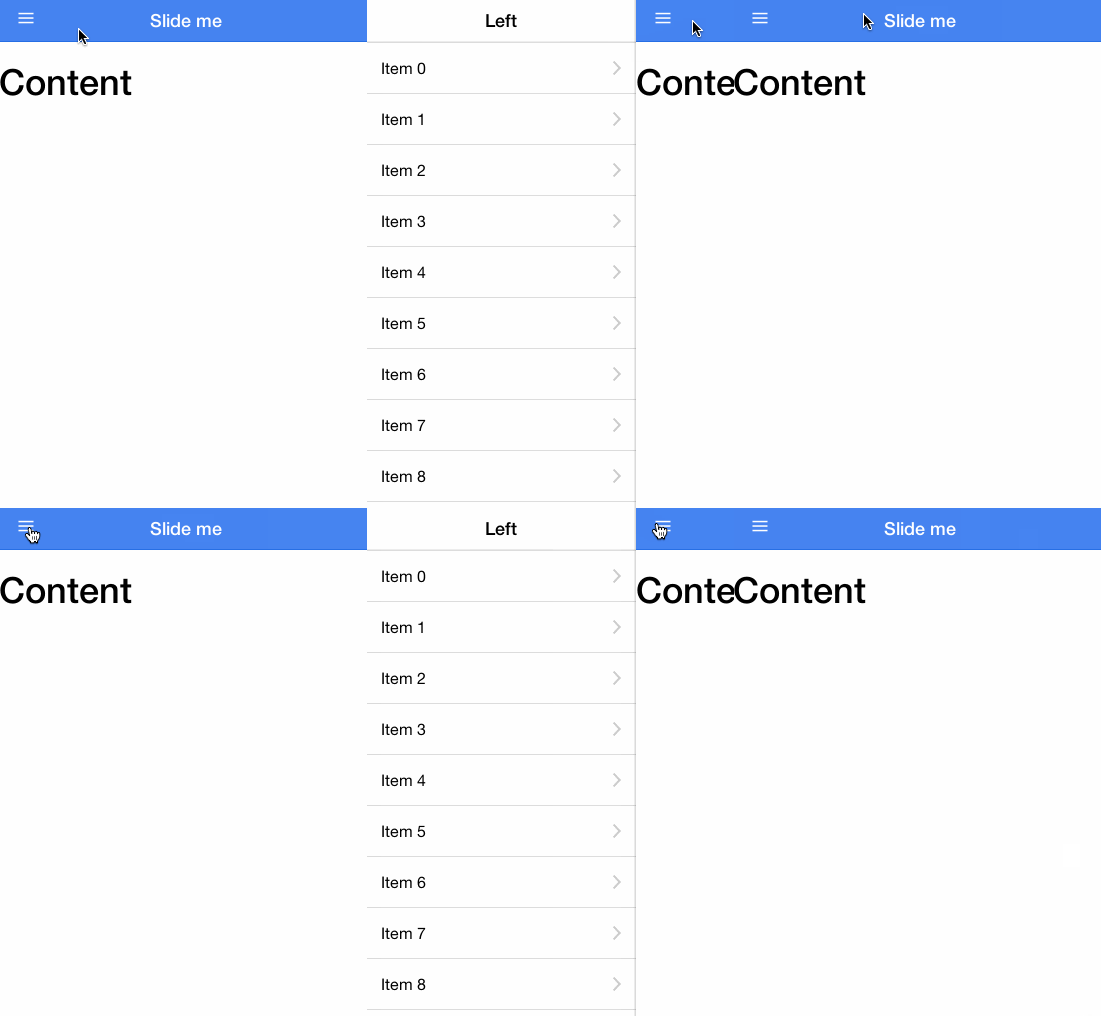 + * + * For more information on side menus, check out: + * + * - {@link ionic.directive:ionSideMenuContent} + * - {@link ionic.directive:ionSideMenu} + * - {@link ionic.directive:menuToggle} + * - {@link ionic.directive:menuClose} + * - {@link ionic.directive:exposeAsideWhen} + * + * @usage + * To use side menus, add an `<ion-side-menus>` parent element. This will encompass all pages that have a + * side menu, and have at least 2 child elements: 1 `<ion-side-menu-content>` for the center content, + * and one or more `<ion-side-menu>` directives for each side menu(left/right) that you wish to place. + * + * ```html + * <ion-side-menus> + * <!-- Left menu --> + * <ion-side-menu side="left"> + * </ion-side-menu> + * + * <ion-side-menu-content> + * <!-- Main content, usually <ion-nav-view> --> + * </ion-side-menu-content> + * + * <!-- Right menu --> + * <ion-side-menu side="right"> + * </ion-side-menu> + * + * </ion-side-menus> + * ``` + * ```js + * function ContentController($scope, $ionicSideMenuDelegate) { + * $scope.toggleLeft = function() { + * $ionicSideMenuDelegate.toggleLeft(); + * }; + * } + * ``` + * + * @param {bool=} enable-menu-with-back-views Determines whether the side menu is enabled when the + * back button is showing. When set to `false`, any {@link ionic.directive:menuToggle} will be hidden, + * and the user cannot swipe to open the menu. When going back to the root page of the side menu (the + * page without a back button visible), then any menuToggle buttons will show again, and menus will be + * enabled again. + * @param {string=} delegate-handle The handle used to identify this side menu + * with {@link ionic.service:$ionicSideMenuDelegate}. + * + */ +.directive('ionSideMenus', ['$ionicBody', function($ionicBody) { + return { + restrict: 'ECA', + controller: '$ionicSideMenus', + compile: function(element, attr) { + attr.$set('class', (attr['class'] || '') + ' view'); + + return { pre: prelink }; + function prelink($scope, $element, $attrs, ctrl) { + + ctrl.enableMenuWithBackViews($scope.$eval($attrs.enableMenuWithBackViews)); + + $scope.$on('$ionicExposeAside', function(evt, isAsideExposed) { + if (!$scope.$exposeAside) $scope.$exposeAside = {}; + $scope.$exposeAside.active = isAsideExposed; + $ionicBody.enableClass(isAsideExposed, 'aside-open'); + }); + + $scope.$on('$ionicView.beforeEnter', function(ev, d) { + if (d.historyId) { + $scope.$activeHistoryId = d.historyId; + } + }); + + $scope.$on('$destroy', function() { + $ionicBody.removeClass('menu-open', 'aside-open'); + }); + + } + } + }; +}]); + + +/** + * @ngdoc directive + * @name ionSlideBox + * @module ionic + * @codepen AjgEB + * @deprecated will be removed in the next Ionic release in favor of the new ion-slides component. + * Don't depend on the internal behavior of this widget. + * @delegate ionic.service:$ionicSlideBoxDelegate + * @restrict E + * @description + * The Slide Box is a multi-page container where each page can be swiped or dragged between: + * + * + * @usage + * ```html + * <ion-slide-box on-slide-changed="slideHasChanged($index)"> + * <ion-slide> + * <div class="box blue"><h1>BLUE</h1></div> + * </ion-slide> + * <ion-slide> + * <div class="box yellow"><h1>YELLOW</h1></div> + * </ion-slide> + * <ion-slide> + * <div class="box pink"><h1>PINK</h1></div> + * </ion-slide> + * </ion-slide-box> + * ``` + * + * @param {string=} delegate-handle The handle used to identify this slideBox + * with {@link ionic.service:$ionicSlideBoxDelegate}. + * @param {boolean=} does-continue Whether the slide box should loop. + * @param {boolean=} auto-play Whether the slide box should automatically slide. Default true if does-continue is true. + * @param {number=} slide-interval How many milliseconds to wait to change slides (if does-continue is true). Defaults to 4000. + * @param {boolean=} show-pager Whether a pager should be shown for this slide box. Accepts expressions via `show-pager="{{shouldShow()}}"`. Defaults to true. + * @param {expression=} pager-click Expression to call when a pager is clicked (if show-pager is true). Is passed the 'index' variable. + * @param {expression=} on-slide-changed Expression called whenever the slide is changed. Is passed an '$index' variable. + * @param {expression=} active-slide Model to bind the current slide index to. + */ +IonicModule +.directive('ionSlideBox', [ + '$animate', + '$timeout', + '$compile', + '$ionicSlideBoxDelegate', + '$ionicHistory', + '$ionicScrollDelegate', +function($animate, $timeout, $compile, $ionicSlideBoxDelegate, $ionicHistory, $ionicScrollDelegate) { + return { + restrict: 'E', + replace: true, + transclude: true, + scope: { + autoPlay: '=', + doesContinue: '@', + slideInterval: '@', + showPager: '@', + pagerClick: '&', + disableScroll: '@', + onSlideChanged: '&', + activeSlide: '=?', + bounce: '@' + }, + controller: ['$scope', '$element', '$attrs', function($scope, $element, $attrs) { + var _this = this; + + var continuous = $scope.$eval($scope.doesContinue) === true; + var bouncing = ($scope.$eval($scope.bounce) !== false); //Default to true + var shouldAutoPlay = isDefined($attrs.autoPlay) ? !!$scope.autoPlay : false; + var slideInterval = shouldAutoPlay ? $scope.$eval($scope.slideInterval) || 4000 : 0; + + var slider = new ionic.views.Slider({ + el: $element[0], + auto: slideInterval, + continuous: continuous, + startSlide: $scope.activeSlide, + bouncing: bouncing, + slidesChanged: function() { + $scope.currentSlide = slider.currentIndex(); + + // Try to trigger a digest + $timeout(function() {}); + }, + callback: function(slideIndex) { + $scope.currentSlide = slideIndex; + $scope.onSlideChanged({ index: $scope.currentSlide, $index: $scope.currentSlide}); + $scope.$parent.$broadcast('slideBox.slideChanged', slideIndex); + $scope.activeSlide = slideIndex; + // Try to trigger a digest + $timeout(function() {}); + }, + onDrag: function() { + freezeAllScrolls(true); + }, + onDragEnd: function() { + freezeAllScrolls(false); + } + }); + + function freezeAllScrolls(shouldFreeze) { + if (shouldFreeze && !_this.isScrollFreeze) { + $ionicScrollDelegate.freezeAllScrolls(shouldFreeze); + + } else if (!shouldFreeze && _this.isScrollFreeze) { + $ionicScrollDelegate.freezeAllScrolls(false); + } + _this.isScrollFreeze = shouldFreeze; + } + + slider.enableSlide($scope.$eval($attrs.disableScroll) !== true); + + $scope.$watch('activeSlide', function(nv) { + if (isDefined(nv)) { + slider.slide(nv); + } + }); + + $scope.$on('slideBox.nextSlide', function() { + slider.next(); + }); + + $scope.$on('slideBox.prevSlide', function() { + slider.prev(); + }); + + $scope.$on('slideBox.setSlide', function(e, index) { + slider.slide(index); + }); + + //Exposed for testing + this.__slider = slider; + + var deregisterInstance = $ionicSlideBoxDelegate._registerInstance( + slider, $attrs.delegateHandle, function() { + return $ionicHistory.isActiveScope($scope); + } + ); + $scope.$on('$destroy', function() { + deregisterInstance(); + slider.kill(); + }); + + this.slidesCount = function() { + return slider.slidesCount(); + }; + + this.onPagerClick = function(index) { + $scope.pagerClick({index: index}); + }; + + $timeout(function() { + slider.load(); + }); + }], + template: '<div class="slider">' + + '<div class="slider-slides" ng-transclude>' + + '</div>' + + '</div>', + + link: function($scope, $element, $attr) { + // Disable ngAnimate for slidebox and its children + $animate.enabled($element, false); + + // if showPager is undefined, show the pager + if (!isDefined($attr.showPager)) { + $scope.showPager = true; + getPager().toggleClass('hide', !true); + } + + $attr.$observe('showPager', function(show) { + if (show === undefined) return; + show = $scope.$eval(show); + getPager().toggleClass('hide', !show); + }); + + var pager; + function getPager() { + if (!pager) { + var childScope = $scope.$new(); + pager = jqLite('<ion-pager></ion-pager>'); + $element.append(pager); + pager = $compile(pager)(childScope); + } + return pager; + } + } + }; +}]) +.directive('ionSlide', function() { + return { + restrict: 'E', + require: '?^ionSlideBox', + compile: function(element) { + element.addClass('slider-slide'); + } + }; +}) + +.directive('ionPager', function() { + return { + restrict: 'E', + replace: true, + require: '^ionSlideBox', + template: '<div class="slider-pager"><span class="slider-pager-page" ng-repeat="slide in numSlides() track by $index" ng-class="{active: $index == currentSlide}" ng-click="pagerClick($index)"><i class="icon ion-record"></i></span></div>', + link: function($scope, $element, $attr, slideBox) { + var selectPage = function(index) { + var children = $element[0].children; + var length = children.length; + for (var i = 0; i < length; i++) { + if (i == index) { + children[i].classList.add('active'); + } else { + children[i].classList.remove('active'); + } + } + }; + + $scope.pagerClick = function(index) { + slideBox.onPagerClick(index); + }; + + $scope.numSlides = function() { + return new Array(slideBox.slidesCount()); + }; + + $scope.$watch('currentSlide', function(v) { + selectPage(v); + }); + } + }; + +}); + + +/** + * @ngdoc directive + * @name ionSlides + * @module ionic + * @restrict E + * @description + * The Slides component is a powerful multi-page container where each page can be swiped or dragged between. + * + * Note: this is a new version of the Ionic Slide Box based on the [Swiper](http://www.idangero.us/swiper/#.Vmc1J-ODFBc) widget from + * [idangerous](http://www.idangero.us/). + * + *  + * + * @usage + * ```html + * <ion-content scroll="false"> + * <ion-slides options="options" slider="data.slider"> + * <ion-slide-page> + * <div class="box blue"><h1>BLUE</h1></div> + * </ion-slide-page> + * <ion-slide-page> + * <div class="box yellow"><h1>YELLOW</h1></div> + * </ion-slide-page> + * <ion-slide-page> + * <div class="box pink"><h1>PINK</h1></div> + * </ion-slide-page> + * </ion-slides> + * </ion-content> + * ``` + * + * ```js + * $scope.options = { + * loop: false, + * effect: 'fade', + * speed: 500, + * } + * + * $scope.$on("$ionicSlides.sliderInitialized", function(event, data){ + * // data.slider is the instance of Swiper + * $scope.slider = data.slider; + * }); + * + * $scope.$on("$ionicSlides.slideChangeStart", function(event, data){ + * console.log('Slide change is beginning'); + * }); + * + * $scope.$on("$ionicSlides.slideChangeEnd", function(event, data){ + * // note: the indexes are 0-based + * $scope.activeIndex = data.slider.activeIndex; + * $scope.previousIndex = data.slider.previousIndex; + * }); + * + * ``` + * + * ## Slide Events + * + * The slides component dispatches events when the active slide changes + * + * <table class="table"> + * <tr> + * <td><code>$ionicSlides.slideChangeStart</code></td> + * <td>This event is emitted when a slide change begins</td> + * </tr> + * <tr> + * <td><code>$ionicSlides.slideChangeEnd</code></td> + * <td>This event is emitted when a slide change completes</td> + * </tr> + * <tr> + * <td><code>$ionicSlides.sliderInitialized</code></td> + * <td>This event is emitted when the slider is initialized. It provides access to an instance of the slider.</td> + * </tr> + * </table> + * + * + * ## Updating Slides Dynamically + * When applying data to the slider at runtime, typically everything will work as expected. + * + * In the event that the slides are looped, use the `updateLoop` method on the slider to ensure the slides update correctly. + * + * ``` + * $scope.$on("$ionicSlides.sliderInitialized", function(event, data){ + * // grab an instance of the slider + * $scope.slider = data.slider; + * }); + * + * function dataChangeHandler(){ + * // call this function when data changes, such as an HTTP request, etc + * if ( $scope.slider ){ + * $scope.slider.updateLoop(); + * } + * } + * ``` + * + */ +IonicModule +.directive('ionSlides', [ + '$animate', + '$timeout', + '$compile', +function($animate, $timeout, $compile) { + return { + restrict: 'E', + transclude: true, + scope: { + options: '=', + slider: '=' + }, + template: '<div class="swiper-container">' + + '<div class="swiper-wrapper" ng-transclude>' + + '</div>' + + '<div ng-hide="!showPager" class="swiper-pagination"></div>' + + '</div>', + controller: ['$scope', '$element', function($scope, $element) { + var _this = this; + + this.update = function() { + $timeout(function() { + if (!_this.__slider) { + return; + } + + _this.__slider.update(); + if (_this._options.loop) { + _this.__slider.createLoop(); + } + + var slidesLength = _this.__slider.slides.length; + + // Don't allow pager to show with > 10 slides + if (slidesLength > 10) { + $scope.showPager = false; + } + + // When slide index is greater than total then slide to last index + if (_this.__slider.activeIndex > slidesLength - 1) { + _this.__slider.slideTo(slidesLength - 1); + } + }); + }; + + this.rapidUpdate = ionic.debounce(function() { + _this.update(); + }, 50); + + this.getSlider = function() { + return _this.__slider; + }; + + var options = $scope.options || {}; + + var newOptions = angular.extend({ + pagination: $element.children().children()[1], + paginationClickable: true, + lazyLoading: true, + preloadImages: false + }, options); + + this._options = newOptions; + + $timeout(function() { + var slider = new ionic.views.Swiper($element.children()[0], newOptions, $scope, $compile); + + $scope.$emit("$ionicSlides.sliderInitialized", { slider: slider }); + + _this.__slider = slider; + $scope.slider = _this.__slider; + + $scope.$on('$destroy', function() { + slider.destroy(); + _this.__slider = null; + }); + }); + + $timeout(function() { + // if it's a loop, render the slides again just incase + _this.rapidUpdate(); + }, 200); + + }], + + link: function($scope) { + $scope.showPager = true; + // Disable ngAnimate for slidebox and its children + //$animate.enabled(false, $element); + } + }; +}]) +.directive('ionSlidePage', [function() { + return { + restrict: 'E', + require: '?^ionSlides', + transclude: true, + replace: true, + template: '<div class="swiper-slide" ng-transclude></div>', + link: function($scope, $element, $attr, ionSlidesCtrl) { + ionSlidesCtrl.rapidUpdate(); + + $scope.$on('$destroy', function() { + ionSlidesCtrl.rapidUpdate(); + }); + } + }; +}]); + +/** +* @ngdoc directive +* @name ionSpinner +* @module ionic +* @restrict E + * + * @description + * The `ionSpinner` directive provides a variety of animated spinners. + * Spinners enables you to give your users feedback that the app is + * processing/thinking/waiting/chillin' out, or whatever you'd like it to indicate. + * By default, the {@link ionic.directive:ionRefresher} feature uses this spinner, rather + * than rotating font icons (previously included in [ionicons](http://ionicons.com/)). + * While font icons are great for simple or stationary graphics, they're not suited to + * provide great animations, which is why Ionic uses SVG instead. + * + * Ionic offers ten spinners out of the box, and by default, it will use the appropriate spinner + * for the platform on which it's running. Under the hood, the `ionSpinner` directive dynamically + * builds the required SVG element, which allows Ionic to provide all ten of the animated SVGs + * within 3KB. + * + * <style> + * .spinner-table { + * max-width: 280px; + * } + * .spinner-table tbody > tr > th, .spinner-table tbody > tr > td { + * vertical-align: middle; + * width: 42px; + * height: 42px; + * } + * .spinner { + * stroke: #444; + * fill: #444; } + * .spinner svg { + * width: 28px; + * height: 28px; } + * .spinner.spinner-inverse { + * stroke: #fff; + * fill: #fff; } + * + * .spinner-android { + * stroke: #4b8bf4; } + * + * .spinner-ios, .spinner-ios-small { + * stroke: #69717d; } + * + * .spinner-spiral .stop1 { + * stop-color: #fff; + * stop-opacity: 0; } + * .spinner-spiral.spinner-inverse .stop1 { + * stop-color: #000; } + * .spinner-spiral.spinner-inverse .stop2 { + * stop-color: #fff; } + * </style> + * + * <script src="http://code.ionicframework.com/nightly/js/ionic.bundle.min.js"></script> + * <table class="table spinner-table" ng-app="ionic"> + * <tr> + * <th> + * <code>android</code> + * </th> + * <td> + * <ion-spinner icon="android"></ion-spinner> + * </td> + * </tr> + * <tr> + * <th> + * <code>ios</code> + * </th> + * <td> + * <ion-spinner icon="ios"></ion-spinner> + * </td> + * </tr> + * <tr> + * <th> + * <code>ios-small</code> + * </th> + * <td> + * <ion-spinner icon="ios-small"></ion-spinner> + * </td> + * </tr> + * <tr> + * <th> + * <code>bubbles</code> + * </th> + * <td> + * <ion-spinner icon="bubbles"></ion-spinner> + * </td> + * </tr> + * <tr> + * <th> + * <code>circles</code> + * </th> + * <td> + * <ion-spinner icon="circles"></ion-spinner> + * </td> + * </tr> + * <tr> + * <th> + * <code>crescent</code> + * </th> + * <td> + * <ion-spinner icon="crescent"></ion-spinner> + * </td> + * </tr> + * <tr> + * <th> + * <code>dots</code> + * </th> + * <td> + * <ion-spinner icon="dots"></ion-spinner> + * </td> + * </tr> + * <tr> + * <th> + * <code>lines</code> + * </th> + * <td> + * <ion-spinner icon="lines"></ion-spinner> + * </td> + * </tr> + * <tr> + * <th> + * <code>ripple</code> + * </th> + * <td> + * <ion-spinner icon="ripple"></ion-spinner> + * </td> + * </tr> + * <tr> + * <th> + * <code>spiral</code> + * </th> + * <td> + * <ion-spinner icon="spiral"></ion-spinner> + * </td> + * </tr> + * </table> + * + * Each spinner uses SVG with SMIL animations, however, the Android spinner also uses JavaScript + * so it also works on Android 4.0-4.3. Additionally, each spinner can be styled with CSS, + * and scaled to any size. + * + * + * @usage + * The following code would use the default spinner for the platform it's running from. If it's neither + * iOS or Android, it'll default to use `ios`. + * + * ```html + * <ion-spinner></ion-spinner> + * ``` + * + * By setting the `icon` attribute, you can specify which spinner to use, no matter what + * the platform is. + * + * ```html + * <ion-spinner icon="spiral"></ion-spinner> + * ``` + * + * ## Spinner Colors + * Like with most of Ionic's other components, spinners can also be styled using + * Ionic's standard color naming convention. For example: + * + * ```html + * <ion-spinner class="spinner-energized"></ion-spinner> + * ``` + * + * + * ## Styling SVG with CSS + * One cool thing about SVG is its ability to be styled with CSS! Some of the properties + * have different names, for example, SVG uses the term `stroke` instead of `border`, and + * `fill` instead of `background-color`. + * + * ```css + * .spinner svg { + * width: 28px; + * height: 28px; + * stroke: #444; + * fill: #444; + * } + * ``` + * +*/ +IonicModule +.directive('ionSpinner', function() { + return { + restrict: 'E', + controller: '$ionicSpinner', + link: function($scope, $element, $attrs, ctrl) { + var spinnerName = ctrl.init(); + $element.addClass('spinner spinner-' + spinnerName); + + $element.on('$destroy', function onDestroy() { + ctrl.stop(); + }); + } + }; +}); + +/** + * @ngdoc directive + * @name ionTab + * @module ionic + * @restrict E + * @parent ionic.directive:ionTabs + * + * @description + * Contains a tab's content. The content only exists while the given tab is selected. + * + * Each ionTab has its own view history. + * + * @usage + * ```html + * <ion-tab + * title="Tab!" + * icon="my-icon" + * href="#/tab/tab-link" + * on-select="onTabSelected()" + * on-deselect="onTabDeselected()"> + * </ion-tab> + * ``` + * For a complete, working tab bar example, see the {@link ionic.directive:ionTabs} documentation. + * + * @param {string} title The title of the tab. + * @param {string=} href The link that this tab will navigate to when tapped. + * @param {string=} icon The icon of the tab. If given, this will become the default for icon-on and icon-off. + * @param {string=} icon-on The icon of the tab while it is selected. + * @param {string=} icon-off The icon of the tab while it is not selected. + * @param {expression=} badge The badge to put on this tab (usually a number). + * @param {expression=} badge-style The style of badge to put on this tab (eg: badge-positive). + * @param {expression=} on-select Called when this tab is selected. + * @param {expression=} on-deselect Called when this tab is deselected. + * @param {expression=} ng-click By default, the tab will be selected on click. If ngClick is set, it will not. You can explicitly switch tabs using {@link ionic.service:$ionicTabsDelegate#select $ionicTabsDelegate.select()}. + * @param {expression=} hidden Whether the tab is to be hidden or not. + * @param {expression=} disabled Whether the tab is to be disabled or not. + */ +IonicModule +.directive('ionTab', [ + '$compile', + '$ionicConfig', + '$ionicBind', + '$ionicViewSwitcher', +function($compile, $ionicConfig, $ionicBind, $ionicViewSwitcher) { + + //Returns ' key="value"' if value exists + function attrStr(k, v) { + return isDefined(v) ? ' ' + k + '="' + v + '"' : ''; + } + return { + restrict: 'E', + require: ['^ionTabs', 'ionTab'], + controller: '$ionicTab', + scope: true, + compile: function(element, attr) { + + //We create the tabNavTemplate in the compile phase so that the + //attributes we pass down won't be interpolated yet - we want + //to pass down the 'raw' versions of the attributes + var tabNavTemplate = '<ion-tab-nav' + + attrStr('ng-click', attr.ngClick) + + attrStr('title', attr.title) + + attrStr('icon', attr.icon) + + attrStr('icon-on', attr.iconOn) + + attrStr('icon-off', attr.iconOff) + + attrStr('badge', attr.badge) + + attrStr('badge-style', attr.badgeStyle) + + attrStr('hidden', attr.hidden) + + attrStr('disabled', attr.disabled) + + attrStr('class', attr['class']) + + '></ion-tab-nav>'; + + //Remove the contents of the element so we can compile them later, if tab is selected + var tabContentEle = document.createElement('div'); + for (var x = 0; x < element[0].children.length; x++) { + tabContentEle.appendChild(element[0].children[x].cloneNode(true)); + } + var childElementCount = tabContentEle.childElementCount; + element.empty(); + + var navViewName, isNavView; + if (childElementCount) { + if (tabContentEle.children[0].tagName === 'ION-NAV-VIEW') { + // get the name if it's a nav-view + navViewName = tabContentEle.children[0].getAttribute('name'); + tabContentEle.children[0].classList.add('view-container'); + isNavView = true; + } + if (childElementCount === 1) { + // make the 1 child element the primary tab content container + tabContentEle = tabContentEle.children[0]; + } + if (!isNavView) tabContentEle.classList.add('pane'); + tabContentEle.classList.add('tab-content'); + } + + return function link($scope, $element, $attr, ctrls) { + var childScope; + var childElement; + var tabsCtrl = ctrls[0]; + var tabCtrl = ctrls[1]; + var isTabContentAttached = false; + $scope.$tabSelected = false; + + $ionicBind($scope, $attr, { + onSelect: '&', + onDeselect: '&', + title: '@', + uiSref: '@', + href: '@' + }); + + tabsCtrl.add($scope); + $scope.$on('$destroy', function() { + if (!$scope.$tabsDestroy) { + // if the containing ionTabs directive is being destroyed + // then don't bother going through the controllers remove + // method, since remove will reset the active tab as each tab + // is being destroyed, causing unnecessary view loads and transitions + tabsCtrl.remove($scope); + } + tabNavElement.isolateScope().$destroy(); + tabNavElement.remove(); + tabNavElement = tabContentEle = childElement = null; + }); + + //Remove title attribute so browser-tooltip does not apear + $element[0].removeAttribute('title'); + + if (navViewName) { + tabCtrl.navViewName = $scope.navViewName = navViewName; + } + $scope.$on('$stateChangeSuccess', selectIfMatchesState); + selectIfMatchesState(); + function selectIfMatchesState() { + if (tabCtrl.tabMatchesState()) { + tabsCtrl.select($scope, false); + } + } + + var tabNavElement = jqLite(tabNavTemplate); + tabNavElement.data('$ionTabsController', tabsCtrl); + tabNavElement.data('$ionTabController', tabCtrl); + tabsCtrl.$tabsElement.append($compile(tabNavElement)($scope)); + + + function tabSelected(isSelected) { + if (isSelected && childElementCount) { + // this tab is being selected + + // check if the tab is already in the DOM + // only do this if the tab has child elements + if (!isTabContentAttached) { + // tab should be selected and is NOT in the DOM + // create a new scope and append it + childScope = $scope.$new(); + childElement = jqLite(tabContentEle); + $ionicViewSwitcher.viewEleIsActive(childElement, true); + tabsCtrl.$element.append(childElement); + $compile(childElement)(childScope); + isTabContentAttached = true; + } + + // remove the hide class so the tabs content shows up + $ionicViewSwitcher.viewEleIsActive(childElement, true); + + } else if (isTabContentAttached && childElement) { + // this tab should NOT be selected, and it is already in the DOM + + if ($ionicConfig.views.maxCache() > 0) { + // keep the tabs in the DOM, only css hide it + $ionicViewSwitcher.viewEleIsActive(childElement, false); + + } else { + // do not keep tabs in the DOM + destroyTab(); + } + + } + } + + function destroyTab() { + childScope && childScope.$destroy(); + isTabContentAttached && childElement && childElement.remove(); + tabContentEle.innerHTML = ''; + isTabContentAttached = childScope = childElement = null; + } + + $scope.$watch('$tabSelected', tabSelected); + + $scope.$on('$ionicView.afterEnter', function() { + $ionicViewSwitcher.viewEleIsActive(childElement, $scope.$tabSelected); + }); + + $scope.$on('$ionicView.clearCache', function() { + if (!$scope.$tabSelected) { + destroyTab(); + } + }); + + }; + } + }; +}]); + +IonicModule +.directive('ionTabNav', [function() { + return { + restrict: 'E', + replace: true, + require: ['^ionTabs', '^ionTab'], + template: + '<a ng-class="{\'has-badge\':badge, \'tab-hidden\':isHidden(), \'tab-item-active\': isTabActive()}" ' + + ' ng-disabled="disabled()" class="tab-item">' + + '<span class="badge {{badgeStyle}}" ng-if="badge">{{badge}}</span>' + + '<i class="icon {{getIcon()}}" ng-if="getIcon()"></i>' + + '<span class="tab-title" ng-bind-html="title"></span>' + + '</a>', + scope: { + title: '@', + icon: '@', + iconOn: '@', + iconOff: '@', + badge: '=', + hidden: '@', + disabled: '&', + badgeStyle: '@', + 'class': '@' + }, + link: function($scope, $element, $attrs, ctrls) { + var tabsCtrl = ctrls[0], + tabCtrl = ctrls[1]; + + //Remove title attribute so browser-tooltip does not apear + $element[0].removeAttribute('title'); + + $scope.selectTab = function(e) { + e.preventDefault(); + tabsCtrl.select(tabCtrl.$scope, true); + }; + if (!$attrs.ngClick) { + $element.on('click', function(event) { + $scope.$apply(function() { + $scope.selectTab(event); + }); + }); + } + + $scope.isHidden = function() { + if ($attrs.hidden === 'true' || $attrs.hidden === true) return true; + return false; + }; + + $scope.getIconOn = function() { + return $scope.iconOn || $scope.icon; + }; + $scope.getIconOff = function() { + return $scope.iconOff || $scope.icon; + }; + + $scope.isTabActive = function() { + return tabsCtrl.selectedTab() === tabCtrl.$scope; + }; + + $scope.getIcon = function() { + if ( tabsCtrl.selectedTab() === tabCtrl.$scope ) { + // active + return $scope.iconOn || $scope.icon; + } + else { + // inactive + return $scope.iconOff || $scope.icon; + } + }; + } + }; +}]); + +/** + * @ngdoc directive + * @name ionTabs + * @module ionic + * @delegate ionic.service:$ionicTabsDelegate + * @restrict E + * @codepen odqCz + * + * @description + * Powers a multi-tabbed interface with a Tab Bar and a set of "pages" that can be tabbed + * through. + * + * Assign any [tabs class](/docs/components#tabs) to the element to define + * its look and feel. + * + * For iOS, tabs will appear at the bottom of the screen. For Android, tabs will be at the top + * of the screen, below the nav-bar. This follows each OS's design specification, but can be + * configured with the {@link ionic.provider:$ionicConfigProvider}. + * + * See the {@link ionic.directive:ionTab} directive's documentation for more details on + * individual tabs. + * + * Note: do not place ion-tabs inside of an ion-content element; it has been known to cause a + * certain CSS bug. + * + * @usage + * ```html + * <ion-tabs class="tabs-positive tabs-icon-top"> + * + * <ion-tab title="Home" icon-on="ion-ios-filing" icon-off="ion-ios-filing-outline"> + * <!-- Tab 1 content --> + * </ion-tab> + * + * <ion-tab title="About" icon-on="ion-ios-clock" icon-off="ion-ios-clock-outline"> + * <!-- Tab 2 content --> + * </ion-tab> + * + * <ion-tab title="Settings" icon-on="ion-ios-gear" icon-off="ion-ios-gear-outline"> + * <!-- Tab 3 content --> + * </ion-tab> + * + * </ion-tabs> + * ``` + * + * @param {string=} delegate-handle The handle used to identify these tabs + * with {@link ionic.service:$ionicTabsDelegate}. + */ + +IonicModule +.directive('ionTabs', [ + '$ionicTabsDelegate', + '$ionicConfig', +function($ionicTabsDelegate, $ionicConfig) { + return { + restrict: 'E', + scope: true, + controller: '$ionicTabs', + compile: function(tElement) { + //We cannot use regular transclude here because it breaks element.data() + //inheritance on compile + var innerElement = jqLite('<div class="tab-nav tabs">'); + innerElement.append(tElement.contents()); + + tElement.append(innerElement) + .addClass('tabs-' + $ionicConfig.tabs.position() + ' tabs-' + $ionicConfig.tabs.style()); + + return { pre: prelink, post: postLink }; + function prelink($scope, $element, $attr, tabsCtrl) { + var deregisterInstance = $ionicTabsDelegate._registerInstance( + tabsCtrl, $attr.delegateHandle, tabsCtrl.hasActiveScope + ); + + tabsCtrl.$scope = $scope; + tabsCtrl.$element = $element; + tabsCtrl.$tabsElement = jqLite($element[0].querySelector('.tabs')); + + $scope.$watch(function() { return $element[0].className; }, function(value) { + var isTabsTop = value.indexOf('tabs-top') !== -1; + var isHidden = value.indexOf('tabs-item-hide') !== -1; + $scope.$hasTabs = !isTabsTop && !isHidden; + $scope.$hasTabsTop = isTabsTop && !isHidden; + $scope.$emit('$ionicTabs.top', $scope.$hasTabsTop); + }); + + function emitLifecycleEvent(ev, data) { + ev.stopPropagation(); + var previousSelectedTab = tabsCtrl.previousSelectedTab(); + if (previousSelectedTab) { + previousSelectedTab.$broadcast(ev.name.replace('NavView', 'Tabs'), data); + } + } + + $scope.$on('$ionicNavView.beforeLeave', emitLifecycleEvent); + $scope.$on('$ionicNavView.afterLeave', emitLifecycleEvent); + $scope.$on('$ionicNavView.leave', emitLifecycleEvent); + + $scope.$on('$destroy', function() { + // variable to inform child tabs that they're all being blown away + // used so that while destorying an individual tab, each one + // doesn't select the next tab as the active one, which causes unnecessary + // loading of tab views when each will eventually all go away anyway + $scope.$tabsDestroy = true; + deregisterInstance(); + tabsCtrl.$tabsElement = tabsCtrl.$element = tabsCtrl.$scope = innerElement = null; + delete $scope.$hasTabs; + delete $scope.$hasTabsTop; + }); + } + + function postLink($scope, $element, $attr, tabsCtrl) { + if (!tabsCtrl.selectedTab()) { + // all the tabs have been added + // but one hasn't been selected yet + tabsCtrl.select(0); + } + } + } + }; +}]); + +/** +* @ngdoc directive +* @name ionTitle +* @module ionic +* @restrict E +* +* Used for titles in header and nav bars. New in 1.2 +* +* Identical to <div class="title"> but with future compatibility for Ionic 2 +* +* @usage +* +* ```html +* <ion-nav-bar> +* <ion-title>Hello</ion-title> +* <ion-nav-bar> +* ``` +*/ +IonicModule +.directive('ionTitle', [function() { + return { + restrict: 'E', + compile: function(element) { + element.addClass('title'); + } + }; +}]); + +/** + * @ngdoc directive + * @name ionToggle + * @module ionic + * @codepen tfAzj + * @restrict E + * + * @description + * A toggle is an animated switch which binds a given model to a boolean. + * + * Allows dragging of the switch's nub. + * + * The toggle behaves like any [AngularJS checkbox](http://docs.angularjs.org/api/ng/input/input[checkbox]) otherwise. + * + * @param toggle-class {string=} Sets the CSS class on the inner `label.toggle` element created by the directive. + * + * @usage + * Below is an example of a toggle directive which is wired up to the `airplaneMode` model + * and has the `toggle-calm` CSS class assigned to the inner element. + * + * ```html + * <ion-toggle ng-model="airplaneMode" toggle-class="toggle-calm">Airplane Mode</ion-toggle> + * ``` + */ +IonicModule +.directive('ionToggle', [ + '$timeout', + '$ionicConfig', +function($timeout, $ionicConfig) { + + return { + restrict: 'E', + replace: true, + require: '?ngModel', + transclude: true, + template: + '<div class="item item-toggle">' + + '<div ng-transclude></div>' + + '<label class="toggle">' + + '<input type="checkbox">' + + '<div class="track">' + + '<div class="handle"></div>' + + '</div>' + + '</label>' + + '</div>', + + compile: function(element, attr) { + var input = element.find('input'); + forEach({ + 'name': attr.name, + 'ng-value': attr.ngValue, + 'ng-model': attr.ngModel, + 'ng-checked': attr.ngChecked, + 'ng-disabled': attr.ngDisabled, + 'ng-true-value': attr.ngTrueValue, + 'ng-false-value': attr.ngFalseValue, + 'ng-change': attr.ngChange, + 'ng-required': attr.ngRequired, + 'required': attr.required + }, function(value, name) { + if (isDefined(value)) { + input.attr(name, value); + } + }); + + if (attr.toggleClass) { + element[0].getElementsByTagName('label')[0].classList.add(attr.toggleClass); + } + + element.addClass('toggle-' + $ionicConfig.form.toggle()); + + return function($scope, $element) { + var el = $element[0].getElementsByTagName('label')[0]; + var checkbox = el.children[0]; + var track = el.children[1]; + var handle = track.children[0]; + + var ngModelController = jqLite(checkbox).controller('ngModel'); + + $scope.toggle = new ionic.views.Toggle({ + el: el, + track: track, + checkbox: checkbox, + handle: handle, + onChange: function() { + if (ngModelController) { + ngModelController.$setViewValue(checkbox.checked); + $scope.$apply(); + } + } + }); + + $scope.$on('$destroy', function() { + $scope.toggle.destroy(); + }); + }; + } + + }; +}]); + +/** + * @ngdoc directive + * @name ionView + * @module ionic + * @restrict E + * @parent ionNavView + * + * @description + * A container for view content and any navigational and header bar information. When a view + * enters and exits its parent {@link ionic.directive:ionNavView}, the view also emits view + * information, such as its title, whether the back button should be displayed or not, whether the + * corresponding {@link ionic.directive:ionNavBar} should be displayed or not, which transition the view + * should use to animate, and which direction to animate. + * + * *Views are cached to improve performance.* When a view is navigated away from, its element is + * left in the DOM, and its scope is disconnected from the `$watch` cycle. When navigating to a + * view that is already cached, its scope is reconnected, and the existing element, which was + * left in the DOM, becomes active again. This can be disabled, or the maximum number of cached + * views changed in {@link ionic.provider:$ionicConfigProvider}, in the view's `$state` configuration, or + * as an attribute on the view itself (see below). + * + * @usage + * Below is an example where our page will load with a {@link ionic.directive:ionNavBar} containing + * "My Page" as the title. + * + * ```html + * <ion-nav-bar></ion-nav-bar> + * <ion-nav-view> + * <ion-view view-title="My Page"> + * <ion-content> + * Hello! + * </ion-content> + * </ion-view> + * </ion-nav-view> + * ``` + * + * ## View LifeCycle and Events + * + * Views can be cached, which means ***controllers normally only load once***, which may + * affect your controller logic. To know when a view has entered or left, events + * have been added that are emitted from the view's scope. These events also + * contain data about the view, such as the title and whether the back button should + * show. Also contained is transition data, such as the transition type and + * direction that will be or was used. + * + * Life cycle events are emitted upwards from the transitioning view's scope. In some cases, it is + * desirable for a child/nested view to be notified of the event. + * For this use case, `$ionicParentView` life cycle events are broadcast downwards. + * + * <table class="table"> + * <tr> + * <td><code>$ionicView.loaded</code></td> + * <td>The view has loaded. This event only happens once per + * view being created and added to the DOM. If a view leaves but is cached, + * then this event will not fire again on a subsequent viewing. The loaded event + * is good place to put your setup code for the view; however, it is not the + * recommended event to listen to when a view becomes active.</td> + * </tr> + * <tr> + * <td><code>$ionicView.enter</code></td> + * <td>The view has fully entered and is now the active view. + * This event will fire, whether it was the first load or a cached view.</td> + * </tr> + * <tr> + * <td><code>$ionicView.leave</code></td> + * <td>The view has finished leaving and is no longer the + * active view. This event will fire, whether it is cached or destroyed.</td> + * </tr> + * <tr> + * <td><code>$ionicView.beforeEnter</code></td> + * <td>The view is about to enter and become the active view.</td> + * </tr> + * <tr> + * <td><code>$ionicView.beforeLeave</code></td> + * <td>The view is about to leave and no longer be the active view.</td> + * </tr> + * <tr> + * <td><code>$ionicView.afterEnter</code></td> + * <td>The view has fully entered and is now the active view.</td> + * </tr> + * <tr> + * <td><code>$ionicView.afterLeave</code></td> + * <td>The view has finished leaving and is no longer the active view.</td> + * </tr> + * <tr> + * <td><code>$ionicView.unloaded</code></td> + * <td>The view's controller has been destroyed and its element has been + * removed from the DOM.</td> + * </tr> + * <tr> + * <td><code>$ionicParentView.enter</code></td> + * <td>The parent view has fully entered and is now the active view. + * This event will fire, whether it was the first load or a cached view.</td> + * </tr> + * <tr> + * <td><code>$ionicParentView.leave</code></td> + * <td>The parent view has finished leaving and is no longer the + * active view. This event will fire, whether it is cached or destroyed.</td> + * </tr> + * <tr> + * <td><code>$ionicParentView.beforeEnter</code></td> + * <td>The parent view is about to enter and become the active view.</td> + * </tr> + * <tr> + * <td><code>$ionicParentView.beforeLeave</code></td> + * <td>The parent view is about to leave and no longer be the active view.</td> + * </tr> + * <tr> + * <td><code>$ionicParentView.afterEnter</code></td> + * <td>The parent view has fully entered and is now the active view.</td> + * </tr> + * <tr> + * <td><code>$ionicParentView.afterLeave</code></td> + * <td>The parent view has finished leaving and is no longer the active view.</td> + * </tr> + * </table> + * + * ## LifeCycle Event Usage + * + * Below is an example of how to listen to life cycle events and + * access state parameter data + * + * ```js + * $scope.$on("$ionicView.beforeEnter", function(event, data){ + * // handle event + * console.log("State Params: ", data.stateParams); + * }); + * + * $scope.$on("$ionicView.enter", function(event, data){ + * // handle event + * console.log("State Params: ", data.stateParams); + * }); + * + * $scope.$on("$ionicView.afterEnter", function(event, data){ + * // handle event + * console.log("State Params: ", data.stateParams); + * }); + * ``` + * + * ## Caching + * + * Caching can be disabled and enabled in multiple ways. By default, Ionic will + * cache a maximum of 10 views. You can optionally choose to disable caching at + * either an individual view basis, or by global configuration. Please see the + * _Caching_ section in {@link ionic.directive:ionNavView} for more info. + * + * @param {string=} view-title A text-only title to display on the parent {@link ionic.directive:ionNavBar}. + * For an HTML title, such as an image, see {@link ionic.directive:ionNavTitle} instead. + * @param {boolean=} cache-view If this view should be allowed to be cached or not. + * Please see the _Caching_ section in {@link ionic.directive:ionNavView} for + * more info. Default `true` + * @param {boolean=} can-swipe-back If this view should be allowed to use the swipe to go back gesture or not. + * This does not enable the swipe to go back feature if it is not available for the platform it's running + * from, or there isn't a previous view. Default `true` + * @param {boolean=} hide-back-button Whether to hide the back button on the parent + * {@link ionic.directive:ionNavBar} by default. + * @param {boolean=} hide-nav-bar Whether to hide the parent + * {@link ionic.directive:ionNavBar} by default. + */ +IonicModule +.directive('ionView', function() { + return { + restrict: 'EA', + priority: 1000, + controller: '$ionicView', + compile: function(tElement) { + tElement.addClass('pane'); + tElement[0].removeAttribute('title'); + return function link($scope, $element, $attrs, viewCtrl) { + viewCtrl.init(); + }; + } + }; +}); + +})();
\ No newline at end of file |